
Table of Contents
ToggleOverview of Cardiovascular Pharmacology: Antihypertensive Drugs
I. Introduction to Cardiovascular Pharmacology
Cardiovascular pharmacology is the study of drugs that affect the heart, blood vessels, blood pressure, blood volume, and blood coagulation. For anyone intimidated by pharmacology, the secret is this: you cannot memorize the drugs until you understand the normal physiology. The goal of these drugs is to either enhance or inhibit normal physiological processes to prevent and treat cardiovascular diseases.
Cardiovascular drugs modify specific functions to restore balance in the body. The main targets include:
- Cardiac Rate: Heart rate and rhythm.
- Cardiac Contractility: The force of myocardial (heart muscle) contraction.
- Cardiac Conduction: The transmission of electrical impulses through the heart.
- Vascular Tone: Vasoconstriction (narrowing) and vasodilation (widening) of blood vessels.
- Blood Volume: Managed mainly through renal (kidney) sodium and water handling.
- Platelet Function & Coagulation: Blood clotting mechanisms.
- Lipid Metabolism: Cholesterol management.
- Renin-Angiotensin-Aldosterone System (RAAS): A critical hormone system regulating blood pressure and fluid balance.
Major Classes of Cardiovascular Drugs (The Big Picture)
Before diving specifically into blood pressure, here is a snapshot of all major cardiovascular drug families:
- Antihypertensives: ACE inhibitors, ARBs, Calcium-channel blockers (CCBs), $\beta$-blockers, diuretics, $\alpha$-blockers, centrally acting drugs, direct vasodilators.
- Antianginals (Chest Pain): Organic nitrates, $\beta$-blockers, CCBs, potassium-channel openers.
- Heart Failure Drugs: ACEIs/ARBs/ARNIs, $\beta$-blockers, diuretics, mineralocorticoid receptor antagonists, SGLT2 inhibitors, cardiac glycosides (Digoxin).
- Antiarrhythmics: Class I (Na+ blockers), Class II ($\beta$-blockers), Class III (K+ blockers), Class IV (CCBs), Adenosine, Atropine.
- Diuretics (Water Pills): Loop, Thiazide, Potassium-sparing, Osmotic, Carbonic anhydrase inhibitors.
- Blood Modifiers: Antiplatelets (Aspirin, Clopidogrel), Anticoagulants (Heparin, Warfarin), Thrombolytics (Alteplase).
- Lipid-lowering: Statins, Ezetimibe, Fibrates.
II. Hypertension
Hypertension (HTN) is a condition characterized by a sustained elevation in blood pressure. Because it rarely shows symptoms until severe organ damage has occurred, it is notoriously known as the Silent Killer.
Hypertension is defined as a sustained Systolic Blood Pressure (SBP) > 140 mm Hg OR a Diastolic Blood Pressure (DBP) > 90 mm Hg.
Note: The incidence of morbidity and mortality significantly decreases when HTN is diagnosed early and properly treated!
Classification of Hypertension
- Primary / Essential Hypertension (85-90% of cases): The exact cause is unknown (idiopathic). It is heavily associated with genetics/family history, age, and environmental factors.
- Secondary Hypertension (10-15% of cases): The high blood pressure is a direct result (secondary) to a specific, identifiable, and often curable cause.
- Lifestyle factors: Smoking, excessive alcohol, obesity/hyperlipidemia.
- Diseases: Renal artery stenosis (constriction), Pheochromocytoma (adrenal tumor), Cushing's disease, Primary hyperaldosteronism.
Complications of Uncontrolled Hypertension
Why do we care about a number on a blood pressure cuff? Because high pressure acts like a pressure washer inside delicate blood vessels, causing severe damage over time:
Reduced blood supply leads to rapid loss of brain function, causing Ischemic Strokes or ruptured vessels causing Hemorrhagic Strokes.
The heart must pump against high pressure. The muscle thickens (Left Ventricular Hypertrophy), eventually leading to Heart Failure and Myocardial Infarction (Heart Attack).
Damaged delicate blood vessels cannot effectively filter blood, resulting in dangerous fluid/waste accumulation (Kidney Failure).
Vision Loss: Hypertensive retinopathy (damage to retinal vessels).
Blood Vessels: Atherosclerosis (hardening/narrowing).
Bone Loss: Excessive calcium elimination in urine.
III. The Physiological Basis for Pharmacotherapy
To fix high blood pressure, you must understand the mathematical equation that creates it. Blood pressure is simply the amount of fluid being pumped by the heart multiplied by the resistance of the pipes it travels through.
Arterial BP = Cardiac Output (CO) × Peripheral Vascular Resistance (PVR)
- Cardiac Output (CO): The volume of blood flowing out of the heart per minute. CO is determined by:
- Stroke Volume (SV): Amount of blood pumped per beat (fluid volume).
- Heart Rate (HR): Beats per minute.
- Equation: CO = SV × HR
- Peripheral Vascular Resistance (PVR): The resistance to the passage of blood in the precapillary arterioles. If vessels constrict, resistance goes UP. If they dilate, resistance goes DOWN.
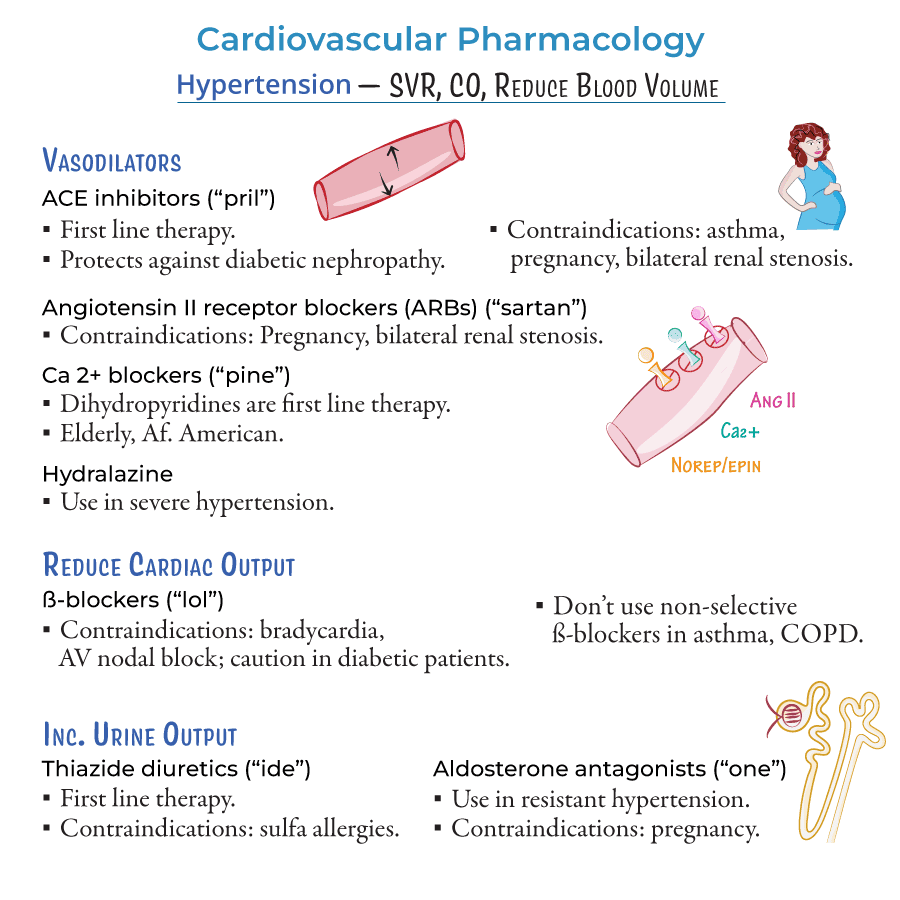
Pharmacology Rule of Thumb: Every single antihypertensive drug works by either lowering Heart Rate, lowering Stroke Volume (blood volume), or lowering Peripheral Resistance (vasodilating).
Management of Hypertension
Non-Pharmacological Treatment (First-line for all patients): Reduce salt intake, reduce cholesterol-rich foods, quit smoking, limit alcohol, and increase physical exercise (weight loss).
| Drugs that decrease Peripheral Resistance (PVR) | Drugs that decrease Blood Volume (SV) | Drugs that decrease Cardiac Contractility/Rate (HR & SV) |
|---|---|---|
| 1. ACE Inhibitors 2. Angiotensin Receptor Blockers (ARBs) 3. Calcium Channel Blockers (CCBs) 4. Direct Vasodilators 5. Alpha-1 Blockers 6. Renin Inhibitors | 1. Diuretics (Thiazides, Loop, K-sparing) | 1. Beta Blockers 2. Non-dihydropyridine CCBs (Verapamil, Diltiazem) 3. Centrally acting sympatholytics |
IV. Drugs Acting on the RAAS (Renin-Angiotensin-Aldosterone System)
Physiology Refresher: When the kidneys sense low blood pressure or low sodium, they release an enzyme called Renin. Renin converts a liver protein (Angiotensinogen) into Angiotensin I. As Angiotensin I passes through the lungs, an enzyme called Angiotensin-Converting Enzyme (ACE) converts it into Angiotensin II. Angiotensin II is a potent vasoconstrictor (raises PVR) and triggers the release of Aldosterone (which tells the kidneys to retain Sodium and Water, raising SV). This system is designed to raise blood pressure.
1. ACE Inhibitors (ACEIs)
ACEIs are first-line drugs for all grades of hypertension. They block the conversion of Ang I to Ang II.
- Classification by Chemical Nature:
- Sulfhydryls: Captopril
- Dicarboxyls: Enalapril, Lisinopril, Benazepril, Ramipril, Perindopril
- Phosphorous-containing: Fosinopril
- Mechanism of Action & Effects:
- Inhibits ACE (also known as Kininase II), a peptidyl dipeptidase.
- ↓ conversion of Ang I to Ang II -> Reduces vasoconstriction (reduces afterload).
- Prevents release of Aldosterone -> Reduces Na+ and water reabsorption (reduces preload), and causes retention of K+.
- The Bradykinin Effect: ACE is normally responsible for breaking down Bradykinin. By inhibiting ACE, bradykinin levels increase. Bradykinin increases the production of Nitric Oxide (NO) and Prostacyclin (PGI2), which are potent vasodilators.
| Drug | Nature | Status | Bioavailability | Half-life (t½) | Excretion | Daily Dosing |
|---|---|---|---|---|---|---|
| Captopril | Sulfhydryl | Active | 70% | 2 hr | Renal | Twice daily (25-150 mg) |
| Enalapril | Carboxyl | Prodrug | 50% | 11 hr | Renal | Once daily (2.5-40 mg) |
| Lisinopril | Carboxyl | Active | 25% | 12 hr | Renal | Once daily (5-40 mg) |
| Fosinopril | Phosphinate | Prodrug | 30% | 12 hr | Renal/Hepatic | Once daily (10-40 mg) |
ACEIs are protective beyond just lowering BP. They are highly recommended for:
- Diabetes: They increase insulin sensitivity and prevent Diabetic Nephropathy by reducing pressure gradients across glomerular capillaries in the kidney.
- Heart Failure & Post-Myocardial Infarction: They prevent cardiac remodeling, reducing cardiac work (preload and afterload), significantly reducing mortality and preventing sudden cardiac death.
- Scleroderma Crisis: Life-saving in this condition.
- Cough: A persistent, dry cough caused by the buildup of Bradykinin in the lungs. (Resolves when drug is stopped).
- Angioedema: Swelling of the lips, tongue, and throat (also due to bradykinin). Rare but life-threatening.
- Pregnancy Contraindicated (Teratogenic): Category D. Causes fetal renal toxicity and death (especially in 2nd/3rd trimesters).
- Hyperkalemia: Because aldosterone is blocked, the body retains Potassium. Never combine with Potassium-sparing diuretics!
- Hypotension: Initial sharp fall in BP (First-dose syncope), especially in patients already on diuretics.
- Others: Dysgeusia (altered taste), Rashes/urticaria, Acute renal failure (in bilateral renal artery stenosis).
2. Angiotensin Receptor Blockers (ARBs)
Examples: Losartan, Candesartan, Valsartan, Telmisartan, Irbesartan, Olmesartan.
ARBs have surpassed ACEIs in popularity because they do the exact same job but with fewer side effects.
- Mechanism: They are competitive inhibitors of Angiotensin II directly at the AT1 receptor on blood vessels. They block the effects of Ang II after it is already formed.
- The Big Difference: ARBs do not inhibit Kininase II. Therefore, they DO NOT increase Bradykinin.
- Result: No annoying dry cough! No allergic reactions/angioedema.
- Pharmacokinetics: All are orally active (once daily). Losartan undergoes extensive first-pass hepatic metabolism (active metabolite). Highly protein-bound.
- Contraindications: Like ACEIs, they cause hyperkalemia and are strictly contraindicated in pregnancy (fetal renal toxicity).
3. Direct Renin Inhibitors (DRIs)
Example: Aliskiren.
- Mechanism: Directly inhibits the enzyme Renin. It acts earlier in the RAAS pathway than ACEIs or ARBs, preventing the formation of Angiotensin I entirely.
- Clinical Note: Lowers BP effectively but should not be routinely combined with an ACEI or ARB due to increased risk of renal failure and hyperkalemia.
- Contraindicated in pregnancy.
V. Sympathoplegic Agents (Nervous System Blockers)
Physiology Refresher: The Sympathetic Nervous System (Fight or Flight) uses Adrenaline/Noradrenaline to stimulate the heart and blood vessels. beta_1 receptors are on the heart (1 heart = increase HR and contractility). beta_2 receptors are on the lungs (2 lungs = bronchodilation). alpha_1 receptors are on the blood vessels (constriction).
1. Beta-Adrenergic Blockers (beta-blockers)
These drugs reduce Heart Rate, Cardiac Output, Contractility, and Renin release (kidneys have $\beta_1$ receptors too).
| Generation / Selectivity | Drugs | Clinical Significance |
|---|---|---|
| 1st Gen: Non-Selective Blocks beta_1 & beta_2 | Propranolol, Nadolol, Timolol, Pindolol | Lowers HR, but blocking beta_2 can cause dangerous bronchospasm in asthmatics. |
| 2nd Gen: Cardioselective Blocks beta_1 only | Atenolol, Metoprolol, Bisoprolol, Esmolol, Acebutolol | Safer in asthmatics. Metoprolol is vastly superior in reducing mortality in heart failure. Esmolol has a very short half-life (used IV for emergencies). |
| 3rd Gen: Vasodilatory Blocks alpha_1 & beta | Labetalol, Carvedilol, Nebivolol (NO release) | Decreases HR and vasodilates. Carvedilol is a powerful antioxidant. Excellent for heart failure. |
Drugs with ISA (Intrinsic Sympathomimetic Activity) like Pindolol, Penbutolol, Acebutolol act as partial agonists. Good for patients with resting bradycardia.
- Masked Hypoglycemia: beta-blockers hide the symptoms of low blood sugar (tremors, tachycardia) in diabetics, making them dangerous.
- Respiratory: Bronchospasm (avoid non-selective in asthma/COPD).
- Cardiovascular: Severe bradycardia, exacerbation of acute decompensated heart failure, exercise intolerance.
- Metabolic/CNS: Increased triglycerides, decreased HDL, impotence, fatigue, sleep disturbances/depression (especially lipid-soluble Propranolol which crosses the blood-brain barrier).
2. Alpha-Adrenergic Blockers (alpha-blockers)
These block alpha_1 receptors on blood vessels, leading to dilation of both resistance (arterioles) and capacitance (veins) vessels.
- Specific alpha_1 Blockers: Prazosin, Terazosin, Doxazosin.
- Bonus Effect: They improve the blood lipid profile (reduce cholesterol and triglycerides). Also used to treat BPH (enlarged prostate) by relaxing prostate smooth muscle.
- Major Side Effect: First Dose Syncope (severe postural hypotension/fainting upon taking the first dose) and reflex palpitations. Must be given at bedtime!
- Non-Selective alpha Blockers: Phentolamine (reversible), Phenoxybenzamine (irreversible).
- Use: Almost exclusively used for the diagnosis and surgical preparation of Pheochromocytoma (a rare adrenal tumor that dumps massive amounts of adrenaline into the blood).
3. Centrally Acting Adrenergic Drugs
These drugs trick the brain into thinking there is too much adrenaline, shutting down the sympathetic nervous system from the source (the brainstem).
- Clonidine: An alpha_2 agonist. Stimulating alpha_2 receptors in the brain inhibits sympathetic vasomotor centers, decreasing sympathetic outflow to the periphery.
- Side effects: Drowsiness, dry mouth, impotence, and Severe Rebound Hypertension if stopped abruptly.
- Methyldopa: A prodrug converted to alpha-methyl-noradrenaline in the brain.
- Clinical Use: Largely obsolete for general HTN, but it is the Drug of Choice for Hypertension in Pregnancy.
- Side effects: Sedation, Parkinson-like syndrome, Hyperprolactinemia (gynecomastia/galactorrhea), and severe Hepatotoxicity / Hemolytic anemia (Positive Coombs test).
VI. Calcium Channel Blockers (CCBs)
Physiology Refresher: Calcium ions (Ca2+) must enter muscle cells (both in the heart and in blood vessel walls) for them to contract. Blocking L-type calcium channels prevents this entry, causing muscles to relax (vasodilation) and the heart to beat less forcefully.
Examples: Nifedipine, Amlodipine, Felodipine, Nicardipine.
Action: Potent vasodilators. They primarily lower blood pressure by dropping total peripheral resistance.
Side Effects: Because they vasodilate so effectively, the body panics and triggers Reflex Tachycardia. They also cause flushing, headache, and Peripheral Edema (ankle swelling due to precapillary dilation increasing hydrostatic pressure).
Examples: Verapamil, Diltiazem.
Action: Work primarily on the heart. They decrease heart rate, cardiac output, and conduction (negative inotropic/chronotropic effects).
Side Effects: Severe Constipation (especially Verapamil, by relaxing GI smooth muscle), bradycardia, and dangerous A-V blocks.
Contraindicated in Congestive Heart Failure!
Pharmacokinetics: Well absorbed orally. Most have short half-lives (~8hrs). Nifedipine has high bioavailability, while Verapamil/Diltiazem have lower bioavailability (high first-pass metabolism in the liver).
VII. Direct Vasodilators
These are powerful agents not used as primary drugs, but rather as add-ons for resistant hypertension or emergencies.
- Hydralazine: Molecules combine with receptors in the endothelium of arterioles to release NO (Nitric Oxide), relaxing vascular smooth muscle.
- Effects: Vasodilates arterioles (not veins). Triggers massive reflex tachycardia (competing reflexes increase HR and oxygen consumption).
- Uses: Moderate HTN (always combined with $\beta$-blockers to stop tachycardia and diuretics to stop fluid retention). Safe in Pregnancy!
- Side effects: Lupus-like syndrome, headache, flushing.
- Minoxidil: Extremely powerful prodrug. Its active metabolite opens ATP-sensitive Potassium channels, hyperpolarizing smooth muscle and causing profound relaxation.
- Uses: Life-threatening resistant HTN.
- Side effects: Massive fluid retention, pericardial effusion, and Hypertrichosis (promotes hair growth). Thus, it is now mostly used topically (Rogaine) to treat alopecia (baldness).
- Sodium Nitroprusside: Rapidly and consistently acting IV vasodilator.
- Action: RBCs convert it to NO (also non-enzymatically via glutathione). It relaxes both resistance (arteries) and capacitance (veins) vessels. Reduces preload and afterload. Does not cause reflex tachycardia.
- Uses: Hypertensive Emergencies (IV infusion wrapped in black paper to prevent light degradation).
- Side effect: Cyanide Toxicity (metabolized to thiocyanate), causing psychosis, lactic acidosis, and disorientation.
VIII. Treatment Recommendations & Guidelines
The A-B-C-D Rule (WHO/BHS Guidelines)
Initial monotherapy choice depends on age and race:
- A = ACEI / ARB
- B = Beta Blocker
- C = Calcium Channel Blocker
- D = Diuretic (Thiazides)
Rule of thumb: Younger patients (<55 years) respond best to A or B. Older patients (>55 years) and African Americans (who natively have low-renin hypertension) respond best to C or D.
Initiate at low dose; increase moderately. If partial response, add a complimentary class. Do not combine drugs of the same class, and avoid combining ACEIs with ARBs, or Verapamil with Beta Blockers (severe bradycardia).
Special Populations
| Condition / Population | Preferred Drugs | Drugs to AVOID |
|---|---|---|
| Pregnancy | Methyldopa, Hydralazine, Labetalol, Nifedipine. | ACEIs, ARBs (Teratogenic), Diuretics (placental infarcts), Nitroprusside (Eclampsia contraindication). |
| African Americans | Thiazide Diuretics, CCBs. | ACEIs, ARBs, Beta blockers (less effective as monotherapy; much higher risk of angioedema with ACEIs). |
| Diabetes | ACEIs, ARBs (kidney protective). | Non-selective beta blockers (mask hypoglycemia). |
| Heart Failure | ACEIs, ARBs, Diuretics, Beta Blockers (Metoprolol/Carvedilol), Aldosterone Antagonists. | Non-Dihydropyridine CCBs (Verapamil/Diltiazem decrease contractility and worsen failure). |
| Left Ventricular Hypertrophy | Aggressive BP control reverses this. | Hydralazine, Minoxidil (cause reflex tachycardia/increased cardiac work). |
Hypertensive Emergencies
A hypertensive emergency is a rare, life-threatening condition where SBP > 180 mm Hg or DBP > 120 mm Hg WITH evidence of impending or progressive target organ damage (e.g., Stroke, Myocardial Infarction, Encephalopathy).
- Goal: Safely lower BP via IV medications without plummeting pressure too fast (which would cause brain ischemia).
- Drugs used:
- Nitric Oxide Vasodilators: Sodium Nitroprusside, Nitroglycerin.
- Adrenergic Antagonists: Labetalol, Esmolol, Phentolamine.
- CCBs: Nicardipine, Clevidipine.
- Dopamine Agonist: Fenoldopam (Maintains renal perfusion).
- Vasodilator: Hydralazine.
Resistant Hypertension
Defined as BP that remains elevated despite administration of an optimal three-drug regimen that includes a diuretic. Causes include:
- Poor patient compliance (forgetting pills).
- Excessive alcohol or salt intake.
- Concomitant conditions (Diabetes, Obesity, Sleep Apnea, Metabolic syndrome).
- Concomitant medications (NSAIDs, Decongestants/Sympathomimetics, Antidepressants).
- Insufficient dosing.
IX. Diuretics (The "Water Pills")
In the previous sections, we saw that Diuretics are a cornerstone of hypertension treatment (the "D" in the ABCD rule). However, to conquer the fear of pharmacology, you must understand exactly how they work. Diuretics lower blood pressure by forcing the kidneys to excrete sodium (Na+) and water, thereby reducing the total Blood Volume (Stroke Volume).
The kidney filters blood through millions of microscopic tubes called Nephrons. As fluid travels through the nephron, the body reabsorbs the sodium and water it wants to keep and urinates out the rest. Different diuretics block this reabsorption at different parts of the tube.
- Proximal Convoluted Tubule: Where ~65% of sodium is reabsorbed.
- Loop of Henle: Where ~25% of sodium is reabsorbed.
- Distal Convoluted Tubule (DCT): Where ~5-10% of sodium is reabsorbed.
- Collecting Duct: The final adjustment area, controlled by the hormone Aldosterone.
1. Thiazide Diuretics (The First-Line Choice)
Examples: Hydrochlorothiazide (HCTZ), Chlorthalidone, Indapamide.
- Mechanism of Action: They block the Sodium-Chloride (Na+/Cl-) symporter in the Distal Convoluted Tubule (DCT). By keeping sodium in the tube, water stays in the tube too, and both are peed out.
- Clinical Use: The absolute first-line treatment for mild to moderate essential hypertension. Chlorthalidone is often preferred over HCTZ because it has a longer half-life (works all day).
While they lower fluid and sodium, they dangerously elevate other things in the blood:
- HyperGlycemia (raises blood sugar - careful in diabetics).
- HyperLipidemia (raises cholesterol).
- HyperUricemia (raises uric acid - can trigger Gout attacks).
- HyperCalcemia (retains calcium - actually good for older patients with osteoporosis!).
- Hypokalemia: Severe loss of Potassium (K+), which can cause muscle cramps and arrhythmias.
2. Loop Diuretics (The Heavy Hitters)
Examples: Furosemide, Torsemide, Ethacrynic Acid.
- Mechanism of Action: They block the Na+/K+/2Cl- transporter in the Thick Ascending Limb of the Loop of Henle. Because this area reabsorbs 25% of sodium, blocking it causes a massive loss of fluid.
- Clinical Use: Too powerful for everyday mild hypertension. These "high-ceiling" diuretics are reserved for extreme fluid overload conditions: Congestive Heart Failure (pulmonary edema) and severe kidney failure.
- Side Effects: Profound dehydration, severe Hypokalemia, Hypocalcemia (unlike thiazides, they lose calcium), and Ototoxicity (can cause temporary or permanent deafness if pushed too fast via IV).
3. Potassium-Sparing Diuretics
Examples: Spironolactone, Eplerenone, Amiloride.
- Mechanism of Action: Spironolactone is an Aldosterone Antagonist. It works in the final segment (the Collecting Duct) by blocking the hormone Aldosterone. Normally, Aldosterone saves Sodium and kicks out Potassium. By blocking it, we pee out Sodium and save Potassium.
- Clinical Use: Rarely used alone for blood pressure. They are almost always combined with Thiazides or Loop diuretics to prevent the dangerous potassium loss (hypokalemia) those drugs cause. Highly effective in severe Heart Failure.
- Side Effects: Hyperkalemia (dangerously high potassium, fatal if combined with ACE Inhibitors without monitoring). Spironolactone also blocks androgen receptors, causing Gynecomastia (breast tissue growth in men) and impotence.
X. Summary : Choosing the Right Drug
To summarize cardiovascular pharmacology for a beginner, here is how a doctor thinks when looking at a patient with high blood pressure and other diseases (comorbidities):
Winner: ACE Inhibitor or ARB.
Why? They protect the delicate kidneys from diabetic damage and increase insulin sensitivity.
Winner: Calcium Channel Blocker or Cardioselective Beta Blocker (Atenolol).
Avoid: Non-selective Beta Blockers (Propranolol) which will cause fatal bronchospasms.
Winner: Methyldopa, Labetalol, or Hydralazine.
Avoid: ACE Inhibitors and ARBs (toxic to the fetus), and Diuretics (reduces placental blood flow).
Winner: Beta Blocker + ACE Inhibitor.
Why? Beta blockers slow the heart down, giving it rest and reducing oxygen demand. ACEIs prevent the heart from enlarging (remodeling).
References & Further Reading
The information synthesized in this guide is derived from standard pharmacological protocols, physiological principles, and global hypertension guidelines.
- Katzung, B. G., & Vanderah, T. W. (2021). Basic and Clinical Pharmacology (15th ed.). McGraw-Hill Education. (Comprehensive mechanism of action for ACEIs, ARBs, CCBs, and Diuretics).
- Brunton, L. L., Hilal-Dandan, R., & Knollmann, B. C. (2018). Goodman & Gilman's: The Pharmacological Basis of Therapeutics (13th ed.). McGraw-Hill Education. (Detailed pharmacokinetics of cardiovascular drugs).
- World Health Organization & International Society of Hypertension (WHO-ISH). 2004 Guidelines for the Management of Hypertension. (Basis for the A-B-C-D step-care approach).
- James, P. A., et al. (2014). 2014 Evidence-Based Guideline for the Management of High Blood Pressure in Adults: Report from the Panel Members Appointed to the Eighth Joint National Committee (JNC 8). JAMA, 311(5), 507–520.
- Manrique, C., et al. (2009). Classification of beta-blockers into three generations. The Journal of Clinical Hypertension, 11(7), 369-375. (Referenced for the evolution and vasodilatory properties of 3rd generation beta-blockers).
- National High Blood Pressure Education Program (NHBPEP) Coordinating Committee. (2003). Management of Hypertension in Special Populations. JAMA, 289, 2560-2572.
Quick Quiz
Antihypertensive Quiz
Pharmacology
Privacy: Your details are used only for quiz tracking and certificates.
Antihypertensive Quiz
Pharmacology
Preparing questions...
Choose your answer and keep your streak alive.
Great effort.
Here is your quick performance summary.