
Table of Contents
TogglePharmacology of Heart Failure: Concepts, Pathophysiology & Therapeutics
I. Introduction to Heart Failure
Heart failure (HF) is not a single, distinct disease; rather, it is a complex, progressive clinical syndrome. It is defined as the inability of the ventricles to pump enough blood to meet the metabolic and oxygen demands of the body, or doing so only at abnormally high filling pressures.
- Epidemiology & Importance: HF is a common and fatal cardiovascular (CV) disorder. The incidence heavily increases with age. It is more common in men and carries a massive risk if the patient has underlying chronic high blood pressure (hypertension).
- Prognosis: The mortality rate is staggeringly high. Approximately 20% of patients die within 1 year of diagnosis, and 50% die within 5 years.
- The Reality of Treatment: There is currently no cure for chronic heart failure. The goals of therapy are to prevent disease progression, remove the underlying cause if possible, relieve symptoms, and strictly prolong life.
To master HF pharmacology, you must understand three core determinants of Cardiac Output (CO = Heart Rate × Stroke Volume):
- Preload: The volume/pressure stretching the ventricles at the end of diastole (filling phase). Think of this as the "venous return." High preload = congestion/edema.
- Afterload: The resistance the heart must pump against to eject blood (primarily systemic blood pressure). High afterload = exhausted heart.
- Contractility (Inotropy): The inherent squeezing strength of the heart muscle.
II. Etiology: Disorders Associated with Heart Failure
Any condition that damages the heart muscle or drastically increases its workload can lead to HF. Common underlying causes include:
| Underlying Disease | Pathophysiological Description |
|---|---|
| Coronary Artery Disease (CAD) | Atherosclerosis blocks blood flow, causing chronic myocardial ischemia (starving the muscle of oxygen). |
| Myocardial Infarction (MI) | A sudden clot in the coronary arteries causes necrosis (death) of the myocardium, leaving behind dead scar tissue that cannot contract. |
| Chronic Hypertension | High systemic blood pressure massively increases afterload. The heart hypertrophies (thickens) to compensate but eventually tires out and fails. |
| Mitral Stenosis / Valve faults | A stiff, narrow mitral valve restricts blood flow from the left atrium to the left ventricle, causing back-pressure into the lungs. |
| Diabetes Mellitus | Lack of insulin and chronic hyperglycemia damage blood vessels (microvascular disease) and directly damage the myocardium (diabetic cardiomyopathy). |
III. The Pathophysiology & Consequences of Heart Failure
In HF, the myocardium is weakened and cannot eject all the blood it receives. The clinical symptoms depend heavily on which side of the heart is failing.
The left ventricle weakens and cannot pump blood to the body. Blood backs up into the left atrium and pulmonary veins, leading to fluid leaking into the lungs.
- Pulmonary Edema: Fluid in the lungs.
- Symptoms: Persistent cough, shortness of breath (dyspnea), rapid breathing (tachypnea), orthopnea (difficulty breathing when lying down).
The right ventricle fails (often secondary to left-sided failure). Blood backs up into the systemic venous system (vena cava).
- Peripheral Edema: Fluid pools in the lowest points of the body.
- Symptoms: Swollen feet, ankles, lower limbs. Engorged liver (hepatomegaly), fluid in the abdomen (ascites), and distended jugular veins.
Common Symptoms & Diagnostic Findings
- Clinical Signs: Anxiety, restlessness, fast heart rate (tachycardia to compensate for low output), skin cyanotic (blue due to hypoxia) and clammy.
- Diagnostics:
- Chest X-ray: Shows Cardiomegaly (enlarged heart), fluid backing up into the pulmonary circulation (pulmonary edema), and fluid in the pleural cavity (bilateral pleural effusion).
- Echocardiogram: The gold standard to measure the Ejection Fraction (EF) and visualize structural faults.
- BNP Levels: B-type Natriuretic Peptide is elevated as the stretched ventricles secrete it in an attempt to lower blood pressure.
IV. The "Vicious Cycle" of Compensatory Responses
The body does not understand that the heart is sick. When Cardiac Output (CO) drops, the body assumes it is bleeding and triggers powerful neurohormonal compensatory mechanisms to raise blood pressure. While these mechanisms help initially, they eventually crush the weakened heart.
- Sympathetic Nervous System (SNS): Low CO triggers massive norepinephrine release. This stimulates β1 receptors (increasing HR and contractility) and α1 receptors (causing severe vasoconstriction). This increases both preload and afterload, forcing the sick heart to work much harder.
- RAAS Activation: Low blood flow to the kidneys drops the Glomerular Filtration Rate (GFR). The juxtaglomerular cells release Renin. Renin converts to Angiotensin I, then Angiotensin II (a potent vasoconstrictor). Ang II stimulates Aldosterone release, causing massive Sodium (Na+) and Water retention. This causes massive edema and dilates the ventricles further.
- Cardiac Remodeling: The constant bombardment by Ang II, Aldosterone, and SNS catecholamines causes the heart muscle to physically change. It hypertrophies (thickens), dilates, and undergoes fibrosis (scarring), permanently destroying its architecture.
V. Management of Chronic Heart Failure (CHF)
CHF is managed based on severity (Classes I to IV depending on how much exertion triggers shortness of breath/chest pain). Management involves lifestyle changes followed by aggressive pharmacotherapy.
1. Non-Pharmacological Therapy (Lifestyle Modifications)
- Dietary: Limit sodium intake drastically (from 6-10g down to 0.5-2g/day) to stop water retention. Consume foods rich in Potassium (K+) and Magnesium (Mg2+), especially if on diuretics. Limit caffeine. Decrease fluid/water intake in severe cases to reduce preload.
- Habits: Stop smoking, strictly limit alcohol, and decrease obesity/reduce weight to optimal levels.
- Physical/Mental: Implement a paced exercise plan. Ensure physical rest and emotional stress reduction (sometimes using low doses of sedatives).
2. Goals of Pharmacotherapy
- Relieve congestive symptoms & improve contractility: Treat the edema, coughing, and fatigue.
- Arrest disease progression & improve survival: Stop the structural damage (remodeling) to the heart.
VI. Pharmacological Drug Classes for Heart Failure
1. ACE Inhibitors & ARBs (The Cornerstone of Therapy)
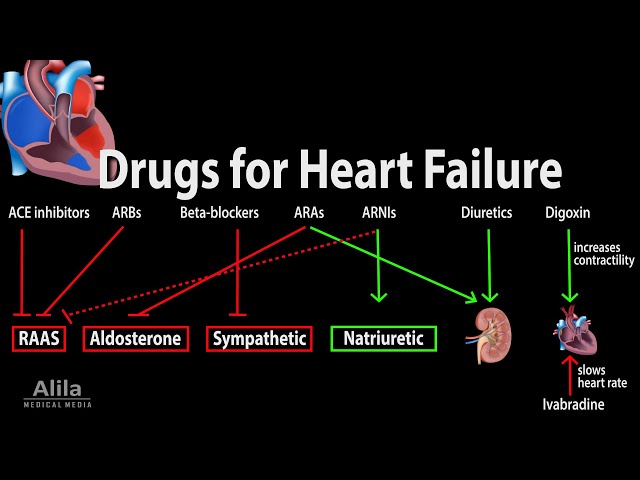
Drugs ending in -PRIL (Lisinopril, Ramipril, Captopril) and -SARTAN (Valsartan, Losartan, Candesartan). They have largely replaced digoxin as the first-line drugs for chronic HF. They are proven to improve survival and reverse remodeling.
- Mechanism of Action (ACEIs): Inhibit the Angiotensin-Converting Enzyme (ACE). This prevents the conversion of Ang I to Ang II.
- Result: Decreased peripheral vascular resistance (↓ Afterload).
- Result: Reduced Aldosterone release (↓ Sodium/Water retention = ↓ Preload).
- Result: Dilates veins returning blood to the heart, decreasing peripheral edema.
- Ultimately, they decrease the workload on the heart, allowing it to function efficiently.
- ARBs (Angiotensin II Receptor Blockers): Antagonize Angiotensin II directly at the AT1 receptor. Used mostly if patients cannot tolerate ACEIs.
- Adverse Effects:
- Dry Cough & Angioedema: ACE normally breaks down bradykinin. Inhibiting ACE leads to excess bradykinin in the lungs (causing a hacking cough) and soft tissues (causing angioedema). ARBs do not cause the cough.
- Electrolyte Imbalance: Hyperkalemia (high potassium) because dropping aldosterone prevents potassium excretion.
- Profound first-dose hypotension, dizziness, and potential renal impairment (if bilateral renal artery stenosis is present).
2. Angiotensin Receptor-Neprilysin Inhibitors (ARNIs)
A breakthrough combination drug (e.g., Entresto: Sacubitril + Valsartan). It simultaneously blocks the bad pathways (RAAS) while boosting the body's natural defense against HF.
- The Physiology: The heart releases Natriuretic Peptides (ANP from atria, BNP from ventricles) when stretched. These act to increase sodium/water excretion, promote vasodilation, and decrease sympathetic outflow. However, an enzyme called Neprilysin quickly destroys them.
- Mechanism: Sacubitril inhibits Neprilysin, keeping ANP and BNP active much longer. Valsartan (an ARB) prevents Ang II from raising blood pressure.
- Note: Nesiritide is a synthetic BNP used IV, which acts chiefly by causing vasodilation in acute decompensated HF.
3. Diuretics (The Symptom Relievers)
Diuretics are the first-line therapy for the symptomatic relief of both systolic and diastolic failure. They decrease excess fluid by increasing urine output, drastically reducing preload. They are used before digitalis.
Examples: Furosemide, Bumetanide, Torsemide.
MOA: Block the Na+/K+/2Cl- co-transporter in the thick ascending limb of the Loop of Henle.
Use: Very powerful. Used for immediate reduction of pulmonary congestion and severe edema (acute HF) and moderate-severe chronic HF.
Examples: Hydrochlorothiazide, Metolazone.
MOA: Block the Na+/Cl- co-transporter in the distal convoluted tubule, decreasing H&₂O absorption.
Use: Sometimes sufficient for mild chronic failure.
Aldosterone Antagonists (Potassium-Sparing Diuretics)
Examples: Spironolactone, Eplerenone.
- Mechanism: They competitively bind to aldosterone receptors in the collecting duct, preventing sodium reabsorption and potassium excretion.
- Crucial Benefit: Beyond just being weak diuretics, they directly inhibit aldosterone's toxic fibrotic effects on the myocardium. Clinical studies show they decrease cardiac remodeling and significantly reduce mortality / improve survival in chronic failure.
4. Beta-Adrenergic Blockers (The Shield)
Examples: Carvedilol, Bisoprolol, Metoprolol.
Historically, giving a drug that slows the heart to a patient with a failing heart was considered dangerous. Now, they are mandatory for chronic HF because they block the toxic, relentless bombardment of the Sympathetic Nervous System.
- Mechanism: Block β1, β2, and sometimes α1 receptors (Carvedilol).
- Negative Chronotropic: Decreases heart rate, allowing the ventricles more time to fill with blood during diastole.
- Negative Inotropic: Decreases contractility initially (reduces workload and oxygen demand).
- Blocks β1 receptors on the kidney's JG cells, stopping the release of Renin and dropping blood pressure.
- Clinical Rule: They neutralize sympathetic outflow and heavily improve survival. However, the dose must be strictly monitored. They are ONLY given to stable HF patients. They are contraindicated in acute decompensated HF because they can acutely worsen failure by dropping contractility too low.
5. Vasodilators
Examples: Isosorbide dinitrate (organic nitrate) + Hydralazine.
- Mechanism:
- Nitrates: Release Nitric Oxide (NO) → ↑ cGMP → direct venodilation. This massively decreases preload (blood pooling in veins instead of rushing to the heart). Also dilates coronary arteries, increasing oxygen delivery to the myocardium.
- Hydralazine: Direct arterial vasodilator. Massively decreases afterload.
- Use: Plays a minor role as monotherapy, but the combination is highly effective (especially in African American patients or those who cannot tolerate ACEIs due to severe renal issues).
- Adverse Effects: Headache, severe hypotension, reflex tachycardia.
- Absolute Contraindication: Must NEVER be taken with PDE-5 inhibitors like Viagra (Sildenafil). Both drugs boost cGMP. Together, they cause irreversible, life-threatening hypotension.
VII. Positive Inotropes (Increasing Contractility)
These drugs force the weakened heart muscle to squeeze harder. While they improve symptoms and cardiac output, they do not improve long-term survival (forcing a sick horse to run faster eventually kills it).
1. Cardiac Glycosides (Digoxin)
- Uses: Treats HF by making contractions stronger (+ve inotrope). Treats supraventricular arrhythmias/tachycardias (and paroxysmal atrial tachycardia) because it acts on the CNS (vagal tone) to strictly slow the heart rate (-ve chronotrope). Exception: Do not use in Wolff-Parkinson-White syndrome.
- Digoxin directly inhibits the Na+/K+ ATPase pump on the cardiac cell membrane.
- This stops sodium from being pumped out, leading to a small but critical increase in intracellular Sodium (Na+).
- This high Na+ alters the driving force of a secondary pump: the Sodium-Calcium Exchanger (NCX). Normally, NCX pumps Ca2+ out of the cell. Now, it either stops or works in reverse.
- Result: Calcium accumulates inside the cell. It is stored in the sarcoplasmic reticulum. Upon the next action potential, a massive release of calcium occurs, leading to a much more forceful contraction.
- End Result: ↑ Cardiac Output, ↑ Renal perfusion (↑ urine output), and ↓ Blood volume (reverses edema).
- Long Half-Life: 1-2 days. Often requires a "Loading Dose" to reach therapeutic levels quickly.
- Excretion: Excreted unchanged by the kidneys. Use extreme caution in renal impairment!
- Narrow Therapeutic Index: The dose that cures is very close to the dose that kills. Blood levels must be closely monitored.
- Side Effects: Early: Anorexia, nausea, vomiting, ECG changes. Late: Disorientation, visual halos (yellow/green vision). Toxic: Fatal cardiac arrhythmias.
- Hypokalemia Danger: Digoxin and Potassium compete for the exact same binding spot on the Na+/K+ ATPase. If potassium is low (e.g., from taking Loop/Thiazide diuretics or Amphotericin B), Digoxin has no competition and binds too much, causing severe Digoxin Toxicity.
- Management of Toxicity: Supportive therapy (correct electrolytes/arrhythmias). For severe overdose, use Digoxin Immune Fab (Digibind) antibodies to pull it out of the blood.
2. Phosphodiesterase III (PDE) Inhibitors
Examples: Inamrinone, Milrinone.
- Mechanism: They specifically inhibit the 'heart-specific' enzyme Phosphodiesterase III. This prevents the breakdown of cyclic AMP (cAMP) inside the cell.
- In the heart: ↑ cAMP activates protein kinases that drive massive amounts of calcium into the cell → ↑ force of contraction & cardiac output.
- In the blood vessels: ↑ cAMP causes smooth muscle relaxation → Vasodilation.
- Because they do both, they are termed Inodilators.
- Use: IV administration only. Used for short-term management of acute advanced heart failure, or long-term management only as a bridge for patients awaiting a heart transplant who haven't responded to digoxin, diuretics, or vasodilators.
- Adverse Reactions: Risk increases with prolonged use. Serious side effects include chest pain, bronchospasm, and tremors. High risk of Ventricular Dysrhythmias (in ~10% of patients). Patients must be strictly monitored with continuous ECG during IV infusion.
3. Beta-1 Adrenoceptor Agonists
Examples: Dobutamine, Dopamine.
- Mechanism (Dobutamine): A highly selective β1 agonist. Stimulates β1 receptors on the heart → ↑ adenylyl cyclase → ↑ cAMP → huge influx of calcium. Increases contractility, leading to decreased end-systolic volume and increased stroke volume/cardiac output.
- Pharmacokinetics: Administered IV. Very rapid onset (2 min) and rapid elimination (t½ is 2 mins via kidney/liver methylation).
- Uses: Extremely useful for treating cardiogenic shock and acute HF where systolic function is markedly depressed and BP is dangerously low.
- Limitations: They are NOT appropriate for chronic failure. Continuous use causes receptor down-regulation (tolerance), they lack oral efficacy, and they have massive arrhythmogenic effects.
- Adverse & Contraindications: Causes hypotension, hypertension (in patients on non-selective beta-blockers), arrhythmias, nausea, hypokalemia. Contraindicated in: Hypersensitivity, Pheochromocytoma, recent Myocardial Infarction, unstable angina, and stenosis of the main left coronary artery.
VIII. Summary: Treatment Algorithm for CHF
Heart failure is treated in a logical, step-wise fashion to reverse physiology and promote survival.
- Diuretics: Administer first if there are signs of fluid retention/volume overload.
- ACE Inhibitors (or ARBs): Give regardless of fluid retention (Class I to IV). They improve patient survival and reverse cardiac remodeling.
- Beta-Blockers (Bisoprolol, Metoprolol, Carvedilol): Give in all classes of CHF except acute decompensated HF. They neutralize sympathetic outflow and greatly improve survival.
- Aldosterone Antagonists (Spironolactone): Add if symptoms persist. Halts remodeling.
- Vasodilators (Hydralazine + Nitrates): Add if symptoms persist to drop afterload and preload, respectively.
- Digoxin: Add as a last-resort oral medication if severe congestive symptoms persist, to increase cardiac contractility and reduce symptoms (does not improve long-term survival).
References & Further Reading
- Katzung, B. G. (2020). Basic & Clinical Pharmacology (15th ed.). McGraw-Hill Education. (Chapters on Heart Failure and Cardiac Glycosides).
- Brunton, L. L., et al. (2017). Goodman and Gilman's The Pharmacological Basis of Therapeutics (13th ed.). McGraw-Hill. (In-depth mechanisms of PDE inhibitors and ARNIs).
- Yancy, C. W., et al. (2017). ACC/AHA/HFSA Focused Update of the 2013 ACCF/AHA Guideline for the Management of Heart Failure. Circulation.
- Lilly, L. S. (2015). Pathophysiology of Heart Disease (6th ed.). Wolters Kluwer. (Physiology of compensatory RAAS and SNS mechanisms).
Quick Quiz
Heart Failure Pharmacology Quiz
Pharmacology
Privacy: Your details are used only for quiz tracking and certificates.
Heart Failure Pharmacology Quiz
Pharmacology
Preparing questions...
Choose your answer and keep your streak alive.
Great effort.
Here is your quick performance summary.