
Table of Contents
TogglePharmacology of Antibacterial Agents
I. Fundamentals of Antibacterial Therapy
Antibacterial agents are specialized pharmacological drugs designed to inhibit bacterial growth or outright kill bacteria. It is crucial to understand that these agents are exclusively used to treat bacterial infections; they have absolutely zero efficacy against viral, fungal, or parasitic infections (unless specifically noted, like metronidazole).
The entire field of antibacterial pharmacology relies on the principle of Selective Toxicity. This means the drug must target anatomical structures or biochemical processes that are unique to the bacteria, thereby destroying the pathogen while leaving the host's (human) cells unharmed. Examples include targeting the bacterial cell wall (humans don't have cell walls) or bacterial ribosomes (which are structurally different from human ribosomes).
Bactericidal vs. Bacteriostatic Activity
Antibiotics are traditionally divided into two major behavioral categories based on how they interact with the bacteria:
These drugs directly kill the susceptible bacteria. They are essential for severe infections, immunocompromised patients, or infections in areas where the immune system struggles to reach (e.g., endocarditis, meningitis).
- Examples: β-lactams, Aminoglycosides, Fluoroquinolones, Vancomycin, Metronidazole.
These drugs inhibit active bacterial growth and replication, but do not directly kill them. They halt the bacterial army, allowing the host's intact immune system (white blood cells) time to arrive and clear the infection.
- Examples: Tetracyclines, Macrolides, Chloramphenicol, Sulfonamides.
The distinction between bactericidal and bacteriostatic is not absolute. The activity of a drug can change based on the specific organism, the drug concentration at the site of infection, and the host's tissue environment. For example, a bacteriostatic drug given at massive concentrations might become bactericidal against certain delicate bacteria.
II. Major Classification by Mechanism of Action (Target)
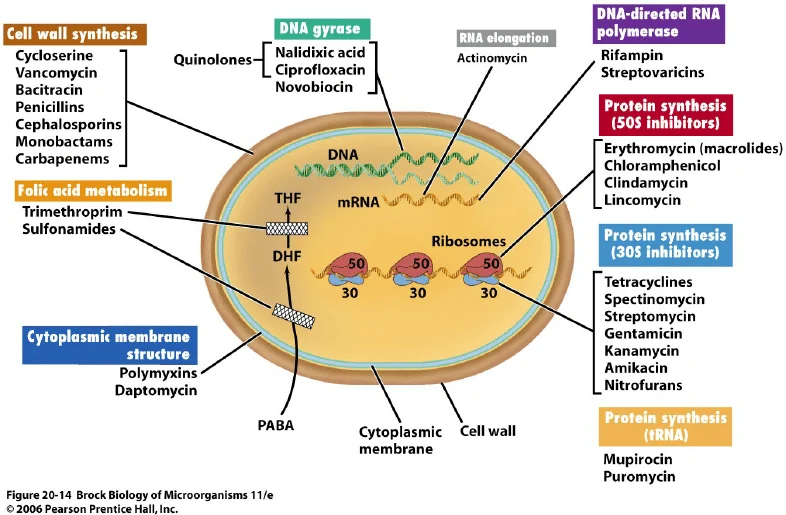
To master antibacterial drugs, you must categorize them by the bacterial structure they attack. The major targets are:
- Cell Wall Synthesis Inhibitors (Destroying the bacterial armor).
- Cell Membrane Disruptors (Punching holes in the membrane).
- Protein Synthesis Inhibitors (Targeting the bacterial 30S or 50S ribosomal subunits).
- Nucleic Acid Synthesis/Function Inhibitors (Destroying bacterial DNA/RNA).
- Antimetabolites (Blocking the bacterial folate synthesis pathway).
III. Cell Wall Synthesis Inhibitors
Human cells have cell membranes, but bacteria possess a rigid outer peptidoglycan cell wall that prevents them from exploding due to high internal osmotic pressure. Drugs that inhibit the creation of this wall cause the bacteria to swell and burst (lysis). Hence, all cell wall inhibitors are bactericidal.
1. The β-Lactam Antibiotics
This is the largest and most famous class of antibiotics. They all share a core chemical structure known as the β-lactam ring, which is absolutely essential for their antibacterial activity. If this ring is broken, the drug becomes useless.
- Mechanism of Action: They structurally resemble the D-Ala-D-Ala terminal of peptidoglycan chains. They irreversibly bind to and inhibit Penicillin-Binding Proteins (PBPs) (also known as transpeptidases). This blocks the final cross-linking of the peptidoglycan wall, rendering it structurally weak.
A. Penicillins
- Natural Penicillins: Penicillin G (IV) and Penicillin V (Oral). Used for highly susceptible Gram-positive organisms (e.g., Streptococcal throat infections) and is the gold standard for Syphilis (Benzathine Penicillin G).
- Aminopenicillins: Ampicillin, Amoxicillin. Broader spectrum. Heavily used for respiratory (pneumonia) and ENT infections (otitis media).
- Antistaphylococcal: Cloxacillin, Flucloxacillin, Dicloxacillin. Specifically engineered to resist destruction by Staphylococcal enzymes. Used for skin and soft-tissue infections.
- Antipseudomonal: Piperacillin. Extended spectrum to cover dangerous Gram-negative rods like Pseudomonas aeruginosa.
- β-Lactamase Inhibitor Combinations: Many bacteria evolved an enzyme called β-lactamase (penicillinase) that acts like scissors to cut the drug's β-lactam ring. To outsmart them, we combine the antibiotic with a "decoy" drug that sacrifices itself to the enzyme.
- Examples: Amoxicillin + Clavulanate (Augmentin), Piperacillin + Tazobactam. Used for severe polymicrobial infections.
- Hypersensitivity Reactions: Ranging from mild maculopapular rashes to fatal anaphylaxis (throat swelling, shock).
- GI Upset & Diarrhea: Alteration of normal gut flora. Can lead to dangerous Antibiotic-associated colitis (Clostridioides difficile infection).
- Neurotoxicity: At abnormally high doses, especially in patients with severe renal impairment (failing to excrete the drug), penicillins can cross into the brain and cause seizures.
- Hematologic/Hepatic: Rare bone marrow or liver enzyme disturbances.
B. Cephalosporins
Similar to penicillins but generally more resistant to bacterial enzymes. They are classified into "Generations." As you move from the 1st to the 4th generation, the drug loses a bit of Gram-positive strength but massively gains Gram-negative strength and CNS penetration.
| Generation | Examples | Primary Clinical Activity & Spectrum |
|---|---|---|
| 1st Gen | Cefazolin, Cephalexin | Mainly Gram-positive activity. Excellent for surgical prophylaxis (preventing skin flora infections). |
| 2nd Gen | Cefuroxime, Cefoxitin | Expanded Gram-negative activity. Good for respiratory tract infections and some anaerobes. |
| 3rd Gen | Ceftriaxone, Cefotaxime, Ceftazidime | Strong Gram-negative coverage. Crosses the blood-brain barrier well (First-line for Meningitis). Note: Ceftazidime covers Pseudomonas. |
| 4th Gen | Cefepime | Broad activity covering both Gram-positives and highly resistant Gram-negatives, including Pseudomonas. |
| 5th Gen | Ceftaroline | Engineered to bind to mutated PBPs. The only cephalosporin active against MRSA (Methicillin-Resistant Staphylococcus aureus). |
C. Carbapenems & Monobactams
- Carbapenems (Meropenem, Imipenem, Ertapenem): The "big guns." They have a massively broad spectrum. Reserved for severe, life-threatening, or highly resistant multi-drug hospital infections.
- Pharmacological Pearl: Imipenem is rapidly degraded in the kidneys by an enzyme called human renal dehydropeptidase-I. Therefore, it is ALWAYS co-administered with Cilastatin, an inhibitor of this enzyme, to ensure the drug survives long enough to work.
- Monobactams (Aztreonam): Has a single, isolated β-lactam ring. It targets ONLY aerobic Gram-negative bacilli. Crucially, it has no cross-reactivity with penicillins, making it safe for patients with severe penicillin allergies.
2. Glycopeptides (Vancomycin)
Vancomycin does not have a β-lactam ring. It is a massive, bulky molecule.
- Mechanism: Instead of binding to the PBPs, Vancomycin directly binds to the D-Ala-D-Ala terminal of the peptidoglycan chain itself, physically blocking the cross-linking enzymes from doing their job.
- Uses: Only effective against Gram-positive organisms (it is too huge to pass through Gram-negative outer pores). It is the primary IV treatment for serious MRSA infections.
- Oral Use: Because it is a massive molecule, it is not absorbed in the GI tract. We use this to our advantage! Oral vancomycin stays entirely in the gut lumen, making it the perfect treatment for severe C. difficile colitis.
- Resistance: Bacteria mutate their wall terminal from D-Ala-D-Ala to D-Ala-D-Lac (Lactate). Vancomycin can no longer grab on, leading to VRE (Vancomycin-Resistant Enterococci).
- Red Man Syndrome (Infusion-related reaction): If given IV too rapidly, it causes a massive direct release of histamine from mast cells, leading to profound flushing, redness of the face/torso, and hypotension. (Prevented by slowing the infusion rate).
- Nephrotoxicity: Kidney damage is an important concern. Requires strict therapeutic drug monitoring (checking blood trough levels).
- Ototoxicity: Damage to the cochlear (hearing) or vestibular (balance) nerves. Rare, but risk skyrockets if combined with other ototoxic drugs (like loop diuretics or aminoglycosides).
3. Other Cell Wall Agents
- Fosfomycin: Inhibits a very early step in peptidoglycan synthesis (inhibits the enzyme MurA). Because it concentrates beautifully in the urine, it is commonly used as a single oral dose for uncomplicated cystitis (bladder infection) in appropriate patients.
- Bacitracin: Inhibits lipid carriers that move cell wall precursors. It is highly nephrotoxic if given systemically, so its use is strictly limited to topical applications (ointments for minor skin cuts/infections).
IV. Protein Synthesis Inhibitors (Ribosomal Targets)
Bacterial ribosomes are 70S (comprised of 30S and 50S subunits). Human cytoplasmic ribosomes are 80S (40S and 60S). This structural difference provides the selective toxicity. Drugs in this class inhibit either initiation, elongation, or peptide transfer of the protein chain.
1. Targeting the 30S Subunit
Examples: Gentamicin, Amikacin, Tobramycin, Streptomycin.
- Mechanism: Bind 30S, causing irreversible misreading of the mRNA. Highly unusual for this class, they are completely Bactericidal.
- Kinetics: They exhibit concentration-dependent killing (the higher the peak drug level above the minimum inhibitory concentration, the faster the bacteria die). They have poor oral absorption and must be given IV for systemic infections.
- Uses: Serious aerobic Gram-negative infections. (They require oxygen to enter the bacterial cell, hence zero effect on anaerobes). Often used in combination (synergy) with cell wall inhibitors for Enterococcal endocarditis. Streptomycin is reserved for Tuberculosis and zoonotic plagues.
- Adverse: Severe Nephrotoxicity and irreversible Ototoxicity (deafness/vertigo). Can cause neuromuscular blockade. Strict dose adjustment required in renal impairment!
Examples: Doxycycline, Tetracycline, Minocycline.
- Mechanism: Bind 30S, physically preventing the incoming aminoacyl-tRNA from attaching to the ribosome. Bacteriostatic.
- Uses: Extremely broad spectrum. Doxycycline has great oral absorption. Used for acne, atypical respiratory pneumonias (Mycoplasma), rickettsial diseases (Rocky Mountain Spotted Fever), and STIs (Chlamydia).
- Adverse / Interactions: They readily chelate (bind strongly) to divalent cations (Calcium, Iron, Magnesium, Aluminum). If taken with milk, antacids, or iron supplements, absorption drops to zero.
- Contraindications: Because they bind to calcium, they permanently stain developing teeth and stunt bone growth. Avoid in pregnancy and young children under 8 years old. Causes severe photosensitivity (sunburns). Esophagitis (take with a full glass of water).
2. Targeting the 50S Subunit
A. Macrolides
Examples: Azithromycin, Clarithromycin, Erythromycin.
- Mechanism: Bind 50S and block the translocation step (the ribosome moving down the mRNA). Generally bacteriostatic.
- Uses: Excellent for respiratory pathogens, whooping cough, and selected "atypical" organisms (Mycoplasma, Legionella, Chlamydia). Often used in patients allergic to penicillins.
- Adverse & Interactions:
- GI Motility: Especially Erythromycin, causes intense stomach cramping (it stimulates motilin receptors).
- Cardiac: Prolongs the QT interval on an ECG, raising the risk for fatal cardiac arrhythmias (Torsades de pointes).
- Drug Interactions: Erythromycin and Clarithromycin are potent inhibitors of liver CYP450 enzymes, leading to toxic build-ups of other medications (e.g., statins, warfarin). Azithromycin does not do this.
- Can cause acute cholestatic hepatitis. Resistance develops rapidly via target-site modification (methylation of the 50S subunit) or efflux pumps.
B. Lincosamides & Oxazolidinones
- Clindamycin (Lincosamide): Binds 50S. Excels at treating selected Gram-positive organisms and anaerobic infections "above the diaphragm" (e.g., lung abscesses, dental infections).
- Black Box Warning: It destroys normal gut flora so intensely that it carries the highest risk of causing C. difficile antibiotic-associated severe diarrhea and pseudomembranous colitis.
- Linezolid (Oxazolidinone): Inhibits the actual formation of the initiation complex at the 50S subunit. A highly specialized drug reserved for resistant Gram-positive infections (MRSA, VRE).
- Adverse: Prolonged use (> 2 weeks) causes severe bone marrow suppression (myelosuppression), thrombocytopenia, and peripheral/optic neuropathy. Has weak MAO inhibitor activity (risk of serotonin syndrome).
C. Chloramphenicol
- Mechanism: Binds 50S and inhibits the enzyme peptidyl transferase (stopping peptide bond formation).
- Status: Highly broad-spectrum, but its systemic use is severely limited in modern medicine due to terrifying toxicity. Reserved only for extreme cases where benefits outweigh risks (e.g., severe meningitis in developing nations).
- Adverse: Dose-related reversible anemia, and idiosyncratic, fatal Aplastic Anemia (irreversible bone marrow destruction). In neonates who lack liver conjugating enzymes, it causes Gray Baby Syndrome (cyanosis, cardiovascular collapse).
V. Nucleic Acid Inhibitors (DNA/RNA Disruptors)
1. Fluoroquinolones
Examples: Ciprofloxacin, Levofloxacin, Moxifloxacin.
- Mechanism: They inhibit two vital bacterial enzymes: DNA Gyrase (relieves DNA supercoiling during replication) and Topoisomerase IV (separates linked DNA daughter chromosomes). Completely Bactericidal.
- Uses: Ciprofloxacin has incredibly strong Gram-negative activity, including coverage for dangerous Pseudomonas. Levofloxacin and Moxifloxacin are "respiratory quinolones" covering pneumonia pathogens. Their use is now heavily guided by safety considerations.
- Severe Adverse Effects (Class Warnings):
- Tendinitis and Tendon Rupture: Especially the Achilles tendon. Risk amplified in elderly patients and those on systemic steroids.
- CNS Effects: Agitation, confusion, seizures.
- QT Prolongation: Cardiac arrhythmias.
- Dysglycemia: Severe swings in blood sugar.
- Contraindicated in children/adolescents: Due to heavy damage to growing cartilage in weight-bearing joints.
2. Rifamycins
Examples: Rifampicin (Rifampin), Rifabutin.
- Mechanism: Strongly inhibits bacterial DNA-dependent RNA polymerase, stopping mRNA transcription. Strong bactericidal activity.
- Uses: A massive key drug in Tuberculosis (TB) combination therapy. Crucial rule: NEVER use rifampicin as a monotherapy for active TB, as resistance develops blindingly fast via a simple point mutation in the RNA polymerase gene.
- Adverse & Interactions:
- Red-Orange Discoloration: Harmlessly turns urine, sweat, saliva, and tears bright orange/red (warn the patient, it can stain contact lenses!).
- Hepatotoxicity and Flu-like syndrome.
- Potent CYP450 Inducer: Opposite of macrolides. Rifampin accelerates liver drug-metabolizing enzymes and transporters. It wildly drops the blood concentrations of other medicines (e.g., completely inactivating oral contraceptives, dropping HIV antiretroviral levels). Interaction checking is mandatory.
3. Nitroimidazoles (Metronidazole)
- Mechanism: A prodrug that is only activated inside anaerobic organisms and certain protozoa (by their unique ferredoxin pathways). Once reduced, it generates highly reactive toxic free-radical metabolites that shred bacterial DNA to pieces.
- Uses: The king of Anaerobic bacteria (intra-abdominal, pelvic, deep dental abscesses). Excellent for parasitic protozoa (Giardia, Trichomonas, Amebiasis).
- Adverse: Nausea, abdominal discomfort, and a very distinct unpleasant metallic taste in the mouth. Dark urine. Peripheral neuropathy with high/prolonged exposure.
- Interactions: Causes a terrifying Disulfiram-like reaction (severe flushing, vomiting, tachycardia, impending doom) if the patient consumes alcohol. Patients must strictly avoid alcohol during and for 3 days after treatment. Interacts with Warfarin (increases bleeding risk).
VI. Antimetabolites (Folate Pathway Inhibitors)
Humans obtain folic acid (Vitamin B9) from their diet (green leafy vegetables). Bacteria cannot absorb environmental folate; they must synthesize it from scratch using PABA (para-aminobenzoic acid). Blocking this pathway stops DNA/RNA nucleotide synthesis.
Sulfamethoxazole inhibits Dihydropteroate Synthase (Step 1).
Trimethoprim inhibits Dihydrofolate Reductase (Step 2).
Individually, these drugs are only bacteriostatic. However, when combined as Co-trimoxazole (Bactrim), they create a synergistic, sequential blockade of the folate metabolism pathway, resulting in powerful bactericidal activity against susceptible organisms.
- Uses: First-line for selected UTIs, respiratory/GI infections. Plays a massive, life-saving role in the prevention and treatment of Pneumocystis jirovecii pneumonia (PCP) in immunocompromised (HIV/AIDS) patients.
- Adverse Effects:
- Rash/Skin reactions: From mild rashes to rare but fatal Stevens-Johnson Syndrome (SJS) / Toxic Epidermal Necrolysis (TEN).
- Blood dyscrasias: Bone marrow suppression, megaloblastic anemia (from folate block).
- Hyperkalemia & Renal effects: Trimethoprim structurally acts like a potassium-sparing diuretic in the kidneys, trapping potassium in the blood. Sulfonamides can crystallize in the urine (crystalluria) leading to kidney damage (advise patients to drink plenty of water).
- Resistance: Occurs rapidly through target enzyme mutation, reduced drug uptake, or the bacteria simply ramping up mass production of PABA to out-compete the sulfonamide.
VII. Pharmacokinetics & Principles of Rational Antibacterial Use
Administering the right drug is useless if the drug cannot physically reach the bacteria.
1. Site of Infection (Pharmacokinetic Principles)
- An active drug must reach the infected tissue at an adequate therapeutic concentration. Blood concentration alone does not guarantee effective tissue exposure. You must consider absorption, distribution, protein binding, and elimination routes.
- Central Nervous System (CNS): The blood-brain barrier is highly selective. For meningitis, you must choose lipid-soluble drugs or drugs that cross inflamed meninges (e.g., Ceftriaxone) in high doses.
- Urinary Tract: Choose agents that are excreted unchanged by the kidneys and concentrate heavily in the urine (e.g., Fosfomycin, Nitrofurantoin, Co-trimoxazole).
- Bone/Joint (Osteomyelitis): Bone has terrible blood supply. Requires drugs with excellent deep tissue penetration and very prolonged therapy (weeks to months).
- Local Factors & Source Control: Drugs cannot penetrate large pools of pus or dead tissue. Source control (surgically draining abscesses, removing infected foreign devices/catheters, debridement of necrotic tissue) is absolutely essential. The best antibiotic cannot cure an undrained abscess.
2. Empirical vs. Definitive Therapy
- Empirical Therapy: Started immediately before the exact causative organism is fully identified in the lab. The initial choice is an educated guess based on the clinical syndrome, likely organisms for that body site, patient factors (allergies, immune status), severity, and local hospital resistance data. (Often broad-spectrum).
- Definitive Therapy & De-escalation: Adjusted 48-72 hours later after blood/tissue cultures and susceptibility (MIC) results return. De-escalation means narrowing the therapy from a broad-spectrum empiric drug to the narrowest, most targeted, and safest effective spectrum possible.
3. Antimicrobial Stewardship
The core tenets of rational use to prevent global antibiotic resistance:
- Use antibiotics ONLY when a bacterial infection is highly likely or confirmed. Do not treat uncomplicated viral respiratory illnesses (the common cold) with antibacterial drugs.
- Always obtain cultures before starting treatment when clinically appropriate (so the drug doesn't sterilize the sample and hide the pathogen), but do not delay urgent life-saving therapy in septic patients.
- Use the appropriate dose, route (IV vs oral), and strictly appropriate duration.
- Review and narrow therapy as soon as microbiology results are available.
VIII. Mechanisms of Bacterial Resistance
Bacteria are highly adaptable organisms. They acquire resistance through spontaneous genetic mutation or via horizontal gene transfer (swapping plasmids of resistance codes with other bacteria). The primary mechanisms include:
Bacteria produce enzymes that chemically destroy the drug before it reaches its target. Example: Production of β-lactamases that destroy penicillins/cephalosporins.
The bacteria mutates the anatomical binding site so the drug can no longer attach. Examples: Altered PBPs creating MRSA; mutated D-Ala-D-Lac creating VRE; methylated ribosomes resisting macrolides.
Gram-negative bacteria shrink or close off their outer membrane porin channels, physically preventing bulky drugs from entering the cell.
The bacteria develops mechanical pumps in its membrane that literally spit the antibiotic back out of the cell faster than it can accumulate. (Common for Tetracyclines and Macrolides).
IX. Clinical Case Applications
1. Pneumonia (Respiratory Tract)
- Presentation: Fever, cough, dyspnea, focal chest findings on X-ray.
- Approach: First, ask: Is this likely bacterial? (Viral pneumonias are common). Assess severity. Determine if it is Community-Acquired (likely Strep pneumoniae, Mycoplasma) vs. Hospital-Acquired (likely Pseudomonas, MRSA).
- Therapy: Choose drugs that reach high effective concentrations in lung tissue (e.g., Macrolides, Respiratory Quinolones, or Aminopenicillins). Review response and narrow therapy once sputum cultures return.
2. Urinary Tract Infection (UTI)
- Presentation: Dysuria, urgency, urinalysis showing leukocyte esterase and nitrites. Supports lower urinary tract infection.
- Approach: Select an agent that achieves adequate urinary concentration (e.g., Fosfomycin, Co-trimoxazole, Nitrofurantoin).
- Considerations: Evaluate pregnancy status (avoid quinolones/tetracyclines), renal function, allergies, and local E. coli resistance rates. Urine cultures are mandatory for recurrent, complicated, or severe infections (pyelonephritis). Avoid unnecessarily broad-spectrum therapy.
3. Skin and Soft-Tissue Infection
- Presentation: Cellulitis, abscess.
- Approach: Likely pathogens are Gram-positives: Streptococci and Staphylococcus aureus. If the infection is purulent (containing pus), suspicion for S. aureus (including MRSA) skyrockets.
- Therapy: Assess immediately if surgical drainage/source control is required (abscess). Select therapy based on severity and local MRSA susceptibility patterns (e.g., Clindamycin, Co-trimoxazole, Doxycycline for oral; Vancomycin or Ceftaroline for severe IV cases). Reassess promptly if the patient does not improve as expected.
References & Further Reading
- Katzung, B. G. (2020). Basic & Clinical Pharmacology (15th ed.). McGraw-Hill Education. (Chapters on β-lactams and Protein Synthesis Inhibitors).
- Brunton, L. L., et al. (2017). Goodman and Gilman's The Pharmacological Basis of Therapeutics (13th ed.). McGraw-Hill. (In-depth mechanisms of antibiotic resistance and pharmacokinetics).
- Levinson, W. (2018). Review of Medical Microbiology and Immunology (15th ed.). McGraw-Hill. (Bacterial structure and pathogenesis linked to pharmacological targets).
- Barlam, T. F., et al. (2016). Implementing an Antibiotic Stewardship Program: Guidelines by the Infectious Diseases Society of America (IDSA). Clinical Infectious Diseases.
Quick Quiz
Pharmacology of Antibacterial Agents Quiz
Pharmacology
Privacy: Your details are used only for quiz tracking and certificates.
Pharmacology of Antibacterial Agents Quiz
Pharmacology
Preparing questions...
Choose your answer and keep your streak alive.
Great effort.
Here is your quick performance summary.