
Table of Contents
TogglePharmacology of Antiviral Agents: Complete Clinical Guide
I. Introduction to Virology (The Enemy)
Before we can understand how to kill a virus, we must understand what it is. Viruses are incredibly difficult to treat pharmacologically because of their nature. They are Obligate Intracellular Parasites. This means they cannot live, metabolize, or divide on their own outside of a host cell.
Unlike bacteria, viruses lack a cell wall, a cell membrane, and most metabolic enzymes. Because they rely entirely on the human host cell machinery to decode their genetic instructions and replicate, any drug designed to kill the virus often ends up severely damaging the human host cell as well. Finding drugs with "selective toxicity" is the biggest challenge in antiviral pharmacology.
1. The Basic Structure of a Virus
A virus is essentially just a package of genetic instructions waiting to be delivered. It consists of three essential parts:
- Central Core: Contains the genetic instructions, which can be either DNA or RNA (never both).
- Capsid: A protective protein shell made of subunits called capsomeres. Human viruses are classified into 4 types depending on the exact geometrical shape of this capsid.
- Envelope: A lipid membrane surrounding the capsid. Note: Not all viruses have an envelope. Those that do, steal it (acquire it) from the human host cell membrane as they exit the cell.
2. Types of Viral Infections & Risk Factors
Viral infections manifest in different ways:
- Asymptomatic: Infection occurs, but the patient shows no disease symptoms.
- Acute: Rapid onset of active disease symptoms (e.g., the common cold).
- Persistent (Long-term):
- Chronic: The infectious virus is continuously present and replicating (e.g., Hepatitis B).
- Latent: The virus stops replicating and hides in the body, waiting to reactivate later (e.g., Herpes Zoster / Shingles).
- Transformation: The virus alters host cell regulation, leading to tumor production/cancer. The viral DNA is completely or partially integrated into the host DNA.
A competent, well-functioning immune system is the absolute best defense; it will eliminate or effectively destroy viral replication. However, an Incompetent Immune System leads to severe, life-threatening viral infections. High-risk populations include:
- Cancer Patients: Especially those with leukemia or lymphoma.
- Transplant Patients: Due to lifelong pharmacological immunosuppressive therapy to prevent organ rejection.
- AIDS Patients: Because the HIV disease specifically attacks and destroys the immune system (CD4 T-cells).
3. Common and Harmful Human Viruses
| DNA Viruses | RNA Viruses |
|---|---|
| Poxvirus (Smallpox) | Paramyxovirus (Measles, Mumps) |
| Herpesviruses (HSV, VZV, CMV) | Rubella virus (German measles) |
| Adenovirus (Eye infections, Gastro) | Rhabdovirus (Rabies) |
| Papillomavirus (HPV Warts) | Picornavirus (Cold, Poliomyelitis) |
The "RICHH" Acronym for highly harmful viruses: Respiratory syncytial virus (RSV), Influenza A (the flu), Cytomegalovirus (CMV), Herpes simplex virus (HSV), HIV, and Hepatitis B & C (HBV/HCV).
II. The Viral Lifecycle & Antiviral Sites of Action
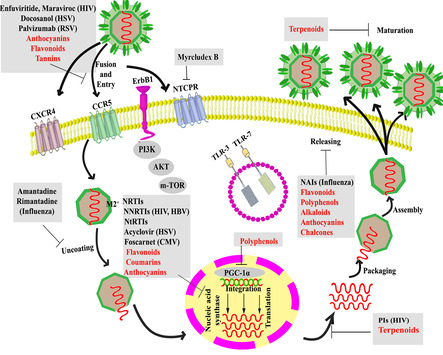
To stop a virus, pharmacologists have designed drugs that interrupt specific steps of the viral replication cycle. An effective antiviral must be able to enter the infected cell, interfere with viral nucleic acid synthesis/regulation, or prevent the virus from binding in the first place.
The virus finds the host cell and attaches to its surface receptors.
Drug Targets: Receptor antagonists (e.g., Maraviroc for HIV), Neutralizing Antibodies (Human Serum Immunoglobulin).
The virus enters the cell and sheds its protein coat to release its genetic material.
Drug Targets: Uncoating inhibitors (e.g., Amantadine for Influenza A), Fusion inhibitors (e.g., Enfuvirtide for HIV).
The viral genetic material forces the host to make viral RNA and viral proteins.
Drug Targets: Interferons, Antisense DNA (e.g., Fomivirsen), siRNA, Ribozymes.
The virus copies its DNA/RNA massively.
Drug Targets: Nucleoside/Nucleotide Analogues (e.g., Acyclovir, Zidovudine), Reverse Transcriptase Inhibitors.
The newly minted viral parts are put together into a mature infectious particle.
Drug Targets: Protease Inhibitors (e.g., Ritonavir).
The new viruses break free (via lysis or exocytosis/budding) to infect other cells.
Drug Targets: Neuraminidase Inhibitors (e.g., Oseltamivir for Influenza).
III. The Foundation of Antivirals: Nucleosides vs. Nucleotides
To understand the majority of antiviral drugs, you absolutely must master the concept of Analogues (Base Mimics). Viral DNA and RNA are built using a sugar attached to specific nitrogenous bases (Purines and Pyrimidines).
- Purines (Double-ring structure): Adenine (A) and Guanine (G).
- Pyrimidines (Single-ring structure): Cytosine (C), Thymine (T) (found only in DNA), and Uracil (U) (found only in RNA).
- The Sugar: Ribose is used for RNA (Ribonucleosides). Deoxyribose is used for DNA (Deoxyribonucleosides).
- The Glycosidic Bond: This is the chemical bond linking the base to the sugar (between N9 of purines or N1 of pyrimidines to the C1' carbon of the sugar).
Most antivirals are Nucleoside or Nucleotide Analogues. They are structurally designed to look exactly like the normal A, G, C, or T bases. The viral DNA polymerase enzyme gets tricked. It picks up the fake drug (the analogue) and inserts it into the growing viral DNA chain. However, because the drug is chemically defective (it lacks a specific 3'-OH group), the next base cannot be attached. This halts DNA polymerase activity and causes Viral Chain Termination.
The Crucial Difference: Activation (Phosphorylation)
- NucleoSide Analogues: These drugs enter the cell without any phosphate groups. To become active and trick the DNA polymerase, they must be phosphorylated THREE times (converted to a triphosphate form). Often, the first phosphate is added by a specific viral kinase, and the next two by host cellular kinases.
- NucleoTide Analogues: These drugs (like Tenofovir, Adefovir, Cidofovir) are already monophosphates (they already contain one phosphate group). They do NOT require a viral kinase to be activated. They are directly phosphorylated by host enzymes to their active diphosphate/triphosphate form. This is huge clinically because they remain active even against mutated, kinase-deficient resistant viral strains!
Categorizing the Analogues
| Analogue Class (Base Mimic) | Drug Examples | Primary Clinical Use |
|---|---|---|
| Guanine (Purine) Analogues | Acyclovir, Ganciclovir, Ribavirin, Abacavir | Herpes, CMV, RSV/HCV, HIV |
| Adenosine (Purine) Analogues | Didanosine, Vidarabine, Tenofovir (Nucleotide), Adefovir (Nucleotide) | HIV, Herpes (rare), Hep B |
| Cytidine (Pyrimidine) Analogues | Lamivudine (3TC), Zalcitabine, Emtricitabine, Cidofovir (Nucleotide), Cytarabine (Ara-C) | HIV, Hep B, CMV retinitis, Leukemia |
| Thymidine (Pyrimidine) Analogues | Zidovudine (AZT), Stavudine, Trifluridine, Idoxuridine | HIV, HSV keratitis |
| Uracil (Pyrimidine) Analogues | Fluorouracil (5-FU), Sofosbuvir (Nucleotide) | Cancers, Hep C |
III. Class 1: Fusion Inhibitors
Fusion inhibitors work at the very first step of the viral lifecycle. Their primary goal is to prevent the attachment of the virus to the host cell membrane.
- Neutralizing Antibodies:
- Passive Immunization and Adoptive T-cell therapy.
- Human Serum Immunoglobulin (HSG): Contains various antibodies extracted from a pool of adults who were initially infected. It is given IV and is used primarily for Hepatitis A & B, and Measles.
- Human Virus Specific Immunoglobulin (HVSG): Extracted from the plasma of patients with known, specific antibodies. Used for Hepatitis B, Rabies, and Varicella-Zoster infections.
- Receptor Antagonists:
- Enfurvitide: A peptide analogue that blocks cell receptors.
- Maraviroc: A specific Chemokine receptor inhibitor.
- Sugar/peptide analogues of the cell receptor itself can be used to trick the virus into binding the drug instead of the cell.
- Other Fusion Inhibitors:
- Sulfated galactomannans: Investigated for use against Dengue and Yellow fever.
IV. Class 2: Uncoating Inhibitors
These drugs prevent the release of the viral RNA complex from its protective nucleoprotein complex (the capsid). If the virus cannot uncoat, it cannot replicate.
1. The Adamantane Derivatives (M2 Inhibitors)
Examples: Amantadine, Rimantadine.
- Mechanism of Action: They interfere with the membrane coating protein M2. The M2 protein functions as a proton ion channel that allows acidification inside the virus, which is required for it to disassemble. By blocking M2, these drugs prevent viral uncoating.
- Potency: Rimantadine is 4 to 10 times more potent than Amantadine.
2. Neuraminidase Inhibitors (H5N1)
Examples: Zanamivir, Oseltamivir (Tamiflu).
While often classed under release inhibitors, they are functionally grouped here as they target surface viral proteins.
- Mechanism of Action: Neuraminidase exists on the surface of the virus and catalyzes the cleavage of sialic acid from the host cell, which facilitates the release of the viral particle.
- Sialic Acid Analogues: Zanamivir and Oseltamivir are potent inhibitors of neuraminidase. They are used specifically to treat Influenza A & B (given intranasally or orally).
V. Class 3: Nucleoside & Nucleotide Analogues
This is the largest and most important class of antiviral drugs. They achieve selective inhibition of virus DNA replication.
These drugs act as "fake building blocks" (base mimics). They work by:
- Acting as a competitive inhibitor of viral DNA polymerase.
- Causing Viral chain termination. Because the drug lacks the proper chemical structure to attach the next DNA base, once it is incorporated into the growing viral DNA chain, the chain cannot be extended.
- Leading to the complete inactivation of DNA polymerase.
Understanding the Chemical Structure
Nucleosides consist of a base and a sugar linked by a Glycosidic Bond (between the N1/N9 atom of the base and the C1' carbon of the sugar).
- The Sugar: Ribose is used for ribonucleosides (RNA). Deoxyribose is used for deoxyribonucleosides (DNA).
- Purine Bases: Adenine (A) or Guanine (G).
- Pyrimidine Bases: Cytosine (C), Uracil (U - in RNA), or Thymine (T - in DNA).
Comprehensive Master Table of Analogues
| Drug Name | Type | Class (Base Mimic) | Clinical Use |
|---|---|---|---|
| Zidovudine (AZT) | Nucleoside | Thymidine analog | HIV (antiretroviral) |
| Lamivudine (3TC) | Nucleoside | Cytidine analog | HIV, Hepatitis B |
| Abacavir | Nucleoside | Guanosine analog | HIV |
| Emtricitabine (FTC) | Nucleoside | Cytidine analog | HIV |
| Didanosine (ddI) | Nucleoside | Adenosine analog | HIV |
| Acyclovir | Nucleoside | Guanosine analog | Herpes simplex virus (HSV), VZV |
| Ganciclovir | Nucleoside | Guanosine analog | Cytomegalovirus (CMV retinitis & systemic) |
| Cytarabine (Ara-C) | Nucleoside | Cytidine analog | Leukemia (AML) |
| Gemcitabine | Nucleoside | Deoxycytidine analog | Pancreatic, breast, lung cancer |
| Vidarabine (Ara-A) | Nucleoside | Adenosine analog | Herpes viruses (rarely used now) |
| Tenofovir (TDF, TAF) | Nucleotide | Adenosine monophosphate analog | HIV, Hepatitis B |
| Adefovir dipivoxil | Nucleotide | Adenosine monophosphate analog | Hepatitis B |
| Cidofovir | Nucleotide | Cytidine monophosphate analog | CMV retinitis (HIV patients) |
| Sofosbuvir | Nucleotide | Uridine monophosphate analog | Hepatitis C |
| Fluorouracil (5-FU) | Nucleoside prodrug | Uracil analog | Colorectal, breast, GI cancers |
| Ribavirin (RTCD) | Nucleoside | Guanosine analog | Influenza A/B, RSV, LV, HV |
| Zalcitabine (ddC) | Nucleoside | Cytosine analog | HIV |
| Idoxuridine (IDU) | Nucleoside | Thymine analog | HSV |
| Stavudine (d4T) | Nucleoside | Thymine analog | HIV |
| Trifluridine | Nucleoside | Thymine analog | HSV |
Classic Examples Explained in Detail
- Zidovudine (AZT): A Thymidine analog used for HIV treatment. MOA: Must be phosphorylated by host enzymes to AZT-triphosphate → inhibits HIV reverse transcriptase → chain termination.
- Cytarabine (Ara-C): A Cytidine analog used for Leukemia (AML). MOA: Incorporated into human DNA → halts DNA polymerase activity (anticancer effect).
- Gemcitabine: A Deoxycytidine analog used for Pancreatic, breast, and non-small cell lung cancer. MOA: Inhibits ribonucleotide reductase and DNA synthesis.
These already contain a monophosphate group.
- Tenofovir disoproxil fumarate (TDF): An Adenosine monophosphate analogue used for HIV and Hepatitis B. MOA: Converted to tenofovir diphosphate → inhibits reverse transcriptase → chain termination.
- Adefovir dipivoxil: An Adenosine monophosphate analogue used for Hepatitis B. MOA: Converted to adefovir diphosphate → DNA polymerase inhibition.
- Cidofovir: A Cytidine monophosphate analogue used for CMV retinitis in AIDS patients. MOA: Because it is already a monophosphate, it skips the need for viral activation and inhibits viral DNA polymerase directly.
Pharmacology of Antiviral Agents: Part 2 (Specific Viral Therapies)
Following our mastery of viral structure and analogue mechanisms, we will now meticulously break down the specific drug classes used to combat the most dangerous viral infections: Herpes, Hepatitis, Influenza, and HIV.
IV. Anti-Herpesvirus Agents
The Human Herpesvirus (HHV) family is notorious for establishing latent infections—they hide in the body's nerve ganglia and reactivate when the immune system dips.
- HHV-1: Primary herpetic gingivostomatitis (oral cold sores).
- HHV-2: Genital lesions (clinically similar to HHV-1).
- HHV-3: Varicella-Zoster Virus (VZV), which causes Chickenpox initially and Shingles upon reactivation.
- CMV (Cytomegalovirus): A severe opportunistic infection.
1. The Prototype: Acyclovir & Valacyclovir
Acyclovir is a Guanine analogue exclusively active against the Herpes group (HSV-1, HSV-2, and VZV). Valacyclovir is simply its prodrug, designed for much better oral bioavailability.
Acyclovir is an acyclic guanosine derivative. To become active, it must be phosphorylated three times (converted to AcycloGTP).
- The very first phosphate can ONLY be added by a specific viral enzyme: Viral Thymidine Kinase.
- Because human cells lack this specific kinase, the drug remains completely inactive (and harmless) in healthy cells. It has a 200x higher affinity for viral enzymes than mammalian enzymes!
- Once monophosphorylated by the virus, host cellular kinases add the next two phosphates.
- Active AcycloGTP then selectively inhibits viral DNA polymerase by competing with endogenous dGTP, and incorporates into the viral DNA, causing immediate chain termination.
- Clinical Uses: Oral, IV, and Topical formulations for HSV and VZV. It is NOT effective for CMV because CMV lacks the thymidine kinase enzyme!
- Resistance Mechanism: The virus outsmarts the drug by mutating its viral thymidine kinase (so the drug never gets activated) or mutating its DNA polymerase. This creates cross-resistance to valacyclovir, famciclovir, and ganciclovir.
- Toxicity: Generally safe (nausea, diarrhea, headache). However, because it is cleared by glomerular filtration and tubular secretion, high IV doses can cause Renal Insufficiency (crystal nephropathy) and Encephalopathy (tremors, delirium).
2. Anti-Cytomegalovirus (CMV) Agents
CMV is an extremely dangerous opportunistic infection. It is a major cause of death and multi-organ disease (pneumonia, hepatitis, gastroenteritis, retinitis leading to blindness, and encephalitis) in people with AIDS, bone marrow/stem cell transplant (HCT) recipients, and those undergoing chemotherapy.
Acyclic guanosine analogs (Valganciclovir is the high-bioavailability oral prodrug suitable for chronic outpatient management).
- MOA: Similar to Acyclovir, but in CMV, the first phosphorylation is catalyzed by a specific CMV phosphotransferase enzyme called UL97.
- Uses: The Drug of Choice (DOC) for CMV retinitis, pneumonia, colitis. Also active against HSV, VZV, and EBV.
- Severe Toxicity: Highly toxic! Causes profound Bone Marrow Suppression (Leukopenia in 40%, Thrombocytopenia in 20%) and CNS effects (psychosis, coma, convulsions). 1/3 of patients must stop therapy due to toxicity.
A Cytidine monophosphate (NucleoTide) analog given IV only.
- MOA: Because it already has one phosphate group, it skips viral kinase activation entirely. It is directly phosphorylated to its active diphosphate form to inhibit viral DNA polymerase.
- Uses: CMV retinitis, especially in ganciclovir-resistant strains. Investigational for HPV, adenovirus, and BK virus.
- Toxicity: Severe, dose-limiting Nephrotoxicity. Must be co-administered with oral probenecid to reduce renal toxicity.
Foscarnet is entirely unique. It is NOT a nucleoside or nucleotide. It is an inorganic pyrophosphate analog.
- Mechanism: It does NOT require any activation by phosphorylation. It binds directly to the pyrophosphate binding site of viral DNA polymerase (and HIV Reverse Transcriptase) and inhibits DNA chain elongation directly.
- Uses: Used IV for CMV retinitis and HSV/VZV infections that are heavily resistant to Acyclovir and Ganciclovir.
- Severe Side Effects: Nephrotoxicity (most common ADR, 25% of patients) and profound Electrolyte Disturbances. It chelates divalent cations causing massive Hypocalcemia, hypomagnesemia, hypokalemia, which can lead to seizures.
Highly Specialized Agents
- Fomivirsen: An Antisense Oligonucleotide (synthetic antisense RNA). It binds perfectly to CMV immediate-early mRNA, physically blocking its translation into viral protein. Used via direct intravitreal injection into the eye for CMV retinitis. It was the first antisense drug approved for humans, though rarely used now.
- Trifluridine: A thymidine nucleoside analog. Because it lacks selectivity (it is phosphorylated by host kinases and inhibits both viral AND human host DNA polymerases), it is highly toxic systemically. Therefore, it is only used topically (1% ophthalmic drops) for acyclovir-resistant ocular HSV keratoconjunctivitis/keratitis. Side effects include eye irritation and lid edema.
V. Anti-Hepatitis Agents (HBV & HCV)
- Lamivudine (3TC): A Cytidine analog (NRTI). Phosphorylated intracellularly to inhibit both HIV reverse transcriptase and HBV DNA polymerase. Uses: HIV and Hepatitis B. Resistance: Can occur via HBV YMDD motif mutation.
- Adefovir Dipivoxil: An Adenosine monophosphate analog (Nucleotide). Competitively inhibits HBV DNA polymerase → chain termination. Uses: Chronic Hep B. Side effect: Nephrotoxicity.
- Tenofovir (TDF/TAF): Adenosine monophosphate analog (Nucleotide). Inhibits HBV DNA pol and HIV RT. Uses: Backbone of HIV ART and first-line monotherapy for Hep B.
A broad-spectrum Guanosine analog.
- MOA: Highly complex. Phosphorylated by host enzymes → inhibits capping of viral mRNA, inhibits viral RNA-dependent RNA polymerase, induces lethal mutagenesis, and depletes GTP pools via IMP dehydrogenase inhibition.
- Uses: Chronic HCV (with interferon) and RSV.
- Toxicity: Hemolytic anemia. Highly Teratogenic (strictly avoid in pregnancy!).
Interferons (Alfa & Pegylated)
Interferons are natural immunomodulators (cytokines) with antiviral and anticancer properties. Recombinant Type I interferon binds to cell surface receptors and induces host enzymes to inhibit viral RNA translation, degrade viral mRNA/tRNA, and halt virion assembly.
- Clinical Uses: Hepatitis B and C, HPV warts, Kaposi's sarcoma, Hairy cell leukemia, and melanoma.
- Pegylation Concept: Pegylated Interferon Alpha has a linear or branched Polyethylene Glycol (PEG) moiety attached to it. This vastly increases the drug's half-life and provides steady drug concentrations, meaning less frequent dosing and sustained antiviral activity.
- Toxicity: Severe "Flu-like syndrome", Bone Marrow suppression, and profound CNS effects.
VI. Anti-Influenza Agents
Used to prevent and treat Influenza A and B, including H5N1 (avian flu) and the novel 2009 H1N1 (swine flu).
| Feature | Amantadine & Rimantadine (Uncoating Inhibitors) | Oseltamivir & Zanamivir (Neuraminidase Inhibitors) |
|---|---|---|
| Mechanism of Action | Adamantane derivatives. They bind to the M2 proton ion channel protein, preventing the acidification of the virus. This physically blocks viral uncoating (disassembling). | Analogues of sialic acid. They competitively inhibit the surface enzyme Neuraminidase. Neuraminidase normally cleaves sialic acid residues to allow newly formed viruses to break free. Inhibiting it causes virions to clump to the host cell, preventing viral release and spread. |
| Effective Against | Influenza A ONLY. (Due to high resistance in circulating strains, clinical use is now heavily limited). | Both Influenza A and B. Active against current H3N2 and H1N1 strains. |
| Pharmacokinetics | Oral. Rimantadine is 4-10x more potent than Amantadine. | Oseltamivir (Tamiflu): Oral Prodrug activated by hepatic esterases (Age ≥2 weeks). Zanamivir: Active drug given via Inhalation (Diskhaler) (Age ≥7 years). |
| Specific Side Effects | Amantadine: High CNS penetration (confusion, dizziness, insomnia, Livedo reticularis). Also treats Parkinson's disease. Rimantadine: Lower CNS penetration, mostly GI upset. |
Oseltamivir: Nausea, vomiting. Zanamivir: Severe bronchospasm and cough (Contraindicated in Asthma/COPD patients!). |
VII. HIV and Antiretroviral Therapy (ART)
To treat HIV/AIDS, we use a cocktail of drugs that attack different stages of the HIV replication cycle.
- Attachment: HIV binds to CD4 receptors and co-receptors (CCR5/CXCR4).
- Fusion/Entry: Viral envelope fuses with the host-cell membrane.
- Reverse Transcription: Viral RNA is converted into DNA by reverse transcriptase.
- Integration: Viral DNA enters the nucleus and is spliced into the host-cell DNA by integrase.
- Transcription: Integrated DNA directs production of viral RNA.
- Translation: Viral RNA produces viral proteins.
- Assembly: RNA and proteins assemble into immature particles.
- Budding: New particles bud from the membrane.
- Maturation: Viral protease cleaves viral proteins, creating a mature, infectious HIV particle.
1. Nucleoside/Nucleotide Reverse Transcriptase Inhibitors (NRTIs)
Examples: Zidovudine (AZT), Lamivudine (3TC), Abacavir (ABC), Emtricitabine (FTC), Tenofovir (TDF/TAF), Didanosine, Zalcitabine, Stavudine.
- Mechanism: They are fake building blocks. They enter via passive diffusion, are phosphorylated to the triphosphate form, and competitively inhibit the viral Reverse Transcriptase enzyme, causing chain termination.
- Zidovudine (AZT) Specifics: A deoxythymidine analog. Highly effective in preventing mother-to-newborn transmission. Major Toxicity: Severe Myelosuppression (anemia, neutropenia), GI intolerance, headaches, and insomnia.
- Other Specific NRTI Toxicities (Highly Testable):
- Didanosine: Can cause severe, fatal Pancreatitis.
- Zalcitabine & Stavudine: High risk of painful Peripheral Neuropathy.
- Abacavir: Very effective, but can cause a fatal, genetically-linked Hypersensitivity Reaction.
2. Non-Nucleoside Reverse Transcriptase Inhibitors (NNRTIs)
Examples: Nevirapine, Delavirdine, Efavirenz.
- Mechanism: These drugs do NOT compete with nucleosides and do NOT require phosphorylation. They bind directly to an allosteric site on the viral reverse transcriptase enzyme, causing a blockade of RNA/DNA-dependent DNA polymerase activity.
- Clinical Rules: They are substrates and inhibitors of CYP3A4 (many drug interactions). They can never be given alone.
- Specific Drugs:
- Nevirapine: Excellent for preventing mother-to-newborn transmission when given at the onset of labor and to the neonate at delivery.
- Delavirdine & Efavirenz: Teratogenic. Absolutely contraindicated during pregnancy.
3. Protease Inhibitors (PIs)
Examples: Indinavir, Ritonavir, Saquinavir, Nelfinavir, Amprenavir, Atazanavir, Lopinavir, Darunavir (All end in -navir).
- Mechanism: They inhibit HIV protease. This prevents the cleavage of viral polyproteins, meaning the cell produces immature, completely non-infectious virions.
- Class-Wide Toxicity: PIs cause a highly specific syndrome of metabolic derangement: Altered body fat distribution, Insulin resistance, and Hyperlipidemia.
- Drug-Specific Key Differences:
- Atazanavir: Causes Hyperbilirubinemia → jaundice.
- Indinavir: Crystalluria and Kidney Stones (requires extremely good hydration).
- Ritonavir: A massive CYP3A4 Inhibitor / Pharmacokinetic Booster. It increases concentrations of other HIV drugs by inhibiting their metabolism. Contraindication: Never give with antifungal azoles.
- Amprenavir: Can cause Stevens-Johnson Syndrome.
- Saquinavir: Cardiac conduction/QT prolongation concerns.
- Darunavir: High resistance barrier.
- Lopinavir: Severe GI + metabolic effects.
4. Other Advanced HIV Drug Classes
Examples: Dolutegravir, Raltegravir, Bictegravir (End in -tegravir).
Mechanism: They inhibit HIV integrase, preventing the integration of viral DNA into the host-cell genome.
Examples: Maraviroc, Enfuvirtide (T-20).
Enfuvirtide (Fuzeon): Binds to the gp41 subunit of the viral envelope glycoprotein. This prevents the conformational changes required for the viral membrane to fuse with the cellular membrane.
Maraviroc: CCR5 antagonist.
Fostemsavir: Attachment inhibitor.
Ibalizumab: Post-attachment inhibitor.
VIII. Clinical Nursing Implications for Antivirals
Antiviral therapies require stringent clinical oversight and intensive patient education to prevent resistance and manage severe toxicities.
- Pre-Therapy Assessment: Thoroughly assess underlying disease, medical history, allergies, baseline vital signs, and nutritional status. Assess for contraindications and vast potential for drug-drug interactions (especially with PIs and NNRTIs metabolized by CYP3A4).
- Infection Control & Application: Teach proper application techniques for topical ointments and aerosol powders. Emphasize strict hand washing before and after administration to prevent site contamination. Patients must wear a glove or finger cot when applying topical antiviral ointments to affected areas to prevent self-inoculation.
- Patient Education (Crucial!):
- Inform patients that antiviral agents are not cures. They only help manage symptoms.
- Instruct patients to strictly consult their physician before taking ANY other medication, including OTC medications.
- The medication must be taken exactly as prescribed and for the full course of treatment to prevent viral resistance.
- Specific AZT warning: Inform patients that hair loss MAY occur (rare, but requires preparation), and the medication should be taken on an empty stomach.
- Monitoring:
- Side Effects: Effects are extremely varied and specific to each individual agent (monitor kidneys, liver, bone marrow, and CNS).
- Therapeutic Effects: Effects vary depending on the virus. Look for delayed progression of AIDS and AIDS-Related Complex (ARC), a decrease in flu-like symptoms, decreased frequency of herpes-like flare-ups, or crusting over of herpetic lesions.
References & Further Reading
- Katzung, B. G. (2020). Basic & Clinical Pharmacology (15th ed.). McGraw-Hill Education. (Detailed mechanisms of NRTIs vs. Nucleotides and Protease Inhibitor metabolic syndromes).
- Brunton, L. L., et al. (2017). Goodman and Gilman's The Pharmacological Basis of Therapeutics (13th ed.). McGraw-Hill. (In-depth analysis of anti-herpesvirus and anti-influenza pharmacokinetics).
- Panel on Antiretroviral Guidelines for Adults and Adolescents. (2022). Guidelines for the Use of Antiretroviral Agents in Adults and Adolescents with HIV. Department of Health and Human Services.
Quick Quiz
Antiviral Agents Quiz
Pharmacology - mobile-friendly and focused practice.
Privacy: Your details are used only for quiz tracking and certificates.
Antiviral Agents Quiz
Pharmacology
Preparing questions...
Choose your answer and keep your streak alive.
Great effort.
Here is your quick performance summary.