
Table of Contents
TogglePharmacology of Lipid-Lowering Drugs & Cardiovascular Prevention
I. Introduction: The Burden of Atheromatous Disease
Atheromatous disease (atherosclerosis) is common globally. It is the underlying pathology responsible for the most common causes of death, primarily Myocardial Infarction (Heart Attacks), and severe disability, such as Ischemic Strokes. Atheroma is a focal disease of the intima (the innermost lining) of large and medium-sized arteries.
While we cannot change our genetics, Hypertension and Dyslipidemia are two of the most critical, modifiable risk factors that are highly amenable to pharmacological therapy. To understand how lipid-lowering drugs save lives, we must first understand how lipids destroy blood vessels.
II. The Pathophysiology of Atherosclerosis
Atherosclerosis is not just "fat clogging a pipe." It is a highly active, chronic inflammatory response triggered by damage to the blood vessel lining.
1. The Healthy Endothelium (The Protector)
A healthy, intact endothelium actively maintains an anti-coagulant and anti-thrombotic surface to keep blood flowing smoothly. It produces two vital protective molecules:
- Prostacyclin (PGI2): A potent vasodilator that actively prevents platelet adhesion and aggregation.
- Nitric Oxide (NO): A powerful vasodilator that prevents platelets and White Blood Cells (monocytes) from sticking to the vessel wall.
2. Endothelial Dysfunction (The Trigger)
This is the earliest visible change in cardiovascular disease. Mechanical, chemical, or inflammatory mediators damage the endothelium, causing it to lose its protective PGI2 and NO. Triggers include:
- High Blood Pressure: Mechanical shearing stress tears the delicate lining.
- Smoking: Introduces free radicals that oxidatively damage the endothelium.
- Hyperlipidemia: Excess toxic lipids circulating in the blood.
- Elevated homocysteine and other inflammatory stimuli.
When damaged, the endothelium stops producing protective NO and PGI2 and instead shifts to a pro-coagulant, pro-thrombotic surface. It begins overexpressing Pro-Inflammatory Molecules to call for help:
- Chemokines: Monocyte Chemoattractant Protein 1 (MCP-1) calls immune cells to the area.
- Inflammatory Cytokines: Tumor Necrosis Factor alpha (TNF-α).
- Adhesion Molecules: ICAM-1 and VCAM-1 act like "velcro," forcing passing white blood cells to stick to the damaged artery wall.
3. The Stages of Atherogenesis (Plaque Formation)
Once endothelial dysfunction occurs, a deadly cascade begins:
- Monocyte Attachment & Migration: White blood cells (monocytes) stick to the VCAM-1 "velcro" on the damaged endothelium and undergo transmigration, squeezing into the subendothelial space (inside the artery wall) where they transform into Macrophages.
- LDL Infiltration & Oxidation: Excess Low-Density Lipoprotein (LDL) in the blood leaks into this damaged artery wall. Here, free radicals attack the lipids and the apoB100 protein on the LDL, creating highly toxic Oxidized LDL (oxLDL).
- Foam Cell Formation: The macrophages attempt to clean up the toxic oxLDL by engulfing it. However, they eat so much fat that they die, turning into fat-bloated corpses called Foam Cells.
- Plaque Growth: The accumulation of dead foam cells creates a necrotic core of fat. Smooth muscle cells migrate to the area, proliferating and creating a fibrous cap over the fat to wall it off. Calcium deposits (calcification) harden the artery.
- Plaque Rupture: Eventually, the inflammatory cells thin out the fibrous cap. The plaque ruptures, spilling highly thrombogenic fat into the bloodstream. A massive blood clot forms instantly, causing a heart attack or stroke.
III. Lipid Transport: The Lipoproteins
Lipids (Cholesterol [CHO] and Triglycerides [TG]) are fats. Because blood is mostly water, fats cannot dissolve in it. To travel through the blood, they must be packaged inside protein submarines called Lipoproteins.
The "cargo ships" of the gut. They transport dietary (exogenous) Triglycerides and Cholesterol from the intestines to the tissues.
The liver's delivery trucks. They transport newly synthesized (endogenous) Triglycerides and Cholesterol from the liver to the body's tissues.
The "Bad Cholesterol." Once VLDL drops off its triglycerides, it shrinks into LDL. LDL is packed with heavy Cholesterol. This is the highly atherogenic particle that gets stuck in artery walls.
The "Good Cholesterol" or the "Garbage Trucks." HDL absorbs excess cholesterol from tissue breakdown and brings it back to the liver for excretion.
The Two Pathways of Lipid Metabolism
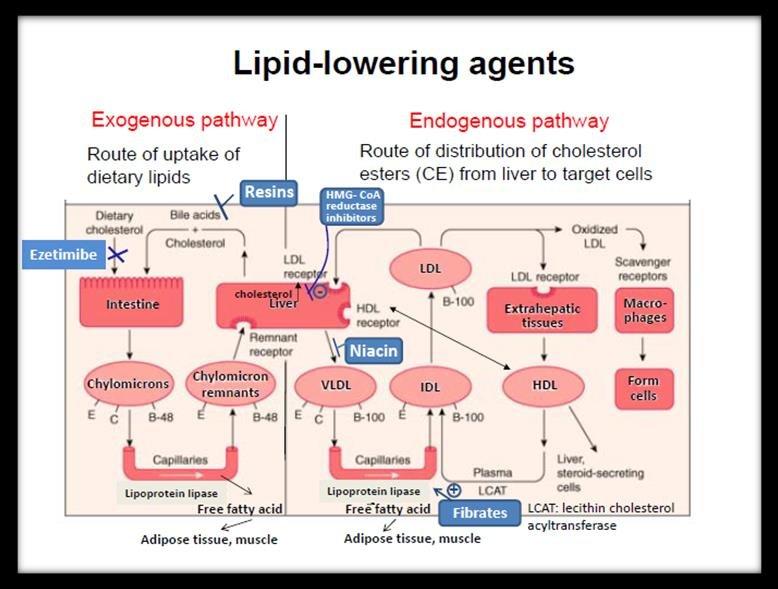
- The Exogenous Pathway (From Food): Dietary CHO and TG are absorbed from the GI tract and enter the lymphatic system, eventually reaching the plasma as Chylomicrons. In the capillaries of muscle and adipose tissue, an enzyme called Lipoprotein Lipase hydrolyzes the core triglycerides, allowing tissues to take up Free Fatty Acids for energy. The leftover "chylomicron remnants" are taken up and destroyed by the liver.
- The Endogenous Pathway (From the Liver): The liver liberates CHO. It can store it, oxidize it into bile acids, or package it into VLDL to send to the body. As VLDL travels, it drops off fatty acids to muscles and slowly shrinks, ultimately becoming LDL. Cells throughout the body take up this LDL via specific LDL Receptors to use the cholesterol for cell membranes and steroid synthesis.
IV. Dyslipidemia: Clinical Application & Case Study
Dyslipidemia is an abnormal amount of lipids in the blood. It can be Primary (genetically determined, like familial hypercholesterolemia) or Secondary (acquired due to diabetes, alcoholism, nephrotic syndrome, chronic renal failure, or certain drugs).
Patient: 52-year-old male.
Complaint: Occasional chest discomfort when walking quickly uphill that settles with rest (Classic presentation of Stable Angina, indicating partial atherosclerotic blockage of coronary arteries).
History: Poorly controlled hypertension (6 years), sedentary lifestyle, high-fat diet (fried foods/processed meat). Father died suddenly of a heart issue at 58 (strong family history of premature CVD).
Vitals: BP 156/94 mmHg (Hypertensive), BMI 29 kg/m² (Overweight).
Laboratory Findings & Interpretation:
- Total Cholesterol: 7.1 mmol/L (Normal is < 5.2 mmol/L) → Severely Elevated.
- LDL-C: 4.8 mmol/L (Normal is < 3.4 mmol/L) → Dangerously Elevated. This is the primary target for therapy.
- HDL-C: 0.9 mmol/L (Normal for men > 1.0 mmol/L) → Abnormally Low. Lacking cardiovascular protection.
- Triglycerides: 2.6 mmol/L (Normal < 1.7 mmol/L) → Elevated.
- Glucose, ALT (Liver), Creatinine (Kidney): All normal. This is crucial because lipid-lowering drugs require healthy liver and kidney function to be safely administered.
Conclusion: This patient has severe mixed dyslipidemia, hypertension, and symptomatic atherosclerotic disease (stable angina) placing him at massive risk for a fatal myocardial infarction. He urgently requires aggressive lipid-lowering pharmacotherapy alongside dietary management and blood pressure correction.
Target "Ideal" Fasting Lipid Profile (mg/dL reference)
| Lipid Parameter | Ideal, Healthy Level |
|---|---|
| Total Cholesterol | < 200 mg/dL |
| LDL-Cholesterol (The Target) | < 100 mg/dL |
| HDL-Cholesterol (The Protector) | ≥ 60 mg/dL |
| Triglycerides | < 150 mg/dL |
V. Pharmacotherapy: Lipid-Lowering Drugs
Drug therapy is always used in addition to dietary management and the correction of other modifiable risk factors (like stopping smoking and treating hypertension). There are 4 major classes of lipid-lowering drugs.
1. Statins (The Cornerstone of Therapy)
Examples: Simvastatin, Pravastatin, Atorvastatin, Rosuvastatin.
Statins are the absolute first-line treatment for lowering LDL cholesterol and preventing cardiovascular events.
- Mechanism of Action (MOA): They are competitive HMG-CoA Reductase Inhibitors. This enzyme normally catalyzes the conversion of HMG-CoA to mevalonic acid, which is the rate-limiting step of cholesterol synthesis in the liver.
- The Real Pharmacodynamic Effect: By decreasing hepatic cholesterol synthesis, the liver panics because it needs cholesterol. To get it, the liver upregulates (creates more) LDL receptors on its cell surface. These receptors grab circulating LDL out of the plasma and pull it into the liver cells, drastically increasing LDL clearance from the blood.
- Pharmacokinetics (PK): They are well absorbed orally. Because they target the liver, they undergo extensive pre-systemic biotransformation (First-Pass Effect) to reach their target tissue. Note: Simvastatin is administered as an inactive pro-drug and must be activated by the liver. Atorvastatin and Rosuvastatin are highly potent, long-lasting inhibitors.
- Secondary Prevention: Mandatory for patients who already have symptomatic atherosclerotic disease (like our case study patient with angina, or post-MI/stroke patients) to prevent a second attack.
- Primary Prevention: Used in patients at high risk due to elevated CHO or other risk factors, before a heart attack ever happens.
- Atorvastatin is potent enough to lower CHO even in patients with severe homozygous familial hypercholesterolemia.
Statins don't just lower fat; they actively heal the blood vessels:
- Improve endothelial function (restore NO).
- Reduce vascular inflammation & platelet aggregability (antithrombotic).
- Stabilize atherosclerotic plaques (prevents them from rupturing).
- Increase neovascularization of ischemic tissue.
- Enhance fibrinolysis (clot-busting).
- Mild: Gastrointestinal disturbances.
- Hepatotoxicity: Raised concentrations of liver enzymes (ALT/AST) in plasma. Liver function tests must be monitored.
- Myopathy: Can cause severe muscle pain and muscle breakdown known as Severe Myositis or Rhabdomyolysis, which can lead to kidney failure.
- Rare: Angio-oedema.
2. Fibrates
Examples: Fenofibrate, Clofibrate, Gemfibrozil, Ciprofibrate.
Fibrates are the drugs of choice for severely elevated Triglycerides.
- Mechanism of Action: They stimulate the beta-oxidative degradation of fatty acids. More importantly, they increase the activity of Lipoprotein Lipase (LPL) in the tissues. This drastically increases the hydrolysis and breakdown of triglycerides inside Chylomicrons and VLDL particles. They liberate free fatty acids for storage in fat or metabolism in striated muscle.
- Pharmacodynamic Result: They severely reduce hepatic VLDL production, lower triglycerides, and increase hepatic LDL uptake.
- Other Effects: They improve glucose tolerance and inhibit vascular smooth muscle inflammation.
- Clinical Uses: Used for Mixed Dyslipidemia (raised TG and CHO) and in patients with low HDL and high CV risk (often Type 2 Diabetics). Can be combined with other drugs in severe, treatment-resistant dyslipidemia.
- Adverse Effects: Mild GIT symptoms. Severe Risk: In patients with renal impairment, they can cause massive Myositis (Rhabdomyolysis) leading to myoglobinuria and acute renal failure. Fibrates should be strictly avoided in patients with severe renal impairment, and caution is required if combined with statins.
3. Bile Acid Binding Resins
Examples: Colestyramine, Colestipol.
These are unique because they never actually enter the bloodstream; they stay entirely within the gut.
- Mechanism of Action: Normally, the liver uses cholesterol to make bile acids, which are secreted into the gut to digest fat, and then reabsorbed back into the liver (enterohepatic recirculation). Resins physically bind to (sequester) these bile acids in the GI tract, forcing them to be excreted in the stool.
- The Result: Because bile is lost, the liver is forced to metabolize its endogenous cholesterol stores to make new bile acids. To get more cholesterol, the liver increases the expression of LDL receptors, aggressively pulling LDL out of the blood, reducing plasma LDL concentrations. Note: This can sometimes cause an unwanted compensatory increase in Triglycerides.
- Clinical Uses: Used as an add-on to statins if the response is inadequate, or for hypercholesterolemia when statins are contraindicated. Unrelated uses: Treats Pruritus (severe itching) in patients with partial biliary obstruction, and treats bile acid diarrhea (seen in diabetic neuropathy).
- Adverse Effects: Because they stay in the gut, they cause severe GIT symptoms (nausea, abdominal bloating, massive constipation, or diarrhea). The resins are highly unappetizing (like drinking sand), though mixing with fruit juice helps.
- Crucial Drug Interactions: Resins are sticky. They will interfere with the absorption of fat-soluble vitamins (A, D, E, K) and critical drugs (Chlorothiazide, Digoxin, Warfarin). Rule: Other drugs must be given at least 1 hour BEFORE or 4-6 hours AFTER taking a resin.
4. Other Lipid-Lowering Agents
Nicotinic Acid (Niacin / Vitamin B3)
- Mechanism & Effects: Powerfully inhibits hepatic TG production and the subsequent secretion of VLDL. It provides a modest reduction in LDL but is the most effective drug for increasing HDL.
- Adverse Effects: Notoriously causes severe Flushing (prostaglandin-mediated red, hot skin) and palpitations, alongside GIT disturbances. Compliance is often poor due to the flushing.
Fish Oil (Omega-3 Marine Triglycerides)
- Rich in highly unsaturated fatty acids.
- Effects: Excellent at reducing plasma Triglycerides. However, they can paradoxically increase LDL-Cholesterol (which is strongly associated with coronary artery disease).
- Clinical Note: While epidemiological evidence suggests that eating fish regularly reduces ischemic heart disease, the specific mortality/morbidity benefits of purified fish oil supplements remain clinically unproven.
VI. Summary & Key Take-Home Points
- Dyslipidemia is a major, highly modifiable risk factor for atherosclerotic cardiovascular disease. Left untreated, it drives endothelial dysfunction, foam cell formation, and ultimately plaque rupture (heart attacks/strokes).
- Lipid-lowering drugs work through different molecular targets (enzymes in the liver, receptors in the gut, lipid metabolism in muscle) to systematically reduce atherogenic lipoproteins, particularly LDL-C.
- Understanding the flow of MOA → Pharmacodynamics → Pharmacokinetics → Adverse Reactions is the only way to guide the rational selection and safe use of lipid-lowering therapy.
- Statins are the undisputed cornerstone of LDL-lowering therapy. Other agents (Fibrates, Resins, Niacin) are used when additional lipid-lowering is required, for isolated high triglycerides, or when statins are clinically unsuitable.
- Treatment must always be highly individualized. You must consider the patient's overall cardiovascular risk, expected therapeutic benefits, adverse side effects (like checking liver and kidney function), drug interactions, and specific lifestyle factors.
References & Further Reading
- Katzung, B. G. (2020). Basic & Clinical Pharmacology (15th ed.). McGraw-Hill Education. (Chapter on Agents Used in Dyslipidemia).
- Ross, R. (1999). Atherosclerosis—an inflammatory disease. New England Journal of Medicine, 340(2), 115-126. (Source of the atherogenesis visual models).
- Brunton, L. L., et al. (2017). Goodman and Gilman's The Pharmacological Basis of Therapeutics (13th ed.). McGraw-Hill. (In-depth mechanisms of HMG-CoA reductase inhibitors and Fibrates).
- Mach, F., et al. (2020). ESC/EAS Guidelines for the management of dyslipidaemias: lipid modification to reduce cardiovascular risk. European Heart Journal.
Quick Quiz
Lipid Lowering Drugs Quiz
Pharmacology
Privacy: Your details are used only for quiz tracking and certificates.
Lipid Lowering Drugs Quiz
Pharmacology
Preparing questions...
Choose your answer and keep your streak alive.
Great effort.
Here is your quick performance summary.