
Phase 1: Chemistry Fundamentals
At the end of this highly detailed section, you will be able to comprehensively understand and apply the following concepts:
- Atoms and Molecules: What exactly are atoms? The specific roles of protons, neutrons, and electrons.
- The Periodic Table: Its logical organization, elemental groupings, and how to read it (without rote memorization).
- Molecular Formation: What are molecules? How and why do atoms join together to form the building blocks of life?
- Clinical & Biological Relevance: Biochemistry is entirely about the interactions of molecules in living systems. To understand physiology and pharmacology, you must first understand the matter that makes them up.
I. Let's Review: Introduction to the Sciences of Life
Before diving into complex medical pathology, we must establish a firm foundation. Chemistry is the fundamental study of matter and the intricate ways in which different forms of matter interact, combine, and change with each other. It helps you understand the mechanical and physical world around you.
Everything you touch, taste, smell, or administer to a patient is a chemical. The continuous interactions of these chemicals with each other define our universe. Consequently, chemistry forms the absolute fundamental basis for all of biology, pharmacology, and medicine.
The Five Major Areas of Chemistry
The vast study of modern chemistry is broken down into five main interconnected disciplines:
The study of macroscopic properties, atomic properties, energy transfers, and phenomena in chemical systems. It involves thermodynamics and quantum mechanics.
The study of chemicals predominantly containing Carbon. Because carbon forms the backbone of all life on Earth, this branch studies everything from fossil fuels to pharmaceutical drugs.
The study of chemicals that are not primarily based on carbon. This includes metals, minerals, salts, and organometallic compounds. (Think of electrolytes like Sodium and Potassium!)
The highly precise study of the composition of matter. It focuses on separating, identifying, and quantifying chemical components. (e.g., Laboratory blood tests measuring exact glucose levels).
The study of chemical processes that occur exclusively within living organisms. It bridges chemistry and biology.
Biology and Biochemistry
Biology is the scientific study of life and living organisms, from the smallest microscopic single-celled bacteria to massive, complex entire ecosystems. It pays close attention to the organization of life, cellular functions, genetic patterns, growth, and evolutionary development.
Biochemistry (Biological Chemistry) is the intersection of these two sciences. It is the study of chemical processes within and relating to living organisms. Biochemistry is traditionally divided into three specialized fields:
- Structural Biology: Studying the 3D shapes of biological macromolecules (like proteins and DNA).
- Enzymology: The study of enzymes, their kinetics, structure, and function as biological catalysts.
- Metabolism: The complex network of chemical reactions that sustain life (e.g., breaking down glucose for ATP).
Historical Milestone: Carl Neuberg
Carl Neuberg (1877–1956) is widely considered the "father of modern biochemistry." He coined the term "biochemistry" in 1903. His monumental work included discovering the enzyme carboxylase and elucidating the complex biochemical pathways of alcoholic fermentation, proving that cellular processes were governed by strict chemical rules.
II. Matter: The Foundation of the Universe
For a beginner, let's go back in time and start from the absolute basics. What is matter?
Matter is defined as absolutely anything that occupies space (has volume) and has mass (weight). Literally everything in the physical universe is made of matter.
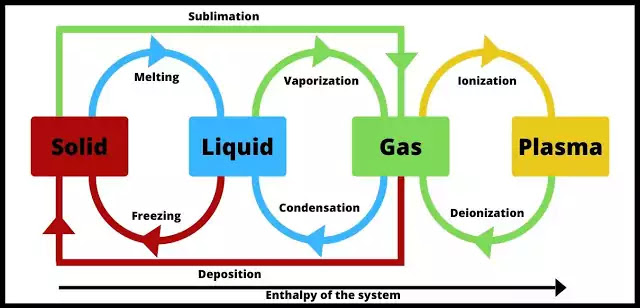
The Four States of Matter
Matter exists in various physical forms, each characterized by distinct particle arrangements, energy levels, and behaviors. Understanding these states is highly important for comprehending physiological processes within the human body and understanding how medications are formulated and delivered.
- Solid State:
- Arrangement: Particles are tightly packed together in a fixed, highly orderly, rigid pattern. They cannot move freely; they only vibrate in place.
- Properties: Gives solids a definite, unchanging shape and a definite volume.
- Medical/General Examples: Human bone, teeth enamel, pharmaceutical tablets, surgical steel, ice, kidney stones.
- Liquid State:
- Arrangement: Particles are still close together but have enough thermal energy to move and slide past each other fluidly.
- Properties: Liquids have a definite, measurable volume, but an indefinite shape (they flow and assume the exact shape of whatever container holds them).
- Medical/General Examples: Whole blood, cerebrospinal fluid (CSF), intravenous (IV) normal saline, water, liquid syrups.
- Gaseous State:
- Arrangement: Particles contain high energy. They are spaced very far apart and move randomly, rapidly, and violently in all directions.
- Properties: Gases have neither a definite shape nor a definite volume. They will expand infinitely to fill whatever container they are placed in. They are highly compressible.
- Medical/General Examples: Oxygen (O2) in tanks, Carbon dioxide (CO2) exhaled from lungs, vaporized volatile anesthetic agents (like Sevoflurane), normal air.
- Plasma State:
- Arrangement: A super-heated, highly energized ionized gas where the immense heat has stripped some or all electrons away from their atomic nuclei, leaving a soup of free-floating positive ions and negative electrons.
- Properties: It is the most abundant state of matter in the visible universe (making up 99% of it). Like gas, it has an indefinite shape and volume, but uniquely, because of the free electrons, it can conduct electricity and respond strongly to magnetic fields.
- Medical/General Examples: Lightning, stars (the Sun), neon signs. In medicine, Argon Plasma Coagulators are used in surgery to stop bleeding by delivering high-frequency electrical current through a jet of ionized argon gas.
III. Characteristics and Properties of Matter
Objects and chemical substances are distinguished from each other by their unique physical and chemical properties. These properties dictate how we use them in medicine and industry.
A. Physical Properties
These are characteristics that can be observed, evaluated, or measured without altering or changing the chemical identity of the substance.
- Colour, Taste, and Smell: Used to rapidly differentiate between substances (e.g., gold vs. iron, salt vs. sugar, perfume vs. vinegar). Clinical application: Assessing the color and odor of urine to check for infection or dehydration.
- Density: The mass per unit volume of matter (Density = Mass / Volume). Materials with a higher density than water will sink, while those with a lower density will float. This is why water isn't used to put out petrol fires (petrol floats on water) and why helium balloons rise. Clinical application: Measuring the specific gravity (density) of urine.
- Melting Point: The exact temperature at which a solid changes its state to a liquid. Cooking pots are made of metals with extremely high melting points so they don't melt on the stove.
- Boiling Point: The exact temperature at which a liquid changes to a gas (vaporizes). The industrial separation of crude petroleum oil into petrol, diesel, and tar is based entirely on their different boiling points.
- Hardness: The physical resistance of a solid material to being scratched, deformed, or dented. Screwdrivers and building rods are made of extremely hard steel/iron. Clinical application: Tooth enamel is the hardest substance in the human body.
- Electric Conductivity: The ability of a substance to allow an electric current to flow through it. Electric wires are made of an excellent conductor (copper) coated in a protective insulator (plastic/rubber). Clinical application: Defibrillator pads use conductive gel to pass electricity to the heart.
- Thermal Conductivity: The ability to allow heat to flow through a substance. Cooking pans use good thermal conductors (aluminum/copper) while their handles use bad conductors (wood, plastic, silicone).
B. Chemical Properties
These properties describe how a substance behaves and reacts with other substances to form entirely new materials. Observing these properties intrinsically changes the substance.
- Reactivity: The fundamental ability to undergo a chemical reaction. Clinical application: Antacids (like Calcium Carbonate) are used to neutralize painful stomach acid because their basic properties chemically react with the acid to form harmless salt and water.
- Flammability (Combustibility): The ability of a substance to burn or ignite when exposed to heat and oxygen. Gasoline's high flammability is harnessed to power car engines. Clinical application: Alcohol-based hand sanitizers and oxygen tanks in hospitals are highly flammable and require strict safety protocols.
- Acidity and Basicity (pH): Describes whether a substance is an acid (donates protons), a base (accepts protons), or neutral. Clinical application: Human blood must be maintained at a strict pH of 7.35–7.45. Acidic industrial cleaners are used to dissolve basic mineral buildups.
- Corrosivity: The ability to severely damage or destroy another material upon contact through a highly reactive chemical reaction. Bridges and cars are painted to prevent corrosion (rusting). Clinical application: Swallowing corrosive chemicals (like bleach or battery acid) causes severe, irreversible necrosis of the esophagus and stomach.
- Toxicity: The degree to which a chemical substance can damage a living organism or disrupt its biological pathways. Carbon monoxide (CO) detectors are installed in homes to protect against fatal poisoning from this highly toxic gas. Clinical application: Digoxin toxicity or Acetaminophen overdose leading to liver failure.
- Oxidation: The tendency of a substance to lose electrons, most often when combining with oxygen. This causes things like rust or the browning of a cut apple. Clinical application: Antioxidants (like Vitamin C and E) are added to foods or taken as supplements to safely absorb free radicals and slow down cellular oxidation that causes biological aging and tissue damage.
- Radioactivity: The dangerous property of an unstable atomic nucleus to spontaneously decay and break apart, releasing massive amounts of energy as ionizing radiation (alpha, beta, gamma rays). Clinical application: Controlled radiation is heavily used in cancer therapy (radiotherapy/brachytherapy) to destroy tumors, and in medical imaging (X-rays, PET scans).
IV. Atoms and Molecules
The Atom: The Smallest Chemical Unit
Imagine you have a solid block of pure gold. If you keep cutting it in half, into smaller and smaller microscopic pieces, eventually you would reach a point where you have the absolute smallest possible piece that still retains the unique physical and chemical characteristics of gold. If you cut that piece, it would no longer be gold. That final, irreducible particle is an atom.
An atom is the smallest fundamental unit of ordinary matter that retains the complete chemical identity and properties of a specific chemical element.
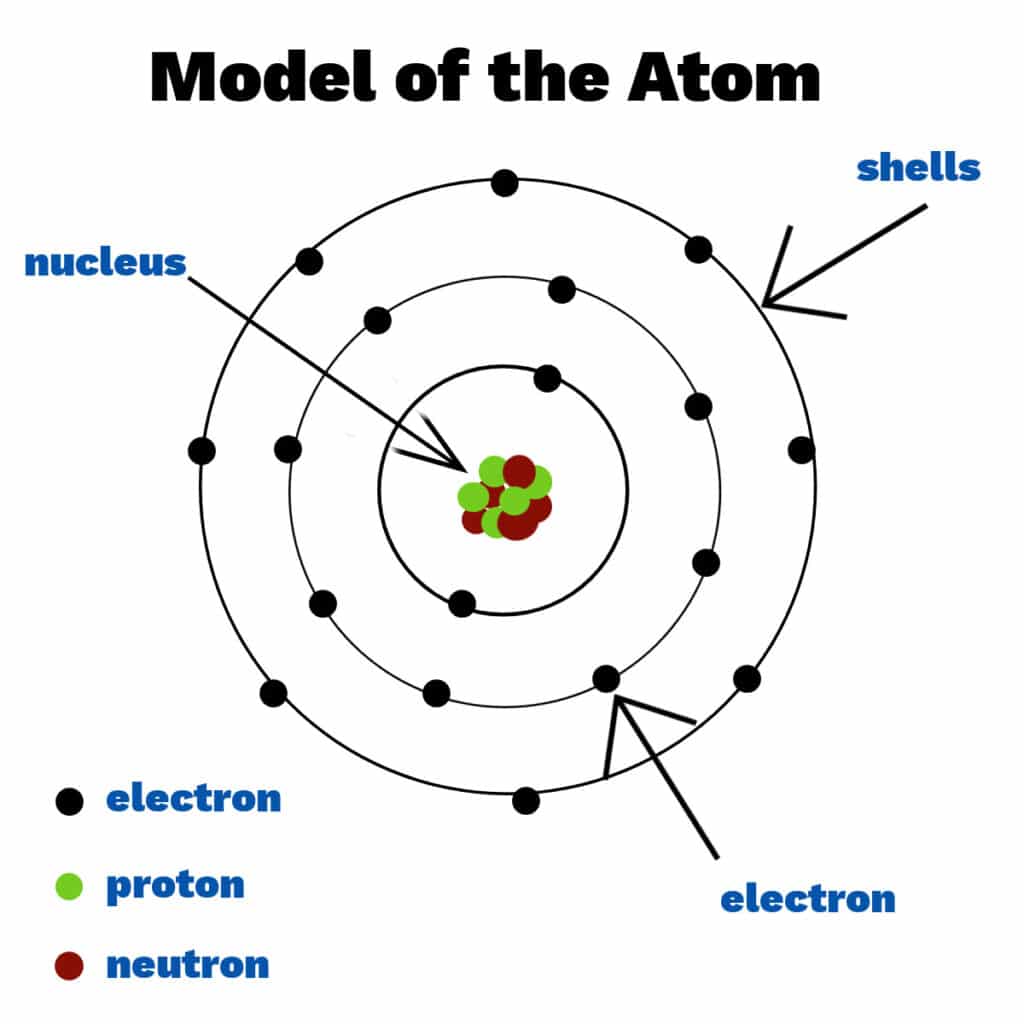
While an atom is the smallest chemical unit, it is actually a complex structure composed of even smaller, subatomic particles: the electron, proton, and neutron. The central, incredibly dense core region of an atom is called the nucleus, which holds virtually the entire mass (weight) of the atom, while the electrons orbit in the vast empty space surrounding it.
The Structure of an Atom: Subatomic Particles
An atom's chemical behavior and physical properties are dictated entirely by the arrangement and characteristics of its three subatomic components:
- Protons (p⁺):
- Location: Reside tightly packed in the atom's central core, the nucleus.
- Charge: Possess a positive (+1) electrical charge.
- Significance: The number of protons (known as the atomic number) is the defining, unchangeable characteristic of an element. Every single carbon atom in the universe has exactly 6 protons; if you add a proton, it becomes Nitrogen (7 protons). Changing this number completely changes the element.
- Neutrons (n⁰):
- Location: Also found packed tightly within the nucleus alongside the protons.
- Charge: Carry zero electrical charge (they are completely neutral).
- Significance: Neutrons provide mass and act as the "glue" that stabilizes the highly repulsive positive protons in the nucleus (via the strong nuclear force). The number of neutrons can vary within the same element, creating different heavier or lighter versions called isotopes (e.g., stable Carbon-12 vs. radioactive Carbon-14).
- Electrons (e⁻):
- Location: Orbit the nucleus at incredibly high speeds in specific energy levels, orbitals, or "shells" in the vast empty space making up the atom's outer volume.
- Charge: Possess a negative (-1) electrical charge.
- Significance: Electrons are incredibly tiny (almost massless) but are the primary mediators of all chemical bonding between atoms. Their arrangement, specifically in the outermost shell (valence shell), entirely dictates an atom's chemical reactivity and how it will bond with other atoms.
Analogical Representation: The Atomic Solar System (Bohr Model)
A highly helpful, though somewhat simplified, analogy for atomic structure is a miniature solar system:
- The Nucleus (containing protons and neutrons) is exactly like the Sun – a massive, incredibly dense central body containing 99.9% of the system's mass.
- The Electrons are like the planets – significantly smaller, virtually weightless entities moving at light-speed in defined paths (orbits/shells) around the central mass, held in place by electromagnetic attraction to the positive nucleus.
(Note: Modern quantum mechanics shows electrons exist in unpredictable "clouds" of probability rather than perfect circular orbits, but the solar system analogy remains perfect for understanding basic chemistry).
V. Atomic Number, Mass Number, and Isotopes
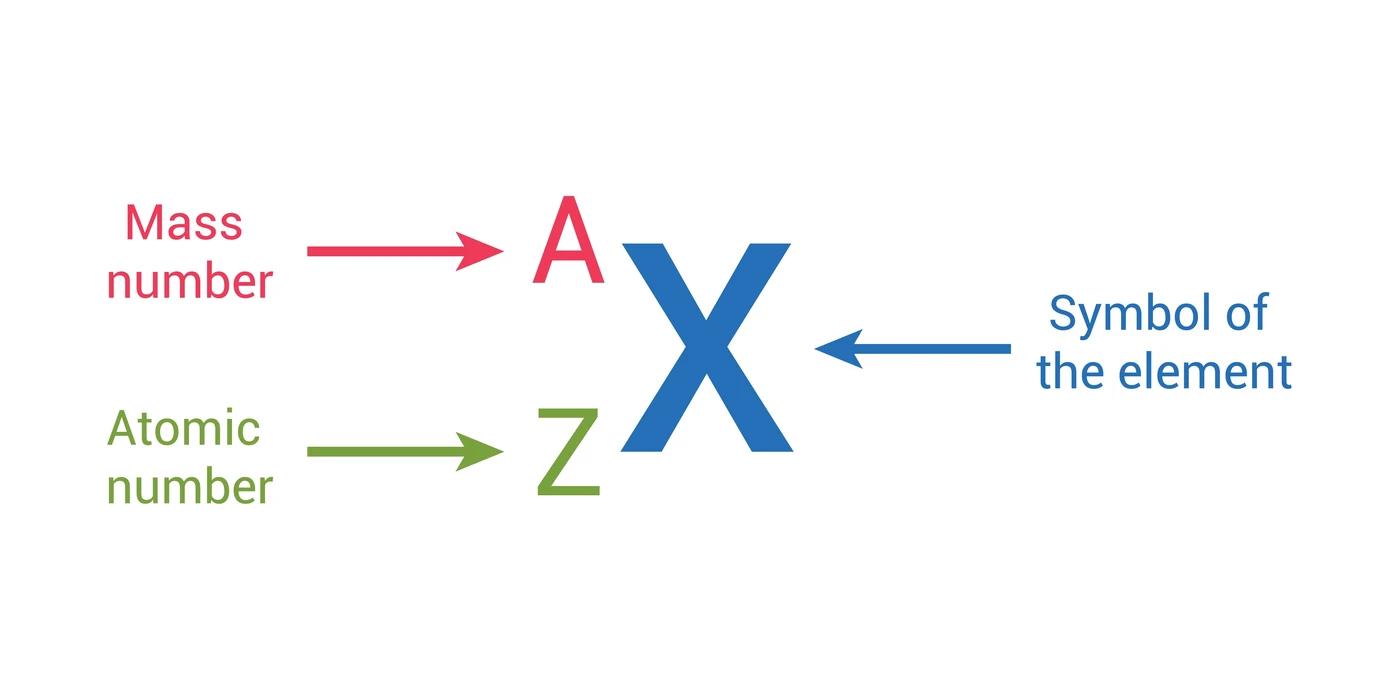
To precisely categorize any atom on the periodic table and deeply understand its behavior, scientists use two fundamental numerical values: the atomic number and the mass number. These concepts are absolutely crucial for interpreting chemical formulas, understanding isotopes, and comprehending atomic stability.
1. Atomic Number (Z)
- Definition: The atomic number (represented by the letter Z) is defined as the exact, absolute count of protons residing within an atom's nucleus.
- Unique Identifier: This number is the absolute determinant of an element's identity. It acts like a DNA fingerprint. Each element has a unique, non-repeating atomic number. For example:
- An atom with exactly 1 proton is always Hydrogen (H).
- An atom with exactly 6 protons is always Carbon (C).
- An atom with exactly 8 protons is always Oxygen (O).
- Electron Count in Neutral Atoms: For any neutral atom (an atom without any overall electrical charge), the positive charges must perfectly balance the negative charges. Therefore, the atomic number (number of protons) is precisely equal to the number of electrons.
2. Mass Number (A)
- Definition: The mass number (represented by the letter A) represents the total combined count of protons AND neutrons within an atom's nucleus. It essentially provides a whole-number measure of the atom's nuclear mass.
- Calculation:
Mass Number (A) = Number of Protons + Number of Neutrons - Why Electrons Are Excluded: Electrons are mathematically ignored in this calculation because their mass is exceptionally tiny (about 1/1836th the weight of a single proton or neutron), making their contribution to the atom's weight statistically negligible.
- Determining Neutron Count: If you know the Mass Number and the Atomic Number (from the periodic table), you can easily find the number of hidden neutrons by simple subtraction:
Number of Neutrons = Mass Number (A) − Atomic Number (Z)
Consider a common, everyday atom of Carbon (C):
- Its Atomic Number (Z) on the periodic table is 6. This immediately guarantees it has 6 protons.
- Its most common Mass Number (A) is 12.
- Using the formula: Number of Neutrons = 12 (Mass) − 6 (Protons) = 6 neutrons.
- Conclusion: This specific carbon atom has 6 protons, 6 neutrons, and (because it is neutral) 6 orbiting electrons.
Consider an atom of Sodium (Na):
- Its Atomic Number (Z) is 11 (meaning 11 protons).
- Its Mass Number (A) is typically 23.
- Using the formula: Number of Neutrons = 23 (Mass) − 11 (Protons) = 12 neutrons.
- Conclusion: This sodium atom has 11 protons, 12 neutrons, and 11 electrons.
3. Isotopes: Variations in the Nucleus
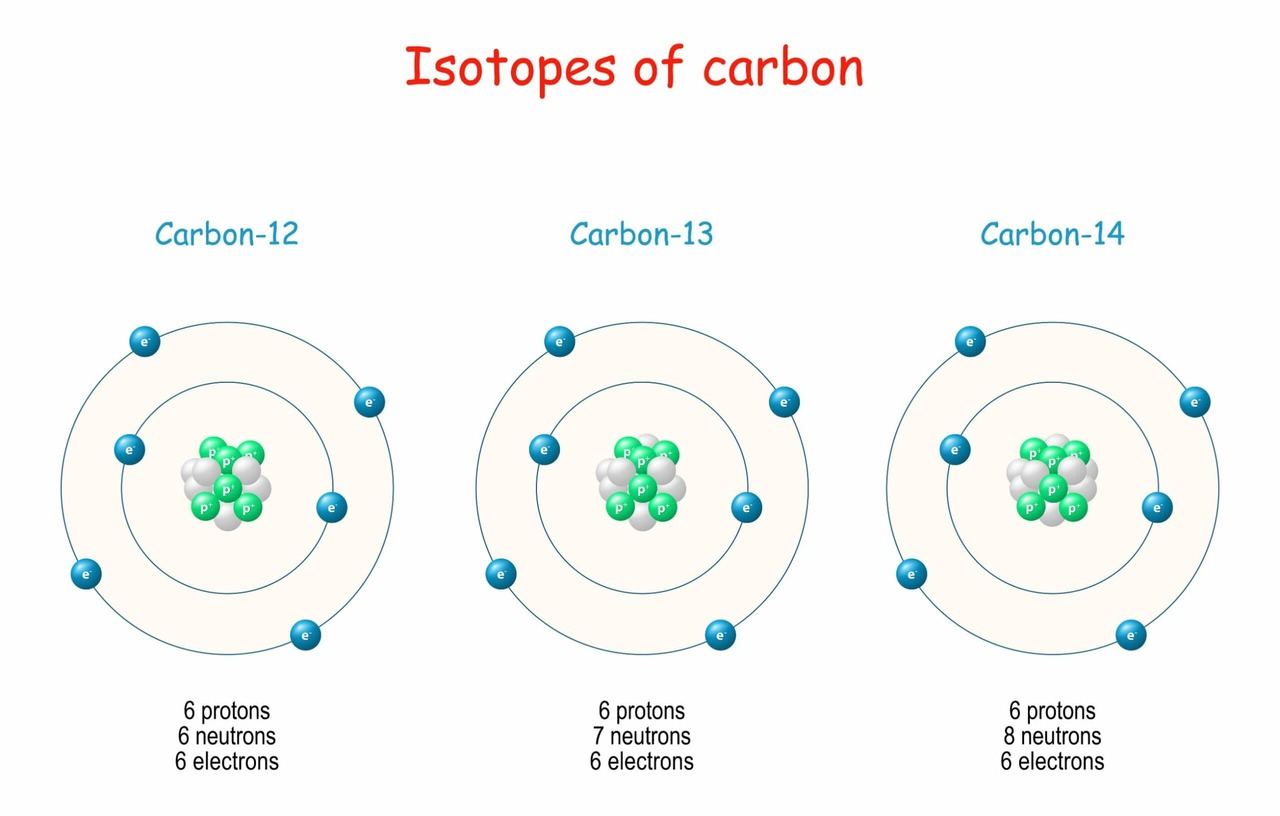
While the laws of chemistry dictate that all atoms of a specific element must share the exact same number of protons, nature allows them to sometimes differ in their neutron count. This perfectly normal variation gives rise to Isotopes.
Definition: Isotopes are varying forms of atoms of the very same element (they have the identical number of protons) but possess completely different mass numbers (because they contain a differing number of neutrons).
The Sibling Analogy: Think of isotopes as human siblings within the exact same family (the element). They share the same parent DNA and family name (the defining number of protons), but they might have completely different "weights" on a scale due to varying numbers of neutrons adding extra bulk to their nuclei.
- Chemical Properties: Because isotopes have the exact same number of protons and outer electrons, isotopes of an element have nearly identical chemical properties and react exactly the same way in chemical bonds.
- Physical Properties: Due to their different mass numbers (weight), isotopes will have slightly different physical properties, such as differing densities, boiling points, and rates of diffusion. Some heavy isotopes become unstable.
Nomenclature and Examples of Isotopes
Isotopes are commonly identified by taking the name of the element and appending their specific mass number to the end of it.
- Carbon Isotopes (All carbon atoms have 6 protons):
- Carbon-12 (12C): 6 protons + 6 neutrons = Mass 12. The most abundant (99% of all carbon) and perfectly stable.
- Carbon-13 (13C): 6 protons + 7 neutrons = Mass 13. Heavier, but still stable.
- Carbon-14 (14C): 6 protons + 8 neutrons = Mass 14. This nucleus is too heavy and highly unstable. It is Radioactive, slowly decaying over thousands of years. (This specific decay rate is what scientists use for radiocarbon dating of ancient fossils).
- Oxygen Isotopes (All oxygen atoms have 8 protons):
- Oxygen-16 (16O): 8 protons + 8 neutrons. (Most abundant).
- Oxygen-17 (17O): 8 protons + 9 neutrons.
- Oxygen-18 (18O): 8 protons + 10 neutrons.
Biological and Medical Relevance of Isotopes
Radioactive isotopes (radioisotopes) are incredibly invaluable tools in modern medicine and diagnostic research:
- Medical Imaging and Diagnostics: Technetium-99m is injected into patients and acts as a radioactive tracer. Because it emits gamma rays, doctors use specialized cameras to perform bone scans and detect stress fractures or hidden cancers. Iodine-131 is actively taken up by the thyroid gland and is used to image it or safely destroy hyperactive thyroid tissue.
- Research: Stable, non-radioactive heavy isotopes are used as chemical "tracers" in complex metabolic studies to physically track the pathways of molecules within the body without harming the patient.
- Radiation Therapy: Specific radioisotopes (like Cobalt-60) are used in highly controlled doses to precisely target and destroy malignant cancer cells while sparing healthy tissue.
VI. Elements, Molecules, and Compounds: Building Complexity
While atoms are the fundamental starting units, matter rarely exists as lonely, isolated individual atoms, especially in the complex, watery systems of human biology. Atoms constantly seek out other atoms to bond with to achieve a more stable energy state.
- What is an Element?
An element is a completely pure substance composed exclusively of billions of atoms that all share the exact same number of protons (i.e., the same atomic number). You cannot break an element down into a simpler substance by chemical means. Pure Gold, Oxygen, Hydrogen, and Carbon are prime examples of pure elements. - What is a Molecule?
A molecule is formed when two or more atoms (of the same or different elements) physically collide and are permanently held together by shared chemical bonds (covalent bonds). It is the smallest particle of a substance that retains the chemical and physical properties of that substance.
Example: An oxygen gas molecule (O2) consists of two oxygen atoms bonded together. - What is a Compound?
When a molecule is formed by bonding atoms from two or more entirely different elements together in a fixed ratio, it is specifically called a compound. All compounds are molecules, but not all molecules are compounds.
Example: A water molecule (H2O) consists of two Hydrogen atoms and one Oxygen atom. A massive glucose molecule (C6H12O6) contains 24 total atoms from three different elements.
Biological Relevance in Nursing
In nursing and pharmacology, deeply understanding how single atoms form complex molecules is critical:
- Medication Action: How pharmaceutical drugs (complex molecules) specifically fit into and bind to cellular receptors in the body involves precise 3D interactions at the atomic and molecular level.
- Physiology: The complex structure of proteins, carbohydrates, dietary lipids, and nucleic acids (DNA/RNA) – the literal building blocks of life – are all exceptionally massive, complex organic molecules.
- Fluid Balance: Trillions of water molecules (H2O) govern osmosis and are absolutely paramount in maintaining cellular hydration, blood volume, and overall patient homeostasis.
VII. Neutral Atoms vs. Ions
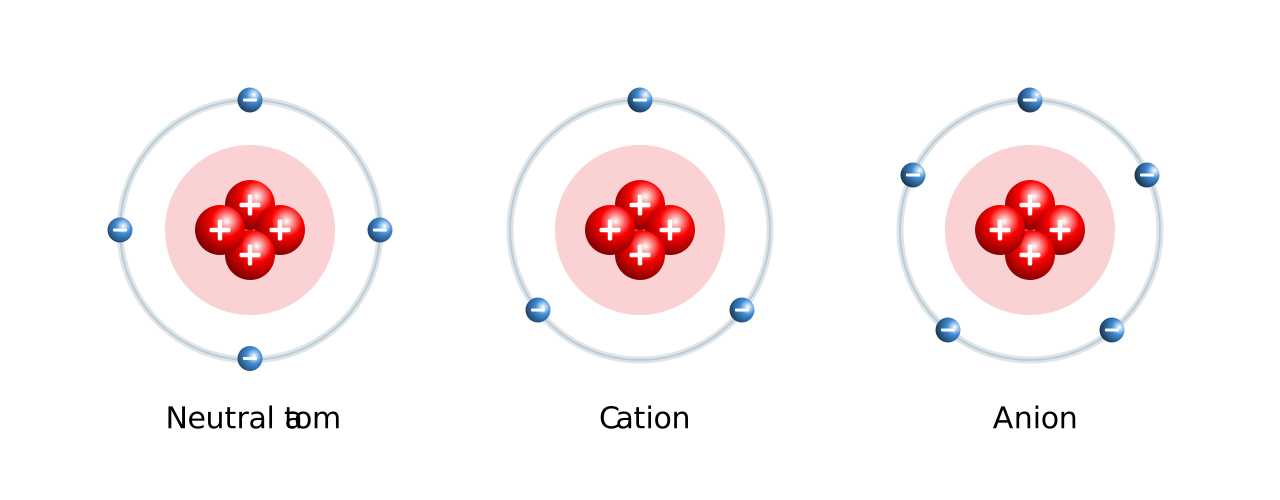
When discussing atoms and molecules in biochemistry, their electrical charge is a critical aspect that directly dictates their chemical reactivity, their ability to dissolve in water, and their biological function. In this discussion, we will temporarily set aside neutrons, as they carry zero electrical charge and do not affect the atom's electromagnetism.
1. Neutral Atoms
Definition: An atom is considered perfectly neutral when it possesses an overall net electrical charge of exactly zero. This perfectly balanced state is achieved because the atom contains an equal number of positive protons pulling against an equal number of negative electrons.
Number of Protons (+) = Number of Electrons (-)
Example (Neutral Carbon): A carbon atom (Atomic Number 6) is completely neutral when it has 6 protons (+6 charge) holding onto 6 electrons (−6 charge), resulting in a perfect net mathematical charge of 0.
2. Ions (The Charged Particles)
When an atom is NOT neutral, it carries a net electrical charge and is officially termed an Ion. Ions are actively formed when an unstable atom either forcibly steals (gains) or surrenders (loses) electrons during turbulent chemical reactions in an attempt to fill its outermost electron shell and become stable. Crucial Note: The number of protons NEVER changes. If you change protons, you change the element itself. Only electrons come and go.
- Formation: A cation is actively formed when a neutral atom loses one or more of its negatively charged electrons.
- Resulting Charge: By throwing away negative weight (electrons), the atom is left with a surplus of positive protons. The math leans positive, resulting in an overall Positive Charge.
- Example (Sodium Ion, Na⁺): Neutral Sodium (Na) has 11 protons and 11 electrons. It desperately wants to lose its 1 outer electron to be stable. If it successfully loses 1 electron, it now has 11 protons (+11) and only 10 electrons (−10). The resulting net charge is +1. It is now written as Na⁺.
- Formation: An anion is actively formed when a neutral atom gains or steals one or more electrons from another atom.
- Resulting Charge: By gaining extra negative electrons, the atom now has more negative forces than positive protons, resulting in an overall Negative Charge.
- Example (Chloride Ion, Cl⁻): Neutral Chlorine (Cl) has 17 protons and 17 electrons. It desperately wants 1 more electron to fill its shell. If it steals 1 electron, it has 17 protons (+17) and 18 electrons (−18). The resulting net charge is −1. It is now written as Cl⁻. (Note: When Na⁺ and Cl⁻ meet, their opposite charges attract violently, forming table salt: NaCl).
The Profound Importance of Ions (Electrolytes) in Biochemistry and Nursing
The concept of ions is not just abstract chemistry; it is the absolute foundation of clinical nursing practice. In medicine, dissolved ions in the blood are called Electrolytes. They keep patients alive through several mechanisms:
- Nerve Impulse Transmission: Every thought in your brain and sensation of pain depends entirely on the rapid, electrical movement of Sodium (Na⁺) and Potassium (K⁺) ions flashing across nerve cell membranes (creating an Action Potential).
- Muscle Contraction: Your heart beating and your lungs expanding are critically dependent on the sudden, controlled release of Calcium ions (Ca²⁺) into the muscle fibers.
- pH Regulation: The body's life-or-death acid-base balance is dictated entirely by the concentration of positive Hydrogen ions (H⁺) and negative Bicarbonate ions (HCO₃⁻) buffering the blood.
- Fluid Balance: "Water follows salt." Sodium ions (Na⁺) magnetically pull water molecules through osmosis, maintaining the patient's blood pressure and preventing cellular dehydration.
VIII. The Periodic Table: An Organized Map of Elements
The Periodic Table of Elements is arguably the greatest, most indispensable tool in chemistry and biology. It acts as a beautifully organized visual map that categorizes and classifies all 118 known chemical elements in the universe. It reveals deep, hidden patterns and relationships among elements, allowing a scientist or nurse to accurately predict how an element might react, bond, and behave in biological systems without having to memorize it.
Key Organizational Features for Nurses and Scientists:
- Groups (Vertical Columns): The table is divided into 18 vertical columns. Elements stacked in the exact same vertical group have the exact same number of electrons in their outermost shell (valence electrons). Because of this, they share highly similar chemical behaviors and react violently or passively in the exact same ways.
- Example: Group 1 elements (Alkali Metals like Sodium and Potassium) both violently lose 1 electron to form +1 ions, and both react explosively when dropped in pure water.
- Example: Group 18 elements (Noble Gases like Helium and Neon) have perfectly full outer shells, making them completely unreactive and inert.
- Periods (Horizontal Rows): The table is divided into 7 horizontal rows. Reading left to right, the periods represent the sequential addition of protons and the increasing energy levels (electron shells) of the atoms. As you move right, the atoms generally get heavier and their properties gradually shift from metallic to non-metallic.
- Metals vs. Nonmetals (The Great Divide): A jagged diagonal "staircase" line splits the table.
- Nonmetals (Right side): Generally brittle, dull, and poor conductors. Crucial Note: The fundamental, life-sustaining elements that make up 99% of the human body (Carbon, Hydrogen, Nitrogen, Oxygen, Phosphorus, Sulfur - CHNOPS) are ALL found huddled closely together on the nonmetal right side.
- Metals (Left side): Shiny, malleable, and excellent conductors of electricity. In biology, many of our vital, life-saving electrolytes (Sodium, Potassium, Calcium, Magnesium) are metals found on the far left side. They exist in our blood exclusively as dissolved positive ions.
- Metalloids (On the staircase): Elements like Silicon have hybrid properties of both metals and nonmetals, heavily utilized in computer chips and modern technology.
IX. List of References
For further, exhaustive study and verification of these standardized biochemical protocols and chemical theories, the following internationally recognized textbooks and resources were referenced and are highly recommended:
- Nelson, D. L., & Cox, M. M. (2021). Lehninger Principles of Biochemistry (8th ed.). Macmillan Learning. (For an exhaustive breakdown of metabolic pathways, molecular structures, and cellular chemistry).
- Tortora, G. J., & Derrickson, B. (2017). Principles of Anatomy and Physiology (15th ed.). Wiley. (For the foundational integration of basic chemistry into human physiological systems and fluid dynamics).
- Timberlake, K. C. (2018). Chemistry: An Introduction to General, Organic, and Biological Chemistry (13th ed.). Pearson. (Specifically tailored for nursing and allied health students regarding isotopes, pH, and solutions).
- Ferrier, C. (2017). Lippincott Illustrated Reviews: Biochemistry (7th ed.). Wolters Kluwer. (Excellent visual guides on enzyme function, amino acids, and clinical biochemistry correlations).