-

JOINT STOCK COMPANIES
JOINT STOCK COMPANIES Joint stock company is a voluntary association of persons incorporated into a business having joint capital divided into transferable shares of a fixed face value, with limited liability of members. A joint stock company is a company whose stock is owned jointly by shareholders and can be bought and sold by them.…
-

Partnerships
Partnership A partnership is a business owned and managed by two or more people. Partners share the profits and losses of the business. This is the relations between two or more persons who have agreed to share profits of business carried on by all or any one of them acting for all. It may consist…
-
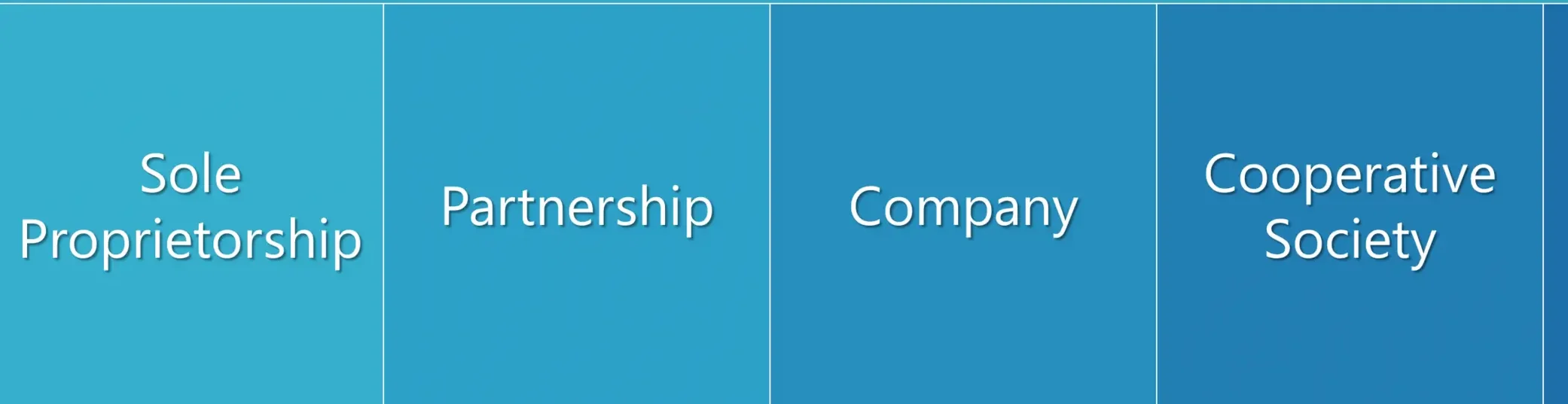
TYPES/NATURE/ FORMS OF BUSINESS ENTERPRISES
TYPES/NATURE/ FORMS OF BUSINESS ENTERPRISES When an entrepreneur decides to start a business, he must decide what form of organization he will do it in. The entrepreneur may therefore choose on doing business either at individual level or as a group. These are some of the possible options left, sole proprietorship, company, partnership, cooperatives among…
-

BUSINESS IDEA/OPPORTUNITY
BUSINESS IDEA Business idea is an identified situation that can be changed into a real and profitable activity or business. It is a concept that can be used for financial gain that is usually centered on a product or service that can be offered for money. A business idea is a concept that could be…
-

MANAGING BUSINESS RISKS
MANAGING BUSINESS RISKS Risk refers to the probability that an event will occur. It can also be understood as an uncertain event or set of events that, should it occur, may affect the achievement of the business. Risk Management refers to the systematic application of procedures to the tasks of identifying, assessing, and controlling risks…
-

BUSINESS ETHICS
BUSINESS ETHICS Business ethics are moral principles which are recognized in respect to a particular class of human actions or a particular group. Ethics refers to the study of right and wrong and the morality of choices individuals make. Codes of Ethics Codes of ethics are written guidelines that stipulate the acceptable behaviors in an…
-

INNOVATION
INNOVATION Innovation is the implementation of a new or significantly improved product, service or process that creates value for business, government or society. This is therefore the way of transforming the resources of an enterprise through creativity of people into new resources and wealth. The ultimate goal of innovation is positive change, to make…
-

ENTREPRENEURSHIP SKILLS
ENTREPRENEURSHIP SKILLS Entrepreneurial skills refer to a broad range of abilities that individuals use to start and manage their own businesses. These skills can be broadly categorized into technical skills, leadership and business management skills, and creative thinking. Examples of entrepreneurial skills include: Creativity skills: Ability to generate new ideas and solutions to problems. Innovation…
-

The Entrepreneur as a Manager
The Entrepreneur as a Manager An entrepreneur will also be required to play the normal management roles: Planning, organization, financial management, human resource management, leadership and control. The most common educational approach for entrepreneurship distinguishes six types of skills: Operational management, personnel and organization, financial administration, marketing, financial management, and making a business plan. The…
-

INTRODUCTION TO ENTREPRENEURSHIP
INTRODUCTION TO ENTREPRENEURSHIP The word entrepreneurship was first introduced by a French economist Richard Cantillon during the early 18th century. Entrepreneur is a French word ‘‘entreprendre’’ which literally means ‘‘under take’. An entrepreneur is also referred to as ‘‘a risk taker’’ who buys commodities at certain prices and sells at a relatively higher price. Definitions…

