
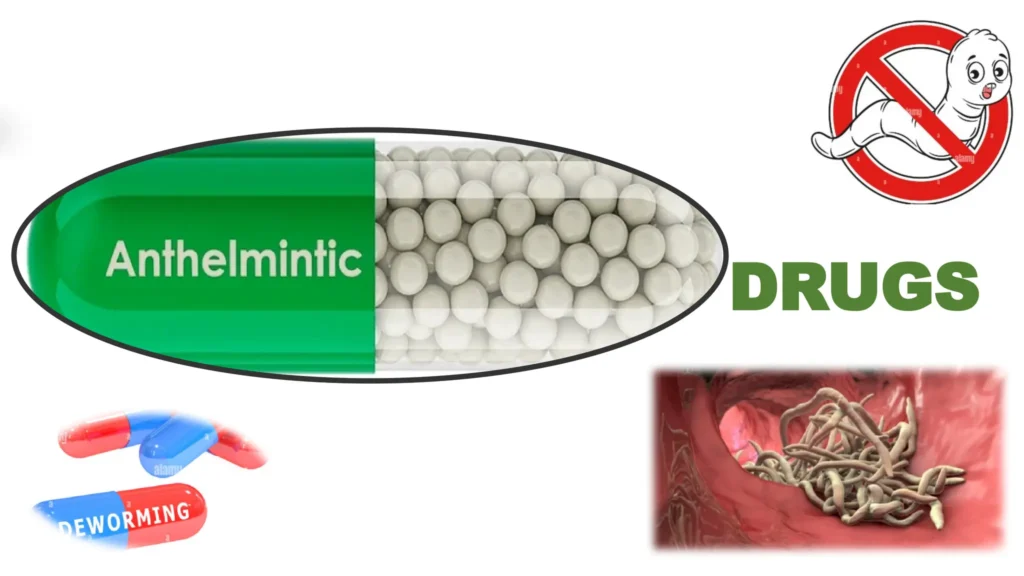
Helminths are parasitic worms that infect humans. The word "helminth" comes from Greek meaning "worm." These worms live inside the human body (intestines, blood, tissues, skin) and cause disease called helminthiasis.
- Uganda has a high burden of helminth infections, especially in rural areas with poor sanitation and limited access to clean water.
- School-age children are the most affected group.
- These infections cause malnutrition, anemia, stunted growth, and poor school performance.
- Nurses are on the front line — you will be giving these drugs during mass deworming campaigns!
| Group | Common Name | Examples | Where They Live |
|---|---|---|---|
| Nematodes | Roundworms | Ascaris lumbricoides (roundworm), Ancylostoma/Necator (hookworm), Trichuris trichiura (whipworm), Enterobius vermicularis (pinworm), Strongyloides stercoralis, Wuchereria bancrofti (causes elephantiasis) | Intestines, blood, lymph |
| Trematodes | Flukes | Schistosoma mansoni (intestinal), Schistosoma haematobium (urinary/blood) | Blood vessels, liver, bladder |
| Cestodes | Tapeworms | Taenia solium (pork tapeworm), Taenia saginata (beef tapeworm), Hymenolepis nana (dwarf tapeworm) | Intestines, tissues (cysts) |
- Soil-transmitted helminths (STH): Walking barefoot on contaminated soil (hookworm), eating unwashed vegetables (roundworm), poor hand hygiene (pinworm).
- Water contact: Swimming or washing in infected water (Schistosoma — bilharzia).
- Undercooked meat: Eating pork or beef with larvae (tapeworms).
- Blackfly bites: Near fast-flowing rivers (Onchocerca volvulus — river blindness).
Untreated infections cause:
- Malnutrition (worms steal nutrients)
- Iron-deficiency anemia (hookworms suck blood)
- Cognitive impairment in children
- Blindness (onchocerciasis)
- Liver fibrosis and bladder cancer (schistosomiasis)
- Death in severe cases
These are medicines that kill (vermicide) or paralyze and expel (vermifuge) parasitic worms from the human body.
Anthelmintic drugs are designed to harm the worm but NOT the human. They target processes that exist in the worm but are different or absent in humans.
| Term | Meaning | Example |
|---|---|---|
| Vermicide | Kills the worm | Albendazole, Praziquantel |
| Vermifuge | Paralyzes the worm so it is expelled in stool | Piperazine, Pyrantel pamoate |
We will study them by the type of worm they treat (Nematodes, Trematodes, Cestodes, Filarial).
Summary Table of Nematode Drugs (as requested):
| Common Drugs | Indications | Dosages (Common) | Contraindications | Side Effects |
|---|---|---|---|---|
| Albendazole | Ascariasis, Hookworm, Whipworm, Pinworm, Strongyloidiasis, Neurocysticercosis, Hydatid disease | 400 mg once (STH); 400 mg BID for systemic | Pregnancy, hypersensitivity, children < 2 yrs (caution) | Stomach pain, nausea, dizziness, bone marrow suppression, liver damage, seizures (in CNS cysts) |
| Mebendazole | Roundworm, hookworm, whipworm, pinworm | 100 mg BID x 3 days OR 500 mg single dose | Pregnancy (1st trimester), children < 2 yrs | Stomach pain, diarrhea. Rare: Liver issues, Stevens-Johnson syndrome |
| Ivermectin | Onchocerciasis, Strongyloidiasis, Scabies, Head lice | 150 mcg/kg single oral dose (repeated 6-12 months) | Pregnancy, breastfeeding (caution), < 5 yrs or < 15 kg, Loa loa co-infection | Mazzotti reaction (fever, rash, headache, muscle pain) |
| Pyrantel Pamoate | Ascariasis, Enterobiasis (pinworm), Hookworm | 11 mg/kg (max 1 g) single dose | Minimal contraindications (very safe) | Stomach upset (give with food) |
| Levamisole | Ascariasis, hookworm | Varies | Severe kidney disease, pregnancy | Agranulocytosis (dangerous drop in WBCs) |
| Piperazine Citrate | Ascariasis, Enterobiasis | Varies | Epilepsy (neurotoxicity) | Neurotoxicity at high doses |
- A. Basic Information: Generic name: Albendazole. Brand names: Zentel, Albenza. Class: Benzimidazole. Route: Oral (by mouth).
- B. Mechanism of Action (How It Works):
- Albendazole enters the worm's body.
- It blocks glucose (sugar) uptake — the worm cannot eat!
- The worm runs out of energy (ATP).
- The worm becomes paralyzed, dies, and is passed out in stool.
- C. Uses (Indications): Ascariasis (roundworm), Hookworm infection, Trichuriasis (whipworm), Enterobiasis (pinworm), Strongyloidiasis, Neurocysticercosis (tapeworm cysts in the brain), Hydatid disease (Echinococcus cysts in liver/lungs), Filariasis (in combination with other drugs).
| Infection | Dose | Duration |
|---|---|---|
| Roundworm, hookworm, whipworm | 400 mg once | Single dose |
| Pinworm | 400 mg once | Single dose; repeat in 2 weeks |
| Neurocysticercosis | 400 mg twice daily | 8–30 days |
| Hydatid disease | 400 mg twice daily | 28-day cycles with 14-day breaks |
- E. Side Effects (Adverse Effects):
- Common: Stomach pain, nausea, vomiting, headache, dizziness.
- Serious (rare): Bone marrow suppression (low blood counts), Liver damage (yellow eyes/skin), Hair loss (alopecia), Seizures (if treating brain cysts — due to inflammation from dying parasites), Allergic reactions.
- F. Contraindications (When NOT to Give): Pregnancy — can harm the baby (teratogenic), Hypersensitivity to benzimidazoles, Children under 2 years (use with caution).
- G. Drug Interactions: Praziquantel increases albendazole's effect (often given together). Cimetidine, ketoconazole increase albendazole levels. Phenytoin, carbamazepine, rifampicin decrease albendazole levels.
- H. Nursing Implications & Patient Teaching:
- Take with fatty meal — fat increases absorption!
- Crush tablets for children who cannot swallow.
- Wash hands before and after giving medication.
- Repeat stool exam 2 weeks after treatment to confirm cure.
- Treat the whole family for pinworm — it spreads easily!
- Pregnancy test before giving to women of childbearing age.
Scenario: A 6-year-old boy in a rural village comes to the health center with a bloated belly and worms visible in his stool. The mother says he walks barefoot to the garden. You give albendazole 400 mg.
Your teaching to the mother:
"Give this medicine once. The worms will die and come out in the stool."
"Make him wear shoes to the garden."
"Wash all fruits and vegetables with clean water."
"Bring him back in 2 weeks for a stool check."
- A. Basic Information: Generic name: Mebendazole. Brand names: Vermox, Emverm. Class: Benzimidazole. Route: Oral.
- B. Mechanism of Action: Same as albendazole: inhibits microtubule formation and blocks glucose uptake. Leads to worm death and expulsion.
- C. Uses: Roundworm, hookworm, whipworm, pinworm. Less effective than albendazole for tissue infections (like hydatid disease).
| Infection | Dose | Duration |
|---|---|---|
| Roundworm, hookworm | 100 mg twice daily OR 500 mg | 3 days OR single dose |
| Whipworm | 100 mg twice daily | 3 days |
| Pinworm | 100 mg once | Single dose; repeat in 2 weeks |
- E. Side Effects: Stomach pain, diarrhea, headache. Rare but serious: Liver problems, bone marrow suppression, Stevens-Johnson syndrome (severe skin rash).
- F. Contraindications: Pregnancy — avoid in first trimester. Children under 2 years. Hypersensitivity to benzimidazoles.
- G. Nursing Implications: Can be chewed, swallowed whole, or crushed and mixed with food. No special diet needed — unlike albendazole, fat does not affect absorption much. Monitor for signs of bone marrow suppression: unusual bleeding, bruising, fatigue, fever.
- A. Basic Information: Generic name: Ivermectin. Brand name: Mectizan® (donated free by Merck for onchocerciasis). Class: Macrocyclic lactone (avermectin). Route: Oral.
- B. Mechanism of Action:
- Ivermectin binds to glutamate-gated chloride channels in the worm's nerve and muscle cells.
- This is a channel found ONLY in invertebrates (worms, insects) — NOT in humans!
- Chloride enters the cell ➔ hyperpolarization ➔ paralysis ➔ worm dies.
- C. Uses: Onchocerciasis (river blindness) — drug of choice. Strongyloidiasis — drug of choice. Scabies (topical or oral). Head lice. Ascariasis (some effect). Filariasis (in combination).
- D. Dosage for Onchocerciasis: 150 micrograms per kg body weight — single oral dose. Given once every 6–12 months for 10–15 years (to cover the adult worm lifespan). In some high-transmission areas, given twice per year.
- E. Side Effects (Crucial!): Mazzotti reaction: This happens when microfilariae die. Symptoms include: Fever, headache, muscle pain, itching, rash, swollen lymph nodes, eye inflammation, low blood pressure (rare). Usually mild and self-limiting. Treat with antihistamines or steroids if severe.
- F. Contraindications: Pregnancy — safety not established. Breastfeeding — use with caution. Children under 5 years or under 15 kg. Loa loa co-infection — can cause severe brain inflammation (encephalopathy)! Always check for Loa loa in co-endemic areas before giving ivermectin.
- G. Nursing Implications:
- Weigh the patient accurately — dose is based on body weight!
- Give on an empty stomach with water.
- Observe for Mazzotti reaction — especially in first 3 days.
- Community-Directed Treatment (CDTI): In Uganda, community health workers distribute ivermectin. Nurses train and supervise them.
- Do NOT give to someone with severe eye disease without ophthalmology consultation.
Scenario: A 45-year-old man from a village near the Nile River presents with severe itching, skin nodules on his hips, and failing vision. He has been scratching himself with stones because the itch is unbearable. This is classic onchocerciasis.
Nursing action:
Weigh him: 60 kg ➔ dose = 60 × 150 mcg = 9,000 mcg = 9 mg.
Give ivermectin orally.
Warn him: "You may feel more itchy and have a fever for 2–3 days — this means the medicine is working!"
Arrange follow-up in 6–12 months.
Teach the community about blackfly breeding near rivers.
- Mechanism: Acts as a depolarizing neuromuscular blocker. Mimics acetylcholine at the worm's muscle receptors causing spastic paralysis. Worm is expelled alive in stool.
- Uses: Ascariasis, Enterobiasis (pinworm), Hookworm.
- Dosage: 11 mg/kg (max 1 g) — single dose. For pinworm: repeat in 2 weeks.
- Nursing: Give with food to reduce stomach upset. No fasting or purging needed. Stool may contain live worms — reassure the patient this is normal! Very safe due to minimal absorption.
- Mechanism: Acts as an agonist at nicotinic acetylcholine receptors causing spastic paralysis. Worm is expelled.
- Uses: Ascariasis, hookworm. (Also used as an immunostimulant in some cancers).
- Side Effects: Agranulocytosis (dangerous drop in WBCs) — rare but serious. Contraindicated in severe kidney disease and pregnancy.
- Mechanism: Acts as a weak GABA-mimetic. Causes flaccid paralysis (relaxed, floppy paralysis) of the worm.
- Uses: Ascariasis, Enterobiasis.
- Drug Interaction: Do NOT give with pyrantel — they have opposite effects (antagonistic).
- Contraindication: Neurotoxicity at high doses. Contraindicated in epilepsy!
Summary Table of Trematode Drugs (as requested):
| Common Drugs | Indications | Dosages (Common) | Contraindications | Side Effects |
|---|---|---|---|---|
| Praziquantel | Schistosomiasis (all types), Tapeworms, Neurocysticercosis | 40 mg/kg single oral dose (divided); 60 mg/kg for heavy infection | Ocular cysticercosis (cysts in eye) | Stomach pain, nausea, fever/itching (from dying worms), seizures in CNS infection |
- A. Basic Information: Generic name: Praziquantel. Brand names: Biltricide, Cysticide. Class: Pyrazinoisoquinoline derivative. Route: Oral.
- B. Mechanism of Action:
- Praziquantel enters the worm.
- It increases calcium permeability in the worm's muscles.
- The worm has violent muscle contractions (tetanic paralysis).
- The worm's tegument (outer covering) is damaged. The worm is attacked by the host's immune system and dies.
- Worms dislodge from blood vessels and are carried to the liver, where they are destroyed.
- C. Uses: All types of schistosomiasis (S. mansoni, S. haematobium). All tapeworm infections (Pork, Beef, Dwarf, Fish tapeworms). Neurocysticercosis (with albendazole).
- D. Dosage for Schistosomiasis: 40 mg/kg — single oral dose (divided into 2 doses, 4 hours apart). For heavy infections: 60 mg/kg divided over 1 day.
- E. Side Effects:
- Common: Stomach pain, nausea, drowsiness.
- Due to dying parasites: Fever, itching, increased eosinophils.
- Neurocysticercosis: Headache, seizures, increased intracranial pressure. Give steroids (dexamethasone) and anticonvulsants alongside!
- F. Contraindications: Ocular cysticercosis (cysts in the eye) — can cause blindness if cysts burst.
- H. Nursing Implications:
- Give after meals — food increases absorption.
- Tablets should be swallowed whole — do NOT chew (very bitter taste causes vomiting).
- Mass treatment in Uganda: The Ministry of Health gives praziquantel to schoolchildren in endemic areas (e.g., Masindi District).
Scenario: A 12-year-old girl from a fishing village on Lake Victoria has blood in her urine and lower abdominal pain. Stool exam shows S. haematobium eggs. This is urinary schistosomiasis (bilharzia).
Nursing action: Give praziquantel 40 mg/kg. Divide into 2 doses, 4 hours apart. Tell her: "Take this medicine with food. Do not chew the tablet. You may feel a little sick or itchy — this is the worms dying." Teach the family to stop washing in the lake and use pit latrines.
Summary Table of Cestode Drugs (as requested):
| Common Drugs | Indications | Dosages (Common) | Contraindications | Side Effects |
|---|---|---|---|---|
| Niclosamide | Beef, Fish, and Dwarf tapeworm; Pork tapeworm (adults only) | 2 g single dose | Not effective for cysts (cysticerci) | Abdominal pain, GI upset |
- Mechanism: Inhibits oxidative phosphorylation in the worm's mitochondria. Blocks ATP production. Worm runs out of energy and dies.
- Uses: Beef, Fish, and Dwarf tapeworm. Pork tapeworm (but does NOT kill larvae/cysticerci, so praziquantel is preferred).
- Dosage & Administration: 2 g single dose. Must be CHEWED thoroughly before swallowing.
- Nursing: Give on an empty stomach. Stool will contain dead worm segments — reassure patient.
Summary Table of Filarial Drugs (as requested):
| Common Drugs | Indications | Dosages (Common) | Contraindications | Side Effects |
|---|---|---|---|---|
| Diethylcarbamazine (DEC) | Lymphatic filariasis (elephantiasis), Loiasis (eye worm) | Varies depending on weight/protocol | Onchocerciasis (causes severe eye damage) | Mazzotti-like reaction, Encephalopathy in heavy Loa loa |
- Mechanism: Alters microfilarial membrane — makes them more susceptible to host immune attack. Does NOT kill adult worms directly.
- Uses: Lymphatic filariasis (elephantiasis), Loiasis (eye worm).
- Side Effects: Mazzotti-like reaction. Encephalopathy in heavy Loa loa infection — very dangerous!
- Contraindications: Onchocerciasis — can cause severe eye damage! Always rule out onchocerciasis and loiasis before giving DEC!
| Drug | Worms Treated | Mechanism | Key Side Effect | Special Nursing Note |
|---|---|---|---|---|
| Albendazole | Roundworm, hookworm, whipworm, pinworm, cysts | Blocks glucose uptake | Bone marrow suppression, liver damage | Take with fatty food; avoid in pregnancy |
| Mebendazole | Roundworm, hookworm, whipworm, pinworm | Blocks glucose uptake | Liver damage | Can chew or crush tablets |
| Ivermectin | Onchocerciasis, strongyloidiasis, scabies | Opens chloride channels ➔ paralysis | Mazzotti reaction | Dose by weight; avoid in Loa loa |
| Praziquantel | All schistosomes, all tapeworms | Increases calcium ➔ violent paralysis | Seizures (in neurocysticercosis) | Swallow whole; give with food |
| Pyrantel pamoate | Roundworm, pinworm, hookworm | Spastic paralysis | Nausea, vomiting | Minimal absorption; very safe |
| Niclosamide | Tapeworms (intestinal only) | Blocks ATP production | Abdominal pain | Chew thoroughly; does NOT treat cysts |
| DEC | Filarial worms (lymphatic filariasis, loiasis) | Alters microfilarial membrane | Mazzotti reaction, encephalopathy | Rule out onchocerciasis first! |
- General Assessment: Confirm diagnosis. Check pregnancy status. Weigh patient (for ivermectin). Assess nutritional status.
- During Administration: Give correct dose (underdosing leads to resistance!). Observe for anaphylaxis. Keep accurate records during Mass Drug Administration (MDA).
- After Administration: Monitor for Mazzotti reaction, seizures, or liver problems. Repeat stool/urine exam 2–4 weeks after treatment.
- Wash hands with soap.
- Wear shoes to prevent hookworm.
- Wash fruits/vegetables with clean, boiled water.
- Cook meat thoroughly (no pink pork/beef).
- Use pit latrines; do not defecate in open areas.
- Treat the whole family for pinworm!
- What is MDA? Giving anthelmintic drugs to entire communities/schools without individual diagnosis. Done for STH, Schistosomiasis, Onchocerciasis, and Lymphatic Filariasis.
- Uganda's Deworming Program: Biannual distribution to school-age children using Albendazole 400 mg or Mebendazole 500 mg. Approx 17 million tablets needed for 2025.
- CDTI (Community-Directed Treatment with Ivermectin): Community health workers (CHWs) go house-to-house. Nurses provide training and supervise adverse events.
🧠 Mnemonic for Benzimidazoles (Albendazole, Mebendazole)
"A & M BLOCK SUGAR"
- Albendazole & Mebendazole
- BLOCK glucose uptake
- SUGAR = the worm starves to death!
🧠 Mnemonic for Ivermectin Mechanism
"Ivermectin CLAMPS the worm"
- Chloride enters
- Locks the channel
- Acts on glutamate receptors
- Makes the worm paralyzed
- Permanent paralysis ➔ death
- Selective for invertebrates only!
🧠 Mnemonic for Praziquantel
"PRAZI = CRAZY CALCIUM"
- PRAZIquantel causes CRAZY muscle spasms because CALCIUM floods into the worm. Worm goes crazy and dies!
🧠 Mnemonic for Side Effects to Watch
"The 3 M's of Anthelmintics"
- 1. Mazzotti reaction (ivermectin, DEC)
- 2. Marrow suppression (albendazole, mebendazole)
- 3. Metabolic upset / Liver (all benzimidazoles)
- Q: What is the drug of choice for onchocerciasis (river blindness)?
A: Ivermectin. Given as 150 mcg/kg orally, once every 6–12 months for 10–15 years. - Q: What is the drug of choice for all types of schistosomiasis?
A: Praziquantel. 40 mg/kg single oral dose. - Q: A patient develops fever, itching, and swollen lymph nodes 2 days after ivermectin. What is this?
A: Mazzotti reaction — caused by dying microfilariae. Treat with antihistamines or steroids. - Q: Why must you check for Loa loa before giving ivermectin?
A: Ivermectin can cause severe encephalopathy (brain inflammation) in patients with heavy Loa loa infection. - Q: Which anthelmintic should be taken with a fatty meal?
A: Albendazole — fat increases its absorption. - Q: Why is praziquantel NOT used for ocular cysticercosis?
A: Dying cysts in the eye can cause severe inflammation and blindness. Surgical removal is preferred.
| When You See This Symptom | Think This Worm | Give This Drug |
|---|---|---|
| Itchy anus at night (children) | Pinworm | Albendazole / Mebendazole / Pyrantel |
| Worms in stool, bloated belly | Roundworm | Albendazole / Mebendazole |
| Blood in urine, lower abdominal pain | S. haematobium (urinary schisto) | Praziquantel |
| Blood in stool, liver enlargement | S. mansoni (intestinal schisto) | Praziquantel |
| Severe itching, skin nodules, vision loss | Onchocerca volvulus (river blindness) | Ivermectin |
| Cough, wheezing, larvae in sputum | Strongyloides | Ivermectin |
| Seizures, brain cysts on CT scan | Taenia solium cysticerci | Albendazole + Praziquantel + Steroids |
| Massive leg swelling (elephantiasis) | Wuchereria bancrofti | DEC + Albendazole |
| Reaction | Drug(s) | Management |
|---|---|---|
| Mazzotti reaction | Ivermectin, DEC | Antihistamines, steroids, rest, fluids |
| Severe allergic reaction | Any anthelmintic | Stop drug, adrenaline, oxygen, IV fluids, call doctor |
| Seizures | Albendazole/Praziquantel (for neurocysticercosis) | Give anticonvulsants (phenytoin), steroids, monitor airway |
| Liver damage | Albendazole, Mebendazole | Stop drug, check LFTs, supportive care |
| Bone marrow suppression | Albendazole, Mebendazole | Stop drug, CBC, blood transfusion if severe |
| Term | Simple Meaning |
|---|---|
| Anthelmintic | Drug that kills or expels worms |
| Vermicide / Vermifuge | Kills the worm / Expels the worm (paralyzes it) |
| Microfilariae / Macrofilariae | Baby worms in the blood/skin / Adult worms |
| Tegument | Outer skin/covering of the worm |
| Hyperpolarization | Making the cell too negative to fire — causes paralysis |
| Preventive chemotherapy (PC) | Giving drugs to whole populations to prevent disease |
Before giving ANY anthelmintic, ask yourself:
- Is the diagnosis confirmed?
- Is the patient pregnant? (If yes, consult doctor first!)
- Is the dose correct for body weight?
- Are there any drug interactions?
- Is there a risk of Mazzotti reaction? (ivermectin, DEC)
- Do I need to give steroids alongside? (neurocysticercosis)
- Have I educated the patient on prevention (WASH)?
- Is follow-up scheduled for stool/urine re-check?
- World Health Organization (WHO). (2017). Preventive chemotherapy to control soil-transmitted helminth infections in at-risk population groups. WHO Guidelines.
- Katzung, B. G., & Trevor, A. J. (2020). Basic & Clinical Pharmacology (15th ed.). McGraw-Hill Education.
- Ministry of Health Uganda. (2024). National Guidelines for Mass Drug Administration for Neglected Tropical Diseases.
- Brunton, L. L., Hilal-Dandan, R., & Knollmann, B. C. (2017). Goodman and Gilman's The Pharmacological Basis of Therapeutics (13th ed.). McGraw-Hill Education.
Quick Quiz
Anti-Helminths Quiz
Pharmacology
Privacy: Your details are used only for quiz tracking and certificates.
Anti-Helminths Quiz
Pharmacology
Preparing questions...
Choose your answer and keep your streak alive.
Great effort.
Here is your quick performance summary.