
Table of Contents
ToggleTrauma to the Genitourinary System: Assessment, Emergency Management and Nursing Care
Genitourinary trauma includes injury to the kidneys, ureters, bladder, urethra, penis, scrotum, testes, vulva and adjacent pelvic structures. It may follow blunt or penetrating trauma, pelvic fractures, falls, road traffic crashes, sports injuries, assault, industrial accidents or medical procedures. A patient may have major internal bleeding or urinary tract disruption even when external injuries appear small.
Emergency reminder: In a seriously injured patient, follow the local trauma protocol and treat life-threatening problems first. Blood at the urethral opening, inability to pass urine after pelvic trauma, a rapidly enlarging perineal/scrotal haematoma, shock, gross haematuria with clots, or severe abdominal/pelvic pain requires urgent senior and surgical/urology review. Do not blindly insert a urethral catheter when urethral injury is suspected.
Learning objectives
After studying this topic, the learner should be able to:
- Define genitourinary trauma and identify the organs that may be injured.
- Describe common mechanisms, risk factors, warning signs and possible associated injuries.
- Perform a systematic initial nursing assessment and escalate deterioration promptly.
- Outline investigations and the principles of treatment for renal, ureteric, bladder, urethral and genital injuries.
- Plan safe emergency, perioperative, postoperative and discharge nursing care.
- Recognise complications and explain prevention and follow-up needs.
Definition and relevant anatomy
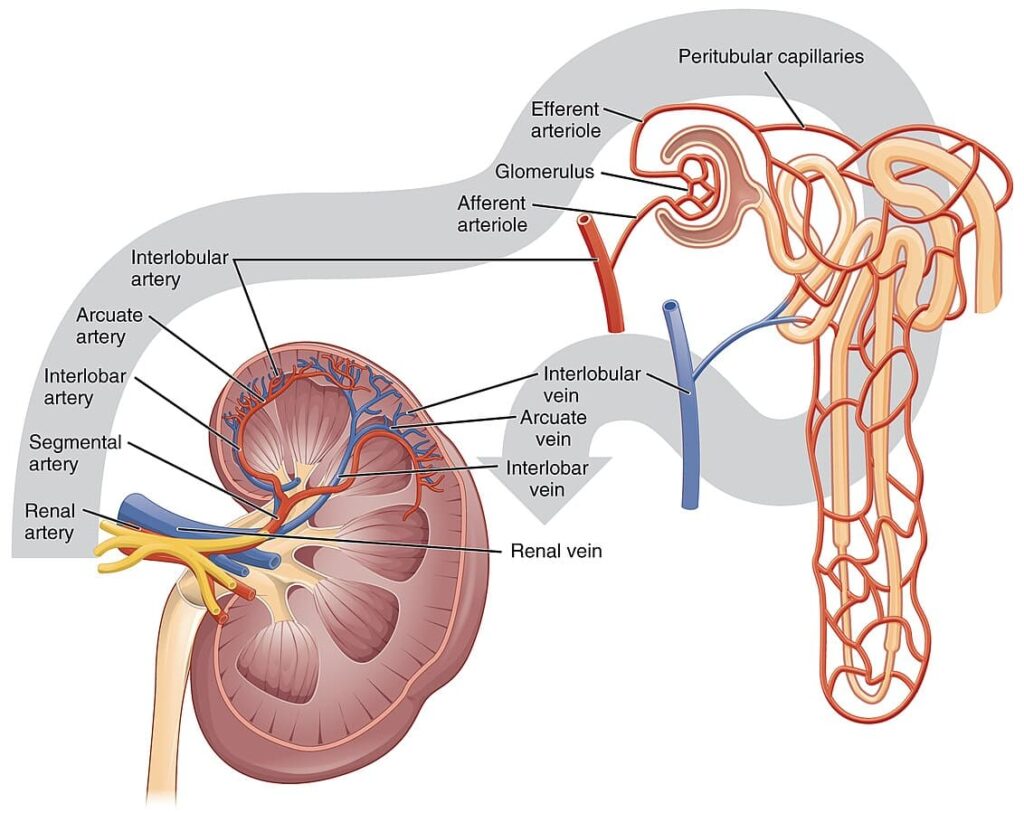
Genitourinary trauma is physical damage to any part of the urinary tract or genital organs. The kidneys lie behind the peritoneum and are protected partly by the lower ribs and back muscles. The ureters carry urine from each kidney to the bladder. The bladder sits in the pelvis when empty and rises into the abdomen when distended. The urethra carries urine from the bladder to the outside; in males it is longer and passes through the prostate and penis, while the female urethra is shorter. The kidneys and urinary tract lie close to abdominal organs, major blood vessels, the pelvis and reproductive organs, so combined injuries are possible.
Trauma may damage vessels, parenchyma, collecting systems, the urinary tract wall or supporting tissues. Injury can cause haemorrhage, leakage of urine into surrounding spaces, impaired drainage, infection, loss of organ function, or injury to sexual and reproductive function. Haematuria is an important clue, but its absence does not rule out a serious urinary injury.
Classification and mechanisms
| Mechanism | Examples | Injuries to consider |
|---|---|---|
| Blunt impact | Road crash, fall, direct blow, crush or contact sport | Renal contusion/laceration, bladder injury, pelvic fracture with urethral injury, testicular injury |
| Rapid deceleration | High-speed collision or fall from height | Renal vascular injury or ureteropelvic junction/ureteric injury, even without a direct flank wound |
| Penetrating trauma | Knife, firearm, impalement or penetrating pelvic wound | Kidney, ureter, bladder, bowel, vessels, rectum or genital organs; multiple organs may be involved |
| Pelvic fracture | High-energy crush or road traffic injury | Bladder rupture, posterior urethral disruption, pelvic haemorrhage and associated bowel or vascular injury |
| Straddle/perineal injury | Fall onto a hard bar, bicycle crossbar or direct perineal blow | Anterior urethral injury, penile/scrotal haematoma or testicular injury |
| Iatrogenic or instrumentation injury | Catheterisation, endoscopy, pelvic surgery or obstetric procedure | Urethral, bladder or ureteric injury; assess timing and procedure history |
Renal injuries are graded by severity using specialist systems such as the American Association for the Surgery of Trauma (AAST) scale. Nurses should document the suspected organ, mechanism and observed findings; grading and definitive diagnosis are made by the responsible clinical team after assessment and imaging.
Clinical features by injured organ
| Organ/site | Possible findings | Important caution |
|---|---|---|
| Kidney | Flank or upper abdominal pain, flank bruising, tenderness, haematuria, rib injury, shock or abdominal distension | Haematuria may be absent with vascular injury, ureteropelvic disruption or some high-grade injuries. Check for associated injuries. |
| Ureter | Often few early signs; flank/abdominal pain, fever, ileus, urinoma, urinary fistula, abdominal distension or sepsis may appear later | Visible haematuria is absent in many ureteric injuries. Maintain suspicion after penetrating abdominal injury or rapid deceleration. |
| Bladder | Visible haematuria, suprapubic pain/tenderness, inability to void, low urine output, abdominal distension or pelvic fracture | Intraperitoneal rupture may cause urinary ascites, peritonitis, electrolyte disturbance or sepsis if missed. |
| Urethra | Blood at the meatus, inability or difficulty voiding, perineal/scrotal bruising, pelvic fracture, a high-riding prostate on clinician examination | Do not perform repeated blind catheter attempts. Early symptoms can be subtle and catheter trauma can worsen disruption. |
| Penis/testes/scrotum | Pain, swelling, bruising, deformity, skin laceration, testicular displacement, blood at meatus or urinary difficulty | Penile fracture and suspected testicular rupture need urgent specialist assessment to preserve function. |
| Female genital/perineal tract | Vulval/perineal bruising, bleeding, laceration, swelling, urinary difficulty or pelvic pain | Consider urethral, vaginal, bladder, rectal and pelvic injuries; protect privacy and arrange careful specialist examination. |
First aid and initial emergency management
Provide scene care and transport according to local emergency procedures. Use standard precautions and appropriate personal protective equipment. Do not remove an impaled object; stabilise it for transfer. Control external bleeding with gentle direct pressure when safe, but avoid pressure over an exposed organ or embedded object. Do not probe wounds, insert instruments into a wound, or delay transfer to obtain a urine sample. Keep the patient warm, reassure them and hand over the mechanism, time of injury, observations and interventions.
Primary survey: ABCDE
- Airway with cervical-spine protection: assess patency, protect the cervical spine when indicated and call for assistance for obstruction or reduced consciousness.
- Breathing: assess respiratory rate, oxygen saturation, chest movement and breath sounds; support oxygenation and treat life-threatening chest injury under protocol.
- Circulation and haemorrhage control: check pulse, blood pressure, capillary refill, skin temperature, external bleeding and mental state. Obtain vascular access, blood samples, fluids or blood products only under the emergency protocol/order; activate the major-haemorrhage pathway when criteria are met.
- Disability: assess consciousness, pupils, pain, glucose when indicated and limb movement/sensation; consider head, spinal and pelvic injury.
- Exposure and environment: expose sufficiently to inspect the abdomen, flanks, pelvis, perineum and genital area while maintaining dignity and warmth. Log-roll only with appropriate spinal precautions.
Repeat observations after each intervention and whenever the patient changes. A normal first set of observations does not exclude evolving internal bleeding. In an unstable patient, prioritise resuscitation and urgent transfer/operative review over non-essential diagnostic procedures.
Immediate red flags requiring urgent escalation
- Hypotension, tachycardia, pallor, cold clammy skin, confusion, syncope or rapidly worsening observations.
- Gross haematuria, clots, inability to void, markedly reduced urine output or severe flank/suprapubic pain.
- Blood at the urethral meatus, perineal bruising after pelvic trauma, suspected pelvic fracture or a distended tender lower abdomen.
- Penetrating abdominal/pelvic injury, rapidly expanding haematoma, open genital wound, testicular displacement or suspected penile fracture.
- Fever, worsening abdominal distension, ileus, persistent vomiting, urine leakage from a wound or signs of sepsis after trauma or a procedure.
Focused history and physical assessment
History
- Establish the time, place and exact mechanism: impact, speed/deceleration, crush, penetration, fall, straddle injury or instrumentation.
- Ask what happened immediately before and after the injury, whether the patient lost consciousness, and whether emergency care or catheter attempts have already occurred.
- Ask about flank, abdominal, pelvic, perineal or genital pain; blood in urine; last void; ability to pass urine; urinary leakage; nausea; dizziness; and visible bleeding.
- Obtain relevant history of renal/urological disease, previous surgery, solitary kidney, pregnancy possibility, allergies, medicines (including anticoagulants), tetanus immunisation and baseline voiding/sexual function when appropriate.
- For genital or sexual injury, explain why questions are needed, use neutral non-judgmental language, ensure privacy and ask permission before involving another person.
Physical examination
- Record baseline and serial vital signs, consciousness, skin colour/temperature, peripheral perfusion, pain score, fluid status and urine output.
- Inspect the abdomen, flanks, lower ribs, pelvis, perineum and external genitalia for wounds, bruising, swelling, deformity, bleeding and urine leakage. Palpate gently and reassess tenderness, guarding and distension.
- Assess for associated injuries to the chest, spine, limbs, bowel, rectum and major vessels. A pelvic binder or spinal precautions should follow trauma-team direction.
- Inspect the urethral meatus for blood before any catheter decision. A digital rectal or genital examination is performed only by an appropriately trained clinician when indicated, with explanation, consent, chaperone and documentation.
- Do not repeatedly manipulate an injured penis/testis, probe wounds, or attempt urethral catheterisation when injury is suspected. Report findings and await the senior/urology plan.
Rationale: mechanism, serial observations and targeted examination help identify occult haemorrhage, urinary leakage and associated injuries. A single negative finding, including absence of haematuria, cannot safely exclude genitourinary injury.
Investigations
| Investigation | Purpose | Nursing considerations |
|---|---|---|
| Urinalysis / urine microscopy | Detects blood and may identify infection or other urinary abnormalities | Collect a clean sample only when safe and feasible; do not delay resuscitation. Absence of blood does not rule out injury. |
| Full blood count, renal function, electrolytes, group and cross-match | Assesses blood loss, baseline renal function, electrolyte disturbance and transfusion readiness | Label samples correctly, note collection time and mechanism, and promptly report critical results. |
| FAST/eFAST ultrasound | Rapidly assesses free fluid and some associated thoracoabdominal injuries in unstable trauma | It does not reliably exclude renal, ureteric or bladder injury. Continue clinical assessment and escalation. |
| Contrast-enhanced CT with delayed/excretory phase | Key imaging for a stable patient when renal or ureteric injury is suspected; shows parenchyma, vessels, collecting system and urine extravasation | Check the order, pregnancy possibility, prior contrast reaction and renal history; follow local contrast protocol. Do not send an unstable patient away from resuscitation without senior direction. |
| CT cystography / retrograde cystography | Evaluates suspected bladder rupture, particularly visible haematuria with pelvic fracture or other high-risk features | Requires deliberate bladder filling by the clinical team; a routine contrast CT without appropriate bladder distension may miss a rupture. |
| Retrograde urethrogram (RUG) | Assesses suspected male urethral injury before catheterisation | Explain the procedure, support positioning and report pain or deterioration. Avoid blind urethral catheter insertion when signs of injury are present. |
| Cystoscopy, vaginoscopy or targeted pelvic evaluation | May define female urethral/bladder injury or complex pelvic/genital injury | Maintain privacy, consent and chaperone policy; prepare for specialist examination or theatre as ordered. |
| Scrotal ultrasound with Doppler | Assesses testicular perfusion, contour, haematoma and possible rupture | Support urgent imaging and analgesia; a suspected rupture still requires prompt urological review. |
Treatment principles and organ-specific management
Management depends on haemodynamic stability, the organ and grade of injury, associated injuries, urine leakage, renal reserve, available resources and the patient’s overall condition. The trauma and urology teams make the definitive plan. Nurses support timely resuscitation, investigations, analgesia, prescribed medicines and safe preparation for intervention. Antibiotics, tetanus prophylaxis, transfusion, urinary drainage and surgery are given according to clinician orders and local protocols.
Kidney injuries
Many renal injuries in haemodynamically stable patients are managed without open surgery, with close observation and selective intervention. Treatment may include monitored admission, serial vital signs and haemoglobin, repeat assessment, analgesia and follow-up. Contrast CT is used for stable patients when the mechanism or findings indicate significant renal injury. Active arterial bleeding may be treated with selective angioembolisation where available; persistent symptomatic urine leakage may require a ureteric stent or drainage. Ongoing instability, uncontrolled bleeding, a devascularised kidney, associated injuries or failure of conservative management may require operative treatment. Nurses monitor urine output, haematuria, pain, observations and ordered blood results, and escalate any deterioration immediately.
Ureteric injuries
Ureteric injury is uncommon and can be missed initially, especially after penetrating abdominal injury, rapid deceleration or pelvic/abdominal surgery. CT urography or other specialist imaging may be required. Depending on the site and severity, treatment can involve a ureteric stent, surgical repair, urinary diversion or drainage of a urinoma. Fever, abdominal distension, persistent flank pain, ileus, urine leakage or sepsis after trauma/procedure warrants urgent reassessment. Monitor drains and urine output as ordered and document the amount and appearance of any drainage.
Bladder injuries
Suspect bladder injury with pelvic fracture, visible haematuria, suprapubic pain, inability to void or unexplained low output. CT cystography/retrograde cystography helps distinguish rupture patterns. Selected uncomplicated extraperitoneal injuries may be treated with continuous catheter drainage and observation under the urology plan. Intraperitoneal rupture is generally repaired surgically because urine in the peritoneal cavity can cause peritonitis, sepsis and metabolic problems. Complex extraperitoneal injuries, bone fragments, bladder-neck injury or associated rectal/vaginal injury may also require repair. Maintain a closed drainage system, keep tubing unkinked, measure output, report clots or poor drainage, and do not remove or irrigate the catheter unless directed.
Urethral injuries
Blood at the meatus, inability to void, pelvic fracture, perineal haematoma or urinary retention should raise suspicion. In suspected male injury, a retrograde urethrogram is commonly used before deciding on urethral catheterisation. A clinician may choose a carefully guided catheter, cystoscopic placement or suprapubic diversion depending on the injury. Complete posterior disruption associated with pelvic fracture may need urinary diversion followed by delayed reconstruction; partial injuries and anterior injuries require specialist individualised care. Never make repeated blind catheter attempts. If a catheter is already present, do not manipulate or remove it without an order; report pain, bleeding, leakage or absent flow.
Genital and perineal injuries
Penile fracture, testicular rupture, open genital wounds, significant haematoma, compromised blood flow or urinary obstruction need urgent urological review. A penile fracture may require prompt repair. Testicular ultrasound supports assessment, but should not delay treatment when clinical suspicion is high. Wounds may need cleaning, haemostasis, repair, antibiotics or tetanus prophylaxis as directed. Female urethral and vaginal injuries are uncommon but may accompany pelvic fracture or penetrating trauma; examination and repair require appropriately trained clinicians. Protect privacy, explain each step, offer a chaperone, address pregnancy testing where clinically relevant and provide compassionate support after assault or disfiguring injury.
| Step | Nursing action | Rationale |
|---|---|---|
| 1 | Call for help, activate the trauma response and receive a structured handover of mechanism, time, suspected injury and pre-hospital treatment. | Early team mobilisation reduces delays and prepares the right staff and equipment. |
| 2 | Assess and support airway, breathing and circulation using ABCDE; protect the spine and control external haemorrhage within training and protocol. | Life-threatening problems take priority over organ-specific investigations. |
| 3 | Record baseline vital signs, consciousness, pain, perfusion and injury findings; repeat observations frequently and after interventions. | Trends may reveal concealed bleeding or deterioration before a single measurement appears critical. |
| 4 | Expose enough to inspect the abdomen, flank, pelvis, perineum and genital area; maintain warmth, privacy and a chaperone where appropriate. | A complete but respectful examination can reveal important injuries and prevent hypothermia and loss of dignity. |
| 5 | Establish prescribed IV access, collect ordered blood tests and prepare group/cross-match; administer fluids, blood, analgesia and other medicines only as ordered/protocolled. | Supports resuscitation, investigation and symptom relief while keeping treatment within scope. |
| 6 | Inspect the urethral meatus for blood and ask about the last void before any catheter plan; do not attempt blind catheterisation if injury is suspected. | Instrumentation can worsen a urethral disruption or create a false passage. |
| 7 | Keep the patient nil by mouth when directed or when urgent surgery is likely; prepare for imaging or theatre without delaying stabilisation. | Supports safe anaesthesia and timely definitive care while preserving the priority of resuscitation. |
| 8 | Measure urine output only when collection is safe and authorised; document amount, colour, clots, leakage and time. Escalate absent or falling output. | Urine findings help monitor perfusion, obstruction and urinary tract injury. |
| 9 | Provide clear reassurance, explain procedures, preserve confidentiality and document findings, actions, response and escalation. | Respectful communication reduces distress and creates a reliable record for continuity. |
| Priority | Nursing interventions | Rationale and evaluation |
|---|---|---|
| Haemodynamic stability / bleeding | Monitor pulse, blood pressure, capillary refill, mental status, skin, flank/abdominal distension and ordered haemoglobin. Escalate new tachycardia, hypotension, pallor, increasing pain or confusion. | May indicate ongoing internal haemorrhage or shock. The patient should remain clinically stable or receive rapid escalation and treatment. |
| Urine output and renal function | Maintain an accurate intake/output chart; assess output trend, colour, clots and leakage. Check ordered renal function/electrolytes and report oliguria, anuria, worsening haematuria or rising creatinine. | Helps identify reduced perfusion, obstruction, urinary leakage or renal dysfunction early. |
| Catheter, stent, drain or nephrostomy | Use aseptic technique, secure devices without traction, keep drainage below bladder level when appropriate, prevent kinks, maintain a closed system and measure each drain separately. Irrigate only with a specific order and approved protocol. | Reduces infection, dislodgement and obstruction while preserving accurate output assessment. |
| Pain and comfort | Assess site, character and severity of pain; administer prescribed analgesia; reassess effect and adverse effects. Support comfortable positioning while protecting injured areas. | Effective pain control enables breathing, rest and mobilisation; sudden increasing pain can signal deterioration. |
| Infection prevention | Monitor temperature, wounds, urine, catheter site and drains; perform hand hygiene and aseptic care; administer prescribed antibiotics; report fever, rigors, foul discharge or sepsis signs. | Trauma, urine leakage, surgery and devices increase infection risk. |
| Wound and genital care | Inspect dressings and perineal/genital skin, manage contamination as ordered, maintain privacy and avoid unnecessary manipulation. Report expanding swelling, bleeding, dusky tissue or skin compromise. | Early detection may prevent tissue loss, infection and functional harm. |
| Mobility and prevention of complications | Assist mobilisation when cleared; use prescribed VTE prevention, breathing exercises and pressure-area care; follow pelvic/spinal restrictions. | Reduces immobility complications while respecting associated fractures and injuries. |
| Psychological and sexual-health support | Listen without judgement, assess anxiety and safety, explain likely next steps, involve chosen supports only with consent and refer for counselling, sexual-health or fertility advice when appropriate. | Genital trauma can affect body image, intimacy, fertility and mental wellbeing; sensitive support is part of recovery. |
| Discharge and follow-up | Teach catheter/device and wound care, medicines, hydration advice as prescribed, follow-up, warning signs and whom to contact. Use teach-back and arrange supplies/referral before discharge. | Supports safe recovery and timely treatment of delayed complications. |
Nursing care plan examples
| Possible nursing problem and goal | Priority interventions | Evaluation |
|---|---|---|
| Deficient fluid volume related to haemorrhage or urinary loss; goal: perfusion and observations are maintained or promptly escalated. | Assess serial observations, perfusion, mental status, bleeding and intake/output; maintain prescribed access; collect ordered tests; implement emergency escalation and prescribed resuscitation. | Trends are stable/improving or deterioration has been recognised and treated without delay. |
| Acute pain related to tissue injury or procedure; goal: pain is reduced to an acceptable level. | Assess and document pain; provide prescribed analgesia and comfort measures; reassess response; promptly report new severe or worsening pain. | Patient reports relief and can rest/breathe/mobilise as allowed; complication signs are escalated. |
| Impaired urinary elimination related to obstruction, urethral/bladder injury or device; goal: drainage is safe and output changes are reported. | Monitor voiding and urine trend; check tubing for kinks without manipulating the injury; maintain ordered device care; report clots, leakage, retention or low output. | Output and device function are documented and the urology plan is followed. |
| Risk of infection related to open injury, urinary extravasation, surgery or catheter; goal: no untreated infection develops. | Use hand hygiene and aseptic device/wound care; monitor temperature and wound/urine appearance; administer ordered treatment; educate on infection warning signs. | No new infection signs, or changes are promptly assessed and managed. |
| Anxiety / disturbed body image related to unexpected injury and possible sexual or reproductive effects; goal: patient can express concerns and identify support. | Provide privacy, non-judgmental listening and honest information; obtain consent before involving family; offer relevant referral and allow questions. | Patient verbalises concerns, understands the next step and accepts or declines support by informed choice. |
Complications
| Complication | Warning signs | Nursing response |
|---|---|---|
| Haemorrhage and shock | Tachycardia, hypotension, pallor, cold skin, confusion, collapse or falling haemoglobin | Activate emergency/major-haemorrhage response, maintain monitoring and implement ordered resuscitation. |
| Urinary extravasation, urinoma or fistula | Persistent flank/abdominal pain, swelling, fever, urine leakage or delayed sepsis | Escalate promptly; document drain/wound output and prepare for imaging or drainage as directed. |
| Peritonitis or sepsis | Fever, rigors, worsening abdominal pain/distension, guarding, tachycardia, hypotension or altered mental state | Urgent senior review, sepsis protocol, samples and treatment as ordered; do not delay escalation. |
| Urinary retention or obstruction | Inability to void, suprapubic fullness, painful bladder, clots, low/absent catheter flow | Do not force a urethral catheter; contact the treating/urology team and follow the drainage plan. |
| Acute kidney injury, hypertension or reduced renal function | Oliguria, rising creatinine, fluid overload or raised blood pressure on follow-up | Monitor fluid balance and ordered results; report changes and reinforce renal follow-up. |
| Stricture, incontinence or sexual/reproductive dysfunction | Weak stream, recurrent infection, retention, leakage, erectile/testicular concerns or distress | Encourage follow-up with urology and offer respectful referral for rehabilitation, sexual health or counselling. |
| Wound/device complications | Increasing redness, pus, wound separation, device displacement, blockage, bleeding or skin injury | Use aseptic care, secure devices, document and obtain prompt clinical review. |
Patient and family education, discharge and follow-up
- Explain the confirmed injury and treatment plan in understandable language; distinguish confirmed findings from those still under investigation.
- Teach how to care for a catheter, nephrostomy, drain or wound if present. Demonstrate hygiene, bag positioning, device security and output recording according to the local written plan.
- Advise urgent return for fever/rigors, increasing flank or abdominal pain, heavy blood/clots in urine, inability to pass urine, reduced drainage, urine leakage, wound redness/pus, faintness, shortness of breath or new genital swelling/colour change.
- Take medicines only as prescribed. Do not remove, flush or manipulate a catheter, stent, nephrostomy or drain unless specifically instructed by the treating team.
- Follow the advised activity, pelvic-fracture, lifting, hydration and wound-care restrictions. Avoid driving or strenuous activity until cleared if pain, surgery or medication affects safety.
- Attend urology/trauma follow-up. Depending on injury, review may include renal function, blood pressure, urinalysis, imaging, catheter removal trial, wound healing, urinary continence, sexual function and fertility concerns.
- Offer information privately and allow the patient to choose who is involved. Arrange support for transport, cost, assistive supplies or referral where available.
Prevention and health promotion
- Promote seat-belt use, helmets, safe road behaviour, safe workplaces, protective sports equipment and fall-prevention measures.
- Use safe catheterisation practices: confirm indication, use aseptic technique, avoid force, stop when resistance or unexpected bleeding occurs and escalate for senior review.
- Ensure prompt assessment after high-energy deceleration, penetrating abdominal trauma or pelvic fracture, even if haematuria is not reported.
- Provide confidential safeguarding assessment when assault or interpersonal violence is possible, following local policy and the patient’s wishes and safety needs.
Case-based application
A patient arrives after a road traffic crash with a pelvic fracture, lower abdominal pain, visible blood in the urine and inability to void. The blood pressure is falling and the pulse is fast. Priorities: initiate ABCDE trauma care, call the trauma/surgical team, repeat observations, support circulation under protocol, obtain ordered blood tests and cross-match, assess for associated injuries, and report the urinary findings. Do not attempt a blind urethral catheter. Once sufficiently stable, the senior team determines appropriate imaging and bladder/urethral drainage or repair. Document timing, observations, urine findings, interventions and response.
Revision questions
- Define genitourinary trauma and name five organs or structures that may be affected.
- List four mechanisms of injury and two reasons why haematuria may be absent despite significant injury.
- State the ABCDE priorities for an unstable patient with suspected renal or pelvic trauma.
- List four warning signs of urethral injury. What should the nurse avoid?
- Differentiate the roles of contrast-enhanced CT with delayed phase, CT cystography and retrograde urethrogram.
- Why is intraperitoneal bladder rupture treated urgently?
- Describe six nursing observations for a patient with a urinary catheter or nephrostomy after trauma.
- Give four signs of delayed urinary leakage or infection that require reassessment.
- Outline discharge teaching and follow-up after genitourinary trauma.
Key points to remember
- Genitourinary trauma ranges from minor bruising to life-threatening haemorrhage, urinary leakage and combined pelvic/abdominal injury.
- Manage life threats first with a systematic trauma survey, repeated observations and early escalation.
- Absence of haematuria does not exclude serious renal or ureteric injury.
- Blood at the urethral meatus, pelvic fracture, perineal bruising or inability to void means suspected urethral injury: do not blindly catheterise.
- Stable patients may need targeted contrast CT, CT cystography, urethrography or genital ultrasound; unstable patients need resuscitation and senior direction.
- Monitor haemodynamics, urine output, pain, wounds and drains; protect devices and do not manipulate them without an order.
- Follow-up must address renal function, urinary continence, sexual health, fertility, psychosocial recovery and delayed complications.
References and further reading
- European Association of Urology. EAU Guidelines on Urological Trauma: Urogenital Trauma. Current online guideline chapter, accessed 2026.
- American Urological Association. Urotrauma Guideline. AUA guideline, amended 2020.
- Use the applicable local trauma, blood transfusion, catheterisation, infection prevention and referral protocols. Treatment decisions depend on patient stability, injury pattern, available resources and specialist assessment.