
By the end of this session, you should be able to:
- Define an advance directive and explain its ethical and legal foundation in patient autonomy.
- Distinguish between a Living Will and a Durable Power of Attorney for Health Care.
- Identify the key elements that must be included in a Living Will.
- Explain the Succession Act requirements for making a valid Will, and describe intestate succession.
- Describe the role, rights, and limitations of a health care agent / proxy.
- Define DNR, POLST, and Allow Natural Death orders.
- Discuss special considerations for pregnancy, organ donation, and mental health directives.
- Outline the nurse's role in supporting patients to prepare advance directives.
Advance directives are not about giving up on life — they are about empowering the patient to control how they live and die when they can no longer speak for themselves. As a nurse, you are the bridge between the patient's wishes and the care they receive.
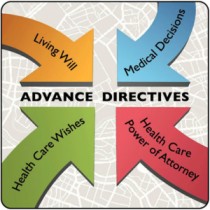
An advance directive (also called an Advance Directive or Advance Care Plan) is a legal document that expresses a patient's desires regarding medical treatments when they are unable to make decisions themselves. It upholds the ethical principle of autonomy — the right of every competent adult to make informed decisions about their own body and health care.
- They give patients voice and control even after they lose decision-making capacity.
- They prevent family conflict by making the patient's wishes clear and documented.
- They guide health care providers when complex ethical dilemmas arise (e.g., whether to intubate a terminally ill patient).
- They reduce unnecessary suffering by aligning treatment with the patient's values, not the family's fears or the system's defaults.
- They protect nurses and doctors legally — if you follow a valid advance directive, you are following the patient's informed consent.
⚠️ Ethical Note: An advance directive is not a refusal of all care. It is a personalised care plan. A patient may refuse ventilation but still want pain relief, antibiotics for infection, and compassionate nursing care. The goal shifts from cure to comfort — but comfort is still active, skilled care.
| Type | What It Does | When It Applies |
|---|---|---|
| Living Will | Written document stating what treatments the person wants or refuses in specific end-of-life situations. | When the person has a terminal illness with no possibility of cure or is in a persistent vegetative state (permanent unconsciousness). |
| Durable Power of Attorney for Health Care (Health Care Proxy) | Legal document appointing a trusted person (agent/proxy) to make health care decisions on the patient's behalf. | When the patient is certified as incapable of making their own decisions — this can be temporary (sedation, delirium) or permanent (coma, dementia). |
📝 Exam Tip: The Living Will speaks for the patient (it contains their direct instructions). The Durable Power of Attorney appoints someone to speak for the patient (it delegates decision-making authority). A patient can have both — and ideally should, because a Living Will cannot cover every possible scenario, but a trusted proxy can interpret the patient's values in unexpected situations.

A Living Will is a legally binding document that allows individuals to maintain control over their health care decisions in the event that they become incapable of making choices on their own. It specifically applies to situations where the person has a terminal illness with no possibility of cure or is in a permanent unconscious state (persistent vegetative state).
- Must be written and signed by the patient (the testator / declarant).
- Usually requires witnesses who are:
- NOT the patient's spouse.
- NOT potential heirs or beneficiaries of the patient's estate.
- NOT the patient's doctors or employees of the patient's health care facility.
These witness restrictions prevent conflicts of interest and ensure the document reflects the patient's true wishes.
🏥 Clinical Scenario: Mrs. Okello, 68, has terminal ovarian cancer. She writes a Living Will stating she does not want mechanical ventilation or CPR. Two weeks later, she becomes unconscious from a pulmonary embolism. Her daughter demands "everything be done." The Living Will protects Mrs. Okello's autonomy — the medical team follows the document, not the daughter's emotional request. The nurse's role: Gently explain the document to the family, validate their grief, and advocate for the patient's documented wishes.
A comprehensive Living Will should address the following areas clearly:
| Element | What the Patient Should Specify |
|---|---|
| Use of Medical Equipment | Dialysis machines, ventilators (breathing machines), cardiac monitors, feeding tubes. Does the patient want these started? Continued? Withdrawn after a certain period? |
| Do Not Resuscitate (DNR) | Preferences regarding CPR if breathing or heartbeat stops. This is one of the most critical and commonly addressed decisions. |
| Fluids and Nutrition | Choices regarding IV fluids and/or tube feeding if the person becomes unable to eat or drink. Some patients accept comfort feeding (spoon-feeding by hand) but refuse NG tubes or PEG tubes. |
| Food and Fluids When Unable to Decide | A specific statement on whether to receive food and fluids even when unable to make other decisions. This prevents ambiguity. |
| Pain Management & Palliative Care | Preferences for pain relief, symptom control, and comfort measures even if decision-making capacity is compromised. This is crucial — many patients want aggressive pain control even if they refuse life-prolonging treatment. |
| Organ and Tissue Donation | Desire to donate organs or tissues after death. This should be documented clearly so family members are not left guessing during a time of grief. |
| Understanding: Cure vs. Comfort | A clear statement that choosing not to pursue aggressive medical treatment is distinct from refusing all care. Other treatments (pain medication, antibiotics for comfort, wound care, repositioning) can still be administered. The goal shifts from cure to comfort. |
- L = Life-sustaining equipment
- I = IV fluids / feeding
- V = Ventilation / DNR
- I = Intentions for comfort care
- N = Nutrition choices
- G = Goals (cure vs. comfort)
- W = Witnesses
- I = Instructions for organ donation
- L = Legal validity
- L = Legacy wishes
The client has the right to revoke or amend a Living Will at any time according to their wishes, as long as they still have decision-making capacity. This is important because preferences may change:
- A patient who initially refused ventilation may change their mind after a reversible complication.
- A patient who wanted everything done may, after months of suffering, decide to focus on comfort.
Revocation can be verbal, written, or even implied by behaviour (e.g., tearing up the document).
⚠️ Nursing Alert: If a patient tells you they want to change their advance directive, document the conversation immediately and notify the physician. Do not dismiss it as "confusion." Capacity can fluctuate, but a clear statement during a lucid period must be taken seriously.
While a Living Will governs medical decisions, a Will governs property and affairs after death. Both are advance planning documents, but they serve different purposes. In Uganda, succession is governed by the Succession Act Cap 132 as amended by the Succession (Amendment) Decree 22, 1972.
A Will is a document made during a person's lifetime in which he/she directs or states how his/her property and other affairs should be dealt with after his/her death. It ensures orderly succession and prevents disputes among surviving family members.
- Anyone who has attained the age of 21 years.
- The Testator (the person making the will) must act voluntarily and must understand what she/he is doing at that material time.
- He/she must not be mentally unbalanced or senile at the time of making the will. This is called having "testamentary capacity."
📝 Exam Tip: Testamentary capacity requires three things: (1) the person understands they are making a will, (2) they know the nature and extent of their property, and (3) they understand who their natural beneficiaries are (family members). If any of these is missing, the will may be challenged in court.
- A will spells out clearly the wishes of the testator and provides for orderly succession. Without a will, the state decides who gets what.
- A will spells out how the property is to be dealt with, thus creating protection for beneficiaries.
- The will may provide for guardianship of minors — who will care for children under 21 if both parents die.
- The beneficiaries get what they are entitled to under the will, reducing family conflict.
- The paternity of the children will not be disputed when the will clearly names them as beneficiaries.
- The Executor is able to collect debts due to the deceased and settle debts owed by the deceased.
| Content | Why It Matters |
|---|---|
| Names and addresses of the Testator | Identifies who made the will and prevents fraud or substitution. |
| Date when the will is made | Establishes which will is the most recent if multiple wills exist. |
| Names of the Executor(s) | The person(s) responsible for carrying out the wishes in the will. Should be trustworthy and organised. |
| Appointment of heir/heiress | The primary beneficiary or beneficiaries who inherit the bulk of the estate. |
| Names of guardians for minors | Crucial for parents of children under 21. Without this, the court decides who raises the children. |
| Names and relationships of beneficiaries | Prevents ambiguity. "My son John" is clearer than "my children." |
| Other wishes (burial grounds, funeral preferences) | Reduces family conflict about funeral arrangements and burial location. |
| Creditors and debts owed | The executor must settle debts before distributing assets. Documenting them prevents surprises. |
| Accurate description of property | Land must be described by location, size, and title deed number. Vague descriptions cause legal disputes. |
| Debtors and amounts due | Money owed TO the deceased. The executor can collect these on behalf of the estate. |
⚠️ Important Legal Note: The matrimonial home cannot be given out in a will. It is automatically taken over by the surviving spouse or spouses. Minor children below the age of 21 years are also entitled to live there. This protects the immediate family from displacement.
A will is useless if it cannot be found when needed. Safe storage options include:
- With the Bank — in a safe deposit box. (But ensure the executor knows it exists and has access after death.)
- With the Administrator General — the government office responsible for estates.
- With the Lawyer — who drafted the will. This is common and reliable.
- With the Registrar General — for official registration.
- With a trusted friend or relative — but only if they are not a beneficiary (to avoid conflict of interest).
- With a church leader — in communities where religious leaders are trusted custodians.
💡 Nursing Tip: When admitting a terminally ill patient, ask (sensitively) whether they have a will and where it is kept. Document this in the nursing notes. If the family does not know, the patient's final wishes about property may never be honoured.
A will is not legal (invalid) if the court, upon being presented with grounds or evidence, declares it invalid for any of the following reasons:
- Lack of testamentary capacity: The testator was of unsound mind or senile at the time of making the will.
- Duress: The will was made under force, threats, or undue influence from another person.
- Under age: The testator was below 21 years.
- Marriage after making the will: In some jurisdictions, marriage automatically revokes a previous will unless the will was made in contemplation of that marriage.
- Ambiguity: The will is unclear or contradictory, making it impossible to determine the testator's true intentions.
- Destruction of subject matter: The estate or property described in the will perished before the testator's death.
- Later will exists: The testator made another will after the one being contested, and the later will supersedes the earlier one.
- Improper execution: The will was not signed by the testator or was not properly witnessed.
Letters of Administration are the authority granted by the court to a person to administer the estate of a person who has died without leaving a will (intestate).
- The wife/wives or husband of the deceased.
- Children of the deceased who are of age (21 years or older).
- A close relative of the deceased.
- Report the death of the deceased with all relevant documents (death certificate, identification).
- Apply to the Administrator General for a 'Certificate of No Objection.'
- The 'Certificate of No Objection' is clearance which enables the person to apply to court for the Letters of Administration.
If an individual dies without a will (intestate) and is survived by a customary heir, wife/wives/husband, children, and dependent relatives, the property is distributed as follows under Ugandan law:
| Beneficiary | Share of Estate | Purpose |
|---|---|---|
| Customary heir | 1% | Symbolic recognition of cultural role. |
| Wife / wives / husband | 15% | Support for the surviving spouse(s). |
| Dependants | 9% | Support for relatives who depended on the deceased. |
| Children | 75% | The largest share, ensuring the next generation is provided for. |
💡 Key Point: Dying intestate means the state decides how your property is divided — not you. This can leave out people you care about (unmarried partners, stepchildren, charities) and create family conflict. Making a will ensures your wishes are followed.
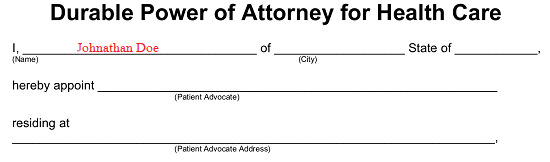
A Durable Power of Attorney for Health Care (also called a Health Care Power of Attorney or Health Care Proxy) is a legal document that enables the client to appoint a trusted person as their proxy or agent to make health care decisions on their behalf in the event that they become unable to do so.
"Durable" means the power remains valid even after the patient loses mental capacity. An ordinary power of attorney would become invalid upon incapacity — but a durable one survives this transition.
- The appointed proxy has the authority to communicate with doctors and caregivers and make decisions based on the client's previously expressed directions.
- The proxy determines the treatments or procedures that the client would want or not want.
- If the client's wishes are unknown in a particular situation, the agent will make decisions based on what they believe the client would choose — not what the agent personally wants. This is called "substituted judgment."
- It is essential to select a person whom the client trusts completely — someone who can carry out the client's wishes even during times of stress, uncertainty, and sadness.
- The client should have open discussions with their chosen proxy, ensuring they are comfortable with the role and discussing wishes in detail.
- It is advisable to designate an alternate person in case the primary proxy becomes unable or unwilling to fulfill their role.
📝 Exam Tip: The proxy's job is not to do what they think is "best" medically. Their job is to do what the patient would have wanted. This is called substituted judgment (when wishes are known) or best interests (when wishes are unknown). In palliative care ethics, substituted judgment takes priority.
| Requirement / Restriction | Rationale |
|---|---|
| Must be 18 years of age or older | Legal adulthood is required to make binding decisions. |
| Cannot be the client's treating health care provider | Prevents conflict of interest — the doctor should not also be the decision-maker for the patient. |
| Cannot be an employee of the client's health care provider, unless related to the client | Prevents institutional bias — a hospital employee may prioritise the hospital's interests over the patient's. |
| Cannot be the client's residential care provider, unless related to the client | Prevents financial exploitation — a nursing home owner might make decisions based on profit, not patient wishes. |
| Authority begins only when the attending doctor certifies the client as incapable | Protects patient autonomy — the proxy cannot override the patient's own decisions while the patient is competent. |
| Must make decisions even if the client has not documented directives | The proxy acts as the patient's voice when no Living Will exists. |
| Cannot make decisions if the client objects, regardless of capacity | Even an incapacitated patient may express clear resistance (e.g., pulling out an NG tube). The proxy cannot force treatment against the patient's contemporaneous refusal. |
| Cannot override a medical power of attorney if one is in effect | Hierarchy of authority: Patient's contemporaneous wishes > Valid advance directive > Proxy's substituted judgment > Best interests standard. |
🏥 Clinical Scenario: Mr. Kato appoints his eldest son as his health care proxy. Mr. Kato develops dementia and is hospitalised with pneumonia. The son refuses antibiotics, stating "My father would not want to linger." However, the Living Will specifically states "I want antibiotics for infections even if I have dementia." The Living Will overrides the proxy's decision. The nurse must advocate for the documented wishes and escalate to the ethics committee if the proxy persists.
Resuscitation refers to medical interventions that restart the heart and breathing, such as cardiopulmonary resuscitation (CPR), defibrillation, or the use of life-sustaining devices like ventilators.
A Do Not Resuscitate (DNR) order is an instruction that medical staff should not attempt to revive a patient if their heart or breathing stops.
| Setting | What the DNR Means | Nursing Implications |
|---|---|---|
| In the hospital | No CPR, no intubation, no defibrillation if the patient's heart or breathing stops. Allows for a natural death. May be called an "Allow Natural Death" (AND) order. | Check the DNR status at the start of every shift. Ensure all team members know. A hospital DNR is only valid for that admission — some hospitals require a new order with each admission. |
| Outside the hospital | Some jurisdictions have a Do Not Attempt Resuscitation (DNAR) or out-of-hospital DNR order for EMS teams. Allows patients to refuse full resuscitation in advance, even if EMS is called. | Requires the signature of both the patient and the doctor. The patient should carry the document visibly. Family members should know to show it to EMS immediately. |
⚠️ Critical Nursing Point: A DNR does NOT mean "do not treat." A patient with a DNR can still receive antibiotics, pain medication, oxygen for comfort, wound care, and compassionate nursing. A DNR only applies when the heart stops or breathing ceases. Until then, full comfort care continues.
POLST is not an advance directive — it is a set of specific medical orders that a seriously ill person completes and has signed by their doctor. It translates the patient's wishes into actionable medical orders.
- The POLST is carried with the patient (like a card or form) and is applicable in various health care settings — hospital, nursing home, ambulance, and home.
- Emergency personnel (paramedics, ER doctors) are obligated to follow these orders.
- Without a POLST form, emergency care staff typically provide all possible treatments to keep the patient alive — this is the default.
- POLST covers specific decisions: CPR yes/no, level of medical intervention (comfort only / limited / full), antibiotics, artificial nutrition, and hospitalisation.
💡 Mnemonic — POLST vs. Living Will: "POLST is a Physician Order — it Looks like a prescription and is Signed by a doctor. A Living Will is the Patient's Wishes Written down."
Think of it this way: The Living Will is the patient's voice. The POLST is the doctor's order based on that voice. The Durable Power of Attorney is the person who speaks when the patient cannot.
If a woman is of childbearing age, it is important for her to clearly state her decisions regarding health care during pregnancy in case of unforeseen circumstances. Whether health care providers will honour these decisions depends on:
- The risks to both the mother and the fetus.
- The stage of pregnancy — generally, if a woman is in the second or third trimester, doctors will provide necessary medical care to preserve the lives of both the mother and the fetus.
- The policies of the doctors and health care facilities involved. Some facilities have religious or ethical objections to certain decisions.
⚠️ Ethical Complexity: Pregnancy creates a unique tension between maternal autonomy and fetal welfare. In many jurisdictions, a pregnant woman's advance directive may be partially suspended if the fetus is viable. Nurses must be aware of local laws and facility policies. When in doubt, involve the ethics committee.
Instructions for organ and tissue donation can be included in the advance directive. Many states also offer organ donor cards for this purpose.
- Documenting donation wishes prevents family conflict during a time of grief.
- The nurse should check the patient's advance directive or driver's licence for donor status.
- If the patient is a potential donor, notify the transplant coordinator early — organ viability is time-sensitive.
- Organ donation is only considered after brain death or circulatory death is confirmed — it never compromises the patient's care.
While older adults are the primary demographic with advance directives, it is never too soon to plan for emergencies. For individuals concerned about mental illness, a mental health care directive or psychiatric care directive can outline health care choices in the event of serious mental incapacity.
What a mental health directive might include:
- Preferred medications and medications to avoid (e.g., "I do not respond well to haloperidol").
- Preferences for hospitalisation vs. community-based care.
- Names of trusted contacts who should be notified during a crisis.
- Instructions for managing finances, pets, or children during incapacity.
- What helps during a crisis (e.g., "I need quiet, not restraints" or "Music calms me").
📝 Exam Tip: Advance directives are not only for the elderly. A 25-year-old motorcycle accident victim may be in a coma for months. If they had no advance directive, their family must guess what they would have wanted. Encourage all competent adults to consider advance planning.
Advance directives benefit the patient, the family, and the health care team. Here is why they matter:
| For Whom | Advantage |
|---|---|
| The Patient | Provides a simple and clear way to express wishes in case they become incapacitated. Maintains autonomy and dignity even when unable to speak. |
| The Family | Alleviates stress and guilt. Family members do not have to make agonising decisions without guidance. Reduces conflict between siblings or spouses about "what Mum would have wanted." |
| The Health Care Team | Guides the course of medical treatment throughout hospice and palliative care. Prevents unwanted hospitalisation and aggressive interventions that the patient would have refused. |
| The System | Reduces unnecessary health care costs by avoiding unwanted procedures, ICU admissions, and prolonged ventilation that do not align with the patient's values. |
| The Nurse | Provides legal and ethical protection. When you follow a valid advance directive, you are following the patient's informed consent. You have a clear document to reference when family members disagree. |
💡 Key Message: Advance directives help the patient avoid unnecessary pain by clearly stating wishes regarding medical procedures. They also help the patient avoid unwanted hospitalisation by providing instructions on preferred locations for end-of-life care, such as hospice or home.
Nurses are often the first and most trusted health care professionals to discuss advance directives with patients. You spend more time at the bedside than any other professional. Your role is not to give legal advice — it is to open the conversation, provide information, and support the patient through the process.
| Step | Nursing Action | Practical Details & Tips |
|---|---|---|
| 1 | Assess the need | Identify patients who may benefit: elderly patients, those with terminal diagnoses, patients facing major surgery, or anyone expressing anxiety about "what happens if I can't speak." Use a screening question: "Have you thought about who would make decisions for you if you were unable to?" |
| 2 | Inform the patient | Explain the purpose and importance of advance directives in plain language. Emphasise that this is about empowerment, not giving up. Correct myths: "It does not mean we will stop caring for you. It means we will care for you the way YOU want." |
| 3 | Provide process information | Explain that a lawyer is not required to prepare advance directives in most jurisdictions. The forms are often available from hospitals, ministries of health, or patient advocacy groups. Encourage the patient to inform their physician and loved ones about their specific requests. |
| 4 | Assist in appointing a proxy | Help the patient think through who would be a good health care agent. Ask: "Who knows your values? Who can stay calm in a crisis? Who would honour your wishes even if they personally disagree?" Discuss the importance of having an alternate proxy. |
| 5 | Discuss end-of-life preferences | Explore preferences for care location (hospice vs. home), pain management, spiritual needs, and what "a good death" means to this patient. Do not rush. Use open-ended questions: "What matters most to you if your condition worsens?" |
| 6 | Explain witnessing requirements | Clarify that advance directives can be official with the signatures of two witnesses who are not named in the document. An attorney or notary is usually not required. The completed document should be given to the physician for inclusion in the medical record. |
| 7 | Review for completeness | Advise the patient to have someone review the documents to ensure they are filled out correctly. Stress the importance of carefully reading and following all instructions to include all necessary information and ensure proper witnessing. |
| 8 | Make copies | Recommend the patient make multiple photocopies of the completed documents. Give copies to the proxy, all doctors, the hospital, and trusted family members. Keep the list of who has copies. |
| 9 | Safe storage | Advise the patient to keep the original in a safe yet easily accessible place and inform others about the location. The location of the originals can be noted on the photocopies. Caution against keeping advance directives in a safe deposit box — others may need urgent access to them, and banks may delay access after death. |
| 10 | Periodic review | Encourage the patient to review the directive periodically (every 2-3 years, or after major life events: marriage, divorce, new diagnosis, death of a proxy). Preferences change. An outdated directive can be as problematic as none at all. |
📝 Exam Tip — The Nurse's Role: In exams, you may be asked: "What is the nurse's role in advance directives?" Do NOT say "The nurse writes the will." The nurse's role is to: (1) Assess need, (2) Inform and educate, (3) Support the patient in thinking through choices, (4) Ensure proper witnessing and documentation, (5) Advocate for the patient's wishes, and (6) Document everything in the nursing notes.
🩺 Situation: Mr. Otim, 45, is brought to the ER unconscious after a motorcycle accident. He has severe head injuries. His wife arrives and says, "He never wanted to be on a machine." There is no advance directive on file. The surgical team wants to intubate and operate immediately.
- Document the wife's statement in the nursing notes with exact wording, time, and your name.
- Notify the physician immediately that the family has expressed concerns about the patient's wishes.
- Ask the family if there is a Living Will, Durable Power of Attorney, or any written document at home, with a lawyer, or at the bank.
- Check the patient's belongings for a wallet card, phone emergency contact info, or donor registry.
- Escalate to hospital administration / ethics committee if there is conflict between the family's verbal report and the medical team's urgency. In an emergency without a written directive, the team typically proceeds with life-saving measures — but the family's input must be documented and considered.
⚡ Key Principle: A verbal statement from family is not legally binding like a written advance directive, but it provides important context. In an emergency with no written directive, the default is to treat — but always document family input.
🩺 Situation: Mrs. Auma, 78, has terminal breast cancer. Her Living Will states "No CPR, no intubation." Her son, who lives abroad and just arrived, demands that the team "do everything" and threatens to sue if they don't. The daughter, who has been the primary caregiver, supports the Living Will.
- Verify the document: Is it the most recent version? Is it properly signed and witnessed? Is there a Durable Power of Attorney naming someone as proxy?
- Follow the valid Living Will. A properly executed advance directive is a legal document. The son's emotional demands, while understandable, do not override the patient's documented autonomy.
- Provide emotional support to the son. Acknowledge his grief: "I can see you love your mother and this is very hard." Explain that the document represents her wishes, not the family's preferences.
- Involve the physician to speak with the son about prognosis and the futility of CPR in terminal cancer.
- Involve social work or pastoral care if family conflict escalates.
- Document everything: The son's demands, your explanations, the physician's involvement, and the final decision.
⚠️ Ethical Reminder: The nurse's duty is to the patient, not the family. When family conflict arises, the advance directive is your anchor. Do not let emotional pressure cause you to violate a patient's documented wishes. Escalate to ethics and legal counsel if needed.
🩺 Situation: Mr. Ssempala, 65, has a Living Will refusing dialysis. He is admitted with acute kidney injury. On day 3, he becomes lucid after correction of electrolyte imbalance and says, "I want dialysis now. I changed my mind. I want to live to see my grandson's wedding."
- Assess capacity: Is he oriented to person, place, and time? Does he understand the consequences of his request? Can he explain his reasoning? If yes, he has decision-making capacity.
- Honour his contemporaneous request. A competent patient's current wishes override a previously written advance directive. The Living Will was written for a time when he could not speak — but he is speaking now, and he is competent.
- Document the conversation thoroughly: What he said, your capacity assessment, the physician's evaluation, and the decision to proceed with dialysis.
- Notify the proxy (if one exists) about the change in the patient's wishes.
- Advise the patient to update or revoke the Living Will in writing once he is stable, to prevent future confusion.
✅ Key Principle: A Living Will is prospective (for the future). A competent patient's current wishes are always paramount. Never force a treatment on a refusing competent patient, and never deny a treatment to a requesting competent patient, solely because of an old document.
🩺 Situation: Ms. Nakato, 24, has bipolar disorder. She has a mental health care directive stating: "If I am in a manic episode, do not give me haloperidol — it causes severe dystonia. Use lorazepam and olanzapine instead. Contact my sister Grace before any major decision." She is brought to the ER by police during a manic episode and is agitated.
- Check the medical record for the mental health directive immediately upon admission.
- Alert the physician about the medication contraindication. Ensure haloperidol is not administered.
- Contact the sister, Grace, as specified in the directive. She may provide context about what has worked in past episodes.
- Follow de-escalation techniques first — calm environment, clear communication, offering food and drink — before chemical or physical restraint.
- Document that the directive was followed and that the patient was treated according to her previously expressed wishes.
💡 Key Point: Mental health directives are legally valid in many jurisdictions and must be respected. They empower patients with psychiatric conditions to maintain autonomy even during episodes when they might otherwise be assumed to lack insight.
Cover the answers and test yourself. If you can answer these clearly, you have mastered advance directives in palliative care.
Define an advance directive:
Answer: A legal document expressing a patient's desires regarding medical treatments when they are unable to make decisions themselves. It upholds the principle of autonomy. (Key word: autonomy).
Name the two most common types of advance directives:
Answer: Living Will (states treatment preferences) and Durable Power of Attorney for Health Care (appoints a decision-maker). (Mnemonic: "Will speaks FOR me; Proxy speaks AS me.")
What is the difference between a Living Will and a Durable Power of Attorney?
Answer: A Living Will contains the patient's direct instructions. A Durable Power of Attorney delegates decision-making authority to a trusted proxy. The proxy interprets the patient's wishes in situations not explicitly covered by the Living Will. (A patient should ideally have both).
List three things that must be included in a Living Will:
Answer: (Any three of:) Use of medical equipment (ventilator, dialysis), DNR preferences, fluids and nutrition decisions, pain management preferences, organ donation wishes, and a statement distinguishing cure from comfort. (Be ready to list at least three in an exam).
Who can make a Will under the Succession Act?
Answer: Anyone who has attained the age of 21 years, who acts voluntarily, and who is of sound mind (not mentally unbalanced or senile) at the time of making the will. (This is called "testamentary capacity.")
What happens if someone dies without a will (intestate)?
Answer: The court grants Letters of Administration to a spouse, adult child, or close relative. The estate is distributed as: Customary heir 1%, Spouse 15%, Dependants 9%, Children 75%. (The state decides — not the deceased. This is why making a will matters).
Name three things that invalidate a will:
Answer: (Any three of:) Testator was of unsound mind, made under duress, under age, married after making the will, ambiguous, property perished before death, later will exists, not signed or properly witnessed. (The most common grounds for invalidation are lack of capacity and improper witnessing).
Who cannot serve as a health care agent?
Answer: The treating health care provider, an employee of the health care provider (unless related), the residential care provider (unless related), and anyone under 18. (These restrictions prevent conflicts of interest and exploitation).
What is substituted judgment?
Answer: When a proxy makes decisions based on what they believe the patient would have wanted, not what the proxy personally wants. It applies when the patient's specific wishes are unknown. (This is the ethical standard for proxy decision-making).
What is the difference between a DNR and a POLST?
Answer: A DNR is an order not to attempt resuscitation if the heart stops. A POLST is a broader set of physician orders covering CPR, level of medical intervention, antibiotics, nutrition, and hospitalisation. POLST is not an advance directive — it is a medical order. (Mnemonic: "POLST is a Physician Order; DNR is a Do Not Resuscitate instruction.")
Does a DNR mean "do not treat"?
Answer: No. A DNR only applies when the heart stops or breathing ceases. The patient still receives pain medication, antibiotics, oxygen for comfort, wound care, and all other palliative treatments. (This is a very common exam trap. Do not fall for it).
Why should advance directives NOT be kept in a safe deposit box?
Answer: Because others may need urgent access to them, and banks may delay access after death. The original should be in a safe but accessible place, with copies distributed to the proxy, doctors, and family. (Accessibility is as important as security).
What is the nurse's role in advance directives?
Answer: (1) Assess need, (2) Inform and educate the patient, (3) Support the patient in thinking through choices, (4) Ensure proper witnessing and documentation, (5) Advocate for the patient's wishes, (6) Document everything. The nurse does NOT write the will or give legal advice. (Know your scope. Facilitate, don't legislate).
A competent patient says they want to revoke their Living Will. What do you do?
Answer: Document the conversation immediately, notify the physician, and ensure the revocation is witnessed if possible. A competent patient's current wishes always override a previously written document. (Autonomy is ongoing, not a one-time decision).
Why is it important to have an alternate health care proxy?
Answer: Because the primary proxy may become unable or unwilling to serve — they may die, become incapacitated themselves, or be unreachable in an emergency. An alternate ensures continuity of decision-making.
- World Health Organization (WHO) Guidelines on Palliative Care and Advance Care Planning.
- The Succession Act Cap 132 (Uganda) as amended by the Succession (Amendment) Decree 22, 1972.
- Watson, M., Lucas, C., Hoy, A., & Back, I. (2009). Oxford Handbook of Palliative Care. Oxford University Press.
- National guidelines for the ethical practice and documentation of Advance Directives.
good work
wow this is nice work, very easy to understand