
Table of Contents
ToggleGastrointestinal Pharmacology: Acid Control & Bowel Motility
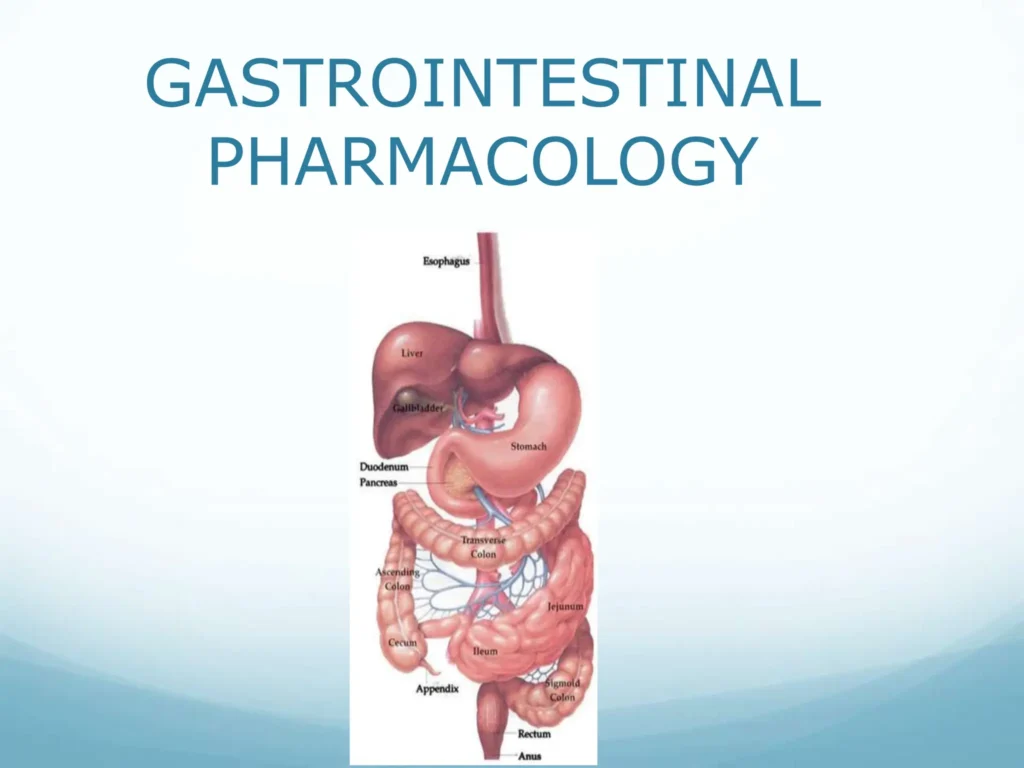
I. Foundational Physiology of the Gastrointestinal Tract
Before diving into the medications, we must first understand how the gastrointestinal (GI) tract works. Pharmacology is essentially the manipulation of normal physiological processes. If you understand the normal state, the drugs will make perfect logical sense.
The stomach is a highly acidic chamber designed to sterilize food and begin protein digestion. To do this without digesting itself, it relies on a delicate balance between Aggressive Factors (Acid, Pepsin) and Defensive Factors (Mucus, Bicarbonate, Prostaglandins, Blood flow).
The Glands and Cells of the Stomach
The stomach is divided into regions containing specific secretory glands: the Cardiac, Pyloric, and Gastric glands. The cells of the gastric gland are the most numerous and are of primary importance when discussing acid control:
Produce and secrete Hydrochloric Acid (HCl) and Intrinsic Factor (needed for Vitamin B12 absorption). This is the primary target for most acid-controlling drugs.
Secrete Pepsinogen, an inactive proenzyme. When pepsinogen hits the acidic environment (HCl), it converts to active Pepsin, a proteolytic enzyme that breaks down proteins.
Also known as surface epithelial cells. They secrete a thick Mucus layer and Bicarbonate to provide a protective coat, preventing the stomach from digesting itself.
How is Acid Actually Made? (The Proton Pump)
Inside the Parietal cell, there is an enzyme called the H⁺/K⁺ ATPase (the Proton Pump). It pumps Hydrogen ions (H⁺ or "protons") out into the stomach lumen in exchange for Potassium (K⁺). This pump is activated by three distinct chemical signals:
- Histamine: Binds to H₂ receptors.
- Acetylcholine (ACh): Released by the vagus nerve, binds to M₃ (muscarinic) receptors.
- Gastrin: A hormone that binds to CCK-B receptors.
Note: Prostaglandins act as the natural "brakes" on this system, preventing the over-activation of the proton pump and reducing HCl production.
II. Acid-Related Diseases
When the balance between aggressive and defensive factors is broken, acid-related diseases occur. The most common presentation is Hyperacidity, where clients report symptoms of overproduction of HCl as indigestion, "sour stomach," heartburn, and acid stomach.
- GERD (Gastroesophageal Reflux Disease): Acid refluxes up into the esophagus because the lower esophageal sphincter (LES) is loose. The esophagus lacks a protective mucus layer, leading to erosive esophagitis.
- PUD (Peptic Ulcer Disease): Acid and pepsin erode the stomach wall (Gastric Ulcer) or the first part of the small intestine (Duodenal Ulcer).
- Zollinger-Ellison Syndrome: A rare pathological hypersecretory condition caused by a gastrin-secreting tumor (gastrinoma), leading to massive acid production and intractable ulcers.
H. pylori is a gram-negative bacterium found in the GI tract of 90% of patients with duodenal ulcers and 70% of those with gastric ulcers. It survives the acidic stomach by secreting urease, which creates an alkaline ammonia cloud around itself. Importantly, H. pylori is not associated with acute perforating ulcers, and factors other than its presence (like NSAID use) can lead to ulceration.
Treatment: The FDA approves several regimens. Eradication requires combination therapy (e.g., a PPI + Amoxicillin + Clarithromycin + Bismuth).
III. Types of Acid-Controlling Agents
Pharmacology targets acid in three main ways: Neutralizing the acid already there (Antacids), blocking the histamine signal to make acid (H₂ Blockers), or destroying the acid pump entirely (PPIs).
1. Antacids
Mechanism of Action: Antacids DO NOT prevent the over-production of acid. Instead, they neutralize the acid once it is already in the stomach. They also promote gastric mucosal defense mechanisms by stimulating the secretion of Mucus, Bicarbonate, and Prostaglandins.
- Drug Effects: Reduction of pain associated with acid-related disorders.
- Raising gastric pH from 1.3 to 1.6 neutralizes 50% of the gastric acid.
- Raising gastric pH by 1 full point (1.3 to 2.3) neutralizes 90% of the gastric acid.
Classes of Antacids
| Class (Base Element) | Side Effects / Warnings | Examples |
|---|---|---|
| Aluminum Salts | Causes Constipation. (Mnemonic: ALU-MINIMUM bowel movements). | Aluminum carbonate (Basaljel), AlternaGEL. |
| Magnesium Salts | Causes Diarrhea. Dangerous in Renal Failure (failing kidneys cannot excrete excess magnesium, causing hypermagnesemia). | Magnesium hydroxide (Milk of Magnesia/MOM). Often combined with Aluminum (Maalox, Relcer gel) to cancel out diarrhea/constipation. |
| Calcium Salts | Causes Constipation and produces gas/belching. Prolonged use can cause Kidney Stones and hyperacidity rebound (the stomach makes more acid later). | Calcium carbonate (Tums). Often advertised as a dietary calcium supplement. |
| Sodium Bicarbonate | Highly soluble, very quick onset, short duration. May cause Metabolic Alkalosis. The high sodium content causes fluid retention—AVOID in Heart Failure (HF) and Hypertension. | Alka-Seltzer, baking soda. |
Antiflatulents (Given with Antacids)
Used to relieve the painful symptoms associated with trapped gas.
- Simethicone: Alters the elasticity of mucus-coated bubbles, causing them to break into smaller bubbles that are easier to expel. Very commonly added to Calcium Carbonate.
- Activated Charcoal: Binds to gas and toxins.
Antacid Drug Interactions & Nursing Implications
- Adsorption: Antacids can coat other drugs, preventing their absorption into the body.
- Chelation: Antacids chemically bind to other drugs (like Tetracyclines or Quinolones), creating insoluble complexes that pass out in the stool.
- Nursing Rule: Most medications should be given 1 to 2 hours after giving an antacid.
- Antacids can cause premature dissolving of enteric-coated medications in the stomach instead of the intestines, causing severe upset.
- Chewable tablets must be chewed thoroughly, and liquid forms shaken well. Follow with at least 8 ounces of water.
- Assess for fluid imbalances, renal disease, HF, and pregnancy before giving.
2. Histamine Type 2 (H₂) Antagonists
Mechanism of Action: Block Histamine (H₂) at the receptors of acid-producing parietal cells. The production of hydrogen ions is reduced, resulting in decreased production of HCl.
Examples (The "-tidines"):
- Cimetidine (Tagamet)
- Famotidine (Pepcid)
- Ranitidine (Zantac)
Indications: GERD, PUD, Erosive esophagitis, adjunct for upper GI bleeding, and Zollinger-Ellison syndrome. All are available OTC in lower dosages.
- Overall, a very low incidence of side effects (< 3%). May see headaches, lethargy, confusion (especially in the elderly).
- Cimetidine specific: It binds to androgen receptors, causing impotence and gynecomastia (male breast enlargement).
- Cimetidine interaction: It is a potent inhibitor of the CYP-450 microsomal oxidase system in the liver. It inhibits the oxidation of many other drugs, causing their levels in the blood to rise to toxic levels (e.g., Warfarin, Phenytoin).
- Smoking: Smoking has been shown to decrease the effectiveness of H₂ blockers by increasing baseline gastric acid production.
3. Proton Pump Inhibitors (PPIs)
While H₂ blockers stop one signal (histamine), they do not stop acetylcholine or gastrin. Therefore, the pump still works partially. PPIs stop the pump itself.
Mechanism of Action: PPIs irreversibly bind to the H⁺/K⁺ ATPase enzyme. Because the pump is physically blocked, it results in Achlorhydria—ALL gastric acid secretion is temporarily blocked until the body can synthesize brand new proton pumps (takes about 24-48 hours).
Examples (The "-prazoles"):
- Omeprazole (Prilosec) - The first in this class.
- Lansoprazole (Prevacid)
- Pantoprazole (Protonix) - The only PPI available for IV (parenteral) administration; used for NPO patients or acute GI bleeds.
- Rabeprazole (AcipHex), Esomeprazole (Nexium)
Indications: GERD maintenance therapy, Erosive esophagitis, short-term treatment of active duodenal/benign gastric ulcers, Zollinger-Ellison syndrome, and treatment of *H. pylori*-induced ulcers.
Nursing Implications for PPIs:
- Timing: Must be taken before meals (usually 30-60 mins before breakfast). They need to block the pumps right as food stimulates them to turn on.
- Administration: Capsules/tablets must be swallowed whole. Do not crush, open, or chew (they are enteric-coated to survive the stomach acid so they can be absorbed in the intestines).
- May be given concurrently with antacids.
- Like cimetidine, they may increase serum levels of diazepam, phenytoin, and increase the chance of bleeding with Warfarin.
4. Mucosal Protectants (Other Drugs)
Action: A cytoprotective agent. In an acidic environment, it turns into a thick, sticky paste that is attracted to and binds directly to the base of ulcers and erosions, forming a physical protective barrier. It protects these areas from pepsin, which would normally break down the exposed proteins.
- Has very little systemic absorption.
- Side Effects: May cause constipation, nausea, and dry mouth.
- Interactions: May impair absorption of other drugs (especially Tetracycline). Do not administer with other medications (separate by 2 hours).
- Binds with phosphate; can be used off-label in chronic renal failure to reduce toxic phosphate levels.
Action: A synthetic Prostaglandin analog. Remember, prostaglandins are the stomach's natural defense mechanism. It protects gastric mucosa by enhancing the local production of mucus and bicarbonate, promoting local cell regeneration, and maintaining mucosal blood flow.
- Primary Use: Used exclusively for the prevention of NSAID-induced gastric ulcers (since NSAIDs destroy natural prostaglandins).
- Side Effects: Doses therapeutic enough to treat ulcers frequently produce severe abdominal cramps and diarrhea.
- Note for beginners: Because it is a prostaglandin, it also causes severe uterine contractions. It is an absolute contraindication in pregnant women (Pregnancy Category X).
IV. Bowel Motility and Laxatives
Just as we manipulate acid in the upper GI tract, we manipulate motility and water content in the lower GI tract. Laxatives (also known as aperients, purgatives, or cathartics) are drugs that promote the evacuation of bowels.
Constipation: Defined as infrequent and/or unsatisfactory defecation (fewer than 3 times per week). Patients may define it as passing hard stools, straining, or incomplete defecation. It is a symptom, not a disease. It is an abnormally infrequent and difficult passage of feces through the lower GI tract.
- Epidemiology: Affects 2-27% of the population. Affects twice as many women as men. More prevalent in non-White persons (ratio 1:3).
- Causes: Poor diet (lack of fiber), lack of exercise, age, irregular bowel habits, drug-induced (opiates, anticholinergics), disease states, spasm of the sigmoid colon, or dysfunction of the mesenteric plexus (the nerve network regulating the gut).
- Terminology Distinction:
- Laxative/Aperient: Milder action, results in elimination of soft but formed stools.
- Purgative/Cathartic: Stronger action resulting in more fluid/watery evacuation. Many drugs act as laxatives in low doses and purgatives in high doses.
General Mechanisms of Laxative Action
All purgatives increase the water content of feces by modifying fluid dynamics via one or more of the following:
- Osmotic/Hydrophilic action: Retaining water and electrolytes in the intestinal lumen to increase fluid bulk.
- Decreasing net absorption: Acting on the intestinal mucosa to block water absorption.
- Increasing propulsive activity: Stimulating the nerves (motility primary, less time for water absorption secondary).
- Cellular level mechanisms: Enhancing Prostaglandin synthesis, causing structural injury to mucosal cells, stimulating adenylyl cyclase (cAMP), inhibiting Na⁺/K⁺ ATPase to impair sodium absorption, or increasing Nitric Oxide (NO) synthesis.
Classification of Laxatives
1. Bulk Forming Purgatives
These consist of unabsorbable cell walls and plant polysaccharides (cellulose, lignins, gums, pectins). They absorb water in the intestines, swell significantly, increase the water content of feces, soften it, and facilitate colonic transit.
- Dietary Fiber (Bran): Residual product of flour; ~40% dietary fiber. The most appropriate method for the prevention of functional constipation and the first-line approach for simple constipation.
- Psyllium (Plantago) & Ispaghula: Contain natural colloidal mucilage which forms a gelatinous mass. Fermented in the colon, increasing bacterial mass to soften feces. Must be mixed with cold milk/juice/water. Must not be swallowed dry (risk of esophageal impaction/choking).
- Methylcellulose: Derived from cellulose; acts similarly to psyllium.
- Side Effects: Bloating, flatulence, and distension. Caution: Contraindicated in immobile patients due to risk of intestinal obstruction.
2. Stool Softeners (Emollients, Surfactants, Lubricants)
Promote more water and fat in the stools and lubricate the fecal material and intestinal walls.
- Docusates (Dioctyl Sodium Sulfosuccinate / DOSS): An anionic detergent. It emulsifies the colonic contents and increases water penetration into the feces. Can disrupt the mucosal barrier and enhance absorption of non-absorbable drugs. Adverse effects: Bitter taste, cramps, hepatotoxicity on prolonged use.
- Lubricants (Liquid Paraffin / Mineral Oil): Viscous petroleum hydrocarbon. Pharmacologically inert. Taken for 2-3 days, it softens stools and coats small hard balls of feces.
Disadvantages of Mineral Oil
- If aspirated into the lungs, it causes severe Lipid Pneumonia (must be taken completely upright).
- Carries fat-soluble vitamins (A, D, E, K) out with the stool, causing deficiency with chronic use.
- Absorbed oil into lymph can produce foreign body granulomas in the liver/spleen. Leakage past the anal sphincter causes embarrassment. Interferes with anorectal healing.
- Do not combine with Docusate, as Docusate will force the mineral oil to be absorbed into the bloodstream.
3. Osmotic Purgatives
Solutes that are not absorbed in the intestine. They draw water into the lumen via osmotic pressure, resulting in bowel distension, increased peristalsis, and evacuation.
- Polyethylene Glycol (PEG): Used mostly as colonic lavage solutions to prepare the gut for radiologic or endoscopic procedures (colonoscopy).
- Lactulose (Dufalac): A semisynthetic disaccharide sugar. It cannot be hydrolyzed by human enzymes. In the colon, bacteria degrade it into lactic, formic, and acetic acids. This increases osmotic pressure to draw in fluid. (Advanced Note: Because it creates an acidic environment in the colon, it traps ammonia as ammonium [NH₄⁺], making it the prime treatment for Hepatic Encephalopathy in liver failure patients.)
- Saline Purgatives:
- Magnesium salts (Sulfate/Epsom salt, Hydroxide): Mg²⁺ also triggers cholecystokinin release. Contraindicated in Renal Insufficiency.
- Sodium salts (Sulfate/Glauber's salt, Phosphate/Fleet): Contraindicated in CHF / Hypertension (due to Na⁺ retention).
- Note: Repeated use causes severe fluid and electrolyte imbalances. Rarely used today for simple constipation.
4. Stimulant / Irritant Purgatives
Strong purgatives that increase peristalsis via direct intestinal nerve stimulation (myenteric plexus) and primarily stimulate motor activity. They also inhibit Na⁺/K⁺ ATPase and activate cAMP, causing massive fluid accumulation in the lumen.
- Bisacodyl: Potent colon stimulant. Enteric-coated tablets. Do NOT take with antacids, PPIs, or milk (destroys coating, causes severe stomach cramps). Causes reflex evacuation in 20-40 mins if suppository.
- Sodium Picosulfate: Hydrolyzed by colonic bacteria to an active form. Used with magnesium citrate to evacuate the colon for surgery.
- Plant glycosides. Bacteria in the colon liberate the active anthrol form.
- Takes 6-8 hours to produce action.
- Stimulates PGE₂ production. Often combined with docusate to treat opiate-induced constipation.
- Can be secreted in breast milk and purge a suckling infant!
- Hydrolyzed by lipase to ricinoleic acid. Decreases water absorption and enhances secretion via a detergent-like action.
- Avoid in pregnancy: May stimulate uterine contractions.
- Used for chronic constipation in women when other laxatives fail.
- Enhances release of Acetylcholine (ACh) via 5-HT₄ receptors on the enteric neurons. Treats IBS-Constipation predominant.
V. Choice and Rational Use of Purgatives
Laxatives are as important for their harmfulness (abuse) as they are for their medical value.
Never give a laxative to a patient with undiagnosed abdominal pain, colic, or vomiting (could be an appendicitis or bowel perforation). Do not give in organic (secondary) constipation due to physical stricture or bowel obstruction.
Clinical Scenarios
- Functional Constipation (Spastic/Irritable vs. Atonic/Sluggish): Educate the patient that 1 movement every 2 days is normal. Ensure adequate fiber, fluid, and exercise. Management: Bulk laxatives. If atonic, a stimulant (Senna) once a week maximum.
- Bed-Ridden Patients (MI, Stroke, Post-op): Anticipate sluggish bowels. Prevention: Bulk agents, docusate, or lactulose. Treatment: Enemas, bisacodyl, or senna.
- Avoiding Straining (Hernia, Eye surgery, Piles/Fissures, MI): Crucial to keep feces soft so the patient doesn't bear down (Valsalva maneuver, which stresses the heart and tissues). Use: Adequate doses of bulk agents, lactulose, or docusates.
- Bowel Prep (Surgery/Colonoscopy): The bowel must be completely empty. Use: Saline purgatives, bisacodyl, senna, or PEG lavage.
- Flushing out Parasites/Toxins (Food poisoning, Anthelmintics): Drive out the unabsorbed poison or dead tapeworms. Use: Saline purgatives.
References & Further Reading
- Katzung, B. G. (2020). Basic and Clinical Pharmacology (15th ed.). McGraw Hill. (Comprehensive chapters on drugs controlling gastric acidity and bowel motility).
- Brunton, L. L., et al. (2017). Goodman and Gilman's The Pharmacological Basis of Therapeutics (13th ed.). McGraw Hill. (Receptor level physiology of parietal cells and the enteric nervous system).
- Pinto, S., & Bercik, P. (2011). Epidemiology of constipation and functional GI disorders. Best Practice & Research Clinical Gastroenterology.
- Burchum, J., & Rosenthal, L. (2021). Lehne's Pharmacology for Nursing Care (11th ed.). Elsevier. (Excellent resource for nursing implications, timing of antacids, and specific patient education regarding laxative abuse).
Quick Quiz
GIT Pharmacology Quiz
Pharmacology - mobile-friendly and focused practice.
Privacy: Your details are used only for quiz tracking and certificates.
GIT Pharmacology Quiz
Pharmacology
Preparing questions...
Choose your answer and keep your streak alive.
Great effort.
Here is your quick performance summary.