
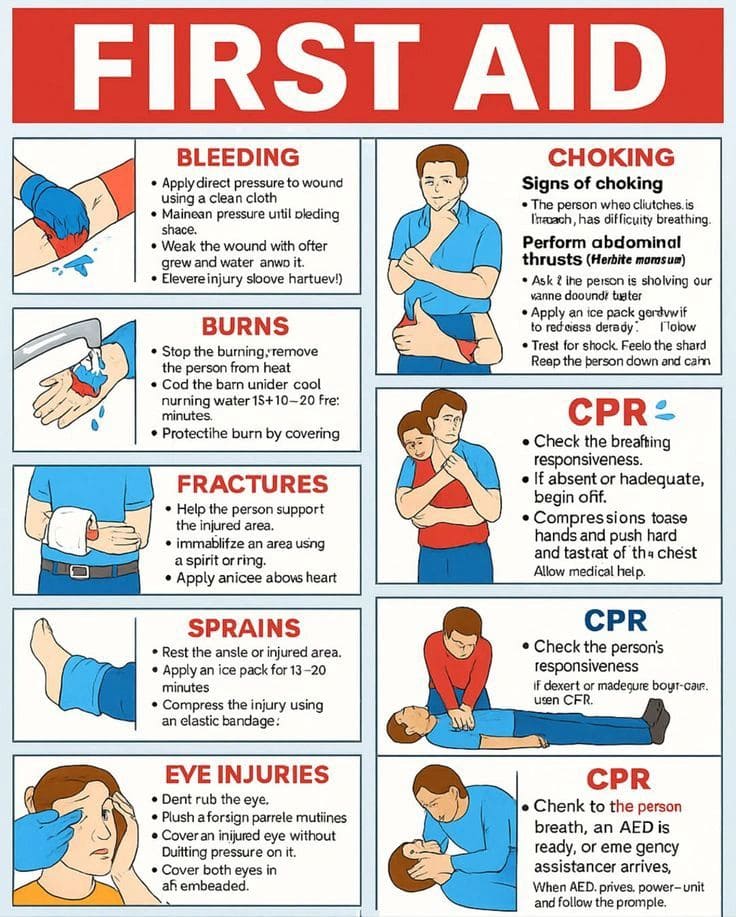
An accident is an unexpected, unplanned event that causes injury or harm to a child. In nursing, we prefer the term "unintentional injury" because most of these events are preventable — they are NOT truly "accidents" if we can stop them from happening.
- They are naturally curious: They explore everything with their hands and mouths.
- They cannot judge danger: A 2-year-old does not have the cognitive development (frontal lobe maturity) to know fire burns or water drowns.
- They are physically small and fragile:
- Physiological Expansion: Their bones are more porous and bend/break easily (greenstick fractures). Their skin is much thinner, meaning it burns faster and deeper at lower temperatures. Their airways are incredibly narrow (about the width of their pinky finger), so they block quickly with small objects or minor swelling.
- They imitate adults: They copy cooking, driving, or using tools without understanding the risks.
Research from Jinja, Uganda shows that over 270,000 children under 5 die globally each year from injuries, and Sub-Saharan Africa has the highest proportion of these deaths. In Uganda specifically:
| Type of Injury | Percentage of Cases |
|---|---|
| Falls (from beds, verandas, trees) | ~57% |
| Burns (from stoves, hot water, fire) | ~23-34% |
| Cuts/Lacerations (from knives, pangas, glass) | ~19% |
| Poisoning (from medicines, kerosene, soap) | Common but underreported |
| Drowning (in wells, buckets, ponds) | Significant risk |
| Road Traffic Injuries | Increasing rapidly |
The majority of injuries happen at home or in the courtyard — NOT on the road. This means mothers and caregivers are the first and most important line of defense! In pediatric nursing, anticipatory guidance (educating parents on safety before an accident happens) is your most powerful tool.
Before treating ANY injury, always follow this order. Never skip steps! (Pathophysiology note: The goal of this survey is to maintain cerebral perfusion—keeping oxygenated blood flowing to the brain to prevent irreversible hypoxic brain death, which occurs in just 4-6 minutes).
| Letter | Meaning | What You Do |
|---|---|---|
| D | DANGER | Make sure the scene is safe for YOU first. Look for fire, electricity, traffic, or angry animals. If you get hurt, you cannot help the child. |
| R | RESPONSE | Check if the child is awake. Shout their name, gently tap their shoulder. For babies, tap the bottom of their foot (elicits a reflex cry). |
| S | SEND FOR HELP | Call for an ambulance or ask someone to run for help. In Uganda, call the nearest health facility or use a boda-boda if urgent. |
| A | AIRWAY | Open the airway. For children: head-tilt, chin-lift. For infants: keep head in neutral position (not tilted back too far — their necks are soft and hyperextending can actually kink and block their trachea!). |
| B | BREATHING | Look, listen, and feel for breathing for up to 10 seconds. Normal rates: Infant 30-40/min, Child 15-25/min. |
| C | CPR | If not breathing normally, start CPR immediately to manually pump the heart and circulate blood. |
| D | DEFIBRILLATION | Use AED if available (rare in rural Uganda, but know the skill to shock lethal arrhythmias like Ventricular Fibrillation back to a normal rhythm). |
"Don't Run Straight Away — Check Breathing Carefully, Dear!"
| Type | Source | Appearance | Danger Level |
|---|---|---|---|
| Arterial | Artery (carries high-pressure blood FROM heart) | Bright red (highly oxygenated), spurts with heartbeat | LIFE-THREATENING (Can bleed out in minutes) |
| Venous | Vein (carries lower-pressure blood TO heart) | Dark red (deoxygenated), steady flow | LIFE-THREATENING if a large vein (e.g., jugular, femoral) |
| Capillary | Tiny surface vessels | Oozes slowly, trickles | Usually NOT life-threatening |
- STEP 1: PROTECT YOURSELF. Wear gloves if available. If not, use a plastic bag or clean cloth over your hands. Why? Blood can carry HIV, Hepatitis B, and other infections.
- STEP 2: SIT OR LAY THE CHILD DOWN. This prevents fainting from blood loss (shock). Raise the injured part above the level of the heart if possible — gravity slows bleeding by decreasing hydrostatic pressure.
- STEP 3: APPLY DIRECT PRESSURE. Use a clean cloth, gauze, or clean clothing. Press firmly and directly on the wound. Do NOT remove the first cloth if it becomes soaked — add more layers on top. Why? The body is forming a delicate platelet plug (clot). Removing the bottom layer rips the clot off and restarts the bleeding!
- STEP 4: ELEVATE THE LIMB. If the wound is on an arm or leg, raise it above heart level while keeping pressure.
- STEP 5: APPLY A PRESSURE BANDAGE. Wrap firmly (but not so tight that fingers/toes turn blue or cold). Check circulation below the bandage every 15 minutes (capillary refill test).
- STEP 6: IF BLEEDING DOES NOT STOP. Apply pressure to the pressure point above the wound:
- Arm bleeding → press on the inner upper arm (brachial artery)
- Leg bleeding → press on the groin (femoral artery)
- As a LAST RESORT, a tourniquet may be used for life-threatening limb bleeding, but this can cause permanent ischemic damage. Mark the time it was applied!
- STEP 7: TREAT FOR SHOCK (Hypovolemic). Lay child flat with legs raised (if no spinal injury) to shunt blood back to the brain and heart. Keep warm with a blanket. Reassure the child — crying increases sympathetic tone, heart rate, and blood pressure, making bleeding worse!
- STEP 8: TRANSPORT TO HOSPITAL. All deep cuts need stitching and tetanus immunization. Cuts on the face, hands, or genitals need special surgical care.
The most common cause of preventable death after trauma is severe bleeding. Stop the bleed FIRST!
| Degree | What You See | Depth | Healing |
|---|---|---|---|
| First Degree (Superficial) | Red, painful, dry skin (like a sunburn) | Top layer only (epidermis) | 3-6 days, no scar |
| Second Degree (Partial Thickness) | Blisters, very painful, wet/weeping | Epidermis + upper dermis | 2-3 weeks, may scar |
| Third Degree (Full Thickness) | White, charred, leathery, painless (nerve endings are destroyed!) | All skin layers + deeper tissue | Months, requires surgery/skin grafts, severe scarring |
- Open charcoal stoves (jiko) — children pull pots down or fall onto stoves
- Hot porridge/food — children reach up to grab from the table
- Hot water for bathing — mothers test with elbow but water is still too hot for infant skin
- Flame burns — children playing with matches or near cooking fires
- Electrical burns — exposed wires, low sockets, children putting fingers in holes
- STEP 1: STOP THE BURNING. Remove child from heat source. If clothes are on fire: STOP, DROP, and ROLL. For chemical burns: Brush off dry chemicals first (adding water to some dry chemicals causes boiling!), then flush with water for 20 minutes.
- STEP 2: COOL THE BURN. Run cool (not cold) water over the burn for at least 10-20 minutes. DO NOT use ice — this causes intense vasoconstriction, cutting off blood supply and causing MORE tissue damage (ischemia). DO NOT apply butter, oil, toothpaste, or raw eggs — these trap heat inside the tissues and act as a breeding ground for deadly bacteria.
- STEP 3: REMOVE JEWELRY AND LOOSE CLOTHING. Do this BEFORE swelling starts (edema happens quickly due to massive fluid shifts). DO NOT remove clothing that is STUCK to the burn — cut around it.
- STEP 4: COVER THE BURN. Use a clean, non-stick dressing — a clean plastic bag, cling film, or sterile gauze. DO NOT wrap tightly — burns swell. DO NOT pop blisters — the blister fluid is perfectly sterile and protects the raw skin below from infection.
- STEP 5: KEEP THE CHILD WARM. Burns cause massive heat loss because the skin's thermoregulation is destroyed. Cover unburned areas with a blanket. Why? A child with a large burn can become severely hypothermic even in hot Uganda.
- STEP 6: FLUID RESUSCITATION (Hospital Level). For burns >10% of body surface area, give IV fluids (Ringer's Lactate is preferred to combat acidosis).
- Use the Parkland Formula (for exam purposes):
- First 24 hours: 4 mL × weight (kg) × % burn area
- Half of this total volume is given in the first 8 hours, the remaining half in the next 16 hours.
- STEP 7: PAIN RELIEF. Give paracetamol or ibuprofen. For severe burns, stronger IV pain medicine (morphine) is needed in hospital.
- STEP 8: TETANUS PROPHYLAXIS. All burn wounds are "dirty" wounds. Give tetanus toxoid if immunization is not up to date.
Mnemonic for Burn First Aid: "COOL it, COVER it, CALL for help!"
Rule of Nines for Children: The pediatric head is much larger proportionally than an adult's! The easiest community method to estimate burn size: The child's palm (including fingers) = exactly 1% of their body surface area.
Drowning happens when a child's airway goes under water (or other liquid) and they cannot breathe. Near-drowning means they were rescued but may still have water in their lungs.
Pathophysiology: Initially, water touching the vocal cords causes severe laryngospasm (the airway clamps shut to protect the lungs). If the spasm breaks, water rushes into the lungs, washing out surfactant (the soapy substance that keeps alveoli open). This causes the alveoli to collapse, leading to profound hypoxia.
- Falling into open wells, pit latrines, or ponds
- Buckets of water left unattended (even 5 cm of water can drown a baby!)
- Bathing alone in basins
- Flooding during rainy seasons
- Playing near rivers or dams
- STEP 1: REMOVE FROM WATER SAFELY. Do NOT jump in if you cannot swim — you may drown too. Use a stick, rope, or throw a floating object. If you must enter, approach from behind so the panicking child does not pull you under.
- STEP 2: CHECK FOR BREATHING. Lay child on their back on firm ground. Open airway and check breathing for 10 seconds.
- STEP 3: IF NOT BREATHING — START CPR IMMEDIATELY.
- Do NOT waste time trying to "drain water" from lungs — this does NOT work and wastes precious time.
- Start with 5 rescue breaths first (Unlike standard adult CPR, pediatric drowning is an OXYGENATION problem, not a primary heart problem. The lungs need oxygen!).
- Then continue with 30 compressions : 2 breaths ratio.
- For Infants: Place two fingers on the center of the chest (just below nipple line). Compress 1/3 depth (about 3-4 cm). Rate: 100-120 per minute.
- For Children: Use one or two hands on center of chest. Compress 1/3 depth (about 4-5 cm). Rate: 100-120 per minute.
- STEP 4: CONTINUE CPR UNTIL... Child starts breathing on their own, Help arrives, or You are too exhausted to continue.
- STEP 5: IF CHILD IS BREATHING BUT UNCONSCIOUS. Place in recovery position (on their side) to allow water/vomit drainage to flow out. Keep warm. Monitor breathing constantly — they may stop again.
- STEP 6: ALL NEAR-DROWNING CASES NEED HOSPITAL. Even if the child seems completely fine, secondary drowning (ARDS - Acute Respiratory Distress Syndrome) can occur hours later. The water in the lungs causes massive inflammation, swelling, and delayed suffocation.
"Pull, Check, Breathe, Squeeze — Don't Delay!"
- Exposed wires at low height
- Children putting fingers in socket holes
- Playing near transformers or electrical poles
- Lightning strikes during rainy season
- Fallen power lines after storms
- STEP 1: ENSURE YOUR OWN SAFETY FIRST. DO NOT touch the child if they are still in contact with electricity! Turn off the power source at the main switch if possible. If you cannot turn off power, use a dry wooden stick, plastic pipe, or rubber item to push the wire away. Water conducts electricity — do NOT stand in water.
- STEP 2: CHECK RESPONSE AND BREATHING.
Pathophysiology: Electrical current scrambles the heart's electrical pacemaker, causing immediate Ventricular Fibrillation (cardiac arrest). Check for breathing immediately. If not breathing, start CPR at once. - STEP 3: CHECK FOR BURNS. Electrical burns often have an entry wound (where electricity entered) and an exit wound (where it grounded and left the body, usually hands or feet). These may look like tiny pinholes on the outside but cause massive "iceberg" damage inside (cooking muscles, organs, and blood vessels along the path).
- STEP 4: IMMOBILIZE IF SPINAL INJURY SUSPECTED. The electrical shock causes violent muscle tetany (spasms), which can literally throw a child through the air. They may have hidden spinal fractures. Do NOT move the child unnecessarily.
- STEP 5: TREAT BURNS AS DESCRIBED ABOVE. Cover with clean, dry dressings.
- STEP 6: TRANSPORT URGENTLY. All electrical injuries need hospital evaluation.
Clinical Note: The internal muscle damage releases massive amounts of myoglobin into the blood (rhabdomyolysis), which travels to the kidneys and clogs them, causing acute kidney failure. They need massive IV fluids at the hospital to flush the kidneys!
You find a toddler lying unconscious on the floor holding a frayed electrical wire. They are not breathing. You cannot find the main power switch. What is your FIRST action?
Answer: Do NOT touch the child! Your first action is to find a dry, non-conductive object (like a wooden broom handle or plastic chair) to knock the wire out of the child's hands. Only then can you safely begin DRS ABCD and CPR.
- Falls from trees (mango trees are very common!)
- Falls from bunk beds (very common in crowded homes)
- Falls from verandas without guard rails
- Road traffic accidents (motorcycles/boda-bodas)
- Sports injuries at school
- Pain at the site: Child refuses to move the limb.
- Swelling and bruising: Caused by broken blood vessels inside the bone marrow and surrounding periosteum.
- Deformity: The limb looks bent or twisted out of its normal anatomical alignment.
- Inability to move or bear weight.
- Crepitus: A grinding feeling or sound when the broken bone ends rub against each other (Warning: DO NOT test for this intentionally, as it causes excruciating pain and further tissue damage!).
- Open fracture: The broken bone sticks through the skin. This is very serious due to the massive risk of deep bone infection (osteomyelitis).
- STEP 1: DO NOT TRY TO STRAIGHTEN THE BONE. You can severely damage nearby nerves and blood vessels. Splint the limb in the exact position it was found.
- STEP 2: IMMOBILIZE (SPLINT) THE INJURY. Use anything rigid: cardboard, wooden sticks, rolled newspaper. Pad the splint with cloth to prevent pressure sores. Secure with cloth strips, bandages, or torn clothing.
Crucial Rule: Splint the joint above AND below the fracture. (Example: For a forearm fracture, immobilize both the wrist AND the elbow to prevent any rotational movement). - STEP 3: FOR OPEN FRACTURES. Do NOT push the bone back in. Cover the wound with a clean/sterile dressing to prevent environmental contamination. Do NOT apply pressure directly on the exposed bone.
- STEP 4: CHECK CIRCULATION BELOW THE INJURY. Check pulse, warmth, and color of fingers/toes (Capillary refill).
Pathophysiology (Compartment Syndrome): If the fingers are pale, cold, or numb, the splint may be too tight, or internal bleeding is crushing the blood vessels inside the muscle fascia. This is a medical emergency that can lead to amputation if not relieved! - STEP 5: ELEVATE IF POSSIBLE. Reduce swelling by raising the limb above heart level (decreases hydrostatic pressure).
- STEP 6: APPLY COLD PACK. Wrap ice or cold water in a cloth and apply for 15-20 minutes to reduce swelling and numb pain (causes localized vasoconstriction). Do NOT apply ice directly to skin (causes ice burns/frostbite).
- STEP 7: PAIN RELIEF. Give paracetamol. Do NOT give aspirin, as it inhibits platelets and increases bleeding risk.
- STEP 8: TRANSPORT TO HOSPITAL. All suspected fractures need X-rays and proper casting/reduction by an orthopedic specialist.
| Type | Description | Danger |
|---|---|---|
| Concussion | Brain is shaken inside the skull, causing temporary confusion or memory loss. | Usually recovers, but requires strict monitoring for deterioration. |
| Contusion | Actual bruising and microscopic bleeding of the brain tissue. | More serious, can lead to localized swelling. |
| Skull Fracture | Broken bone of the skull (linear, depressed, or basilar). | High risk of brain infection (meningitis) and underlying brain damage. |
| Intracranial Hemorrhage | Bleeding inside the rigid skull (epidural, subdural, or subarachnoid). | LIFE-THREATENING. The skull cannot expand, so blood crushes the brain stem. |
- STEP 1: CHECK AIRWAY AND BREATHING. Head injuries disrupt the vomiting center in the brain. Clear the mouth if vomiting occurs. If unconscious, place in the recovery position (on side) to prevent choking on vomit (aspiration).
- STEP 2: DO NOT MOVE THE NECK. Assume a cervical spinal injury until proven otherwise. Hold the head steady with both hands (manual inline stabilization). If you must roll the child to clear vomit, do a log roll (the whole body turns as one unit to keep the spine perfectly straight).
- STEP 3: CONTROL BLEEDING. Apply gentle pressure with a clean cloth.
Exception: DO NOT apply pressure if you suspect a depressed skull fracture (you feel an indentation or see bone). Pressing will push bone shards directly into the brain tissue! - STEP 4: WATCH FOR SIGNS OF SERIOUS HEAD INJURY. Red flags that indicate rising Intracranial Pressure (ICP) requiring URGENT transfer:
- Loss of consciousness (even briefly)
- Repeated projectile vomiting
- Seizures (convulsions/fits)
- Severe, worsening headache
- Confusion, irritability, or unusual behavior
- Weakness or numbness on one side of the body (hemiparesis)
- Unequal pupil size (one pupil is blown/dilated - indicates brain herniation crushing the oculomotor nerve!)
- Clear fluid (CSF) or blood leaking from nose or ears
- Bruising behind the ears (Battle's sign) or around eyes (Raccoon eyes) - classic signs of a Basilar Skull Fracture.
- STEP 5: KEEP CHILD WARM AND CALM. Reassure them. Crying increases blood pressure, which increases the pressure inside the head (ICP).
- STEP 6: MONITOR CONTINUOUSLY. Check the level of consciousness every 15 minutes using the AVPU scale:
- A = Alert (awake and responding appropriately)
- V = Responds to Voice (opens eyes when shouted at)
- P = Responds to Pain (only moves when pinched)
- U = Unresponsive (deep coma)
- Vomiting (especially projectile)
- Obvious fluid (CSF) from ears/nose
- Mental changes (confusion)
- Irregular breathing (part of Cushing's Triad)
- Thin/unequal pupils
- Paralysis/weakness
- Unconsciousness
- Pain (Increased severe headache)
- Increased Lethargy (very sleepy/hard to wake)
- Loss of memory
- Seizures
| Mild Choking | Severe Choking |
|---|---|
| Child can cough forcefully, speak, or cry loudly. | Child CANNOT cough effectively, speak, or make noise (silent panic). |
| Airway is only partially blocked. | Airway is completely blocked. Lips may turn blue (cyanosis). |
| Action: Encourage coughing — do NOT interfere with slaps. | Action: Act immediately — oxygen is cut off! |
- STEP 1: ASSESS. Is it severe choking? Can the baby cry? Cough? Breathe? If NO → act immediately.
- STEP 2: POSITION THE BABY. Sit down. Lay the baby face-down along your forearm. Support the baby's head and jaw with your hand (don't squeeze the throat). Keep the baby's head lower than their chest (gravity helps dislodge the object!).
- STEP 3: GIVE 5 BACK BLOWS. Use the heel of your free hand. Strike firmly between the shoulder blades. Check the mouth after each blow — if you clearly see the object, remove it with a pinky finger sweep.
- STEP 4: IF BACK BLOWS DON'T WORK — 5 CHEST THRUSTS. Turn the baby face-up along your forearm. Place two fingers on the center of the chest (same place as CPR). Push sharply downward 5 times. Check the mouth after each thrust.
Pathophysiology Note: We do NOT use abdominal thrusts (Heimlich) on infants because their liver is relatively massive and unprotected by the ribcage. Abdominal thrusts will rupture the infant's liver and cause fatal internal bleeding! - STEP 5: REPEAT. Alternate 5 back blows and 5 chest thrusts until: The object comes out, the baby starts breathing/crying, or the baby becomes unconscious.
- STEP 6: IF BABY BECOMES UNCONSCIOUS. Lay baby on a flat surface. Start CPR immediately (30 compressions : 2 breaths). Each time you open the airway to give breaths, look in the mouth — if you see the object, remove it.
Crucial Rule: DO NOT do blind finger sweeps — you will push the object deeper past the vocal cords!
- STEP 1: ENCOURAGE COUGHING. If mild choking, let their own diaphragmatic reflexes clear it.
- STEP 2: IF SEVERE — 5 BACK BLOWS. Bend the child forward at the waist. Give 5 firm blows between the shoulder blades with the heel of your hand.
- STEP 3: IF BACK BLOWS DON'T WORK — 5 ABDOMINAL THRUSTS (Heimlich Maneuver). Stand behind the child. Make a fist with one hand. Place the thumb side of your fist just above the belly button (navel). Grasp your fist with your other hand. Pull sharply inward and upward 5 times. (This artificially forces the diaphragm up, forcing air out of the lungs to pop the object out like a cork).
- STEP 4: REPEAT. Alternate back blows and abdominal thrusts. If the child becomes unconscious, immediately begin CPR.
- Medicines left within reach (paracetamol, highly toxic adult antimalarials, iron pills).
- Kerosene/paraffin (commonly used for lamps and stoves, often mistaken for water).
- Pesticides/herbicides (dangerously stored in used soda or water bottles!).
- Household cleaners, bleach, and soap (highly alkaline, burns the throat).
- Plants (some ornamental or wild plants are toxic if eaten).
- Cosmetics and traditional/herbal concotions (unknown dosages).
- STEP 1: ENSURE YOUR OWN SAFETY. Make sure the poison is not still in the child's mouth or on their skin (wear gloves if handling pesticides). If a chemical gas is in the air, move to fresh air immediately.
- STEP 2: IDENTIFY THE POISON. Look at the container/bottle. Smell the child's breath (e.g., kerosene smell, garlic smell for organophosphates). Ask the child or witnesses what was taken. Bring the container to the hospital — doctors need to know exactly what it was to give the specific antidote (e.g., Atropine for pesticides).
- STEP 3: DO NOT GIVE ANYTHING BY MOUTH UNLESS INSTRUCTED.
- DO NOT induce vomiting! If the chemical burned the esophagus going down (like bleach), it will burn it a second time coming back up. It also drastically increases the risk of aspiration.
- DO NOT give milk, water, or other traditional "antidotes" (like raw eggs) unless a poison center or doctor specifically tells you to.
- MAJOR EXCEPTION / WARNING: If the child swallowed petroleum products (kerosene, paraffin, petrol), DO NOT INDUCE VOMITING under any circumstances. These liquids are highly volatile; if vomited, fumes easily enter the lungs causing severe, often fatal chemical pneumonitis.
- STEP 4: IF POISON IS ON THE SKIN. Remove contaminated clothing immediately (cut it off if necessary so it doesn't pull over the face). Rinse the skin with running water for at least 15-20 minutes to dilute and wash away the chemical.
- STEP 5: IF POISON IS IN THE EYES. Rinse eyes with clean, running water for at least 15-20 minutes. Hold the eyelids open. Do NOT let the child rub their eyes (causes severe corneal abrasions).
- STEP 6: IF POISON IS INHALED. Move the child to fresh air immediately. If not breathing, start CPR.
- STEP 7: TRANSPORT TO HOSPITAL IMMEDIATELY. All poisonings need medical evaluation, observation, and potentially activated charcoal. Call ahead if possible so the hospital can prepare antidotes.
"Identify, Don't Vomit, Transport!"
- Pedestrian accidents: Children crossing busy roads unsupervised.
- Boda-boda accidents: Children riding as passengers without helmets, or being hit while walking.
- Falling from vehicles: Children hanging on matatus or open lorries.
- Bicycle accidents: Very common in rural areas on uneven dirt roads.
- STEP 1: SCENE SAFETY. Stop traffic if possible to prevent a secondary crash. Use warning triangles, large branches, or bystanders to direct traffic. Watch out for fuel leaks or fire risk from the vehicles. Wear gloves.
- STEP 2: PRIMARY SURVEY (DRS ABCD). This is where it all comes together! Check for danger, response, and breathing. Start CPR if the child is in cardiac arrest.
- STEP 3: CONTROL SEVERE BLEEDING. Apply immediate, heavy direct pressure to spurting wounds. Use a tourniquet only for life-threatening limb bleeding that pressure cannot stop.
- STEP 4: IMMOBILIZE SPINAL INJURIES. The kinetic energy of an RTA easily snaps a child's fragile cervical spine. Do NOT move the child unless absolutely necessary (e.g., the car is on fire).
- If you MUST move them, use the log roll technique:
- One person takes charge and holds the head steady (inline stabilization).
- Others support the shoulders, hips, and legs.
- On the leader's count, roll the entire body as one solid unit so the spine does not twist or bend.
- STEP 5: TREAT SHOCK. Lay the child flat, keep them warm with jackets/blankets, and elevate the legs (only if you are certain there is no spinal or leg injury) to push blood back to vital organs.
- STEP 6: DO NOT REMOVE IMPALED OBJECTS. If a stick, piece of glass, or vehicle metal is stuck deep in the child, stabilize it with bulky dressings wrapped around the base of the object.
Pathophysiology: The object may be acting like a plug in a major severed artery. Removing it on the roadside will unplug the hole, causing the child to bleed to death in seconds! - STEP 7: TRANSPORT. Call an ambulance or arrange safe, flat transport immediately. Time is tissue—the "Golden Hour" of trauma means survival rates plummet if surgical care is delayed. Keep the child warm during transport.
Case: You witness a boda-boda hit a 6-year-old child. The child is lying on the tarmac, crying loudly, and holding a strangely bent forearm. You notice a sharp piece of metal from the motorcycle deeply impaled in their thigh, but it is barely bleeding. You are about to put the child in a car to rush them to the clinic.
What are the TWO things you absolutely MUST NOT DO in this scenario?
Answer:
- Do NOT pull the piece of metal out of the thigh. It is likely tamponading (plugging) the femoral artery. Secure it in place with bandages.
- Do NOT try to straighten the bent forearm. Splint it exactly as you found it to prevent further nerve/vessel damage before transport.
Quick Quiz
Accidents Quiz
Paediatrics
Privacy: Your details are used only for quiz tracking and certificates.
Accidents Quiz
Paediatrics
Preparing questions...
Choose your answer and keep your streak alive.
Great effort.
Here is your quick performance summary.