
Table of Contents
TogglePharmacology of Antidiarrheal Drugs
I. Introduction: Understanding Diarrhea
Before memorizing drugs, we must understand the physiology of the gastrointestinal (GI) tract. The main job of the large intestine is to absorb water. A healthy individual secretes 2000–3000mg of sodium per day into the intestinal lumen during digestion. Under normal conditions, nearly all of this sodium (and the water that follows it) is reabsorbed.
Diarrhea occurs when this delicate balance is disrupted. It is clinically defined as the frequent passage of liquid or semisolid stools (typically 3 or more times per day), often accompanied by abdominal cramps.
Worldwide, diarrhea claims millions of lives annually, mostly infants in developing nations. The actual cause of death is rarely the infection itself; it is the massive loss of isotonic fluids. Intestinal secretions are rich in sodium (approx. 142 mEq/L). Rapid loss leads to life-threatening hyponatremia (low blood sodium), hypokalemia, metabolic acidosis, and severe dehydration within hours. Almost all these deaths are preventable with adequate fluid replacement.
Classification of Diarrhea
- Acute Diarrhea: Lasts 2–3 days (up to 14 days). Usually caused by infectious agents (bacterial, viral, protozoal), food toxins, or drugs. Treatment primarily focuses on rehydration.
- Chronic Diarrhea: Lasts 2 weeks or more. Often stems from systemic or localized chronic conditions such as Malabsorption, Inflammatory Bowel Disease (IBD), Irritable Bowel Syndrome (IBS), Diabetes, Hyperthyroidism, Addison’s Disease, or tumors. Treatment focuses on identifying and treating the underlying cause.
To understand how drugs work, you must know why the water is in the stool:
- Secretory: The gut actively pumps out massive amounts of fluid (e.g., Cholera toxin opening chloride channels).
- Osmotic: Unabsorbable substances (like lactose in lactose intolerance) remain in the gut and pull water towards them like a magnet.
- Inflammatory/Exudative: Damage to the gut wall (e.g., Dysentery, IBD) causes blood, pus, and proteins to leak into the stool.
- Motility-related: The gut moves too fast (hypermotility), giving the intestines no time to absorb the water.
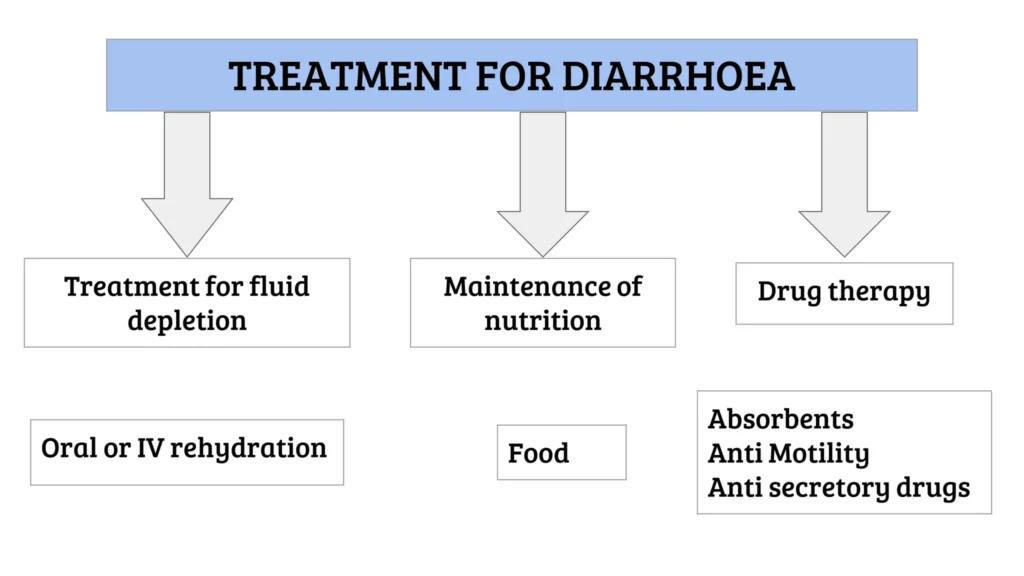
II. The First Line of Defense: Oral Rehydration Therapy (ORT)
Before giving any drug to stop diarrhea, you must replace the lost fluids. But you cannot just give a patient pure water. Pure water has no electrolytes and will simply pass through or cause cellular swelling.
The Magic of SGLT1 (How ORT Works)
In the intestinal epithelium, there is a specialized transporter protein called SGLT1 (Sodium-Glucose Linked Transporter 1). Think of SGLT1 as a revolving door that only spins if BOTH a Sodium molecule and a Glucose molecule enter it at the exact same time.
- The Process: Sodium and Glucose pass into the epithelial cells together via SGLT1 (co-transport).
- The Pump: Once inside, the Na+/K+ ATPase pump on the basal side of the cell actively pumps 3 Sodium ions into the blood in exchange for 2 Potassium ions.
- The Osmotic Pull: By pumping sodium into the blood, it creates a massive "downhill" osmotic gradient. For every cycle, hundreds of water molecules are pulled out of the intestine and into the blood to follow the sodium.
- Why this is brilliant: Toxins like Cholera completely destroy normal absorption channels, but they do not affect the SGLT1 transporter. By giving a solution containing the perfect ratio of salt and sugar, you can force the gut to absorb water even while diarrhea is actively happening!
Types and Composition of ORS
The standard WHO ORS is composed of NaCl, KCl, Sodium Citrate (or Bicarbonate), and Glucose. Zinc is also supplemented in children to promote epithelial regeneration and decrease stool volume.
| Component | Old WHO ORS (310 mOsm/L) | New Reduced Osmolarity ORS (245 mOsm/L) | Purpose |
|---|---|---|---|
| NaCl | 3.5 g | 2.6 g | Restores lost Sodium and Chloride. |
| Glucose | 20.0 g | 13.5 g | Provides energy and drives the SGLT1 pump. |
| KCl | 1.5 g | 1.5 g | Restores lost Potassium (prevents hypokalemia). |
| Base (Citrate) | 2.9 g | 2.9 g | Corrects metabolic acidosis caused by bicarbonate loss in stool. |
- Why the switch to Reduced Osmolarity? The old formula (310 mM) was slightly hypertonic, which could sometimes draw a little water into the gut before absorbing it. The new formula (245 mM) increases efficacy, decreases stool output by 20%, and decreases vomiting by 30%.
- Bicarbonate vs. Tricitrate ORS: Tricitrate-based ORS is preferred today. It is more stable on shelves, reduces stool output in high-output diarrhea, and increases intestinal absorption of Na+ and water better than bicarbonate.
- Super ORS: Uses boiled rice powder instead of pure glucose. The slow breakdown of complex carbohydrates decreases the osmolarity burden while still providing glucose, further reducing diarrhea frequency.
III. Goals of Pharmacological Therapy
If rehydration is managed, we can use drugs to control symptoms. The goals are:
- Eliminate the cause (if infectious).
- Decrease fluid accumulation in the lumen (Anti-secretory).
- Decrease propulsive contractions (Anti-motility).
- Increase mixing (segmenting) contractions to allow time for water absorption.
IV. Anti-Motility & Anti-Secretory Agents
The gastrointestinal tract has two types of movements. Propulsive contractions (Peristalsis) push food rapidly toward the exit. Segmenting contractions squeeze the food in place like kneading dough, allowing time for water to be absorbed. Antidiarrheals stop propulsion and increase segmentation.
1. Opioids (The Most Effective Antidiarrheals)
Opioids act as agonists at mu (µ) opioid receptors in the enteric nervous system. They decrease acetylcholine release in enteric motor neurons. This results in decreased propulsive peristalsis, increased segmenting contractions, increased anal sphincter tone, and decreased fluid secretion.
An opiate analogue that replaced morphine for diarrhea. It is highly potent at the µ-receptor in the gut.
- Why no addiction? It poorly penetrates the Blood-Brain Barrier (BBB). Even if it crosses, a pump (P-glycoprotein) kicks it right back out. It has zero abuse potential.
- Uses: Acute, chronic, and traveler's diarrhea.
Structurally related to pethidine (meperidine). It can cross the BBB at high doses and cause a high.
- Formulation Trick: It is always combined with a sub-therapeutic dose of Atropine (brand name Lomotil). If a patient takes a handful to get high, the atropine will cause horrific side effects (severe dry mouth, tachycardia) to discourage abuse.
Pure opium alkaloids. Highly effective at reducing GI motility and secretions, but rarely used today specifically for diarrhea due to high addiction potential and strong CNS effects.
- Toxic Megacolon: Opioids are totally contraindicated in infectious dysentery (bloody diarrhea, e.g., Salmonella, Shigella) and Inflammatory Bowel Disease. If you stop the gut from moving while a dangerous bacteria is inside, the bacteria will multiply, invade the gut wall, and cause the colon to massively balloon and rupture (Toxic Megacolon).
- Avoid in children < 4 years of age due to risk of paralytic ileus.
- Common side effects: Constipation, skin rashes, headache.
2. Racecadotril (Enkephalinase Inhibitor)
Racecadotril is a prodrug. Instead of acting directly on opioid receptors, it blocks enkephalinase, the enzyme that normally breaks down the body's own natural opioids (enkephalins). By doing this, it increases endogenous enkephalin concentration, leading to increased mu-receptor binding, decreased motility, and reduced secretions. Highly useful in acute secretory diarrhea (like E. coli infections).
3. Alpha-2 Adrenergic Agonists: Clonidine
Clonidine acts on neural alpha-2 (α2) receptors to inhibit the release of secretory neurotransmitters (like Ach and VIP) by inhibiting Adenylate Cyclase. It also acts on epithelial α2 receptors on villus cells to actively stimulate fluid and electrolyte absorption.
- Clinical Uses: Specifically useful for diarrhea due to diabetic autonomic neuropathy or opioid withdrawal.
- Side Effects: Because it affects sympathetic tone globally, it causes hypotension (low blood pressure) and depression (due to decreased norepinephrine release).
4. Somatostatin Analogues: Octreotide
Octreotide is a synthetic version of the inhibitory hormone somatostatin. It strictly inhibits the release of almost all GI hormones (Gastrin, CCK, Secretin, VIP) and systemic hormones (Insulin, Glucagon, Growth Hormone). This drastically reduces fluid secretion and GI motility.
- Clinical Uses: The drug of choice for severe Secretory Diarrhea caused by hormone-secreting GI tumors (VIPomas, Carcinoid syndrome), HIV/AIDS-associated diarrhea, and chemotherapy-induced diarrhea.
- Side Effects: Hypothyroidism, hyper/hypoglycemia (due to altered insulin/glucagon), gallstone formation (due to gallbladder stasis), and QT prolongation.
V. Suspensory, Absorbent & Gel-Forming Agents
These drugs do not change the underlying cellular machinery. Instead, they physically coat the GI tract, bind toxins, and alter the texture of the stool to give the patient a perception of decreased stool fluidity.
Acts as an antacid, antidiarrheal, and antibacterial.
- Mechanism: Binds bacterial toxins. The salicylate portion inhibits Prostaglandin G/H Synthase 1/2, drastically reducing gut inflammation and hypermotility.
- Uses: Prophylaxis for Traveler's Diarrhea, H. pylori eradication.
- Side Effects: It reacts with sulfur in the GI tract to form Bismuth Sulfide, turning the stool and tongue completely black (patients must be warned so they don't fear a GI bleed!). Can cause tinnitus (ringing ears) due to salicylates.
Include natural clays and fibers like Kaolin (hydrated magnesium aluminum silicate), Attapulgite, and Pectin (indigestible carbohydrate from apples).
- Mechanism: They work as hydroscopic gels to increase stool viscosity, bind bacterial enterotoxins, and coat irritated tissues.
- Warning: Because they act as a sticky physical barrier, they will interfere with the absorption of many other oral drugs. (Note: Methylcellulose is generally ineffective for diarrhea).
VI. Bile Acid Sequestrants
Bile acids are normally reabsorbed in the terminal ileum of the small intestine. If a patient has Crohn's disease or surgical resection of their distal ileum, bile acids spill over into the colon. The colon hates bile acids—they act as severe irritants and pull water into the colon, causing explosive "bile salt-induced diarrhea."
- Drugs: Cholestyramine, Colestipol (Anion-exchange resins).
- Mechanism: They physically bind to bile salts in the intestine, forming a bulky, insoluble complex that makes stools less watery and prevents colonic irritation.
- Adverse Effects: Constipation, bloating, flatulence, hypertriglyceridemia, and Malabsorption of Fat-Soluble Vitamins (A, D, E, K). Lack of Vitamin K can lead to hypoprothrombinemia (bleeding disorders). Can also promote gallstone formation.
VII. Antispasmodics (Anticholinergics)
Drugs like Atropine (muscarinic receptor antagonists) block the parasympathetic "rest and digest" nervous system. This decreases propulsive contractions and cholinergic secretions. However, they are rarely used alone for diarrhea due to classic antimuscarinic side effects: Dry mouth, tachycardia, blurred vision, difficulty in urination, and extreme constipation.
VIII. Antimicrobial Agents for Infective Diarrhea
Infectious diarrhea should only be treated with antibiotics if specifically indicated (e.g., severe symptoms, specific pathogens, or immunocompromised patients). Unnecessary use promotes resistance. The three most commonly used antimicrobials are Ciprofloxacin, Metronidazole, and Doxycycline.
| Organism / Condition | Preferred Drug (with route & dose) | Alternative Drugs |
|---|---|---|
| Shigella species (Dysentery) | Ciprofloxacin 500 mg BD x 5 days | Ofloxacin, Ampicillin, Cotrimoxazole |
| Salmonella | Ciprofloxacin 500 mg BD x 10 days | Ceftriaxone, Levofloxacin |
| Campylobacter jejuni | Ciprofloxacin 500 mg BD x 5 days | Erythromycin, Doxycycline |
| Vibrio cholerae (Cholera) | Doxycycline 100 mg BD x 5 days | Ciprofloxacin |
| Escherichia coli (Traveler's) | Ciprofloxacin 500 mg BD x 5 days | Cotrimoxazole |
| Clostridium difficile (Pseudomembranous Colitis) | Metronidazole 800 mg TDS x 10 days | Vancomycin (oral) |
| Entamoeba histolytica (Amoebic Dysentery) | Metronidazole 400 mg TDS + Diloxanide furoate 500 mg TDS x 7 days | Tinidazole |
| Giardia lamblia | Metronidazole 200 mg TDS x 5 days | Tinidazole, Nitazoxanide, Paromomycin |
Summary Table: Mechanisms of Action
| Drug Class | Inhibit Propulsive Contractions | Stimulate Non-propulsive (Segmenting) | Decrease Fluid Secretion | Enhance Fluid Absorption | Bind Luminal Toxins / Secretagogues |
|---|---|---|---|---|---|
| Opioids (Loperamide) | +++ | +++ | +++ | ++ | - |
| α2 Agonists (Clonidine) | - | - | +++ | + | - |
| Anticholinergics (Atropine) | +++ | - | + | - | - |
| Somatostatin (Octreotide) | + | - | +++ | - | - |
| Bismuth Subsalicylate | - | - | - | - | +++ |
| Bile Acid Sequestrants | - | - | - | - | +++ |
References & Further Reading
- Katzung, B. G. (2018). Basic and Clinical Pharmacology (14th ed.). McGraw-Hill Education. (Mechanisms of opiate antidiarrheals and bile acid sequestrants).
- Brunton, L. L., Hilal-Dandan, R., & Knollmann, B. C. (2017). Goodman & Gilman's: The Pharmacological Basis of Therapeutics (13th ed.). McGraw-Hill Education. (Pathophysiology of Diarrhea and Alpha-2 Agonist interactions).
- World Health Organization (WHO). Guidelines on Oral Rehydration Therapy and reduced osmolarity ORS formulations.
- Ritter, J. M., et al. (2020). Rang & Dale's Pharmacology (9th ed.). Elsevier. (GI Motility and Enkephalinase inhibitors).
Quick Quiz
Diarrhoea Pharmacology Quiz
Pharmacology
Privacy: Your details are used only for quiz tracking and certificates.
Diarrhoea Pharmacology Quiz
Pharmacology
Preparing questions...
Choose your answer and keep your streak alive.
Great effort.
Here is your quick performance summary.