
By the end of this lesson, the BScN student should be able to:
- Define professionalism, accountability, professional conduct, and ethical obligations.
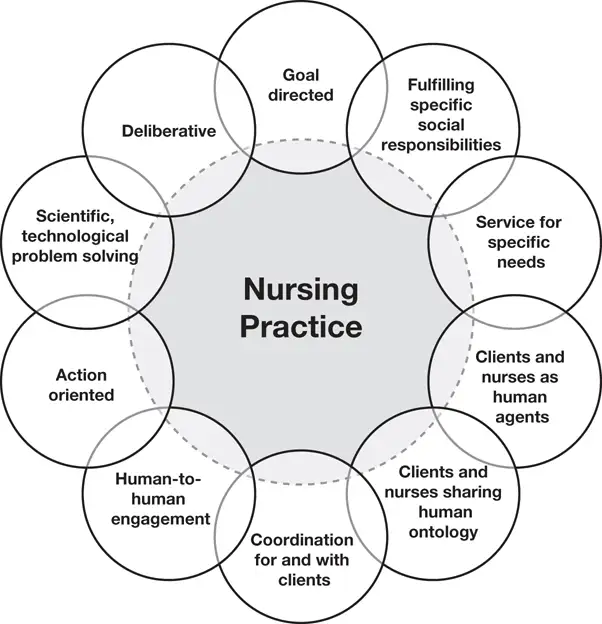
- Explain nursing as a therapeutic and professional process.
- Describe the characteristics of professional nursing practice.
- Differentiate responsibility from accountability.
- Explain the major ethical principles guiding nursing practice.
- Apply ethical principles to clinical situations.
- Demonstrate appropriate professional conduct in patient care.
- Explain the importance of confidentiality and professional boundaries.
- Discuss the nurse's role as a patient advocate.
- Analyze ethical dilemmas encountered in nursing practice.
- Demonstrate accountability for nursing decisions, actions, and omissions.
- Recognize behaviours that constitute unprofessional conduct.
Therapeutic means something that is intended to promote healing, relieve suffering, improve health, or help a person cope with illness.
Therefore, nursing is therapeutic because nurses deliberately use their knowledge, skills, attitudes, and interactions to produce positive outcomes for patients. It is not just about executing tasks; it is about the intentional, healing presence and interventions that facilitate recovery and well-being.
Nursing is a profession, not simply a job or a set of routine tasks. To be recognized as a profession, it requires distinct foundational pillars:
- Specialized education and training: Rigorous academic preparation and continuous learning.
- Professional knowledge and clinical competence: Mastery of evidence-based scientific principles and technical skills.
- Critical thinking and clinical decision-making: The ability to analyze complex patient data and make life-saving judgments.
- Ethical practice: Adherence to a strict moral framework guiding patient care.
- Accountability and responsibility: Owning one's actions, decisions, and omissions.
- Professional standards and codes of conduct: Established frameworks that dictate acceptable behaviour.
- Legal regulation: Governance by national or state nursing councils and licensing bodies.
- Continuous professional development: Lifelong learning to maintain and enhance competency.
- Respect for patients' rights and dignity: Viewing the patient holistically and honoring their humanity.
- Collaboration with other healthcare professionals: Working effectively within a multidisciplinary team.
Nursing involves a systematic, continuous sequence of activities designed to resolve patient problems. This is universally represented by the Nursing Process:
- Assessment ➔ Nursing Diagnosis ➔ Planning ➔ Implementation ➔ Evaluation
Nursing as a Therapeutic and Professional Process refers to the systematic and purposeful use of nursing knowledge, skills, communication, clinical judgment, ethical principles, and professional standards to promote health, prevent illness, restore health, relieve suffering, and help individuals, families, and communities achieve optimal wellbeing.
Nursing is vastly more than performing psychomotor procedures such as giving injections, inserting catheters, taking vital signs, or dressing wounds. It is a holistic endeavor where scientific knowledge meets human caring and professional judgment.
A professional nurse is expected to consistently demonstrate: Professionalism, Accountability, Appropriate professional conduct, Ethical practice, Competence, Respect for human dignity, Confidentiality, Integrity, Responsibility, Advocacy for patients, and Safe, evidence-based practice.
Professionalism is the consistent demonstration of the knowledge, skills, attitudes, values, behaviours, and ethical standards expected of a nurse.
Professionalism is therefore not merely wearing a clean uniform. It is deeply reflected in how the nurse thinks, communicates, behaves, makes decisions, and accepts responsibility.
- Competence: A nurse should possess the up-to-date knowledge and technical skills necessary to provide safe, effective care.
- Integrity: Integrity means being completely honest and having strong moral principles, even when no one is watching.
- Respect: A nurse should treat every single patient with unwavering dignity regardless of:
- Age
- Gender
- Social status
- Education
- Economic circumstances
- Diagnosis
- Behaviour
- Background
- Compassion: Compassion involves actively recognizing a patient's suffering and responding appropriately with empathy and care.
- Professional Appearance: While not the only component, it is a reflection of respect for the profession. It includes:
- Appropriate uniform
- Personal cleanliness and good grooming
- Appropriate identification badge
- Appropriate, safe footwear
- Avoidance of excessive accessories that could interfere with patient care or safety.
Note: Appearance is only one component of professionalism. A perfectly dressed nurse who is rude, dishonest, or careless is not demonstrating true professionalism.
- Punctuality and Reliability: Professional nurses should report on duty on time and complete all assigned responsibilities dependably.
- Effective Communication: Professional nurses communicate clearly and respectfully with: Patients, Relatives, Doctors, Fellow nurses, Allied health professionals, Students, and Supervisors.
- Maintaining Professional Boundaries: A nurse should maintain strictly appropriate boundaries between themselves and the patient. For example, the nurse should avoid:
- Exploiting patients financially.
- Developing inappropriate intimate or romantic relationships with patients.
- Accepting inappropriate personal gifts.
- Using patients for personal benefit.
- Sharing unnecessary personal information (over-disclosure).
Accountability means being answerable for one's decisions, actions, omissions, and professional responsibilities.
A highly accountable nurse should be able to clearly explain:
- What did I do?
- Why did I do it?
- Was it within my legal scope of practice?
- What was the clinical outcome?
- What did I document?
- Being responsible for one's actions: If a nurse administers medication, the nurse is strictly responsible for ensuring that it is administered safely according to the applicable prescription, the "rights" of medication administration, and institutional procedures.
- Being responsible for omissions: Accountability does not only apply to what a nurse does. It also applies to what the nurse fails to do (e.g., failing to report a critical lab value, failing to turn a bedridden patient).
- Accurate documentation: Documentation is a paramount component of accountability. If it wasn't documented, it wasn't done. A nurse should document: Relevant assessment findings, Nursing interventions, Medication administration, Patient responses, Important communications, Changes in patient condition, and Referrals/escalation where appropriate.
A nurse may be held accountable to multiple entities simultaneously:
- The patient
- The patient's family/caregiver (where appropriate and consented)
- The nursing profession (maintaining professional standards)
- The employer (hospital or clinic policies)
- The multidisciplinary healthcare team
- Regulatory authorities (Nursing Councils/Boards)
- The law (civil and criminal courts)
- Society (public trust)
- Oneself (personal conscience)
| Concept | Definition | Core Mindset |
|---|---|---|
| Responsibility | Refers to the duty, task, or obligation assigned to be performed. | “I am expected to do it.” |
| Accountability | Refers to being answerable for how that responsibility was performed and the outcomes it produced. | “I must answer for how I did it.” |
Professional conduct refers to the behaviours and actions expected of a nurse while interacting with patients, colleagues, the institution, and the public.
Professional conduct must be demonstrated continuously across all environments:
- At the patient's bedside
- In the classroom and educational settings
- In the skills laboratory
- In the community
- During clinical placements
- During communication with multidisciplinary colleagues
- On professional and personal social media platforms
| Examples of Good Professional Conduct | Examples of Unprofessional Conduct |
|---|---|
|
|
Ethics refers to the philosophical principles concerning what is morally right, responsible, and appropriate. Nursing ethics guides nurses in making critical decisions when there may be competing interests, values, or complex choices in patient care.
- Autonomy: Respecting a competent patient's right to self-determination and to make informed decisions about their own healthcare, even if the nurse disagrees with the decision.
- Beneficence: Acting purely for the benefit and wellbeing of the patient; taking positive actions to help others.
- Non-maleficence: Avoiding unnecessary harm. It is often summarized by the fundamental medical oath: “Do no harm.”
- Justice: Ensuring fairness, equality, and equitable treatment for all patients regardless of background, and the fair distribution of healthcare resources.
- Fidelity: Keeping legitimate professional commitments, promises, and being faithful to one's responsibilities to the patient and employer.
- Veracity: Truthfulness. Being honest with patients regarding their diagnosis, treatment options, and prognosis.
- Confidentiality: Protecting private, sensitive patient information from unauthorized disclosure to anyone not directly involved in their care.
Patient advocacy means supporting and actively protecting the patient's rights, interests, safety, and wellbeing. The nurse is often the patient's last line of defense.
The nurse may advocate for:
- Pain relief (requesting stronger analgesia from the physician if the patient is suffering).
- Privacy and dignity during physical examinations.
- Informed decision-making (ensuring the patient truly understands a surgical consent form).
- Safe care (stopping a procedure if a sterile field is broken).
- Respect and appropriate treatment from all staff.
- Access to necessary social or medical services.
- Protection from abuse or neglect.
A professional nurse should explicitly understand what she or he is educated, clinically competent, and legally/professionally authorized to do by their governing nursing board. Stepping outside of this scope is a legal and ethical violation.
Professionalism strictly applies to electronic communication and digital footprints. Nurses must exercise extreme caution when using platforms like WhatsApp, Facebook, TikTok, Instagram, X (Twitter), Email, and Electronic Medical Records (EMRs).
Example of a severe violation: A nurse takes a photograph of a patient in the ward (even if the face is obscured) and posts it on WhatsApp or Instagram with the caption: “Another difficult case today.” This is a massive breach of confidentiality, privacy, and professional ethics.
| Concept | Meaning | Practical Example |
|---|---|---|
| Professionalism | Demonstrating the standards, values, and behaviours of the nursing profession. | Treating all patients respectfully regardless of background. |
| Responsibility | Duty to perform an assigned role. | Administering prescribed medication correctly. |
| Accountability | Being answerable for one's actions, decisions, and omissions. | Explaining, reporting, and taking ownership of a medication error immediately. |
| Professional conduct | Appropriate behaviour expected of a nurse in all settings. | Maintaining strict confidentiality regarding patient charts. |
| Ethics | Principles guiding morally appropriate decisions. | Respecting patient autonomy when they refuse a life-saving blood transfusion. |
| Advocacy | Protecting the patient's interests, safety, and rights. | Speaking up and stopping a doctor when a patient's safety is threatened. |
| Confidentiality | Protecting private patient information from unauthorized access. | Not discussing patient details publicly or on social media. |
| Competence | Having the appropriate, up-to-date knowledge and clinical skills. | Performing a sterile catheterization procedure correctly. |
| Integrity | Honesty and consistency in professional and personal behaviour. | Not falsifying records or charting vital signs that were not taken. |
“Professional nursing means doing the right thing, for the right patient, for the right reason, in the right way—and being prepared to account for what you do.”