
Fungi are living organisms that are different from bacteria and viruses. Think of them as tiny plants that cannot make their own food (they are not green like plants because they lack chlorophyll).
- They have a cell wall made of chitin (a tough material, like the shell of a crab).
- Their cell membrane contains ergosterol (this is VERY important — most antifungal drugs target this!).
- They can be yeasts (single-celled, like Candida) or molds (multicellular, like Aspergillus).
- They reproduce by making spores that float in the air.
Fungi are eukaryotes (just like human cells), which makes them much harder to kill than bacteria (which are prokaryotes) without accidentally hurting human cells. Because fungal cells and human cells share similar biological machinery, finding "selective toxicity" is difficult. This is exactly why antifungal drugs often have more severe side effects than standard antibiotics!
A mycosis is simply the medical word for a fungal infection. "Myco" means fungus, and "-osis" means disease or condition.
- Superficial mycoses: Affect only the outer layers of skin, hair, or nails. Examples: ringworm (tinea), athlete's foot, jock itch.
- Cutaneous mycoses: Deeper into the skin. Examples: tinea capitis (scalp ringworm), tinea corporis (body ringworm).
- Subcutaneous mycoses: Under the skin, often after injury. Example: mycetoma (Madura foot — commonly seen in Africa!).
- Systemic mycoses: Spread throughout the body via the bloodstream, affecting internal organs. Examples: cryptococcal meningitis, histoplasmosis, invasive aspergillosis.
- Opportunistic mycoses: Occur strictly when the immune system is weak. Examples: oral thrush, esophageal candidiasis, Pneumocystis pneumonia.
According to recent research, approximately 9% of Ugandans (about 4 million people) are affected by serious fungal diseases annually.
- HIV/AIDS: Weakens the immune system (depletes CD4 T-cells), allowing opportunistic fungi to grow unchecked.
- Tuberculosis (TB): Especially after TB treatment, the residual lung cavities are perfect breeding grounds for Chronic pulmonary aspergillosis (Aspergillomas or "fungus balls").
- Malnutrition: Poor nutrition fundamentally weakens cellular immunity.
- Diabetes mellitus: High blood sugar feeds fungi (especially Candida, which thrives in glucose-rich environments).
- Cancer and chemotherapy: Treatment destroys white blood cells (neutropenia), severely weakening the immune system.
- Overcrowding: Spreads fungal skin infections like tinea capitis rapidly in schools.
- Poor sanitation: Increases exposure to environmental fungal spores in soil and decaying organic matter.
- Limited access to diagnostics: Many fungal infections go undiagnosed or are misdiagnosed as bacterial infections.
| Common Infection | Affected Population | Estimated Annual Cases (Uganda) |
|---|---|---|
| Tinea capitis (scalp ringworm) | School children | ~3 million |
| Oral candidiasis (thrush) | HIV-positive adults | ~29,000 |
| Esophageal candidiasis | HIV-positive adults | ~75,000 |
| Cryptococcal meningitis | HIV-positive adults | ~5,500 |
| Pneumocystis pneumonia | HIV-positive adults & children | ~6,700 |
| Chronic pulmonary aspergillosis | Post-TB patients | ~63,000 |
| Recurrent vaginal candidiasis | Women of reproductive age | ~656,000 |
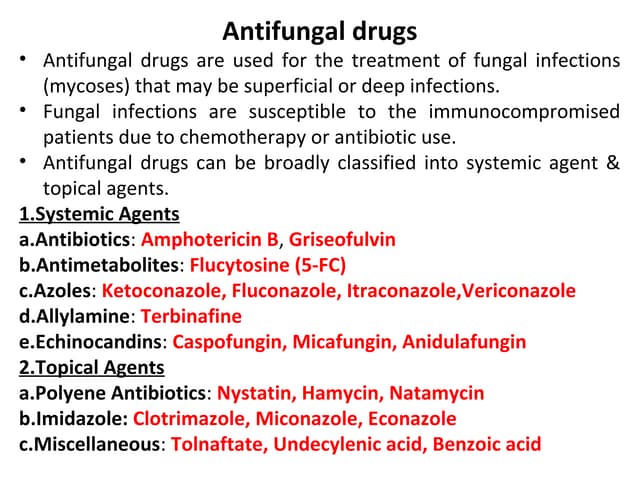
Antifungal agents are medicines that kill fungi or stop them from growing. They are a specific type of antimicrobial (like antibiotics, but designed exclusively for fungi instead of bacteria).
| Feature | Antibiotics (for bacteria) | Antifungals (for fungi) |
|---|---|---|
| Target cell wall | Peptidoglycan | Chitin and glucan |
| Target cell membrane | No sterol target | Ergosterol |
| Selective toxicity | Easier (bacteria are very different from human cells) | Harder (fungi are eukaryotes just like human cells) |
| Side effects | Generally fewer | More common and often much more severe |
| Duration of treatment | Usually days to weeks | Often weeks to months or even years! |
- Topical: Applied to the skin, nails, or mucous membranes (Creams, ointments, gels, powders, sprays, shampoos, vaginal suppositories, troches/lozenges).
- Oral: Swallowed as pills, capsules, or liquids.
- Intravenous (IV): Given directly into the vein. Used for serious, life-threatening systemic infections.
- Intrathecal: Injected directly into the spinal fluid (rare, reserved for severe refractory meningitis).
- Fungistatic: Stops the fungus from growing and reproducing, but does NOT kill it. The body's immune system must finish the job. (Examples: azoles, flucytosine).
- Fungicidal: Actually KILLS the fungus directly. (Examples: amphotericin B, echinocandins, allylamines).
In severely immunocompromised patients (like those with advanced HIV/AIDS or neutropenia), fungicidal drugs are strongly preferred because their immune system is simply too weak to clear an infection that is only suppressed by a fungistatic drug.
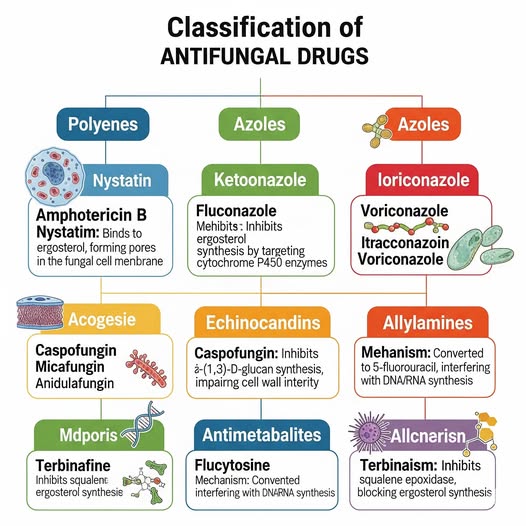
- AZOLES (The "-conazoles")
- Systemic: Fluconazole, Itraconazole, Ketoconazole, Voriconazole, Posaconazole, Isavuconazole.
- Topical: Clotrimazole, Miconazole, Econazole, Oxiconazole, Tioconazole, Sertaconazole, Butoconazole, Terconazole.
- POLYENES (The "-tatin" and "-ricin" group)
- Amphotericin B, Nystatin.
- ECHINOCANDINS (The "-fungin" group)
- Caspofungin, Micafungin, Anidulafungin.
- ALLYLAMINES (The "-fine" group)
- Terbinafine, Naftifine.
- MISCELLANEOUS AGENTS
- Flucytosine (5-FC), Griseofulvin, Ciclopirox, Tolnaftate, Undecylenic acid, Gentian violet.
Azoles are the most commonly used antifungal drugs. They work by interfering with the fungal cell membrane. They can be used for both superficial (skin, nails, vagina) and systemic (blood, organs, brain) infections.
- Normal Fungal Cell Membrane: The fungal cell membrane is like a flexible bag that holds the cell together. It is made of phospholipids and ergosterol. Ergosterol is like the "reinforcement bars" that keep the membrane strong and flexible.
- The Enzyme Target: Fungi make ergosterol using an enzyme called 14α-demethylase. This enzyme belongs to the cytochrome P450 (CYP450) family — specifically CYP51A1.
- What Azoles Do: Azoles have a nitrogen atom in their chemical structure. This nitrogen binds directly to the heme iron in the CYP450 enzyme, effectively blocking it.
- The Result:
- Ergosterol cannot be made → the fungal cell membrane becomes weak and leaky.
- Toxic sterol precursors build up inside the fungus → these are poisonous to the fungus.
- The membrane loses its shape and function. Essential molecules leak out of the cell.
- The fungus cannot grow or reproduce (fungistatic effect).
Azoles
Zap the enzyme (14α-demethylase)
Obstruct ergosterol synthesis
Leak the membrane
Eradicate the fungus
Stop reproduction
(Note: Azoles are fungistatic, meaning they stop growth rather than kill. However, at very high concentrations, some azoles can become fungicidal).
- A. Imidazoles (older, more side effects): Ketoconazole (rarely used systemically now due to severe liver toxicity), Miconazole (topical), Clotrimazole (topical), Econazole (topical).
- B. Triazoles (newer, safer, better tolerated): Fluconazole (great for Candida/Cryptococcus, crosses BBB), Itraconazole (broad, aspergillosis), Voriconazole (first-line for invasive aspergillosis), Posaconazole (broadest, prophylaxis), Isavuconazole (mucormycosis).
- Category: Triazole — Systemic and topical
- Spectrum of Activity: Excellent against Candida species; Good against Cryptococcus neoformans (meningitis); Some activity against dermatophytes.
- Clinical Uses:
- Vaginal candidiasis — single 150mg oral dose or topical cream.
- Oropharyngeal / Esophageal candidiasis — common in HIV patients.
- Cryptococcal meningitis — induction and maintenance therapy (with amphotericin B).
- Prophylaxis — prevents fungal infections in transplant/neutropenic patients.
- Pharmacokinetics: Well absorbed orally (90%); Widely distributed, crosses blood-brain barrier (crucial for meningitis!); Long half-life (30 hours) allowing once-daily dosing. Excreted via Kidneys (urine).
- Exam Tip: Because fluconazole is heavily excreted by the kidneys, the dose MUST be reduced in patients with kidney disease!
- Adverse Effects: Nausea, vomiting, diarrhea; Headache; Hepatotoxicity (liver damage - monitor AST/ALT); Rash; QT prolongation (heart rhythm problem).
- Drug Interactions (VERY IMPORTANT!): Fluconazole inhibits CYP2C9.
- Warfarin: INCREASES bleeding risk!
- Phenytoin: Increases phenytoin levels (toxicity).
- Oral hypoglycemics: Can cause dangerous low blood sugar.
- Statins: Increases risk of muscle damage (rhabdomyolysis).
- Category: Triazole — Systemic
- Spectrum/Uses: Broad spectrum. Used for Onychomycosis (nail fungus), severe Tinea infections, Aspergillosis, and endemic fungi (Histoplasmosis, Blastomycosis).
- Pharmacokinetics (Crucial Nursing Point): Absorption is variable and poor—it REQUIRES an acidic stomach for absorption. Take with food or an acidic drink (like Coca-Cola!). Do NOT give with antacids, H2 blockers, or PPIs (omeprazole).
- Adverse Effects: Hepatotoxicity; Congestive Heart Failure (can worsen heart function - ABSOLUTELY check for CHF history before giving!); Hypokalemia; Peripheral edema.
- Category: Imidazole (Mostly Topical now).
- WARNING: Systemic ketoconazole has been largely replaced by safer azoles due to high risk of severe liver toxicity and adrenal suppression.
- Clinical Uses: Seborrheic dermatitis, Tinea infections, Dandruff (shampoo form).
- Systemic Adverse Effects (If used): Severe hepatotoxicity, Adrenal suppression (reduces cortisol), Gynecomastia (breast enlargement in men due to anti-androgen effects), impotence.
- Category: Triazole — Systemic (IV and oral).
- Clinical Uses: FIRST-LINE treatment for Invasive Aspergillosis. Also used for serious Candida infections resistant to fluconazole.
- Adverse Effects:
- Visual disturbances: VERY COMMON! Blurred vision, altered color perception, photophobia. (Exam Tip: "Vfend affects your Vision!")
- Hepatotoxicity; Skin reactions (photosensitivity); Hallucinations; QT prolongation.
- Nursing Considerations: Advise patient to avoid bright sunlight, wear sunglasses and sunscreen. Monitor vision and liver function.
- Category: Triazole — Systemic.
- Spectrum: Broadest spectrum. Active against Mucorales (causes mucormycosis — the "black fungus").
- Pharmacokinetics: Absorption is highly variable — MUST be taken with a high-fat meal (increases absorption 4-fold!).
- Category: Imidazole — TOPICAL / VAGINAL.
- Uses: Tinea infections (athlete's foot), Vaginal candidiasis, Oral thrush (troches/lozenges).
- Nursing Considerations: For vaginal use, advise patient to remain lying down for 10-15 minutes after insertion. For oral troches, dissolve slowly in mouth (do not chew) and do not eat/drink for 30 minutes after. Complete full course!
| Adverse Effect | Which Azoles? | Nursing Action |
|---|---|---|
| Hepatotoxicity | ALL, especially ketoconazole | Monitor LFTs (AST, ALT, bilirubin) |
| GI upset | ALL | Give with food, small frequent meals |
| QT prolongation | Fluconazole, voriconazole, posaconazole, itraconazole | Monitor ECG, electrolytes |
| Visual disturbances | Voriconazole | Warn patient, advise sunglasses |
| Adrenal suppression / Hormone effects | Ketoconazole | Monitor cortisol levels. Watch for gynecomastia, menstrual changes |
| Drug interactions | ALL (CYP450 inhibition) | Complete medication review |
| Drug | Common Indications | Typical Dosages (Adult) | Contraindications | Major Side Effects |
|---|---|---|---|---|
| Fluconazole | Vulvovaginal candidiasis, Oropharyngeal candidiasis, Cryptococcal meningitis | 150 mg PO (single dose for vaginal); 200-400 mg/day PO/IV for systemic | Pregnancy (systemic use), Co-administration with drugs known to prolong QT interval | Hepatotoxicity, QT prolongation, GI upset, Rash |
| Itraconazole | Onychomycosis, Histoplasmosis, Aspergillosis | 200 mg PO daily or BID (Take with food/acidic drink) | History of Heart Failure (CHF), Ventricular dysfunction | CHF exacerbation, Hepatotoxicity, Hypokalemia, Edema |
| Voriconazole | Invasive Aspergillosis, Severe Candidiasis | 6 mg/kg IV q12h (loading), then 4 mg/kg IV q12h | Co-administration with potent CYP3A4 substrates, Pregnancy | Visual disturbances, Photosensitivity, Hepatotoxicity, Hallucinations |
| Clotrimazole | Tinea pedis, Vaginal candidiasis, Oral thrush | Topical: apply BID; Troche: 10 mg 5 times/day | Hypersensitivity | Local skin irritation, erythema, mild burning |
Polyenes are older but extremely powerful antifungal drugs. They work by binding directly to ergosterol in the fungal cell membrane and creating holes (pores) that leak the cell contents. They are rapidly fungicidal.
- Structure: Amphotericin B is a large molecule shaped like a rod with a hydrophilic (water-loving) end and a hydrophobic (fat-loving) end.
- Binding to Ergosterol: The hydrophobic end inserts directly into the fungal cell membrane and binds to ergosterol molecules.
- Pore Formation: Multiple amphotericin B molecules join together end-to-end to form a channel or pore right through the membrane.
- Cell Death: This pore allows massive amounts of potassium, magnesium, and other essential ions to leak out of the fungal cell. The cell loses its internal balance and dies instantly.
Polyenes target ergosterol in fungi. However, human cell membranes contain a very similar molecule called cholesterol. While Amphotericin B prefers ergosterol, it *also* binds to human cholesterol (especially in the kidneys), tearing similar holes in human cells. This is the physiological basis for its severe toxicity!
Polyenes
Open pores in membrane
Leak potassium out
Yeast and molds die
Ergosterol is the target
No resistance develops easily
Effective but toxic
Serious infections only
- Category: Polyene — Systemic (IV only)
- ⚠️ NICKNAME: "Ampho-Terrible" because of its severe, guaranteed side effects!
- Spectrum: Broadest spectrum of all antifungals. Used for severe, life-threatening systemic infections (Cryptococcal meningitis induction, severe systemic candidiasis, mucormycosis).
- Formulations:
- Deoxycholate (Fungizone): Original, most nephrotoxic, least expensive.
- Liposomal (AmBisome): Encapsulated in lipids, targets the fungus better while sparing human kidneys. Least nephrotoxic, but highly expensive. Preferred if patient already has kidney failure.
- NEPHROTOXICITY (Kidney Damage) — MOST IMPORTANT!
- Occurs in up to 80% of patients. It causes renal vasoconstriction and direct tubular toxicity, leading to Electrolyte wasting (losing Potassium and Magnesium).
- NURSING MANAGEMENT:
- Obtain baseline renal function (Creatinine, BUN) and monitor daily.
- SODIUM LOADING: Give 500-1000 mL of Normal Saline IV before each dose to flush and protect the kidneys!
- Monitor and aggressively replace Potassium and Magnesium. Avoid other nephrotoxic drugs (gentamicin, NSAIDs).
- INFUSION-RELATED REACTIONS ("Shake and Bake")
- Fever, chills, rigors (severe shaking), hypotension, bronchospasm occurring 1-3 hours into infusion.
- NURSING MANAGEMENT:
- Premedicate 30-60 mins before infusion with Acetaminophen (fever), Diphenhydramine (allergic symptoms), and Hydrocortisone (inflammation).
- Meperidine (pethidine) can be used to stop the rigors.
- Infuse SLOWLY over 4-6 hours.
- ANEMIA & THROMBOPHLEBITIS
- Suppresses erythropoietin production (monitor hemoglobin/hematocrit).
- Highly irritating to veins. Use a central line if possible, or rotate peripheral IV sites frequently.
- Category: Polyene — TOPICAL and ORAL (but it is NOT absorbed systemically!)
- Spectrum: Active against Candida species only.
- Clinical Uses: Oral candidiasis (thrush) via oral suspension; Intestinal/Vaginal candidiasis.
- Nursing Considerations:
- Because it is not absorbed into the blood, it acts strictly locally.
- For oral suspension: Instruct patient to swish for as long as possible before swallowing (to coat the esophagus) or spitting.
- Continue for 48 hours AFTER symptoms resolve to prevent recurrence.
Nystatin
Yeast in mouth or gut
Swish and swallow (or spit)
Topical only (not systemic)
Active against Candida
Treat thrush effectively
Inexpensive and safe
No absorption into blood
Question: A patient with systemic, blood-borne Candida albicans is prescribed Nystatin oral suspension. What is the critical error here?
Answer: Nystatin is absolutely NOT absorbed from the GI tract. If the patient swallows it, it will travel through the gut and exit in the feces without a single drop ever entering the bloodstream. Systemic candidemia requires IV Amphotericin B, IV Echinocandins, or systemic Azoles (like Fluconazole).
| Drug | Common Indications | Typical Dosages (Adult) | Contraindications | Major Side Effects |
|---|---|---|---|---|
| Amphotericin B | Severe systemic fungal infections (Cryptococcal meningitis, mucormycosis) | 0.5-1.5 mg/kg/day IV (Deoxycholate formulation); 3-5 mg/kg/day IV (Liposomal formulation) | Severe Hypersensitivity | Nephrotoxicity, Severe hypokalemia/hypomagnesemia, Infusion reactions ("Shake and Bake"), Anemia, Phlebitis |
| Nystatin | Oral thrush, cutaneous and vaginal candidiasis | 400,000-600,000 units oral suspension QID (swish and swallow) | Hypersensitivity | GI upset (nausea, vomiting, diarrhea if swallowed), local skin irritation |
Echinocandins are the newest class of antifungal drugs. They are uniquely safe with very few drug interactions and extremely low toxicity. They are fungicidal against Candida and fungistatic against Aspergillus.
- Fungal Cell Wall: Fungi have a rigid outer cell wall made of glucan, chitin, and mannoproteins. This wall gives the fungus its shape and protects it from bursting.
- β-(1,3)-D-Glucan: This is a long chain of sugar molecules that forms the structural backbone of the fungal cell wall.
- The Enzyme Target: Fungi make β-(1,3)-D-glucan using an enzyme called β-(1,3)-D-glucan synthase.
- What Echinocandins Do: Echinocandins noncompetitively inhibit β-(1,3)-D-glucan synthase. (This means they bind to a different site on the enzyme than the normal substrate, permanently locking it).
- The Result:
- Glucan cannot be synthesized.
- The cell wall becomes weak, fragile, and unable to withstand environmental stress.
- Osmotic pressure inside the cell causes it to swell and burst (osmotic lysis). Cell death occurs rapidly.
Why are Echinocandins so incredibly safe compared to Amphotericin B? Because they target the CELL WALL (glucan), not the cell membrane. Human cells DO NOT HAVE cell walls! We only have cell membranes. Therefore, the drug circulates in the human body completely ignoring human cells because its specific target (glucan synthase) simply does not exist in human biology. This is the ultimate example of selective toxicity.
Echinocandins
Cell wall target (glucan)
Halt glucan synthesis
Inhibit glucan synthase
No glucan made
Osmotic lysis occurs
Candida dies
Aspergillus weakened
No human toxicity (no glucan in humans!)
Drug interactions minimal
IV only
New and safe
Serious infections
- Category: Echinocandin — Systemic (IV only).
- Spectrum: Excellent for Candida (even fluconazole-resistant strains) and Aspergillus. NOT active against Cryptococcus.
- Clinical Uses: Invasive candidiasis, Esophageal candidiasis (when fluconazole fails), Invasive aspergillosis, Prophylaxis in stem cell transplants.
- Pharmacokinetics: Highly protein bound (97%). Slowly degraded by hydrolysis in liver (NOT CYP450 — hence, very few drug interactions!).
- Adverse Effects: Extremely well tolerated! May cause mild fever, phlebitis at IV site, mild liver enzyme elevation, or histamine-mediated reactions (rash, flushing).
- Nursing Considerations:
- Administer by slow IV infusion over 1 hour.
- CRITICAL: Do NOT mix with dextrose! Use normal saline only.
- Loading dose is given on day 1, then maintenance dose daily.
- Micafungin (Mycamine):
- Similar to Caspofungin. Used for Candidemia and prophylaxis.
- Nursing Note: Can be mixed with normal saline OR lactated Ringer's. No loading dose needed.
- Anidulafungin (Eraxis):
- Longest half-life (40-50 hours).
- Pharmacokinetic Magic: It is NOT metabolized by the liver or kidneys. It slowly degrades spontaneously in the blood via chemical degradation.
- Nursing Note: No dosage adjustment is needed for any level of renal or hepatic impairment — very convenient for critically ill ICU patients with failing organs!
| Drug | Common Indications | Typical Dosages (Adult) | Contraindications | Major Side Effects |
|---|---|---|---|---|
| Caspofungin | Invasive candidiasis, Esophageal candidiasis, Invasive aspergillosis | 70 mg IV loading dose on Day 1, then 50 mg IV daily | Hypersensitivity | Mild fever, Phlebitis, Mild LFT elevation, Histamine reactions (rash, flushing) |
| Micafungin | Candidemia, Prophylaxis in stem cell transplant | 100-150 mg IV daily | Hypersensitivity | Rash, Pruritus, Mild LFT elevation |
| Anidulafungin | Candidemia, Invasive candidiasis | 200 mg IV loading dose on Day 1, then 100 mg IV daily | Hypersensitivity | Hypokalemia, Diarrhea, Mild infusion reactions |
- Allylamines are mainly used for superficial fungal infections of the skin, hair, and nails. They are highly fungicidal against dermatophytes.
- How they work: To make ergosterol, fungi must convert a chemical called squalene into squalene epoxide using the enzyme squalene epoxidase. Allylamines block this exact enzyme early in the pathway.
- The Result (Double-Hit mechanism):
- Squalene accumulates inside the cell, which is highly TOXIC to the fungus.
- Ergosterol is depleted, so the cell membrane collapses.
Allylamines
Lock squalene epoxidase
Leave squalene building up
Yeast and molds poisoned
Loss of ergosterol
- Category: Allylamine — Oral and topical.
- Clinical Uses: Onychomycosis (fungal nail infection), Tinea capitis (scalp), Tinea pedis (athlete's foot), Tinea cruris (jock itch).
- Pharmacokinetics: Highly lipophilic — it accumulates massively in skin, nails, and fat. While its half-life in plasma is 16 hours, its half-life in nails is 200-400 hours! This is why it cures nail infections so well.
- Adverse Effects & Nursing Considerations:
- Taste disturbance (loss of taste or altered taste, which can occasionally be permanent). Warn the patient!
- Hepatotoxicity — monitor LFTs before and during therapy.
- Treatments are long: 6-12 weeks for fingernails, 12-24 weeks for toenails.
| Drug | Common Indications | Typical Dosages (Adult) | Contraindications | Major Side Effects |
|---|---|---|---|---|
| Terbinafine | Onychomycosis, Tinea capitis, Tinea pedis, Tinea cruris | 250 mg PO daily (duration depends on site: up to 12-24 weeks for nails) | Chronic or active liver disease, Hypersensitivity | Taste disturbances (dysgeusia), Hepatotoxicity, GI upset, Headache |
- Mechanism of Action (The "Trojan Horse"):
- Flucytosine is taken up by fungal cells through a permease enzyme. Once inside, the fungus's own enzymes (cytosine deaminase) convert it into 5-fluorouracil (5-FU).
- 5-FU is a potent chemotherapy agent that halts DNA and RNA synthesis, stopping cell division.
- Clinical Uses: Cryptococcal meningitis and Severe Candida infections.
- CRITICAL NURSING RULE: ALWAYS used in combination (usually with Amphotericin B). It is NEVER used alone because the fungi will rapidly mutate and develop total resistance.
- Adverse Effects: Bone marrow suppression (leukopenia, thrombocytopenia, severe anemia). Monitor CBC regularly! Toxicity occurs at blood levels >100 mcg/mL.
Flucytosine
Looks like cytosine (harmless Trojan horse)
Unleashes 5-FU inside fungus
Combination therapy only!
Yeast and Cryptococcus targeted
Toxic to bone marrow
- Mechanism: Deposits heavily into keratin precursor cells (cells that make skin/hair/nails). As these cells mature, the embedded drug acts as a barrier, making the new skin resistant to fungal invasion. It also stops fungal mitosis.
- Uses: Severe Tinea capitis (scalp ringworm), especially in children.
- Nursing Considerations: Absorption is highly variable. MUST be given with a fatty meal (like peanut butter, milk, or avocado) to drastically increase GI absorption. Advise patients to avoid sunlight (causes photosensitivity). Contraindicated in pregnancy.
- Ciclopirox (Penlac): Topical only. Chelates metal ions (iron) that fungi need. Applied like nail polish for Onychomycosis (removed with alcohol every 7 days).
- Tolnaftate (Tinactin): OTC topical for Tinea pedis/cruris. Inhibits squalene epoxidase like terbinafine.
- Gentian Violet: Dye antiseptic. Highly effective for oral thrush in resource-limited settings. Nursing Note: Warn the mother it will stain the baby's mouth, skin, and clothing bright purple!
| Drug | Common Indications | Typical Dosages (Adult) | Contraindications | Major Side Effects |
|---|---|---|---|---|
| Flucytosine (5-FC) | Cryptococcal meningitis (adjunct to Amphotericin B) | 25 mg/kg PO q6h (100 mg/kg/day total) | Severe renal impairment (requires strict dose adjustment), Avoid monotherapy | Bone marrow suppression (leukopenia, thrombocytopenia), GI intolerance, Hepatotoxicity |
| Griseofulvin | Tinea capitis, severe dermatophytosis | 500-1000 mg PO daily (microsize formulation); take with fatty meal | Pregnancy, Severe liver disease, Porphyria | Photosensitivity, Headache, GI upset, Peripheral neuropathy |
| Drug | Class | Route | Spectrum | Key Toxicity | Monitoring |
|---|---|---|---|---|---|
| Fluconazole | Triazole | Oral, IV | Candida, Cryptococcus | Hepatotoxicity, QT prolongation | LFTs, ECG |
| Itraconazole | Triazole | Oral, IV | Broad (Aspergillus, dimorphic) | Hepatotoxicity, CHF | LFTs, heart function |
| Voriconazole | Triazole | Oral, IV | Aspergillus, Candida | Visual disturbances, hepatotoxicity | LFTs, vision checks |
| Amphotericin B | Polyene | IV | Broadest | Nephrotoxicity, infusion rxns, hypokalemia | Renal panel, K+, Mg2+, CBC |
| Caspofungin | Echinocandin | IV | Candida, Aspergillus | Mild — very well tolerated | LFTs |
| Flucytosine | Pyrimidine | Oral, IV | Candida, Cryptococcus | Bone marrow suppression | CBC, LFTs, drug levels |
| Terbinafine | Allylamine | Oral, topical | Dermatophytes | Taste disturbance, Hepatotoxicity | LFTs |
- A. Health History: Check allergies. Screen for Liver disease, Kidney disease, Heart disease (critical for itraconazole), HIV/AIDS status, Diabetes (high glucose feeds fungi). Complete medication history is CRITICAL for azoles due to massive CYP450 drug interactions.
- B. Physical Assessment: Inspect skin, hair, nails. Check mouth/throat for white patches. Laboratory tests: Baseline CBC, LFTs (AST, ALT, bilirubin), Renal (Creatinine, BUN), and Electrolytes (K+, Mg2+).
- C. Diagnostic Tests: KOH preparation (skin scrapings), fungal cultures, blood cultures, or Lumbar puncture (for meningitis).
- Nursing Diagnoses: Risk for Infection related to incomplete treatment; Impaired Skin Integrity; Acute Pain; Risk for Imbalanced Fluid Volume / Electrolyte Imbalance (Amphotericin B).
- Goals: Patient will complete full course of therapy, remain free of serious adverse effects, and maintain adequate renal/hepatic function.
- AZOLES: Monitor LFTs. Check interactions. Give Voriconazole patients sunglasses. Give Itraconazole with food/acid. Give Posaconazole with a high-fat meal.
- AMPHOTERICIN B: Pre-hydrate with normal saline. Premedicate (acetaminophen, diphenhydramine, hydrocortisone). Infuse slowly (4-6 hrs). Monitor K+ and Mg2+ daily. Replace aggressively.
- ECHINOCANDINS: Administer IV over 1 hour. Do NOT use dextrose for caspofungin.
- FLUCYTOSINE: Monitor CBC for bone marrow suppression. Ensure hydration.
- TOPICALS: Clean and dry area first. For vaginal, insert high and remain recumbent for 10-15 mins. For troches, dissolve slowly, do not chew.
- General Points: Complete the FULL course—fungal infections come back stronger if not fully treated (resistance). Do not skip doses.
- Report Immediately: Yellowing of skin/eyes (jaundice), dark urine, severe rash, difficulty breathing, or vision changes.
- Hygiene Measures: Fungi love moisture! Keep skin dry. Do not share towels/combs. Wear sandals in communal showers.
- HIV/AIDS patients: Take antiretroviral therapy (ART) consistently to maintain immune function. Report oral sores immediately.
- Diabetic patients: Control blood sugar. Inspect feet daily. Keep space between toes bone dry.
- School children: Do not share combs, hats, or hair accessories (prevents Tinea capitis).
- Farmers (Subcutaneous Mycoses): Wear protective footwear (gumboots) to prevent soil-borne fungi (mycetoma) entering cuts.
- Patient: Maria, 32, HIV+, not on ART. White patches in mouth, painful swallowing, low CD4 count.
- Diagnosis & Treatment: Oropharyngeal candidiasis. Treat with Nystatin oral suspension or Fluconazole tablets.
- Nursing Interventions: Instruct to "swish and swallow" Nystatin. Counsel heavily on restarting ART to rebuild her immune system so the thrush stops returning. Advise a soft, bland diet. Continue for 48 hours after white patches disappear.
- Patient: John, 28, HIV+, severe headache, neck stiffness, photophobia. Lumbar puncture shows high pressure cloudy CSF.
- Treatment Protocol: Amphotericin B IV + Flucytosine oral (2 weeks induction) → Fluconazole oral (8 weeks consolidation) → Fluconazole maintenance (for life, or until CD4 recovers).
- Nursing Priorities: Protect the kidneys! Pre-hydrate with 1L normal saline before Amphotericin. Monitor CBC twice weekly for Flucytosine bone marrow toxicity. Keep head of bed elevated 30 degrees.
- Patient: Peter, 7, patchy hair loss, scaly scalp, black dots where hair broke. Classmates have similar symptoms.
- Treatment: Oral Griseofulvin (or Terbinafine) for 6-8 weeks + antifungal shampoo.
- Nursing Interventions: Give Griseofulvin with a fatty meal (peanut butter/milk) to maximize absorption. Educate family NOT to share combs/hats. Treatment takes 6-8 weeks, do not stop early even if hair starts growing back.
- Patient: Sarah, 24, 28 weeks pregnant. Thick white cottage-cheese discharge, intense itching.
- CRITICAL Nursing Rule: DO NOT give oral Fluconazole! Oral azoles are contraindicated in pregnancy (risk of birth defects).
- Treatment: Topical azole cream or vaginal suppository (Clotrimazole) for 7 days. Advise loose cotton underwear. Screen for gestational diabetes if recurrent.
- Patient: Grace, 45, neutropenic from leukemia chemotherapy. Fever, dry cough, chest CT shows "halo sign".
- Treatment: Voriconazole IV (First-line).
- Nursing Education: "You may notice changes in your vision or colors—tell us immediately. Wear sunglasses and sunscreen when you go outside. We will check your liver function regularly."
Question: Why do azoles cause so many drug interactions?
Answer: They inhibit cytochrome P450 enzymes (especially CYP3A4, CYP2C9, CYP2C19). This slows down the metabolism of many other drugs, causing their levels to rise to toxic levels.
High-yield pairs:
• Fluconazole + Warfarin = INCREASED bleeding risk
• Fluconazole + Oral hypoglycemics = SEVERE hypoglycemia
• Itraconazole + Statins = Rhabdomyolysis (muscle breakdown)
Question: What is the nurse's PRIORITY intervention when administering amphotericin B?
Answer: Pre-hydration with normal saline to protect the kidneys. Never forget: Amphotericin B causes hypokalemia and hypomagnesemia due to renal tubular damage. Replace these electrolytes!
Question: Which antifungal class has the FEWEST drug interactions and is preferred in patients with liver problems?
Answer: Echinocandins (caspofungin, micafungin, anidulafungin) — they are NOT metabolized by CYP450 enzymes in the liver.
Question: Why is flucytosine always given in combination with amphotericin B or fluconazole?
Answer: Because severe resistance develops rapidly when used alone. It is a Trojan horse drug that fungi can easily learn to resist.
- Fact 5: Voriconazole and Vision. If a patient reports seeing colors differently and bright lights hurting their eyes, this is an expected adverse effect. Reassure the patient, advise sunglasses, and monitor. Reversible when stopped.
- Fact 6: Nystatin Is Not Systemic. Nystatin is NOT absorbed from the GI tract. It only works locally. Do NOT use it for systemic bloodstream infections.
- Fact 7: Terbinafine for Nails. Why take medicine for 12 weeks? Terbinafine accumulates in keratin, but nails grow very slowly. Fingernails take 6-12 weeks, toenails take 12-24 weeks to grow out completely.
- Fact 8: Pregnancy and Antifungals. Oral fluconazole is CONTRAINDICATED (causes birth defects). Topical azoles (clotrimazole) are safe and preferred.
- Fact 9: Griseofulvin and Fat. Administer with a fatty meal (peanut butter, milk) to maximize GI absorption.
- Fact 10: Cryptococcal Meningitis. Standard induction treatment for HIV patients: Amphotericin B + Flucytosine for 2 weeks.
A patient receiving amphotericin B develops shaking chills and a temperature of 39.5°C during the infusion. What is the nurse's FIRST action?
- A. Stop the infusion immediately
- B. Administer meperidine and continue the infusion
- C. Slow the infusion rate and notify the prescriber
- D. Give acetaminophen and diphenhydramine as ordered
Rationale: Fever and chills are COMMON infusion reactions to amphotericin B. The nurse should administer premedications as ordered. Stopping the infusion is not necessary unless the patient develops severe hypotension, bronchospasm, or anaphylaxis.
A nurse is teaching a patient about fluconazole. Which statement by the patient indicates understanding?
- A. "I can stop taking this medication when my symptoms improve."
- B. "I should avoid grapefruit juice while taking this medication."
- C. "This medication can cause liver damage, so I need blood tests."
- D. "I need to take this medication on an empty stomach."
Rationale: Fluconazole can cause hepatotoxicity, and LFTs must be monitored. Patients must complete the FULL course. It can be taken with or without food.
A patient with invasive candidiasis is prescribed caspofungin. The nurse prepares to administer the medication. Which solution is appropriate for reconstitution?
- A. Dextrose 5% in water (D5W)
- B. Normal saline (0.9% NaCl)
- C. Lactated Ringer's solution
- D. Sterile water for injection
Rationale: Caspofungin MUST be reconstituted and diluted with normal saline. It is INCOMPATIBLE with dextrose-containing solutions.
A pregnant woman at 32 weeks gestation has vulvovaginal candidiasis. Which treatment is MOST appropriate?
- A. Oral fluconazole 150 mg single dose
- B. Oral itraconazole 200 mg daily for 3 days
- C. Topical clotrimazole vaginal cream for 7 days
- D. Oral griseofulvin 500 mg daily for 4 weeks
Rationale: Oral azoles are contraindicated in pregnancy due to risk of birth defects. Topical azoles are safe and the treatment of choice.
A patient is receiving itraconazole for histoplasmosis. The nurse notes the patient is also taking omeprazole for GERD. What is the nurse's concern?
- A. Omeprazole increases itraconazole absorption
- B. Omeprazole decreases itraconazole absorption by reducing stomach acid
- C. The combination causes severe hypotension
- D. The combination increases the risk of tendon rupture
Rationale: Itraconazole capsules require an acidic gastric pH for absorption. PPIs reduce stomach acid, significantly decreasing absorption. Give with an acidic beverage (like Coca-Cola) or use oral solution.
| Drug Class | Target | Mechanism | Result | Fungicidal/Fungistatic? |
|---|---|---|---|---|
| Azoles | Cell membrane | Inhibit 14α-demethylase → ↓ ergosterol | Weak, leaky membrane | Fungistatic |
| Polyenes | Cell membrane | Bind ergosterol → pore formation | Leakage of K+, cell death | Fungicidal |
| Echinocandins | Cell wall | Inhibit β-(1,3)-D-glucan synthase | Weak cell wall, osmotic lysis | Fungicidal (Candida) |
| Allylamines | Cell membrane | Inhibit squalene epoxidase | ↓ ergosterol, ↑ toxic squalene | Fungicidal |
| Flucytosine | DNA/RNA | Converted to 5-FU → inhibits thymidylate synthase | Disrupted DNA/RNA synthesis | Fungistatic |
| Infection | First-Line Treatment | Notes |
|---|---|---|
| Vulvovaginal candidiasis | Fluconazole 150 mg PO once OR topical azole x7 days | Avoid oral azoles in pregnancy |
| Oropharyngeal candidiasis | Nystatin suspension OR clotrimazole troches | HIV patients often need fluconazole |
| Invasive candidiasis | Echinocandin (caspofungin, micafungin) | Echinocandins preferred in critically ill |
| Cryptococcal meningitis | Amphotericin B + Flucytosine (2 weeks) | Flucytosine levels must be monitored |
| Invasive aspergillosis | Voriconazole | First-line standard of care |
| Mucormycosis | Liposomal amphotericin B + surgical debridement | Surgical removal is ESSENTIAL |
| Tinea capitis (scalp) | Griseofulvin OR terbinafine PO | Treat for 6-8 weeks |
| Body System | Amphotericin B | Azoles | Flucytosine |
|---|---|---|---|
| Renal | Nephrotoxicity (major!) | Rare | Rare |
| Hepatic | Mild | Hepatotoxicity (common) | Hepatotoxicity |
| Hematologic | Anemia | Rare | Bone marrow suppression |
| Cardiac | Arrhythmias (from K+/Mg2+ loss) | QT prolongation | None |
| Neurologic | Headache | Voriconazole: visual changes | Confusion, seizures |
| Metabolic | Hypokalemia, hypomagnesemia | Hypokalemia | None specific |
| If Patient Takes... | And Receives... | Risk | Nursing Action |
|---|---|---|---|
| Warfarin | Azoles | Bleeding | Monitor INR closely; reduce warfarin dose |
| Oral hypoglycemics | Fluconazole | Severe hypoglycemia | Monitor blood glucose |
| Statins | Itraconazole, Voriconazole | Rhabdomyolysis | Stop statin during therapy |
| Cyclosporine | Azoles, Amphotericin B | Toxicity of immunosuppressant | Monitor drug levels; reduce dose |
| Rifampin | Azoles, Flucytosine | Treatment failure | Rifampin rapidly clears antifungals from blood |
- A. Resource-Limited Settings:
- If Liposomal Amphotericin B is unavailable, conventional amphotericin must be used. Sodium loading is CRITICAL—even if you only have 250 mL of normal saline, give it!
- If Meperidine is unavailable for rigors, use IV paracetamol and warm blankets.
- B. Managing Tinea Capitis in Schools:
- Extremely common in Ugandan schools. Oral griseofulvin is often the most affordable. Train parents to check children's scalps and emphasize NOT sharing combs/hats.
- C. Agricultural Workers:
- Subcutaneous fungal infections (mycetoma/Madura foot) occur when soil fungi enter wounds. Teach farmers to wear gumboots and immediately clean/cover any cuts.
- D. Medication Adherence Challenges:
- Long courses (months for nails, years for cryptococcal maintenance) lead to fatigue. Use community health workers for refills, and simplify regimens to once-daily dosing when possible.
Mr. Ojok presents with a 3-week history of painful white patches in his mouth, difficulty swallowing, and 5 kg weight loss. Diagnosed with HIV 2 years ago but stopped taking ART 6 months ago.
Assessment: BMI 17.5. Extensive white plaques on tongue and palate that bleed when scraped. CD4 count: 45 cells/μL (severe immunocompromise).
- What is the MOST likely diagnosis for the oral lesions?
Answer: Oropharyngeal candidiasis (Oral Thrush), likely extending into esophageal candidiasis due to his difficulty swallowing. - What is the appropriate FIRST-LINE treatment?
Answer: Systemic oral Fluconazole. Nystatin swish-and-swallow is fine for mild thrush, but because he has swallowing difficulty (esophageal involvement) and a severely low CD4 count, systemic therapy is required. - What additional fungal infection should you be concerned about given the CD4 count < 50?
Answer: Cryptococcal meningitis and Pneumocystis pneumonia (PCP). He should undergo Cryptococcal antigen screening (CrAg) immediately. - If the patient develops headache and neck stiffness 2 weeks later, what complication has occurred?
Answer: Cryptococcal Meningitis (a deadly systemic mycosis). - What is the standard treatment for this complication?
Answer: IV Amphotericin B combined with oral Flucytosine for 2 weeks (Induction), followed by high-dose Fluconazole. - What are the nursing priorities when administering amphotericin B in this setting?
Answer: Pre-hydration with normal saline to prevent nephrotoxicity. Pre-medicating for infusion reactions. Monitoring daily renal function and replacing lost Potassium and Magnesium.
| Term | Simple Definition |
|---|---|
| Chitin / Ergosterol | Chitin forms the fungal cell wall; Ergosterol is the fat in the cell membrane (drug targets). |
| Fungicidal / Fungistatic | Fungicidal directly KILLS the fungus. Fungistatic halts growth, relying on the immune system to finish the job. |
| Opportunistic infection | An infection that strictly takes advantage of a weak immune system (e.g., Candida in HIV). |
- Uganda Fungal Disease Burden — Bongomin F, et al. "The burden and impact of fungal diseases in Uganda." Journal of Fungi. 2026.
- Antifungal Pharmacology — Nett JE, Andes DR. "Antifungal Agents: Spectrum of Activity." Infectious Disease Clinics of North America. 2016.
- WHO Guidelines for Cryptococcal Meningitis (2022) & Uganda Ministry of Health Guidelines (2024).