
By the end of this session, you should be able to:
- Differentiate sporadic, endemic, epidemic, and pandemic patterns.
- List the key steps in investigating an outbreak.
- Interpret simple epidemic curves (point source, continuous common source, propagated).
- Select appropriate control measures for common outbreaks.
- Apply the steps to a Ugandan community case.
Epidemiology asks who, where, when, and why? Disease patterns are described by person, place, and time. Transmission occurs through links in a chain. Control works by breaking the chain early. Today, we put it all together to detect, investigate, and stop outbreaks.
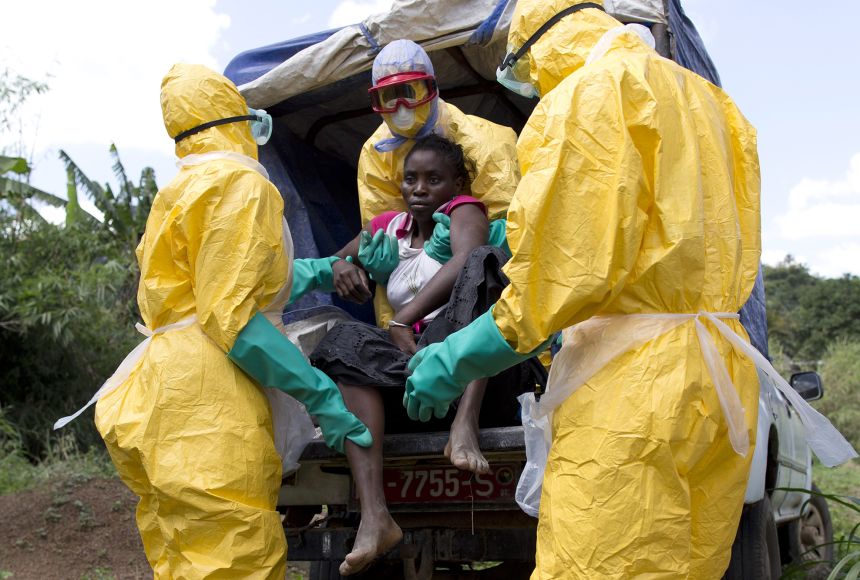
An outbreak is the occurrence of more cases than expected in a specific place and time. It may involve a few cases or many. The key question is always: "Is this above normal?" Good records registers, surveillance data, and baseline knowledge help answer that question quickly.
💡 Key Point: An outbreak is a statistical concept, not just a feeling. "Many people are sick" is a rumour. "Cases are 5 times higher than the 4 week average" is an outbreak. Nurses must turn observations into numbers.
A sporadic disease occurs irregularly, occasionally, and without a clear continuing pattern. Cases appear here and there, with no obvious connection.
- Example: One isolated case of tetanus in a district. Tetanus spores are in the soil everywhere, but infection requires a specific event (a dirty wound in an unvaccinated person).
- No obvious cluster in time or place.
- Still important if the disease is severe. One case of Ebola is an emergency, even if it is "sporadic."
An endemic disease is constantly present at an expected level in a population or area. It is the "background noise" of disease.
- Example: Malaria in many Ugandan districts. Everyone expects some malaria cases every rainy season.
- Cases may rise and fall seasonally but as long as they stay within the expected range, it is still endemic.
- Control aim: Reduce the expected level over time. The goal is not zero (yet), but a steady decline.
⚠️ Important: Endemic does NOT mean "acceptable." Malaria is endemic in Uganda, but every case is still preventable. Endemic simply means "expected at this level" it is a description, not a justification for inaction.
An epidemic occurs when cases rise clearly above what is normally expected in a population, place, and period. It is a signal that something has changed.
- Example: Cholera cases after contaminated water enters the supply. Normally 2 cases/month; now 50 cases in one week.
- Requires investigation and control. You cannot ignore an epidemic.
- Compare with normal records or baseline. Without baseline data, you cannot call something an epidemic.
A pandemic is an epidemic that spreads across countries or continents and affects large populations. It is an epidemic on a global scale.
- Example: COVID-19 (2020 2023), HIV/AIDS (ongoing), the 1918 Spanish Flu, the 2009 H1N1 influenza.
- Requires local, national, and global action. Coordination between countries is essential.
- Local health workers still play a key role. Pandemics are fought at the community level. Nurses are the frontline.
| Term | Definition | Key Feature | Example |
|---|---|---|---|
| Sporadic | Occasional, irregular cases with no pattern. | Few cases; no cluster. | Isolated tetanus case; one rabies case. |
| Endemic | Constantly present at an expected level. | Usual presence; may be seasonal. | Malaria in Uganda; typhoid in South Asia. |
| Epidemic | Cases rise clearly above the expected level. | Above expected; needs response. | Cholera outbreak; measles outbreak in a school. |
| Pandemic | Epidemic spreading across countries/continents. | Global scale; large populations. | COVID-19; HIV/AIDS; 1918 Spanish Flu. |
📝 Exam Tip Mnemonic: SEEP
Sporadic (scattered) → Endemic (expected) → Epidemic (excess) → Pandemic (planetary)
Think: "Disease SEEPs from scattered → expected → excess → planetary."
🩺 The Situation: A health centre usually sees 4 to 6 diarrhoea cases per week. This week, 27 cases are reported from two neighbouring villages.
Questions: Is this sporadic, endemic, or epidemic? What information is needed before concluding? What should the nurse do first?
- This suggests an epidemic because 27 cases is 4.5 to 6.75 times higher than the usual 4 to 6 cases per week. The increase is dramatic and involves a cluster in two neighbouring villages.
- Information needed before concluding:
- Review the register for the past 8 to 12 weeks. Is this truly above baseline, or was last week unusually quiet?
- Check dates of symptom onset did all 27 cases truly start this week, or were some delayed reports?
- Describe by person, place, and time: age, village, symptoms, water source, shared meals.
- Rule out data errors: Was there a change in reporting? A new health worker who records differently? A mobile clinic that screened more people?
- What the nurse should do first:
- Do not panic but act quickly.
- Begin immediate prevention: advise safe water, promote handwashing, and check the water source.
- Report to the District Health Office within 24 hours.
- Start a line list record every case with name, age, village, onset date, symptoms, and outcome.
- It determines urgency of response. A sporadic case of tetanus needs clinical care. An epidemic of cholera needs an emergency team.
- It guides who should be notified. Endemic malaria is reported routinely. An epidemic triggers immediate alerts to the District Health Office and Ministry of Health.
- It helps choose the right control action. Endemic malaria needs sustained prevention (nets, IRS). An epidemic of cholera needs immediate water treatment and oral rehydration.
- It prevents panic when the pattern is normal. If malaria cases rise in May (rainy season), that is expected not an epidemic. Panic wastes resources.
- It prevents delay when the pattern is abnormal. If malaria cases rise in January (dry season), that IS abnormal investigate immediately.
- To stop further illness and death. The primary goal is always to protect people.
- To identify the source and mode of spread. If you do not know where it came from, you cannot stop it from coming again.
- To protect people at risk. Contacts, family members, and vulnerable groups need protection.
- To learn how to prevent future outbreaks. Every outbreak is a lesson. Document it.
- To communicate accurate information. Rumours spread faster than disease. Facts stop panic.
📝 Exam Tip: When asked "Why investigate outbreaks?" never say "to find the cause" alone. The cause is a means to an end. The end is stopping illness, protecting people, and preventing recurrence.
Outbreak investigation is a systematic process. Each step builds on the last. Here is the full framework:
| Step | Action | What to Do & Nursing Role |
|---|---|---|
| 1 | Prepare | Know the suspected disease. Carry forms, registers, specimen containers. Clarify team roles. Plan transport and communication. Protect yourself with IPC measures. Nursing Role: Gather supplies, review disease facts, ensure PPE is available, brief the team. |
| 2 | Verify Diagnosis | Check symptoms and clinical signs. Review lab results. Confirm cases fit the suspected disease. Do not rely only on rumours. Nursing Role: Take detailed histories, collect specimens, ensure proper labelling and transport. |
| 3 | Confirm Outbreak | Compare current cases with usual levels. Use registers or surveillance reports. Ask: more than expected for this place and time? Consider season and population changes. Document evidence. Nursing Role: Review facility registers, calculate case counts and rates, compare with baseline. |
| 4 | Define Case | Create a clear case definition: person, place, time, and clinical signs. This ensures everyone counts the same cases. Nursing Role: Apply the case definition consistently. Do not include cases that do not fit. |
| 5 | Find Cases | Review registers and triage records. Ask community health workers and village leaders. Visit affected households. Record each case on a line list. Update daily. Nursing Role: Active case finding: ask around, visit homes, check schools, update the line list. |
| 6 | Describe | Describe by person, place, and time. This gives clues about source and spread. Nursing Role: Complete the line list, create tables, draw maps, build the epidemic curve. |
| 7 | Hypothesise | Develop a possible explanation linking exposure to disease. Example: "Pupils who drank tank water became ill." Nursing Role: Think critically: what do the person place time patterns suggest? |
| 8 | Test Hypothesis | Compare exposed and unexposed groups. Check if illness is higher among exposed people. Use lab or environmental results. Look for evidence that supports or rejects the hypothesis. Nursing Role: Collect exposure data, calculate attack rates, assist with case control or cohort analysis. |
| 9 | Control | Act quickly to reduce further exposure. Treat and isolate. Protect people at risk. Give clear risk messages. Nursing Role: Implement IPC measures, administer treatment, isolate cases, educate community. |
| 10 | Communicate | Write and share a short report. Report findings to the district, the community, and relevant authorities. Document lessons learned. Nursing Role: Contribute data to the final report, share findings with colleagues, update protocols. |
📝 Exam Tip Mnemonic: "Prepare Verify Confirm, Define Find Describe, Hypothesise Test Control Communicate"
Shorter version: "Peter's Very Clever Dog Found Delicious Hot Tea Cakes Carefully" but the 10 steps in order are what matter most.
Even shorter for quick recall: "Prepare → Verify → Confirm → Define → Find → Describe → Hypothesise → Test → Control → Communicate"
Preparation prevents panic. Before you go to the field:
- Know the disease suspected. Review symptoms, incubation period, transmission route, and standard treatment. If it is cholera, you need ORS and IV fluids. If it is measles, you need isolation and vitamin A.
- Carry forms, registers, and specimen containers. Blank line lists, case investigation forms, and lab request forms. Without forms, you cannot collect standardised data.
- Clarify team roles and reporting lines. Who is the team leader? Who collects data? Who handles specimens? Who communicates with the district? Confusion in the field wastes time and risks safety.
- Plan transport and communication. How will you reach remote villages? Do you have phone credit or radio? Who do you call if a team member gets sick?
- Protect yourself with IPC measures. PPE (gloves, masks, gowns), hand rub, soap, and water. You cannot help others if you become a case.
- Check symptoms and clinical signs. Does the patient truly have the suspected disease? A rash could be measles or it could be rubella, chickenpox, or an allergic reaction.
- Review laboratory results where available. A positive RDT for malaria confirms malaria. A positive cholera rapid test confirms cholera. But remember: lab confirmation takes time. Do not delay control while waiting.
- Confirm that cases fit the suspected disease. If the suspected disease is cholera but patients have bloody diarrhoea, reconsider. Dysentery (bloody) is not cholera (watery).
- Do not rely only on rumours. "Many people are dying" is a rumour. "Five people died of watery diarrhoea in Village X between 10 15 July" is data.
- If urgent, start control while confirming. The precautionary principle. If cholera is suspected, begin ORS distribution and water chlorination immediately. Do not wait for the lab.
- Compare current cases with usual levels. Use facility registers, surveillance reports, or community knowledge. What is the average number of cases per week in July?
- Ask: more than expected for this place and time? 10 malaria cases in July may be normal. 10 cholera cases in July is an emergency.
- Consider season and population changes. Has the population increased (refugee influx, school opening)? That changes the expected number of cases.
- Document the evidence. Write down the baseline, the current count, and the comparison. This is your justification for declaring an outbreak.
A case definition is a clear, standardised rule for deciding who counts as a case in the investigation. It must have four elements:
- Person: Who is affected? (e.g., "Any person aged 5 years or older")
- Place: Where did it occur? (e.g., "Living in Village A or B")
- Time: When did it occur? (e.g., "On or after 12 July 2026")
- Clinical signs: What symptoms or tests? (e.g., "With acute watery diarrhoea")
✅ Example Case Definition Suspected Cholera:
"Any person aged 5 years or older, living in Village A or B, with acute watery diarrhoea, on or after 12 July 2026."
This definition is specific enough to ensure consistency but broad enough to capture true cases. It excludes children under 5 (who have different diarrhoea causes), people outside the affected villages, and cases before the outbreak started.
⚠️ Important: A case definition is for investigation purposes, not clinical diagnosis. A patient may have cholera clinically but not meet the case definition (e.g., they live in Village C). They still need treatment. The case definition is a tool for counting and analysis.
Do not wait for patients to come to you. Go to them. This is called active case finding.
- Review registers and triage records. Look at OPD, inpatient, and laboratory records for the past 2 to 4 weeks.
- Ask community health workers (CHWs) and village leaders. They know who is sick at home and who died without reaching the clinic.
- Visit affected households where appropriate. Door to door surveys in the epicentre of the outbreak.
- Record each case on a line list. One row per patient. Update the list daily during the outbreak.
This is the descriptive epidemiology you learned on Day 2. It gives clues about the source and spread.
- Person: Age, sex, occupation, class, ward, vaccination status.
- Place: Village, school, water source, household, market.
- Time: Date of symptom onset, week, season. Build the epidemic curve.
A hypothesis is a possible explanation that links exposure to disease. It is an educated guess based on the descriptive data.
- Example: "Pupils who drank water from the school tank became ill with diarrhoea."
- A good hypothesis is testable using data. You can check: Did the sick pupils drink from the tank? Did the healthy pupils avoid the tank?
- A bad hypothesis is vague or untestable. "Bad water caused sickness" is not a hypothesis it is a statement. "Drinking from Tank X on 15 July caused watery diarrhoea in Primary 3 pupils" is a testable hypothesis.
- Compare exposed and unexposed groups. Calculate the attack rate among those who drank the tank water vs. those who did not. If the attack rate is 80% among drinkers and 5% among non drinkers, your hypothesis is strongly supported.
- Use laboratory or environmental results. Did the water test positive for Vibrio cholerae? Did food samples grow Salmonella?
- Look for evidence that supports OR rejects the hypothesis. Be honest. If the data does not support your hypothesis, develop a new one. Science requires intellectual honesty.
- Act quickly to reduce further exposure. Control often begins in Step 1 do not wait until Step 9.
- Treat and isolate where appropriate.
- Protect people at risk contacts, vulnerable groups, healthcare workers.
- Give clear risk messages. What should people do? What should they avoid? Where should they seek care?
- Write and share a short report. Even a one page report is better than nothing. Include: what happened, who was affected, what caused it, what was done, and what should be done next.
The line list is the single most important tool in outbreak investigation. It is a table where each row is one patient and each column is a variable. Without a line list, you are guessing. With a line list, you are investigating.
| Variable (Column) | Why It Matters |
|---|---|
| Name or ID Number | Prevents duplicate counting. Use initials or a code to protect confidentiality. "PT001" is better than full names in public documents. |
| Age and Sex | Describes the person pattern. Reveals if certain groups are disproportionately affected. |
| Village or Address | Describes the place pattern. Reveals clustering around a water source, school, or market. |
| Date Symptoms Started | Describes the time pattern. Essential for building the epidemic curve. More important than the date of clinic visit. |
| Symptoms and Test Result | Confirms the diagnosis and ensures all "cases" truly have the same disease. Distinguishes suspected from confirmed cases. |
| Exposure History | What did they eat? Where did they go? Who did they contact? This is the evidence for your hypothesis. |
| Outcome | Recovered, still ill, hospitalised, or died? The case fatality rate (CFR) is calculated from this column. |
📝 Exam Tip: When asked "What data should be collected in an outbreak?" list at least six variables for a line list: ID, age, sex, place, date of onset, symptoms, exposure history, and outcome. This shows you understand outbreak investigation at a practical level.
An epidemic curve (or "epi curve") is a histogram (bar chart) that shows the number of cases by date or time of symptom onset. It is one of the most powerful tools in outbreak investigation because it reveals the outbreak's story at a glance.
- X axis (horizontal): Time of onset (date, day, or hour).
- Y axis (vertical): Number of cases.
- Each bar represents the number of cases that began on that day.
- Look for the first case (the "index case" or earliest onset). This tells you approximately when exposure began.
- Look for the peak (the tallest bar). This tells you when most people were exposed or when transmission was highest.
- Look for the last case. This tells you if the outbreak is ending or ongoing.
- Look for one peak or repeated waves. One peak suggests a single exposure. Multiple waves suggest person to person spread.
- Ask what happened before the first cases. The incubation period tells you when exposure occurred. For cholera (incubation 2 hours to 5 days), exposure was 1 to 3 days before symptoms. For measles (incubation 7 to 18 days), exposure was 1 to 2 weeks before.
Shape: A single, sharp peak that rises quickly and then declines. Cases are clustered within one incubation period.
What it means: Many people were exposed to the same source at the same time (or within a short window). After the source is removed or consumed, no new cases occur.
- Examples: Food poisoning after a wedding meal everyone ate the same contaminated rice. Cholera from a single contaminated water tank at a school. Legionnaires' disease from a contaminated air conditioning system at a hotel.
Cases
▲
│ ██
│ ████
│ ██████
│ ████████
│██████████
│ ████████
│ ██████
│ ████
│ ██
└─────────────────▶ Time of Onset
(Single sharp peak)
Shape: A "plateau" cases continue at a high level over time, then decline sharply when the source is removed.
What it means: People are continuously exposed to a source that remains active. New cases occur every day until the source is eliminated.
- Examples: A contaminated borehole that people use every day for drinking water. A food vendor who sells contaminated chapati daily at the market. A hospital water supply contaminated with Legionella bacteria.
Cases
▲
│ ████████
│ ██████████
│████████████
│████████████
│ ██████████
│ ████████
│ ████
│ ██
└─────────────────▶ Time of Onset
(Plateau, then sharp drop)
code Code
Shape: Multiple waves or "sawtooth" pattern. Each wave represents a generation of cases infecting the next generation.
What it means: The disease spreads from person to person. One case infects two or three others, who then infect more, creating successive waves.
- Examples: Measles spreading in a school one infected child infects classmates, who infect siblings, who infect neighbours. Cholera in a community with poor sanitation one case contaminates the environment, leading to more cases over weeks. Influenza in a nursing home residents infect staff, who infect other residents.
Cases
▲
│ ██
│ ████
│ ██████
│ ████████
│ ██ ██
│ ████ ████
│ ██████ ████
│ ██████████████
│ ██ ██
└─────────────────▶ Time of Onset
(Multiple waves)
| What You See | What It Means |
|---|---|
| Single sharp peak | Point source outbreak. One shared exposure (meal, event, single water source). Exposure occurred just before the first case onset. |
| Plateau then sharp drop | Continuous common source. Ongoing exposure to a source that was later removed (e.g., borehole closed, food vendor stopped). |
| Multiple waves | Propagated outbreak. Person to person spread. Each wave = one generation of transmission. Control must focus on breaking chains of contact. |
| Cases declining | Control measures may be working OR the outbreak is naturally ending because susceptible hosts have been exhausted. |
| Cases still rising | Control is not working, OR the source is still active, OR person to person spread is ongoing. Reassess urgently. |
🩺 The Situation: A village reports watery diarrhoea for 10 days. Cases stayed high until the main borehole was closed, then reduced.
Questions: Which outbreak pattern is likely? What was the suspected source? What control action fits the pattern?
- Likely pattern: Continuous common source outbreak. Cases stayed high for 10 days because people kept drinking from the contaminated borehole every day. When the borehole was closed, the source was removed and cases dropped.
- Suspected source: Contaminated borehole or water supply. The timing strongly suggests water borne transmission.
- Control actions that fit the pattern:
- Close or treat the source (chlorinate the borehole, repair the well cap).
- Provide safe alternative water (water trucking, boiling, chlorine tablets).
- Promote handwashing with soap.
- Continue surveillance to confirm cases decline and do not rebound.
💡 Key Point: The shape of the curve tells you the type of outbreak, which tells you the type of control. A point source needs source removal. A propagated outbreak needs contact tracing and isolation.
- Control the source of infection. Remove, treat, or isolate the reservoir.
- Interrupt transmission pathways. Block the route the agent uses to spread.
- Protect susceptible people. Vaccinate, provide prophylaxis, or remove them from exposure.
- Treat cases and reduce complications. Good clinical care reduces deaths and shortens the period of infectiousness.
- Communicate clearly with the public. Rumours kill. Facts save lives.
- Separate infectious cases where needed. Isolation prevents the patient from infecting others. It is not punishment it is protection.
- Treat patients promptly. Effective treatment reduces the duration of illness and the period of infectiousness. A treated cholera patient stops shedding Vibrio within days. An untreated patient sheds for weeks.
- Use infection prevention measures. PPE, hand hygiene, safe waste disposal. Protect staff, patients, and visitors.
- Maintain dignity and respectful care. Isolated patients may feel stigmatised. Treat them with compassion. Explain why isolation is necessary.
⚠️ Important: Isolation requirements vary by disease. Cholera needs stool precautions. TB needs airborne isolation (negative pressure room or well ventilated area). Ebola needs full PPE and dedicated burial teams. Know the disease, know the precautions.
- Vaccination protects susceptible groups. In a measles outbreak, vaccinate all children aged 6 months to 15 years in the affected area.
- Ring vaccination may be used in some outbreaks. This means vaccinating all contacts of a case, plus contacts of contacts, creating a "ring" of immunity around the outbreak. Used successfully for Ebola and smallpox.
- Post exposure prophylaxis (PEP) may prevent disease after exposure. Examples: antiretrovirals after needle stick injury (HIV), antibiotics after meningococcal exposure, rabies vaccine and immunoglobulin after a dog bite.
- Coverage data help identify gaps. If measles breaks out in a school, check vaccination coverage. If it is below 95%, you know why.
- Provide safe drinking water. Boil, chlorinate, or provide bottled water. In cholera outbreaks, water trucking may be needed.
- Treat or close unsafe sources. A contaminated borehole must be closed until treated. A broken pipe must be repaired.
- Promote handwashing with soap. The single most cost effective infection control measure. Provide handwashing stations at clinics, schools, and markets.
- Ensure safe disposal of faeces. Latrines, sewage systems, and safe burial of cholera victims prevent environmental contamination.
- Clean contaminated environments. Disinfect surfaces, beds, and equipment in healthcare settings. Chlorinate water sources.
- Remove mosquito breeding sites. Drain stagnant water, cover water containers, clear gutters, fill potholes.
- Use insecticide treated nets (ITNs). Distribute nets to all households in the outbreak area. Ensure they are hung correctly and have no holes.
- Support indoor residual spraying (IRS) where appropriate. IRS kills mosquitoes that rest on walls after feeding.
- Reduce standing water after rains. Community clean up campaigns within one week of heavy rains.
- Educate households on prevention. Close doors and windows at dusk. Wear long sleeves. Use repellents where available.
- Give clear, truthful, and practical messages. Tell people exactly what to do, what to avoid, and where to seek care.
- Avoid blame and stigma. Do not say "Village X brought cholera." Say "Cholera has been detected in our district. Here is how we stop it together."
- Use trusted community voices. Village leaders, religious leaders, teachers, and respected elders often have more influence than health workers alone.
- Repeat key messages in the local language. One announcement is not enough. Use radio, community meetings, posters, and school assemblies.
- Correct rumours with respect. If people believe cholera is caused by witchcraft, do not mock them. Explain the science simply and respectfully. "Cholera comes from water with germs, not from curses. Boiling the water kills the germs."
Surveillance is the ongoing collection and review of health data. It is not a one time activity it is continuous.
- Detects unusual increases early. A surveillance system that reviews data weekly will spot an outbreak faster than one that reviews data quarterly.
- Shows whether control is working. If cases decline after you distribute chlorine tablets, your intervention is likely effective. If cases rise, you need to change strategy.
- Requires good records and timely reporting. Every health facility should report notifiable diseases weekly (or daily during an outbreak). Delays in reporting mean delays in response.
📝 Exam Tip: When asked "What control measures would you use?" always give at least three categories: (1) clinical (treatment/isolation), (2) public health (WASH/vector/vaccination), and (3) communication (risk messages/community engagement). This shows comprehensive thinking.
🩺 The Situation: Twenty people develop vomiting and diarrhoea after attending a funeral meal. Symptoms began 6 to 12 hours after eating.
Questions: What is the first working hypothesis? What data should be collected? What immediate action is needed?
- First working hypothesis: Food borne outbreak linked to the funeral meal. The short incubation (6 to 12 hours) suggests a pre formed toxin, likely Staphylococcus aureus or Bacillus cereus (which cause vomiting within hours). Salmonella or E. coli would take 12 to 72 hours.
- Data to collect:
- Complete attendee list who was at the funeral meal?
- Foods eaten what dishes were served? Who prepared them? Was food left out in the heat?
- Onset time for each person plot an epidemic curve by hour.
- Symptoms and severity vomiting only? Diarrhoea? Fever? Blood?
- Preserve food samples if any remain. Refrigerate immediately.
- Immediate actions:
- Advise care for severe dehydration ORS for mild cases, IV fluids for severe.
- Prevent further sharing of suspected food dispose of leftovers safely.
- Notify health authorities food borne outbreaks may indicate a larger problem (e.g., a commercial supplier).
- Interview the food preparers did they have skin infections (staph source)? Was food reheated properly?
🩺 The Situation: A primary school reports 18 learners with diarrhoea. Most are in Primary 3 and used the same water tank.
Questions: What immediate control measures are needed? What messages should be given? What data should continue to be collected?
- Immediate control measures:
- Provide safe water immediately. Stop use of the suspected tank until it is tested and treated. Bring boiled water, bottled water, or water purification tablets.
- Promote handwashing with soap at critical times: after using the toilet, before eating, before preparing food.
- Safe food handling: Check the school kitchen. Was food prepared with tank water? Was it left uncovered?
- Refer severe dehydration: Any child with sunken eyes, lethargy, or inability to drink needs urgent referral for IV fluids.
- Isolate sick children: Keep them home until 48 hours after symptoms stop. Do not let them return to class while still having diarrhoea.
- Messages for parents and teachers:
- "Several children have diarrhoea. We are investigating the cause."
- "Please keep sick children at home and give ORS."
- "Boil all drinking water until further notice."
- "Wash hands with soap after toilet use and before eating."
- "Seek care immediately if your child is very thirsty, has sunken eyes, or is not urinating."
- Data to continue collecting:
- Record cases by class, age, onset date, symptoms, and water exposure.
- Update the line list daily.
- Collect stool samples from 3 to 5 cases for laboratory culture.
- Test the tank water for coliform bacteria and chlorine residual.
- Monitor for new cases for at least one incubation period after the last case (for cholera: 5 days; for shigella: 4 days).
✅ Key Principle: Communicate calmly with parents and teachers. Panic causes children to be pulled from school unnecessarily. Facts, clear instructions, and regular updates build trust.
🩺 The Situation: A trading centre reports many people with fever and headache. Most attended the same weekly market. Some also report mosquito bites after heavy rains.
Questions: What information is needed first? What are two possible hypotheses? What immediate actions are reasonable?
- Information needed first:
- Person, place, and time data: age, sex, village, date of onset, symptoms.
- Test results: malaria RDT, blood smear, or rapid diagnostic test for other febrile illnesses (typhoid, dengue, Ebola).
- Exposure history: Did they all eat at the same food stall? Drink from the same water source? Share transport?
- Environmental data: rainfall records, mosquito breeding sites near the market, market sanitation.
- Two possible hypotheses:
- Hypothesis 1 (Vector borne): Malaria increased after rains and mosquito exposure. The market is near a swamp. People gathered at dusk when mosquitoes are active. Those without nets were bitten.
- Hypothesis 2 (Common source / food borne): Shared market exposure such as contaminated food, water, or crowding in an enclosed space. A food vendor may have used unsafe water. Or a crowded, poorly ventilated space may have facilitated airborne transmission of influenza or COVID-19.
- Immediate actions:
- Test and treat: Perform malaria RDTs on all febrile patients. If positive, treat with ACTs. If negative, investigate other causes.
- Promote mosquito prevention: Distribute nets, advise on closing doors at dusk, drain stagnant water near the market.
- Report: Notify the District Health Office. If malaria is confirmed, it may be an expected seasonal increase. If it is typhoid or cholera, it is an outbreak requiring urgent response.
- Continue active case finding: Visit the market, interview vendors, check for other sick people who did not come to the clinic.
💡 Key Point: When the cause is unclear, test multiple hypotheses simultaneously. Do not assume it is malaria just because it is rainy season. Collect data that can support OR reject each hypothesis.
Outbreaks create fear, urgency, and pressure. Ethical conduct is not a luxury it is essential for effective response and community trust.
| Ethical Principle | What It Means in Practice |
|---|---|
| Respect Privacy | When collecting data, use codes or initials on public documents. Do not announce patient names at community meetings. Confidentiality builds trust and encourages people to seek care. |
| Avoid Blame | Do not blame patients, villages, or schools. Say "Cholera has been found in our water" not "Village X brought cholera." Blame drives people underground and prevents reporting. |
| Share Only Necessary Information | The community needs to know there is an outbreak and how to protect themselves. They do not need to know every patient's name or HIV status. Share what protects; withhold what harms. |
| Provide Care Without Discrimination | Treat everyone equally regardless of ethnicity, religion, wealth, or social status. In an outbreak, the poorest are often most affected but least able to access care. Equity is an ethical imperative. |
| Balance Individual Rights and Public Safety | Isolation limits individual freedom but protects the community. This balance must be explained, not imposed. "We are asking you to stay home for 5 days because you could infect your family. We will bring you food and check on you daily." |
⚠️ Ethical Dilemma Example: A nurse discovers that a popular market vendor has typhoid. Telling the community could ruin the vendor's business. Not telling them could cause more infections. Solution: Treat the vendor, advise temporary cessation of food handling, and inform the public that "a food handler at Market X has been diagnosed with typhoid; all customers who ate there on [date] should seek testing." Protect the vendor's identity while protecting public health.
Nurses are central to every outbreak response. You are the first to detect, the first to treat, and the first to educate. Here are your key roles:
| Role | What You Do |
|---|---|
| Detect | Recognise unusual increases in cases. A nurse who sees 5 TB suspects in one week (normally 1 per month) is the first to detect a potential outbreak. Trust your observations. |
| Record | Keep accurate registers and line lists. Data quality determines outbreak response quality. A messy register means missed cases and wrong conclusions. |
| Educate | Teach patients and families about prevention, symptoms, and when to seek care. Education is prevention. A patient who understands ORS use at home does not need to come back dehydrated. |
| Triage | Support triage, isolation, and referral. Identify the sickest patients first. Separate infectious patients from non infectious ones. Fast track emergencies. |
| Report | Report unusual patterns to supervisors and the district team. Do not wait for "confirmation." A timely report of suspicion is better than a late report of certainty. |
| Coordinate | Work with the district team, community health workers, laboratory staff, and environmental health officers. Outbreak response is a team sport. |
📝 Exam Tip: When asked "What is the nursing role in outbreak response?" give at least four specific roles with examples. "Detect, record, educate, and report" is a solid framework. Add "triage" and "coordinate" for extra marks.
Task: In groups, choose one scenario: diarrhoea, measles, malaria, or food poisoning. Apply the full outbreak investigation framework.
- What happened? Describe the outbreak in one sentence.
- Who was affected? Person pattern (age, sex, class, occupation).
- Where and when did it occur? Place and time pattern.
- What exposure is suspected? State your hypothesis clearly.
- What control action should start now? Give at least three specific actions.
- What happened? Twelve learners in Primary 4 developed fever, cough, runny nose, and rash over 5 days.
- Who was affected? Children aged 9 to 11 years in Primary 4. 8 of 12 were unvaccinated.
- Where and when? All cases attend School X in Village Y. Onset dates: 10 to 15 July 2026.
- Suspected exposure: Person to person transmission in a crowded, poorly ventilated classroom. Low vaccination coverage allowed susceptibility.
- Control actions: (a) Isolate suspected cases at home for 4 days after rash onset. (b) Report to DHO and support a vaccination campaign for all unvaccinated children in the school. (c) Improve classroom ventilation and spacing.
Cover the answers and test yourself. If you can answer these clearly, you are ready for Day 4's exam!
- Define sporadic, endemic, epidemic, and pandemic:
- Sporadic: Occasional, irregular cases with no pattern.
- Endemic: Constantly present at an expected level in a population.
- Epidemic: Cases rise clearly above the expected level.
- Pandemic: An epidemic that spreads across countries or continents.
- Mnemonic: SEEP Sporadic, Endemic, Epidemic, Pandemic.
- State four outbreak investigation steps:
- Any four from: Prepare, Verify diagnosis, Confirm outbreak, Define case, Find cases, Describe by person/place/time, Develop hypothesis, Test hypothesis, Implement control, Communicate findings.
- In exams, list them in order. Order matters because each step builds on the last.
- Explain what an epidemic curve shows:
- An epidemic curve is a histogram showing the number of cases by date (or time) of symptom onset. It reveals: when the outbreak started, whether the source was single or continuous, whether person to person spread is occurring, and whether control measures are working.
- Three shapes to know: point source (single peak), continuous common source (plateau), propagated (multiple waves).
- Name three outbreak control measures:
- Clinical: Isolation and treatment of cases.
- Public health: WASH (safe water, sanitation, handwashing), vector control (nets, drainage), vaccination/prophylaxis.
- Communication: Risk communication, community engagement, health education.
- Always give examples, not just category names.
- Explain one nursing role in outbreak response:
- Detection: Nurses are the first to notice unusual patterns because they see patients daily. A nurse who records 5 cases of watery diarrhoea in one morning (normally 1 per week) is the first sentinel of an outbreak. Early detection triggers early response, which saves lives.
- Other valid answers: recording (line lists), educating (community), triaging (isolation), reporting (DHO notification).
- How do you distinguish a point source outbreak from a propagated outbreak using an epidemic curve?
- A point source curve has a single, sharp peak that rises and falls within one incubation period. A propagated curve has multiple waves or a "sawtooth" pattern, with each wave representing a new generation of cases infecting the next.
- This is a very common exam question. Draw the shapes mentally.
- Why is it important to record the date of symptom onset rather than the date of clinic visit?
- The date of onset reflects the true timeline of the outbreak and the incubation period. The visit date may be days later and does not help identify when exposure occurred. The epidemic curve is built using onset dates, not visit dates.
- This distinction is critical for accurate outbreak investigation.
- What ethical principles should guide outbreak response?
- Respect privacy, avoid blame, share only necessary information, provide care without discrimination, and balance individual rights with public safety.
- Ethics builds community trust. Without trust, people hide cases and avoid care.
- What is active case finding, and why is it important?
- Active case finding means health workers go into the community to search for cases rather than waiting for patients to come to the clinic. It is important because many sick people especially children, the elderly, and the poor may not seek care. Missing cases means missing the true size of the outbreak and failing to protect contacts.
- Passive surveillance (waiting for cases) underestimates outbreaks. Active case finding reveals the true picture.
- Why should control measures begin before laboratory confirmation?
- Because waiting for lab results can allow the outbreak to grow. The precautionary principle says: if the risk is clear and the intervention is safe, act immediately. You can refine your strategy once lab results arrive. For example, if cholera is suspected, start ORS distribution and water chlorination now do not wait 3 days for culture results.
- Public health prioritises prevention over perfect knowledge.
- An outbreak means more cases than expected it is a statistical concept, not just a feeling.
- Investigation begins with verification and description. Do not jump to conclusions before describing person, place, and time.
- Epidemic curves show the time pattern of disease and reveal the type of outbreak: point source, continuous common source, or propagated.
- Control should start early when risk is clear. Do not wait for laboratory confirmation if the situation is urgent.
- Nurses are central to detection, care, records, and communication. You are the eyes, hands, and voice of outbreak response.
- Ethics matters: respect privacy, avoid blame, and balance individual rights with community safety.
- Surveillance is continuous. An outbreak that ends is not the end it is the beginning of prevention for the next one.
- World Health Organization (WHO) Guidelines on Epidemic and Pandemic Alert and Response.
- Centers for Disease Control and Prevention (CDC). Principles of Epidemiology in Public Health Practice.
- Ministry of Health Guidelines for Disease Surveillance and Outbreak Response.
- Standard Nursing Protocols for Infection Prevention and Control.
Quick Quiz
Epidemics, Outbreak Investigation and Control Quiz
Epidemiology and Biostatistics
Privacy: Your details are used only for quiz tracking and certificates.
Epidemics, Outbreak Investigation and Control Quiz
Epidemiology and Biostatistics
Preparing questions...
Choose your answer and keep your streak alive.
Great effort.
Here is your quick performance summary.