
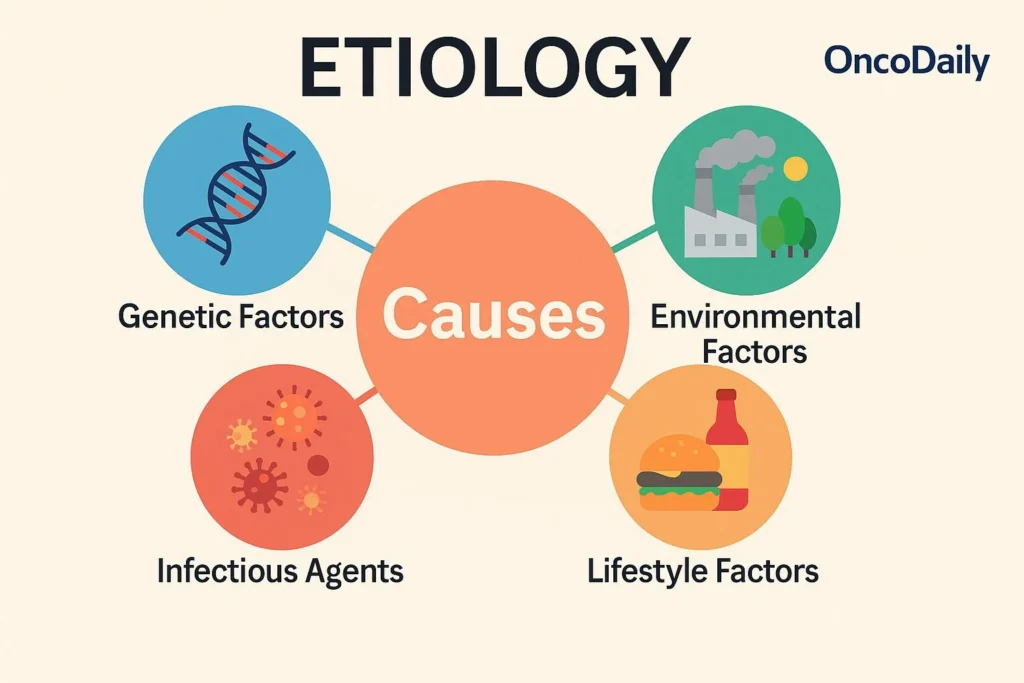
A Disease is an abnormal physiological or psychological condition that harms the body or mind, fundamentally changing how the body normally works. It represents a failure of homeostasis (the body's internal balance).
It is NOT caused by an immediate, outside mechanical injury (like a broken bone from a fall), though severe injuries can lead to disease processes (like infection).
The Factory Analogy: Think of the human body as a complex factory. A disease is when one machine (an organ or cell) in the factory stops working properly, causing a cascading problem throughout the entire system.
At a microscopic level, a disease represents a failure of cellular adaptation. When cells are stressed beyond their biological ability to adapt (due to toxins, hypoxia, or pathogens), they undergo cellular injury.
- Reversible Injury: If the stress is mild or temporary, the cell can recover (e.g., cellular swelling or fatty change).
- Irreversible Injury: If the stress is severe or prolonged, it leads to programmed cell death (apoptosis) or messy, inflammatory cell death (necrosis). This cellular failure cascades into tissue failure, organ failure, and systemic disease.
In clinical practice, a disease presents with specific indicators that guide diagnosis:
| Indicator | Definition | Clinical Examples |
|---|---|---|
| Signs (Objective) | Measurable and observable clinical findings detected by the healthcare provider. | Blood pressure of 160/100 mmHg, visible vesicular rash, wheezing heard through a stethoscope, pallor, elevated temperature (39°C). |
| Symptoms (Subjective) | Experiences reported exclusively by the patient; cannot be physically measured by the examiner. | "My chest hurts," nausea, overwhelming fatigue, dizziness, blurry vision, feeling anxious. |
Scenario: Maria, an 8-year-old girl, presents with a high fever, a red vesicular rash, and intensely itchy skin. The doctor visibly observes the rash and measures the fever (Signs). Maria complains that she feels itchy and extremely tired (Symptoms). Diagnosis: Chickenpox.
Physiological Context: The varicella-zoster virus (VZV) enters through the respiratory tract, replicates in the lymph nodes, and causes primary viremia (virus circulating in the blood). This systemic spread leads to the subjective symptom of fatigue and the objective clinical sign of a vesicular rash.
In medical sociology, "disease" covers any condition causing pain, organ dysfunction, mental distress, social isolation, or premature death. Here is what clinically counts under the broad umbrella of disease:
| Category | Clinical Meaning | Example & Pathophysiological Context |
|---|---|---|
| Disabilities | Physical or mental functional limits. | A child unable to walk after polio. (The poliovirus specifically targets and destroys lower motor neurons in the anterior horn of the spinal cord, leading to flaccid paralysis). |
| Disorders | Disruption of systemic organization or function without a single infectious cause. | Anxiety or Eating disorders. (Often linked to neurotransmitter imbalances, such as serotonin, GABA, or dopamine dysregulation in the brain). |
| Syndromes | A recognizable group of signs and symptoms that consistently occur together. | Down syndrome. (Trisomy 21 - caused by chromosomal non-disjunction during meiosis, leading to systemic structural and cognitive manifestations). |
| Infections | Pathogenic microbes invading and multiplying in the host tissue. | Influenza, COVID-19. (Pathogens evade the innate immune system, replicate, and trigger massive inflammatory cytokine release causing tissue damage). |
| Isolated Symptoms | A singular clinical problem without an immediately identifiable systemic cause. | Idiopathic chronic headache. (The exact biochemical, vascular, or structural etiology remains unknown). |
| Deviant Behaviors | Behaviors fundamentally diverging from physiological norms, causing harm. | Severe substance addiction. (Pathological neuroplastic rewiring of the brain's reward pathways—specifically the ventral tegmental area and nucleus accumbens). |
Note: Pure mechanical injuries (burns, fractures) are generally not classified as diseases, but their physiological complications (e.g., burn sepsis) absolutely are.
Diseases fit perfectly into the Biopsychosocial Model of Health, heavily affecting patients in two primary domains:
- Physical Effects (Physiological): Direct changes in the body's structure or chemistry. Examples include pyrexia (fever caused by cytokines altering the hypothalamus), nociceptor activation (pain), weakness, and lesions.
- Mental Effects (Psychological): Changes in emotion and cognition. Chronic illness directly increases serum cortisol levels, permanently altering brain chemistry, leading to clinical depression, severe anxiety, and "illness fatigue."
When a patient expires strictly due to an internal disease process (not trauma, accident, or foul play), it is medically termed "death by natural causes."
Example: An elderly man dies from a sudden Myocardial Infarction (heart attack). Pathophysiology: An atherosclerotic plaque ruptures in a coronary artery, forming a thrombus that completely starves the myocardium of oxygen, inducing fatal ventricular arrhythmias. This is natural. A car crash is NOT.
All major pathologies can be classified into four primary categories. You must understand these thoroughly for your pathology and community health exams.
I.D.H.P. — "I Don't Have Problems" (But diseases DO cause problems!)
- I = Infectious
- D = Deficiency
- H = Hereditary
- P = Physiological
Diseases caused by pathogenic microbes that breach host defenses, multiply, and induce tissue damage or systemic inflammation. They are categorized by the type of invading germ:
| Pathogen Type | Characteristics & Mechanism of Action | Clinical Examples |
|---|---|---|
| Bacteria | Single-celled prokaryotes. They damage tissue directly, release deadly toxins (exotoxins/endotoxins), or trigger hyper-inflammatory responses. | Tuberculosis (M. tuberculosis), Cholera (Vibrio cholerae), Typhoid, Syphilis. |
| Viruses | Obligate intracellular parasites (DNA/RNA in a protein coat). They hijack the host cell's ribosomes to replicate, eventually destroying the host cell. | HIV/AIDS, Measles, Chickenpox, Influenza, COVID-19, Hepatitis B. |
| Fungi | Eukaryotic organisms (yeasts/molds). They thrive in warm, moist body areas and digest organic keratin or mucosal tissue. | Ringworm (Tinea corporis), Athlete's foot, Oral Thrush (Candidiasis). |
| Protozoa | Single-celled eukaryotic parasites. Often require a complex life cycle involving an intermediate vector host (like an insect). | Malaria (Plasmodium spp.), Amoebic dysentery, Toxoplasmosis. |
| Helminths (Worms) | Multicellular parasitic worms that reside in the GI tract, blood, or lymphatic system, depriving the host of nutrients. | Hookworm, Tapeworm, Schistosomiasis, Ascariasis. |
- Airborne/Droplet: Inhaling aerosolized particles (e.g., coughing, sneezing).
- Fecal-Oral Route: Ingesting contaminated water/food (e.g., Cholera).
- Direct Contact: Skin-to-skin or sexual fluid exchange (e.g., HIV, Syphilis).
- Vector-Borne: Injected by blood-feeding insects (e.g., Malaria via Anopheles mosquito).
Conditions caused by a chronic lack of essential micronutrients (vitamins/minerals) or macronutrients (proteins/carbs). Without these, vital biochemical pathways completely halt.
| Deficient Nutrient | Resulting Disease | Symptoms & Exact Pathophysiology |
|---|---|---|
| Vitamin A (Retinol) | Night Blindness / Xerophthalmia | Inability to see in low light. Pathology: Vitamin A is required to synthesize Rhodopsin, the critical light-sensitive pigment in the retina's rod cells. |
| Vitamin B1 (Thiamine) | Beriberi | Severe weakness, nerve damage, heart failure. Pathology: Thiamine is a vital co-enzyme for ATP (energy) production. High-energy tissues (nerves/heart) fail first. |
| Vitamin C (Ascorbic Acid) | Scurvy | Bleeding gums, teeth falling out, unhealing wounds. Pathology: Vitamin C is strictly required for the cross-linking of Collagen. Connective tissue literally dissolves. |
| Vitamin D (Calciferol) | Rickets (kids) / Osteomalacia (adults) | Soft bones, severely bowed legs. Pathology: Vitamin D is mandatory for intestinal Calcium absorption. Without calcium, bones cannot mineralize. |
| Iron | Iron Deficiency Anaemia | Extreme fatigue, pallor, tachycardia. Pathology: Iron is the core atom of the Heme molecule. Without it, RBCs cannot bind or carry oxygen. |
| Iodine | Endemic Goitre | Massive swelling of the neck. Pathology: Iodine is the building block of Thyroid hormones (T3/T4). The gland undergoes massive hypertrophy trying to make hormones it lacks ingredients for. |
| Protein | Kwashiorkor | Severe edema (swollen belly), flaky skin. Pathology: Lack of dietary protein causes severe hypoproteinemia (low blood albumin), leading to a drop in oncotic pressure; fluid leaks into the tissues. |
Diseases passed vertically from parents to offspring via genes (DNA). They are divided into two main categories:
- Monogenic (Single-Gene) Genetic Diseases: Caused by direct, identifiable mutations in the DNA sequence.
Examples: Sickle Cell Anaemia (Autosomal Recessive trait where valine replaces glutamic acid, causing RBCs to sickle and block blood vessels), Cystic Fibrosis, Hemophilia (X-linked). - Multifactorial (Non-Genetic Hereditary): A "family tendency" or genetic predisposition that requires an environmental trigger to manifest.
Examples: Essential hypertension, Type 2 Diabetes, certain cancers.
Exam Trap: "Hereditary" means passed via genes. "Congenital" means present exactly at birth. Not all congenital diseases are hereditary! (e.g., Fetal Alcohol Syndrome is congenital but caused by maternal toxin exposure, not genetics).
Diseases caused when specific body organs or entire systemic networks stop working properly due to cellular wear-and-tear, endocrine failure, or autoimmune dysfunction.
- Diabetes Mellitus: The pancreas fails to make insulin (Type 1), or peripheral cells become completely resistant to insulin (Type 2). Glucose builds up in the blood, starving cells and damaging vessels.
- Hypertension (High BP): Blood pressure stays chronically elevated due to stiffening of arteries or an overactive Renin-Angiotensin-Aldosterone System. The immense shearing force damages the delicate inner lining (endothelium) of vessels, leading to strokes or kidney failure.
- Asthma: Bronchial airways become hyper-reactive to triggers. The smooth muscle constricts violently, and thick mucus is produced, causing expiratory wheezing and hypoxia.
- Heart Failure: The myocardium weakens and fails to pump blood effectively forward. Blood backs up into the lungs (pulmonary edema) and venous system (peripheral edema).
Public health categorizes diseases by how they spread through populations.
| Feature | Communicable (Infectious) | Non-Communicable (NCDs) |
|---|---|---|
| Spread | YES — Spreads directly or indirectly from person to person. | NO — Does not spread. It is an internal patient condition. |
| Primary Causes | Pathogens (Bacteria, Viruses, Parasites, Fungi). | Lifestyle, genetic mutations, poor nutrition, environmental toxins, aging. |
| Classic Examples | Malaria, Tuberculosis, HIV/AIDS, Cholera, COVID-19. | Diabetes, Cancer, Heart Disease, Hypertension, Asthma. |
| Prevention Strategy | Vaccination, strict hand hygiene, safe sex, improved sanitation. | Healthy diet, routine exercise, weight management, avoiding tobacco. |
The World Health Organization warns that Non-Communicable Diseases cause over 75% of global deaths (excluding pandemics). The four deadliest are: 1. Cardiovascular Diseases (Heart attacks/Strokes), 2. Cancers (Neoplasms), 3. Chronic Respiratory Diseases (COPD/Asthma), and 4. Diabetes.
- Congenital: Present exactly at birth (e.g., Ventricular septal defect / hole in the heart, cleft palate).
- Acquired: Develops anytime after birth due to environment, lifestyle, or infection (e.g., Type 2 Diabetes, HIV).
- Acute: Starts very suddenly, has a rapid onset, and a short, severe duration (e.g., Acute appendicitis, common cold).
- Chronic: Long-lasting, develops slowly, usually persisting over 3-6 months or a lifetime (e.g., Osteoarthritis, Hypertension).
- Degenerative: Tissues and organs slowly break down and lose biological function over time due to wear and tear (e.g., Alzheimer's disease, Osteoarthritis).
- Autoimmune: A catastrophic failure of immunological self-tolerance. The body's immune system generates auto-antibodies that aggressively attack its own healthy tissues (e.g., Systemic Lupus Erythematosus (SLE), Rheumatoid Arthritis, Type 1 Diabetes).
Master these definitions for multiple-choice and short-answer exam questions:
- Pathogen: Any microorganism that successfully bypasses defenses and causes disease in a host.
- Vector: A living organism (usually an arthropod/insect) that carries and transmits a pathogen to humans (e.g., Anopheles mosquito for Malaria, Tsetse fly for Sleeping Sickness).
- Host: The living person, animal, or plant that a pathogen invades and relies on for biological nourishment and replication.
- Immunity: The physiological ability of the host's white blood cells and antibodies to recognize and destroy specific foreign pathogens.
- Vaccination (Immunization): The clinical injection of dead, weakened, or fragmented germs to artificially stimulate the immune system to build active, long-lasting immunity.
- Incubation Period: The silent time gap between the initial exposure to the pathogen and the appearance of the very first clinical symptom.
- Epidemic: A disease spreading violently and rapidly, affecting a disproportionately large number of individuals within a specific community or region.
- Pandemic: An epidemic that has crossed borders, spreading globally across multiple continents (e.g., COVID-19, 1918 Spanish Flu).
- Endemic: A disease that is consistently present at a baseline, predictable level within a specific geographic area (e.g., Malaria is endemic in sub-Saharan Africa).
- Iatrogenic: A disease, infection, or complication caused directly by medical examination or hospital treatment itself (e.g., getting sepsis from an unsterilized surgical scalpel, or severe kidney damage from a prescribed drug).
- What is the difference between a sign and a symptom?
Answer: A sign is an objective finding a doctor measures (e.g., fever of 39°C, rash). A symptom is subjective, felt only by the patient (e.g., nausea, fatigue). - Name the four main types of disease (IDHP).
Answer: Infectious, Deficiency, Hereditary, Physiological. - What specific vitamin deficiency causes Scurvy?
Answer: Vitamin C (Ascorbic Acid) deficiency. It halts collagen production, causing gums to bleed and wounds to open. - Is Diabetes Type 2 communicable? Explain.
Answer: No, it is non-communicable (physiological/metabolic). It is caused by cellular insulin resistance and lifestyle factors, not a transmissible pathogen. - What is the difference between an Epidemic and a Pandemic?
Answer: An epidemic is a rapid outbreak in a localized region or country. A pandemic is when that outbreak spreads globally across multiple continents.
- Kumar, V., Abbas, A. K., & Aster, J. C. (2020). Robbins Basic Pathology (10th ed.). Elsevier.
- Hinkle, J. L., & Cheever, K. H. (2018). Brunner & Suddarth's Textbook of Medical-Surgical Nursing (14th ed.). Wolters Kluwer.
- World Health Organization (WHO) Global Reports on Non-Communicable Diseases (NCDs) and Infectious Disease Epidemiology.
Quick Quiz
Nature & Causes of Disease Quiz
Paediatrics
Privacy: Your details are used only for quiz tracking and certificates.
Nature & Causes of Disease Quiz
Paediatrics
Preparing questions...
Choose your answer and keep your streak alive.
Great effort.
Here is your quick performance summary.