
Table of Contents
ToggleAntimalarial Pharmacology
I. Foundational Concepts: Understanding the Enemy
Before memorizing any drug, you must understand what malaria is. Malaria is not caused by a bacterium or a virus; it is caused by a single-celled protozoan parasite of the genus Plasmodium. Because it is a eukaryotic organism (like human cells), creating drugs that are toxic to the parasite but safe for the human host is pharmacologically challenging.
To survive inside a human Red Blood Cell (RBC), the malaria parasite must eat. It consumes human Hemoglobin. However, digesting hemoglobin releases free Heme (ferriprotoporphyrin IX), which is highly toxic to the parasite's own cell membranes.
To prevent poisoning itself, the parasite uses an enzyme called Heme Polymerase to convert the toxic free heme into a harmless, crystallized, dark pigment called Hemozoin.
Pharmacology Rule: A massive chunk of antimalarial drugs (like Chloroquine, Quinine, Mefloquine) work by accumulating in the parasite's acidic food vacuole and blocking this heme polymerization process. The parasite is subsequently killed by its own toxic metabolic waste (free heme)!
1. Global and Local Burden (The Epidemiology)
Malaria remains a devastating global health crisis, heavily dictated by climate, vectors, and drug resistance.
- Global Burden: In 2023, an estimated 263 million cases and ~597,000 deaths occurred worldwide (WHO World Malaria Report 2024).
- African Burden: The African Region carries an overwhelming ~94% of all global cases and ~95% of all deaths.
- Ugandan Country Profile: Uganda remains highly endemic, with nearly the entire population at risk.
- It accounts for 478 cases per 1,000 population per year (as of May 2023).
- It accounts for up to 40% of all outpatient visits and 25% of hospital admissions.
- It causes between 70,000 and 100,000 deaths annually in Uganda. It is a major public health concern, especially for highly vulnerable populations: children under five and pregnant women.
- Drivers of Surging Cases: Case counts rose sharply after 2019 due to COVID-19 disruptions, and surged again in 2022–2023. This is driven by insecticide and drug resistance, climate-related events, health system disruptions, and severe humanitarian crises/funding gaps.
2. The Causative Organisms
There are five species of Plasmodium that infect humans. Knowing which one you are treating dictates the drug choice:
- Plasmodium falciparum: The most virulent and deadly. It causes the most mortality, is the most common in sub-Saharan Africa, and is notorious for severe drug resistance.
- Plasmodium vivax: The most common species outside of Africa. It causes relapsing disease because it can hide dormant in the liver (as hypnozoites).
- Plasmodium ovale: Similar to P. vivax, it has two subspecies and also forms liver hypnozoites, causing relapsing disease.
- Plasmodium malariae: Causes "quartan" fevers (fever every 72 hours). It causes a chronic, low-grade infection.
- Plasmodium knowlesi: A zoonotic species (transferred from macaque monkeys) found primarily in SE Asia. It can cause rapidly severe and fatal disease.
II. The Plasmodium Life Cycle & Clinical Relevance
Antimalarial drugs are classified entirely based on where in the life cycle they strike the parasite. If you know the cycle, you know the drug class.
- Inoculation: A female Anopheles mosquito bites a human and injects Sporozoites into the bloodstream.
- Exo-erythrocytic (Hepatic) Phase: The sporozoites quickly travel to the liver and invade hepatocytes. Here, they multiply massively and develop into Tissue Schizonts.
- Dormant Phase: In P. vivax and P. ovale, some parasites don't develop immediately. They go to sleep in the liver as Hypnozoites. These can wake up months or years later, causing a relapse.
- Erythrocytic (Blood) Phase: The liver cells burst, releasing thousands of Merozoites into the blood. They invade Red Blood Cells (RBCs). Inside the RBC, they grow from ring forms → trophozoites → blood schizonts. The RBC eventually ruptures, releasing more merozoites and toxins. This mass rupture is what causes the classic cyclic malaria fevers and clinical illness!
- Sexual Phase (Transmission): Some blood parasites develop into male and female Gametocytes. When another mosquito bites the human, it ingests these gametocytes, allowing the cycle to continue.
Drugs that kill the parasite in the liver before it enters the blood. This prevents the initial clinical infection (Causal Prophylaxis).
Examples: Primaquine, Atovaquone-proguanil, Pyrimethamine, some Tetracyclines.
Drugs that specifically hunt down and kill the dormant hypnozoites in the liver, preventing future relapses of P. vivax and P. ovale.
Examples: Primaquine, Tafenoquine.
Drugs that kill the actively dividing parasites inside the RBCs. This cures the acute clinical symptoms and stops the fever.
Fast-acting: Artemisinins, Chloroquine, Quinine, Mefloquine.
Slow-acting: Doxycycline, Sulfonamides, Pyrimethamine.
Drugs that kill the sexual gametocytes in the blood, blocking transmission to the mosquito.
Examples: Primaquine (for P. falciparum), Artemisinins. Quinine (for vivax/malariae/ovale).
III. Clinical Presentation & Diagnostic Terminology
1. Symptoms and Disease Progression
- Early (Non-specific) Symptoms: Fever, severe headache, malaise, myalgia (muscle aches), and nausea.
- The Classic Paroxysm: When the RBCs rupture synchronously, the patient experiences a severe 3-stage attack:
- Cold Stage: Intense shivering and rigors.
- Hot Stage: Extremely high fever.
- Sweating Stage: Massive diaphoresis (defervescence) as the fever drops.
- Periodicity: The paroxysms happen every 48 hours (Tertian) for P. vivax and P. ovale, and every 72 hours (Quartan) for P. malariae. P. falciparum is often continuous or irregular.
P. falciparum causes infected RBCs to become "sticky," clogging tiny capillaries in vital organs. This requires urgent parenteral (IV) therapy and supportive care. Signs include:
- Cerebral Malaria: Impaired consciousness, seizures, or coma.
- Severe Anemia: Hb < 5–7 g/dL due to massive RBC destruction.
- Metabolic Collapse: Severe hypoglycemia and metabolic acidosis.
- Organ Failure: Renal failure, Pulmonary Edema, Jaundice, Shock.
- Blackwater Fever: Massive intravascular hemolysis causing dark, hemoglobin-filled urine.
- Hyperparasitemia: Huge percentage of RBCs infected.
2. Defining Recurrence
A returning fever is not always the same mechanism:
- Relapse: Reappearance of the disease from dormant liver hypnozoites (exclusive to vivax/ovale). Requires a Radical Cure (Primaquine/Tafenoquine) to fix.
- Recrudescence: Reappearance of the disease because the initial blood treatment failed (due to inadequate therapy or drug resistance). Surviving blood parasites multiply again.
- Reinfection: The patient was completely cured but was bitten by a new infective mosquito.
3. Diagnostic Methods (Clinical + Lab)
Always pair testing with clinical assessment. If microscopy is unavailable, treat severe cases empirically!
- Microscopy (Thick & Thin Smears): The Gold Standard when skilled personnel are available. Thick smears detect the presence of parasites (density); thin smears identify the exact species.
- Rapid Diagnostic Tests (RDTs): Fast lateral-flow tests that detect parasite antigens (HRP2 or pLDH). Pros: Fast and require no electricity. Cons: Some P. falciparum strains have mutated and deleted the HRP2 gene, causing dangerous false negatives.
- PCR: Extremely high sensitivity; used mainly for research and complex confirmations.
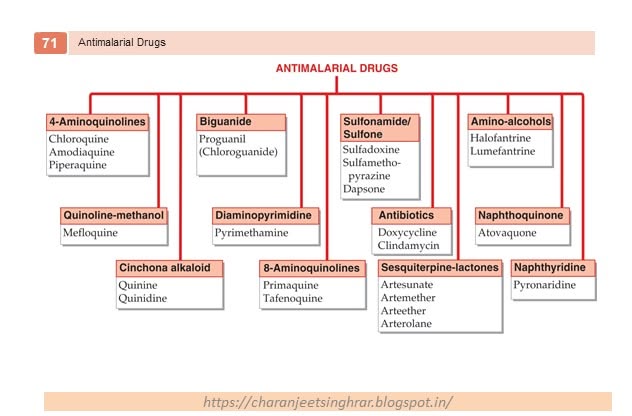
IV. Pharmacological Classification & The 4-Aminoquinolines
1. Chloroquine
Chloroquine is a 4-aminoquinoline (a weak base). Historically, it was the "wonder drug" and absolute first-line treatment for malaria. Today, its use is heavily restricted due to massive global resistance.
- Mechanism of Action (MOA): Because it is a weak base, it naturally concentrates inside the highly acidic food vacuole of the parasite. There, it violently inhibits Heme Polymerase. The parasite can no longer convert toxic free heme into safe hemozoin. The toxic heme-chloroquine complex builds up, destroying the parasite's membranes and killing it.
- Indications: Rapid clinical cure (blood schizonticide). Currently only used for P. vivax, P. ovale, and P. malariae where they remain susceptible. It is NO LONGER recommended for P. falciparum in most countries.
- Pharmacokinetics (PK): Very good oral absorption. It is famous for its massive Volume of Distribution (Vd). It binds heavily to tissues (liver, spleen, lung, skin, retina). Because it is sequestered in tissues, its terminal elimination half-life takes weeks to months! (Early plasma t½ is a few days, but tissue retention leads to prolonged post-treatment levels). Metabolized in the liver; excreted partly in urine.
| Dosing, AEs, and Cautions for Chloroquine |
|---|
| Typical Dosing: Note that salts matter! (250 mg chloroquine phosphate = 150 mg active base). The typical WHO total adult dose for acute sensitive infection is 10 to 25 mg base/kg given over 3 days. |
| Adverse Effects (AEs): GI upset, intense pruritus (itching - extremely common in African populations), headache, dizziness. Rare but severe: QT prolongation, can precipitate seizures, exacerbates psoriasis. Long-term use (when used in rheumatology for Lupus/RA) causes severe Retinopathy (bull's-eye maculopathy). |
| Cautions & Pregnancy: Contraindicated in pre-existing retinal disease, severe seizure disorders, and porphyria. It is totally SAFE in pregnancy and breast-feeding for sensitive infections. |
| Mechanism of Resistance: P. falciparum developed mutations in the pfcrt (chloroquine resistance transporter) and pfmdr1 genes. This literally creates an efflux pump that spits the chloroquine out of the food vacuole before it can work. |
2. Amodiaquine
A structural 4-aminoquinoline analogue of chloroquine.
- MOA & PK: Exact same mechanism as chloroquine (inhibits heme detoxification). It is converted in the liver to an active metabolite called des-ethylamodiaquine, which has a much longer half-life.
- Clinical Role: Historically used for chloroquine-resistant falciparum. Today, it is primarily used as a highly effective, cheap partner drug in ACTs (e.g., Artesunate-Amodiaquine [AS-AQ]).
- Severe Toxicities: Prolonged use causes rare but fatal Agranulocytosis (destruction of white blood cells) and severe Hepatotoxicity. Therefore, it is strictly used for short-term treatment and never for long-term prophylaxis!
V. The Cinchona Alkaloids (Quinine & Quinidine)
Derived from the bark of the Cinchona tree, Quinine is one of the oldest and most important antimalarials in existence. It is a powerful, fast-acting blood schizonticide.
- Indications: Historically the first-line treatment for Severe Malaria. Today, it is the second-line for Severe Malaria (used when IV Artesunate is unavailable). It is also used as a primary drug for treating uncomplicated malaria during the 1st Trimester of Pregnancy (where ACTs are often avoided). Always used in combination with an antibiotic (Doxycycline or Clindamycin) for resistant infections.
- MOA: Like chloroquine, it accumulates in the food vacuole and interferes with heme detoxification, causing the parasite to die from its own toxic waste.
- Pharmacokinetics (PK): Rapid oral absorption. For severe disease, IV formulations are used.
- Loading Dose (IV): Required to rapidly reach therapeutic levels and save the patient's life. 20 mg salt/kg (up to a max of 1,400 mg) by IV infusion slowly over 4 hours. Alternative: 7 mg salt/kg IV over 30 minutes, followed instantly by maintenance.
CRITICAL RULE: Do NOT give a loading dose if the patient has received quinine, quinidine, or mefloquine in the previous 12-24 hours (massive risk of fatal cardiac toxicity). - Maintenance Dose (IV): 8 hours after the start of the loading dose, give 10 mg salt/kg by IV infusion over 4 hours. Repeat this every 8 hours.
- Switch to Oral: As soon as the patient is conscious and can swallow, switch to a full course of an oral ACT, or complete 7 days of oral quinine (600 mg every 8 hours) + Clindamycin/Doxycycline.
Quinine has a very Narrow Therapeutic Index, meaning the effective dose is dangerously close to the toxic dose. You must continuously monitor cardiac rhythm and blood glucose!
- Cinchonism: A classic syndrome of poor tolerability characterized by severe Tinnitus (ringing in the ears), high-frequency hearing loss, dizziness, visual disturbances, nausea, and vomiting.
- Severe Hypoglycemia: Quinine forces the human pancreas to secrete massive amounts of insulin. This is especially dangerous in pregnant women and children. Frequent blood glucose monitoring and dextrose infusions are mandatory.
- Cardiotoxicity: Causes massive QT prolongation. Rapid IV infusion will cause severe hypotension and deadly cardiac arrhythmias. Must never be mixed with other QT-prolonging drugs.
- Hemolysis: Can trigger massive RBC destruction in patients with G6PD deficiency.
- Complex Dosing: The required 7-day, 3-times-a-day (TID) oral regimen leads to incredibly poor patient adherence.
VI. Quinoline Methanols & Bis-quinolines
1. Mefloquine
A quinoline methanol structurally related to quinine.
- Indications: Highly effective for both the treatment and prophylaxis of chloroquine-resistant P. falciparum. Used as a partner drug in some ACTs (Artesunate-Mefloquine).
- MOA: Disrupts parasite heme detoxification (similar to chloroquine).
- PK & Dosing: It has a phenomenally long half-life (~2 to 4 weeks) with good oral bioavailability. For prophylaxis: 250 mg taken once weekly for adults (start 1–2 weeks before travel, continue for 4 weeks after returning home).
- Severe Adverse Effects (The "Black Box" Warning): Mefloquine easily crosses the blood-brain barrier. It is notorious for causing profound Neuropsychiatric effects including severe anxiety, vivid/nightmarish dreams, severe depression, dizziness, and frank psychosis.
Absolute Contraindication: Must NEVER be given to patients with a recent psychiatric history, active depression, or any seizure disorder. Can also cause cardiac QT prolongation.
2. Piperaquine
A long-acting bis-quinoline.
- Clinical Role: It is almost exclusively used as a highly effective partner drug to Dihydroartemisinin (DHA) in the ACT combination DHA-Piperaquine (DHA-PPQ).
- The Synergy: The Artemisinin (DHA) kills the bulk of the parasites instantly but clears from the body in hours. Piperaquine supplies the long half-life needed to kill any remaining parasites over the next few weeks, preventing recrudescence.
- AEs: Primary risk is QT prolongation. Must be heavily monitored if combined with other QT-prolonging agents.
VII. Artemisinins & Artemisinin-Based Combination Therapies (ACTs)
Artemisinins are derived from the sweet wormwood plant (Artemisia annua). They revolutionized malaria treatment and are currently the absolute first-line therapy for uncomplicated P. falciparum malaria worldwide.
The class includes the prodrugs Artesunate (water-soluble, used IV/IM/Oral), Artemether (lipid-soluble, used Oral/IM), and Arteether. Inside the body, they are rapidly metabolized into the primary active metabolite: Dihydroartemisinin (DHA).
Artemisinins are incredibly potent, extremely rapid blood schizonticides. They kill all blood stages, including ring forms and early schizonts, faster than any other drug.
- The chemical structure of artemisinins contains a unique Endoperoxide Bridge.
- When the drug enters the parasite's food vacuole, the iron (Fe2+) from the parasite's digested heme cleaves this endoperoxide bridge.
- This cleavage acts like a bomb, generating a massive burst of highly reactive free radicals.
- These radicals indiscriminately alkylate and destroy the parasite's proteins and cell membranes. (It is also believed to inhibit PfATP6, a calcium SERCA pump in the parasite).
1. The Rationale for ACTs (Why we never use Artemisinins alone)
Artemisinins have a critical flaw: a phenomenally short elimination half-life (DHA is cleared in ~1 to 3 hours). If given alone, the drug disappears before all parasites are killed, leading to a guaranteed recrudescence (relapse of the blood infection) and rapid drug resistance.
To solve this, the WHO mandates Artemisinin-Based Combination Therapies (ACTs). You combine the ultra-fast, short-acting Artemisinin (to rapidly clear the parasite biomass and fever) with a slow-acting, long half-life partner drug (to "mop up" any surviving parasites over the next few weeks).
2. Common ACT Partner Combinations
- Artemether-Lumefantrine (AL / Coartem): The most widely used ACT globally. Lumefantrine provides the long-half life clearing action. Crucial PK Note: Lumefantrine absorption is highly fat-dependent; it must be taken with food or milk. It also carries a risk of QT prolongation.
- Artesunate-Amodiaquine (AS-AQ): Very common in Africa; cheap and effective.
- Dihydroartemisinin-Piperaquine (DHA-PPQ): Highly efficacious because piperaquine has an exceptionally long half-life, providing prolonged post-treatment prophylaxis against new bites.
- Artesunate-Mefloquine & Artesunate-Pyronaridine: Alternative ACTs used based on regional resistance policies.
- Adverse Effects: Generally extremely well-tolerated. Can cause transient GI upset, headache, and dizziness. IM preparations can cause injection site pain.
- Delayed Hemolysis: A specific, serious complication seen in survivors of severe malaria treated with IV Artesunate. The drug damages the infected RBCs, and the spleen aggressively destroys them weeks later. You must monitor the patient's Hemoglobin (Hb) weekly for 4 weeks post-treatment!
- Emerging Resistance: A terrifying "delayed clearance phenotype" has emerged in Southeast Asia and is now appearing in Africa. This resistance is genetically linked to mutations in the kelch13 (K13) gene. Strict adherence to ACTs and molecular surveillance is critical to stop this spread.
VIII. The Antifolates & Atovaquone Combinations
1. Sulfadoxine-Pyrimethamine (SP)
Just like bacteria, the malaria parasite must synthesize its own folic acid to make DNA. It cannot absorb folic acid from the human host. SP works by destroying this synthetic pathway.
- Mechanism of Action (Sequential Blockade):
- Sulfadoxine: A sulfonamide that competitively inhibits Dihydropteroate Synthase (DHPS).
- Pyrimethamine: A diaminopyrimidine that competitively inhibits Dihydrofolate Reductase (DHFR).
- Together, they synergistically block nucleotide synthesis. They are slow-onset blood schizonticides.
- Clinical Use: Due to widespread DHFR and DHPS gene mutations, SP is essentially useless for the treatment of acute P. falciparum. Today, its incredibly long half-life makes it the primary drug for Intermittent Preventive Therapy in Pregnancy (IPTp) and in infants (IPTi) to prevent maternal malaria and low birth weight.
- Severe Toxicities: Contraindicated in patients with sulfa allergies. Can cause bone marrow suppression, megaloblastic anemia (prolonged use), and rare but fatal skin shedding syndromes: Stevens-Johnson Syndrome (SJS) and Toxic Epidermal Necrolysis (TEN).
2. Atovaquone-Proguanil (Malarone)
A highly synergistic, powerful, but expensive combination drug used for both treatment of uncomplicated falciparum and causal prophylaxis in travelers.
- Mechanism of Action:
- Atovaquone: Directly inhibits the parasite's mitochondrial electron transport chain (at cytochrome bc1). This causes a total collapse of the mitochondrial membrane potential.
- Proguanil (a Biguanide): A prodrug converted in the liver to Cycloguanil, which potently inhibits plasmodial DHFR.
- Pharmacokinetics: Atovaquone is highly lipophilic; its absorption is drastically increased if taken with a fatty meal. If the patient vomits within 1 hour of the dose, it will not be effective.
- Resistance Warning: Resistance to Atovaquone can emerge rapidly via a single point mutation in the cytochrome b gene. It must NEVER be used as monotherapy.
IX. Antibiotics in Malaria Therapy
Certain bacterial antibiotics possess slow-acting blood schizonticidal activity because they target the ribosomes inside the parasite's apicoplast (a unique plant-like organelle).
- MOA: Inhibit protein synthesis by binding to the 30S ribosomal subunit.
- Uses: Used daily for traveler's chemoprophylaxis. Used as a partner drug with Quinine (7-day course) to treat resistant, uncomplicated malaria.
- Contraindications: Highly teratogenic. Absolutely contraindicated in pregnancy and in children < 8 years old due to permanent dental staining and bone growth inhibition. Causes severe photosensitivity (sunburns) and esophageal irritation.
- MOA: Inhibits protein synthesis by binding to the 50S ribosomal subunit.
- Uses: The absolute partner drug of choice to pair with Quinine for treating malaria during the 1st Trimester of Pregnancy and in young children (< 8 years old) where Doxycycline is forbidden.
Clinical Rule: Because antibiotics are "slow-acting," they are NEVER used alone for acute severe infections. They must always be paired with a fast-acting drug like Quinine.
X. The 8-Aminoquinolines (Radical Cures & Gametocides)
This class contains Primaquine and the newer Tafenoquine. They are unique because they target the liver stages and the sexual stages, but do absolutely nothing to the symptomatic blood stages.
- 1. Radical Cure (Hypnozoiticide): The only drugs capable of hunting down and destroying the dormant liver hypnozoites of P. vivax and P. ovale, ensuring the patient never relapses.
- 2. Transmission Blocking (Gametocidal): They destroy the sexual gametocytes of P. falciparum circulating in the blood. A single low dose (0.25 mg/kg) is added to ACT therapy in some endemic settings to ensure the patient cannot transmit the disease to a new mosquito.
- Mechanism of Action: They generate highly reactive oxidative metabolites that target and destroy intrahepatic parasites. The exact molecular target is still not fully defined.
- Pharmacokinetics:
- Primaquine: Requires metabolic activation by the liver enzyme CYP2D6. Patients with CYP2D6 genetic polymorphisms (poor metabolizers) will experience treatment failure and relapse! Dosed as 15 mg base daily for 14 days.
- Tafenoquine: A long-acting analogue that achieves radical cure in a single dose, massively improving patient adherence compared to the 14-day Primaquine regimen.
Because these drugs unleash massive oxidative stress, they will absolutely shred the red blood cells of a patient who lacks the protective antioxidant enzyme Glucose-6-Phosphate Dehydrogenase (G6PD).
- Administering these drugs to a G6PD-deficient patient will cause massive, fatal hemolytic anemia.
- G6PD testing is strictly mandatory before administering a radical cure of Primaquine or Tafenoquine.
- They are absolutely contraindicated in pregnancy and breastfeeding because the G6PD status of the fetus/infant is unknown.
- They also carry a risk of inducing Methemoglobinemia.
XI. Drug Interactions & Pharmacovigilance
When treating malaria, especially with older drugs or combinations, you must be hyper-vigilant regarding drug interactions:
- QT Prolongation: Drugs like Mefloquine, Lumefantrine, Halofantrine, and Quinine all prolong the QT interval on an ECG. Combining them (e.g., giving Halofantrine to a patient who just failed Mefloquine prophylaxis) can trigger fatal Torsades de Pointes arrhythmias.
- CYP450 Interactions: Artemether is heavily metabolized by CYP3A4. Enzyme inducers (like Rifampin or Phenytoin) will clear the drug too fast, causing treatment failure. Enzyme inhibitors (like Ritonavir or Ketoconazole) will cause toxic buildup. Primaquine requires CYP2D6 to work.
- Pharmacovigilance: Always report serious adverse events to national databases. Watch for: SJS with SP, agranulocytosis with amodiaquine, severe hemolysis with primaquine, and delayed hemolysis 4 weeks after IV artesunate.
XII. WHO Clinical Treatment Algorithms
1. The Approach to Fever in an Endemic Area
Assess for Danger Signs (coma, severe anemia, respiratory distress, shock). If severe features are present → treat instantly as Severe Malaria with parenterals. If not severe → Test with RDT or Microscopy. If positive → treat based on species. If negative but suspicion is high → repeat testing or treat empirically.
2. Uncomplicated P. falciparum
- First-Line: An oral ACT (e.g., Artemether-Lumefantrine for 3 days).
- If ACT is unavailable/contraindicated: Quinine + Doxycycline (or Clindamycin) for 7 days.
3. Uncomplicated P. vivax / P. ovale
- Step 1 (Blood Stage): Chloroquine (if the region is strictly chloroquine-sensitive) OR an ACT (if chloroquine-resistant).
- Step 2 (Radical Cure): Add Primaquine (14 days) or Tafenoquine (single dose) to kill the hypnozoites. Must test for G6PD first!
4. Severe Malaria (Medical Emergency)
- First-Line: IV Artesunate is the undisputed drug of choice (superior to quinine in survival rates).
Dosing: 2.4 mg/kg IV or IM at 0, 12, and 24 hours, then daily. - Step-down: Continue IV for at least 24 hours. Once the patient is conscious and can tolerate oral fluids, you MUST switch to a full 3-day course of an oral ACT to finish the job.
- Second-Line: If Artesunate is completely unavailable, use IV Quinine (with a careful loading dose, watching for hypoglycemia and QT prolongation).
5. Special Populations (Pregnancy & Children)
| Population | Uncomplicated Malaria | Severe Malaria |
|---|---|---|
| 1st Trimester Pregnancy | Quinine + Clindamycin for 7 days (ACTs are generally avoided due to theoretical teratogenicity, though WHO is updating this as more safety data emerges). | IV Artesunate (the risk of maternal death far outweighs theoretical fetal risks). |
| 2nd & 3rd Trimester | Standard ACTs. | IV Artesunate. |
| Children (< 8 years) | Standard ACTs (weight-based dosing). | IV Artesunate. Strictly avoid Tetracyclines/Doxycycline. |
XIII. Public Health, Prophylaxis & Prevention
1. Chemoprophylaxis for Travelers
Drugs used to prevent malaria must be started before entering the endemic zone, taken during the stay, and continued after returning to ensure any late-emerging liver parasites are killed.
- Atovaquone-Proguanil (Malarone): Taken daily. Start 1-2 days before travel. Because it acts causally on the liver stage, you only need to continue it for 7 days after return.
- Doxycycline: Taken daily. Cheap and effective. Start 1-2 days before. Must continue for 4 weeks after return. (Watch for sun sensitivity).
- Mefloquine: Taken weekly. Start 1-2 weeks before travel to build up blood levels and test for neuropsychiatric side effects. Continue for 4 weeks after return.
- Chloroquine: Taken weekly. Only useful in the very rare regions where P. falciparum is still sensitive (e.g., parts of Central America/Caribbean).
2. Vector Control & Preventive Chemotherapies
- Vector Control: The bedrock of prevention relies on Insecticide-Treated Nets (ITNs), Indoor Residual Spraying (IRS), and breeding site larval control.
- IPTp: Intermittent Preventive Treatment in Pregnancy. Giving pregnant women full treatment doses of SP (Sulfadoxine-Pyrimethamine) at routine antenatal visits (starting in the 2nd trimester) clears asymptomatic placental malaria and saves fetal lives.
- SMC: Seasonal Malaria Chemoprevention. Administering monthly courses of amodiaquine + SP to children during the rainy season in the Sahel sub-region of Africa.
- Vaccines: The RTS,S/AS01 (Mosquirix) and the newer R21/Matrix-M vaccines are currently being rolled out in selected African countries. They target the pre-erythrocytic sporozoite stage to protect young children from severe disease.
Quick Quiz
Antimalarial Agents Quiz
Pharmacology - mobile-friendly and focused practice.
Privacy: Your details are used only for quiz tracking and certificates.
Antimalarial Agents Quiz
Pharmacology
Preparing questions...
Choose your answer and keep your streak alive.
Great effort.
Here is your quick performance summary.