Nurses Revision

Surgical Nursing

Writing Chapter ONE

Chapter One: Introduction (Research Proposal)
CHAPTER ONE: Introduction

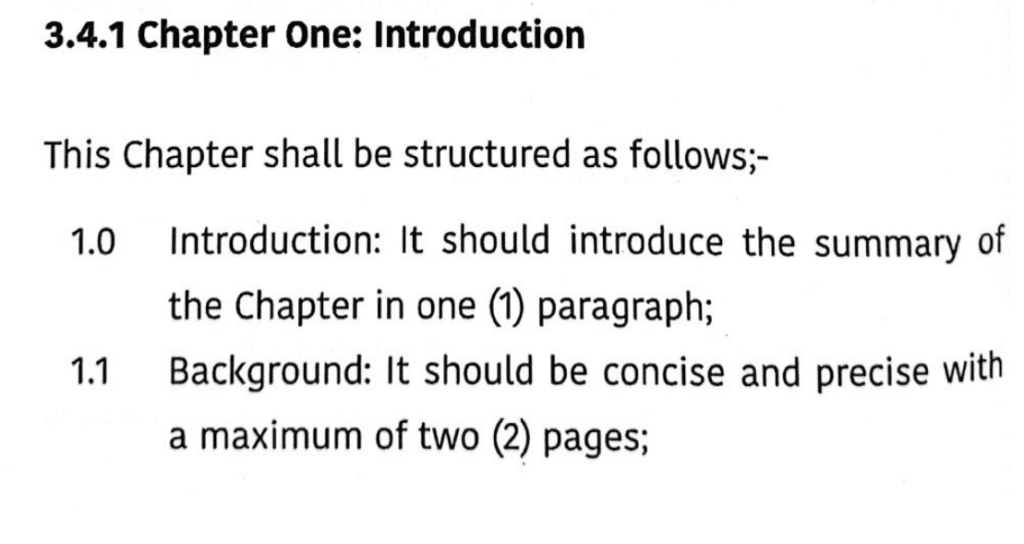
CHAPTER ONE- Introduction. This tells us in detail what your study is all about. It intends to introduce the topic to the readers interested in your research. Should never exceed 5 pages.

It has the following subsections;
  • 1.0 Introduction of the chapter
  • 1.1 Background of the study
  • 1.2 Problem statement
  • 1.3 Purpose of the study
  • 1.4 Specific objectives
  • 1.5 Research questions
  • 1.6 Justification of the study
  • 1.7 Significance of the study

KNOWLEDGE, ATTITUDE AND PRACTICES TOWARDS BIRTH PREPAREDNESS AMONG PREGNANT MOTHERS IN GOMA HEALTH CENTRE III, MUKONO DISTRICT.

1.0 Introduction of the Chapter:
  • It sets the stage for the entire research study and introduces the reader to the content they can expect in this chapter.
1.0 Introduction
This chapter presents the background of the study, problem statement, purpose of the study, objectives of the study, research questions, the justification of the study and significance of the study.
1.1 Background of the Study:
  • First step is to define the research Problem, as defined by Well established respected Health Organizations like UNICEF, UNHCR, WHO, FDA, CDC, WFO. i.e Describe your topic i.e. describe your dependent variable (define it & link it to the independent variables where possible).
  • Provide evidence of existing problems from universal view to local (global, continental, regions, countries) highlighting the gaps. This can be described as using an inverted pyramid.
  • Use APA (American psychological Association) for in-text referencing.
  • Introduction should not exceed 2 pages.

Narrate the problem from the wide to the narrow range. How big the problem is on each scale, Globally to Study area.

The Inverted Pyramid Structure
Globally

Africa

Sub Saharan

East Africa

Uganda

Study Area
1.2 Problem Statement:
  • The problem statement identifies and articulates the specific issue or challenge that the research aims to address.
  • It explains why the problem is significant and why it requires investigation.
  • The study area is the preamble of the Problem statement i.e The problem statement focuses on your study area.
  • It should be concise and clear; not more than 1 page.
Five (5) things that should be answered by problem statement:
  1. What is the extent-of the problem (statically)?
  2. What is the problem like in your country?
  3. How it progresses with years, e.g. in 2021, in. 2022 etc (You can quote studies).
  4. What is the effect of the problem on the target population?
  5. What has been done to address the problem? e.g by Ministry, organization etc.
  6. What is the gap? (E.g. despite... ", comparing the magnitude of problem ...")
  7. What is the way forward? (e.g. Therefore I need to conduct study, So it is upon this …….)
1.3 Purpose of the Study:
  • This section clearly states the main goal or objective of the research.
  • It outlines the broader aim of the study and what the researcher intends to achieve.
Example:
The study will aim at determining the knowledge, attitude and practices towards birth preparedness among pregnant mothers in Goma Health Centre III, Mukono District.
1.4 Specific Objectives:
  • Specific objectives break down the main goal into smaller, measurable, and achievable components.
  • They provide a roadmap for the study, detailing what the researcher aims to accomplish step by step.
  • Not more than 4, not less than 2, Average 3 specific objects in number.
  • Objectives must be SMART
SMART Criteria:
  1. S - Specific (to one thing)
  2. M - Measurable: do not use words like to study, understand, and know. Use words like Evaluate, Assess, Examine, Establish, Investigate, Determine, Extent, and Magnitude.
  3. A - Achievable (Time frame and cost).
  4. R - Realistic (address a topic at hand) and Relevant to a particular study.
  5. T - Time bound. Directly related to the problem (Every objective should be answering a title/ topic).
  • Appropriately worded (Objectives must be complete)
Example 1.4 Specific objectives
1) To assess the knowledge towards birth preparedness among pregnant mothers in Goma Health Centre III, Mukono District.
2) To establish the attitude towards birth preparedness among pregnant mothers in Goma Health Centre III, Mukono District.
3) To identify the practices of birth preparedness among pregnant mothers in Goma Health Centre III, Mukono District.
1.5 Research Questions:
  • Research questions are inquiries that the study seeks to answer.
  • They help focus the research by guiding the investigation toward specific aspects of the topic.
  • Research questions are like specific objectives but with question Marks (?)
Example 1.5 Research Questions
1) What is the knowledge towards birth preparedness among pregnant mothers in Goma Health Centre III, Mukono District?
2) What is the attitude towards birth preparedness among pregnant mothers in Goma Health Centre III, Mukono District?
3) What is the practice towards birth preparedness among pregnant mothers in Goma Health Centre III, Mukono District?
1.6 Justification of the Study:
  • The justification explains why the research is essential and why it's worth conducting. (Will the world collapse if this research is not done?).
  • It outlines the potential benefits and contributions of the study to existing knowledge or practical applications.
  • Why do you want to study in that particular part of the world?
  • Usefulness of your research to different stakeholders (policy makers, government, M.OH, hospital, health workers, community, researcher, school) e.t.c.
1.7 Significance of the Study

This study is significant because it will generate locally relevant evidence to improve maternal health outcomes related to septic abortion at Anaka General Hospital and potentially beyond. The findings will:

To increase the levels of birth preparedness among pregnant mothers thereby reducing maternal morbidity and mortality, to increase the levels of early detection towards birth related complications.

The study findings will help health workers to come up with sensitization and health education programs to encourage mothers to attend ANC regularly, emphasising birth preparedness among pregnant mothers.

The study results may also assist the health planners and policy makers at Mukono district as well the Ministry of Health to identify areas which require policy improvements and funding for programs dedicated to promoting birth preparedness awareness among pregnant mothers.

The study findings will provide a valuable point of reference for future researchers who may wish to conduct similar studies thus building valuable body of literature.

The study will help the researcher in accomplishing Diploma in Midwifery as it’s a partial requirement to be fulfilled for the award of a Diploma in Midwifery by Uganda Nurses and Midwives examinations Board.

NOTE: As we finish Chapter One, Make sure it does not exceed 5 pages 🙏🤞
SECTION C: Long Essay Questions (60 marks)

33. (a) Describe five (5) sections that should be included in chapter one of a research proposal. (10 marks)

(b) Describe five (5) differences between quantitative and qualitative research designs. (10 marks)

Annex 8: Marking guide for Research Report

UGANDA NURSES AND MIDWIVES EXAMINATIONS BOARD
DIPLOMA LEVEL NURSING RESEARCH
MARKING GUIDE FOR RESEARCH REPORT

AREAS OF ASSESSMENT MARKS SCORE COMMENTS
1. Preliminary pages
a) Title page –standard and relevant to the study 01
b) Table of content consistent with page numbers 01
c) List of tables consistent with page numbers 01
d) List of figures consistent with page numbers 01
e) Definition of key operational terms 01
f) List of acronyms /abbreviations 01
g) Abstract with correct subheadings & content 04
Subtotal 10
2. Introduction
a) Background of the study relevant to the study 04
b) Problem statement 04
c) Purpose of study 01
d) Objectives related to title of the study 03
e) Research questions related to objectives 01
f) Justification 02
g) Significance 01
Subtotal 16
3. Literature review
a) Relevant Literature according to the objectives 06
b) Well organised Literature according to the objectives 03
c) Proper citation using APA style 03
Subtotal 12
4. Methodology
a) Description of study design ( include rationale) 03
b) Description of study setting (include rationale ) 02
c) Description of study population 01
d) Inclusions criteria 01
e) Exclusion criteria 01
f) Justified Samples size determination 02
g) Clear sampling procedure 02
h) Clearly defined study variables 02
i) Relevant research instruments/tools 01
j) Quality Assurance 02
k) Description of Data management and analysis 02
l) Ethical considerations 02
m) Plan for Dissemination of study findings 01
n) Study Limitations 01
Subtotal 23
5. Results/ findings
a) Appropriate tables and figures related to study objectives 08
b) Correct interpretation and comments for results 04
Subtotal 12
6. Discussion, Conclusion, Recommendations and implications to Nursing practice
a) Discussion of results or findings in relation to study objectives 06
b) Comparison with supporting or contradicting findings from reviewed literature 03
c) Relating findings to research problem, and purpose of the study 03
d) Conclusion related to study objectives 03
e) Recommendations 02
f) Implications to Nursing practice 02
Subtotal 19
List of References at least 20 02
7. Appendices
a) Applied APA format in the report 02
b) Research instruments copies 01
c) Consent form 01
d) Introduction letter for conducting research 01
e) Approval letter from IRC 01
SUBTOTAL 08
GRAND TOTAL 100%
References
  1. American Psychological Association, (2010). Publication Manual (6th Ed.) Washington DC.
  2. Uganda Nurses and Midwives Examinations Board (2023). Academic Research Guidelines for Diploma Nursing Programs
  3. Uganda Nurses and Midwives Examinations Board (2023). Regulation for the Conduct and Supervision of Nursing and Midwifery Examinations in Uganda.
  4. American Psychological Association. (2020). APA style. https://apastyle.apa.org/
  5. Quinn, S., Brown, L., Coleman, C., Edahl, C., & Grulick, C. (Eds.). (2020). Reading & Writing handbook for the college student (2nd ed.). Hawkes Learning/Quant Systems

Writing Chapter ONE Read More »

PREPARING FOR PROPOSAL DEFENCE

Preparing for Proposal Defence
PREPARING FOR PROPOSAL DEFENCE
MEANING OF PROPOSAL DEFENCE

Proposed Defence refers to a legitimate process organized by the researcher's institution to assess whether the researchers plan of finding valid solutions to the proposed research question(s) holds academic merit.

PROPOSAL DEFENCE PANEL & ITS COMPOSITION

The Proposal Defense Panel refers to a committee or group of people (usually staff of an institution of higher learning) appointed to vet or examine in their own capacity but on behalf of the institution, whether a given proposal(s) meet the fundamental proposal requirements of the institution, whether the research problem is researchable, whether the proposal is complete and whether it holds academic merit.

The proposal defense is usually composed of academic staff of an institution with expertise in the researcher's area of the research, the panel usually includes;

  • Professors, Associate Professors, Doctors and other research doyens,
  • A team of the panel secretariat and
  • In some institutions the researcher's supervisor(s) are invited as ex-officials to the panel.

The quantitative size of the panel depends on the institutions policy and resources.

WHEN IS PROPOSAL DEFENCE DONE?

This depends entirely on the policy of the researchers' institution. However, institutions are guided by two main policies which include; the Fixed Dates System and the Flexible Dates System.

Fixed dates system

Some institutions fix specific dates within every academic year for proposal defense. The proposal defense panel will handle students that are ready for defense on a given pre-determined date and in case a student misses out on a given proposal defence sitting then he waits for a future data which is already known.

Flexible system

In this case, the researchers' institution does not have predetermined dates when proposals will be defended but they react to demand, the proposal defence panel will always be invited whenever there are proposal(s) submitted for defence. In this case the researcher will be informed the date of proposal defence on submission of his/her complete proposal to the school/college/department.

Note that:
For both methods above, the researchers' academic supervisor(s) should have given the student a go ahead by signing on the researchers completed proposal which is a sign that the academic supervisor is convinced beyond reasonable doubt that the researcher's proposal holds academic merit.
FORMS OF PRESENTATION DURING PROPOSAL DEFENCE

The mode of presenting the research proposal to the proposal defence panel significantly depends on the researcher's institutions policy. However, there are 2 main methods of presentations commonly used by institutions of higher learning. These include;

  • Verbal presentation without PowerPoint slides. This is where the researcher is supposed to make his/her proposal defense only through a speech without a PowerPoint presentation to guide his/her deliberations.
  • Verbal presentation with a PowerPoint slide. This where the researcher is allowed to make his/her proposal defence through a speech guided by a PowerPoint presentation. In this case, the researcher will be informed on time to prepare the PowerPoint slides and usually a laptop, project and any other supportive device will be provided on the day of the proposal defence.
TIME ALLOCATED FOR PROPOSAL DEFENCE

The time allocated to an individual researcher to defend his or her proposal varies from Institution to Institution. However, the standard time allocated is usually;

  • Five (5) to Ten (10) minutes for the researcher to make his/her presentation.
  • Twenty (20) to Thirty (30) minutes for cross-examination and response. However, in some cases the panel may use less than that time or even far more than the 30 minutes during cross-examination, but those are outlier cases.
  • Two (2) to Three (5) minutes for the panel to make its decision and communicate its decision with a brief justification and guidance to the researcher. The full report is usually delivered by the secretariat of the panel at a future date usually communicated to the student.
PROPOSAL DEFENCE POWERPOINT SLIDES

In case the researchers' Institution calls for option (ii) of the forms of presentation during proposal defense. Then the researcher should inquire from his/her institution whether they have a standard format of the PowerPoint presentation and the number of the slides. But, if no standard is provided, then students should be informed that since they are usually allocated limited time for presentation, they should organize a maximum of 15 slides.

A Case of a 10 (Ten) PowerPoint Slides Presentation
Slide 1: Cover Page

This slide should include your topic of study, the researchers name, registration number and the supervisor(s) name.

Slide 2: Introduction

This should provide a brief background to the study and introduce the panel.

Slide 3: Problem Statement

This should be a brief statement of the researcher's problem

Slide 4: Objectives, Research Questions and Hypothesis.

This slide should provide both the general objective, specific objectives of the study, research questions and the tentative answers to the questions (Hypothesis).

Slide 5: Conceptual Framework.

The researcher should provide a diagrammatic representation of the relationship between his/her study variables. Please include the Title, Labels (Independent and Dependent Variables), arrows (showing the direction of influence) and the source of the conceptual framework.

Slide 6: Significance of the study

Briefly provide the importance of your study

Slide 7: Literature Review & the Theory.

Provide a synopsis or summary of your literature review and briefly introduce the theory (ies) underpinning the researchers study.

Slide 8: Methodology.

This may cover slide 8 and 9. Briefly provide the Research Design, the sample size and Sampling design, the data collection methods, pre-test of instruments, Data analysis and as well as the ethical considerations of the study.

Slide 10: Thank You Message

Use this slide to thank the panel for this noble opportunity, "write this section in your own words". You may choose to use a photo that communicates your message or write a brief message thanking the panel but as well instilling hope in the panel that you're ready for the next step which is data collection, endeavor to be politely persuasive.


    Please check last page for a sample

Note that:
  • Institutions of higher learning with long distance students such as UTAMU (Uganda Technology and Management University) among others will always provide web-based options for their Long Distance Students. For example; they may organize a video conference where the student presents directly to the panel without a PowerPoint or the student may be required to send his or her PowerPoint presentation earlier and then present through video conferencing on the proposal defense day while the panel follows both the students speech and the PowerPoint slides as well.
  • Institutions of Higher Learning have special arrangements for PWD's. For example the blind, the deaf among others who may not necessarily have the capacity to use any of the two formats of presentation provided above.
The 6 (Six) Sessions of a Proposal Defence (Practical Example)

The researcher should prepare for six (6) different series or six (6) different but continuous hearings of the same defence within the allocated time frame. These sessions include;

1st Session: Introduction

This is the first session of any proposal defence sitting. In this session the panel briefly introduces itself to the candidate and the candidate is expected to briefly introduce him/herself to the panel as well.

I encourage candidates to take this session very serious since it helps the candidates to know the team s/he is going to present to and their level of authority in the area. The candidate should note the names and titles of the panel members, in case you cannot recall their names at least recall their titles as this may be helpful while referring to them individually during the cross-examination session. On the other hand recalling the panelists names or titles may depict a high level of conceptualization skills by the candidate and as well eliminates bias but in a situation where you are not sure of their names and titles (you do not recall) please concentrate on responding to the questions since miss quoting someone's name or a title (referring to a Professor as a Doctor) may annoy some and develop bias.

2nd Session: Presentation by Candidate

Immediately after the introduction, the chairperson of the panel gives the researcher an opportunity to briefly present an abstract of his/her research proposal, usually in a period less than Ten (10) minutes to. Ensure that you start off immediately and avoid wasting time in unnecessary details. Be precise, audible enough and organized throughout your presentation. The chairperson or appointed Chief Whip will continuously warn you about the remaining time, let that not switch you off or make you panic. In case you need an extra 1 (one) minute or 2 (two) to conclude, boldly request for it through the chairperson. Remember, you're dealing with fellow humans not computers or robots which are just mere programmed to perform.

3rd Session: Questions by Panel

This is the session that researchers fear most. However, wish to encourage you that this is the most interesting session. Simply because all questions that will be asked are from within your work, therefore the researcher should regard this as a session to show the panel that s/he is ready, vividly and vehemently informed about the research.

When it's time for questions from the panel; get a pen and paper, ensure that you note down all questions, comments and complements being raised. Avoid showing off before the panel, where they ask questions and make suggestions for improvement but you just continue looking at them pretending or posturing to be bright with a very sharp memory that can save all that is being said.

4th Session: Candidate responds to questions

In this session the candidate responds to questions but with some interruptions inform of counter Questions from panel members (where applicable)

The researcher is usually given close to Five (5) minutes to respond to questions that have been raised by the panel members, however the time allocated for the response usually depends on the number of questions asked and magnitude of questions or weight of the questions.

The researcher's response can easily be refused or nullified by any of the panel members and guided where necessary or requested to go and do further research in a bid to improve his/her research proposal. A good researcher therefore keeps recording all emerging ideas and pledges to improve where it's due. But this being your research, where you do not agree with a member of panel, you can choose to politely differ by presenting a counter argument though this should be done tactfully without offending or biasing the panel member(s) or the whole committee.

5th Session: The Proposal Defence Panel then meets in Privacy

Immediately after session 4, the candidate is requested to move out of the committee room so that the panel can have some privacy to discuss the presentation and harmonize their position with regards to the general presentation of the candidate.

The panel therefore confidentially discusses and agrees on a given position.

This period of going into privacy for both the panel and the candidate is one of the most worrying sessions of the entire process. One can easily compare it to a person waiting for his/her HIV/AIDS results, even when you are sure of negative (-ve) or positive (+ve) results, you will be worried of the HIV/AIDS results after a given test. Therefore even if you gave the panel your best, you will still be worried about the results.

Six decisions from which a Proposal Defence Panel may choose
  • The student passes without any correction. Implying that there are no typographical error and technical errors in the document.
  • The student passes with minor corrections to rectify. In this case the panel will list all the minor corrections cited by members of the panel and provide them to the secretariat to be included in the final report.
  • The student passes but with major corrections to rectify. The panel will still provide a detailed collection of these issues.
  • The student has failed. Because there is need for reviewing additional literature or improving the whole methodology of the research or alternatively improving the entire proposal (here the student starts a fresh)
  • The student has failed. Because s/he did not totally comply with the fundamental proposal requirements of the awarding institution.
  • The student has failed. Because his/her research is not addressing a researchable problem. Therefore the panel may outrightly reject the proposal and recommend that;
    • The student changes his or her topic
    • The student changes his/her topic and as well as be assigned a new supervisor(s)
6th Session: The Panel briefs the Candidate on its decision

This is another worrying session of the entire proposal defense sessions. However good a candidate may have presented, they will always be worried of the outcomes of this session.

After session 5 above, the panel invites back the candidate and briefs him/her about the results and its decision with a brief justification but informs the candidate that s/he will find the details in the final report compiled by the secretariat. After declaration of the panel's decision some candidates celebrate, others cry and some are not moved among other reactions.

Note that:
The six (6) stage session discussed above depicts the general format of a Proposal Defence Session. However, this may vary from Institution to Institution, School to School, College to College, Faculty to Faculty or Department to Department.
HOW TO PREPARE FOR PROPOSAL DEFENSE

Most students tend to give in little efforts as they tend towards proposal defense assuming that it will be a walk-over since they have a good proposal and besides that their supervisors have already given them a go ahead. That's a very wrong mentality that must be change. "Proposal defense is a Project of its", you need to invest time, resources and quality (the triple constraints) otherwise you may face allot of challenges during the process of defence. I always advise students to prepare for a proposal defense the same way they prepare for an exam, job interview, a consultancy opportunity, a GMAT test, a TOEFL or ILETS among others. Please do not take a proposal defense for granted.

Things you must do as you prepare for proposal defense include;

  • Structure your presentation very well. Before you go for the proposal defense, ensure that your presentation is well arranged and organized with all the relevant information and slides and you just receive them in the morning as you are going for the defense.
  • Comprehensively read your document /do thorough research. Before you go for the proposal defense, ensure that you robustly read your research proposal from chapter one to chapter three, know all corners of your document to avoid embarrassments. Being conversant with your research proposal gives you more confidence to face the panel.
  • Prepare your PowerPoint slides (where applicable) on time. To avoid last minute pressure and being disorganized ensure that you prepare your PowerPoint slides at least 5 days before the Proposal Defence day in case you need slides and in case you were informed on time. Avoid wanting for the last minute to start panicking. Failing is directly proportional to poor planning.
  • Be smart. As you prepare for proposal defence, concentrate on preparing two aspects of you; first is the mental smartness and the second is the Physical smartness. Mental smartness is your ability to freely and objectively respond to any question raised by the panel unlike as Physical smartness which deals with your appearance. I always encourage researchers to prepare a good suit for the day, be dressed to defend not dressed to fail. Let the panel become positively biased from the very start, if one of their area of assessment is smartness at least score that before you even make your presentation. Being physically and mentally smart will always give the researcher extra positive confidence which is fuel for success in this case.
  • Take enough rest the day before. The day before proposal defense, ensure that you sleep a little bit early and have enough sleep, this enables you to have a very productive day and you will remain sober and effective. Researchers must be informed that the panel may meet to listen to more 5 candidates on a given day, therefore if you did not have enough sleep the day before, your turn may reach when your dozing which in turn affects the quality of your presentation.
  • Put yourself in the listeners (Panelists) shoes. If you don't appreciate yourself, then do not expect anyone else to appreciate you. It's important that before you meet the proposal defense panel you ensure that you are beyond reasonable doubt convinced by yourself.
    Note that: "If you cannot convince yourself, then you cannot convince anyone else".
  • Test it out / Rehearse while timing yourself. You should endeavor to find a colleague that has interest in you and make a timed presentation before him/her. In case you fail to find one do it before your spouse and children or before yourself in the mirror or even in an open space. Succeeding at this level becomes your first step to success during the actual proposal defense and failing at this level becomes your first step to fail and falling at this level becomes your first step to improve before the actual proposal defense. Therefore, either way you will still win by testing it out or rehearsing.
  • Arrive at the proposal defense venue as early as possible. The proposal defense panel should never by any chance wait for you to start, this becomes the first step to failure. Always endeavor to arrive at the proposal defense venue at least 30 minutes before the agreed time. Arrive and relax, interact with people around, this will enable you to calm down and gain confidence.
  • Take a back-up of your presentation. Very many students have been disappointed by computer viruses, thieves, lost flash disks, computers that have crushed and unsaved PowerPoint presentations. The devil attacks and disrupts always ensure that you have a back-up of your presentation either on an extra flash disk, have your presentation on your email account, watsup or even save it twice on the same laptop. Adopting any of the back-up approaches may save you during a tragic moment.
  • Build rapport with your presentation. The more familiar you are with your material, the more the confidence, the better the connection and the more thorough you will be during the presentation. But above all, building a connection with your presentation reduces on the unethical behavior of most presenters where they read each and everything directly from the PowerPoint presentation.
REASONS FOR PROPOSAL DEFENSE

This section provides the main reasons why Institutions prepare proposal defenses rather than just letting the researcher to proceed for data collection, analysis, presentation and interpretation. Knowing the fundamental reasons why your institution organizes for proposal defence will enable you as a researcher to attach more value to the whole process and as well appreciate its relevance.

The core reasons why your Institution organizes for proposal defence include;

  • To show that your work holds academic merit. Proposal defenses are organized to assess whether your proposal is coherent, well thought through, depicts evidence of higher-order thinking skills and has the ability to express the research problem clearly using the appropriate scholarly language.
  • Whether the researcher has fulfilled the proposal requirements. Every institution has a standard format of its research proposals and therefore researchers must always comply with those basic requirements. In this spirit, institutions organize proposal defense sessions to assess whether a given proposal meets the basic requirements of the institutions research proposal guidelines. These requirements range from the structure of the proposal, the quantity of the proposal (usually 25 pages maximum), the preliminary pages, the pagination, the citations, the referencing style (whether APA, Harvard, Chicago, MLA among others) and appendicies,
  • Policy of the Institution. Proposal defence is organized not because the institution does not trust their staff (Supervisors) but because it's a policy of the Institution or a legal requirement within the institution. Implying that the researcher must pay maximum attention since failure to adhere may result into failure to proceed with your research and you pass that level of proposal defence.
  • To confirm readiness of the researcher. Proposal defence is organized to ascertain whether a given researcher is prepared and ready enough for the field or the next step of the research process which is usually data collection. Therefore in this case it's entirely the role of the researcher to convince the panel that he/she is ready for the next step.
  • It's a form of examination. Proposal defence panels award marks, make decisions and it's the basis of failing or passing a researcher. Therefore proposal defence is usually organized to examine a scholar's / researcher's performance and make a valid decision whether to allow him/her pass or fail that level of his/her research. Basing on this reason, I encourage researchers to invest more efforts in preparing for proposal defence
Note that: Those among many other considerations are the reasons why institutions deem it necessary to organize proposal defence sessions.
WHAT THE PROPOSAL DEFENCE PANEL IS INTERESTED IN

The proposal defense panel is not interested in a single issue and there is no standard checklist of what a proposal defence panel may be interested in, therefore their interests may vary from Institution to Institution, Faculty to Faculty, School to School, College to College or Department to Department. This literature provides a general view of what maybe the interest of an ideal proposal defence panel.

Interests of a proposal defence panel include;

  • Correctness of your document. The panel is interested in the extent to which your document is free of minor errors (typing errors) and major errors (methodological errors). Therefore ensure that you as much as possible minimize or totally do away with typing errors and methodological errors
  • Your presentational skills. The proposal defense panel is interested in how you present publically; do you engage the panel, do you use both verbal and non-verbal communication, are your slides well organized and relevant, and are you presenting facts or lies. Please endeavor to work on your presentational skills.
  • Ownership of your work and whether it's not plagiarized. The panel is interested in knowing whether you are the true author of this research proposal or whether you hired someone to compile it for you. Therefore, it's entirely your responsibility to prove beyond reasonable doubt that this is your work and you are the true author of this document. Therefore while presenting use (I not we - Singular not Plural)
  • Your knowledge in the area. The panel is interested in the researcher's acquaintance with facts regarding the study area, research problem and the variables.
  • Whether your literature review is current and original. The proposal defence panel is interested in the literature reviewed by the researcher most especially the relevance of the literature reviewed, the correctness and originality of the reviewed literature, the relevant citations made and the facts that the researcher did not dwell on outdated literature on the subject matter.
  • Researchers understanding of the methodology. The panel is interested in knowing whether the researcher is well versed with the set of methods laid down in his or her proposal. These range from research design adopted, the sampling design, methods, sample size determination methods, the data collection methods and instruments, methods of pretesting the instruments and as well as suggested data analysis methods. The researcher must be well versed with these methods since they are basis of the next step
  • Connection between the document (proposal and the candidate). The panel will always ask probing questions with an interest of assessing the correlation between the document and researcher, remember correlation coefficient ranges between +1 and -1, therefore in case the correlation between you and your document is found to be less than 0.4 meaning that there is a weak positive correlation between the document and the researcher, the panel may fail you, if the correlation is 0 (Zero) meaning that there is totally no relationship between the document and the researcher, the panel will fail you, if the correlation is in negatives meaning that the researcher and the document are taking totally different directions, there is an inverse relationship, the panel will still fail you. Therefore the candidate's responses will always inform the panel's decisions, whether there is a strong positive relationship between the document and the candidate or not.
  • Assurance that you are ready for the next step. No single institution would wish to release a premature candidate to the field since "the quality of the candidate depicts the quality of his/her institution" they are directly proportional. Therefore the field is power to convince the panel that you're ready for the field is held completely by you as a candidate or is vested in the researcher.
  • Whether your proposal complies with the institutions research proposal guidelines. The proposal defence panel will examine the researcher's proposal with regards to the institutions research proposal guidelines and score its performance based on the guidelines. Knowing the interests of the panel will enable the researcher to adjust his/her document with regards to the proposal checklist of the institution.
  • The candidate's confidence. Just like a job interview panel, and any other panel assessing competence of an individual, one of the interests would be the candidate's confidence. The same applies to a proposal defence panel; one of its main interests is the researcher's confidence with regards to his or her study. However, candidates must note that too much confidence is bad "too much of anything is bad" and false confidence is equally abominable".
Note that: Researchers must always conduct an assessment of the interests of the proposal defence panel and this will enable them to triumph through the proposal defence exercise. However, in case of insufficient time for a background check, then you can rely on the considerations above.
Measures to enable you succeed through the Proposal Defence

These are strategies that researchers preparing for proposal defence must adopt if they are emerge winners.

The tactics candidates must adopt include;

  • Be practical throughout your presentation. Ensure that your presentation is continuously linked to your final products or results and continuously show the usefulness of each section of the proposal that you present
  • Use scholarly language. In case your study is in the field of economics please do not write your research proposal in English, let it be in economists language. You should show knowledge and devotion to academic pursuits; this shows your level of academic maturity.
  • Be politely persuasive. You should respectfully and indirectly through your presentation and responses to the questions raised by the panel, convince the panel to believe that you are ripe enough to go for next step
  • Be confident. You need to be positive and show self-confidence from the start up to the end. Avoid panicking and showing the panel that you are not sure of what you are actually presenting
  • Use both verbal and non-verbal communication. As long as you are not deaf, then prepare to speak to the panel, avoid unnecessary breaks as you transition from one slide to another. Therefore ensure that you maximize your time. Endeavor to use a lot of non-verbal communication since you are not "an electricity pole" or "a statue". Use sufficient body language, gestures, facial expressions, eye gaze and appearance to communicate effectively to the panel.
  • Show willingness to learn. Much as you are facing the panel as a researcher, always have it behind your mind that you are a student. That will enable you to remain remorseful, subordinate where it's due, calm and willing to learn. Avoid being so rigid with what you think is true, be flexible and show willingness to learn from the panel. This does not render you a weak candidate but it rather qualifies you to a better researcher that is always willing to explore new avenues in life.
  • Your presentation should be precise and to the point. Most people concentrate on quantity and ignore quality, yet these two concepts must move hand in hand. Researchers should organize slides of the required quantity but at the same time of a very high quality. Then from the saying "Great talkers are great liars", avoid too much unnecessary details but rather concentrate on the basics of the presentation in an abstract manner.
POWERS OF THE PROPOSAL DEFENCE PANEL

Researchers must be informed that the proposal defence panel has the authority to direct that;

  • The researcher proceeds to the field for data collection.
  • The researcher first improves the research proposal in specific areas before s/he proceeds to the field for data collection
  • The researcher changes topic usually when the topic is found un-researchable.
  • Change topic and the researcher be given a new supervisor if they deem it necessary.
  • Overhaul the entire research proposal and re-submit for defence.
Note that: The panel has a lot of powers including advising the researcher to start the entire process a fresh. Therefore, it's prudent that any researcher prepares sufficiently well before meeting the panel. The panel will always provide justifiable reasons for each of its decisions.
Question to expect during proposal defence

Being "forewarned is being forearmed", no single researcher should ever expect to face an interview panel and live without being asked at least a single question. However good the researcher's presentation maybe, the panel will always find questions to ask during an interview panel.

Researchers must note that other than the standard questions usually asked during the proposal defense, most questions arise directly from the researcher's presentation. These questions normally range from; Who, How, When, Where and What, all about your research.

Examples of questions that may be asked by the panel may include;

  • What is your topic? Why don't you change it to......?
  • Briefly explain your problem?
  • What are your Independent Variables (IV's) and Dependent variables (DV)? Why did you choose those specific IV's? and How did you operationalize them?
  • What's the theory underpinning your study? What's the linkage between the theory and your study? Why did you choose this specific theory? How does the theory state?
  • What's the significance of your study?
  • What are the controversial areas of your study?
  • Have you read about related studies to your study? Like which one?
  • Is your study qualitative or quantitative or triangulation of both? Why?
  • Justify the choice of your research design?
  • Explain the choice of your data collection methods?
  • How will you pretest your instruments?
  • How will you analyze qualitative data?
  • How will you analyze quantitative data?
  • Which challenges do you anticipate to face during the study and how will you overcome them?
  • Explain the ethical issues you will put into consideration and how?

Those among many other questions may be asked during a proposal defence session. Therefore the researchers must prepare well to avoid embarrassments

DOS DURING PROPOSAL DEFENSE

These are things that researchers must endeavor to do during any proposal defence.

They include;

  • Make eye contact with members of the panel, this is a sign of confidence by the presenter and a sign of intellectual maturity. Avoid presenting while facing down or facing the projector screen.
  • Engage the panel, while delivering your presentation endeavor to talk to your penal not the slides. You must have the capacity to realize that the panel is now bored or they are not convinced with what am saying among other such observations.
  • Own your work, while presenting endeavors to refer to yourself in singular not plural. Whether you consulted a lot of people during the compilation of your work or whether the proposal was compiled by someone else, always refer to yourself and own all good thing and bad things about your work.
  • Use both verbal and non-verbal communication, during proposal defence and endeavor to speak to your audience or the panel as much as possible. Use all forms of non-verbal communication such gestures where necessary, smile and body movements (do not stand in one place like a statue).
  • Deliver your presentation within provided time, researchers must note that "time management is part of any exam", therefore failure to manage time may lead to lose of points, annoying some panel members and development of bias among some panel members, most especially when a candidate is just forced to stop after several warnings. Therefore, plan for your time as much as possible.
  • Listen attentively and note down emerging issues, some researchers make a common mistake of not going with a note-book and pen during proposal defence. You should always not all emerging issues and this depicts a sign of willingness to learn and avoid pretending to be so bright that you don't need to record the proceedings.
  • Respect the panel; you must at all times respect the panel, their decisions and directions. If you are told to listen do not over argue with the panel. You may raise your case but in case you are not sure about your input, then accept and go back resea or improve. Be respectful at all times.
  • Keep your audience from checking out. Always ensure th your story is consistent, relevant and precise to avoid losing th audience during your very long and uncoordinated stories with lot of irreverent information. Too long stories are usually a sign gambling.
  • Answer questions honestly and concisely, a proposal defen panel is not like a class where learners ask to learn and acquir new knowledge. In a proposal defence panel experts are asking to confirm, test your understanding and seek clarification wher necessary, therefore avoid using essay's to respond to simpl questions. Be precise and vivid enough, if you don't know, it's no a crime, since you're standing before the panel in the capacity a student and a researcher; therefore it's not an offense that you don't know something but show willingness to learn. Beside know single individual has a monopoly over knowledge.
DON'TS DURING PROPOSAL DEFENSE

These are things that researchers must always avoid during proposal defence. Doing any of these can easily cost the researcher

These include;

  • Avoid having too wordy and congested slides. You shoul always desist from compiling a Powerpoint slide with a "fores of words". This not only disgusts the panel members but als affects the presenter since you're at times forced to rea directly from the slides.
  • Avoid being too defensive. This is a challenge faced by mos researchers; you tend to always be defensive even when you are in the wrong, even when you are not sure of what yo earlier said. Always remember that no single individual perfect and no one is an angle knowing that will enable you smoothly proceed and concede where need arises. Uninforme arguments with the panel will always cost the candidate.
  • Avoid reading word by word during presentation. Y should always keep it in mind that you have only 5 minute 10 minutes, therefore you are supposed to present a synops of your proposal not irrelevant details. Reading word by w will not only bore the panel but will as well portray you as a mediocre/armature researcher.
  • Avoid being so emotional and personal. Some of the statements made during the session may not amuse you, please don't take them personal. Some questions that are usually asked may not be in your favor; please don't be governed by your emotions while responding. The panel is at times interested in assessing whether you're ready to interact with the public during data collection.
  • Avoid using too much time. Too much of anything is bad, therefore delivering your presentation over and above the allocated time may tantamount to unpreparedness which may force the panel to send you back to prepare and come back again when you're more ready and prepared.
  • Avoid unnecessary details. Usually before the proposal defense panel is organized, the panelist receive your proposal at least 1 (one) week earlier for examination. Therefore, you don't need to go into unnecessary details that may cost your time and may also lead to important points being absorbed by less relevant details.
  • Avoid being Mr. / Mrs. "I know it all" or "Right all the Time". Thinking that you're a class above everyone is wrong and may cost your success. This is not typical of academicians since we assume that learning is a conditions process. Therefore, assuming that you know it all is a very wrong and ignorant perception that you must desist from.
  • Avoid preparing MS Word Documents instead of PowerPoint slides. This is a mistake made by some researchers who ignorantly prepare a word document to be used for presentation. Please comply with the requirements of the institution, in case you cannot organize slides. Please seek for assistance but avoid taking a word document as your presentational tool. Your opportunity to present may easily be cancelled and sent back to prepare for the next arrangement.
  • Don't leave anything to chance. You should endeavor to leave no stone unturned, make a summarized presentation but detailed in terms of coverage as compared to a detailed presentation but limited in terms of coverage
  • Don't be ruled by fear of making mistakes; don't assume to be perfect, no single individual is perfect. Fear to make mistakes will lead you into lying and lead you into more complex questions from the panel, leading you into more tying and resultantly leading you into failing the defence.
  • Avoid having too many slides. You should always first count how many slides you have and compare with the available time for the entire presentation. Divide the total amount of time by the number of slides to get the unit time per slide but remember some slides possess core information about the study and may require quite more time than others. Therefore, the lesser the unit time per slide the more risky it becomes. Thus, you should endeavor to have a manageable number of slides (8 to 12 slides).
  • Avoid overuse of effects and transitions. Use of too many effects and transition makes the PowerPoint slides more bulky and time consuming since some effects and transitions require a few seconds as you cross from one slide to another but on the other hand, this may be boring to some people though some may enjoy it and consider it as being creative but generally its time consuming.
REASONS FOR FAILING THE "PROPOSAL DEFENCE"

Researches must be informed that not all presenters will pass/ excel through the proposal defence panel. Several scholars have been force by circumstances to face the same panel more than once while as others have dropped out of the research process due to failure to pass proposal defence.

Some of the reasons for failing a proposal defence include;

  • Inadequate Preparation, with no doubt most of the students that have failed to defend their proposals have been affected by gambling during the proposal defence and failure to present your work, failure to respond to even the simples and question asked by the panel. Therefore researchers must always prepare well for proposal defense.
  • Lack of knowledge about the necessary details, much as you're supposed to present an abstract of your research proposal, you should know all the details about your proposal. In case the document was prepared by a third party which I always discourage researchers to do, than you should at least be oriented about details of the document. However, the panel will always know whether it's your original document or not.
  • Failure to comply with institutions policies. However good your proposal may be, as long as it doesn't meet the basic requirements of the researcher's institution, then you're likely to fail proposal defence. I therefore encourage researcher(s) to follow their institution's proposal writing policies.
  • Lack of knowledge about the basics, if the researcher is asked basic questions and he/she cannot freely respond to them, there are chances that he/she will fail the proposal defence. For example if asked random;
    • What is your research topic? And you don't remember it
    • What are your study variables? You don't remember them
    • What are your objectives of the study? You only remember one out of three (1/3)
    • What's your sample size? And you don't know.
    Among other such basic questions then you are highly likely to fail the proposal defence
  • Panic, researchers usually tend to develop a sudden overwhelming fear which may cause them to wrongly answer questions or suddenly became scared which may affect their performance, hence failure.
  • Reading everything directly from the projector screen. Researchers must desist from this habit, with no doubt the panel may be convinced that the researchers work holds academic merit but the panel may consider you as not being ready and therefore may decide to send you back to prepare and come back when you're ready enough.
  • Substandard work, some supervisors tend to be too busy for their supervisee's and as a result, the supervisor signs the student to proceed for proposal defence but when in actual sense the proposal is of a very poor quality. In this case the proposal defence panel may observe this and decide to fail the student.
  • Failing to make it on time for the proposal defence, this will automatically be considered as a failure and the candidate will be advised to consider applying for the next or subsequent proposal defence.
  • Lack of focus, the researcher is supposed to demonstrate how his or her proposal will enable him/her to conduct the study but in a situation where the researcher fails to objectively illustrate this, the panel may easily fail him/her.
  • Failure to demonstrate that the topic is researchable, sometimes the researchers may totally fail to justify the need for the study and the fact that their topic is researchable. In this case the researcher may be sent back to review more literature or go and identify a researchable problem.
Note that: The points considered above are just a few of the issues that may lead to failing a proposal defence.

Sample

PREPARING FOR PROPOSAL DEFENCE Read More »

HIV/AIDS Counseling

HIV/AIDS Counseling
HIV/AIDS Counseling

Counseling is a professional relationship that empowers diverse individuals, families, and groups to accomplish mental health, wellness, education, and career goals.

  1. A Professional Relationship:
    • Not a casual chat: It's distinct from friendly advice or informal conversations. It's structured, bound by ethical guidelines, and conducted by trained professionals (counselors).
    • Defined roles: The counselor has specific skills and responsibilities to guide the process, while the client is the expert on their own life and experiences.
    • Boundaries: Clear professional boundaries are established to ensure safety, trust, and effectiveness (e.g., confidentiality, appropriate self-disclosure from the counselor, limits on the relationship outside of sessions).
  2. Empowers Diverse Individuals, Families, and Groups:
    • Client-centered: The focus is on the client's strengths, resources, and capacity for self-direction and growth. The counselor doesn't "fix" the client but helps them find their own solutions.
    • Diverse: Counseling is applicable to people from all walks of life, cultures, backgrounds, and facing various challenges. It acknowledges and respects individual differences.
    • Various formats: Counseling can be one-on-one (individual), involve family members, or be conducted in a group setting.
  3. To Accomplish Mental Health, Wellness, Education, and Career Goals:
    • Mental Health: Addressing psychological distress, managing conditions like depression or anxiety, coping with trauma, improving emotional regulation.
    • Wellness: Promoting overall well-being, healthy coping mechanisms, stress management, resilience, and personal growth.
    • Education: Helping clients understand specific information (e.g., about a disease like HIV, or educational pathways), make informed decisions, and develop learning strategies.
    • Career Goals: Assisting with career exploration, job searching skills, workplace challenges, and professional development.
    • Problem-solving: Helping clients identify problems, explore options, make decisions, and implement strategies for change.
    • Skill-building: Teaching clients new coping skills, communication techniques, or problem-solving strategies.
Core Principles of Counseling:
  • Confidentiality: A fundamental ethical principle. Clients must feel safe to share their deepest thoughts and feelings without fear of judgment or disclosure outside the counseling relationship (with legally mandated exceptions, such as duty to warn if a client is a danger to themselves or others).
  • Empathy: The counselor's ability to understand and share the feelings of another. It's about seeing the world from the client's perspective.
  • Unconditional Positive Regard: Accepting and respecting the client as a person of worth, regardless of their choices, behaviors, or beliefs.
  • Genuineness/Congruence: The counselor being authentic and real in the relationship.
  • Non-Judgmental Stance: Creating a safe space where clients feel accepted, not criticized or shamed.
  • Client Autonomy: Respecting the client's right to make their own choices and decisions. The counselor guides, informs, and supports, but does not dictate.

HIV/AIDS counseling is not merely a transfer of information; it's a dynamic, empathetic, and often life-saving intervention. It navigates the complex interplay of medical science, psychological distress, social stigma, and ethical dilemmas, requiring counselors to be highly skilled, knowledgeable, and compassionate.

1. Understanding the Medical Basics
  • HIV (Human Immunodeficiency Virus): A retrovirus that primarily targets CD4+ T-lymphocytes, vital components of the immune system. Its progressive destruction of these cells leads to immunodeficiency.
    • Key Concept: HIV infection is a spectrum. Early infection is often asymptomatic. Without treatment, it invariably progresses to AIDS.
  • AIDS (Acquired Immune Deficiency Syndrome): The final, most severe stage of HIV infection. Defined by a CD4 count falling below 200 cells/mm³ or the presence of one or more AIDS-defining opportunistic infections or cancers.
    • Current Status: While there's no sterilizing cure, functional cure research is ongoing. Current ART has transformed HIV from a fatal disease into a manageable chronic condition, significantly extending life expectancy and improving quality of life. The goal is viral suppression to undetectable levels.
  • Transmission Pathways: HIV is transmitted through specific body fluids in sufficient quantities (blood, semen, pre-seminal fluid, vaginal fluid, rectal fluids, and breast milk). Saliva, tears, sweat, urine, or casual contact do NOT transmit HIV.
    • Unprotected Sexual Activities: Anal sex carries the highest risk due to the delicate rectal lining. Vaginal sex also poses a significant risk. Oral sex risk is generally considered very low but not zero.
    • Blood Contact: Sharing needles/syringes for injecting drugs is a highly efficient route. Unsafe blood transfusions are now extremely rare in countries with robust screening. Accidental needle sticks (occupational exposure) are also a concern, though risk is low.
    • Mother-to-Child Transmission (MTCT): Transmission can occur in utero, during labor and delivery, or post-natally through breastfeeding. Effective Prevention of Mother-to-Child Transmission (PMTCT) programs have drastically reduced this.
    • Expanded Insight (U=U: Undetectable = Untransmittable): This is a powerful, evidence-based message. If a person living with HIV achieves and maintains an undetectable viral load through consistent ART adherence, they cannot sexually transmit HIV to their partners. This empowers individuals, reduces stigma, and is a vital counseling point.
2. The Necessity of Specialized HIV/AIDS Counseling

HIV/AIDS counseling is distinct from general counseling due to the multifaceted and often life-altering implications of the diagnosis.

  • Why is it needed?
    • Profound Psychological Impact: The diagnosis can evoke a wide range of intense emotions: fear of death, shame, isolation, guilt, anger, and anxiety about the future. It challenges one's identity and sense of self.
    • Pervasive Social Stigma and Discrimination: Despite medical advancements, HIV-related stigma persists globally. Patients often face rejection from family, friends, employers, and even healthcare providers, leading to secrecy, isolation, and reluctance to seek care.
    • Demanding Lifestyle Changes & Lifelong Management: Requires unwavering commitment to daily medication, regular clinic visits, disclosure decisions, safer sexual practices, and potentially managing opportunistic infections.
    • Ethical and Legal Considerations: Involves complex issues around confidentiality, disclosure to partners, legal protections against discrimination, and mandatory reporting in some contexts.
  • Goals of Counseling (Aligned with WHO/NACO Guidelines and Global Best Practices):
    • Prevention: Empowering individuals to assess their own risk behaviors, make informed decisions, and adopt sustainable strategies to prevent HIV acquisition or transmission. This includes promoting testing, safe practices, PrEP, and PEP.
    • Support: Providing a safe, non-judgmental space for emotional processing, coping mechanisms, and fostering resilience. Connecting individuals to social support networks, peer groups, and mental health services.
    • Adherence: Educating about the critical importance of consistent ART adherence for viral suppression, prevention of drug resistance, and overall health. Developing personalized adherence strategies.
    • Empowerment: Equipping individuals with the knowledge, skills, and confidence to take active control of their health, advocate for themselves, and live full, meaningful lives with HIV.
    • Harm Reduction: Addressing behaviors that increase risk (e.g., substance use, unsafe sexual practices) in a realistic and non-judgmental manner.
3. Psychological Issues & The Grieving Process

An HIV diagnosis often initiates a grief process akin to mourning a significant loss. Understanding these stages allows counselors to anticipate and address the client's emotional trajectory.

  • Shock & Denial: Initial disbelief, numbness, feeling detached from the news. "This can't be happening to me," "The test must be wrong."
  • Anger & Frustration: Directed at the virus, the person believed to be the source of infection, healthcare systems, or a higher power. "Why me?," "It's not fair."
  • Bargaining: Attempts to negotiate with fate or a higher power for a different outcome, often involving promises of changed behavior.
  • Depression: Profound sadness, hopelessness, withdrawal, anhedonia (loss of pleasure), sleep disturbances, appetite changes, suicidal ideation. This stage can be prolonged and requires careful monitoring and potential referral to mental health specialists. Fear of future pain, death, leaving dependents, financial ruin, and social/sexual rejection are common.
  • Guilt & Self-Blame: Internalizing societal judgments, viewing HIV as a punishment, or feeling immense guilt about potential or actual transmission to others. This can be particularly severe for mothers.
  • Fear & Anxiety: Intense apprehension about illness, treatment side effects, disclosure, social judgment, and the future.
  • Acceptance & Adjustment: Reaching a point of understanding and integrating the diagnosis into one's life. This doesn't mean happiness, but a realistic adaptation and focus on living. This stage can involve developing coping strategies, seeking support, and engaging in self-care.
4. Types of Counseling: General
A. Pre-Test Counseling (HIV Testing Services - HTS):
  • Purpose: To prepare the client for potential results, ensure informed decision-making, and maximize the preventative impact of testing.
  • Key Discussions:
    • Risk Assessment: A non-judgmental exploration of recent and past sexual behaviors, injecting drug use, and other potential exposures. This helps tailor prevention messages.
    • Understanding HIV and AIDS: Basic facts about the virus, transmission routes, and the benefits of knowing one's status.
    • The "Window Period": Explaining the time frame between infection and when HIV antibodies/antigens become detectable. Emphasize that a negative test during the window period doesn't rule out infection. Suggest re-testing if recent exposure.
    • Test Procedures and Interpretation: Clearly describe how the test is performed and what a positive, negative, or inconclusive result means.
    • Preparing for "What If?": Openly discussing potential emotional reactions to a positive or negative result. Exploring initial coping strategies.
    • Informed Consent: Obtaining explicit, voluntary, and understanding consent for HIV testing. This includes ensuring the client knows they have the right to refuse.
    • Confidentiality: Assuring the client of the strict confidentiality of their test results.
B. Post-Test Counseling:
  • If Negative:
    • Reinforce Prevention: This is a crucial "window of opportunity" to solidify commitment to risk reduction. Discuss continued safe sexual practices (condom use), PrEP eligibility, and regular re-testing if ongoing risk.
    • Address Anxiety: Acknowledge relief and ensure understanding of prevention messages.
    • Provide Resources: Information on sexual health clinics, STI testing, and family planning.
  • If Positive:
    • Immediate Emotional Support: Create a calm, private, and empathetic environment. Allow the client time to process the news, cry, or remain silent. Validate their feelings.
    • Deliver Results Clearly and Privately: Use simple language.
    • Re-test for Confirmation (if rapid test): Explain that a confirmatory test (e.g., Western Blot, viral load) will be needed.
    • Initial Medical Next Steps: Explain the importance of prompt linkage to care. Discuss initial assessments (e.g., CD4 count, viral load, clinical staging) and the immediate benefits of starting ART.
    • Disclosure Counseling (Careful and Empowering):
      • Who to tell? Discuss trusted individuals (partners, family, friends).
      • How to tell? Strategies for approaching disclosure, potential reactions, and support systems.
      • Legal/Ethical Duties: Discuss partner notification in the context of local laws and ethical responsibilities (balancing confidentiality with public health). Emphasize that the counselor is a resource, not a judge.
    • Address Immediate Concerns: Ask "What are you most worried about right now?" to prioritize counseling.
    • Offer Referral: Connect to support groups, mental health services, and legal aid if discrimination is a concern.
C. Adherence Counseling:
  • Definition: Consistent, correct, and complete ingestion of medication as prescribed (right drug, right dose, right time, right route).
  • Importance: Adherence is the bedrock of ART success. Suboptimal adherence leads to:
    • Viral Rebound: The virus replicates, immune damage continues.
    • Drug Resistance: The virus mutates, rendering current drugs ineffective. This necessitates switching to more complex, expensive, or less tolerable regimens.
    • Increased Morbidity and Mortality: Higher risk of OIs and disease progression.
    • Increased Transmission Risk: Higher viral load means increased risk of onward transmission.
  • Strategies & Counseling Points:
    • Individualized Approach: Recognize that adherence challenges are unique to each person.
    • Education: Explain why adherence is critical in simple terms (e.g., "The medicine needs to be in your body all the time to fight the virus effectively").
    • Problem-Solving: Help clients identify potential barriers (forgetfulness, side effects, stigma, cost, busy schedule, depression) and brainstorm solutions.
    • Practical Tools: Suggest pillboxes, daily alarms (phone, watch), linking medication to daily routines (e.g., brushing teeth, specific meal), visual cues.
    • Side Effect Management: Discuss common side effects and strategies to manage them, assuring clients that many improve over time or can be addressed by the medical team.
    • Social Support: Encourage involving trusted friends/family in adherence strategies if the client is comfortable with disclosure.
    • Motivation & Empowerment: Reinforce the positive outcomes of adherence (living long, staying healthy, U=U).
    • Non-Judgmental Approach: Acknowledge that adherence is difficult and avoid shaming clients for missed doses. Focus on solutions and renewed commitment.
5. SPECIALIZED SECTION: Pregnant Women (Prevention of Mother-to-Child Transmission - PMTCT)

This is a profoundly sensitive and high-stakes area of counseling, where the well-being of two lives is at stake.

  • The Emotional Context:
    • Double Burden: The mother grapples with her own HIV diagnosis, potential health concerns, and the immense psychological weight of potentially transmitting HIV to her child.
    • Intense Guilt and Fear: Many mothers feel immense guilt, seeing themselves as potentially harming their child, and live with overwhelming fear and anxiety until the infant's final HIV status is confirmed.
    • Hope: Counselors must also instill hope, emphasizing the effectiveness of PMTCT interventions.
  • Counseling Points for Pregnant Women:
    • Immediate and Lifelong ART Initiation: Emphasize that taking ART as prescribed during pregnancy, labor, and throughout breastfeeding is the single most effective intervention. Explain that it significantly reduces the viral load, lowering the risk of MTCT to less than 1% with optimal adherence and care. It also protects the mother's own health.
    • Safe Delivery Planning: Discuss delivery options. A vaginal delivery is generally safe if the mother's viral load is suppressed to undetectable levels. A C-section may be considered if viral load remains high close to term to minimize exposure.
    • Partner Testing and Treatment: Strongly counsel for partner HIV testing. This is crucial to prevent re-infection of the mother during pregnancy (which can cause viral load blips) and to link an HIV-positive partner to care and ART. It also addresses the risk of sexual transmission to the partner.
    • Infant Prophylaxis: Prepare the mother that her baby will receive antiretroviral syrup (e.g., Nevirapine, Zidovudine) for several weeks after birth, regardless of her ART status. This provides an additional layer of protection.
    • Early Infant Diagnosis (EID): Explain the schedule for infant HIV testing (e.g., PCR tests at birth, 6 weeks, 6 months, and antibody tests at 18 months or after cessation of breastfeeding) and the importance of attending all appointments.
    • Support Systems: Connect mothers to other HIV-positive mothers, support groups, and mental health services.
  • Breastfeeding Guidelines (Crucial Update & Nuance):
    • Evolution of Guidelines: Historically, formula feeding was recommended in settings where it was safe and feasible. Current WHO and national guidelines, driven by evidence, recommend that mothers living with HIV who are on ART and virally suppressed should breastfeed.
    • Counseling Rule: Exclusive Breastfeeding is Key (first 6 months): If breastfeeding, it must be exclusive for the first 6 months. This means only breast milk, no water, other liquids, or solids.
    • The Danger of "Mixed Feeding": Explain that mixed feeding (breast milk combined with other foods/liquids) is dangerous. It damages the baby's gut lining, making it more permeable to HIV, and increases the risk of transmission.
    • Motto: "Only breastmilk, nothing else, for the first six months, while mother is on ART and virally suppressed."
    • Duration: Continued breastfeeding for at least 12 months, or up to 24 months or longer as per national guidelines, while mother and infant continue their respective ARV regimens.
    • Counseling on Safe Formula Feeding: If formula feeding is chosen (and meets AFASS criteria: Acceptable, Feasible, Affordable, Sustainable, Safe), counsel on proper preparation, hygiene, and ensuring a consistent supply.
6. SPECIALIZED SECTION: Counseling Children & Adolescents

Counseling children and adolescents with HIV requires immense sensitivity, developmental understanding, and ongoing engagement.

A. The "Exposed" Infant (Born to HIV+ Mom):
  • Parental Anxiety: Parents (especially mothers) often experience intense anxiety, guilt, and fear while awaiting the infant's HIV test results.
  • Counseling Focus:
    • Support and Reassurance: Provide consistent emotional support to the parents. Acknowledge their fears.
    • Adherence to Prophylaxis: Emphasize the critical importance of giving the baby their daily ARV syrup consistently to prevent infection.
    • Hygiene and Nutrition: Reinforce general infant care, hygiene, and feeding practices.
    • Explain EID Process: Clearly explain the purpose and timing of early infant diagnostic tests and the need for follow-up appointments. Instill hope about the high likelihood of the child being HIV-negative with proper PMTCT.
B. The Infected Child (Pediatric HIV):
  • Disclosure (The Biggest Challenge): This is one of the most complex aspects. Many parents struggle with when and how to tell their child, often delaying or fabricating stories about "vitamins" or "special medicines."
  • Rationale for Disclosure:
    • Empowerment: Allows children to understand their health, participate in their care, and develop self-management skills.
    • Improved Adherence: Children who understand their illness are generally more adherent to medication.
    • Trust: Prevents loss of trust and anger if the child discovers their status accidentally or through external sources.
    • Psychological Well-being: Reduces secrecy and the burden of carrying a "family secret."
  • Counseling Strategy: Phased, Age-Appropriate Disclosure ("Partial Disclosure" to "Full Disclosure"): This is a gradual process, not a single event.
    • Early Childhood (3-6 years): Simple, reassuring explanations. "You have a special germ in your blood that needs special medicine to keep you strong and healthy." Use metaphors (e.g., "soldiers" (meds) fighting "sleeping bugs/germs").
    • Middle Childhood (7-11 years): Introduce more concrete concepts. Explain the immune system and how the medicine helps it. Answer questions honestly but simply. "The medicine helps your body fight off infections that other kids might get easily."
    • Adolescence (12+ years): Full disclosure of "HIV" diagnosis. This phase requires sensitive, detailed discussion about what HIV means, its management, future implications (relationships, family planning), and addressing their fears and questions directly.
  • Why Gradual Disclosure? Allows the child to process information developmentally, builds trust, and allows parents to prepare and seek support.
  • Counseling for Parents: Provide extensive training and support to parents on how to disclose, helping them practice conversations and manage their own emotions. Connect them to peer support groups.
C. Adolescents (The High-Risk and Often Vulnerable Group):

Adolescence is a period of significant change, identity formation, and increased autonomy, making HIV management particularly challenging.

  • Challenges:
    • Rebellion & Autonomy: Natural adolescent rebellion can manifest as non-adherence to medication. Desire for independence may clash with daily medication routines.
    • Identity & Self-Esteem: HIV can profoundly impact self-image, leading to feelings of being "different," "damaged," or unlovable.
    • Sexual & Reproductive Health: Navigating emerging sexuality, relationships, and the fear of disclosure or transmission to partners.
    • Adherence Fatigue: Long-term exposure to medication, clinic visits, and the daily reminder of their illness can lead to burnout.
    • Mental Health Issues: Higher rates of depression, anxiety, and substance use.
  • Counseling Points:
    • Youth-Friendly Services: Create a confidential, non-judgmental environment. Use youth-friendly language.
    • Peer Support Groups: Highly effective. Connecting with other HIV-positive adolescents reduces isolation, provides role models, and normalizes their experience.
    • Focus on "Life Goals": Shift conversations from just "taking your pills" to "taking your pills so you can achieve your dreams" (education, career, family, travel).
    • Sexual Health Education: Comprehensive, honest education on safe sex (condoms, U=U), STI prevention, partner disclosure strategies, and respectful relationships. Address their concerns about intimacy and rejection.
    • Empowerment & Self-Advocacy: Encourage adolescents to take ownership of their health, participate in decision-making, and learn to advocate for their needs.
    • Mental Health Screening: Regularly screen for depression, anxiety, and substance use. Refer to mental health professionals as needed.
    • Transition to Adult Care: Prepare them for the transition from pediatric to adult HIV care services, ensuring a smooth handoff.
7. Counseling Skills & Techniques

Effective HIV/AIDS counseling demands a refined set of interpersonal skills.

  • Active Listening: Fully concentrating on, understanding, responding to, and remembering what is being said. This involves non-verbal cues, reflective listening, and asking clarifying questions.
  • Empathy: The ability to understand and share the feelings of another. It's about "feeling with" the client, putting yourself in their shoes, rather than "feeling sorry for" them (sympathy).
  • Unconditional Positive Regard: Accepting and supporting the client without judgment, regardless of their background, choices, sexual orientation, drug use, or lifestyle. It fosters trust and openness.
  • Genuineness/Congruence: Being authentic, sincere, and transparent in the counseling relationship.
  • Concreteness: Helping clients be specific about their feelings, thoughts, and experiences. Avoid vague language.
  • Silence: Comfortable use of silence allows clients time to process emotions, formulate thoughts, or simply reflect. It can be a powerful tool for empathy and reflection.
  • Confidentiality: The absolute cornerstone of trust. Clients must feel completely secure that their information will not be shared. Clearly explain the limits of confidentiality (e.g., duty to warn if there's a clear and present danger to self or others, mandatory reporting laws in some cases for child abuse).
  • Non-Verbal Communication: Be aware of your own body language, tone of voice, and facial expressions, and interpret those of the client.
  • Cultural Competence: Understanding and respecting the client's cultural background, beliefs, and practices, and how they may influence their perception of health, illness, and treatment.
8. Outcomes of Effective Counseling

Successful HIV/AIDS counseling transforms individuals, enabling them to move from a state of shock and helplessness to one of empowerment and active management.

  • Empowerment: Clients gain control over their health, feel confident in making informed decisions, and actively participate in their treatment plans. They find their voice to speak openly about their fears and needs.
  • Responsibility & Self-Efficacy: They take ownership of their health, consistently adhering to medication and attending appointments without constant external reminders. They believe in their ability to manage their condition.
  • Risk Reduction: They consistently practice safer sex (condom use, U=U awareness), consider PrEP for partners, and engage in other harm reduction strategies, protecting themselves and others.
  • Improved Quality of Life & Well-being: Reduced anxiety, depression, and social isolation. Enhanced self-esteem and resilience.
  • Hope & Future Planning: They view HIV as a manageable part of their life, not its end. They make plans for education, career, relationships, and family, fostering a sense of purpose and looking forward to a long, healthy future.
  • Reduced Stigma (Internalized and Externalized): They learn to challenge internalized stigma and cope with external discrimination.
  • Stronger Support Networks: They build or strengthen relationships with trusted individuals and support groups.
9. Summary Table: Counseling Focus by Group (Enhanced)
Group Primary Counseling Focus Key Challenges & Nuances
Newly Diagnosed Crisis intervention, emotional processing, education on HIV basics (U=U), linkage to care, initial adherence, disclosure planning. Overcoming shock, denial, and suicidal ideation. Managing intense grief. Overcoming internalized stigma.
Pregnant Women (PMTCT) Intensive ART adherence, PMTCT education (infant prophylaxis, EID), safe infant feeding (breastfeeding with ART/suppression), partner testing. Profound guilt & fear of infecting the infant. Balancing own health needs with infant's. Navigating complex infant feeding decisions. Addressing potential partner violence or abandonment after disclosure.
Serodiscordant Couples Promoting safe sex (consistent condom use, U=U, PrEP for the HIV-negative partner), fostering intimacy and communication, family planning. Fear of transmission within the marriage/relationship. Maintaining trust and intimacy despite HIV status difference. Addressing potential blame or resentment.
Children (Infected) Age-appropriate phased disclosure, adherence support, nutritional counseling, psychosocial support, school integration. Parental reluctance/fear regarding disclosure. Child's comprehension level. Ensuring palatable ART formulations. Addressing stigma from peers/teachers.
Adolescents Peer support, sexual & reproductive health (safe sex, disclosure to partners), adherence counseling (addressing fatigue), future planning, mental health. Rebellion and adherence fatigue. Identity confusion, self-esteem issues. Fear of rejection in relationships. Substance use. Transitioning from pediatric to adult care. Access to confidential services.
Terminal Stage Palliative care (pain/symptom management), emotional & spiritual support, advance care planning, grief counseling for family. Ensuring dignity in dying. Managing physical pain and psychological distress. Facilitating family closure and legacy planning. Addressing existential fears. (Note: Far less common in the ART era for those with access to care).
General Population HIV prevention education (risks, testing, PrEP, PEP), stigma reduction, promotion of sexual health, VCT. Overcoming misinformation and myths. Reducing stigma and discrimination. Encouraging testing in low-risk perception groups. Addressing barriers to PrEP/PEP access.

HIV/AIDS Counseling Read More »

epistaxis nose bleed

Epistaxis(Nose Bleed)

Epistaxis Lecture Notes
EPISTAXIS

This is bleeding from the nostrils/Nasal bleeding which may be arterial venous, or capillary

Epistaxis, commonly known as a nosebleed, is defined as hemorrhage from the nasal cavity.

More precisely, it refers to bleeding from the blood vessels lining the inside of the nose. This bleeding can range from a minor ooze to a severe gush, and can originate from either the anterior (front) or posterior (back) parts of the nasal cavity.

Classification of Epistaxis

Epistaxis is broadly classified into two main types based on the anatomical location of the bleeding source: anterior epistaxis and posterior epistaxis.

I. Anterior Epistaxis:
  1. Location: This is the most common type of nosebleed, accounting for approximately 90-95% of all cases. It originates from the anterior (front) part of the nasal septum.
  2. Vascular Source: The primary source of bleeding in anterior epistaxis is usually Kiesselbach's Plexus (also known as Little's Area). This is a highly vascularized area located on the anteroinferior part of the nasal septum, where several arteries converge:
    • Anterior ethmoidal artery
    • Posterior ethmoidal artery
    • Sphenopalatine artery
    • Greater palatine artery
    • Superior labial artery
  3. Characteristics:
    • Commonality: Very common, especially in children and young adults.
    • Severity: Usually less severe and easier to control.
    • Bleeding Pattern: Typically presents as a steady ooze or slow trickle of blood, often from one nostril.
    • Visibility: The bleeding site is often visible upon anterior rhinoscopy.
  4. Management: Due to its accessibility and generally less severe nature, anterior epistaxis is often manageable with simple first aid measures and local treatments.
II. Posterior Epistaxis:
  1. Location: This type of nosebleed originates from the posterior (back) part of the nasal cavity, specifically from blood vessels located deeper within the nose, often closer to the throat.
  2. Vascular Source: The main blood supply for posterior epistaxis typically comes from branches of the sphenopalatine artery and, less commonly, the ascending pharyngeal artery. These vessels are larger and less accessible than those in Kiesselbach's plexus.
  3. Characteristics:
    • Commonality: Less common than anterior epistaxis, accounting for about 5-10% of cases. More prevalent in older adults.
    • Severity: Tends to be more severe, profuse, and difficult to control.
    • Bleeding Pattern: Blood often flows profusely backward into the throat (even if also flowing out the anterior nares), causing gagging, coughing, or spitting of blood. It can also flow out of both nostrils.
    • Visibility: The bleeding site is usually not visible with routine anterior rhinoscopy and often requires specialized equipment (e.g., endoscope) for visualization.
  4. Management: Posterior epistaxis often requires medical intervention, such as posterior nasal packing or surgical procedures, due to its severity and inaccessible location.
Summary Table:
Feature Anterior Epistaxis Posterior Epistaxis
Location Anterior nasal septum (Kiesselbach's Plexus) Posterior and superior nasal cavity
Vascular Source Kiesselbach's Plexus (ethmoidal, sphenopalatine, etc.) Sphenopalatine artery branches, ascending pharyngeal artery
Frequency ~90-95% of cases ~5-10% of cases
Age Group Children, young adults Older adults
Severity Less severe, usually self-limiting More severe, often profuse, difficult to control
Bleeding Pattern Ooze/trickle from one nostril Profuse, often flows into throat (and/or both nostrils)
Visibility Often visible Usually not visible on routine exam
Management Simple first aid, local measures Medical intervention (packing, surgery)
Etiology and Risk Factors for Epistaxis

Epistaxis can result from a wide range of local and systemic factors, acting alone or in combination.

I. Local Causes (Factors directly affecting the nasal cavity):
  1. Trauma (Most Common Cause):
    • Nose Picking: Especially common in children, causing direct injury to Kiesselbach's plexus.
    • Forceful Nose Blowing: Can rupture superficial blood vessels.
    • Foreign Bodies: Objects inserted into the nose (common in children).
    • Facial/Nasal Trauma: Fractures of the nose or face.
    • Surgery: Nasal or sinus surgery (e.g., septoplasty, turbinectomy).
    • Barotrauma: Rapid changes in atmospheric pressure (e.g., diving, flying).
  2. Inflammation and Infection:
    • Rhinitis: Allergic or non-allergic rhinitis can cause irritation and inflammation of the nasal mucosa.
    • Sinusitis: Inflammation of the sinuses can affect adjacent nasal mucosa.
    • Upper Respiratory Tract Infections (URTIs): Colds, flu, leading to inflammation, congestion, and forceful blowing.
    • Vestibulitis: Bacterial infection of the nasal vestibule.
  3. Irritation/Environmental Factors:
    • Dry Air/Low Humidity: Especially in cold climates or heated indoor environments, causing drying, cracking, and crusting of the nasal mucosa.
    • Chemical Irritants: Exposure to fumes or chemicals.
    • Irritant Sprays: Overuse of nasal decongestant sprays (which can also cause rhinitis medicamentosa).
  4. Structural Abnormalities:
    • Deviated Nasal Septum: Can lead to turbulent airflow, drying, and crusting on the convex side.
    • Nasal Polyps: Though rarely bleeding directly, can be associated with inflammation.
    • Perforated Septum: Can lead to drying and crusting around the perforation site.
  5. Tumors (Rare but serious):
    • Benign: Angiofibroma (common in adolescent males, often presents with severe epistaxis), hemangioma, inverted papilloma.
    • Malignant: Carcinomas of the nose or paranasal sinuses.
II. Systemic Causes (Underlying medical conditions affecting the body as a whole):
  1. Coagulopathies (Bleeding Disorders):
    • Inherited: Hemophilia, von Willebrand disease, platelet function disorders.
    • Acquired:
      • Anticoagulant Medications: Warfarin, heparin, direct oral anticoagulants (DOACs like rivaroxaban, apixaban).
      • Antiplatelet Medications: Aspirin, clopidogrel, ticagrelor.
      • Liver Disease: Impaired synthesis of clotting factors.
      • Kidney Failure (Uremia): Platelet dysfunction.
      • Thrombocytopenia: Low platelet count (e.g., due to chemotherapy, ITP).
      • Disseminated Intravascular Coagulation (DIC).
  2. Vascular Disorders:
    • Hereditary Hemorrhagic Telangiectasia (HHT) / Osler-Weber-Rendu Syndrome: An inherited disorder causing fragile blood vessels (telangiectasias) in the nose, GI tract, and other organs, leading to recurrent, often severe, bleeding.
    • Atherosclerosis: Can affect the integrity of nasal blood vessels, particularly in older individuals.
  3. Hypertension (High Blood Pressure):
    • While not a direct cause of epistaxis, poorly controlled hypertension can significantly aggravate existing nosebleeds by increasing hydrostatic pressure within the fragile nasal vasculature, making them harder to stop and more profuse. Severe epistaxis can also cause a transient rise in blood pressure due to anxiety.
  4. Infections:
    • Systemic Viral Infections: Some severe viral infections can cause platelet dysfunction or vasculitis.
    • Granulomatous Diseases: Such as Wegener's granulomatosis, sarcoidosis (can cause inflammation and vessel fragility).
  5. Nutritional Deficiencies:
    • Vitamin C deficiency (Scurvy): Impairs collagen synthesis, leading to fragile capillaries.
    • Vitamin K deficiency: Impairs synthesis of clotting factors.
  6. Alcohol Abuse:
    • Can lead to liver dysfunction (impaired clotting factor production) and direct vasodilatation, increasing the risk of bleeding.
  7. Medications (other than anticoagulants/antiplatelets):
    • Nasal Steroid Sprays: Can sometimes cause local irritation and drying if improperly used or overused, particularly in the anterior septum.
    • Illicit Drugs: Cocaine use, especially intranasal, causes vasoconstriction followed by rebound vasodilation and severe mucosal damage, often leading to septal perforations and recurrent epistaxis.
III. Idiopathic:

In a significant number of cases, particularly with anterior epistaxis, no clear cause can be identified despite thorough investigation. These are termed "idiopathic."

Describe Pathophysiology of Epistaxis

The pathophysiology of epistaxis primarily revolves around the unique vascular anatomy of the nasal cavity and the mechanisms that disrupt the integrity of these blood vessels, leading to hemorrhage.

I. Nasal Vascular Anatomy: The Foundation of Epistaxis

The nasal mucosa is exceptionally vascular, supplied by a rich network of arteries originating from both the internal and external carotid artery systems. These vessels anastomose (connect) extensively.

  1. External Carotid Artery Branches:
    • Sphenopalatine Artery: The major blood supply to the lateral nasal wall and posterior septum. Its branches are a common source of posterior epistaxis.
    • Greater Palatine Artery: Supplies the hard palate and contributes to the posterior-inferior septum.
    • Superior Labial Artery: A branch of the facial artery, contributes to the anterior septum.
  2. Internal Carotid Artery Branches:
    • Anterior Ethmoidal Artery: Supplies the anterior-superior septum and lateral wall.
    • Posterior Ethmoidal Artery: Supplies the posterior-superior septum and lateral wall.

These arteries converge in specific areas, creating highly vascular plexuses that are particularly prone to bleeding:

  • Kiesselbach's Plexus (Little's Area): This is the most common site for anterior epistaxis. Located on the anterior-inferior part of the nasal septum, it's a superficial network of vessels formed by anastomoses of the anterior ethmoidal artery, sphenopalatine artery, greater palatine artery, and superior labial artery. Its superficial location and exposure to trauma make it highly vulnerable.
  • Woodruff's Plexus: Located on the posterior-lateral wall of the inferior meatus, this area is fed predominantly by branches of the sphenopalatine artery. It is a common site for posterior epistaxis.
II. Mechanisms Leading to Hemorrhage:

Epistaxis occurs when the delicate lining of the nasal mucosa, and the underlying blood vessels, are damaged or become excessively fragile, allowing blood to escape into the nasal cavity. The primary mechanisms include:

  1. Trauma:
    • Direct Mechanical Injury: Physical forces (e.g., nose picking, forceful blowing, foreign bodies, facial trauma) directly shear or rupture the superficial blood vessels, especially in Kiesselbach's plexus. The fragile nature of these vessels, particularly venules and capillaries, makes them susceptible.
    • Mucosal Desiccation: Dry air, often exacerbated by low humidity or heating, causes the nasal mucosa to dry out, become brittle, crack, and crust. When these crusts are dislodged (e.g., by picking or blowing), they tear the underlying fragile vessels, initiating bleeding.
  2. Inflammation:
    • Vasodilation and Increased Permeability: Inflammatory processes (e.g., rhinitis, sinusitis, URTI) cause local vasodilation and increased vascular permeability. This makes the blood vessels engorged, more fragile, and prone to rupture, especially with minor trauma or increased pressure.
    • Mucosal Edema and Friability: Inflamed mucosa becomes edematous and friable, further increasing its susceptibility to bleeding.
  3. Systemic Factors Affecting Hemostasis:
    • Coagulopathies: Conditions that impair any part of the clotting cascade (e.g., deficiency in clotting factors, platelet dysfunction or thrombocytopenia) directly compromise the body's ability to form a stable clot at a site of vascular injury. This results in prolonged and more severe bleeding, even from minor vessel damage.
    • Anticoagulant/Antiplatelet Medications: These drugs interfere with the coagulation cascade or platelet aggregation, respectively, making blood thinner and increasing the likelihood and duration of bleeding episodes.
    • Hypertension (Aggravation, not direct cause): While not directly causing vessel rupture, elevated systemic blood pressure increases the hydrostatic pressure within the nasal capillaries and arterioles. When a vessel is already damaged or fragile, this increased pressure can prevent clot formation, dislodge a forming clot, or make the bleeding more profuse and harder to stop.
    • Vascular Fragility: Conditions like Hereditary Hemorrhagic Telangiectasia (HHT) involve structurally abnormal and fragile blood vessels (telangiectasias) that lack the normal muscular and elastic tissue, making them extremely prone to spontaneous bleeding.
  4. Structural Abnormalities:
    • A deviated nasal septum can alter airflow dynamics, leading to localized drying and crusting on the convex side, making the mucosa and vessels more prone to damage.
Clinical Manifestations of Epistaxis

The clinical manifestations of epistaxis can vary depending on the type (anterior vs. posterior), severity, and duration of the bleed.

I. Primary Manifestations (Directly related to bleeding):
  1. Visible Blood Flow:
    • From the Nostrils (Anteriorly): This is the most obvious sign. Blood typically flows out of one or both nostrils. In anterior epistaxis, it's often a steady trickle or ooze.
    • Into the Throat (Posteriorly): In posterior epistaxis, blood often flows backward into the nasopharynx and is then swallowed, coughed up, or spit out. Patients may complain of a "trickle" down the back of their throat, or of spitting up blood. This can lead to nausea and vomiting of swallowed blood (hematemesis).
    • From Both Nostrils: Can occur with severe anterior bleeds that overcome the nasal septum's midline, or more commonly with posterior bleeds where blood fills the nasal cavity and exits both anteriorly and posteriorly.
  2. Blood-Stained Sputum or Vomitus: Due to swallowed blood, especially in posterior bleeds.
  3. Gagging/Choking Sensation: From blood flowing down the throat.
II. Associated Symptoms (Due to bleeding or underlying cause):
  1. Anxiety/Fear: Patients, especially children, can become very anxious and frightened by the sight and sensation of blood.
  2. Nausea/Vomiting: Swallowed blood is irritating to the stomach lining and can induce nausea and vomiting.
  3. Dizziness/Lightheadedness: With significant blood loss, especially if rapid.
  4. Weakness/Fatigue: Also associated with substantial blood loss.
  5. Palpitations/Tachycardia: The body's compensatory response to hypovolemia (reduced blood volume) if bleeding is severe.
  6. Hypotension: A sign of significant blood loss and impending shock in severe cases.
  7. Pallor: Pale skin, especially visible in the mucous membranes, indicating anemia from blood loss.
  8. Thirst: A symptom of hypovolemia.
  9. Nasal Congestion/Fullness: A sensation that the nasal passages are blocked, particularly if clots form.
  10. Headache (less common but possible): Could be related to the underlying cause (e.g., severe hypertension) or associated with anxiety.
III. Clues to the Type of Epistaxis (Anterior vs. Posterior):
  • Anterior Epistaxis:
    • Bleeding primarily from one nostril, often visible.
    • Usually stops with direct pressure.
    • Generally less profuse.
  • Posterior Epistaxis:
    • More commonly bilateral anterior bleeding, or primarily bleeding into the pharynx (swallowing blood, spitting up blood).
    • Often profuse and may not stop with direct anterior pressure.
    • More likely to cause systemic symptoms due to greater blood loss.
    • More common in older individuals, especially those with hypertension or on anticoagulants.
  • IV. Clues to Underlying Etiology:

    Observing other symptoms or reviewing patient history can provide clues to the cause:

    • Recent trauma: Nose picking, injury, surgery.
    • Recent URTI or allergies: Sneezing, nasal discharge, congestion.
    • Medication use: Anticoagulants, antiplatelets, nasal sprays.
    • Medical history: Hypertension, liver disease, bleeding disorders.
    • Recurrent, spontaneous bleeds: Suggests underlying systemic issues (e.g., HHT, coagulopathy).
    • Visible telangiectasias: In the nasal mucosa or on skin, suggesting HHT.
    Diagnostic Methods for Epistaxis

    Diagnosing epistaxis primarily involves identifying the bleeding site, assessing the severity of blood loss, and investigating any underlying local or systemic causes. This typically involves a combination of thorough history taking, physical examination, and, when indicated, laboratory or imaging studies.

    I. History Taking:

    A detailed history is crucial and should cover:

    1. Onset and Duration: When did the bleeding start? How long has it been bleeding? Is it continuous or intermittent?
    2. Severity: How much blood has been lost (estimated)? Is it a trickle or a gush?
    3. Unilateral or Bilateral: Which nostril is bleeding? Is it coming from both? Is blood flowing down the throat?
    4. Prior Episodes: History of previous nosebleeds, their frequency, severity, and how they were managed.
    5. Precipitating Factors:
      • Trauma: Nose picking, injury, foreign body insertion, recent surgery.
      • Environmental: Dry air, recent air travel.
      • Recent Illness: Colds, flu, allergies.
      • Medications: Anticoagulants (warfarin, DOACs), antiplatelets (aspirin, clopidogrel), NSAIDs, nasal sprays (steroids, decongestants), herbal supplements.
    6. Associated Symptoms: Dizziness, lightheadedness, weakness, nausea, vomiting of blood, headache, vision changes.
    7. Past Medical History:
      • Bleeding Disorders: Hemophilia, von Willebrand disease, liver disease, kidney disease.
      • Hypertension: Is it controlled?
      • Vascular Abnormalities: Hereditary Hemorrhagic Telangiectasia (HHT).
      • Other relevant conditions: Diabetes, recent infections.
    8. Social History: Alcohol use, recreational drug use (especially intranasal cocaine).
    9. Family History: History of bleeding disorders in the family.
    II. Physical Examination:

    The physical examination aims to locate the bleeding site, assess blood loss, and identify any local abnormalities.

    1. General Assessment:
      • Vital Signs: Blood pressure, heart rate, respiratory rate, oxygen saturation. (Crucial for assessing hemodynamic stability and severity of blood loss).
      • Level of Consciousness: Assess for signs of hypovolemia.
      • Skin/Mucous Membranes: Check for pallor, signs of dehydration.
      • Evidence of Bleeding: Note any external bleeding, blood-stained clothes.
    2. Nasal Examination (Rhinoscopy):
      • Equipment: Headlight or head mirror, nasal speculum, suction, good lighting.
      • Initial Step: Gently clear clots from the nose (patient may be asked to blow gently or suction can be used).
      • Anterior Rhinoscopy: Carefully inspect the anterior nasal septum (Kiesselbach's plexus) and lateral nasal wall for visible bleeding sites, engorged vessels, erosions, crusting, or foreign bodies.
      • Posterior Inspection: If anterior bleeding is controlled but still suspected, or if blood is flowing into the pharynx, inspect the oropharynx for blood trickling down the posterior pharyngeal wall.
      • Note: If bleeding is profuse, initial attempts at localization might be challenging. Control of the bleeding often precedes a definitive diagnosis of the exact site.
    3. Other Relevant Examinations:
      • Oral Cavity/Oropharynx: To assess for swallowed blood, gag reflex.
      • Skin/Mucosa: Check for petechiae, ecchymoses, telangiectasias (especially with suspected bleeding disorders or HHT).
    III. Laboratory Investigations (When Indicated):

    Laboratory tests are generally not needed for minor, easily controlled anterior epistaxis. They are indicated for severe, recurrent, or persistent bleeding, or when an underlying systemic cause is suspected.

    1. Complete Blood Count (CBC):
      • Hemoglobin and Hematocrit: To assess for anemia due to significant blood loss.
      • Platelet Count: To detect thrombocytopenia.
    2. Coagulation Profile:
      • Prothrombin Time (PT) and International Normalized Ratio (INR): Essential for patients on warfarin or suspected liver disease.
      • Activated Partial Thromboplastin Time (aPTT): To assess intrinsic and common pathways (e.g., heparin, hemophilia).
    3. Bleeding Time: (Less commonly used now, often replaced by platelet function tests) to assess platelet function.
    4. Blood Type and Cross-Match: For severe bleeding with potential for transfusion.
    5. Liver Function Tests (LFTs) and Renal Function Tests (RFTs): If liver or kidney disease is suspected as an underlying cause.
    6. Von Willebrand Factor Antigen/Activity: If von Willebrand disease is suspected.
    IV. Imaging Studies (Rarely needed for acute epistaxis, but considered for specific indications):
    1. Computed Tomography (CT) Scan of the Sinuses:
      • Indicated if a tumor, foreign body, severe sinusitis, or bony anomaly is suspected as the cause of recurrent or intractable epistaxis.
    2. Angiography:
      • May be performed in cases of severe, refractory posterior epistaxis to precisely locate the bleeding vessel for embolization (a treatment).
    Management and Treatment Strategies for Epistaxis

    The management of epistaxis focuses on two main goals: stopping the acute bleeding and preventing recurrence. The approach varies depending on the severity, location (anterior vs. posterior), and underlying cause of the nosebleed.

    I. Immediate First Aid and Initial Management (for minor anterior bleeds):

    These are steps that can often be performed by the patient or a layperson:

    1. Stay Calm: Reassure the patient, especially children, as anxiety can raise blood pressure and worsen bleeding.
    2. Positioning: Sit upright, lean slightly forward. This prevents blood from flowing down the throat (which can cause nausea, vomiting, or airway compromise) and reduces venous pressure in the nose.
    3. Apply Direct Pressure: Firmly pinch the soft part of the nose (just above the nostrils, below the bony bridge) between the thumb and forefinger for 10-15 consecutive minutes, without releasing pressure to check.
    4. Breathe through Mouth:
    5. Apply Cold Compress: Place a cold compress or ice pack on the bridge of the nose, forehead, or back of the neck. This can cause vasoconstriction and help slow bleeding.
    6. Avoid: Lying flat, tilting the head back, sniffing or blowing the nose vigorously (can dislodge clots), or stuffing the nose with tissue (can cause further trauma).
    7. Seek Medical Attention: If bleeding persists after 15-20 minutes of direct pressure, or if bleeding is severe, rapid, or associated with other concerning symptoms (e.g., dizziness, weakness).

    If bleeding persists, pharmacological treatment is required.

    • If the cause is a foreign body, it is removed if visible using forceps and antibiotics are given.
    • Pack the nose with a piece of gauze soaked with adrenaline or vitamin K or TEO using forceps to stop bleeding. It is can be left in position for 24-48 hours.
    • Cauterization with electrical cautery or diathermy machine to seal off the bleeders can be done in theatre
    • Ligaturing of the bleeding blood vessels can also be done
    • Pressure can also be inserted on the bleeding area in the nose by inflating a special balloon which is inserted in the nose.
    • In severe bleeding, the patient is resuscitate with IV Fluids like normal saline or given oral fluids to prevent to prevent shock and dehydration.
    • Blood transfusion may also be considered depending on the lost blood after doing Hb, grouping and cross-matching.
    II. Medical Management (Performed by healthcare professionals):

    If first aid fails, or for more severe bleeds, medical intervention is required.

    1. Airway, Breathing, Circulation (ABC) Assessment: For severe bleeds, ensure the patient is hemodynamically stable. Administer IV fluids or blood products if significant blood loss has occurred.
    2. Locate Bleeding Site: As discussed in diagnostics, clear clots and use a nasal speculum and light source to identify the source.
    3. Topical Vasoconstrictors:
      • Application: Apply cotton pledgets soaked in a vasoconstrictor (e.g., oxymetazoline, phenylephrine) with a local anesthetic (e.g., lidocaine) directly to the bleeding site. This helps to reduce blood flow and anesthetize the area for further intervention.
    4. Cauterization:
      • Chemical Cautery: Using silver nitrate sticks to burn (cauterize) the small, identified bleeding vessel. This is effective for anterior bleeds. Requires careful application to avoid septal perforation.
      • Electrical (Electrocautery): Using an electrocautery device to seal the bleeding vessel. More effective for larger vessels or when chemical cautery fails. Requires local anesthesia.
    5. Nasal Packing:
      • Purpose: Applies direct pressure to the bleeding site when cautery is not feasible or fails, or when the exact source isn't localized.
      • Anterior Packing:
        • Material: Absorbable (e.g., dissolvable sponges, oxidized cellulose) or non-absorbable (e.g., gauze strips coated with antibiotic ointment, nasal balloons/sponges like Merocel, Rapid Rhino).
        • Procedure: Carefully insert the packing material to fill the nasal cavity and apply sustained pressure. Non-absorbable packs typically remain in place for 24-72 hours and require antibiotic prophylaxis to prevent toxic shock syndrome.
      • Posterior Packing:
        • Indication: For severe posterior epistaxis that cannot be controlled by anterior packing.
        • Material: Larger balloons (e.g., Foley catheter, specialized nasal balloons) that inflate in the nasopharynx to provide posterior pressure, often combined with anterior packing.
        • Risks: Can be uncomfortable, carries risks of airway obstruction, pressure necrosis, and often requires hospitalization and continuous monitoring.
    6. Medication Adjustment:
      • Anticoagulants/Antiplatelets: Discuss with the prescribing physician about temporarily discontinuing or adjusting the dose, weighing the risk of bleeding against the risk of thrombosis. Reversal agents (e.g., Vitamin K for warfarin) may be considered in severe cases.
      • Hypertension Management: Optimize blood pressure control, as high BP can exacerbate bleeding.
    III. Surgical Management (for intractable or recurrent epistaxis):

    When medical interventions fail or for specific underlying causes:

    1. Ligation of Blood Vessels:
      • Endoscopic Sphenopalatine Artery Ligation: A highly effective and minimally invasive procedure for posterior epistaxis. The sphenopalatine artery (and its branches) is identified endoscopically and ligated (tied off) or clipped.
      • External Carotid Artery Ligation: Reserved for very severe cases when sphenopalatine ligation fails or is not feasible. Involves an incision in the neck.
      • Ethmoidal Artery Ligation: For bleeding from the ethmoidal arteries (usually anterior-superior bleeds), accessed through an external incision.
    2. Septal Surgery:
      • Septoplasty: To correct a deviated nasal septum that may be contributing to recurrent epistaxis by altering airflow or exposing mucosa to trauma.
      • Repair of Septal Perforation: If a perforation is the cause.
    3. Embolization:
      • Procedure: Radiologists use angiography to identify the bleeding vessel (usually a branch of the external carotid artery system) and then inject particles to block (embolize) the vessel.
      • Indication: For severe, intractable posterior epistaxis, especially if other methods fail or if the patient is not a surgical candidate.
    IV. Prevention of Recurrence:
    1. Avoid Trauma:
      • Discourage nose picking. Keep fingernails short.
      • Gentle nose blowing.
    2. Moisturize Nasal Passages:
      • Saline Nasal Sprays/Gels: Use regularly to keep mucosa moist.
      • Humidifiers: Especially in dry environments or during winter.
      • Petroleum Jelly/Antibiotic Ointment: Apply a small amount to the anterior septum to moisturize and protect.
    3. Manage Underlying Conditions:
      • Control Hypertension: Ensure blood pressure is well-managed.
      • Optimize Coagulation: Carefully manage anticoagulant/antiplatelet therapy under medical supervision.
      • Treat Rhinitis/Sinusitis: Address allergic or infectious causes of nasal inflammation.
      • Address HHT: Specialized management for telangiectasias.
    4. Avoid Irritants:
      • Limit exposure to chemical fumes or excessive dry air.
      • Avoid overuse of nasal decongestant sprays.
    Prevention Strategies for Epistaxis

    Preventing epistaxis involves addressing both local nasal factors and underlying systemic conditions that contribute to bleeding. The goal is to maintain nasal mucosal integrity, avoid trauma, and optimize the body's hemostatic mechanisms.

    I. Local Prevention Strategies (Targeting the nasal cavity):
    1. Nasal Moisturization:
      • Saline Nasal Sprays/Gels: Regular use (2-4 times daily) helps keep the nasal mucosa hydrated, preventing dryness, cracking, and crusting.
      • Humidifiers: Use a humidifier, especially in bedrooms, during dry seasons or in arid climates. This adds moisture to the air, reducing mucosal desiccation.
      • Petroleum Jelly or Antibiotic Ointment: Applying a small amount of petroleum jelly (e.g., Vaseline) or an antibiotic ointment (e.g., bacitracin, mupirocin) to the anterior nasal septum (Kiesselbach's area) twice daily can moisturize, protect the delicate mucosa, and reduce crusting.
    2. Avoid Nasal Trauma:
      • No Nose Picking: This is a major cause of anterior epistaxis, particularly in children. Keep fingernails trimmed short.
      • Gentle Nose Blowing: Advise patients to blow their nose gently, one nostril at a time, rather than forcefully clearing both simultaneously.
      • Careful Foreign Body Removal: If a foreign body is suspected, seek medical attention rather than attempting removal at home, which can cause further trauma.
      • Protective Gear: In contact sports or activities with a risk of facial injury, use appropriate protective gear.
    3. Address Environmental Factors:
      • Avoid Overly Dry Environments: If possible, minimize exposure to extremely dry, hot, or cold air.
      • Minimize Irritant Exposure: Reduce exposure to chemical fumes, dust, and other nasal irritants.
    4. Proper Use of Nasal Medications:
      • Nasal Steroid Sprays: Ensure proper technique to avoid direct impingement on the nasal septum (aim slightly away from the septum). If irritation or dryness occurs, discuss with a healthcare provider about alternative formulations or strategies (e.g., using a saline rinse beforehand).
      • Decongestant Sprays: Advise against prolonged use (>3-5 days) to prevent rhinitis medicamentosa, which causes rebound congestion and mucosal irritation.
    II. Systemic Prevention Strategies (Addressing underlying medical conditions):
    1. Manage Underlying Medical Conditions:
      • Hypertension Control: For patients with hypertension, strict adherence to antihypertensive medication and regular monitoring of blood pressure is critical. Well-controlled blood pressure reduces the risk of recurrent and severe bleeds.
      • Coagulopathy Management:
        • Anticoagulant/Antiplatelet Therapy: Patients on these medications should have their dosages regularly reviewed by their prescribing physician to ensure the lowest effective dose is used, balancing the risk of thrombosis against the risk of bleeding. Close monitoring of INR (for warfarin) or platelet function is essential. Patients should be educated on signs of bleeding and when to seek medical attention.
        • Bleeding Disorders: Patients with inherited or acquired bleeding disorders require specialized management by a hematologist, which may include prophylactic factor replacement, desmopressin, or other targeted therapies.
        • Liver/Kidney Disease: Optimal management of these conditions is important to mitigate their impact on hemostasis.
      • Hereditary Hemorrhagic Telangiectasia (HHT): Management often involves dedicated HHT clinics, which may employ strategies like humidification, nasal emollients, topical estrogems, and sometimes laser photocoagulation or septal dermoplasty for severe cases.
    2. Avoid Alcohol and Illicit Drugs:
      • Alcohol: Can impair liver function (affecting clotting factors) and cause vasodilation, increasing bleeding risk.
      • Intranasal Drug Use (e.g., cocaine): Causes severe vasoconstriction, followed by rebound vasodilation and mucosal necrosis, leading to septal perforations and recurrent, often severe, epistaxis. Complete cessation is crucial.
    3. Nutrition and Hydration:
      • Adequate Hydration: Maintaining good overall hydration can contribute to healthy mucous membranes.
      • Balanced Diet: Ensure adequate intake of vitamins and minerals, particularly Vitamin C and K, which are important for vascular integrity and clotting factor synthesis.
    III. Patient Education:
    • Recognition of Warning Signs: Educate patients on identifying early signs of a nosebleed and when to initiate first aid.
    • When to Seek Medical Attention: Clearly communicate when a nosebleed warrants a visit to the doctor or emergency room (e.g., persistent bleeding despite first aid, very heavy bleeding, associated dizziness/weakness, recurrence, use of blood thinners).
    • Compliance with Treatment: Emphasize the importance of adhering to prescribed medications and follow-up appointments, especially for chronic conditions.
    Nursing Diagnoses and Plan Interventions for Epistaxis

    When a patient presents with epistaxis, nurses play a vital role in assessment, immediate management, education, and support. This involves identifying relevant nursing diagnoses and planning appropriate interventions.

    1. For Risk for Ineffective Airway Clearance:

    Related to blood or clots in the nasopharynx/oropharynx.

    Intervention Rationale
    Maintain patient in an upright, leaning-forward position during active bleeding. Prevents blood from flowing into the throat/airway.
    Encourage gentle spitting of blood rather than swallowing. Reduces risk of nausea/vomiting and aspiration.
    Provide emesis basin and tissues. Facilitates spitting and hygiene.
    Monitor for signs of aspiration (e.g., coughing, choking, difficulty breathing). Early detection of airway compromise.
    If packing is present, ensure it is secure and not causing posterior displacement that could obstruct the airway. Prevents mechanical airway obstruction.
    Have suction equipment readily available, especially for posterior bleeds or patients with altered consciousness. Immediate clearance of airway if needed.
    2. For Excessive Anxiety:

    Related to active bleeding, sight of blood, perceived seriousness.

    Intervention Rationale
    Maintain a calm and reassuring demeanor. Reduces patient anxiety and promotes trust.
    Explain all procedures simply and clearly before performing them. Reduces fear of the unknown.
    Provide a brief, clear explanation of what a nosebleed is and why it's happening. Knowledge reduces anxiety.
    Encourage patient to focus on slow, deep breaths. Promotes relaxation and calmness.
    Provide a sense of control by involving the patient in first aid (e.g., asking them to hold pressure). Empowers the patient.
    Offer emotional support and answer questions honestly. Validates patient feelings.
    3. For Inadequate health Knowledge:

    Related to effective first aid measures, prevention strategies, and appropriate follow-up care.

    Intervention Rationale
    Teach proper first aid measures (positioning, direct pressure, duration). Provide written instructions. Empowers patient for home management.
    Educate on prevention strategies (nasal moisturization, avoiding trauma, gentle nose blowing). Reduces recurrence risk.
    Discuss triggers to avoid (e.g., nose picking, dry air). Helps prevent future episodes.
    Explain the importance of seeking medical attention if bleeding persists or recurs. Ensures timely medical intervention.
    Review medication use (e.g., correct nasal spray technique, interaction with anticoagulants). Prevents medication-related bleeding.
    Emphasize the importance of follow-up care if an underlying cause is identified. Ensures long-term management.
    4. For Risk for Fluid Volume Deficit:

    Related to active blood loss.

    Intervention Rationale
    Monitor vital signs closely (BP, HR, RR) for signs of hypovolemia (tachycardia, hypotension). Detects hemodynamic instability early.
    Estimate blood loss (e.g., by weighing blood-soaked materials, observing quantity). Assesses severity of bleeding.
    Assess skin turgor and mucous membranes for signs of dehydration. Monitors fluid status.
    Administer intravenous fluids as prescribed. Restores fluid volume.
    Obtain blood samples for CBC if significant blood loss is suspected. Monitors Hb/Hct levels.
    Prepare for blood transfusion if necessary. Treats severe blood loss/anemia.
    5. For Acute Pain:

    Related to nasal packing, cautery, or mucosal irritation.

    Intervention Rationale
    Administer prescribed analgesics (e.g., acetaminophen, ibuprofen). Reduces pain sensation.
    Explain that nasal packing or cautery can cause discomfort or pressure. Manages expectations.
    Apply cold compresses to the face/neck to reduce swelling and pain. Provides local pain relief/vasoconstriction.
    Educate on expected sensations post-procedure. Prepares patient.
    Encourage relaxation techniques. Augments pain management.
    6. For Risk for Infection:

    Related to nasal packing, mucosal trauma, or compromised skin integrity.

    Intervention Rationale
    If nasal packing is inserted, administer prophylactic antibiotics as prescribed. Prevents Toxic Shock Syndrome/sinusitis.
    Monitor for signs of infection (fever, purulent discharge, worsening pain, foul odor). Early detection of complications.
    Educate patient on symptoms to report. Empowers patient self-monitoring.
    Ensure proper sterile technique during packing insertion/removal. Prevents introduction of pathogens.
    Emphasize meticulous hand hygiene. Standard infection control.
    7. For Ineffective Health Maintenance:

    Related to uncontrolled underlying medical conditions.

    Intervention Rationale
    Collaborate with the interdisciplinary team (physician, pharmacist) to optimize management of underlying conditions (e.g., adjust antihypertensives, review anticoagulant therapy). Addresses root causes.
    Provide thorough patient education on the importance of adherence to medication and lifestyle modifications. Promotes long-term health.
    Facilitate referrals to specialists (e.g., ENT, hematologist) as needed. Ensures specialized care.
    Follow up with the patient to assess adherence and effectiveness of interventions. Monitors progress.

    Epistaxis(Nose Bleed) Read More »

    TUMORS (NEOPLASMS)

    TUMORS (NEOPLASMS)

    Nursing Notes - Tumors

    TUMORS (NEOPLASMS)

    A Neoplasm is an abnormal mass of tissue whose growth exceeds and is uncoordinated with that of the normal tissues, and which persists in the same excessive manner after the cessation of the stimuli that evoked the change. These new abnormal growths are also commonly referred to as Tumors.

    Etiology of Tumors

    The exact cause of tumor development (oncogenesis) is often multifactorial and idiopathic. However, several factors are known to increase the risk of abnormal tissue growth:

  • Genetics: Predisposition due to inherited gene alterations. For example, mutations in the BRCA1 and BRCA2 genes are linked to an increased risk of breast and ovarian cancer.
  • Hereditary Factors: Certain families have a higher incidence of specific cancers, suggesting predisposing genetic factors.
  • Carcinogens: These are agents that can cause cancer by damaging cellular DNA.
    • Chemical Carcinogens: Tobacco smoke, asbestos, alcohol, aflatoxin (from fungus), and industrial chemicals like benzene.
    • Physical/Radiation Carcinogens: Exposure to ultraviolet (UV) rays from the sun, and ionizing radiation from X-rays and radioactive materials.
  • Viral and Microbial Infections: Certain viruses can integrate their genetic material into host cells, leading to malignant transformation. Examples include Human Papillomavirus (HPV) predisposing to cervical cancer, Hepatitis B and C viruses to liver cancer, and Epstein-Barr virus (EBV) to certain lymphomas.
  • Immunosuppression: A weakened immune system is less effective at detecting and destroying abnormal cells. This is seen in individuals with HIV/AIDS (predisposing to Kaposi's sarcoma) or those on immunosuppressive drugs after organ transplants.
  • Hormonal Disturbances: Imbalances in certain hormones, especially growth-related hormones or sex hormones (e.g., estrogen), can promote the growth of hormone-sensitive tumors.
  • Lifestyle Factors:
    • Substance Use: Excessive alcohol consumption and cigarette smoking are major risk factors for many cancers.
    • Diet: A diet high in processed meats and low in fruits and vegetables is linked to an increased risk of certain cancers, like colorectal cancer.
    • Obesity and Physical Inactivity: These contribute to a pro-inflammatory state and hormonal imbalances that can drive tumor growth.
  • Chronic Irritation and Inflammation: Prolonged inflammation can lead to increased cell turnover and a higher chance of DNA mutations (e.g., chronic acid reflux leading to esophageal cancer). Local trauma or injury is less commonly a direct cause but can be associated with inflammation.
  • Demographic Factors:
    • Age: The incidence of cancer increases significantly with age, as cellular repair mechanisms become less efficient over time.
    • Race and Geographical Distribution: Certain tumors are more common in specific racial groups or geographical locations, likely due to a combination of genetic, environmental, and lifestyle factors.
  • Classification of Tumors

    Tumors are broadly classified based on their clinical behavior, cellular origin, and potential to spread.

    Benign Tumors

    These are non-cancerous growths. They tend to grow slowly and are often enclosed in a fibrous capsule, which keeps them from spreading to surrounding tissues. While they do not metastasize (spread to distant sites), they can cause problems by exerting pressure on vital organs, nerves, or blood vessels. Histologically, the cells of a benign tumor are well-differentiated, meaning they closely resemble the normal cells of the tissue from which they originated. They generally do not return after surgical removal. However, some benign tumors have the potential to become malignant if left untreated.

    Malignant Tumors

    These are cancerous tumors. They are characterized by rapid, uncontrolled growth and the ability to invade and destroy surrounding tissues. Malignant cells are anaplastic, meaning they are poorly differentiated and do not resemble normal cells in shape, size, or function. A key feature is their ability to metastasize, where cells break away from the primary tumor and travel through the blood or lymphatic system to form secondary tumors (metastases) in other parts of the body. Malignant tumors have a high tendency to recur after removal.

    Premalignant (or Precancerous) Conditions

    This refers to conditions involving abnormal cells that are not yet cancerous but have an increased risk of developing into a malignant tumor over time. These conditions require close monitoring and sometimes treatment.

    Types of Benign Tumors

    Benign tumors are typically named by adding the suffix “-oma” to the name of the tissue of origin.

    Adenomas

    Benign tumors arising from the epithelial tissue of a gland or gland-like structure. Common examples include colon polyps and adenomas of the thyroid, pituitary, or liver. They can sometimes become cancerous and may require surgical removal.

    Fibromas (or Fibroids)

    Tumors of fibrous or connective tissue that can grow in any organ. They are very common in the uterus (leiomyomas, often called fibroids) and can cause symptoms like heavy bleeding or pelvic pain, necessitating removal.

    Hemangiomas

    A benign tumor formed by a collection of excess blood vessels. They often appear on the skin as "strawberry marks," especially in newborns, and most fade over time without treatment.

    Lipomas

    The most common benign tumor in adults, arising from fat cells (adipose tissue). They are slow-growing, soft, movable lumps often found on the neck, shoulders, or back. Treatment is usually only necessary if they become painful or grow rapidly.

    Meningiomas

    Tumors that develop from the meninges, the membranes surrounding the brain and spinal cord. Most are benign and slow-growing. Symptoms (headaches, seizures, weakness) depend on their location and may require treatment.

    Myomas

    Tumors that grow from muscle tissue. Leiomyomas grow from smooth muscle (e.g., in the uterus, stomach). Rhabdomyomas are rare benign tumors of skeletal muscle.

    Neuromas

    Benign tumors that grow from nerves. Neurofibromas and schwannomas are other examples, which can occur anywhere in the body.

    Osteomas

    Benign tumors of bone. The most common type is an osteochondroma, which usually appears as a painless bump near a joint, like the knee or shoulder.

    Papillomas

    Growths that project in finger-like fronds from epithelial tissue. They can appear on the skin, cervix, or in breast ducts. Some are caused by HPV and may require removal to rule out cancer.

    Nevi (Moles)

    Very common noncancerous growths on the skin.

    Types of Premalignant Conditions

    Actinic Keratosis

    Also known as solar keratosis, these are crusty, scaly patches of skin caused by sun exposure, especially in fair-skinned individuals. A percentage of these can progress to squamous cell carcinoma.

    Cervical Dysplasia

    Abnormal cell changes on the surface of the cervix, usually detected by a Pap smear. It is considered premalignant and is at risk of developing into cervical cancer if not treated.

    Metaplasia of the Lung

    A change in the cells lining the bronchi (airways), often caused by smoking, where glandular cells are replaced by squamous cells. This can be a precursor to cancer.

    Leukoplakia

    Thick, white patches that form on the gums, inside the cheeks, or on the tongue, which cannot be scraped off. It is strongly linked to tobacco use and a small percentage can become cancerous.

    Types of Malignant Tumors

    Malignant tumors are named based on their tissue of origin.

    Carcinoma

    The most common type of cancer, forming from epithelial cells that line the surfaces of the body. Examples include adenocarcinoma (from glandular cells), squamous cell carcinoma, and basal cell carcinoma. They can occur in the lung, breast, prostate, colon, and skin.

    Sarcoma

    Cancers that arise from connective and supportive tissues such as bone, cartilage, fat, muscle, and nerves. Examples include osteosarcoma (bone) and liposarcoma (fat).

    Blastoma

    Tumors derived from embryonic (precursor) cells. They are more common in children. Examples include neuroblastoma (nerve cells), retinoblastoma (eye), and medulloblastoma (brain).

    Germ Cell Tumors

    These arise from reproductive cells (sperm or eggs) and most often occur in the testicles or ovaries. Teratomas are a common type.

    Leukemia and Lymphoma

    These are cancers of the blood-forming cells and immune system. Leukemia is a cancer of the bone marrow that leads to an overproduction of abnormal white blood cells. Lymphomas (e.g., Hodgkin's and non-Hodgkin's) are cancers of the lymphatic system. Note: All lymphomas are malignant.

    Clinical Features, Diagnosis, and Staging

    Modes of Spread (Metastasis)

    Malignant tumors spread via several pathways:

    • Local Extension: Direct invasion into adjacent tissues.
    • Lymphatic Spread: Tumor cells enter lymphatic vessels and travel to regional lymph nodes.
    • Hematogenous (Blood) Spread: Tumor cells penetrate blood vessels and are carried to distant organs like the liver, lungs, and brain.
    • Transcoelomic Spread: Malignant cells spread across body cavities like the peritoneum or pleura.
    • Tumor Seedlings: Accidental transplantation of tumor cells to new sites, for instance, during a surgical procedure.

    Diagnosis and Investigations

    Diagnosis involves a combination of history, physical examination, and investigations.

    • Biopsy: The definitive diagnosis of cancer is made by examining a tissue sample under a microscope.
      • Excisional Biopsy: Removal of the entire tumor or suspicious area.
      • Incisional or Core Biopsy: Removal of a sample directly from the tumor.
      • Needle Aspiration Biopsy: Removal of fluid or a small tissue sample with a needle.
    • Imaging Studies: To determine the tumor's location, size, and extent of spread. These include CT scans, MRI scans, X-rays, Ultrasounds, and Mammograms.
    • Endoscopy: To visualize internal organs and obtain biopsies (e.g., colonoscopy for colon polyps, endoscopy for stomach tumors).
    • Blood Tests: Can include complete blood counts and checks for tumor markers (substances produced by cancer cells).
    • Cytological Examinations: Such as a Pap smear to examine cells from the cervix for abnormalities.

    Tumor Staging and Grading

    Once cancer is diagnosed, it is staged and graded to plan treatment and predict prognosis.

    • Grading: Describes how abnormal the cancer cells look under a microscope (degree of differentiation). A lower grade (e.g., Grade 1) means the cells are well-differentiated and look more like normal cells, suggesting a slower-growing cancer. A higher grade (e.g., Grade 3 or 4) means the cells are poorly differentiated or anaplastic, suggesting a more aggressive cancer.
    • Staging: Describes the size of the tumor and how far it has spread from its original location. The most common system is the TNM system:
      • T (Tumor): Describes the size and extent of the primary tumor.
      • N (Nodes): Indicates whether the cancer has spread to nearby lymph nodes.
      • M (Metastasis): Indicates whether the cancer has metastasized to distant parts of the body.

    Management of Malignant Tumors

    Treatment can be curative (aiming to cure the disease) or palliative (aiming to relieve symptoms and improve quality of life when a cure is not possible).

    Curative Treatment

    Often involves a combination of modalities:

    • Surgery: The physical removal of the tumor, often with a margin of surrounding healthy tissue. It is a primary treatment for many solid tumors.
    • Radiotherapy: Uses high-energy radiation to kill cancer cells and shrink tumors. It can be used alone or in combination with other treatments.
    • Cytotoxic Chemotherapy: The use of drugs to kill rapidly dividing cancer cells. It is particularly effective for metastatic disease or blood cancers.

    Palliative Management

    Focuses on symptom control and maintaining quality of life.

    • Surgery: Can be used to relieve symptoms, such as debulking a tumor that is causing an obstruction or pain, even if it cannot be completely removed.
    • Radiotherapy: Effective for shrinking tumors to relieve pain, especially from bone metastases.
    • Hormone Therapy: Blocks or lowers the amount of hormones that some cancers (like breast and prostate) need to grow.
    • Targeted Therapy and Immunotherapy: Newer treatments that target specific molecular characteristics of cancer cells or boost the body's own immune system to fight cancer.
    • Cytotoxic Chemotherapy: Can be used in lower doses to control tumor growth and manage symptoms. Drugs used include:
      • Alkylating agents (e.g., cyclophosphamide)
      • Antimetabolites (e.g., methotrexate, fluorouracil)
      • Plant alkaloids (e.g., vincristine)
      • Cytotoxic antibiotics (e.g., doxorubicin)
      • Platinum compounds (e.g., cisplatin)
      • Monoclonal antibodies (e.g., trastuzumab)
    • Symptom Control:
      • Pain Relief: Use of analgesics (from non-opioids to strong opiates), as well as nerve blocks with phenol or alcohol.
      • Supportive Drugs: Anti-emetics for nausea, tranquilizers, and hypnotics.
      • Maintenance of Morale: Providing psychological, emotional, and spiritual support is a crucial part of holistic care.

    Prevention of Tumors and Cancers

    Many cancers can be prevented through healthy lifestyle choices and regular screening.

    • Early Screening and Detection: Regular check-ups, self-examinations (e.g., self-breast exam), and recommended screenings (e.g., Pap smears, colonoscopies, mammograms).
    • Reduce Carcinogen Exposure: Minimize exposure to radiation, toxic chemicals, and excessive sun (use sunscreen).
    • Healthy Lifestyle:
      • Maintain a healthy weight and exercise regularly.
      • Eat a balanced diet rich in fruits, vegetables, and fiber.
      • Limit alcohol consumption.
      • Avoid smoking and chewing tobacco.

    Table 1: Difference between Benign and Malignant Tumors

    Characteristic Benign Tumors Malignant Tumors
    Cancerous No, they are non-cancerous. Yes, they are cancerous.
    Rate of Growth Slow Rapid
    Capsule Typically encapsulated (enclosed in a capsule). Not encapsulated; invasive.
    Invasion Does not invade surrounding tissues; grows by expansion. Invades and destroys surrounding tissues.
    Metastasis Does not metastasize. Frequently metastasizes to distant sites.
    Cell Differentiation Well-differentiated; cells resemble normal tissue. Poorly differentiated (anaplastic); abnormal cell structure.
    Recurrence Rarely recurs after surgical removal. Frequently recurs after removal.
    Systemic Effects Usually localized effects (e.g., pressure on organs). Can cause systemic effects like weight loss, fatigue (cachexia).

    TUMORS (NEOPLASMS) Read More »

    FLUID AND ELECTROLYTE IMBALANCE

    FLUID AND ELECTROLYTE IMBALANCE

    Nursing Notes - Burns

    FLUID AND ELECTROLYTE IMBALANCE

    Fluid and electrolyte balance is a dynamic process that is crucial for life and homeostasis.

    Electrolytes

    Electrolytes in body fluids are active chemicals (cations that carry positive charges and anions that carry negative charges). The major cations in the body fluid are sodium, potassium, calcium, and hydrogen ions. The major anions are chloride, bicarbonate, phosphate, sulphate, and proteinate ions. The chemicals unite in varying combinations. Therefore, electrolyte concentration in the body is expressed in terms of milliequivalents (mEq) per litre. A milliequivalent is defined as being equivalent to the electrochemical activity of 1mg of hydrogen.

    Approximately 60% of a typical adult’s weight consists of fluids (water and electrolytes). Factors that influence the amount of body fluid are age, gender, and body fat. In general, younger people have a higher percentage of body fluid than older people, and men have proportionately more body fluid than women. People who are obese have less fluid than those who are thin because fat cells contain little water.

    FLUID VOLUME DISTURBANCES OR ELECTROLYTE IMBALANCE OR DISORDERS

    An electrolyte disorder occurs when the levels of electrolytes in the body are either too high or too low. Electrolytes are naturally occurring elements and compounds in the body. They control important physiologic functions.

    SODIUM IMBALANCES

    Sodium is the most abundant electrolyte in the ECF. Its concentration ranges from 135-145 mEq per litre. Sodium has a major role in controlling water distribution throughout the body because it does not easily cross the cell membrane and because of its abundance and high concentration in the body. Sodium also functions in establishing the electrochemical state necessary for muscle contraction and transmission of nerve impulses.

    SODIUM DEFICIT (HYPONATREMIA)

    Hyponatremia refers to a serum sodium level that is less than 135 mEq/L (135mmol/L). Sodium imbalance often occurs with a fluid imbalance because the same hormones regulate both sodium and water balance.

    CLINICAL MANIFESTATIONS
    • Poor skin turgor
    • Dry mucosa
    • Headache
    • Decreased saliva production
    • Orthostatic fall in blood pressure
    • Nausea and vomiting
    • Abdominal cramping
    • Neurological changes which include: Altered mental status, Status epilepticus, and coma
    • Anorexia
    • Feeling of exhaustion
    SIGNS OF INTRACRANIAL PRESSURE
    • Lethargy
    • Confusion
    • Muscle twitching
    • Hemiparesis
    • Focal weakness
    • Papilledema
    • Seizures and death may occur.
    CAUSES
    • Excessive diaphoresis
    • Diuretics (high ceiling diuretics)
    • Wound drainage (especially gastrointestinal)
    • Decreased secretion of aldosterone
    • Hyperlipidemia
    • Kidney diseases (scarred distal convoluted tubule)
    • Nothing by mouth
    • Low salt diet
    • Cerebral salt wasting syndrome
    • Hyperglycemia
    • RELATIVE SODIUM DEFICITS (DILUTIONAL): Excessive ingestion of hypotonic fluids, fresh water submersion, Kidney failure (nephrotic syndrome), Irrigation with hypotonic fluids, Heart failure.
    MANAGEMENT
    • When possible, the underlying cause is treated.
    • Intravenous infusion of normal saline is used for slow and gradual correction.
    • Monitoring therapy can help restore sodium balance in mild Hyponatremia. This includes increasing oral sodium intake and restricting oral fluid intake.
    • The nurse’s responsibility for this patient includes skin protection, safety, monitoring, patient and family teaching, and administering prescribed drugs.
    HYPERNATREMIA

    Hypernatremia is excess sodium in the blood, in which the serum level is over 145 mEq/L.

    CAUSES

    ACTUAL SODIUM EXCESSES:

    • Hyperaldosteronism
    • Kidney failure, Heart failure, Liver failure
    • Corticosteroids
    • Cushing’s syndrome or disease
    • Excessive oral sodium ingestion (salt intake)
    • Excessive administration of sodium-containing IV fluids.

    RELATIVE SODIUM EXCESSES:

    • Nothing by mouth, severe burns
    • Increased rate of metabolism
    • High fever
    • Hyperventilation
    • Infection
    • Excessive diaphoresis
    • Watery diarrhea
    • Dehydration.
    CLINICAL FEATURES
    • Pitting edema
    • Puffiness of the face
    • Increased urination
    • Often dilated jugular veins
    • Features of pulmonary oedema
    • Body temperature may increase mildly
    • A primary characteristic of Hypernatremia is thirst.
    • Dry, sticky mucous membranes
    • A rough, dry tongue and lethargy which can progress to coma.
    MANAGEMENT

    Treatment depends on the cause.

    • Infusion of a hypotonic electrolyte solution (e.g., 0.3% sodium chloride) or an isotonic non-saline solution (e.g., dextrose 5% in water).
    • Diuretics also may be prescribed to treat the sodium gain.
    • Nutrition therapy to prevent or correct mild Hypernatremia involves ensuring adequate water intake, especially among older adults.
    • Dietary sodium is restricted when kidney problems are present.
    • Collaboration with a dietitian to teach the patient how to determine the sodium content of food, beverages, and drugs is important.
    • Nursing actions for patient safety include skin protection, monitoring, and patient and family teaching about sodium excess.

    POTASSIUM IMBALANCES

    Potassium is the major cation of the intracellular fluid. It is particularly important for regulating heart function and helps in maintaining healthy nerves and muscles. Almost all foods contain potassium; it is high in meat and fish but less so in eggs, bread, and cereal grains. A deficit of potassium in the blood is called hypokalemia.

    HYPOKALEMIA

    Hypokalemia is an electrolyte imbalance in which the serum potassium level is below 3.5 mEq/L. It can be life-threatening because every body system is affected.

    CAUSES
    • Actual potassium deficits: Inappropriate or excessive use of drugs (e.g., Diuretics, Digitalis, Corticosteroids); Increased secretion of aldosterone; Cushing's syndrome; Diarrhea; Vomiting; Wound drainage (especially gastrointestinal); Prolonged nasogastric suction; Heat-induced excessive diaphoresis; Kidney failure.
    • Relative potassium deficits: Alkalosis; Hyperalimentation; Hyperinsulinism; Total parenteral nutrition; Water intoxication; IV therapy with potassium-poor solutions.
    CLINICAL FEATURES
    • Fatigue, Anorexia, Nausea, and vomiting
    • Muscle weakness
    • Polyuria, Decreased bowel motility
    • Ventricular asystole or fibrillations
    • Paresthesias, Leg cramps
    • Decreased blood pressure
    • Abdominal distention, Hypoactive reflexes
    MANAGEMENT
    • Conventional measures such as increased intake in the daily diet or oral potassium supplements are good for mild to moderate hypokalemia.
    • IV replacement therapy for potassium loss is typically 40-80 mEq/day. Examples include potassium chloride, potassium gluconate, and potassium citrate.
    • IV K+ is given for severe loss, and the amount depends on the degree of loss.
    • Oral potassium preparations can be taken as liquids or solids.
    • Diuretics that increase the kidney's excretion of potassium (e.g., furosemide/Lasix) can cause hypokalemia and should be monitored.
    • Nutrition therapy involves collaboration with a dietitian to teach the patient how to increase dietary potassium intake.
    • Respiratory monitoring is performed at least hourly for severe hypokalemia; monitor pulse, cough reflex, among others.
    HYPERKALEMIA

    Hyperkalemia is an electrolyte imbalance in which the serum potassium level is higher than 5.0 mEq/L. A level above 5.5 mEq/L is considered more severe.

    COMMON CAUSES
    • Over-ingestion of potassium-containing foods or medications (e.g., Salt substitutes, Potassium chloride)
    • Crush injury, Burns
    • Rapid infusion of potassium-containing IV solution, Bolus IV potassium injections
    • Transfusions of whole blood or packed cells
    • Adrenal insufficiency, Kidney failure, Addison’s disease
    • Potassium-sparing diuretics, Angiotensin-converting enzyme inhibitors (ACEIs)
    RELATED POTASSIUM EXCESSES
    • Tissue damage, Acidosis, Hyperuricemia, Uncontrolled diabetes mellitus
    CLINICAL MANIFESTATIONS
    • Muscle weakness, twitching, palpitations
    • Bradycardia, Hypotension
    • Tingling and burning sensations followed by numbness in the hands and feet
    • Increased motility with diarrhea and hyperactive bowel sounds; bowel movements are frequent and watery
    • Flaccid paralysis, Paresthesias, Intestinal colic, Cramps, Abdominal distension
    • Irritability, Anxiety
    MANAGEMENT
    • In non-acute situations, restricting dietary potassium and potassium-containing medications may correct the imbalance.
    • Administration of cation-exchange resins (e.g., sodium polystyrene sulfonate) orally or as retention enemas.
    • If serum potassium levels are dangerously elevated, it may be necessary to administer IV calcium gluconate with caution.
    • Monitor blood pressure to detect hypotension.
    • IV administration of regular insulin and a hypertonic dextrose solution causes a temporary shift of potassium into cells.
    • Loop diuretics such as furosemide (Lasix) increase the excretion of potassium.
    • Beta-2 agonists such as Albuterol (Ventolin) can be effective in decreasing potassium.
    • The nurse must caution the patient about using salt substitutes sparingly if they are taking other supplementary forms of potassium.
    • Observe the patient's general condition, vital signs, and GI symptoms.
    • Prevention includes avoiding potassium-rich foods if prescribed and checking labels of beverages for high potassium content.

    CALCIUM IMBALANCES

    More than 99% of the body’s calcium (Ca++) is located in the skeletal system, where it is a major component of bones and teeth. It is a divalent cation that exists in both a bound form (attached to serum proteins like albumin) and an ionized (free) form. The body functions best when calcium levels are maintained between 9.0 and 10.5 mg/dL. Calcium enters the body via dietary intake, and its absorption requires active vitamin D. It is a vital mineral used to stabilize blood pressure, control skeletal muscle contraction, and build strong bones and teeth.

    HYPOCALCEMIA

    Hypocalcemia is an electrolyte imbalance in which the total serum calcium (Ca2+) level is below 9.0 mg/dL or 2.25 mmol/L.

    COMMON CAUSES OF HYPOCALCEMIA
    • Actual calcium deficits: Inadequate oral intake of calcium, Lactose intolerance, Malabsorption (e.g., Celiac, Crohn's), Inadequate intake of vitamin D, End-stage kidney disease, Steatorrhea, Wound drainage, Hypoparathyroidism, Pancreatitis, Massive subcutaneous infections, Massive transfusions of citrated blood, Chronic diarrhea, Burns, Alcoholism.
    • Relative calcium deficits: Hypoproteinemia, Alkalosis, Immobility, Removal of the parathyroid gland.
    CLINICAL MANIFESTATIONS
    • Numbness and tingling of fingers
    • Positive Trousseau's sign and Chvostek's sign
    • Seizures, Bronchospasms
    • Anxiety, Impaired clotting time
    • Diarrhea, Anorexia, Nausea, and vomiting
    • Abdominal distention and pain are common
    MANAGEMENT
    • Acute symptomatic hypocalcemia is life-threatening and requires prompt treatment with IV administration of calcium salts (e.g., calcium gluconate, calcium chloride).
    • Vitamin D therapy may be instituted to increase calcium absorption from the GI tract.
    • Calcium-containing foods include milk products, green leafy vegetables.
    • Aluminum hydroxide or calcium acetate may be prescribed to decrease elevated phosphorus levels before treating hypocalcemia.
    • Educate the patient about foods rich in calcium and the potential need for supplements.
    • Advise the patient to reduce alcohol and caffeine intake and to stop smoking, as these can inhibit calcium absorption or increase its excretion.
    HYPERCALCEMIA (CALCIUM EXCESS)

    Hypercalcemia is an electrolyte imbalance in which the total serum calcium level is above 10.5 mg/dL or 2.62 mmol/L. The excitable tissues most affected are the heart, skeletal muscles, nerves, and intestinal smooth muscles.

    CAUSES OF HYPERCALCEMIA
    • Actual calcium excesses: Excessive oral intake of calcium, Excessive oral intake of vitamin D, Kidney failure, Use of Thiazide diuretics, Malignancies (e.g., leukemia), Hyperparathyroidism, Paget’s disease, Prolonged immobilization.
    • Relative calcium excess: Use of glucocorticoids, Dehydration, Digoxin toxicity.
    CLINICAL MANIFESTATIONS
    • Increased heart rate and blood pressure
    • Cyanosis and pallor
    • Muscular weakness, Hypoactive deep tendon reflexes
    • Constipation, Anorexia, Nausea, and vomiting
    • Polyuria and polydipsia, Dehydration
    • Lethargy, Deep bone pain, Pathologic fractures
    • Flank pain, Calcium stones, Hypertension
    MANAGEMENT
    • Treating the underlying cause is essential (e.g., chemotherapy, parathyroidectomy).
    • Discontinue IV solutions or oral drugs containing calcium or vitamin D.
    • IV normal saline (0.9% sodium chloride) is given to increase kidney excretion of calcium.
    • Thiazide diuretics are replaced with diuretics that enhance calcium excretion, such as furosemide (Lasix).
    • Administer drugs that inhibit calcium reabsorption from bone, such as phosphorus, calcitonin, and prostaglandin synthesis inhibitors (aspirin, NSAIDs).
    • Implement cardiac monitoring for patients with hypercalcemia.

    PHOSPHORUS IMBALANCES

    Normal serum level of phosphorus ranges from 3.0 to 4.5 mg/dL. It is essential to the function of muscles and red blood cells, the formation of ATP, and maintaining acid-base balance. It also provides structural support to bones and teeth.

    PHOSPHORUS DEFICITS (HYPOPHOSPHATEMIA)

    Hypophosphatemia is an electrolyte imbalance in which the serum phosphorus level is below 3.0 mg/dL. Because phosphorus and calcium are interrelated, a decrease in serum phosphorus can cause an increase in serum calcium.

    CAUSES OF HYPOPHOSPHATEMIA
    • Malnutrition, Starvation
    • Use of aluminum hydroxide-based or magnesium-based antacids
    • Hyperparathyroidism, Hypercalcemia, Kidney failure, Malignancy
    • Hyperglycemia, Hyperalimentation, Respiratory alkalosis, Uncontrolled diabetes mellitus
    • Alcohol abuse or withdrawal, Vitamin D deficiency, Diarrhea, Burns, and severe wounds
    CLINICAL MANIFESTATIONS
    • Paresthesia, Muscle weakness
    • Bone pain and tenderness, Chest pain
    • Confusion, Cardiomyopathy, Respiratory failure
    • Seizures, Tissue hypoxia, Increased susceptibility to infections, Nystagmus
    • On laboratory investigation, the serum phosphorus level is less than 2.5mg/dl.
    MANAGEMENT
    • Discontinue drugs that promote phosphorus loss (e.g., antacids, osmotic diuretics, calcium supplements).
    • Oral replacement with phosphorus along with vitamin D may correct moderate deficits.
    • IV phosphorus is given cautiously and slowly for severe cases (less than 1 mg/dL).
    • Nutrition therapy involves increasing the intake of phosphorus-rich foods while decreasing calcium-rich foods.
    PHOSPHORUS EXCESS (HYPERPHOSPHATEMIA)

    Hyperphosphatemia is an electrolyte imbalance in which the serum phosphorus level is above 4.5 mg/dL. High levels are generally well-tolerated by most body systems.

    CAUSES
    • Certain cancer treatments, Tumor lysis syndrome
    • Acute and chronic renal failure
    • Excessive intake of phosphorus, Vitamin D excess
    • Respiratory and metabolic acidosis
    • Hypoparathyroidism, Volume depletion
    • Leukemia/lymphoma treatment with cytotoxic drugs
    • Increased tissue breakdown, Rhabdomyolysis
    CLINICAL MANIFESTATIONS
    • Tetany, Tachycardia
    • Anorexia, Nausea, and vomiting
    • Signs and symptoms of associated hypocalcemia
    • Hyperactive reflexes
    • Soft tissue calcifications in lungs, kidneys, heart, and cornea
    • Lab analysis shows serum phosphorus level exceeds 4.5mg/dl.
    MANAGEMENT
    • Management often entails managing the associated hypocalcemia.
    • Give Vitamin D orally or parenterally.
    • Restrict dietary phosphorus; promote excretion with loop diuretics and volume replacement with saline.
    • Dialysis may also lower phosphorus levels.
    • Advise the client to avoid phosphate-containing laxatives and enemas.

    CHLORIDE IMBALANCES

    Chloride (Cl-) is the major anion of the ECF. The normal plasma concentration ranges from 98 to 106 mEq/L. It enters the body through dietary intake and is important in the formation of hydrochloric acid in the stomach and in maintaining acid-base balance.

    CHLORIDE EXCESS (HYPERCHLOREMIA)

    Hyperchloremia exists when the serum level of chloride exceeds 107 mEq/L. Hypernatremia, bicarbonate loss, and metabolic acidosis can occur with high chloride levels.

    CLINICAL MANIFESTATIONS
    • Tachypnea, Weakness, and lethargy
    • Deep and rapid respirations
    • Diminished cognitive ability
    • Hypertension; pitting oedema
    • Dysrhythmias
    MANAGEMENT
    • Correcting the underlying cause and restoring electrolyte, fluid, and acid-base balance are essential.
    • Ringer's lactate solution may be administered.
    • IV sodium bicarbonate may be given to increase bicarbonate levels, which promotes renal excretion of chloride ions.
    • Diuretics may be administered to eliminate chloride.
    • Monitor vital signs, arterial blood gas values, and patient status.
    • Educate the patient about diet and maintaining adequate hydration.
    HYPOCHLOREMIA

    Hypochloremia is a serum chloride level below 97 mEq/L.

    CAUSES
    • Addison’s disease
    • Reduced chloride intake or absorption
    • Untreated diabetic ketoacidosis
    • Excessive sweating, Vomiting, and nausea
    • Gastric suctioning, Diarrhea, Draining fistulas and ileostomies
    • Rapid removal of ascitic fluid with high sodium content
    • IV fluids that lack chloride (e.g., dextrose and water)
    SIGNS AND SYMPTOMS
    • Agitation, Irritability
    • Tremors, Muscle cramps, Hyperactive deep tendon reflexes, Hypertonicity, Tetany
    • Slow, shallow respirations
    • Seizures, Dysrhythmias, Coma
    MANAGEMENT
    • Administer IV normal saline (0.9% sodium chloride) or half-strength saline (0.45% sodium chloride).
    • If the patient is using a diuretic, it may be discontinued or another one prescribed.
    • Nursing care is similar to that for other electrolyte imbalances.

    MAGNESIUM IMBALANCES

    Magnesium (Mg++) is an abundant intracellular cation. The normal serum Mg+ level is 1.3 to 2.3 mg/dL. It is the most abundant intracellular cation after potassium and plays a role in both carbohydrate and protein metabolism. Magnesium balance is important for neuromuscular function, as it acts directly on the myoneural junction. It also affects cardiovascular activity, producing vasodilation. 60% of magnesium is deposited in bone and soft tissues; it is absorbed in the small intestine and excreted by the kidneys.

    MAGNESIUM DEFICITS (HYPOMAGNESEMIA)

    Hypomagnesemia refers to a below-normal serum magnesium concentration (<1.3 mg/dL) and is frequently associated with hypokalemia and hypocalcemia.

    CAUSES
    • Chronic alcoholism, Malabsorptive disorders
    • Hyperthyroidism, Hyperaldosteronism
    • Diuretic phase of renal failure
    • Diabetic ketoacidosis
    • Refeeding after starvation, Parenteral nutrition
    • Chronic laxative use, Diarrhea
    • Acute myocardial infarction, Heart failure
    • Certain pharmacological agents (e.g., gentamicin)
    CLINICAL MANIFESTATIONS
    • Neuromuscular irritability
    • Positive Trousseau's sign and positive Chvostek's sign
    • Insomnia, Mood changes, Anorexia
    MANAGEMENT
    • Mild deficits can be corrected by diet alone (e.g., green leafy vegetables, nuts, seeds, seafood, peanut butter, cocoa).
    • Oral magnesium salts (oxide or gluconate form) can be administered but may produce diarrhea.
    • IV parenteral magnesium can be administered for severe hypomagnesemia.
    • Monitor vital signs frequently during magnesium administration.
    • Monitor urine output.
    • Calcium gluconate must be readily available to treat hypocalcemic tetany or hypermagnesemia.
    MAGNESIUM EXCESS (HYPERMAGNESEMIA)

    Hypermagnesemia occurs when the serum magnesium level is over 2.3 mg/dL. It is a rare electrolyte abnormality because the kidneys efficiently excrete magnesium.

    CONTRIBUTING FACTORS
    • Renal failure
    • Diabetic ketoacidosis, Adrenocortical insufficiency
    • Increased absorption due to intestinal hypomotility
    • Lithium intoxication
    • Extensive soft tissue injury (e.g., trauma, shock, sepsis, cardiac arrest)
    SIGNS AND SYMPTOMS
    • At mildly increased levels: low blood pressure (vasodilation), nausea, vomiting, weakness, facial flushing.
    • At higher concentrations: lethargy, difficulty speaking (dysarthria), drowsiness.
    • Severe untreated cases: Coma, cardiac arrest.
    • Platelet clumping and delayed thrombin formation.
    MANAGEMENT
    • Avoid administering magnesium to patients with renal failure.
    • Discontinue parenteral and oral magnesium salts.
    • IV calcium gluconate antagonizes the cardiovascular and neuromuscular effects of magnesium.
    • The nurse monitors the level of consciousness and vital signs, noting hypotension and shallow respirations.
    • Identify and assess patients at risk for hypermagnesemia.

    FLUID AND ELECTROLYTE IMBALANCE Read More »

    Hemorrhage

    HAEMORRHAGE: Nursing Lecture Notes

    Nursing Notes - Burns

    HAEMORRHAGE: Nursing Lecture Notes

    Haemorrhage, commonly known as bleeding, is the loss of blood from the circulatory system, specifically from blood vessels. It is a critical medical condition that, if uncontrolled, can lead to severe physiological compromise and death. The body possesses intrinsic defence mechanisms, primarily through the process of clotting (hemostasis), to prevent excessive blood leakage. However, these mechanisms can be deficient due to underlying diseases, absence of essential clotting factors, or the use of anticoagulant medications.

    Types of Haemorrhage

    Haemorrhage is classified based on several key characteristics to aid in diagnosis, prognosis, and management. These classifications include:

    1. The type of blood vessel involved.
    2. The location or situation of the haemorrhage.
    3. The time of occurrence or duration of the haemorrhage.
    Classification by Blood Vessels Involved

    The characteristics of bleeding often provide clues as to which type of blood vessel has been compromised:

    1. Arterial Haemorrhage:
  • Appearance: Characterized by bright red blood due to its high oxygen content.
  • Flow Pattern: Blood spurts rhythmically with each heartbeat, reflecting the pulsatile nature of arterial blood flow under high pressure.
  • Rate of Loss: Blood loss is typically rapid and significant, often more profound than from a vein of a corresponding size, due to the higher pressure within arteries.
  • Bleeding from Vessel Ends: Blood loss can occur from both ends of the severed vessel.
  • 2. Venous Haemorrhage:
  • Appearance: The bleeding is characterized by dark purplish-red blood due to its lower oxygen content.
  • Flow Pattern: Blood flows at a more even, gentle, and continuous rate, lacking the pulsatile nature of arterial bleeding.
  • Rate of Loss: While it can still be substantial, the rate of blood loss is generally less rapid than that of arterial haemorrhage for comparable vessel sizes.
  • 3. Capillary Haemorrhage:
  • Appearance: Blood typically oozes slowly over the surface of the wound. It is darkish red in colour.
  • Rate of Loss: Although the immediate rate of loss is slow, over several hours, continuous oozing can result in considerable and clinically significant blood loss, especially over large surface areas (e.g., abrasions, extensive burns).
  • Classification by Time or Duration of Haemorrhage

    The timing of haemorrhage relative to an injury or surgical procedure provides important diagnostic and prognostic information:

    1. Primary Haemorrhage:
  • Definition: This refers to bleeding that occurs immediately at the time of injury or surgical incision.
  • Mechanism: It continues until it spontaneously ceases through the body's natural hemostatic mechanisms (e.g., vasoconstriction, platelet plug formation, coagulation) or is controlled by artificial means (e.g., direct pressure, ligation, cauterization).
  • Examples: A simple cut finger, bleeding during an operative incision.
  • 2. Reactionary or Intermediate Haemorrhage:
  • Definition: Bleeding that occurs within the first 24 hours following an injury or surgical operation.
  • Mechanism: It often results from the resolution of vasoconstriction that was initially induced by shock, hypothermia, or drugs administered at the time of injury or operation. Small blood vessels that were initially cut but could not bleed due to these factors begin to bleed as blood pressure rises and normal physiological responses return.
  • Common Sites: This type of haemorrhage is common following operations on highly vascular organs such as the kidney, thyroid gland, breast, and uterus (e.g., total hysterectomy).
  • Additional Contributing Factors:
    • Increased intravascular pressure due to actions such as coughing or vomiting.
    • Increased venous pressure.
    • Physical excitement or administration of stimulant drugs.
  • Clinical Tip: To minimize the risk, restrict the number of visitors to a minimum in the immediate postoperative period to reduce patient excitement and physical exertion.
  • 3. Secondary Haemorrhage:
  • Definition: This type of bleeding occurs later, typically between 36 hours to 48 hours, or even up to 10-14 days after the initial injury or operation.
  • Mechanism: It is usually indicative of an underlying complication, often related to infection or mechanical irritation, leading to the erosion or sloughing of blood vessel walls.
  • Common Causes:
    • Sepsis: Bacterial infection leading to inflammation and enzymatic destruction of vessel walls.
    • Enzymatic Action: For example, the action of pepsin on a bleeding peptic ulcer, eroding the vessel.
    • Mechanical Pressure: Persistent pressure from a drainage tube or foreign body (e.g., bone fragment) eroding a vessel.
    • Presence of Carcinoma: Malignant tumors can erode blood vessels, leading to chronic or acute bleeding.
  • Classification by Situation or Location of Haemorrhage

    This classification distinguishes whether the blood loss is visible externally or contained within body cavities:

    1. External or Revealed Haemorrhage:
    • Definition: This is bleeding that is directly visible, either from an open wound on the body surface or from a natural body orifice (e.g., epistaxis from the nose, hematemesis from vomiting blood, melena/hematochezia from the rectum).
    • Visibility: Blood is immediately apparent and can be quantified relatively easily.
    2. Internal or Concealed Haemorrhage:
    • Definition: This refers to bleeding that occurs into an internal body cavity or tissue space, where the blood loss is not immediately visible externally.
    • Locations: Common sites include the peritoneal cavity (e.g., ruptured spleen), pleural cavity (e.g., hemothorax), retroperitoneal space, lumen of hollow organs (e.g., intestines, stomach, bladder), or within the tissues of a limb (e.g., large hematoma).
    • Diagnosis: Since the bleeding is concealed, diagnosis relies heavily on the patient's symptoms and signs of hypovolemia and shock. It may be "revealed" later if the blood exits the body (e.g., vomited blood, blood passed per rectum) or by the formation of bruising and swelling on the surface of the body.

    Clinical Picture: Signs and Symptoms of Haemorrhage

    The clinical presentation of haemorrhage varies depending on the amount, rate, and duration of blood loss. Symptoms and signs reflect the body's compensatory mechanisms attempting to maintain vital organ perfusion, followed by the failure of these mechanisms as blood loss becomes severe. The progression is often categorized into stages of shock.

    Early Symptoms and Signs (Compensatory Stage / Class I & II Haemorrhage)

    These signs indicate the body's initial attempts to compensate for blood loss (up to 15-30% of blood volume). The sympathetic nervous system is activated.

    Neurological/Mental Status:
    • Restlessness and Anxiety: Often one of the earliest signs, resulting from cerebral hypoperfusion and increased catecholamine release.
    • Increased Thirst: Due to fluid shifts and activation of the renin-angiotensin-aldosterone system.
    Cardiovascular:
    • Slightly Increased Pulse Rate (Mild Tachycardia): The heart beats faster to maintain cardiac output despite reduced blood volume.
    • Blood Pressure (BP) Maintained or Slightly Lowered: Due to peripheral vasoconstriction attempting to shunt blood to vital organs. Orthostatic hypotension may be present.
    Integumentary (Skin):
    • Pallor (Paleness): Due to vasoconstriction and reduced blood flow to the skin.
    • Coldness: Skin feels cool to the touch (subnormal temperature, e.g., 36.9°C), also due to peripheral vasoconstriction.
    • Slightly Clammy Skin: Due to increased sweating from sympathetic activation.
    Renal:
    • Oliguria (Reduced Urine Output): The kidneys conserve fluid and blood flow is shunted away from them.
    Symptoms and Signs of Severe Haemorrhage (Decompensatory & Irreversible Stages / Class III & IV Haemorrhage)

    These signs manifest when compensatory mechanisms are overwhelmed, and blood loss exceeds 30-40% of total blood volume. This leads to profound organ hypoperfusion and cellular dysfunction.

    Neurological/Mental Status:
    • Lethargy, Drowsiness, Confusion: Progressive worsening of cerebral hypoperfusion.
    • Decreased Responsiveness: Leading to stupor and eventually coma.
    • Blindness, Tinnitus (Buzzing in the Ears): Severe cerebral ischemia.
    Cardiovascular:
    • Extreme Pallor: Face becomes ashen white, indicating severe cutaneous vasoconstriction and lack of circulating blood.
    • Profound Coldness: Core body temperature may drop significantly (e.g., 36°C or lower), indicating severe hypothermia and circulatory collapse.
    • Pulse: Very rapid in rate (severe tachycardia, >120 bpm), thready in volume (barely palpable), and often irregular in rhythm, indicating a severely compromised cardiac output.
    • Blood Pressure: Extremely low (severe hypotension), indicating failed compensation and impending circulatory collapse.
    • Low Venous Pressure: Due to severely depleted intravascular volume.
    Respiratory:
    • Air Hunger: The patient gasps for breath, with respirations becoming rapid and sighing (Kussmaul-like breathing), as the body attempts to compensate for metabolic acidosis resulting from anaerobic metabolism.
    • Dyspnea: Difficult or labored breathing.
    Renal:
    • Diminished Urine Volume: Progressing to anuria (no urine production), which may result in acute renal failure due to prolonged renal ischemia.
    Other Systemic Effects:
    • Extreme Thirst: Persists and worsens.
    • Metabolic Acidosis: Due to widespread anaerobic metabolism and lactic acid accumulation.
    • Eventual Multi-Organ Dysfunction Syndrome (MODS): Leading to irreversible organ damage and death.

    Management of Haemorrhage: Principles of Care

    Effective management of haemorrhage is time-sensitive and aims to stop the bleeding, restore circulating blood volume, optimize tissue perfusion, and treat any underlying coagulopathy.

    Immediate Priorities (The "ABCDE" Approach):
    1. Airway: Ensure a patent airway. If the patient's consciousness is compromised, intubation may be necessary to protect the airway and facilitate ventilation.
    2. Breathing: Assess respiratory effort and oxygenation. Administer high-flow oxygen (e.g., via non-rebreather mask) to maximize oxygen delivery to tissues. Provide ventilatory support if needed.
    3. Circulation: This is paramount in haemorrhage.
      • Direct Pressure: Apply direct pressure to any visible external bleeding site.
      • Large-Bore IV Access: Establish at least two large-bore intravenous (IV) lines for rapid fluid and blood product administration.
      • Fluid Resuscitation: Begin rapid infusion of crystalloid solutions (e.g., 0.9% Normal Saline, Lactated Ringer's) while awaiting blood products.
      • Blood Transfusion: Initiate blood product transfusion (e.g., packed red blood cells, fresh frozen plasma, platelets) as soon as possible, especially for significant haemorrhage. Consider massive transfusion protocols if appropriate.
      • Identify and Stop Bleeding: Promptly identify the source of bleeding and take definitive steps to control it (e.g., surgical intervention, endoscopic intervention, interventional radiology embolization, tourniquet for severe limb trauma).
    4. Disability (Neurological Status): Assess the patient's level of consciousness (e.g., AVPU scale, GCS) to monitor cerebral perfusion.
    5. Exposure and Environment: Fully expose the patient to identify all injuries and bleeding sites. Prevent hypothermia by covering the patient with warm blankets, as hypothermia exacerbates coagulopathy.
    Ongoing Management and Monitoring:
    • Continuous Monitoring: Continuously monitor vital signs (heart rate, blood pressure, respiratory rate, oxygen saturation), ECG, and urine output. An arterial line may be used for continuous blood pressure monitoring.
    • Laboratory Monitoring: Serial blood tests, including complete blood count (CBC), electrolytes, coagulation profile (PT, PTT, fibrinogen), blood type and cross-match, and lactate levels (to assess tissue perfusion and acidosis).
    • Temperature Control: Maintain normothermia; hypothermia can worsen coagulopathy and acidosis.
    • Correct Coagulopathy: Administer specific clotting factors, cryoprecipitate, or prothrombin complex concentrates (PCCs) as indicated, especially if the patient is on anticoagulants or has a pre-existing coagulopathy. Consider tranexamic acid (TXA) as an antifibrinolytic.
    • Pain Management: Administer analgesia cautiously, considering its potential effects on blood pressure and mental status.
    • Prevent Complications: Implement strategies to prevent acute kidney injury, acute respiratory distress syndrome (ARDS), disseminated intravascular coagulation (DIC), and multi-organ dysfunction syndrome (MODS).
    • Definitive Treatment: Address the underlying cause of the haemorrhage once the patient is stabilized.

    Management and Interventions

    Effective management of haemorrhage is time-sensitive and requires a multi-faceted approach. The primary goals are to:

    1. Arrest the haemorrhage: Control and stop the bleeding at its source.
    2. Restore blood volume: Replenish lost blood and fluids to maintain adequate circulation.
    3. Manage the extravasated blood: Address the consequences of blood accumulating outside the vessels, and support the body's physiological responses.
    I. Arrest of Haemorrhage: Controlling the Bleeding Source

    The methods to control bleeding depend on whether the haemorrhage is revealed (external) or concealed (internal).

    A. Arrest of Revealed (External) Haemorrhage

    Most forms of external haemorrhage can be controlled by applying pressure directly or indirectly to the bleeding site. The choice of method depends on the severity and nature of the bleeding:

    Direct Pressure (Pad & Bandage):
    • Method: This is the simplest, most effective, and often the first line of treatment. Apply a clean, sterile pad directly to the bleeding wound and secure it firmly with a bandage.
    • Mechanism: Direct pressure compresses the bleeding vessels, allowing clots to form.
    • Advantages: Highly effective, causes minimal damage, and can be performed quickly.
    Digital Pressure (Indirect Pressure):
    • Method: Fingers are used to apply firm pressure over the pressure point of an artery that supplies the wounded area, proximal to the injury.
    • Mechanism: Temporarily occludes the main arterial blood supply to the limb or area.
    • Application: Commonly used in areas where direct pressure might be difficult or less effective, such as on the neck (e.g., carotid artery pressure point in severe facial bleeding). It provides temporary control until definitive measures can be taken.
    Elevation of the Limb:
    • Method: Raising the injured limb above the level of the heart.
    • Mechanism: Reduces hydrostatic pressure in the veins, which can help control venous bleeding.
    • Application: A classical method for controlling bleeding from ruptured varicose veins of the leg or other venous injuries.
    Application of Tourniquet:
    • Method: A constricting band applied proximally to an injury on a limb. Tourniquets include devices like the Samway anchor, Esmarch’s Elastic bandage, or inflatable cuffs.
    • Application: **Use ONLY for the control of heavy, life-threatening bleeding from a limb when other methods have failed or are not feasible.**
    • Dangers: If left on for more than 30 minutes, it carries significant risks such as gangrene, nerve damage, and reperfusion injury upon removal. Requires careful application and monitoring.
    Surgical Ligation:
    • Method: Surgically tying off the bleeding vessel with sutures.
    • Application: Necessary if bleeding continues despite less invasive measures or for larger vessels.
    Coagulation (Electrocautery/Diathermy):
    • Method: Application of heat (via electrical current) to the bleeding point to seal small vessels.
    • Application: Commonly used in surgical settings for precise haemostasis.
    Therapeutic Embolisation:
    • Method: Deliberate occlusion of bleeding blood vessels by introducing embolic materials (e.g., coils, particles, glues) through an angiographic catheter under imaging guidance.
    • Application: Common in controlling bleeding from internal sources like oesophageal varices, gastric ulcers, or arterial bleeds in inaccessible locations. Examples of emboli include lyophilized human dura mater.
    Packing:
    • Method: Insertion of sterile gauze or specialized hemostatic dressings into a wound or cavity to apply internal pressure.
    • Application: A temporary measure for very severe bleeding, often used in theatre to control sudden haemorrhage or for diffuse bleeding that is difficult to ligate.
    Styptics/Topical Haemostatics:
    • Method: Substances capable of causing bleeding to stop when applied locally.
    • Examples: Include topical thrombin, collagen, gelatin sponges, oxidized regenerated cellulose (Oxycel). Some natural substances like snake venom or adrenaline can also act as styptics.
    • Application: Used locally in certain cases for low-pressure bleeding from capillaries and venules.
    B. Arrest of Concealed (Internal) Haemorrhage

    Controlling internal haemorrhage is more challenging as direct pressure is often not possible. Management focuses on internal pressure, addressing the underlying cause, and enhancing coagulation.

    Surgical Ligation/Repair:
    • Method: Direct surgical intervention to identify and ligate or repair the bleeding vessel.
    • Application: Often the definitive treatment for ruptured organs (e.g., ruptured spleen, liver laceration) or major vessel injuries.
    Empty Organ of Blood Clot if Possible:
    • Method: Removing blood clots from a hollow organ can allow it to contract and seal bleeding vessels.
    • Application: For severe bleeding from the bladder, passing a catheter and emptying it of clots can help the bladder contract and tamponade bleeding.
    Encouraging Vessels to Contract (Pharmacological):
    • Method: Administration of medications that promote vasoconstriction.
    • Examples:
      • Adrenaline (Epinephrine): Can be added to saline or sodium bicarbonate for washing out an organ to encourage vessel constriction (e.g., in some urological procedures, often done two-hourly).
      • Ergometrine: Used post-partum to stimulate uterine contractions and reduce bleeding after the birth of the placenta.
      • Vasopressin (Pitressin): Can be used effectively in the control of bleeding from oesophageal varices by causing splanchnic vasoconstriction.
    Increasing Blood Coagulability:
    • Method: Administering agents that correct clotting factor deficiencies.
    • Application: Very valuable when the mechanism of clotting is deficient.
      • Vitamin K (IM): Important in jaundiced patients or those with liver dysfunction who are bleeding due to impaired synthesis of Vitamin K-dependent clotting factors.
      • Factor VIII Concentrate: Indicated in patients with Haemophilia A.
      • Fresh Frozen Plasma (FFP), Platelets, Cryoprecipitate: Administered to provide clotting factors or platelets as needed.
    Internal Packing/Haemostatic Agents:
    • Method: Using specialized materials to provide internal pressure or promote clotting.
    • Examples:
      • Gauze soaked in adrenaline can be effective in certain sites (e.g., nasal packing for epistaxis).
      • Oxycel (oxidized regenerated cellulose), Fibrin glue, or a piece of the patient’s own crushed muscle can be used to promote local haemostasis in surgical beds.
    Antibiotics:
    • Method: Systemic antibiotic administration.
    • Application: Essential in secondary haemorrhage, especially when caused by infection, to control sepsis which contributes to vessel wall breakdown.
    Internal Pressure (Balloon Tamponade):
    • Method: Applying pressure from within a lumen using an inflatable balloon.
    • Application: Applied by the balloon of a triluminal tube (e.g., Sengstaken-Blakemore tube) in bleeding oesophageal varices or by the balloon of a Foley catheter in a post-prostatectomy cavity.
    Antifibrinolytic Therapy:
    • Method: Use of medications that inhibit the breakdown of blood clots.
    • Example: Achieved by the use of Tranexamic Acid (TXA), which stabilizes clots and reduces bleeding in various conditions.
    II. Restoration of Blood Volume and Oxygen Carrying Capacity

    Replacing lost fluid and blood is crucial to maintain adequate circulation and tissue perfusion.

  • Immediate Priorities (The "ABCDE" Approach in an Emergency):
    • Airway: Ensure a patent airway. Intubation may be necessary if consciousness is compromised to protect the airway and facilitate ventilation.
    • Breathing: Assess respiratory effort and oxygenation. Administer high-flow oxygen (e.g., via non-rebreather mask) to maximize oxygen delivery to tissues. Provide ventilatory support if needed.
    • Circulation: This is paramount.
      • Large-Bore IV Access: Establish at least two large-bore intravenous (IV) lines (e.g., 14-16 gauge) for rapid fluid and blood product administration. Central venous access may be needed in severe cases.
      • Fluid Resuscitation: Begin rapid infusion of crystalloid solutions (e.g., 0.9% Normal Saline, Lactated Ringer's) as initial volume expanders while awaiting blood products. Monitor response.
      • Blood Transfusion: Initiate blood product transfusion (e.g., packed red blood cells to increase oxygen-carrying capacity; fresh frozen plasma for clotting factors; platelets for thrombocytopenia) as soon as possible, especially for significant haemorrhage. Consider massive transfusion protocols (MTP) for severe, ongoing bleeding.
    • Disability (Neurological Status): Assess the patient's level of consciousness (e.g., AVPU scale, GCS) to monitor cerebral perfusion and detect neurological changes.
    • Exposure and Environment: Fully expose the patient to identify all injuries and bleeding sites. Prevent hypothermia by covering the patient with warm blankets, as hypothermia significantly exacerbates coagulopathy and metabolic acidosis.
  • Ongoing Monitoring and Support:
    • Continuous Monitoring: Continuously monitor vital signs (heart rate, blood pressure, respiratory rate, oxygen saturation), ECG for cardiac rhythm, and hourly urine output via an indwelling urinary catheter (a sensitive indicator of renal perfusion). An arterial line provides continuous and accurate blood pressure monitoring.
    • Laboratory Monitoring: Frequent serial blood tests are essential:
      • Complete Blood Count (CBC): To monitor hemoglobin and hematocrit.
      • Electrolytes and Renal Function Tests: To assess fluid and electrolyte balance and kidney function.
      • Coagulation Profile: PT, PTT, fibrinogen to assess clotting status.
      • Blood Type and Cross-match: For blood product compatibility.
      • Lactate Levels: To assess tissue perfusion and severity of acidosis.
      • Arterial Blood Gases (ABGs): For oxygenation, ventilation, and acid-base balance.
    • Temperature Control: Actively maintain normothermia using warming blankets and warmed fluids.
    • Correct Coagulopathy: Actively manage any identified clotting factor deficiencies by administering specific factor concentrates, cryoprecipitate, or prothrombin complex concentrates (PCCs), especially if the patient is on anticoagulants or has a pre-existing coagulopathy.
  • A. Nursing Diagnoses for Patients with Haemorrhage (Examples)

    Nursing diagnoses are clinical judgments about individual, family, or community responses to actual or potential health problems/life processes. For haemorrhage, they often focus on perfusion, fluid balance, and anxiety.

    • Deficient Fluid Volume related to active blood loss, as evidenced by hypotension, tachycardia, decreased urine output, cool/clammy skin, and altered mental status.
    • Ineffective Tissue Perfusion (specify: Cerebral, Cardiopulmonary, Renal, Gastrointestinal, Peripheral) related to hypovolemia and decreased oxygen-carrying capacity, as evidenced by altered mental status, oliguria, delayed capillary refill, weak pulses, or abnormal ABGs.
    • Decreased Cardiac Output related to reduced preload (due to blood loss), as evidenced by hypotension, tachycardia, and signs of hypoperfusion.
    • Risk for Shock related to uncompensated blood loss.
    • Anxiety/Fear related to threat to health status, perceived loss of control, and critical illness.
    • Risk for Imbalanced Body Temperature (Hypothermia) related to hypovolemia, decreased metabolic rate, and rapid fluid resuscitation.
    • Acute Pain related to injury or invasive procedures, as evidenced by patient report, guarding behavior, or vital sign changes.
    B. Nursing Interventions for Haemorrhage

    Nursing interventions are actions designed to achieve patient outcomes related to the nursing diagnoses. These are broad categories and require specific adaptation based on the individual patient's condition and the type of haemorrhage.

    1. Prioritize ABCs and Rapid Response:
      • Immediately assess and maintain airway patency, breathing effectiveness, and circulation.
      • Activate rapid response team/code team according to facility protocol for acute haemorrhage.
      • Stay with the patient; do not leave an acutely bleeding patient unattended.
    2. Control Bleeding (Nursing Actions):
      • Apply direct, firm pressure to any external bleeding site using sterile dressings. Elevate the affected limb if appropriate.
      • Prepare and assist with tourniquet application if indicated for life-threatening limb haemorrhage (monitor time).
      • Prepare for and assist with surgical or interventional radiology procedures for definitive bleeding control.
      • Ensure all lines, drains, and tubes are securely in place to prevent accidental dislodgement.
    3. Fluid and Blood Volume Resuscitation:
      • Establish and maintain multiple large-bore IV access sites.
      • Administer prescribed IV fluids (crystalloids) and blood products (PRBCs, FFP, platelets) rapidly, using rapid infusers if available, and monitor patient response.
      • Monitor for signs of fluid overload or transfusion reactions.
      • Ensure warmed fluids and blood products are used to prevent hypothermia.
    4. Continuous Assessment and Monitoring:
      • Monitor vital signs (BP, HR, RR, SpO2, Temp) continuously (e.g., every 5-15 minutes or more frequently in acute phase).
      • Assess level of consciousness (LOC) and neurological status frequently for signs of cerebral hypoperfusion.
      • Monitor hourly urine output via indwelling catheter; report output less than 0.5 mL/kg/hour.
      • Assess skin color, temperature, and capillary refill for signs of peripheral perfusion.
      • Monitor dressing for increasing saturation and measure blood loss (e.g., weigh pads, assess drainage in collection devices).
      • Review and trend laboratory results (Hgb, Hct, lactate, coagulation studies, electrolytes).
      • Assess for signs of internal bleeding if concealed haemorrhage is suspected (e.g., increasing abdominal girth, distension, pain, bruising, changes in bowel sounds, persistent hypotension despite fluid resuscitation).
    5. Oxygenation and Respiratory Support:
      • Administer oxygen as prescribed to maintain SpO2 >94%.
      • Monitor respiratory effort and patterns; prepare for ventilatory support if respiratory distress or failure occurs.
    6. Maintain Normothermia:
      • Use warming blankets, warmed IV fluids, and control room temperature to prevent and treat hypothermia.
    7. Pain and Anxiety Management:
      • Administer analgesics as prescribed, carefully monitoring for effects on vital signs.
      • Provide emotional support, calm reassurance, and clear, concise explanations to the patient and family. Address their fears and anxiety.
      • Create a calm environment as much as possible.
    8. Prevent Complications:
      • Maintain strict asepsis for all invasive procedures (IV insertion, catheter care) to prevent infection.
      • Implement measures to prevent pressure injuries due to immobility and hypoperfusion.
      • Initiate DVT prophylaxis as soon as appropriate and ordered.
      • Monitor for signs of acute kidney injury or multi-organ dysfunction.
    9. Documentation and Communication:
      • Accurately and timely document all assessments, interventions, and patient responses.
      • Communicate effectively and frequently with the interdisciplinary team (physicians, respiratory therapists, lab, blood bank) regarding patient status and changes.
      • Handover critical information thoroughly.
    Nursing Notes - Burns

    Special Types and Terms of Haemorrhage

    Haemorrhage can manifest in various specific ways depending on its anatomical location, and certain terms are used to describe these particular presentations.

    Specific Types of Haemorrhage

    These are haemorrhages that are identified by their site of external manifestation or unique characteristics:

    Epistaxis (Nosebleed):
    • Description: Bleeding from the nose.
    • Common Causes:
      • Injury to the nose (trauma).
      • Fracture base of the skull (indicating severe trauma).
      • Ulceration of the mucus membrane of the nose (e.g., from dryness, digital manipulation).
      • Bleeding disorders (e.g., leukemia, haemophilia).
      • Local infections like rhinitis.
      • Venous congestion associated with heart diseases (e.g., heart failure).
      • Hypertension (high blood pressure).
    • Management:
      • Initial First Aid: The patient should sit upright, leaning slightly forward (not backward, to prevent blood from flowing down the throat), and firm pressure should be applied to the soft cartilaginous part of the nostrils for 10-15 minutes.
      • Sponge the face with cold water or apply a cold compress to the bridge of the nose.
      • If bleeding persists, medical attention is required.
      • Medical Interventions:
        • The nose may be packed with sterile gauze, sometimes impregnated with vasoconstrictors like adrenaline, or specialized nasal packing devices.
        • The nasal plug/pack is typically left in situ for 24-48 hours, with careful monitoring due to the risk of infection (sepsis) and potential airway obstruction.
        • Recurrent or persistent bleeding may be treated by chemical (e.g., silver nitrate) or electrical (electrocautery) cauterization of the bleeding vessel.
        • In severe cases, surgical ligation of feeding arteries or interventional radiology embolization may be necessary.
  • Haemoptysis:
    • Description: This is the coughing up of blood from the respiratory tract (lungs or bronchial tubes). The blood is typically bright red, frothy (mixed with air), and alkaline. It is often mixed with sputum.
    • Common Causes:
      • Pulmonary diseases (e.g., Tuberculosis (TB), Bronchiectasis, Pneumonia, Lung abscess).
      • Lung cancer (bronchogenic carcinoma).
      • Benign tumours of the respiratory tract.
      • Injury to the lungs or chest (trauma).
      • Pulmonary embolism (especially with infarction).
      • Venous congestion into the lungs (e.g., severe heart failure, mitral stenosis).
      • Blood disorders (e.g., leukemia, coagulopathies).
      • Rupture of an aortic aneurysm into a bronchus (rare but life-threatening).
      • Foreign body aspiration.
    • Management:
      • Immediate Action: Severe cases require urgent medical assessment and treatment to secure the airway and control bleeding.
      • Patient Care:
        • Maintain a calm environment and reassure the patient (care of the mind).
        • Position the patient sitting up to aid breathing and prevent aspiration; usually, the bleeding side down if known, to protect the contralateral lung.
        • Ensure total rest.
        • Frequent mouth washes to remove the taste of blood.
        • Provide non-stimulating fluids.
        • Keep the patient warm.
      • Medical Interventions:
        • Collect blood for Hemoglobin (HB) estimation, blood grouping, and cross-matching for potential transfusion.
        • Blood transfusion if bleeding is severe and causing hemodynamic instability.
        • Administer antitussives (e.g., codeine, morphine) to suppress cough, which can exacerbate bleeding, and to provide sedation.
        • Treat the underlying cause (e.g., antibiotics for infection, chemotherapy/radiation for cancer, bronchoscopic intervention).
        • Bronchoscopy for localization and intervention (e.g., laser coagulation, balloon tamponade).
        • In severe cases, surgical resection may be considered.
  • Haematemesis:
    • Description: This is vomiting blood from the upper gastrointestinal (GI) tract (esophagus, stomach, or duodenum). The blood may be bright red (indicating active, fresh bleeding) but is more often brown, resembling "coffee grounds" due to the action of gastric acid on hemoglobin. It is acidic.
    • Common Causes:
      • Peptic ulcers (gastric or duodenal ulcers).
      • Acute gastritis (inflammation of the stomach lining, often due to corrosive drugs like NSAIDs/Aspirin, or alcohol taken on an empty stomach).
      • Gastric cancer.
      • Oesophageal varices (dilated veins in the esophagus, often due to portal hypertension, e.g., in liver cirrhosis).
      • Mallory-Weiss tear (tear in the esophageal lining due to forceful vomiting/retching).
      • Swallowed blood (e.g., after severe epistaxis or haemoptysis).
      • Fracture base of the skull (blood from nasopharynx tracking down).
      • Post-operative bleeding after nose and throat surgeries.
      • Blood disorders (e.g., leukemia, coagulopathies).
    • Management:
      • Initial Assessment: Immediate assessment of hemodynamic stability.
      • Investigations:
        • Collect blood for HB, grouping, and cross-matching.
        • Stool for occult blood test.
      • Patient Care:
        • Ensure absolute rest and quietness.
        • Frequent monitoring of vital signs.
        • Provide emotional support.
      • Medical Interventions:
        • Fluid resuscitation and blood transfusion if indicated.
        • Administer morphine for pain and sedation as needed, while carefully monitoring respiratory status and vital signs.
        • Specific Treatment According to Cause:
          • Proton pump inhibitors (PPIs) for ulcers/gastritis.
          • Endoscopic intervention (e.g., banding, sclerotherapy for varices; clipping, coagulation for ulcers).
          • Surgical intervention for refractory cases or severe bleeds not amenable to endoscopy.
        • General nursing care including NPO (nothing by mouth) and monitoring for further bleeding.
  • Melaena:
    • Description: This is the passage of dark, tarry, sticky stools (faeces) with a characteristic foul odor. It results from bleeding in the upper GI tract, where blood has been digested and altered by intestinal bacteria. Usually indicates bleeding from a site high in the GIT (esophagus, stomach, duodenum, or small bowel).
    • Common Causes:
      • Duodenal ulcers (most common cause).
      • Gastric ulcers.
      • Gastritis.
      • Bleeding from the small bowel.
      • Swallowing of a large amount of blood (e.g., from severe epistaxis or haemoptysis).
      • Certain medications like iron supplements (can cause dark stools, but not true melaena, which is positive for occult blood) or bismuth subsalicylate.
    • Investigation: Stool for occult blood (guaiac test) confirms the presence of blood. Endoscopy is usually required to identify the source.
    • Management: As for internal haemorrhage, focusing on hemodynamic stabilization, identifying the source, and definitive treatment (often endoscopic or medical).
  • Haematuria:
    • Description: Is the passage of blood in urine, making it appear pink, red, or dark brown/cola-colored. It can be macroscopic (visible to the naked eye) or microscopic (detectable only with urinalysis).
    • Common Causes:
      • Trauma to the urinary tract (e.g., ruptured kidney, bladder injury).
      • Urinary tract infections (UTIs).
      • Renal calculi (kidney stones) – often associated with pain.
      • Chronic kidney infection (pyelonephritis).
      • Tuberculosis (TB) of the kidney.
      • Post-operative causes (e.g., prostatectomy, bladder surgery).
      • Growths/tumours in the bladder, kidney, or prostate (can be painless haematuria, requiring urgent investigation).
      • Leukemia or other blood disorders affecting clotting.
      • Inflammation of the urinary tract (e.g., cystitis, glomerulonephritis, bilharzia/schistosomiasis).
      • Certain medications (e.g., anticoagulants).
    • Management:
      • Less Severe Cases: Rest in bed and reassurance, along with treatment of the underlying cause.
      • More Severe Cases: If there's significant damage to the bladder or kidneys, or a mass, surgical intervention (e.g., to remove stones, excise tumors, repair trauma) may be indicated.
      • Specific treatment varies significantly according to the underlying cause. This may include antibiotics for infection, medical management for kidney disease, or interventional procedures for stones/tumors.
  • Special Terms for Haemorrhage from Specific Sites/Contexts

    These terms describe the location of blood accumulation or specific bleeding patterns:

    • Haemothorax: Bleeding into the pleural cavity (space between the lungs and the chest wall). Often due to chest trauma or lung pathology.
    • Haemoperitoneum: Bleeding into the peritoneal cavity (abdominal cavity). Often associated with ruptured organs (e.g., spleen, liver) or major vessel injury.
    • Haemarthrosis: Bleeding into a joint space. Common in individuals with bleeding disorders like haemophilia or following trauma.
    • Menorrhagia: Excessive or prolonged menstrual bleeding at regular intervals.
    • Metrorrhagia: Irregular, acyclic uterine bleeding occurring between expected menstrual periods.
    • Menometrorrhagia: Prolonged or excessive bleeding occurring at irregular and frequent intervals.
    • Haemopericardium: Bleeding into the pericardial sac (the sac surrounding the heart). Can lead to cardiac tamponade, a life-threatening condition.
    • Haematomyelia: Bleeding into the spinal cord parenchyma.
    • Haematoma: A localized collection of extravasated blood, usually clotted, in an organ, space, or tissue (e.g., a bruise).
    • Ecchymosis: A discoloration of the skin resulting from bleeding underneath, typically caused by bruising. Larger than petechiae.
    • Petechiae: Small (1-2 mm), pinpoint, non-blanching red or purple spots on the skin caused by minor hemorrhage.
    • Purpura: Red or purple discolored spots on the skin that do not blanch on pressure, caused by bleeding underneath the skin. Larger than petechiae but smaller than ecchymoses.

    HAEMORRHAGE: Nursing Lecture Notes Read More »

    BURNS NURSES REVISION UHPAB (1)

    BURNS LECTURE NOTES

    Nursing Notes - Burns

    BURNS

    Burns are injuries to the skin due to extremes of temperature i.e cold or hot, chemicals or radiations. Burns occur when there is injury to the tissues of the body caused by heat, chemicals, electric current or radiations.

    Anatomical review of the skin.
    • Skin is the largest organ of the body that protects against injury, loss of fluid and from infection.
    • It also maintains a constant body temperature with sebum, hair follicles. The skin has got two layers;
    • -Epidermis (outer layer)
    • and -Dermis (inner layer).
    • Under the skin is sebaceous tissue mainly fat.
    • The top part of the skin (epidermis) is made up of fat cells which are constantly shed and are replaced by new cells which come from underneath the layer.
    • The epidermis has got an oily layer called sebum produced by sebaceous gland. It prevents heat loss (it thickens when it’s cold).
    • Sebum makes the skin water proof, makes skin supplies plethoric.
    • The dermis contains blood vessels, nerve, muscles, sweat glands, hair follicles, sebaceous glands; the ends of the sensory nerves in the dermis register sensation from the body surface.

    TYPES OF BURNS

    Thermal burns

    These can be caused by flame, flash, scald, or contact with hot object.

    Chemical burns

    These are the result of tissue injury and destruction from necrotizing substance. Chemical burns are most commonly caused by acids; however alkalis can also cause a burn e.g. cleaning agents, drain cleaners and lye’s.

    Electrical burns

    These result from coagulation necrosis that is caused by intense heat generated from an electrical current. It can also result from direct damage to nerves and vessels causing tissue anoxia and death. The severity of the electrical injury depends on the amount of voltage, tissue resistance, current pathways, and surface area in contact with the current and on the length of time the current flow was sustained.

    Smoke and inhalation injury

    It results from inhalation of hot air or noxious chemicals that can cause damage to the tissues of the respiratory tract. Smoke inhalation injuries are an important determinant of motility in the fire victims.

    • Carbon monoxide poisoning.
    • Inhalation injury above the glottis, it is thermally produced and above is chemically produced.
    • Inhalation injury below the glottis is related to the length of exposure to smoke or toxic fumes.
    Cold thermal injury

    These are due to extreme cold temperatures e.g. frost bite, freezing metals.

    Irradiations

    I.e. sun burn, radiation therapy, medical therapy e.g. treatment of cancer of the cervix.

    SCALDS

    Are injuries caused by moist heat, and hot liquids?

    CLASSIFICATION OF BURN INJURY

    Burns are classified according to;

    • Depth of the burn.
    • Extent of the burn.
    • Location of the burn.
    DEPTH OF THE BURN

    In the past, burns were defined by degrees; first degree, second degree and third degree burns. They now advocate more explicit definition categorizing the burn according to the depth of skin destruction.

    • SUPERFICIAL BURNS: Involves only the outer most skin layer. They have redness, swelling, and tenderness. It usually heals well, if first aid is given promptly and if blisters don’t form. Burns from sun, charcoal stove. Are also known as first degree burns.
    • PARTIAL THICKNESS BURNS: The damage to epidermis is severe, we almost always have blister formation and very painful. Completely destroys the epidermis. Blisters form because of fluid released from the damaged tissue, usually heal well but may be fatal if more than 30% of skin is involved. Also known as second degree burns.
    • FULL THICKNESS/DEEP BURNS: The dermis is involved including other structures like muscles, bones. All layers involved blood vessels, fat and nerves. There is either no pain or minimal. This may mislead that the burns are not severe. You need immediate help; the skin is pale and charred (like toasted meat).
    LOCATION OF BURN
    • The location of the burn wound is related to the severity of the burn injury. Burns to the face and neck and circumferential burns of the chest may inhibit respiratory function by virtue of mechanical obstruction secondary to edema or scar formation.
    • These injuries may also indicate the possibility of inhalation injury and respiratory mucosal damage.
    • Burns of the hands, feet, joints, and eyes are of concern because they make self-care very difficult and may jeopardize future function.
    • The ears and nose, composed mainly of cartilage, are susceptible to infection because of poor blood supply to the cartilage.
    • Burns of buttocks and genitalia are highly susceptible to infection.
    • Circumferential burns of the extremities can cause circulatory compromise distal to the burn with subsequent neurologic impairment of the affected extremity.
    • Patient may develop compartment syndrome from direct heat damage to the muscles, multiple intravenous access attempts or pre burn vascular problems.

    EXTENT OF A BURNT AREA.

    Two commonly used guides for determining the total body surface area (TBSA) affected or the extent of a burn wound are the Lund-Browder chart and rule of nines. Only partial thickness burns and full thickness burns are included when calculating the burnt area because it is more accurate. The patient’s age, in proportions to relative body area size, is taken into account. For irregular or odd-shaped burns, the palmar surface of the patient’s hand is considered to be approximately 1% of the TBSA.

    USES OF WALLACE’S RULE OF 9 (for Adults)
    • Head and neck is 9% (NB. The head alone is 8% and the neck is 1%).
    • Each arm is 9% (both arms carry 18%).
    • Anterior trunk-18% (chest and abdomen).
    • Posterior trunk-18% (from neck to symphysis, coccyx).
    • Each lower limb-18% (both limbs 36%).
    • Perineal/genital area-1%.
    WALLACE’S RULE IN CHILDREN (slight difference)
    • Head -18%
    • Arms -9%
    • Chest and trunk -18%
    • Back of trunk -18%
    • Legs -14%
    • Perineal and genital area -1%
    Use of Lund Browder’s chart
    Head7%
    Neck2%
    Anterior trunk13%
    Posterior trunk13%
    Rt buttock2.5%
    Lt buttock2.5%
    Genitalia1%
    Rt upper arm4%
    Lt upper arm4%
    Rt lower arm3%
    Lt lower arm3%
    Rt hand2.5%
    Lt hand2.5%
    Rt thigh9.5%
    Lt thigh9.5%
    Rt leg7%
    Lt leg7%
    Rt foot3.5%
    Lt foot3.5%
    Total100%

    PREDISPOSING FACTORS & ASSESSMENT

    PREDISPOSING FACTORS
    • Age, children and old (weak)
    • Disease-commonly epilepsy, leprosy
    • alcoholism, and cigarette smoking
    • Occupation-e.g. electricians, industrial workers, alcohol brewers
    • Poverty e.g crowded kitchen.
    • Fights (wrangles and conflicts)
    • Race e.g. frost bite common in whites
    • Skin bleaching.
    SIGNS AND SYMPTOMS OF BURNS
    • History of involvement with any of the cause of burns.
    • Blistering due to vasodilation hence collection of serum between the dermis and epidermis.
    • Necrosis due to coagulation of proteins.
    • Functional impairment of the temperature regulation process of the burnt area.
    • Shock due to fluid loss and blood loss (hypovoleamic shock).
    • Shock can also occur due to severe pain (neurogenic shock).
    • Toxaemia depending on the type and cause of burns. Histamines and adenocytes produced are released from the burnt surface and they find their way into the blood stream.
    ASSESSMENT OF BURNS
    • Circumstances and cause of burns i.e. where and when did it occur.
    • Was the airway affected? Assess whether it was in closed spaces (inhaled hot gases).
    • Assess the extent, location and depth. The bigger the burn, the higher the extent (%) the greater the surface area.

    CRITERIA FOR ADMISSION OF BURNT PATIENT.

    • Burns involving the airways
    • Full thickness.
    • Admit all children for observation
    • The bigger the surface area above 5% superficial burns.
    • Special areas involved e.g. face, hands, joints, neck, and genitalia.
    • Circumferential burns give a tourniquet effect may cause gangrene.
    • Electric burns because all electric burns are said to be deep until proved otherwise.
    • Chemical burns, can continue burning for several days.
    • If you are not sure; below 15% burns, GIT absorption is intact, oral route work in fluid replacement.

    FIRST AID FOR BURNS.

    AIMS
    • Maintain an open airway.
    • Minimize the risk of infection
    • Treat any other associated injuries
    • Make sure you watch for signs of shock.
    • Make sure you check for signs of respiratory distress.
    ACHIEVING THE FIRST AID MANAGEMENT
    • Decrease temperature /stop fire if possible.
    • Call for help.
    • Evacuate the patient; pour water on the affected area.
    • Undress the patient.
    • Assume the airway has been affected until proved otherwise continue pouring water on the burnt area for minimally 20min to reduce injury i.e neutralized heat.
    • Lie patient down but avoid the burnt area touching the ground.
    • Pour water on burns for 20mins.
    • Continue pouring water until pain stops.
    • Put on gloves.
    • Remove rings, shoes, watches, necklace, belts, stockings and clothes before tissue damage.
    • Cover the injured area with sterile cloth or sterile dressing.
    • Record details of injuries.
    • Regularly monitor and record the vital signs and the level of consciousness, urine output.
    • Treat shock if present.
    • Re-assure and give words of hope.
    • Avoid over cooling the patients especially children and elderly because they may get hypothermia.
    • Do not remove anything stuck on the burnt wound to prevent spread of infections and more injuries.
    • Do not touch the burnt area with your fingers.
    • Do not apply lotions on the burn apart from anti-septic.
    • Do not burst any blisters.
    • If burns are on the face do not cover them for easy assessment of respiratory distress.

    FOR AIRWAY BURNS

    Burns of the face, mouth, throat, nose, airway passages, are serious because the airway passage rapidly becomes swollen because of inflammation.

    How to assess for airway burns.
    • History taking.
    • Respiratory rate increased.
    • Examine the nostrils i.e there is no soot.
    • Examine the nasal hair i.e if they are burnt, short with a Taft.
    • There would be damaged to the skin around the nose and mouth.
    • Has difficulty in breathing.
    • Has hoarse voice due to inflammation of vocal cords.
    AIMS OF MANAGEMENT
    • To recognize the airway burns.
    • To maintain the airway and after take the patient to hospital management.
    First Aid Management for Airway Burns
    • Open the mouth (airway) and check whether he is breathing.
    • Sweep the tongue.
    • If not breathing, give rescue breaths, mouth to mouth. Put patient in a recovery position and call for help.
    • Take the steps to improve the airway e.g remove clothes or unbutton, clear the place.
    • Re assure the patient.
    • Monitor and record vital observations until help arrives.
    Interventions in the hospital

    Put patient on oxygen therapy. Intubate the patient with endotracheal tube, connected to oxygen cylinder.

    FOR CHEMICAL BURNS

    The commonest cause of chemical burns in Uganda are domestic fights and it’s commonly women to women.

    FIRST AID
    • Ensure your safety.
    • Disperse the powerful chemical by wiping away the chemical, pouring water (plenty) for about 30min. This dilutes the chemical.
    • Arrange to transfer patient to hospital but label the chemical if you have identified it.
    • Do not attempt to neutralize the chemical with another chemical.
    • Ensure that you remove contaminated clothing.
    • If the face has been burnt, expect the burns of the airway. Make sure that the airway is open and functioning.
    How do you recognize chemical burns
    • There may be chemicals in the vicinity.
    • The pain is intense and stinging (itching).
    • Later discoloration, blistering and peeling of the skin forming wound.
    • Supportive treatment with anti-inflammatory drugs, anxiolytics, painkillers.
    • Re-assure the patient.

    FOR ELECTRIC BURNS

    These occur when electricity passes through the body, person a conductor through which electricity passes. Most of the visible damage occurs at points of entry and exit of the current. You may have an internal tract where wounds are mainly concentrated. The current follows mainly muscle, nerves and blood vessels. If it follows the nerves, it can cause cardiac arrest which is the commonest cause of death in electric burns.

    NOTE:

    The current will cause muscle spasms which may prevent patient from breaking contact with electric source hence continues electric shock. Switch off the main switch. Do not touch a patient with live hands or metallic materials to break the contact. Assess the ABC immediately. Shout for help. Be safe, do something and waste no time.

    FIRST AID {AIMS}
    • Ensure your safety first.
    • Ensure that electric source is disconnected or blocked i.e you may use your shoes or clothes to disconnect the source from patient.
    • Flood the exit and entry points with water to cool the burn and prevent further burning process.
    • Protect the burn from infection.
    • Re-assure
    • Give treatment for shock.

    ASSESSMENT FOR BURNS TO THE EYE.

    Patient is usually unconscious or semi-conscious. If eyes are burnt with chemicals, it will cause scarring and blindness so gets water and wash the eyes to dilute and disperse the acid. Let them not rub the eyes (don’t touch the eyes), continue pouring water in the eyes.

    SIGNS AND SYMPTOMS OF EYE BURNS.
    • Continue watering the eyes
    • Swollen
    • redness
    Treatment
    • Have gloves on.
    • Lie the patient with the affected eye low and most so that water does not affect the rest of the face.
    • Open that eye and run cold water for more than 30 minutes.
    • Make sure that the water is penetrating into all parts of the eye. Open eye with your hands if they cannot open.
    • Get a clean bandage and close the eye until the opthalmist comes.
    • Try to identify the chemical and record or label.

    GENERAL MANAGEMENT OF BURNS

    Aims of management
    • To arrest bleeding.
    • To prevent the condition from worsening.
    • To preserve life.
    • To correct electrolyte imbalances. Etc

    N.B Burns with a TBSA greater than 15% the following is done. It is a surgical emergency so quit assessment and immediate care is needed plus quick admission. (Immediate nursing care).

    Airway maintenance

    Through opening and clearing the airway, In case of a suspected cervical spine, keep movements of the neck to a minimum and never hyperflexion or hyperextend to head or neck. If smoke inhalation is suspected intubate before oedema makes it difficult. The head of the bed is elevated and nasal pharynx suction is done incase of excessive secretions.

    Breathing and ventilation.

    Expose the chest and make sure that chest expansion is adequate. Always provide oxygen in severe burns or when inhalation injury is suspected give 4-8 hr/min. Assess breathing sounds and respiratory rate. Monitor for hypoxia. Encourage aggressive pulmonary care e.g. turning, coughing and deep breathing.

    Circulation and hemorrhage control

    Stop bleeding with direct pressure. Check capillary if greater than 2secs it means hypovolaemia. Monitor pulse and check pallor which occurs with 30%. Insert 2 large bore peripheral IV lines in superficial burns.

    Assessment of the neurological status.

    This is done through using a glasgowcoma scale. This helps to check the levels of consciousness that is checking;

    • Alertness (A)
    • Response to vocal stimuli (V)
    • Response to painful stimuli (U)
    • Unresponsive.

    Examine the pupils for light reaction. Hypoxia can cause reduced levels of response. Keep the patient flat and covered with a sterile sheet to relieve the pain induced by circulatory air currents. Keep the patient warm and check for any adherent clothing, cut around it, when removing the cloth i.e cut around the edges of the clothes disturbing the wound as little as possible.

    GENERAL NURSING CARE OF A BURN PATIENT

    Maintenance of an aseptic environment.

    All attendants must wear capes, gowns, masks and cover shoes. Hands should be washed thoroughly. Cleaning should consist of sloughing skin and use of aseptic solution like hibitane or savlon, the surface is then dried with warm air or sterile dressing (gauze). Afterwards the burnt area is treated by either the exposure method or closed of dressing.

    Management of wounds.
    • Nurse the patient in a special room to prevent infections (burns are normally sterile). Make sure that you maintain asepsis as much as possible.
    • Avoid touching the wound with bear hands i.e. use sterile gloves and use a disinfectant after attending to the patient.
    • You must have a mask while examining the patient.
    • Use the mosquito net to protect the patient from flies.
    • Limit visitors as these increase the risk of infection we give definitive treatment (dress) after resuscitation for burns involving the eyes attend to airway then the burnt eyes and resuscitation later.

    FLUID REPLACEMENT

    Always replace the lost fluids, can be IV or orally since fluid absorption in the GIT is now very poor. IV fluids are recommended. If an adult loses 15% of the body fluid or as little as 10% in a small child, this will lead to shock. Replacement needs to be continued for at least 48hours.

    In deep burns, plasma is given as this is what the patient is losing in 48hours. Towards the end of 48hours, whole blood is given to replace RBCs destroyed, later N/S to replace electrolytes. Glucose to replace energy loss.

    Fluid Replacement Calculation (Parkland Formula basis)

    The volume of fluid replacement (Y) = (weight in kg X surface area of burns) mls / 2. This volume is given over 8 hours.

    Example: Y = (70kg X 20%) / 2 = 700mls. Y=700mls in 4 hours so multiply it by 2 = 1400mls in first 8hours.

    • Y=1400mls in the next 16hours
    • Y=1400mls in the next 24hours

    But adults require 3 liters in 24hours with or without burns (normal physiological fluid requirement). How much is needed Z = (3000x1)/24 = 125mls per hour.

    The rate of fluid loss in children below 6yrs is twice that of adults hence double the fluids to be replaced.

    Management of Wounds

    • Nurse the patient in a special room to prevent infections (burns are normally sterile).
    • Avoid touching the wound with bear hands i.e. use sterile gloves and use a disinfectant after attending to the patient.
    • You must have a mask while examining the patient.
    • Use the mosquito net to protect the patient from flies.
    • Limit visitors as these increase the risk of infection.
    EXPOSED METHOD

    Nothing touches the burn except air and anti-bacterial agent e.g. hibitane, ghee and honey. This indicates for burns of the face especially scalds. It is good for areas that are difficult to dress e.g. perineum, buttocks, face, Axilla.

    OCCLUSIVE / CLOSED METHOD.

    This method keeps the wound sterile, also aims at applying anti-bacterial agents. E.g. ghee, honey, neomycin cream, tetracycline, hibitane etc.

    PROCEDURE FOR BURN DRESSING APPLICATION

    This procedure emphasizes a "no-touch" sterile technique to prevent infection.

    1. Ensure Sterility: Utilize a number touch technique, meaning no human hand shall directly touch the burn or the dressing materials, except when sterile. All instruments used must be sterile.
    2. Consider Sedation: Administer appropriate sedation if required, to ensure patient comfort and cooperation during the procedure.
    3. Clean the Area: Gently clean the burn wound and the surrounding healthy skin with Chlorhexidine solution.
    4. Manage Blisters: Leave any blisters intact; do not puncture them, as they provide a natural protective barrier against infection.
    5. Apply Impregnated Gauze: Using a sterile spatula, carefully apply the impregnated gauze directly onto the burn wound.
    6. Apply Dry Gauze: Cover the impregnated gauze with at least 2cm of dry gauze.
    7. Add Cotton Wool: Place approximately 3cm of cotton wool over the dry gauze layer.
    8. Secure with Crepe Bandage: Apply a crepe bandage to secure all layers of the dressing.
    9. Extend Dressing Margins: Ensure the entire dressing extends beyond the wound margin by about 10cm to provide adequate coverage and protection.

    Prevention of Burns

    • Treat the epileptics, teach them, and mobilize the community about epileptics with burns.
    • Raised fire places.
    • Keep flues out of the houses e.g. petrol.
    • Keep chemical in raised places and out of reach of children.
    • Avoid bleaching.
    • Keep children out of hot or fire places.

    COMPLICATIONS OF BURNS

    • Shock.
    • Excessive oedema, quite dangerous if burns are of the face, neck as it causes obstruction of the airway and oesophagus.
    • Renal failure; due to failure to give adequately fluids.
    • Toxaemia and infections; infection of the burnt area causing sepsis resulting in septicaemia, gas gangrene and tetanus.
    • Depression of the bone marrow.
    • Contractures.
    • Keloid formation
    • Electrolyte imbalance
    • Anaemia due to haemolysis.
    • Thrombosis due to plasma loss.
    • GIT bleeding, ulcers develop due to increased production of gastric acid.
    • Paralytic ileus.
    • Sepsis.
    • Neuromas
    • Cosmetic disfigurement
    • Mal-function of the body part

    BURNS LECTURE NOTES Read More »

    Surgical Shock

    Surgical Shock

    Nursing Notes - Surgical Shock

    COMMON SURGICAL CONDITIONS

    SHOCK

    Definition
    • Shock is a state of poor perfusion with impaired cellular metabolism manifesting with severe pathophysiological abnormalities. It is due to circulatory collapse and tissue hypoxia. Shock is meant by ‘inadequate perfusion` to maintain normal organ function.
    • Shock is a life-threatening medical condition characterized by inadequate tissue perfusion and oxygenation, leading to cellular dysfunction, widespread organ damage, and if uncorrected, irreversible organ failure and death. It's not simply low blood pressure, but rather a critical imbalance between the demand for oxygen and nutrients by the cells and the body's ability to deliver them.

    • The condition associated with circulatory collapse when the arterial blood pressure is too low to maintain an adequate supply of blood to the tissues.
    • The failure of the circulatory system to adequately supply oxygen to the tissues.

    ETIOLOGY AND PATHOPHYSIOLOGY

    Shock has a multitude of causes. The most common cause of shock is severe blood loss i.e. if it exceeds 1.2 liters.

    The circulation may fail because of the following:
    Sudden malfunction of the heart. This may occur as a result of:
    • Coronary arterial occlusion with acute myocardial ischaemia.
    • Trauma with structure damage to the heart
    • Toxaemia – bacterial or viral
    • Effects of drugs
    Deficient oxygenation of the blood in the lungs as a result of:
    • Postoperative atelectasis and pneumonia
    • Thoracic injuries, particularly tension pneumothorax, bruising and laceration of the lungs
    • Obstruction of the pulmonary artery by an embolus.
    • Disturbances of lung function following surgery and anesthesia.
    Reduction in the blood volume (oligaemia or hypovolaemia). This may occur from the loss of:
    • Whole blood – haemorrhage
    • Plasma – significant in burns
    • Water and electrolyte which occurs in: Peritonitis, Intestinal obstruction and paralytic ileus, Severe diarrhoea and vomiting.
    Miscellaneous: there are a number of other conditions that may lead to shocked state with low blood pressure:
    • Adrenal deficiency
    • The common faint. The arterioles in the muscle relax
    • Over dosage of drugs eg analgesic like pethedine
    • Following therapy with beta blocking agents for angina, hypertension etc
    • Noxious stimuli, such as pain, if severe with cause vasodilation
    • Systolic dysfunction: it is the inability of the heart to pump forward like in myocardial infarction and cardial myopathy
    • Diastolic dysfunction: it is the inability of the heart to fill e.g. cardiac tamponade, ventricular hypertrophy and cardial myopathy
    • Dysrhythmias eg in bradyrhythmias and tarchyrhythmias
    • Structural factors like valvular stenosis or regurgitation, ventricular septal rapture
    • Internal bleeding like fracture of long bones, ruptured spleen heamopneumothorax and severe pancreatitis
    • Fluid shift like in burns and cysts
    • Spinal anesthesia
    • Vasomotor center depression

    Types, and Clinical Manifestations

    Types of Shock: Categorization by Underlying Pathophysiology

    Shock is broadly classified into several types based on the primary physiological mechanism causing the inadequate tissue perfusion. While these types have distinct primary causes, they often share common clinical features and can coexist or lead to one another.

    1. Hypovolemic Shock (Inadequate Circulating Volume)
  • Definition: Results from a significant reduction in circulating intravascular fluid volume, leading to decreased venous return to the heart, reduced cardiac preload, and consequently, decreased cardiac output.
  • Pathophysiology: The heart has insufficient blood to pump effectively, leading to a drop in blood pressure and inadequate tissue perfusion. The body attempts to compensate by increasing heart rate (tachycardia) and constricting peripheral blood vessels (vasoconstriction) to shunt blood to vital organs.
  • Causes:
  • Hemorrhage (Absolute Hypovolemia):
    • Trauma (external or internal bleeding)
    • Gastrointestinal bleeding (e.g., peptic ulcer, variceal bleeding)
    • Post-surgical bleeding
    • Obstetric hemorrhage (e.g., postpartum hemorrhage)
    • Aortic rupture
  • Fluid Loss (Relative Hypovolemia/Third Spacing):
    • Severe Dehydration: Vomiting, diarrhea, inadequate fluid intake.
    • Severe Burns: Massive fluid shifts from intravascular space into interstitial space.
    • Peritonitis/Bowel Obstruction: Fluid sequestration within the abdominal cavity or bowel lumen.
    • Diabetic Ketoacidosis (DKA) / Hyperosmolar Hyperglycemic State (HHS): Profound osmotic diuresis.
    • Excessive Diuretic Use.
  • 2. Cardiogenic Shock (Pump Failure)
  • Definition: Occurs when the heart's pumping ability is severely impaired, leading to a significant reduction in cardiac output despite adequate intravascular volume. The heart simply cannot pump enough blood to meet the body's demands.
  • Pathophysiology: Decreased myocardial contractility and/or structural issues prevent effective forward flow of blood, leading to decreased cardiac output, increased pulmonary and systemic venous pressures, and subsequent tissue hypoperfusion.
  • Causes:
    • Myocardial Infarction (MI): Especially extensive anterior or left ventricular MI, which damages a significant portion of the heart muscle.
    • Severe Arrhythmias: Tachyarrhythmias (e.g., ventricular tachycardia, atrial fibrillation with rapid ventricular response) or bradyarrhythmias that significantly reduce ventricular filling time or heart rate.
    • Valvular Heart Disease: Acute severe mitral regurgitation, aortic stenosis.
    • Cardiomyopathies: Acute exacerbation of chronic heart failure.
    • Myocarditis: Inflammation of the heart muscle.
    • Acute Papillary Muscle Rupture.
  • 3. Distributive Shock (Vasogenic Shock / Abnormal Vasodilation)
  • Definition: Characterized by severe peripheral vasodilation, leading to a maldistribution of blood volume within the vascular system. Despite normal or increased total blood volume, there is a relative hypovolemia as the vascular "container" expands, causing insufficient blood return to the heart and decreased tissue perfusion.
  • Pathophysiology: Loss of sympathetic vasomotor tone, or release of excessive vasodilatory substances, causes widespread arterial and/or venous dilation. This leads to a profound drop in systemic vascular resistance (SVR) and a pooling of blood in the peripheral circulation, effectively decreasing central venous pressure and cardiac preload.
  • Subtypes and Causes:
    a. Septic Shock:
    • Definition: A life-threatening organ dysfunction caused by a dysregulated host response to infection, leading to persistent hypotension requiring vasopressors to maintain mean arterial pressure (MAP) ≥ 65 mmHg and having a serum lactate level > 2 mmol/L despite adequate fluid resuscitation.
    • Pathophysiology: Triggered by severe infection (bacterial, viral, fungal). Pathogen-associated molecular patterns (PAMPs) and danger-associated molecular patterns (DAMPs) released from pathogens and damaged host cells activate a complex inflammatory cascade. This leads to widespread endothelial dysfunction, microcirculatory alterations, profound vasodilation, increased capillary permeability (fluid leakage into interstitial spaces leading to relative hypovolemia and edema), and myocardial depression.
    • Causes: Severe infections, particularly with Gram-negative bacteria (e.g., *E. coli, Klebsiella, Pseudomonas*) or Gram-positive bacteria (e.g., *Staphylococcus aureus, Streptococcus pneumoniae*). Common sources include pneumonia, urinary tract infections, abdominal infections (e.g., appendicitis, diverticulitis), and skin/soft tissue infections.
    • Clinical Features: Often presents as "warm shock" in early stages (warm, flushed skin, bounding pulses) due to vasodilation, progressing to "cold shock" as compensatory mechanisms fail and cardiac output falls.
    b. Anaphylactic Shock:
    • Definition: A severe, life-threatening systemic allergic reaction characterized by rapid onset of profound vasodilation, increased vascular permeability, and bronchoconstriction.
    • Pathophysiology: Exposure to an allergen triggers a massive release of inflammatory mediators (e.g., histamine, leukotrienes, prostaglandins) from mast cells and basophils. These mediators cause widespread vasodilation and leakage of fluid from capillaries into the interstitial space, leading to circulatory collapse and airway obstruction.
    • Causes: Exposure to allergens such as insect stings, certain foods (e.g., peanuts, shellfish), medications (e.g., antibiotics, NSAIDs), or latex.
    c. Neurogenic Shock:
    • Definition: Occurs due to loss of sympathetic nervous system tone, leading to widespread vasodilation and pooling of blood in the periphery. Unlike other forms of shock, the heart rate may be paradoxically normal or even bradycardic.
    • Pathophysiology: Damage to the sympathetic nervous system (typically above T6) interrupts the normal vasoconstrictive impulses to peripheral blood vessels. This results in unopposed parasympathetic activity, leading to profound vasodilation and often bradycardia.
    • Causes:
      • Spinal cord injury (most common cause).
      • Spinal anesthesia.
      • Guillain-Barré Syndrome.
      • Severe head trauma (less common as a primary cause).
      • Certain drugs (e.g., ganglionic blockers, adrenergic antagonists).
    d. Endocrine Shock (e.g., Adrenal Crisis, Myxedema Coma):
    • Definition: Shock resulting from acute hormonal deficiencies that disrupt normal cardiovascular function and metabolic processes.
    • Causes: Adrenal crisis (acute adrenal insufficiency leading to severe hypotension refractory to fluids and vasopressors due to lack of cortisol) or myxedema coma (severe hypothyroidism leading to decreased cardiac output, bradycardia, and hypothermia).
    4. Obstructive Shock (Extracardiac Obstruction to Blood Flow)
  • Definition: Occurs when there is a physical obstruction to blood flow, either into or out of the heart, leading to reduced cardiac output. The "pump" (heart) is functioning, but its ability to fill or eject blood is physically blocked.
  • Pathophysiology: Blockage of major blood vessels or mechanical compression of the heart or great vessels impedes venous return, ventricular filling, or cardiac ejection, resulting in decreased cardiac output and tissue hypoperfusion.
  • Causes:
    • Pulmonary Embolism (PE): Massive PE obstructs blood flow from the right ventricle into the pulmonary circulation.
    • Cardiac Tamponade: Accumulation of fluid or blood in the pericardial sac, compressing the heart and preventing adequate ventricular filling.
    • Tension Pneumothorax: Air accumulation in the pleural space collapses the lung and shifts the mediastinum, compressing the great vessels and heart.
    • Constrictive Pericarditis (severe acute exacerbation).
    • Critical Valvular Stenosis (less common as primary obstructive shock).
  • 5. Vasovagal Shock (Neurocardiogenic Syncope)
    • Definition: While often presenting as syncope (fainting), severe forms can lead to a transient state of shock. It's characterized by a sudden, exaggerated reflex response that results in both widespread peripheral vasodilation and bradycardia.
    • Pathophysiology: Triggered by certain stimuli (e.g., pain, fear, emotional stress, prolonged standing, specific odors). The vagus nerve is overstimulated, leading to parasympathetic activation (bradycardia) and sympathetic inhibition (vasodilation), causing a temporary drop in blood pressure and cerebral perfusion.
    • Clinical Significance: Usually self-limiting and resolves upon lying down. Rarely life-threatening unless associated with significant trauma from a fall. Not considered a true "shock state" in the critical care sense as it's typically transient and reversible with simple measures.

    Recognition Features of Shock / Signs and Symptoms of Shock

    The signs and symptoms of shock are a reflection of the body's compensatory mechanisms attempting to maintain vital organ perfusion, followed by the failure of these mechanisms as shock progresses. The specific presentation can vary slightly depending on the type and stage of shock.

    I. Early / Compensatory Stage (Body's attempt to maintain vital organ perfusion)

    In this initial stage, the body activates its sympathetic nervous system and hormonal responses to maintain blood pressure and vital organ blood flow. This often leads to increased heart rate and vasoconstriction.

    Cardiovascular:
    • Rapid Pulse (Tachycardia): The earliest and most consistent sign. The heart beats faster to compensate for reduced cardiac output.
    • Normal to Slightly Decreased Blood Pressure: The body is still able to maintain BP through vasoconstriction.
    Integumentary (Skin):
    • Pale, Cool, Clammy Skin: Due to peripheral vasoconstriction shunting blood away from the skin to vital organs. The clamminess is due to diaphoresis (sweating) caused by sympathetic stimulation.
    • Delayed Capillary Refill: >2 seconds (indicates poor peripheral perfusion).
    Neurological:
    • Restlessness, Anxiety, Agitation: Early signs of cerebral hypoperfusion and catecholamine release.
    • Increased Thirst: Due to fluid shifts and activation of the renin-angiotensin-aldosterone system.
    Renal:
    • Oliguria: Decreased urine output (< 0.5 mL/kg/hr) as kidneys conserve fluid and blood flow is shunted away.
    Respiratory:
    • Slightly Increased Respiratory Rate: Due to metabolic acidosis (from anaerobic metabolism) and increased oxygen demand.
    II. Progressive / Decompensatory Stage (Compensatory mechanisms begin to fail)

    As shock progresses, the compensatory mechanisms become overwhelmed, leading to widespread cellular hypoxia, anaerobic metabolism, and accumulation of lactic acid. Organ function begins to deteriorate.

    Cardiovascular:
    • Hypotension: Significant drop in systolic blood pressure (<90 mmHg or MAP <65 mmHg) or a drop of >40 mmHg from baseline. This is a critical sign that compensation has failed.
    • Weak, Thready Pulse: Rapid but difficult to palpate, indicating profound vasoconstriction and low stroke volume.
    Integumentary:
    • Progressively Colder, Mottled Skin: Especially in extremities (e.g., "grey-blue skin," cyanosis of lips and nail beds) due to severe peripheral vasoconstriction and pooling of deoxygenated blood.
    Neurological:
    • Lethargy, Drowsiness, Confusion: Worsening cerebral hypoperfusion.
    • Decreased Responsiveness to Stimuli.
    Gastrointestinal:
    • Nausea, Vomiting: Due to reduced blood flow to the GI tract.
    • Abdominal Pain.
    Respiratory:
    • Rapid, Shallow Breathing (Tachypnea): The body's attempt to compensate for metabolic acidosis.
    Metabolic:
    • Increasing Lactic Acidosis: Due to anaerobic metabolism.
    III. Irreversible / Refractory Stage (Widespread cellular and organ damage)

    In this final stage, cellular and organ damage becomes so severe that it is irreversible, even with aggressive interventions. Multi-organ dysfunction syndrome (MODS) develops, leading inevitably to death.

    Cardiovascular:
    • Profound Hypotension: Unresponsive to fluids and vasopressors.
    • Severe Tachycardia or Bradycardia: With eventual cardiac arrest.
    • Absent Peripheral Pulses.
    Neurological:
    • Unconsciousness, Coma.
    • Fixed, Dilated Pupils.
    • Loss of Reflexes.
    Respiratory:
    • Gasping for Air (Agonal Respirations): Severe respiratory distress.
    • Respiratory Failure.
    Renal:
    • Anuria: Complete cessation of urine production.
    • Acute Kidney Injury.
    Metabolic:
    • Severe Lactic Acidosis: Uncorrectable.
    • Electrolyte Imbalances.
    Other:
    • Disseminated Intravascular Coagulation (DIC): Widespread clotting and bleeding.
    • Multi-Organ System Failure (MOSF).
    Special Considerations: Warm Shock (Septic Shock in Early Stages)

    While most forms of shock present with cool, clammy skin due to vasoconstriction, early septic shock (hyperdynamic or "warm shock" phase) can present differently due to the profound systemic vasodilation:

    • Warm, Dry, Flushed Skin: Due to peripheral vasodilation.
    • Rapid, Strong (Bounding) Pulse: Indicating a hyperdynamic state and decreased systemic vascular resistance.
    • Fever: Evidence of underlying infection.
    • Hyperventilation: To compensate for metabolic acidosis.
    • Despite these initial "warm" signs, tissue perfusion is still inadequate at the microcirculatory level, and this phase rapidly progresses to decompensated ("cold") shock if not aggressively treated.

    MANAGEMENT OF SHOCK

    AIMS
    • To treat the cause
    • To improve cardiac function
    • To improve tissue perfusion
    Emergency treatment for shock
    • Help patient to lie down and place patient in supine position
    • Cover patient and keep him or her warm
    • Raise and support her legs as high as possible
    • Administer oxygen if possible
    • Determine underlying cause and treat if possible e.g. applying pressure for bleeding.
    • Lessen any tight clothing, undo anything that constrict the neck, chest and wrist
    • Monitor breathing, pulse and response
    • Monitor and record vital observation like pulse breathing, monitor level of response, if the casualty become unconscious, open the airway and check breathing.
    General management
    • Treat the cause e.g. arrest haemorrhage, drain pus etc.
    • Fluid replacement e.g. plasma normal saline dextrose ringers lactate, plasma expanders maximum 1 liter can be given in 24hours.
    • Blood transfusion is done whenever necessary, hypotonic solutions like dextrose are poor volume expanders and so should not be used in shock.
    • Inotropic agents e.g. dopamine, dobutamine, adrenaline infusions.
    • Correction of acid base balance. Acidosis is corrected by using 8.4 sodium bicarbonate intravenously.
    • Steroid is often life saving. 500- 1000mg of hydrocortisone can be given. It improves perfusion, reduces the capillary leakage and systemic inflammatory effects.
    • Antibiotics in patients with patients with sepsis; proper control of blood sugar and ketosis in diabetic patients.
    • Catheterization to measure urine output (30 – 50mls/hour or > 0.5 ml/kg/ hour should be maintained).
    • Nasal oxygen to improve oxygenation or ventilator support with intensive care unit monitoring has to be done.
    • Haemodialysis (a process of removing a waste part e.g. kidney) may be necessary if kidneys are not functioning.
    • Control pain using morphine (4mg iv).
    • Injection ranitidine iv or omeprazole iv or pantoprazole iv.
    • Activated c protein, it is beneficial as it prevents the release of inflammatory response.
    • Diuretics, mannitol is an osmotic that neither absorbed in the renal tubules nor metabolized. It may be given when acidosis and Oliguria have been corrected but if oliguria persist frusemide may also be given.
    • Anticoagulants may occasionally be indicated if micro- circulatory thrombosis is suspected.

    Prevention of shock

    Pre operative measures
    • Take thorough history which include biographic data, medical history, obstetric history, gynaecological.
    • Assess the level of consciousness.
    • Take the baseline vital observation which include temperature, pulse, respiration and blood.
    • General body assessment from head to toe to rule out abnormalities like oedema, hemorrhage, cyanosis and pallor.
    • If there is external heamorrhage arrest the bleeding by positioning the patient.
    • Empty the bladder by passing a catheter.
    • Antibiotic prophylaxis is given to prevent sepsis.
    • Take investigation such as hemoglobin estimation, cross matching, blood grouping and cross matching, clotting factor, malaria slide etc.
    • Give anxiolytics to allay anxiety and give pain killer to reduce pain.
    • Resuscitate patient with iv fluids.
    • Reassure the patient.
    • The patient should be educated about physical exercises which are done post operatively.
    • Circulatory collapse should be avoided by strenuous measures if all possible.
    • Preoperatively patient should be fit as possible from the point of view of the circulatory system: His blood should be a adequate in quality and volume, His tissues should be hydrated adequately, He should be mobile so that there is no stagnation in the circulatory system.
    Intra operatively
    • Patient is kept warm on his journey from the ward to the theater and back.
    • Fear is allied and tranquiller are commonly used pre- operatively.
    • The blood pressure is monitored continuously and recorded more so for the serious cases.
    • Blood and fluid replacement is commenced in good time and the patient is monitored using fluid balance chart.
    • Major operations are commenced only after satisfactory infusions have been established.
    • The head of the bed is lowered if the blood pressure falls (Trendelenburg position).
    • The anesthetist induces and maintains an adequate level of anesthesia ensuring good oxygenation and tissue perfusion.
    Post operatively measures
    • Fluid and electrolyte replacement (saline, 5% dextrose, Hartman solution, plasma and blood as indicated).
    • Position the patient in a recovery position.
    • Maintain air way patent.
    • Give antibiotics to prevent infections.
    • Give inflammatory drugs.
    • Check the conscious level of the patient.
    • Initiate exercise like coughing, deep breathing and ambulation to aid normal circulation.
    • Rest and relieve of pain are continued to prevent shock.

    General Nursing Considerations and Principles for Patients in Shock

    Nursing care for a patient in shock is complex, dynamic, and requires rapid assessment, intervention, and continuous monitoring. The primary goals are to optimize tissue perfusion, restore hemodynamic stability, identify and treat the underlying cause, and prevent complications. Nurses work collaboratively with the medical team to implement a comprehensive plan of care.

    Nursing Diagnoses)

    Nursing diagnoses guide the individualized care plan for patients. Examples for a patient in shock might include:

    • Decreased Cardiac Output related to altered preload, afterload, contractility, or heart rate, as evidenced by hypotension, tachycardia, altered mental status, decreased urine output, and cool, clammy skin.
    • Ineffective Tissue Perfusion (Cardiac, Cerebral, Renal, Gastrointestinal, Peripheral) related to hypovolemia, impaired cardiac pump function, maldistribution of blood flow, or obstruction, as evidenced by pallor, cyanosis, delayed capillary refill, weak peripheral pulses, altered mental status, oliguria, and increased serum lactate.
    • Impaired Gas Exchange related to ventilation/perfusion mismatch, increased metabolic demand, or pulmonary edema, as evidenced by tachypnea, dyspnea, abnormal blood gas values, and cyanosis.
    • Deficient Fluid Volume related to active fluid loss, failure of regulatory mechanisms, or third-space fluid shift, as evidenced by hypotension, tachycardia, decreased urine output, and dry mucous membranes.
    • Risk for Infection related to invasive procedures, compromised immune status, or presence of underlying infection.
    • Acute Confusion related to decreased cerebral perfusion, metabolic imbalances, or hypoxia, as evidenced by disorientation, agitation, or altered level of consciousness.
    • Risk for Imbalanced Body Temperature related to altered metabolic rate, infection, or environmental factors.
    • Anxiety/Fear related to critical illness, threat of death, or unpredictable prognosis.

    Nursing Interventions (General Principles - specific actions depend on the type of shock)

    Interventions are aimed at supporting vital organ function, addressing the underlying cause, and minimizing further deterioration. These often fall into categories of hemodynamic support, respiratory support, infection control, and monitoring.

    1. Optimize Hemodynamic Status and Perfusion:
    • Fluid Resuscitation: Administer intravenous fluids (crystalloids or colloids) as prescribed and monitor response (e.g., blood pressure, heart rate, urine output, central venous pressure).
    • Vasopressors/Inotropes: Administer vasoactive medications (e.g., norepinephrine, dopamine, dobutamine) as prescribed to improve blood pressure and cardiac output, titrating carefully to desired effect and continuously monitoring for adverse effects (e.g., arrhythmias, tissue ischemia).
    • Blood Product Administration: Administer blood transfusions (e.g., packed red blood cells, plasma, platelets) for hemorrhagic shock as indicated.
    • Positioning: Position the patient to optimize cardiac output and venous return (e.g., modified Trendelenburg for hypovolemic shock if tolerated and not contraindicated).
    • Maintain Body Temperature: Prevent hypothermia, which can worsen acidosis and coagulopathy. Use warming blankets if necessary.
    2. Support Respiratory Function and Oxygenation:
    • Oxygen Therapy: Administer high-flow oxygen via appropriate device (e.g., non-rebreather mask).
    • Airway Management: Assess and maintain a patent airway. Prepare for and assist with intubation and mechanical ventilation if respiratory failure is imminent or present.
    • Ventilator Management: Monitor ventilator settings, ensure proper oxygenation and ventilation, and prevent ventilator-associated complications.
    • Arterial Blood Gas (ABG) Monitoring: Frequently assess ABG results to monitor oxygenation, ventilation, and acid-base balance.
    3. Monitor and Assess Continuously:
    • Vital Signs: Monitor heart rate, blood pressure (preferably arterial line), respiratory rate, and oxygen saturation continuously and frequently.
    • Cardiac Monitoring: Continuous ECG monitoring for arrhythmias and signs of ischemia.
    • Neurological Status: Assess level of consciousness, pupillary response, and motor function frequently to detect changes in cerebral perfusion.
    • Urine Output: Insert an indwelling urinary catheter and monitor hourly urine output as a sensitive indicator of renal perfusion and overall hemodynamic status.
    • Skin Assessment: Monitor skin color, temperature, turgor, and capillary refill for changes in perfusion.
    • Laboratory Values: Monitor serial laboratory tests (e.g., CBC, electrolytes, lactate, renal and liver function tests, coagulation studies) to track response to treatment and detect complications.
    • Fluid Balance: Accurately track all intake and output.
    • Pain Assessment: Administer analgesia as needed, considering its effects on hemodynamics.
    4. Identify and Treat the Underlying Cause:
  • For Septic Shock:
    • Administer broad-spectrum antibiotics promptly after obtaining cultures.
    • Identify and control the source of infection (e.g., drainage of abscess, removal of infected line).
  • For Cardiogenic Shock:
    • Administer medications to improve cardiac contractility or reduce afterload as prescribed.
    • Prepare for and assist with interventions like angioplasty, thrombolysis, or intra-aortic balloon pump (IABP) insertion.
  • For Hypovolemic Shock:
    • Identify and stop the source of bleeding or fluid loss.
    • Administer fluids/blood products.
  • For Obstructive Shock:
    • Prepare for and assist with interventions to relieve obstruction (e.g., pericardiocentesis for tamponade, needle decompression/chest tube for tension pneumothorax).
    5. Prevent Complications:
    • Infection Control: Maintain strict aseptic technique for all invasive procedures (e.g., IV line insertion, Foley catheter care, wound care).
    • Skin Integrity: Implement pressure injury prevention strategies (e.g., frequent repositioning, pressure-relieving devices) due to poor perfusion and immobility.
    • Nutrition: Initiate enteral or parenteral nutrition as soon as feasible to support metabolic needs and gut integrity.
    • Psychological Support: Provide emotional support to the patient and family, explain procedures, and answer questions honestly.
    • Deep Vein Thrombosis (DVT) Prophylaxis: Administer prophylactic anticoagulants or use pneumatic compression devices as ordered.
    6. Documentation and Communication:
    • Document all assessments, interventions, and patient responses accurately and in a timely manner.
    • Communicate effectively with the interdisciplinary team (physicians, respiratory therapists, pharmacists, etc.) regarding patient status, changes, and concerns.
  • Surgical Shock Read More »

    GANGRENE

    GANGRENE

    Nursing Notes - Asepsis & Investigations

    GANGRENE

    Definition
  • Gangrene is necrosis and subsequent decay of body tissues caused by infection or thrombosis or lack of blood flow.
  • Gangrene refers to the localized death and decomposition of body tissue resulting from obstructed circulation or bacterial infection.
  • Gangrene is a condition that involves death and decay of tissue usually in the extremities due to loss of blood supply.
  • The best of all possible treatments is revascularization of the affected organ, which can reverse some of the effects of necrosis and allow healing.
  • Gangrene is a complication of necrosis “cell death” characterized by the decay of body tissues, which become black and appearing “rotten”.
  • Causes: Ischemia and Infection as Primary Drivers
  • Ischemia (Insufficient Blood Supply): The most common underlying cause. When tissues do not receive adequate oxygen and nutrients via blood flow, their cells begin to die. This can be due to:
    • Thrombosis: Formation of a blood clot within a blood vessel, obstructing flow.
    • Embolism: A piece of clot, fat, or other material travels and lodges in a blood vessel, blocking it.
    • Atherosclerosis: Hardening and narrowing of arteries, leading to chronic reduction in blood flow, especially to the extremities.
    • Vasoconstriction/Vasospasm: Severe narrowing of blood vessels (e.g., in Raynaud's phenomenon).
    • External Compression: Pressure on blood vessels (e.g., from tight casts, prolonged immobility leading to pressure ulcers).
  • Infection: Certain aggressive bacterial infections can directly cause tissue destruction and necrosis, even with initially intact blood supply. The bacteria produce toxins that kill cells and tissues. This is particularly true for:
    • Gas Gangrene: Caused predominantly by *Clostridium perfringens* and other anaerobic bacteria, which produce potent toxins and gas within tissues.
    • Streptococcal and Staphylococcal Infections: While less common as a primary cause of widespread gangrene compared to clostridial species, severe invasive infections (e.g., necrotizing fasciitis) can rapidly lead to tissue death.
  • Trauma/Injury: Severe crush injuries, frostbite, burns, or other physical or chemical violence can directly damage tissues and blood vessels, creating an environment ripe for ischemia and/or infection.
  • Combination of Factors: Often, gangrene arises from a combination of compromised circulation and secondary bacterial infection, where ischemic tissue becomes highly susceptible to colonization by pathogens.
  • Types of Gangrene

    Dry Gangrene
    • Dry gangrene begins at the distal part of the limb due to ischemia and often occurs in the toes and feet of elderly patients due to arteriosclerosis (abnormal thickening and hardening of the arterial walls).
    • Dry gangrene spreads slowly until it reaches the point where the blood supply is inadequate to keep tissue viable.
    • The affected part is dry, shrunken and dark black, resembling mummified flesh.
    • If the blood flow is interrupted for a reason other than severe bacterial infection, the result is a case of dry gangrene.
    • People with impaired peripheral blood flow, such as diabetics, are at greater risk of contracting dry gangrene.
    • The early signs are a dull ache and sensation of coldness in the affected area.
    • If caught early, the process can sometimes be reversed by vascular surgery.
    • If necrosis sets in, the affected tissue must be removed and treated like a case of wet gangrene.
    Wet Gangrene
    • Wet gangrene occurs in naturally moist tissue and organs such as the mouth, bowel, lungs, cervix, and vulva.
    • Bedsores occurring on body parts such as the sacrum, buttocks and heels (not in “moist” areas) are also categorized as wet gangrene infections.
    • In wet gangrene, the tissue is infected by microorganisms, which cause tissue to swell and emit a foul odour.
    • Wet gangrene usually develops rapidly due to blockage of venous and/or arterial blood flow.
    • The affected part is saturated with stagnant blood which promotes the rapid growth of bacteria.
    • The toxic products formed by bacteria are absorbed causing systemic manifestation of bacteria and finally death.
    • The affected part is soft, putrid, rotten and dark.
    • The darkness in wet gangrene occurs due to the same mechanism as in dry gangrene.
    Gas Gangrene
    • Gas gangrene is a bacterial infection that produces gas within tissues.
    • It is a deadly form of gangrene usually caused by bacteria.
    • Infection spreads rapidly as the gases produced by bacteria expand and effect healthy tissue.
    • Gas gangrene is caused by environmental bacteria; Clostridium perfringens.
    • It can also be from; Group A Streptococcus, Staphylococcus aureus & Vibrio vulnificus.
    • These Bacteria are mostly found in soil.
    • These environmental bacteria enter the muscle through a wound and cause necrotic tissue and powerful toxins.
    • These toxins destroy nearby tissue, generating gas at the same time.
    • Gas gangrene can cause necrosis, gas production, and sepsis.
    • Progression to toxemia and shock is often very rapid.
    • Because of its ability to quickly spread to surrounding tissues, gas gangrene should be treated as a medical emergency.
    Internal Gangrene
  • Description: Gangrene affecting one or more internal organs, such as the intestines, gallbladder, appendix, or other abdominal organs.
  • Causes: Occurs when blood flow to the organ is blocked, leading to ischemia and subsequent necrosis. Common causes include:
    • Strangulated Hernia: A loop of intestine becomes trapped and its blood supply is cut off.
    • Volvulus: Twisting of the intestine.
    • Intussusception: A portion of the intestine telescopes into another.
    • Ischemic Colitis: Reduced blood flow to the colon.
    • Acute Mesenteric Ischemia: Blockage of major arteries supplying the intestines.
  • Clinical Significance: A surgical emergency. Necrotic bowel or organs can perforate, leading to peritonitis and severe sepsis.
  • Fournier's Gangrene
  • Description: A rare, but rapidly progressive and life-threatening form of necrotizing fasciitis (a severe soft tissue infection) affecting the perineum, external genitalia, and perianal region.
  • Etiology: Typically polymicrobial, involving a combination of aerobic and anaerobic bacteria, originating from infections in the genitourinary tract, perianal area, or skin breaks.
  • Affected Population: More common in men, but can occur in women and children. Risk factors include diabetes, alcoholism, immunosuppression, and local trauma.
  • Clinical Course: Characterized by sudden onset of severe pain, swelling, erythema, and crepitus in the affected areas, rapidly progressing to necrosis, skin sloughing, and systemic toxicity.
  • Urgency: A surgical emergency requiring aggressive debridement, broad-spectrum antibiotics, and supportive care.
  • Meleney's Gangrene (Progressive Bacterial Synergistic Gangrene)
    • Description: A rare, chronic, and progressively spreading necrotizing soft tissue infection, often occurring as a complication of surgery (especially abdominal surgery) or trauma.
    • Etiology: Caused by a synergistic infection, typically involving a microaerophilic non-hemolytic Streptococcus and a Staphylococcus aureus.
    • Clinical Presentation: Patients develop exquisitely painful, rapidly enlarging skin lesions, often one to two weeks after an operation. The lesion has a characteristic appearance: a central area of necrosis and ulceration surrounded by a purplish zone, which is then surrounded by an outer ring of erythema.
    • Management: Requires aggressive debridement and targeted antibiotic therapy.

    Risk Factors & Clinical Picture: Who is at Risk and What to Look For

    General Risk Factors for Gangrene Development

    Any condition that impairs blood flow, compromises the immune system, or increases susceptibility to severe infections can elevate the risk of gangrene.

  • Vascular Diseases:
    • Atherosclerosis: Hardening and narrowing of arteries, leading to Peripheral Arterial Disease (PAD).
    • Peripheral Arterial Disease (PAD): Critical reduction of blood flow to the limbs.
    • Raynaud's Phenomenon: Severe vasoconstriction in fingers and toes, though typically not severe enough to cause gangrene unless prolonged and severe.
    • Severe Vasculitis: Inflammation of blood vessels.
  • Metabolic Conditions:
    • Diabetes Mellitus: A leading cause. Imbalanced blood sugar levels damage blood vessels (micro- and macroangiopathy) and nerves (neuropathy), reducing sensation and blood flow, making feet especially vulnerable to injury and infection.
  • Lifestyle Factors:
    • Smoking: Significantly damages blood vessels, accelerates atherosclerosis, and reduces oxygen delivery to tissues.
    • Obesity: Contributes to diabetes and vascular disease.
    • Alcoholism: Can lead to malnutrition and a weakened immune system.
    • Intravenous Drug Use (IVDU): Can cause local infections, abscesses, and damage to blood vessels at injection sites.
  • Compromised Immunity:
    • Weak Immune System: Conditions like HIV/AIDS, cancer, chemotherapy, or long-term corticosteroid use impair the body's ability to fight infection.
  • Trauma & Local Injury:
    • Serious Injury or Trauma: Crush injuries, deep penetrating wounds, frostbite, severe burns, and scalds can directly damage tissues and blood vessels, leading to ischemia and providing entry points for bacteria.
    • Surgery: While rare, can introduce bacteria or compromise blood supply if not managed carefully.
  • Infections:
    • Direct infection by highly virulent bacteria (e.g., *Clostridium perfringens*, Group A Streptococcus) can cause gangrene even in initially healthy tissue, particularly in necrotizing fasciitis.
  • Signs and Symptoms: Recognizing the Clinical Presentation

    Symptoms typically begin suddenly and can worsen rapidly, especially in wet or gas gangrene. Clinical presentation varies by type but generally includes:

  • Localized Signs (Specific to the affected area):
    • Pain: Moderate to severe pain, which can be disproportionate to the visible injury (especially in gas gangrene or necrotizing fasciitis). Pain may initially be dull or aching, progressing to intense, throbbing, or burning.
    • Skin Discoloration:
      • Dry Gangrene: Initial pallor, progressing to dull red, purple, then ultimately black, resembling mummified tissue.
      • Wet/Gas Gangrene: Initial pallor or bronze discoloration, rapidly progressing to dark red, purplish, or black.
    • Swelling (Edema): Progressive and often rapid swelling around the affected area. The tissue may feel tense and firm.
    • Blisters/Bullae: Formation of vesicles or large bullae (blisters) filled with brown, foul-smelling, or serosanguineous (blood-tinged) fluid.
    • Foul Odor: A putrid, sweetish, mousy, or decaying smell emanating from the affected tissue, particularly in wet and gas gangrene due to bacterial activity.
    • Skin Breakdown: Ulceration, sloughing of skin, and visible decay.
    • Crepitus: A palpable crackling or crunching sensation when the affected area is pressed, indicating the presence of gas in the subcutaneous tissues (a hallmark of gas gangrene).
  • Systemic Signs (Indicating widespread infection/sepsis):
    • Fever: Moderate to high-grade fever, often accompanied by chills and rigors.
    • Tachycardia: Rapid heart rate.
    • Tachypnea: Rapid breathing.
    • Hypotension: Low blood pressure, especially as sepsis progresses to septic shock.
    • Diaphoresis: Profuse sweating.
    • Altered Mental Status: Confusion, disorientation, stupor, or delirium, progressing to coma in severe cases.
    • Oliguria/Anuria: Decreased or absent urine output due to kidney injury.
    • Nausea, Vomiting, Abdominal Pain: If internal organs are affected.
    • General Malaise: Feeling unwell, weakness, fatigue.
  • Diagnostics: Confirming the Diagnosis and Guiding Treatment

    Diagnosis of gangrene is primarily clinical, but diagnostic tests are crucial for confirming the type, identifying the causative organism, assessing the extent of tissue damage, and guiding treatment.

  • Clinical Assessment: History taking (risk factors, onset of symptoms, pain characteristics) and physical examination (visual inspection, palpation for crepitus, assessment of pulses, temperature, sensation).
  • Laboratory Tests:
    • Complete Blood Count (CBC): Marked leukocytosis (elevated white blood cell count) with a left shift is typical, indicating bacterial infection. Anemia may also be present.
    • Inflammatory Markers: Elevated C-reactive protein (CRP) and erythrocyte sedimentation rate (ESR). Procalcitonin levels can also be useful in assessing the severity of bacterial infection.
    • Blood Cultures: To identify bacteremia and systemic infection. Crucial for guiding systemic antibiotic therapy.
    • Electrolytes, Renal Function Tests (BUN, Creatinine): To assess for fluid and electrolyte imbalances and kidney injury, especially with sepsis.
    • Liver Function Tests (LFTs): To assess for liver involvement.
    • Blood Glucose: Especially important for diabetic patients to assess control.
  • Microbiological Studies:
    • Gram Stain of Fluid/Tissue Aspirate: Rapid identification of bacterial morphology (e.g., Gram-positive rods suggestive of Clostridium).
    • Aerobic and Anaerobic Tissue/Fluid Culture and Sensitivity: Definitive identification of causative organisms and their susceptibility to antibiotics. This is critical for targeted therapy.
  • Imaging Studies:
    • Plain X-rays: Can reveal gas in soft tissues (subcutaneous emphysema), especially useful for suspected gas gangrene. May also show foreign bodies or underlying bone involvement (osteomyelitis).
    • Ultrasound: Can show fluid collections, tissue edema, and sometimes gas. Also useful for assessing blood flow (Doppler ultrasound).
    • Computed Tomography (CT) Scan: Provides detailed cross-sectional images, clearly delineating the extent of soft tissue involvement, fascial plane involvement, and the presence and distribution of gas. Essential for pre-surgical planning.
    • Magnetic Resonance Imaging (MRI): Offers superior soft tissue contrast, invaluable for assessing muscle involvement, edema, and differentiating between viable and non-viable tissue. Can be particularly useful for identifying necrotizing fasciitis early.
    • Angiography (CT Angiography, MR Angiography, Conventional Angiography): To visualize arterial blood flow and identify blockages in cases of suspected dry gangrene or critical limb ischemia, guiding revascularization procedures.
  • Tissue Biopsy: In ambiguous cases, a biopsy of affected tissue for histological examination can confirm necrosis and rule out other conditions.
  • Management of Gangrene

    Managing necrotizing infections like gangrene requires a multi-faceted approach, integrating medical, surgical, and comprehensive nursing interventions. Historically, methods like maggot therapy (biodebridement) were used for necrotic tissue. While largely superseded by antibiotics, maggot therapy has seen a resurgence in specific chronic wound care cases due to its efficacy in consuming only devitalized tissue.

    I. Medical & Surgical Management (Collaborative Care)

    A. On Admission & Initial Assessment:
    • Patient Placement: Admit to a surgical ward; consider isolation precautions (e.g., contact precautions) if the infection is highly virulent or there's significant exudate/drainage. Barrier nursing principles are paramount to prevent cross-contamination.
    • Positioning: Position the patient for comfort and to optimize circulation to unaffected areas. Elevate affected limbs if swelling is present, unless contraindicated by arterial insufficiency. Frequent repositioning is essential to prevent pressure injuries.
    • Vital Signs & General Observation: Obtain and meticulously record baseline vital signs (temperature, pulse, respiration, blood pressure, oxygen saturation). Observe for signs of systemic infection (JACCOLD: Jaundice, Anemia, Cyanosis, Clubbing, Oedema, Lymphadenopathy, Dehydration – though for acute infection, focus more on fever, tachycardia, tachypnea, hypotension, altered mental status). Assess for signs of sepsis and septic shock.
    • Intravenous Access: Establish immediate IV access for fluid resuscitation, antibiotic administration, and other necessary medications, according to physician's orders.
    • Pain Assessment: Perform a comprehensive pain assessment using an appropriate pain scale.
    B. Investigations:

    Prompt diagnostic testing is crucial for identifying the causative organism and assessing the extent of systemic involvement.

    • Wound Culture & Sensitivity: Aspirate fluid or tissue from the wound for Gram stain, aerobic and anaerobic culture, and sensitivity testing to guide targeted antibiotic therapy.
    • Blood Cultures: Obtain blood cultures (typically two sets from different sites) to identify bacteremia and potential sepsis.
    • Imaging Studies:
      • X-ray: To determine the presence of gas (crepitus/bubbles) in soft tissues (suggestive of gas gangrene) or bone involvement (osteomyelitis).
      • CT/MRI: Provide more detailed visualization of soft tissue involvement, extent of necrosis, and gas patterns.
    • Hematological Studies:
      • Complete Blood Count (CBC): To assess for leukocytosis (elevated WBC count, indicating infection), anemia (due to chronic disease or blood loss), and platelet count.
      • Coagulation Profile (PT/INR, PTT): To assess clotting status, especially in severe sepsis or disseminated intravascular coagulation (DIC).
      • C-Reactive Protein (CRP) & Erythrocyte Sedimentation Rate (ESR): Inflammatory markers indicating systemic inflammation.
    • Biochemical Studies:
      • Electrolytes, Renal Function Tests (BUN, Creatinine): To monitor for fluid and electrolyte imbalances and assess kidney function, especially with antibiotic use or sepsis.
      • Liver Function Tests (LFTs): To assess for liver involvement/damage.
      • Blood Glucose: Especially important for diabetic patients, as hyperglycemia can worsen infections.
    • Type & Crossmatch: Prepare for potential blood transfusions to correct anemia or support hemodynamic stability, especially in severe cases or impending surgery.
    C. Treatment (Pharmacological & Surgical):
    • Antibiotic Therapy:
      • Administer broad-spectrum antibiotics intravenously immediately after cultures are drawn, without waiting for results. Examples include high-dose penicillin (e.g., Penicillin G 2.4 million units IV q4-6h) for clostridial infections, along with synergistic agents like clindamycin to inhibit toxin production.
      • Cephalosporins (e.g., ceftriaxone), fluoroquinolones (e.g., ciprofloxacin), and metronidazole (for anaerobic coverage, typically 500mg IV q6-8h) are often part of combination therapy, tailored to suspected pathogens.
      • Antibiotics alone are often insufficient because they may not adequately penetrate ischemic or necrotic muscles.
    • Antitoxins: In specific cases (e.g., gas gangrene caused by *Clostridium perfringens*), antitoxin administration may be considered, though its efficacy is debated and it's less commonly used than antibiotics.
    • Analgesia: Aggressive pain management is crucial. Administer analgesics as prescribed, such as diclofenac 75mg IM, or opioids like tramadol IV or IM, titrated to effect. Consider patient-controlled analgesia (PCA) for severe pain.
    • Blood Transfusion: Administer packed red blood cells as indicated to correct anemia and improve oxygen-carrying capacity, especially in hemodynamically unstable patients.
    • Surgical Intervention:
      • Emergent Debridement: The most critical intervention. Surgical debridement to remove all necrotic, infected tissue is often life-saving. This involves extensive incision and drainage to establish a larger wound opening for aeration (as many causative bacteria are anaerobic) and promote drainage. Repeat debridements may be necessary.
      • Amputation: If the limb is extensively gangrenous, non-viable, or threatening the patient's life due to uncontrolled infection, amputation (surgical removal of the limb) may be necessary to prevent further spread and save the patient's life.
      • Revascularization: For arterial gangrene, restoring blood flow to the affected area (e.g., bypass surgery, angioplasty) is the best treatment option, as it addresses the underlying ischemia. This may precede or follow debridement depending on the clinical situation.
    • Hyperbaric Oxygen Therapy (HBOT): Administration of 100% oxygen at increased atmospheric pressure. This can inhibit the growth of anaerobic bacteria, enhance the killing power of phagocytes, and promote angiogenesis and wound healing. It's often used as an adjunctive therapy, particularly in gas gangrene.

    II. Nursing Diagnoses & Interventions

    A. Impaired Tissue Integrity (Related to necrotic tissue, infection, impaired circulation)
  • Interventions:
    • Wound Care & Debridement Assistance:
      • Assist physician/surgeon with debridement procedures (surgical, mechanical, enzymatic, autolytic).
      • Perform meticulous wound care with strict aseptic technique (medical and surgical asepsis). Ensure all equipment and linens are autoclaved and sterile.
      • Irrigate wounds as prescribed (e.g., with normal saline, hydrogen peroxide for specific anaerobic infections).
      • Apply prescribed dressings (e.g., moist-to-dry, specialized antimicrobial dressings, negative pressure wound therapy [NPWT]).
      • Observe the wound closely for bleeding, oozing, increased exudate, foul odor, changes in color, and signs of spreading infection (e.g., cellulitis, crepitus). Document findings thoroughly.
      • Monitor drainage and secretions. Implement appropriate isolation precautions (e.g., contact precautions) based on institutional policy and pathogen.
      • Educate patient and family on proper hand hygiene and avoiding contamination of the wound.
    • Circulatory Management:
      • Elevate affected limb if edema is present (unless contraindicated by arterial disease) to promote venous return.
      • Assess peripheral pulses, capillary refill, skin color, and temperature regularly in the affected and unaffected limbs.
      • Avoid restrictive clothing or bedding that could impede circulation.
    • Nutritional Support: Ensure adequate protein, calorie, vitamin (especially C and A), and mineral (zinc) intake to promote wound healing. Consult with a dietitian.
  • B. Acute Pain (Related to tissue damage, surgical incisions, infection)
  • Interventions:
    • Pain Assessment & Management:
      • Regularly assess pain intensity, characteristics, and location using an appropriate pain scale (e.g., 0-10 numeric scale).
      • Administer prescribed analgesics proactively and on a schedule, rather than waiting for severe pain. Utilize a multimodal approach (e.g., opioids, NSAIDs, adjuncts).
      • Evaluate the effectiveness of pain medication and adjust as needed in collaboration with the physician.
      • Teach and encourage non-pharmacological pain relief methods (e.g., relaxation techniques, guided imagery, distraction, repositioning, application of heat/cold if appropriate and safe).
    • Comfort Measures:
      • Ensure patient is in a comfortable position, using pillows for support.
      • Maintain a quiet and calming environment. Minimize unnecessary disturbances.
  • C. Risk for Infection / Sepsis (Related to invasive procedures, compromised immune status, necrotic tissue)
  • Interventions:
    • Infection Control:
      • Adhere to strict hand hygiene before and after all patient contact and procedures.
      • Maintain sterile technique for all invasive procedures (e.g., dressing changes, IV insertion, catheterization).
      • Monitor for signs of systemic infection (fever, chills, tachycardia, hypotension, altered mental status, increased WBC count).
      • Administer prescribed antibiotics on time and monitor for adverse effects.
      • Maintain meticulous Foley catheter care (if applicable) to prevent urinary tract infections.
      • Ensure proper care of all IV lines to prevent phlebitis or line infections.
    • Fluid & Electrolyte Balance: Monitor intake and output, urine specific gravity, and electrolyte levels. Administer IV fluids as prescribed to maintain hydration and perfusion.
    • Early Ambulation: Encourage early mobilization as tolerated to prevent complications like pneumonia and deep vein thrombosis (DVT), which can worsen systemic compromise.
  • D. Disturbed Sleep Pattern (Related to pain, hospital environment, anxiety)
  • Interventions:
    • Environmental Modifications:
      • Optimize sleep environment: dim lights, control noise on the ward (e.g., wear soft-soled shoes, lower voices, prompt treatment of alarms).
      • Bundle nursing care to minimize nighttime interruptions.
    • Comfort & Relaxation:
      • Administer pain medication before sleep if pain is a factor.
      • Offer warm beverages (if allowed), back rubs, or a quiet conversation.
      • Suggest relaxation techniques or play soft, calming music for those who find it helpful.
    • Daytime Activities: Encourage appropriate daytime activity and exposure to natural light to help regulate circadian rhythm.
  • E. Self-Care Deficit (Related to pain, weakness, impaired mobility)
  • Interventions:
    • Hygiene & Personal Care:
      • Assist with daily bed baths or showers as tolerated. Maintain personal hygiene.
      • Perform oral care at least twice daily, or more frequently if patient is NPO or has a dry mouth.
      • Provide meticulous skin care, especially for pressure areas, by repositioning every 2 hours and using pressure-relieving devices.
    • Elimination: Ensure regular bowel and bladder elimination. Offer bedpan/urinal frequently or assist to commode/bathroom as mobility allows. Monitor for constipation or urinary retention.
    • Encourage Independence: Promote patient independence in self-care activities as much as possible to foster a sense of control and recovery.
  • III. Long-Term Management & Discharge Planning

    A. Patient Education:

    Comprehensive patient and family education is vital for successful recovery and prevention of recurrence.

    • Medication Compliance: Emphasize the importance of completing the full course of antibiotics, even if symptoms improve, to prevent antibiotic resistance and recurrence.
    • Wound Care at Home: Provide clear, step-by-step instructions (and demonstration) on wound care, dressing changes, and signs of infection to report immediately.
    • Activity Restrictions: Explain any activity restrictions or limitations on the affected limb/area.
    • Nutrition: Reinforce the importance of a balanced diet to support healing.
    • Recognition of Complications: Educate on signs and symptoms of potential complications (e.g., worsening infection, fever, increasing pain, changes in wound, signs of sepsis) and when to seek immediate medical attention.
    • Lifestyle Modifications: Discuss management of underlying conditions (e.g., strict glycemic control for diabetics, smoking cessation for PVD).
    B. Follow-up Care:
    • Schedule follow-up appointments with the surgeon, wound care specialist, and primary care provider.
    • Arrange for home health nursing services if indicated for complex wound care or continued monitoring.
    • Provide contact information for emergencies and questions.

    IV. Potential Complications

    Close monitoring for and prompt intervention against complications are essential for positive patient outcomes.

  • Local Complications:
    • Disfiguring or disabling, permanent tissue damage (e.g., loss of limb function, scarring).
    • Osteomyelitis (bone infection).
    • Recurrence of infection.
  • Systemic Complications:
    • Sepsis: Life-threatening organ dysfunction caused by a dysregulated host response to infection.
    • Septic Shock: Sepsis with persistent hypotension requiring vasopressors and elevated lactate.
    • Acute Kidney Injury/Failure (due to sepsis or nephrotoxic medications).
    • Liver damage/Jaundice (due to sepsis, severe infection, or certain medications).
    • Disseminated Intravascular Coagulation (DIC).
    • Acute Respiratory Distress Syndrome (ARDS).
  • Neurological Complications (often due to severe sepsis/shock):
    • Stupor
    • Delirium
    • Coma
  • Functional Complications:
    • Chronic pain.
    • Impaired mobility and functional limitations requiring rehabilitation.
    • Psychological distress (anxiety, depression, body image issues).
  • GANGRENE Read More »

    Want notes in PDF? Join our classes!!

    Send us a message on WhatsApp
    0726113908

    Scroll to Top
    Enable Notifications OK No thanks