
THE COMMUNITY HEALTH CHRONICLES: EPISODE 8
In Episode 7, Student Nurse Amina witnessed the magic of Community Participation. The villagers of Kiyunga contributed their own time, money, and labor to fix the contaminated water spring. It was a massive success! But Amina knows that a one-time project doesn't guarantee long-term health. What happens when the pipes leak next year? What if a new disease breaks out?
To ensure the village doesn't fall back into old habits, they need permanent structures, regular communication, and united leadership. Welcome to Episode 8: Community Organization & Community Dialogue. Let's see how Amina helps Kiyunga formalize their unity to tackle any future health challenge!
Community organization is the process of organizing the community in such a way that they can identify and prioritize their needs and objectives, develop confidence and the will to achieve them by finding resources through cooperative and collaborative attitudes, practices, and community participation.
This phase naturally follows Community Participation. Once a community is willing to participate, they must be systematically organized to ensure their efforts are efficient and sustainable.
Those who engage in community organizing (like health workers and local leaders) operate based on certain fundamental assumptions:
- Potential for Capacity: Communities of people have the inherent potential to develop the capacity to address their own problems.
- Desire for Change: People possess the genuine desire and capability to initiate and undergo positive change.
- Right to Decision-Making: Individuals should actively participate in decision-making processes and have control over major changes occurring within their communities.
- Internal vs. External Change: Changes that originate from within the community and are self-driven hold greater significance and permanence compared to externally imposed changes.
- Democratic Necessity: Democracy necessitates cooperative participation and collective action in community affairs, and individuals must acquire the skills needed to facilitate this process.
- Need for Support: Communities often require assistance in organizing to address their needs, just as individuals require support in coping with their individual challenges.
Organizing a community is a systematic, cyclical process:
- Recognizing the issue: The process begins when someone identifies a problem within the community and takes the initiative to address it. This person, known as the initial organizer, may or may not remain involved throughout the entire process.
- Gaining entry into the community: If the issue is identified by someone from outside the community (e.g., a visiting nurse), it is crucial to properly gain entry. This involves building relationships with community gatekeepers (local leaders, businesses, educational institutions, political figures, or activist groups).
- Organizing the people: The support of community members is absolutely essential. The initial focus should be on organizing individuals who are already interested in resolving the issue (the executive participants or core committee).
- Assessing the community: Different strategies (locality development, social planning, or social action) can be employed to assess community needs. This aims to understand the full scope of requirements and challenges.
- Determining priorities and setting goals: Based on the assessment findings, the organized group must determine the priorities among the identified problems and set clear, achievable goals.
- Arriving at a solution and selecting intervention strategies: Multiple solutions exist for community problems. The group should evaluate various alternatives considering their potential outcomes, acceptability to the community, and required resources, ultimately selecting the best strategy.
- Implementation, evaluation, monitoring, and looping back: Implement the chosen strategies, evaluate outcomes, monitor progress over time, and if necessary, revisit previous steps (looping back) to modify or restructure the organizing plan.
| No. | Role | Description |
|---|---|---|
| 1 | Advocating for the health of the community | Working to ensure that the voices of community members are heard when decisions about health care are being made, and advocating for supportive policies/programs. |
| 2 | Building community capacity | Helping communities develop the skills and resources they need to address their own health needs (providing training, technical assistance, and financial guidance). |
| 3 | Fostering collaboration | Bringing together different stakeholders to work on common health goals by building relationships, resolving conflicts, and facilitating communication. |
| 4 | Planning and implementing interventions | Helping communities develop and implement plans by conducting needs assessments, developing interventions, and evaluating outcomes together. |
| 5 | Evaluating the impact of interventions | Continuously assessing the impact of interventions to ensure they remain effective and identifying areas for improvement. |
| 6 | Educating community members | Providing ongoing education about a variety of health topics, including disease prevention, healthy lifestyles, and access to care. |
| 7 | Providing direct care | Delivering direct clinical care to individuals/families experiencing health problems via home visits, case management, and localized clinics. |
| 8 | Researching health issues | Conducting operational research to identify emerging health problems and developing localized interventions. |
Community dialogue is a two-way communication process that involves critical analysis and in-depth understanding of the issues and concerns that affect the health and well-being of the people.
It is also known as participatory or interactive communication. It involves the continuous exchange of information, ideas, and opinions between individuals, communities, and stakeholders to enhance understanding, set priorities, and work out possible solutions. It is guided by the principles of mutual respect, teamwork, and a shared vision.
- Enhances Partnership: Strengthens the partnership for health and development.
- Focuses on Shared Problem-Solving: Focuses on solving problems together based on existing experience and capacities, rather than just having predetermined messages dictated by one party.
- Promotes Behavior Change: Enhances capacities for action and promotes genuine, sustainable behavior change.
- Advocates for Supportive Environments: Helps advocate for environments that promote community well-being.
- Promotes Ownership: Fosters active community participation and a deep sense of ownership for health.
- Enhances the Community-Facility Interphase: Closes the gap between communities and formal health facilities.
- Mobilizes Resources: Ensures proper mobilization and utilization of resources to promote health.
- Develops Coordinated Approaches: Creates an integrated and coordinated approach to health promotion.
- Promotes Early Treatment Seeking: Encourages early treatment-seeking behavior, reliable referrals, and robust follow-up systems.
Community dialogue must occur across all strata of society to be truly effective:
Establishes a movement to champion issues and concerns affecting the health and welfare of the people, especially vulnerable groups. Targets policymakers, legislators, donors, religious leaders, and the private sector to formalize supportive policies and allocate national resources.
Targets political and administrative leadership, NGOs, the private sector, and traditional institutions to adopt and operationalize policies, allocating specific regional resources to empower community health.
As the source of service delivery, health facilities must apply community dialogue principles during clinical consultations and meetings. They facilitate capacity building, provide necessary information/materials to support informed decisions, and promote active follow-up.
An intervention that disregards these vital grassroots levels cannot succeed or be sustainable. Emphasis is placed on building the capacity of Parish Development Committees and Village Health Teams (VHTs) to adopt dialogue approaches that bring about desired changes at the household level, with a strong focus on women and children.
- Build a Dialogue Team to host the event: A team approach helps build ownership and spread tasks. The team helps define the goals for the project.
- Determine your own goals for the dialogue: Your community may have specific goals (e.g., deepening existing work, reflecting on lessons learned). The session's design should reflect this.
- Determine the group of participants: Decide who should share ideas and opinions. Partnering with existing groups minimizes recruitment effort by using their networks.
- Select and prepare the facilitator: Good facilitation is critical. Enlist an experienced facilitator or a good listener who inspires conversation while remaining completely neutral.
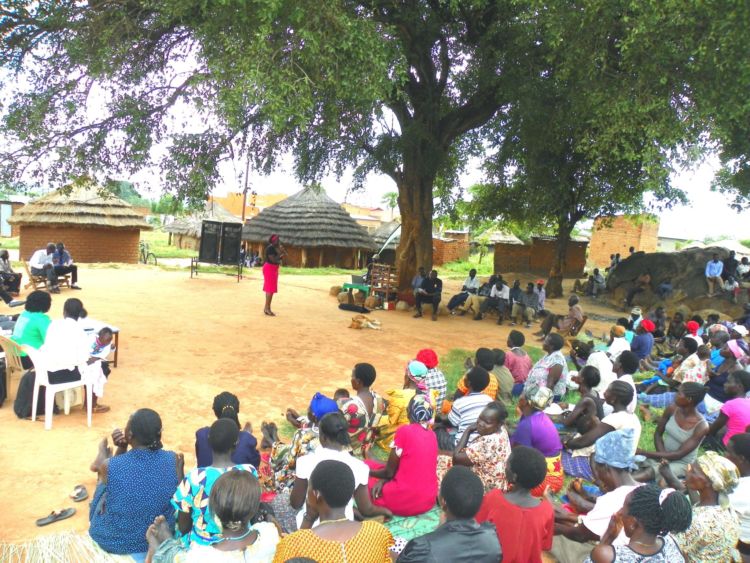
- Set a place, date, and time: Choose a spot that is comfortable and accessible (e.g., a community center, place of worship, school, or under a large village tree). Keeping sites convenient to participants is key.
- Create an inviting environment: Seating arrangements matter. To assure strong interaction, place seats in a circle or a "U" formation. Refreshments are a welcome sign of appreciation (though not absolutely mandatory).
- Encourages Participation and Commitment: When engaged in decision-making, people feel ownership, leading to sustainable behavior change.
- Promotes Sharing of Information: Different perspectives and experiences are exchanged, leading to a broader understanding of potential solutions.
- Facilitates Joint Assessment: Communities collaboratively assess their own needs and priorities, tailoring interventions effectively.
- Enhances Understanding of Communities: Stakeholders gain deeper insights into social dynamics, cultural values, and local resources.
- Identifies Key Partnerships: Highlights influential individuals and leaders who can drive change.
- Promotes Accountability: Communities actively contributing to solutions are more likely to hold themselves accountable for implementing them.
- Strengthens Social Cohesion: Builds trust, relationships, and unity among diverse members.
- Supports Local Problem-Solving: Participatory analysis ensures interventions address real community needs.
- Empowers Marginalized Voices: Provides a safe platform for underrepresented voices, addressing inequities.
- Builds Consensus and Collaboration: Open discussions lead to shared goals and collaborative action plans.
- Fosters Innovation and Creativity: Interaction encourages the sharing of creative ideas and innovative approaches.
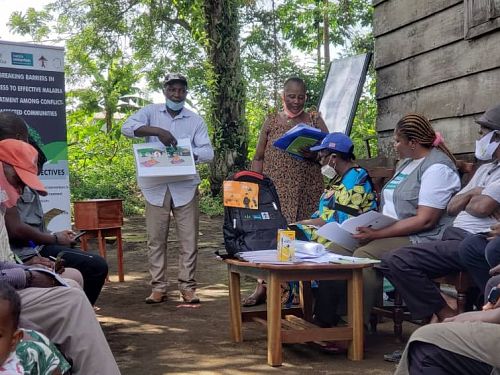
| No. | Challenge / Problem | Possible Solution |
|---|---|---|
| 1 | Dialogues are Time-Consuming Bringing diverse groups together and reaching consensus takes considerable time. | Proper Planning and Clear Objectives: Plan in advance, set a structured agenda, define the scope, and strictly allocate time for each topic. |
| 2 | Poor Preparation and Planning Lack of clear goals and materials leads to confusion and unproductive discussions. | Efficient Communication and Thorough Preparation: Share the purpose beforehand. Gather relevant materials and prep facilitators extensively. |
| 3 | Objectors Refusing to Participate Skepticism or lack of trust keeps key members away, hindering representativeness. | Inclusive Engagement: Engage objectors individually before the dialogue. Address concerns, emphasize benefits, and create a truly inclusive atmosphere. |
| 4 | Lack of Resources Insufficient finances or logistics limits the scope and reach of dialogues. | Provide Adequate Resources / Lobbying: Seek partnerships or sponsorships for venues and materials. Utilize cost-free community spaces. |
| 5 | Too Much (Unrealistic) Expectation Unmet heightened expectations lead to disappointment and discourage future participation. | Transparency and Clear Communication: Be very transparent about the dialogue's scope. Communicate exactly what can (and cannot) be achieved. |
| 6 | Lack of Unity and Cooperation Contentious participants derail open discussion and fail to find common ground. | Training and Team Building: Conduct team-building activities to promote unity. Highlight the absolute necessity of collaboration. |
| 7 | Hostility of Community Members Confrontational attitudes or deep-seated conflicts hinder respectful communication. | Establishing Trust: Use active listening. Address conflicts sensitively and foster a safe environment where everyone feels valued. |
| 8 | Insecurity and Geographic Location Safety threats or extreme isolation prevents members from attending freely. | Ensure Safety and Accessibility: Choose safe, central venues. Involve community leaders to assist with safe mobilization and selecting accessible locations. |
| 9 | Disease Endemics Fear of disease transmission deters gathering. | Health Precautions and Awareness: Implement safety measures (sanitizers, distancing). Integrate health education about the endemic into the dialogue. |
| 10 | Poor Infrastructure Inadequate facilities (seating, lighting, tech) impact the feasibility of the meeting. | Adaptation and Resourcefulness: Make do with available resources. Arrange comfortable seating in shaded outdoor areas if needed. Lobby for infrastructure support. |
EPISODE 8 WRAP-UP
Thanks to Student Nurse Amina's guidance, the village of Kiyunga hasn't just fixed a water spring; they have formed a permanent "Water and Health Organization." Through effective Community Dialogue, the youth, the elders, and the women's group sat in a "U" formation under the big mango tree and peacefully agreed on a monthly maintenance schedule. They debated, listened, and solved the problem together.
Amina's time in Kiyunga is coming to an end. But she is smiling. She knows she doesn't need to stay forever because the village no longer relies on her to tell them what to do. They have reached the ultimate pinnacle of community health. What is this final, golden stage? Join us for the grand finale in Episode 9: Community Empowerment!
thanks very much nurses revision for all these efforts and we are greatful. my concern is about questions and answer, please try to work on them , some have others does not including phc. otherwise thanks again.
Thank you so much, I was failing to understand this dialogue thing but how you have summarized everything 🤗
Really this is going to help me in my near coming UNMEB examinations. Thank you so much. Community dialogue has been made so simple.
Thank you very much, it has helped me with my course of community development and social justice