
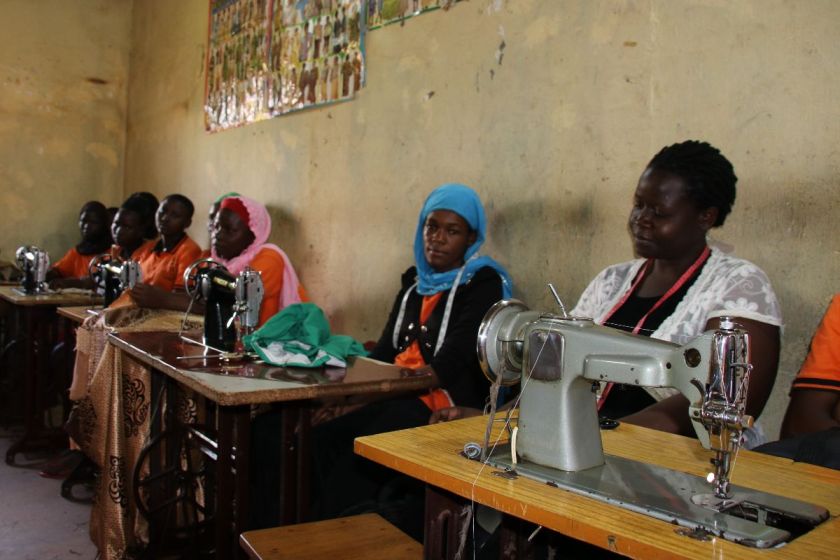
THE COMMUNITY HEALTH CHRONICLES: EPISODE 9 (FINALE)
Student Nurse Amina's time in Kiyunga Village has come to an end. Over the past few weeks, she guided the village through the Community Approach, Entry, Survey, Assessment, Diagnosis, Mobilization, Participation, and Organization. They fixed the water spring, established a health committee, and are now holding regular community dialogues to maintain hygiene.
As Amina packs her bags to return to nursing school, the LC1 Chairperson shakes her hand and says, "Thank you, Nurse Amina. But don't worry about us. If the pipes break again, we know how to buy the parts, fix them, and hold each other accountable. We are in charge of our health now."
Amina smiles. She has achieved the ultimate goal of community health. Welcome to our final episode: Community Empowerment.
Community empowerment refers to the process of enabling communities to increase control over their lives and the decisions that affect them.
It involves measures and actions designed to enhance autonomy, self-determination, and the ability of individuals and communities to represent their interests and act on their own authority. Empowerment follows Community Organization.
- Empowerment is the process through which people gain control over the factors and decisions that shape their lives.
- It is about increasing their assets, attributes, and capacities to access resources, build partnerships, establish networks, and have a voice in order to exert control.
- The concept emphasizes that individuals and communities are the agents of their own empowerment; external agents (like nurses) can only catalyze or facilitate the process.
- "Enabling" implies that people cannot be empowered by others; they can only empower themselves by acquiring more power in different forms. It assumes that people are their own assets.
- Community empowerment is more than involvement, participation, or engagement. It implies community ownership and action that explicitly aims at social and political change. It is a process of renegotiating power.
- Power is a central concept in community empowerment; health promotion invariably operates within the arena of a power struggle.
| Type | Description | Example |
|---|---|---|
| Economic Empowerment | Actions taken by individuals to generate wealth and improve their financial well-being. Focuses on acquiring resources, developing skills, and accessing opportunities for economic growth. | Example: A women's village group pools small weekly savings to buy a shared grinding mill, allowing them to process and sell maize at a higher profit margin. |
| Political Empowerment | Processes through which communities organize and participate in decision-making (civic engagement, advocacy, and exercising democratic rights to influence systems and policies). | Example: Villagers petitioning the local government to allocate part of the district budget specifically for stocking anti-malarial drugs at their local HC II. |
| Cultural Empowerment | Pertains to language, food, clothing, religion, customs, and history. Preserving and celebrating cultural heritage, promoting diversity, and ensuring equal recognition. | Example: Re-integrating safe, traditional herbal remedies into community health education, validating local indigenous knowledge alongside modern medicine. |
| National Empowerment | A nation’s ability to make independent decisions and exercise sovereignty over its affairs. Asserting self-governance and shaping national policies. | Example: A country developing its own domestic pharmaceutical manufacturing plants to reduce reliance on imported essential drugs. |
| Societal Empowerment | Arises from the fair and equitable treatment of all members of a society. Creating inclusive social structures, eliminating discrimination, and ensuring equal opportunities. | Example: Ensuring that the disabled community members and ethnic minorities in the village have equal voting rights on the new water committee. |
In community health and social work, "highly sensitive people" often refers to the most vulnerable, marginalized, or traumatized members of the community. These may include individuals dealing with severe poverty, victims of domestic abuse, people living with chronic mental health struggles (like severe anxiety or depression), or those who feel entirely voiceless and easily overwhelmed by external stressors. Because they process stress deeply, empowering them requires a gradual, sensitive, and phased approach.
Empowerment is a deeply personal journey. For highly sensitive individuals in a community, this journey typically follows these five stages:
- Stage One: Survival Mode – Life’s Struggles:
In this stage, we find ourselves just trying to get through each day amidst the overwhelming stress, anxiety, and depression that often accompany being highly sensitive. It can feel like a constant battle, and we may experience a great deal of suffering during this phase.
- Example: A young widow in the village who is struggling to feed her children. She feels completely isolated, suffers from severe anxiety, and hides in her home, avoiding community meetings because she is overwhelmed by the burden of her daily survival.
- Stage Two: The Spark – Opening New Doors:
Something starts to shift within us during this stage. There is often a spark, a glimmer of hope, that propels us to take action and explore new paths. It’s as if we’re opening a door to a different way of living and experiencing life. We begin to sense that positive changes are possible.
- Example: A Village Health Team (VHT) member visits her home, listens to her without judgment, and invites her to a small, safe women's support group. She attends, realizes she is not alone in her struggles, and feels a tiny spark of hope for the first time.
- Stage Three: Commitment – Nurturing Self-Care:
In this stage, we learn the importance of caring for ourselves without feeling guilty about it. It becomes an act of wellness and balance. We consciously choose to spend more time with people who bring positivity and light into our lives, while reducing our interactions with those who drain our energy. During this phase, we feel inspired and dedicated to our own self-care.
- Example: She commits to attending the weekly support group because it makes her feel safe. She starts setting boundaries, such as saying "no" to a toxic relative who constantly demands her limited money, and focuses her remaining energy on keeping herself and her children healthy.
- Stage Four: Becoming Whole – Surrounding Yourself with Positivity:
In this stage, we prioritize and consciously invest our time in relationships with people who make us feel good about ourselves, who energize us, and whom we admire. We start to distance ourselves from individuals who may have a negative impact on our well-being or drain our energy.
- Example: She partners with two other optimistic, motivated women from her support group to start a small community garden or soap-making business. She completely surrounds herself with their positive, forward-looking energy and ignores village gossip.
- Stage Five: Empowered – Embracing Our Gifts:
This is the stage where we aim to see the majority of highly sensitive people reach. At this point, we finally tap into the unique gifts that come with being highly sensitive. We gain the ability to make informed decisions, view things from a positive perspective, and let go of unnecessary worries and paranoia.
- Example: She is now successfully running her small business and providing for her family. Because of her past struggles and high empathy, she now uses her deep sensitivity as a gift to mentor newly vulnerable women in the village. She no longer feels like a victim; she is an empowered community leader.
- Building Local Capacity and Leadership: Providing training, education, and tools to individuals so they can take control of their own development. This makes communities self-sufficient.
- Creating a Global Network: Establishing networks of individuals/organizations dedicated to investing in community development, facilitating the sharing of best practices.
- Scaling Up Successful Community Development: Expanding the understanding of successful approaches. By documenting and sharing models, efforts aim to replicate and scale up these initiatives in other communities.
- Valuing People: Recognizing and valuing the contributions and experiences of individuals. Treating people with respect, dignity, and fairness.
- Shared Leadership: Community members actively participate in decision-making, promoting inclusivity and ownership.
- Shared Goals and Directions: Involving members in defining objectives and collectively working towards them.
- Trust: Building trust among members and leaders creates an environment of openness and transparency.
- Information and Decision-Making: Providing relevant information and resources to facilitate informed decision-making.
- Delegation of Authority: Delegating authority and providing opportunities for members to take on leadership roles.
- Feedback and Communication: Regular, meaningful feedback on progress and challenges keeps members engaged and motivated.
- Shared Values: A sense of belonging to a unified entity.
- Access to Essential Services: Equitable access to communal services (water, education, roads).
- Effective Communication: Open and effective channels.
- Confidence: Cultivating a positive attitude and self-motivation.
- Information Sharing: Equipping members with knowledge.
- Political and Administrative Context: Collaborative political leaders promote empowerment.
- Leadership: Strong, effective leaders are pivotal.
- Networking and Collaboration: Fostering collaboration, as isolation undermines empowerment.
- Organization and Unity: Encourages working together towards a common goal.
To truly catalyze empowerment, facilitators should focus on:
- Self-Confidence: Building self-belief among members to take charge.
- Exposure: Providing exposure to new ideas and experiences.
- Independence: Encouraging autonomous decision-making and action.
- Empowering Processes: Implementing inclusive, participatory problem-solving.
- Express Gratitude: Recognizing efforts with simple acts of gratitude to reinforce their value.
- Facilitate Connection and Freedom: Offering opportunities to connect, while allowing freedom to explore their own paths.
- Identify Potentials: Helping members harness their unique strengths.
- Active Listening and Feedback: Creating a culture where voices are truly heard.
- Recognize and Appreciate: Publicly acknowledging efforts and highlighting success.
- Mentorship: Supporting members in recruiting and mentoring new leaders for sustainability.
- Networking and Influential Connections: Opens doors to expand networks and meet influential people who can contribute to community growth.
- Socioeconomic Influence: Empowered communities advocate for their rights, influencing national social and economic policies to improve their conditions.
- Fosters Teamwork: Promotes a sense of collaboration toward common goals.
- Resource Contribution: Communities actively contribute necessary resources (funds, labor, time) to implement specific health actions.
- Community Involvement: Encourages active involvement in decision-making processes.
- Increased Participation: Individuals feel motivated to actively engage in activities.
- Trust and Loyalty: Strengthens trust as members feel supported and valued.
- Self-Awareness and Confidence: Members realize their own capabilities and potential to create change.
- Enhanced Productivity: Individuals are motivated to contribute their skills and knowledge efficiently.
- Expanded Assets and Capabilities: Leads to the growth of community assets, allowing them to become more self-reliant, resilient, and resourceful.
Quick Quiz
Community Empowerment Quiz
Community
Privacy: Your details are used only for quiz tracking and certificates.
Community Empowerment Quiz
Community
Preparing questions...
Choose your answer and keep your streak alive.
Great effort.
Here is your quick performance summary.
this has helped me understand more about community empowerment
Very good notes for learners
Precise and understandable notes.
Thank you for helping us
There is no steps
Good and summerized work
Good notice easy to understand
God bless 🙏🙏🙏 you thanks
It doesn’t have steps?
It’s good.
Thank you for the work
Requesting for the challenges of community empowerment and roles of a midwife in community empowerment