
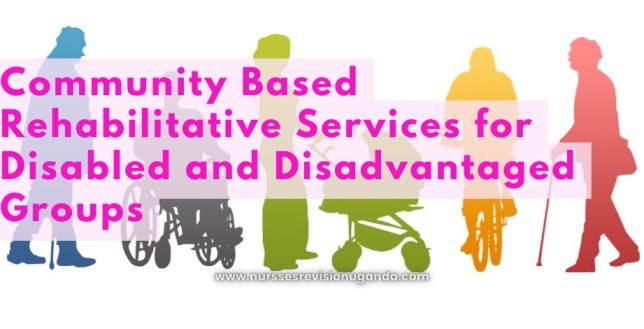
Community-based rehabilitation (CBRS) is an approach to rehabilitation that emphasizes the integration of people with disabilities into their local communities.
CBRS programs are designed to provide a range of services that improve health outcomes, increase social participation, and enhance the quality of life. The services are typically provided by trained professionals in a variety of settings, including clinics, schools, and community centers.
Community-based rehabilitative services play a crucial role in supporting disabled and disadvantaged individuals who face various obstacles in accessing essential healthcare, education, and employment opportunities. These services are essential as they contribute to the overall well-being and quality of life of individuals in several significant ways:
- Accessibility: CBRS focus on delivering services within local communities, making them more accessible to those who may have difficulty traveling or reaching specialized facilities. By bringing rehabilitative services closer to individuals in need, CBRS ensure that crucial support is available to them without the added burden of long-distance travel or transportation issues.
- Comprehensive Care: They offer a holistic approach to rehabilitation by addressing not only physical impairments but also emotional, psychological, and social aspects. They provide a range of interventions, including therapy, counseling, assistive devices, and skill-building programs, tailored to meet diverse needs.
- Social Inclusion: CBRS promote social inclusion by facilitating the active participation and integration of disabled and disadvantaged individuals into their communities. They encourage the formation of social connections, friendships, and support networks, reducing the risk of social isolation and fostering a sense of belonging.
- Empowerment: By providing individuals with the tools, resources, and skills necessary to overcome barriers, CBRS empower them to take control of their lives and achieve their goals. They focus on enhancing self-confidence, independence, and self-advocacy.
- Preventative Approach: Emphasize early intervention and prevention, aiming to address disabilities and disadvantages at an early stage. Identifying challenges and providing timely support can prevent further health deterioration, reduce the need for extensive interventions, and enhance long-term outcomes.
- Cost-Effectiveness: CBRS can be more cost-effective compared to institutionalized or centralized services. By utilizing local resources, collaborating with community organizations, and leveraging existing infrastructure, these services optimize resource utilization and ensure efficient service delivery.
- Advocacy and Awareness: They play a vital role in advocating for the rights of disabled and disadvantaged individuals by raising awareness about disability issues, promoting inclusivity, and challenging societal stigmas and stereotypes.
- Physical Disability: Individuals with impairments affecting mobility or physical functioning (e.g., cerebral palsy, spinal cord injuries, amputations, muscular dystrophy).
- Intellectual and Developmental Disabilities: Individuals with cognitive impairments or developmental disorders (e.g., Down syndrome, autism spectrum disorder, learning disabilities).
- Sensory Disabilities: Disabilities affecting one or more senses (e.g., deaf or hard of hearing, blind or visually impaired, sensory processing disorders).
- Mental Health Disabilities: Conditions impacting daily functioning and well-being (e.g., schizophrenia, bipolar disorder, depression, anxiety disorders, PTSD).
- Socioeconomic Disadvantage: Individuals or communities facing economic challenges and limited access to resources (e.g., low-income families, individuals living in poverty, homeless populations).
- Gender and Minority Groups: Women, girls, and minority populations facing specific challenges, discrimination, and cultural barriers.
- Refugees and Displaced Populations: Individuals forcibly displaced due to conflict, persecution, or natural disasters requiring rehabilitation to overcome physical/psychological traumas.
- Victims of Violence and Abuse: Individuals who have experienced domestic violence, sexual assault, or other forms of abuse requiring support to address physical injuries and mental health consequences.
- Limited Access to Health Care: Physical accessibility issues, inadequate medical infrastructure, lack of specialized care, or financial constraints resulting in delayed diagnosis and poorer health outcomes.
- Stigma and Discrimination: Negative attitudes, stereotypes, and exclusion lead to social isolation, lower self-esteem, and restricted opportunities for education, employment, and social participation.
- Inadequate Educational Opportunities: Physical barriers in schools, limited inclusive education, discriminatory practices, and negative attitudes hinder personal development and employment prospects.
- Limited Employment Opportunities: Discriminatory hiring, lack of reasonable accommodations, and limited vocational training contribute to higher unemployment rates and poverty.
- Financial Constraints: Limited financial resources and higher healthcare expenses impede the ability to access essential services and assistive devices.
- Lack of Accessibility: Inaccessible infrastructure, transportation, public spaces, and communication systems restrict mobility and independence.
- Limited Social Support: Lack of social support networks exacerbates feelings of isolation and hinders access to information and resources.
| Service Type | Description and Focus |
|---|---|
| Physical Therapy | Focuses on improving physical function, mobility, and overall well-being using exercises, manual therapy, and assistive devices to improve strength, flexibility, balance, and coordination. |
| Occupational Therapy | Aims to enhance ability to engage in daily activities (self-care, work, education, leisure). Provides training in adaptive techniques, recommends assistive devices, and modifies environments. |
| Speech and Language Therapy | Focuses on improving communication skills, language, and cognitive abilities, as well as addressing swallowing difficulties for safe and efficient feeding. |
| Psychological Services | Interventions to support mental health and emotional well-being (counseling, psychotherapy, CBT) tailored to address depression, anxiety, trauma, and adjustment disorders. |
| Vocational Rehabilitation | Supports finding and maintaining employment through vocational assessment, career counseling, job training, job placement assistance, and workplace accommodations. |
| Assistive Technology | Devices, equipment, and software that enable individuals to perform tasks and enhance independence (e.g., mobility aids, hearing aids, visual aids). |
| Social and Community Integration | Programs focusing on promoting social inclusion, community participation, and empowerment (support groups, peer mentoring, awareness campaigns). |
- Collaboration with Stakeholders: Partnerships between healthcare providers, educators, employers, community organizations, and individuals.
- Person-Centered Approach: Prioritizing the individual’s needs, preferences, and goals with active engagement in their own rehabilitation.
- Multidisciplinary Team: Interdisciplinary approach involving physicians, therapists, psychologists, social workers, and educators for comprehensive assessment and support.
- Integration with Healthcare Services: Close collaboration and coordination of services between rehabilitation providers and existing healthcare systems.
- Community Involvement and Empowerment: Actively engaging community members and families to promote social inclusion and challenge stigmas.
- Training and Capacity Building: Enhancing knowledge and skills of service providers, community members, and families.
- Monitoring and Evaluation: Mechanisms to measure the quality, outcomes, and impact of services to ensure accountability.
- Accessibility and Inclusivity: Ensuring physical accessibility of facilities, assistive devices, and addressing cultural/linguistic barriers.
- Advocacy and Policy Support: Promoting rights, inclusion, and policy changes for equal opportunities.
| Barrier | Strategies to Overcome |
|---|---|
| Limited Funding Opportunities |
1. Seek sustainable funding sources through grants, partnerships, and fundraising efforts. 2. Advocate for increased investment by engaging policymakers and stakeholders. |
| Lack of Trained Professionals |
1. Expand training programs for rehabilitation professionals. 2. Offer incentives and scholarships to attract professionals to CBRS programs. |
| Limited Awareness and Advocacy |
1. Conduct awareness campaigns to educate target groups about available services. 2. Collaborate with community organizations, media, and advocacy groups. 3. Engage in advocacy to ensure CBRS is supported by policymakers. |
| Limited Integration with Systems |
1. Establish partnerships with government agencies and NGOs to integrate CBRS into health/social systems. 2. Advocate for policy changes to ensure coordination of services. |
| Innovative Funding Solutions |
1. Explore alternative funding models (social impact bonds, public-private partnerships, crowdfunding). 2. Develop sustainable business models generating revenue through fee-for-service or specialized programs. |
| Training Programs for Professionals |
1. Expand access to training programs, including specialized CBRS courses. 2. Collaborate with educational institutions to develop training opportunities. |
- Assessment and Care Planning: Perform comprehensive physical, psychological, and social assessments. Collaborate with the team to develop personalized care plans.
- Health Promotion and Education: Provide health education on managing chronic conditions, preventing complications, self-care, and adaptive techniques.
- Rehabilitation Interventions: Administer medications, perform wound care, manage pain, ensure proper use of assistive devices, and teach caregivers.
- Monitoring and Evaluation: Monitor progress, assess intervention effectiveness, evaluate functional abilities, and modify care plans to optimize outcomes.
- Psychosocial Support: Provide emotional support and counseling, facilitate support groups, and guide access to community resources.
- Advocacy and Case Management: Advocate for individuals' rights and collaborate with organizations to address social determinants of health and promote inclusion.
- Health Monitoring and Preventive Care: Monitor health status, conduct screenings, coordinate immunizations, and prevent secondary complications.
- Health System Navigation: Assist individuals in navigating the healthcare system and coordinate care with other providers to ensure continuity.
While the foundational concept of Self Help Groups (SHGs) is a global phenomenon for economic and social empowerment, in Uganda, these are most commonly recognized and actively operated as Village Savings and Loan Associations (VSLAs), Women's Groups, or SACCOs (Savings and Credit Cooperative Organizations) at the grassroots level. They play a massive role in poverty alleviation, women's empowerment, and community health financing in Ugandan communities.
A Self-Help Group (SHG) is a village-based financial and social committee usually composed of 10–20 local women or men. Also known as mutual help or support groups, they are groups of people who provide mutual support for each other.
In many developing nations, including Uganda, SHGs are an innovative organizational setup for community welfare. They activate small savings on a weekly or monthly basis, which is then pooled to provide credit to members in times of need.
- Building mutual trust between the promoting organization (like an NGO or health center) and the rural poor through regular contact and actual efforts.
- Creating confidence for the economic independence of rural people, especially women.
- Providing easy access to credit, freeing vulnerable groups from exploitative money lenders.
- Creating a social safety net that can be leveraged for health emergencies (e.g., paying for transport to a referral hospital or maternal care).
- The ideal size of an SHG is 10 to 20 members.
- The group need not necessarily be officially registered initially (though in Uganda, many eventually register with the local Community Development Officer - CDO).
- The group should meet regularly (weekly or monthly).
- Members usually have the same social and financial background.
- The group is usually homogenous, consisting of either only men or only women (women-led groups are highly prevalent and successful).
- Meetings are held for solving problems, not just for financial transactions.
- They create a common fund by contributing their small savings on a regular basis.
- Loaning is mainly based on mutual need and trust.
- Savings Mechanism: Provide a structured way to save small amounts regularly.
- Emergency Support: To meet their emergency needs (health, bereavement, school fees).
- Credit Access: To meet the credit needs of the poor for income-generating activities.
- Social Status: Enhancing the social status of members within their households and communities.
- Independence: Facilitate members to become financially and socially independent.
- Conflict Resolution: To solve conflicts through group guidance and mutual discussion.
- Decision Making: Developing and encouraging the decision-making capacity of members.
- Building Trust: Build mutual trust and confidence between formal bankers/institutions and the rural poor.
- Social Forum: Providing a platform for members to discuss their social, health, and economic problems.
- Literacy and Awareness: Providing literacy, increasing general awareness, and equipping the poor with basic skills required for understanding financial dealings.
SHGs drive comprehensive community development. The key advantages form a progressive chain of empowerment:
Simple and clear books for all transactions must be maintained by the SHGs. If no member is able to maintain the books, someone (like a literate youth or community facilitator) is engaged by the group for this purpose.
| Type of Register | Purpose |
|---|---|
| Membership Register / Minute Book | The proceedings of meetings, the rules of the group, names of the members, and attendance are recorded in this book. |
| Savings and Loan Register | Shows the savings of members separately and of the group as a whole. Details of individual loans, repayments, interest collected, and balance are entered here. |
| Weekly or Stock Register | Summary of receipts and payments on a weekly/monthly basis. Updated at every meeting. |
| Members' Pass Books | Individual members’ passbooks encourage regular savings and provide transparency for the individual. |
Several community figures and organizations help mobilize and train these groups:
- Social Workers & Community Development Officers (CDOs): Government officials who guide registration and training.
- Health Workers & Village Health Teams (VHTs): Often use SHGs to mobilize communities for health interventions (immunization, maternal health).
- Village Level Leaders: Local Council (LC1) chairpersons.
- Non-Governmental Organizations (NGOs): Entities like BRAC, World Vision, and Care International frequently facilitate group formation and provide seed capital or training.
- Banks and Microfinance Institutions: Help transition mature SHGs/VSLAs into formal banking.
- Facilitators / Trainers: Teach bookkeeping, group dynamics, and business skills.
Women and men in SHGs use their pooled loans to start or expand livelihood activities. In the context of local communities, these frequently include:
- Tailoring and Garment Making: Purchasing sewing machines to make school uniforms or local attire (Kitenge/Gomesi).
- Art and Craft (Weaving & Bead Making): Producing traditional baskets (e.g., Nubian baskets), mats, and recycled paper jewelry which are popular in Uganda.
- Agriculture and Livestock Rearing: Poultry farming, piggery, goat rearing, or purchasing seeds/fertilizer for collective farming.
- Retail and Vending: Starting small retail shops (dukas), pavement vending, hawking, or selling produce at the local market.
- Catering and Food Processing: Making local snacks, baking, or commercial cooking for community events.
- Soap and Detergent Making: Manufacturing liquid soap or bar soap for local sale.
- Textile Arts: Embroidery, batik printing, and natural dyeing of fabrics.
For a Community Health Nurse, SHGs are an invaluable asset. They act as ready-made, organized audiences for health education (e.g., family planning, sanitation, nutrition). Furthermore, the financial empowerment provided by SHGs directly impacts health by enabling families to afford better nutrition, clean water, and timely medical care, effectively addressing the social determinants of health.
The government plays a crucial role in ensuring the sustainability, scale, and impact of Self Help Groups. In countries like Uganda, where these groups frequently operate as Village Savings and Loan Associations (VSLAs) or SACCOs, government intervention can drastically amplify their success through the following mechanisms:
- Provision of Seed Capital and Grants: The government can inject revolving funds or seed capital into registered groups to boost their lending capacity. Contextual Example: Programs in Uganda such as the Parish Development Model (PDM), Emyooga, and the Uganda Women Entrepreneurship Programme (UWEP) specifically target these groups for wealth creation.
- Capacity Building and Training: Deploying government extension workers, such as Community Development Officers (CDOs) and agricultural extension staff, to train group members in financial literacy, basic bookkeeping, leadership, and modern farming or business techniques.
- Legal Recognition and Streamlined Registration: Simplifying the registration process at the local government (Sub-county or District level) so that SHGs can gain legal identity. This allows them to open formal bank accounts and protects them from fraud.
- Linkage to Formal Financial Institutions: Acting as a guarantor or facilitating linkages between grassroots SHGs and formal commercial banks or microfinance institutions, allowing them to access larger credit facilities at subsidized interest rates.
- Market Access and Infrastructure: Providing infrastructure such as community market spaces, improved rural roads, and organizing regional exhibitions/trade fairs where SHGs can sell their locally manufactured products (e.g., crafts, soap, agricultural produce).
- Integration with Health and Social Programs: Utilizing established SHGs as primary vehicles for government public health campaigns. The government can route health insurance initiatives (like Community Health Insurance Schemes), maternal health education, and sanitation drives directly through these highly organized and receptive community groups.
Quick Quiz
CBRS & Selfhelp Quiz
Community
Privacy: Your details are used only for quiz tracking and certificates.
CBRS & Selfhelp Quiz
Community
Preparing questions...
Choose your answer and keep your streak alive.
Great effort.
Here is your quick performance summary.
Thank you for that great work