Nurses Revision

Uncategorised

EBOLA: HAEMORRHAGIC FEVERS

EBOLA: HAEMORRHAGIC FEVERS

HAEMORRHAGIC FEVERS

Ebola and Marburg

  • Ebola and Marburg are severe zoonotic multisystem febrile diseases caused by RNA viruses. They are notifiable diseases.

Ebola Virus:

  • Morphology: The Ebola virus is filamentous, often resembling a \”U\” or \”S\” shape. It measures approximately 2 μm (micrometers) in length and 70-80 nm (nanometers) in diameter. It has an internal structure (nucleoprotein core) enclosed within an external envelope studded with numerous glycoprotein spikes.
  • Multiplication: The virus replicates by budding from its internal structures.

Types of Ebola Viruses:

Ebola Virus (EBOV): This is the species most commonly associated with severe outbreaks in humans.

  • EBO-Zaire (EBO-Z): This subtype has a high fatality rate, averaging around 89%.
  • EBO-Sudan (EBO-S): This subtype has a fatality rate of 41.65%, although this can vary depending on factors like treatment and location.

Vectors:

  • Mosquitoes and Termites: While there have been theories suggesting these insects could play a role in transmission, there is no definitive evidence to support their role as vectors for Ebola.
  • Bats: The most likely primary reservoir for Ebola viruses. They can harbor the virus without showing symptoms and transmit it to other animals or humans.
  • Dogs: While some sources mention dogs, there is no clear evidence to suggest they are a significant reservoir for Ebola.

Transmission:

Human-to-Human:

  • Direct contact with infected bodily fluids, such as blood, vomit, feces, urine, and saliva.
  • Contact with contaminated materials like clothing, bedding, needles, and medical equipment.
  • Sexual contact with a survivor who is still shedding the virus in semen (this can last for months after recovery).

Animal-to-Human: Contact with infected animals (particularly primates like chimpanzees and gorillas) or their bodily fluids.

Mosquitoes: As mentioned above, mosquitoes are not considered reliable vectors for Ebola virus transmission.


Pathology:

The Ebola virus affects multiple tissues throughout the body, not just a specific organ. It causes widespread damage, including:

  • Necrotic Lesions: The virus leads to cell death (necrosis) in various organs, affecting their functionality.
  • Immune System Suppression: Ebola weakens the immune system, making individuals vulnerable to other infections.

Incubation Period:

  • Primary Infection: The incubation period typically ranges from 2 to 21 days after exposure.
  • Secondary Infection: For transmission from human to human, the incubation period is the same, 2 to 21 days.

Causes:

Ebola Virus: The causative agent is the Ebola virus, a member of the Filoviridae family. There are five known species of Ebola virus:

  • Zaire ebolavirus (responsible for the most severe outbreaks)
  • Sudan ebolavirus
  • Reston ebolavirus (not known to cause disease in humans)
  • Taï Forest ebolavirus
  • Bundibugyo ebolavirus

Marburg: Marburg virus


Risk Factors:

  • Communities Around Game Parks: Proximity to wildlife increases the risk of exposure.
  • Endemic Areas: Regions with a history of EVD outbreaks.
  • Cultural Practices: Burial rituals involving close contact with the deceased can facilitate transmission.
  • Poor Infection Control: Inadequate sanitation and hygiene practices in healthcare settings can increase the spread.
  • History of Exposure: Contact with infected individuals within 2-21 days prior to symptom onset (e.g., sexual partners, breastfeeding mothers).
  • Contact with Infected Animals: Handling infected animals (like monkeys, bats, and infected game meat).


\"\"

Clinical Features:

Early Signs (Non-Specific):

  • Sudden Fever: A rapid onset of high fever (often exceeding 101.5 °F / 38.6 °C).
  • Weakness: General feeling of weakness and exhaustion.
  • Headache: Intense headache.
  • Muscle Pain: Pain in muscles and joints.
  • Loss of Appetite: Decreased appetite or inability to eat.
  • Conjunctivitis: Inflammation of the conjunctiva (white part of the eye).

Late Signs:

  • Diarrhea: Profuse diarrhea, sometimes with blood.
  • Vomiting: Severe vomiting.
  • Mucosal and Gastrointestinal Bleeding: Bleeding from the nose, gums, eyes, and rectum.
  • Chest Pain: Pain in the chest area.
  • Respiratory Distress: Difficulty breathing.
  • Circulatory Shock: Low blood pressure and impaired blood flow.
  • CNS Dysfunction: Confusion, seizures, and coma.
  • Miscarriage in Pregnancy: EVD can cause miscarriage or stillbirth in pregnant women.
  • Elevated AST and ALT: Elevated levels of liver enzymes, indicating liver damage.
  • Kidney Injury: Damage to the kidneys, potentially leading to kidney failure.
  • Electrolyte Abnormalities: Imbalances in electrolytes (minerals like potassium and sodium) in the body.

Other clinical presentations include; 

  • Sudden Onset: Symptoms usually appear abruptly.
  • Severe Headache: Intense headache is a common initial symptom.
  • Myalgia and Fever: Muscle pain (myalgia) and high fever (often exceeding 38.5 °C).
  • Conjunctival Inflammation: Inflammation of the conjunctiva (white part of the eye).
  • Gingival Bleeding: Bleeding from the gums.
  • Sore Throat: Sore throat with associated chest pain.
  • Abdominal Pain: Pain in the abdomen.
  • Nausea, Vomiting, and Diarrhea: These symptoms are prominent features of EVD, with diarrhea often being profuse and watery.
  • Signs of Dehydration: Dehydration can develop due to fluid loss from vomiting and diarrhea.
  • Severe Bleeding: Internal and external bleeding may occur from the gastrointestinal tract, gums, nose, and other orifices. This typically develops between the 5th and 7th days.
  • Morbiliform Rash: A rash similar to measles may appear on the 7th day.
  • Neurological Manifestations: Neurological complications such as psychosis and hemiplegia (weakness or paralysis on one side of the body) can occur.
  • Death: Death often occurs around the 9th day, but can happen between the 2nd and 21st days.

Note: Hemorrhage is not always a prominent feature of EVD. It\’s important to remember that EVD symptoms can vary significantly.

Differential Diagnosis:

  • Malaria: A parasitic disease that also causes fever, headache, and muscle aches.
  • Meningitis: Inflammation of the membranes surrounding the brain and spinal cord.
  • Shigellosis: A bacterial infection causing diarrhea, abdominal cramps, and fever.
  • Typhoid Fever: A bacterial infection causing high fever, headache, and constipation.
  • Anthrax: A bacterial infection causing skin lesions, fever, and respiratory problems.
  • Sepsis: A serious bacterial infection causing fever, chills, and rapid heart rate.
  • Viral Hepatitis: Inflammation of the liver caused by viruses like hepatitis A, B, or C.
  • Dengue Fever: A viral infection transmitted by mosquitoes, causing fever, headache, and muscle pain.

Investigations:

Blood Sample for Specific Testing: Blood samples from suspected EVD cases should be collected by trained healthcare professionals wearing proper PPE.

  • Laboratory Testing: The blood sample needs to be sent to a reference laboratory for specific tests to identify the Ebola virus.
  • Real-Time PCR: This is the preferred method for detecting Ebola virus.
  • Antigen and Antibody Detection: ELISA (enzyme-linked immunosorbent assay) and other antibody tests can identify Ebola virus antigens and antibodies.

Postmortem: If an individual dies from EVD, postmortem examination is critical for confirmation and to prevent further spread.

Notification: Immediately notify the district surveillance focal person if you suspect a case of EVD.


Management

Management Aims:

  • Fluid Replacement: Maintain adequate hydration to compensate for fluid loss.
  • Prevention of Spread: Isolate the patient and implement strict infection control measures.
  • Conservation of Energy: Provide rest and supportive care to conserve energy.
  • Symptom Relief: Administer medications to manage symptoms like fever, pain, and vomiting.

Specific Management:

1. Admission: Admit the patient to an isolated room in a medical ward, providing complete bed rest.

  • Bed Preparation: Use a freshly prepared bed, with a comfortable position for the patient (supine or semi-recumbent depending on their condition).

2. Protection:

  • Handwashing: Strict handwashing before and after attending to the patient.
  • Isolation: Isolate the patient in a designated room, and implement barrier nursing techniques. Healthcare workers and patient attendants should wear gowns, gloves, goggles, and gumboots to prevent contact with bodily fluids.
  • Identification Tag: Place an \”INFECTIOUS\” tag on the door to alert others about the infectious nature of the room.

3. Fluid Replacement: Administer intravenous fluids (N/S, RL, and Dextrose 5%) according to the doctor\’s prescription.

4. Hygiene:

  • Patient Hygiene: Maintain cleanliness of the patient\’s skin, secretions, and stool. Disinfect with bleach solutions before disposal.
  • Bed Pans: Scrub bed pans thoroughly with strong detergent, rinse, and dry.
  • Patient\’s Orifices: Wash and dry the patient\’s orifices. Apply perineal pads if needed for profuse diarrhea.
  • Linens: Disinfect linens in a bleach solution for at least 6 hours. Label and transport them in \”infected linen\” bags to be sluiced, boiled, dried, and ironed.
  • Room Disinfection: Mop the room, scrub the floors and walls, disinfect lockers, and wash and boil patient utensils for at least 10 minutes.
  • Refuse Disposal: Place food and hospital refuse in polythene bags and incinerate.

5. Diet: Provide a fluid diet in the acute stage, primarily through IV fluids and oral fluids as much as possible.

6. Terminal Disinfection: Thoroughly disinfect the room and all contaminated materials after the patient is discharged.

7. Notification: Report the case to health authorities to inform the public health system about the outbreak.

Health Education:

  • Patient Attendants: Educate patient attendants about the infection, its mode of transmission, and prevention measures.
  • General Public: Inform the general public about the disease, its signs and symptoms, and preventative measures.
  • Patient Care: Ensure the patient feels supported and understood, preventing isolation and stigma.

Prevention:

  • Avoid Contact: Minimize contact with the patient\’s blood and secretions.
  • Personal Protective Equipment: Wear proper PPE (gowns, gloves, masks, eye protection) when providing care.
  • Safe Burial Practices: Use safe burial practices to prevent transmission during funerals.
  • Vaccination: The Ebola vaccine is available and should be considered for high-risk individuals.
  • Isolation: Isolate infected individuals in designated Ebola treatment centers.
  • Contact Tracing: Identify and monitor individuals who have come into contact with infected persons.

Prevention Complications:

  • Shock: Monitor for signs of shock (low blood pressure, rapid heart rate, weakness, and cool, clammy skin).
  • Organ Failure: Monitor for signs of organ failure (e.g., jaundice for liver failure, decreased urine output for kidney failure).
  • Disseminated Intravascular Coagulation (DIC): Be aware of the signs of DIC (bleeding from multiple sites, bruising, and difficulty controlling bleeding).
  • Meningitis: Monitor for signs of meningitis (stiff neck, headache, fever).
  • Encephalitis: Monitor for signs of encephalitis (confusion, seizures).
  • Secondary Infections: Monitor for signs of secondary infections (fever, cough, difficulty breathing).
  • Psychological Trauma: Provide psychological support to patients and their families to address potential psychological trauma.

EBOLA: HAEMORRHAGIC FEVERS Read More »

Brucellosis

Brucellosis

Brucellosis (Undulant Fever, Malta Fever, Abortus Fever)

Brucellosis is a zoonotic bacterial infection of acute onset, commonly known as undulant fever, Malta fever, or abortus fever. 

It\’s primarily an occupational disease among people working with infected livestock or associated fresh animal products. This includes butchers, farmers, abattoir workers, and vendors of contaminated roasted meat (muchomo).

Incubation Period:

The incubation period for brucellosis is typically 2-4 weeks, but can range from 1 to 8 weeks.

Forms of Transmission:

  • Direct Contact: Contact with infected animals, particularly during handling, slaughtering, or birthing, can lead to transmission.
  • Ingestion: Consuming unpasteurized milk, cheese, or other dairy products from infected animals is a common route of transmission.
  • Inhalation: Inhaling contaminated aerosols, particularly in settings where animal products are processed or handled, can lead to infection.
  • Accidental Exposure: Laboratory workers or those handling animal products in agricultural settings may be at risk of accidental exposure.

Routes of Transmission:

  • Occupational Exposure: Farmers, veterinarians, slaughterhouse workers, and laboratory workers are at increased risk of exposure due to their close contact with infected animals.
  • Consumption of Contaminated Products: Consuming unpasteurized milk, cheese, or other dairy products from infected animals is a common route of transmission.
  • Accidental Exposure: Accidental exposure to contaminated materials or aerosols, particularly in laboratory settings, can lead to infection.


Causes/Aetiology:

Brucella Species: The most common species of Brucella that infect humans are:

  • Brucella abortus (cattle)
  • Brucella melitensis (goats and sheep)
  • Brucella suis (pigs)
  • Brucella canis (dogs)


\"\"

Clinical Features:

Brucellosis is known for its diverse range of symptoms, which can appear anywhere from a few days to several weeks after infection. Common features include:

  1. Fever: High-grade fever, often accompanied by chills and sweats.
  2. Fatigue and Weakness: Profound fatigue, lethargy, and muscle aches.
  3. Headache and Stiff Neck: Persistent headache, often accompanied by neck stiffness.
  4. Arthritis and Muscle Pain: Pain and inflammation in joints, particularly in the spine and large joints.
  5. Sweating: Excessive sweating, particularly at night.
  6. Weight Loss: Unintentional weight loss due to poor appetite and decreased food intake.
  7. Depression: Emotional disturbances, including depression, anxiety, and irritability.
  8. Splenomegaly and Hepatomegaly: Enlargement of the spleen and liver.
  9. Orchitis: Inflammation of the testicles in men.
  10. Endocarditis: Infection of the heart valves.
  11. Meningitis: Inflammation of the meninges (membranes surrounding the brain and spinal cord).

Differential Diagnosis:

  • Typhoid fever: Similar symptoms, including high fever, headache, and muscle aches.
  • Malaria: Fever episodes that coincide with mosquito bites.
  • Tuberculosis: Chronic cough, night sweats, and weight loss.
  • Trypanosomiasis (sleeping sickness): Fever, headache, and fatigue, often accompanied by neurological symptoms.
  • Other causes of prolonged fever: Other infections, autoimmune disorders, and certain cancers can also cause prolonged fever.

Definitive Diagnosis and Investigations:

  • Blood Culture: A positive blood culture for Brucella is considered the definitive diagnosis.
  • Serological Tests: Serological tests, such as the agglutination test and the enzyme-linked immunosorbent assay (ELISA), can detect antibodies against Brucella bacteria.
  • Other Tests: Additional tests, such as bone marrow culture, urine culture, or biopsy, may be necessary depending on the clinical presentation.
  • Blood: Complement fixation test or agglutination test (where possible).
  • Isolation of the infectious agent from blood, bone marrow, or other tissues by culture.

Management:

Treatment:

Adults and children > 8 years:

  • Doxycycline 100 mg every 12 hours for 6 weeks
  • Plus gentamicin 5-7 mg/kg IV daily for 2 weeks
  • Or ciprofloxacin 500 mg twice daily for 2 weeks

Children < 8 years:

  • Cotrimoxazole 24 mg/kg every 12 hours for 6 weeks
  • Plus gentamicin 5-7 mg/kg IV in single or divided doses for 2 weeks

Caution:

  • Treatment duration must be adhered to at all times.
  • Ciprofloxacin is contraindicated in children <12 years.
  • Doxycycline and gentamicin are contraindicated in pregnancy.

Prevention:

  • Public health education:
  1. Drinking only pasteurized or boiled milk.
  2. Careful handling of pigs, goats, dogs, and cattle, especially if a person has wounds or cuts.
  • Veterinary services: Provide veterinary services for domestic animals to prevent the spread of infection.
  • Safe handling practices: Use proper hygiene practices when handling animals and wear protective clothing.
  • Occupational safety: Implement safety protocols and use PPE in occupational settings where exposure to infected animals or their products is likely.
  • Food safety: Consume only pasteurized milk, cheese, and other dairy products. Avoid eating raw or undercooked meat from animals suspected of being infected with Brucella.
  • Travel precautions: Advise travelers to countries where brucellosis is endemic to be aware of the risks and take necessary precautions.

Complications:

  • Endocarditis: Infection of the heart valves, which can be life-threatening.
  • Meningitis: Inflammation of the meninges, which can lead to neurological complications.
  • Arthritis: Inflammation of joints, particularly in the spine and large joints.
  • Osteomyelitis: Infection of the bone, which can lead to bone damage and disability.
  • Hepatitis: Inflammation of the liver.
  • Orchitis: Inflammation of the testicles in men.
  • Chronic Fatigue Syndrome: Persistent fatigue and other symptoms, which can significantly impact quality of life.
  • Neurological complications: Neurological complications can occur in severe cases and may include encephalitis, seizures, and coma.

Brucellosis Read More »

HOME VISITING IN COMMUNITY HEALTH

HOME VISITING IN COMMUNITY HEALTH

HOME VISITING IN COMMUNITY HEALTH

Home visiting is highly essential to community health services, as a large number of patients are found in their homes.

Home visiting refers to the process of providing nursing care to patients at their residences.

Objectives of Home Visiting:

  • Establish close relationships with the community and families.
  • Assess the living conditions of families and identify how these conditions affect their health.
  • Promote family health by providing health education tailored to the age and developmental stage of each family member.
  • Monitor the skills learned during health education sessions.
  • Demonstrate to families how to administer necessary healthcare to other family members.
  • Refer families to appropriate specialized services when needed.

Factors Influencing the Growth of Home Visiting Services:

  • Increasing elderly population facing chronic illnesses.
  • Increased prevalence of HIV/AIDS.
  • Advanced technology enabling home-based healthcare services.
  • Rising cost of healthcare.
  • Growing demand for consumer satisfaction.

Principles of Home Visiting:

When conducting home visits, community nurses should adhere to these essential principles:

  • Purposeful and beneficial: Home visits should be planned with a clear objective and be beneficial to the patients.
  • Needs-driven: The purpose of each visit should align with the specific needs of the patient.
  • Beyond surveys and statistics: Home visits shouldn\’t solely rely on surveys or data collection but should incorporate health education and practical support.
  • Regular and flexible: Visits should be scheduled regularly but adjusted according to the patient\’s needs.
  • Educational: Home visits provide excellent opportunities for health education.
  • Convenient and acceptable: Visits should be convenient for the patient and respect their preferences.
  • Demonstrative: Home visits should provide nurses with the opportunity to demonstrate hygienic principles.

Effective Home Visiting Practices:

  • Family-centered approach: The nurse should actively involve each family member in the care process.
  • Positive relationships: Nurses and families should work collaboratively to build strong, trusting relationships that support goal achievement.
  • Respect for patient autonomy: Nurses must respect the patient\’s right to accept or refuse care and participate in setting and reaching goals.
  • Record-keeping: Home visits should be documented in the patient\’s medical records to ensure continuity of care.


Advantages of Home Visits:

  • Provides an ideal setting for implementing the nursing process.
  • Offers an opportunity to assess the home and family situation.
  • Allows nurses to provide services in the patient\’s familiar environment.
  • Facilitates strong relationships between nurses and families.
  • Addresses family concerns and clarifies doubts.
  • Enables nurses to observe family practices and the progress of care.
  • Supports modification of care plans based on observations.
  • Offers a viable option for patients unable or unwilling to travel.
  • Creates a comfortable atmosphere for discussing concerns and needs.

Components of Home Visiting:

1. Initiation Phase: The community health nurse clarifies the source of referral for the visit, its purpose, and shares this information with the family.

2. Pre-visit Activities: Prior to the visit, nurses gather information about the family, including location, distance, address, and the reason for the visit. This may involve reviewing family folders, consulting other nurses or family members, or contacting health agencies. Information gathered may include age, sex, family structure, culture, values, problems, current care, etc. This information helps the nurse plan appropriately for the visit and address the patient\’s needs effectively.

3. Activities During Home Visits: Community health nurses use their skills to build rapport and trust with the family, which is crucial for a positive relationship. The nurse-patient relationship is vital for providing healthcare services in the community. The nurse introduces herself, establishes her professional identity, and builds the nurse-patient relationship. This relationship should be characterized by:

  • One person possessing knowledge and skills that can benefit another.
  • The needs of the person receiving assistance taking priority.
  • The relationship being self-limiting based on the goals to be achieved.
  • The person receiving assistance needing and utilizing the support.
  • The assistance being provided competently.
    During visits, the nurse assesses the family\’s needs and plans nursing care accordingly.

4. Termination Phase: The termination of home visits occurs when:

  • The nurse-patient goals are achieved, health is restored, and the patient can function without nursing assistance.
  • The patient changes residence or moves to another care setting.
  • The nurse transfers the patient\’s care to another nurse or caregiver.

5. Post-visit Activities: These include recording and reporting. The nurse documents important events within the family, reports necessary information to higher authorities, discusses family problems with colleagues and other health team members, and plans accurately to meet the family\’s needs.

Areas Associated with Home Visiting:

  • General cleanliness
  • Solid waste disposal
  • Latrine/Toilet facilities
  • Personal hygiene
  • Infant vaccination (under 1 year)
  • Women\’s vaccination
  • Antenatal care
  • Presence of insects or rodents in the home
  • Feeding practices for children over 2 years old
  • Family planning
  • Presence of sick individuals in the house and actions taken.

Limitations of Home Visiting:

  • Time-consuming
  • Limited equipment can be transported to homes.
  • Appointments may not be kept.
  • Uncooperative or violent family members.
  • Some homes may be geographically inaccessible.
  • Language barriers.

Problems with Home Visits:

  • Time and energy consumption: Community health nurses may spend a considerable amount of time traveling to and from homes, which can impact the time available for providing care.
  • Non-acceptance: Families may not accept the nurse due to cultural differences, personal characteristics, or socioeconomic status.
  • Language barriers: Communication difficulties can arise if the nurse is unfamiliar with the local language.
  • Role confusion: Some individuals or families may not fully understand the role of a nurse in home visiting, leading to confusion about expectations.

HOME VISITING IN COMMUNITY HEALTH Read More »

Vaccines and Immunoglobulins

Vaccines and Immunoglobulins

Complete Guide to Immunization

Vaccines

Vaccines are special preparations of antigenic materials designed to stimulate the development of antibodies and confer active immunity. Vaccination refers to the administration of a vaccine.

Types of Vaccines:
  • Live Attenuated Vaccines:

    These vaccines use live microorganisms that have been weakened (attenuated) so they can still replicate but do not cause disease in healthy individuals. They typically provide long-lasting immunity with a single dose (with some exceptions like OPV).

    Examples: BCG, Measles, Mumps, Rubella, Oral Polio (OPV), Yellow Fever.

    Advantages of Live Attenuated Vaccines

    • Live vaccines give longer protection than killed vaccines.
    • One dose of the vaccine is usually sufficient with exception of oral polio vaccines.

    Disadvantages of Live Attenuated Vaccines

    • Live vaccines are often unstable e.g. measles and polio need to be stored at -20°C.
    • Live vaccines may not work in the presence of circulating antibodies e.g. measles vaccine has to be given around 9 months of age when maternal antibodies have gone.
    • Live vaccines may cause disease if the host is immuno deficient as in HIV infection.
    • Live vaccines occasionally interfere with each other so that the immune response is not so great if given together.
  • Killed or Inactivated Vaccines:

    These vaccines use whole bacteria or viruses that have been killed and can no longer replicate. They are very safe but usually require a series of injections and booster doses to produce an adequate response.

    Examples: Inactivated Polio Vaccine (IPV), Rabies vaccine, Hepatitis A vaccine, whole-cell Pertussis vaccine.

  • Toxoid Vaccines:

    These vaccines use bacterial toxins that have been chemically inactivated to become harmless toxoids. They stimulate the production of antitoxins.

    Examples: Tetanus toxoid, Diphtheria toxoid.

    Disadvantages: Immunity can be short-lived, requiring booster doses.

  • Indications of Vaccines and Toxoids:

    • Routine immunization of infants and children.
    • Immunization of adults against tetanus.
    • Immunization of adults at high risk for certain diseases (e.g., pneumococcal and influenza vaccines).
    • Immunization of children or adults at risk for exposure to a particular disease (e.g., hepatitis A for those going to endemic areas).
    • Immunization of pre-pubertal girls or non-pregnant women of childbearing age against rubella and cervical cancer.

    Adverse Reactions of Vaccines and Toxoids:

    Adverse reactions from the administration of vaccines or toxoids are usually mild.

    • Chills, Fever, muscular aches and pains, rash, and lethargy may be present.
    • Pain and tenderness at the injection site may also occur.
    • Although rare, a hypersensitivity reaction may occur.

    Contraindications and Precautions of Vaccines and Toxoids:

    • Hypersensitivity: Individuals with known severe allergic reactions to vaccine components or previous doses should not receive the vaccine.
    • Vaccines and toxoids are generally contraindicated during acute febrile illnesses, leukemia, lymphoma, immunosuppressive illness or drug therapy, and non-localized cancer.
    • The measles, mumps, rubella, and varicella vaccines are contraindicated in patients who have had an allergic reaction to gelatin, neomycin, or a previous dose of one of the vaccines.
    • The measles, mumps, rubella, and varicella vaccines are generally contraindicated during pregnancy, especially during the first trimester, because of the theoretical danger of birth defects. Women are instructed to avoid becoming pregnant for at least 3 months after receiving these vaccines.

    Antisera and Immunoglobulins

    • Antisera: Sterile preparations containing immunoglobulins obtained from the serum of immunized animals (e.g., horses). They are used to neutralize venoms or bacterial toxins.
    • Immunoglobulins: Preparations containing specific antibodies, usually prepared from pooled human plasma. They are used for passive immunization.

    Properties of an Ideal Vaccine

    • Should be able to induce an adequate and appropriate immune response without causing active infection.
    • The vaccine should be safe with minimal side effects.
    • The vaccine should be stable and remain potent during storage and transportation.
    • The vaccine should be cheap if it is to be used on a large scale.
    • It should be easy to administer.
    • It should be highly purified so that it consists of one or only a few antigens.

    Specific Vaccine Details

    This section provides a detailed breakdown of the key vaccines used in immunization programs, including their type, indications, dose, side effects, contraindications, and special precautions.

    BCG (Bacillus Calmette-Guérin) Vaccine

    Type
    • Live attenuated bacterial vaccine.
    Indications
    • Active immunization against severe forms of tuberculosis (TB) in children, such as TB meningitis and miliary TB.
    • Protection against leprosy (in some contexts where leprosy is endemic and BCG is used for this purpose).
    Dose
    • Infants less than 12 months: 0.05ml administered intradermally in the right upper arm.
    • Adults and children over 12 months: 0.1ml administered intradermally in the right upper arm.
    Side Effects
    • A localized papule, sore, and then ulceration at the injection site is a normal, expected reaction that heals to form a permanent scar.
    • Lymphadenitis (swelling of local lymph nodes).
    • Keloid formation at the scar site.
    • Abscess formation at the injection site (rare, more severe).
    • Osteitis/Osteomyelitis (inflammation of bone, very rare systemic complication).
    • Disseminated BCG infection: A rare but severe complication that can occur in severely immunosuppressed patients.
    Contraindications
    • Severely immunocompromised patients (e.g., advanced HIV/AIDS, congenital immunodeficiency, individuals on immunosuppressive therapy).
    • Generalized skin conditions like eczema or scabies at the intended injection site.
    • Patients undergoing antibacterial treatment for tuberculosis.
    • Known allergy to any component of the vaccine.
    • Infants weighing less than 2 kg.
    • Individuals with a positive tuberculin skin test (PPD) or IGRA (Interferon Gamma Release Assay), as this may indicate latent TB infection.
    • Acute severe febrile illness (generally a temporary contraindication).
    Precautions
    • Pregnancy (though it may be given if the risk of TB exposure is high and benefits outweigh risks, especially in high-endemic areas).
    • Infants born to HIV-positive mothers (careful risk-benefit assessment; may be given if the infant is asymptomatic for HIV and the risk of TB exposure is high, but generally avoided if HIV status is confirmed and symptomatic).
    • Concomitant use with other live vaccines (spacing may be recommended by national guidelines, though many routine schedules allow co-administration).

    Diphtheria, Pertussis, Tetanus (DPT) Vaccine (in Pentavalent)

    Type
    • A combination vaccine containing Diphtheria and Tetanus toxoids and an inactivated (killed) whole-cell Pertussis bacteria component.
    • Note: Modern DPT vaccines often use acellular pertussis (aP) components (DTaP) which have fewer side effects, but the provided text specifies whole-cell. Pentavalent typically contains DPT-HepB-Hib.
    Indications
    • Active immunization against Diphtheria, Tetanus, and Pertussis (whooping cough) in infants and young children.
    • Primary vaccination series for infants as part of routine immunization programs.
    Dose
    • Given as part of the Pentavalent vaccine series: 0.5ml intramuscularly at 6, 10, and 14 weeks of age.
    • Specific schedules may vary by national immunization guidelines.
    Side Effects
    • Common: Pain, redness, and swelling at the injection site; fever; irritability; restlessness; loss of appetite; drowsiness.
    • Less common: Persistent, inconsolable crying (lasting 3 hours or more); high fever (>=40.5°C); febrile seizures (very rare).
    • Rare: Anaphylaxis (severe allergic reaction); hypotonic-hyporesponsive episodes (HHE); peripheral neuropathy; severe neurological reactions (especially associated with the whole-cell pertussis component, e.g., encephalopathy).
    • Injection site nodule/lump which can persist for weeks.
    Contraindications
    • Known hypersensitivity to any of the ingredients of the vaccine or a severe allergic reaction to a previous dose.
    • A history of a severe neurological reaction (e.g., encephalopathy not attributable to another identifiable cause) within 7 days of a previous dose of pertussis-containing vaccine.
    • Progressive neurological disorder, including infantile spasms, uncontrolled epilepsy, or progressive encephalopathy (vaccination should be deferred until the condition has stabilized).
    • Acute severe febrile illness (vaccination should be deferred until recovery).
    Precautions
    • Minor illnesses (e.g., mild upper respiratory infection, low-grade fever) are generally NOT contraindications.
    • Family history of seizures or other neurological disorders (not a contraindication but requires observation after vaccination).
    • History of a reaction following a previous dose that is considered a precaution (e.g., temperature ≥40.5°C within 48 hours not due to another cause, collapse/shock-like state within 48 hours, persistent crying lasting ≥3 hours within 48 hours, seizures with or without fever within 3 days). In such cases, benefits versus risks of subsequent doses should be carefully considered, and acellular pertussis vaccines (DTaP) might be preferred if available.

    Tetanus Toxoid (TT) or Tetanus-Diphtheria (Td) Vaccine

    Type
    • Toxoid vaccine.
    • Td contains tetanus toxoid and a reduced dose of diphtheria toxoid.
    Indications
    • Active immunization against tetanus.
    • Prevention of neonatal tetanus through the immunization of pregnant women and women of childbearing age.
    • Boostering immunity against tetanus and diphtheria in adolescents and adults.
    • Post-exposure prophylaxis for tetanus following wounds (often in combination with Tetanus Immunoglobulin if indicated).
    Dose (for Women of Childbearing Age and General Adult Boosters)
    • Primary Series: Varies, but often 2-3 doses given at intervals (e.g., 0 and 4-8 weeks).
    • TT1 (for Pregnant Women/WOCBA): 0.5ml deep IM or SC at first contact/early in pregnancy.
    • TT2: 0.5ml at least 4 weeks after TT1 (preferably before 36 weeks of pregnancy).
    • TT3: 0.5ml at least 6 months after TT2.
    • TT4: 0.5ml at least 1 year after TT3.
    • TT5: 0.5ml at least 1 year after TT4. (5 doses provide long-lasting protection, often considered lifelong for practical purposes if fully completed).
    • Booster Doses: Recommended every 10 years for adolescents and adults.
    Side Effects
    • Common: Local reactions like pain, tenderness, redness, swelling, and a lump at the injection site. These are usually mild and resolve within a few days.
    • Less common: Low-grade fever, headache, body aches, tiredness.
    • Rare: Anaphylaxis (severe allergic reaction); brachial neuritis (inflammation of nerves in the arm, very rare); peripheral neuropathy.
    • Arthus-type reactions (severe local reaction with swelling and pain) can occur, particularly in adults who receive frequent booster doses.
    Contraindications
    • Known hypersensitivity to any component of the vaccine or a severe allergic reaction to a previous dose.
    • A history of a severe Arthus-type hypersensitivity reaction following a previous dose of tetanus or diphtheria toxoid-containing vaccine (usually not given again for at least 10 years).
    • Acute severe febrile illness (defer vaccination until recovery).
    Precautions
    • Minor illnesses (e.g., mild upper respiratory infection, low-grade fever) are generally NOT contraindications.
    • History of Guillain-Barré Syndrome (GBS) within 6 weeks of a previous dose of tetanus toxoid-containing vaccine (decision to vaccinate should weigh benefits against potential risks).

    Measles, Mumps, and Rubella (MMR) Vaccine

    Type
    • Live attenuated virus vaccine.
    Indications
    • Active immunization against Measles, Mumps, and Rubella.
    • Recommended for all children as part of routine immunization schedules.
    • Prevention of congenital rubella syndrome in women of childbearing age (ensure non-pregnant at vaccination and avoid pregnancy for recommended period).
    • Outbreak control measures in susceptible populations.
    Dose
    • 0.5ml administered by deep subcutaneous or intramuscular injection.
    • First dose: Typically at 12-15 months of age (some regions, like Uganda, may give first measles dose earlier at 9 months, and then MMR later).
    • Second dose: Recommended for sustained immunity, often at 4-6 years of age (e.g., prior to school entry) or later, depending on national schedules.
    Side Effects
    • Common (5-12 days after dose 1): Fever (up to 15%), malaise, and a non-infectious, non-contagious maculopapular rash (measles-like) (5%).
    • Common (3-4 weeks after dose 1): Parotid swelling (mild, mumps-like symptoms, <1%).< /li>
    • Common (2-4 weeks after dose 1, particularly in post-pubertal females): Transient arthralgia or arthritis (joint pain/inflammation) related to the rubella component.
    • Rare: Thrombocytopenia (transient low platelets, 1 in 30,000 to 40,000 doses).
    • Very Rare: Febrile seizures (usually benign, related to the fever, not the vaccine itself causing epilepsy); anaphylaxis (severe allergic reaction, approx. 1 in 1,000,000 doses).
    Contraindications
    • Pregnancy (known or suspected). Women should be advised to avoid pregnancy for at least 1 month after vaccination.
    • Severe immunosuppression (e.g., congenital immunodeficiency, HIV with severe immunosuppression, leukemia, lymphoma, generalized malignancy, high-dose corticosteroids, chemotherapy, radiation therapy).
    • Known hypersensitivity to vaccine components (e.g., neomycin, gelatin).
    • A history of a severe allergic reaction (anaphylaxis) to a previous dose of MMR vaccine.
    • Receipt of blood products (e.g., transfusions, immunoglobulin) containing antibodies within a certain period (typically 3-11 months, depending on the product), as these antibodies can interfere with vaccine efficacy.
    • Acute severe febrile illness (defer vaccination until recovery).
    Precautions
    • History of convulsions or epilepsy in the patient or family (parents should be advised on managing fever and monitoring for seizures, but vaccination is generally safe).
    • Individuals with mild illness (e.g., low-grade fever, upper respiratory infection) can generally be vaccinated.
    • The vaccine should be cautiously administered to individuals with a history of thrombocytopenia or thrombocytopenic purpura, as a recurrence is possible (risk vs. benefit should be assessed).
    • Recent receipt of another live injected vaccine within the last 4 weeks (some guidelines prefer spacing by 4 weeks if not co-administered, but often co-administration is acceptable).

    Hepatitis B Vaccine

    Type
    • Recombinant subunit vaccine (contains inactivated Hepatitis B surface antigen, HBsAg), produced in yeast.
    Indications
    • Active immunization against Hepatitis B infection.
    • Universal vaccination of all infants and children as part of routine immunization programs.
    • Crucial for high-risk groups: infants born to HBsAg-positive mothers (should receive birth dose and Hepatitis B Immunoglobulin - HBIG); healthcare personnel; public safety workers; hemodialysis patients; patients with chronic liver disease; individuals with multiple sexual partners; injecting drug users; close contacts and sexual partners of HBsAg carriers; international travelers to endemic areas.
    Dose
    • Infants: First dose given within 24 hours of birth (birth dose), then typically as part of the Pentavalent vaccine at 6, 10, and 14 weeks (some schedules use a 0, 1, 6 month pattern if given as stand-alone).
    • Children and Adolescents: Typically a 2- or 3-dose series depending on the specific vaccine and age.
    • Adults: Typically a 3-dose series (e.g., 0, 1, and 6 months) or a rapid 4-dose series for specific needs.
    • Administered intramuscularly, usually in the anterolateral thigh for infants/young children and deltoid muscle for older children/adults.
    Side Effects
    • Common: Pain, tenderness, redness, and swelling at the injection site (up to 29%).
    • Less common: Low-grade fever, headache, myalgia (muscle aches), arthralgia (joint pain), fatigue, gastrointestinal disturbances (nausea, diarrhea). These are usually mild and transient.
    • Rare: Anaphylaxis (severe allergic reaction, extremely rare).
    Contraindications
    • Known hypersensitivity to yeast or any other component of the vaccine.
    • A history of a severe allergic reaction (anaphylaxis) to a previous dose of Hepatitis B vaccine.
    • Acute severe febrile illness (defer vaccination until recovery).
    Precautions
    • Immunocompromised patients (e.g., those on dialysis, HIV-infected individuals, transplant recipients) may have a diminished immune response and may require higher doses, additional doses, or post-vaccination serologic testing to ensure adequate protection.
    • Mild illness (e.g., low-grade fever, common cold) is generally not a contraindication.
    • Use with caution in pregnancy and lactation (no evidence of harm, but generally recommended if risk of exposure is high). The benefits of vaccinating pregnant women at high risk for HBV infection outweigh potential risks to the fetus.

    Yellow Fever Vaccine

    Type
    • Live attenuated virus vaccine (17D strain).
    Indications
    • Active immunization against yellow fever, especially for residents of and travelers to endemic areas.
    • Required for entry into certain countries where yellow fever is endemic or where there's a risk of transmission.
    • Mass vaccination campaigns in areas with ongoing outbreaks or high risk.
    Dose
    • A single 0.5ml dose administered by subcutaneous injection (preferred) or intramuscular injection.
    • Typically given at 9 months of age in endemic regions.
    • Provides lifelong immunity for most people after a single dose, according to WHO. Some countries may still require revaccination certificates every 10 years for entry, so checking international health regulations is crucial for travelers.
    Side Effects
    • Mild (common, 5-10 days after vaccination): Headache, myalgia, low-grade fever, flu-like symptoms, injection site reactions (pain, redness, swelling). These usually resolve within a few days.
    • Rare but serious: Anaphylaxis (severe allergic reaction, approx. 1 in 130,000 doses).
    • Very Rare but severe: Yellow Fever Vaccine-Associated Neurologic Disease (YEL-AND), typically neurological symptoms like encephalitis or meningitis (occurs in approx. 0.8 in 100,000 doses).
    • Very Rare and most severe: Yellow Fever Vaccine-Associated Viscerotropic Disease (YEL-AVD), a multi-organ failure resembling severe yellow fever (occurs in approx. 0.3 in 100,000 doses, higher risk in older individuals).
    Contraindications
    • Infants under 6 months of age (and used with caution between 6-8 months due to higher risk of YEL-AND).
    • Severe immunosuppression (e.g., congenital immunodeficiency, HIV with CD4 count <200 cells/mm3, leukemia, lymphoma, generalized malignancy, high-dose corticosteroids, chemotherapy, radiation therapy).
    • Known hypersensitivity to eggs, egg proteins, or any other component of the vaccine (e.g., gelatin, chicken protein).
    • Individuals with a history of thymus disorders (e.g., thymoma, thymectomy, myasthenia gravis, DiGeorge syndrome) due to increased risk of YEL-AVD.
    • Acute severe febrile illness (defer vaccination until recovery).
    Precautions
    • Age 60 years or older: Increased risk of YEL-AND and YEL-AVD. Benefits and risks should be carefully weighed, especially for first-time vaccine recipients.
    • Pregnancy: Generally not recommended unless travel to an endemic area with high risk of exposure cannot be avoided. Risk vs. benefit assessment is crucial.
    • Breastfeeding: Generally not recommended if the infant is under 9 months due to theoretical risk of transmission through breast milk, unless the risk of maternal infection is high.
    • Mild illness is generally not a contraindication.
    • As a live vaccine, it should ideally be given simultaneously with other live vaccines or spaced by at least 4 weeks.

    Other Key Vaccines and Immunoglobulins

    Beyond the primary childhood schedule, several other important vaccines and immunoglobulin preparations are used for specific risk groups, travel, or post-exposure protection.

    Pneumococcal Vaccine

    Type
    • There are two main types, which are not interchangeable:
    • Pneumococcal Conjugate Vaccine (PCV): Such as PCV10 (used in Uganda) or PCV13, PCV15, PCV20. The polysaccharide capsule antigens are "conjugated" (joined) to a protein carrier, which creates a strong and lasting immune response, especially in infants and young children, and induces T-cell dependent memory.
    • Pneumococcal Polysaccharide Vaccine (PPSV23): Contains antigens from 23 different serotypes. It provides broader serotype coverage but elicits a T-cell independent immune response, which is weaker and shorter-lived, and not effective in children under 2 years old. It is primarily used for adults and high-risk older children.
    Indications
    • Active immunization against diseases caused by Streptococcus pneumoniae, including pneumonia, meningitis, bacteremia (invasive pneumococcal disease), and otitis media.
    • Crucial for high-risk populations: all infants and young children (PCV); adults over 65 years (PCV and/or PPSV23); and individuals with underlying medical conditions such as sickle cell disease, functional or anatomic asplenia, chronic heart, lung, or kidney disease, diabetes mellitus, and immunosuppression (PCV and/or PPSV23).
    Dose
    • PCV (Routine for infants): 0.5ml IM at 6, 10, and 14 weeks (Uganda schedule). Other common schedules include 2, 4, 6 months with a booster at 12-15 months, or 2, 4 months with a booster.
    • PPSV23 (for adults/high-risk): 0.5ml IM or deep SC as a single dose. Revaccination with PPSV23 may be considered for those at highest risk after 5 years. Sequential vaccination with PCV followed by PPSV23 is often recommended for certain adult risk groups.
    Side Effects
    • Common: Fever, irritability, drowsiness, and local reactions at the injection site (pain, redness, swelling, tenderness). These are generally mild and resolve within 1-2 days.
    • Less common: Decreased appetite, vomiting, diarrhea.
    • Rare: Anaphylaxis (severe allergic reaction).
    Contraindications
    • A severe allergic reaction (anaphylaxis) to a previous dose of the specific pneumococcal vaccine or to any component of the vaccine.
    • Acute severe febrile illness (defer vaccination until recovery).
    Precautions
    • Mild illness or low-grade fever is generally not a contraindication.
    • In individuals with compromised immune systems (e.g., due to HIV infection, immunosuppressive therapy), the immune response to the vaccine may be diminished.
    • For PPSV23, administer with caution to individuals with a history of severe local reactions to previous doses.

    Meningococcal Vaccine

    Type
    • Can be a polysaccharide vaccine (e.g., MPSV4) or, more effectively, a conjugate vaccine (e.g., MCV4 or MenACWY).
    • They are formulated against the most common disease-causing serogroups of Neisseria meningitidis: A, C, Y, and W-135 (quadrivalent vaccines). Monovalent (e.g., Men C) and bivalent (e.g., Men A+C) preparations are also available.
    • Separate vaccines exist for serogroup B (MenB vaccines).
    Indications
    • Active immunization against meningococcal meningitis and septicemia caused by vaccine-preventable serogroups.
    • Essential for individuals residing in or traveling to the "meningitis belt" of sub-Saharan Africa, particularly during epidemic seasons.
    • Recommended for travelers to high-risk areas, military recruits, university students living in dormitories, and individuals with certain medical conditions (e.g., asplenia, persistent complement component deficiencies, those on eculizumab).
    • Outbreak control in specific populations.
    Dose
    • 0.5ml by deep subcutaneous (polysaccharide) or intramuscular (conjugate) injection as a single dose or multi-dose series depending on the vaccine type, age, and schedule.
    • For conjugate vaccines, routine vaccination for adolescents is common, with a booster dose.
    Side Effects
    • Common: Local pain, redness, and swelling at the injection site; headache; fatigue; malaise; muscle aches; low-grade fever. These are usually mild and transient.
    • Rare: Allergic reactions, including anaphylaxis.
    Contraindications
    • Known severe allergy to any ingredient in the vaccine or a severe allergic reaction to a previous dose.
    • Acute severe febrile condition (postpone vaccination until recovery).
    Precautions
    • Use with caution during pregnancy: Generally recommended only if the benefit of vaccination outweighs the potential risk to the fetus, such as in high-risk travel or outbreak situations.
    • The immune response from polysaccharide vaccines in children under 2 years may be short-lived and does not induce herd immunity or memory, making conjugate vaccines preferred for this age group and for broader public health impact.
    • Individuals with mild illness are generally not a contraindication.

    Cholera Vaccine

    Type
    • An oral vaccine. There are two main types:
      • Live attenuated preparation: (e.g., Vaxchora) - single dose.
      • Inactivated whole-cell preparations: (e.g., Dukoral, Shanchol, Euvichol) - usually multi-dose. These contain killed whole cells of Vibrio cholerae, often combined with B subunit of cholera toxin (Dukoral).
    Indications
    • Prophylactic immunization for travelers over 2 years of age (or younger depending on the specific vaccine) going to areas with high risk of cholera infection, particularly those who will be in areas with poor sanitation and hygiene.
    • Used in outbreak control and humanitarian settings to reduce transmission, but is not a substitute for providing safe water, sanitation, and hygiene (WASH) interventions.
    • Not typically part of a routine national immunization schedule in most non-endemic countries.
    Dose
    • Varies significantly by vaccine type and manufacturer:
      • Inactivated (Dukoral): Requires a multi-dose schedule.
        • Children 2-6 years: 3 doses, with 1-6 weeks between doses.
        • Adults and children >6 years: 2 doses, with 1-6 weeks between doses.
        • A booster dose is typically recommended after 2 years for continued protection.
      • Live attenuated (Vaxchora): Single dose for individuals aged 2 to 64 years.
    • Important Instruction: For most oral cholera vaccines, the patient must avoid food and drink for 1 hour before and 1 hour after taking the oral vaccine. Check specific product instructions.
    Side Effects
    • Common: Abdominal discomfort, mild diarrhea, nausea, vomiting, headache, loss of appetite. These are usually mild and transient.
    • Rare: Hypersensitivity reactions.
    Contraindications
    • History of hypersensitivity or severe allergic reaction to any of the ingredients of the specific vaccine or a previous dose.
    • Should be postponed during an acute moderate to severe gastrointestinal illness (e.g., acute diarrhea, vomiting) or acute moderate to severe febrile illness.
    • For live attenuated vaccines: severe immunocompromise (similar to other live vaccines).
    Precautions
    • Efficacy may be reduced if taken concurrently with certain medications (e.g., antacids, antibiotics). Check specific product information.
    • Not a substitute for practicing safe food and water hygiene.
    • Protection is not 100%, and duration of protection varies by vaccine.
    • Pregnancy and breastfeeding: Consult with a healthcare provider; generally, only given if the risk of exposure is high and benefits outweigh potential risks.

    Rabies Vaccine

    Type
    • An inactivated (killed) virus vaccine. Prepared from purified chick embryo cell culture (PCEC), human diploid cell culture (HDCV), or Vero cell culture.
    Indications
    • Post-Exposure Prophylaxis (PEP): To prevent the development of rabies after a person has been bitten, scratched, or had mucous membrane exposure to a potentially rabid animal. This is a medical emergency, as rabies is nearly 100% fatal once symptoms begin. PEP includes immediate wound cleansing, vaccine administration, and in severe cases, Rabies Immunoglobulin (RIG).
    • Pre-Exposure Prophylaxis (PrEP): For persons at high and continuous risk of exposure, such as veterinarians, animal handlers, laboratory workers handling the rabies virus, speleologists, and travelers to rabies-endemic areas who may not have immediate access to medical care.
    Dose
    • Pre-exposure (PrEP):
      • Standard: 1ml (or 0.5ml for intradermal) IM injection on days 0, 7, and 21 or 28.
      • Newer schedules (e.g., 2 doses for some vaccines) are being explored.
    • Post-exposure (PEP):
      • For unvaccinated individuals: 1ml IM injection on days 0, 3, 7, and 14 (4-dose regimen). In some settings, a 5-dose regimen (days 0, 3, 7, 14, 28) or 2-site intradermal regimens are used.
      • For previously vaccinated individuals (PrEP complete): 1ml IM injection on days 0 and 3 (2-dose regimen), no RIG needed.
      • For severe exposures, especially in unvaccinated individuals, Rabies Immunoglobulin (RIG) should also be infiltrated around the wound and into the wound on day 0, as much as anatomically feasible.
    • Route: Intramuscular (IM) injection, usually in the deltoid muscle for adults and anterolateral thigh for young children. Intradermal (ID) routes are also approved for certain schedules in some regions, which can save vaccine.
    Side Effects
    • Common: Pain, redness, swelling, and itching at the injection site (up to 30-70%).
    • Systemic: Fever, headache, dizziness, myalgia (muscle aches), malaise (general discomfort), nausea, abdominal pain. These are usually mild.
    • Rare: Hypersensitivity reactions (e.g., urticaria, rash, anaphylaxis). Neurological complications are extremely rare.
    Contraindications
    • There are generally no contraindications to PEP once exposure to rabies is suspected or confirmed, given the fatal nature of the disease.
    • For PrEP, contraindications are similar to other inactivated vaccines: severe allergic reaction to a previous dose or component of the vaccine, or acute moderate to severe febrile illness (defer until recovery).
    Precautions
    • Administer with caution to individuals with a history of hypersensitivity reactions to previous doses.
    • Pregnancy and breastfeeding: Not a contraindication for PEP; for PrEP, it should be given if the risk of exposure is substantial.
    • Immunocompromised individuals: May require additional doses or serologic testing to confirm adequate immune response after PrEP, and for PEP, the full recommended series with RIG is crucial.

    Hepatitis A Vaccine

    Type
    • An inactivated (killed) virus vaccine. Whole virus particles are grown in cell culture, purified, and inactivated with formalin.
    Indications
    • Active immunization against Hepatitis A infection, a common cause of acute viral hepatitis transmitted via the fecal-oral route.
    • Recommended for:
      • Travelers to high-risk areas (e.g., regions with high endemicity or poor sanitation).
      • Children as part of routine immunization schedules in many developed countries.
      • Laboratory workers handling hepatitis A virus.
      • Patients with chronic liver disease (of any etiology).
      • Individuals who use parenteral or illicit drugs.
      • Homosexual and bisexual men.
      • Individuals who work with nonhuman primates.
      • People with clotting factor disorders.
      • Close contacts of adoptees from endemic countries.
      • Individuals who change partners frequently or have multiple sexual partners (particularly those engaging in anal-oral sex).
    Dose
    • Typically a two-dose series given by intramuscular injection.
    • An initial dose (e.g., 0.5ml or 1.0ml depending on age and specific vaccine) is followed by a booster dose 6-12 months later (or up to 18 months for some vaccines).
    • For combined Hepatitis A and B vaccine (Twinrix), the schedule is typically 3 doses over 6 months (0, 1, 6 months) or a rapid 4-dose schedule.
    Side Effects
    • Common: Pain, tenderness, redness, and swelling at the injection site.
    • Systemic: Headache, fever (low-grade), fatigue, malaise (general discomfort), myalgia (muscle aches).
    • Less common: Nausea, loss of appetite, irritability, skin rash. These are usually mild and resolve within a few days.
    • Rare: Allergic reactions, including anaphylaxis.
    Contraindications
    • Known hypersensitivity or severe allergic reaction to any component of the vaccine or a previous dose.
    • Acute moderate to severe febrile illness (defer vaccination until recovery).
    Precautions
    • Use with caution in patients with altered immunity; while generally safe, the immune response may be diminished.
    • Pregnancy and lactation: Data on safety are limited, but the vaccine is considered safe, and vaccination should be considered if the risk of exposure to HAV is high (e.g., travel to endemic areas). The benefits of vaccination generally outweigh the theoretical risks.
    • Mild illness is generally not a contraindication.

    Anti-D (Rho) Immunoglobulin

    Type
    • This is a form of passive immunization, not a vaccine. It is a preparation of purified human immunoglobulin G (IgG) antibodies directed against the Rhesus D (RhD) antigen found on the surface of red blood cells. It works by destroying any Rh-positive fetal red blood cells that enter the Rh-negative mother's circulation before her immune system can produce its own antibodies.
    Indications
    • To prevent a Rhesus-negative (Rh-negative) mother from forming her own anti-RhD antibodies when exposed to Rhesus-positive (Rh-positive) fetal red blood cells. This prevents Rh isoimmunization, which can cause severe Hemolytic Disease of the Newborn (HDN) or erythroblastosis fetalis in subsequent Rh-positive pregnancies.
    • It is administered in the following situations to Rh-negative, non-sensitized women:
      • Routine Antenatal Prophylaxis (RAP): Typically given as an intramuscular (IM) injection around 28 weeks of gestation to prevent sensitization from asymptomatic feto-maternal hemorrhage. Some guidelines also recommend an earlier dose around 12-20 weeks.
      • Postnatal Prophylaxis: Given within 72 hours of delivering an Rh-positive infant (or an infant whose Rh status is unknown).
      • Following any potential sensitizing event during pregnancy or within 72 hours of the event:
        • Abortion (spontaneous or induced)
        • Miscarriage
        • Ectopic pregnancy
        • Hydatidiform mole
        • Stillbirth
        • Amniocentesis
        • Chorionic villus sampling (CVS)
        • Cordocentesis (percutaneous umbilical blood sampling)
        • External cephalic version
        • Abdominal trauma (e.g., motor vehicle accident, fall)
        • Antepartum hemorrhage (APH)
        • Any invasive obstetric procedure
      • Transfusion of Rh-positive blood products to an Rh-negative individual.
    Dose
    • The dose of Anti-D immunoglobulin varies based on the specific product, the gestational age, and the extent of feto-maternal hemorrhage (if quantifiable). It is usually administered by intramuscular (IM) injection. Intravenous (IV) preparations are available for specific situations, such as massive hemorrhage.
      • Antenatal Prophylaxis: Typically 300 mcg (1500 IU) IM around 28 weeks of gestation.
      • Postnatal Prophylaxis: Typically 300 mcg (1500 IU) IM within 72 hours of delivering an Rh-positive infant.
      • For sensitizing events earlier in pregnancy or with smaller potential bleeds, a lower dose (e.g., 50-120 mcg) may be used (e.g., for events up to 12 weeks, 12-20 weeks gestation).
      • For suspected or quantified large feto-maternal hemorrhage (determined by Kleihauer-Betke test or flow cytometry), additional doses may be required. One 300 mcg dose typically neutralizes 15 mL of Rh-positive red blood cells.
    Side Effects
    • Common: Local tenderness, pain, swelling, and redness/stiffness at the injection site.
    • Less common systemic effects: Low-grade fever, headache, malaise, nausea, vomiting, myalgia.
    • Rare: Allergic reactions, including urticaria, rash, and very rarely, severe anaphylactic reactions.
    • Extremely rare: Hemolysis (in the recipient), although this is usually mild and transient.
    Contraindications
    • Should NEVER be given to an Rh-positive individual.
    • Should NEVER be given to the Rh-positive newborn infant.
    • Contraindicated in individuals with a known severe allergy or hypersensitivity to human immunoglobulins or any component of the preparation.
    • Contraindicated in individuals with isolated IgA deficiency with known anti-IgA antibodies, due to the risk of anaphylaxis.
    • It is NOT indicated for an Rh-negative woman who has already been sensitized and has produced anti-RhD antibodies. In such cases, the immunoglobulin will not be effective and may cause a reaction.
    Drug Interactions
    • As Anti-D immunoglobulin is a preparation of antibodies, it can interfere with the immune response to live virus vaccines (e.g., Measles, Mumps, Rubella [MMR], Varicella, Oral Polio, Yellow Fever). Live attenuated vaccinations should generally be postponed for at least 3 months (and up to 6 months depending on the dose of immunoglobulin) after receiving Anti-D immunoglobulin to ensure optimal vaccine efficacy.
    • Concomitant administration with other passive antibodies (e.g., other immunoglobulins) should be avoided unless specifically indicated.
    Storage
    • Typically stored refrigerated at 2°C to 8°C (36°F to 46°F). Do not freeze. Protect from light.

    Summary

    Vaccine Details
    Measles–Rubella Vaccine

    Available preparations: Injection powder for solution (live attenuated measles-rubella virus).

    Indications: Active immunization against measles and rubella.

    Dose: 0.5ml SC at 9 months and 18 months (left upper arm).

    Side effects: Fever, Headache and Malaise, Rashes and Thrombocytopenia.

    Contraindications: Hypersensitivity to any antibiotic present in the vaccine, Pregnancy, Immunosuppression.

    Measles, Mumps and Rubella Vaccine (MMR vaccine)

    Available brands: Trimovax®, Priovix®.

    Dose: By deep SC or by intramuscular injection 0.5ml (usually at 12-15 months).

    Indications: Active immunization against measles, mumps and rubella.

    Contraindications: Pregnancy, Hypersensitivity to components like neomycin, Immunosuppressed patients, Children who have received another live vaccine by injection within 4 weeks.

    Side effects: Fever and Malaise, Parotid swelling and Rashes.

    Precautions: History of convulsions.

    BCG Vaccine

    Available preparations: Powder for solution of live bacteria of strain derived from the bacillus of calmette and Guerin.

    Indications: Active immunization against tuberculosis.

    Dose: 0.05ml intradermal in the right upper arm to neonates; 0.1ml intradermal on the upper arm (children > 12 months).

    Side effects: Keloid, Lymphadenitis, Localized necrotic ulceration, Disseminated BCG infection in immunosuppressed patients, Anaphylaxis.

    Contraindications: Generalized oedema, Immunosuppressed patients, Antibacterial treatment.

    Precautions: Pregnancy, Eczema, Scabies. Vaccine site must be lesion free.

    Diphtheria, Pertussis and Tetanus (DPT) Vaccine

    Available brand: Tripacel®, Infantrix®.

    Indications: Active immunization against diphtheria, tetanus and pertussis.

    Dose: Infant: 0.5ml by intramuscular or deep SC injection at 6, 10 and 14 weeks.

    Side effects: Irritability and Limb swelling, Peripheral neuropathy, Urticaria, Fever, Restlessness and Malaise, Myalgia, Headache and Loss of appetite.

    Contraindications: Known hypersensitivity to any of the ingredients.

    Tetanus Toxoid Vaccine

    Available brand: Tetavax®.

    Indications: Active immunization against tetanus and neonatal tetanus.

    Dose: Women 15-49 years of age. 0.5ml deep SC or intramuscular injection. 5 doses (TT1-TT5) are required for lifelong protection.

    Side effects: Peripheral neuropathy.

    Anti-tetanus Immunoglobulin

    Available brand: Tetanea®.

    Indications: Passive immunization against tetanus as part of the management of tetanus prone wounds.

    Dose: Adult and Children: 1ml by IM injection.

    Side effects: Local reactions, Fever, Pain and tenderness at site of injection, Headache.

    Yellow Fever Vaccine

    Available brand: Stamaril®.

    Indications: Active immunization against yellow fever.

    Dose: Infant at 9 months: 0.5ml by SC injection.

    Side effects: Headache, Myalgia, Fever, Influenza like symptoms.

    Contraindications: Immunosuppressed patients, Hypersensitivity to any ingredient (including eggs), Infant under 4 months of age.

    Typhoid Vaccine

    Available brands: Typhim VI®, Typherix PFS®.

    Indications: Active immunization against typhoid.

    Dose: Adult and Children > 2 years: By deep SC or intramuscular 0.5ml with booster doses every 3 years for those at continued risk.

    Side effects: Headache, Nausea, Myalgia, Malaise.

    Contraindications: Immunosuppressed patients, Febrile illness, Hypersensitivity.

    Pneumococcal Vaccine

    Available brand: Pneumo 23® (Polysaccharide version).

    Indications: Immunization against pneumococcal infections in Sickle cell disease Children > 2 years of age, and immunocompromised patients > 5 years.

    Dose: Adults and Children > 2 years: 0.5ml deep SC or IM as a single dose.

    Side effects: Fever, Myalgia.

    Contraindication: Severe allergic reaction to any ingredients.

    Meningococcal Vaccine

    Available brand: Meningo A + C®, Mencevax ACWY®.

    Indications: Active immunization against Neisseria meningitidis infections.

    Dose: Adult and Children > 2 years of age. 0.5ml deep SC or IM injection as a single dose.

    Side effects: Allergic reaction, Anaphylaxis, Erythema.

    Contraindications: Known allergy, Febrile conditions.

    Cholera Vaccine

    Available brand: Dukoral® (Oral).

    Indications: Immunization for travellers > 2 years of age at high risk.

    Dose: Multiple oral doses given at intervals of at least 1-6 weeks.

    Side effects: Abdominal discomfort, Diarrhoea, Headache, Fever, Vomiting, Nausea, Loss of appetite.

    Contraindications: Hypersensitivity, Acute GIT or febrile illness.

    Rabies Vaccine

    Available brand: Verorab®.

    Indications: Pre-exposure prophylaxis and post-exposure treatment to prevent rabies.

    Dose: Pre-exposure: 1ml on days 0, 7 and 28. Post-exposure: 1ml on days 0, 3, 7, 14 and 30.

    Side effects: Pain/erythema at injection site, Nausea, Fever, Headache, Myalgia, Malaise.

    Hepatitis B Vaccine

    Available brand: Euvax B®, Engerix B®.

    Indications: Active immunization against Hepatitis B infection for all infants and high-risk persons (healthcare personnel, lab workers, patients with renal failure, close contacts of carriers).

    Dose: Infants: 0.5ml IM at 6, 10, 14 weeks. Adults: 1ml IM, 3 doses.

    Side effects: Abdominal pain, GIT disturbance, Peripheral neuropathy, Myalgia, Lymphadenopathy.

    Precautions: Immunocompromised patients may need further dose, Pregnancy, Lactation.

    Hepatitis A Vaccine

    Available brand: Avaxim®, Havrix®.

    Indications: Active immunization against Hepatitis A for high-risk groups (lab workers, patients with severe liver disease, travelers).

    Dose: By IM injection, 0.5ml single dose with a booster 6-12 months later.

    Side effects: Headache, Fever, Malaise, Fatigue, Myalgia, Loss of appetite, Nausea.

    Contraindications: Severe febrile infections.

    Anti-D (Rho) Immunoglobulin

    Indications: Prevention of antibody formation to Rh-positive blood cells in Rh-negative mothers. Given following any sensitizing episode (birth of Rh+ infant, abortion, miscarriage).

    Dose: Varies by episode, typically 250-500mcg IM within 72 hours.

    Side effects: Fever, Nausea, Myalgia, Abdominal pain, Local tenderness and stiffness.

    Contraindications: Rhesus positive individuals, Isolated IgA deficiency.

    Vaccines and Immunoglobulins Read More »

    Drugs Used in Anaesthesia

    Drugs Used in Anaesthesia


    Drugs Used in Anaesthesia

    Anaesthesia is defined as the absence of feelings, sensation, or pain. Anaesthetics are drugs that reduce or abolish sensation, affecting either the whole body (general anaesthetics) or a particular area or region (local anaesthetics).

    Local Anaesthetics

    Local anaesthetics provide brief periods of anaesthesia in a small localized area of the skin and adjacent tissues. They may be administered in two ways: topically for surface anaesthesia and by injection for infiltration anaesthesia.

    Topical anaesthetics are usually applied to the skin or the mucous membrane to relieve itching, insect bites, hemorrhoids, pruritus, and minor surgical procedures.

    Infiltration anaesthesia may be achieved by injecting a local anaesthetic into the immediate area of surgery. It is commonly used during dental extraction and biopsies.

    Examples:

    • Lidocaine (lignocaine)
    • Bupivacaine
    • Mepivacaine

    Note: Lignocaine is sometimes combined with epinephrine (adrenaline), a powerful vasoconstrictor, that decreases blood flow to the tissue where it is injected. Adrenaline controls bleeding and also prolongs the anaesthetic action of lignocaine.

    General Anaesthetics

    General anaesthetic drugs are normally given IV or by inhalation to produce rapid, reversible loss of consciousness and insensibility to surgical stimuli.

    Examples: 

    Inhaled Anaesthetics:

    • Halothane
    • Nitrous oxide
    • Ether

    Intravenous Anaesthetics:

    • Ketamine
    • Midazolam
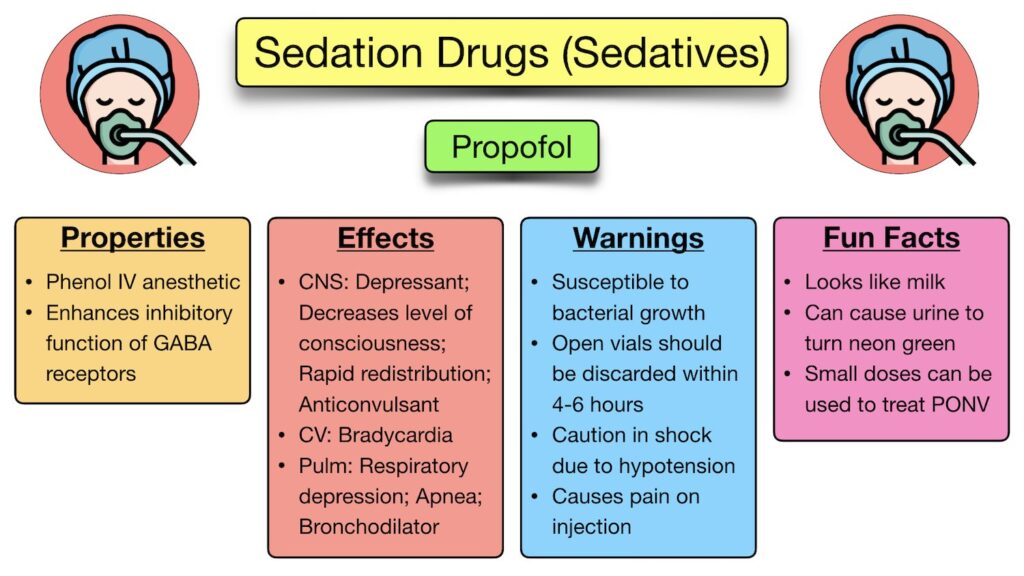
    • Propofol

    Ketamine

    Available Preparations:

    • Injection: 50 mg/ml

    Available Brands: Ketajex®, Ketalar®

    Pharmacokinetics: Ketamine is rapidly and well absorbed after IM injection, rapidly enters the CNS, metabolized by the liver, and excreted in urine.

    Indications:

    • Induction and maintenance of anaesthesia
    • Pain relief
    • Diagnostic maneuvers and procedures not involving intense pain

    Contraindications:

    • Thyrotoxicosis
    • Hypertension (including pre-eclampsia)
    • History of cerebrovascular accident
    • Raised intracranial pressure
    • Psychiatric disorders, particularly hallucinations
    • Severe cardiac disease
    • Recent myocardial infarction
    • Stroke
    • Known hypersensitivity to ketamine
    • Cerebral trauma
    • Eye injury

    Dosage:

    Induction:

    • Intravenous Injection: 1-4.5 mg/kg (2 mg/kg usually produces anaesthesia lasting 5-10 minutes)
    • Intramuscular Injection: 6.5-13 mg/kg (duration of anaesthesia up to 25 minutes)
    • IV Infusion: 0.5-2 mg/kg initially, then infuse at 10-45 mcg/kg/minute, adjust according to response

    Maintenance:

    • Intravenously: Increments of half or full dose repeated as required
    • Analgesic for painful procedures: IV 1-1.5 mg/kg slowly over 2-5 minutes. Give half dose every 10 minutes if required for prolonged procedures

    Administration Instructions:

    • Dilute dose with an equal volume of water for injection, sodium chloride 0.9%, or glucose 5% before IV injection
    • Give IV slowly; rapid administration may result in respiratory depression and enhanced hypertensive response

    Side Effects:

    • Raised blood pressure and pulse rate
    • Increased muscle tone
    • Lacrimation
    • Hypersalivation
    • Raised intracranial pressure
    • Redness of the skin
    • Postoperative nausea and vomiting
    • Pain on injection
    • Irrational behavior during recovery

    Drug Interactions:

    • Inhalation anaesthetics such as halothane may prolong the effect of ketamine and delay recovery
    • Prolonged recovery occurs when barbiturates or opioids are given concurrently with ketamine
    • Ketamine should not be used with ergometrine
    • Concomitant use with thyroid hormones may cause hypertension and tachycardia

    Key Issues to Note:

    • Warn the patient to avoid tasks requiring motor coordination and/or mental alertness for 24 hours after anaesthesia
    • Keep verbal, tactile, and visual stimulation to a minimum during induction and recovery

    Lidocaine

    Available Preparations:

    • Solution: 1%, 2%
    • Topical Gel: 2-4%
    • Combinations: Xylocaine® (Lidocaine + epinephrine)

    Note: Epinephrine is often added to delay absorption and thus reduce anaesthetic systemic toxicity and keep it in contact with nerve fibers, prolonging the duration of action.

    Pharmacokinetics: Lidocaine is effectively absorbed from the mucous membranes, widely distributed throughout the body, metabolized in the liver, and excreted in urine.

    Indications:

    • Infiltration anaesthesia
    • Surface anaesthesia of mucous membrane
    • Dental anaesthesia
    • Ventricular arrhythmias
    • Relief of pain in hemorrhoids

    Contraindications:

    • Adjacent skin infection
    • Hypersensitivity
    • Heart block
    • Hypovolemia
    • Severe anemia
    • Myasthenia gravis
    • Spinal anaesthesia in dehydrated patients

    Dosage:

    Dental Anaesthesia: Using 2% solution with epinephrine

    • Adult: 20-100 mg (1-5 ml)

    Local Infiltration and Peripheral Nerve Block: Using 1% solution with epinephrine

    • Adult: Up to 400 mg (up to 40 ml)

    Note: Use lower doses for elderly, epileptic, or acutely ill patients. Do not use solution containing preservatives for spinal, epidural, intravenous, or regional anaesthesia.

    Side Effects:

    • Dizziness
    • Lightheadedness
    • Tremors
    • Numbness
    • Restlessness
    • Convulsions
    • Unconsciousness
    • Headache
    • Blurred vision
    • Hypotension
    • Cardiac arrest
    • Backache
    • Sense of heat
    • Hypersensitivity reaction
    • Urinary retention

    Drug Interactions:

    • Anti-convulsants may increase the cardiac depressant effect of lidocaine
    • Cimetidine and beta-blockers may increase plasma concentration of lidocaine, leading to increased risk of toxicity
    • Use of opioid analgesics peri-operatively may have additive respiratory and cardiac depressant effects

    Key Issues to Note:

    • Doses should be reduced in acute and chronic hepatic diseases
    • If solutions discolor or precipitate, they should be discarded

    Drugs Used in Anaesthesia Read More »

    Drugs Used in the Treatment of Cancer

    Drugs Used in the Treatment of Cancer

    Drugs Used in the Treatment of Cancer

    Cancer is a disease characterized by a shift in the control mechanisms that govern cell survival, proliferation, and differentiation. 

    Uncontrolled multiplication of cells leads to the formation of tumors that may be benign or malignant. Benign tumors do not spread to other tissues, while malignant tumors do.

    Types of Cancer

    • Carcinoma: Affects the skin and cells in the tissue lining internal organs.
    • Sarcoma: Affects muscles, bones, and fibrous tissues.
    • Leukemia: Affects white blood cells.
    • Lymphoma: Affects the lymph glands.

    Drugs used in the treatment of cancer either kill cancer cells or modify their growth.

    Table 1: Classification of Anticancer Drugs

    Class

    Examples

    Antimetabolites

    Methotrexate, 5-Fluorouracil, Cytarabine, 6-Mercaptopurine

    Antitumor Antibiotics

    Bleomycin, Dactinomycin

    Alkylating Agents

    Cyclophosphamide, Busulfan, Chlorambucil, Carmustine, Dacarbazine, Melphalan

    Anthracyclines

    Daunorubicin, Doxorubicin, Idarubicin

    Vinca Alkaloids

    Vincristine, Vinblastine

    Platinum Analogs

    Cisplatin

    Hormonal Agents

    Tamoxifen, Estrogen

    Others

    Hydroxyurea, Procarbazine

    Bleomycin

    Available Preparations:

    • Powder for Injection: 15 units/vial

    Available Brands: Blenoxane®

    Pharmacokinetics: IM administration results in lower serum levels than those occurring after equivalent IV doses. It distributes widely into total body water, mainly in the skin, lungs, kidneys, peritoneum, and lymphatic tissue. It undergoes extensive tissue inactivation in the liver and kidney; bleomycin and its metabolites are excreted primarily in urine.

    Indications:

    • Squamous cell carcinoma (head, neck, penis, cervix)
    • Testicular carcinoma
    • Non-Hodgkin\’s lymphoma
    • Lymphosarcoma

    Contraindications:

    • Pregnancy
    • Breastfeeding
    • Previous allergic reaction

    Dosage:

    • A test dose of 1-2 units given 2-4 hours prior to therapy is recommended.
    • 0.25-0.5 unit/kg body weight or 10-20 units/m² body surface area given IV, IM, or SC once or twice weekly.

    Side Effects:

    • Skin rash
    • Striae
    • Redness of the skin
    • Fever
    • Acute anaphylactoid reaction
    • Anorexia
    • Urticaria
    • Pruritus
    • Hyperpigmentation
    • Stomatitis
    • Hyperkeratosis
    • Weight loss
    • Progressive pulmonary fibrosis
    • Mucositis
    • Pneumonitis
    • Phlebitis
    • Vomiting

    Drug Interactions:

    • Cisplatin may decrease bleomycin clearance and increase the risk of bleomycin toxicity.
    • Concomitant use may decrease serum levels of phenytoin and digoxin.

    Key Issues to Note:

    • Increased pigmentation, particularly affecting the flexures and subcutaneous sclerotic plaques, may occur.
    • A test dose should be administered before starting therapy to check for hypersensitivity reactions.
    • Monitor pulmonary function tests during treatment.

    Doxorubicin

    Available Preparations:

    • Powder for Injection: 10 mg/vial, 50 mg/vial

    Available Brands: Doxorubin®

    Pharmacokinetics: It distributes widely into body tissues, with the highest concentrations found in the liver, heart, kidneys, skin, and muscles; it does not cross the blood-brain barrier. It is metabolized both in the liver and plasma; excreted largely in feces, with small amounts in urine.

    Indications:

    • Acute leukemia
    • Lymphomas
    • Breast carcinoma
    • Thyroid carcinoma
    • Non-Hodgkin\’s lymphoma
    • Ovarian carcinoma
    • Bone and soft tissue sarcomas
    • Hodgkin\’s disease
    • Kaposi\’s sarcoma in patients with AIDS
    • Transitional cell bladder carcinoma

    Contraindications:

    • Hepatic dysfunction
    • Cardiomyopathy
    • Pregnancy and lactation
    • Persistent myelosuppression
    • Severe cardiac failure
    • Recent myocardial infarction

    Dosage:

    • 60-74 mg/m² or 1.2-2.4 mg/kg once every 3 weeks as a single intravenous injection of a solution in sodium chloride 0.9% or glucose 5% over 3 minutes or more.
    • Children: 35-75 mg/m² as a single intravenous injection, once every 3 weeks.

    Side Effects:

    • Bone marrow depression
    • Anorexia
    • Hyperpigmentation of nail beds
    • Diarrhea
    • Irreversible CHF
    • Reversible alopecia
    • Nausea and vomiting
    • Stomatitis
    • Fever and chills
    • Urticaria
    • Conjunctivitis
    • Lacrimation

    Drug Interactions:

    • Cholestasis induced by mercaptopurine may be potentiated by the concurrent administration of doxorubicin.
    • Concomitant use of daunorubicin or cyclophosphamide may potentiate the cardiotoxicity of doxorubicin through additive effects on the heart.
    • Serum digoxin, carbamazepine, and phenytoin levels may be decreased if used concomitantly with doxorubicin.
    • Phenobarbitone increases the elimination of doxorubicin.

    Key Issues to Note:

    • Notify the patient that the urine may turn red for the first 1-2 days.
    • Doxorubicin may induce hyperuricemia; therefore, monitor the patient\’s blood uric acid levels.
    • Encourage the patient to take adequate fluid intake to increase urine output and facilitate excretion of uric acid.
    • Advise the patient to call if fever, bleeding, and sore throat occur.
    • Avoid exposure to sunlight to prevent sunburns.
    • Warn the patient that alopecia will occur. Explain that hair growth should resume 2-5 months after the drug is stopped.
    • Tell the patient not to receive any immunization during therapy and for several weeks after.
    • Advise the patient to avoid exposure to people with infections.


    Methotrexate

    Available Preparations:

    • Tablets: 2.5 mg
    • Injection: 25 mg/ml

    Available Brands: Texol®

    Indications:

    • Treatment and palliation of solid tumors
    • Burkitt\’s lymphoma
    • Leukemia
    • Psoriasis

    Contraindications:

    • Known hypersensitivity to methotrexate
    • Pregnancy and lactation
    • Severe hepatic and renal impairment
    • Bone marrow suppression
    • Anemia
    • Immunodeficiency syndromes
    • Active infection

    Dosage:

    • Leukemia: 15-30 mg/m² orally, intramuscularly, or intravenously; once a week.

    Side Effects:

    • Nausea and vomiting
    • Stomatitis
    • Diarrhea
    • Anorexia
    • Malaise
    • Headache
    • Skin rash
    • Dermatitis
    • Pruritus
    • Dizziness
    • Blurred vision

    Drug Interactions:

    • Concomitant use with probenecid and salicylates increases the therapeutic and toxic effects of methotrexate by inhibiting its renal clearance.
    • Alcohol enhances the hepatotoxicity caused by methotrexate.
    • Phenytoin, co-trimoxazole may give additive antifolate activity and increase the risk of methotrexate toxicity.

    Key Issues to Note:

    • Full blood count, urea, and liver function tests should be carried out prior to and during treatment.
    • Folinic acid is required for rescue procedures.
    • Patients with hyperuricemia should maintain adequate fluid intake and alkalinization of urine.

    Vincristine

    Available Preparations:

    • Solution for Injection: 1 mg/ml, 0.1 mg/ml

    Available Brands: Cristol®

    Indications:

    • Leukemias
    • Lymphomas
    • Some solid tumors

    Contraindications:

    • Demyelinating form of Charcot-Marie-Tooth syndrome
    • Pregnancy
    • Breastfeeding mothers
    • Current radiotherapy to the liver
    • Known hypersensitivity to vincristine

    Dosage:

    • Adult: IV 1.4 mg/m² up to a max weekly dose of 2 mg/m².
    • Children: IV 2 mg/m² once a week.
    • Children < 10 kg: 0.05 mg/kg once a week.

    Side Effects:

    • Hair loss
    • Stomatitis
    • Constipation
    • Abdominal cramps
    • Diarrhea
    • Skin rash
    • Headache
    • Jaw pain
    • Hoarseness
    • Diplopia
    • Nausea and vomiting
    • Abdominal distention
    • Urinary tract disturbance
    • Peripheral neuropathy

    Drug Interactions:

    • Vincristine may decrease digoxin plasma levels and renal excretion.
    • Vincristine may reduce phenytoin plasma levels.

    Key Issues to Note:

    • Allopurinol may be given to prevent uric acid nephropathy.
    • Stool softeners should be used for constipation prophylaxis.
    • Vincristine is a tissue irritant; care should be taken to avoid extravasation.

    Tamoxifen

    Available Preparations:

    • Tablets: 10 mg, 20 mg

    Available Brands: Nolvadex®

    Pharmacokinetics: Tamoxifen is well absorbed after oral administration, distributed widely into total body water, metabolized extensively in the liver, and excreted primarily in feces.

    Indications:

    • Breast cancer
    • Female infertility (induction of ovulation)

    Contraindications:

    • Known hypersensitivity to tamoxifen
    • History of deep vein thrombosis or pulmonary embolism in high-risk women
    • Pregnancy

    Dosage:

    • Breast cancer: 20 mg daily.
    • Induction of ovulation (infertility): 20 mg daily on days 2, 3, 4, and 5 of the cycle; if necessary, the daily dose may be increased to 40 mg then 80 mg for subsequent courses.

    Side Effects:

    • Hot flushes
    • Nausea
    • Vomiting
    • Lightheadedness
    • Bone pain
    • Confusion
    • Vaginal bleeding
    • Vaginal discharge
    • Headache
    • Decreased libido
    • Weakness

    Drug Interactions:

    • Estrogen may decrease the effect of tamoxifen.
    • The anticoagulant effect of oral anticoagulants may be increased by tamoxifen.
    • Bromocriptine may elevate serum levels of tamoxifen.

    Key Issues to Note:

    • Adverse effects may be controlled by dosage reduction.
    • Use cautiously in pre-existing leukopenia and thrombocytopenia.
    • Advise women not to become pregnant during therapy with tamoxifen.

    Drugs Used in the Treatment of Cancer Read More »

    Drugs Used in the Treatment of Obstetric and Gynecological Disorders

    Drugs Used in the Treatment of Obstetric and Gynecological Disorders

    Drugs for Menstrual Disorders

    The main disorders associated with menstruation that may require treatment include:

    • Amenorrhoea
    • Dysmenorrhoea
    • Menorrhagia
    • Premenstrual syndrome
    • Menopause

    Amenorrhoea

    Amenorrhoea is the absence of menstruation. A break in menstruation of 6 months or more is considered pathological in an adult woman who is not pregnant, lactating, or has reached menopause.

    Amenorrhoea may be classified as:

    • Primary Amenorrhoea: Occurs when a female fails to have her first menstrual cycle by age 16 in the presence of normal secondary sexual characteristics.
    • Secondary Amenorrhoea: The absence of menses for 6 months or more in a woman whose normal menstruation has been established.

    Management

    • Identification and correction of any underlying disorder

    Dysmenorrhoea

    Dysmenorrhoea is painful menstruation that prevents normal activity and requires medication.

    Dysmenorrhoea may be classified as:

    • Primary Dysmenorrhoea: Usually begins with the first menstrual period and is characterized by cramping lower abdominal pain, nausea, vomiting, headache, and faintness. The cause is thought to be due to excessive prostaglandin production that causes the uterus to contract painfully.
    • Secondary Dysmenorrhoea: Usually affects older women who complain of congested ache with lower abdominal cramps which usually starts a few days before menstruation. It is associated with various disorders such as endometriosis, pelvic inflammatory disease, fibroids, or the presence of an IUD.

    Drugs used in the treatment of primary dysmenorrhoea inhibit either ovulation or prostaglandin production.

    Examples:

    • NSAIDs such as mefenamic acid, ibuprofen, indomethacin, naproxen, piroxicam, and diclofenac
    • Oral contraceptives
    • Progestogens (norethisterone)
    • Antispasmodics (hyoscine and drotaverin)

    Menorrhagia

    Menorrhagia is excessive menstrual bleeding. It may be associated with pelvic disorders such as fibroids, use of copper intrauterine devices, complications of pregnancy, malignant tumors, or dysfunctional bleeding. Menorrhagia may lead to iron deficiency anemia as well as impairing the quality of life of the patient.

    Drugs used in the treatment of menorrhagia include:

    • Combined oral contraceptives
    • Mefenamic acid
    • Norethisterone
    • Medroxyprogesterone
    • Tranexamic acid

    Pre-menstrual Syndrome

    Pre-menstrual syndrome is a cyclic recurrence of psychological and physical symptoms that affect women in the days before menstruation. Symptoms include increased irritability, depression, anxiety, bloating, headache, and breast tenderness.

    Drugs used in the treatment of pre-menstrual syndrome include:

    • Calcium supplements
    • Pyridoxine (vitamin B6)
    • Bromocriptine
    • Spironolactone
    • Mefenamic acid
    • Fluoxetine
    • Paroxetine
    • Atenolol

    Note:

    • Bromocriptine, mefenamic acid, and spironolactone suppress physical symptoms.
    • Fluoxetine, paroxetine, and atenolol mostly suppress psychological symptoms.

    Menopause

    Menopause is the occurrence of no menstrual periods for one year after the age of 40 or permanent cessation of ovulation after loss of ovarian activity.

    Signs and Symptoms:

    • Atrophic vaginitis
    • Dyspareunia
    • Complete cessation of menses
    • Heavier bleeding
    • Osteoporosis
    • Anxiety
    • Depression
    • Insomnia
    • Inability to concentrate
    • Irritability
    • Decreased libido
    • Urinary incontinence
    • Hot flashes
    • Night sweats
    • Headache
    • Tiredness

    Treatment involves the use of hormone replacement therapy and vaginal lubricants.

    Norethisterone

    Available Preparations:

    • Tablets: 5 mg

    Available Brands: Regulate-N®, Primolut-N®

    Indications:

    • Dysfunctional uterine bleeding
    • Pre-menstrual syndrome
    • Delay of menstruation
    • Endometriosis
    • Dysmenorrhoea
    • Contraception

    Contraindications:

    • Pregnancy
    • Severe liver impairment
    • Previous or existing liver tumors
    • Severe arterial disease
    • Undiagnosed vaginal bleeding
    • Porphyria
    • Hypersensitivity to norethisterone

    Dosage:

    • Dysfunctional Bleeding:
    1. To stop bleeding: 5 mg 3 times daily for 10 days
    2. To prevent bleeding: 5 mg twice daily from day 19-26 of the cycle
    • Dysmenorrhoea: 5 mg 3 times daily from day 5-24 for 3-4 cycles
    • Endometriosis: 10-15 mg daily for 4-6 months or longer starting on day 5 of cycle (if spotting occurs, increase dose to 20-25 mg daily, reduce once bleeding has stopped)
    • Delay of Menstruation: 5 mg 3 times daily starting 3 days before anticipated onset of menstruation (menstruation occurs 2-3 days after stopping)
    • Pre-menstrual Syndrome: 5 mg 2-3 times daily from day 19-26 for seven cycles

    Side Effects:

    • Nausea
    • Dizziness
    • Headache
    • Menstrual disturbance
    • Weight gain
    • Depression
    • Insomnia

    Dydrogesterone

    Available Preparations:

    • Tablets: 10 mg

    Available Brands: Duphaston®

    Indications:

    • Endometriosis
    • Dysfunctional uterine bleeding
    • Pre-menstrual syndrome
    • Habitual and threatened abortion
    • Hormone replacement therapy
    • Infertility
    • Dysmenorrhoea
    • Amenorrhoea
    • Irregular cycles

    Contraindications:

    • Severe liver impairment
    • Previous or existing liver tumors
    • Severe arterial disease
    • Undiagnosed vaginal bleeding
    • Porphyria
    • Known hypersensitivity to dydrogesterone

    Dosage:

    • Endometriosis: 10 mg 2-3 times daily from day 5-25 of cycle or continuously
    • Dysfunctional Bleeding:
    1. To stop bleeding: 10 mg twice daily (together with an estrogen) for 5-7 days
    2. To prevent bleeding: 10 mg twice daily (together with an estrogen) from day 11-25 of cycle
    • Dysmenorrhoea: 10 mg twice daily from day 5-25 of cycle
    • Amenorrhoea: 10 mg twice daily from day 11-25 of cycle with estrogen therapy from day 1-25 of cycle
    • Pre-menstrual Syndrome: 10 mg twice daily from day 12-26 of cycle
    • Irregular Cycles: 10 mg twice daily from day 11-25 of cycle
    • Habitual Abortion: 10 mg twice daily from day 11-25 of cycle until conception, then continuously until week 20 of pregnancy

    Side Effects:

    • Nausea
    • Dizziness
    • Headache
    • Menstrual disturbance
    • Weight gain
    • Depression
    • Insomnia

    Drugs for Infertility

    Infertility refers to the inability of a woman to conceive or of a man to induce conception. The most common cause of infertility is the failure of either ovulation in females or spermatogenesis in males. In females, infertility may also be due to obstruction of the fallopian tubes or diseases of the lining of the uterus (endometrium).

    Drugs used in the treatment of infertility include:

    • Clomifene
    • Bromocriptine
    • Tamoxifen

    Clomifene

    Available Preparations:

    • Tablets: 50 mg

    Available Brands: Clomid®, Clominol®

    Pharmacokinetics: It is readily absorbed from the GIT, metabolized by the liver, and excreted in feces.

    Indications:

    • Anovulatory infertility

    Contraindications:

    • Liver disease
    • Ovarian cysts
    • Hormone-dependent tumors
    • Known hypersensitivity to clomifene
    • Pregnancy (exclude before treatment)
    • Undiagnosed abnormal uterine bleeding

    Dosage:

    • Adult: 50 mg daily for 5 days, starting within 5 days of the onset of menstruation (preferably on the second day) or at any time if cycles have ceased.
    • If ovulation does not occur, a second course of 100 mg daily for 5 days may be given starting as early as 30 days after the previous one. In general, 3 courses of therapy are adequate to assess whether ovulation is obtainable.

    Side Effects:

    • Visual disturbance
    • Hot flushes
    • Abdominal discomfort
    • Abnormal uterine bleeding
    • Headache
    • Intermenstrual spotting
    • Insomnia
    • Endometriosis
    • Ovarian hyperstimulation
    • Dizziness
    • Hair loss
    • Nausea and vomiting
    • Breast tenderness
    • Weight gain
    • Depression
    • Menorrhagia

    Key Issues to Note:

    • Advise the patient of the possibility of multiple births. The risk increases with higher doses.
    • Since the drug may cause dizziness or visual disturbances, warn the patient to avoid hazardous tasks until the response to the drug is known.

    Drugs Used in the Treatment of Pre-eclampsia and Eclampsia

    Pre-eclampsia is a condition that develops late in pregnancy after the 20th week of gestation, characterized by hypertension, proteinuria, and edema of the legs, hands, and face. Severe pre-eclampsia (BP > 160/110 mmHg) may result in morbidity and mortality for the mother or baby. It can lead to poor intrauterine growth and early delivery.

    Eclampsia

    Eclampsia is the occurrence of seizures or coma in a mother with pre-eclampsia occurring at greater than 20 weeks of gestation or less than 48 hours postpartum. Eclampsia is a threat to both mother and baby and must be treated immediately.

    Drugs used in eclampsia include:

    • Magnesium sulphate
    • Hydralazine

    Magnesium Sulphate

    Available Preparations:

    • Injection: 50%

    Indications:

    • Eclampsia (prevention of recurrent seizures)
    • Severe renal failure
    • Myocardial damage
    • Intestinal obstruction

    Dosage:

    By Intravenous Injection:

    • Start with a loading dose of 4 g by IV infusion in 0.9% sodium chloride over 15 to 20 minutes. Then administer a maintenance dose of 1 g per hour by continuous IV infusion for at least 24 hours until the last seizure.
    • Alternatively, start with a loading dose of 4 g by IV infusion in 0.9% sodium chloride over 15 to 20 minutes. Then administer by IM 10 g (5 g in each buttock) followed by 5 g every 4 hours for at least 24 hours after delivery or the last seizure.
    • Find more details by clicking here.

    Side Effects:

    • Nausea and vomiting
    • Flushing of skin
    • Respiratory depression
    • Coma
    • Arrhythmias
    • Thirst
    • Hypotension
    • Confusion
    • Muscle weakness
    • Loss of tendon reflexes

    Drug Interactions:

    • Magnesium sulphate potentiates the effects of calcium channel blockers and neuromuscular blockers.
    • Concomitant use with alcohol and other CNS depressants may increase the CNS depressant effects of magnesium sulphate.

    Key Issues to Note:

    • IV bolus must be injected slowly to avoid respiratory or cardiac arrest.
    • Discontinue the drug as soon as the needed effect is achieved.
    • When giving repeated doses, test knee jerk reflex before each dose; if absent, discontinue magnesium.


    Drugs for Endometriosis

    Endometriosis is a medical condition characterized by the growth of endometrial tissue outside the uterine cavity. 

    It affects women in their reproductive years. Patients may be asymptomatic or have pelvic pain, menstrual changes, bowel symptoms, or infertility.

    Drugs used in the treatment of endometriosis include:

    • Danazol
    • NSAIDs
    • Progesterone
    • Combined oral contraceptives

    Danazol

    Available Preparations:

    • Capsules: 50 mg, 100 mg, 200 mg

    Available Brands: Gonablok®

    Pharmacokinetics: It is well absorbed following oral administration, extensively metabolized in the liver, and excreted in urine.

    Indications:

    • Endometriosis
    • Benign fibrocystic breast disease
    • Dysfunctional uterine bleeding
    • Prevention of hereditary angioedema
    • Gynaecomastia in males
    • Pre-menstrual syndrome
    • Prolactinomas
    • Female infertility
    • Amenorrhoea
    • Acromegaly

    Contraindications:

    • Markedly impaired renal, hepatic, or cardiac function
    • Undiagnosed abnormal vaginal bleeding
    • Pregnancy and lactation
    • Porphyria
    • Androgen tumor
    • History of thromboembolic disease

    Dosage:

    • Endometriosis: 100-400 mg twice daily for 3-9 months
    • Benign Breast Disorder: 50-200 mg twice daily, adjusted according to response for 3-6 months
    • Dysfunctional Uterine Bleeding: 200 mg daily for 3-6 months
    • Hereditary Angioedema: 200 mg 2-3 times daily reduced according to patient response
    • Gynaecomastia: 200 mg daily increased after 2 months to 400 mg daily if no response occurs

    Side Effects:

    • Acne
    • Oily skin
    • Weight gain
    • Mild hirsutism
    • Nausea
    • Skin rash
    • Menstrual disturbance
    • Hot flashes
    • Changes in libido
    • Oedema
    • Hair loss
    • Headache
    • Backache
    • Tremors
    • Amenorrhoea
    • Sweating
    • Vaginal dryness and irritation
    • Deepening of the voice

    Drug Interactions:

    • Warfarin anticoagulant effects may be enhanced by danazol.
    • Danazol may increase the effect of carbamazepine.
    • Danazol may cause decreases in blood glucose levels, which may require adjustment of insulin or oral hypoglycemic drugs.

    Key Issues to Note:

    • The drug should not be discontinued without consulting the prescriber.
    • Therapy may take up to several months for full benefit depending on the purpose of treatment.
    • The drug may cause photosensitivity; therefore, avoid direct exposure to sunlight.
    • To treat endometriosis and fibrocystic breast disease, danazol therapy should begin during menstruation.
    • Advise the patient to report voice changes.
    • Advise female patients that amenorrhea usually occurs after 6-8 weeks of therapy.
    • Avoid administration of danazol with a fatty meal.
    • Use non-hormonal contraceptive measures and discontinue the drug if you suspect pregnancy.

    Drugs for Contraception

    Contraception refers to the various methods used to prevent pregnancy. These methods can be either medical or non-medical and may be used by men, women, or both.

    Common methods of contraception include:

    • Abstinence
    • Barrier methods (male and female condoms)
    • Intrauterine devices (IUD)
    • Hormonal contraceptives
    • Female or male sterilization
    • Emergency contraceptives
    Oral Contraceptives

    Oral contraceptives are divided into two:

    • Combined oral contraceptives
    • Progestogen-only pills

    Combined Oral Contraceptives

    Oral combined contraceptives contain low doses of estrogen and progesterone. They are the most widely used contraceptives and have the lowest failure rate in terms of unwanted pregnancies. They are suitable for women who regularly experience exceptionally painful, heavy, or prolonged periods.

    Mode of Action: They inhibit ovulation, reduce receptivity of endometrium to implantation, and thicken cervical mucus to form a barrier to sperm.

    Indications:

    • Contraception
    • Dysfunctional uterine bleeding
    • Dysmenorrhoea
    • Endometriosis
    • Pre-menstrual syndrome
    • Menorrhagia

    Contraindications:

    • Pregnancy
    • History of thromboembolic disorder
    • Pulmonary hypertension
    • Active viral hepatitis
    • Unexplained uterine bleeding
    • History of breast or hepatic cancer
    • Migraine
    • Atrial fibrillation
    • Severe cirrhosis

    Side Effects:

    • Breakthrough bleeding
    • Changes in weight
    • Changes in libido
    • Venous thromboembolism
    • Fluid retention
    • Amenorrhoea
    • Photosensitivity
    • Breast enlargement and tenderness
    • Nausea and vomiting
    • Depression
    • Acne
    • Cervical cancer
    • Headache
    • Stroke
    • Increased blood pressure

    Examples of Combined Oral Contraceptives:

    MICROGYNON®/NEF®:

    • Composition: Levonorgestrel 0.15 mg, Ethinylestradiol 0.03 mg, Ferrous fumarate 75 mg (7 brown tablets)
    • Dosage: 1 tablet daily for 28 days starting on day 1 of the menstruation cycle with the active tablets.

    PILL PLAN®:

    • Composition: Norgestrel 0.3 mg, Ethinylestradiol 0.03 mg, Ferrous fumarate 75 mg (7 brown tablets)
    • Dosage: 1 tablet daily for 28 days starting on day 1 of the menstruation cycle with the active tablets.

    LO-FEMENAL®:

    • Composition: Norgestrel 0.3 mg, Ethinylestradiol 0.03 mg, Ferrous fumarate 75 mg (7 brown tablets)
    • Dosage: 1 tablet daily starting on day 1 of the menstruation cycle with the active tablets.

    Progestogen-Only Pills

    Progestogen-only pills are often recommended for women who react to estrogen in the combined pill or where combined pills are not suitable because of age or medical history. They may be used by breastfeeding mothers since they do not affect the quantity and quality of the milk produced. Progestogen-only pills have a higher failure rate compared to combined pills and must be taken at the same time each day for maximum contraceptive effect.

    Mode of Action: Progestogen thickens the cervical mucus, which impedes the passage of sperm, disrupts the menstrual cycle including preventing the release of the eggs from the ovaries, and changes the endometrium reducing the potential for implantation.

    Indications:

    • Contraception
    • Emergency contraception
    • Endometriosis
    • Menstrual disorders

    Contraindications:

    • Pregnancy
    • Undiagnosed vaginal bleeding
    • Porphyria
    • Active viral hepatitis
    • Breast or liver cancer
    • Severe arterial disease
    • Severe cirrhosis

    Side Effects:

    • Nausea
    • Spotting
    • Dizziness
    • Breast discomfort
    • Depression
    • Amenorrhoea
    • Vomiting
    • Weight gain
    • Headache
    • Prolonged bleeding
    • Acne

    Examples:

    OVRETTE®:

    • Composition: Norgestrel 0.075 mg
    • Dosage: 1 tablet daily starting on day 1 of the menstruation cycle.

    SOFT SURE®:

    • Composition: Levonorgestrel 0.03 mg
    • Dosage: 1 tablet daily at the same time each day.
    Emergency Contraceptives

    Emergency contraceptives are effective if the dose is taken ideally within 12 hours but not later than 72 hours of unprotected intercourse.

    Examples:

    POSTINOR®:

    • Composition: Levonorgestrel 0.75 mg
    • Dosage: 1.5 mg (2 tablets) as a single dose as soon as possible within 12 hours but not later than 72 hours.

    POSTINOR-2®:

    • Composition: Levonorgestrel 0.75 mg
    • Dosage: 1.5 mg (2 tablets) as a single dose as soon as possible within 12 hours but not later than 72 hours.

    Parenteral Progestogen-Only Contraceptives

    Parenteral progestogen-only contraceptives provide reliable suppression of ovulation by suppressing the luteinizing hormone.

    Indications:

    • Contraception

    Side Effects:

    • Menstrual irregularities
    • Spotting
    • Breast tenderness
    • Loss of bone mineral density
    • Prolonged bleeding
    • Amenorrhoea
    • Weight gain

    Contraindications:

    • History of breast cancer
    • Pregnancy

    Examples:

    • Medroxyprogesterone

    Medroxyprogesterone

    Available Preparations:

    • 150 mg/ml

    Available Brands: Depo-Provera, Injecta Plan

    Dosage:

    • By deep intramuscular injection: 150 mg within the first 5 days of the cycle, repeated every 12 weeks (3 months).


    Drugs Used in the Treatment of Obstetric and Gynecological Disorders Read More »

    Drugs Used in the Management of Central Nervous System Disorders

    Drugs Used in the Management of Central Nervous System Disorders

    Drugs Used in the Management of Central Nervous System Disorders

    Drugs Used in the Treatment of Depression

    Depression is a mental state characterized by diverse psychological symptoms such as low mood, loss of interest and enjoyment of activities, and reduced energy. Depression is associated with physical symptoms such as:

    • Fatigue
    • Anxiety
    • Sleep disturbance
    • Reduction in libido
    • Decreased productivity
    • Changes in appetite or weight
    • Loss of concentration
    • Loss of interest (depressed mood)
    • Thoughts of death and suicide

    Drugs used in the treatment of depression include:

    • Tricyclic antidepressants
    • Selective Serotonin Reuptake Inhibitors (SSRIs)
    • Monoamine Oxidase Inhibitors (MAOIs)
    • Other antidepressant drugs (Atypical antidepressants)

    Tricyclic Antidepressants

    These drugs inhibit the reuptake of norepinephrine and serotonin at the presynaptic neuron, prolonging neuronal activity.

    Examples:

    • Amitriptyline
    • Imipramine
    • Clomipramine

    Amitriptyline

    Available Preparations:

    • Tablets: 25 mg

    Available Brands: Laroxyl®

    Pharmacokinetics: Amitriptyline is absorbed rapidly from the GIT, distributed widely into the body, including the CNS and breast milk, metabolized in the liver to active metabolites, and excreted in urine.

    Indications:

    • Depression where sedation is required
    • Nocturnal enuresis in children
    • Peripheral neuropathy
    • Post-herpetic neuralgia
    • Migraine prophylaxis
    • Tension headache
    • Adjuvant in pain management

    Contraindications:

    • Known hypersensitivity to the drug
    • Recent myocardial infarction
    • Severe liver disease
    • Manic phase
    • Coma or severe respiratory depression
    • Prostatic hypertrophy
    • Glaucoma

    Dosage:

    Depression:

    • Adult: Initially 75 mg daily in divided doses or as a single dose at bedtime. Increased gradually according to response to 150 mg.

    Nocturnal Enuresis:

    Children:

    • 7-10 years: 10-20 mg at night
    • 11-16 years: 25-50 mg at night. Maximum period of treatment is 3 months.

    Peripheral Neuropathy: Initially 10-25 mg daily at night, increased if necessary to 75 mg daily.

    Migraine Prophylaxis: Initially 10 mg at night, increased according to response to a maintenance dose of 50-75 mg at night.

    Adjuvant Pain Management: 10-25 mg at night, up to a max of 150 mg.

    Side Effects:

    • Dry mouth
    • Sedation
    • Constipation
    • Postural hypotension
    • Difficulty with micturition
    • Blurred vision
    • Cardiac arrhythmias
    • Unpleasant taste
    • Somnolence
    • Photosensitivity
    • Interference with sexual function
    • Nausea
    • Tremors
    • Sweating
    • Skin rashes
    • Headache
    • Urticaria
    • Hypomania
    • Weight gain
    • Increased appetite

    Drug Interactions:

    • Cimetidine, valproic acid may increase amitriptyline blood concentration and risk of toxicity
    • Alcohol, anticonvulsants, phenothiazines, and sedative hypnotics may increase CNS depression caused by amitriptyline
    • Carbamazepine reduces the serum concentration of amitriptyline
    • Concurrent use of amitriptyline with phenylephrine, ephedrine may increase blood pressure
    • Amitriptyline may decrease the hypotensive effect of methyldopa

    Key Issues to Note:

    • Inform the patient that full therapeutic effect may delay up to 4 weeks
    • Avoid alcoholic beverages while taking this drug
    • Warn the patient not to stop taking the drug suddenly
    • The drug causes drowsiness and may impair activities that need mental alertness

    Selective Serotonin Reuptake Inhibitors (SSRIs)

    Their efficacy is similar to that of tricyclic antidepressants but with fewer side effects because of low affinity for muscarinic, histaminergic, and adrenergic receptors.

    Examples:

    • Fluoxetine
    • Paroxetine
    • Sertraline
    • Citalopram

    Mode of Action: The antidepressant action of SSRIs is by inhibiting the reuptake of the neurotransmitter serotonin.

    Fluoxetine

    Available Preparations:

    • Capsules: 20 mg

    Available Brands: Prozac®, Nuzac®, Trizac®, Fludac®, Flocept®

    Pharmacokinetics: Fluoxetine is well absorbed after oral administration, metabolized in the liver to active metabolites, and excreted in urine.

    Indications:

    • Major depression
    • Obsessive-compulsive disorder
    • Bulimia nervosa
    • Premenstrual dysphoric disorder
    • Panic disorders
    • Post-traumatic stress disorder
    • Hot flushes

    Contraindications:

    • Hypersensitivity to fluoxetine
    • Severe renal failure
    • Unstable epilepsy
    • Manic phase

    Dosage:

    • Depression: 20 mg once daily, increased after 3-4 weeks if necessary. Find at appropriate intervals thereafter, max 60 mg once daily.
    • Elderly: 20-40 mg once daily, max 60 mg.
    • Bulimia Nervosa: 60 mg once daily, max 80 mg once daily.
    • Obsessive-Compulsive Disorder: Initially 20 mg once daily, increased after 2 weeks if necessary, max dose 60 mg.
    1. Elderly: 20-40 mg once daily, max 60 mg.
    • Panic Disorders: 10 mg once daily, do not exceed 20 mg daily.
    • Premenstrual Dysphoric Disorder: 20 mg once daily.

    Side Effects:

    • Headache
    • Insomnia
    • Somnolence
    • Constipation
    • Abdominal pain
    • Dry mouth
    • Dizziness
    • Anxiety
    • Tremor
    • Sedation
    • Fatigue
    • Mania
    • Sweating
    • Pharyngitis
    • Euphoria
    • Dyspnea
    • Nervousness
    • Sleep disturbance
    • Drowsiness

    Drug Interactions:

    • Alcohol and other CNS depressants may increase CNS depression
    • Fluoxetine may increase phenytoin blood concentration and risk of toxicity
    • Fluoxetine may increase the effect of warfarin; therefore, the dose may need adjustments
    • Fluoxetine may increase the blood levels and toxicity of lithium
    • Fluoxetine inhibits the metabolism of carbamazepine and haloperidol

    Key Issues to Note:

    • Full antidepressant effect may be delayed until 4 weeks of treatment
    • Give a lower dose in patients with hepatic and renal impairment
    • Avoid taking alcohol during drug therapy

    Drugs Used in the Treatment of Manic Disorders

    Mania is a state of mind characterized by excessive cheerfulness and increased activity.

    Signs and Symptoms:

    • Hyperactivity
    • Excessive enthusiasm
    • Decreased need for sleep
    • Flight of ideas
    • Inflated self-esteem
    • Talkativeness
    • Extreme self-confidence
    • Delusions

    Acute mania usually begins abruptly and symptoms increase over several days. Manic episodes may be precipitated by:

    • Use of antidepressants
    • Lack of enough sleep
    • Stressors
    • CNS stimulants
    • Bright light

    Bipolar disorder (manic depression) is a mixed affective disorder in which the patient experiences alternating episodes of hypomania or mania and depression.

    Management of Manic Disorders:

    • Mild Symptoms of Mania: Lithium alone or in combination with benzodiazepine
    • Severe Symptoms of Mania: Lithium plus antipsychotic drugs

    Note: In acute attack of mania, lithium carbonate may be given concurrently with antipsychotic in order to bring the symptoms under control. Lithium carbonate has a slow onset of action which takes up to 2 weeks before therapeutic benefit is fully achieved.

    Drugs used in the treatment of mania include:

    • Lithium carbonate
    • Sodium valproate
    • Carbamazepine
    • Lamotrigine

    Lithium Carbonate

    Available Preparations:

    • Tablets: 300 mg

    Available Brands: Camcolit®

    Pharmacokinetics: It is completely absorbed from the GIT after oral administration, distributed widely into the body including breast milk. It is not metabolized and is excreted unchanged in urine.

    Indications:

    • Prophylaxis of mania
    • Treatment of acute mania
    • Manic phase of bipolar disorder
    • Recurrent depression
    • Aggressive or self-mutilating behavior

    Contraindications:

    • Pregnancy
    • Severe renal impairment

    • Cardiac disease

    • Lactation

    • Untreated hypothyroidism

    • Disturbance of electrolyte balance

    • Hypersensitivity to the drug

    Dosage:

    Adult and Children over 12 years:

    • Acute Mania: 300 mg 3-4 times, maintenance dose 2.4 g/day.
    • Prophylaxis: Initially 300-400 mg daily.

    Side Effects:

    • Nausea
    • Diarrhea

    • Muscle weakness

    • Polyuria

    • Vertigo

    • Tremors

    • Loss of concentration

    • Hypothyroidism

    • Impaired renal function

    • Hypermagnesemia

    • Disturbances of thyroid function

    • Exacerbation of psoriasis

    • Weight gain

    • Oedema

    • Mild drowsiness

    • Sexual dysfunction

    Drug Interactions:

    • Concurrent use of lithium with thiazide diuretics may decrease renal excretion and enhance lithium toxicity

    • Lithium may interfere with pressor effects of sympathomimetic agents and may decrease the effects of chlorpromazine
    • Tetracyclines, phenytoin, carbamazepine, and methyldopa may increase lithium toxicity

    • Concomitant use with haloperidol or other antipsychotic agents may result in severe encephalopathy

    • Use of lithium with SSRIs may increase GI and CNS adverse effects

    • Indomethacin and other NSAIDs decrease renal excretion of lithium

    Key Issues to Note:

    • The drug may be taken with food or milk to reduce GI upset
    • Lithium should be discontinued before electroconvulsive therapy

    • Patient should maintain adequate water intake

    • Avoid large amounts of caffeine, which will interfere with drug\’s effectiveness

    • The drug should not be stopped abruptly


    Drugs Used in the Treatment of Epilepsy

    Epilepsy is a disorder of brain function characterized by recurrent seizures that have a sudden onset. A patient should not be described as having epilepsy until a second non-febrile seizure occurs.

    Seizure: A seizure is a paroxysmal discharge of cerebral neurons accompanied by a clinical phenomenon apparent to the patient or to an observer.

    Classification of Epilepsy

    Epileptic seizures (fits) present in several different forms depending on the site of the discharge and whether the discharge remains localized or spreads.

    Partial Seizures: These are epileptic seizures in which the neuronal discharge remains localized in one area of the brain. They result in a disturbance of function such as abnormal sensation or movement of the limb without loss of consciousness. Partial seizures are subdivided as follows:

    • Simple partial seizures (consciousness is not impaired)
    • Complex partial seizures (consciousness is impaired)

    Partial seizures may become secondarily generalized seizures if the neuronal discharge spreads to involve the entire brain.

    Generalized Seizures: Generalized seizures are characterized by a neuronal discharge involving the whole brain with loss of consciousness. They are subdivided as follows:

    • Tonic-clonic seizures (grand mal)
    • Myoclonic seizures

    • Atonic seizures

    • Absence seizures (petit mal)

    Absence Seizures (Petit Mal): These are generalized seizures characterized by a sudden loss of consciousness lasting for a few seconds. It is usually accompanied by motor activity which may vary from eyelid blinking to more extensive tonic body movement. It is common in children and juveniles.

    Myoclonic Seizures: These are characterized by brief jerks in the limbs which may be single or multiple. The duration of the seizure is a few seconds. It mainly occurs in children and juveniles.

    Atonic Seizures: Atonic seizures are characterized by loss of postural tone; the head sags or the patient falls down.

    Generalized Tonic-Clonic Seizures (Grand Mal Fits): These are characterized by a sudden attack with loss of consciousness and violent body jerking lasting 3-5 minutes. The patient regains consciousness spontaneously; incontinence, tongue biting, or other injuries may occur during the episode. Grand mal fits may be due to:

    • Family history of epilepsy
    • Uncontrolled febrile convulsions in children

    • Head injuries

    • Infections (e.g., meningitis, HIV)

    • Birth trauma to an infant

    • Alcohol and drug abuse

    Status Epilepticus: It is a seizure lasting for more than 30 minutes or several fits following one another without restoration of consciousness in between the fits. Status epilepticus is a common complication of grand mal epilepsy and it\’s a medical emergency.

    Management of Status Epilepticus:

    • Position the patient to avoid injury
    • Give oxygen to support respiration

    • If hypoglycemia is suspected, give a bolus of 50 ml of 50% glucose IV

    • Consider giving parenteral thiamine if alcohol abuse is suspected

    • Give anticonvulsants such as diazepam IV, lorazepam IV, clonazepam, midazolam

    • Slow intravenous injection of phenytoin may be given if seizures recur or fail to respond to diazepam 30 minutes after it began

    • Phenytoin by intravenous infusion should be given at a dose of 15 mg/kg body weight at a rate not greater than 50 mg/minute.

    • Monitoring of blood pressure and ECG is necessary and phenytoin should be diluted with sodium chloride (normal saline) at a ratio of 1 mg of phenytoin: 1 ml of normal saline

    Table 1: Summary of Choices of Antiepileptic Drugs

    Seizure Type

    Treatment Options

    Partial Seizures

    Carbamazepine, sodium valproate, pregabalin, lamotrigine, gabapentin, phenytoin

    Generalized Tonic-Clonic Seizures (Grand Mal)

    Carbamazepine, lamotrigine, sodium valproate, phenytoin

    Absence Seizures (Petit Mal)

    Ethosuximide, sodium valproate

    Myoclonic Seizures

    Sodium valproate, clonazepam

    Status Epilepticus

    Diazepam, clonazepam, midazolam, and phenytoin

    Note: Monotherapy is preferable to a multiple-drug regimen and treatment is therefore initiated with a single drug, increasing the dose gradually until seizures are brought under control or adverse effects become severe. If treatment with the first drug fails, it is preferable to try alternative single first-line antiepileptics before giving combinations of drugs. The change-over from one antiepileptic to another should be made cautiously, withdrawing the first drug only when the new regimen has been largely established. Drugs with different modes of action should be selected for combined therapy, to reduce the risk of additive adverse effects. Many antiepileptic drugs interact with each other; therefore, precautions must be taken during prescribing.

    Carbamazepine

    Available Preparations:

    • Tablets: 100 mg, 200 mg
    • Syrup: 20 mg/ml

    Available Brands: Tegretol®, Storilat®, Carbatol®, Carbadac®, Carbazina®

    Pharmacokinetics: It is absorbed slowly from the GIT, distributed widely throughout the body, crosses the placenta, and accumulates in fetal tissue. It is metabolized by the liver to an active metabolite and is excreted in urine and feces.

    Indications:

    • Partial and secondary generalized tonic-clonic seizures
    • Mixed partial or generalized seizure disorder

    • Trigeminal neuralgia

    • Prophylaxis in bipolar disorder

    • Neuropathic pain

    • Alcohol withdrawal

    Contraindications:

    • Hypersensitivity to carbamazepine and TCAs
    • History of bone marrow depression

    • Porphyria

    Dosage:

    • Epilepsy: Initially 100-200 mg 1-2 times daily, increased gradually after 2 weeks to the usual dose 400-1200 mg daily in divided doses. In some cases up to 1.6-2 g daily may be needed.
    • Elderly: Initially 50 mg twice daily then increase to 400-1200 mg daily.

    • Children 1 month – 12 years: Initially 5 mg/kg at night or 2.5 mg/kg twice daily, increased as necessary by 2.5-5 mg/kg every 3-7 days. Maintenance dose 5 mg/kg 2-3 times daily. Doses up to 20 mg/kg daily may be used.

    • Trigeminal Neuralgia: Initially 100 mg 1-2 times daily, increased gradually according to response to 200 mg 3-4 times daily. Up to 1 g daily may be required in some cases.

    • Prophylaxis of Bipolar Disorder Unresponsive to Lithium: Initially 400 mg daily in divided doses, increased until symptoms are controlled. Usual range 400-600 mg daily, max 1.6 g daily.

    • Neuropathic Pain: Initially 100 mg twice daily, increased gradually until pain is relieved. Maintenance dose 200-600 mg daily. Do not exceed 1.2 g daily.

    Side Effects:

    • Nausea
    • Ataxia

    • Vomiting

    • Dizziness

    • Drowsiness

    • Dry mouth

    • Blurred vision

    • Headache

    • Anorexia

    • Agitation

    • Diarrhea

    • Confusion

    • Constipation

    • Impotence

    • Thrombocytopenia

    • Arthralgia

    • Stevens-Johnson syndrome

    • Gynaecomastia

    Drug Interactions:

    • Clarithromycin, erythromycin, cimetidine, isoniazid may inhibit hepatic metabolism of carbamazepine with resultant increase of its serum concentration and toxicity
    • Rifampicin, phenytoin, and phenobarbital may decrease serum concentrations of carbamazepine

    • Antimalarial drugs may antagonize the activity of carbamazepine

    • Use with alcohol and other CNS drugs may potentiate adverse effects of carbamazepine

    • Use with verapamil may significantly increase the serum levels of carbamazepine

    • Carbamazepine may decrease the effectiveness of theophylline and oral contraceptives

    • Carbamazepine may increase the metabolism of warfarin, valproic acid, haloperidol, and phenytoin

    Key Issues to Note:

    • Take carbamazepine with food to prevent stomach upset
    • Swallow controlled-release tablets whole, do not chew or crush them

    • Grapefruit juice may increase the absorption and blood concentration of carbamazepine

    • The drug is structurally similar to TCAs; some risk of activating latent psychosis or agitation in elderly patients exists

    • Avoid alcohol during therapy

    • The drug may cause drowsiness and impair ability to perform activities requiring mental alertness or physical coordination

    • The drug may cause dry mouth and photosensitivity reactions

    Phenytoin

    Available Preparations:

    • Tablets: 100 mg
    • Injection: 50 mg/ml

    Available Brands: Phenyto-S®, Epanutin®

    Pharmacokinetics: It is absorbed slowly from the small intestine, distributed widely throughout the body, metabolized by the liver to inactive metabolites, and excreted in urine.

    Indications:

    • Generalized tonic-clonic seizures
    • Partial seizures

    • Status epilepticus

    • Cardiac arrhythmias

    • Trigeminal neuralgia or severe pain

    • Control of seizures associated with neurosurgery or traumatic injury to the head

    Contraindications:

    • Hypersensitivity to phenytoin or other hydantoins
    • Sinus bradycardia

    • Avoid parenteral use in sinus bradycardia

    • Sino-atrial block

    • 2nd and 3rd degree heart block

    • Stokes-Adams syndrome (IV)

    • Hepatitis

    Dosage:

    Oral:

    • Adult: Initially 150-300 mg daily as a single dose or in 2 divided doses, increased gradually according to response to the usual dose 200-500 mg daily.
    • Children: Initially 5 mg/kg daily in 2 divided doses, usual dose range 4-8 mg/kg daily, max 300 mg daily.

    Arrhythmias:

    • Adults: Loading dose 250 mg 4 times a day for 1 day, then 250 mg/day for 2 days, maintenance dose 300-400 mg/day 1-4 times a day.

    Side Effects:

    • Gastric intolerance
    • Drowsiness

    • Confusion

    • Slurred speech

    • Gum hyperplasia

    • Headache

    • Sedation

    • Insomnia

    • Blurred vision

    • Skin rashes

    • Acne

    • Hirsutism

    • Nausea

    • Nystagmus

    • Vomiting

    • Diplopia

    • Behavioral disturbance

    • Tremors

    • Anorexia

    • Constipation

    • Blood disorders

    • Coarse facies

    • Fever

    Drug Interactions:

    • Alcohol and other CNS depressants may increase CNS depression
    • Anticoagulants, cimetidine, fluoxetine, fluconazole, ketoconazole, isoniazid, and sulphonamides may increase phenytoin blood concentration and risk of toxicity

    • Lidocaine, propranolol may increase cardiac depressant effects caused by phenytoin

    • Phenytoin may decrease the effects of oral contraceptives, corticosteroids, haloperidol, furosemide, doxycycline, etc.

    • Therapeutic effects of phenytoin may be decreased by barbiturates, carbamazepine, ethanol, folic acid, antacids, charcoal, and pyridoxine among others

    Key Issues to Note:

    • To ensure consistent absorption, phenytoin should be administered at the same time with regards to meals
    • Phenytoin may be taken with food or milk to decrease GI upset

    • Avoid alcohol during therapy

    • Abrupt withdrawal may precipitate status epilepticus

    • Advise the patient to maintain good oral hygiene

    Sodium Valproate

    Available Preparations:

    • Tablets: 200 mg, 300 mg
    • Syrup: 200 mg/5 ml

    Available Brands: Epilim®, Petilin®, Valparin Chrono®

    Indications:

    • Generalized tonic-clonic seizures

    • Partial seizures
    • Atonic seizures

    • Absence seizures

    • Myoclonic seizures

    • Acute manic phase of bipolar disorder

    • Prophylaxis of migraine

    Contraindications:

    • Hypersensitivity to sodium valproate
    • Family history of severe hepatic dysfunction

    • Pregnancy

    • Active liver disease

    • Porphyria

    • Pancreatitis

    Dosage:

    • Adult: Initially 600 mg daily in 2 divided doses, preferably after food, increased by 200 mg daily every 3 days to a max of 2.5 g daily, usual maintenance dose 1-2 g daily.
    • Children under 12 years with body weight over 20 kg: Initially 400 mg daily in divided doses, increased according to response, usual range 20-30 mg/kg daily, max 35 mg/kg daily.

    • Children < 20 kg: Initially 20 mg/kg daily in divided doses.

    Side Effects:

    • Nausea
    • Vomiting

    • Increased appetite

    • Abdominal cramps

    • Sedation

    • Thrombocytopenia

    • Behavioral disturbance

    • Hyperammonemia

    • Menstrual disturbances

    • Tremor

    • Ataxia

    • Oedema

    • Diarrhea

    • Weight gain

    • Gastric irritation

    • Transient hair loss

    • Drowsiness

    Drug Interactions:

    • Sodium valproate increases plasma concentrations of phenobarbital, primidone, phenytoin, zidovudine
    • Aspirin may increase the effect of sodium valproate

    • Sodium valproate absorption may be reduced by colestyramine

    • Cimetidine and erythromycin may increase the effect of sodium valproate

    • Concomitant use with clonazepam may cause absence seizures

    • Antacids may increase the oral absorption of sodium valproate

    Key Issues to Note:

    • Avoid alcohol during therapy
    • The drug may cause drowsiness and impair ability to perform activities requiring mental alertness or physical coordination

    • The drug should not be withdrawn abruptly

    Phenobarbitone

    Available Preparations:

    • Tablets: 30 mg

    Available Brands: B-tone®

    Pharmacokinetics: Phenobarbitone is well absorbed after oral administration, distributed widely to body tissues, metabolized by the liver, and excreted in urine.

    Indications:

    • Generalized tonic-clonic seizures
    • Partial seizures

    • Neonatal seizures

    • Febrile convulsions

    • Status epilepticus

    Contraindications:

    • Hypersensitivity to phenobarbitone
    • Absence seizures

    • Porphyria

    • Respiratory depression

    • Severe liver impairment

    Dosage:

    Generalized Tonic-Clonic Seizures, Partial Seizures:

    • Adult: 60-180 mg once daily at night
    • Children: 5-8 mg/kg daily

    Febrile Convulsions:

    • Children: Up to 8 mg/kg daily

    Side Effects:

    • Sedation
    • Ataxia

    • Nystagmus

    • Somnolence

    • Respiratory depression

    • Behavioral disturbance

    • Megaloblastic anemia

    • Mental depression

    • Allergic skin reaction

    • Confusion

    • Constipation

    • Hypotension

    • Drowsiness

    • Slurred speech

    Drug Interactions:

    • Phenobarbitone may increase the metabolism of carbamazepine
    • Phenobarbitone may decrease the effect of digoxin, corticosteroids, oral anticoagulants, tricyclic antidepressants, oral contraceptives, and metronidazole

    • The sedative effect of phenobarbitone is enhanced by other CNS depressants including alcohol

    • Sodium valproate increases the blood concentration and risk of toxicity of phenobarbitone

    Key Issues to Note:

    • Avoid alcoholic beverages during therapy
    • The drug may cause drowsiness and impair ability to perform activities requiring mental alertness

    • The drug should not be withdrawn abruptly after prolonged use

    Anxiolytics, Sedatives, and Hypnotics

    Anxiety is an emotional condition characterized by feelings such as apprehension and fear, accompanied by symptoms such as tachycardia, increased respiration, sweating, and tremor.

    Drugs used in the treatment of anxiety include:

    • Benzodiazepines
    • Antidepressants (Anxiety frequently co-exists with depression)
    • Beta blockers (may help to control physical symptoms such as tremor)

    Note:

    • Antidepressants can initially exacerbate anxiety (their therapeutic response takes at least 2 weeks), therefore combined therapy with benzodiazepines may be required initially.
    • Benzodiazepines should be used for a maximum of 4 weeks, and the dose should be gradually reduced after the first 2 weeks to avoid the risk of dependence.

    Insomnia

    Insomnia is the inability to achieve or maintain sleep. It often leaves sufferers feeling unrefreshed by sleep and may lead to impaired daytime performance.

    Insomnia is classified as follows:

    • Transient Insomnia: It may occur in those who normally sleep well and may be due to environmental stress such as noise, shift work, or jet lag. It may also be associated with acute disorders.
    • Short-term Insomnia: It is often related to an emotional problem (e.g., ongoing personal stress) or medical illness such as acute pain.

    • Chronic Insomnia: Most cases of chronic insomnia are caused by psychiatric disorders such as depression, anxiety, dementia, psychosis, or substance abuse, or physical causes such as pain or pruritus.

    Drugs used in the treatment of insomnia include:

    • Benzodiazepines

    • Antidepressants

    Benzodiazepines

    This class includes:

    • Diazepam
    • Midazolam

    • Bromazepam

    • Alprazolam

    • Clonazepam

    • Nitrazepam

    • Chlordiazepoxide

    • Lorazepam

    Diazepam

    Available Preparations:

    • Tablets: 5 mg

    • Rectal: 10 mg
    • Injection: 10 mg/2 ml

    Available Brands: Valium®, Cozepam®, Solina®

    Pharmacokinetics: Diazepam is rapidly absorbed from the GIT following oral administration, distributed widely throughout the body, metabolized in the liver to the active metabolite, and excreted in urine and a small amount in feces.

    Indications:

    • Status epilepticus

    • Febrile convulsions
    • Convulsions due to poisoning

    • Anxiety disorders

    • Insomnia

    • Control of muscle spasms

    • Management of alcohol withdrawal

    Contraindications:

    • Hypersensitivity to diazepam
    • Respiratory depression

    • Severe hepatic impairment

    • Acute pulmonary insufficiency

    • Sleep apnea

    • Comatose patients

    • Acute narrow-angle glaucoma

    • Acute alcohol intoxication

    • Infants less than 1 month

    Dosage:

    Oral:

    • Anxiety: 2-10 mg 2-4 times daily
    • Insomnia Associated with Anxiety: 5-15 mg at bedtime
    • Muscle Spasms: 2-10 mg 2-4 times a day
    • Acute Alcohol Withdrawal: 10 mg 2-4 times for the first 24 hours, reduce to 5 mg 3-4 times on the next day as required
    • Severe Acute Anxiety, Control of Acute Panic Attacks, Acute Alcohol Withdrawal, Muscle Spasms:
    1. By IM or slow IV injection: 10 mg repeated if necessary after not less than 4 hours
    • Status Epilepticus: By slow IV at a rate of 5 mg/min
    1. Adult: 10-20 mg repeated if necessary after 30-60 minutes
    2. Children: 200-300 mcg/kg or 1 mg/year of age
    • Seizures Associated with Poisoning: By slow IV at a rate of 5 mg/min
    1. Adult: 10-20 mg

    By Rectum as a Rectal Solution:

    • Adult and Children over 3 years: 10 mg, repeat the dose after 5 minutes if necessary
    • Children 1-3 years and elderly: 5 mg, repeat the dose after 5 minutes if necessary

    Side Effects:

    • Drowsiness
    • Sedation

    • Dependence

    • Muscle weakness

    • Hypotension

    • Visual disturbance

    • Changes in libido

    • Urinary retention or incontinence

    • Hypersensitivity reactions

    • Ataxia

    • Headache

    • Confusion

    • Vertigo

    • Skin rash

    • Tremor

    • Blood disorders

    • Amnesia

    Drug Interactions:

    • Alcohol and other CNS depressants may increase CNS depression caused by diazepam

    • Antacids may decrease the rate of absorption of diazepam
    • Heavy smoking accelerates diazepam metabolism, thus lowering clinical effectiveness

    • Oral contraceptives may impair the metabolism of diazepam

    • Cimetidine, isoniazid, erythromycin may inhibit the breakdown of diazepam leading to increased levels in blood

    • Diazepam may inhibit the therapeutic effect of levodopa

    Key Issues to Note:

    • Administer the drug with food or water but not grapefruit juice
    • Avoid alcohol and caffeine during therapy

    • The drug may cause drowsiness and impair the ability to perform activities requiring mental alertness

    • Diazepam should not be discontinued suddenly; instead, decrease the dosage slowly over 8-12 weeks after long-term therapy


    Drugs Used in the Treatment of Parkinsonism

    Parkinson\’s disease is a neurodegenerative disorder characterized by tremor, muscle rigidity, slowed movement, and postural instability as a result of an imbalance between dopamine and acetylcholine neurotransmitters in the striatum.

    Drugs used in the treatment of Parkinson\’s disease aim at restoring the natural balance between dopamine deficiency and relative cholinergic excess in the brain.

    Classification of Drugs Used for Parkinson\’s Disease

    Dopaminergics

    These drugs increase or enhance the action of dopamine in the brain.

    Examples:

    • Bromocriptine
    • Carbidopa
    • Levodopa
    • Cabergoline

    Antimuscarinics

    These drugs inhibit the action of acetylcholine in the brain.

    Examples:

    • Benzhexol
    • Benztropine mesylate

    Antimuscarinics are often effective in the early stages of Parkinson\’s disease and are effective in the treatment of drug-induced Parkinsonism.

    Bromocriptine

    Available Preparations:

    • Tablets: 2.5 mg

    Available Brands: Lactodel®, Parlodel®, Dopagon®, Brameston®

    Pharmacokinetics: Bromocriptine is poorly absorbed when given orally, undergoes first-pass metabolism. It is metabolized completely in the liver and majorly excreted through bile.

    Indications:

    • Parkinson\’s disease
    • Suppression of lactation
    • Puerperal breast engorgement
    • Male hyperprolactinemia
    • Premenstrual symptoms
    • Benign breast diseases
    • Prolactinomas
    • Female infertility
    • Amenorrhoea
    • Acromegaly

    Contraindications:

    • Patients hypersensitive to ergot alkaloids
    • Pregnancy
    • Severe ischemic heart disease
    • Uncontrolled hypertension

    Dosage:

    • Parkinson\’s Disease and Infertility: 1.25 mg at night for 7 days, increase to 2.5 mg for the second week, 2.5 mg twice daily for the third week, and then 2.5 mg 3 times daily for the fourth week. Then increasing by 2.5 mg every 3-14 days according to response to a usual range of 10-40 mg daily taken with food
    • Suppression of Lactation: 2.5 mg daily for 2-3 days, increased to 2.5 mg twice daily for 2 weeks
    • Amenorrhoea and Benign Breast Disease: Initially 1.25 mg once daily at bedtime, gradually increased to 2.5 mg 2-3 times daily

    Side Effects:

    • Dizziness
    • Dry mouth
    • Confusion
    • Headache
    • Constipation
    • Leg cramps
    • Allergic skin reactions
    • Fatigue
    • Cold fingers and toes
    • Nausea
    • Postural hypotension
    • Hair loss
    • Lightheadedness
    • Abdominal cramps
    • Vomiting
    • Insomnia
    • Nasal congestion

    Drug Interactions:

    • Antipsychotic drugs may oppose the action of bromocriptine and increase the risk of Parkinsonism
    • Erythromycin and other macrolide antibiotics may lead to increased levels of bromocriptine and the risk of adverse effects
    • Domperidone and metoclopramide may reduce the hypoprolactinemic effects of bromocriptine
    • Alcohol intolerance may result when high doses of bromocriptine are administered together with alcohol

    Key Issues to Note:

    • Side effects may be minimized by gradual introduction of the drug
    • The drug may be administered with meals to minimize GI distress
    • Take precautions while driving or operating machines since dizziness or drowsiness may occur at the beginning of therapy
    • Advise the patient to limit alcohol use during treatment
    • Inform the patient that it may take 6-8 weeks or longer for menses to be reinstated

    Levodopa with Carbidopa

    Available Preparations:

    • Tablets

    Available Brands: Sinemet® (Levodopa/Carbidopa) 100/10

    Pharmacokinetics: Levodopa is fairly well absorbed when given orally, though food reduces the rate and extent of its absorption. Carbidopa enhances levodopa bioavailability. It is metabolized in the liver to dopamine and excreted in urine.

    Indications:

    • Parkinson\’s disease

    Contraindications:

    • Closed-angle glaucoma
    • Hypersensitivity to any of the ingredients
    • Bronchial asthma
    • Severe cardiovascular disease
    • Undiagnosed skin lesions or history of melanoma

    Dosage:

    • Initially 50-100 mg of levodopa with 10-12.5 mg of carbidopa 3-4 times daily (1/2 – 1 tablet of Sinemet 110, 3-4 times daily). Increased by 50-100 mg daily or on alternate days according to response up to 800 mg levodopa with 80-100 mg carbidopa in divided doses

    Side Effects:

    • Nausea
    • Dizziness
    • Palpitations
    • Dark urine
    • Abnormal movements
    • Visual abnormalities
    • Nervousness/agitation
    • Dry mouth
    • Depression
    • Headache
    • Fluid retention
    • Tongue irritation
    • Muscle twitching

    Drug Interactions:

    • Pyridoxine reverses the effect of levodopa
    • Absorption of levodopa may be reduced by iron
    • Antipsychotic drugs may reduce the effect of levodopa
    • Antacids may increase the absorption of levodopa

    Key Issues to Note:

    • Gastric irritation may be reduced by taking the drug after food
    • Treatment should be started with low doses, then gradually increased according to the response
    • Inform the patient that therapeutic response may be slow
    • Warn the patient of the possible dizziness and orthostatic hypotension, especially at the beginning of therapy

    Antipsychotics (Neuroleptic) Drugs

    Schizophrenia

    Schizophrenia is a chronic psychotic illness characterized by a disintegration of the process of thinking, contact with reality, and emotional responsiveness. 

    It is more common in males and usually begins in late adolescence to the early twenties.

    Clinical Features of Schizophrenia

    Clinical features of schizophrenia are often presented as positive or negative symptoms:

    Positive Symptoms:

    • Delusions
    • Hallucinations
    • Thought disorders
    • Disorganized behaviors
    • Agitation

    Negative Symptoms:

    • Lack of drive
    • Apathy
    • Social withdrawal
    • Poor self-care
    • Poverty of speech

    Positive symptoms are seen as exaggeration of normal function and are common in the acute phase. Negative symptoms are viewed as loss of normal function and are prominent in the chronic phase.

    Most drugs are effective against positive symptoms except atypical antipsychotics such as olanzapine which are effective against both positive and negative symptoms.

    Drugs used in the treatment of schizophrenia can be classified as either typical (first generation) or atypical (second generation) antipsychotics.

    Table 1: Classification of Antipsychotic Drugs and Their Target Symptoms

    Class

    Drug

    Target Symptoms

    Phenothiazines (Typical)

    Chlorpromazine

    Hallucinations

    Delusion

    Irrational behavior

    Fluphenazine

    Trifluoperazine

    Promethazine

    Thioridazine

    Butyrophenone (Typical)

    Haloperidol

    Elevated mood, expansive self-image, grandiose delusion

    Droperidol

    Atypical Antipsychotic

    Risperidone

    Hallucinations, delusions

    Clozapine

    Olanzapine

    Note:

    • Drug treatment must be started as soon as possible for better results
    • Acute psychotic symptoms such as hallucination or delusions can be controlled using drugs such as haloperidol or chlorpromazine
    • Positive symptoms tend to respond better to drugs than negative symptoms
    • Treatment for schizophrenia is not curative and long-term maintenance therapy (2-5 years) is usually required to prevent relapse

    Haloperidol

    Available Preparations:

    • Tablets: 5 mg, 10 mg
    • Injection: 5 mg/ml, 50 mg/ml

    Available Brands: Decanoas®, Haldol®, Haloxen®, Haldol

    Pharmacokinetics: Haloperidol is relatively well absorbed following oral administration, distributed widely into the body, with high concentrations in adipose tissue. It is metabolized by the liver and excreted in urine and a small amount in feces.

    Indications:

    • Schizophrenia
    • Behavior disturbance
    • Nausea and vomiting
    • Mania
    • Severe anxiety
    • Intractable hiccups

    Contraindications:

    • CNS depression
    • Comatose states
    • Severe hepatic disease
    • Known hypersensitivity to haloperidol

    Dosage:

    Oral:

    • Schizophrenia and Other Psychosis, Mania, Psychomotor Agitation, Violent Behavior, and Severe Anxiety (Adjunct):
    1. Adult: Initially 0.5-5 mg 2-3 times daily, increased as needed up to 20 mg/day, maintenance usually 2-10 mg/day
    • Acute Psychosis: 2-10 mg IM 6-8 hourly interval until symptoms are controlled
    • Long-term Therapy: 10-20 mg up to max of 100 mg deep IM of decanoate injection may be given
    • Nausea and Vomiting: 0.5-2 mg daily by IM injection
    • Intractable Hiccups: Orally 0.5 mg 3 times daily, adjusted according to response

    IM or Slow IV Injection:

    • Acute Psychosis: 2-10 mg IM 6-8 hourly interval until symptoms are controlled

    Side Effects:

    • Dry mouth
    • Weight gain
    • Lethargy
    • Sedation
    • Restlessness or akathisia
    • Constipation
    • Muscle stiffness
    • Hypotension
    • Muscle cramping
    • Blurred vision
    • Increased appetite
    • Tinnitus
    • Swelling of female breasts
    • Depression
    • Decreased sexual function
    • Peripheral edema

    Drug Interactions:

    • Alcohol and other CNS depressants may increase CNS depression
    • Rifampicin accelerates the metabolism of haloperidol resulting in reduced plasma concentration
    • Haloperidol enhances the hypotensive effect of prazosin
    • Haloperidol enhances the sedative effect of clonazepam, codeine, and diazepam
    • Carbamazepine accelerates the metabolism of haloperidol
    • Haloperidol may inhibit blood pressure response to centrally acting antihypertensives such as methyldopa
    • Beta blockers may inhibit haloperidol metabolism, increasing plasma levels and toxicity
    • Haloperidol may antagonize the therapeutic effect of bromocriptine on prolactin secretion
    • Haloperidol may inhibit metabolism and increase toxicity of phenytoin

    Key Issues to Note:

    • Tardive dyskinesia may occur after prolonged use and may disappear spontaneously or persist for life
    • Protect the drug from light; slight yellowing of the injection is common and does not affect potency
    • Advise the patient to report side effects such as extrapyramidal reactions
    • Elderly patients usually require lower initial doses and a more gradual dosage adjustment
    • The drug is not recommended for children under 3 years because they are prone to extrapyramidal reactions
    • Avoid alcohol and other medications that cause sedation

    Drugs Used in the Management of Central Nervous System Disorders Read More »

    Endocrine and Metabolic Drugs

    Endocrine and Metabolic Drugs

    Endocrine and Metabolic Drugs

    Drugs Used in Diabetes Mellitus

    Diabetes mellitus is a chronic disorder characterized by hyperglycemia, altered metabolism of carbohydrates, proteins, and fats, due to insulin deficiency or resistance.

    Classification of Diabetes Mellitus

    Diabetes mellitus is classified into two:

    • Type 1 diabetes mellitus
    • Type 2 diabetes mellitus

    Type 1 Diabetes Mellitus

    This type of diabetes is due to autoimmune destruction of the beta cells. It is more common in young children than adults. Patients with type 1 diabetes require exogenous insulin for survival.

    Type 2 Diabetes Mellitus

    Type 2 diabetes usually presents in obese adults and has a strong family history. It is caused by insulin deficiency and insulin resistance.

    Drugs used in the treatment of diabetes mellitus include:

    • Oral antidiabetic drugs
    • Insulin

    Oral Antidiabetic Drugs

    Oral antidiabetic drugs are used in the treatment of type 2 diabetes mellitus which has not responded to lifestyle modification.

    Classification of Oral Antidiabetics

    Oral antidiabetics are classified as follows:

    • Sulfonylureas
    • Biguanides
    • Thiazolidinediones
    • Alpha-glucosidase inhibitors
    Sulfonylureas

    Sulfonylureas are structurally related to sulfonamides. They are divided into generations as follows:

    First Generation

    • Tolbutamide
    • Chlorpropamide

    Second Generation

    • Glibenclamide
    • Glimepiride
    • Gliclazide
    • Glipizide

    Mode of Action

    Sulfonylureas act by stimulating insulin secretion from the beta cells of the pancreas, thus increasing insulin levels. Increased insulin secretion results in lowering of blood glucose levels. These drugs are only effective in the presence of functioning beta cells.

    Tolbutamide

    Available Preparations:

    • Tablets: 500 mg

    Pharmacokinetics

    Tolbutamide is readily absorbed after oral administration, metabolized in the liver, and excreted in the urine and feces chiefly as metabolites.

    Indications

    • Type 2 diabetes mellitus

    Contraindications

    • Severe hepatic and renal impairment
    • Presence of ketoacidosis
    • Breastfeeding
    • Pregnancy
    • Porphyria
    • Insulin-dependent diabetes mellitus

    Dosage

    • Adult: 500-1500 mg daily in 2 divided doses, max 2 g daily

    Side Effects

    • Nausea and vomiting
    • Constipation
    • Dyspepsia
    • Hypoglycemia
    • Headache
    • Diarrhea
    • Skin rash
    • Tinnitus
    • Taste alteration

    Drug Interactions

    • Beta-blockers may mask hypoglycemic symptoms caused by tolbutamide
    • Hypoglycemic effect caused by tolbutamide may be reduced by corticosteroids
    • Disulfiram-like reaction may occur when tolbutamide is taken concurrently with alcohol
    • Hypoglycemic effect of tolbutamide may be increased by sulfonamide antibiotics, ranitidine, and cimetidine

    Key Issues to Note

    • Tolbutamide should be given with or immediately after food
    • Elderly, debilitated patients, and those with impaired renal or hepatic function usually require a lower initial dose
    • Because of its complete metabolism and short duration of action, it is recommended in the elderly
    • The drug should not be taken at bedtime because of the potential for nocturnal hypoglycemia
    • Avoid alcohol while taking tolbutamide

    Glibenclamide

    Available Preparations:

    • Tablets: 5 mg

    Available Brands: Daonil®, Glibol®, Glibetics®, Euglucon®, Betanase®, Diaben®, Glamide®

    Combinations: Duotrol® (Glibenclamide/Metformin) 5/500

    Pharmacokinetics

    Glibenclamide is reliably and almost completely absorbed when taken orally, metabolized in the liver to weakly active metabolites, and excreted in urine and feces.

    Indications

    • Type 2 diabetes mellitus

    Contraindications

    • Presence of ketoacidosis
    • Type 1 diabetes mellitus
    • Severe renal and hepatic impairment
    • Pregnancy and breastfeeding
    • Previous hypersensitivity to the drug

    Dosage

    • Initially 5 mg in the morning, dose adjusted according to response, max 15 mg/day

    Side Effects

    • Headache
    • Weakness
    • Epigastric fullness
    • Hypoglycemia
    • Dizziness
    • Nausea
    • Weight gain
    • Heartburn

    Drug Interactions

    • Beta-blockers may mask warning symptoms of hypoglycemia caused by glibenclamide
    • Hypoglycemic effect of glibenclamide is reduced by drugs which are insulin antagonists such as bendrofluazide, oral contraceptives, and glucocorticoids
    • Metformin has a synergistic hypoglycemic action with glibenclamide
    • Alcohol increases the hypoglycemic effect caused by glibenclamide and may also cause disulfiram-like reaction
    • An enhanced hypoglycemic response to glibenclamide may occur when given together with drugs such as aspirin, cimetidine, fluconazole, and ketoconazole

    Key Issues to Note

    • Glibenclamide should be given with or 30 minutes before a meal
    • Warn the patient of the possibility of hypoglycemia and advise on how to manage it
    • Encourage the patient to maintain lifestyle modifications
    • Glibenclamide tablets should be stored in a cool, dry place and protected from light
    • Avoid alcohol while taking the drug
    Biguanides

    Biguanides are the drugs of choice in the treatment of type 2 diabetes mellitus in overweight patients. They do not increase insulin secretion; therefore, they do not usually cause hypoglycemia or weight gain. Metformin is the only available biguanide. It may be combined with a sulfonylurea to provide better glycemic control.

    Mode of Action

    Biguanides act by decreasing the production of glucose by the liver and also promote the uptake of glucose by tissues.

    Metformin

    Available Preparations:

    • Tablets: 500 mg, 850 mg, 1000 mg

    Available Brands: Glyformin®, Glucophage®, Glucomet®, Metformin-Denk®, Glycomet®, Bigomet®

    Combinations:

    • Avandamet® (Rosiglitazone/Metformin) 2/500
    • Pionorm-M® (Pioglitazone/Metformin) 30/500
    • Piosafe-M® (Pioglitazone/Metformin) 15/500

    Pharmacokinetics

    Metformin is slowly and incompletely absorbed when taken orally. Food delays or decreases the extent of absorption. It is excreted mainly as unchanged drug in urine.

    Indications

    • Type 2 diabetes mellitus
    • Polycystic ovary syndrome

    Contraindications

    • Pregnancy
    • Hepatic dysfunction
    • Acute metabolic acidosis
    • Pancreatitis
    • Renal dysfunction
    • Breastfeeding

    Dosage

    • Initially 500 mg with breakfast for 1 week, then 500 mg with breakfast and evening meal for at least 1 week, then 500 mg with breakfast, lunch, and evening meal, max 2 g daily in divided doses

    Side Effects

    • Nausea
    • Anorexia
    • Rash
    • Lactic acidosis
    • Malabsorption of vitamin B12
    • Vomiting
    • Diarrhea
    • Metallic taste
    • Abdominal pain

    Drug Interactions

    • There is an increased risk of hypoglycemia when metformin is given with digoxin or furosemide
    • Alcohol increases the risk of lactic acidosis associated with metformin
    • Nifedipine may enhance the absorption of metformin
    • Metformin may interfere with vitamin B12 absorption
    • Cimetidine increases peak metformin blood concentrations

    Key Issues to Note

    • Advise the patient not to change or discontinue the drug without consulting the prescriber
    • Avoid alcohol during treatment
    • Advise the patient to take the drug with meals
    • Extended-release tablets should be taken whole without chewing or crushing


    Insulin

    Insulin is a hormone produced by the beta cells of the pancreatic islets of Langerhans.

    It plays an important role in the regulation of carbohydrate, protein, and fat metabolism. Insulin lowers blood glucose by inhibiting glycogenolysis and gluconeogenesis in the liver and stimulates glucose uptake by muscles and adipose tissues.

    Insulin is used in the treatment of type 1 diabetes mellitus and is also used in type 2 diabetes mellitus in the following cases:

    • Severe infection
    • Major surgery
    • Ketoacidosis
    • During pregnancy
    • When hyperglycemia does not respond to non-pharmacological measures and oral antidiabetics

    Sources of Insulin

    Insulin for therapeutic use is extracted from the pancreas of any of the following:

    • Cattle
    • Pig
    • Human

    Types of Insulin Preparations

    There are 3 main types of insulin preparations which differ in time of onset and duration of action. They include:

    • Short-acting insulin (e.g., insulin soluble) – It is the only insulin that can be given by IV bolus, IV infusion, or IM
    • Intermediate-acting insulin (e.g., insulin zinc suspension – Lente) – Have slower onset of action but with prolonged duration of action. They are formulated to dissolve more gradually when administered
    • Long-acting insulin (e.g., glargine – Lantus) – Has a duration of action of 24 hours

    Insulin Administration

    Insulin is usually given subcutaneously in the buttock, abdomen, anterior thigh, and dorsal arm. Absorption is usually most rapid from the abdomen, followed by the arm, then the buttock and thigh. The rate of absorption is increased by massage, hot bath, or exercise. The type of insulin used depends on the type of diabetes, patient\’s age, and blood glucose levels.

    Soluble Insulin

    Available Preparations:

    • Injection: 100 IU/ml

    Available Brands: Actrapid®

    Indications

    • Type 1 diabetes mellitus
    • Diabetic ketoacidosis
    • During pregnancy, surgery, trauma, infections, and fever

    Contraindications

    • Hypersensitivity to insulin
    • Hypoglycemia

    Dosage

    • Insulin dosage is individualized and determined in accordance with the needs of the patient, usual range 0.3-1 unit/kg/day

    Side Effects

    • Hypoglycemia
    • Skin rash
    • Edema
    • Fat hypertrophy at injection site
    • Local reaction
    • Urticaria
    • Abdominal bloating
    • Blurred vision

    Drug Interactions

    • Alcohol may increase the effects of insulin
    • Beta-blockers may mask signs and symptoms of hypoglycemia
    • Corticosteroids antagonize effects of insulin and result in increased glucose levels
    • ACE inhibitors may increase the hypoglycemic effect of insulin

    Key Issues to Note

    • Advise the patient to watch out for symptoms of hypoglycemia such as fatigue, confusion, headache, hunger, rapid breathing
    • Advise the patient to always carry a quick source of sugar to rectify hypoglycemia when it occurs
    • Injection sites should be rotated to avoid lipodystrophy

    Endocrine and Metabolic Drugs Read More »

    Drugs Used in the Treatment of Cardiovascular Disorders

    Drugs Used in the Treatment of Cardiovascular Disorders

    Drugs Used in the Treatment of Cardiovascular Disorders

    These drugs are used in the treatment of conditions such as:

    • Hypertension
    • Angina pectoris
    • Heart failure
    • Hyperlipidemia
    • Arrhythmias

    Drugs Used in the Treatment of Hypertension

    Hypertension

    Hypertension is the persistent elevation of blood pressure higher than normal (140/90 mmHg).

    Common Terms Used in Hypertension

    • Blood Pressure: This is the pressure of blood against the walls of the main arteries.
    • Diastolic Blood Pressure: This is the pressure exerted in the vessels when the ventricles are relaxing and refilling.
    • Systolic Pressure: This is the pressure exerted in the vessels when the ventricles are contracting.
    • Orthostatic Hypotension (Postural Hypotension): This is the decrease in blood pressure that occurs when a person stands erect.
    • Peripheral Vascular Resistance: This is the pressure that blood must overcome as it flows in the vessels.
    • Isolated Systolic Hypertension: This is defined as systolic blood pressure greater than or equal to 140 mmHg with diastolic blood pressure less than 90 mmHg. It is common in elderly patients.
    • Malignant Hypertension: This is a rapidly progressing, potentially fatal form of hypertension with diastolic pressure exceeding 120 mmHg.
    • Hypertensive Emergency: This is characterized by severe elevation in blood pressure > 180/120 mmHg complicated by target organ dysfunction. These situations require immediate reduction of blood pressure to limit target organ damage.
    • Hypertensive Urgency: This is a situation with severe elevation of blood pressure without target organ dysfunction.

    Table 1: Stages of Hypertension

    Category

    Systolic

    Diastolic

    Normal

    < 130

    < 80

    High Normal (Pre-hypertension)

    130-139

    81-89

    Mild Hypertension (Stage I)

    140-159

    90-99

    Moderate Hypertension (Stage 2)

    160-179

    100-109

    Severe Hypertension (Stage 3)

    180-209

    110-119

    Very Severe Hypertension (Stage 4)

    > 209

    > 119

    Classification of Hypertension

    Hypertension may be classified as:

    • Essential (Primary) Hypertension
    • Secondary Hypertension

    Essential Hypertension

    Essential hypertension is the most common type of hypertension, contributing to over 90% of the cases of hypertension encountered in medical practice. The cause of essential hypertension is not known.

    Secondary Hypertension

    Secondary hypertension is an elevation of blood pressure due to an identifiable cause such as:

    • Renal disease
    • Drugs like oral contraceptives
    • Pre-eclampsia
    • Renovascular disease

    Treatment is directed at elimination of the cause.

    Management of Hypertension

    Non-Pharmacological Measures

    • Encourage regular exercise (e.g., walking, jogging)
    • Advise the patient to lose weight (if overweight)
    • Advise the patient to limit alcohol intake
    • Advise the patient to restrict salt intake
    • Advise the patient to stop smoking
    • Encourage a diet high in fruits and vegetables
    • Advise the patient to relax and manage stress
    • Diet should be low in saturated fats and cholesterol

    Note: Non-pharmacological measures may be employed alone in pre-hypertension or in combination with drugs in mild to severe hypertension.

    Drugs used in the treatment of hypertension may be classified as follows:

    • Beta blockers
    • ACE inhibitors
    • Alpha-II blockers
    • Diuretics
    • Centrally acting antihypertensives
    • Calcium channel blockers
    • Angiotensin II antagonists
    • Direct vasodilators

    Table 2: Choice of Antihypertensives in Different Conditions

    Comorbid Disease

    Drugs Recommended

    Diabetes mellitus

    Calcium channel blockers, ACE inhibitors

    Congestive heart failure

    Diuretics, ACE inhibitors

    Angina pectoris

    Beta blockers, calcium channel blockers, ACE inhibitors, and diuretics as alternative

    Asthma, chronic pulmonary disease

    Calcium channel blockers, diuretics, and ACE inhibitors

    Hyperlipidemia

    ACE inhibitors, calcium channel blockers

    Previous myocardial infarction

    Beta blockers, calcium channel blockers, ACE inhibitors, and diuretics

    Chronic renal disease

    Diuretics, calcium channel blockers, beta blockers, and ACE inhibitors

    Beta Blockers

    These drugs are recommended in the treatment of hypertension, angina pectoris, and post-myocardial infarction.

    Beta blockers are classified as follows:

    Non-selective beta blockers

    • Propranolol
    • Sotalol

    Selective beta-1 blockers

    • Atenolol
    • Bisoprolol
    • Metoprolol

    Alpha and beta blockers

    • Carvedilol
    • Labetalol

    Mode of Action

    Beta blockers competitively block the response to beta receptors, resulting in a decrease in heart rate and heart contractility, thereby lowering blood pressure.

    Atenolol

    Available Preparations:

    • Tablets: 25 mg, 50 mg, 100 mg

    Available Brands: Tenormin®, Totamol®, Velorin®, Atelor®, Betagard®, Cardinol®, Tensimin®

    Combinations:

    • Tenoret® (Atenolol/Chlorthalidone) 50/12.5 mg
    • Tenoretic® (Atenolol/Chlorthalidone) 100/25 mg

    Pharmacokinetics

    About half of the dose is absorbed following oral administration, crosses the placenta, and is distributed into breast milk. Atenolol undergoes little or no hepatic metabolism and is excreted unchanged in the urine.

    Indications

    • Hypertension
    • Angina pectoris
    • Cardiac arrhythmias
    • Prophylaxis in migraine
    • Acute myocardial infarction

    Contraindications

    • Hypersensitivity to atenolol
    • Sinus bradycardia
    • Second and third-degree heart block
    • Symptomatic heart failure

    Dosage

    • Hypertension: 25-100 mg once daily (100 mg is only slightly better than 50 mg)
    • Angina: 100 mg once daily or 50 mg twice daily
    • Arrhythmias: 50-100 mg daily
    • Migraine Prophylaxis: 50-100 mg daily

    Side Effects

    • Fatigue
    • Hypotension
    • Impotence
    • Muscle ache
    • Dizziness
    • Wheezing
    • Insomnia

    Drug Interactions

    • Cimetidine may increase atenolol blood concentration
    • Diuretics and other antihypertensives may increase the hypotensive effect of atenolol
    • Atenolol may mask the symptoms of hypoglycemia and prolong the hypoglycemic effect of insulin and oral hypoglycemics
    • NSAIDs may decrease the antihypertensive effects of atenolol
    • Alcohol enhances the hypotensive effect of atenolol
    • Concurrent use with digoxin increases the risk of AV block and bradycardia
    • Oral contraceptives antagonize the hypotensive effect of atenolol
    • Concurrent use with verapamil results in severe hypotension and heart failure

    Key Issues to Note

    • Atenolol should be used with caution in patients with diabetes since it may mask symptoms of hypoglycemia
    • Atenolol may be administered with or without food
    • Abrupt withdrawal of the drug should be avoided; it should be discontinued over 1-2 weeks through gradual reduction of the dose
    Calcium Channel Blockers

    These drugs are used in the treatment of hypertension and angina pectoris and are safe for patients with asthma, hyperlipidemia, diabetes, and renal dysfunction. They are subdivided into two groups:

    • Dihydropyridines

    • Non-dihydropyridines

    Dihydropyridines: Drugs in this group produce significant blockage of calcium channels in blood vessels and minimal in the heart.

    Examples:

    • Nifedipine
    • Amlodipine
    • Felodipine

    Non-Dihydropyridines: These drugs act on vascular smooth muscle and the heart. Since they suppress AV conduction, they are useful in cardiac arrhythmias.

    Examples:

    • Verapamil
    • Diltiazem

    Mode of Action

    Calcium channel blockers decrease the influx of calcium into smooth muscles, thereby reducing vascular tone, which results in a reduction of peripheral resistance and blood pressure.

    Nifedipine

    Available Preparations:

    • Tablets: 10 mg, 20 mg retard, 30 mg long-acting

    Available Brands: Adalat®, Nifelat®, Nifedipine-denk®

    Pharmacokinetics

    Nifedipine is rapidly and almost completely absorbed from the gastrointestinal tract, but bioavailability is reduced by first-pass metabolism. It is extensively metabolized in the liver and excreted in the urine as inactive metabolites.

    Indications

    • Hypertension
    • Prophylaxis of angina pectoris

    Contraindications

    • Hypersensitivity to nifedipine
    • Unstable or acute attacks of angina
    • Porphyria
    • Cardiogenic shock

    Dosage

    The dose and frequency of administration vary depending on the preparations used.

    • Short-acting nifedipine is given 3 times a day
    • Nifedipine retard is given twice daily
    • Long-acting nifedipine is given once daily

    Hypertension:

    • Adults: 10-20 mg twice daily, increased to 20-40 mg twice daily (Nifedipine retard)
    • Nifedipine long-acting: 30-90 mg once daily

    Angina Pectoris:

    • Nifedipine retard: 10-40 mg twice daily or nifedipine long-acting: 30-90 mg once daily

    Side Effects

    • Oedema of ankle
    • Headache
    • Flushing
    • Dizziness
    • Tachycardia
    • Palpitations
    • Impotence
    • Tremors
    • Muscle cramps
    • Dry mouth
    • Constipation
    • Nausea

    Drug Interactions

    • Beta blockers may have additive hypotensive effects when given together with nifedipine
    • Nifedipine may increase digoxin blood concentration
    • Nifedipine increases the plasma concentration of digoxin
    • Rifampicin increases the metabolism of nifedipine, leading to reduced plasma concentrations

    Key Issues to Note

    • Administer nifedipine with food and swallow sustained-release tablets without chewing
    • Advise the patient to avoid alcohol
    • Advise the patient to rise slowly from a prolonged sitting or lying position
    • Advise the patient not to stop using the drug suddenly
    • Inform the patient that excessive hypotension may occur, especially at the beginning of treatment

    Amlodipine

    Available Preparations:

    • Tablets: 5 mg, 10 mg
    • Capsules: 5 mg, 2.5 mg

    Available Brands: Norvasc®, Amtas®, Asomex®, Amlong®, Lovasc®, Lofral®, Amlodac®, Amedin®

    Pharmacokinetics

    Amlodipine is well absorbed following oral administration. It is extensively metabolized in the liver and excreted in the urine.

    Indications

    • Hypertension
    • Prophylaxis of angina pectoris

    Contraindications

    • Unstable angina
    • Known hypersensitivity to amlodipine
    • Breastfeeding

    Dosage

    • Hypertension or Angina: Initially 5 mg once daily, increased after 10-14 days to a max of 10 mg once daily if necessary

    Side Effects

    • Headache
    • Dizziness
    • Oedema
    • Fatigue
    • Flushes
    • Hypotension
    • Malaise
    • Bradycardia
    • Palpitations
    • Taste disturbances
    • Abdominal pain

    Drug Interactions

    • Cimetidine increases serum levels of amlodipine
    • Rifampicin may decrease serum concentrations of amlodipine
    • Erythromycin may reduce clearance of amlodipine
    • Barbiturates reduce plasma concentrations of amlodipine

    Key Issues to Note

    • Amlodipine may be administered without regard to food but take with caution with grapefruit juice
    • Inform the patient not to discontinue the drug abruptly
    • Inform the patient to report to the clinician in case of irregular heartbeat, shortness of breath, swelling of the feet and hands, pronounced dizziness, and hypotension


    Angiotensin-Converting Enzyme Inhibitors (ACEIs)

    These drugs are useful in the treatment of hypertension and heart failure.

    Examples:

    • Captopril
    • Enalapril
    • Ramipril
    • Lisinopril
    • Quinapril

    Mode of Action

    ACE inhibitors act by inhibiting the conversion of angiotensin I to angiotensin II (a powerful vasoconstrictor). This results in relaxation of blood vessels, which lowers blood pressure.

    Captopril

    Available Preparation:

    • Tablets: 25 mg

    Available Brands: Epistron®, Angiopril®

    Pharmacokinetics

    Captopril is absorbed throughout the GIT, and the presence of food may reduce absorption. It is distributed to body tissues except the CNS, metabolized in the liver, and excreted in the urine and small amounts in feces.

    Indications

    • Mild to moderate hypertension
    • Congestive heart failure
    • Diabetic nephropathy
    • Prophylaxis after infarction

    Contraindications

    • Hypersensitivity to captopril and other ACE inhibitors
    • Pregnancy
    • Hereditary or idiopathic angioedema
    • Bilateral or single renal artery stenosis

    Dosage

    • Hypertension: Initially 12.5 mg twice daily. Maintenance dose: 25 mg twice daily, max 50 mg twice daily in severe hypertension
    • Heart Failure (Adjunct): Initially 6.25-12.5 mg under close supervision. Maintenance dose: 25 mg 2-3 times daily, max 150 mg daily
    • Diabetic Nephropathy: 75-100 mg daily in divided doses

    Side Effects

    • Hypotension
    • Chest pain
    • Palpitations
    • Fatigue
    • Non-productive cough
    • Tachycardia
    • Dyspepsia
    • Hyperkalemia
    • Taste disturbances
    • Malaise

    Drug Interactions

    • Alcohol, diuretics may increase the effect of captopril
    • NSAIDs may decrease the effect of captopril
    • Potassium-sparing diuretics, potassium supplements may cause hyperkalemia

    Key Issues to Note

    • Advise the patient to rise slowly to sitting or standing position to minimize orthostatic hypotension
    • Inform the patient that dizziness, fainting, lightheadedness may occur during the first few days of treatment
    • Advise the patient to take the drug on an empty stomach about one hour before food
    • Captopril should not be administered together with antacids because they hinder its absorption
    • The dose administered and frequency of administration should be reduced in renal impairment
    Angiotensin II Receptor Antagonists

    These drugs include:

    • Losartan
    • Valsartan
    • Telmisartan

    They are normally used as an alternative in patients who cannot tolerate side effects such as dry cough associated with ACE inhibitors.

    Mode of Action

    They produce a fall in blood pressure by direct antagonism of the vasoconstrictor angiotensin II at the AT1 receptor site.

    Losartan

    Available Preparations:

    • Tablets: 50 mg, 100 mg

    Available Brands: Losacar®, Tozaar®, Losartec®, Losartas®

    Combinations:

    • Presartan-H50® (Losartan/Hydrochlorothiazide)
    • Tozaar-H®

    Pharmacokinetics

    Losartan is readily absorbed from the gastrointestinal tract following oral administration, undergoes first-pass metabolism forming active and inactive metabolites. Losartan is excreted in the urine and feces.

    Indications

    • Hypertension
    • Diabetic nephropathy

    Contraindications

    • Known hypersensitivity to losartan
    • Pregnancy (2nd and 3rd trimester)
    • Lactation

    Dosage

    • Usually 50 mg once daily, increased after several weeks to 100 mg once daily if necessary

    Side Effects

    • Dizziness
    • Taste disturbance
    • Myalgia
    • Fatigue
    • Diarrhea
    • Urticaria
    • Vertigo
    • Migraine

    Drug Interactions

    • Fluconazole may decrease conversion of losartan to active metabolites resulting in loss of anti-hypertensive effects
    • NSAIDs may reduce the hypotensive effect of losartan
    • Potassium-sparing diuretics may increase the risk of hyperkalemia when given together with losartan
    • Cimetidine may increase the effect of losartan
    • Alcohol may potentiate the hypotensive effect of losartan

    Key Issues to Note

    • Avoid tasks that require alertness until response to drug is established (possible dizziness effect)
    • Advise the patient not to take any OTC preparations or nasal decongestants without recommendation of a clinician
    • Advise the patient not to stop taking the medication unless told by the clinician
    • The drug may be taken with or without meals
    Direct-Acting Vasodilators

    These drugs are rarely used as first-line drugs and are reserved for resistant cases of hypertension and for treatment of hypertensive emergencies. These drugs also cause sodium and water retention; therefore, they are useful when combined with diuretics to counteract the sodium retention. They are also combined with beta blockers to prevent the reflex tachycardia.

    Examples:

    • Hydralazine
    • Minoxidil

    Mode of Action

    Hydralazine reduces blood pressure by acting directly on the arterial smooth muscle to cause vasodilation and reduction in total peripheral vascular resistance.

    Hydralazine

    Available Preparations:

    • Injection: 20 mg/ml
    • Tablets: 25 mg

    Available Brands: Apresoline®

    Pharmacokinetics

    Orally administered hydralazine is rapidly and completely absorbed from the gastrointestinal tract but undergoes considerable first-pass metabolism in the gastrointestinal mucosa and liver. It is widely distributed, metabolized in the liver by acetylation, and excreted in the urine as metabolites.

    Indications

    • Hypertensive crisis
    • Moderate to severe hypertension
    • Moderate to severe chronic congestive heart failure (in combination with long-acting nitrates)
    • Hypertension secondary to pre-eclampsia/eclampsia

    Contraindications

    • Known hypersensitivity to hydralazine
    • Severe tachycardia
    • Heart failure with high cardiac output
    • Myocardial insufficiency due to mechanical obstruction
    • Idiopathic systemic lupus erythematosus
    • Porphyria

    Dosage

    • Hypertension: By mouth 25 mg twice daily, increased to usual max 50 mg twice daily
    • Heart Failure: 25 mg 3-4 times daily, increased every 2 days if necessary. Maintenance dose: 50-75 mg 4 times daily
    • By Intravenous Infusion, Hypertension with Renal Complications and Hypertensive Crisis: Initially 200-300 micrograms/minute, maintenance 50-150 micrograms/minute

    Side Effects

    • Headache
    • Severe tachycardia
    • Hypotension
    • Angina
    • Oedema
    • Heart failure
    • Dizziness
    • Flushing
    • Palpitations
    • Joint swelling
    • Anorexia
    • Gastrointestinal disturbances

    Drug Interactions

    • Diuretics, other antihypertensives may increase hypotensive effects of hydralazine
    • Indomethacin may decrease hypotensive effects of hydralazine

    Key Issues to Note

    • Prolonged treatment of more than 6 months may induce lupus-like syndrome
    • Beta blockers and thiazides are often used with hydralazine to prevent tachycardia and fluid retention
    • Advise the patient to avoid driving until the effect of the drug is established
    Centrally Acting Antihypertensive Drugs

    These drugs are effective antihypertensives but are no longer considered drugs of choice as they are less tolerated than other antihypertensives. Methyldopa is a drug of choice in the treatment of hypertension in pregnancy.

    Examples:

    • Methyldopa
    • Clonidine

    Mode of Action

    These drugs reduce blood pressure by acting in the CNS to reduce the activity of the sympathetic nervous system.

    Methyldopa

    Available Preparations:

    • Tablets: 250 mg

    Available Brands: Aldomet®, Medopress®

    Pharmacokinetics

    Methyldopa is variably absorbed from the gastrointestinal tract when taken orally, crosses the blood-brain barrier, is extensively metabolized in the liver, and excreted in urine.

    Indications

    • Hypertension, especially in pregnancy

    Contraindications

    • Hypersensitivity to methyldopa
    • Active liver disease
    • Depression
    • Phaeochromocytoma
    • Porphyria

    Dosage

    • Adult: Initially 250 mg 2-3 times daily, increased gradually at an interval of at least 2 days until the desired response is obtained, max 3 g daily
    • Elderly: Initially 125 mg twice daily, increased gradually, max 2 g daily

    Side Effects

    • Sedation
    • Dry mouth
    • Stomatitis
    • Myalgia
    • Impaired mental acuity
    • Impotence
    • Hemolytic anemia
    • Dizziness
    • Constipation
    • Oedema
    • Postural hypotension
    • Decreased libido
    • Bradycardia

    Drug Interactions

    • Enhanced hypotensive effect when methyldopa is given with ACE inhibitors, alcohol, atenolol, or propranolol
    • Methyldopa may impair tolbutamide metabolism, enhancing its hypoglycemic effects
    • Hypotensive effect of methyldopa is antagonized by NSAIDs
    • Hypotensive effect of methyldopa is antagonized by estrogen
    • Oral iron therapy reduces the bioavailability of methyldopa

    Key Issues to Note

    • Methyldopa may be administered with or without regard to food
    • Advise the patient to avoid alcohol during treatment
    • Warn the patient that methyldopa may cause drowsiness and impair activities requiring mental alertness
    • Advise the patient to rise slowly from a prolonged sitting or lying position
    • Inform the patient that transient sedation or depression may occur
    • Advise the patient not to stop the drug abruptly
    Alpha Adrenoceptor Blocking Drugs

    These drugs may be used in combination with other drugs in the treatment of resistant hypertension. In addition to lowering blood pressure, they also improve urinary flow rates in benign prostatic hypertrophy.

    Examples:

    • Prazosin
    • Doxazosin
    • Terazosin

    Mode of Action

    These drugs competitively inhibit postsynaptic alpha receptors, which results in vasodilation of veins and arterioles. This leads to a decrease in total peripheral resistance and blood pressure. They also block alpha receptors in non-vascular smooth muscle (e.g., the bladder neck), where alpha-blockade reduces resistance to urinary flow.

    Prazosin

    Available Preparations:

    • Tablets: 1 mg, 2 mg, 5 mg

    Available Brands: Hypovase®, Minipress®

    Pharmacokinetics

    Prazosin is well absorbed after oral administration, extensively metabolized in the liver, and excreted in urine.

    Indications

    • Hypertension
    • Congestive heart failure
    • Benign prostatic hyperplasia
    • Raynaud’s syndrome

    Contraindications

    • Hypersensitivity to quinazolines
    • Congestive heart failure due to mechanical obstruction

    Dosage

    • Hypertension: 0.5 mg twice daily, increased to 1 mg 2-3 times daily after 3-7 days, maintenance dose 20 mg daily in 2-3 divided doses
    • Heart Failure: 0.5 mg 2-4 times daily, increased to 4 mg daily in divided doses, maintenance dose 4-20 mg daily in divided doses
    • Benign Prostate Hyperplasia: Initially 0.5 mg twice daily for 3-7 days, maintenance dose 2 mg twice daily
    • Raynaud’s Syndrome: Initially 0.5 mg twice daily, increased if necessary after 3-7 days to the usual maintenance dose 1-2 mg twice daily

    Side Effects

    • Headache
    • Dry mouth
    • Drowsiness
    • Oedema
    • Postural hypotension
    • Urinary incontinence
    • Priapism
    • Urinary frequency
    • Weakness
    • Palpitations
    • Nausea
    • Somnolence

    Drug Interactions

    • Estrogen, NSAIDs may decrease the effect of prazosin
    • Concomitant use with propranolol or other beta blockers may cause severe hypotension

    Key Issues to Note

    • Advise the patient to avoid alcohol
    • Inform the patient that prazosin may cause dizziness or drowsiness and impair the ability to perform activities requiring alertness
    • Advise the patient to rise slowly from sitting or lying position
    • Advise the patient to take the first dose of prazosin at bedtime to avoid dizziness

    Drugs for Heart Failure

    Heart failure is a clinical syndrome caused by the inability of the heart to pump sufficient blood to meet the metabolic demands of the body. Inadequate perfusion of the tissues leads to a variety of symptoms such as breathlessness, fatigue, and oedema. Drugs used in the treatment of heart failure include:

    • Diuretics

    • Cardiac glycosides

    • ACE inhibitors

    • Beta blockers
    Diuretics

    Diuretics are the first-line drugs in the treatment of heart failure. They are recommended in all patients with clinical evidence of fluid retention.

    Classification of Diuretics

    Diuretics are classified as follows:

    • Loop diuretics
    • Thiazide diuretics
    • Potassium-sparing diuretics
    • Carbonic anhydrase inhibitors

    Loop Diuretics

    Loop diuretics are potent diuretics used in the treatment of moderate to severe heart failure. They may be used alone or in combination with thiazides, especially metolazone, to achieve a profound diuresis.

    Examples:

    • Frusemide
    • Bumetanide

    Mode of Action

    Loop diuretics inhibit reabsorption of sodium chloride from the ascending limb of the loop of Henle.

    Frusemide

    Available Preparations:

    • Tablets: 40 mg
    • Injection: 20 mg/ml

    Available Brands: Lasix®, Agomide®, Frusina®

    Pharmacokinetics

    Frusemide is well absorbed from the GIT and excreted in the urine and partially metabolized in the liver and feces.

    Indications

    • Oedema
    • Hypertension

    Contraindications

    • Renal failure with anuria
    • Dehydration
    • Known hypersensitivity to frusemide
    • Hyponatraemia
    • Severe hypokalaemia
    • Severe hypernatraemia
    • Hypercalcaemia
    • Associates with liver cirrhosis

    Dosage

    Adult:

    • Oedema: Oral, initially 40 mg in the morning, maintenance 20-40 mg, 80 mg or more in resistant oedema
    • Children: 1-3 mg/kg daily, max 40 mg daily

    Hypertension: 20-40 mg twice daily

    Slow IV/IM: Initially 20-50 mg, increased if necessary in steps of 20 mg, not less than every 2 hours, doses greater than 50 mg by IV infusion only, max 20 mg daily

    Side Effects

    • Gout
    • Rash
    • Nausea
    • Hypotension
    • Hypokalaemia
    • Hyponatraemia
    • Hypomagnesaemia
    • Hyperglycaemia
    • Tinnitus
    • Deafness
    • Dehydration
    • Abdominal cramps
    • Diarrhoea or constipation

    Drug Interactions

    • Amphotericin B may increase the risk of nephrotoxicity caused by frusemide
    • Frusemide may decrease the effect of anticoagulants
    • Frusemide may increase the risk of lithium toxicity
    • Gentamycin may increase the risk of ototoxicity when given concurrently with frusemide
    • Cephalosporins enhance the nephrotoxicity caused by frusemide
    • Frusemide may increase the risk of digoxin toxicity

    Key Issues to Note

    • Frusemide may be administered with food or milk to minimize GI distress
    • Frusemide may cause photosensitivity reactions (e.g., exposure to sunlight may cause severe sunburn)

    Thiazide and Related Diuretics

    Thiazide diuretics are used in the treatment of mild heart failure and are the diuretics of choice in the treatment of hypertension. They are relatively weak to be used alone in heart failure.

    Examples:

    • Bendrofluazide
    • Hydrochlorothiazide
    • Chlorthalidone
    • Metolazone

    Mode of Action

    They act by inhibiting sodium and chloride reabsorption at proximal sites of the distal convoluted tubule. Excretion of potassium and magnesium is also enhanced, while calcium excretion is diminished.

    Bendrofluazide

    Available Preparations:

    • Tablets: 5 mg

    Available Brands: Aprinox®, Benduric®

    Pharmacokinetics

    Bendrofluazide is completely absorbed from the gastrointestinal tract, a small percentage is metabolized in the liver, and is excreted unchanged in the urine.

    Indications

    • Oedema
    • Hypertension

    Contraindications

    • Hypersensitivity to bendrofluazide
    • Refractory hypokalaemia
    • Hyponatraemia
    • Symptomatic hyperuricaemia
    • Hypercalcaemia
    • Addison’s disease

    Dosage

    • Oedema: Initially 5-10 mg daily in the morning or on alternate days, maintenance 5-10 mg 1-3 times weekly
    • Hypertension: 2.5 mg daily in the morning, higher doses rarely necessary

    Side Effects

    • Gout
    • Fatigue
    • Impotence
    • Hypokalaemia
    • Hyperglycaemia
    • Hyponatraemia
    • Nausea
    • Dizziness
    • Postural hypotension
    • Hypomagnesaemia

    Drug Interactions

    • The effects of digoxin may be increased by bendrofluazide
    • NSAIDs may reduce the diuretic effect of bendrofluazide
    • Bendrofluazide may increase lithium levels in the blood

    Potassium-Sparing Diuretics

    These drugs are relatively weak diuretics as single drugs for heart failure and are not effective for use alone in heart failure. They are used in combination with other diuretics to prevent loss of potassium caused by thiazide or loop diuretics.

    Example:

    • Spironolactone

    Mode of Action

    They inhibit sodium reabsorption in the distal tubule by antagonizing aldosterone. As a result, distal tubule sodium-potassium exchange is reduced.

    Spironolactone

    Available Preparations:

    • Tablets: 25 mg, 50 mg

    Available Brands: Aldactone®

    Pharmacokinetics

    Spironolactone is well absorbed from the gastrointestinal tract, metabolized in the liver, and excreted in urine and feces.

    Indications

    • Liver cirrhosis associated with refractory oedema and ascites
    • Ascites associated with malignancy
    • Oedema in congestive heart failure
    • Nephrotic syndrome
    • Hypertension
    • Primary hyperaldosteronism

    Contraindications

    • Pregnancy
    • Hyperkalaemia
    • Addison’s disease
    • Breastfeeding
    • Hyponatraemia
    • Severe renal impairment

    Dosage

    • Congestive Heart Failure: 100 mg daily, increased to 400 mg daily in severe cases, maintenance dose 25-200 mg/day
    • Oedema: Initially 100 mg daily, maintenance 25-200 mg daily
    • Hypertension: 25-100 mg once daily
    • Nephrotic Syndrome: 100-200 mg/day

    Side Effects

    • Ataxia
    • Nausea and vomiting
    • Confusion
    • Diarrhoea
    • Dehydration
    • Deepening of the voice
    • Menstrual irregularities
    • Hyperkalaemia
    • Hyponatraemia
    • Fever
    • Weakness
    • Headache
    • Impotence
    • Skin rash
    • Drowsiness
    • Renal impairment
    • Gynaecomastia

    Drug Interactions

    • Serum concentration of digoxin may be increased when given together with spironolactone
    • NSAIDs may decrease the antihypertensive effects of spironolactone
    • Potassium supplements, ACE inhibitors, angiotensin II antagonists may increase the risk of hyperkalaemia caused by spironolactone
    • Spironolactone may decrease the anticoagulant effect of heparin

    Key Issues to Note

    • Spironolactone may be administered with food
    • It may cause drowsiness and impair the ability to perform activities requiring mental alertness

    Osmotic Diuretics

    These drugs include:

    • Mannitol

    Mode of Action

    Osmotic diuretics induce diuresis by elevating the osmolarity of the glomerular filtrate, thereby hindering the tubular reabsorption of water. Excretion of sodium and chloride is increased.

    Mannitol

    Available Preparation:

    • Intravenous infusion: 20%

    Pharmacokinetics

    Following intravenous infusion, mannitol is excreted rapidly by the kidneys before any significant metabolism can take place in the liver.

    Indications

    • Cerebral oedema
    • Acute anuria
    • Acute renal failure due to massive haemorrhage, trauma, shock, and major surgery
    • To promote urinary excretion of toxic substances (e.g., lithium and salicylates)

    Contraindications

    • Pulmonary oedema
    • Intracranial bleeding
    • Congestive heart failure
    • Hypersensitivity to mannitol
    • Severe dehydration
    • Renal failure (anuria)

    Dosage

    • Cerebral Oedema: By IV infusion 1 g/kg as a 20% solution
    • Diuresis: By IV infusion 50-200 g over 24 hours, preceded by a test dose of 200 mg/kg by slow intravenous injection

    Side Effects

    • Oedema
    • Thrombophlebitis
    • Chills
    • Hypotension
    • Headache
    • Fever
    • Thirst
    • Electrolyte imbalance
    • Circulatory overload
    • Nausea and vomiting
    • Increased urinary frequency and urine volume

    Drug Interactions

    • Mannitol may increase the risk of digoxin toxicity associated with mannitol-induced hypokalaemia

    Hyperlipidaemia

    Hyperlipidaemia refers to the presence in the blood of an abnormally high concentration of cholesterol and/or triglycerides in the form of lipoproteins. It may be divided into two:

    • Primary hyperlipidaemia
    • Secondary hyperlipidaemia

    Primary hyperlipidaemia is where the raised plasma lipid concentration is the result of a genetic defect. 

    Secondary hyperlipidaemia may be due to metabolic problems such as diabetes mellitus, chronic renal failure, excessive alcohol intake, hypothyroidism, etc. 

    The main risk is atherosclerosis, in which fatty deposits called atheroma build up in the arteries, restricting and disrupting the flow of blood. The restriction of blood flow may lead to the formation of blood clots resulting in a stroke or heart attack.

    Drugs used in the treatment of hyperlipidaemia include:

    • Statins
    • Bile acid binding resins
    • Fibrates
    • Nicotinic acid and its derivatives
    • Others (omega-3)
    Statins

    Statins include drugs such as:

    • Simvastatin
    • Atorvastatin
    • Fluvastatin
    • Pravastatin

    Mode of Action

    Statins competitively inhibit 3-hydroxy methylglutaryl co-enzyme (HMG-CoA) reductase enzyme, the rate-limiting enzyme in cholesterol synthesis, especially in the liver.

    Atorvastatin

    Available Preparations:

    • Tablets: 10 mg, 20 mg

    Available Brands: Lipitor®, Atorva®, Atostin®, Lipiget®

    Pharmacokinetics

    Atorvastatin is rapidly absorbed from the gastrointestinal tract, undergoes first-pass metabolism, is metabolized in the liver, and excreted as metabolites in bile.

    Indications

    • Combined or mixed hyperlipidaemia
    • Prevention of cardiovascular events in patients with type 2 diabetes
    • Primary hypercholesterolemia

    Contraindications

    • Hypersensitivity to atorvastatin
    • Active liver disease
    • Pregnancy
    • Lactation

    Dosage

    • Adults: Initially 10 mg daily, adjusted according to response at intervals of 4 weeks to 40 mg/day max
    • Children (10-17 years): 10 mg once daily
    • Prevention of Cardiovascular Events: 10 mg once daily

    Side Effects

    • Insomnia
    • Weight gain
    • Back pain
    • Nausea
    • Skin rash
    • Impotence
    • Anorexia
    • Dizziness
    • Chest pain
    • Malaise
    • Headache
    • Muscle pain or weakness
    • Tinnitus
    • Peripheral neuropathy
    • Angina

    Drug Interactions

    • Atorvastatin may increase the anticoagulant effect of warfarin, digoxin, itraconazole, oral contraceptives
    • May increase atorvastatin blood concentration resulting in severe muscle inflammation, pain, and weakness
    • Antacids and propranolol decrease atorvastatin activity
    • Clarithromycin and erythromycin elevate plasma concentrations of atorvastatin

    Key Issues to Note

    • Take atorvastatin with or without regard to meals but preferably in the evening
    • Advise the patient to report symptoms of myalgia, muscle tenderness, weakness, or gastric upset
    • Female patients of childbearing age should be advised to use effective contraception


    Blood and Blood Forming Organs

    Anticoagulants

    These are drugs that prevent the clotting of blood. Anticoagulants help to maintain normal blood flow in people who are at risk of clot formation. They can either prevent the formation of blood clots or stabilize an existing clot so that it does not break.

    Anticoagulants are divided into two categories:

    • Parenteral anticoagulants
    • Oral anticoagulants

    Parenteral Anticoagulants

    These drugs are normally used when immediate action is required.

    Examples:

    • Heparin
    • Enoxaparin (low molecular weight heparin)

    Heparin

    Available Preparations:

    • Injection: 5000 IU/ml

    Available Brands: Cal-heparin®, Heparen®

    Pharmacokinetics: After intravenous or subcutaneous injection, the onset of action is immediate, within 1-2 hours. Heparin is extensively bound to plasma proteins and is excreted in the urine mainly as metabolites.

    Indications:

    • Deep vein thrombosis
    • Pulmonary embolism
    • Prophylaxis in general and gynecological surgery
    • Prophylaxis in orthopedic surgery
    • Myocardial infarction
    • Unstable angina

    Contraindications:

    • Hemophilia
    • Severe hypertension
    • Recent eye surgery
    • Peptic ulcers
    • Known hypersensitivity to heparin
    • Acute bacterial endocarditis
    • Thrombocytopenia
    • Severe liver disease

    Dosage:

    Deep Venous Thrombosis, Pulmonary Embolism, and Unstable Angina:

    • Adults: By IV injection, loading dose of 5000 units (10,000 units in severe pulmonary embolism), followed by continuous infusion of 18 units/kg/hour or by SC injection of 15,000 units every 12 hours.
    • Children and small adults: Loading dose 50 units/kg, then 15-25 units/kg/hour by intravenous infusion or subcutaneous injection of 250 units/kg every 12 hours.

    Side Effects:

    • Hemorrhage
    • Hyperkalemia
    • Chills
    • Epistaxis
    • Thrombocytopenia
    • Anaphylaxis
    • Headache
    • Nausea and vomiting
    • Urticaria

    Drug Interactions:

    • Heparin increases the risk of hemorrhage when given together with oral anticoagulants like warfarin.

    Key Issues to Note:

    • Advise the patient to report any signs of bleeding from the gums, under the skin, urine, or stool.
    • Advise the patient to limit alcohol intake during treatment.
    • Do not administer IM due to pain, irritation, and hematoma formation.
    • When given together with oral anticoagulants, heparin should be withdrawn once effective oral anticoagulation is established.

    Oral Anticoagulants

    Oral anticoagulants are effective in the primary and secondary prevention of venous thromboembolism.

    Examples:

    • Warfarin

    Warfarin

    Available Preparations:

    • Tablets: 3 mg, 5 mg

    Available Brands: Marevan®

    Pharmacokinetics: Warfarin is readily absorbed from the gastrointestinal tract, crosses the placenta but does not occur in significant quantities in breast milk. It is extensively metabolized in the liver and excreted in urine and bile.

    Indications:

    • Prophylaxis of embolism in rheumatic heart disease and atrial fibrillation
    • Prophylaxis after insertion of prosthetic heart valve
    • Prophylaxis and treatment of venous thrombosis and pulmonary embolism
    • Myocardial infarction

    Contraindications:

    • Hypersensitivity to the drug
    • Peptic ulcer
    • Severe hypertension
    • Bacterial endocarditis
    • Pregnancy
    • Alcoholism
    • Bleeding disorders

    Dosage:

    • Initially 5 mg daily for 2-5 days, then adjust according to response to the usual maintenance dose of 3-9 mg daily.

    Side Effects:

    • Hemorrhage
    • Rash
    • Jaundice
    • Hepatic dysfunction
    • Vomiting
    • Skin rash
    • Nausea and vomiting
    • Hypersensitivity
    • Diarrhea
    • Headache
    • Pancreatitis
    • Urticaria
    • Abdominal cramps

    Drug Interactions:

    • Drugs that decrease warfarin anticoagulant effect include alcohol, carbamazepine, phenytoin, cholestyramine, rifampicin, oral contraceptives, and vitamin K.
    • Concomitant use with amiodarone, metronidazole, cimetidine, and streptokinase may increase the anticoagulant effect of warfarin.

    Key Issues to Note:

    • Warn the patient that bleeding may occur, especially at the beginning of treatment and with high doses.
    • Warfarin may be administered on an empty or full stomach.
    • Adequate anticoagulation is not observed until about 3-4 days after initial administration of warfarin; heparin should be used concurrently if immediate effect is required.
    Antiplatelet Drugs

    Antiplatelet drugs inhibit thrombus formation by decreasing platelet aggregation. They are used to prevent further thromboembolic events in patients who have suffered myocardial infarction, ischemic stroke or transient ischemic attacks, or unstable angina.

    Examples:

    • Aspirin (low dose)
    • Clopidogrel
    • Dipyridamole

    Aspirin

    Available Preparations:

    • Tablets: 75 mg, 100 mg

    Available Brands: Ecorin®, Aspirem®, Ascard®, Bayer Aspirin Cardio®

    Indications:

    • Acute myocardial infarction
    • Unstable angina
    • Primary and secondary prevention of stroke

    Contraindications:

    • Children and adolescents under 16 years
    • Hypersensitivity to aspirin or NSAIDs
    • Aspirin-sensitive asthma
    • Active peptic ulcer
    • Breastfeeding
    • Hemophilia

    Dosage:

    • 75 mg daily. 150-300 mg daily may be required in acute conditions (MI, acute ischemic stroke, unstable angina).

    Side Effects:

    • Bronchospasms
    • Nausea and vomiting
    • Increased bleeding time
    • Urticaria
    • Ringing in the ears
    • Dizziness
    • Heartburn
    • Gastrointestinal bleeding

    Drug Interactions:

    • Aspirin increases the risk of bleeding when given together with oral anticoagulants and heparin.
    • Aspirin decreases the diuretic effect of spironolactone and frusemide.
    • Aspirin decreases the antihypertensive effect of captopril and beta-blockers.

    Key Issues to Note:

    • The drug should be administered with food.
    • Avoid alcohol while taking aspirin.
    • Avoid use of OTC preparations for pain without recommendation of a clinician.
    Thrombolytics

    Thrombolytics are drugs used to break up or dissolve blood clots that have already formed. Thrombolytic enzymes are used to lyse the thrombi that obstruct coronary or pulmonary arteries.

    Examples:

    • Streptokinase
    • Urokinase

    Mode of Action: They act by converting plasminogen to plasmin, which catalyzes the breakdown of fibrin and therefore is able to dissolve blood clots.

    Streptokinase

    Available Preparations:

    • Injection: 1,500,000 IU

    Available Brands: Stpase®

    Indications:

    • Acute myocardial infarction
    • Deep vein thrombosis
    • Pulmonary embolism
    • Acute arterial thromboembolism

    Contraindications:

    • Active internal bleeding
    • Recent trauma to the head
    • Severe uncontrollable hypertension
    • Uncontrollable clotting disorders
    • Intracranial surgery
    • Recent cerebral vascular accident
    • Severe allergic reactions
    • Recent abortion or delivery

    Dosage:

    • Myocardial Infarction: IV infusion 1,500,000 units over 30-60 minutes.
    • Deep Vein Thrombosis, Pulmonary Embolism, Acute Arterial Thromboembolism, Arterial Thrombosis: By IV infusion 250,000 units infused over 30 minutes, then 100,000 units/hour for up to 12-72 hours according to the patient\’s condition.

    Side Effects:

    • Fever
    • Headache
    • Skin rash and itching
    • Vomiting
    • Convulsions
    • Nausea
    • Nephritis
    • Hypotension
    • Malaise
    • Superficial bleeding at puncture site

    Drug Interactions:

    • Heparin, oral anticoagulants, aspirin, dipyridamole may increase the risk of bleeding when given together with streptokinase.
    Antifibrinolytic Drugs

    These drugs inhibit the dissolution of blood clots.

    Examples:

    • Tranexamic acid

    Tranexamic Acid

    Available Preparations:

    • Tablets/Capsules: 500 mg

    Available Brands: Tranlok®, Hemsamic®

    Combinations: Tranfib-MF® (tranexamic acid/mefenamic acid) 500/250

    Mode of Action: Tranexamic acid acts primarily by blocking the binding of plasminogen and plasmin to fibrin.

    Pharmacokinetics: Tranexamic acid is rapidly and completely absorbed from the GIT, crosses the placenta, distributes into breast milk. It is metabolized in the liver and excreted in urine.

    Indications:

    • Menorrhagia
    • Prevention of bleeding in prostatectomy and dental extraction in patients with hemophilia
    • Epistaxis
    • Thrombolytic overdose
    • Prophylaxis of hereditary angioedema

    Contraindications:

    • Hypersensitivity to tranexamic acid
    • Severe renal impairment
    • Thromboembolic disease

    Dosage:

    Oral:

    • Menorrhagia (inhibited when menstruation has started): 1 g 3 times daily for 3-4 days
    • Hereditary Angioedema: 1-1.5 g 2-3 times daily
    • Epistaxis: 1 g 3 times daily for 7 days

    Side Effects:

    • Nausea
    • Diarrhea
    • Thrombosis
    • Vomiting
    • Hypotension
    • Disturbances in color vision

    Drug Interactions:

    • Heparin, oral anticoagulants, aspirin, dipyridamole may increase the risk of bleeding when given together with tranexamic acid.


    Drugs Used in the Treatment of Anaemia

    Anaemia is defined as a decrease in hemoglobin concentration below that necessary for tissue oxygenation. It may be caused by increased RBC loss, decreased production of RBCs, or increased destruction of RBCs.

    Ferrous Sulphate

    Available Preparations:

    • Tablets: 200 mg

    Available Brands: Cyano Iron®, Ferol®

    Indications:

    • Iron deficiency anaemia

    Contraindications:

    • Haemolytic anaemias
    • Peptic ulcer disease
    • Patients receiving blood transfusion
    • Hemosiderosis
    • Haemochromatosis

    Dosage:

    • Iron Deficiency Anaemia: 200 mg 2-3 times daily
    • Prophylaxis of Anaemia: 200 mg daily

    Side Effects:

    • Constipation
    • Diarrhea
    • Anorexia
    • Epigastric pain
    • Dark stool
    • Gastrointestinal irritation
    • Nausea

    Drug Interactions:

    • Antacids and cimetidine decrease the absorption of ferrous sulphate
    • Chloramphenicol may increase the serum levels of ferrous sulphate
    • Ferrous sulphate decreases the anti-infective effect of quinolones when given concurrently
    • The drug may be given with meals

    Folic Acid

    Available Preparations:

    • Tablets: 5 mg

    Available Brands: Folacid®, Asflic®, Folon®

    Pharmacokinetics: Folic acid is rapidly absorbed from the gastrointestinal tract, distributed to all body tissues, metabolized in the liver to the active form, and excreted in urine.

    Indications:

    • Folate-deficient megaloblastic anaemia
    • Prophylaxis in chronic hemolytic states or renal dialysis
    • Prevention of neural tube defects in pregnancy
    • Nutritional supplement

    Contraindications:

    • Folate-dependent malignant disease
    • Aplastic anaemia
    • Hypersensitivity to folic acid

    Dosage:

    • Megaloblastic Anaemia: 5 mg once daily for 4 months, up to 15 mg daily may be given in malabsorption states
    • Prevention of Neural Tube Defect: 400 micrograms daily before conception and during the first 12 weeks of pregnancy
    • Prevention of Recurrence of Neural Tube Defect: 5 mg daily from at least 4 weeks before conception until 12 weeks of pregnancy
    • Children (Folic Acid Deficiency): 1-2 mg daily

    Side Effects:

    • Nausea
    • Headache
    • Insomnia
    • Irritability
    • Skin rash
    • Fever
    • Diarrhea
    • Bronchospasm

    Drug Interactions:

    • Folic acid may decrease serum phenytoin concentrations
    • Antifolate drugs such as trimethoprim may interfere with folic acid metabolism and may cause deficiency in patients with low folic acid stores
    • Chloramphenicol may antagonize the hematologic response to folic acid

    Combination Preparations: Ferrous Salts with Folic Acid

    Available Preparations:

    • Capsules
    • Suscaps
    • Tablets

    Available Brands: Aktiferrin-F®, Fefol®, Fef®, Fefan®

    Indications:

    • Prevention of iron and folic acid deficiencies in pregnancy, after delivery, and lactation

    Contraindications:

    • Known hypersensitivity to any of the ingredients

    Dosage:

    • One capsule/suscap/tablet once daily

    Side Effects:

    • Sensation of fullness
    • Nausea and vomiting
    • Diarrhea
    • Constipation

    Drugs Used in the Treatment of Cardiovascular Disorders Read More »

    Want notes in PDF? Join our classes!!

    Send us a message on WhatsApp
    0726113908

    Scroll to Top
    Enable Notifications OK No thanks