
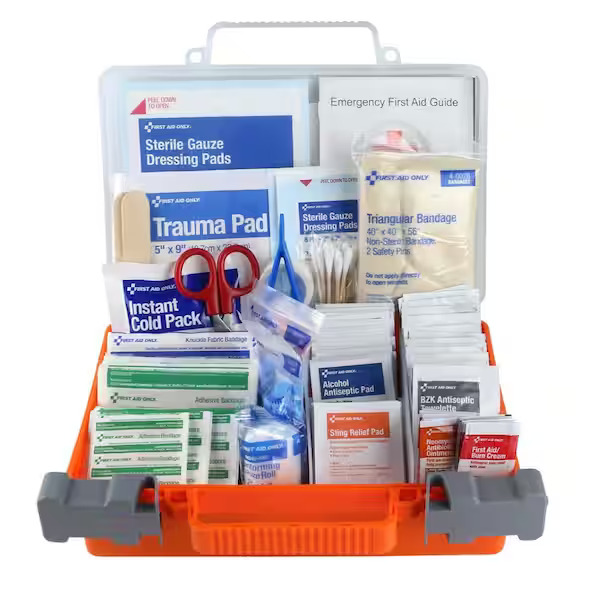
A first aid kit is a portable container/box stocked with equipment, materials and basic medicines used by a trained first aider to give immediate care to an injured or suddenly ill person before professional medical help is available. First aid kit or medical kit is a collection of supplies and equipment used to give immediate medical treatment, primarily to treat injuries and other mild or moderate medical conditions.
📝 Exam Tip: When defining a first aid kit, ensure you mention that it is portable, used by a trained person, and serves to bridge care until professional help arrives.It is mandatory to have a first aid kit in every workplace like school, college, house, and vehicles. It should be kept at such a place that is easily accessible. Also, everyone should be aware of it. It should be labeled as “First Aid” and should have a red cross on a white background. From time to time, its items should be checked and replaced. All the required items should be available and ready for use at all times.
A good first aid kit must meet the following criteria:
- Portable and easy to carry to the scene.
- Water-resistant and dust-proof (protects the sterile contents).
- Durable and firmly closable (the lid must fit tight).
- Clearly LABELLED "FIRST AID KIT" in bold, visible letters (often with a white cross on a green background).
- Contents must be organised (have compartments; frequently used items placed on top).
- Contents appropriate to the setting (a home kit is very different from a military combat kit).
- Stocked with non-expired items; checked regularly.
- Kept in an accessible but child-safe location.
- Simple to open in an emergency (but not so simple that toddlers can open it).
- Accompanied by a list of contents and emergency numbers taped inside the lid.
The minimum contents of the first aid box are as follows:
- Torch (01) & Thermometer (01)
- Tongue Depressor (Disposable ice cream spatula)
- Writing pad and Pen/pencil
- Bandages of various types, Gauze pieces, Cotton
- Eye pads, Plaster, Safety pins
- Scissors & Tourniquet
- ORS packets & Glucose packets
- Methylated spirit, Tincture of iodine, Tincture of benzoin
As a nurse, you must know exactly what is inside the kit and how to improvise if an item runs out.
- 1. Sterile gauze swabs/pads: Used for cleaning wounds, as a primary wound dressing, and to apply direct pressure to bleeding. Improvisation: Clean boiled-and-cooled cloth, or clean cotton from a brand new pillow (last resort).
- 2. Cotton wool: Used for cleaning around (not inside) wounds, applying antiseptic, and padding. Improvisation: Soft clean cloth.
- 3. Adhesive dressings (Plasters/Band-Aids): Various sizes for minor cuts, blisters, and small grazes.
- 4. Roller bandages (5cm, 7.5cm, 10cm): Used to hold dressings in place, apply even pressure, support sprains, and immobilise. Improvisation: Clean torn sheets, pagne (kitenge) cloth.
- 5. Triangular bandages: Extremely versatile! Used for arm slings, broad-fold/cravat bandages, immobilising limbs, or improvising a splint tie. Improvisation: A square piece of clean cloth folded diagonally.
- 6. Adhesive tape (Zinc oxide/plaster): Securing dressings and splints.
- 7. Elastic (Crepe) bandage: Provides compression for sprains/strains and joint support.
- 8. Antiseptic solutions:
- Hydrogen Peroxide (H2O2): Used for DIRTY/contaminated wounds. It effervesces (bubbles) to lift dirt and debris out of the wound.
- Povidone-iodine (Betadine): Used for CLEAN wounds.
- Surgical Spirit: Used to clean intact skin around the wound. NEVER put spirit inside an open wound — it damages exposed tissue and delays healing.
- Plain soap and clean water: The first-line and best/cheapest method for wound cleaning.
- 9. Antibiotic ointment/cream: E.g., Gentian violet or tetracycline eye ointment (as per local protocol) to prevent infection in minor wounds.
- 10. Sterile saline/Eye wash: For irrigating eyes and flushing wounds.
- 11. Sterile eye pads: Specifically shaped for eye injuries.
Examiners love asking: "Which antiseptic for a dirty wound and why?"
Answer: Hydrogen Peroxide (H2O2) because its effervescence (bubbling action) physically lifts debris and grit out of the wound bed, and it has virucidal/bactericidal properties.
- 12. Tourniquet: (Commercial windlass type preferred). Used as a last-resort to control life-threatening limb bleeding. Improvisation: A wide cloth + a strong stick. NEVER use wire or thin cord (it cuts tissue). ALWAYS write the time of application on the casualty.
- 13. Hemostatic dressing/gauze: Special gauze coated with clotting agents used for packing deep wounds.
- 14. Safety pins: Securing bandages, slings, and fastening splints.
- 15. Scissors: (Bandage scissors with a blunt tip to avoid cutting the patient) for cutting bandages, gauze, and exposing wounds by cutting clothing.
- 16. Tweezers/Forceps: Removing splinters, stings, ticks, and debris.
- 17. Oral analgesics: Paracetamol (pain/fever), Ibuprofen (pain/inflammation — avoid in bleeding/ulcer/asthma), Aspirin 300 mg (have the casualty chew it if suspecting a heart attack).
- 18. Oral Rehydration Salts (ORS): For dehydration from diarrhoea, vomiting, or heat illness.
- 19. Antihistamine tablets/cream: For allergic reactions, insect bites/stings.
- 20. Glucose powder/tablets or sugar sachets: For hypoglycaemia (low blood sugar).
- 21. Antacid tablets: For heartburn and severe indigestion.
- 22. Anti-diarrhoeal: (Only per local medical guidance).
- 23. Anti-emetic: (Per protocol/scope).
- 24. Disposable gloves: (Latex/Nitrile — use Nitrile if there is a latex allergy). To avoid contact with blood and body fluids.
- 25. Face masks: To protect the casualty and first aider from respiratory droplet spread.
- 26. Face shield / Pocket mask: With a one-way valve for safer rescue breaths during CPR.
- 27. Apron/Gown: To protect clothing during heavy bleeding care or childbirth.
- 28. Digital thermometer: To check temperature.
- 29. Torch/Flashlight + Spare batteries: Essential for night scenes and examining pupil reactivity.
- 30. Splints (Padded): For immobilising fractures. Improvisation: Sticks, cardboard, rolled newspapers.
- 31. Razor/Surgical blade: Per protocol only (historically used for incisions like snake bites, but rarely recommended in modern first aid).
- 32. Small notebook + pencil: For recording casualty details, tourniquet time, and vital observations to hand over to EMS.
- 33. Casualty blanket: (Small foil/space blanket or light blanket). Used for warmth, shock prevention, and foil reflects body heat back to the patient.
- 34. Whistle: For attracting help in remote areas or collapsed buildings.
- 35. List of Emergency Numbers Card: 999 / 112; Uganda Red Cross ambulance 0800 211 088; nearest hospital; nearest police station.
Kits are modified based on where they will be used:
- HOME First Aid Kit:
- Purpose: Common home accidents — cuts, burns, scalds, minor bleeding, insect bites, simple falls.
- Contents: Plasters, gauze, bandages, scissors, tweezers, antiseptics, ORS, analgesics, antihistamine cream, thermometer, blanket.
- Kept: Safe, accessible, out of children's reach; all adults must know its location.
- MEDICAL First Aid Kit (for chronic conditions):
- Purpose: To manage pre-existing medical conditions during an emergency or travel.
- Contents: Inhalers (Asthma), Glucose/sugar (Diabetes), Aspirin (Heart disease), Epinephrine auto-injector (Severe allergy), prescribed meds.
- OFFICE / Workplace Kit:
- Purpose: Workplace injuries (cuts, burns, eye strain) + common ailments (headache, indigestion, ulcers).
- Contents: Standard items + eye wash, extra plasters, simple analgesics, antacids.
- Legal Note: Under the Uganda OSHA (Occupational Safety and Health Act) 2006, workplaces MUST provide first aid boxes and appoint trained first aiders.
- SPORTS Kit:
- Purpose: Pitch-side injuries during matches/training — sprains, strains, fractures, wounds, heat illness.
- Contents: Elastic bandages, triangular bandages, splints, cold packs/instant ice, antiseptics, gloves, scissors, ORS. Kept by the team first aider at every game.
- MILITARY / Combat Kit:
- Purpose: War/combat wounds — severe bleeding, chest wounds, blast injuries.
- Contents: Tourniquets, hemostatic dressings, field dressings, bandages, chest seals, morphine (for trained personnel), airway adjuncts. Rugged, camouflaged design carried on body armour.
- FIRST RESPONDER Kit (Ambulance/Community Responder):
- Purpose: Pre-hospital care while awaiting evacuation.
- Contents: BP machine, thermometer, stethoscope, pulse oximeter, trauma shears (to cut clothing), gloves, masks, dressings, splints, airway adjuncts, Ambu bag.
- CAMPING / OUTDOOR / Travel Kit:
- Purpose: Remote-area injuries far from help — wounds, bites/stings, dehydration, blisters.
- Contents: Tweezers, bandages, scissors, dressings, antiseptics, ORS, antihistamines, analgesics, snake-bite protocol items, whistle, emergency blanket, water purification tablets.
Follow these 8 steps strictly in order:
- Choose a large, flexible, water-resistant plastic container with a tight-fitting lid.
- Make a list of items needed (based on common home accidents in your specific family: are there children? elderly? risk of burns?).
- Stock the container with all the listed items.
- Inform ALL adult family members where the kit is kept.
- Train adults how to use each item (e.g., practice bandaging together!).
- Label the outside boldly "FIRST AID KIT".
- Store safely — easily accessible to adults, but OUT of children's reach.
- Inspect regularly: check expiry dates; restock immediately after every use; tick against the checklist.
- Keep it closed, clean, dry, and away from direct sunlight (Ugandan heat rapidly degrades drugs and destroys glove elasticity).
- Check monthly: expiry dates, completeness, and the sterility of sealed items.
- Replace items immediately after use so the kit is always 100% ready.
- Never store strong, unlabelled medicines loose in the box (major child safety hazard).
- Wash reusable instruments; sterilise them per protocol.
- Keep the emergency-number card updated.
As a nurse, do not just say "it is bad." Explain the clinical danger:
- Expired antiseptics lose potency ➔ failure to kill bacteria ➔ severe wound infection.
- Expired gloves perish, become brittle and tear during use ➔ massive blood exposure (HIV/HBV risk for the first aider).
- Expired drugs may be completely ineffective (casualty gets no relief) or toxic (causes poisoning).
- Damp/Expired gauze is no longer sterile ➔ introduces deadly hospital-acquired infections directly into the bloodstream.
- Personal Protection: Measures taken by the first aider to protect themselves and others from injury or infection while giving care.
- Standard Precautions: (Formerly known as "universal precautions"). This means treating ALL blood and body fluids (except sweat) from EVERY casualty as potentially infectious, regardless of the casualty's known status — because in an emergency, their status is often UNKNOWN.
- Body substances requiring precautions: Blood, vomit, saliva, sputum, urine, faeces, pus, wound drainage, semen/vaginal fluids, amniotic fluid, Cerebrospinal fluid (CSF). (Note: Sweat is generally considered low risk).
Nurses and first aiders are exposed to high-risk fluids. You must protect yourself from:
- HIV: Needle-stick risk is ~0.3%; mucous membrane exposure is ~0.09%. Post-Exposure Prophylaxis (PEP) is highly effective if started within 72 hours.
- Hepatitis B (HBV): Much more infectious than HIV via blood (needle-stick risk is ~30% if unvaccinated!). A highly effective vaccine is available — all nurses should be fully vaccinated!
- Hepatitis C (HCV): Needle-stick risk is ~1.8%; there is no vaccine available.
- Others: Ebola/Marburg (epidemics in Uganda!), Cholera, Typhoid, TB, COVID-19, and other respiratory viruses.
| PPE Item | Protects | When to Use |
|---|---|---|
| Gloves (Nitrile/Latex) | Hands from blood/fluids | Touching blood, wounds, mucous membranes, body fluids; handling contaminated items. |
| Face mask (Surgical) | Mouth/Nose | Casualty with coughing/respiratory symptoms (TB, COVID); or when splashes are likely. |
| Eye goggles / Face shield | Eyes | Splashing/spraying blood or fluids is likely (e.g., major arterial bleeding, explosive vomiting, suctioning). |
| Apron / Gown | Body/Clothing | Heavy bleeding, vomiting, cholera care, assisting in childbirth. |
| Gumboots | Feet | Floods, mud, blood-soaked ground, epidemic response. |
| Cap / Hair cover | Hair | Heavy contamination, epidemic/Operating Theatre settings. |
| Resuscitation face shield / pocket mask / Ambu bag | Mouth | Giving rescue breaths — NEVER do bare mouth-to-mouth where a barrier exists. |
- WHEN: Before contact with the casualty, immediately after contact with blood/fluids, after removing gloves, and after the whole event is concluded.
- HOW: Use soap + running water, rub all surfaces vigorously for 40–60 seconds; dry with a clean towel or air dry. If there is absolutely no water available: use an alcohol-based hand rub (≥60% alcohol) and rub until completely dry.
Remember: Gloves are NOT a substitute for hand washing! Gloves can have microscopic holes. Always wash hands after doffing gloves.
- Remove all jewellery and watches; ensure nails are short; cover your own cuts with a waterproof plaster.
- Perform Hand Hygiene.
- Put on the Gown/Apron.
- Put on the Face mask (cover nose + mouth; mould the metal nose clip).
- Put on Eye protection (goggles/face shield).
- Put on Gloves (pull them over the gown cuffs if wearing one).
Reverse order, avoiding touching the contaminated outside surfaces:
- Gloves
- Eye protection
- Gown
- Mask
- Hand hygiene
Sharps Safety: Never recap, bend, or break needles by hand. Use yellow puncture-proof safety boxes and dispose immediately at the point of use. Never pass a sharp hand-to-hand — place it in a kidney dish/tray.
- BLACK bins/bags: General (non-infectious) waste: food remains, packaging, ordinary paper.
- RED bins/bags: Highly infectious waste and Infectious waste: HIV/HBV waste, laboratory cultures (must burn/incinerate), blood-soaked dressings, used gloves, specimen containers.
- BROWN bins/bags: Pharmaceutical and laboratory waste.
- SAFETY BOX (Yellow, puncture-proof): Sharps: needles, surgical blades.
If you suffer a needle-stick injury or blood splash:
- First aid: Wash the wound thoroughly with soap and running water. If splashed in mucous membranes (eyes/mouth), flush with plain water/saline for 10+ minutes.
- Do NOT: Do not apply strong bleach or caustics. Do not squeeze or suck the wound!
- Report: Immediately report to the occupational health officer or Sister-in-charge.
- Risk assessment & Treatment: Start HIV PEP within 72 hours (sooner is better; ideally ≤2 hours). Administer Hepatitis B immunoglobulin/vaccine if unvaccinated.
- Follow-up: Take baseline labs (HIV, HBsAg, HCV), receive counselling, and return for follow-up testing at 6 weeks, 12 weeks, and 6 months.
- Document: Write a formal incident report.
Examiners love to ask the difference between these three levels:
- Cleaning: The physical removal of dirt/organic matter with soap + water. (This is always the first step, as dirt blocks disinfectants).
- Disinfection: Kills most pathogens (but not all spores). Methods include boiling for 20 mins, using chlorine solutions (0.05% for hands/skin; 0.1% for surfaces/instruments per MoH), and 70% alcohol for intact skin/instruments.
- Sterilisation: Kills ALL microbes, including highly resistant bacterial spores. Achieved by Autoclaving (121°C, 15 psi, 15–20 mins). Note: Boiling is NOT sterilisation; it is only high-level disinfection!
- Wear highly reflective clothing at road traffic accidents (night risk is huge!).
- Switch off vehicle engines, apply the parking brake; put on hazard lights; assign a bystander far back to warn oncoming traffic.
- Do not enter unstable buildings, fast-flowing flood water, or fires without professional rescue services.
- Beware of crowd violence — ask the police to secure the scene when handling mob justice or riot casualties.
Quick Quiz
First Aid Kit and Life Threatening Conditions Quiz
First Aid
Privacy: Your details are used only for quiz tracking and certificates.
First Aid Kit and Life Threatening Conditions Quiz
First Aid
Preparing questions...
Choose your answer and keep your streak alive.
Great effort.
Here is your quick performance summary.
Some notice for anatomy are not opening
The best
Thanks