
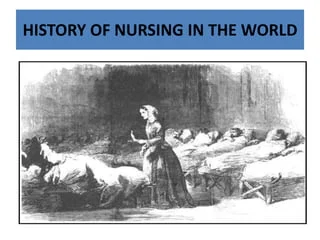
The history of nursing is a rich tapestry that weaves together the evolution of human compassion, scientific discovery, and social reform. From the earliest days of human civilization, where caregiving was an informal family duty, to the highly specialized and technologically advanced profession it is today, nursing has continuously adapted to meet the healthcare needs of society.
- Early Origins of Nursing and Prehistoric Caregiving
- Definition and Significance of the History of Nursing
- Nursing in the Ancient World (Egypt, India, China, Greece, Rome)
- The Influence of the Early Christian Era and the Middle Ages
- The Renaissance and the Dawn of Scientific Healthcare
- The Development of Modern Nursing and Florence Nightingale
- The Evolution of Nursing Education and Professional Regulation
- Influential Nurses in Global Nursing Development
- The Development of Nursing Theories and Evidence-Based Practice
- Wartime Nursing, Public Health, and Infection Control
- The Role of Technology in Modern Healthcare
Nursing is a dynamic and comprehensive health profession concerned with the promotion of health, the prevention of illness, the holistic care of individuals who are sick or injured, rehabilitation, the relief of suffering, and the unwavering support of individuals, families, and communities throughout the entire lifespan.
Unlike medical practice, which historically focused primarily on the diagnosis and treatment of disease, nursing combines scientific knowledge (pathophysiology, pharmacology, anatomy) with clinical skills, ethical principles, compassionate human-centric care, education, leadership, and rigorous research. It is an art and a science dedicated to improving the quality of life.
The history of nursing is the systematic study of the development of nursing as a recognized profession. It encompasses a deep dive into its ancient origins, shifting cultural beliefs, evolving clinical practices, the establishment of formal education, the rise of clinical leadership, and the biographies of influential individuals who shaped the field. It also tracks how broad changes in global healthcare systems, wars, and pandemics have molded the nurse's role over time.
Understanding this history explains how nursing transitioned from informal, home-based caregiving and traditional, folklore-based healing practices into a heavily regulated, globally respected, and evidence-informed profession.
By engaging with nursing history, students and current professionals can:
- Understand Origins and Development: Trace the roots of modern protocols back to their inception, understanding why certain practices exist today.
- Identify Contributions of Pioneers: Acknowledge the sacrifices and innovations of influential nurses and healthcare visionaries who fought for better patient conditions and professional recognition.
- Appreciate Educational Evolution: See how nursing education moved from informal apprenticeships in overcrowded wards to rigorous university-level scientific degrees.
- Contextualize Societal Influence: Understand how social, cultural, religious, scientific, and political changes (such as women's rights movements and global wars) have directly influenced nursing scope and autonomy.
- Develop Professional Identity: Build a sense of pride, respect for nursing values, and a unified professional identity.
- Recognize Historical Challenges: Learn about the historical barriers faced by early nurses, including limited access to education, abysmal working conditions, gender inequality, and lack of professional respect.
- Understand Evidence-Based Practice: See the transition from superstition and tradition to systematic, research-backed nursing interventions.
- Appreciate Public Health Roles: Recognize the foundational role nurses have played in epidemiology, disease prevention, and global healthcare initiatives.
- Learn from the Past: Analyze past successes and failures in healthcare delivery to avoid repeating historical mistakes (e.g., poor sanitation practices).
- Cultivate Leadership: Develop the advocacy, research, and leadership skills necessary to shape the future of healthcare policy.
Nursing did not begin as a formally established or recognized profession. Rather, it developed organically and gradually as human beings exhibited an innate need to care for the sick, injured, elderly, and vulnerable members of their local tribes and communities. Survival of the group depended on mutual caregiving.
During prehistoric times, the concept of disease was deeply intertwined with spirituality and magic. Illness was often viewed as a curse or the presence of evil spirits (animism). Care was mainly provided by family members (predominantly women functioning as the primary caregivers), traditional healers (shamans or medicine men), and community leaders.
- Family-Centered Care: The basic care of sick and injured family members within the home environment.
- Childbirth Assistance: Early forms of midwifery where experienced women assisted others during labor and delivery.
- Herbal Medicine: The trial-and-error use of medicinal plants, roots, and traditional remedies to treat ailments, ease pain, and induce healing.
- Basic Wound Care: The application of crude bandages, mud, leaves, and early suturing techniques to stop bleeding and protect injuries.
- Sustenance: The provision of fundamental human needs: food, clean water, shelter, warmth, and comfort.
- Protection: Shielding vulnerable members of the community from predators and the harsh elements.
Limitation of Prehistoric Care: Care was based entirely on observation, lived experience, cultural/religious beliefs, and passed-down traditional knowledge rather than systematic scientific investigation or biological understanding of disease.
As human societies transitioned from nomadic tribes to settled agricultural civilizations, healthcare began to formalize. Several ancient civilizations made profound, foundational contributions to the development of healthcare knowledge, sanitation, and caregiving.
| Civilization | Major Contributions to Healthcare and Nursing Concepts |
|---|---|
| Ancient Egypt | Pioneered early medical texts (papyruses), detailed wound treatment, strict hygiene practices, embalming (which advanced anatomical knowledge), and highly organized approaches to healing and pharmacology. |
| Ancient India | Advanced surgical knowledge, detailed medicinal practices, the creation of early hospitals, and established specific principles of caring for patients (requiring caregivers to be pure, clean, and clever). |
| Ancient China | Developed comprehensive traditional medical systems based on balance (Yin and Yang), extensive herbal medicine (materia medica), and techniques like acupuncture and massage. |
| Ancient Greece | Shifted medicine from magic to rational science. Emphasized systematic medical reasoning, direct observation of symptoms, and ethical standards (the Hippocratic Oath). |
| Ancient Rome | Mastered public health engineering: created advanced public sanitation systems, aqueducts for fresh water, public baths, and organized military medicine with dedicated mobile hospitals. |
| Ancient Mesopotamia | Produced early written medical texts and legal codes (Code of Hammurabi) regulating medical practice, heavily influenced by a mix of religious rituals and empirical observation. |
Important Historical Note: While these ancient civilizations contributed vastly to overall healthcare, anatomy, pharmacology, and medical knowledge, modern "professional nursing" as a distinct, educated discipline had not yet developed into its present form. Caregiving was still largely a domestic or religious duty.
The ancient Egyptians were highly advanced in their medical practices. Their process of mummification required the removal of organs, leading to a surprisingly advanced understanding of human anatomy for the era.
- Contributions: The development of medical knowledge was meticulously recorded on papyrus. The Ebers Papyrus is one of the oldest known medical works, containing over 700 magical formulas and folk remedies. They developed splints for fractures, managed wounds effectively, and enforced strict cleanliness and hygiene rules, particularly for priests and healers.
- Relevance to modern nursing: Modern nurses continue to rely on the core principles established here: the absolute necessity of hygiene, meticulous wound care, keen observation of the patient's condition, and safe patient management. Today, however, these practices are supported by microbiological science rather than religious edict.
Ancient Indian healthcare, deeply rooted in the Ayurvedic tradition, included holistic approaches to patient care, advanced surgery, hygiene, and the extensive use of medicinal plants. Male nurses were frequently utilized in early Indian hospitals, a rarity in ancient history.
- Contributions to healthcare: The work associated with Sushruta, an ancient Indian physician, is globally recognized for groundbreaking contributions to surgical knowledge, including early plastic surgery (rhinoplasty) and cataract removal. Indian texts demanded that caregivers maintain high personal hygiene, prepare food properly, and focus on the physical and psychological comfort of the patient.
- Relevance to modern nursing: The historical development of surgical care in India underscores the timeless nursing priorities of proper patient preparation before procedures, sterile wound management, infection prevention, and continuous post-operative observation.
Ancient Greece marked a massive turning point where illness began to be viewed not as a divine punishment, but as a natural occurrence resulting from an imbalance in the body.
Hippocrates (approximately 460–370 BCE), often called the "Father of Medicine," is associated with the development of systematic medical observation and ethical traditions (the Hippocratic Oath). He proposed that disease was caused by natural forces and imbalances in the "four humors" (blood, phlegm, yellow bile, black bile).
- Relevance to modern nursing: While Hippocrates was a physician, the methodologies he championed are the bedrock of the modern nursing process. Modern nursing uses his principles of:
- Systematic, head-to-toe patient assessment.
- Careful, objective observation of signs and symptoms.
- Clinical reasoning based on data rather than superstition.
- Strict ethical responsibilities (confidentiality, doing no harm).
- Accurate documentation and communication of findings.
The Romans were brilliant engineers and administrators. They absorbed Greek medical knowledge but applied it on a massive, societal scale, focusing heavily on public health and the health of their formidable armies.
- Major contributions: The development of massive public sanitation systems, including the construction of aqueducts to bring fresh, clean water into cities, and complex sewage systems (like the Cloaca Maxima) to remove waste. They established organized military medical services, building valetudinaria (mobile field hospitals) to treat wounded soldiers.
- Relevance to modern nursing: Roman innovations are the direct ancestors of modern public health nursing. Today's nurses contribute to infection prevention and control, advocate for public health education, promote community sanitation, and manage healthcare delivery within organized, large-scale hospital systems.
The advent and spread of Christianity fundamentally shifted the motivation for caregiving. It moved from a duty primarily owed to family or soldiers, to a sacred, moral obligation to care for the sick, poor, and marginalized as an act of devotion to God.
Christian teachings emphasized agapé (selfless love), compassion, charity, and service. Notable women, such as Phoebe (considered the first visiting nurse or deaconess) and Fabiola (who funded the first free Christian public hospital in Rome), were pioneers of this era.
- Establishment of Charitable Care: Funding and supporting care for the sick, orphans, and widows purely out of charity.
- Institutional Development: The creation of early hospitals (xenodochia) designed specifically to provide shelter and care for travelers, the destitute, and the sick.
- Community Involvement: Religious communities actively seeking out and caring for the most vulnerable people in society, rather than abandoning them.
- Epidemic Support: Providing fearless, compassionate care during devastating plagues and periods of extreme social hardship, even at great personal risk to the caregivers.
The Middle Ages (roughly the 5th to the late 15th century) saw the collapse of the Roman Empire. During this chaotic time, monasteries and convents became the primary sanctuaries for preserving medical knowledge and providing healthcare. This era is heavily defined by Monastic Nursing.
- Providing food, warmth, and safe shelter to pilgrims and the destitute.
- Caring directly for the sick and injured using preserved ancient texts and monastery herb gardens.
- Offering palliative care and supporting the dying with dignity.
- Maintaining cleanliness within the monastic care environments to the best of their ability.
- Preparing and administering traditional herbal remedies, poultices, and salves.
- Offering continuous spiritual support, prayer, and emotional comfort, which was viewed as equal to, or more important than, physical healing.
- Lack of Scientific Foundation: There was a very limited scientific understanding of anatomy, physiology, and the true pathology of disease.
- No Germ Theory: A complete lack of understanding regarding microorganisms, bacteria, and how infections were transmitted.
- Sanitation Issues: Despite efforts, sanitation was generally inadequate, leading to the rapid spread of diseases within early hospitals.
- Theological Dominance: Care was heavily influenced by religious beliefs—illness was sometimes still viewed as divine testing or punishment, which occasionally hindered practical medical intervention.
- No Formal Education: There was little to no formal, standardized clinical education for these religious caregivers; skills were passed down via apprenticeship.
The Crusades (religious wars) necessitated organized care for thousands of injured and sick soldiers far from home. This led to the creation of Military Nursing Orders, such as the Knights Hospitallers of St. John of Jerusalem. These orders established large, highly organized hospitals and introduced the concept of disciplined, hierarchical rank in nursing, heavily influencing the structured nature of modern hospital wards.
The Renaissance (14th to 17th centuries) was a period of cultural rebirth and intellectual awakening in Europe. It marked a distinct shift away from unquestioned theological dogma toward scientific inquiry, observation, and humanism.
- Increased Interest in Human Anatomy: Artists and early scientists began dissecting human cadavers, leading to accurate anatomical illustrations and understanding.
- The Printing Press: The invention of the printing press allowed medical texts, herbal guides, and anatomical charts to be mass-produced and widely disseminated, breaking the monopoly of knowledge held by monasteries.
- Observation and Investigation: A philosophical shift toward empiricism—believing what could be observed and proven through investigation.
- Advances in Medical Education: The establishment of early universities and medical schools.
- Changes in Charitable Care: In Protestant countries, the closing of Catholic monasteries led to a severe shortage of trained religious nurses. This resulted in the "Dark Period of Nursing," where care was often relegated to untrained, illiterate women of low social standing, highlighting the desperate need for professional nursing reform.
Andreas Vesalius is considered the founder of modern human anatomy. He challenged centuries-old anatomical assumptions (many based on animal dissections) by conducting direct, meticulous human anatomical dissections and publishing detailed, accurate texts.
Vesalius's work laid the necessary groundwork for modern nursing practice. A profound knowledge of human anatomy and physiology is absolutely essential for:
- Conducting accurate physical assessments.
- Ensuring the safe administration of medications (knowing injection sites, absorption routes).
- Understanding complex disease processes and pathophysiology.
- Performing invasive nursing procedures safely (e.g., catheterization, wound dressing).
- Recognizing abnormal clinical findings rapidly.
- Planning and implementing effective, individualized patient care.
Example: A nurse who deeply understands the anatomy of the respiratory system can better auscultate lung sounds, assess irregular breathing patterns, recognize abnormal respiratory findings (like crackles or wheezes), and provide appropriate, life-saving nursing care.
Modern nursing developed progressively through the 18th and 19th centuries, driven by urgent needs arising from the Industrial Revolution (urban crowding, poor sanitation), global conflicts, and rapid advancements in scientific knowledge. The professionalization of nursing involved establishing structured education, advocating for public health, and creating strong nursing leadership.
Florence Nightingale stands out as the most pivotal and influential figure in the formal development of modern nursing education, hospital reform, and nursing administration.
Florence Nightingale was born on May 12, 1820, to a wealthy British family in Florence, Italy, and died on August 13, 1910, in London. Defying social expectations for women of her class, she pursued a calling to nurse the sick. She became a prominent nursing reformer, a brilliant educator, a pioneering statistician, and a relentless healthcare advocate.
Her most famous work occurred during the Crimean War (1853-1856). Upon arriving at the British military hospital in Scutari, she found horrific conditions: overcrowding, filth, lack of basic supplies, and soldiers dying more from hospital-acquired infections (cholera, typhus) than from battle wounds.
- Organized Care: She completely reorganized nursing care, supply chains, and hospital support services, bringing order to chaos.
- Sanitation Advocacy: She relentlessly advocated for, and implemented, rigorous cleaning of the wards, laundry services, and personal hygiene for the soldiers.
- Data Collection: She systematically collected health-related statistics to prove that sanitary reforms were saving lives, famously inventing the "polar area diagram" (a type of pie chart) to visualize mortality data.
- Public Attention: Through her meticulous reports and letters, she brought intense public and political attention to the appalling conditions of military healthcare.
Historical Qualification: While Nightingale's work vastly improved military hospital conditions, modern historians note that the precise causes of the drastic drop in mortality rates were complex. They included the eventual repair of sewers and the provision of fresh water by the Sanitary Commission. Her true genius lay in identifying the environmental causes of disease and mobilizing the resources to fix them.
Nightingale developed foundational theories emphasizing that the primary role of the nurse is to put the patient in the best possible environmental condition for nature (the body) to act upon them and heal. This is known as her Environmental Theory of Nursing.
| Environmental Factor | Application in Nursing Practice |
|---|---|
| Fresh Air & Ventilation | Promoting constant, adequate ventilation to keep the air the patient breathes as pure as the external air, without chilling them. |
| Clean Water | Ensuring access to absolutely safe, pure water for drinking, medication administration, and patient hygiene. |
| Cleanliness | Maintaining strict personal hygiene for the patient and nurse, and rigorous environmental hygiene (clean linens, scrubbed floors). |
| Adequate Drainage | Promoting effective sanitation, preventing sewer gas leaks, and ensuring the appropriate, rapid disposal of human and medical waste. |
| Light | Ensuring appropriate exposure to direct sunlight (which she observed had purifying qualities) and adequate artificial light. |
| Nutrition | Assessing dietary needs, ensuring the quality of food, and supporting adequate food and fluid intake tailored to the patient's condition. |
| Quiet & Chattering Hope | Reducing unnecessary, sudden noise which startles the patient, promoting rest, and avoiding false cheerfulness ("chattering hopes") that dismisses the patient's suffering. |
| Warmth | Preventing inappropriate exposure to cold, managing drafts, and maintaining the patient's body temperature for comfort and recovery. |
Clinical Example: A modern nurse caring for a patient with severe pneumonia ensures the patient receives their prescribed antibiotics, but equally focuses on positioning them upright to ease breathing, assessing oxygenation, ensuring they are hydrated, opening a window if appropriate for fresh air, and maintaining a quiet, clean, and restful environment to optimize the body's natural healing processes.
- Nursing Education Reform: In 1860, utilizing funds raised in her honor, she established the Nightingale Training School for Nurses at St. Thomas' Hospital in London. This was the first secular, scientifically based nursing school. It shifted nursing from a menial task to a respected profession with structured training, strict discipline, and ethical codes of conduct.
- Hospital Reform: She became an international consultant on hospital architecture, advocating for the "pavilion style" hospital design which maximized light and cross-ventilation.
- Nursing Research and Statistics: She is considered a pioneer of applied statistics in healthcare. She utilized graphical presentations to make complex epidemiological data understandable to politicians, thereby forcing systemic healthcare reform.
- Professionalization: Her extensive writings, most notably "Notes on Nursing: What it is, and what it is not" (1859), helped solidify the view that nursing was a distinct profession requiring rigorous education, high moral character, and specialized knowledge separate from medicine.
The journey of nursing education reflects the profession's transition from a trade learned by observation to an academic, scientific discipline.
Before the late 19th century, aspiring nurses learned primarily through informal means:
- Apprenticeship: Following an older, experienced nurse and learning by watching and doing.
- Practical Experience: Being thrown onto overcrowded hospital wards and learning through trial and error.
- Religious Training: In Catholic and some Protestant traditions, novices were taught by older nuns/sisters within the confines of charitable institutions.
The major flaw was that the quality, depth, and duration of this training varied wildly. There were no standards, no exams, and no guaranteed baseline of knowledge.
Following Nightingale's model, the late 19th and early 20th centuries saw a massive expansion of formal, hospital-based "diploma" nursing schools globally. Features of this formalized education included:
- Theoretical Instruction: Classroom lectures by physicians and senior nurses.
- Supervised Clinical Practice: Hands-on training on hospital wards under strict oversight.
- Scientific Foundation: Formal classes in anatomy, physiology, and early microbiology.
- Hygiene and Infection Prevention: Rigorous drilling in aseptic techniques.
- Standardized Procedures: Learning specific, uniform ways to execute nursing tasks (e.g., bandaging, medication administration).
- Professional Ethics: Instilling discipline, duty, punctuality, and a strong moral compass.
- Assessment: Formal examinations required to graduate and earn a nursing pin or diploma.
The 20th century witnessed unparalleled advancements in medical science, public health, and technology. Nursing had to rapidly evolve its educational models and scope of practice to keep pace with these changes.
- Expansion of Higher Nursing Education: Nursing education began to shift from hospital-controlled diploma programs (where students were often used as free labor) to independent, university-based degree programs (Bachelor of Science in Nursing). This era also saw the creation of postgraduate (Master's and Doctoral) nursing programs, placing a heavy emphasis on nursing theory, independent research, and advanced clinical reasoning.
- Professional Regulation and Licensure: To protect the public, countries established national or state nursing councils. These bodies created mandatory registration systems, standardized licensure exams (like the NCLEX), and enforced strict scopes of practice and disciplinary procedures.
- Advances in Medical Science: The discovery of antibiotics (penicillin), mass vaccination campaigns, advanced diagnostic imaging, safe anesthesia, complex surgical procedures, and the birth of Intensive Care Units (ICUs) dramatically increased the complexity of nursing responsibilities. Nurses had to become highly technically skilled.
- The Rise of Public Health Nursing: Driven by rapid urbanization, overcrowding, and infectious disease outbreaks, nurses moved into the community. Pioneers like Lillian Wald championed public health nursing, focusing on maternal and child health, mass immunization, school health clinics, home-based care, and epidemiological surveillance.
- Expansion of Nursing Specialties: As medical knowledge exploded, no single nurse could know everything. Nursing splintered into highly specialized fields, including:
- Medical-Surgical Nursing
- Paediatric and Neonatal Nursing
- Psychiatric and Mental Health Nursing
- Midwifery and Obstetrical Nursing
- Critical Care and Intensive Care Nursing (ICU)
- Operating Theatre (Perioperative) Nursing
- Oncology Nursing
- Geriatric Nursing
- Emergency and Trauma Nursing
While Florence Nightingale is the most famous, the development of global nursing is the result of the tireless efforts of many visionary leaders.
- Country: United States.
- Background: Clara Barton was a pioneering humanitarian, teacher, and the founder of the American Red Cross in 1881.
- Contributions: Known as the "Angel of the Battlefield," she independently organized and provided critical assistance, supplies, and nursing care to wounded soldiers on the front lines during the American Civil War. After the war, she traveled to Europe, learned of the International Red Cross, and campaigned successfully to establish an American branch.
- Relevance to nursing: Her legacy highlights the critical role of nurses in humanitarian assistance, large-scale disaster response, and organized support for affected communities outside of traditional hospital walls.
- Clarification: Barton was not a formally trained professional nursing educator like Nightingale; her major and lasting contributions were in grassroots humanitarian service, logistics, and disaster relief organization.
- Background: A Jamaican-born British nurse, healer, and businesswoman of mixed Jamaican and Scottish heritage.
- Contributions: Despite facing intense racial prejudice and being rejected by the British War Office to join Nightingale's nursing contingent, Seacole funded her own trip to the Crimean War. She established the "British Hotel" near the battlefields of Balaclava—a place providing comfortable quarters, nutritious food, and direct care to sick and convalescing soldiers. She famously rode out onto the battlefields to treat the wounded under fire, using her extensive knowledge of traditional herbal remedies (especially for cholera and dysentery).
- Importance to nursing history: Mary Seacole's story highlights the immense courage, entrepreneurial initiative, and vital contributions of minority nurses and individuals operating entirely outside formal institutional structures to provide exceptional humanitarian healthcare.
- Background: An incredibly influential American nurse, researcher, educator, and nursing theorist, often referred to as the "Florence Nightingale of the 20th Century."
- Contributions: She provided one of the most universally accepted definitions of nursing: "The unique function of the nurse is to assist the individual, sick or well, in the performance of those activities contributing to health or its recovery (or to peaceful death) that he would perform unaided if he had the necessary strength, will or knowledge."
- Fourteen Basic Needs (Henderson's Need Theory): She outlined 14 fundamental human needs that form the basis of nursing care:
- Breathing normally.
- Eating and drinking adequately.
- Eliminating body wastes.
- Moving and maintaining desirable postures.
- Sleeping and resting.
- Selecting suitable clothing (dressing/undressing).
- Maintaining body temperature within normal range.
- Keeping the body clean and well-groomed (hygiene).
- Avoiding dangers in the environment and avoiding injuring others.
- Communicating with others in expressing emotions, needs, fears.
- Worshipping according to one's faith.
- Working in such a way that there is a sense of accomplishment.
- Playing or participating in various forms of recreation.
- Learning, discovering, or satisfying the curiosity that leads to normal development and health.
- Relevance to nursing: Henderson's framework is the foundation of modern holistic nursing assessment, emphasizing that a patient is not just a disease, but a whole person with physical, psychological, and social needs.
- Background: An esteemed American nursing theorist.
- Major concepts (Self-Care Deficit Theory): Orem believed that individuals have an innate ability and responsibility to care for themselves (Self-Care Agency). Nursing is required only when an individual is unable to meet their own biological, psychological, developmental, or social needs (Self-Care Deficit). The nurse designs Nursing Systems (wholly compensatory, partly compensatory, or supportive-educative) to bridge this gap.
- Relevance to nursing: This theory drives the modern nursing goal of restoring patient independence. Nurses assess what the patient can do safely, and provide assistance, education, and support only for what they cannot do.
- Example: A patient recovering from a stroke may initially require a wholly compensatory system (total assistance with bathing, dressing, feeding). As they rehabilitate, the nurse shifts to a supportive-educative system, teaching them how to use assistive devices to feed themselves, thereby promoting independence.
- Background: Known as the "Mother of Psychiatric Nursing," Peplau was a pioneering American nurse theorist.
- Contributions: She developed the Theory of Interpersonal Relations. Prior to Peplau, patients were often viewed as passive objects of care. She shifted the paradigm to emphasize the therapeutic, collaborative nurse-patient relationship as the core of nursing practice. She defined four phases of this relationship: Orientation, Identification, Exploitation, and Resolution.
- Relevance: Her work is the cornerstone of modern psychiatric and mental health nursing. It dictates that a nurse must consciously use therapeutic communication to establish trust, actively involve the patient in identifying their own needs, provide psychological support, and promote active participation in their own healing process.
As nursing transitioned into higher education in the mid-to-late 20th century, leaders realized that to be recognized as a true academic profession, nursing needed its own unique, scientifically derived body of knowledge, separate from medicine. Nursing theories emerged to provide this systematic foundation.
Nursing theories are critical because they help nurses to:
- Define the specific purpose, domain, and scope of nursing practice.
- Guide systematic patient assessment and data collection.
- Accurately identify and prioritize patient needs.
- Plan targeted, individualized nursing care interventions.
- Provide a rational framework to support complex clinical decision-making.
- Structure and improve nursing education curricula.
- Generate hypotheses to guide ongoing nursing research.
- Strengthen the professional identity and autonomy of nurses worldwide.
| Theorist | Theory or Contribution | Core Focus |
|---|---|---|
| Florence Nightingale | Environmental Theory | Manipulating the patient's environment to facilitate natural healing. |
| Virginia Henderson | Need Theory | Assisting individuals to gain independence in fulfilling 14 basic needs. |
| Dorothea Orem | Self-Care Deficit Theory | Nursing intervention is needed when a patient cannot perform necessary self-care. |
| Hildegard Peplau | Interpersonal Relations Theory | The therapeutic, interactive relationship between the nurse and the patient. |
| Jean Watson | Theory of Human Caring | Focuses on the spiritual and transpersonal aspects of caring, promoting human dignity. |
| Betty Neuman | Neuman Systems Model | Viewing the patient as a holistic system interacting with stressors, focusing on prevention. |
| Sister Callista Roy | Adaptation Model | The goal of nursing is to promote the patient's adaptation to changes in their environment. |
| Martha Rogers | Science of Unitary Human Beings | Viewing the human and environment as indivisible, interacting energy fields. |
| Imogene King | Theory of Goal Attainment | The nurse and patient communicate, set mutual goals, and act to attain them. |
| Ida Jean Orlando | Nursing Process Theory | Focuses on the immediate needs of the patient and the nurse's deliberate action to meet them. |
How would different theories guide a nurse caring for a newly diagnosed patient with Type 2 Diabetes?
- Orem's theory: The nurse assesses the patient's visual acuity and motor skills to determine if they possess the self-care agency to draw up and inject insulin themselves. If not, the nurse implements an educative system.
- Watson's theory: The nurse recognizes the patient's fear and anxiety regarding the diagnosis, demonstrating authentic, empathetic caring and respecting the patient's dignity during vulnerable moments.
- Henderson's theory: The nurse identifies unmet basic needs, such as a lack of knowledge regarding appropriate dietary choices (Need #14: Learning), and provides tailored nutritional education.
- King's theory: The nurse collaborates directly with the patient to establish realistic, mutually agreed-upon health goals, such as maintaining a specific blood glucose range over the next month.
Historically, the crucible of war, massive epidemics, natural disasters, and other extreme emergencies have been major catalysts for rapid advancements in nursing practice, trauma care, and emergency healthcare services.
Military and humanitarian nursing in conflicts spanning from the Crimean War, through World Wars I and II, to modern conflicts, helped advance critical concepts:
- Organized Casualty Care: Developing systematic ways to handle massive influxes of wounded patients simultaneously.
- Triage and Prioritization: The critical skill of rapidly assessing and sorting patients based on the severity of injuries and survivability.
- Advanced Wound Management: Innovations in treating severe trauma, burns, and preventing gangrene.
- Emergency Care & Transport: The development of front-line stabilization and rapid medical evacuation (medevac) techniques (e.g., helicopters in the Korean and Vietnam wars).
- Infection Prevention: Applying strict antiseptic techniques in chaotic, unsterile field environments.
- Disaster Preparedness: Creating protocols for future mass-casualty events.
- Psychological Support: Recognizing and treating "shell shock" (now PTSD) and providing profound emotional support to traumatized populations.
Example in Action: Triage. During a mass-casualty incident (like an earthquake or bombing), nurses and healthcare professionals use specific, rapid assessment algorithms (like START - Simple Triage and Rapid Treatment) to tag patients (e.g., Red for immediate, Yellow for delayed, Green for minor, Black for expectant/deceased). The goal is to provide the most timely care to those who need it most, thereby saving the maximum number of lives with limited resources.
Public health nursing (or community health nursing) is a specialized field of nursing that shifts the focus from the individual patient in a hospital bed to the broader community. It focuses on promoting and protecting the health of entire populations, preventing disease outbreaks, and improving aggregate health outcomes through community-based interventions, advocacy, and policy change. It flawlessly integrates clinical nursing knowledge with epidemiological and public health principles.
The urgent need for public health nursing was driven by several historical realities of the late 19th and early 20th centuries:
- Urbanization and Population Growth: The Industrial Revolution drew millions into cities, leading to unprecedented overcrowding.
- Poor Sanitation: Tenement housing lacked plumbing, clean water, and waste removal, creating breeding grounds for disease.
- Infectious Disease Outbreaks: Rampant spread of tuberculosis, cholera, diphtheria, and influenza through immigrant and impoverished populations.
- Maternal and Child Health Needs: Extremely high infant and maternal mortality rates due to lack of prenatal care and unsanitary birthing conditions.
- Public Health Reforms: Social reformers recognized that treating diseases in hospitals was futile if patients returned to the toxic environments that caused the illnesses.
- Expansion of Vaccination Programs: The need for organized professionals to administer life-saving vaccines to school children and communities.
The history of modern nursing is inextricably linked to the scientific discovery of germ theory and the subsequent development of rigorous infection prevention and control standards.
Ignaz Semmelweis was a brilliant but tragically underappreciated Hungarian physician working in a Vienna maternity hospital in the 1840s.
- He observed a stark difference in maternal mortality from puerperal fever (childbed fever) between two clinics: one staffed by medical students (who routinely went from dissecting cadavers straight to delivering babies) and one staffed by midwives.
- He deduced that "cadaverous particles" were being transferred to the mothers and mandated that doctors scrub their hands with a chlorinated lime solution before examining patients. Mortality rates instantly plummeted.
- Importance to nursing: His work empirically proved that healthcare workers' hands are primary vectors for transmitting infectious agents. Today, hand hygiene remains the single most important, essential practice in preventing healthcare-associated infections (HAIs).
Joseph Lister, a British surgeon, built upon Louis Pasteur's new germ theory. He realized that microorganisms in the air and on instruments were causing surgical site infections.
- Contributions: He pioneered antiseptic surgery by spraying carbolic acid (phenol) over the surgical field, instruments, and the surgeon's hands, drastically reducing post-operative gangrene and death.
- This advanced the application of germ theory directly into surgical care and nursing wound management protocols.
These historical milestones evolved into the standard precautions every nurse practices today. Modern infection prevention and control includes:
- Rigorous hand hygiene protocols (WHO's "5 Moments for Hand Hygiene").
- Appropriate use of Personal Protective Equipment (PPE: gloves, gowns, masks, face shields).
- Meticulous sterilization of surgical instruments and high-level disinfection.
- Safe biohazardous waste management and sharps disposal.
- Stringent environmental cleaning and sanitization of clinical areas.
- Safe injection practices to prevent bloodborne pathogen transmission.
- Respiratory hygiene and cough etiquette.
- Implementing specific Isolation Precautions (Contact, Droplet, Airborne).
- Occupational health and safety (staff immunizations, post-exposure prophylaxis).
As nursing grew as a profession, it became necessary to organize globally and nationally to establish professional identity, dictate educational standards, foster leadership, fund research, and advocate for public health policy.
- The International Council of Nurses (ICN): Established in 1899, the ICN is a pioneering international federation linking national nurses' associations worldwide.
- Major areas of contribution: Providing global international nursing representation, setting universal professional nursing standards and ethical guidance, developing nursing leadership, engaging in high-level policy advocacy with the WHO, addressing global workforce and education issues, and actively promoting the indispensability of nursing contributions to global health systems.
- International Red Cross and Red Crescent Movement: Founded largely due to the efforts of figures like Henry Dunant and supported by leaders like Clara Barton, this movement has been instrumental in organizing global humanitarian healthcare, massive disaster response, emergency assistance, and unwavering support for vulnerable populations displaced by war or famine.
- National Nursing Councils and Associations: In most modern countries, the profession is governed by two complementary bodies:
- Nursing Councils (Regulatory Bodies): Focused on public protection. Their responsibilities include: Mandatory registration and licensing (ensuring only qualified individuals practice), establishing legal scopes and regulations of nursing practice, defining baseline professional standards, managing disciplinary procedures for malpractice, and officially recognizing/accrediting nursing education programs.
- Nursing Associations (Professional Bodies): Focused on advancing the profession. Their functions include: Professional representation and lobbying, facilitating continuing professional development (CPD), fierce advocacy for nurses' rights and working conditions, providing networking opportunities, and funding/promoting nursing research.
Note: The specific legal powers, titles, and responsibilities of these organizations depend entirely on the legislative laws of each individual country (e.g., the NMC in the UK, various State Boards of Nursing in the USA).
Nursing education has firmly entrenched itself within the university setting. The focus is no longer just on "how" to do a task, but "why" it is done, heavily driven by Evidence-Based Practice (EBP).
EBP involves integrating the best available, peer-reviewed research evidence with the nurse's clinical expertise, while always honoring the patient's individual values, preferences, and cultural circumstances.
- Importance of EBP: It allows nurses to drastically improve patient safety, select the most effective interventions, eliminate outdated or ineffective "tradition-based" practices, strengthen critical clinical decision-making, significantly improve patient outcomes, and promote high professional accountability.
- Advanced Roles: This higher education has allowed for the creation of Advanced Practice Registered Nurses (APRNs), such as Nurse Practitioners (NPs), Clinical Nurse Specialists (CNSs), and Nurse Anesthetists (CRNAs), who hold master's or doctoral degrees and possess expanded diagnostic and prescribing privileges.
The 21st century has seen a digital revolution in healthcare. Technological advances have entirely transformed how nurses communicate, document, monitor patients, and learn.
- Electronic Health Records (EHRs): Paper charts are obsolete. Nurses use sophisticated electronic systems to document comprehensive patient assessments, track real-time vital signs, ensure safe barcode-assisted medication administration, log nursing interventions, track patient progress, and facilitate seamless shift handovers.
- Patient Monitoring Systems: Advanced tech extends the nurse's senses. Examples include continuous pulse oximetry, telemetry and cardiac monitoring, automated cyclical blood pressure monitoring, continuous core temperature monitoring, and "smart" intravenous infusion pumps equipped with dose-error reduction software.
- Simulation in Nursing Education: Before touching a live patient, students now practice high-stakes clinical skills in incredibly realistic, controlled learning environments using high-fidelity computerized mannequins. Examples include: running complex CPR and code blue resuscitation scenarios, practicing detailed patient assessments, simulated medication administration, and honing vital communication and interprofessional teamwork skills during crises.
- Telehealth and Telenursing: Telehealth enables essential healthcare services to be provided remotely to rural or homebound patients through secure video conferencing and remote monitoring technologies.
- Nursing responsibilities in Telehealth: Strictly maintaining patient privacy and HIPAA/data compliance, using technology safely, meticulously verifying clinical information over digital mediums, following established institutional triage procedures, and possessing the sharp clinical judgment to recognize when an emergency in-person assessment is absolutely necessary.
Crucial Principle: While technology incredibly supports, streamlines, and enhances nursing care, it can never replace the nurse's critical clinical judgment, holistic physical assessment skills, empathetic human communication, and professional accountability.
The rich history of nursing vividly demonstrates the progressive, hard-fought development of healthcare. What began as traditional, informal caregiving practices driven by familial duty and religious charity has evolved into a highly respected, autonomous professional discipline grounded securely in rigorous scientific knowledge, advanced clinical skills, unwavering ethical principles, higher education, and continuous research.
The monumental contributions of visionaries like Florence Nightingale, Virginia Henderson, Dorothea Orem, Mary Seacole, and Hildegard Peplau have fundamentally shaped modern nursing education and clinical practice. However, the development of nursing is not the story of a few individuals; it is a profound global process shaped by diverse cultures, communities facing crises, dedicated front-line healthcare workers, evolving institutions, and the relentless march of historical and scientific circumstances.
Quick Quiz
History of Nursing Quiz
Foundations
Privacy: Your details are used only for quiz tracking and certificates.
History of Nursing Quiz
Foundations
Preparing questions...
Choose your answer and keep your streak alive.
Great effort.
Here is your quick performance summary.