Nurses Revision

nursesrevision@gmail.com

DEATH AND DYING

DEATH AND DYING

DEATH AND DYING

Death is the cessation of life for an individual or organism. 

It marks the end of all biological functions that sustain life. 

Fears and Concerns surrounding Death

When facing death, patients may have various fears and concerns:

  1. Fear of experiencing pain and suffering during the dying process.
  2. Fear of not being able to cope with the impending death.
  3. Fear for the well-being and survival of loved ones after their own passing.
  4. Fear of the unknown and what lies beyond death.
  5. Fear of leaving unfinished tasks or responsibilities behind.
  6. Fear of being alone in the house once their loved ones are gone.
  7. Family concerns may include unresolved matters or tasks, decisions regarding resuscitation, transportation of the body after death, and burial arrangements.

Principles for Managing Death and Dying

  1. Acknowledge that death is a natural part of life, and individuals should be allowed to pass away peacefully and with dignity.
  2. Provide adequate pain and symptom management throughout the dying process.
  3. Understand that palliative care neither hastens nor postpones death but recognizes dying as a normal process.
  4. Deliver palliative care in a culturally sensitive manner, respecting individual beliefs and practices.
  5. Recognize that patients receiving palliative care often have life-threatening illnesses, such as HIV/AIDS and cancer, allowing for a preparatory period for death.

Signs of Approaching Death

There are certain common signs that indicate the end of life, and it’s important for caregivers to recognize these signs and prepare the family accordingly.

  1. Decreasing Social Interaction: Dying patients may become less socially interactive and exhibit behaviors such as confusion, mumbling, staring into space, plucking at bedclothes, odd hand movements, hallucinations, and agitation. These behaviors can be attributed to failing blood circulation, electrolyte imbalances, or multi-organ dysfunction. Clinical Management:
  • Explain to the family what is happening and encourage them to allow the patient to rest.
  • Encourage the family to be present and observant.
  • Maintain a familiar and comforting environment.
  • Provide good nursing care and explain the care procedures to the family.
  • Encourage the family to continue talking to the patient and engage in therapeutic touch, such as holding hands.
  1. Pain: Pre-existing pains may worsen, and new sources of pain may arise. Clinical Management:
  • Monitor pain relief carefully and continue administering analgesics regularly, even if the patient is comatose.
  • Review drug dosages as side effects may become more prominent.
  • Adjust morphine dosing if there is reduced or no urine output.
  • Stop most drugs as side effects accumulate.
  1. Decreasing Fluid and Food Intake: The patient may have reduced appetite and difficulty eating and drinking. Clinical Management:
  • Educate the family that food may be nauseating and eating/drinking becomes challenging.
  • Explain that forcing fluids may cause more problems than withholding, such as the risk of aspiration.
  • Address concerns about dehydration and emphasize that it is a protective response.
  • Keep the patient’s mouth clean and moist.
  • Respect the patient’s wishes regarding food and fluid intake.
  1. Changes in Elimination: Urine and stool output may decrease or stop, and incontinence is possible. Clinical Management:
  • Reassure the family that changes in elimination may not cause discomfort for the patient.
  • Assist and educate the family in proper skin and pressure area care.
  • Use appropriate aids (urinals, bedpans, or catheters) as necessary.
  1. Respiratory Changes: Breathing patterns may change, such as Cheyne-Stokes respiration. The presence of death rattle, a noisy and rattling breathing sound, can be distressing for relatives but usually not for the patient. Clinical Management:
  • Explain the nature of death rattle and reassure the family and staff.
  • Optimize positioning to aid postural drainage if applicable.
  • Suction is seldom necessary and may be traumatic unless the patient is deeply unconscious.
  • Anti-muscarinic medications can be used to address salivary pooling in death rattle.
  • Reassure family members about Cheyne-Stokes breathing, as periods of apnea can occur before death.
  1. Circulatory Changes: The extremities may feel cold and appear bluish or grayish. Clinical Management:
  • Keep the patient covered and warm.
  • Provide gentle explanation to the family to help them understand the cause of these changes.

Journeying Towards the End of Life(Road to Dying)

It is not possible to accurately predict the exact time of death; however, certain signs indicate that death is approaching.

 The dying person may remain aware of their surroundings until the moment of death, though with some limitations such as confusion, mumbling, staring into space, odd hand movements, or seeming to see things. It is important to be mindful of this and engage in conversation, including the patient even if they appear asleep or unconscious.

  1. Encourage ongoing communication with the patient, even when they are too weak to respond.
  2. Reduce unnecessary medications while ensuring effective pain and symptom control.
  3. As the patient nears death, organ function declines. Hepatic and renal functions are reduced, causing medications to linger in the body. This may lead to side effects as the active ingredients accumulate in the bloodstream.
    • Action: Temporarily stop morphine for a day (with instructions for breakthrough pain), then resume at a lower dose or longer intervals between doses.
Signs of Death
  1. Breathing ceases entirely.
  2. Heartbeat and pulse stop.
  3. Patient is unresponsive to shaking or shouting.
  4. Eyes may be fixed in one direction, with eyelids open or closed.
  5. Eyeballs become soft.
  6. Skin tone changes.
  7. Generalized stiffness of the body (rigor mortis) occurs several hours after death.
Preparing to Care for the Dying

Preparing Yourself:

  • Reflect on your own thoughts about death and preferences for dying, which can help you empathize with patients and families. However, avoid projecting your own preferences onto the patient.
  • Get to know the patient and their family as much as possible before death. If referred late, spend time with them to build trust.
  • Ensure the patient and their family are aware of your commitment to providing care.
  • Prepare the patient and their family well in advance for the impending death.
  • Acquire knowledge about medical management for all possible events.
  • Be sensitive to spiritual aspects and address them accordingly.
  • Encourage the family to communicate with the patient, provide reassurance, and engage in appropriate religious practices.
  • Inquire about any special requests the patient may have for their family after death.
  • Respect and be knowledgeable about religious and cultural rituals related to death and dying.
  • Facilitate bereavement support for the family.
  • Recognize your own emotional attachment to the patient and seek support from a trusted team member.
  • Remember that autonomy is crucial for adults with cognitive capacity to make decisions.
Preparing the Patient and Family:
  • Gently ensure the patient and family understand that death is near and explain some signs of dying, such as increased drowsiness, changes in breathing pattern, death rattle, Cheyne-Stokes respiration, changing skin color, and possible terminal restlessness.
  • Encourage the presence of loved ones, physical touch, prayers, and support from friends and family to bring comfort to the patient.
  • Reassure the patient and family that dying is typically not uncomfortable and that certain signs (e.g., grunting) do not necessarily indicate pain.
  • Be prepared to discuss and support cultural needs, as long as they do not cause suffering to the patient.
  • Address issues related to wills, inheritance, and unfinished business, providing guidance to help protect the bereaved.
Key Considerations in Caring for Dying Patients:
  1. Explain the situation to the family and encourage them to allow the patient to rest.
  2. Maintain a familiar environment for the patient.
  3. Promote therapeutic touch within the family.
  4. Encourage family members to be observant.
  5. If the patient is experiencing pain, continue pain management without discontinuing analgesics, while monitoring relief carefully. Adjust drug dosages if needed.
  6. Respect the patient’s wishes.
  7. Keep the patient’s mouth clean and moist.
  8. Provide support and address the concerns of the patient’s family.

Management of a Dying Patient in Palliative Care

Providing holistic care continues until the end of life and beyond. When necessary, seek assistance from other team members or organizations. There are different paths towards dying, and while most patients follow the “usual” road, some may face a more challenging journey. It is crucial to offer support to these patients and their families.

Navigating the Challenging Path:

  1. Address restlessness, confusion, hallucinations, and delirium by administering haloperidol at a dose of 1.5-2.5mg. First, rule out remediable causes such as a full bladder or rectum.
  2. Treat seizures with diazepam, 5-10mg via intravenous (IV) administration, or if IV is not possible, intramuscular (IM) injection. Alternatively, administer midazolam, 2.5-5mg subcutaneously (SC), which provides relief for up to three hours.
  3. Maintain a calm and supportive environment for both the patient and their family members, offering appropriate physical touch and emotional comfort.

As the disease progresses towards the end of life, there may be an escalation in pain and other symptoms, necessitating adjustments and increased drug therapies. Although good palliative care should ideally control pain before the terminal stage, this may not always be the case.

The pain and symptom assessment and management strategies discussed in previous chapters remain applicable during the terminal phase of illness. However, alternative methods of analgesic administration may be required due to decreased oral intake and consciousness. These methods include:

  1. Rectal administration

    • Morphine suppositories may be available.
    • Long-acting morphine, such as MST given every 12 hours, can be used rectally.
  2. Sublingual or buccal administration

    • Morphine solution can be absorbed from the buccal mucosa, although higher doses may be needed due to variable absorption.
    • This method is suitable for moribund patients.
  3. Subcutaneous administration

    • The subcutaneous route is useful when the patient cannot ingest medication.
    • Intermittent dosing with subcutaneous injections (using a butterfly needle) can be administered, such as 4-hourly morphine.
    • Cultural and environmental factors need to be considered before using this route, as acceptability may vary across different regions.

Care After Death:

  1. Allow the family to carry out rituals immediately after death according to their customs or religion.
  2. The body may need preservation and transportation, which can be done in a mortuary or traditionally in the village, allowing for a funeral to take place up to 10 days later.
  3. In Africa, burials often occur within 48 hours, particularly for Muslims who must be buried before sunset on the day they died.
  4. Different customs and rituals are followed in various parts of Africa. For example, many cultures believe the spirit remains present for several days after death.
  5. Friends and relatives may accompany the body for the first 24 hours, providing prayers, hymns, and comfort for both the body and the family.
  6. Some cultures may place food and precious belongings in the coffin.
  7. Burial may take place in the ancestral home or the garden.
  8. Cremation is rare in some African countries, and the depth of bereavement may vary across cultures.

Special Considerations in HIV and AIDS:

  1. Patients who are dying should receive a similar approach to care, regardless of their specific disease.
  2. Simplify the medication regimen to focus only on medicines needed for symptom control, which may involve stopping antiretrovirals (ARVs) or anti-TB treatment.
  3. Home-based care services and HIV support services play a crucial role in providing care.
  4. Ensure that all caregivers are aware of universal precautions, especially when handling bodily fluids.
  5. It can be challenging to determine the end of life for patients with opportunistic infections (OI) who experience severe illness, recover after treatment, and then become ill again.
DEATH AND DYING Read More »

bereavement mourning and grief

BEREAVEMENT, MOURNING AND GRIEF

BEREAVEMENT, MOURNING AND GRIEF

Bereavement  is the state of having lost something or someone. 

The experience of someone who is grieved or bereaved is entirely individual. The way a person grieves depends on a number of factors such as one’s personality and coping style, life experience, faith, and the nature of the loss grieving process takes time.

Grief: is a process of emotional, cognitive, functional behavioral responses to loss or death

Grief is the emotional and psychological experience activated by loss of something dear.

Grief is a natural response to loss. It is the emotional suffering you feel when something or someone you love is taken away. It is felt by an individual, family or community brought about by loss; most intensely with the death of a loved one (HAU, 2011).

Mourning is the period of time it takes to grieve

Periods of mourning vary according to:

  1. The manner of death (long illness, sudden death or traumatic death such as car accident, murder, medical mistake)
  2. The age of the person who dies (a child’s death often feels out of place; an older person has often had longer relationships)
  3. The age of the bereaved (child development affects reaction; life stage is relevant)
  4. Gender (women are often allowed more emotional expression than men)
  5. Previous experiences of loss and their impact
  6. Support systems
  7. Personal coping styles
  8. Family and cultural
Stages of  Grief/Grieving

Stages of  Grief/Grieving

Peoples’ experiences of grief may go through stages as described below. These stages may not be orderly always as some may be missed out sometimes. These include

  1. Stage One: Denial – refusal to believe that death would be likely outcome of this illness. No, not me ‘The tests must be wrong. God would not allow this to happen to me. There has been some mistake.’

    We deny that the trauma or loss has occurred. We begin to use;

    • Magical thinking: believing that by magic, this memory will go
    • Regression: Believing that if we act child-like, others will reassure us that nothing is
    • Withdraw: Believing that we can avoid facing the losses and the truth
    • Rejection: Believing we can reject the truth and avoid facing the loss
  2. Stage Two: Anger – questioning ‘Why me?’ It’s not fair!’ Who or what can I blame for this illness?’
    • We become angry with God, it ourselves, or with others over our pain.
    • We pick out a scapegoat on which to vent our anger e.g. the doctor, nurse, hospital,
    • We begin to use;
    • Self-blaming believing we should blame ourselves for the blame of our trauma.
    • Switching blame believing we should blame others
    • Aggressive anger believing we have a right to vent out the blame rage aggressively.
    • Anger is a normal stage; it must be expressed to be If it is suppressed and help in, it will become locked away or replaced leading to depression that further drains away our emotional energy.
  3. Bargaining – attempt to delay the disaster, ‘Yes, but. . .’‘If I give money to the church or pray and fast every day then I will recover.’  
    • We bargain or strike a deal with God or others to make the pain go away.
    • We promise to do anything to make this pain go.
    • We agree to take extreme measures in order to ask this pain disappears.
    • We lack confidence in our attempts to deal with the pain looking elsewhere for answers.
    • We begin to;
    • Shop around believing we look for a cure for our pain.
    • Take risks believing we can put ourselves in a jeopardy way to get an answer for our pain.
    • Take more care for others believing we can ignore out our needs.

          4. Depression – reaction to existing and impending ‘It’s me! ’What is the point of struggling on; it is all meaningless.

  1. We become over whelmed by the anger, pain and hurt of our. We are thrown into the depth of our emotional response.
  2. We can begin to have uncontrollable spells of crying, sobbing and weeping.
  3. We can begin to into spells of deep silence, Morose, thinking and deep melancholy.
  4. We begin to experience;
  5. Guilt believing, we are responsible for our loss.
  6. Loss of hope believing we have no hopes or being able to return back to order in life and calm.
  7. Loss of faith believing that because of this loss, we can no longer trust.

           5.  Acceptance – peaceful resignation it’s part of life. I have to get my life in order. We begin to reach a level of awareness and understanding of the nature of our loss

  1. We can now;
  2. Describe the terms and conditions in our loss
  3. Cope with our loss
  4. Handle the information surrounding this loss in a more appropriate way. 
  5. We begin to use;
  6. Adaptive behavior, believing we can begin to adjust our lives to the necessary changes
  7. Appropriate emotion, believing we begin to express our emotional responses freely and are better able to verbalize the pain, hurt, and suffering we have experienced
  8. Patience and self-understanding, believing we set a realistic time frame in which to learn to cope with our changed lives.
Types-of-Grief

Types of grief

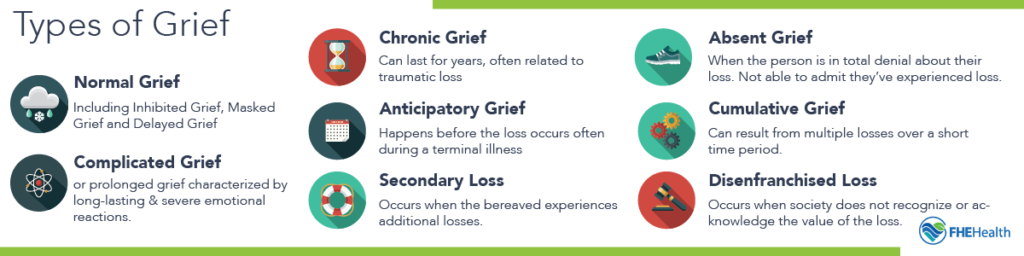
  1. Normal/uncomplicated grief: It is the ability of a person to progress satisfactorily through the stages of grieving to achieve resolution.
  2. Anticipatory grief: is the type of grief before an expected loss.
  3. Maladaptive grief: it is the inability to progress satisfactorily through the stages of grieving to achieve resolution i.e. the following types of maladaptive include:
    1. Delayed: is the type of grief not experienced immediately after a loss possibly postponed.
    2. Inhibited grief: the type of grief experienced by people who have great difficulty in expressing their emotions i.e. children
    3. Chronic grief/prolonged grief: It’s a situation where the grieved person continues to feel the effects of loss which extends for a long time and behaves in an abnormal way which may manifest as:
      • Frequent visits to the grave
      • Low self esteem
      • Crying whenever he/she learns of other deaths
      • Speaking and over focusing on the dead person
      • Loss of libido
      • Vague aches
  4. Disenfranchised grief: the type of grief that occurs when a loved person or item losses some of its adorable characteristics through still present i.e. one experiences loss when a loved there is decline in physical abilities in a dementia person through still present/alive
  5. Cumulative grief: the type of grief that occurs when multiple loses are experienced often in a short period of time i.e. it can be stressful because one does not properly grieve one loss before the other
  6. Masked grief: it is the type of grief converted into physical symptoms or other negative behaviours that are out of character i.e. someone experiencing masked grief is unable to recognize that these symptoms or behaviors are connected to loss.
  7. Distorted grief: it presents with extreme feeling of guilt or anger, noticeable changes in behavior, hostility towards a particular person plus other self-destructive behaviors.
  8. Exaggerated grief: it is the intensification of the normal stages of grief as the time moves on.

Factors that can make grief more challenging, harder and prolonged. 

  1. Relationship with the deceased: The nature of the relationship you had with the person who passed away can affect the intensity and duration of grief. Having a close and positive relationship can make it harder to let go compared to a difficult or distant relationship.

  2. Circumstances of death: The circumstances surrounding the death can impact the grieving process. Factors such as whether the death was due to natural causes, accident, suicide, or homicide, as well as whether it occurred close to or far from home, can influence the grieving experience.

  3. Personal history: Past experiences of loss and separation, such as the early loss of a parent, can affect how an individual processes and copes with grief.

  4. Individual personality and beliefs: Each person has unique personality traits and belief systems that can influence how they experience and handle grief. These factors can vary greatly from person to person.

  5. Social factors: The social context surrounding the loss can play a role in the grieving process. If the loss is socially stigmatized or not openly acknowledged, such as in the case of AIDS or suicide, it can add additional challenges to the grieving individual. Lack of social support can also make the grieving process more difficult.

  6. Unacknowledged grief: Certain groups, such as gay men, lesbians, and children, may experience grief that is not fully acknowledged or recognized by society. This lack of validation can make the grieving process more complicated for individuals in these groups.

Common reactions in bereavement

Physical ReactionsEmotional ReactionsSocial ReactionsSpiritual Reactions
Aches and painsDisbeliefNeeding to say goodbyeQuestioning why this has happened
Nausea and/or vomitingNumbnessInteraction with people at public gathering, funeralChallenging the belief system (strengthening, decrease or change in beliefs)
HeadachesSadnessSelecting and undertaking ritualsBargaining with a higher power
Confusion, weakness and numbnessCrying, even sobbingSelf-absorption and anti-social behaviourTalking to the deceased
Change in sexual needs (loss/increase of libido)Unexpected thoughts and feelings, often painfulNeeding to talk of the deceasedDreams that may have significance about the deceased
Vulnerability to infections, cold, illness (low immunity)GuiltA sense of isolation from the world (‘in a bubble’)Review of the meaning of life
Changes in eating and sleeping patternsPanic and fearAttempting to carry on as usual (social face) 
Shortness of breathAppearing distractedNeeding to be alone or need to be with others 
Dry mouthFeelings of helplessness  
SweatingAnger (at self and others)  
Frequent urinationBlame  
 Regret  

Grief Counseling

 Grief counseling and bereavement support play a crucial role in helping individuals and families navigate the challenging journey of loss. By implementing effective principles and strategies, counselors can provide compassionate care and assist in the healing process.

Principles of Effective Grief Counseling

  1. Convey Support and Compassion: Show empathy and understanding towards the grieving individual, offering a safe space for them to express their emotions.
  2. Acknowledge the Loss: Validate the significance of the loss and create an environment where the person feels heard and understood.
  3. Accept the Inability to Control: Help individuals recognize that grief is a natural process and that they cannot control or hasten its course.
  4. Validate Feelings, Thoughts, and Behaviors: Acknowledge and normalize the range of emotions, thoughts, and behaviors experienced during grief, providing validation and reassurance.
  5. Channel Energy to Adapt and Reestablish Equilibrium: Assist individuals in redirecting their energy towards adapting to life without the deceased, finding new routines, and establishing a new equilibrium.
  6. Encourage Access to Supportive Networks: Emphasize the importance of seeking support from helpful individuals, such as friends, relatives, or support organizations, to foster a sense of community and connectedness.

Bereavement Counseling for Individuals Facing AIDS/Cancer

  1. Help Acceptance of Death: Work towards helping the patient and their family accept the finality of death, while addressing fears and finding ways to ease them.
  2. Reflect on Achievements and Past Time: Encourage patients to reminisce about their accomplishments and meaningful moments, while identifying sources of support, such as friends and relatives.
  3. Provide Information on Symptom Management: Offer guidance on managing distressing symptoms associated with the illness, helping alleviate discomfort and improve quality of life.
  4. Explore Religious and Cultural Beliefs: Respect and explore the patient’s religious and cultural beliefs, assisting in connecting them with appropriate sources of spiritual support.
  5. Discuss the Future for Family: Facilitate discussions about the patient’s concerns regarding their family’s well-being after their death, encouraging open dialogue and planning for the future.

Bereavement Counseling After Death

  1. Encourage Presence and Farewells: Support family members in spending as much time as needed with the deceased, allowing them to say their goodbyes in their preferred manner.
  2. Sensitivity in Language: Use the deceased person’s name instead of impersonal terms like ‘the body,’ and provide detailed information if the family was not present at the time of death.
  3. Repeat the Story of Illness and Death: Encourage family members to share and repeat the story of the illness and death, allowing them to process their experiences and emotions.
  4. Involve Children and Explain the Situation: Include children in discussions, explaining what is happening in an age-appropriate manner to help them understand and cope with their grief.

Continuous Counseling After Death

  1. Use Reminders for Memories: Encourage the bereaved to use photographs or other reminders to remember the deceased and cherish memories.
  2. Involve Extended Support Network: Engage extended family members, friends, or volunteers to continue visiting and providing emotional support to the bereaved.
  3. Encourage Open Communication: Foster an environment where family members can openly express their feelings, including guilt, relief, pain, or anger, promoting mutual understanding and support.
  4. Active Listening: Prioritize active listening over excessive talking, allowing the bereaved person to share their emotions and experiences without interruption.
  5. Discourage Major Life Decisions: Caution against making significant life decisions during the immediate grieving period, as emotions may cloud judgment and practical considerations may be overlooked.
  6. Support Rituals and Grieving Processes: Acknowledge and support the use of rituals that can aid in the grieving process, respecting the bereaved person’s cultural and religious customs.
  7. Self-Awareness of the Counselor: Maintain self-awareness of personal losses and emotions, ensuring that the counselor remains empathetic and focused on the needs of the bereaved.
  8. Remember Special Dates: Make an effort to remember important dates such as birthdays and death anniversaries, reaching out to offer support and remembrance.
  9. Encourage Emotional Well-being: Promote self-care, relaxation, and socialization, reminding the bereaved of the importance of taking care of themselves during the grieving process.

Complications of Grief

  1. Chronic Depression: Prolonged and persistent feelings of sadness, hopelessness, and lack of interest in previously enjoyed activities.

  2. Substance Abuse: Turning to drugs or alcohol as a way to cope with the pain of grief, leading to dependence and addiction.

  3. Suicidal Behavior: Expressing thoughts or engaging in actions that indicate a desire to end one’s life. Immediate intervention and professional help are essential.

  4. Prolonged Grief: Experiencing intense and persistent grief symptoms beyond what is typically expected, with difficulty adjusting to life without the deceased.

  5. Chronic Physical Symptoms without Medical Reasons: Developing persistent physical symptoms such as headaches, stomachaches, or fatigue without an identifiable medical cause.

  6. Severe Disease: The onset or worsening of chronic or severe health conditions as a result of the stress and emotional toll of grief.

  7. Risk-Taking Behavior: Engaging in reckless or dangerous activities, potentially as a means to escape from or numb the pain of grief.

  8. Persistent Sleep Disorders: Experiencing ongoing sleep disturbances, such as insomnia or nightmares, that significantly impact daily functioning.

  9. Persistent Denial: Refusing to accept or acknowledge the reality of the loss, often avoiding discussions or reminders of the deceased.

  10. Identification with the Deceased: Developing symptoms or behaviors similar to those exhibited by the deceased, as a way of connecting or holding onto their memory.

The role of the nurse in grief and bereavement

  1. Provide Active Listening: Nurses listen attentively and non-judgmentally to individuals experiencing grief, creating a safe space for them to express their emotions and concerns.

  2. Support Future Exploration: Nurses encourage patients to gently explore what the future may look like without the deceased, helping them envision possibilities and find hope amidst their grief.

  3. Assess and Foster Social Support: Nurses assess the patient’s social support systems and help them develop and strengthen connections with family, friends, or support groups, recognizing the importance of a strong support network during the grieving process.

  4. Facilitate Time with the Deceased: Nurses respect the desires of the bereaved to spend time with the body of the deceased at the time of death, creating opportunities for final goodbyes and closure.

  5. Respect and Validate Feelings: Nurses honor the emotions of grieving individuals without judgment, recognizing that each person’s experience of grief is unique and valid.

  6. Identify and Normalize Grief Manifestations: Nurses assist in identifying the various manifestations of grief, such as emotional, physical, and cognitive symptoms, helping patients understand that these reactions are normal and part of the grieving process.

  7. Aid in Identifying Meaning of Loss: Nurses help survivors explore and identify the practical implications and meaning of their loss, supporting them in navigating the challenges and adjustments that come with bereavement.

Grief and Bereavement in Children:

Introduction:

  • School-going children require special attention following the death of their parents compared to preschoolers.
  • The experience of grief varies and is influenced by factors such as age, past experiences, and personality.
  • Children may express grief through crying and seeking solitude.
  • Bereaved children may experience deep sadness and a sense of something missing.
  • Even if their reactions are not visible, the pain of loss remains consistent.
  • Many children are not encouraged to grieve initially, but as they grow older, they may feel a sense of loss that can be expressed in different ways, even into adulthood.

Concept of Grief and Loss in Children:

  • Children’s ability to cope with death depends on their age and cognitive development.
  • They encounter death through various means like seeing dead animals, watching it on TV, or hearing about it in their homes, schools, and communities.
  • Children living with HIV may contemplate their own mortality and may have experienced multiple losses.
  • After a death, children need information, reassurance, and a safe space to express their feelings and participate in counseling.

Common Reactions of Bereavement in Children:

  • Children’s reactions to grief vary based on their age, personal development, and environment.
  • Understanding of death changes as children grow older:
    • Children aged 0-2 years: Experience the loss of physical contact, security, and comfort when a primary caregiver dies. Show upset through changes in sleeping or eating patterns, crying, irritability, and withdrawal.
    • Children aged 3-6 years: Unable to comprehend death as permanent and may expect the deceased person to return. Confuse fact and fantasy, sometimes attributing death to magic. Grieve in intermittent bursts, appearing to forget about the death at times but becoming upset again later.
    • Children aged 6-9 years: Grasp that death is permanent and universal but may still imagine it as avoidable. Develop an interest in practical aspects such as what happens to the deceased person’s body. May feel a sense of responsibility for the death based on their behavior or thoughts.
    • Children aged 9-12 years: Possess a similar understanding of death as adults. Recognize that death is universal, unavoidable, and permanent. Understand that death can be sudden and fear their own mortality. Begin contemplating the meaning of life and what happens after death.
    • Adolescents: Have an adult-level understanding of death. May engage in risk-taking behaviors as a way to explore life and test boundaries.

Practical Ways to Support a Grieving Child:

  1. Storytelling: Utilize storytelling as a helpful tool for children to process loss, grief, and transition.
  2. Support and Counseling: Provide extensive support and counseling to guide a child through the bereavement period and help them transition back to normal life without complications of grief.
  3. Communication and Expression: Encourage open communication within the family, allowing children to express their emotions through dressing, writing, storytelling, and games.
  4. Preparation and Truthfulness: Prepare children by explaining the truth about the loss. An unprepared child may feel overwhelmed by sudden loss and experience shock and confusion.
  5. Coping Skills Development: Help children develop coping mechanisms to navigate their grief. Offer age-appropriate guidance and support during counseling sessions.
  6. Age-Appropriate Communication: Speak and listen to children using language and concepts suitable for their age and level of understanding.
  7. Consistency and Stability: Maintain consistency in the child’s daily routine and environment, recognizing that grieving children may face multiple losses, such as changes in schooling or separation from their home.
  8. Individualized Approach: Allow each child to grieve at their own pace, respecting their unique needs and providing individualized care.
  9. Active Listening and Empathy: Assure the child that you are listening and genuinely care about their feelings at any given moment.
  10. Normalizing Death: Teach children that death is a natural part of life by relating it to examples from nature, such as flowers, leaves, and animals, which can help them accept the reality of death.
  11. Patience and Understanding: Recognize that children react differently to grief, requiring patience and understanding from caregivers and professionals.
  12. Involvement and Choices: Offer grieving children choices, such as visiting the hospital, viewing the body, or attending the funeral, empowering them to participate based on their comfort level.
  13. Continuity and School Support: Encourage a sense of continuity in the child’s schooling, as it can help them feel that life is returning to normal.

Things to Say to Children:

  1. Explain that death is universal and inevitable, using examples from nature like flowers and leaves.
  2. Acknowledge that death can be unpredictable.
  3. Assure children that it’s okay to wish the person had not died.
  4. Validate their feelings of anger and sadness.
  5. Encourage reliance on religion and beliefs to accept and understand the concept of death.
  6. Do not shy away from using the words “dead” or “death.”
  7. Reassure children that they had nothing to do with the death.
  8. Be honest about not having all the answers.
  9. Highlight aspects of their life that will remain unchanged, such as the same room, school, toys, and friends.
  10. Emphasize that life continues after pain and that there will be happy times again.

Things Not to Say to Children:

  1. Avoid saying that the deceased is “sleeping” or has been “lost,” as it can confuse and frighten children.
  2. Refrain from suggesting that the deceased “wanted” to go to heaven, as it implies a choice that may cause the child to feel abandoned.
  3. Avoid trying to stop the grieving process by using phrases like “big boys don’t cry.” Allow children to express their grief naturally.

BEREAVEMENT, MOURNING AND GRIEF Read More »

SPIRITUALITY IN PALLIATIVE CARE

SPIRITUALITY IN PALLIATIVE CARE

SPIRITUALITY IN PALLIATIVE CARE

Spirituality is defined as a way individuals seek and express meaning and purpose and the way they experience their  connectedness to the moment, to self, to others, to nature, and to the significant or sacred.

Spirituality means different things to different people. Religion and faith might be part of someone’s  spirituality, but spirituality isn’t always religious.  

Everyone has spiritual needs throughout their lives whether they follow a religion or not.  Spiritual wellbeing is often described as feeling at peace. 

Spiritual distress – also called spiritual pain or suffering – can occur when people are unable to find sources  of meaning, hope, love, peace, comfort, strength and connection in their life. This distress can also affect their physical and mental health. Terminal illness can often cause spiritual distress  in patients as well as their family and friends.   

Spiritual needs  

Spiritual needs are those needs and expectations which humans have to find meaning, purpose, and value in  their life. 

  1. Forgiveness: Needs of being forgiven by God or others; forgiving self, others, and God. 
  2.  Relatedness: Need of being related or connected to something, group or community in points of life  of a patient. 
  3. Reassurance: Need of removing one’s doubts or fears by cheering up or provision of solace. 
  4.  Acceptance: Need of being received by others the way you are 
  5. Peace: Need of being in a state or period in which there is no war. 
  6. Hope: Need of something to happen in future 
  7. Self-esteem: Need to feel good about one’s self achievement. 
  8. Control of your life, behavior, choices 
  9. Dignity: Need of being worthy of respect 
  10. Personal worth: Need of respect from others 
  11. Gratitude: Need of being thankful 

Assessment of spiritual needs

  1. Creating a good rapport to the patient
  2. Encourage patients to talk about how they’re feeling. Someone might have unmet spiritual needs if  they are: searching for meaning, for example asking questions such as ‘Why is this happening?’, ‘Why  me?’, ‘Who am I?’ and ‘How will I be remembered?’ becoming more withdrawn and isolated, afraid  of being alone, refusing care saying they feel scared or worried. 
  3. Many health and social care professionals find it hard to discuss spirituality with their patients. Some  of the reasons for this include: lack of training, not knowing what to say, being concerned about saying  something inappropriate. 
  4. Using spiritual assessment tools.
Spiritual assessment tools 

a) HOPE tool 

  1. H – Hope: Requires assessing the patient’s sources of hope, strength, comfort and peace. 
  2. O – Organized religion: Requires assessing the patient’s religion or faith and how it is important  to the patient.  
  3. P – Personal spirituality and practices: Involves assessing the patient’s sense of meaning and  purpose in life and how it adds sense to his/her identity.  
  4. E – Effects on medical care and of life issues: Involves assessing how medical care of the  patients affects his purpose and meaning of life. 

a) FICA tool 

  1. F – Faith, belief, meaning: Involves determining whether or not the patient identities with a  particular belief system of spirituality at all 
  2. I – importance and influence: Involving understanding the importance of spirituality in a patient’s life and the influence on health care decisions. 
  3. C – Community: It involves finding out if the patient is part of a religious or spiritual community  or if they rely on their community for support 
  4. A – Address/Action: Involves addressing spiritual issues of the patient with regards to caring  for the patient. 
Questions to ask under each spiritual assessment tool:

a) HOPE tool:

  1. H – Hope:

  • What are the sources of hope, strength, comfort, and peace in your life?
  • How do these sources of hope help you cope with challenging situations?
  • Can you provide examples of times when hope has played a significant role in your life?
  1. O – Organized religion:

  • Do you follow a particular religion or faith?
  • How important is your religion or faith to you?
  • In what ways does your religion or faith provide support and guidance in your life?
  1. P – Personal spirituality and practices:

  • What activities or practices give you a sense of meaning and purpose in life?
  • How do these practices contribute to your overall well-being?
  • Can you share any experiences where these practices have had a positive impact on your life?
  1. E – Effects on medical care and life issues:

  • Has your illness affected your ability to engage in activities that give your life meaning and purpose?
  • Are there any specific spiritual practices or beliefs that we should consider when providing your care?
  • Would you like to discuss any concerns or questions related to spirituality and its connection to your medical care?

b) FICA tool:

  1. F – Faith, belief, meaning:

  • Do you identify with a particular belief system or spirituality?
  • How does your spirituality or belief system influence your daily life?
  • Do you find meaning or purpose in your spiritual or religious beliefs?
  1. I – Importance and influence:

  • How important is spirituality in your life?
  • Have your spiritual beliefs influenced any decisions you’ve made regarding your health or healthcare?
  • Do you seek spiritual guidance or support when facing medical challenges?
  1. C – Community:

  • Are you part of a religious or spiritual community?
  • Do you find support or strength from your community in times of need?
  • How does your community contribute to your spiritual well-being?
  1. A – Address/Action:

  • How can we address any spiritual concerns or needs you may have during your care?
  • Are there any specific ways we can incorporate your spirituality into your treatment plan?
  • Would you like assistance in connecting with a spiritual or religious counselor?

Remember to ask these questions with sensitivity and respect, allowing the patient to express their thoughts and beliefs openly.

Spiritual interventions a Nurse can encourage a patient to consider.

Spiritual interventions are tailored to the individual patient’s needs and cultural background. 

  1. Respecting one’s own dignity and worth: Recognizing and honoring the value and importance of oneself as a spiritual being.

  2. Developing/using your own spiritual resources: Exploring and utilizing personal beliefs, practices, and strengths to find comfort and support.

  3. Praying and meditating: Engaging in prayer or meditation as a means to connect with one’s spirituality, seek solace, or find guidance.

  4. Joining a prayer group: Participating in a community of individuals who come together to pray and offer mutual support.

  5. Participating in religious services: Attending religious ceremonies or services that align with one’s faith or belief system.

  6. Actively forgiving ‘those who have trespassed against you’: Practicing forgiveness towards others who may have caused harm or hurt, fostering emotional and spiritual healing.

  7. Forgiving your own frailty and mistakes: Extending forgiveness and compassion towards oneself, acknowledging and accepting imperfections.

  8. Creating and nurturing inner peace: Engaging in activities that promote a sense of tranquility and harmony within oneself.

  9. Seeking help from your religious/spiritual adviser: Consulting with a trusted religious or spiritual counselor for guidance, support, and counsel.

  10. Spending time appreciating nature: Connecting with the natural world, finding solace and inspiration in the beauty and serenity of the environment.

  11. Listening to sacred music: Engaging with music that holds spiritual or religious significance, allowing it to uplift and provide comfort.

  12. Surrounding yourself with people who have sound ethical principles: Being in the company of individuals who embody values and principles that align with one’s own spiritual beliefs.

  13. Using gentle humor with oneself and others: Incorporating lightheartedness and humor in a compassionate and respectful manner to promote well-being and positive relationships.

  14. Actively striving for wholeness: Engaging in personal growth and self-care practices that foster physical, emotional, and spiritual well-being.

Personal awareness

Personal awareness is the ability to know and understand oneself, including one’s values, beliefs, strengths, weaknesses, and emotions.

It is an important skill for anyone who provides palliative care, as it allows us to be more sensitive to the needs of our patients and their families.

Benefits of personal awareness in palliative care:

  • We are more in charge of our lives. When we know ourselves well, we are better able to make decisions that are in our best interests. This is especially important when we are providing care to others, as we need to be able to set boundaries and take care of ourselves.
  • We develop greater sensitivity to our own feelings and to those of others. When we are aware of our own emotions, we are better able to understand and respond to the emotions of others. This is essential in palliative care, as we are often dealing with people who are experiencing a wide range of emotions, such as grief, fear, and anger.
  • Reflecting on our own experiences in life can help us to help others. When we reflect on our own experiences, we can gain insights that can help us to understand the experiences of others. This can be especially helpful when we are working with people who are facing challenges that we have faced ourselves.
  • We are better able to resolve our own problems or life issues, if we know ourselves well. When we know ourselves well, we are better able to identify and address our own problems. This can help us to be more effective in our work, as we will be less likely to be distracted by our own personal issues.
The Johari window

The Johari window: model of self-awareness

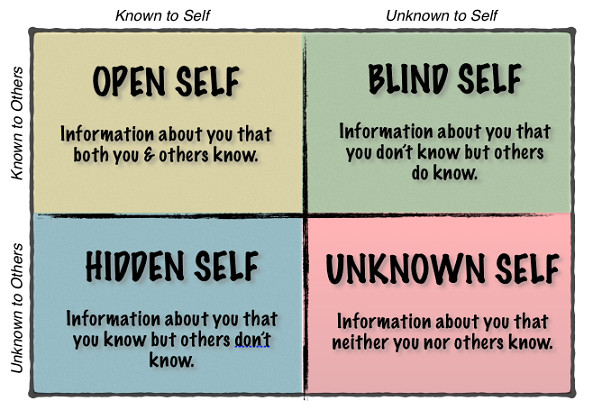
The Johari window is a model that is useful for understanding oneself and others. It was developed by Joseph  Luft and Harry lngham in the 1950’s. They devised four windows that represent the areas of the mind and  it’s functioning within us and others. 

(i) Open area

This is the area of an individual that is known to self and others. 

  • Examples of information that might be in the open area include:
    • Your name, age, and occupation.
    • Your hobbies and interests.
    • Your likes and dislikes.
    • Your strengths and weaknesses.
    • Your values and beliefs. 

The aim should be to develop this area for every person as it leads to effectiveness and productiveness in the way we handle patients and families receiving palliative care.

Here good communication and cooperation occur, free from distractions, mistrust confusion and  misunderstanding.  

(ii) Blind area

This is the area of an individual that is unknown to self but is known to others. By soliciting feedback from others. the aim should be to reduce this area and thus increase the open area (increase self-awareness) 

This area also includes issues that others are deliberately withholding from the person. It includes information that others have observed about the person, but the person themselves is not aware of.

  • Examples of information that might be in the blind area include:
    • Your body language.
    • Your tone of voice.
    • Your facial expressions.
    • Your habits.
    • Your blind spots.

(iii) Hidden area 

This is the area of an individual that is known to self but unknown to others and we usually prefer it  to remain unknown to others. 

It includes information that the person does not want others to know about.

  • Examples of information that might be in the hidden area include:
    • Your secrets.
    • Your fears.
    • Your insecurities.
    • Your vulnerabilities.
    • Your past mistakes.

Represents information, sensitiveness, fears, hidden agendas, manipulative intentions,  secrets that one knows but does not reveal 

Reducing the hidden areas reduces the potential for confusion, misunderstanding, poor  communication, etc. which can all distract from and undermine effectiveness 

The extent to which an individual discloses personal feelings and information, and the issues that are  disclosed, and to whom, must always be at the individual’s own discretion.  Should disclose at a pace and depth that is comfortable for the individual 

(iv) Dark area 

This is the area of an individual that is unknown to self and unknown to others. This is normally an  area of potential for personal growth and development. 

Contains information, feelings, latent abilities, aptitudes, experiences that are unknown to the person  him/herself and unknown to others in the group.

This is normally an area of potential for personal growth and development.

  • Examples of information that might be in the unknown area include:
    • Your latent abilities.
    • Your aptitudes.
    • Your experiences.
    • Your potential.
    • Your shadow self.

 Large unknown areas would typically be expected in younger people, than those who lack experience  or self-belief. 

Counselling can uncover unknown issues, but this would then be known to the person and by one  other rather than by a group.  Providing people with the opportunity to try out new things, with no great pressure to succeed, is  often a useful way to discover unknown abilities, and thereby reduce the unknown area. Creating a culture, climate and expectation for self-discovery helps people to fulfill their potential and  achieve fore. 

Discovery through sensitive communications, active listening and experience will reduce the  unknown area.

A guide to developing self-awareness

The following questions are a good guide for better understanding of self.

QuestionsFactors to Consider
Where am I in my life journey? 
What social and cultural factors influence me?– Country
 – Tribe
 – Social norms
 – Beliefs (cultural, religious, etc.)
 – Judgments and principles
From birth, what influences me?– Family
 – Family I marry into
 – Education
 – Opportunities
 – Work
 – Friends
What do I think about my physical appearance?– How I see myself
 – Am I satisfied with my appearance?
What is my image of God?– Distant or near?
 – Loving Father or Judge?
 – Existing or not?
What are my weaknesses?– What frightens me?
 – What makes me angry?
How do I deal with difficult situations?– At work
 – At home
 – Consider using a model of reflection
What unique gifts, talents, and skills do I bring to 
this world? 
What gives me meaning and purpose in life? 

SPIRITUALITY IN PALLIATIVE CARE Read More »

ANGER ISSUES IN PALLIATIVE CARE

ANGER ISSUES IN PALLIATIVE CARE

ANGER ISSUES IN PALLIATIVE CARE

Anger is the strong emotion that one feels when he/she thinks that someone has behaved in an unfair, cruel  or unacceptable way. 

Anger is a strong feeling of annoyance, displeasure, or hostility.

Anger in patients and families is a common problem in the care of persons with advanced disease. Whereas  it is widely accepted that anger may be a justifiable reaction to significant illness and loss, it frequently  creates difficulties for the doctors involved in care. In particular, there is often a personal impact on the  doctor at whom anger is directed. 

Anger is a commonly encountered emotion in the cancer setting. Understanding its origin is vital but the  practitioner needs to facilitate more than the ventilation of feelings; some change in attitude, the provision  of social support and the promotion of adaptive coping need to be generated.  

The perceived unfairness of illness and death commonly underpins anger in the patient with cancer.

Common sources of anger 

Fear is probably the most common source of anger, especially in the dying and their families. 

  1.  Fear of the unknown, 
  2. Being in pain or suffering, 
  3. The future well-being of family members, 
  4. Abandonment,  
  5. Leaving unfinished business, 
  6. Losing control of bodily functions or cognition, 
  7. Being a burden to the family, and dying alone. 
  8. A genuine insult – so called “rational anger” (e.g. Waiting six hours to see the doctor); 
  9. Organic pathology: frontal lobe mass, dementia or delirium; and  
  10. Personality style/disorder – the person whose approach to much of life is via anger or mistrust.

“BATHE” approach 

Use the “BATHE” approach to create an empathic milieu (A person’s social environment).  As with any difficult patient situation, communication techniques are especially important so that both the  patient and physician do not become further embittered and frustrated. 

  1. Background: Use active listening to understand the story, the context, the patient’s situation. 
  2. Affect: Name the emotion; for instance, You seem very angry…. It is crucial to validate feelings so  the angry person feels that you are listening. Attempting to defuse it, counter it with your own anger  or ignore it, will be counter-productive. Acknowledging their right to be angry will help start the  healing process and solidify the therapeutic relationship. 
  3. Troubles: Explore what scares or troubles them the most about their present and future. Just asking  the question Tell me what frightens you? will help them to focus on circumstances they may not have  considered. 
  4. Handling: Knowledge and positive action can help mitigate fears and reduce anger. How are they  handling the dying – are they making concrete plans about their finances, their things, their  family? Have they thought about formal counseling to help deal with depression and anger? 
  5.  Empathy: By displaying empathy and concern you can help the person feel understood, less  abandoned and alone. Avoid trite statements such as I know what you’re going  through. Paraphrasing the patient’s comments is an effective way to convey that you heard and are  seeking to understand: You feel like it’s so unfair that the cancer appeared out of nowhere after all  these years.

Effective’s ways of managing anger. 

  1. Understand that it’s not easy being a patient or a family: trying to understand that it’s really not easy  being a patient nor to be a relative whose loved one is in critical condition because no person would  ever want to be stuck in the hospital for days, and to be taken care of by different strangers every  eight to ten hours. 
  2. Show empathy: As a nurse, show empathy by focusing your attention on their feelings, expressions,  and actions and show them that you are interested and that they are important. 
  3. Allow the patient to blow off some steam or ‘calm down: allowing patients to calm down first before  you give them your explanation i.e. reminding yourself that they are not happy about being ill, so it’s  best to just try your best to keep yourself cool while waiting for them to calm down. 
  4. Do not invade the patient’s personal space: Try not to get either too close or too far from them i.e.  let them feel that they still have their own personal space that you wouldn’t be invading and that they  are safe there. 
  5. Do not touch them: Let the patient speak their mind from a comfortable distance, but not too far  that you’d have to shout at each other, or too near that you’d be uncomfortable to speak.
  6. Be sensitive: Being sensitive to people’s feelings means accepting them and respecting them no  matter what happens i.e. if a patient gets mad at you for something, don’t think that he is a bad  patient or person rather think about how you would feel if you were in their shoes.  
  7. Be gentle: If you are to respond, do it in a calm and kind manner and if you want to make the situation  better, try to avoid negativity. Instead, focus on something that you can do to help the person i.e.  Think before you respond to anything the patient says because sometimes, people react too quickly  without taking time to think about how their responses might affect others. 
  8. Do not argue: Being truthful of everything you say, and try not to think that you are always right.  Communicating better and having a positive behavior towards any issue will solve anything.
  9. Apologize for the inconvenience: Apologizing will not make you less of a person; it will only show  that you are strong and brave enough to accept your mistakes. It could also lessen any tension that  may occur between you and your patients (or their family members). 
  10. Settle the issues immediately: Of course, it is best to work on the complaint as soon as you can. The  patient or family member is angry for a reason. Make sure to take note of the details of their  complaint and find time to fix it. 
  11. Keep your promises: When dealing with patients, you tend to say things you do not mean, and more  often than not, give promises that you cannot keep.  
  12. Set boundaries: Keep yourself safe but let them know that you are listening to them i.e. defuse  situations before they even escalate e.g. a patient has the right to be involved in their medical  decision-making, but they cannot use that right for any unreasonable demands. 
  13. Communicate: Being honest with everything you say to the patient and being available and  responsive to your patients i.e. never let them feel that you are ignoring them.  
  14. Acknowledge the emotion that the patient is projecting: Validating the person’s feelings will help  them feel understood i.e. let them feel that their feelings make sense, that you hear them and you  understand them.  
  15. Listen: Active listening also means you should look at the problems from the other person’s point of  view i.e. focus on what the person is saying to you before offering any help. Remember to take note  of what they are saying, and try to retain the information. 
  16. Ask open-ended questions: Ask gentle, probing questions to learn more about what the other person  think and feel i.e. ask clarifications if you don’t get what the patient is trying to say.  

ANGER ISSUES IN PALLIATIVE CARE Read More »

BREAKING OF BAD NEWS

BREAKING OF BAD NEWS

BREAKING OF BAD NEWS

Breaking bad news to patients and their families is one of the most difficult responsibilities in health care.  

Bad news is any news that drastically and negatively alters the patient’s view of his or her future”  

“The impact of bad news depends on the size of the gap between the patient’s expectations, including his  or her ambitions rind plans, and the (medical) rectify of the situation” (Buckman 1984) 

“Breaking bad news is like major surgery whether we like it or not we are inflicting a psychological injury  which is every bit as damaging as the amputation of a limb. Like amputation, it requires time, planning and a proper place to carry out the operation.”

Importance of breaking bad news 

  1. In order to maintain trust. 
  2. In order to reduce uncertainty (the hardest of emotions to bear). 
  3. To prevent instilling false hope. 
  4. To allow for appropriate adjustment (practical and emotional) so that the patient can make informed  decisions.  
  5. To prevent a conspiracy of silence which destroys family communication and prevents mutual  support. 

Skills for breaking bad news 

  1. Listening 
  2. Observation 
  3. Empathy 
  4. Ability to find right words to use 

Barriers to Breaking Bad News

  • Patient barriers:
    • Denial
    • Lack of understanding
  • Family barriers:
    • Collusion
  • Health professional barriers:
    • Feeling incompetent
    • Fear of causing pain
    • Avoiding getting blamed
    • Feeling like they’ve failed the patient by not curing them
    • Wanting to shield the patient from distress
    • Fear of showing emotions
    • Not having enough time
    • Fear of saying “I don’t know”
    • Having fears of their own illness and death

How to Overcome Barriers to Breaking Bad News

  • Be prepared. Know the patient’s condition and prognosis, and have a plan for how to deliver the news.
  • Create a supportive environment. Find a private place where you won’t be interrupted, and allow the patient and their family to bring someone with them for support.
  • Start by listening. Ask the patient what they know about their condition, and what they want to know.
  • Be honest and direct. Don’t sugarcoat the news, but be respectful of the patient’s feelings.
  • Answer questions honestly. The patient and their family may have a lot of questions, so be prepared to answer them as best you can.
  • Offer support. Let the patient and their family know that you’re there for them, and that you’ll help them through this difficult time.

Considerations for Breaking Bad News

  • Location:
    • Ensure that there is privacy where possible.
    • Ensure that you have time to talk to the patient without rushing, interruptions, or distractions.
  • Establish existing knowledge about their condition:
    • Ascertain what the patient knows about their condition.
    • Pay attention to specific terms the patient uses.
  • Communication skills:
    • Use open-ended questions.
    • Use a gentle tone of voice and pace of information.
    • Use suitable non-verbal communication.
    • Be consistent and use simple language.
    • Enable the person to come to their own conclusions.
  • Tell the truth:
    • Never lie to a patient.
    • Be gentle with the actual breaking of bad news.
    • Give hope in the form of what can be undertaken to control symptoms and improve quality of life.
    • Do not give false hope of a cure.
    • Check whether the patient has understood what has been said.
  • Reassurance and support:
    • Give reassurance about continued support.
    • Arrange another appointment to see the patient again.
    • Encourage the patient to ask questions.
    • If the patient agrees, tell the patient and family together.
Breaking Bad News using BREAKS protocol

Methods/protocols of breaking bad news  

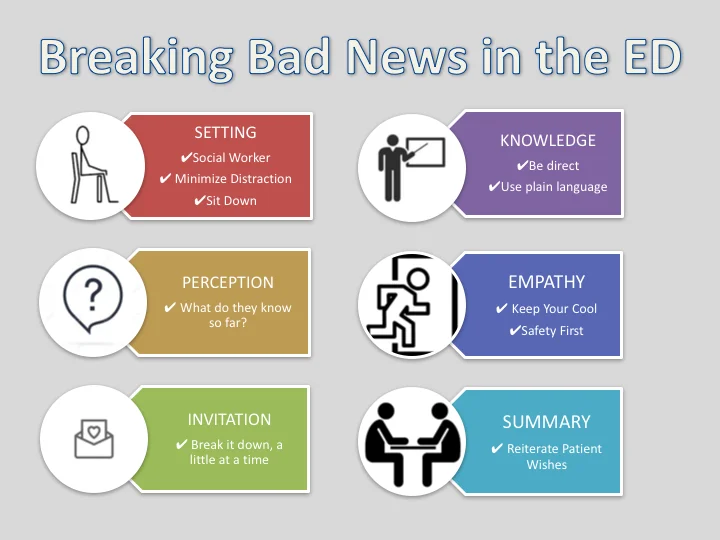
  1.  SPIKES method 
  2. BREAKS method 
Spikes protocol of breaking bad news 

S Set up the interview: Plan ahead for details such as being sure that you are in a private,  comfortable setting, that significant others are involved (if the patient wants that), and that your  pager is silenced. 

It is worth investing some time and thought in practical issues such as:

  •  Where will an interview about bad news take place?
  • Who will be present?
  • How will you start the discussion?

These simple things can help both you and the patient to feel more at ease, which will aid communication later in the conversation.

Where? If at all possible, use a separate room where you can sit down together in privacy. If this is not possible, and the patient is in hospital, try at least to screen off the area where you will be talking. This does not prevent others from listening, but the patient does not have to cope with the bad news in full view of others. You will probably be more comfortable too; don’t forget to minimize interruptions such as mobile phones.

Who? If the patient has visitors when you arrive, find out who they are. Ask the patient whether she/he is happy to continue the interview with the visitor(s) present. Beware that the patient may find it hard to truthfully answer this question while the visitor(s) is (are) listening. Some patients may wish to have a particular relative present when they are told bad news, and this option should also be given. For example: ‘We now have the results of your tests Benjamin, would you like me to explain them to you now, or would you like a friend or relative to be with you when we go through things?’

How do you start?

Firstly, do not forget to ensure that the patient is covered up and comfortable. Greet the patient by name, and introduce yourself if the patient does not know you well. It is useful to begin by creating a rapport. Next you may ask a question such as ‘How are you feeling today?’ This shows that you are interested in his/her condition, gets the patient talking, and allows you to assess something of the patient’s current symptoms (if the patient is in pain, or feeling nauseated, that should be addressed if at all possible before proceeding to a sensitive conversation).

P Assess the patient’s perception: As described earlier, before you begin an explanation, ask the  patient open-ended questions to find out how he or she perceives the medical situation. In this way  you can correct any misunderstanding the patient has and tailor the news to the patient’s  understanding and expectations. 

It is vitally important to the rest of the consultation to establish what the patient already knows about their condition, how serious they think it is, and how they expect it to affect the future. Useful starting phrases include:

  •  ‘What do you understand about your illness?’
  • ‘What have you been told about this illness?’
  • ‘Have you been concerned that this may be something serious?’

 Listen to the patient’s reply carefully. As well as telling you about his/her understanding of the medical situation, it will give you information about the patient’s emotional state, educational level, and vocabulary. This will help you later to explain things at a level, which is appropriate.

I Obtain the patient’s invitation: Find out how much detailed information the patient wants  regarding diagnosis and prognosis. 

In any conversation about bad news, the real issue is not ‘do you want to know’, but ‘at what level do you want to know what is going on’. The majority of patients will know themselves when things are not going well (especially if they have heard no good news). In asking the patient about information sharing, you are simply finding out how much detailed information the patient wishes to know.

 Research studies have demonstrated that most patients do desire full disclosure, although they may not want to know all the details at the start. By establishing how much the patient wants to know we are allowing them to exercise their preference. 

 The following are examples of useful ways to phrase the question:

  • ‘Are you the kind of person that likes to know all about their illness?’
  • ‘Would you like me to tell you the full details of the diagnosis, even if it is something serious?’
  •   ‘Would you prefer me to discuss the situation directly with your family?

In all of these, if the patient does not want to hear about the full details you have not cut off all lines of communication. You are saying clearly that you will maintain contact and communication, but not about the details of the disease.

K Give knowledge and information to the patient: Communicate in ways that help the patient  process the information. For example, preface your remarks with a phrase such as, “I’m sorry to tell  you that …” or “Unfortunately I have some bad news to tell you.” Use plain language and avoid medical  jargon: use the word “spread” instead of “metastasized,” for instance. Provide information in small  amounts, use short sentences, and check periodically for understanding.

Now the process of sharing information can commence, aimed at bringing the patient’s perception of the situation closer to the medical facts. Information needs to be given in small chunks, and using a warning shot is very valuable, especially if the news is unexpected. 

A useful phrase may be one such as ‘Well, the situation appears more serious….’ followed by a pause then using a narrative approach, possibly describing events leading up to this point.

Understandable language needs to be used, avoiding medical terminology as much as possible. The patient’s understanding of the discussion should be checked frequently and important points can be clarified as necessary. Further clarification may be undertaken by repeating important points and also by using diagrams and writings, if this is appropriate.

E Address the patient’s emotions with empathic responses: As described earlier, identify the  patient’s primary emotion and express that you recognize that what the patient is feeling is a result  of the information received. This is the place to use continuer statements such as “I can imagine how  scary this must be for you.” 

The success or failure of the interview for breaking bad news ultimately depends on how the patient reacts and how you respond to those reactions and feelings. There are many different ways in which a patient may react.

Some of the more common reactions include: disbelief, shock, denial, fear and anxiety, anger and blame, guilt, hope, relief, despair and depression.

S Strategy and summary: Present treatment or palliative care options, being sure to align your  information with what you ascertained (during the assessment of the patient’s perceptions) to be the  patient’s knowledge, expectations, and hopes. Providing a clear strategy will lessen the patient’s  anxiety and uncertainty. 

The final stage of this process consists of organising and planning for the future, which will involve putting together what you know of the patient’s wishes, the medical scenario and the plan of management.

Initially an understanding of the patient’s problem list is essential. Through effective listening and reflecting the patient will know that you have an overall appreciation of their immediate problems. Honesty is very important and the Health Professional should not be unrealistically optimistic about the future. This will avoid future lack of trust or disillusionment from the patient.

This is often an appropriate time to formulate and explain a plan or strategy with the patient, which generally includes preparing for the worst and hoping for the best. Throughout this time the coping strategies of the patient should be identified and reinforced, and this will include identifying other sources of support for the patient and incorporating them. These may be other Health Professionals or close family/friends.

Before leaving the patient it is essential that a contract for the future is made, this will include either arranging a time to see the patient again or advising him/her whom they can contact.

(We can either include this or remove since much has been explained above)

In summary, although there are challenges in giving a patient bad news, a nurse can find satisfaction in providing a therapeutic presence during the patient’s greatest time of need. Communication skills play a very big and important role in breaking bad news. 

Breaking Bad News using BREAKS protocol

Breaking bad news to patients is a delicate task that requires clear and empathetic communication. To simplify this process, we present the BREAKS protocol: Background, Rapport, Explore, Announce, Kindling, and Summarize. This mnemonic is easy to remember and can be implemented effectively.

  1. Background: Before delivering bad news, thoroughly assess the patient’s disease status, emotional well-being, coping skills, educational level, and support system. Cultural and ethnic considerations are crucial. Create a conducive environment by turning off mobile phones, maintaining eye contact, and utilizing a co-worker’s assistance for transcribing the conversation.

  2. Rapport: Establish a positive rapport with the patient while avoiding a patronizing attitude. Build trust through open-ended questions about the patient’s current condition. If the patient is unprepared for bad news, allow them to discuss their well-being before initiating the conversation.

  3. Explore: Start the conversation by exploring what the patient already knows about their illness. This approach confirms the news rather than abruptly breaking it. Discuss their understanding of the disease, diagnosis, and potential conflicts between their beliefs and the diagnosis. Involve significant others in decision-making if permitted by the patient.

  4. Announce: Provide a warning shot to soften the impact of the news. Use clear and straightforward language, avoiding medical jargon. Seek consent before announcing the diagnosis. Mirror the patient’s emotions to establish a connection, reflecting their embarrassment, agony, and fear.

  5. Kindling: Understand that patients react differently to their diagnosis, exhibiting responses such as tears, silence, or denial. Allow space for the expression of emotions. Ensure active listening by engaging the patient with questions and encouraging them to recount their understanding. Avoid unrealistic treatment options and tailor responses to their questions.

  6. Summarize: Conclude the session by summarizing the key points discussed and addressing the patient’s concerns. Emphasize future treatment and care plans, both emotionally and practically. Provide a written summary, as anxious patients retain limited information. Offer round-the-clock availability and encourage the patient to call for any reason. Maintain an optimistic outlook and, if requested, assist in sharing information with relatives. Set a review date and ensure the patient’s safety before they leave the room.

Checklist in the form of a table for breaking bad news about an illness:
StepDescription
1Prepare well. Know all the facts before meeting the patient/family.
2Introduce yourself and let others introduce themselves to you and state their relationship to the patient.
3Review and determine how much the patient already knows by asking for a summary of events. Do not make assumptions.
4Check that the patient/family wants more information and how much more. Offer an update and give them the option to stop at any point.
5Indicate that the information to be given is serious. Allow a pause for the patient to respond.
6Present the bad news in a direct and concise manner, using lay terms to avoid misunderstanding.
7Sit quietly and wait for the patient to respond.
8If there is no response after a prolonged silence, gently encourage the patient to share their thoughts.
9Encourage the expression of feelings and provide a supportive environment.
10Confirm and regulate the patient’s feelings, offering personal statements if appropriate to establish empathy.
11Listen to concerns and ask questions, such as “What are your main concerns at the moment?” or “What does this mean to you?”
12Provide more information if requested, systematically and using simple language.
13Assess the patient’s thoughts of self-harm and take appropriate action if necessary.
14Consider involving social workers, religious leaders, or other support systems if needed.
15Wind down the session by summarizing the issues raised and discussing the next steps with the family.
16Make yourself available for further discussions about the illness as needed.
17Provide a follow-up plan to address additional questions or concerns that may arise.
Patients’ reactions to receiving bad news 

Patient’s reactions to bad news may include denial, disbelief, shock, displacement (Refer to the section on  bereavement

When bad news is broken patients and their families will react in various ways: 

  1. Crying Denial 
  2. Blame Anger 
  3. Guilt Sadness 
  4. Bargaining Anxiety 
  5. A sense of loss Relief 
  6. Fear 

Handling difficult questions 

Some hints, (Faulker 1998) 

  1. Check the reason for the question – “What makes you ask that question?’ 
  2. Show interest in the patient’s ideas – How does it appear to you?” 
  3. Confirm or elaborate – You are probably right’ 
  4. Be prepared to admit you do not know 
  5. Empathize – Yes it must seem unfair to you’ 

Handling your own emotions 

When breaking bad news, it is important that you are able to handle your own emotions as it is not an easy  thing to do. Some things that will help include: 

  1. Self-awareness of your own abilities and limits 
  2. Team support 
  3. Clinical supervision 
  4. Reflective practice
  5. Continue to develop your skills. 
  6. Remember it’s not your bad news
MCQ’s
  1. According to the SPIKES protocol, what does the “S” stand for?
    a) Set up the interview
    b) Strategy and summary
    c) Assess the patient’s perception
    d) Address the patient’s emotions with empathic responses
    Answer: a) Set up the interview
  2. Which of the following is NOT a skill required for breaking bad news?
    a) Listening
    b) Empathy
    c) Avoiding eye contact
    d) Observation
    Answer: c) Avoiding eye contact
  3. What is the purpose of the BREAKS protocol for breaking bad news?
    a) To simplify the process and make it more effective
    b) To create barriers and obstacles
    c) To confuse the patient and their family
    d) To increase uncertainty and anxiety
    Answer: a) To simplify the process and make it more effective
  4. Patient barriers to breaking bad news may include:
    a) Denial
    b) Lack of knowledge
    c) Feeling competent
    d) Fear of causing pain
    Answer: a) Denial
  5. How should healthcare professionals handle difficult questions when breaking bad news?
    a) Show interest in the patient’s ideas
    b) Confirm or elaborate
    c) Admit if they don’t know
    d) All of the above
    Answer: d) All of the above

    6. Which step in the SPIKES protocol involves assessing the patient’s perception of the medical situation?
    a) S – Set up the interview
    b) P – Assess the patient’s perception
    c) I – Obtain the patient’s invitation
    d) K – Give knowledge and information to the patient
    Answer: b) P – Assess the patient’s perception

BREAKING OF BAD NEWS Read More »

COMMUNICATION IN PALLIATIVE CARE

COMMUNICATION IN PALLIATIVE CARE

COMMUNICATION IN PALLIATIVE CARE

Communication (as a generic process) is a two-way process between two or more persons in which ideas,  feelings and information are shared, with the ultimate aim of reducing uncertainties and clarifying issues.

Communication only becomes complete when there is feedback. 

Types of communication 

  1. Verbal communication is the exchange of ideas through spoken expression in words. It is a medium  for communication that can entail using the spoken word, such as talking face-to-face, on a telephone,  or through a formal speech; similar communication can occur through writing. 
  2. Non-verbal communication involves the expression of ideas, thoughts or feelings without the spoken  or written word. This is generally expressed in the form of body language that includes gestures and  facial expressions and, where appropriate, touches

NB: Both verbal and non-verbal communication is important in palliative care. 

COMMUNICATION

NB: Little communication actually takes place verbally, facial expressions, gestures and posture form most of  our communication and are a graphic part of our culture and language. Studies show that during  interpersonal communication 7% of the message is verbally communicated, while 93% is non-verbally  transmitted.  Of the 93% non-verbal communication: 

  • 38% is through vocal tones 
  • 55% is through facial expressions

Major skills in communication 

These include the following 

  • Listening
  • Checking Understanding 
  • Asking Questions 
  • Answering Questions 

Listening 

The first and perhaps the most important skill is to be a good listener.  We have to be able to listen in order to understand the patient and family needs. 

How well do we listen? 

Show that you are listening by using the following techniques: 

  1. Pay attention to the person you are communicating to. 
  2. Use body language to show that you are paying attention. 

NB: The following acronym can help to remember the key points about suitable body language that indicates  paying attention: (ROLES) 

ROLES:

TechniqueDescription
R – RelaxedStay relaxed and avoid tense or rigid body postures.
O – OpenMaintain an open posture, with arms uncrossed and relaxed.
L – Lean forwardLean slightly towards the person to show interest and engagement.
E – Eye contactMaintain consistent eye contact to convey attentiveness.
S – Sit nearPosition yourself close to the person to create a sense of closeness and connection.

Tips for Effective Listening

  1. Encourage the person to talk and show your engagement by nodding or using appropriate facial expressions.
  2. Avoid behaviors that indicate boredom or impatience, such as yawning, fidgeting, or looking around.
  3. Pay attention to the person’s non-verbal cues and reactions to better understand their feelings.
  4. Use silence constructively and allow the person time to gather their thoughts without rushing them.
  • a. It is important not to interrupt when the person is speaking. Listen attentively and try to understand their verbal message.
  • b. Make an effort to remember accurately what the person has said.
  • c. Listen with empathy, putting yourself in their shoes and refraining from judgment.

Barriers to Effective Listening:

  1. Distractions: Avoid being distracted by things like ringing phones or people entering the room.
  2. Judgmental fixations: Refrain from imposing personal values or moral judgments on the patient, particularly religious beliefs.
  3. Filtered listening: Be aware of how your own experiences, culture, and background may influence the way you interpret what you hear.
  4. Prejudice and preconceived bias: Guard against judging others based on their appearance, tribe, gender, or profession.

Checking understanding 

It is important to check that we have understood them correctly as it: 

  1. Let them know we have been listening carefully.  
  2. Lets them know we are trying to understand. 
  3. Gives an opportunity to them to think again about the problem. 
  4. Helps them to think about how to cope with the problem. 

How do we check understanding? 

  1. Paraphrasing what the parson has said as key points during the conversation, by using words like; You have told me that 
  2. Clarifying what the person has said, by checking you have understood correctly using words like, ‘So,  you mentioned you are worried about three things but school fees is the biggest problem, is that  right?” 
  3. Reflecting by identifying the feelings of the person, using words like, It seems you are very worried  about this 
  4. Summarizing: This happens during and at the end of the conversation. Expressing in brief and  highlighting the key points of the story the person has told you. 

Asking Questions 

We ask questions in order to help the person: 

  1. Explore his/her problems more fully. 
  2. Think more about his/her situation and perhaps find a way of coping with their problems. 
  3.  Explain what she already knows or understands about a situation i.e. facts about HIV/ cancer 
  4.  See that we are trying to understand them and the problem they are facing. 
  5. Prioritize problems and thus help to focus the session. 
  6. Move at their pace and enable dialogue between the counselor and the person seeking help. How do we ask questions?

There are two kinds of questions: 

  1. Closed questions: These questions usually receive no more than a ‘Yes’ or “No” answer and are  generally very specific e.g. Are you married? ’No’: ‘Do you have pain” “Yes’.  
  2. Open ended questions: These are questions which invite a person to talk and explain. They usually  begin with; What, Where, When, Row? e.g. How did you feel when you were told your diagnosis?  Open ended questions permit the person to choose how to respond, and examine the situation more  clearly. 

Points to remember when asking questions 

  1. It is helpful to use a mixture of open and dosed ended questions. Closed questions help to structure  the session and identify facts, and open questions help the patient to express feelings, opinions and  experiences.
  2. Ask one question at a time, it is confusing to ask so many questions at a go. 
  3. Use key words from the person’s explanation to phrase another question. 
  4. Be tactful when asking personal or sensitive questions as it can take time to develop trust, and some  questions can be asked later once trust has built up. 
  5. Use simple and clear language when asking questions. 

Answering Questions 

Points to remember when answering questions 

  1. Behind every question, there is usually a problem, worry or concern’. 
  2. Avoid answering “Yes” or ‘No’. It does not help the health professional to effectively understand the client’s situation or what the patient and family know about their illness. 
  3. When answering the clients’ questions or discussing the clients’ concerns, give information rather  than advice or false reassurance. 
  4. Avoid suggesting to the patient and family what to do, but put forward a suggestion for discussion, 
  5.  Always give accurate information. Be honest, it is alright to say. ‘‘I don’t know”. 
  6.  Answer questions using simple and clear language. Complicated medical jargon can confuse the  patient and their family. 
  7. After giving information, check whether the person has understood the information and ask the  person what he intends to do about the situation? 
  8. Remember people ask questions when seeking for help. 
  9. Sometimes there is no obvious answer’ to give a question, such as ‘Why has God done this to me?”  but listening to the patient and helping then, explore the feelings behind this statement can be very  helpful to him/her. 

Qualities and Attitudes for Effective Communication in Palliative Care

Effective communication is essential for providing quality care to patients and their families in palliative care. Care providers who possess the following qualities and attitudes are more likely to achieve positive outcomes:

  • Desire to help. Care providers should have a genuine desire to assist patients and their families.
  • Patience. Care providers should be patient and allow patients to express themselves at their own pace.
  • Honesty. Care providers should be truthful and sincere in their interactions with patients and their families.
  • Genuineness. Care providers should be authentic and free from pretense.
  • Openness. Care providers should be open-minded and receptive to different perspectives.
  • Dependability. Care providers should provide accurate and clear information to build trust and facilitate future communication.
  • Ability to put others at ease. Care providers should be able to create rapport and make patients feel comfortable.
  • Respect for others and their decisions. Care providers should treat each patient as an individual and respect their beliefs and values.
  • Positive attitude. Care providers should be non-judgmental, accepting, caring, empathetic, and respectful.
Principles for Effective Communication in Palliative Care

In addition to possessing the qualities and attitudes listed above, care providers should follow these principles for effective communication in palliative care:

  • Communicate with sensitivity. Care providers should be empathetic and compassionate when communicating with patients and their families.
  • Listen attentively. Care providers should allow patients to express their emotions and concerns without interruption.
  • Check for understanding. Care providers should confirm that patients and their families understand the information that is being communicated.
  • Consider cultural and religious factors. Care providers should be aware of the cultural and religious backgrounds of patients and their families and tailor their communication accordingly.
  • Hold family meetings. Family meetings can be a valuable way to gather information about patients’ needs and preferences, as well as to build rapport with family members.
  • Offer debriefing. Care providers who have provided care to patients who have died may benefit from debriefing to process their emotions and experiences.
  • Pay attention to nonverbal cues. Care providers should be aware of nonverbal cues, such as facial expressions and body language, which can provide important information about patients’ thoughts and feelings.
  • Use clear and simple language. Care providers should use language that is easy for patients to understand.
  • Ask open-ended questions. Care providers should ask open-ended questions to encourage patients to share their thoughts and feelings.
  • Summarize and clarify. Care providers should summarize and clarify information to ensure that patients and their families understand.
  • Address communication barriers. Care providers should be aware of potential communication barriers, such as language, culture, and disability, and take steps to address them.

Benefits of Effective Communication in Palliative Care

Effective communication is essential for providing quality care to patients and their families in palliative care. Here are some of the benefits of effective communication in palliative care:

  • Holistic needs assessment: Effective communication can help to identify and address the psychological, spiritual, social, cultural, and physical needs of patients.
  • Personalized information: Effective communication can help to ensure that patients receive information that is tailored to their individual needs and preferences, whether good or bad news.
  • Patient agenda: Effective communication can help to ensure that patients have the opportunity to share their concerns and priorities in conversations.
  • Truthful communication: Effective communication can help to ensure that patients receive accurate and essential information, which can promote understanding and trust.
  • Comprehensive care: Effective communication can help to facilitate referrals, interdisciplinary assessments, continuity of care, discharge planning, end-of-life care, bereavement support, conflict resolution, and stress management.
  • Resource guidance: Effective communication can help to advise patients on available resources to address various needs and concerns.
  • Sense of security: Effective communication can help to offer patients a sense of security, consistency, and comfort.
  • Family education: Effective communication can help to educate family members and care providers on pain management, distress, symptoms, and effective communication.
  • Improved relationships: Effective communication can help to enhance relationships between family members, care providers, and the community.
  • Information flow: Effective communication can help to ensure smooth information exchange among organizations involved in service delivery.
  • Lasting memories: Effective communication can help to leave positive impressions on family members during the grieving process.
  • Strong caregiver-patient relationship: Effective communication can help to foster a strong bond between caregivers and patients.
  • Dignity and autonomy: Effective communication can help to allow patients to make informed decisions about their remaining time.
  • Professional relationships: Effective communication can help to maintain effective professional relationships and uphold a high standard of care.
  • Communication as therapy: Effective communication can be utilized as a therapeutic tool to support patients in coping with their problems.

Consequences of Ineffective Communication in Palliative Care

Ineffective communication in palliative care can have a number of negative consequences, including:

  • Lack of accurate information: Failing to provide essential information to patients may exacerbate problems.
  • Lack of planning: Withholding the truth can lead to inconsistencies and hinder future planning by patients and their families.
  • Heightened fear and anxiety: Avoiding the truth can create a climate of fear, anxiety, and confusion instead of providing calmness.
  • Threat to patient care: Poor communication jeopardizes patient care, erodes trust, and increases staff stress.
  • Patient engagement: Effective communication is crucial for engaging patients and their families in their own care.
  • Lack of future preparation: Not communicating the nature and seriousness of an illness may prevent patients from planning for the future, such as writing a will or making arrangements for children’s care.

Special Considerations in HIV and AIDS

  1. Diagnosis Impact: An HIV diagnosis brings the prospect of a life-threatening illness and the stigma associated with the disease.
  2. Emotional Challenges: Strong emotions, such as anxiety, fear of rejection, fear of infecting others, anger, betrayal, shame, and worries about coping and family, affect effective communication in HIV and AIDS.
  3. Disclosure of Status: Patients may struggle with disclosing their status due to concerns about respect, abandonment, or fear of family reactions.
  4. Adherence to Treatment: Adherence to the prescribed drug regimen is crucial for successful antiretroviral therapy (ART), and effective provider-patient communication plays a vital role in promoting adherence.
  5. Key Communication Factors for Adherence:
    a. Pre-treatment education and counseling.
    b. Information on HIV, its manifestations, benefits, and side effects.
    c. Peer support involvement in treatment.
    d. Psychosocial support to reduce stigma.
    e. Culturally appropriate adherence programs.
    f. Support groups, particularly in the African region, have proven successful in providing emotional and peer support to individuals coping with HIV and AIDS.
Barriers to Communication
  1. Impairments: Illnesses may impact patients’ hearing or vocal capacity, hindering communication.
  2. Limited Knowledge: Service providers with limited knowledge about HIV and AIDS may face challenges in effective communication.
  3. Extreme Pain: Severe pain experienced by patients can hinder effective communication.
  4. Conspiracy of Silence: Caregivers or patients may choose not to disclose important information, leading to communication barriers.

Communication in Children’s Palliative Care

In children’s palliative care, communication plays a crucial role as a child’s development and well-being are closely tied to the attention and care they receive. Children learn and grow through talking, playing, and observing others in their family and social environments. Establishing meaningful relationships with adults and peers is vital for their emotional and intellectual development. However, disclosing a diagnosis and ensuring adherence to treatment can present unique challenges in pediatric palliative care.

Good Communication Skills for Interacting with Children:

  1. Active Listening: Paying attention and genuinely listening to children.
  2. Showing Interest: Displaying curiosity and engaging with the child.
  3. Age-Appropriate Communication: Adjusting communication style and language to suit the child’s developmental stage.
  4. Non-Judgmental Attitude: Creating a safe space where the child feels comfortable expressing themselves.
  5. Empathy: Understanding and relating to the child’s feelings and experiences.
  6. Confidentiality: Respecting the child’s privacy and keeping sensitive information confidential.
  7. Openness and Honesty: Being transparent with the child while using age-appropriate language.
  8. Cultural Respect: Valuing and incorporating the child and family’s cultural beliefs and values.
  9. Patience: Allowing the child ample time to express themselves without rushing or interrupting.

Principles for Answering Difficult Questions in Children:

  1. Trustworthy Communication: Building a relationship of trust and security with the child before discussing sensitive topics.
  2. Individualized Approach: Assessing the child’s existing knowledge and understanding before providing information.
  3. Questioning Technique: Answering questions with further questions to clarify the child’s intent.
  4. WPC Chunk Technique:
    a. Warn: Preparing the child for potentially difficult information.
    b. Pause: Allowing the child to process and indicate readiness to continue.
    c. Check: Verifying the child’s understanding and willingness to proceed.
    d. Chunk: Sharing information in small portions, checking comprehension along the way.
  5.  Honesty and Avoidance: Avoiding evasion or dishonesty when addressing difficult questions.

Key Aspects of Communication in Children’s Palliative Care:

  1. Addressing Beliefs and Values: Discussing death and dying in line with the child and family’s beliefs, alleviating fear, and involving them in preparing for death.
  2. End-of-Life Discussions: Openly discussing end-of-life issues and the child’s anticipated death with honesty and sensitivity.
  3. Saying Goodbye: Providing opportunities for the child to say goodbye, express their feelings, and share their wishes.
  4. Bereavement Support: Offering counseling and support to children during the bereavement process.

Note: Effective communication in children’s palliative care not only helps address their unique needs but also fosters trust, emotional well-being, and family involvement throughout the care journey.

Questions

Multiple-Choice Questions (MCQs):

Which form of communication involves the exchange of ideas through spoken expression or writing?
a. Verbal communication
b. Non-verbal communication
c. Both verbal and non-verbal communication
d. None of the above
Answer: a. Verbal communication

Explanation: Verbal communication entails the use of spoken words or writing to exchange ideas and information.

What percentage of non-verbal communication is conveyed through facial expressions?
a. 38%
b. 55%
c. 7%
d. 93%
Answer: b. 55%

Explanation: According to the document, 55% of non-verbal communication is expressed through facial expressions.

Which skill is considered the most important in effective communication?
a. Asking questions
b. Checking understanding
c. Listening
d. Answering questions
Answer: c. Listening

Explanation: The document emphasizes that being a good listener is the first and most important skill in effective communication.

What technique can be used to show that you are paying attention when listening to someone?
a. Nodding or using appropriate facial expressions
b. Interrupting to provide feedback
c. Looking around and being distracted
d. Avoiding eye contact
Answer: a. Nodding or using appropriate facial expressions

Explanation: To show that you are paying attention while listening, you can use techniques such as nodding or using appropriate facial expressions.

Which type of question encourages a person to talk and explain?
a. Closed-ended question
b. Open-ended question
c. Multiple-choice question
d. Yes/No question
Answer: b. Open-ended question

Explanation: Open-ended questions invite a person to share more information, thoughts, or feelings, allowing for a more detailed response.

What should be avoided when answering a question from a patient or discussing their concerns?
a. Giving advice or false reassurance
b. Asking more questions
c. Providing accurate information
d. Using complex medical jargon
Answer: a. Giving advice or false reassurance

Explanation: Instead of offering advice or false reassurance, it is important to provide accurate information and engage in meaningful discussions.

What should be checked after giving information to ensure understanding?
a. The person’s intentions regarding the situation
b. Their ability to remember the information
c. Their understanding of the information
d. Their reaction to the information
Answer: c. Their understanding of the information

Explanation: After giving information, it is important to check whether the person has understood the information provided.

Which of the following is not a barrier to effective listening?
a. Distractions
b. Judgmental fixations
c. Filtered listening
d. Prejudice and preconceived bias
Answer: b. Judgmental fixations

Explanation: Judgmental fixations are not listed as barriers to effective listening in the document.

In children’s palliative care, what is a key aspect of communication?
a. Open-ended questions
b. Closed-ended questions
c. Judgmental attitudes
d. Non-verbal communication
Answer: a. Open-ended questions

Explanation: Open-ended questions are essential for encouraging children to express their thoughts and feelings in palliative care.

What is the importance of effective communication in children’s palliative care?
a. To address children’s physical needs
b. To provide emotional support to children
c. To involve children in decision-making
d. All of the above
Answer: d. All of the above

Explanation: Effective communication in children’s palliative care is crucial for addressing physical needs, providing emotional support, and involving children in decision-making processes.

Fill-in Questions:

Good listening skills are crucial in effective communication because ____________.
Answer: they help understand the patient and family needs
Explanation: Good listening skills enable care providers to understand the needs of patients and their families, fostering effective communication.

When checking understanding, it is important to ____________ what the person has said in key points.
Answer: paraphrase
Explanation: Paraphrasing what the person has said in key points helps confirm understanding and allows the person to reflect on their thoughts.

Open-ended questions are beneficial in communication because they ____________.
Answer: invite a person to talk and explain
Explanation: Open-ended questions encourage individuals to share their thoughts, experiences, and feelings, leading to more in-depth communication.

Effective communication in palliative care helps identify and address patients’ ____________ needs.
Answer: holistic
Explanation: Effective communication in palliative care aims to address patients’ psychological, spiritual, social, cultural, and physical needs comprehensively.

The WPC Chunk technique involves warning the child, pausing to allow processing, checking their understanding, and ____________.
Answer: breaking information into small portions
Explanation: The WPC Chunk technique involves breaking difficult information into smaller, manageable chunks, checking comprehension along the way.

Providing opportunities for children to say goodbye and express their feelings and wishes is important in ____________.
Answer: children’s palliative care
Explanation: Allowing children to say goodbye and express their feelings and wishes supports their emotional well-being and involvement in the palliative care process.

Effective communication in palliative care helps foster ____________ between caregivers and patients.
Answer: a strong bond
Explanation: Effective communication creates a strong bond between caregivers and patients, promoting trust, understanding, and emotional support.

Care providers should use simple and clear language when ____________ questions.
Answer: asking
Explanation: Using simple and clear language when asking questions ensures that patients and their families can understand and respond effectively.

Ineffective communication in palliative care can lead to heightened ____________ and ____________.
Answer: fear; anxiety
Explanation: Ineffective communication can increase fear and anxiety in patients and their families, hindering the provision of quality care and support.

Disclosure of an HIV diagnosis can be challenging due to concerns about ____________ and ____________.
Answer: respect; abandonment
Explanation: Individuals may hesitate to disclose their HIV diagnosis due to fears of losing respect or being abandoned by their family or social circle.

COMMUNICATION IN PALLIATIVE CARE Read More »

Work related injuries and Fatalities

Work related injuries and Fatalities

Work related injuries and Fatalities

Work-related injuries and fatalities are any injuries or deaths that occur as a result of work activities. They can be caused by a variety of factors, including unsafe working conditions, unsafe behaviors, and health conditions.

  • Work-related injuries: These are injuries that occur at work or while on the job. They can range from minor cuts and bruises to serious injuries, such as amputations and spinal cord injuries.
  • Work-related fatalities: These are deaths that occur at work or while on the job. They can be caused by a variety of factors, including accidents, violence, and occupational diseases.

Types of Work-Related Injuries and Fatalities in the Nursing Sector

Nurses are at risk of a range of work-related injuries and fatalities, both physical and psychological. Some of the most common types include:

  • Musculoskeletal injuries: Nurses often engage in physically demanding tasks, such as lifting and transferring patients, which can result in musculoskeletal injuries like strains, sprains, and back injuries. These injuries can have long-term implications on a nurse’s physical health and may lead to chronic pain or disability.
  • Needlestick injuries: Nurses are at risk of accidental needlestick injuries while administering injections, drawing blood, or handling medical sharps. These incidents can expose them to bloodborne pathogens, including HIV and hepatitis, posing a serious health risk.
  • Violence and assaults: Nurses frequently encounter volatile situations and can be exposed to violence and assaults from patients or their family members. Verbal abuse, physical attacks, and threats are distressingly common in healthcare settings and can lead to both physical injuries and psychological trauma.
  • Slip, trip, and fall accidents: Nurses work in fast-paced environments, often with slippery floors and obstacles in their path. This makes them susceptible to slip, trip, and fall accidents, resulting in injuries such as fractures, sprains, or head trauma.
  • Work-related stress and burnout: Nursing is a high-stress profession with long working hours, high patient loads, and emotionally challenging situations. Prolonged exposure to stress can lead to burnout, mental health issues, and reduced job satisfaction, affecting both the nurse’s well-being and the quality of patient care.

Underlying Causes and Contributing Factors

Several factors contribute to work-related injuries and fatalities in the nursing sector:

  • Inadequate staffing levels: Insufficient staffing can result in nurses being overworked and overwhelmed, increasing the risk of errors, accidents, and injuries.
  • Lack of training and education: Insufficient training on proper lifting techniques, violence prevention, and stress management can leave nurses ill-equipped to handle the challenges they face, making them more vulnerable to injuries.
  • Workplace design and ergonomics: Poorly designed healthcare environments with inadequate equipment, improper ergonomics, and lack of safety measures can significantly increase the risk of injuries for nurses.
  • Workplace violence prevention gaps: Inadequate security measures, lack of policies addressing violence, and insufficient training on de-escalation techniques contribute to the prevalence of violence and assaults against nurses.

Preventive Measures and Interventions

To mitigate work-related injuries and fatalities in the nursing sector, several preventive measures and interventions can be implemented:

  • Adequate staffing and workload management: Ensuring appropriate nurse-to-patient ratios and workload distribution can reduce fatigue, stress, and the likelihood of errors or accidents.
  • Comprehensive training programs: Providing comprehensive training on safe patient handling, ergonomics, violence prevention, and stress management equips nurses with the knowledge and skills needed to mitigate risks.
  • Enhanced workplace safety measures: Implementing safety protocols, improving workplace design with ergonomic considerations, and ensuring proper equipment availability (such as lifting aids) can minimize the risk of injuries.
  • Violence prevention programs: Developing and enforcing policies and procedures to prevent workplace violence, training nurses in de-escalation techniques, and improving security measures within healthcare facilities can enhance nurse safety.
  • Mental health support and resources: Establishing programs that focus on mental health support, stress reduction, and promoting work-life balance can help nurses cope with the emotional demands of their profession and reduce the risk of burnout.

Factors Leading to Workplace Accidents in Uganda

Workplace accidents are a serious problem in Uganda, and they can have a significant impact on the health and safety of workers. There are a number of factors that can contribute to workplace accidents, including:

  • Lack of information or training in the job on health and safety. Workers who are not properly trained in health and safety risks are more likely to be injured in an accident.
  • Poor environment which can be noisy, hot, dark etc especially in night shifts. Working in a poor environment can increase the risk of accidents. For example, working in a noisy environment can make it difficult to hear warning signals, and working in a hot environment can lead to fatigue, which can increase the risk of accidents.
  • Lack of maintenance and inspection of the workplace. A poorly maintained workplace can be a hazard, and regular inspection can help to identify and correct potential hazards.
  • Inadequate supervision/support at work. Workers who are not properly supervised are more likely to make mistakes, which can lead to accidents.
  • Behavior or negative attitude of workers towards the working leading to negligence or non commitment which can easily result in accidents. Workers who are not committed to safety are more likely to engage in risky behavior, which can lead to accidents.
  • Lack of awareness of safety regulations at the workplace. Workers who are not aware of safety regulations are more likely to violate them, which can lead to accidents.
  • Lack of enforcement of workplace safety regulations. Even if workers are aware of safety regulations, they may not be enforced, which can lead to accidents.
  • Use of poor quality materials at work leading to accidents e.g. construction materials at construction sites. Using poor quality materials can increase the risk of accidents. For example, using construction materials that are not strong enough can lead to collapses, which can injure workers.
  • Employment of incompetent personnel in the field of work, thus lacking the appropriate skills. Employing workers who do not have the appropriate skills can increase the risk of accidents. For example, employing a worker who is not trained in how to use a particular piece of machinery can lead to accidents.
  • Heavy work load imposed on the worker contributes to workplace accidents because workers easily get tired both psychologically and physically thus risk of accident is high. Imposing a heavy workload on workers can increase the risk of accidents. For example, workers who are tired are more likely to make mistakes, which can lead to accidents.

Importance of Conducting Workplace Investigations

Workplace investigations are important for a number of reasons, including:

  • Help in identification of existing and potential hazards. Workplace investigations can help to identify existing hazards, as well as potential hazards that have not yet been realized.
  • Help in determining the underlying cause of the accidents. Workplace investigations can help to determine the underlying cause of accidents, which can help to prevent future accidents from occurring.
  • Recommends corrective action on the damage at hand/alteration. Workplace investigations can recommend corrective action that can be taken to prevent future accidents.
  • Ensure listening to the concerns of the workers and supervisors. Workplace investigations should ensure that the concerns of workers and supervisors are heard and addressed.
  • It demonstrate the workplace environments commitment to effective health and safety of the workers. Workplace investigations can demonstrate the workplace’s commitment to effective health and safety.
  • It improves employees’ morale and thinking towards health and safety. Workplace investigations can improve employees’ morale and thinking towards health and safety.
  • It improves the management of risks in the future. Workplace investigations can help to improve the management of risks in the future.
  • Investigation findings will provide essential information for insurers in case they need arises. Workplace investigation findings can provide essential information for insurers in case they need to assess the risk of a particular workplace.
  • Help in uncovering and correcting any breaches or alteration in health and safety legal compliances the organization have been unaware of. Workplace investigations can help to uncover and correct any breaches or alterations in health and safety legal compliances that the organization may be unaware of.

Six Steps in Conducting an Investigation

  • Immediate action: Make the area safe, preserve the scene, and notify relevant parties. Collect perishable evidence, such as blood samples, camera footage, etc.
  • Planning the investigation: Ensure that the investigation is systematic and complete. Consider the resources required, who will be involved, how long the investigation will take, and whether a team or a single investigator is needed.
  • Data collection: Gather data from a variety of sources, including people involved or witnesses to the event, equipment, documents, and the scene of the accident.
  • Data analysis: Analyze the data, paying close attention to the sequence of events. Identify the root and underlying causes of the accident, which may be due to human or environmental errors.
  • Corrective actions: Recommend actions that will reduce the risk of the accident happening again or correct the conditions that caused the accident.
  • Reporting: Communicate the findings of the investigation so that lessons can be shared. This can be done through formal incident investigation reports, alerts, presentations, or meeting topics.
Multiple-Choice Questions (MCQs):

Which of the following is a common type of work-related injury in the nursing sector?
a) Respiratory disorders
b) Vision problems
c) Musculoskeletal injuries
d) Gastrointestinal issues
Answer: c) Musculoskeletal injuries
Explanation: Nurses often face physically demanding tasks that can lead to musculoskeletal injuries like strains and sprains.

Needlestick injuries in nursing can expose nurses to:
a) Bloodborne pathogens
b) Respiratory infections
c) Allergic reactions
d) Skin infections
Answer: a) Bloodborne pathogens
Explanation: Needlestick injuries can result in the exposure of nurses to bloodborne pathogens such as HIV and hepatitis.

Which of the following contributes to work-related injuries in nursing?
a) Adequate staffing levels
b) Proper training and education
c) Safe workplace design
d) Inadequate security measures
Answer: d) Inadequate security measures
Explanation: Inadequate security measures contribute to the prevalence of violence and assaults against nurses, leading to work-related injuries.

Slip, trip, and fall accidents can result in injuries such as:
a) Respiratory disorders
b) Eye injuries
c) Fractures and sprains
d) Gastrointestinal issues
Answer: c) Fractures and sprains
Explanation: Slip, trip, and fall accidents can cause injuries like fractures and sprains in nursing.

Work-related stress and burnout in nursing can lead to:
a) Improved job satisfaction
b) Reduced patient care quality
c) Enhanced workplace safety
d) Increased work productivity
Answer: b) Reduced patient care quality
Explanation: Work-related stress and burnout can negatively impact the quality of patient care provided by nurses.

Which of the following is a potential preventive measure for work-related injuries in nursing?
a) Inadequate staffing levels
b) Insufficient training programs
c) Enhanced workplace safety measures
d) Lack of violence prevention programs
Answer: c) Enhanced workplace safety measures
Explanation: Implementing safety protocols and improving workplace safety measures can help prevent work-related injuries in nursing.

Lack of training on violence prevention can make nurses more vulnerable to:
a) Musculoskeletal injuries
b) Needlestick injuries
c) Work-related stress
d) Violence and assaults
Answer: d) Violence and assaults
Explanation: Lack of training on violence prevention can make nurses more vulnerable to violence and assaults from patients or their family members.

Which of the following factors contributes to work-related injuries in nursing?
a) Proper workplace design and ergonomics
b) Adequate staffing levels
c) Violence prevention programs
d) Insufficient training and education
Answer: d) Insufficient training and education
Explanation: Insufficient training and education on proper lifting techniques, violence prevention, and stress management can contribute to work-related injuries in nursing.

Prolonged exposure to work-related stress can lead to:
a) Increased job satisfaction
b) Improved physical health
c) Burnout and mental health issues
d) Decreased productivity
Answer: c) Burnout and mental health issues
Explanation: Prolonged exposure to work-related stress can lead to burnout and mental health issues among nurses.

Mental health support and resources for nurses can help:
a) Increase work-related injuries
b) Improve workplace safety measures
c) Reduce the risk of burnout
d) Enhance physical health
Answer: c) Reduce the risk of burnout
Explanation: Mental health support and resources can help nurses cope with work-related stress and reduce the risk of burnout.

Work related injuries and Fatalities Read More »

JOB STRESS

JOB STRESS

Job stress and associated conditions

Job stress is the harmful physical and emotional responses that occur when the requirements of the job do  not match the capabilities, resources, or needs of the worker.  

Job stress matters to our health and our work.  

When we feel stressed, our bodies respond by raising the concentration of stress hormones in our blood.  When our bodies continually respond to constant demands or threats, coping mechanisms stay in overdrive,  which can be damaging to health over time 

Stressful working conditions can also impact health indirectly by limiting our ability or motivation to  participate in other health promoting behaviors such as eating well and exercising.

Definitions 

  1. Stress: a (perceived) substantial imbalance between demand and response capability under  conditions where failure to meet demand has important (perceived) consequences.  
  2. Stressor: environmental event or condition that results in stress. 
  3. Stressful: pertaining to an environment that has many stressors. 
  4. Strain (or stress reaction): short-term physiological, psychological or behavioral manifestations of  stress. 

Types of stress 

Stress is not always bad.  

Stress in the form of a challenge energizes us psychologically and physically, and it motivates us to learn new  skills and master our work.  

When a challenge is met, we feel relaxed and satisfied. This is good stress or eustress.  However, sometimes a challenge is turned into job demands that cannot be met. This is negative stress, or  distress, which sets the stage for illness, injury, and job failure. 

There are several types of stress, including: 

  1. Acute stress
  2. Episodic acute stress 
  3. Chronic stress 
Acute stress 

An acute stress reaction occurs when symptoms develop due to a particularly stressful event. The word  ‘acute’ means the symptoms develop quickly but do not usually last long.  

The events are usually very severe and an acute stress reaction typically occurs after an unexpected life crisis.  This might be, for example, a serious accident, sudden bereavement, or other traumatic events. Acute stress  reactions may also occur as a consequence of sexual assaults or domestic violence. Acute stress can also come out of something that you actually enjoy. It’s the somewhat-frightening, yet  thrilling feeling you get on a roller coaster or when skiing down a steep mountain slope. These incidents of acute stress don’t normally do you any harm. They might even be good for you.  Stressful situations give your body and brain practice in developing the best response to future stressful  situations. 

Once the danger passes, your body systems should return to normal. 

Episodic acute stress 

Episodic Stress occurs when we experience acute stress too frequently.  

It often hits those who take on too much―those who feel they have both self-imposed pressure and external  demands vying for their attention.  

In such cases, hostility and anger frequently result. Episodic stress also commonly afflicts those who worry a  lot of the time, in turn resulting in anxiety and depression. 

This might also happen if you’re often anxious and worried about things you suspect may happen e.g. certain  professions, such as law enforcement or firefighters, might also lead to frequent high-stress situations. 

Chronic stress 

Chronic Stress leads to serious health problems, because it disrupts nearly every system in your body.  Part of what makes chronic stress so insidious is its ability to become a “normal” feeling. This pattern of  enduring is what makes chronic stress such a serious health issue.  

Poverty, trauma, general pressure from the demands of life, and more can all cause chronic stress.  When you have high-stress levels for an extended period of time, you have chronic stress. Long-term stress  like this can have a negative impact on your health. It may contribute to: 

  1. Anxiety 
  2. Cardiovascular disease 
  3. Depression 
  4. High blood pressure 
  5. A weakened immune system 

Common Stressors at the Workplace

I. Job-related Stressors

A. Job Structure

  • Overtime: Excessive work hours beyond regular working hours can lead to fatigue, reduced work-life balance, and increased pressure.
  • Shift work: Irregular work schedules, such as rotating shifts or night shifts, can disrupt sleep patterns and negatively impact physical and mental well-being.
  • Machine pacing: When the speed of machines or equipment sets the pace of work, employees may feel pressured to keep up, leading to stress and potential health issues.
  • Piecework: Being paid based on the number of tasks completed can create pressure to work quickly, potentially compromising quality and increasing stress levels.

B. Job Content

  • Quantitative overload: Having excessive work demands, such as high workloads or tight deadlines, can result in stress, time pressure, and difficulty maintaining quality work.
  • Qualitative underload: Experiencing tasks that lack challenge or do not fully utilize one’s skills and abilities can lead to boredom, dissatisfaction, and reduced motivation.

II. Physical Conditions

  •  Unpleasant Odor: Working in an environment with unpleasant smells can be distracting, uncomfortable, and contribute to overall dissatisfaction.
  •  Threat of physical or toxic hazards: Fear of potential accidents, injuries, or exposure to toxic substances can create anxiety and stress among employees.

III. Organizational Factors

  • Role Conflict: Conflicting expectations or demands from different roles or job responsibilities can create stress and uncertainty.
  • Competition: An environment that fosters excessive competition among employees may lead to heightened stress levels and strained relationships.
  • Rivalry: Unhealthy competition or rivalries between individuals or teams within the organization can create tension and stress.

IV. Extra-organizational Stressors

  •  Job Insecurity: Uncertainty about job stability or fear of losing employment can significantly impact an individual’s well-being and increase stress levels.
  •  Career Development: Lack of opportunities for growth, advancement, or training can lead to frustration and a sense of stagnation.
  •  Commuting: Long and stressful commutes can contribute to fatigue, reduced work-life balance, and overall stress levels.

V. Other Sources of Stress

  •  Personal: Personal issues, such as financial problems, health concerns, or relationship difficulties, can affect an individual’s ability to cope with workplace stressors.
  • Family: Family-related challenges, including conflicts, caregiving responsibilities, or major life events, can add to overall stress levels.
  • Community: Factors outside of work, such as social or environmental issues within the community, can impact an individual’s well-being and contribute to stress.

VI. Organizational Stressors

  •  Change: Periods of organizational change, such as restructuring or mergers, can create uncertainty, resistance, and stress among employees.
  •  Inadequate Communication: Poor communication channels or lack of information flow within the organization can lead to misunderstandings, conflict, and increased stress levels.
  •  Interpersonal Conflict: Disagreements, tensions, or hostile relationships among colleagues can create a stressful work environment.
  •  Conflict with Organizational Goals: Misalignment between personal values and organizational objectives can result in job dissatisfaction and increased stress.

VII. Role-related Stressors

  • Role Conflict: Conflicting expectations or demands within a specific job role can lead to stress, confusion, and difficulty prioritizing tasks.
  • Role Ambiguity: Unclear or undefined job responsibilities and expectations can cause anxiety, frustration, and reduced job satisfaction.
  •  Inadequate Resources to Accomplish Job: Insufficient tools, equipment, or support to perform job tasks effectively can lead to stress and hinder job performance.
  •  Inadequate Authority to Accomplish Job: Having limited decision-making power or authority to address work-related issues can create frustration and hinder productivity.

VIII. Task-related Stressors

  • Quantitative and Qualitative Overload: Having excessive quantitative (amount) or qualitative (complexity) demands within job tasks can lead to stress, reduced performance, and potential burnout.
  • Quantitative and Qualitative Underload: Insufficient task demands or lack of challenging work can result in boredom, disengagement, and reduced motivation.
  •  Responsibility for the Lives and Well-being of Others: Jobs that involve the safety and well-being of others, such as healthcare or emergency services, can create significant stress due to the high level of responsibility.
  • Low Decision-making Latitude: Limited autonomy or control over decision-making processes can lead to feelings of disempowerment, frustration, and increased stress.

IX. Work Environment Stressors

  •  Poor Aesthetics: Unpleasant or uncomfortable workspaces lacking visual appeal or ergonomic design can contribute to stress and reduced well-being.
  •  Physical Exposures: Exposure to physical factors like extreme temperatures, inadequate lighting, or poor air quality can impact health and increase stress levels.
  •  Ergonomic Problems: Poor ergonomics, such as uncomfortable workstations or repetitive strain injuries, can cause physical discomfort and contribute to stress.
  • Noise: Excessive noise levels in the workplace can disrupt concentration, impair communication, and lead to irritation and stress.
  • Odors: Strong or unpleasant odors in the work environment can create discomfort, distraction, and negatively affect overall well-being.
  • Safety Hazards: Presence of potential workplace hazards or lack of safety measures can generate anxiety, fear, and stress among employees.
  • Shift Work: Irregular work schedules, especially night shifts, can disrupt sleep patterns, affect circadian rhythms, and increase stress levels.
X. Outcomes of Workplace Stress

A. Physiological

Short-term:

  • Catecholamines: Stress hormones released in response to acute stress situations.
  • Cortisol: Stress hormone involved in regulating various physiological processes.
  • Increased Blood Pressure: Elevated blood pressure as a physiological response to stress.

Long-term:

  • Hypertension: Prolonged high blood pressure resulting from chronic stress can lead to cardiovascular problems.
  • Heart Disease: Chronic stress can contribute to the development of heart-related conditions.
  • Ulcers: Chronic stress may increase the risk of developing ulcers or worsening existing ones.
  • Asthma: Stress can exacerbate symptoms and trigger asthma attacks.

B. Psychological (Cognitive and Affective)

Short-term:

  • Anxiety: Feeling of unease, worry, or fear associated with stressors.
  • Dissatisfaction: Feeling unsatisfied or discontented with one’s job or work environment.
  • Mass Psychogenic Illness: A phenomenon where stress or anxiety spreads among a group, resulting in physical symptoms.

Long-term:

  • Depression: Prolonged exposure to chronic stress can increase the risk of developing depression.
  • Burnout: Extreme exhaustion, cynicism, and reduced efficacy resulting from chronic workplace stress.
  • Mental Disorders: Chronic stress can contribute to the development or exacerbation of various mental health conditions.

C. Behavioral

Short-term:

  • Job: Absenteeism, Reduced Productivity, and Participation: High levels of stress can lead to increased absenteeism, decreased productivity, and reduced engagement in work-related activities.
  • Community: Decreased Friendships and Participation: Stress can negatively impact social relationships and reduce engagement in community activities.
  • Personal: Excessive Use of Alcohol and Drugs, Smoking: Individuals may engage in unhealthy coping mechanisms, such as substance abuse or excessive smoking, to manage stress temporarily.

Signs and Symptoms of Job Stress

  1. Headache: Persistent or recurrent headaches can be a physical manifestation of stress and tension.
  2. Sleep disturbances: Difficulty falling asleep, staying asleep, or experiencing restless sleep patterns can be indicators of job-related stress.
  3. Stomach Upset: Stress can contribute to digestive issues such as stomachaches, indigestion, or gastrointestinal discomfort.
  4. Difficulty concentrating: High levels of stress can make it challenging  to concentrate and focus on tasks.
  5. Short temper: Increased irritability and a short temper may arise due to the cumulative effects of job stress, leading to strained relationships with colleagues and patients.
  6. Fatigue: Chronic fatigue and low energy levels can result from prolonged exposure to job stress.
  7. Muscle aches and pains: Stress-induced muscle tension and strain can cause body aches, particularly in the neck, shoulders, and back.
  8. Over- and under-eating: Job stress can disrupt normal eating patterns, leading to changes in appetite and potentially resulting in unhealthy eating habits.
  9. Chronic mild illness: Long-term job stress may weaken the immune system, making workers more susceptible to frequent minor illnesses such as colds or infections.
  10. Anxiety: Feelings of worry, apprehension, or unease are common symptoms of job-related stress and can significantly impact any workers emotional well-being.
  11. Irritability: Nurses experiencing job stress may become easily annoyed or frustrated, leading to increased interpersonal conflicts.
  12. Depression: Prolonged exposure to high levels of stress can contribute to feelings of sadness, hopelessness, and a loss of interest or pleasure in activities.
  13. Gastrointestinal problems: Stress can manifest as gastrointestinal symptoms, such as stomach cramps, diarrhea, or constipation.
  14. Angry outbursts: Intense emotions resulting from job stress can lead to episodes of anger or emotional outbursts.
  15. Accidents: Reduced concentration and impaired cognitive function due to job stress can increase the risk of accidents or errors at work.
  16. Substance use and abuse: Some nurses may turn to substances like alcohol or drugs as unhealthy coping mechanisms in response to job stress.
  17. Isolation from co-workers: Excessive stress may cause employees to withdraw from social interactions with colleagues, leading to feelings of isolation or disengagement.
  18. Job dissatisfaction: Job stress can contribute to feelings of dissatisfaction or disillusionment with the nursing profession, potentially impacting overall job satisfaction.
  19. Low morale: Prolonged exposure to job stress can erode morale, affecting their motivation and commitment to  work.
  20. Marital and family problems: Job stress can spill over into personal relationships, leading to conflicts, strained family dynamics, or difficulty maintaining work-life balance.

Prevention and Control of Stress

To effectively prevent and control stress in the workplace, a comprehensive approach that addresses both the individual and organizational factors is necessary. The following strategies can be implemented:

I. Treat the Individual

A. Medical Treatment

  • Hypertension: Providing medical treatment and management for employees with hypertension to reduce the physiological effects of stress.
  • Backache: Offering appropriate medical interventions, such as physical therapy or pain management, for employees experiencing backaches caused by stress-related factors.
  • Depression: Identifying and treating individuals with depression through therapy, counseling, or medication.

B. Counseling Services and Employee Assistance Programs

  • Providing access to counseling services and employee assistance programs to help individuals cope with stressors and develop effective coping mechanisms.
  • Addressing addictive behaviors such as smoking, alcohol consumption, and drug abuse through counseling and support programs.

C. Reduce Individual Vulnerability

  • Conducting counseling sessions or offering individual and group programs to help individuals build resilience, develop coping skills, and enhance their ability to manage stress effectively.
  • Providing training programs that focus on relaxation techniques, medication management, and biofeedback to equip individuals with stress management tools.

D. General Support

  • Implementing exercise programs and recreational activities to promote physical and mental well-being, as regular exercise has been shown to reduce stress levels.

II. Treat the Organization

A. Diagnosis

  • Conducting attitude surveys and rap sessions to gather feedback and identify sources of stress within the organization.
  • Creating opportunities for open and honest communication to address concerns and challenges that contribute to workplace stress.

B. Develop Flexible and Responsive Management Style

  • Improving internal communications to ensure clear and effective information flow, promoting transparency and reducing uncertainty.
  • Implementing measures to reduce organizational stress, such as fostering a supportive work culture, providing recognition and rewards, and promoting work-life balance.
  • Offering variable work schedules that allow employees flexibility in managing their workload and personal commitments.

C. Job Restructuring

  • Job Enlargement: Redesigning job roles to provide employees with a broader range of tasks and responsibilities, reducing monotony and increasing job satisfaction.
  • Job Enrichment: Enhancing job content by incorporating meaningful and challenging tasks, granting employees a sense of accomplishment and autonomy.
  • Increased Control: Allowing employees to have more control and decision-making authority over their work, reducing feelings of powerlessness and stress.

Principles of a good job design 

  1. Work schedule: A work schedule should be designed to avoid conflicts with demands and  responsibilities outside the job. When rotating shift schedules are used, the rate of rotation should  be stable and predictable. 
  2. Participation/control: Workers should be able to provide input into decisions or actions affecting  their jobs and the performance of their tasks. 
  3. Workload: Demands should not exceed the capabilities of individuals. Work should be designed to  allow recovery from demanding physical or mental tasks. 
  4. Content: Work tasks should be designed to provide meaning, stimulation, a sense of completeness  and an opportunity for the use of skills. 
  5. Work roles: Roles and responsibilities at work should be well defined. 
  6. Social environment: Opportunities should be available for social interaction, including emotional  support and actual help as needed in accomplishing tasks. 
  7. Job future: Ambiguity should be avoided in matters of job security and career development  opportunities. 

JOB STRESS Read More »

WASTE MANAGEMENT

WASTE MANAGEMENT

WASTE MANAGEMENT

Waste is any material – solid, liquid, or gas – that is unwanted and/or unvalued, and has been  discarded or discharged by its owner

Healthcare Waste refers to all types of waste from all health care activities; waste generated by the health  care facilities, research facilities and laboratories.  

Healthcare waste is also known as biomedical waste, infectious waste or medical waste. Healthcare waste is also known as biomedical waste, infectious waste or medical waste.  

The large volumes of health care waste if not managed properly can lead to a global hazard. This could not  only lead to the spread of highly contagious diseases but the hazardous chemical waste produced by the use  of items can cause considerable damage to the ecosystem and the environment.  

Classification of wastes 

Classification according to matter state (properties) 
  1. Solid waste includes common household waste (including kitchen and garden waste), commercial  and industrial waste, sewage sludge, construction and demolition waste, waste from agriculture and  food processing, and mine and quarry tailings. 
  2. Liquid waste includes domestic waste water (liquid kitchen, laundry, and bathroom waste), storm  water, used oil, and waste from industrial processes.  
  3. Gaseous waste comprises gasses and small particles emitted from open fires, incinerators, and  vehicles, or produced by agricultural and industrial processes. 
Classification of wastes- general according to their degradability
  1. Bio-degradable : Whether they can be degraded by physical or biological means (paper, wood, fruits  and others) 
  2. Non-biodegradable; These cannot be degraded easily by physical or biological means (plastics,  bottles, old machines, cans, Styrofoam containers and others)
Classification according to their Effects on Human Health and the Environment 
  1. Hazardous wastes: Substances unsafe to use commercially, industrially, agriculturally, or  economically that are shipped, transported to or brought from the country of origin for dumping or  disposal in, or in transit through, any part of the world. 
  2. Non-hazardous: Substances safe to use commercially, industrially, agriculturally, or economically that  are shipped, transported to or brought from the country of origin for dumping or disposal in, or in  transit through, any part of the world. 

Type of Waste

Percentage

Non-infectious Waste

80%

Pathological and Infectious Waste

15%

Sharps Waste

1%

Chemical or Pharmaceutical Waste

3%

Pressurized Cylinders, Broken Thermometers

Less than 1%

SOURCES OF HEALTHCARE  WASTE

Major Sources


Minor Sources


Hospitals

Clinics

Dental Clinics

Physician’s Office

Laboratories

Research Centers

Home Health-care

Nursing Homes

Animal Research

Blood Banks

Acupuncturists

Psychiatric Clinics

Nursing Homes

Mortuaries

Cosmetic Piercing and Tattooing

Funeral Services

Autopsy Centers


Paramedic Services

Institutions for Disabled Persons


Sources of health care waste 

Major sources 

  1. Hospitals 
  2. Clinics 
  3. Laboratories 
  4. Research centers 
  5. Animal Research 
  6. Blood banks 
  7. Nursing Homes 
  8. Mortuaries 
  9. Autopsy centers 

Minor sources 

  1. Dental clinics  
  2. Physician’s office 
  3. Home health-care 
  4. Nursing homes 
  5. Acupuncturists 
  6. Psychiatric clinics 
  7. Cosmetic piercing and tattooing 
  8. Funeral services
  9. Paramedic services 
  10. Institutions for disabled persons 

WASTE MANAGEMENT HIERARCHY

Waste management hierarchy is a structured approach to prioritize and manage waste by minimizing its environmental impact.

 It consists of several key steps, listed in descending order of priority

Waste management hierarchy


Waste management hierarchy is defined as the order of preference for action to reduce and manage waste and is usually  presented diagrammatically in the form of a pyramid. 

The aim of waste hierarchy is to extract the maximum practical benefits from products and to generate a minimum amount of waste.

  1. Prevention/avoidance: This concept focuses on the measures to be taken so as not to create any type  of wastes in the first place e.g. avoiding to eat from the ward. This is given the top priority in the waste  management program.  
  2. Reduction of Wastes/minimization: According to this concept, the health care setting should reduce  or minimize the amount of waste or the toxicity of wastes e.g. avoiding to use gloves in procedures  that don’t necessary need one to use gloves and companies should take action to make changes in  the type of materials that are being used for the production of the specific products, so as to ensure  that the by-products are of the least toxicity.  
  3. Reuse: Reuse is another effective Solid waste management strategy, in which the waste is not allowed  to enter into the disposal system. The wastes are collected in the middle of the production phase and  are again fed along with the source to aid in the production process e.g. Autoclaving metal  instruments or sterilization of medical equipment. 
  4. Recycle: In the recycling strategy, the waste materials are implemented in the production of a new  product. In this process, the waste materials of various forms are collected and then processed. Post  processing, they enter into the production lines to give rise to new products. This process prevents  pollution and saves energy.
  5. Energy Recovery: The energy recovery process is also called waste to energy conversion. In this  process; the wastes that cannot be recycled are being converted into usable forms of energy such  as heat, light and electricity etc. This helps in the saving of various natural resources. Various  processes such as combustion, anaerobic digestion, landfill gas recovery, pyrolization and gasification  are being implemented to carry out the conversion process. 
  6. Treatment and Disposal: The disposal process holds the last position in the waste management  hierarchy. Landfills are the common form of waste disposal.

Waste Management Steps/Waste Stream

Waste stream refers to the systemic steps followed in health care solid waste management from its generation to its final disposal.


1. Generation:

Non-Hazardous waste/General waste: Office, Kitchen, Administrative, Municipal/Public Areas, Hostels, Store Authorities, Restrooms, etc.

Hazardous (Infectious & toxic waste): Wards, Treatment Rooms, Dressing Rooms, OT ICU, Labour Room, Laboratory, Dialysis Room, CT Scan, Radio-imaging, etc.


WHO Classification

Description of Waste

Examples

1. General Waste

No risk to human health

Office paper, wrappers, kitchen waste, general sweeping, etc.

2. Pathological Waste

Human tissue or fluid

Body parts, blood, body fluids, etc.

3. Sharps

Sharp waste

Needles, scalpels, knives, blades, etc.

4. Infectious Waste

May transmit bacterial, viral, or parasitic diseases

Laboratory culture, tissues (swabs), bandages, etc.

5. Chemical Waste

Chemical waste

Laboratory reagents, disinfectants, film developer, etc.

6. Radioactive Waste

Radioactive waste

Unused liquid from radiotherapy or lab research, contaminated glassware, etc.

7. Pharmaceutical Waste

Expired or outdated drugs/chemicals

Expired medications and chemicals

8. Pressurized Container

Waste from pressurized containers

Gas cylinders, aerosol cans, etc.

2. Segregation:

Waste segregation is the practice of separating different types of waste at the source to ensure proper handling and disposal. 

Done at the point of waste generation and placed in separate colored bags. Color coding may vary by nation or hospital.


Type of Waste Category

Examples

Type of Bin

Infectious and Highly Infectious Waste

  • Soiled gauze and cotton
  • Used gloves
  • Giving sets
  • Body parts or anatomical waste
  • Any material contaminated with blood or other body fluids

RED BIN

Non-Infectious Waste

  • Food leftovers
  • Paper waste
  • Packaging materials
  • Cardboard boxes

BLACK BIN

Pharmaceutical and Chemical Waste

  • Vials
  • Laboratory reagents
  • Radiology chemicals

BROWN BIN

3. Collection or Handling of Waste:

Waste collection is the systematic gathering of various types of medical waste.

Handling concerns the collection, weighing and storing conditions

Trained sanitation personnel, often supervised by nursing staff and sanitation supervisors, manage this process. They ensure waste is correctly segregated at the point of generation into appropriate color-coded bins. 

Proper documentation is maintained in a register to track waste quantity and type. Regular cleaning and disinfection of garbage bins are essential for maintaining hygiene. 

The waste collection process is conducted in compliance with safety regulations and guidelines, ensuring the protection of personnel and the environment. This systematic collection is a crucial step in the safe and efficient management of medical waste.

Waste should not be stored in the generation area for more than 4-6 hours. Waste collected in various areas is prepared for transport or disposal/treatment.


4. Transportation:

Hospitals should have a separate corridor and lift dedicated to carrying and transporting waste.

General waste is deposited at municipal dumps.

  • Waste designated for autoclaving and incineration is disposed of at a separate site for external transport (using distinct colored plastic bags).
  • Transportation is carried out in sealed containers to prevent leakage.


5. Treatment & Disposal:

Waste disposal in hospitals is the final phase in the systematic management of medical waste. 

It involves the safe and environmentally responsible removal or destruction of waste, ensuring it no longer poses health risks to patients, staff, and the community.

  • General waste is dumped at municipal dumping sites.
  • The sanitation officer is responsible for coordinating with municipal authorities for proper disposal.
  • Use of labels/symbols helps in identifying waste for treatment (e.g., Risk of Corrosion, Danger of Infection, Toxic Hazards, Glass Hazards, Radioactive Materials, etc.).

TREATMENT AND DISPOSAL TECHNIQUE FOR HEALTH CARE WASTE

  1. Incineration
  2. Chemical disinfection
  3. Wet & dry thermal treatment (Autoclave)
  4. Microwave irradiation
  5. Land disposal
  6. Inertization  


Technique

Description

Incineration

– High temperature dry oxidation process of over 800 °C.

– Reduces organic and combustible waste to inorganic and incombustible waste

– Used for most hazardous waste and waste that can’t be recycled

– Results in significant reduction of waste volume and weight

Disinfection

  • Chemical 

– Kills or inactivates pathogens contained in waste

– Suitable for liquid waste like urine, blood, stool, and hospital sewage

  • Wet and Dry Thermal Treatment

– Wet Thermal Treatment: Steam autoclave sterilization process, and any waste contaminated with microorganisms. 

– Dry Thermal Treatment: Non-burn, dry thermal disinfection process suitable for infectious waste and sharps, not to be used for pathological, cytotoxic, or radioactive waste

Microwave Irradiation

– Most organisms destroyed by microwaves of specific frequency and wavelength

– Efficiency checked through bacteriological and virological tests

Land Disposal

Burial

– Used when hazardous healthcare waste cannot be treated or disposed elsewhere

– Investigate more suitable treatment methods

– May include land open dumps and sanitary landfills

Inertization OR

Encapsulation

– Mixing waste with cement and other substances before disposal

– Inhibits waste from migrating into surface and groundwater

– Mixture proportions: 65% pharmaceutical waste, 15% lime, 15% cement, 5% water

WASTE MANAGEMENT Read More »

PERSONAL PROTECTIVE EQUIPMENT (PPE)

PERSONAL PROTECTIVE EQUIPMENT (PPE)

PERSONAL PROTECTIVE EQUIPMENT (PPE)

Personal protective equipment – known as ‘PPE’ – is used to protect health care workers while  performing specific tasks that might involve them coming into contact with blood or body fluids that may  contain some infectious agents (germs). 

Personal protective equipment is special equipment you wear to create a barrier between you and germs.  This barrier reduces the chance of touching, being exposed to, and spreading germs. Personal protective equipment (PPE) helps prevent the spread of germs in the hospital. This can protect  people and health care workers from infections. 

It includes many of the items often associated with health care by the public – gowns, gloves and masks.  These items will be for single use only – that is, you MUST use them once and then discard them – while  others are retained, cleaned and reused. 

All hospital staff, patients, and visitors should use PPE when there will be contact with blood or other bodily  fluids. 

Types of PPE 

These are mainly categorized under the following classes;

  1. Masks 
  2. Eye Protection PPE 
  3. Clothing PPE 
Masks

It is defined as the protective covering for the face or part of the face. i.e. they cover your mouth and nose.

Types of masks 

There are two types of masks on the Ugandan market namely:  

  1. Medical masks 
  2. Non- Medical masks 

Medical masks 

Medical masks should be preserved for health workers in health facilities and are not reusable There are 2 main types of masks used to prevent respiratory infection namely 

  1. Surgical masks also called the face masks 
  2. Respirators e.g. N95 and KN95 

Surgical masks 

Definition: A surgical mask is a loose-fitting, disposable device that creates a physical barrier between the  mouth and nose of the wearer and potential contaminants in the immediate environment. These are sometimes referred to as face masks, as described above, although not all face masks are regulated  as surgical masks.


Note:  

  1. Surgical masks are made in different thicknesses and with different ability to protect you from contact  with liquids.  
  2. These properties may also affect how easily you can breathe through the face mask and how well the  surgical mask protects you. 
  3. Surgical masks are not intended to be used more than once. 
  4. Surgical masks are not to be shared and may be labeled as surgical, isolation, dental, or medical  procedure masks. 

While a surgical mask may be effective in blocking splashes and large-particle droplets, a face mask, by  design, does not filter or block very small particles in the air that may be transmitted by coughs, sneezes,  or certain medical procedures.  

Respirators 

A respirator is a respiratory protective device designed to achieve a very close facial fit and very efficient  filtration of airborne particles.  

Note that the edges of the respirator are designed to form a seal around the nose and mouth. Types of respirators  

  1. N95 (commonly used in Uganda) 
  2. KN95 

General Respirator Precautions 

  1. People with chronic respiratory, cardiac, or other medical conditions that make breathing difficult  should check with their health care provider before using an N95 respirator because the N95  respirator can make it more difficult for the wearer to breathe. 
  2. Some models have exhalation valves that can make breathing out easier and help reduce heat build up. Note that N95 respirators with exhalation valves should not be used when sterile conditions are  needed. 
  3. All respirators are labeled as “single-use,” disposable devices. If your respirator is damaged or soiled,  or if breathing becomes difficult, you should remove the respirator, discard it properly, and replace it  with a new one. To safely discard your N95 respirator, place it in a plastic bag and put it in the trash.  Wash your hands after handling the used respirator. 
  4. N95 respirators are not designed for children or people with facial hair. Because a proper fit cannot  be achieved on children and people with facial hair, the N95 respirator may not provide full  protection. 

Comparison between a surgical mask and a respirator 

A surgical mask is a loose-fitting, disposable device that creates a physical barrier between the mouth and  nose of the wearer and potential contaminants in the immediate environment whereas a respirator is a  respiratory protective device designed to achieve a very close facial fit and very efficient filtration of airborne  particles. 


Wear medical masks with 

  1. A proper fit over your nose and mouth to prevent leaks 
  2. Multiple layers of non-woven material 
  3. Disposable masks are widely available. 

Do NOT wear medical masks with 

  1. Wet or dirty material 

Ways to have better fit and extra protection with medical masks 

  1. Wear two masks (disposable mask underneath AND cloth mask on top) 
  2. Combine either a cloth mask or disposable mask with a fitter or brace 
  3. Knot and tuck ear loops of a 3-ply mask where they join the edge of the mask 
  4. Use masks that attach behind the neck and head with either elastic bands or ties (instead of ear loops) 

Non-medical masks 

The non-medical masks are made out of fabric (cloth) 

They are sometimes called reusable masks because one can wash and iron then wear them again The community in Uganda is encouraged to use non-medical masks (masks made out of fabrics e.g. cotton  masks 

A 2 layered cotton mask with a filter material e.g. paper towel or coffee filter or polypropylene (the material  often used for non-plastic shopping bags placed between the 2 layers may improve the mask . This material acts as a filter and can be removed before washing. Polypropylene is washable and reusable Cloth Masks can be made from a variety of fabrics and many types of cloth masks are available. 

Wear cloth masks with 

  1. A proper fit over your nose and mouth to prevent leaks 
  2. Multiple layers of tightly woven, breathable fabric 
  3. Fabric that blocks light when held up to bright light source mask considerations tightly woven Do NOT wear cloth masks with
  4. Gaps around the sides of the face or nose 
  5. Exhalation valves, vents, or other openings (see example) 
  6. Single-layer fabric or those made of thin fabric that don’t block light 

Who should wear masks 

  1. All adults 
  2. Children aged 6 years and above 
  3. Children aged 2- 6 years are very active and cannot take care of their masks and observe hygiene.  They should only put on masks under close supervision 

NB: Children below 2 years should not wear a mask as they have a small lung capacity  Places to where masks in this COVID 19 pandemic


  1. When going to public places – e.g. work, public transport, markets, supermarkets, shops, classrooms,  places of worship, healthcare facilities etc 
  2. When acceptable social distancing is not possible 
  3. When one has a cough, cold or sore throat even when at home 
  4. When at home and visited by a person who is not part of the household 
  5. When in any congested area 
  6. At work places, especially when with colleagues 

NB: Do NOT wear a mask when running, jogging, or doing other physical activities 

It is not necessary to wear a mask when you are alone in the car but have it ready in case of another passenger  or when you step out 

Precautions of wearing the masks pandemic 

  1. To put on the mask, hold onto the straps or loops and place it over the nose and mouth all the way  to the chin 
  2. Avoid touching the front and inner sides of the mask 
  3. The mask should be kept on even when talking 
  4. In case of need to remove the mask like for eating or drinking, the mask should be removed  completely by holding on to the straps and folded with the inner side in and placed in a clean  container such as an envelope. It may also be hanged on nails, hooks e.t.c, in such a way that it does  not touch any surfaces 
  5. Wash hands with soap and water or use a hand sanitizer whenever one touches the front or inside of  the mask 

How well should one care the mask 

  1. Ensure the mask covers the nose, mouth and chin when wearing it. 
  2. Keep the mask hanging in a clean area or in a clean envelope/container when not wearing it 
  3.  Wash and dry reusable fabric (cotton) masks daily. 
  4. Remove the filter before washing the mask. 
  5. If the filter is washable (e.g. polypropylene) wash and dry it separately 
Eye protection PPE 

These PPE protect mainly the eyes. They includes  

  1. Face shields 
  2. Goggles.  

These protect the mucous membranes in your eyes from blood and other bodily fluids.  If these fluids make contact with the eyes, germs in the fluid can enter the body through the mucous  membranes. 

Clothing PPE 

These are often used during surgery to protect you and the patient.


They are also used during surgery to protect you when you work with bodily fluids. Visitors wear gowns if they are visiting a person who is in isolation due to an illness that can be easily spread. They include 

  1. Gowns 
  2. Aprons 
  3. Head covering 
  4. Shoe covers. 

Aprons/Disposable aprons 

Aprons must always be changed after you finish care activities with each person. 

These aren’t needed to carry out many normal aspects of Day today care with patients/clients, such as  helping them to go for short walks, but you will need one when you are:  

  1. Performing or assisting in a procedure that might involve splashing of body fluids 
  2. Performing or helping the patient/client with personal hygiene tasks 
  3. Carrying out cleaning and tidying tasks in the patient’s/client’s living space, such as bed making. You must always perform hand hygiene before putting a disposable gown on and after taking it off and  placing it in the correct clinical waste bin. 

Note that different organizations have different colored aprons for different tasks – you should always check  your workplace’s local policy. 

Putting on 

  1. Pull the apron over your head and fasten at the back of your waist. 

Taking off  

  1. Unfasten (or break) the ties. 
  2. Pull the apron away from your neck and shoulders, lifting it over your head and taking care to touch  the inside only, not the contaminated outer side. 
  3. Fold or roll the apron into a bundle with the inner side outermost. 
  4. Dispose of the apron in the clinical waste bin. 
  5. Perform hand hygiene. 

Gloves/Disposable gloves 

This is a type of clothing that covers the hand thereby preventing the spread of infection through the hands Disposable gloves should only be worn if you’re performing or assisting in a procedure that involves a risk of  contact with body fluids, broken skin, dirty instruments and harmful substances such as chemicals and  disinfectants.  

Types of glove 

  1. Examination gloves: These are used by health workers during examination of the patient or non  invasive procedures e.g. general body examinations, taking vital observations. 
  2. Surgical gloves: These are worn during surgeries, wound dressing and while performing any invasive  procedure 

Gloves should not be routinely used or put on ‘just in case’. This is dangerous for the patient/client as you  will not be able to wash your hands when you are wearing gloves.  

Gloves need to be used in specific circumstances only i.e. procedures that involve:  

  1. A risk of being splashed by body fluids (blood, saliva, sputum, vomit, urine or faeces, for instance)
  2. Contact with the patient’s/client’s eyes, nose, ears, lips, mouth or genital area, or any instruments  that have been in contact with these  areas.
  3. Contact with an open wound or cut .
  4. Handling potentially harmful substances, such as disinfectants. 

Note: that disposable gloves are NOT necessary for many parts of routine day care, like helping a  patient/client to wash and dress or bed making. 

Gloves should

  1. Fit you comfortably (not be too tight or too loose) 
  2. Be changed between patients/clients and between different tasks with the same patient/client 
  3. Never be washed or reused. 

When you’ve finished the procedure, you should take the gloves off, avoid touching the outer surfaces  (which are likely to be contaminated with germs), and dispose of them in the correct waste disposal system.  You must then perform hand hygiene.  

Putting on gloves 

  1. Select the correct glove size and type. 
  2. Perform hand hygiene. 
  3. Pull to cover wrists. 

Taking off gloves 

  1. Grasp the outside of the glove with the opposite gloved hand and peel off. 
  2. Hold the removed glove in the gloved hand. 
  3. Slot your finger under the lip of the remaining glove and peel it off, taking care not to touch the  contaminated outer surface. 
  4. Dispose of the gloves in the clinical waste bin. 
  5. Perform hand hygiene. 

Warning

  1. Some gloves have a substance called ‘latex’ that can cause serious allergies. If you know you have an  allergy to latex, you must tell your employer so that alternative gloves can be supplied.  
  2. Some nursing staff experience sore hands as a result of their job, usually caused by a mixture of things  such as wet work (bathing, washing patients), using wipes and alcohol hand gel, wearing gloves and  not drying their hands properly. 
  3. If you have sore hands you should tell your manager and report it to your occupational health  department or lead.

Benefits of using PPE in the health care facility 

It prevents the transmission of infection between 

  1. Patient to patient 
  2. Health worker to patient and vice versa  
  3. Health worker to health worker 
  4. It motivates health workers to provide care to patients with infectious diseases comfortably 
FIRE EXTINGUISHERS

FIRE EXTINGUISHERS

A fire extinguisher is an active fire protection device used to extinguish or control small fires, often  in emergency situations. 

Elements of fire 

Actually, it’s a tetrahedron, because there are four elements that must be present for a fire to exist.  

  1. There must be oxygen to sustain combustion 
  2. Heat to raise the material to its ignition temperature, 
  3. Fuel to support the combustion 
  4. Chemical reaction between the other three elements. It is summarized in the picture below which is  the fire triangle
fire triangle

NB: Remove any one of the four elements to extinguish the fire.

Types of fire 

Most household fires fall into one of the following categories:


  1. Class A: These are fires in ordinary combustibles such as wood, paper, cloth, rubber, and many  plastics. 
  2. Class B: These are fires in flammable liquids such as gasoline, petroleum greases, tars, oils, oil-based  paints, solvents, alcohols. Class B fires also include flammable gases such as propane and butane.  Class B fires do not include fires involving cooking oils and grease. 
  3. Class C: These are fires involving energized electrical equipment such as computers, servers, motors,  transformers, and appliances. Remove the power and the Class C fire becomes one of the other  classes of fire. 
  4. Class D: These are fires in combustible metals such as magnesium, titanium, zirconium, sodium,  lithium, and potassium. 
  5. Class K: These are fires in cooking oils and greases such as animal and vegetable fats.
  6.  

NB: Some types of fire extinguishing agents can be used on more than one class of fire. Others have warnings  where it would be dangerous for the operator to use on a particular fire extinguishing agent. 

 
Classification of fire extinguishers 
Classification according to the type of fire they extinguish  

There are four classes of fire extinguishers – A, B, C and D – and each class can put out a different type of fire. 

  1. Class A extinguishers will put out fires in ordinary combustibles such as wood and paper 
  2. Class B extinguishers are for use on flammable liquids like grease, gasoline and oil 
  3. Class C extinguishers are suitable for use only on electrically energized fires 
  4. Class D extinguishers are designed for use on flammable metals 
Classification of fire extinguishers according to chemical composition  
  1. Water and Foam fire extinguishers: They extinguish the fire by taking away the heat element of the  fire triangle.  
  • (a). Foam agents also separate the oxygen element from the other elements.  
  • (b).Water extinguishers are for Class A fires only – they should not be used on Class B or C fires.  The discharge stream could spread the flammable liquid in a Class B fire or could create a  shock hazard on a Class C fire. 
  1. Carbon Dioxide fire extinguishers: They extinguish fire by taking away the oxygen element of the fire  triangle and also by removing the heat with a very cold discharge. Carbon dioxide can be used on  Class B & C fires. They are usually ineffective on Class A fires. 
  2. Dry Chemical fire extinguishers: They extinguish the fire primarily by interrupting the chemical  reaction of the fire triangle. Today’s most widely used type of fire extinguisher is the multipurpose  dry chemical that is effective on Class A, B, and C fires. This agent also works by creating a barrier  between the oxygen element and the fuel element on Class A fires.  
  3. Wet Chemical fire extinguishers: This is a new agent that extinguishes the fire by removing the heat  of the fire triangle and prevents re-ignition by creating a barrier between the oxygen and fuel elements. Wet chemicals of Class K extinguishers were developed for modern, high efficiency deep fat  fryers in commercial cooking operations. Some may also be used on Class A fires in commercial  kitchens.  
  1. Halogenated or Clean Agent extinguishers: They include the halon agents as well as the newer and  less ozone depleting halocarbon agents. They extinguish the fire by interrupting the chemical reaction  and/or removing heat from the fire triangle. Clean agent extinguishers They are effective on Class A,  B and C fires.  
  2. Dry Powder extinguishers: Dry Powder extinguishers are similar to dry chemicals except that they extinguish the fire by separating the fuel from the oxygen element or by removing the heat element  of the fire triangle. However, dry powder extinguishers are for Class D or combustible metal fires, only. They are ineffective on all other classes of fires. 
  3.  Water Mist extinguishers: They are a recent development that extinguish the fire by taking away the  heat element of the fire triangle. They are an alternative to the clean agent extinguishers where  contamination is a concern. Water mist extinguishers are primarily for Class A fires, although they are  safe for use on Class C fires as well.
Rules for fighting fire 

They are 3 A’s 

  1. ACTIVATE the building alarm system or notify the fire department by calling 911. Or, have someone  else do this for you. 
  2. ASSIST any persons in immediate danger, or those incapable on their own, to exit the building,  without risk to yourself. 
  3. Only after these two are completed should you ATTEMPT to extinguish the fire. 

Only fight fire if: 

  1. The fire is small and contained 
  2. You are safe from toxic smoke 
  3. You have a means of escape 
  4. Your instincts tell you it’s OK 

Fire extinguisher use 

It is important to know the locations and the types of extinguishers in your workplace prior to actually using  one. 

  1. Fire extinguishers can be heavy, so it’s a good idea to practice picking up and holding an extinguisher  to get an idea of the weight and feel. 
  2. Take time to read the operating instructions and warnings found on the fire extinguisher label. Not  all fire extinguishers look alike. 
  3. Practice releasing the discharge hose or horn and aiming it at the base of an imagined fire. Do not pull  the pin or squeeze the lever. This will break the extinguisher seal and cause it to lose pressure
  4. When it is time to use the extinguisher on a fire, just remember PASS! 
  • (a). Pull the pin. 
  • (b).Aim the nozzle or hose at the base of the fire from the recommended safe distance. 
  • (c). Squeeze the operating lever to discharge the fire extinguishing agent. 
  • (d). Starting at the recommended distance, Sweep the nozzle of hose from side to side until the fire is  out. Move forward or around the fire area as the fire diminishes. Watch the area in case of re ignition. 

Maintenance of a Fire extinguisher 

In addition, fire extinguishers must be maintained annually in accordance with local, state, and national codes  and regulations. This is a thorough examination of the fire extinguisher’s mechanical parts, fire extinguishing  agent, and the expellent gas.  

Your fire equipment professional is the ideal person to perform the annual maintenance because they have  the appropriate servicing manuals, tools, recharge materials, parts, lubricants, and the necessary training and  experience. 

Inspection of a fire extinguisher  

Like any mechanical device, fire extinguishers must be maintained on a regular basis to ensure their proper operation. You, the owner or occupant of the property where the fire extinguishers are located, are  responsible for arranging your fire extinguishers’ maintenance. 

Fire extinguishers must be inspected or given a “quick check” every 30 days.  

For most extinguishers, this is a job that you can easily do by locating the extinguishers in your workplace  and answering the three questions below. 

  1. Is the extinguisher in the correct location? 
  2. Is it visible and accessible? 
  3. Does the gauge or pressure indicator show the correct pressure? 

Precautions of Fire extinguishers 

  1. Don’t Ignore the Instructions: Thoroughly read the operating instructions that came with your fire  extinguisher. Make sure all able members of your home read and understand the instructions. Review  them regularly when you conduct fire drills and go over your evacuation plan. 
  2. Don’t Use the Wrong Type of Fire Extinguisher: Never use a fire extinguisher for a class of fire that is  not indicated on the label. Most importantly, extinguishers that are labeled for Class A fires only  cannot be used on electrical or grease fires. However, it is safe to use an extinguisher labeled for Class  B and C fires on a Class A fire. While Class K fires are technically a subset of Class B fires, other contents  in Class B extinguishers can make Class K fires worse, so it’s best to get a separate extinguisher for cooking fires. 
  3. Don’t Let Your Extinguisher Go Bad: Fire extinguishers come with an expiration date, after which the  extinguishing agent is no longer effective. Know the dates on your fire extinguishers and replace them as needed. 
  4. Don’t Forget about Exits: When you decide where to keep your fire extinguisher, make sure it is in an  easily accessible location near exterior doors. Also, consider the most common places where fires  occur in a home 
  5.  Don’t Keep It a Secret: Make sure that everyone in your home knows where the fire extinguishers are  kept. Share the location, along with your entire fire escape plan, with babysitters, house sitters, and  any long-term visitors.

PERSONAL PROTECTIVE EQUIPMENT (PPE) Read More »

Want notes in PDF? Join our classes!!

Send us a message on WhatsApp
0726113908

Scroll to Top
Enable Notifications OK No thanks