Nurses Revision

Medical Nursing

Medical Nursing related content

Introduction to Unconsciousness (Coma)

Nursing Lecture Notes - Unconsciousness (Coma)

Introduction to Unconsciousness (Coma)

Unconsciousness represents a fundamental failure of the brain's ability to integrate and process information from the internal and external environment, leading to a state of unresponsiveness. It is a neurological emergency that demands immediate attention, as its underlying causes can be life-threatening and rapidly progressive. Unlike normal sleep, which is a physiological state of reduced consciousness from which one can be easily aroused, unconsciousness implies a pathological disruption of brain function.

The human brain maintains consciousness through a complex interplay of structures. Primarily, these include the cerebral hemispheres, responsible for cognitive functions, awareness, and volitional control, and the Ascending Reticular Activating System (ARAS), a network of neurons located in the brainstem that projects to the cerebral cortex and thalamus, responsible for regulating wakefulness and arousal. Damage or dysfunction to either of these critical components—diffuse dysfunction of both cerebral hemispheres, or focal injury to the ARAS in the brainstem—can result in unconsciousness.

Key Characteristics and Clinical Significance:

  • Symptom, Not a Disease: It is important to note that unconsciousness, particularly coma, is a symptom of an underlying medical emergency, not a diagnosis itself.
  • Urgency: The onset of unconsciousness signals a severe physiological derangement requiring immediate medical attention. Time-sensitive interventions often dictate prognosis.
  • Varied Etiologies: The causes are diverse, ranging from traumatic brain injury, stroke, and infections to metabolic disturbances (e.g., hypoglycemia, uremia), toxic exposures (e.g., drug overdose), and prolonged seizures.
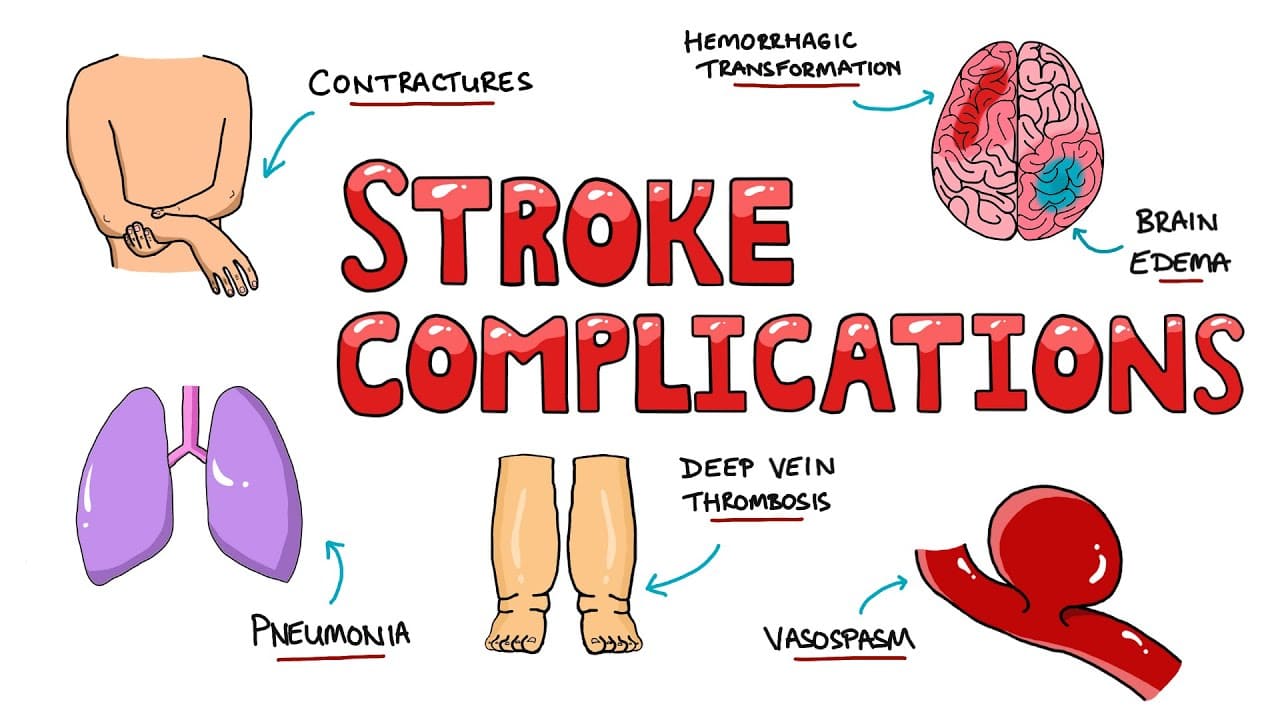
  • Risk of Complications: Unconscious patients are at high risk for secondary complications, including airway obstruction, aspiration pneumonia, pressure ulcers, and deep vein thrombosis, all of which require meticulous nursing care.

Consciousness is a state of awareness of oneself and the environment.

It has two main components: arousal (wakefulness), which is mediated by the ascending reticular activating system (ARAS), and awareness (content of consciousness), which is mediated by the cerebral hemispheres. Alterations in either of these components can lead to various states of altered consciousness.

It is important to accurately differentiate these states, as their recognition guides assessment and management.

A. Normal Consciousness:

  1. Alertness: The highest level of consciousness, characterized by full wakefulness, awareness of self and environment, and appropriate responses to stimuli.

B. States of Decreased Arousal (Progressive Depression of Consciousness):

These terms describe a continuum from mild drowsiness to profound unresponsiveness, typically caused by diffuse cerebral dysfunction or brainstem ARAS impairment.

  • Lethargy:

    • Definition: A state of decreased alertness and mental sluggishness. The patient is drowsy but can be easily aroused by verbal or gentle tactile stimulation.
    • Characteristics: Responses to commands are present but may be slow or incomplete. The patient may appear sleepy and have reduced spontaneous activity.
  • Obtundation:

    • Definition: A more profound state of drowsiness than lethargy. The patient is difficult to arouse and requires stronger or more constant stimulation (e.g., loud verbal commands, shaking).
    • Characteristics: When aroused, responses are often delayed, confused, or minimal. The patient may drift back to sleep quickly when stimulation ceases. Awareness is significantly impaired.
  • Stupor:

    • Definition: A state of deep unresponsiveness from which the patient can be aroused only by vigorous, repeated, and often noxious (painful) stimuli (e.g., sternal rub, nail bed pressure).
    • Characteristics: When aroused, the patient's responses are typically limited to simple motor acts (e.g., withdrawal from pain, groaning). Verbal responses are usually absent or incomprehensible. The patient immediately lapses back into unresponsiveness once the noxious stimulus is removed.
  • Coma:

    • Definition: The most severe form of unconsciousness, characterized by a state of prolonged, profound unresponsiveness from which the patient cannot be aroused by any external stimuli, including vigorous noxious stimulation.
    • Characteristics:
      • Absence of eye opening.
      • Absence of verbal responses.
      • Absence of purposeful or voluntary motor responses.
      • Reflexive or posturing motor responses to pain may be present depending on the level of brain damage (e.g., decorticate or decerebrate posturing).
      • Brainstem reflexes (e.g., pupillary, corneal, gag) may be present or absent.
      • No sleep-wake cycles.
      • Reflects severe dysfunction of both cerebral hemispheres or the ARAS.
  • C. Related States of Altered Consciousness (Often Differentiated from Coma):

    These conditions are distinct from coma, though they may share some clinical features of unresponsiveness. They involve varying degrees of preserved arousal or awareness.

  • Vegetative State (VS) / Unresponsive Wakefulness Syndrome (UWS):
    • Definition: A state of wakefulness without awareness. The patient may have spontaneous eye opening, exhibit sleep-wake cycles, and have preserved brainstem reflexes (e.g., pupillary, corneal, swallowing).
    • Characteristics: No evidence of sustained, reproducible, purposeful, or voluntary behavioral responses to visual, auditory, tactile, or noxious stimuli. There is no evidence of language comprehension or expression. Often results from severe diffuse cerebral damage with relative preservation of brainstem function.
    • Persistent Vegetative State (PVS): If the vegetative state lasts for more than 4 weeks.
    • Permanent Vegetative State: If the PVS lasts for more than 3 months for non-traumatic brain injury, or 12 months for traumatic brain injury, the likelihood of recovery is extremely low.
  • Minimally Conscious State (MCS):
    • Definition: A condition of severely altered consciousness in which there is minimal but definite behavioral evidence of self or environmental awareness.
    • Characteristics: Unlike VS, MCS patients show inconsistent but reproducible signs of awareness, such as following simple commands, tracking objects, functionally communicative gestures, or having purposeful affective responses (e.g., smiling or crying in response to appropriate emotional stimuli).
  • Locked-in Syndrome:
    • Definition: A rare neurological condition where a patient is fully conscious and aware but unable to communicate verbally or move most of their body due to complete paralysis of all voluntary muscles, except for vertical eye movements or blinking.
    • Characteristics: The patient is fully awake and cognitively intact but "locked in" their body. It typically results from a lesion in the ventral pons (often brainstem stroke), disrupting corticospinal and corticobulbar tracts.
  • Brain Death:
    • Definition: Irreversible cessation of all functions of the entire brain, including the brainstem. It is considered legal death.
    • Characteristics: Absence of all brainstem reflexes (e.g., pupillary, corneal, oculocephalic, oculovestibular, gag, cough), apnea (absence of spontaneous breathing), and usually a flat electroencephalogram (EEG). Confirmation requires strict clinical criteria and often confirmatory tests.
  • Summary Table of Consciousness States:

    State Arousal (Wakefulness) Awareness (Content) Eye Opening Voluntary Motor Communication
    Alert Present Present Spontaneous Present Present
    Lethargy Reduced Reduced Spontaneous Slowed Present (slow)
    Obtundation Reduced Significantly Impaired With stimulation Delayed/Confused Minimal/Absent
    Stupor Severely Reduced Absent To noxious stimuli Withdrawal Absent
    Coma Absent Absent Absent Absent/Reflexive Absent
    Vegetative Present (sleep-wake) Absent Spontaneous Reflexive Absent
    Minimally Conscious Present (inconsistent) Inconsistent but definite Spontaneous/To stimuli Inconsistent purposeful Inconsistent
    Locked-in Present Present Spontaneous Vertical eye movements only Eye movements only
    Brain Death Absent Absent Absent Absent Absent

    Neuroanatomy & Physiology of Consciousness

    Consciousness is a complex emergent property of the brain, typically conceptualized as having two main components: arousal (wakefulness) and awareness (content of consciousness). These components are supported by distinct but interconnected brain regions.

    A. Arousal (Wakefulness): The Role of the Ascending Reticular Activating System (ARAS)

    Arousal refers to the state of being awake and alert. It is primarily mediated by the Ascending Reticular Activating System (ARAS), a diffuse network of neurons located in the brainstem.

    1. Location: The ARAS extends from the medulla, through the pons and midbrain, and projects rostrally to the thalamus, hypothalamus, and directly to the cerebral cortex.
    2. Function: The ARAS acts like a "switch" or "volume control" for wakefulness. It continuously sends excitatory signals to the cerebral cortex, keeping it active and alert. Damage to the ARAS, even if relatively small, can result in profound unconsciousness (coma) because it disrupts this widespread cortical activation.
    3. Key Neurotransmitters: Several neurotransmitter systems within the ARAS play crucial roles:
      • Acetylcholine: Projections from the pontine and basal forebrain cholinergic nuclei are vital for cortical activation.
      • Norepinephrine: Neurons in the locus coeruleus contribute to wakefulness and attention.
      • Serotonin: Raphe nuclei project widely and influence sleep-wake cycles.
      • Dopamine: Ventral tegmental area projections modulate arousal and motivation.
      • Histamine: Tuberomammillary nucleus in the hypothalamus promotes wakefulness.
      • Orexin (Hypocretin): Hypothalamic neurons releasing orexin are essential for maintaining wakefulness and preventing narcolepsy.

    B. Awareness (Content of Consciousness): The Role of the Cerebral Hemispheres and Their Connections

    Awareness refers to the ability to integrate information from the internal and external environment, to process thoughts, feelings, and perceptions, and to respond meaningfully. It represents the "content" of consciousness.

    1. Cerebral Hemispheres: The integrity of both cerebral hemispheres, particularly the cerebral cortex, is essential for awareness. Extensive damage to one hemisphere or diffuse dysfunction of both hemispheres can impair awareness.
    2. Thalamus: The thalamus acts as a crucial relay station, filtering and transmitting sensory information to the cortex and playing a key role in cortical activation and integration. Thalamocortical loops are critical for maintaining conscious thought.
    3. Cortico-Cortical Connections: Extensive reciprocal connections between different cortical areas (e.g., frontal, parietal, temporal lobes) allow for the integration of sensory input, memory, emotion, and executive functions, forming the rich tapestry of conscious experience.
    4. Cortico-Subcortical Loops: Interactions between the cortex and subcortical structures (e.g., basal ganglia, limbic system) also contribute to complex cognitive processes and emotional aspects of awareness.

    C. Pathophysiology of Unconsciousness:

    Unconsciousness arises when there is a significant disruption to either the ARAS (causing loss of arousal) or widespread bilateral cerebral hemisphere function (causing loss of awareness, even if arousal mechanisms are somewhat intact).

  • Structural Lesions:
    • Brainstem Lesions: Direct damage to the ARAS in the midbrain or pons (e.g., due to stroke, hemorrhage, tumor) can directly impair arousal and lead to coma.
    • Bilateral Cortical Lesions: Extensive damage to both cerebral hemispheres (e.g., severe traumatic brain injury, global ischemia, large bilateral strokes, anoxia) can lead to loss of awareness, even if the brainstem is intact.
    • Supratentorial Mass Lesions with Herniation: Large lesions above the tentorium cerebelli (e.g., subdural hematoma, epidural hematoma, large cerebral infarct with edema, tumor) can cause a secondary compression and dysfunction of the brainstem, specifically the ARAS, as brain tissue shifts and herniates downwards. This is a common mechanism for coma progression.
    • Infratentorial Lesions: Lesions below the tentorium (e.g., cerebellar hemorrhage, brainstem tumor) can directly compress or destroy the ARAS.
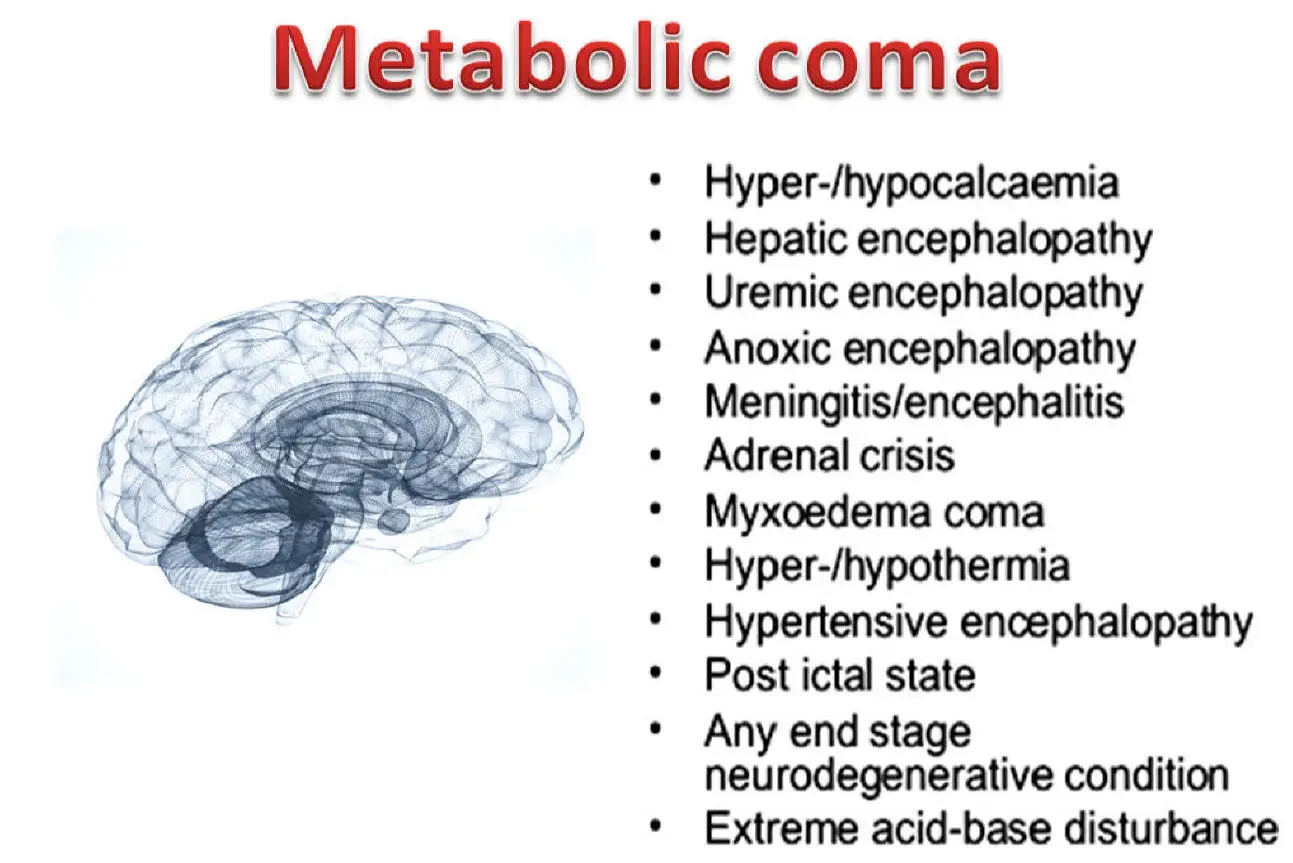
  • Diffuse/Metabolic/Toxic Encephalopathy:
    • These conditions cause widespread dysfunction of cortical neurons and/or disrupt neurotransmitter systems, affecting both arousal and awareness. The ARAS itself is usually structurally intact but functionally suppressed.
    • Examples include hypoglycemia, hyponatremia, uremia, hepatic encephalopathy, drug overdose, infections (meningitis, encephalitis), anoxia, and severe electrolyte imbalances.
    • In these cases, if the underlying cause is reversed, brain function and consciousness can often recover fully, unlike severe structural damage.
  • Etiology (Causes of Coma)

    Coma is a neurological emergency with a broad range of potential causes. These causes can generally be categorized as either structural (due to a physical lesion or injury within the brain) or diffuse/metabolic/toxic (due to widespread brain dysfunction without a focal lesion, often reversible). A systematic approach to identifying the etiology is critical for effective management.

    A. Structural Causes:

    These involve physical damage to brain tissue, leading to direct impairment of the cerebral hemispheres or the ARAS, or indirect compression of these vital structures.

  • Traumatic Brain Injury (TBI):
    • Concussion/Diffuse Axonal Injury (DAI): Widespread shearing forces from acceleration-deceleration injuries can disrupt axonal connections throughout the white matter, leading to widespread brain dysfunction and coma.
    • Intracranial Hemorrhage:
      • Epidural Hematoma (EDH): Bleeding between the dura mater and the skull, often arterial, causing rapid compression.
      • Subdural Hematoma (SDH): Bleeding between the dura mater and arachnoid mater, often venous, can be acute (rapid onset) or chronic (slowly developing).
      • Intracerebral Hemorrhage (ICH): Bleeding within the brain parenchyma, which can be due to trauma, hypertension, or vascular malformations.
      • Subarachnoid Hemorrhage (SAH): Bleeding into the subarachnoid space, often from a ruptured aneurysm or trauma.
    • Cerebral Contusions: Bruising of brain tissue, often associated with TBI.
    • Skull Fractures: Can lead to intracranial hemorrhage or direct brain injury.
  • Vascular Events (Stroke):
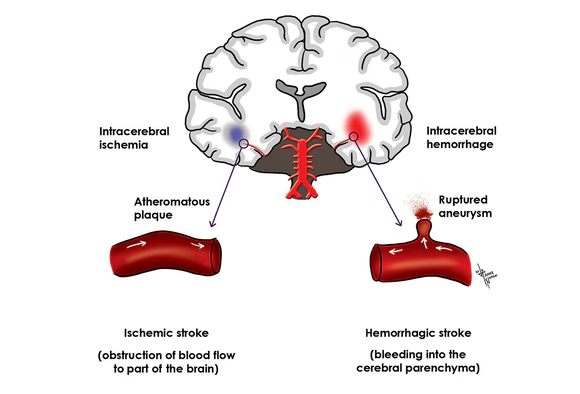
    • Ischemic Stroke: Large cerebral infarcts, especially if they are bilateral or involve critical areas like the brainstem (e.g., basilar artery occlusion), can cause coma. Extensive cerebral edema following a large infarct can also lead to herniation.
    • Hemorrhagic Stroke: Intracerebral hemorrhage (ICH) or subarachnoid hemorrhage (SAH) can cause rapid increases in intracranial pressure (ICP), direct brainstem compression, or widespread brain dysfunction due to blood irritating brain tissue.
    • Cerebral Venous Sinus Thrombosis: Clotting in the brain's venous drainage system, leading to venous infarction and edema.
  • Brain Tumors:
    • Primary Brain Tumors: Grow within the brain tissue.
    • Metastatic Brain Tumors: Spread from cancer elsewhere in the body.
    • Tumors can cause coma by direct compression of critical brain structures, causing edema, obstructing cerebrospinal fluid (CSF) flow (hydrocephalus), or causing hemorrhage within the tumor.
  • Infections:
    • Meningitis: Inflammation of the meninges, causing diffuse cerebral dysfunction due to inflammation and increased ICP.
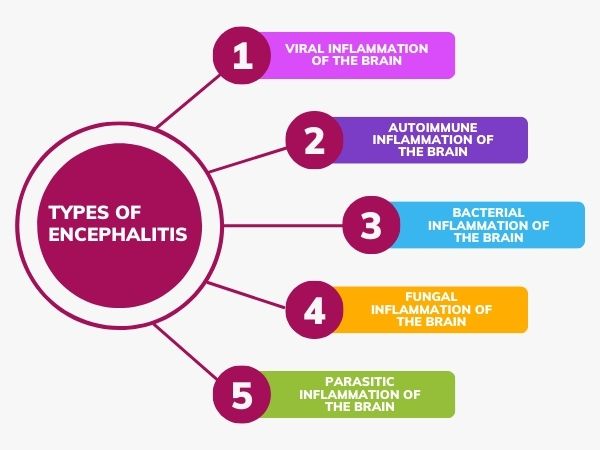
    • Encephalitis: Inflammation of the brain parenchyma itself, often viral, leading to widespread neuronal damage and dysfunction.
    • Brain Abscess: A collection of pus within the brain, acting as a mass lesion.
  • Hydrocephalus:
    • An abnormal accumulation of CSF within the brain's ventricles, causing increased ICP and compression of brain tissue. Can be obstructive or communicating.
  • B. Diffuse/Metabolic/Toxic Causes:

    These conditions typically affect brain function globally, often without a focal lesion. They are frequently reversible if the underlying cause is identified and treated promptly.

  • Metabolic Disturbances:
    • Hypoglycemia/Hyperglycemia: Critically low or high blood glucose levels.
    • Hyponatremia/Hypernatremia: Abnormal sodium levels, leading to cellular swelling or shrinkage.
    • Hepatic Encephalopathy: Liver failure leading to accumulation of toxins (e.g., ammonia) in the bloodstream.
    • Uremic Encephalopathy: Kidney failure leading to accumulation of metabolic waste products.
    • Hypoxia/Anoxia: Lack of oxygen to the brain, often from cardiac arrest, respiratory failure, or severe anemia.
    • Hypercapnia/Hypocapnia: Critically high or low carbon dioxide levels.
    • Acidosis/Alkalosis: Severe pH imbalances.
    • Thyroid Disorders: Hypothyroidism (myxedema coma) or hyperthyroidism (thyroid storm).
    • Adrenal Crisis: Adrenal insufficiency.
    • Electrolyte Imbalances: E.g., severe hypokalemia, hypercalcemia.
  • Toxicology/Drug-Related:
    • Overdose (Prescription, Illicit, or Over-the-Counter): Opioids, benzodiazepines, barbiturates, alcohol, tricyclic antidepressants, anticholinergics, sedatives, hypnotics.
    • Toxins: Carbon monoxide poisoning, heavy metals, pesticides.
    • Withdrawal Syndromes: Severe alcohol withdrawal (delirium tremens), sedative withdrawal.
  • Infections (Systemic with CNS effects):
    • Sepsis: Severe systemic infection leading to organ dysfunction, including encephalopathy.
    • Septic Encephalopathy: Direct effect of inflammatory mediators and toxins on brain function.
  • Seizures and Post-ictal State:
    • Status Epilepticus: Prolonged or recurrent seizures without full recovery of consciousness between them.
    • Post-ictal State: The period immediately following a seizure, during which the patient may be confused, drowsy, or unarousable for minutes to hours.
  • Hypothermia/Hyperthermia:
    • Severe Hypothermia: Core body temperature significantly below normal.
    • Severe Hyperthermia: Heat stroke.
  • Nutritional Deficiencies:
    • Wernicke's Encephalopathy: Thiamine (Vitamin B1) deficiency, often seen in chronic alcoholics.
  • C. Other Causes:

    • Psychogenic Unresponsiveness: A non-organic cause where the patient appears unconscious but is physiologically awake. Requires careful differentiation (e.g., eyelid resistance to opening, normal brainstem reflexes, abnormal EEG pattern).
    • Locked-in Syndrome: As discussed, conscious but unable to move.
    • Vertebrobasilar Insufficiency: Severe compromise of blood flow to the brainstem.
    Assessment of the Comatose Patient

    The assessment of an unconscious patient is an urgent process requiring a systematic and thorough approach. The primary goals are to:

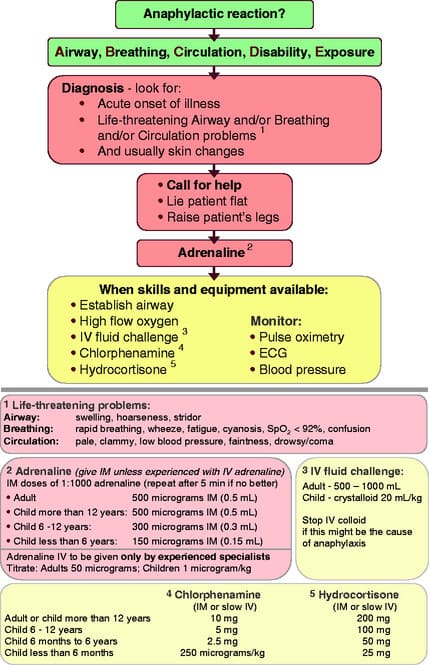
    1. Stabilize the patient (ABC - Airway, Breathing, Circulation).
    2. Identify the cause of unconsciousness.
    3. Prevent secondary brain injury.

    A. Initial Assessment and Stabilization (ABCDE Approach):

    1. Airway (A):
      • Assess: Patency of the airway. Is the tongue obstructing? Are there foreign bodies, blood, or vomit?
      • Intervene: Jaw-thrust or chin-lift maneuver, suctioning, oral or nasopharyngeal airway insertion. Endotracheal intubation and mechanical ventilation may be necessary if airway is compromised or for airway protection (e.g., GCS < 8).
    2. Breathing (B):
      • Assess: Respiratory rate, depth, effort, symmetry of chest rise, breath sounds. Are there abnormal breathing patterns (e.g., Cheyne-Stokes, Kussmaul, apneustic, ataxic)?
      • Intervene: Administer supplemental oxygen. Assist ventilation if inadequate. Treat underlying respiratory compromise.
    3. Circulation (C):
      • Assess: Heart rate, blood pressure, rhythm, skin color/temperature, capillary refill time.
      • Intervene: Establish IV access. Administer IV fluids for hypotension. Treat arrhythmias. Control external hemorrhage. Monitor cardiac function.
    4. Disability (D) - Neurological Assessment:
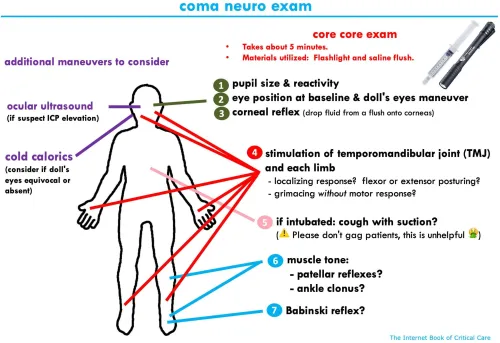
      • Assess: Level of consciousness (using GCS), pupillary response, motor response, brainstem reflexes. Perform a rapid neurological screen.
      • Intervene: Administer empirical therapies if indicated (e.g., glucose for hypoglycemia, naloxone for opioid overdose, thiamine for Wernicke's). Protect cervical spine if trauma is suspected.
    5. Exposure (E):
      • Assess: Remove clothing to fully inspect for injuries, rashes, needle marks, medical alert bracelets.
      • Intervene: Maintain normothermia; cover with blankets after examination.

    B. History Taking (from Collateral Sources):

    Since the patient is unable to communicate, gathering a detailed history from family, friends, witnesses, paramedics, or medical records is crucial.

    • Onset: Acute or gradual?
    • Preceding Events: Trauma, falls, headaches, seizures, fevers, weakness, vomiting, drug ingestion?
    • Past Medical History: Diabetes, hypertension, heart disease, stroke, kidney/liver disease, psychiatric conditions?
    • Medications: Current prescriptions, over-the-counter drugs, illicit drugs, recent changes?
    • Allergies:
    • Social History: Alcohol use, drug use, recent travel.

    C. Detailed Neurological Examination:

    This systematic examination helps to localize the lesion and determine the severity of brain dysfunction.

    Level of Consciousness - Glasgow Coma Scale (GCS):

  • Purpose: A standardized, objective tool used to assess a patient's level of consciousness by evaluating three components: eye opening, verbal response, and motor response.
  • Component Score Description
    Eye Opening (E) 4 Spontaneous
    3 To speech
    2 To pain
    1 None
    Verbal Response (V) 5 Oriented to time, place, and person
    4 Confused conversation
    3 Inappropriate words
    2 Incomprehensible sounds
    1 None
    Motor Response (M) 6 Obeys commands
    5 Localizes to pain
    4 Withdraws from pain
    3 Flexion (decorticate posturing)
    2 Extension (decerebrate posturing)
    1 None
  • Total Score: Ranges from 3 (deep coma/brain death) to 15 (fully conscious). A GCS score of 8 or less typically indicates severe brain injury and often necessitates airway protection (intubation).
  • Limitations: Can be affected by sedatives, paralytics, endotracheal intubation (verbal component untestable, noted as 'T'), facial trauma, or language barriers.
  • Pupillary Response:

    • Assess: Size, shape, symmetry, and reactivity to light (direct and consensual).
    • Significance:
      • Small, reactive: Metabolic encephalopathy, opioid overdose, pontine lesion.
      • Dilated, fixed unilateral: Uncal herniation (compression of oculomotor nerve - CN III). NEUROLOGICAL EMERGENCY.
      • Mid-position, fixed bilateral: Midbrain damage.
      • Pinpoint (1mm), non-reactive: Pontine lesion (usually from hemorrhage) or opioid overdose.
      • Irregular: Prior trauma, surgery, or underlying pathology.

    Oculomotor Responses (Brainstem Reflexes):

    • Doll's Eyes (Oculocephalic Reflex):
      • Procedure: Hold eyelids open, rapidly turn head from side to side.
      • Normal (Positive): Eyes move opposite to head turning (conjugate movement). Indicates intact brainstem.
      • Abnormal (Negative): Eyes remain fixed in mid-position or move with the head. Indicates brainstem dysfunction.
      • Contraindication: Do NOT perform if cervical spine injury is suspected.
    • Caloric Reflex (Oculovestibular Reflex):
      • Procedure: Elevate head 30 degrees. Inject 30-50 mL of ice water into one ear canal (ensure tympanic membrane is intact). Observe eye movement. Wait 5 minutes before testing other ear.
      • Normal (Positive): Eyes slowly deviate towards the irrigated ear, with nystagmus away in conscious patients. In unconscious patients, only tonic deviation towards the irrigated ear. Indicates intact brainstem.
      • Abnormal (Negative): No eye movement. Indicates brainstem dysfunction.

    Motor Response:

    • Assess: Spontaneous movement, response to noxious stimuli (sternal rub, nail bed pressure).
    • Observe for:
      • Purposeful movement: Withdrawal from pain, localization of pain.
      • Decorticate Posturing (Flexor Posturing): Arms flexed, adducted, internal rotation; legs extended, internal rotation, plantar flexion. Indicates damage to corticospinal tracts above the red nucleus (midbrain).
      • Decerebrate Posturing (Extensor Posturing): Arms extended, adducted, pronated; legs extended, plantar flexion. Indicates more severe damage, typically to the brainstem below the red nucleus (pons/midbrain).
      • Flaccid Paralysis: No motor response, indicates very severe brainstem or spinal cord damage.

    Brainstem Reflexes:

    • Corneal Reflex: Touch cornea with a wisp of cotton.
      • Normal: Bilateral blink.
    • Gag Reflex: Stimulate posterior pharynx.
      • Normal: Gagging/retching.
    • Cough Reflex: Suctioning trachea.
      • Normal: Cough.

    D. Pain Assessment in Unconscious Patients (FLACC Scale):

    Since verbal communication of pain is impossible, behavioral pain scales are used. The FLACC (Face, Legs, Activity, Cry, Consolability) Pain Scale is commonly used in non-verbal patients, including adults in critical care, children, and those with developmental delays.

    Component Score Description
    F - Face 0 No particular expression or smile
    1 Occasional frown, withdrawn, disinterested
    2 Frequent to constant frown, clenched jaw, quivering chin
    L - Legs 0 Normal position or relaxed
    1 Uneasy, restless, tense
    2 Kicking, legs drawn up
    A - Activity 0 Lying quietly, normal position, moves easily
    1 Squirming, shifting back and forth, tense
    2 Arched, rigid, jerking
    C - Cry 0 No cry (awake or asleep)
    1 Moans or whimpers, occasional complaint
    2 Crying steadily, screams or sobs, frequent complaints
    C - Consolability 0 Content, relaxed
    1 Reassured by occasional touching, hugging, or talking to; distractible
    2 Difficult to console or comfort
  • Total Score: Ranges from 0 (relaxed, comfortable) to 10 (severe pain).
  • Interpretation: A higher score indicates increased pain or distress. Regular assessment helps guide pain management interventions.
  • E. Initial Diagnostic Investigations:

    Concurrent with the physical assessment, rapid diagnostic tests are initiated:

  • Laboratory Studies:
    • Blood Glucose: STAT check for hypoglycemia/hyperglycemia.
    • Electrolytes: Sodium, potassium, calcium, magnesium.
    • Renal Function: BUN, creatinine.
    • Liver Function: AST, ALT, bilirubin, ammonia.
    • Arterial Blood Gases (ABGs): pH, pO2, pCO2, bicarbonate.
    • Complete Blood Count (CBC): Anemia, infection.
    • Coagulation Studies: PT/INR, PTT (especially if hemorrhage or anticoagulant use is suspected).
    • Toxicology Screen: Urine and serum (drugs, alcohol, specific toxins).
    • Thyroid Function Tests: If endocrine pathology suspected.
    • Blood Cultures: If infection suspected.
  • Imaging Studies:
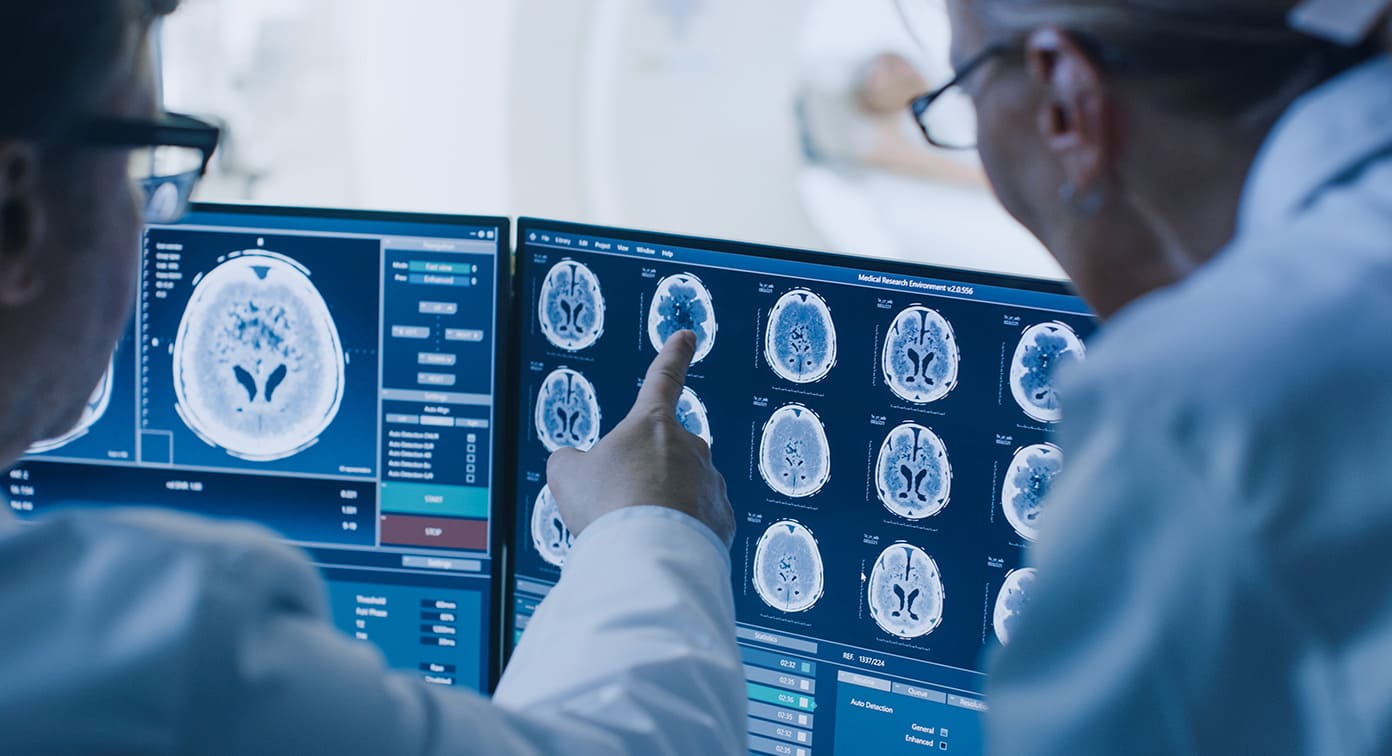
    • Non-contrast Head CT: Often the first and most critical imaging study. Rapidly identifies acute hemorrhage (intracranial, subarachnoid, epidural, subdural), major ischemic stroke (early signs), mass lesions, hydrocephalus, and skull fractures. Essential for differentiating structural from metabolic causes.
    • Cervical Spine CT/X-ray: If trauma is suspected.
    • CT Angiography (CTA) / CT Perfusion (CTP): If acute stroke is suspected.
    • MRI Brain: More detailed imaging, useful for identifying subtle lesions, posterior fossa lesions, and diffuse white matter injury (e.g., DAI), but takes longer and may not be feasible in unstable patients.
  • Other Studies:
    • Electrocardiogram (ECG): To assess for cardiac arrhythmias, ischemia, or conduction abnormalities that could cause syncope or affect brain perfusion.
    • Lumbar Puncture (LP): If meningitis or encephalitis is suspected after imaging rules out increased ICP. CSF analysis can reveal infection, inflammation, or SAH not seen on CT.
    • Electroencephalogram (EEG): To detect non-convulsive seizures (non-convulsive status epilepticus), assess background brain activity, or confirm brain death.
  • Prioritize Management Strategies

    The management of a comatose patient is often a race against time, requiring simultaneous diagnostic evaluation and therapeutic intervention. The priorities are always to stabilize the patient, prevent secondary brain injury, and treat the underlying cause.

    A. General Supportive Care (Initial Resuscitation - ABCDE Re-emphasized):

    These are the foundational interventions applicable to all comatose patients, irrespective of the underlying cause, and are often initiated concurrently with the initial assessment.

  • Airway Management & Ventilation:
    • Secure Airway: If GCS is ≤ 8 or there's evidence of airway compromise (obstruction, aspiration risk, hypovilation), endotracheal intubation is typically indicated.
    • Mechanical Ventilation: Control CO2 levels (maintain normocapnia, PCO2 35-45 mmHg, to optimize cerebral blood flow without causing vasoconstriction or vasodilation) and oxygenation (PaO2 > 60 mmHg or SpO2 > 94%).
    • Head of Bed Elevation: Elevate the head of the bed to 30 degrees to promote venous drainage from the brain and help reduce intracranial pressure (ICP), unless contraindicated by spinal injury or severe hypotension.
  • Circulatory Support:
    • Maintain Normotension: Avoid hypotension, which can lead to cerebral hypoperfusion and secondary brain injury. Maintain cerebral perfusion pressure (CPP) > 60-70 mmHg (CPP = MAP - ICP).
    • IV Fluids: Administer isotonic crystalloids (e.g., normal saline) to maintain euvolemia. Avoid hypotonic solutions, which can worsen cerebral edema.
    • Vasopressors: Use if needed to maintain adequate mean arterial pressure (MAP) after fluid resuscitation.
    • Monitor Cardiac Rhythm: Treat arrhythmias.
  • Temperature Control:
    • Prevent Hyperthermia: Fever increases cerebral metabolic demand and can worsen brain injury. Actively cool if present (antipyretics, cooling blankets).
    • Manage Hypothermia: If present, rewarm gradually. Therapeutic hypothermia may be indicated in specific situations (e.g., post-cardiac arrest).
  • Metabolic & Electrolyte Homeostasis:
    • Glucose Management: Immediately correct hypoglycemia (administer D50 IV) or severe hyperglycemia (insulin).
    • Electrolyte Correction: Address severe hyponatremia, hypernatremia, hyperkalemia, hypokalemia, etc.
    • Nutritional Support: Initiate early enteral nutrition, typically within 24-48 hours.
  • Gastric Protection:
    • Nasogastric Tube: Decompress the stomach to prevent aspiration and facilitate feeding.
    • Stress Ulcer Prophylaxis: H2 blockers or proton pump inhibitors.
  • Prevention of Complications:
    • Deep Vein Thrombosis (DVT) Prophylaxis: Sequential compression devices (SCDs), low-molecular-weight heparin or unfractionated heparin (unless contraindicated by hemorrhage).
    • Skin Care: Regular repositioning to prevent pressure ulcers.
    • Eye Care: Lubricating drops/ointment to prevent corneal abrasion.
  • B. Specific Interventions Based on Etiology:

    Once a suspected or confirmed diagnosis is made, targeted therapies are initiated.

  • Increased Intracranial Pressure (ICP) Management (for Structural Lesions & Edema):
    • External Ventricular Drain (EVD) / ICP Monitor: For direct ICP measurement and CSF drainage.
    • Osmotic Therapy:
      • Mannitol: IV boluses to draw fluid from brain tissue into the circulation.
      • Hypertonic Saline (3% or 23.4%): Alternative osmotic agent, more effective in some cases.
    • Sedation & Analgesia: To reduce metabolic demand and prevent ICP spikes (propofol, midazolam, fentanyl).
    • Neuromuscular Blockade: If sedation alone is insufficient to control ICP.
    • Barbiturate Coma: In refractory ICP elevation, to reduce cerebral metabolic rate and ICP.
    • Decompressive Craniectomy: Surgical removal of part of the skull to allow brain swelling, for refractory ICP.
  • Traumatic Brain Injury (TBI):
    • Rapid Evacuation of Hematomas: For EDH, acute SDH, or large ICH.
    • ICP Management: As above.
  • Stroke (Ischemic or Hemorrhagic):
    • Ischemic Stroke:
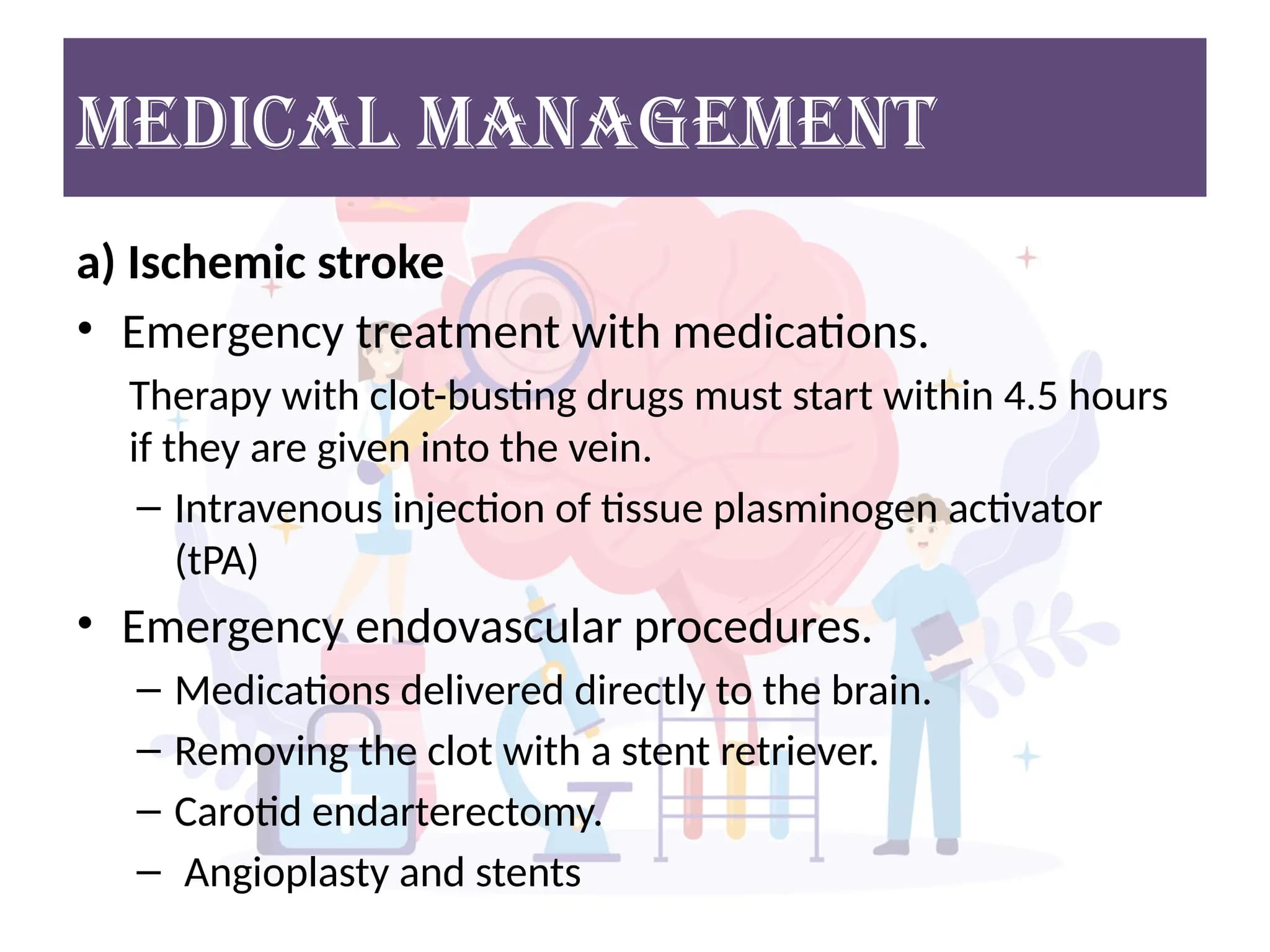
      • Thrombolysis (IV tPA): If criteria met and within time window.
      • Endovascular Thrombectomy: For large vessel occlusions.
      • Blood Pressure Management: Often permissive hypertension initially to maintain cerebral perfusion, then control to prevent hemorrhagic transformation.
    • Hemorrhagic Stroke (ICH/SAH):
      • Blood Pressure Control: Aggressive management to prevent rebleeding and hematoma expansion.
      • Reversal of Anticoagulation: If applicable (Vitamin K, PCC, specific reversal agents).
      • Aneurysm Clipping/Coiling: For SAH.
      • ICP Management: As above.
  • Infections (Meningitis/Encephalitis):
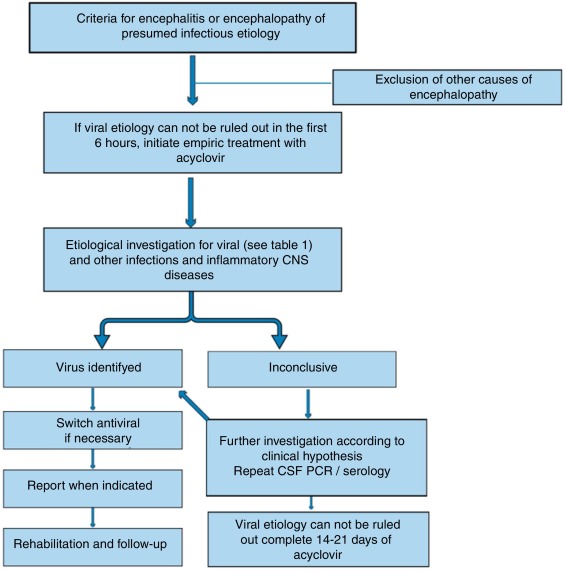
    • Empirical Antibiotics/Antivirals: Administer immediately after blood cultures and lumbar puncture (if safe to perform).
    • Antipyretics: To control fever.
    • Steroids: Dexamethasone for bacterial meningitis.
  • Toxic/Metabolic Encephalopathy:
    • Antidotes:
      • Naloxone: For opioid overdose.
      • Flumazenil: For benzodiazepine overdose (use with caution, can precipitate seizures).
    • Correction of Metabolic Derangements:
      • Glucose: D50 for hypoglycemia.
      • Electrolyte Correction: Slow and careful correction of sodium imbalances to prevent osmotic demyelination syndrome.
      • Thiamine: For suspected Wernicke's encephalopathy (alcoholics).
    • Removal of Toxins:
      • Activated Charcoal: For recent oral ingestions.
      • Hemodialysis: For severe renal failure (uremia), some drug intoxications (e.g., methanol, lithium, salicylate).
    • Supportive Care: Manage withdrawal syndromes, control seizures.
  • Seizures/Status Epilepticus:
    • Anticonvulsants: Benzodiazepines (lorazepam, midazolam) acutely, followed by fosphenytoin, levetiracetam, valproate, or propofol/midazolam infusion for refractory status.
  • C. Ongoing Monitoring:

    • Continuous Neurological Assessment: Frequent GCS, pupillary checks, motor response.
    • Vital Signs: Continuous cardiac monitoring, blood pressure, SpO2, temperature.
    • ICP Monitoring: If indicated.
    • Laboratory Trends: Repeat blood work to monitor response to therapy.
    • Imaging: Repeat CT/MRI if neurological status changes or to assess treatment efficacy.

    Prognosis and Recovery

    Predicting the outcome for a comatose patient is one of the most challenging aspects of critical care neurology. Prognosis is highly variable, depending on the underlying cause, severity and duration of brain injury, and the patient's age and pre-morbid health status. Recovery can range from full neurological return to persistent vegetative state (PVS), minimally conscious state (MCS), or death.

    A. Factors Influencing Prognosis:

    Several factors are consistently associated with a better or worse prognosis:

  • Etiology of Coma:
    • Better Prognosis: Coma due to reversible metabolic/toxic causes (e.g., hypoglycemia, drug overdose, hepatic encephalopathy) generally has a better prognosis if the underlying cause is promptly identified and treated.
    • Worse Prognosis: Coma due to severe structural brain damage (e.g., extensive anoxic brain injury, large intracerebral hemorrhage, severe traumatic brain injury) or prolonged ischemia often carries a poorer prognosis.
  • Depth and Duration of Coma:
    • GCS Score: Lower GCS scores (e.g., GCS 3-5) are generally associated with worse outcomes, particularly if sustained.
    • Duration: Prolonged coma (e.g., more than a few days to weeks) without significant improvement suggests a poorer chance of good neurological recovery.
  • Neurological Examination Findings (within the first 24-72 hours):
    • Pupillary Light Reflex (PLR): Bilaterally absent pupillary light reflexes after 24-72 hours (especially post-anoxic injury) are a strong predictor of poor outcome.
    • Corneal Reflex: Absent corneal reflexes indicate deeper brainstem dysfunction and a poorer prognosis.
    • Motor Response: Absent or extensor motor responses (decerebrate posturing) are associated with worse outcomes than withdrawal or localization to pain. Flaccidity is the worst.
    • Brainstem Reflexes: Absent oculocephalic and oculovestibular reflexes (Doll's eyes and caloric reflexes) are poor prognostic signs.
  • Age: Younger patients generally have a better capacity for neurological recovery than older patients, although severe injury at any age can be devastating.
  • Comorbidities: Pre-existing conditions (e.g., severe heart disease, chronic lung disease, renal failure) can complicate recovery.
  • B. Prognostic Tools and Biomarkers:

    While clinical examination remains paramount, several tools and biomarkers can aid in refining prognosis, especially in specific scenarios like post-anoxic coma.

  • Neuroimaging:
    • CT Scan: Can identify early signs of diffuse cerebral edema, effacement of sulci and cisterns, and loss of gray-white matter differentiation (especially after anoxia), which are associated with poor prognosis.
    • MRI (DWI/ADC sequences): Diffusion-weighted imaging (DWI) can detect early ischemic changes and widespread cytotoxic edema, which are powerful predictors of outcome, particularly in post-anoxic coma.
  • Electroencephalography (EEG):
    • Suppressed Background Activity: A severely suppressed EEG background (generalized low amplitude) is a poor prognostic sign.
    • Burst-Suppression Pattern: Alternating periods of high-voltage activity and electrical silence are indicative of severe brain dysfunction and often a poor outcome.
    • Generalized Periodic Discharges (GPDs): Can be associated with poor outcomes.
    • Reactivity: Absence of EEG reactivity to external stimuli is a poor prognostic sign.
    • Non-convulsive Status Epilepticus (NCSE): Can occur in comatose patients and needs to be identified and treated, as it can worsen neurological outcome.
  • Evoked Potentials:
    • Somatosensory Evoked Potentials (SSEPs): Absence of bilateral cortical SSEPs (N20 potential) in response to median nerve stimulation is a highly specific predictor of poor outcome (PVS or death) in post-anoxic coma. It has a high specificity but lower sensitivity.
  • Biomarkers:
    • Neuron-Specific Enolase (NSE): Elevated serum NSE levels, especially persistent elevation, are associated with poor neurological outcome after anoxic brain injury.
    • S-100B: Another brain-specific protein, though less specific than NSE, can also be elevated in brain injury.
  • C. States of Altered Consciousness Post-Coma:

    If a patient survives coma, they may emerge into one of several chronic states of altered consciousness:

  • Vegetative State (VS) / Unresponsive Wakefulness Syndrome (UWS):
    • Definition: Characterized by arousal (eyes open, sleep-wake cycles, ability to grimace, cry, or smile) but no evidence of awareness of self or environment. Reflexive movements are present, but no voluntary interaction.
    • Prognosis: If persistent for more than 1 month (PVS), the prognosis for meaningful recovery is poor, especially after 3 months for anoxic injury or 12 months for traumatic injury.
  • Minimally Conscious State (MCS):
    • Definition: Characterized by definitive, but inconsistent, evidence of self- or environmental awareness. This might include following simple commands, intelligible verbalization, or visually pursuing objects.
    • Prognosis: Better than VS, with potential for further improvement, though recovery is often protracted and incomplete.
  • Locked-in Syndrome: (Reiteration from Part 2)
    • Definition: Patients are fully conscious and aware but paralyzed, typically retaining only vertical eye movement and blinking. They are "locked in" their bodies.
    • Prognosis: While motor recovery is often limited, cognitive prognosis is good, and patients can communicate via assistive devices.
  • D. Rehabilitation:

    • Early Mobilization: As soon as medically stable, to prevent complications like muscle atrophy, contractures, and pressure ulcers.
    • Physical Therapy (PT): To improve strength, range of motion, and mobility.
    • Occupational Therapy (OT): To improve activities of daily living (ADLs), cognitive function, and fine motor skills.
    • Speech and Language Pathology (SLP): For communication, swallowing difficulties (dysphagia), and cognitive retraining.
    • Neuropsychology: For cognitive assessment and rehabilitation.
    • Psychological Support: For patients and families dealing with the profound changes and long-term implications.

    E. Ethical Considerations and End-of-Life Decisions:

    In cases of profound and irreversible brain damage, families and healthcare teams often face difficult decisions regarding withdrawal of life support.

    • Advanced Directives: Patient's wishes (e.g., living will, durable power of attorney for healthcare) are paramount.
    • Futility of Treatment: Discussion regarding medical treatments that offer no reasonable hope of recovery.
    • Palliative Care: Focus shifts from curative to comfort care, ensuring dignity and symptom management.

    Interventions, and Nursing Diagnoses for the Comatose Patient

    Nursing Interventions for the Comatose Patient:

    Nursing care focuses on maintaining physiological stability, preventing complications, and supporting the family.

  • Neurological Monitoring:
    • Frequent GCS Assessment: Hourly or more frequently if unstable, noting trends.
    • Pupillary Checks: Size, shape, symmetry, and reaction to light (often hourly).
    • Motor Assessment: Response to command or painful stimuli (e.g., central vs. peripheral stimulus).
    • Vital Signs: Monitor for Cushing's triad (hypertension, bradycardia, irregular respirations) indicative of increased ICP.
    • ICP Monitoring: If an ICP device is in place, monitor waveforms, ICP values, and maintain patency of the system. Calculate and maintain target Cerebral Perfusion Pressure (CPP).
  • Airway and Respiratory Management:
    • Maintain Patent Airway: Position patient to prevent aspiration, frequent suctioning of oral and tracheal secretions (if intubated).
    • Ventilator Management: Ensure correct settings, humidification, and alarms are active.
    • Oxygenation & Ventilation: Monitor SpO2, ABGs, and EtCO2 (if available).
    • Prevent Aspiration Pneumonia: Head of bed 30-45 degrees, check gastric residual volumes if tube-fed, maintain cuff pressure if intubated.
    • Frequent Repositioning: To promote lung expansion and prevent atelectasis.
  • Cardiovascular Management:
    • Blood Pressure Control: Administer vasopressors/antihypertensives as ordered to maintain target MAP/CPP.
    • Fluid Balance: Monitor I&Os meticulously, central venous pressure (CVP), and administer IV fluids as prescribed. Avoid fluid overload.
    • Cardiac Monitoring: Observe for arrhythmias and notify physician.
  • Thermoregulation:
    • Monitor Temperature: Hourly, intervene promptly for hypo/hyperthermia.
    • Fever Management: Antipyretics, cooling blankets, ice packs to axilla/groin.
    • Hypothermia Management: Warming blankets, warm IV fluids.
  • Fluid and Electrolyte Balance:
    • Strict I&Os: Crucial for detecting fluid shifts.
    • Monitor Lab Values: Daily electrolytes, BUN/Cr, glucose, osmolality.
    • Electrolyte Replacement: Administer as ordered, correcting imbalances carefully.
  • Gastrointestinal and Nutritional Care:
    • Enteral Feedings: Initiate early via NG/OG tube, confirming placement, checking residuals, and ensuring formula tolerance.
    • Bowel Management: Prevent constipation (stool softeners, laxatives), check for impaction.
    • Stress Ulcer Prophylaxis: Administer H2 blockers or PPIs.
  • Infection Control:
    • Meticulous Hand Hygiene:
    • Aseptic Technique: For all invasive procedures (IV insertion, Foley care, suctioning, dressing changes).
    • Monitor for Signs of Infection: Fever, increased WBC, purulent drainage.
    • Foley Catheter Care: Prevent CAUTI.
    • Central Line Care: Prevent CLABSI.
    • Oral Hygiene: Frequent mouth care to prevent ventilator-associated pneumonia (VAP).
  • Skin Integrity:
    • Frequent Repositioning: Every 2 hours (or more frequently) to relieve pressure.
    • Skin Assessment: Inspect skin for redness, breakdown.
    • Specialty Beds/Mattresses: To reduce pressure.
    • Moisture Control: Keep skin clean and dry.
  • Musculoskeletal Care:
    • Passive Range of Motion (PROM): Perform several times a day to all joints to prevent contractures.
    • Proper Positioning: Maintain body alignment, use splints/foot boards to prevent foot drop.
    • Early Mobilization: Collaborate with PT/OT for out-of-bed activity as soon as stable.
  • Eye Care:
    • Lubricating Eye Drops/Ointment: Protect corneas from drying due to absent blink reflex.
    • Taping Eyelids Shut: If patient's eyes remain open.
  • Pain and Sedation Management:
    • FLACC Scale: As discussed, for ongoing pain assessment.
    • Administer Analgesics/Sedatives: Carefully titrated to achieve comfort without over-sedation that might mask neurological changes.
    • Environmental Control: Minimize noise, provide a calm environment.
  • Psychosocial and Family Support:
    • Provide Information: Explain procedures and patient status in understandable terms.
    • Emotional Support: Acknowledge anxiety, grief, and uncertainty.
    • Facilitate Family Presence: Encourage visitation, allow participation in care if appropriate.
    • Spiritual Support: Connect family with spiritual care if desired.
    • Address Ethical Dilemmas: Facilitate discussions with the medical team regarding prognosis and end-of-life decisions.
  • C. Nursing Diagnoses for the Comatose Patient:

    Nursing diagnoses provide a framework for individualized nursing care plans. Here are some key ones for comatose patients:

    1. Risk for Ineffective Airway Clearance related to depressed cough/gag reflex, inability to clear secretions, decreased level of consciousness.
      • Goals: Patent airway, clear breath sounds, effective gas exchange.
    2. Risk for Impaired Gas Exchange related to hypoventilation, airway obstruction, aspiration.
      • Goals: Optimal oxygenation and ventilation, ABGs within normal limits.
    3. Risk for Impaired Cerebral Tissue Perfusion related to increased intracranial pressure, decreased mean arterial pressure, cerebral edema.
      • Goals: Stable neurological status, ICP within normal limits, CPP > 60-70 mmHg.
    4. Risk for Deficient Fluid Volume related to osmotic diuretics, altered regulation, or Excess Fluid Volume related to SIADH, renal dysfunction.
      • Goals: Euvolemia, balanced I&Os, stable electrolytes.
    5. Risk for Impaired Skin Integrity related to immobility, pressure, shearing forces, incontinence.
      • Goals: Intact skin, absence of pressure ulcers.
    6. Risk for Imbalanced Nutrition: Less Than Body Requirements related to inability to ingest food, hypermetabolic state, altered absorption.
      • Goals: Adequate nutritional intake, stable weight, appropriate lab values.
    7. Risk for Infection related to invasive lines, altered skin integrity, suppressed immune response, immobility.
      • Goals: Absence of infection, normal temperature, WBC count.
    8. Risk for Injury related to seizures, agitated behavior, impaired neurological function, environmental hazards.
      • Goals: Patient free from injury, safe environment.
    9. Impaired Physical Mobility related to neuromuscular impairment, decreased level of consciousness.
      • Goals: Maintenance of joint mobility, prevention of contractures.
    10. Compromised Family Coping related to critically ill family member, uncertain prognosis, lack of information.
      • Goals: Family expresses feelings, participates in decision-making, utilizes support systems.
    11. Acute Pain (possible) related to underlying injury, medical procedures, immobility (assessed via FLACC or other behavioral scales).
      • Goals: Reduction in behavioral signs of pain/discomfort, stable physiological parameters.

    Introduction to Unconsciousness (Coma) Read More »
    cerebrovascular accident

    Cerebrovascular accident (Stroke)

    Nursing Lecture Notes - Cerebral Vascular Accidents (Stroke)

    Cerebral vascular accidents (Stroke)

    Stroke, medically termed a Cerebral Vascular Accident (CVA), represents an acute medical emergency characterized by rapid onset of neurological deficits resulting from a disturbance in the blood supply to the brain. This disruption leads to brain cell death due to a lack of oxygen and nutrients (ischemia) or direct damage from bleeding (hemorrhage). Often referred to as a "brain attack," stroke demands immediate medical attention as time is a critical factor in determining patient outcomes.

    A stroke occurs when blood flow to an area of the brain is interrupted, either by blockage or rupture of a blood vessel. This interruption causes brain cells in the affected area to die. The brain is highly dependent on a continuous supply of oxygen and glucose, which are delivered by blood. Even a few minutes of interrupted blood flow can lead to irreversible damage and loss of brain function.

    Significance as a Global Health Concern:

    Stroke is a major global health challenge with profound implications for individuals, healthcare systems, and societies.

    • Leading Cause of Adult Disability: Stroke is the primary cause of long-term disability in adults worldwide. Survivors often face a range of physical, cognitive, communication, and emotional challenges that can severely impact their quality of life and independence.
    • Significant Mortality: Globally, stroke is the second leading cause of death. While mortality rates have declined in some high-income countries due to advances in acute treatment and prevention, it remains a critical cause of premature death, particularly in low- and middle-income countries.
    • Economic Burden: The economic impact of stroke is immense, encompassing direct medical costs (hospitalization, medications, rehabilitation) and indirect costs (lost productivity, caregiver burden).
    • Prevalence: Millions of people worldwide suffer a stroke each year, and the global burden is projected to increase due to aging populations and the rising prevalence of risk factors.

    Main Types of Stroke:

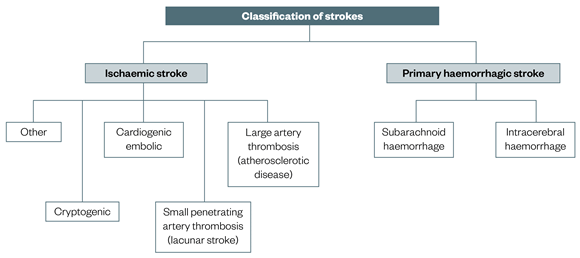
    Strokes are broadly categorized into two main types, distinguished by the mechanism of blood flow disruption:

    A. Ischemic Stroke (Approximately 87% of all strokes):

  • Mechanism: Occurs when a blood clot blocks or narrows an artery supplying blood to the brain, leading to a reduction or complete cessation of blood flow. Brain tissue beyond the blockage becomes deprived of oxygen and nutrients.
  • Subtypes:
    • Thrombotic Stroke: A blood clot (thrombus) forms in an artery that supplies blood to the brain, often in arteries damaged by atherosclerosis (hardening and narrowing of arteries due to plaque buildup).
    • Embolic Stroke: A blood clot or other debris forms elsewhere in the body (commonly the heart) and travels through the bloodstream to the brain, where it lodges in a narrower artery and blocks blood flow.
    • Lacunar Stroke: Occurs when blood flow is blocked to a small artery that supplies deep brain structures. These are often associated with chronic hypertension and diabetes, affecting very small blood vessels.
  • B. Hemorrhagic Stroke (Approximately 13% of all strokes):

  • Mechanism: Occurs when a blood vessel in the brain leaks or ruptures, causing bleeding into the brain tissue or the spaces around the brain. This bleeding compresses brain tissue, damages cells, and increases intracranial pressure.
  • Subtypes:
    • Intracerebral Hemorrhage (ICH): Bleeding directly into the brain tissue, often caused by uncontrolled high blood pressure (hypertension) or structural abnormalities like arteriovenous malformations (AVMs).
    • Subarachnoid Hemorrhage (SAH): Bleeding occurs in the subarachnoid space, the area between the brain and the thin tissues that cover the brain. This is most commonly caused by a ruptured cerebral aneurysm (a balloon-like bulge in an artery).
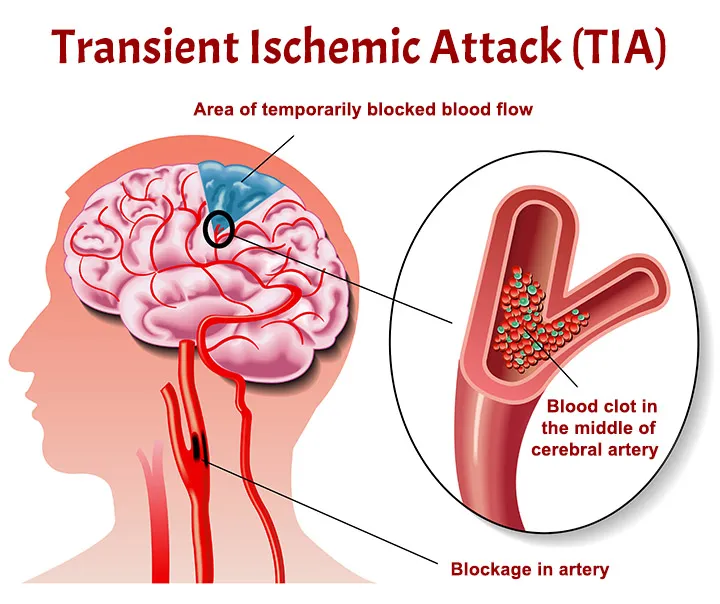
  • Transient Ischemic Attack (TIA) - A "Mini-Stroke" and Warning Sign:

    • A TIA is often referred to as a "mini-stroke" because it involves a temporary blockage of blood flow to the brain, causing stroke-like symptoms that typically last for a few minutes to less than 24 hours, with no permanent brain damage.
    • Crucial Significance: TIAs are critical warning signs that a person is at high risk for a full-blown stroke. They should be treated as a medical emergency, prompting immediate evaluation to identify the cause and initiate preventive measures. Ignoring a TIA significantly increases the likelihood of a future, more debilitating stroke.

    Etiology & Risk Factors of Cerebral Vascular Accidents (Stroke)

    The occurrence of a stroke is rarely an isolated event; it is usually the culmination of various underlying conditions and lifestyle choices that damage blood vessels and impair their function. Identifying and managing these factors is paramount in reducing stroke incidence and recurrence.

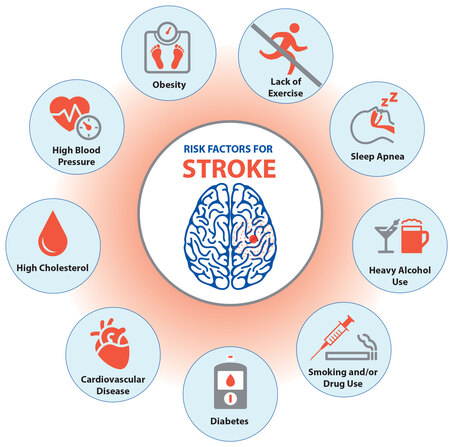
    Stroke risk factors can be broadly categorized into modifiable (those that can be changed or treated) and non-modifiable (those that cannot be changed).

    1. Ischemic Stroke Causes:

    Ischemic strokes arise from conditions that lead to the formation of blood clots or blockages in cerebral arteries.

    A. Atherosclerosis: The most common underlying cause.

    • Large Vessel Atherosclerosis: Plaque buildup in the larger arteries (e.g., carotid arteries in the neck, vertebral arteries, and their major intracranial branches) can lead to:
      • Thrombotic Stroke: A clot forms directly on the atherosclerotic plaque, completely blocking blood flow.
      • Artery-to-Artery Embolism: Fragments of plaque or clot from an atherosclerotic artery break off and travel downstream to block a smaller brain artery.
    • Small Vessel Disease (Lacunar Infarcts): Atherosclerosis affects the small, penetrating arteries deep within the brain, often due to long-standing hypertension and diabetes, leading to small, deep infarcts.

    B. Cardioembolism: Blood clots form in the heart and travel to the brain.

    • Atrial Fibrillation (AFib): The most common cardiac source of emboli. Irregular and rapid heart rhythm leads to blood pooling in the atria, forming clots that can then dislodge and travel to the brain.
    • Valvular Heart Disease: Rheumatic heart disease, prosthetic heart valves, or endocarditis can promote clot formation.
    • Myocardial Infarction (MI): Especially large anterior MIs, can lead to mural thrombi formation in the heart ventricles.
    • Patent Foramen Ovale (PFO): A small opening between the atria that fails to close after birth. While often benign, it can allow clots from the venous system (e.g., DVT) to bypass the lungs and enter the arterial circulation (paradoxical embolism).
    • Congestive Heart Failure: Reduced cardiac output can contribute to stasis and clot formation.

    C. Hypercoagulable States: Conditions that increase the blood's tendency to clot.

    • Inherited: Factor V Leiden mutation, protein C or S deficiency, antithrombin III deficiency, antiphospholipid syndrome.
    • Acquired: Cancer, pregnancy/puerperium, oral contraceptive use, myeloproliferative disorders.

    D. Vasculitis: .

    Inflammation of blood vessels, which can lead to narrowing, occlusion, or rupture

    • Primary CNS Vasculitis: Affects only the brain's blood vessels.
    • Systemic Vasculitis: Conditions like giant cell arteritis, polyarteritis nodosa, or lupus can involve cerebral vessels.

    E. Arterial Dissection:

    A tear in the inner lining of an artery (e.g., carotid or vertebral artery), allowing blood to accumulate within the vessel wall. This can lead to narrowing, occlusion, or can be a source of emboli. Often associated with trauma (even minor) or connective tissue disorders.

    F. Other Less Common Causes:

    Migraine with aura, fibromuscular dysplasia, Moyamoya disease, illicit drug use (e.g., cocaine, amphetamines).

    Hemorrhagic Stroke Causes:

    Hemorrhagic strokes result from bleeding into the brain tissue or surrounding spaces.

    A. Hypertension (Chronic Uncontrolled):

    • The single most common cause of intracerebral hemorrhage (ICH), accounting for a significant majority. Chronic high blood pressure damages small blood vessels deep within the brain, making them prone to rupture.
    • Common locations: basal ganglia, thalamus, pons, cerebellum.

    B. Cerebral Aneurysms:

    • The primary cause of subarachnoid hemorrhage (SAH). An aneurysm is a weakened, balloon-like bulge in an artery wall. When it ruptures, blood spills into the subarachnoid space.

    C. Arteriovenous Malformations (AVMs):

    • Congenital tangles of abnormal, fragile blood vessels that directly shunt blood from arteries to veins, bypassing the capillary system. They lack the normal support structure of capillaries and are prone to rupture, causing either ICH or SAH.

    D. Cerebral Amyloid Angiopathy (CAA):

    • Accumulation of amyloid protein in the walls of small and medium-sized arteries in the brain's cortex and meninges. This weakens the vessels, making them prone to lobar ICH, especially in older adults and often recurrent.

    E. Coagulopathies / Anticoagulant Therapy:

    • Disorders that impair blood clotting (e.g., hemophilia, thrombocytopenia) or medications that thin the blood (e.g., warfarin, direct oral anticoagulants) significantly increase the risk of hemorrhage.

    F. Illicit Drug Use:

    • Cocaine and methamphetamine use are strongly associated with both ischemic and hemorrhagic strokes, often due to acute severe hypertension, vasospasm, or vasculitis.

    G. Tumors:

    • Brain tumors can sometimes bleed into themselves or surrounding tissue, particularly highly vascular tumors like glioblastomas or metastases.

    Risk Factors (Modifiable vs. Non-Modifiable):

    Understanding these risk factors is crucial for both primary prevention (preventing a first stroke) and secondary prevention (preventing recurrence).

    A. Modifiable Risk Factors (Can be controlled or treated):

    • Hypertension (High Blood Pressure): The single most important modifiable risk factor for both ischemic and hemorrhagic stroke. Consistent control is vital.
    • Diabetes Mellitus: Damages blood vessels throughout the body, increasing the risk of atherosclerosis and small vessel disease.
    • Hyperlipidemia (High Cholesterol): Contributes to atherosclerosis.
    • Atrial Fibrillation: As discussed, a major cardioembolic source.
    • Smoking: Damages blood vessels, increases blood pressure, promotes clot formation, and reduces oxygen delivery. Both active smoking and secondhand smoke are harmful.
    • Obesity: Linked to hypertension, diabetes, and hyperlipidemia.
    • Physical Inactivity: Contributes to obesity, hypertension, and diabetes.
    • Unhealthy Diet: High in saturated/trans fats, cholesterol, sodium, and refined sugars contributes to metabolic risk factors.
    • Excessive Alcohol Intake: Increases blood pressure and can contribute to hemorrhagic stroke.
    • Carotid Artery Disease: Significant narrowing (stenosis) of the carotid arteries due to atherosclerosis.
    • Sleep Apnea: Linked to hypertension and AFib.
    • Oral Contraceptive Use: Particularly in women who smoke or have other risk factors, can increase clot risk.
    • Illicit Drug Use: As mentioned above.

    B. Non-Modifiable Risk Factors (Cannot be changed):

    • Age: The risk of stroke significantly increases with age, particularly after 55.
    • Gender: Stroke incidence is slightly higher in men at younger ages, but women have higher lifetime risk due to longer lifespan and hormonal factors. Women also have worse outcomes.
    • Race/Ethnicity: African Americans, Hispanic Americans, and some Asian populations have a higher incidence and mortality rate from stroke, often linked to higher prevalence of hypertension, diabetes, and sickle cell disease.
    • Family History: A family history of stroke, especially at a younger age, indicates increased risk.
    • Previous Stroke or TIA: The strongest predictor of a future stroke.

    Pathophysiology of Cerebral Vascular Accidents (Stroke)

    The pathophysiology of stroke describes the cascade of events that occur at the cellular and molecular levels following the disruption of cerebral blood flow. While the initiating events differ significantly between ischemic and hemorrhagic stroke, both ultimately lead to neuronal damage and death, albeit through distinct mechanisms.

    Ischemic Stroke Pathophysiology:

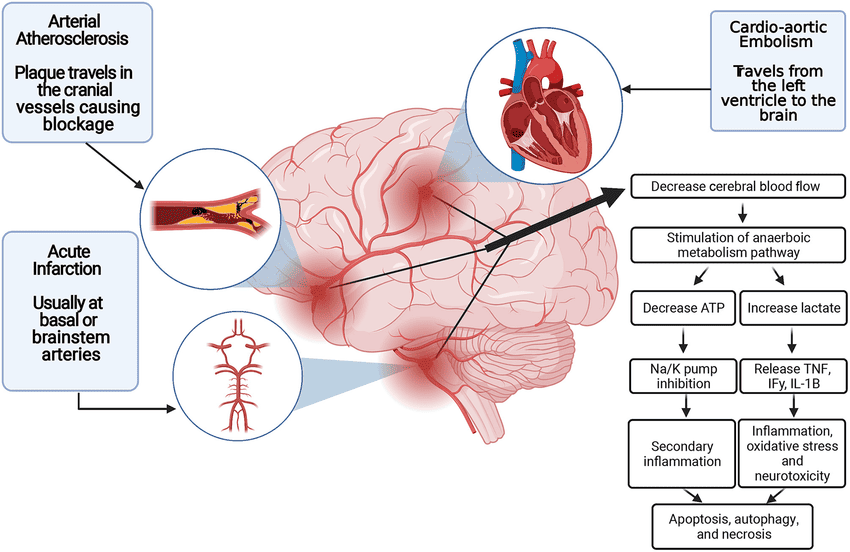
    Ischemic stroke occurs when blood flow to a region of the brain is insufficient to meet metabolic demands, leading to a complex series of detrimental biochemical and cellular events.

    A. Cerebral Blood Flow (CBF) Interruption and Energy Failure:

    • Core Infarct: When CBF falls below a critical threshold (typically <10-12 mL/100g/min), neurons cannot maintain their metabolic integrity. Oxygen and glucose delivery cease.
    • ATP Depletion: The brain's high metabolic rate and reliance on aerobic respiration mean that within seconds of ischemia, ATP (adenosine triphosphate) stores are depleted.
    • Ion Pump Failure: ATP-dependent ion pumps (e.g., Na+/K+-ATPase) fail, leading to depolarization of neuronal membranes.
    • Cellular Edema: Sodium and water rush into the cells, causing cytotoxic edema, which swells the cells and compromises their function.

    B. Excitotoxicity (Glutamate Release):

    • Depolarization triggers the massive release of excitatory neurotransmitters, particularly glutamate, into the synaptic cleft.
    • Glutamate binds to its receptors (e.g., NMDA, AMPA) on postsynaptic neurons, leading to excessive influx of calcium (Ca2+) into the cells.
    • Intracellular Calcium Overload: High levels of intracellular Ca2+ activate numerous destructive enzymes (proteases, lipases, endonucleases), which break down proteins, lipids (damaging cell membranes), and DNA, leading to cell death. It also impairs mitochondrial function.

    C. Oxidative Stress and Free Radical Formation:

    • Mitochondrial dysfunction and the subsequent reintroduction of oxygen during reperfusion (if it occurs) generate an excessive amount of reactive oxygen species (ROS), also known as free radicals.
    • ROS cause further damage to cellular components, including lipids (lipid peroxidation of cell membranes), proteins, and DNA, exacerbating neuronal injury.

    D. Inflammation and Immune Response:

    • Within hours of ischemia, an inflammatory cascade is initiated. Microglia (resident immune cells of the brain) become activated, and peripheral immune cells (neutrophils, macrophages, lymphocytes) are recruited to the ischemic site.
    • These cells release pro-inflammatory cytokines, chemokines, and matrix metalloproteinases (MMPs).
    • Blood-Brain Barrier (BBB) Disruption: MMPs degrade the extracellular matrix and tight junctions, leading to BBB breakdown. This allows further influx of immune cells and plasma proteins, contributing to vasogenic edema (fluid accumulation outside cells in the interstitial space) and potentially hemorrhagic transformation.

    E. Apoptosis and Necrosis:

    • Necrosis: Rapid, uncontrolled cell death occurring in the ischemic core due to severe energy failure and membrane damage.
    • Apoptosis: Programmed cell death, a slower, more regulated process that is triggered in the surrounding areas of less severe ischemia (penumbra). This is a target for neuroprotective therapies.

    F. The Ischemic Penumbra:

    • A critical concept in ischemic stroke. The penumbra is a region of brain tissue surrounding the severely ischemic core. In this area, blood flow is reduced (typically 20-50% of normal), but it is still sufficient to maintain cellular structure, though not function.
    • Neurons in the penumbra are electrically silent but still viable. They are "at risk" but potentially salvageable if blood flow is restored quickly.
    • The goal of acute stroke treatment (e.g., thrombolysis, thrombectomy) is to rapidly re-establish blood flow to the penumbra to prevent its progression to irreversible infarction, thereby minimizing neurological deficit.

    Hemorrhagic Stroke Pathophysiology:

    Hemorrhagic stroke involves bleeding directly into the brain tissue (ICH) or surrounding spaces (SAH), leading to brain injury through distinct mechanisms.

    A. Direct Mechanical Tissue Compression and Destruction:

    • Hematoma Formation: The extravasated blood forms a mass (hematoma) that physically compresses and displaces surrounding brain tissue.
    • Direct Damage: Neurons in direct contact with the expanding hematoma are mechanically crushed and destroyed.
    • Mass Effect: A large hematoma can cause a significant "mass effect," leading to shifts in brain structures (e.g., midline shift) and potentially herniation.

    B. Increased Intracranial Pressure (ICP) and Reduced Cerebral Perfusion Pressure (CPP):

    • Volume Expansion: The accumulating blood increases the overall volume within the rigid skull, leading to a rapid rise in ICP.
    • Reduced CPP: Increased ICP directly reduces the cerebral perfusion pressure (CPP = Mean Arterial Pressure - ICP), compromising blood flow to unaffected areas of the brain and potentially causing secondary ischemia.
    • Hydrocephalus: Blood in the subarachnoid space (SAH) or intraventricular hemorrhage can block cerebrospinal fluid (CSF) flow or absorption, leading to hydrocephalus and further ICP elevation.

    C. Inflammatory Response to Extravasated Blood:

    • Blood is highly irritating to brain tissue. The components of blood (e.g., hemoglobin, iron, thrombin) are toxic to neurons and glia.
    • Inflammatory Cascade: An inflammatory response is triggered, involving microglia and astrocytes, leading to the release of pro-inflammatory cytokines and chemokines.
    • Edema: Inflammation contributes to perihematomal edema (swelling around the hematoma), which further exacerbates mass effect and ICP.

    D. Excitotoxicity from Blood Products:

    • Hemoglobin breakdown products (e.g., iron, heme) and thrombin (a coagulation factor present in the blood clot) can activate receptors (e.g., thrombin receptors) and generate free radicals, contributing to oxidative stress and excitotoxicity, similar to ischemic stroke.

    E. Vasospasm (Primarily in SAH):

    • After subarachnoid hemorrhage, blood breakdown products (e.g., oxyhemoglobin) in the subarachnoid space can trigger severe constriction of cerebral arteries, known as vasospasm.
    • Delayed Cerebral Ischemia (DCI): Vasospasm typically develops several days after SAH and can lead to delayed cerebral ischemia and infarction, significantly worsening neurological outcomes.

    Classifications & Types of Cerebral Vascular Accident

    A thorough understanding of stroke classifications is essential for accurate diagnosis, appropriate treatment selection, and prognostication. Strokes are categorized based on their underlying cause, location, and the specific vascular territory affected.

    1. Ischemic Stroke Subtypes (TOAST Classification):

    The Trial of Org 10172 in Acute Stroke Treatment (TOAST) classification is widely used to categorize ischemic strokes based on their probable etiology. This helps guide secondary prevention strategies.

    A. Large-Artery Atherosclerosis (LAA):

    • Mechanism: Significant stenosis (narrowing) or occlusion of a major intracranial or extracranial artery (e.g., carotid artery, vertebral artery, middle cerebral artery) due to atherosclerosis.
    • Pathology: Can cause stroke by local thrombosis or by artery-to-artery embolism from the plaque surface.
    • Clinical Presentation: Often presents with significant neurological deficits corresponding to the affected large vessel territory.

    B. Cardioembolism (CE):

    • Mechanism: A blood clot originating from the heart or a major vessel proximal to the brain travels to and blocks a cerebral artery.
    • Sources: Atrial fibrillation, valvular heart disease, ventricular thrombi after MI, patent foramen ovale (PFO), endocarditis.
    • Clinical Presentation: Often involves multiple vascular territories or sudden onset of severe deficits. Emboli tend to lodge in medium to large arteries.

    C. Small-Vessel Occlusion (Lacunar Stroke):

    • Mechanism: Occlusion of a single small penetrating artery (e.g., lenticulostriate arteries, pontine branches) that supplies deep brain structures (basal ganglia, thalamus, internal capsule, brainstem).
    • Pathology: Primarily caused by lipohyalinosis or microatheroma due to chronic hypertension and diabetes.
    • Clinical Presentation: Typically causes one of five classic lacunar syndromes (pure motor hemiparesis, pure sensory stroke, ataxic hemiparesis, dysarthria-clumsy hand syndrome, sensorimotor stroke) with no cortical signs (e.g., aphasia, neglect, hemianopsia). Lesions are typically small (<1.5 cm) on imaging.

    D. Stroke of Other Determined Etiology:

    • Mechanism: Less common but identified causes.
    • Examples: Arterial dissection (carotid, vertebral), vasculitis, hypercoagulable states, migraine with aura, fibromuscular dysplasia, Moyamoya disease, drug-induced stroke.

    E. Stroke of Undetermined Etiology (Cryptogenic Stroke):

    • Mechanism: Despite thorough investigation, no clear cause for the stroke can be identified.
    • Subtypes:
      • No clear cause identified: After extensive workup.
      • Two or more potential causes: E.g., a patient with both AFib and significant carotid stenosis, making it difficult to definitively attribute the cause.
      • Incomplete evaluation: Due to various reasons (e.g., patient refusal, financial constraints).
    • ESUS (Embolic Stroke of Undetermined Source): A specific subtype of cryptogenic stroke where imaging suggests an embolic mechanism, but no definite cardiac or arterial source is found.

    Hemorrhagic Stroke Subtypes:

    A. Intracerebral Hemorrhage (ICH):

  • Definition: Bleeding directly into the brain parenchyma.
  • Location: Can be classified by location:
    • Lobar Hemorrhage: Occurs in the cerebral lobes, typically more superficial. Often associated with cerebral amyloid angiopathy (CAA) or AVMs.
    • Deep Hemorrhage: Occurs in the basal ganglia, thalamus, brainstem, or cerebellum. Most commonly caused by chronic hypertension.
  • Clinical Presentation: Varies widely depending on location and size; often sudden onset of headache, nausea, vomiting, rapid neurological deterioration.
  • B. Subarachnoid Hemorrhage (SAH):

  • Definition: Bleeding into the subarachnoid space (the space between the arachnoid membrane and the pia mater that surrounds the brain and spinal cord).
  • Causes:
    • Aneurysmal SAH (85%): Rupture of a saccular (berry) aneurysm, typically located at arterial bifurcations in the Circle of Willis. This is a neurosurgical emergency.
    • Non-Aneurysmal SAH (15%): Can be caused by perimesencephalic non-aneurysmal hemorrhage (benign prognosis), AVMs, trauma, or coagulopathies.
  • Clinical Presentation: Often characterized by a sudden, severe "thunderclap headache" (the worst headache of one's life), neck stiffness, photophobia, nausea, vomiting, and altered consciousness.
  • Transient Ischemic Attack (TIA):

  • Definition: A transient episode of neurological dysfunction caused by focal brain, spinal cord, or retinal ischemia, without acute infarction.
    • Historically defined by symptoms resolving within 24 hours. Modern definition emphasizes the absence of permanent tissue damage on imaging (e.g., MRI diffusion-weighted imaging).
  • Significance: A TIA is a powerful predictor of future stroke risk (especially in the first hours to days). It serves as a critical warning sign and an opportunity for urgent evaluation and intervention to prevent a debilitating stroke.
  • Stroke Syndromes (by Vascular Territory):

    While not a formal classification of stroke type, understanding the typical clinical syndromes associated with occlusion of specific cerebral arteries is crucial for localization and diagnosis.

    A. Anterior Cerebral Artery (ACA) Syndrome:

    • Deficits: Contralateral hemiparesis (leg > arm), contralateral hemisensory loss (leg > arm), abulia (lack of will), dysphasia (if dominant hemisphere), urinary incontinence.

    B. Middle Cerebral Artery (MCA) Syndrome:

    • Most Common: Supplies a large area of the cerebral hemispheres, including motor and sensory cortices, speech centers.
    • Deficits (Dominant Hemisphere - typically left): Contralateral hemiplegia/hemiparesis (face and arm > leg), contralateral hemisensory loss (face and arm > leg), global aphasia (if large lesion), Broca's aphasia (expressive), Wernicke's aphasia (receptive), gaze deviation towards the lesion.
    • Deficits (Non-Dominant Hemisphere - typically right): Contralateral hemiplegia/hemiparesis (face and arm > leg), contralateral hemisensory loss (face and arm > leg), left hemispatial neglect, anosognosia (unawareness of deficits), constructional apraxia.

    C. Posterior Cerebral Artery (PCA) Syndrome:

    • Deficits: Contralateral homonymous hemianopsia (visual field loss), visual hallucinations, memory deficits, sensory loss. Large lesions can cause ipsilateral third nerve palsy with contralateral hemiparesis (Weber's syndrome).

    D. Vertebrobasilar System Syndrome:

    • Supplies: Brainstem, cerebellum, and posterior cerebral hemispheres.
    • Deficits: Highly variable due to dense packing of vital structures. Can include vertigo, ataxia, nystagmus, diplopia, dysarthria, dysphagia, cranial nerve palsies, and often bilateral motor/sensory deficits (e.g., "locked-in syndrome" with basilar artery occlusion).

    Clinical Presentation (Signs & Symptoms) of Cerebral Vascular Accidents (Stroke)

    The clinical presentation of stroke is highly variable, depending on the type of stroke, its location, size, and the specific brain functions affected. Stroke symptoms typically appear suddenly and without warning. Rapid recognition is crucial for timely intervention, and tools like "FAST" are designed to facilitate this.

    General Presentation and Rapid Recognition (FAST):

    The acronym FAST is a widely used public health campaign to help people recognize the most common signs of a stroke and understand the urgency of calling emergency services.

    • F - Face Drooping: Ask the person to smile. Does one side of the face droop or is it numb?
    • A - Arm Weakness: Ask the person to raise both arms. Does one arm drift downward?
    • S - Speech Difficulty: Ask the person to repeat a simple sentence. Is their speech slurred or strange? Can they understand you?
    • T - Time to call Emergency: If you observe any of these signs, even if they disappear, call 911 (or your local emergency number) immediately. Time is brain.

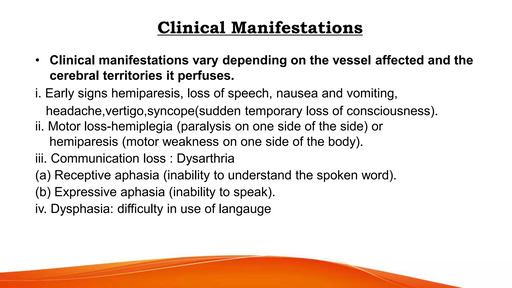
    Beyond FAST, other common signs and symptoms of stroke include:

    • Sudden numbness or weakness of the leg, arm, or face, especially on one side of the body.
    • Sudden confusion, trouble speaking, or difficulty understanding speech.
    • Sudden trouble seeing in one or both eyes.
    • Sudden trouble walking, dizziness, loss of balance, or lack of coordination.
    • Sudden severe headache with no known cause (especially common in hemorrhagic stroke).

    Specific Neurological Deficits and Correlation with Brain Regions:

    The brain is highly specialized, so the location of the stroke dictates the specific neurological deficits observed.

    A. Motor Deficits:

    • Hemiparesis/Hemiplegia: Weakness (paresis) or paralysis (plegia) on one side of the body, contralateral to the side of the brain lesion. Affects the face, arm, and leg.
    • Spasticity: Increased muscle tone, often developing weeks to months after the acute event, leading to stiffness and resistance to movement.
    • Balance/Coordination Issues: Ataxia (lack of muscle control or coordination of voluntary movements), often seen in cerebellar strokes or brainstem involvement.

    B. Sensory Deficits:

    • Hemisensory Loss: Numbness, tingling, or reduced sensation on one side of the body, contralateral to the lesion.
    • Altered Proprioception/Discriminative Touch: Difficulty sensing joint position or distinguishing between different textures.

    C. Language Deficits (Aphasia):

    • Aphasia refers to impaired communication due to brain damage, typically involving the dominant (usually left) hemisphere.
    • Expressive Aphasia (Broca's Aphasia): Difficulty producing spoken or written language, even though understanding may be preserved. Speech is often slow, hesitant, and telegraphic.
    • Receptive Aphasia (Wernicke's Aphasia): Difficulty understanding spoken or written language. Speech may be fluent but nonsensical (word salad).
    • Global Aphasia: Severe impairment in both production and comprehension of language, often due to extensive damage in dominant hemisphere.
    • Dysarthria: Difficulty with speech articulation due to weakness or lack of coordination of the muscles used for speech.

    D. Vision Disturbances:

    • Homonymous Hemianopsia: Loss of vision in the same half of the visual field in both eyes (e.g., cannot see anything to the left of midline with either eye), contralateral to the lesion.
    • Diplopia: Double vision, often due to cranial nerve involvement.
    • Amaurosis Fugax: Temporary, painless loss of vision in one eye ("curtain coming down"), often a symptom of carotid artery disease (TIA).

    E. Cranial Nerve Deficits:

    • Facial Palsy: Weakness or paralysis of facial muscles. In stroke, it typically affects the lower half of the face on the contralateral side (patient can still wrinkle forehead).
    • Dysphagia: Difficulty swallowing, affecting safety of eating/drinking and increasing risk of aspiration.
    • Dysarthria: (as above)
    • Oculomotor Deficits: Ptosis (drooping eyelid), eye movement abnormalities.

    F. Cognitive and Perceptual Deficits:

    • Neglect (Hemispatial Neglect): Inattention to one side of the body or environment, typically the left side following a right hemisphere stroke. Patients may ignore food on one side of a plate, or deny ownership of a limb.
    • Apraxia: Difficulty with skilled purposeful movements despite intact motor function (e.g., dressing apraxia).
    • Agnosia: Inability to recognize familiar objects, persons, or sounds.
    • Confusion/Disorientation: Especially in acute phases or with extensive damage.
    • Memory Impairment: May be transient or permanent.

    G. Headache, Nausea, Vomiting:

    • While not always present in ischemic stroke, these symptoms are more common and often severe in hemorrhagic stroke, particularly with subarachnoid hemorrhage (thunderclap headache) or large intracerebral hemorrhages due to increased ICP.

    H. Altered Level of Consciousness:

    • Can range from mild confusion or drowsiness to stupor or coma, especially with large strokes, brainstem involvement, significant edema, or increased ICP.

    I. Specific Stroke Syndromes (recap): The combination of these deficits defines the stroke syndrome, helping localize the lesion:

    • MCA Stroke: Contralateral hemiparesis/sensory loss (face/arm > leg), aphasia (dominant), neglect (non-dominant).
    • ACA Stroke: Contralateral hemiparesis/sensory loss (leg > arm), behavioral changes.
    • PCA Stroke: Visual field defects (homonymous hemianopsia).
    • Vertebrobasilar Stroke: Often presents with "Ds" – Dizziness, Diplopia, Dysarthria, Dysphagia, Dysmetria (ataxia). Can also include "crossed deficits" (e.g., facial sensory loss on one side, body motor weakness on the other).

    Investigations & Diagnosis of Cerebral Vascular Accidents (Stroke)

    The diagnostic process for stroke is a time-sensitive endeavor aimed at confirming the diagnosis, differentiating between ischemic and hemorrhagic types, identifying the underlying cause, and assessing the extent of brain damage. This multidisciplinary approach involves clinical assessment, neuroimaging, laboratory tests, and cardiovascular evaluation.

    Initial Clinical Assessment:

    Upon arrival at the emergency department, a rapid clinical assessment is performed to establish the probable diagnosis of stroke.

    History Taking:

  • Time of Symptom Onset: Crucial for determining eligibility for acute reperfusion therapies (e.g., tPA, thrombectomy).
  • Nature of Symptoms: Detailed description of neurological deficits.
  • Associated Symptoms: Headache, nausea, vomiting, altered consciousness.
  • Risk Factors: History of hypertension, diabetes, AFib, smoking, previous TIA/stroke, medications (especially anticoagulants).

  • Physical and Neurological Examination:

  • General Physical: Blood pressure, heart rate, oxygen saturation, temperature.
  • Neurological Examination:
    • Level of Consciousness: Using Glasgow Coma Scale (GCS).
    • Cranial Nerves: Assess pupils, eye movements, facial symmetry, swallowing.
    • Motor System: Muscle strength (e.g., using NIH Stroke Scale), tone, coordination.
    • Sensory System: Light touch, pain, proprioception.
    • Speech and Language: Assess for aphasia, dysarthria.
    • Balance and Gait: If applicable and safe.
  • NIH Stroke Scale (NIHSS): A standardized, 15-item neurological examination used to quantify the severity of stroke deficits. Scores range from 0 (no stroke) to 42 (severe stroke). It's used for initial assessment, guiding treatment, and tracking neurological improvement or deterioration.
  • Neuroimaging (The Cornerstone of Acute Stroke Diagnosis):

    Neuroimaging is the most critical diagnostic tool for differentiating ischemic from hemorrhagic stroke and identifying the location and extent of damage.

    A. Non-Contrast Computed Tomography (NCCT) Scan of the Brain:

    • First-Line Imaging: Performed urgently (within minutes of ED arrival).
    • Primary Goal: To rule out hemorrhage. Acute hemorrhage appears as hyperdense (bright white) areas on NCCT.
    • Ischemic Stroke: Early signs of ischemia (e.g., loss of grey-white matter differentiation, sulcal effacement, hyperdense MCA sign) may be subtle or absent in the first few hours. Its main utility in early ischemic stroke is to exclude hemorrhage before administering thrombolytic agents.

    B. CT Angiography (CTA) of Head and Neck:

    • Purpose: Performed immediately after NCCT if ischemic stroke is suspected and the patient is a candidate for reperfusion therapy.
    • Information Provided: Visualizes the cerebral vasculature (intracranial and extracranial arteries) to identify large vessel occlusion (LVO) which is a target for endovascular thrombectomy. Can also identify arterial dissections or aneurysms.

    C. CT Perfusion (CTP):

    • Purpose: Measures cerebral blood flow (CBF), cerebral blood volume (CBV), and mean transit time (MTT) in brain tissue.
    • Information Provided: Helps to delineate the ischemic core (areas of irreversible damage) from the penumbra (at-risk but salvageable tissue). This information can extend the time window for thrombectomy in selected patients.

    D. Magnetic Resonance Imaging (MRI) of the Brain:

  • Gold Standard for Ischemic Stroke: More sensitive than CT for detecting acute ischemic changes, especially in the first few hours.
  • MRI Sequences:
    • Diffusion-Weighted Imaging (DWI): Highly sensitive for detecting acute ischemia (cytotoxic edema) within minutes of onset. Appears as hyperintense lesions.
    • Apparent Diffusion Coefficient (ADC) Maps: Helps differentiate acute from chronic lesions.
    • Fluid-Attenuated Inversion Recovery (FLAIR): Useful for distinguishing acute from chronic lesions (FLAIR abnormality often present after 4.5 hours) and for identifying white matter lesions.
    • Gradient Echo (GRE) or Susceptibility-Weighted Imaging (SWI): Excellent for detecting hemorrhage (appears dark) and microbleeds.
    • Magnetic Resonance Angiography (MRA): Similar to CTA, visualizes cerebral vessels to detect stenoses or occlusions.
    • Magnetic Resonance Perfusion (MRP): Similar to CTP, helps identify penumbra.
  • Laboratory Tests:

    • Complete Blood Count (CBC): To check for anemia, polycythemia, or infection.
    • Basic Metabolic Panel (BMP): Electrolytes, renal function, glucose (hyperglycemia can worsen ischemic stroke outcomes).
    • Coagulation Studies: Prothrombin Time (PT), International Normalized Ratio (INR), Activated Partial Thromboplastin Time (aPTT) – essential, especially if anticoagulants are used or considered.
    • Cardiac Enzymes: To rule out concurrent myocardial infarction.
    • Lipid Panel: To assess cholesterol levels (risk factor for atherosclerosis).
    • Toxicology Screen: If illicit drug use is suspected.
    • ESR/CRP: Inflammatory markers if vasculitis is suspected.

    Cardiovascular Evaluation:

    To identify cardiac sources of emboli or underlying cardiovascular disease.

    A. Electrocardiogram (ECG):

    • To detect atrial fibrillation, other arrhythmias, or signs of acute myocardial infarction.

    B. Echocardiography (Transthoracic TTE or Transesophageal TEE):

    • TTE: Evaluates heart chambers, valves, wall motion abnormalities, and left ventricular function. Can detect large thrombi.
    • TEE: More sensitive than TTE for detecting cardiac sources of emboli, such as patent foramen ovale (PFO), atrial septal aneurysm, thrombi in the left atrial appendage, or valvular vegetations. Often performed in cryptogenic stroke workup.

    C. Carotid Duplex Ultrasound:

    • Purpose: Non-invasive assessment of the carotid arteries in the neck for stenosis (narrowing) due to atherosclerosis.
    • Information Provided: Helps identify potential sources of artery-to-artery emboli or severe stenosis requiring surgical intervention (carotid endarterectomy) or stenting.

    D. Holter Monitoring (24-48 hours or longer):

    • Purpose: To detect paroxysmal (intermittent) atrial fibrillation, which can be a silent cause of cardioembolic stroke and may not be picked up on a single ECG.

    Management of Cerebral Vascular Accident

    Stroke management is a highly time-sensitive and multidisciplinary endeavor aimed at minimizing brain damage, preventing complications, promoting recovery, and preventing recurrence. It spans acute emergency care, inpatient rehabilitation, and long-term outpatient follow-up.

    A. Acute Phase Management (Emergency Department & Intensive Care):

    The primary goals in the acute phase are to stabilize the patient, restore blood flow in ischemic stroke, control bleeding in hemorrhagic stroke, and prevent secondary brain injury.

    General Supportive Care:

  • Airway, Breathing, Circulation (ABCs):
    • Airway: Assess for patency; intubation and mechanical ventilation if airway is compromised or GCS is low.
    • Breathing: Oxygen supplementation to maintain SpO2 >94%.
    • Circulation: Maintain adequate blood pressure; avoid hypotension.
  • Blood Pressure Management:
    • Ischemic Stroke: Permissive hypertension (BP up to 220/120 mmHg) is generally allowed in patients not receiving thrombolytics, as higher pressure may be needed to perfuse the ischemic penumbra. If thrombolytics are given, BP must be tightly controlled (<185/110 mmHg pre-treatment, and <180/105 mmHg for 24 hours post-treatment) to prevent hemorrhagic transformation.
    • Hemorrhagic Stroke: Aggressive BP control is often necessary to prevent hematoma expansion (target typically <140-160 mmHg systolic).
  • Glucose Control: Both hyperglycemia and hypoglycemia are detrimental to the ischemic brain. Maintain euglycemia (target 140-180 mg/dL).
  • Temperature Control: Treat fever aggressively, as hyperthermia can worsen brain injury.
  • Fluid and Electrolyte Balance: Maintain euvolemia; avoid hypotonic solutions that can worsen cerebral edema.
  • Seizure Prophylaxis: Not routinely recommended unless there is a history of seizures or specific high-risk features. Treat seizures if they occur.
  • Early Mobilization/Positioning: To prevent complications like pressure ulcers, DVT, and pneumonia.
  • Specific Management for Ischemic Stroke:

    A. Reperfusion Therapies: Time is brain – these therapies aim to restore blood flow to the ischemic penumbra.

  • Intravenous Thrombolysis (IV tPA / Alteplase):
    • Mechanism: Administered intravenously to dissolve the clot blocking the artery.
    • Time Window: Approved for administration within 4.5 hours of symptom onset (with stricter criteria for 3-4.5 hours).
    • Eligibility: Strict inclusion/exclusion criteria must be met (e.g., age, stroke severity, recent surgery, history of hemorrhage).
    • Monitoring: Close neurological and blood pressure monitoring post-tPA due to risk of hemorrhagic transformation.
  • Endovascular Thrombectomy (Mechanical Thrombectomy):
    • Mechanism: A catheter is inserted into an artery (usually femoral) and guided to the brain to mechanically remove the clot.
    • Time Window: Approved for up to 6 hours for large vessel occlusions (LVOs) in the anterior circulation. In carefully selected patients (based on perfusion imaging to identify salvageable penumbra), the window can be extended up to 24 hours.
    • Eligibility: Indicated for LVOs in anterior circulation; often used in conjunction with IV tPA if eligible.
  • B. Antiplatelet Therapy:

    • Aspirin: For patients not eligible for tPA or thrombectomy, early aspirin (within 24-48 hours) is recommended to reduce the risk of early recurrence.
    • Dual Antiplatelet Therapy (DAPT): For minor stroke or TIA, aspirin plus clopidogrel may be used for a short duration (e.g., 21-90 days) to reduce early recurrent stroke risk.

    3. Specific Management for Hemorrhagic Stroke:

    A. Intracerebral Hemorrhage (ICH):

    • Blood Pressure Control: Aggressive and rapid lowering of systolic BP to 140-160 mmHg is crucial to prevent hematoma expansion, provided it does not compromise cerebral perfusion.
    • Reversal of Anticoagulation: If the patient is on anticoagulants (e.g., warfarin, DOACs), immediate reversal agents are administered (e.g., Vitamin K, prothrombin complex concentrate (PCC), idarucizumab, andexanet alfa).
    • Surgical Evacuation: May be considered for certain cases, such as large cerebellar hemorrhages causing brainstem compression, rapidly deteriorating neurological status, or large lobar hemorrhages with accessible clots.
    • ICP Monitoring and Management: If there's evidence of significant mass effect or hydrocephalus, ICP monitoring and interventions (e.g., external ventricular drain, osmotherapy) may be needed.

    B. Subarachnoid Hemorrhage (SAH):

    • Secure Aneurysm: The primary goal is to prevent re-bleeding from the ruptured aneurysm.
      • Endovascular Coiling: A catheter is used to place platinum coils into the aneurysm to occlude it.
      • Surgical Clipping: A neurosurgeon places a small clip at the neck of the aneurysm to block blood flow.
    • Nimodipine: A calcium channel blocker, administered orally, to prevent or reduce delayed cerebral ischemia due to vasospasm.
    • Strict Blood Pressure Control: To prevent re-bleeding (usually systolic <160 mmHg).
    • Management of Complications: Hydrocephalus (EVD), vasospasm (nimodipine, induced hypertension, angioplasty).

    B. Post-Acute Phase Management (Hospital Ward & Rehabilitation):

    Once stabilized, the focus shifts to preventing complications, initiating rehabilitation, and planning for secondary prevention.

    1. Prevention of Complications:

    • Deep Vein Thrombosis (DVT) & Pulmonary Embolism (PE): Early mobilization, graduated compression stockings, intermittent pneumatic compression devices, and pharmacological prophylaxis (e.g., low-molecular-weight heparin) are crucial.
    • Pneumonia: Aspiration pneumonia is common, especially with dysphagia. Early dysphagia screening, swallow evaluation, and maintaining oral hygiene are vital.
    • Pressure Ulcers: Regular repositioning, skin care, and specialized mattresses.
    • Urinary Tract Infections (UTIs): Avoid indwelling catheters if possible; meticulous perineal care.
    • Depression/Anxiety: Common after stroke; screening and appropriate treatment (counseling, medication) are important.

    2. Rehabilitation:

    • Early Initiation: Rehabilitation should begin as soon as the patient is medically stable (often within 24-48 hours).
    • Multidisciplinary Team: Involves physical therapists (PT), occupational therapists (OT), speech-language pathologists (SLP), physiatrists (rehabilitation physicians), neuropsychologists, and social workers.
    • Goals: Maximize functional recovery, improve independence in activities of daily living (ADLs), and facilitate community reintegration.
    • Settings: Acute rehabilitation units, skilled nursing facilities, outpatient rehabilitation, home-based therapy.

    3. Secondary Prevention:

    Addressing modifiable risk factors is paramount to prevent recurrent stroke.

    • Blood Pressure Control: Lifelong management (target often <130/80 mmHg).
    • Lipid Management: Statin therapy regardless of cholesterol levels to stabilize plaques and reduce inflammation.
    • Diabetes Management: Strict glycemic control.
    • Antiplatelet Agents: (e.g., aspirin, clopidogrel, aspirin + extended-release dipyridamole) for most ischemic stroke patients (unless AFib).
    • Anticoagulation: For patients with atrial fibrillation or other high-risk cardioembolic sources (e.g., warfarin, DOACs).
    • Smoking Cessation: Counseling and support.
    • Diet and Exercise: Healthy lifestyle recommendations.
    • Carotid Artery Revascularization: Carotid endarterectomy or stenting for severe symptomatic carotid stenosis.
    • Lifestyle Modifications: Weight management, moderate alcohol intake.

    Nursing Care in Stroke Management:

    Nurses play a continuous and vital role throughout the entire stroke continuum.

    Acute Phase:

    • Rapid Assessment & Recognition: Using stroke scales (NIHSS).
    • Vital Sign Monitoring: BP, HR, O2 Sat, Temp, neurological status (GCS, pupil checks).
    • Medication Administration: IV tPA, BP control agents, antiplatelets, etc., with careful monitoring for side effects (e.g., bleeding with tPA).
    • Preparation for Imaging/Procedures: Ensuring patient safety and readiness.
    • Airway Management: Suctioning, oxygen delivery.
    • Dysphagia Screening: To prevent aspiration.
    • Patient and Family Education: Explaining the condition, treatment plan, and expectations.

    Post-Acute & Rehabilitation Phase:

    • Mobility & Positioning: Preventing complications like DVT, pressure ulcers, contractures.
    • Bladder and Bowel Management: To prevent UTIs and maintain dignity.
    • Skin Integrity: Regular assessment and care.
    • Nutritional Support: Assisting with feeding, managing enteral tubes if necessary.
    • Medication Management: Ensuring adherence and monitoring side effects.
    • Emotional Support: Addressing depression, anxiety, frustration.
    • Reinforcing Therapy: Working with PT, OT, SLP to integrate exercises and strategies into daily care.
    • Discharge Planning: Coordinating with the multidisciplinary team for appropriate placement and resources.

    Prognosis & Complications

    The prognosis following a stroke varies widely, depending on numerous factors including stroke type, severity, location, age, comorbidities, and the timeliness and effectiveness of acute treatment and rehabilitation. While some individuals experience a full recovery, many live with long-term disabilities and face various complications.

    A. Factors Influencing Prognosis:

    • Stroke Severity: Measured by scales like the NIHSS. Lower initial scores generally correlate with better outcomes.
    • Stroke Type: Ischemic strokes generally have a better prognosis than large hemorrhagic strokes, which often carry higher morbidity and mortality.
    • Stroke Location & Size: Small lacunar strokes often have a better functional prognosis than large cortical strokes or brainstem strokes.
    • Age: Younger patients generally have greater neuroplasticity and recovery potential.
    • Premorbid Functional Status: Individuals with good health and function before the stroke tend to recover better.
    • Comorbidities: Pre-existing conditions like diabetes, heart disease, and chronic kidney disease can negatively impact recovery.
    • Timeliness of Treatment: Rapid access to acute reperfusion therapies (tPA, thrombectomy) significantly improves outcomes in ischemic stroke.
    • Quality and Intensity of Rehabilitation: Early and intensive multidisciplinary rehabilitation is crucial for maximizing functional recovery.
    • Social Support: Strong family and social support systems are associated with better long-term adjustment and recovery.
    • Recurrent Stroke: The occurrence of another stroke significantly worsens prognosis.

    B. Common Complications of Stroke:

    Stroke survivors are prone to a range of physical, cognitive, and emotional complications, which can further impact their quality of life and functional independence.

    1. Neurological Complications:

    • Recurrent Stroke: The most feared complication. The risk is highest in the first few days and weeks after the initial event. Secondary prevention is paramount.
    • Post-Stroke Epilepsy/Seizures: Can occur acutely or much later, especially after cortical strokes or hemorrhagic strokes.
    • Cerebral Edema: Swelling of brain tissue, which can lead to increased intracranial pressure (ICP), brain herniation, and further damage. More common with large strokes.
    • Hemorrhagic Transformation: An ischemic stroke can convert into a hemorrhagic stroke, especially after thrombolytic therapy or with large infarcts.
    • Hydrocephalus: More common after subarachnoid hemorrhage, but can occur after ICH due to obstruction of CSF flow.
    • Spasticity & Contractures: Increased muscle tone and shortening of muscles/tendons, leading to stiffness and limited range of motion, often affecting the paretic limbs.
    • Central Post-Stroke Pain (CPSP): Chronic neuropathic pain that results from damage to the central nervous system.
    • Vascular Cognitive Impairment (VCI) / Post-Stroke Dementia: A decline in cognitive function ranging from mild to severe, often due to damage to critical brain regions or widespread small vessel disease.
    • Post-Stroke Fatigue: Profound and debilitating fatigue that is disproportionate to activity level.

    2. Systemic Medical Complications:

    • Aspiration Pneumonia: Common due to dysphagia and impaired cough reflex. A leading cause of death after stroke.
    • Deep Vein Thrombosis (DVT) & Pulmonary Embolism (PE): Due to immobility and hypercoagulability. PE is a significant cause of mortality.
    • Urinary Tract Infections (UTIs): Often associated with urinary incontinence, catheterization, and impaired bladder emptying.
    • Pressure Ulcers (Bedsores): Due to immobility and impaired sensation.
    • Cardiac Complications: Post-stroke myocardial infarction, arrhythmias (e.g., new-onset AFib), heart failure exacerbation.
    • Malnutrition/Dehydration: Especially in patients with severe dysphagia or impaired consciousness.

    3. Psychological and Emotional Complications:

    • Post-Stroke Depression (PSD): Very common, affecting up to one-third of stroke survivors. Can significantly impair rehabilitation and quality of life.
    • Anxiety Disorders: Generalized anxiety, panic attacks, or specific phobias.
    • Emotional Lability/Pseudobulbar Affect (PBA): Uncontrollable and often inappropriate episodes of laughing or crying.
    • Apathy: Lack of motivation or interest in activities.
    • Frustration/Anger: Common reactions to loss of function and independence.

    4. Social and Functional Complications:

    • Functional Dependence: Difficulty with Activities of Daily Living (ADLs) such as bathing, dressing, eating, and mobility.
    • Social Isolation: Difficulty participating in social activities, returning to work, or maintaining hobbies.
    • Caregiver Burden: The significant physical, emotional, and financial strain on family members providing care.
    • Financial Strain: Due to healthcare costs, loss of income, and need for assistive devices or home modifications.

    C. Recovery Trajectory:

    • Most Rapid Recovery: Occurs in the first 3-6 months post-stroke, driven by neuroplasticity and intensive rehabilitation.
    • Continued Improvement: Can occur for up to a year or longer, though at a slower pace.
    • Plateau: Many individuals reach a plateau in their recovery, but ongoing therapy and compensatory strategies can still improve function and quality of life.
    • Long-Term Needs: Many stroke survivors require ongoing physical therapy, occupational therapy, speech therapy, and psychological support for years after their stroke.

    Prevention & Public Health

    Stroke is largely preventable, and significant reductions in its incidence and burden can be achieved through effective public health initiatives and individual lifestyle modifications. Prevention strategies are broadly categorized into primary (preventing the first stroke) and secondary (preventing recurrent stroke) prevention.

    A. Primary Prevention (Preventing the First Stroke):

    Primary prevention targets modifiable risk factors within the general population.

    1. Lifestyle Modifications:

  • Healthy Diet:
    • Reduced Sodium Intake: Essential for blood pressure control.
    • Increased Fruits, Vegetables, and Whole Grains: Provide fiber, vitamins, and antioxidants.
    • Lean Protein Sources: Fish, poultry, legumes.
    • Limiting Saturated and Trans Fats, Cholesterol: To manage dyslipidemia and atherosclerosis.
    • DASH (Dietary Approaches to Stop Hypertension) or Mediterranean Diet: Evidence-based dietary patterns known to reduce stroke risk.
  • Regular Physical Activity:
    • Aim for at least 150 minutes of moderate-intensity aerobic activity or 75 minutes of vigorous-intensity aerobic activity per week, plus muscle-strengthening activities at least two days a week.
    • Helps manage blood pressure, weight, diabetes, and cholesterol.
  • Weight Management:
    • Achieving and maintaining a healthy body weight (BMI between 18.5-24.9 kg/m²) reduces the risk of hypertension, diabetes, and dyslipidemia.
  • Smoking Cessation:
    • Smoking is a major independent risk factor for stroke, causing damage to blood vessels and increasing clotting risk. Cessation significantly reduces risk, with benefits seen rapidly.
  • Moderate Alcohol Consumption:
    • Excessive alcohol intake increases blood pressure and risk of atrial fibrillation. Moderate intake (up to one drink per day for women, up to two for men) may be acceptable, but less is generally better.
  • 2. Medical Management of Modifiable Risk Factors:

  • Hypertension (High Blood Pressure):
    • Screening: Regular blood pressure checks are crucial.
    • Treatment: Lifestyle modifications and antihypertensive medications (e.g., diuretics, ACE inhibitors, ARBs, calcium channel blockers, beta-blockers) to achieve target blood pressure (typically <130/80 mmHg for most adults). This is the most important modifiable risk factor.
  • Diabetes Mellitus:
    • Screening: Regular blood glucose checks.
    • Treatment: Diet, exercise, and antidiabetic medications (oral agents, insulin) to maintain optimal glycemic control (HbA1c <7%).
  • Dyslipidemia (High Cholesterol):
    • Screening: Lipid panel.
    • Treatment: Lifestyle changes and statin medications to lower LDL cholesterol, which reduces atherosclerotic plaque formation.
  • Atrial Fibrillation (AFib):
    • Screening: Regular pulse checks, ECGs.
    • Treatment: Anticoagulation (e.g., warfarin, direct oral anticoagulants/DOACs) to prevent clot formation and embolization, based on individual CHA2DS2-VASc score.
  • Carotid Artery Disease:
    • Screening: May be considered in high-risk individuals; carotid ultrasound.
    • Treatment: Antiplatelet therapy, statins, blood pressure control. Carotid endarterectomy or stenting for severe, symptomatic stenosis.
  • B. Secondary Prevention (Preventing Recurrent Stroke):

    Secondary prevention focuses on individuals who have already experienced a TIA or stroke, aiming to prevent subsequent events.

  • Antiplatelet Therapy:
    • Ischemic Stroke/TIA: Aspirin, clopidogrel, or a combination (e.g., aspirin + extended-release dipyridamole, or short-term dual antiplatelet therapy for minor stroke/high-risk TIA).
  • Anticoagulation:
    • For cardioembolic stroke (e.g., due to AFib, mechanical heart valves), lifelong anticoagulation with warfarin or DOACs is crucial.
  • Statin Therapy:
    • Recommended for all patients with ischemic stroke/TIA of atherosclerotic origin, regardless of baseline cholesterol levels, due to their pleiotropic effects (plaque stabilization, anti-inflammatory).
  • Blood Pressure Control:
    • Aggressive management of hypertension to target levels (e.g., <130/80 mmHg).
  • Diabetes Control: Optimal glycemic control.
  • Lifestyle Modifications: Reinforce all primary prevention strategies.
  • Carotid Revascularization: For symptomatic severe carotid stenosis, surgical endarterectomy or stenting may be considered to reduce the risk of future ipsilateral stroke.
  • Patent Foramen Ovale (PFO) Closure: In selected cases of cryptogenic stroke attributed to PFO, percutaneous closure may be considered.
  • C. Public Health Initiatives:

  • Awareness Campaigns:
    • "FAST" Campaign: Educating the public about the signs and symptoms of stroke and the importance of rapid emergency response.
    • Risk Factor Education: Promoting awareness of modifiable risk factors and the benefits of healthy lifestyles.
  • Stroke Systems of Care:
    • Development of Stroke Centers: Designated primary and comprehensive stroke centers with specialized expertise, equipment, and protocols for rapid stroke diagnosis and treatment.
    • Emergency Medical Services (EMS) Protocols: Training EMS personnel to identify stroke, triage appropriately, and transport patients to the nearest qualified stroke center.
  • Policy and Environmental Changes:
    • Tobacco Control: Policies to reduce smoking rates.
    • Healthy Food Environments: Promoting access to nutritious food options.
    • Physical Activity Promotion: Creating safe environments for physical activity.
  • Research and Surveillance:
    • Ongoing research into new prevention strategies, treatments, and rehabilitation techniques.
    • Monitoring stroke incidence, prevalence, and outcomes to identify trends and evaluate the effectiveness of interventions.
  • Cerebrovascular accident (Stroke) Read More »

    encephalitis

    Encephalitis Lecture Notes

    Nursing Lecture Notes - Encephalitis

    Encephalitis Lecture Notes

    Encephalitis is an acute inflammation of the brain parenchyma (the brain tissue itself).

    This inflammation directly affects the neurons and other brain cells, leading to neurological dysfunction, as opposed to inflammation primarily of the meninges (membranes surrounding the brain and spinal cord) which defines meningitis.

    Key Differentiating Features from Meningitis:

    While both are inflammatory conditions of the central nervous system (CNS) and often present with fever and headache, their primary anatomical sites of inflammation and resulting clinical manifestations differ significantly.

    Comparison: Meningitis vs. Encephalitis

    Feature Meningitis Encephalitis
    Primary Inflammation Site Meninges (arachnoid and pia mater). Brain parenchyma (brain tissue).
    Hallmark Symptoms Fever, severe headache, nuchal rigidity (stiff neck), photophobia, phonophobia. Profoundly altered mental status (confusion, disorientation, drowsiness, personality changes), seizures, and focal neurological deficits (e.g., hemiparesis, aphasia).
    Consciousness / Mental Status Typically preserved initially, though can be irritable or lethargic. Confusion is usually a late or severe sign. Altered mental status is a defining, early feature. This is the single most important clinical differentiator. Ranges from subtle personality changes to deep coma.
    Focal Neurological Deficits Less common, usually indicate complications (e.g., vasculitis, stroke, abscess). Common, due to direct inflammation of brain tissue (e.g., hemiparesis, aphasia, abnormal movements).
    Seizures Less frequent than in encephalitis, though still possible. Frequent (occur in 30-70% of cases).

    Epidemiology & Etiology of Encephalitis

    Epidemiology

    • Incidence: Highly variable globally, influenced by geographic location, season, and prevalence of specific pathogens (e.g., arboviruses are regional). The overall incidence of encephalitis in developed countries is estimated to be around 5-10 cases per 100,000 person-years.
    • Age Groups: Can affect all age groups. Certain etiologies show age predilections (e.g., enteroviral in children, HSV in all ages but often more severe in young and elderly, West Nile Virus in elderly).
    • Seasonal Variation: Many viral forms, especially arboviruses (e.g., West Nile, Japanese encephalitis), show seasonal peaks corresponding to vector activity (mosquitoes, ticks).
    • Endemic vs. Epidemic: Some types are endemic in certain regions (e.g., Japanese encephalitis in Asia), while others can cause epidemics.

    Common Causes (Etiology)

    The cause of encephalitis remains unidentified in a significant proportion of cases (up to 40-70% in some studies), even with extensive testing. However, when a cause is found, the categories are:

    A. Viral Infections (Most Common Identified Cause):

  • Herpes Simplex Virus (HSV):
    • HSV-1: The most common cause of fatal sporadic encephalitis in adults and children worldwide. Characteristically affects the temporal and frontal lobes, often leading to severe memory and behavioral disturbances.
    • HSV-2: More common cause of encephalitis/meningitis in neonates (acquired during birth) or immunocompromised adults.
  • Arboviruses (Arthropod-borne viruses): Transmitted by mosquitoes or ticks.
    • West Nile Virus (WNV): Most common arbovirus cause in North America.
    • Eastern Equine Encephalitis (EEE): Rare but highly fatal.
    • Western Equine Encephalitis (WEE) & St. Louis Encephalitis (SLE).
    • Japanese Encephalitis (JE): Major cause in Asia.
    • Tick-borne Encephalitis (TBE): Endemic in parts of Europe and Asia.
  • Enteroviruses: Common, especially in children, often causing milder forms (e.g., Echo, Coxsackie viruses).
  • Influenza Viruses: Can cause post-infectious encephalitis.
  • Measles, Mumps, Rubella, Varicella-Zoster Virus (VZV): Often post-infectious (acute disseminated encephalomyelitis - ADEM), but VZV can also cause direct viral encephalitis in immunocompromised.
  • HIV: Can cause an HIV encephalitis.
  • Rabies Virus: Leads to universally fatal encephalitis.
  • Cytomegalovirus (CMV), Epstein-Barr Virus (EBV): More common in immunocompromised individuals.
  • Zika Virus: Associated with microcephaly in fetuses but can also cause encephalitis in adults.
  • B. Autoimmune Encephalitis:

  • Increasingly recognized as a significant cause. Occurs when the body's immune system mistakenly attacks brain components, often mediated by antibodies against neuronal surface antigens or intracellular proteins.
  • Examples:
    • Anti-NMDA Receptor Encephalitis: Often associated with ovarian teratomas (especially in young women), but can be idiopathic. Characterized by severe psychiatric symptoms, seizures, dyskinesias, and autonomic instability.
    • LGI1, CASPR2, GABAA/B Receptor Encephalitis.
    • Acute Disseminated Encephalomyelitis (ADEM): Often follows a viral infection or vaccination, thought to be immune-mediated.
    • Hashimoto's Encephalopathy: Associated with thyroid autoimmunity.
  • C. Other Infectious Agents (Less Common):

  • Bacteria: Listeria monocytogenes, Mycoplasma pneumoniae, Tuberculosis (can cause meningoencephalitis). Brain abscesses are a localized form of bacterial infection.
  • Fungi: Cryptococcus, Candida, Aspergillus (especially in immunocompromised).
  • Parasites: Toxoplasma gondii (immunocompromised), Naegleria fowleri (primary amebic meningoencephalitis, rapidly fatal).
  • D. Unknown/Idiopathic:

  • As mentioned, a large proportion of cases remain without an identified cause. Ongoing research is identifying new pathogens and autoimmune mechanisms.
  • Risk Factors:

    • Age: Very young (infants) and very old (elderly) are often more susceptible to severe disease.
    • Immunocompromise: HIV, organ transplant recipients, cancer patients on chemotherapy, or those on immunosuppressive drugs are at higher risk for certain opportunistic infections (e.g., CMV, Toxoplasma).
    • Geographic Exposure: Travel to areas with endemic arboviruses.
    • Outdoor Activities: Increased exposure to mosquito/tick vectors.
    • Lack of Vaccination: For vaccine-preventable causes (e.g., measles, mumps, JE).
    • Underlying Medical Conditions: Autoimmune diseases may predispose to autoimmune encephalitis.

    Types/Classifications of Encephalitis

    Encephalitis can be classified in several ways, often overlapping, based on its cause, presentation, or mechanism.

    1. Based on Causative Mechanism:

  • Primary Encephalitis:
    • Definition: The pathogen (e.g., virus) directly infects and inflames the brain parenchyma, with the brain or spinal cord being the predominant focus of the pathogen.
    • Mechanism: The pathogen directly invades and replicates within CNS cells, leading to direct neuronal damage and an inflammatory response focused within the brain tissue.
    • Examples: Herpes Simplex Encephalitis (HSV-E), most arboviral encephalitides (e.g., West Nile, Japanese encephalitis).
  • Secondary Encephalitis (Post-Infectious or Autoimmune):
    • Definition: It is caused by an infection that is spread from another part of the body, or it is an immune-mediated response following a systemic infection or vaccination, where the immune system attacks brain tissue. The brain itself is not directly infected by the pathogen.
    • Mechanism:
      • Post-Infectious (Demyelinating/ADEM): An infection (e.g., measles, mumps, influenza, or even vaccination) triggers an autoimmune reaction where the immune system, days or weeks after the initial infection, erroneously attacks myelin or other brain components. The virus itself is usually no longer present in the brain.
      • Autoimmune (non-ADEM): Antibodies are formed against specific neuronal proteins (e.g., anti-NMDA receptor, anti-LGI1) which then cause brain inflammation and dysfunction. This can sometimes be triggered by a remote infection or tumor (paraneoplastic).
    • Examples: Acute Disseminated Encephalomyelitis (ADEM), Anti-NMDA receptor encephalitis, Hashimoto's Encephalopathy.
  • 2. Based on Etiology (As discussed in Epidemiology):

    • Viral Encephalitis: HSV, Arboviruses (WNV, EEE, JE), Enteroviruses, VZV, Mumps, Measles, Influenza, HIV, Rabies.
    • Autoimmune Encephalitis: Anti-NMDA receptor, LGI1, CASPR2, GABAA/B, Hashimoto's, ADEM.
    • Bacterial Encephalitis: Listeria (meningoencephalitis), Mycoplasma.
    • Fungal Encephalitis: Cryptococcus, Candida, Aspergillus.
    • Parasitic Encephalitis: Toxoplasma, Naegleria fowleri.
    • Encephalitis of Unknown Etiology.

    3. Based on Affected Brain Regions:

    • Limbic Encephalitis: Inflammation predominantly affecting the limbic system (e.g., temporal lobes, hippocampus). Often seen in HSV-E and many autoimmune encephalitides. Characterized by prominent memory deficits, seizures, and behavioral changes.
    • Brainstem Encephalitis (Rhombencephalitis): Inflammation affecting the brainstem. Can lead to cranial nerve palsies, ataxia, and autonomic dysfunction. Often associated with Listeria or some autoimmune causes.
    • Cerebellitis: Inflammation primarily of the cerebellum, leading to ataxia and dysarthria. Can be viral (e.g., VZV) or post-infectious.

    Pathophysiology of Encephalitis

    The pathophysiology of encephalitis involves a complex interplay between the invading pathogen (or autoimmune trigger) and the host's immune response, leading to inflammation and damage within the brain parenchyma.

  • Invasion of the CNS:
    • Hematogenous Spread (Most Common): The pathogen (e.g., virus) enters the bloodstream, replicates, and then crosses the blood-brain barrier (BBB). This can occur through:
      • Infection of endothelial cells lining the cerebral capillaries.
      • Infection of choroid plexus cells.
      • Via "Trojan horse" mechanism where infected leukocytes (immune cells) transport the pathogen across the BBB.
    • Neuronal Retrograde Transport: Some viruses (e.g., HSV, rabies) can travel along peripheral nerves to the CNS, usually via retrograde axonal transport (e.g., from an oral lesion to the brainstem via trigeminal nerve for HSV-1).
    • Direct Extension: Less common, but can occur from adjacent structures (e.g., mastoiditis, sinusitis, otitis media) leading to brain abscesses, which can then spread.
  • Viral Replication (for Infectious Encephalitis):
    • Once inside the brain, the virus infects neurons and/or glial cells (astrocytes, oligodendrocytes, microglia).
    • Replication within these cells leads to direct cell damage (cytopathic effect) and the release of viral particles, propagating the infection.
  • Host Immune Response:
    • The brain's immune cells (microglia, astrocytes) are activated, and peripheral immune cells (lymphocytes, macrophages) are recruited to the site of infection/inflammation.
    • This immune response, while attempting to clear the pathogen, can inadvertently cause significant "collateral damage" to brain tissue.
    • Inflammatory Mediators: Release of pro-inflammatory cytokines (e.g., TNF-α, IL-1β, IL-6), chemokines, and reactive oxygen species.
    • Vasculitis: Inflammation of blood vessels can lead to vascular compromise, thrombosis, or hemorrhage.
    • Blood-Brain Barrier Disruption: The inflammatory process further compromises the integrity of the BBB, leading to vasogenic edema (fluid leaking from blood vessels into the brain tissue).
  • Neuronal Damage and Dysfunction:
    • Direct Viral Cytotoxicity: Some viruses directly kill infected neurons.
    • Immune-Mediated Damage: Activated immune cells release neurotoxic substances.
    • Excitotoxicity: Inflammation can lead to excessive release of neurotransmitters like glutamate, which can overstimulate and damage neurons.
    • Apoptosis: Programmed cell death in neurons.
    • Demyelination: Damage to the myelin sheath, which insulates nerve fibers (e.g., in ADEM).
    • Edema:
      • Vasogenic Edema: Due to BBB disruption, fluid leaks into the extracellular space.
      • Cytotoxic Edema: Due to cellular dysfunction (e.g., failure of ion pumps), cells swell.
      • Brain edema leads to increased intracranial pressure (ICP).
  • Clinical Manifestations:
    • The combination of neuronal damage, inflammation, edema, and increased ICP leads to the characteristic clinical features of encephalitis:
      • Altered mental status and cognitive deficits: Due to widespread neuronal dysfunction and damage, particularly in the cerebral cortex.
      • Seizures: Result from neuronal irritability caused by inflammation, edema, and direct cellular damage.
      • Focal neurological deficits: Depend on the specific brain regions most affected by inflammation and damage.
      • Fever, headache, nuchal rigidity: General inflammatory response and meningeal irritation (if present).
  • Autoimmune Encephalitis Pathophysiology:
    • In autoimmune forms, the initial trigger might be an infection (molecular mimicry) or a tumor (paraneoplastic syndrome).
    • The immune system produces antibodies (or T-cells) that target specific neuronal or glial proteins.
    • These antibodies bind to their targets (e.g., NMDA receptors), leading to receptor dysfunction, internalization, or direct cell damage.
    • The subsequent inflammatory response and neuronal damage manifest as the clinical syndrome.
  • Clinical Presentation (Signs & Symptoms) of Encephalitis

    The clinical presentation of encephalitis is highly variable, depending on the causative agent, the severity of inflammation, and the specific areas of the brain affected. However, there are common threads and a "classic triad" that often guide diagnosis.

    Onset:

    • Acute to Subacute: Symptoms typically develop rapidly, over hours to days, sometimes extending to a week or two. This rapid progression is a key indicator differentiating it from chronic neurodegenerative conditions.
    • Prodromal Phase: Many patients experience a non-specific prodrome (early symptoms) lasting a few days, characterized by fever, headache, malaise, myalgia (muscle aches), and often upper respiratory or gastrointestinal symptoms, before the onset of frank neurological signs.

    Classic Triad of Encephalitis:

    The clinical hallmark of acute encephalitis is the triad of fever, headache, and altered mental status.

    • Fever: Present in the majority of cases, reflecting systemic infection and/or inflammation.
    • Headache: Usually severe, diffuse, and persistent. Often described as holocranial (whole head).
    • Altered Mental Status (AMS): This is the most crucial differentiating symptom from uncomplicated meningitis. It ranges from subtle changes in personality or attention to profound confusion, disorientation, lethargy, stupor, or coma.

    Neurological Manifestations

    A. Mental Status Changes & Cognitive Deficits (Crucial Differentiating Feature):

  • Altered Level of Consciousness: Ranging from mild drowsiness and lethargy to stupor and deep coma. This reflects diffuse cerebral dysfunction.
  • Confusion and Disorientation: Inability to recognize time, place, or person.
  • Memory Impairment:
    • Anterograde Amnesia: Difficulty forming new memories.
    • Retrograde Amnesia: Difficulty recalling past events.
    • Particularly prominent with temporal lobe involvement (e.g., Herpes Simplex Encephalitis - HSV-E), where the hippocampus and amygdala are affected.
  • Attention Deficits: Difficulty concentrating, easily distracted.
  • Executive Dysfunction: Impaired planning, problem-solving, judgment, and impulse control.
  • Aphasia: Language difficulties, including word-finding problems (anomia), difficulty understanding (receptive aphasia), or producing speech (expressive aphasia).
  • Agnosia: Inability to recognize familiar objects, persons, or sounds.
  • Apraxia: Difficulty with skilled movements despite intact motor function.
  • B. Motor Symptoms:

  • Weakness (Paresis/Paralysis): Can be focal (e.g., hemiparesis affecting one side of the body due to contralateral motor cortex inflammation) or generalized.
  • Abnormal Involuntary Movements:
    • Myoclonus: Sudden, brief, shock-like jerks of a muscle or group of muscles.
    • Tremors: Can be resting or action tremors.
    • Dystonia: Sustained or repetitive muscle contractions resulting in twisting and repetitive movements or abnormal fixed postures. (e.g., seen in Japanese encephalitis or some autoimmune forms).
    • Chorea: Brief, irregular, abrupt, non-stereotyped movements that seem to flow randomly from one body part to another. (Less common in typical viral encephalitis, but possible with basal ganglia involvement).
  • Gait Disturbances:
    • Ataxia: Unsteady, uncoordinated gait due to cerebellar involvement (cerebellitis) or general motor incoordination.
    • Spastic Gait: If significant pyramidal tract involvement occurs.
  • C. Sensory Symptoms:

    • Headache: As part of the triad, often severe and poorly responsive to standard analgesics.
    • Nuchal Rigidity (Stiff Neck): Suggests meningeal irritation, indicating meningoencephalitis (inflammation of both meninges and brain). Testing for Brudzinski's and Kernig's signs may elicit pain and resistance.
    • Photophobia: Sensitivity to light.
    • Phonophobia: Sensitivity to sound.
    • Numbness/Paresthesias: Less common as primary symptoms, but can occur if sensory pathways are directly affected.

    D. Cranial Nerve Deficits:

    • Pupillary Abnormalities: Unequal pupils (anisocoria), sluggish reaction to light, or fixed/dilated pupils can indicate increased ICP and impending herniation (CN III compression).
    • Facial Weakness: Unilateral facial droop (CN VII).
    • Dysphagia: Difficulty swallowing (CN IX, X).
    • Dysarthria: Slurred or unclear speech (CN IX, X, XII or cerebellar involvement).
    • Oculomotor Deficits: Impaired eye movements (CN III, IV, VI).

    E. Seizures:

  • Highly prevalent: Occur in 30-70% of patients with encephalitis.
  • Types:
    • Focal Seizures (Partial Seizures): Originate in one area of the brain. Can present with motor symptoms (e.g., rhythmic twitching of a limb), sensory phenomena (e.g., tingling, numbness), psychic symptoms (e.g., deja vu, fear), or automatisms (e.g., lip-smacking, fiddling with clothes). Often seen with focal inflammation, particularly in the temporal lobe (e.g., HSV-E).
    • Generalized Tonic-Clonic Seizures: Involve both sides of the brain, characterized by stiffening (tonic phase) followed by rhythmic jerking (clonic phase) of the extremities, often with loss of consciousness. Can be initial presentation or secondary generalization from a focal seizure.
    • Non-convulsive Status Epilepticus: Subtle and prolonged seizure activity on EEG without obvious motor manifestations, manifesting as persistent altered mental status. Requires high index of suspicion.
  • Status Epilepticus: A life-threatening condition defined by continuous seizure activity lasting 5 minutes or more, or two or more seizures without full recovery of consciousness between them. A significant complication of severe encephalitis.
  • F. Focal Neurological Deficits:

  • Manifestations depend on the precise location of brain inflammation and damage:
    • Hemiparesis/Hemiplegia: Weakness or paralysis on one side of the body, indicating contralateral motor cortex or pyramidal tract involvement.
    • Aphasia: As described above, if dominant hemisphere language areas are affected.
    • Visual Field Defects: If optic pathways or visual cortex are involved.
    • Neglect: Inattention to one side of the body or visual field, often with parietal lobe lesions.
    • Movement Disorders: As listed under motor symptoms, if basal ganglia or cerebellum are involved.
  • General/Systemic Manifestations:

    A. Constitutional Symptoms:

    • Fever: Often high, can be persistent or fluctuating.
    • Chills: Associated with fever.
    • Malaise and Fatigue: Generalized feeling of discomfort and lack of energy.
    • Myalgia/Arthralgia: Muscle and joint aches.
    • Anorexia: Loss of appetite.
    • Rash: May precede or accompany the neurological symptoms, particularly with arboviral infections (e.g., West Nile) or VZV.

    B. Psychiatric & Behavioral Changes:

    • Irritability, Agitation, Restlessness: Common, especially in children and individuals with pre-existing psychiatric conditions.
    • Personality Changes: Acute onset of unusual behaviors, loss of inhibition, or apathy.
    • Hallucinations: Visual, auditory, or olfactory hallucinations, particularly with temporal lobe involvement (e.g., HSV-E, autoimmune encephalitis).
    • Delusions: Fixed false beliefs.
    • Psychosis: A severe mental disorder in which thought and emotions are so impaired that contact with external reality is lost.
    • Sleep Disturbances: Insomnia, hypersomnia, or disruption of the sleep-wake cycle.

    C. Autonomic Dysfunction:

    • Thermoregulatory Instability: High fever is common, but in severe cases with hypothalamic involvement, poikilothermia (inability to regulate body temperature) can occur.
    • Cardiovascular Instability: Tachycardia, bradycardia, hypertension, hypotension, or cardiac arrhythmias, especially with brainstem or severe diffuse cerebral involvement.
    • Respiratory Irregularities: Central hypoventilation or irregular breathing patterns, particularly with brainstem compromise.
    • Gastrointestinal Issues: Ileus, GI bleeding (stress ulcers).
    • Urinary Retention/Incontinence: Can be seen in severe cases.

    Nursing Diagnoses (NANDA 2024-2026) related to Clinical Presentation:

    1. Impaired cerebral tissue perfusion related to cerebral edema, inflammation, and increased intracranial pressure, as evidenced by altered mental status (confusion, lethargy), focal neurological deficits (weakness, aphasia), and changes in vital signs (e.g., Cushing's triad).
      • Domain 2: Nutrition, Class 4: Metabolism (indirectly affects cerebral oxygenation)
      • Domain 4: Activity/Rest, Class 2: Activity (impacts brain function)
      • Domain 11: Safety/Protection, Class 2: Physical Injury (risk due to impaired cerebral function)
    2. Acute confusion related to neuroinflammation, fever, and metabolic disturbances, as evidenced by disorientation to person, place, or time, fluctuating level of consciousness, and impaired decision-making.
      • Domain 5: Perception/Cognition, Class 4: Cognition
      • Domain 4: Activity/Rest, Class 2: Activity
      • Domain 4: Activity/Rest, Class 4: Cardiovascular/Pulmonary Responses
    3. Risk for falls related to altered mental status, seizures, focal motor deficits, or gait disturbances.
      • Domain 11: Safety/Protection, Class 2: Physical Injury
    4. Hyperthermia related to infectious process and inflammation of the hypothalamus, as evidenced by elevated body temperature, flushed skin, tachycardia, and seizures.
      • Domain 11: Safety/Protection, Class 6: Thermoregulation
    5. Risk for inadequate fluid balance related to decreased oral intake, hyperthermia, vomiting, and altered regulatory mechanisms.
      • Domain 2: Nutrition, Class 5: Hydration
    6. Risk for impaired skin integrity related to altered mental status, immobility, and altered nutritional status.
      • Domain 4: Activity/Rest, Class 1: Sleep/Rest (immobility related)
      • Domain 11: Safety/Protection, Class 2: Physical Injury (pressure injury)
    7. Risk for caregiver role strain related to the severity, unpredictable course, and potential long-term neurological deficits of the patient's condition.
      • Domain 7: Role Relationships, Class 2: Family Relationships

    Investigations & Diagnosis of Encephalitis

    The diagnostic process for encephalitis is often urgent, aiming to rapidly confirm CNS inflammation, rule out other conditions (e.g., bacterial meningitis, stroke, tumor), and identify the specific causative agent to initiate targeted therapy.

    Laboratory Tests:

    A. Blood Tests:

  • Complete Blood Count (CBC) with Differential:
    • Leukocytosis: Elevated white blood cell count, often with a neutrophil predominance, can indicate an acute infection. However, WBC count can be normal or even low in viral infections.
  • Basic Metabolic Panel (BMP) / Electrolytes:
    • Hyponatremia: Can occur due to SIADH (Syndrome of Inappropriate Antidiuretic Hormone Secretion) or cerebral salt wasting, common complications in CNS infections.
    • Monitor renal function (creatinine, BUN) as some antiviral drugs are nephrotoxic.
  • Liver Function Tests (LFTs):
    • Abnormal LFTs can be seen in some systemic viral infections or drug-induced liver injury.
  • C-Reactive Protein (CRP) & Erythrocyte Sedimentation Rate (ESR):
    • Non-specific markers of inflammation, typically elevated in inflammatory conditions, but cannot differentiate viral from bacterial.
  • Blood Cultures:
    • Essential to rule out bacteremia and concomitant bacterial meningitis, especially if LP is delayed or contraindicated.
  • Serology (Acute and Convalescent):
    • Detection of IgM and IgG antibodies to various viruses (e.g., arboviruses, HSV, VZV, HIV). Acute and convalescent titers (4-6 weeks apart) may be needed to show seroconversion or a significant rise in antibody levels.
  • PCR (Polymerase Chain Reaction) from Blood:
    • Less sensitive than CSF PCR for CNS infections, but can sometimes detect systemic viral load.
  • Autoimmune Markers (if autoimmune encephalitis suspected):
    • Anti-neuronal antibodies (e.g., anti-NMDA receptor, anti-LGI1, anti-CASPR2) from serum. These tests may take days to weeks to return, so empiric treatment is often started.
  • B. Cerebrospinal Fluid (CSF) Analysis via Lumbar Puncture (LP):

  • Crucial Diagnostic Test: LP should be performed as soon as possible, after ruling out mass effect/increased ICP that could precipitate herniation (via CT scan).
  • CSF Appearance: Usually clear, but can be cloudy if there's a very high cell count.
  • Opening Pressure: Often elevated due to cerebral edema and inflammation.
  • Cell Count and Differential:
    • Pleocytosis: Elevated white blood cell count (typically 5-500 cells/μL).
    • Lymphocytic Predominance: Predominantly lymphocytes, characteristic of viral encephalitis. Neutrophilic pleocytosis can be seen early in viral encephalitis, or in bacterial/partially treated bacterial meningitis.
  • Protein: Mildly to moderately elevated (e.g., 50-200 mg/dL), reflecting BBB disruption.
  • Glucose: Usually normal (ratio of CSF to blood glucose > 0.6). Low glucose (hypoglycorrhachia) is more characteristic of bacterial, fungal, or tuberculous meningitis, but can occasionally be seen in some severe viral encephalitides or autoimmune forms.
  • CSF PCR (Polymerase Chain Reaction):
    • Gold Standard for Viral Detection: Highly sensitive and specific for detecting viral DNA/RNA (e.g., HSV-1, HSV-2, VZV, enteroviruses, arboviruses).
    • HSV PCR: Critically important for HSV encephalitis due to its treatability with antivirals.
  • CSF Cultures: Routine bacterial and fungal cultures should always be sent to rule out treatable bacterial/fungal infections, even if viral encephalitis is suspected.
  • Other CSF Tests (as indicated):
    • Oligoclonal Bands / IgG Index: May be positive in some autoimmune or chronic inflammatory CNS conditions.
    • Autoimmune Antibodies from CSF: More specific than serum antibodies for CNS autoimmune encephalitis.
  • Imaging Studies:

    A. Computed Tomography (CT) Scan of the Brain (Non-contrast):

    • Purpose: Usually the initial imaging study. Primarily used to rule out other intracranial pathologies (e.g., space-occupying lesions like tumors or abscesses, significant hemorrhage, hydrocephalus) before performing a lumbar puncture, thus preventing cerebral herniation.
    • Findings in Encephalitis: Often normal in the early stages of encephalitis. May show subtle areas of edema, hypodensity, or mass effect in later stages. Cannot definitively diagnose encephalitis or differentiate viral types.

    B. Magnetic Resonance Imaging (MRI) of the Brain (with and without contrast):

  • Preferred Imaging Modality: Much more sensitive and specific than CT for detecting early and subtle changes of encephalitis.
  • Typical Findings:
    • T2-weighted and FLAIR (Fluid-Attenuated Inversion Recovery) sequences: Hyperintense (bright) signals in affected brain regions, indicating inflammation, edema, and neuronal damage.
    • Diffusion-Weighted Imaging (DWI) / Apparent Diffusion Coefficient (ADC): Can show restricted diffusion in areas of cytotoxic edema, indicating acute cellular injury.
    • Gadolinium Enhancement: Areas of inflammation may show enhancement after contrast administration, indicating BBB breakdown.
    • Specific Patterns:
      • HSV Encephalitis: Classically affects the medial temporal lobes, insular cortex, and often the inferior frontal lobes, often unilaterally or asymmetrically. Can show hemorrhagic transformation.
      • Arboviral Encephalitis: May show thalamic, basal ganglia, or brainstem involvement (e.g., West Nile Virus), or diffuse cortical involvement.
      • ADEM: Multifocal, asymmetric white matter lesions, often involving the brainstem and cerebellum.
      • Anti-NMDA Receptor Encephalitis: Often normal initially, but can show subtle changes in hippocampal or cortical regions.
  • 5 Electroencephalography (EEG):

  • Purpose: To assess cerebral electrical activity, detect seizures (clinical or subclinical), and evaluate the severity of brain dysfunction.
  • Findings in Encephalitis:
    • Diffuse Slowing: Generalized background slowing (theta and delta waves) is common, reflecting diffuse cortical dysfunction. The degree of slowing often correlates with the severity of altered mental status.
    • Focal Slowing: May indicate focal inflammation.
    • Epileptiform Discharges: Spikes, sharp waves, or spike-and-wave discharges, indicating seizure activity or epileptogenic potential.
    • Periodic Lateralized Epileptiform Discharges (PLEDs): Often seen in HSV encephalitis, characterized by repetitive sharp waves or spikes appearing at regular intervals over one hemisphere, indicative of severe focal cerebral dysfunction and a strong association with seizures.
    • Non-convulsive Seizures/Status Epilepticus: EEG is essential to diagnose these, as they may present only as persistent altered mental status.
  • Management of Encephalitis

    The management of encephalitis requires urgent recognition, supportive care, and targeted treatment based on the suspected or confirmed etiology. The primary goals are to preserve neurological function, prevent complications, and reduce morbidity and mortality.

    Aims of Management:

    • Stabilize the Patient: Address immediate life-threatening issues (airway, breathing, circulation, seizures, increased ICP).
    • Reduce Brain Inflammation and Edema: Minimize neuronal damage.
    • Treat the Underlying Cause: Administer specific antiviral, antibacterial, antifungal, antiparasitic, or immunomodulatory therapies.
    • Manage Complications: Control seizures, manage increased ICP, prevent secondary infections, address electrolyte imbalances.
    • Provide Supportive Care: Maintain hydration, nutrition, skin integrity, and psychological support.
    • Facilitate Rehabilitation: Initiate early rehabilitation to maximize functional recovery.

    First Aid & Initial/Emergency Management :

    A. Airway, Breathing, Circulation (ABC) - Standard Resuscitation:

    • Airway: Assess patency. Be prepared for intubation and mechanical ventilation, especially if the patient has a depressed level of consciousness (GCS < 8), poor respiratory effort, or risk of aspiration.
    • Breathing: Monitor respiratory rate, depth, and oxygen saturation. Administer supplemental oxygen.
    • Circulation: Monitor heart rate, blood pressure, and cardiac rhythm. Maintain adequate cerebral perfusion pressure (CPP). Establish IV access.

    B. Neurological Stabilization:

  • Seizure Management:
    • Immediate control: If seizures are ongoing, administer benzodiazepines (e.g., lorazepam IV, diazepam IV/rectal) as first-line.
    • Long-term control/prevention: Follow with a longer-acting antiepileptic drug (AED) such as fosphenytoin, levetiracetam, valproate, or phenytoin (IV loading dose) to prevent recurrence.
    • Status Epilepticus: Follow established protocols for refractory status epilepticus, which may include continuous EEG monitoring and general anesthesia with propofol or midazolam.
  • Management of Increased Intracranial Pressure (ICP):
    • Head Elevation: Elevate the head of the bed to 30 degrees to promote venous drainage.
    • Maintain Head Alignment: Keep the head in a neutral position (avoiding neck flexion or rotation).
    • Osmotic Therapy: Administer mannitol (IV bolus) or hypertonic saline (IV) to draw fluid out of the brain parenchyma.
    • Sedation and Paralysis: May be necessary in intubated patients to reduce agitation and coughing, which can increase ICP.
    • Ventriculostomy: In severe cases, an external ventricular drain (EVD) may be placed to monitor ICP directly and drain CSF.
    • Corticosteroids: (e.g., dexamethasone) are generally not recommended for routine viral encephalitis as they can be detrimental in some viral infections. However, they are indicated and beneficial for autoimmune encephalitis, ADEM, or if there is significant cerebral edema contributing to mass effect, or when vasogenic edema is prominent.
    • Avoid Hypotension: Maintain mean arterial pressure (MAP) to ensure adequate cerebral perfusion pressure (CPP = MAP - ICP).
  • C. Empiric Antimicrobial Therapy (Begin STAT):

  • Given the severity and rapid progression of encephalitis, and the difficulty in distinguishing viral from bacterial meningoencephalitis initially, empiric treatment must be started immediately after cultures (blood, CSF) are obtained and a CT scan rules out mass effect prior to LP.
  • Antiviral Agent:
    • Acyclovir IV: This is the most crucial empiric drug. It must be initiated immediately if HSV encephalitis is suspected, even before definitive diagnosis, as delayed treatment significantly increases mortality and morbidity. HSV-E is the most common treatable viral encephalitis.
    • Dosage: 10 mg/kg IV every 8 hours, adjusted for renal function.
  • Antibacterial Agents (to cover bacterial meningitis/meningoencephalitis, if not ruled out):
    • Third-generation cephalosporin (e.g., ceftriaxone IV) to cover common bacterial meningitis pathogens.
    • Vancomycin IV to cover resistant pneumococci.
    • Ampicillin IV if Listeria monocytogenes is suspected (e.g., in neonates, elderly, immunocompromised, alcoholics).
  • Antifungal/Antiparasitic Agents: Consider if specific exposures or immunocompromise raises suspicion (e.g., amphotericin B for fungal, sulfadiazine + pyrimethamine for toxoplasmosis).
  • D. General Supportive Care:

    • Fluid and Electrolyte Management: Monitor closely, especially for hyponatremia. Avoid over-hydration to prevent worsening cerebral edema.
    • Nutrition: Initiate enteral or parenteral nutrition if the patient cannot take oral intake.
    • Temperature Control: Aggressively manage fever with antipyretics (e.g., acetaminophen) and cooling blankets, as hyperthermia increases cerebral metabolic demand and can worsen brain injury.
    • Bladder and Bowel Care: Indwelling urinary catheter for accurate output measurement and to prevent distention. Bowel regimen to prevent constipation.
    • Skin Care: Regular turning and repositioning to prevent pressure ulcers, especially in immobile patients.
    • Eye Care: Lubricate eyes if corneal reflexes are absent or blinking is impaired.
    • Venous Thromboembolism (VTE) Prophylaxis: Deep vein thrombosis (DVT) and pulmonary embolism (PE) prophylaxis (e.g., pneumatic compression devices, low-molecular-weight heparin) for immobilized patients.
    • Stress Ulcer Prophylaxis: With proton pump inhibitors or H2 blockers.

    3. Specific Treatment Modalities (Post-diagnosis):

    A. Viral Encephalitis:

    • Herpes Simplex Virus (HSV) & Varicella-Zoster Virus (VZV): Continue IV Acyclovir for 14-21 days.
    • Cytomegalovirus (CMV): Treat with Ganciclovir and/or Foscarnet, especially in immunocompromised patients.
    • Other Viruses (e.g., Arboviruses, Enteroviruses, Measles, Mumps): Currently, no specific antiviral treatments are available. Management is primarily supportive. Research into new antivirals is ongoing.
    • Rabies: Post-exposure prophylaxis is effective; once clinical symptoms appear, it is almost universally fatal.

    B. Autoimmune Encephalitis:

    • First-line Immunotherapy:
      • High-dose intravenous corticosteroids (e.g., methylprednisolone IV for 3-5 days).
      • Intravenous Immunoglobulin (IVIG).
      • Plasma Exchange (PLEX).
      • These can be used alone or in combination.
    • Second-line Immunotherapy (for refractory cases):
      • Rituximab (anti-CD20 monoclonal antibody).
      • Cyclophosphamide.
    • Tumor Search and Removal: If paraneoplastic (e.g., ovarian teratoma in anti-NMDA receptor encephalitis), tumor resection is crucial for long-term improvement.

    C. Other Infectious Agents:

    • Bacterial Encephalitis/Meningoencephalitis: Appropriate intravenous antibiotics based on culture results and sensitivity (e.g., for Listeria, Mycoplasma).
    • Fungal Encephalitis: Specific antifungal agents (e.g., Amphotericin B, fluconazole, voriconazole).
    • Parasitic Encephalitis: Specific antiparasitic drugs (e.g., for toxoplasmosis, amebiasis).

    4. Rehabilitation:

    • Early Intervention: As soon as the patient is medically stable, rehabilitation should begin.
    • Multidisciplinary Team: Physical therapy, occupational therapy, speech therapy, cognitive rehabilitation, neuropsychology, and social work.
    • Focus: Address residual neurological deficits (motor weakness, ataxia, cognitive impairment, aphasia, memory deficits) to maximize functional independence.

    5. Follow-up Care:

    • Long-term Monitoring: Patients may require long-term follow-up for cognitive, behavioral, psychological, and motor sequelae.
    • Epilepsy Management: Ongoing management of seizures if they persist.
    • Psychiatric Support: For new-onset or exacerbated psychiatric symptoms.

    Complications of Encephalitis

    Encephalitis can lead to a wide array of severe and potentially permanent complications, ranging from acute life-threatening conditions to chronic neurological and psychological sequelae. The nature and severity of complications depend on the etiology, the extent of brain damage, patient age, and the promptness and effectiveness of treatment.

    A. Acute/Life-Threatening Complications:

  • Increased Intracranial Pressure (ICP) and Brain Herniation:
    • Mechanism: Cerebral edema (vasogenic and cytotoxic) and inflammation lead to increased brain volume. If compensatory mechanisms fail, ICP rises dramatically.
    • Consequences: Compromises cerebral perfusion (CPP = MAP - ICP), leading to ischemia. If severe and prolonged, can cause shifting of brain tissue (herniation) through anatomical openings (e.g., transtentorial, uncal, tonsillar), compressing vital brainstem structures and resulting in respiratory arrest, cardiovascular collapse, and death.
    • Clinical Signs: Worsening headache, vomiting, papilledema, pupillary changes (e.g., fixed and dilated pupil in uncal herniation), Cushing's triad (hypertension, bradycardia, irregular respirations), decreased level of consciousness.
  • Status Epilepticus:
    • Mechanism: Severe neuronal irritation and damage can lead to continuous seizure activity or recurrent seizures without recovery of consciousness.
    • Consequences: Prolonged seizure activity itself can cause further neuronal damage (excitotoxicity), metabolic derangements (hypoxia, acidosis, hyperthermia), and systemic complications. It is a medical emergency with significant morbidity and mortality.
  • Hydrocephalus:
    • Mechanism: Inflammation can obstruct the flow of cerebrospinal fluid (CSF) within the ventricular system (non-communicating hydrocephalus) or impair its reabsorption at the arachnoid villi (communicating hydrocephalus), leading to CSF accumulation and ventricular enlargement.
    • Consequences: Increased ICP, further brain compression, and neurological deterioration.
  • Cerebral Ischemia/Infarction or Hemorrhage:
    • Mechanism: Inflammation can cause vasculitis (inflammation of blood vessels), leading to thrombosis (clot formation), narrowing of vessels, or vessel rupture. Herpes Simplex Encephalitis (HSV-E) can be hemorrhagic.
    • Consequences: Areas of brain tissue die due to lack of blood supply (ischemia/infarction) or bleeding occurs within the brain, leading to further neurological deficits.
  • Syndrome of Inappropriate Antidiuretic Hormone Secretion (SIADH) / Cerebral Salt Wasting (CSW):
    • Mechanism: CNS injury can disrupt ADH regulation or lead to increased release of natriuretic peptides.
    • Consequences: Hyponatremia (low sodium), which can worsen cerebral edema and increase the risk of seizures. Careful fluid and electrolyte management is crucial.
  • Respiratory Failure:
    • Mechanism: Direct involvement of brainstem respiratory centers, severe depression of consciousness, aspiration pneumonia, or prolonged status epilepticus leading to muscle fatigue.
    • Consequences: Requires mechanical ventilation, increases risk of ventilator-associated pneumonia and other complications of critical illness.
  • Sepsis/Secondary Infections:
    • Mechanism: Patients are often immunocompromised (due to illness, steroids), immobilized, and have indwelling catheters (IVs, urinary catheters), increasing susceptibility to hospital-acquired infections (e.g., pneumonia, UTIs, central line infections).
    • Consequences: Worsens overall prognosis and increases mortality.
  • B. Long-Term Neurological and Neuropsychiatric Sequelae:

    The degree of recovery is highly variable, but many survivors experience permanent deficits.

  • Cognitive Impairment:
    • Memory Deficits: Most common and debilitating, especially with temporal lobe involvement. Can range from mild forgetfulness to severe anterograde and retrograde amnesia.
    • Executive Dysfunction: Difficulties with planning, problem-solving, decision-making, attention, and multitasking.
    • Reduced Processing Speed: Slower mental processing.
    • Language Deficits (Aphasia): Difficulty with speech production, comprehension, reading, or writing.
  • Epilepsy/Recurrent Seizures:
    • Mechanism: Scar tissue (gliosis) formed in damaged brain areas can become epileptogenic foci.
    • Consequences: Requires long-term antiepileptic medication. Can significantly impact quality of life, driving privileges, and employment.
  • Motor Deficits:
    • Weakness (Paresis/Paralysis): Residual weakness or spasticity.
    • Ataxia: Impaired coordination and balance.
    • Movement Disorders: Dystonia, chorea, tremors (less common but possible depending on the area of brain damage).
  • Neuropsychiatric and Behavioral Changes:
    • Personality Changes: Irritability, impulsivity, aggression, disinhibition.
    • Mood Disorders: Depression, anxiety, emotional lability.
    • Psychosis: Hallucinations, delusions.
    • Sleep Disturbances: Insomnia, hypersomnia, disrupted sleep-wake cycle.
    • Fatigue: Persistent and debilitating fatigue.
  • Sensory Deficits:
    • Visual Field Defects: Loss of part of the visual field.
    • Hearing Loss: Less common, but possible.
  • Endocrine Dysfunction:
    • Hypopituitarism: Damage to the hypothalamus or pituitary gland can lead to deficiencies in various hormones (e.g., growth hormone, thyroid hormones, adrenal hormones), requiring hormone replacement therapy.
  • Pneumonitis/Pneumonia:
    • Especially if intubated or with dysphagia leading to aspiration.
  • C. Other Complications:

    • Contractures and Deformities: Due to prolonged immobility.
    • Deep Vein Thrombosis (DVT) / Pulmonary Embolism (PE): Due to immobility.
    • Pressure Ulcers: Due to immobility and altered sensation/consciousness.

    Prognosis & Prevention of Encephalitis

    The prognosis of encephalitis is highly variable and depends on numerous factors. Prevention, where possible, is the most effective strategy.

    1. Prognosis:

    A. Factors Influencing Prognosis:

  • Etiology:
    • HSV Encephalitis: Despite antiviral treatment, mortality remains around 10-20%, and a significant percentage of survivors (20-40%) experience moderate to severe neurological sequelae. Untreated, mortality is >70%.
    • Arboviral Encephalitis: Varies widely by virus. Eastern Equine Encephalitis (EEE) has a very high mortality (up to 30-50%) and severe deficits in survivors. West Nile Virus (WNV) has lower mortality but can still cause significant neurological issues.
    • Autoimmune Encephalitis: Generally has a better prognosis with early and appropriate immunotherapy, but relapses can occur, and some patients have chronic deficits.
    • Enteroviral Encephalitis: Often has a good prognosis, especially in children, with full recovery possible.
  • Age: Extremes of age (very young children and the elderly) tend to have worse outcomes, likely due to immature or compromised immune systems and reduced neurological reserve.
  • Severity at Presentation:
    • Glasgow Coma Scale (GCS): Lower GCS scores at presentation (indicating more severe altered mental status/coma) are associated with worse outcomes.
    • Presence of Seizures/Status Epilepticus: Increases the risk of long-term neurological deficits.
    • Presence of Increased ICP: Signifies severe cerebral involvement and poorer prognosis.
  • Rapidity of Diagnosis and Treatment:
    • Early initiation of specific antiviral therapy (e.g., acyclovir for HSV-E) is critical. Delays in treatment significantly worsen outcomes.
    • Prompt diagnosis and initiation of immunomodulatory therapy for autoimmune encephalitis also improve prognosis.
  • Extent and Location of Brain Damage: MRI findings indicating widespread inflammation, hemorrhage, or significant involvement of critical brain regions (e.g., brainstem, bilateral temporal lobes) are associated with worse functional recovery.
  • Pre-existing Health Conditions: Immunocompromised status, chronic diseases, or other neurological conditions can worsen outcomes.
  • B. Recovery and Long-term Sequelae:

  • Full Recovery: Possible, especially with milder forms or promptly treated specific etiologies, but not guaranteed.
  • Partial Recovery with Residual Deficits: This is common. Patients may experience:
    • Cognitive Impairment: Memory loss (often severe and debilitating), executive dysfunction, attention deficits.
    • Behavioral and Psychiatric Problems: Personality changes, depression, anxiety, agitation, psychosis.
    • Epilepsy: New-onset seizures can occur years after the initial illness.
    • Motor Deficits: Weakness, incoordination, balance problems.
    • Sensory Deficits: Visual or hearing impairments.
    • Fatigue: A common and persistent complaint.
  • Severe Disability/Vegetative State: In the most severe cases, patients may have profound and permanent neurological damage requiring lifelong care.
  • Mortality: Varies widely, as discussed above, but can be significant even with modern intensive care.
  • 2. Prevention:

    A. Vaccination:

    • Measles, Mumps, Rubella (MMR): Routine childhood vaccination has dramatically reduced the incidence of post-infectious encephalitis due to these viruses.
    • Varicella (Chickenpox): Vaccination reduces the risk of VZV encephalitis.
    • Japanese Encephalitis (JE): Available for travelers to endemic areas and residents in high-risk regions.
    • Tick-borne Encephalitis (TBE): Vaccine available in endemic regions of Europe and Asia.
    • Rabies: Pre-exposure vaccination for high-risk individuals (e.g., veterinarians, wildlife workers) and post-exposure prophylaxis after animal bites.
    • Influenza: Annual vaccination can prevent influenza-associated encephalitis.
    • Polio: Eradication efforts through vaccination have nearly eliminated polio encephalitis.
    • Hib (Haemophilus influenzae type b) and Pneumococcal vaccines: While primarily preventing bacterial meningitis, these can indirectly reduce the risk of secondary encephalitis.

    B. Mosquito and Tick Bite Prevention (for Arboviral Encephalitis):

    • Personal Protective Measures:
      • Use insect repellents containing DEET, picaridin, or oil of lemon eucalyptus.
      • Wear long-sleeved shirts and long pants when outdoors, especially at dawn and dusk.
      • Treat clothing and gear with permethrin.
    • Environmental Control:
      • Eliminate standing water around homes (breeding sites for mosquitoes).
      • Use window and door screens.
      • Community-level mosquito control programs (e.g., larvicides, adulticides).
    • Awareness: Stay informed about local arbovirus activity.

    C. General Hygiene and Infection Control:

    • Handwashing: Frequent and thorough handwashing helps prevent the spread of many viral infections (e.g., enteroviruses).
    • Avoid Contact with Sick Individuals: Reduce exposure to respiratory viruses.
    • Safe Food Handling: To prevent foodborne infections that could rarely lead to encephalitis.

    D. Prompt Treatment of Systemic Infections:

    • Early and effective treatment of systemic viral or bacterial infections can prevent their spread to the CNS.

    E. Travel Precautions:

    • Consult travel clinics for advice on vaccinations and prophylaxis for specific destinations where encephalitis-causing agents are endemic.

    Encephalitis Lecture Notes Read More »

    Applied anatomy and Physiology of the nervous system

    General signs and symptoms of the nervous system disorders

    Nursing Lecture Notes - Nervous System Disorders (Part 1)

    General Signs and Symptoms of Nervous System Disorders

    Introduction

    The nervous system, a marvel of biological engineering, orchestrates every thought, movement, sensation, and involuntary bodily function. Its complexity means that disruption at any point—from the brain and spinal cord (central nervous system, CNS) to the peripheral nerves and muscles (peripheral nervous system, PNS)—can lead to a vast array of clinical manifestations. These manifestations are broadly classified as signs (objective findings observed by an examiner) and symptoms (subjective experiences reported by the patient). A deep understanding of these general signs and symptoms is foundational for anyone embarking on the study of neurology, enabling them to interpret patient complaints, perform focused examinations, and begin the critical process of localization (determining where in the nervous system the problem lies) and characterization (understanding the nature of the disease).

    Learning Objective 1: Define and differentiate between various categories of neurological signs and symptoms.

    Neurological signs and symptoms are incredibly diverse, reflecting the multifaceted roles of the nervous system. To bring order to this diversity, we categorize them based on the primary function or system affected. This systematic classification is not just for academic understanding; it's a practical tool that guides history taking and physical examination, ensuring that no crucial domain of neurological function is overlooked.

    1. Motor Symptoms and Signs

    These relate to the ability to control movement, encompassing both voluntary actions and involuntary reflexes.

    Symptoms (Patient's Experience):

    • Weakness (Paresis): A subjective feeling of reduced muscle strength. Patients might describe difficulty lifting objects, climbing stairs, or holding things. If complete loss of strength, it's called paralysis (plegia).
    • Clumsiness/Incoordination: Difficulty performing smooth, accurate movements. This could manifest as dropping objects, tripping, or handwriting changes.
    • Tremors: Involuntary, rhythmic, oscillatory movements of a body part. Patients might notice their hands shaking, especially when trying to hold a posture or at rest.
    • Stiffness/Spasticity: A subjective feeling of resistance to movement.
    • Difficulty Walking (Gait Disturbance): Patients may describe shuffling, stumbling, or feeling unsteady.

    Signs (Examiner's Observation/Testing):

    • Weakness (Paresis/Plegia): Objectively measured using a muscle strength scale (e.g., Medical Research Council, MRC scale 0-5).
      1. 0: No contraction
      2. 1: Flicker or trace of contraction
      3. 2: Active movement, gravity eliminated
      4. 3: Active movement against gravity
      5. 4: Active movement against gravity and some resistance
      6. 5: Normal strength
    • Abnormal Movements: Observable involuntary movements like tremors, dystonia (sustained muscle contractions causing twisting), chorea (jerky, dance-like movements), myoclonus (sudden muscle jerks), tics.
    • Changes in Muscle Tone: Assessed by passively moving a limb through its range of motion. Can be hypotonia (decreased tone), spasticity (velocity-dependent resistance, "clasp-knife"), or rigidity (constant resistance, "lead-pipe" or "cogwheel").
    • Abnormal Reflexes: Testing deep tendon reflexes (DTRs) can reveal hyperreflexia (exaggerated) or hyporeflexia/areflexia (diminished/absent). Presence of pathological reflexes like Babinski sign (extensor plantar response).
    • Gait Abnormalities: Observed patterns of walking (e.g., ataxic, parkinsonian, spastic, steppage).
    • Muscle Atrophy/Hypertrophy: Observable wasting or enlargement of muscles.
    • Fasciculations: Visible, brief, spontaneous contractions of a small number of muscle fibers.

    2. Sensory Symptoms and Signs

    These involve the perception of stimuli from the body and external environment, including touch, temperature, pain, vibration, and position.

    Symptoms (Patient's Experience):

    • Numbness (Hypesthesia/Anesthesia): A subjective loss or decrease in sensation. Often described as "dead" or "wooden."
    • Tingling/Pins and Needles (Paresthesias): Abnormal, non-painful sensations like prickling, crawling, or buzzing.
    • Pain: Can be sharp, burning, shooting, aching, or radiating. Neuropathic pain (nerve pain) has distinct qualities.
    • Dysesthesias: Unpleasant, abnormal sensations, often provoked by a non-noxious stimulus (e.g., light touch feels painful).
    • Loss of Proprioception: Feeling unsteady or unsure of limb position without looking.
    • Visual Disturbances: Blurred vision, double vision (diplopia), loss of peripheral vision, flashing lights.
    • Auditory/Vestibular Disturbances: Ringing in ears (tinnitus), hearing loss, spinning sensation (vertigo).

    Signs (Examiner's Observation/Testing):

    • Decreased or Absent Sensation: Objectively testing sensation to light touch, pinprick (pain), temperature, vibration, and joint position sense.
    • Sensory Level: A distinct horizontal line on the body below which sensation is abnormal, highly suggestive of a spinal cord lesion.
    • Visual Field Defects: Detected through confrontation visual field testing.
    • Pupillary Abnormalities: Unequal pupils (anisocoria), abnormal reaction to light, ptosis (drooping eyelid) can be part of sensory nerve dysfunction.
    • Nystagmus: Rhythmic, involuntary eye movements.
    • Romberg Sign: Inability to maintain balance with eyes closed (suggests proprioceptive loss or vestibular dysfunction).

    3. Cognitive and Higher Cortical Function Symptoms and Signs

    These relate to thought processes, memory, language, and executive functions.

    Symptoms (Patient/Family Report):

    • Memory Loss: For recent events, names, dates.
    • Difficulty Concentrating/Attention Deficits: Easily distracted, trouble focusing on tasks.
    • Language Problems: Difficulty finding words (anomia), understanding spoken or written language, speaking fluently.
    • Confusion/Disorientation: Not knowing where they are, what time it is, or who people are.
    • Problem-Solving Difficulties: Trouble making decisions, planning, or managing finances.
    • Personality/Behavioral Changes: Increased irritability, apathy, disinhibition.

    Signs (Examiner's Observation/Testing):

    • Impaired Performance on Cognitive Screens: (e.g., Mini-Mental State Examination, MMSE; Montreal Cognitive Assessment, MoCA).
    • Aphasia: Objectively demonstrated language deficits (e.g., poor fluency, impaired comprehension, paraphasias).
    • Disorientation: To person, place, or time.
    • Executive Dysfunction: Observed difficulty with tasks requiring planning, sequencing, or abstract thought.
    • Agnosia: Inability to recognize familiar objects despite intact sensory input.
    • Apraxia: Inability to perform learned motor acts despite intact motor function and comprehension.

    4. Autonomic Symptoms and Signs

    These arise from dysfunction of the autonomic nervous system, which controls involuntary bodily functions like heart rate, blood pressure, digestion, and sweating.

    Symptoms (Patient's Experience):

    • Dizziness/Lightheadedness upon Standing: Suggestive of orthostatic hypotension.
    • Bladder Dysfunction: Urinary urgency, frequency, incontinence, difficulty initiating urination, or incomplete bladder emptying.
    • Bowel Dysfunction: Constipation, fecal incontinence.
    • Sexual Dysfunction: Erectile dysfunction, decreased libido.
    • Abnormal Sweating: Excessive (hyperhidrosis) or absent (anhidrosis) sweating.
    • Difficulty with Temperature Regulation.

    Signs (Examiner's Observation/Testing):

    • Orthostatic Hypotension: Measured drop in blood pressure when changing from supine to standing position.
    • Abnormal Pupillary Responses: Sluggish reaction to light, anisocoria (unequal pupils).
    • Skin Changes: Dry, fissured skin (anhidrosis), or excessively moist skin.

    5. Psychiatric Symptoms and Signs

    Neurological disorders frequently present with or exacerbate psychiatric manifestations, sometimes even as the initial presenting complaint.

    Symptoms (Patient/Family Report):

    • Depression/Anxiety: Persistent sadness, loss of interest, excessive worry, panic attacks.
    • Irritability/Mood Swings: Uncharacteristic changes in temperament.
    • Hallucinations/Delusions: Seeing, hearing, or believing things that aren't real.
    • Apathy: Lack of motivation or emotional response.
    • Disinhibition: Acting without regard for social norms or consequences.

    Signs (Examiner's Observation/Assessment):

    • Observed Mood/Affect: Flat, blunted, labile, or incongruent affect.
    • Psychomotor Agitation or Retardation: Restlessness or slowed movements.
    • Disorganized Thought/Speech: Rambling, illogical speech patterns.
    • Delusional Ideation: Fixed, false beliefs.

    6. Other General Neurological Symptoms and Signs

    • Headaches: A very common neurological symptom, ranging from benign tension headaches to severe migraines or indicators of serious intracranial pathology.
    • Seizures: Episodes of abnormal electrical activity in the brain, leading to changes in movement, sensation, behavior, or consciousness. Can be focal (starting in one area) or generalized (affecting both hemispheres).
    • Fatigue: Profound, debilitating tiredness not relieved by rest, common in conditions like multiple sclerosis.
    • Sleep Disturbances: Insomnia, hypersomnia, parasomnias (e.g., REM sleep behavior disorder).

    Learning Objective 2: Explain the significance of a thorough neurological history and physical examination in identifying neurological dysfunction.

    The neurological history and physical examination are the cornerstones of neurological diagnosis. They are Sherlock Holmes's magnifying glass and notebook, providing indispensable clues that, when meticulously collected and logically interpreted, allow the clinician to pinpoint the problem within the vast complexity of the nervous system.

    1. The Neurological History: The Patient's Story

    The history is paramount because many neurological symptoms are subjective. It focuses on the patient's narrative, systematically gathering information about their experiences.

  • Establishing the Chief Complaint: What is the main reason the patient sought medical attention? This should be in the patient's own words.
  • History of Present Illness (HPI): This is the most crucial part.
    • Onset: How did the symptoms begin?
      • Acute (minutes to hours): Often suggests vascular events (stroke), traumatic injury, seizures, or acute demyelination. Example: Sudden weakness on one side of the body.
      • Subacute (days to weeks): Common with inflammatory processes (e.g., Guillain-Barré syndrome), infections (e.g., encephalitis), or rapidly growing tumors. Example: Weakness gradually worsening over a week.
      • Chronic (months to years): Typical for degenerative diseases (e.g., Parkinson's, Alzheimer's), slowly progressive tumors, or chronic demyelinating conditions. Example: Hand tremors gradually worsening over several years.
      • Episodic/Fluctuating: Symptoms that come and go, or vary in intensity. Suggests conditions like migraine, epilepsy, multiple sclerosis (relapsing-remitting form), or myasthenia gravis. Example: Episodes of blindness that resolve completely.
    • Progression: How have the symptoms changed since onset? Improving, worsening, stable, or fluctuating? This helps characterize the disease course.
    • Character of Symptoms: Detailed description of the symptoms (e.g., type of pain, quality of weakness, nature of visual changes).
    • Location and Radiation: Where are the symptoms felt, and do they spread? (e.g., pain radiating down the leg).
    • Severity: How much do the symptoms interfere with daily life? (e.g., using a scale of 1-10 for pain).
    • Timing: When do the symptoms occur? (e.g., worse in the morning, only with activity).
    • Associated Symptoms: Any other symptoms that occur alongside the primary complaint. This is vital for connecting different system involvements (e.g., headache with fever and stiff neck points to meningitis; weakness with sensory loss in the same distribution).
    • Exacerbating and Relieving Factors: What makes the symptoms better or worse? (e.g., rest, specific positions, medications).
  • Past Medical History (PMH): Prior neurological conditions (e.g., previous stroke, head injury), systemic diseases that can affect the nervous system (e.g., diabetes, hypertension, autoimmune disorders, cancer).
  • Medications: Current and past medications, including over-the-counter drugs, supplements, and illicit substances, as many can have neurological side effects.
  • Allergies: Essential for patient safety.
  • Family History: Genetic predispositions for neurological disorders (e.g., Huntington's disease, certain types of dementia, migraines, epilepsy).
  • Social History:
    • Occupation: Exposure to toxins, repetitive strain injuries.
    • Lifestyle: Smoking, alcohol, recreational drug use.
    • Travel History: Exposure to endemic infectious diseases.
    • Support System: Important for management and rehabilitation.
  • Review of Systems (ROS): A comprehensive inquiry about symptoms in other body systems to identify overlooked problems or systemic conditions affecting the nervous system (e.g., weight loss with cancer, fever with infection).
  • The significance of the history lies in its ability to generate hypotheses about the localization and etiology (cause) of the neurological problem even before the physical exam begins. A well-taken history is often more diagnostic than any single test.

    2. The Neurological Physical Examination: Objective Evidence

    The physical examination systematically assesses neurological function, aiming to objectively confirm symptoms, elicit signs the patient may not be aware of, and localize the lesion.

  • Systematic Approach: The exam follows a structured format to ensure completeness and efficiency. Typically includes:
    • Mental Status Examination (Cognition)
    • Cranial Nerve Examination
    • Motor System Examination
    • Sensory System Examination
    • Coordination and Gait Examination
  • Observation: The examination begins the moment the patient enters the room. Observe their posture, gait, facial expressions, speech, and spontaneous movements. This provides invaluable "free" information.
  • Localization of Lesion: This is the primary goal. By identifying patterns of deficits (e.g., weakness on one side of the body, sensory loss in a specific dermatome, or a particular visual field defect), the examiner can deduce where in the nervous system the pathology lies (e.g., brain cortex, brainstem, spinal cord, nerve root, peripheral nerve, neuromuscular junction, muscle).

    Example: Weakness, hyperreflexia, and spasticity in one arm and leg would point to an Upper Motor Neuron lesion in the contralateral cerebral hemisphere or ipsilateral spinal cord.

  • Severity Assessment: Many components of the neurological exam allow for quantitative or semi-quantitative assessment (e.g., muscle strength grading, reflex grading), enabling clinicians to monitor disease progression or response to treatment.
  • Differentiation: Helps differentiate between various neurological disorders that might present with similar symptoms. For example, distinguishing between upper motor neuron and lower motor neuron weakness.
  • Guiding Investigations: The findings from the history and physical exam directly guide the choice of appropriate diagnostic tests (e.g., MRI of the brain, nerve conduction studies, lumbar puncture, blood tests). Without this foundation, ordering tests becomes a shot in the dark, leading to unnecessary procedures and costs.
  • Learning Objective 3: Describe common motor symptoms associated with nervous system disorders.

    Motor symptoms and signs are fundamental indicators of nervous system dysfunction, as they directly reflect issues within the pathways and structures responsible for planning, initiating, and executing movement. These can range from subtle changes in coordination to profound paralysis, providing critical clues to the location and nature of the underlying neurological pathology.

    1. Weakness (Paresis) and Paralysis (Plegia)

    The most common motor symptom, describing a reduction or complete loss of muscle strength. Understanding its pattern is key.

    Definitions:

    • Paresis: Partial or incomplete loss of muscle strength. The patient can still move the affected limb or muscle, but with reduced power.
    • Paralysis (Plegia): Complete loss of muscle strength, rendering the patient unable to move the affected part at all.

    Patterns of Weakness (Crucial for Localization):

    • Hemiparesis/Hemiplegia: Weakness/paralysis affecting one side of the body (e.g., right arm and right leg). This typically indicates a lesion in the contralateral cerebral hemisphere (e.g., stroke affecting the left motor cortex results in right-sided weakness) or in the ipsilateral brainstem (if the lesion is below the decussation of corticospinal tracts).
    • Paraparesis/Paraplegia: Weakness/paralysis affecting both lower limbs. This is highly suggestive of a lesion in the spinal cord (thoracic, lumbar, or sacral levels) or conditions affecting bilateral peripheral nerves to the legs.
    • Quadriparesis/Quadriplegia (Tetraparesis/Tetraplegia): Weakness/paralysis affecting all four limbs. This points to a severe lesion in the cervical spinal cord, brainstem, or generalized neuromuscular junction/muscle disorders affecting all limbs.
    • Monoparesis/Monoplegia: Weakness/paralysis affecting a single limb (e.g., one arm or one leg). This could be due to a focal lesion in the motor cortex, a peripheral nerve lesion affecting that limb, or a radiculopathy.

    Distal vs. Proximal Weakness:

    • Distal Weakness: Predominantly affects muscles furthest from the body's midline (e.g., hands and feet, such as foot drop). Often seen in peripheral neuropathies ("stocking-glove" distribution) or some motor neuron diseases.
    • Proximal Weakness: Predominantly affects muscles closest to the body's midline (e.g., shoulders and hips, leading to difficulty raising arms above the head or climbing stairs). Typical of myopathies (muscle diseases) and disorders of the neuromuscular junction (e.g., myasthenia gravis).

    Fatigability: Weakness that worsens significantly with sustained or repetitive activity and improves with rest. This is a hallmark of neuromuscular junction disorders, most famously myasthenia gravis.

    2. Abnormal Movements (Involuntary Movements / Dyskinesias)

    These are movements that occur outside of voluntary control. Their characteristics help narrow down the neuroanatomical location, often implicating the basal ganglia or cerebellum.

  • Tremors: Rhythmic, oscillatory movements of a body part.
    • Resting Tremor: Present when the limb is at rest, diminishes or disappears with voluntary movement. The classic "pill-rolling" tremor of Parkinson's disease is an example, often asymmetrical and worse at rest. Implicates basal ganglia pathology.
    • Action/Intention Tremor: Absent at rest, appears or worsens with voluntary movement, becoming most pronounced as the limb approaches a target. Characteristic of cerebellar dysfunction (e.g., multiple sclerosis, stroke affecting the cerebellum).
    • Postural Tremor: Present when a limb is actively held against gravity (e.g., holding arms outstretched). The most common type is Essential Tremor, which can affect hands, head, or voice.
  • Dystonia: Sustained or repetitive muscle contractions that cause twisting and repetitive movements or abnormal, often painful, fixed postures. Can be focal (e.g., cervical dystonia/torticollis affecting neck, writer's cramp), segmental (affecting adjacent body parts), or generalized. Involves basal ganglia pathways.
  • Chorea: Irregular, unpredictable, brief, jerky, non-stereotyped movements that seem to flow randomly from one body part to another. They often appear dance-like. The prototype is Huntington's disease, but also seen in Sydenham's chorea (post-streptococcal) and other conditions affecting the basal ganglia.
  • Athetosis: Slow, writhing, sinuous, involuntary movements, often affecting the distal limbs (fingers and toes). Can co-exist with chorea, termed choreoathetosis, and is typically associated with basal ganglia lesions (e.g., in cerebral palsy).
  • Ballism/Hemiballism: Large-amplitude, flinging, violent, high-velocity, involuntary movements, usually affecting the proximal muscles of one side of the body (hemiballism). Most often due to a lesion (e.g., stroke) in the subthalamic nucleus on the contralateral side.
  • Myoclonus: Sudden, brief, shock-like, involuntary jerks of a muscle or group of muscles. Can be physiological (e.g., hypnic jerks when falling asleep), essential (benign), or symptomatic of neurological disorders (e.g., epilepsy, metabolic encephalopathies, CJD).
  • Tics: Sudden, rapid, recurrent, non-rhythmic, stereotyped motor movements or vocalizations. Can be suppressible for a short period. Characteristic of Tourette's syndrome.
  • 3. Changes in Muscle Tone

    Muscle tone refers to the resistance of a muscle to passive stretch. Abnormalities indicate lesions in motor pathways.

  • Hypotonia (Flaccidity): Decreased muscle tone; the limb feels floppy, and there is reduced resistance to passive movement. Often associated with lower motor neuron (LMN) lesions (e.g., peripheral nerve injury), cerebellar lesions, or the acute phase of upper motor neuron (UMN) lesions (spinal shock phase).
  • Hypertonia: Increased muscle tone; increased resistance to passive movement.
    • Spasticity: Velocity-dependent increase in tone, meaning resistance increases with faster passive movement. Characterized by the "clasp-knife" phenomenon (initial strong resistance followed by a sudden release). It is a classic sign of upper motor neuron (UMN) lesions (e.g., stroke, multiple sclerosis, spinal cord injury). Affects antigravity muscles (flexors in arms, extensors in legs).
    • Rigidity: Non-velocity-dependent increase in tone, meaning resistance is constant throughout the range of motion, regardless of speed.
      • Lead-pipe Rigidity: Sustained, uniform resistance throughout the entire range of movement.
      • Cogwheel Rigidity: Lead-pipe rigidity with superimposed tremor, creating a jerky, ratchet-like quality when moving the limb. Both types are characteristic of Parkinson's disease and other conditions affecting the basal ganglia.
  • Paratonia (Gegenhalten): Involuntary resistance to passive movement that varies in direction and intensity with the speed of movement. Often seen in diffuse frontal lobe dysfunction or advanced dementia.
  • 4. Gait Disturbances and Imbalance (Ataxia)

    Abnormalities in walking and maintaining balance are significant indicators of neurological dysfunction.

  • Ataxia: Loss of coordination of voluntary movements, leading to unsteadiness, clumsiness, and difficulty with fine motor tasks.
    • Cerebellar Ataxia: Characterized by a broad-based, unsteady, staggering, "drunken" gait. Patients often have difficulty with tandem walking (heel-to-toe). Associated with other cerebellar signs like intention tremor, dysmetria (inaccurate movements), and dysdiadochokinesia (impaired rapid alternating movements). Lesions in the cerebellum or its connections.
    • Sensory Ataxia: Due to loss of proprioception (sense of body position), usually from damage to the dorsal columns of the spinal cord or large fiber peripheral neuropathies. Patients compensate by watching their feet and walking with a wide base. This gait significantly worsens with eye closure (positive Romberg sign).
  • Frontal Gait (Apraxic Gait): A hesitant, shuffling, wide-based gait where the feet appear "stuck to the floor," sometimes described as "magnetic gait." Often seen in disorders affecting the frontal lobes (e.g., normal pressure hydrocephalus, frontal lobe dementia).
  • Parkinsonian Gait: Stooped posture, small shuffling steps (festination), reduced arm swing, difficulty initiating and stopping movement, and difficulty turning. Characteristic of Parkinson's disease (basal ganglia dysfunction).
  • Spastic Gait (Hemiparetic/Scissoring):
    • Hemiparetic: One leg is stiff and extended, dragging in a semicircle (circumduction) due to spasticity of hip adductors and extensors and knee extensors (classic in hemiplegia post-stroke).
    • Scissoring: Both legs are stiff, adducted, and cross in front of each other, seen in bilateral spasticity (e.g., cerebral palsy).
  • Steppage Gait: High-stepping gait to avoid dragging a foot that has a "foot drop" (weakness of ankle dorsiflexors). Often due to peripheral nerve injury (e.g., common peroneal nerve palsy).
  • 5. Dysphagia (Swallowing Difficulties)

    Problems with swallowing can lead to aspiration (food/liquid entering the airway) and malnutrition.

  • Causes: Weakness or incoordination of muscles in the mouth, pharynx, or esophagus. Common in stroke (brainstem or cortical involvement), Parkinson's disease, amyotrophic lateral sclerosis (ALS), myasthenia gravis, and cranial nerve palsies (IX, X, XII).
  • 6. Dysarthria (Speech Articulation Difficulties)

    Difficulty articulating words due to weakness, paralysis, or incoordination of the muscles involved in speech production (lips, tongue, palate, larynx, diaphragm).

  • Key Distinction: Dysarthria is a motor problem with speech, not a language problem. The patient understands language and can form thoughts, but cannot physically produce the words clearly.
  • Types (Reflect Anatomical Lesion):
    • Spastic Dysarthria (UMN): Harsh, strained-strangled voice, slow speech, imprecise articulation. Associated with bilateral upper motor neuron lesions (e.g., pseudobulbar palsy post-stroke, ALS).
    • Flaccid Dysarthria (LMN): Breathy, weak, often hypernasal voice, imprecise consonants. Associated with lower motor neuron lesions affecting cranial nerves (e.g., bulbar palsy, myasthenia gravis, GBS).
    • Ataxic Dysarthria (Cerebellar): "Scanning" speech, irregular rate and rhythm, imprecise articulation, explosive bursts of loudness. Associated with cerebellar dysfunction.
    • Hypokinetic Dysarthria (Parkinsonian): Monopitch, monoloudness, reduced stress, rapid or "festinating" speech, indistinct articulation. Characteristic of Parkinson's disease.
    • Hyperkinetic Dysarthria (Chorea/Dystonia): Irregular, harsh, strained voice, sudden changes in pitch and loudness, involuntary grunts or shouts. Associated with basal ganglia disorders (e.g., Huntington's).
  • 7. Muscle Atrophy and Fasciculations

  • Muscle Atrophy: Wasting or decrease in muscle bulk.
    • Neurogenic Atrophy: Rapid and often severe, due to denervation from LMN lesions (e.g., peripheral nerve injury, motor neuron disease).
    • Disuse Atrophy: Slower and less severe, due to prolonged inactivity or immobilization.
  • Fasciculations: Small, visible, involuntary muscle twitches visible under the skin. Caused by the spontaneous firing of a motor unit. While sometimes benign, widespread or progressive fasciculations are a significant sign of lower motor neuron disease (e.g., ALS).
  • Learning Objective 4: Identify key sensory symptoms indicative of nervous system involvement.

    Sensory symptoms arise from dysfunction anywhere along the pathways that transmit information about touch, pain, temperature, vibration, and proprioception from the body to the brain, or within the brain itself. These pathways are distinct for different sensory modalities, meaning that specific patterns of sensory loss can be highly localizing. Sensory complaints are among the most common reasons patients seek neurological evaluation.

    1. Numbness (Hypesthesia / Anesthesia)

    This is the most common sensory complaint, indicating a reduction or complete loss of sensation.

    • Hypesthesia: Decreased sensation. Patients might describe a feeling of "deadness," "woodenness," or being "gloved" in the affected area. They may say they can feel touch, but it's diminished or dull.
    • Anesthesia: Complete loss of sensation. The patient feels nothing in the affected region.

    Patterns of Numbness (Crucial for Localization):

    • Dermatomal Pattern: Numbness in a specific area supplied by a single nerve root (e.g., C6 dermatome in the thumb and radial forearm). Suggests radiculopathy (nerve root compression, such as from a herniated disc).
    • Peripheral Nerve Distribution: Numbness confined to the distribution of a specific peripheral nerve (e.g., median nerve distribution in carpal tunnel syndrome). Suggests peripheral neuropathy or mononeuropathy.
    • "Stocking-Glove" Distribution: Numbness affecting the feet and then gradually extending upwards, followed later by numbness in the hands, in a symmetrical pattern. This is characteristic of polyneuropathies (e.g., diabetic neuropathy, B12 deficiency), where the longest nerves are affected first.
    • Hemisensory Loss: Numbness on one entire side of the body. Points to a lesion in the contralateral thalamus or parietal cortex.
    • Sensory Level: A distinct horizontal line on the torso or limbs below which sensation is altered or lost. This is a classic sign of a spinal cord lesion, indicating the upper level of damage.

    2. Tingling and Paresthesias

    These are abnormal, non-painful sensations.

    • Paresthesias: Spontaneous, usually non-painful, abnormal sensations such as "pins and needles," prickling, buzzing, crawling, or tingling, occurring without an obvious stimulus. They often accompany or precede numbness and are a sign of irritation or damage to sensory nerves.
    • Dysesthesias: Unpleasant, abnormal sensations, often provoked by a stimulus that would not normally be noxious. For example, light touch might feel painful, burning, or intensely itchy.

    3. Pain (Neuropathic Pain, Radicular Pain, Thalamic Pain)

    Pain is a complex sensation, and when it arises from neurological dysfunction, it has specific characteristics.

  • Neuropathic Pain: Pain caused by damage or dysfunction of the somatosensory nervous system itself. It is distinct from nociceptive pain (pain from tissue damage).
    • Characteristics: Often described as burning, shooting, stabbing, electrical, lancinating, gnawing, or aching. Can be accompanied by allodynia (pain from a non-painful stimulus) or hyperalgesia (exaggerated pain from a mildly painful stimulus).
    • Causes: Diabetic neuropathy, post-herpetic neuralgia, trigeminal neuralgia, spinal cord injury, stroke.
  • Radicular Pain (Radiculopathy): Pain that radiates along the dermatomal distribution of a compressed or irritated nerve root.
    • Characteristics: Sharp, shooting pain, often accompanied by numbness or weakness in the same distribution.
    • Examples: Sciatica (pain radiating down the leg from lumbar nerve root compression), brachialgia (pain radiating down the arm from cervical nerve root compression).
  • Thalamic Pain Syndrome: A severe, often delayed-onset, burning, aching, or tearing pain on one side of the body, which can be excruciating and difficult to treat. It occurs following a lesion (often a stroke) in the thalamus, a key sensory relay center in the brain.
  • Headaches: While a very common symptom, headaches can signal serious neurological pathology.
    • Primary Headaches: Headaches that are not symptoms of another disorder (e.g., migraine, tension headache, cluster headache).
    • Secondary Headaches: Headaches caused by an underlying condition, which can be life-threatening.
    • Red Flags: "Worst headache of my life" (consider subarachnoid hemorrhage), sudden onset, associated fever/stiff neck (meningitis), focal neurological deficits, papilledema (raised intracranial pressure), headache in an elderly patient with jaw claudication (giant cell arteritis).
  • 4. Loss of Specific Sensations

    Damage to particular sensory pathways can selectively impair specific sensory modalities.

    • Proprioception (Joint Position Sense): The unconscious perception of movement and spatial orientation, derived from stimuli within the body itself. Loss leads to a feeling of unsteadiness, especially in the dark or when eyes are closed (sensory ataxia, positive Romberg sign). Often due to damage to dorsal columns of the spinal cord (e.g., B12 deficiency, tabes dorsalis) or large fiber peripheral neuropathies.
    • Vibration Sense: Sensation perceived through a vibrating tuning fork. Loss often parallels proprioceptive loss and indicates damage to dorsal columns or large fiber peripheral nerves.
    • Temperature Sense: Ability to distinguish hot from cold. Loss suggests damage to the spinothalamic tract (e.g., syringomyelia, brainstem lesion, small fiber neuropathy).
    • Light Touch: Ability to perceive gentle contact. Loss can occur with damage to various sensory pathways.
    • Two-Point Discrimination: The ability to discern two distinct points of contact on the skin. Impaired in parietal lobe lesions or severe peripheral neuropathy.

    5. Visual Disturbances

    The visual system is an extension of the CNS, making visual symptoms highly informative.

  • Diplopia (Double Vision): Seeing two images of a single object.
    • Monocular Diplopia: Double vision present when only one eye is open. Usually an ophthalmological problem (e.g., cataract, corneal abnormality).
    • Binocular Diplopia: Double vision that disappears when either eye is closed. Always indicates a neurological problem, usually involving weakness or misalignment of the extraocular muscles due to:
      • Cranial Nerve Palsies: Damage to CN III (Oculomotor), CN IV (Trochlear), or CN VI (Abducens).
      • Neuromuscular Junction Disorders: Myasthenia gravis.
      • Brainstem Lesions: Affecting the nuclei or pathways of these cranial nerves.
  • Scotoma: An area of partial or complete vision loss within an otherwise normal visual field. Can be central (affecting central vision) or peripheral. Often seen in optic nerve diseases (e.g., multiple sclerosis causing optic neuritis).
  • Amaurosis Fugax: Transient monocular vision loss, often described as a "curtain descending" over the eye. Usually caused by a temporary occlusion of the retinal artery due to an embolus, often originating from carotid artery disease or the heart. It's a warning sign for stroke.
  • Vision Loss (Monocular / Binocular):
    • Monocular Vision Loss: Loss of vision in one eye. Points to a lesion anterior to the optic chiasm (e.g., optic nerve, retina).
    • Binocular Vision Loss: Loss of vision affecting both eyes. The pattern is crucial:
      • Bitemporal Hemianopsia: Loss of vision in the outer half of both visual fields (tunnel vision). Caused by compression of the optic chiasm (e.g., pituitary tumor).
      • Homonymous Hemianopsia: Loss of vision in the same half of the visual field in both eyes (e.g., right visual field loss in both eyes). Caused by a lesion posterior to the optic chiasm in the contralateral optic tract, optic radiations, or visual cortex (e.g., stroke, tumor).
      • Quadrantanopsia: Loss of vision in one quadrant of the visual field.
  • Photophobia: Extreme sensitivity to light. Can be a symptom of meningitis or migraine.
  • Nystagmus: Rhythmic, involuntary oscillation of the eyes. Can be horizontal, vertical, or rotatory. Indicates dysfunction in the vestibular system, cerebellum, or brainstem.
  • 6. Hearing and Vestibular Disturbances

    Involvement of the eighth cranial nerve (vestibulocochlear) or its central connections.

  • Tinnitus: Perception of sound (ringing, buzzing, hissing) in the ears or head when no external sound is present. Can be benign or a symptom of various conditions, including acoustic neuroma (tumor on CN VIII) or vascular issues.
  • Hearing Loss: Can be conductive (problem with sound conduction to inner ear) or sensorineural (damage to inner ear or auditory nerve). Sensorineural hearing loss can be neurological if the cochlear nerve (part of CN VIII) is affected.
  • Vertigo: The sensation of spinning or rotation, either of oneself or the surroundings. It is a specific type of dizziness indicating a disturbance in the vestibular system.
    • Peripheral Vertigo: Originates from the inner ear or vestibular nerve (e.g., Benign Paroxysmal Positional Vertigo - BPPV, Meniere's disease, vestibular neuritis). Often sudden onset, severe, associated with nausea/vomiting, specific types of nystagmus, and sometimes hearing changes.
    • Central Vertigo: Originates from the brainstem or cerebellum (e.g., stroke, multiple sclerosis, tumor). Often less severe, more persistent, vague unsteadiness, different types of nystagmus (pure vertical nystagmus is always central), and may be associated with other brainstem signs.
  • Learning Objective 5: Discuss cognitive and higher cortical function deficits commonly seen in neurological diseases.

    Cognitive functions encompass all mental processes involved in knowing, perceiving, remembering, and thinking. Higher cortical functions specifically refer to complex processes like language, executive function, and praxis. Deficits in these areas profoundly impact an individual's quality of life and independence, and their presence points to pathology within the cerebral hemispheres, particularly the cortex and subcortical structures involved in these processes.

    1. Memory Impairment

    Memory loss is one of the most common and distressing cognitive symptoms.

    • Anterograde Amnesia: Difficulty forming new memories after the onset of the condition. Patients cannot recall events that occurred hours or days ago. This is characteristic of hippocampal damage (e.g., Alzheimer's disease in its early stages, severe anoxia, herpes encephalitis).
    • Retrograde Amnesia: Difficulty recalling past events or information that occurred before the onset of the condition. The extent can vary, often showing a temporal gradient (recent memories more affected than remote ones). Seen in conditions affecting temporal lobes and diffuse brain injury.
    • Working Memory Deficits: Difficulty holding and manipulating information in mind for a short period (e.g., trouble remembering a phone number just heard). Reflects dysfunction in frontal lobe executive systems.
    • Semantic Memory Impairment: Difficulty recalling factual knowledge (e.g., names of presidents, capitals of countries).
    • Episodic Memory Impairment: Difficulty recalling specific personal events or experiences.
    • Confabulation: The production of fabricated, distorted, or misinterpreted memories about oneself or the world, without the conscious intention to deceive. Often seen in Korsakoff's syndrome (due to thiamine deficiency, common in chronic alcoholism) or frontal lobe damage.

    2. Language Disorders (Aphasias)

    Aphasia is an impairment of language, affecting the production or comprehension of speech and the ability to read or write, caused by damage to specific brain regions, typically in the dominant (usually left) cerebral hemisphere.

  • Broca's Aphasia (Non-fluent/Expressive Aphasia):
    • Site of Lesion: Posterior inferior frontal lobe (Broca's area).
    • Characteristics: Speech is labored, hesitant, and sparse, often described as "telegraphic." Patients struggle to produce words, but comprehension is relatively preserved. Repetition is poor. Writing is often affected.
  • Wernicke's Aphasia (Fluent/Receptive Aphasia):
    • Site of Lesion: Posterior superior temporal lobe (Wernicke's area).
    • Characteristics: Speech is fluent and copious but often meaningless ("word salad"). Patients have severe difficulty understanding spoken and written language. Repetition is poor. They are often unaware of their deficit.
  • Conduction Aphasia:
    • Site of Lesion: Arcuate fasciculus (connects Broca's and Wernicke's areas).
    • Characteristics: Fluent speech, relatively good comprehension, but severe difficulty repeating words or phrases.
  • Global Aphasia:
    • Site of Lesion: Large lesion encompassing both Broca's and Wernicke's areas.
    • Characteristics: Severe impairment of all language modalities: speaking, understanding, reading, and writing.
  • Anomic Aphasia:
    • Site of Lesion: Can be diffuse or specific to angular gyrus.
    • Characteristics: Primary difficulty is word-finding (anomia), especially for nouns. Other language functions are relatively preserved.
  • 3. Executive Dysfunction

    These are deficits in higher-level cognitive processes responsible for goal-directed behavior. They are typically associated with damage to the frontal lobes.

    • Planning and Problem Solving: Inability to formulate, initiate, and sequence steps to achieve a goal.
    • Working Memory: Difficulty holding and manipulating information for complex tasks.
    • Inhibition: Difficulty suppressing inappropriate behaviors or thoughts (e.g., disinhibition, impulsivity).
    • Flexibility (Set-Shifting): Inability to switch between different tasks or mental sets.
    • Abstract Reasoning: Difficulty understanding concepts beyond their literal meaning.
    • Decision Making: Impaired judgment.
    • Initiation: Apathy, lack of motivation to start tasks.

    4. Neglect Syndromes (Hemineglect)

    • Definition: A disorder of attention where a patient fails to report, respond to, or orient to novel or meaningful stimuli presented to the side opposite a brain lesion, without this failure being due to primary sensory or motor deficit.
    • Site of Lesion: Most commonly seen with lesions of the right parietal lobe, leading to left-sided neglect (e.g., patient only dresses one side of their body, eats only half their plate, ignores people on their left). It's a disorder of spatial attention, not just vision.

    5. Agnosias

  • Definition: An inability to recognize familiar objects, persons, sounds, shapes, or smells despite intact primary sensory perception (e.g., patient can see an object but cannot identify what it is).
  • Types and Lesions:
    • Visual Agnosia: Inability to recognize objects by sight. Often due to damage in the occipital and temporal lobes.
    • Prosopagnosia (Facial Agnosia): Inability to recognize familiar faces, including one's own. Lesion in the fusiform gyrus (often right-sided).
    • Auditory Agnosia: Inability to recognize sounds.
    • Tactile Agnosia (Astereognosis): Inability to recognize objects by touch, despite intact touch and proprioception. Lesion in the parietal lobe.
  • 6. Apraxias

  • Definition: An inability to perform learned voluntary movements despite having the physical ability (intact motor function, sensation, and comprehension) and desire to do so. It's a disorder of motor planning.
  • Types and Lesions:
    • Ideomotor Apraxia: Inability to imitate gestures or perform purposeful motor tasks on command (e.g., "show me how you brush your teeth"). Patients often know what they want to do but cannot execute the movement. Lesions often in left parietal lobe or corpus callosum.
    • Ideational Apraxia: Inability to perform a sequence of motor acts towards a goal (e.g., cannot sequence the steps to make a cup of coffee). More severe, often seen in dementia or widespread cortical damage.
    • Constructional Apraxia: Difficulty copying, drawing, or constructing simple figures or designs (e.g., inability to draw a clock face). Associated with parietal lobe lesions, particularly right parietal.
    • Gait Apraxia: Inability to walk or initiate walking, despite normal leg strength and coordination when lying down. Often associated with frontal lobe pathology (e.g., Normal Pressure Hydrocephalus).
  • 7. Other Cognitive Symptoms

    • Disorientation: Confusion regarding time, place, or person.
    • Attention Deficits: Difficulty sustaining attention, easily distracted.
    • Confabulation: As mentioned under memory, creating false memories without intention to deceive.
    • Apathy: Lack of interest, enthusiasm, or concern.
    • Disinhibition: Inability to control impulses, leading to inappropriate social behavior.
    • Perseveration: Inappropriate repetition of a word, thought, or act.

    Learning Objective 6: Outline the spectrum of autonomic nervous system dysfunction and its clinical manifestations.

    The autonomic nervous system (ANS) controls involuntary bodily functions vital for life, such as heart rate, blood pressure, digestion, temperature regulation, and bladder function. Dysfunction of the ANS can manifest in a wide array of symptoms, often affecting multiple organ systems, and can range from uncomfortable to life-threatening.

    1. Orthostatic Hypotension

    • Definition: A fall in blood pressure that occurs when a person stands up from a sitting or lying position. Specifically, a drop of ≥ 20 mmHg in systolic BP or ≥ 10 mmHg in diastolic BP within 3 minutes of standing.
    • Symptoms: Dizziness, lightheadedness, weakness, visual blurring, presyncope (feeling faint), or syncope (fainting) upon standing.
    • Causes: Damage to the ANS (e.g., Parkinson's disease, multiple system atrophy, pure autonomic failure, diabetic neuropathy, amyloidosis), certain medications, dehydration.

    2. Bladder Dysfunction

    • Neurogenic Bladder: Impaired bladder control due to neurological damage.
    • Urgency/Frequency/Incontinence: Often seen with upper motor neuron lesions (e.g., stroke, multiple sclerosis, spinal cord injury above sacral levels). The bladder detrusor muscle becomes hyperactive.
    • Hesitancy/Retention/Overflow Incontinence: Often seen with lower motor neuron lesions (e.g., cauda equina syndrome, diabetic neuropathy, sacral spinal cord injury). The bladder muscle is flaccid and underactive, leading to incomplete emptying and overflow.

    3. Bowel Dysfunction

    • Constipation: A very common autonomic symptom, especially in conditions like Parkinson's disease and diabetic neuropathy, due to reduced gut motility.
    • Fecal Incontinence: Can occur with severe LMN lesions affecting the sacral nerves.

    4. Sexual Dysfunction

    • Erectile Dysfunction (ED) in Men: Common in neurological disorders affecting the ANS (e.g., diabetic neuropathy, multiple sclerosis, spinal cord injury).
    • Decreased Libido and Arousal Difficulties in Women: Also associated with ANS dysfunction.

    5. Sweating Abnormalities (Sudomotor Dysfunction)

    • Anhidrosis: Absent sweating. Can lead to heat intolerance. Often seen in peripheral neuropathies and conditions causing localized sympathetic denervation (e.g., Horner's syndrome).
    • Hyperhidrosis: Excessive sweating. Less commonly a primary neurological symptom but can be associated with certain conditions or medications.
    • Harlequin Syndrome: Asymmetric facial flushing and sweating on one side of the face, usually contralateral to a lesion, indicating sympathetic denervation on one side.

    6. Pupillary Abnormalities

    The pupils are controlled by both sympathetic and parasympathetic systems.

    • Horner's Syndrome: Triad of ptosis (drooping eyelid), miosis (constricted pupil), and anhidrosis (absence of sweating) on one side of the face. Caused by interruption of the sympathetic pathway (e.g., stroke in brainstem, cervical spinal cord lesion, Pancoast tumor in lung apex).
    • Adie's Pupil: A unilaterally dilated pupil that reacts poorly to light but constricts slowly on convergence. Often benign, but indicates parasympathetic denervation.
    • Argyll Robertson Pupil: Small, irregular pupils that accommodate (constrict on near vision) but do not react to light. A classic sign of neurosyphilis.

    7. Thermoregulatory Dysfunction

    • Poikilothermia: Inability to maintain a stable core body temperature, leading to body temperature fluctuations with environmental changes. Can occur with severe hypothalamic damage or high spinal cord lesions.

    8. Cardiovascular Autonomic Dysfunction

    • Heart Rate Variability Impairment: Reduced beat-to-beat variation in heart rate, indicating general autonomic dysfunction.
    • Supine Hypertension: High blood pressure while lying down, paradoxically coexisting with orthostatic hypotension in some autonomic disorders (e.g., multiple system atrophy).

    Learning Objective 7: Describe psychiatric and general symptoms that may indicate neurological disease.

    Neurological diseases can significantly impact mood, behavior, and psychological function, sometimes even preceding the more overt physical symptoms. Recognizing these psychiatric manifestations as potential signs of neurological disease is crucial for early diagnosis and intervention. Additionally, several general symptoms, while non-specific, can frequently accompany neurological conditions.

    1. Mood Disorders

    • Depression: Extremely common in neurological diseases, often due to direct brain changes (e.g., in stroke, Parkinson's disease, Alzheimer's disease, multiple sclerosis), chronic pain, or the psychological burden of living with a chronic illness. Can manifest as persistent sadness, anhedonia (loss of pleasure), fatigue, changes in appetite/sleep, and feelings of worthlessness.
    • Anxiety: Frequent in conditions like epilepsy, stroke, dementia, and Parkinson's disease. Can be generalized, manifested as panic attacks, or specific phobias.
    • Mania/Hypomania: Less common, but can occur in certain neurological conditions, especially those affecting the frontal or temporal lobes (e.g., right-sided stroke, traumatic brain injury, multiple sclerosis, some dementias).

    2. Psychotic Symptoms

    • Hallucinations: Perceptions in the absence of an external stimulus (e.g., visual hallucinations in Parkinson's disease, auditory hallucinations in temporal lobe epilepsy or dementias with Lewy bodies).
    • Delusions: Fixed, false beliefs that are not amenable to change in light of conflicting evidence. Can be seen in various dementias, advanced Parkinson's disease, and some forms of epilepsy.

    3. Behavioral Changes

    • Apathy and Abulia: A lack of motivation, interest, or concern. Abulia is a more severe form of apathy, characterized by extreme slowness in initiating and executing movements and speech. Often seen with frontal lobe damage (e.g., stroke, dementia, traumatic brain injury).
    • Disinhibition: Loss of impulse control, leading to socially inappropriate behavior, irritability, and impulsivity. Commonly associated with frontal lobe damage (e.g., frontotemporal dementia, traumatic brain injury).
    • Irritability and Aggression: Can be a prominent symptom in various neurological conditions, including dementia, traumatic brain injury, and temporal lobe epilepsy.
    • Personality Changes: Marked shifts in usual personality traits. This can be an early and prominent symptom in certain dementias (e.g., frontotemporal dementia).

    4. Sleep Disturbances

    Sleep architecture is intricately linked to brain function, and neurological disorders frequently disrupt sleep.

    • Insomnia: Difficulty falling or staying asleep. Very common in chronic pain syndromes, Parkinson's disease, restless legs syndrome, and depression.
    • Hypersomnia: Excessive daytime sleepiness. Can be a symptom of conditions like narcolepsy, sleep apnea (though not directly neurological in origin, its consequences impact the brain), or hypothalamic lesions.
    • REM Sleep Behavior Disorder (RBD): Acting out dreams during REM sleep due to loss of normal muscle atonia. Strongly associated with synucleinopathies like Parkinson's disease and multiple system atrophy, often preceding motor symptoms by years.
    • Restless Legs Syndrome (RLS): An irresistible urge to move the legs, usually accompanied by uncomfortable sensations, worse at rest and in the evening. Can be primary or secondary to conditions like iron deficiency, kidney failure, or peripheral neuropathy.

    5. Fatigue

    • Definition: A pervasive sense of tiredness, low energy, and feeling drained, not relieved by rest. It is a common and often debilitating symptom in many neurological conditions.
    • Causes: A prominent symptom in multiple sclerosis, Parkinson's disease, post-stroke, chronic pain syndromes, and traumatic brain injury. It can be due to direct central nervous system damage, chronic inflammation, medication side effects, or secondary to sleep disturbances and depression.

    6. Headache and Facial Pain (Revisited as General Symptom)

    While discussed under sensory symptoms (Objective 4), headaches are so pervasive that they warrant mention as a general symptom. Persistent, new-onset, or severe headaches always require evaluation to rule out underlying neurological pathology.

    • Types: Tension, migraine, cluster, secondary headaches (e.g., from increased intracranial pressure, brain tumors, meningitis).
    • Red Flags: Acute onset "thunderclap" headache, headache with fever/stiff neck, focal neurological deficits, papilledema, headache worsening with position changes (suggesting CSF leak or pressure issues).

    7. Weight Changes

    • Weight Loss: Can occur in advanced neurological diseases due to dysphagia, loss of appetite, increased metabolic demands (e.g., ALS), or the underlying disease process itself.
    • Weight Gain: Less common, but certain conditions or medications (e.g., some antipsychotics, hypothalamic lesions) can lead to weight gain.

    8. Fever and Chills

    • Neurological Fever: Fever can be a primary neurological symptom if the hypothalamus (the brain's thermoregulatory center) is damaged (e.g., stroke, tumor).
    • Infection: More commonly, fever in a neurological context indicates an infection of the nervous system (e.g., meningitis, encephalitis, brain abscess) or a systemic infection affecting a neurologically vulnerable patient.

    Learning Objective 8: Understand the various types of seizures and their clinical presentations.

    Seizures are transient occurrences of signs and/or symptoms due to abnormal excessive or synchronous neuronal activity in the brain. Epilepsy is a disease characterized by an enduring predisposition to generate epileptic seizures and by the neurobiologic, cognitive, psychological, and social consequences of this condition.

    1. Classification of Seizures (ILAE 2017)

    The classification is based on:

    • Where seizures begin in the brain: Focal or Generalized.
    • Level of awareness during a focal seizure: Aware or Impaired Awareness.
    • Other features: Motor or non-motor onset.
    • When necessary, the presence of bilateral tonic-clonic activity.

    2. Focal Seizures

    Originate in one area of the brain.

  • Focal Aware Seizure (formerly Simple Partial Seizure):
    • Awareness: Intact awareness during the seizure.
    • Symptoms: Vary depending on the brain region affected. Can include:
      • Motor: Twitching, jerking, stiffening of a limb or one side of the face (e.g., Jacksonian march if it spreads).
      • Sensory: Tingling, numbness, visual disturbances (flashing lights, formed hallucinations), auditory hallucinations (ringing, music), olfactory hallucinations (unusual smells), gustatory hallucinations (unusual tastes).
      • Autonomic: Pallor, flushing, sweating, piloerection, epigastric rising sensation, tachycardia.
      • Psychic: Deja vu, jamais vu, fear, anxiety, pleasure, emotional changes.
  • Focal Impaired Awareness Seizure (formerly Complex Partial Seizure):
    • Awareness: Impaired awareness (not necessarily unconsciousness) at some point during the seizure. The patient may appear "zoned out," staring blankly.
    • Symptoms: Often begin with an aura (a focal aware seizure preceding the impaired awareness). Characterized by automatisms – repetitive, non-purposeful behaviors such as lip-smacking, chewing, fidgeting, picking at clothes, walking aimlessly, mumbling. After the seizure, there is often a post-ictal confusion (period of drowsiness, confusion, and memory loss) lasting minutes to hours.
    • Most common origin: Temporal lobe, but can originate elsewhere.
  • Focal to Bilateral Tonic-Clonic Seizure (formerly Secondary Generalized Seizure):
    • A focal seizure that spreads to involve both hemispheres, resulting in a generalized tonic-clonic seizure.
  • 3. Generalized Seizures

    Originate at some point in the brain and rapidly engage bilaterally distributed networks. Awareness is always impaired.

  • Tonic-Clonic Seizure (formerly Grand Mal):
    • Tonic Phase: Sudden loss of consciousness, body stiffens (tonic contraction of muscles), often with an epileptic cry (air forced out of lungs), patient falls. Breathing may stop, skin may turn blue. Lasts seconds to a minute.
    • Clonic Phase: Rhythmic jerking of the limbs (clonic contractions) typically lasting minutes. Tongue biting, urinary incontinence are common.
    • Post-ictal Phase: Prolonged period of deep sleep, confusion, headache, muscle aches, and fatigue.
  • Absence Seizure (formerly Petit Mal):
    • Characteristics: Brief (usually 5-10 seconds, rarely >20 seconds) episodes of sudden impairment of consciousness, often with a blank stare, eye fluttering, or brief automatisms. No post-ictal confusion. The patient is unaware of the seizure. They can occur many times a day and impair learning.
    • Common in childhood.
  • Myoclonic Seizure:
    • Characteristics: Brief, shock-like jerks of a muscle or group of muscles. Can be generalized or focal. Often occur upon waking up. Consciousness is usually preserved unless severe or multiple jerks occur.
  • Atonic Seizure (Drop Attack):
    • Characteristics: Sudden loss of muscle tone, leading to a sudden fall (head drop, or collapse of the entire body). Very brief (seconds), consciousness is usually regained quickly. High risk of injury.
  • Tonic Seizure:
    • Characteristics: Sustained stiffening of muscles, similar to the tonic phase of a tonic-clonic seizure but without the subsequent clonic phase. Typically brief, often seen in sleep.
  • Clonic Seizure:
    • Characteristics: Rhythmic jerking movements, similar to the clonic phase of a tonic-clonic seizure but without the initial tonic phase. Rarity in adults.
  • 4. Status Epilepticus

    • Definition: A medical emergency defined as a seizure lasting longer than 5 minutes, or recurrent seizures without recovery of consciousness between them. Requires immediate medical intervention due to risk of permanent brain damage or death.

    5. Provoked Seizures

    Seizures that occur in response to an acute brain insult (e.g., acute stroke, head trauma, severe electrolyte disturbance, drug overdose/withdrawal, acute infection). These are not considered epilepsy unless there is an enduring predisposition to future seizures.

    Learning Objective 9: Describe the systematic approach to the neurological physical examination.

    A neurological examination is a systematic assessment of the nervous system performed by a neurologist or other medical professional. It is structured to evaluate various components of the central and peripheral nervous systems to localize pathology and determine its nature. A systematic approach ensures no important aspect is missed.

    1. Mental Status Examination

    This is often the first part of the neurological exam, assessing cognitive function and emotional state. It helps evaluate the presence and severity of cognitive deficits discussed in Objective 5.

  • Level of Consciousness/Alertness: Is the patient awake, alert, drowsy, stuporous, or comatose? Use the Glasgow Coma Scale (GCS) for quantitative assessment in acute settings.
  • Orientation: Person (name, age), place (where are they), time (date, day of week, season).
  • Attention/Concentration: Ability to sustain focus (e.g., serial 7s, spelling "world" backward).
  • Memory:
    • Immediate Recall: Repeat 3-5 words immediately.
    • Recent Memory: Recall those words after 5 minutes.
    • Remote Memory: Ask about well-known historical facts or personal past events.
  • Language (Aphasia Screen):
    • Fluency: Observe spontaneous speech (rate, rhythm, effort).
    • Comprehension: Follow 1-, 2-, and 3-step commands.
    • Naming: Name objects shown.
    • Repetition: Repeat words/phrases.
    • Reading/Writing: Ask patient to read a sentence and write one.
  • Executive Function: Insight, judgment, proverb interpretation, similarities/differences.
  • Mood and Affect: Observe and inquire about emotional state.
  • Thought Content: Delusions, hallucinations.
  • 2. Cranial Nerve Examination (CN I-XII)

    Tests the function of the 12 cranial nerves, which innervate structures of the head and neck and carry sensory information from these areas. Damage to specific cranial nerves can localize lesions to the brainstem or specific peripheral nerves.

  • CN I (Olfactory): Test sense of smell (e.g., coffee, soap) with eyes closed. (Often omitted unless specific complaint).
  • CN II (Optic):
    • Visual Acuity: Snellen chart (distance), reading card (near).
    • Visual Fields: Confrontation testing (patient and examiner compare fields).
    • Fundoscopy: Examine optic disc for papilledema (swelling) or atrophy.
    • Pupillary Light Reflex: Direct and consensual (CN II afferent, CN III efferent).
  • CN III (Oculomotor), CN IV (Trochlear), CN VI (Abducens):
    • Extraocular Movements (EOMs): Test all 6 cardinal gazes (H-pattern). Look for diplopia, nystagmus, limitation of movement.
    • Pupillary Size/Shape/Reactivity: Direct and consensual light reflex (CN III efferent). Accommodation (CN III).
    • Lid Ptosis: Drooping of the eyelid (CN III lesion, Horner's).
  • CN V (Trigeminal):
    • Sensory: Test light touch, pinprick, and temperature in all three divisions (ophthalmic, maxillary, mandibular) on both sides of the face.
    • Motor: Palpate temporalis and masseter muscles while patient clenches jaw. Test jaw opening and movement against resistance.
    • Corneal Reflex: Touch cornea with cotton wisp (CN V afferent, CN VII efferent).
  • CN VII (Facial):
    • Motor: Ask patient to raise eyebrows, close eyes tightly (against resistance), smile, frown, show teeth, puff cheeks. Observe for asymmetry.
    • Taste (anterior 2/3 tongue): (Often omitted).
  • CN VIII (Vestibulocochlear):
    • Auditory: Whisper test, Weber (lateralization), Rinne (bone vs. air conduction) tests.
    • Vestibular: Observe for nystagmus, assess balance (Romberg test), inquire about vertigo.
  • CN IX (Glossopharyngeal), CN X (Vagus):
    • Phonation: Listen to voice (hoarseness, dysphonia).
    • Swallowing: Ask patient to swallow water (observe for dysphagia).
    • Palatal Movement: Ask patient to say "Ah," observe symmetrical soft palate elevation and uvula deviation.
    • Gag Reflex: (CN IX afferent, CN X efferent) (Often omitted unless indicated).
  • CN XI (Accessory):
    • Motor: Test sternocleidomastoid (turn head against resistance) and trapezius (shrug shoulders against resistance) strength.
  • CN XII (Hypoglossal):
    • Motor: Inspect tongue in mouth for atrophy/fasciculations. Ask patient to protrude tongue (observe for deviation). Ask patient to move tongue side-to-side.
  • 3. Motor System Examination

    Evaluates muscle bulk, tone, strength, and coordination. Correlates with symptoms discussed in Objective 3.

  • Inspection: Observe for muscle atrophy (wasting), hypertrophy, fasciculations (fine twitching), tremors, or other involuntary movements at rest.
  • Palpation: Assess muscle bulk and consistency.
  • Muscle Tone:
    • Passively move limbs through full range of motion. Assess for hypotonia (flaccidity), hypertonia (spasticity, rigidity, paratonia).
  • Muscle Strength (Graded 0-5 on MRC scale):
    • Test key muscles in upper and lower limbs against resistance.
      1. 0: No contraction.
      2. 1: Flicker or trace of contraction.
      3. 2: Active movement, gravity eliminated.
      4. 3: Active movement against gravity.
      5. 4: Active movement against gravity and some resistance.
      6. 5: Normal strength.
    • Test specific movements: shoulder abduction (deltoid), elbow flexion (biceps), elbow extension (triceps), wrist extension/flexion, finger abduction/adduction, hip flexion (iliopsoas), knee extension (quadriceps), knee flexion (hamstrings), ankle dorsiflexion/plantarflexion.
    • Look for patterns of weakness (proximal/distal, hemiparesis, paraparesis, etc.).
  • Coordination: Assesses cerebellar function.
    • Finger-to-Nose Test: Rapidly and accurately touch examiner's finger then own nose. Look for dysmetria (inaccurate movement), intention tremor.
    • Heel-to-Shin Test: Patient drags heel down opposite shin. Look for dysmetria.
    • Rapid Alternating Movements: Tap palm quickly on thigh, pronate/supinate hands rapidly. Look for dysdiadochokinesia (impaired rapid alternating movements).
  • 4. Reflex Examination

    Evaluates both deep tendon reflexes (DTRs) and superficial reflexes.

  • Deep Tendon Reflexes (Graded 0-4+):
    1. 0: Absent.
    2. 1+: Diminished, hypoactive.
    3. 2+: Average, normal.
    4. 3+: Brisker than average, possibly but not necessarily abnormal.
    5. 4+: Hyperactive, with clonus (rhythmic oscillation when limb is stretched).
    • Upper Limbs: Biceps (C5-C6), Triceps (C6-C7), Brachioradialis (C5-C6).
    • Lower Limbs: Patellar (L2-L4), Achilles (S1).
    • Significance:
      • Hyporeflexia/Areflexia (0, 1+): Suggests Lower Motor Neuron (LMN) lesion (e.g., peripheral neuropathy, nerve root compression) or muscle disease.
      • Hyperreflexia (3+, 4+ with clonus): Suggests Upper Motor Neuron (UMN) lesion (e.g., stroke, spinal cord injury, MS).
  • Superficial Reflexes:
    • Plantar Reflex (Babinski Sign): Stroke lateral sole of foot from heel to toes. Normal response is downward flexion of toes. Extensor plantar response (upward extension of great toe, fanning of other toes) is a pathological sign of UMN lesion (except in infants).
    • Abdominal Reflexes: Stroke abdomen in four quadrants. Normal response is contraction of abdominal wall. (May be absent in UMN lesions or obesity).
    • Cremasteric Reflex: Stroke inner thigh. Normal response is ipsilateral testicular elevation. (Absent in LMN lesions of L1-L2).
  • 5. Sensory System Examination

    Evaluates different sensory modalities, correlating with symptoms from Objective 4. Patterns of sensory loss are key for localization.

  • Light Touch: Use cotton wisp.
  • Pinprick (Pain): Use sterile pin or broken cotton applicator stick.
  • Temperature: Use cold/warm objects (e.g., tuning fork, test tube). (Often omitted if pinprick is normal).
  • Vibration: Use 128 Hz tuning fork over bony prominences (e.g., DIP joint of fingers/toes, malleoli). Test on both sides.
  • Proprioception (Joint Position Sense): Grasp the sides of the patient's toe/finger and move it up/down. Ask patient to identify direction of movement with eyes closed.
  • Cortical Sensation (if primary sensation is intact): Test for parietal lobe function.
    • Stereognosis: Identify familiar objects by touch with eyes closed.
    • Graphesthesia: Identify numbers/letters written on palm with eyes closed.
    • Two-point Discrimination: Distinguish one vs. two points touched.
    • Extinction: Touch two symmetrical body parts simultaneously. Patient should feel both. If one is ignored (extinguished), suggests contralateral parietal lobe lesion.
    • Point Localization: Patient closes eyes, examiner touches skin, patient points to spot.
  • Mapping Sensory Deficits: Crucial to determine if loss is dermatomal, peripheral nerve, "stocking-glove," sensory level, or hemisensory.
  • 6. Gait and Station Examination

    Observes how the patient stands and walks, looking for specific abnormalities (Objective 3).

  • Station (Standing):
    • Observe posture, base of support.
    • Romberg Test: Patient stands with feet together, eyes open, then closes eyes.
      • Positive Romberg: Worsening instability with eyes closed, indicating sensory ataxia (proprioceptive loss, dorsal columns).
      • Negative Romberg: Stability remains similar with eyes open/closed, but may still be unsteady due to cerebellar ataxia.
  • Gait (Walking):
    • Ask patient to walk normally, heel-to-toe (tandem), on heels, on toes.
    • Observe for:
      • Width of base: Wide (ataxia, sensory loss) vs. narrow (spasticity).
      • Arm swing: Reduced/absent (Parkinsonian).
      • Stride length: Short, shuffling (Parkinsonian) vs. long, exaggerated (ataxic).
      • Foot clearance: Foot drop (steppage gait), circumduction (hemiparesis).
      • Balance: Unsteadiness, staggering.
      • Turning: En bloc (Parkinsonian).
  • Learning Objective 10: Differentiate between pyramidal, extrapyramidal, and cerebellar signs.

    These three categories represent distinct neurological systems responsible for motor control and coordination. Identifying which set of signs predominates in a patient is critical for localizing the lesion and narrowing down the differential diagnosis.

    1. Pyramidal Signs (Upper Motor Neuron (UMN) Lesion Signs)

    The pyramidal tract (corticospinal tract) originates in the cerebral cortex and descends to the spinal cord, responsible for voluntary, skilled movements. Damage to this pathway, anywhere from the cortex down to the anterior horn cell (but before the peripheral nerve), results in UMN signs.

  • Weakness (Paresis/Paralysis): Often affects groups of muscles, typically with a pattern (e.g., hemiparesis, paraparesis). Distinctive pattern:
    • Upper Limb: Extensors weaker than flexors (arm held in flexion, often pronated).
    • Lower Limb: Flexors weaker than extensors (leg held in extension).
  • Spasticity:
    • Definition: Velocity-dependent increase in muscle tone, resistance to passive movement that is greatest at the beginning of the movement ("clasp-knife" phenomenon).
    • Mechanism: Due to hyperexcitability of the stretch reflex.
  • Hyperreflexia: Exaggerated deep tendon reflexes (DTRs) (3+, 4+). Due to loss of descending inhibitory input from the UMNs.
  • Clonus:
    • Definition: Rhythmic, involuntary muscle contractions and relaxations, often elicited by a sustained stretch of the muscle (e.g., ankle clonus by brisk dorsiflexion of the foot). Indicates severe hyperreflexia.
  • Babinski Sign (Extensor Plantar Response):
    • Definition: When the lateral sole of the foot is stroked, the great toe extends upwards (dorsiflexion) and the other toes fan out.
    • Significance: A pathological reflex, almost always indicative of UMN dysfunction (except in infants).
  • Loss of Superficial Reflexes: Abdominal and cremasteric reflexes may be absent.
  • No Fasciculations or Muscle Atrophy (Initially): Unlike LMN lesions, UMN lesions do not directly cause muscle wasting or fasciculations. Long-standing severe UMN lesions can lead to disuse atrophy.
  • Common Causes of Pyramidal Signs: Stroke, spinal cord injury, multiple sclerosis, cerebral palsy, brain tumors, motor neuron disease (ALS).
  • 2. Extrapyramidal Signs

    The extrapyramidal system refers to neural networks involved in the modulation and coordination of movement, largely through connections in the basal ganglia (substantia nigra, striatum, globus pallidus, subthalamic nucleus). Dysfunction here leads to a different constellation of motor symptoms.

  • Rigidity:
    • Definition: Increased resistance to passive movement that is independent of velocity throughout the range of motion.
    • Types:
      • Lead-pipe rigidity: Constant resistance throughout the movement.
      • Cogwheel rigidity: Intermittent catches or "ratchety" sensation during passive movement, often seen with tremor.
  • Bradykinesia/Akinesia:
    • Bradykinesia: Slowness of movement.
    • Akinesia: Absence of movement, difficulty initiating movement.
    • Manifestations: Reduced facial expression (mask-like face), decreased blink rate, reduced arm swing during gait, difficulty with fine motor tasks (e.g., writing gets smaller - micrographia).
  • Tremor:
    • Resting Tremor: Occurs when the limb is at rest and disappears or significantly reduces with voluntary movement (e.g., "pill-rolling" tremor of Parkinson's disease).
  • Postural Instability: Difficulty maintaining balance, tendency to fall. Often presents as stooped posture, impaired righting reflexes.
  • Dystonia:
    • Definition: Sustained or intermittent muscle contractions causing abnormal, often repetitive, movements and/or postures (e.g., torticollis, blepharospasm).
  • Chorea:
    • Definition: Irregular, unpredictable, involuntary, brief, jerky movements that flow from one body part to another (e.g., Huntington's disease).
  • Athetosis:
    • Definition: Slow, writhing, involuntary movements, often affecting distal limbs, face, and trunk.
  • Ballism:
    • Definition: Large-amplitude, flinging, involuntary movements of the limb, often unilateral (hemiballism) due to subthalamic nucleus lesion.
  • Tics:
    • Definition: Sudden, rapid, recurrent, non-rhythmic motor movements or vocalizations (e.g., Tourette's syndrome).
  • Common Causes of Extrapyramidal Signs: Parkinson's disease, atypical parkinsonism (e.g., multiple system atrophy, progressive supranuclear palsy), Huntington's disease, tardive dyskinesia (from antipsychotics), Wilson's disease, drug-induced parkinsonism.
  • 3. Cerebellar Signs

    The cerebellum is crucial for coordinating voluntary movements, maintaining balance, and regulating muscle tone. Lesions here affect movement smoothness, accuracy, and timing, rather than causing primary weakness.

  • Ataxia:
    • Definition: Impairment of coordination, characterized by jerky, unsteady movements.
    • Truncal Ataxia: Difficulty maintaining an upright posture, wide-based, unsteady gait. Suggests midline cerebellar lesion (e.g., vermis).
    • Appendicular Ataxia: Incoordination of limb movements (e.g., dysmetria, dysdiadochokinesia). Suggests lateral cerebellar hemisphere lesion.
  • Dysmetria:
    • Definition: Inability to accurately estimate the range of motion necessary to reach a target. Patients will either under-shoot (hypometria) or over-shoot (hypermetria) their target (e.g., during finger-to-nose or heel-to-shin test).
  • Dysdiadochokinesia:
    • Definition: Impairment in the ability to perform rapid alternating movements (e.g., rapidly pronating and supinating hands, tapping foot). Movements become irregular and clumsy.
  • Intention Tremor:
    • Definition: Tremor that appears or worsens during voluntary movement, especially as the limb approaches a target (e.g., while reaching for a cup). Absent at rest. Distinct from the resting tremor of Parkinson's.
  • Nystagmus:
    • Definition: Involuntary, rhythmic oscillation of the eyeballs. Cerebellar nystagmus is often gaze-evoked, coarser, and can be in any direction.
  • Dysarthria:
    • Definition: Slurred, scanning, or "drunken" speech. Characterized by abnormal articulation, phonation, and prosody.
  • Hypotonia:
    • Definition: Decreased muscle tone. Limbs may feel "floppy." Pendular reflexes (limbs swing like a pendulum after reflex elicitation) can be a sign.
  • Common Causes of Cerebellar Signs: Stroke, multiple sclerosis, cerebellar degeneration (e.g., inherited ataxias), brain tumors, chronic alcoholism, certain medications (e.g., phenytoin).
  • General signs and symptoms of the nervous system disorders Read More »

    CHOLECYSTITIS

    CHOLECYSTITIS Lecture Notes

    Nursing Notes - Biliary System and Liver

    CHOLECYSTITIS

    Cholecystitis is an inflammation of the gallbladder and/or the biliary tract. Acute cholecystitis typically causes pain, tenderness, and rigidity in the upper right abdomen, which may radiate to the midsternal area or right shoulder.

    • Calculous Cholecystitis (90% of cases): This is the most common type. The inflammation is caused by a gallstone obstructing the cystic duct, leading to bile stasis. The trapped bile acts as a chemical irritant, resulting in inflammation, edema, and potential compromise of the vascular supply, which can lead to gangrene.
    • Acalculous Cholecystitis: This describes acute gallbladder inflammation that occurs in the absence of obstruction by gallstones. It typically occurs in critically ill patients after major surgery, severe trauma, or burns.

    Causes

    • Obstruction of the cystic duct by gallstones (most common cause).
    • Major abdominal trauma or severe burns.
    • Major surgery (especially abdominal surgery).
    • Multiple blood transfusions.
    • Primary bacterial infections of the gallbladder (e.g., from E. coli, Klebsiella).

    Clinical Features of Cholecystitis

  • Pain and Biliary Colic: The hallmark symptom is excruciating pain in the upper right quadrant (RUQ) of the abdomen, which can be constant or colicky (cramping). The pain often radiates to the back or right shoulder. The pain may also be exacerbated by deep breathing or palpation of the RUQ.
  • Abdominal Signs: Marked tenderness and rigidity in the RUQ. A palpable abdominal mass may be felt due to an inflamed and distended gallbladder. A positive Murphy's sign (inspiratory arrest upon deep RUQ palpation while the patient takes a deep breath) is a classic finding, indicating inflammation of the gallbladder.
  • Gastrointestinal Symptoms: Nausea and vomiting are common, especially after a heavy or fatty meal, as the gallbladder is stimulated to contract to release bile, exacerbating the obstruction. Anorexia may also be present.
  • Systemic Signs: Fever (38–39°C) with chills indicates an inflammatory response and potential infection. Tachycardia (increased heart rate) may also be present.
  • Signs of Biliary Obstruction: These signs suggest that the obstruction extends beyond the cystic duct to the common bile duct.
    • Jaundice: Yellow discoloration of the skin and sclera due to the buildup of bilirubin if a stone obstructs the common bile duct.
    • Changes in Urine and Stool: Very dark urine (due to bilirubin excretion in urine) and clay-colored stools (due to lack of bilirubin in stool) are indicative of complete bile duct obstruction.
    • Severe Pruritus (itching): Due to bile salt deposition in the skin.
    • Vitamin Deficiency: Impaired bile flow can lead to poor absorption of fat-soluble vitamins (A, D, E, and K), which can manifest as night blindness (A), bone problems (D), neurological issues (E), and bleeding tendencies (K).
  • Classification of Acute Cholecystitis

    The severity is classified into three grades to guide treatment and prognosis (Tokyo Guidelines 2018):

  • Grade I (Mild): The inflammation is limited to the gallbladder with no associated organ dysfunction. This typically resolves with conservative management.
  • Grade II (Moderate): Associated with more extensive disease in the gallbladder, but still no organ dysfunction. Criteria include:
    • Elevated white blood cell count (WBC > 18,000/mm³)
    • Palpable tender mass in the RUQ
    • Duration of symptoms > 72 hours
    • Evidence of local inflammation (e.g., pericholecystic fluid, localized peritonitis, phlegmonous cholecystitis on imaging)
  • Grade III (Severe): An acute phase associated with organ dysfunction (e.g., cardiovascular, renal, respiratory, or hepatic failure, or central nervous system dysfunction). This indicates a systemic inflammatory response and requires urgent intervention.
  • Investigations

  • Abdominal Ultrasound: This is the primary imaging test due to its non-invasiveness, availability, and cost-effectiveness. It reveals gallbladder wall thickening (>4 mm), the presence of gallstones within the lumen, pericholecystic fluid (fluid around the gallbladder), and a positive sonographic Murphy's sign.
  • Complete Blood Count (CBC): To check for an elevated white blood cell count (leukocytosis, typically >10,000/mm³), indicating infection and inflammation.
  • Liver and Renal Function Tests:
    • Liver Function Tests (LFTs): Elevated bilirubin, alkaline phosphatase, ALT, and AST may indicate biliary obstruction (cholestasis) or liver involvement.
    • Renal Function Tests: Urea, creatinine, and electrolytes are monitored to assess kidney function, especially in critically ill patients or those with dehydration.
  • Pancreatic Enzymes: Serum amylase and lipase levels are checked to rule out pancreatitis, a common and serious complication if a gallstone obstructs the pancreatic duct.
  • Abdominal X-ray: While not the primary diagnostic tool for cholecystitis, it may occasionally show calcified gallstones (though most gallstones are radiolucent) or rule out other causes of abdominal pain (e.g., bowel obstruction, free air).
  • Hepatobiliary Iminodiacetic Acid (HIDA) Scan (Cholescintigraphy): This nuclear medicine scan is highly sensitive and specific for acute cholecystitis. It involves injecting a radioactive tracer that is taken up by hepatocytes and excreted into the bile. Non-visualization of the gallbladder indicates cystic duct obstruction.
  • Magnetic Resonance Cholangiopancreatography (MRCP): A non-invasive MRI technique that provides detailed images of the biliary and pancreatic ducts, useful for detecting common bile duct stones (choledocholithiasis) or other ductal pathologies.
  • Endoscopic Ultrasound (EUS) / Endoscopic Retrograde Cholangiopancreatography (ERCP): These are more invasive procedures. EUS can detect small stones in the bile ducts. ERCP is therapeutic as well as diagnostic; it can remove stones from the common bile duct but carries risks.
  • Complications of Acute Cholecystitis

    • Empyema or Abscess: Formation of pus within the gallbladder, leading to severe localized infection. This is a life-threatening complication.
    • Perforation: Rupture of the inflamed and necrotic gallbladder wall, leading to leakage of bile into the peritoneal cavity, causing biliary peritonitis (a severe and generalized infection of the abdominal cavity). This often requires emergency surgery.
    • Fistula Formation: An abnormal connection between the gallbladder and an adjacent organ (e.g., duodenum, colon), known as a cholecystoenteric fistula. This can lead to gallstone ileus if a large stone passes into the bowel and obstructs it.
    • Gangrene of the gallbladder: This occurs due to severe inflammation and compromised blood supply, leading to tissue death. It significantly increases the risk of perforation.
    • Gallstone Ileus: Mechanical bowel obstruction caused by a large gallstone that has passed into the intestinal lumen, usually through a cholecystoenteric fistula.
    • Choledocholithiasis: The presence of gallstones in the common bile duct, which can lead to cholangitis (infection of the bile ducts) or pancreatitis.
    • Cholangitis: An acute inflammation and infection of the bile ducts, usually due to obstruction by stones and bacterial ascent from the duodenum. It is a severe, life-threatening condition.
    • Pancreatitis: Inflammation of the pancreas, often caused by a gallstone obstructing the common bile duct at the ampulla of Vater, causing reflux of bile into the pancreatic duct.

    Management of Cholecystitis

    Management of acute cholecystitis typically involves a combination of conservative (medical) and surgical approaches, tailored to the patient's severity (as per the Tokyo Guidelines classification), co-morbidities, and clinical response.

    Conservative Management (Medical)

    This approach is often used initially to stabilize the patient, particularly in mild to moderate cases, or as a bridge to definitive surgical treatment.

    Aims of Medical Management
    • To treat and prevent the underlying cause of inflammation, primarily bacterial infection.
    • To relieve symptoms, especially severe pain, nausea, and vomiting.
    • To prevent further complications, such as gallbladder perforation, gangrene, or systemic sepsis.
    • To optimize the patient's condition for eventual surgical intervention, if indicated.
    Interventions
    • Nil Per Mouth (NPO/NBM - Nil by Mouth): The patient is kept NPO to rest the gastrointestinal tract and, crucially, to minimize stimulation of the gallbladder, reducing pain and inflammation. This prevents further contraction of the gallbladder and bile flow.
    • Intravenous (IV) Fluids: Essential to maintain adequate hydration, correct any electrolyte imbalances (especially if the patient has been vomiting), and provide a route for medication administration.
    • Pain Management: Analgesics are given to control severe pain. Opioids like Pethidine (meperidine) or morphine are commonly used. Non-steroidal anti-inflammatory drugs (NSAIDs) may also be used in conjunction or for milder pain, provided there are no contraindications (e.g., renal impairment, bleeding risk).
      • Note: Historically, morphine was thought to cause spasm of the sphincter of Oddi, but current evidence suggests its clinical significance in this context is minimal, and it is a safe and effective analgesic for biliary pain.
    • Antibiotics: IV antibiotics are administered promptly to treat and prevent bacterial infection, as bacterial invasion of the inflamed gallbladder wall is common. Broad-spectrum antibiotics covering common enteric organisms (e.g., E. coli, Klebsiella, Enterococcus) are typically initiated, such as third-generation cephalosporins (e.g., Ceftriaxone), fluoroquinolones (e.g., Ciprofloxacin), or combinations like Piperacillin-Tazobactam. The choice may be refined based on culture results if obtained (e.g., from bile).
    • Antiemetics: Medications such as Ondansetron, Metoclopramide, or Prochlorperazine are administered to control nausea and vomiting, improving patient comfort and reducing the risk of dehydration.
    • Nasogastric (NG) Tube: May be inserted if the patient has severe vomiting or gastric distension to decompress the stomach.
    Surgical Management

    Cholecystectomy (surgical removal of the gallbladder) is the definitive treatment for acute cholecystitis and is the standard of care for most patients. It eliminates the source of inflammation and prevents recurrence. The timing of surgery depends on the severity of the cholecystitis, the patient's overall condition, and the surgeon's preference.

    • Laparoscopic Cholecystectomy: This is the most common and preferred surgical approach. It is a minimally invasive procedure performed through small incisions, offering benefits such as less pain, shorter hospital stay, and faster recovery. It is typically performed:
      • Early (within 24-72 hours of symptom onset): This is increasingly favored, especially for mild to moderate cases, as it can reduce hospital stay and complications associated with prolonged inflammation.
      • Delayed (after resolution of acute inflammation): For patients who are initially managed conservatively due to severe inflammation, co-morbidities, or delayed presentation. The patient is discharged and readmitted for elective surgery usually 6-8 weeks later, once the inflammation has subsided ("interval cholecystectomy").
    • Open Cholecystectomy: This involves a larger incision in the abdomen and is reserved for cases where laparoscopic surgery is contraindicated or technically challenging (e.g., severe inflammation, adhesion, morbid obesity, suspicion of malignancy, or if complications arise during laparoscopic surgery).
    • Percutaneous Cholecystostomy: In critically ill patients who are not surgical candidates due to high operative risk, a percutaneous cholecystostomy tube may be inserted under imaging guidance to drain the gallbladder and relieve pressure and inflammation. This is often a temporizing measure to stabilize the patient, with cholecystectomy performed later when the patient's condition improves.

    Nursing Diagnoses and Interventions for Cholecystitis

    Below are common nursing diagnoses for patients with cholecystitis, along with their associated nursing interventions.

    1. Acute Pain

  • Related to: Inflammation and distension of the gallbladder, muscle spasm, biliary colic, surgical incision (post-op).
  • Evidenced by: Patient report of pain (e.g., RUQ pain radiating to shoulder/back), guarding behavior, facial grimacing, restlessness, changes in vital signs (tachycardia, hypertension).
  • Nursing Interventions:
    • Assess Pain: Use a standardized pain scale (0-10) to assess pain intensity, location, character, and aggravating/alleviating factors regularly.
    • Administer Analgesics: Administer prescribed analgesics (opioids, NSAIDs) promptly and evaluate their effectiveness. Consider multimodal pain management.
    • Positioning: Assist the patient to a comfortable position, often semi-Fowler's, to reduce pressure on the abdomen.
    • Rest: Encourage bed rest during acute pain episodes to reduce metabolic demand and discomfort.
    • NPO Status: Maintain NPO status as ordered to minimize gallbladder stimulation.
    • Relaxation Techniques: Teach and encourage deep breathing, guided imagery, or distraction techniques.
    • Post-operative Pain Management: Provide continuous assessment of incisional pain, administer analgesics (oral, IV, PCA), and encourage splinting the incision during coughing/movement.
  • 2. Nausea and Vomiting

  • Related to: Inflammation, pain, biliary stasis, irritation of gastric mucosa, side effects of medications.
  • Evidenced by: Patient reports of nausea, observed vomiting, retching, aversion to food, signs of dehydration.
  • Nursing Interventions:
    • Assess Nausea/Vomiting: Monitor frequency, amount, and character of emesis. Assess for associated symptoms (e.g., abdominal pain, dizziness).
    • Administer Antiemetics: Give prescribed antiemetics (e.g., Ondansetron, Metoclopramide) promptly and evaluate effectiveness.
    • Maintain NPO Status: Adhere to NPO orders. Progress diet slowly after symptoms subside, starting with clear liquids.
    • Oral Hygiene: Provide frequent mouth care, especially after vomiting, to remove unpleasant tastes and odors.
    • Environmental Control: Minimize unpleasant odors, provide a well-ventilated and quiet environment.
    • IV Fluids: Ensure adequate IV fluid replacement to prevent dehydration and electrolyte imbalances.
    • NG Tube Management: If an NG tube is in place, ensure it is patent and draining effectively.
  • 3. Deficient Fluid Volume / Risk for Deficient Fluid Volume

  • Related to: Nausea, vomiting, NPO status, fever, inflammation.
  • Evidenced by: Dry mucous membranes, decreased skin turgor, decreased urine output, concentrated urine, hypotension, tachycardia, weight loss, electrolyte imbalances.
  • Nursing Interventions:
    • Monitor Fluid Balance: Accurately record strict intake and output. Monitor daily weight.
    • Assess Hydration Status: Check skin turgor, mucous membranes, thirst, and capillary refill.
    • Monitor Vital Signs: Assess for signs of hypovolemia (tachycardia, hypotension).
    • Administer IV Fluids: Administer prescribed IV fluids as ordered to maintain hydration and correct electrolyte imbalances.
    • Monitor Electrolytes: Review laboratory results for electrolyte abnormalities (e.g., sodium, potassium, chloride).
    • Oral Rehydration: Once tolerated, encourage sips of clear fluids and gradually advance diet.
    • Educate Patient/Family: On the importance of hydration and reporting symptoms of dehydration.
  • 4. Risk for Infection (or Imbalanced Body Temperature: Hyperthermia)

  • Related to: Inflammation of the gallbladder, potential for bacterial invasion, surgical wound (post-op).
  • Evidenced by: (Potential for) Elevated temperature, chills, elevated WBC count, localized tenderness, purulent drainage (post-op).
  • Nursing Interventions:
    • Monitor for Signs of Infection: Monitor temperature regularly (e.g., every 4 hours), assess for chills, increased pain, or localized tenderness. Review WBC count.
    • Administer Antibiotics: Administer prescribed IV antibiotics promptly and ensure the full course is completed. Monitor for effectiveness and side effects.
    • Aseptic Technique: Maintain strict aseptic technique for all invasive procedures (IV insertion, wound care post-op).
    • Wound Care (Post-op): Assess surgical incision for redness, swelling, heat, pain, and drainage. Perform wound dressing changes as ordered using sterile technique.
    • Pulmonary Hygiene (Post-op): Encourage deep breathing, coughing, and incentive spirometry to prevent atelectasis and pneumonia.
    • Hydration and Nutrition: Promote adequate hydration and nutrition to support the immune system.
    • Patient Education: Educate on signs of infection to report, proper hand hygiene, and wound care (if applicable).
  • 5. Knowledge Deficit

  • Related to: Lack of exposure to information regarding cholecystitis, diagnostic procedures, treatment, and self-care.
  • Evidenced by: Patient or family asking questions, expressing misconceptions, non-adherence to treatment plan, inappropriate behaviors.
  • Nursing Interventions:
    • Assess Knowledge Level: Determine the patient's and family's current understanding of cholecystitis, its causes, treatment options, and post-discharge care.
    • Provide Information: Explain the diagnosis, planned investigations, medical management, and surgical options in clear, understandable language. Use visual aids if helpful.
    • Pre-operative Teaching: If surgery is planned, educate on the procedure, expected post-operative course, pain management, early ambulation, and wound care.
    • Dietary Education: Explain the importance of a low-fat diet post-discharge to minimize discomfort and prevent recurrence, especially after cholecystectomy.
    • Medication Education: Discuss all prescribed medications (purpose, dose, frequency, side effects, storage).
    • Symptom Management: Educate on how to manage pain, nausea, and other symptoms at home.
    • Warning Signs: Instruct on when to seek immediate medical attention (e.g., worsening pain, fever, jaundice, persistent vomiting).
    • Follow-up Care: Emphasize the importance of attending follow-up appointments.
    • Encourage Questions: Create an open environment for questions and clarification. Provide written materials for reinforcement.
  • CHOLECYSTITIS Lecture Notes Read More »

    liver cirrhosis

    Liver Cirrhosis

    Nursing Notes - Biliary System and Liver

    LIVER CIRRHOSIS

    Cirrhosis is a chronic, irreversible disease characterized by the replacement of normal liver tissue with diffuse fibrosis (scar tissue). This scarring disrupts the normal structure and function of the liver, leading to necrosis of liver cells, nodule formation, and distortion of the liver's vascular network.

    Types of Liver Cirrhosis

    • Alcoholic Cirrhosis (Laennec's Cirrhosis): The most common type, resulting from chronic alcohol ingestion and associated malnutrition. The scar tissue characteristically surrounds the portal areas.
    • Post-necrotic Cirrhosis: Characterized by broad bands of scar tissue, this type is often a late result of a previous acute viral hepatitis infection (especially Hepatitis B and C).
    • Biliary Cirrhosis: Scarring occurs around the bile ducts due to chronic biliary obstruction and infection (cholangitis). It is much less common.
    • Cardiac Cirrhosis: Results from long-standing, severe, right-sided heart failure, which causes chronic congestion and damage to the liver.

    Causes of Liver Cirrhosis

    • Infections: Chronic viral hepatitis B and C are major causes.
    • Intoxication: Chronic, excessive alcohol consumption is the leading cause. Other toxins and drugs (e.g., methotrexate, isoniazid) can also cause cirrhosis.
    • Metabolic and Infiltrative Disorders: Non-alcoholic fatty liver disease (NAFLD), Wilson's disease (copper overload), and hemochromatosis (iron overload).
    • Biliary Obstruction: Chronic congestion with bile (e.g., primary biliary cirrhosis - PBC).
    • Vascular Congestion: Chronic congestion with blood (e.g., Budd-Chiari syndrome, cardiac failure).
    • Idiopathic: In some cases, the cause is unknown.

    Clinical Features of Liver Cirrhosis

    Signs and symptoms increase in severity as the disease progresses. Cirrhosis is often categorized as compensated or decompensated.

    Compensated Cirrhosis

    In this early stage, the liver is still able to perform most of its functions. Symptoms are often vague and may be discovered incidentally.

    • Intermittent mild fever.
    • Vascular spiders (spider angiomas) on the skin.
    • Palmar erythema (reddened palms).
    • Unexplained epistaxis (nosebleeds).
    • Ankle edema.
    • Vague morning indigestion and flatulent dyspepsia.
    • Abdominal pain.
    • A firm, enlarged liver (hepatomegaly) and splenomegaly.
    Decompensated Cirrhosis

    This is the late stage, where the liver is failing and signs of portal hypertension and liver insufficiency are prominent.

    • Ascites: Accumulation of fluid in the peritoneal cavity.
    • Jaundice: Yellowing of the skin and eyes.
    • Weakness and Muscle Wasting.
    • Weight Loss.
    • Endocrine Changes:
      • Loss of libido, testicular atrophy, gynecomastia (in males).
      • Amenorrhea, irregular menses, breast atrophy (in females).
    • Bleeding Tendencies: Spontaneous bruising, purpura (due to low platelet count), and epistaxis.
    • Hepatic Encephalopathy: Confusion, altered mental state, and asterixis ("liver flap") due to the accumulation of ammonia.
    • Other signs: Hair loss, finger clubbing, edema of the legs, and pain in the right upper abdominal quadrant.

    Investigations for Liver Cirrhosis

    • Liver Function Tests (LFTs): To assess liver functional abnormalities. Shows elevated liver enzymes (AST, ALT), alkaline phosphatase, and bilirubin. Serum albumin will be low.
    • Complete Blood Count (CBC): To detect anemia and thrombocytopenia (low platelet count).
    • Serological Tests: Blood tests to rule out viral hepatitis (B, C) and HIV.
    • Coagulation Studies: Prothrombin Time (PT) will be prolonged due to decreased synthesis of clotting factors.
    • Serum Electrolytes: To check for imbalances, especially hyponatremia.
    • Abdominal Ultrasound: To reveal the size of the liver (can be enlarged or shrunken), assess for nodules, ascites, and other hepatic abnormalities.
    • CT Scan: To assess for lobe enlargement, vascular changes, and nodules in more detail.
    • Endoscopy (EGD): Crucial for identifying and assessing esophageal varices, a major complication of portal hypertension.
    • Liver Biopsy: The definitive test to confirm the diagnosis by revealing the destruction and fibrosis of liver tissues.

    Management of a Patient with Liver Cirrhosis

    Liver cirrhosis is a late-stage liver disease where healthy liver tissue is replaced by scar tissue, leading to irreversible liver damage and impaired liver function. Management is complex and aims to prevent further progression, manage complications, and improve the patient's quality of life.

    Aims of Management

    • To remove or alleviate the underlying cause of cirrhosis (e.g., abstinence from alcohol for alcoholic liver disease, antiviral therapy for chronic viral hepatitis).
    • To prevent further liver damage and, where possible, promote regeneration of remaining healthy liver tissue.
    • To prevent and effectively treat complications arising from portal hypertension and liver dysfunction (e.g., ascites, variceal bleeding, hepatic encephalopathy, spontaneous bacterial peritonitis).
    • To improve the patient's quality of life and functional status.

    Nursing Care Plan for Patients with Liver Cirrhosis

    Nursing care is pivotal in managing symptoms, preventing complications, educating patients and families, and providing comprehensive supportive care.

    1. Admission and Initial Assessment
  • Placement: Admit the patient to a medical ward. Ensure a quiet, calm, well-ventilated environment conducive to rest.
  • Information Gathering: Obtain comprehensive patient particulars and medical history from the patient or their relatives. This quick history is crucial for establishing the likely cause of cirrhosis and guiding immediate medical management. Document all findings in the admission records.
  • Physician Notification: Immediately inform the attending physician of the patient's admission and preliminary findings to facilitate prompt medical assessment and orders.
  • Psychological Care:
    • Establish Therapeutic Rapport: Build trust and rapport with the patient and family.
    • Provide Counseling and Reassurance: Explain the condition, the management plan, and the importance of adherence to treatment in clear, understandable terms. Address anxieties and fears openly and empathetically. Encourage questions.
  • 2. Ongoing Monitoring and Observations
  • Positioning: Nurse the patient in a position of comfort that optimizes breathing and circulation. For patients with ascites and dyspnea, a semi-Fowler's or high-Fowler's position is often preferred to alleviate pressure on the diaphragm and improve lung expansion.
  • Vital Observations:
    • Monitor temperature, pulse, respiration, blood pressure, and oxygen saturation regularly (e.g., hourly, 2-hourly, or as ordered based on the patient's condition).
    • Maintain an accurate observation chart.
    • Report any abnormalities immediately (e.g., hypotension, tachycardia, fever, tachypnea), as these could indicate complications like bleeding, infection, or worsening liver failure.
  • Specific/Physical Observations: Continuously monitor for and document:
    • Skin: Jaundice (assess sclera, skin), severe pruritus, and skin integrity (assess for excoriations, pressure areas, edema, spider angiomas, palmar erythema).
    • Bleeding: Signs of internal or external bleeding (epistaxis, hematemesis, melena, hematochezia, petechiae, purpura, easy bruising, bleeding gums).
    • Neurological Status: Assess for signs of hepatic encephalopathy – confusion, disorientation, lethargy, slurred speech, asterixis (flapping tremors), changes in sleep-wake cycle, and ultimately coma. Use a grading scale (e.g., West Haven Criteria) if appropriate.
    • Abdominal Assessment: Abdominal girth measurements (daily, at the same level) and assessment for fluid wave to quantify ascites. Note any tenderness or guarding.
    • Edema: Peripheral edema (pitting vs. non-pitting, location, severity).
    • Gastrointestinal: Nausea, vomiting, indigestion, abdominal discomfort, changes in bowel habits.
    • Symptom Intensity: Note the intensity of all symptoms and report significant changes to the medical team.
  • 3. Diagnostic Investigations
  • Prepare the patient and assist with various investigations as ordered to confirm diagnosis, assess liver function, identify etiology, and monitor for complications:
    • Complete Blood Count (CBC): To check for anemia (due to chronic bleeding, malnutrition, or hemolysis), leukopenia, and thrombocytopenia (due to hypersplenism).
    • Liver Function Tests (LFTs): Bilirubin (total and direct), AST, ALT, ALP, GGT to monitor liver synthetic and excretory function.
    • Coagulation Profile: Prothrombin Time (PT), International Normalized Ratio (INR), Partial Thromboplastin Time (PTT) to assess clotting ability (impaired in liver dysfunction).
    • Kidney Function Tests: Urea, Creatinine, Electrolytes to monitor renal function, especially with diuretics or potential hepatorenal syndrome.
    • Serum Albumin: To assess liver synthetic function and risk of ascites/edema.
    • Serum Ammonia: To monitor for hepatic encephalopathy.
    • Serology: Blood tests for Hepatitis B (HBsAg, anti-HBc, HBeAg), Hepatitis C (anti-HCV, HCV RNA), Hepatitis D, and HIV to identify viral causes. Autoimmune markers if suspected.
    • Imaging Studies:
      • Abdominal Ultrasound: To assess liver size, texture, presence of ascites, portal vein patency, and rule out hepatocellular carcinoma.
      • CT Scan/MRI: Provides more detailed imaging of the liver and associated structures.
    • Liver Biopsy: The gold standard for confirming the diagnosis of cirrhosis, assessing its severity, and sometimes identifying the specific etiology (though often not required if clinical and imaging evidence is conclusive).
    • Esophagogastroduodenoscopy (EGD): To screen for and manage esophageal varices.
  • 4. Pharmacological Management
  • Administer all prescribed medications accurately and on time. Maintain an accurate treatment chart. Common medications include:
    • Diuretics: For ascites and edema. Spironolactone (a potassium-sparing diuretic) is often the first-line and is frequently combined with Furosemide (a loop diuretic) for synergistic effects. Monitor fluid balance and electrolytes carefully.
    • Antiviral Treatment: For chronic Hepatitis B or C to manage the underlying cause and prevent disease progression.
    • Lactulose: To reduce ammonia levels in patients with hepatic encephalopathy. It works as a laxative, promoting ammonia excretion in stool, and acidifies the colon, trapping ammonia.
    • Rifaximin: A non-absorbable antibiotic sometimes used in conjunction with lactulose to reduce ammonia-producing bacteria in the gut.
    • Vitamin Supplements:
      • Vitamin B complex (especially thiamine, folate, B12) for nutritional deficiencies and to prevent Wernicke-Korsakoff syndrome in alcoholic cirrhosis.
      • Vitamin K: May be given to correct clotting abnormalities due to impaired synthesis of clotting factors.
      • Fat-soluble vitamins (A, D, E) if cholestasis is significant.
    • Beta-blockers (e.g., Propranolol, Carvedilol): To reduce portal pressure and prevent variceal bleeding.
    • Proton Pump Inhibitors (PPIs) or H2 Blockers: To decrease gastric acid secretion and prevent stress ulcers.
    • Antibiotics: For infections (e.g., IV Ceftriaxone for spontaneous bacterial peritonitis).
    • Albumin: Intravenous albumin infusions may be given during large-volume paracentesis or for severe hypoalbuminemia.
    • Analgesics: Administer pain relief as prescribed (e.g., Tramadol). Avoid hepatotoxic drugs, especially NSAIDs and high doses of paracetamol, which can exacerbate liver damage or increase bleeding risk.
    • Antiemetics: (e.g., Metoclopramide) for nausea and vomiting.
  • 5. Non-Pharmacological Management & Lifestyle Modifications
  • Abstinence from Alcohol: Complete and lifelong avoidance of alcohol is the single most crucial intervention for alcoholic cirrhosis to halt disease progression and allow for potential liver recovery.
  • Appropriate Nutrition:
    • Provide a well-balanced diet adequate in calories and protein to promote liver regeneration and prevent malnutrition.
    • Protein Moderation/Restriction: While protein is essential, it must be restricted only if the patient shows signs of hepatic encephalopathy (as protein breakdown produces ammonia). Otherwise, adequate protein intake is encouraged.
    • Sodium Restriction: A strict low-sodium diet (< 2g/day) is essential to help manage and prevent ascites and peripheral edema.
  • Fluid Restriction: Usually only required if dilutional hyponatremia is present and severe.
  • Bed Rest and Moderate Exercise: During acute decompensation, bed rest reduces metabolic demands on the liver. As the patient improves, encourage and support active exercises to prevent deconditioning, respiratory complications, and deep vein thrombosis (DVT).
  • Avoidance of Hepatotoxic Agents: Educate the patient to avoid all known hepatotoxins, including certain over-the-counter medications (e.g., acetaminophen in high doses), herbal remedies, and illicit drugs, without consulting their physician.
  • 6. Surgical Treatment and Procedures
  • Paracentesis: A therapeutic procedure to remove excess ascitic fluid from the peritoneal cavity for symptom relief (dyspnea, abdominal discomfort). Often followed by infusions of salt-poor albumin, particularly after large volume paracentesis (>5L), to prevent post-paracentesis circulatory dysfunction.
  • Endoscopic Sclerotherapy or Band Ligation: Procedures performed via endoscopy to treat acute bleeding from esophageal varices or to prevent re-bleeding by obliterating the varices.
  • Transjugular Intrahepatic Portosystemic Shunt (TIPS): A radiological procedure that creates a shunt within the liver to relieve portal hypertension by diverting blood flow from the portal vein directly into the hepatic vein. Used for refractory ascites or recurrent variceal bleeding not controlled by endoscopic means.
  • Liver Transplantation: The definitive treatment for patients with advanced, end-stage liver disease who meet specific criteria. It offers the potential for long-term survival and improved quality of life.
  • 7. Elimination Management
  • Bladder Care: Offer a bedpan or urinal regularly. Monitor urine output meticulously for color and amount. Maintain an accurate fluid balance chart (strict intake and output) to assess hydration status and response to diuretics.
  • Bowel Care: Offer a bedpan or commode. Observe stool for color (checking for melena or hematochezia) and consistency. Administer medications like lactulose as prescribed to treat constipation and reduce ammonia levels by promoting regular bowel movements.
  • 8. Hygiene and Skin Care
  • Daily Hygiene: Provide daily bed baths or assist with showers to ensure comfort and cleanliness.
  • Meticulous Skin Care: Patients with cirrhosis are highly prone to skin breakdown due to edema, pruritus, malnutrition, and impaired clotting.
    • Inspect skin daily for signs of breakdown, excoriations, or infection.
    • Use mild soaps and moisturizers.
    • Implement 4-hourly repositioning and use pressure-relieving devices (e.g., special mattresses, cushions) to prevent pressure sores.
    • Manage pruritus effectively (see symptom management above).
  • Oral Care: Perform daily oral care to prevent oral complications (e.g., gum bleeding) and stimulate appetite.
  • 9. Activity and Mobility
  • Physiotherapy/Exercises: Provide passive range of motion exercises for patients on bed rest to prevent joint stiffness and muscle atrophy. As the patient's condition improves, encourage and support active exercises, deep breathing exercises, and progressive ambulation to prevent respiratory complications (e.g., hypostatic pneumonia) and circulatory complications (e.g., DVT).
  • Rest and Sleep: Ensure a quiet and restful environment by minimizing noise, dimming lights, and restricting non-essential visitors. Administer medications in a timely manner to manage symptoms (like pain, pruritus, or insomnia) that may interfere with sleep.
  • 10. Discharge Planning and Education

    When the patient's condition has stabilized and they are deemed fit for discharge, provide comprehensive education to the patient and their family to ensure continuity of care and prevent readmission:

  • Medication Adherence: Emphasize the importance of taking all prescribed medications exactly as ordered, understanding their purpose, and completing the full course. Educate on potential side effects.
  • Rest and Activity: Advise on the need for adequate rest at home to conserve energy and promote recovery, balanced with gentle, regular exercise as tolerated.
  • Dietary Guidelines: Reinforce adherence to a well-balanced, low-sodium diet. Reiterate the absolute avoidance of alcohol. Discuss protein intake guidelines based on whether hepatic encephalopathy is a concern.
  • Monitoring for Complications: Educate on signs and symptoms of worsening cirrhosis or complications (e.g., increased abdominal swelling, confusion, new bleeding, fever, worsening jaundice) and when to seek immediate medical attention.
  • Follow-up Appointments: Emphasize the importance of attending all scheduled follow-up appointments with physicians and other healthcare providers.
  • Medication Storage: Advise on proper storage of medications (dry, cool place, out of reach of children).
  • Lifestyle Adjustments: Discuss avoidance of illicit drugs, certain over-the-counter medications, and supplements without medical advice.
  • Complications of Liver Cirrhosis

    The major complications of liver cirrhosis primarily stem from two pathological processes: portal hypertension and progressive liver cell failure. These complications are often life-threatening and require prompt and aggressive management.

    • Portal Hypertension: This is a key complication resulting from increased resistance to blood flow through the cirrhotic liver. The scar tissue obstructs the normal flow of blood from the portal vein (which collects blood from the GI tract and spleen) into the hepatic veins. This leads to an increase in blood pressure within the portal venous system, which then causes a cascade of other complications.
    • Variceal Hemorrhage: Due to portal hypertension, blood is shunted into collateral vessels, particularly in the esophagus and stomach (esophageal and gastric varices). These vessels are thin-walled, fragile, and not designed for high pressure. They are prone to rupture, leading to life-threatening gastrointestinal bleeding. Bleeding can be triggered by muscular exertion (e.g., straining during defecation, severe coughing), irritation from food, or gastric reflux. This is a medical emergency.
    • Ascites: The accumulation of large amounts of fluid in the peritoneal (abdominal) cavity. It is caused by a combination of high pressure in the portal system (forcing fluid out of vessels), low levels of serum albumin (due to impaired liver synthesis, reducing oncotic pressure and leading to fluid leakage from vessels), and renal retention of sodium and water.
    • Hepatic Encephalopathy: A complex, reversible neuropsychiatric syndrome resulting from the accumulation of toxic substances in the blood, primarily ammonia, which the damaged liver can no longer effectively detoxify. These toxins bypass the liver via shunts and reach the brain, leading to altered mental status, confusion, disorientation, changes in personality, asterixis (flapping tremors), and can progress to stupor and coma. Precipitating factors include GI bleeding, infection, constipation, high protein intake, and electrolyte imbalances.
    • Spontaneous Bacterial Peritonitis (SBP): A severe infection of the ascitic fluid that occurs in the absence of an obvious source of infection. It is a common and life-threatening complication in patients with ascites, believed to occur due to bacterial translocation from the gut into the ascitic fluid. Signs include fever, abdominal pain, and worsening encephalopathy.
    • Hepatorenal Syndrome (HRS): A severe and often fatal complication characterized by progressive kidney failure in people with advanced liver disease, particularly cirrhosis. It is a functional renal failure, meaning there is no intrinsic kidney disease; rather, it results from severe vasoconstriction of renal arteries due to complex circulatory abnormalities in liver failure, leading to reduced blood flow to the kidneys.
    • Hepatopulmonary Syndrome (HPS): A triad of liver disease, intrapulmonary vascular dilations, and arterial hypoxemia. It results from abnormal vasodilation of the pulmonary capillaries, leading to impaired gas exchange.
    • Portopulmonary Hypertension: Pulmonary hypertension that develops in patients with portal hypertension, not directly related to HPS, but due to pulmonary arterial vasoconstriction.
    • Hepatocellular Carcinoma (HCC): Cirrhosis, regardless of its cause, is the strongest risk factor for the development of primary liver cancer. Regular screening for HCC is crucial.
    • Coagulopathy: Impaired synthesis of clotting factors by the diseased liver leads to increased bleeding tendencies.
    • Malnutrition and Muscle Wasting: Common due to anorexia, malabsorption, and altered metabolism.
    • Infections: Patients with cirrhosis are immunocompromised and highly susceptible to various infections (e.g., pneumonia, UTIs, skin infections, SBP).

    Nursing Diagnoses and Interventions for Liver Cirrhosis

    Below are common nursing diagnoses for patients with liver cirrhosis, along with their associated nursing interventions.

    1. Excess Fluid Volume

  • Related to: Impaired regulatory mechanisms (e.g., renal sodium and water retention), portal hypertension, decreased plasma albumin.
  • Evidenced by: Edema (peripheral, sacral), ascites, weight gain, dyspnea, increased abdominal girth, altered electrolyte levels.
  • Nursing Interventions:
    • Monitor Fluid Balance: Accurately measure and record daily weight, strict intake and output.
    • Assess Edema and Ascites: Measure abdominal girth daily at the same level. Assess for peripheral and sacral edema (pitting vs. non-pitting).
    • Administer Diuretics: Give prescribed diuretics (e.g., Spironolactone, Furosemide) and monitor their effectiveness.
    • Monitor Electrolytes: Closely monitor serum sodium, potassium, and creatinine levels, reporting abnormalities.
    • Restrict Sodium: Implement and educate patient/family on a strict low-sodium diet as ordered.
    • Fluid Restriction: Implement fluid restriction only if ordered and necessary (e.g., severe dilutional hyponatremia).
    • Positioning: Elevate edematous extremities. Elevate the head of the bed (semi-Fowler's) to improve breathing if ascites is causing dyspnea.
    • Skin Care: Provide meticulous skin care to edematous areas to prevent breakdown.
    • Patient Education: Educate on rationale for sodium/fluid restriction, medication regimen, and reporting increased swelling or weight gain.
  • 2. Inadquate protein energy intake

  • Related to: Anorexia, nausea, impaired metabolism and absorption, altered fat and protein digestion/absorption (due to reduced bile production or portal hypertension affecting gut).
  • Evidenced by: Weight loss, muscle wasting, decreased albumin, electrolyte imbalances, fatigue.
  • Nursing Interventions:
    • Assess Nutritional Status: Monitor weight, evaluate dietary intake, assess for signs of malnutrition (muscle wasting, skin turgor).
    • Provide Nutritional Support: Collaborate with a dietitian to develop an individualized meal plan.
    • Offer Small, Frequent Meals: To improve tolerance and increase overall intake.
    • Encourage Calorie-Dense Foods: Unless contraindicated.
    • Protein Management: Provide adequate protein unless signs of hepatic encephalopathy are present. If encephalopathy, moderate protein intake as directed.
    • Administer Vitamin Supplements: As prescribed (e.g., B vitamins, fat-soluble vitamins, Vitamin K).
    • Manage Nausea: Administer antiemetics before meals as prescribed.
    • Oral Hygiene: Provide meticulous oral care before meals to enhance appetite.
    • Create Pleasant Environment: Ensure a comfortable and appealing environment for meals.
    • Patient Education: Educate on dietary modifications, avoidance of alcohol, and importance of nutrition.
  • 3. Risk for Bleeding

  • Related to: Impaired liver synthesis of clotting factors, portal hypertension leading to esophageal/gastric varices, thrombocytopenia (hypersplenism).
  • Evidenced by: (Potential for) Hematemesis, melena, epistaxis, petechiae, purpura, easy bruising, prolonged PT/INR.
  • Nursing Interventions:
    • Monitor for Bleeding: Routinely assess for signs of bleeding (check stool for melena, emesis for coffee grounds/bright blood, urine for hematuria, skin for petechiae/ecchymosis).
    • Monitor Coagulation Profile: Review PT/INR, PTT, and platelet count.
    • Administer Vitamin K: As prescribed to improve clotting factor synthesis.
    • Avoid Trauma: Use soft toothbrushes, electric razors. Avoid IM injections if possible; if given, use smallest gauge needle and apply prolonged pressure.
    • Prevent Constipation/Straining: Encourage high-fiber diet, fluids, and administer stool softeners/laxatives (like lactulose) to prevent straining, which can increase variceal pressure.
    • Administer Medications to Reduce Portal Pressure: Beta-blockers as prescribed.
    • Prepare for Endoscopic Procedures: If varices are known, prepare patient for EGD and band ligation/sclerotherapy.
    • Emergency Preparedness: Have emergency equipment (e.g., Sengstaken-Blakemore tube, IV access) readily available if variceal hemorrhage is suspected.
    • Patient Education: Educate on bleeding precautions, signs of bleeding to report, and medication adherence.
  • 4. Altered Thought Processes / Risk for Acute Confusion

  • Related to: Accumulation of toxins (especially ammonia) due to impaired liver detoxification.
  • Evidenced by: Changes in LOC (lethargy, disorientation), confusion, asterixis, personality changes, slurred speech, impaired judgment.
  • Nursing Interventions:
    • Assess Neurological Status: Perform frequent neurological assessments, including LOC, orientation, presence of asterixis, and appropriateness of behavior/speech. Use a standardized scale if applicable.
    • Monitor Ammonia Levels: Review serum ammonia levels.
    • Administer Medications: Give lactulose as prescribed to reduce ammonia (monitor for desired number of soft stools per day). Administer rifaximin if ordered.
    • Protein Restriction: If severe encephalopathy, ensure adherence to prescribed protein restriction (usually temporary).
    • Ensure Bowel Regularity: Encourage regular bowel movements to excrete ammonia.
    • Safety Precautions: Implement fall precautions (side rails up, bed in low position, assist with ambulation). Supervise activities.
    • Maintain Calm Environment: Minimize sensory overload. Provide reorientation as needed (calendar, clock).
    • Communicate Clearly: Use simple, direct commands. Allow time for response.
    • Family Education: Educate family on signs of encephalopathy and rationale for treatment.
  • 5. Impaired Skin Integrity / Risk for Impaired Skin Integrity

  • Related to: Edema, pruritus (scratching), malnutrition, altered clotting factors, jaundice.
  • Evidenced by: Excoriations, dryness, bruising, pressure ulcers.
  • Nursing Interventions:
    • Assess Skin Daily: Inspect skin for signs of breakdown, dryness, excoriations, color changes, and bruising.
    • Pressure Area Care: Turn patient every 2 hours or use pressure-relieving devices (e.g., air mattress, foam cushions).
    • Moisturize Skin: Apply emollients and lotions to dry skin.
    • Manage Pruritus: Administer anti-itch medications (e.g., cholestyramine, antihistamines) as prescribed. Keep nails short, suggest wearing soft cotton clothing. Provide cool baths.
    • Gentle Skin Care: Use mild soaps and avoid harsh scrubbing. Pat skin dry gently.
    • Nutrition: Promote good nutrition to support skin healing and integrity.
    • Protect from Injury: Pad side rails if patient is agitated or confused.
  • 6. Risk for Infection

  • Related to: Immunosuppression (impaired Kupffer cell function), ascites (risk of SBP), invasive procedures (paracentesis, endoscopy).
  • Evidenced by: (Potential for) Fever, chills, increased WBC, signs of peritonitis, worsening encephalopathy.
  • Nursing Interventions:
    • Monitor for Signs of Infection: Monitor temperature, WBC count. Assess for new onset or worsening abdominal pain, fever, or changes in mental status (suggesting SBP).
    • Aseptic Technique: Use strict aseptic technique for all invasive procedures (IV insertion, paracentesis, Foley catheterization).
    • Promote Pulmonary Hygiene: Encourage deep breathing and coughing to prevent pneumonia.
    • Administer Antibiotics: As prescribed for diagnosed infections (e.g., SBP prophylaxis or treatment).
    • Good Hand Hygiene: Educate patient, family, and staff on proper hand hygiene.
    • Avoid Crowds: Advise patient to avoid large crowds and sick individuals.
    • Vaccinations: Educate on importance of influenza and pneumococcal vaccines.
  • 7. Activity Intolerance

  • Related to: Fatigue, generalized weakness, muscle wasting, dyspnea (due to ascites), malnutrition, anemia.
  • Evidenced by: Reports of fatigue, weakness, dyspnea on exertion, inability to perform ADLs.
  • Nursing Interventions:
    • Assess Activity Level: Determine current activity tolerance and level of fatigue.
    • Promote Rest: Provide undisturbed periods of rest. Organize care to allow for rest.
    • Gradual Increase in Activity: Encourage progressive activity as tolerated. Collaborate with physical therapy for mobility plan.
    • Assist with ADLs: Provide assistance with self-care activities as needed to conserve energy.
    • Positioning: Elevate head of bed to ease breathing during activity.
    • Nutrition: Promote optimal nutrition to improve energy levels.
    • Patient Education: Educate on energy conservation techniques and importance of balancing rest and activity.
  • Liver Cirrhosis Read More »

    JAUNDICE (Hyperbilirubinemia)

    Nursing Notes - Biliary System and Liver

    Disorders of the Biliary System

    Review of Liver Disorders

    Liver disorders are common and can result from various causes, including viral infections (hepatitis) or exposure to toxic substances like alcohol. A significant and often fatal liver disorder is hepatocellular carcinoma, a highly malignant tumor that is difficult to treat. While it accounts for less than 1% of cancers in the United States, it is a major health issue elsewhere, accounting for up to 50% of cancer cases in some parts of the world. Liver cancer can originate in the liver (primary) or metastasize to the liver from other sites.

    Anatomy and Physiology of the Liver

    The liver is the largest gland in the body, weighing about 1,500 g (1.5 kg). It functions as a complex "chemical factory" that manufactures, stores, metabolizes, and excretes a vast number of substances essential for life.

    Location and Structure
    • The liver is located in the upper right portion of the abdominal cavity, situated behind the ribs.
    • It is divided into four lobes. A thin layer of connective tissue surrounds each lobe and extends into it, dividing the liver mass into microscopic functional units called lobules.
    Blood Circulation

    The liver has a unique dual blood supply, which is critical to its function:

    • Hepatic Portal Vein (approx. 75% of blood supply): This large vessel drains the GI tract and is rich in absorbed nutrients. This strategic location allows the liver to directly process nutrients from digestion, either storing them or transforming them into chemicals needed elsewhere in the body.
    • Hepatic Artery (approx. 25% of blood supply): This vessel supplies the liver with oxygen-rich arterial blood.

    Terminal branches of these two vessels mix in capillary beds called sinusoids, which bathe the liver cells (hepatocytes). The blood then collects in central veins, which merge to form the hepatic vein, finally draining into the inferior vena cava.

    Bile Drainage
    • Bile, produced by hepatocytes, is secreted into small ducts called canaliculi.
    • These canaliculi merge to form larger bile ducts, which eventually form the main hepatic duct.
    • The hepatic duct joins with the cystic duct from the gallbladder to form the common bile duct.
    • The common bile duct empties into the duodenum, and the flow of bile is controlled by the sphincter of Oddi.
    Major Functions of the Liver
  • Metabolic Functions:
    • Glucose Metabolism: Plays a central role in maintaining blood glucose levels through processes like glycogenesis (storing glucose as glycogen), glycogenolysis (releasing glucose), and gluconeogenesis (creating glucose from non-carbohydrates).
    • Protein Metabolism: Synthesizes most plasma proteins, including albumin (maintains osmotic pressure) and clotting factors.
    • Fat Metabolism: Breaks down fatty acids for energy, synthesizes cholesterol, and produces triglycerides.
    • Ammonia Conversion: Converts toxic ammonia (a byproduct of protein breakdown) into urea, which is then excreted by the kidneys.
  • Excretory Functions:
    • Bile Formation: Manufactures and secretes bile, which is essential for the digestion and absorption of fats and fat-soluble vitamins in the GI tract.
    • Bilirubin Excretion: Breaks down old red blood cells and excretes bilirubin (a component of hemoglobin) into the bile.
  • Storage Functions:
    • Stores essential nutrients like vitamins (A, D, E, K, and B12) and minerals (iron and copper).
  • Detoxification/Filtration:
    • Drug Metabolism: Metabolizes and detoxifies drugs, alcohol, and other harmful chemicals, making them less toxic and easier to excrete.
    • Removes waste products and bacteria from the bloodstream.
  • Age-Related Changes of the Hepatobiliary System

    • Steady decrease in the size and weight of the liver, particularly in women.
    • Decrease in total blood flow to the liver.
    • Decreased ability for replacement and repair of liver cells after injury.
    • Reduced drug metabolism and a decline in drug clearance capability, increasing the risk of drug toxicity in the elderly.
    • Slowed clearance of hepatitis B surface antigen.
    • Increased prevalence of gallstones due to increased cholesterol secretion in the bile.
    • Decreased gallbladder contraction after a meal, which can lead to inefficient bile emptying.

    DISORDERS OF THE LIVER: JAUNDICE (Hyperbilirubinemia)

    Key Facts

    • Jaundice is a symptom, not a disease itself. It is characterized by a yellowish discoloration of the sclera (whites of the eyes) and skin.
    • It is caused by an abnormally high concentration of the pigment bilirubin in the blood (hyperbilirubinemia).
    • Bilirubin is a by-product of the normal breakdown of red blood cells. It is processed (conjugated) by the liver and then excreted into the bile.
    • Jaundice becomes clinically evident when the total serum bilirubin level is approximately three times the normal level (above 2 to 3 mg/dL).

    Types of Jaundice

    Jaundice is classified into three main types based on where the disruption in bilirubin metabolism occurs.

    1. Hemolytic Jaundice (Pre-hepatic)

    This type is caused by an increased breakdown of red blood cells (hemolysis), which produces an amount of unconjugated bilirubin that exceeds the liver's capacity to process it. The liver itself is functioning normally.

    Causes
    • Blood Transfusion Reactions: Mismatched blood causes rapid destruction of transfused red blood cells.
    • Hemolytic Anemias: Conditions where red blood cells are destroyed prematurely, such as Sickle Cell Disease.
    • Sepsis / Severe Infections: Can lead to increased hemolysis.
    • Pregnancy-Related Conditions: HELLP syndrome (Hemolysis, Elevated Liver enzymes, Low Platelet count).
    • Disseminated Intravascular Coagulation (DIC): A condition causing widespread clotting and bleeding, which destroys red blood cells.
    2. Hepatocellular Jaundice (Hepatic)

    This type is due to the inability of damaged liver cells (hepatocytes) to clear normal amounts of bilirubin from the blood. The liver's ability to take up, conjugate, and excrete bilirubin is impaired.

    Causes
    • Hepatitis: Viral (A, B, C), alcoholic, or autoimmune inflammation of the liver.
    • Drugs and Toxins: Many medications and toxins are harmful to the liver (hepatotoxic).
    • Alcohol: Chronic, excessive alcohol consumption is a primary cause of liver damage.
    • Cirrhosis: Late-stage scarring of the liver.
    • Liver Tumors: Primary or metastatic cancer in the liver.
    • Autoimmune diseases, Cholangitis, and certain herbal preparations.
    3. Obstructive Jaundice (Post-hepatic)

    This type results from an impeded or obstructed flow of bile through the liver or the biliary duct system. Bilirubin is conjugated by the liver but cannot be excreted into the duodenum.

    Causes

    The obstruction can be intrahepatic (within the liver) or extrahepatic (outside the liver).

    • Gallstones: A common cause, blocking the common bile duct.
    • Carcinoma of the Head of the Pancreas: A tumor that compresses the common bile duct.
    • Liver Tumors, Hepatitis, or Cirrhosis: Can cause intrahepatic obstruction.
    • Strictures: Narrowing of the bile ducts, often from previous surgery.
    • Pancreatitis: Inflammation of the pancreas can cause swelling that obstructs the bile duct.
    • Pressure from an Enlarged Organ.

    Clinical Features of Jaundice

    • General Symptoms: Lack of appetite, nausea, malaise, fatigue, weakness, and weight loss.
    • Urine Changes: Passing of deep orange and foamy urine due to the presence of conjugated bilirubin (which is water-soluble and excreted by the kidneys).
    • Stool Changes: Passing of light or clay-colored stools, as bilirubin is not reaching the intestine to be converted to stercobilin (the pigment that gives stool its brown color). This is a hallmark of obstructive jaundice.
    • Skin Changes: Intense pruritus (itching) due to the deposit of bile salts on the skin.
    • GI Symptoms: Dyspepsia and intolerance to fatty foods, as bile is not available for fat digestion.

    Investigations

    • Liver Function Tests (LFTs): To measure levels of bilirubin, liver enzymes (ALT, AST, ALP), and proteins (albumin) to assess liver function.
    • Hepatitis Serology: Blood tests to rule out viral hepatitis A, B, and C.
    • Blood Smear (BS): To rule out malaria, which can cause hemolysis.
    • Hemoglobin Electrophoresis: To confirm sickle cell disease.
    • Complete Blood Count (CBC): To assess for anemia and signs of bacterial infection.
    • Abdominal Ultrasound Scan: A key imaging study to visualize the liver, gallbladder, and bile ducts, and to detect gallstones or dilated ducts indicative of obstruction.
    • Renal Function Tests: To assess for any concurrent kidney abnormalities.
    • Liver Biopsy: To obtain a tissue sample to diagnose conditions like cirrhosis or liver malignancy.

    Management of Jaundice

    The core principle guiding the management of jaundice, a yellow discoloration of the skin, sclera (whites of the eyes), and mucous membranes due to hyperbilirubinemia, is to identify and treat the specific underlying cause of the elevated bilirubin levels. Given the diverse etiologies of jaundice (pre-hepatic, hepatic, and post-hepatic), a comprehensive diagnostic workup is essential before initiating specific treatments. Management strategies are multifaceted, encompassing supportive care, targeted interventions for the primary condition, and symptom relief.

    Key Management Strategies for Jaundice

  • Supportive Care: This forms a crucial part of management, particularly for patients who are unwell or have impaired oral intake.
    • Rehydration with IV Fluids: Patients with jaundice, especially if accompanied by nausea, vomiting, or poor appetite (common in liver diseases or infections), are at risk of dehydration and electrolyte imbalances. Intravenous fluid administration is often necessary to correct these deficits, maintain hydration, and support overall physiological function.
    • Nutritional Support: Depending on the cause and severity, nutritional support may be needed. Patients with chronic liver disease may require dietary modifications (e.g., restricted protein in hepatic encephalopathy) or nutritional supplements.
    • Monitoring Vital Signs and Fluid Balance: Close monitoring helps detect signs of worsening liver function, infection, or dehydration.
  • Treat the Specific Underlying Cause: This is the most critical aspect of jaundice management. The approach varies widely based on the diagnosis.
    • Antivirals: For viral hepatitis (e.g., Hepatitis B or C) that leads to hepatic jaundice, antiviral medications are prescribed to suppress viral replication and reduce liver inflammation. Examples include Lamivudine or Adefovir (older agents for Hepatitis B), or direct-acting antivirals (DAAs) for Hepatitis C, which have revolutionized treatment for this virus.
    • Antibiotics: If jaundice is caused by bacterial infections, particularly those affecting the biliary tree such as cholangitis (inflammation of the bile ducts), antibiotics are crucial. Intravenous antibiotics (e.g., IV Ceftriaxone, Piperacillin-tazobactam) are often initiated promptly to control the infection and prevent sepsis.
    • Antimalarials: In regions where malaria is endemic, severe malaria, particularly falciparum malaria, can cause jaundice due to hemolysis and liver dysfunction. Antimalarial drugs (e.g., IV Artesunate, quinine) are administered to treat the parasitic infection.
    • Corticosteroids/Immunosuppressants: For autoimmune liver diseases (e.g., autoimmune hepatitis), immunosuppressive therapy with corticosteroids or other agents may be used to reduce inflammation and prevent further liver damage.
    • Chelating Agents/Specific Therapies: For metabolic disorders causing jaundice (e.g., Wilson's disease with copper overload, hemochromatosis with iron overload), specific therapies like chelating agents or phlebotomy are employed.
    • Cessation of Hepatotoxic Drugs: If drug-induced liver injury is suspected, the offending medication must be immediately discontinued.
  • Lifestyle Modification: These recommendations are particularly vital for patients with underlying liver disease to prevent further damage and aid recovery.
    • Strict Avoidance of Alcohol Intake: Alcohol is a potent hepatotoxin. For patients with any form of liver disease causing jaundice (e.g., alcoholic hepatitis, cirrhosis), complete and strict abstinence from alcohol is paramount to prevent disease progression, further liver damage, and improve prognosis.
    • Dietary Adjustments: Depending on the type and severity of liver dysfunction, dietary changes might be recommended (e.g., low-sodium diet for ascites, adequate protein intake unless hepatic encephalopathy is severe, avoiding raw shellfish).
    • Avoidance of Liver-Toxic Substances: Patients should be educated to avoid other substances known to be hepatotoxic, including certain over-the-counter medications or herbal supplements without consulting a physician.
  • Symptom Management: Jaundice can be accompanied by distressing symptoms that require symptomatic relief to improve patient comfort and quality of life.
    • Medications to Control Severe Itching (Pruritus): Elevated bilirubin and bile salts in the skin can cause intense itching. Management includes:
      • Cholestyramine or Colestipol: Bile acid sequestrants that bind bile acids in the gut, preventing their reabsorption and promoting excretion.
      • Antihistamines: May offer some relief, especially from associated sedative effects.
      • Ursodeoxycholic Acid (UDCA): Can help improve bile flow in cholestatic conditions.
      • Rifampicin or Naltrexone: Used in severe, refractory cases under specialist guidance.
      • Skin care: Lukewarm baths, gentle soaps, emollients, and avoiding irritating clothing.
    • Pain Management: If jaundice is associated with pain (e.g., from gallstones or cholangitis).
    • Management of Nausea/Vomiting: Antiemetics may be prescribed.
  • Specific Procedures and Therapies:
    • Phototherapy: This treatment utilizes ultraviolet (UV) light to break down unconjugated bilirubin in the skin into water-soluble isomers that can be excreted in bile and urine without requiring conjugation in the liver. It is primarily and highly effective for neonatal jaundice, where the immature liver cannot efficiently conjugate bilirubin. It is not typically used for jaundice in adults unless specific rare conditions are present.
    • Surgical/Endoscopic Procedures: These are crucial for managing post-hepatic (obstructive) jaundice, where a blockage in the bile ducts prevents bile flow.
      • Endoscopic Retrograde Cholangiopancreatography (ERCP): A minimally invasive endoscopic procedure used to diagnose and treat conditions of the bile ducts and pancreatic duct. It can be used to relieve biliary obstruction by:
        • Removing gallstones or common bile duct stones (choledocholithiasis).
        • Placing stents to bypass strictures or tumors in the bile ducts.
        • Taking biopsies to diagnose strictures or tumors.
      • Percutaneous Transhepatic Cholangiography (PTC): An alternative to ERCP, involving a needle inserted through the skin into a bile duct, often used when ERCP is not feasible or successful, for drainage or stenting.
      • Surgical Intervention: May be required to remove large or impacted gallstones, resect tumors causing obstruction (e.g., pancreatic cancer, cholangiocarcinoma), or perform reconstructive procedures on the biliary tree. For example, a cholecystectomy (gallbladder removal) is done for symptomatic cholelithiasis.
    • Liver Transplantation: For end-stage liver disease (e.g., from chronic hepatitis, cirrhosis, or certain genetic disorders) that has resulted in intractable jaundice and severe liver failure, liver transplantation may be the definitive treatment.
  • JAUNDICE (Hyperbilirubinemia) Read More »
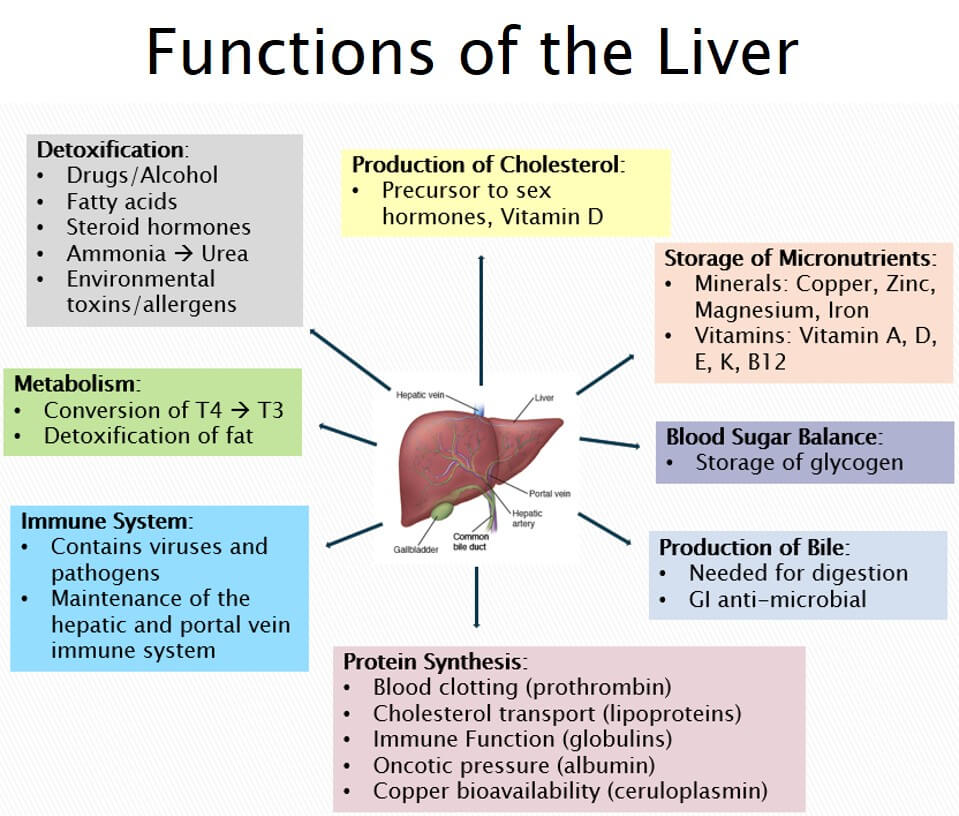
    PEPTIC ULCER DISEASE (PUD) uhpab

    PEPTIC ULCER DISEASE (PUD)

    Nursing Notes - Peptic Ulcer Disease

    PEPTIC ULCER DISEASE (PUD)

    A peptic ulcer is defined as an excavation (a hollowed-out area) or an erosion that forms in the mucosal wall of the gastrointestinal (GI) tract. This lesion occurs specifically in areas that are exposed to the corrosive actions of gastric acid and the digestive enzyme pepsin. These susceptible areas typically include the stomach, the pylorus (the opening from the stomach into the duodenum), the duodenum (the first part of the small intestine), or, less commonly, the esophagus.

    The naming convention for a peptic ulcer directly reflects its anatomical location: it is referred to as a gastric ulcer when located in the stomach, a duodenal ulcer when found in the duodenum, or an esophageal ulcer if it occurs in the esophagus.

    Classification of Peptic Ulcers: Acute vs. Chronic

    Peptic ulcers are broadly classified based on their duration and the depth of tissue involvement, primarily into acute and chronic forms. This distinction is crucial for understanding their pathology, clinical course, and treatment approaches.

    Acute Peptic Ulcers
    • Characteristics: Acute peptic ulcers are typically associated with superficial erosion of the gastric or duodenal mucosa. This means the damage is primarily limited to the top layers of the lining, with minimal associated inflammation.
    • Duration and Resolution: They are generally of short duration, often developing rapidly. A key feature of acute ulcers is their tendency to resolve quickly and completely once the underlying precipitating cause or irritant is identified and effectively removed or treated. For example, an ulcer caused by a single, high dose of NSAID might be acute.
    • Nature of Lesion: The term "erosion" often describes an acute lesion that does not penetrate the muscularis mucosae (a thin layer of muscle in the mucosa), whereas a true ulcer penetrates this layer. Acute ulcers can still penetrate, but they are characterized by their rapid development and potential for quick healing.
    Chronic Peptic Ulcers
    • Characteristics: Chronic peptic ulcers are characterized by their long duration and the significant depth of tissue damage. Unlike acute ulcers, they erode deeply, penetrating through the muscular wall of the GI tract. This deep erosion often leads to the formation of fibrous scar tissue during the healing process, which can sometimes result in strictures or deformities.
    • Clinical Course: These ulcers can persist continuously for many months, or they may manifest intermittently throughout a person's life, with periods of exacerbation and remission.
    • Prevalence: Epidemiologically, chronic ulcers are considerably more common than acute erosions. They are estimated to be at least four times more prevalent, highlighting their significant impact on public health and the chronicity of the disease for many individuals. The most common cause of chronic peptic ulcers is persistent infection with Helicobacter pylori (H. pylori), or the long-term, continuous use of non-steroidal anti-inflammatory drugs (NSAIDs).
    • Risk of Complications: Due to their depth and chronicity, chronic ulcers carry a higher risk of serious complications, including hemorrhage, perforation, and obstruction.

    Etiology and Risk Factors

    The development of Peptic Ulcer Disease (PUD) fundamentally arises from a critical imbalance within the gastrointestinal (GI) mucosa. This imbalance occurs between factors that aggressively attack the mucosal lining and those that provide protection. The primary aggressive factors are gastric acid and pepsin, while the key protective factors include the mucosal barrier (comprising mucus and bicarbonate production), adequate blood flow to the mucosa, and prostaglandins.

    Causes and Predisposing Factors of PUD

    Understanding these factors is crucial for prevention and effective management.

  • Helicobacter pylori (H. pylori) Infection: This gram-negative bacterium is unequivocally recognized as the leading cause of PUD globally. Approximately 80-90% of duodenal ulcers and 70-80% of gastric ulcers are attributed to H. pylori. The bacteria colonize the stomach lining, creating persistent inflammation (chronic gastritis). They disrupt the protective mucosal layer by producing enzymes (like urease, which generates ammonia, neutralizing acid locally and allowing the bacteria to survive) and toxins that directly damage gastric epithelial cells. This chronic irritation and breakdown of the mucosal defense system render the underlying tissues vulnerable to acid and pepsin.
  • Chronic Use of Non-Steroidal Anti-Inflammatory Drugs (NSAIDs): NSAIDs, such as aspirin, ibuprofen, naproxen, and celecoxib, are the second most common cause of PUD. Their mechanism of action involves inhibiting the production of prostaglandins. Prostaglandins are crucial for maintaining the integrity of the mucosal barrier by promoting mucus and bicarbonate secretion, maintaining mucosal blood flow, and fostering cellular repair. By blocking prostaglandin synthesis (via inhibition of cyclooxygenase enzymes, particularly COX-1), NSAIDs significantly compromise the stomach's protective mechanisms, making the mucosa susceptible to acid-pepsin induced injury and ulceration.
  • Lifestyle Factors: While not direct causes, these factors can exacerbate existing ulcers, impair healing, and increase susceptibility.
    • Excessive Smoking: Smoking is a well-established risk factor. Nicotine and other chemicals in tobacco are thought to:
      • Increase gastric acid secretion.
      • Reduce the production of bicarbonate, which neutralizes acid.
      • Decrease prostaglandin synthesis.
      • Reduce gastric mucosal blood flow, impairing healing.
      • Accelerate gastric emptying, exposing the duodenum to more acid.
    • Excessive Alcohol Intake: Alcohol is a direct irritant to the gastric mucosa. High concentrations can cause superficial erosions and acute inflammation. Chronic heavy alcohol consumption can also impair mucosal healing and potentially contribute to the development of chronic gastritis and ulcers.
    • Dietary Habits: While specific foods do not cause ulcers, certain items can irritate an existing ulcer or trigger symptoms. This includes highly spicy foods, very acidic foods (e.g., citrus fruits, tomatoes), and excessive caffeine intake, which can stimulate acid secretion.
  • Stress:
    • Severe Physiological Stress: Extreme physical stress, such as that experienced during major trauma, extensive burns, severe sepsis, multiple organ failure, or significant central nervous system injury, can lead to the formation of stress ulcers (also known as Curling's ulcers in burns or Cushing's ulcers in CNS trauma). These ulcers are typically acute, superficial, and often multiple. The mechanism involves reduced mucosal blood flow (ischemia) due to sympathetic nervous system activation, increased acid secretion, and impaired mucosal defenses.
    • Psychological Stress: The role of psychological stress (e.g., emotional stress, anxiety) in causing PUD is less clear and remains a subject of ongoing research. While it is generally accepted that psychological stress does not directly cause ulcers, it may exacerbate symptoms in individuals with existing ulcers and potentially impair healing by affecting gastric motility, blood flow, and acid secretion.
  • Genetic Factors: There is evidence suggesting a genetic predisposition to PUD.
    • Family History: Individuals with a family history of peptic ulcers have an increased risk, suggesting a genetic component or shared environmental factors (e.g., H. pylori transmission within families).
    • Blood Group Association: Blood group O is more commonly associated with duodenal ulcers, while blood group A has a slight association with gastric ulcers. The exact mechanism behind these associations is not fully understood but may involve differences in susceptibility to H. pylori colonization or mucosal integrity.
  • Other Less Common Causes:
    • Zollinger-Ellison Syndrome (ZES): A rare condition characterized by a gastrin-producing tumor (gastrinoma), usually in the pancreas or duodenum. This leads to extremely high levels of gastrin, which in turn causes massive hypersecretion of gastric acid, leading to severe, multiple, and often intractable ulcers in unusual locations.
    • Other Medications: Certain medications, beyond NSAIDs, can also contribute, though less commonly. These include corticosteroids (when used in combination with NSAIDs), selective serotonin reuptake inhibitors (SSRIs), and some chemotherapy agents.
    • Chronic Medical Conditions: Conditions like Crohn's disease, chronic kidney disease, cirrhosis, and chronic obstructive pulmonary disease (COPD) have been associated with an increased risk of PUD.
  • Types and Clinical Features of Peptic Ulcers: Gastric vs. Duodenal

    While both gastric and duodenal ulcers are types of peptic ulcers, they exhibit distinct characteristics in terms of prevalence, demographics, physiological mechanisms, and symptom patterns. Understanding these differences is crucial for accurate diagnosis and tailored treatment.

    Characteristic Gastric Ulcers (GUs) Duodenal Ulcers (DUs)
    Prevalence Account for approximately 15-20% of all peptic ulcer cases. Less common than duodenal ulcers. Account for the vast majority, approximately 80-85%, of all peptic ulcer cases. They are the most common type.
    Age of Onset Typically occur in an older age group, usually 50 years and older, with peak incidence between 55-65 years. Tend to appear earlier in life, usually between 30-60 years of age, with peak incidence in the 40s.
    Gender Ratio More common in males and females equally (1:1), though some studies suggest a slight female predominance in older age. Significantly more common in males than females (2-3:1), although the gap is narrowing.
    Blood Group Association More frequently observed in patients with blood group A. Strongly associated with patients of blood group O.
    H. pylori Association Associated with H. pylori infection in about 70-80% of cases. NSAID use is also a significant cause. Highly associated with H. pylori infection in about 90-95% of cases, making it the predominant cause.
    Stomach Acid Secretion Often associated with normal or even hypo-secretion (low) of stomach acid (HCl). The primary defect is often a compromised mucosal barrier rather than excessive acid. Characteristically associated with hyper-secretion (high) of stomach acid (HCl), and often a faster rate of gastric emptying, exposing the duodenum to more acid.
    Pain Pattern Pain typically occurs relatively soon after meals, usually 30 minutes to 1 hour. Food ingestion may actually worsen the pain, leading to fear of eating and subsequent weight loss. Pain characteristically occurs 2-3 hours after meals. It is often described as a burning or gnawing pain. A hallmark feature is that the pain is often relieved by eating food or taking antacids, as food buffers the acid. Pain frequently awakens the patient at night (between 1-2 AM) when acid secretion is high and food is absent.
    Vomiting Common, particularly after meals, and may provide temporary relief from pain. Associated with delayed gastric emptying. Uncommon, unless complications like obstruction develop.
    Weight Change Often associated with weight loss, as patients tend to avoid eating due to post-prandial pain and nausea. Often associated with weight gain, as patients learn that eating provides temporary relief from pain.
    Hemorrhage Risk More likely to cause hemorrhage, particularly from the lesser curvature of the stomach. Hematemesis (vomiting blood, which may look like fresh blood or "coffee grounds") is more common than melena (black, tarry stools). While still a serious risk, they are less likely to cause major hemorrhage than gastric ulcers. If bleeding occurs, melena (black, tarry stools due to digested blood) is more common than hematemesis.
    Malignancy Risk Approximately 1-5% of gastric ulcers can be malignant (gastric cancer), making biopsy of all gastric ulcers mandatory to rule out malignancy. Rarely associated with malignancies. Duodenal ulcers are almost always benign.

    Clinical Manifestations of Uncomplicated Peptic Ulcer Disease (PUD)

    The clinical presentation of PUD can vary, but certain symptoms are characteristic. It's important to note that some individuals, particularly the elderly or those on NSAIDs, may have "silent" ulcers without typical symptoms until a complication arises.

  • Epigastric Pain and Tenderness: This is the most common and cardinal symptom. It is often described as a burning, gnawing, aching, or hunger-like sensation located in the upper central abdomen (epigastric region). The pain can be localized or diffuse.
    • The timing of pain in relation to meals is a key differentiator between gastric and duodenal ulcers (as detailed in the table above).
  • Nausea and Vomiting: These symptoms are more common with gastric ulcers, especially if there is delayed gastric emptying or an element of gastric outlet obstruction. Vomiting may temporarily relieve pain.
  • Heartburn (Pyrosis) and Dyspepsia:
    • Heartburn: A burning sensation in the chest, often rising from the epigastrium, similar to gastroesophageal reflux disease (GERD).
    • Dyspepsia: A constellation of upper abdominal symptoms, including bloating, fullness, early satiety, and indigestion.
  • Belching, Abdominal Bloating, and Fullness: These are common non-specific symptoms that can accompany the discomfort and impaired digestion associated with PUD. Patients may feel uncomfortably full even after small meals.
  • Anorexia and Weight Loss: More typically seen in gastric ulcers, where eating can exacerbate pain, leading patients to avoid food.
  • Weight Gain: More often associated with duodenal ulcers, as patients learn that eating temporarily relieves their pain.
  • Investigations for PUD

    • Endoscopy (Esophagogastroduodenoscopy - EGD): The preferred diagnostic tool to directly visualize the ulcer, determine its size and location, and take biopsy samples.
    • Gastric Biopsy: To test for H. pylori (rapid urease test) and to rule out gastric malignancy, especially for gastric ulcers.
    • Tests for H. pylori: Urea breath test, stool antigen test, or serology (blood test for antibodies).
    • Barium Swallow (Upper GI Series): An X-ray study that can reveal ulcers, but is less sensitive than endoscopy.
    • Complete Blood Count (CBC): To assess for anemia due to chronic blood loss.
    • Stool Analysis: For occult blood.
    • Abdominal CT Scan: Used to diagnose complications like perforation or penetration.

    Management of Peptic Ulcer Disease (PUD)

    The comprehensive management of peptic ulcer disease is directed at several key objectives: alleviating pain, promoting the healing of the ulcer, preventing its recurrence, and diligently reducing the risk of serious complications. A patient-centered strategy, including thorough education and robust support, is paramount for achieving successful long-term outcomes.

    Conservative / Non-Pharmacological Management: Foundations of Care

    These interventions form the bedrock of PUD management, addressing both the underlying causes and factors that can exacerbate symptoms or impede healing.

  • Eradication of Helicobacter pylori (H. pylori): This is arguably the cornerstone of modern PUD treatment, especially when the ulcer is linked to this bacterial infection.
    • "Triple Therapy": The standard approach involves a combination of two antibiotics and a proton pump inhibitor (PPI). Common antibiotic choices include amoxicillin, clarithromycin, and metronidazole. The PPI is crucial for reducing stomach acid, creating an environment conducive to antibiotic efficacy and ulcer healing. This regimen is typically administered for 10-14 days.
    • "Quadruple Therapy": In cases of resistance to standard triple therapy, or in areas with high clarithromycin resistance, a quadruple therapy regimen may be employed. This usually includes a PPI, bismuth subsalicylate, and two antibiotics (e.g., metronidazole and tetracycline).
    • Adherence is critical: Patients must complete the full course of antibiotics to ensure successful eradication and prevent antibiotic resistance.
  • Lifestyle Modifications: Crucial for supporting ulcer healing and preventing recurrence.
    • Cessation of Smoking: Smoking is a significant impediment to ulcer healing. It reduces gastric blood flow, impairs the production of protective prostaglandins, and increases acid secretion. Patients should be strongly encouraged to quit smoking entirely.
    • Avoidance of Alcohol Consumption: Alcohol directly irritates the gastrointestinal (GI) mucosa and can stimulate acid secretion. Patients should be advised to abstain from alcohol or consume it only in very limited quantities.
    • Dietary Changes: While there's no specific "ulcer diet," patients should identify and avoid foods and beverages that cause distress. Common culprits include highly spicy foods, acidic foods (e.g., citrus, tomatoes), caffeine (coffee, tea, colas), and carbonated drinks.
      • Eating smaller, more frequent meals (e.g., 5-6 small meals a day) can help neutralize acid and reduce the gastric load, potentially minimizing pain and promoting healing.
      • Avoid eating large meals just before bedtime.
    • Stress Reduction and Rest: While stress doesn't directly cause ulcers, it can exacerbate symptoms and may impair the healing process by influencing gastric motility and acid secretion. Encouraging adequate rest, sleep, and implementing stress management techniques (e.g., meditation, yoga, deep breathing exercises) can be beneficial.
  • Medication Management: Focused on minimizing further gastric damage.
    • Reduction or Avoidance of Chronic NSAID Use: Non-Steroidal Anti-Inflammatory Drugs (NSAIDs) are a major cause of peptic ulcers. If possible, patients should discontinue NSAID use.
    • Alternative Pain Relief: For pain management, alternatives like acetaminophen (paracetamol) should be considered.
    • Gastroprotective Co-prescription: If NSAIDs are absolutely necessary (e.g., for chronic inflammatory conditions), they should be co-prescribed with a proton pump inhibitor (PPI) to provide gastroprotection.
  • Pharmacological Treatment (Beyond H. pylori eradication):
    • Proton Pump Inhibitors (PPIs): (e.g., omeprazole, lansoprazole, pantoprazole, esomeprazole, rabeprazole) are the most powerful acid suppressants. They work by irreversibly blocking the proton pump in gastric parietal cells, thereby reducing acid production significantly. PPIs are essential for ulcer healing and preventing recurrence, typically prescribed for 4-8 weeks to allow complete healing.
    • H2-Receptor Antagonists (H2RAs): (e.g., famotidine, ranitidine - if available) reduce acid secretion by blocking histamine's action on gastric cells. Less potent than PPIs, but still effective for milder cases or as maintenance therapy.
    • Antacids: (e.g., aluminum hydroxide, magnesium hydroxide, calcium carbonate) provide immediate, temporary relief of ulcer pain by neutralizing existing stomach acid. They are useful for symptomatic relief but do not promote healing as effectively as PPIs or H2RAs.
    • Mucosal Protective Agents: (e.g., sucralfate, bismuth subsalicylate) act locally to form a protective barrier over the ulcer crater, shielding it from acid and pepsin. Sucralfate does not affect acid secretion. Bismuth also has some antibacterial properties against H. pylori.
  • Surgical Management: When Conservative Therapy Falls Short

    Surgery for peptic ulcer disease is largely reserved for patients who experience complications unresponsive to intensive medical therapy or who present with acute, life-threatening events. Advances in pharmacological treatment, particularly the advent of PPIs and H. pylori eradication, have drastically reduced the need for surgical intervention.

  • Indications for Surgery:
    • Intractable Ulcers: Ulcers that are chronic, recurrent, and fail to heal despite adequate and prolonged medical treatment.
    • Hemorrhage (Bleeding): Acute, severe GI bleeding that cannot be controlled endoscopically, or recurrent bleeding despite multiple endoscopic attempts. Surgical intervention (e.g., oversewing the ulcer to ligate the bleeding vessel) may be necessary.
    • Perforation: A medical emergency where the ulcer erodes completely through the stomach or duodenal wall, leading to spillage of GI contents into the peritoneal cavity, causing peritonitis. Requires immediate surgical repair.
    • Obstruction (Gastric Outlet Obstruction): Chronic ulceration and inflammation, particularly in the pyloric region, can lead to scarring and narrowing (stenosis) that obstructs the passage of food from the stomach to the small intestine. Surgical procedures like pyloroplasty or vagotomy with gastrojejunostomy may be performed to relieve the obstruction.
  • Types of Surgical Procedures (Historically, and still used for complications):
    • Vagotomy: Severing the vagus nerve to reduce acid secretion. Can be truncal (cutting the main trunk) or selective/highly selective (cutting only branches supplying the stomach).
    • Pyloroplasty: Widening the pylorus (the opening from the stomach to the duodenum) to improve gastric emptying, often performed with vagotomy.
    • Antrectomy: Removal of the antrum (the lower part of the stomach) where gastrin is produced, often with vagotomy.
    • Gastrectomy: Partial or total removal of the stomach. Reserved for very severe cases or malignancy.
  • Nursing Management for Peptic Ulcer Disease

    Nursing care for patients with PUD is comprehensive, focusing on symptom management, patient education, emotional support, and vigilant monitoring for complications. A holistic approach is essential for optimal patient outcomes.

    1. Acute Pain

  • Definition: Unpleasant sensory and emotional experience associated with actual or potential tissue damage, or described in terms of such damage; sudden or slow onset of any intensity from mild to severe with an anticipated or predictable end.
  • Related to: Erosive effects of gastric acid on the inflamed or ulcerated gastric/duodenal mucosa, muscle spasm.
  • Assessment:
    • Routinely assess and document pain characteristics: location (epigastric, radiating to back), intensity (using a 0-10 scale), quality (burning, gnawing, aching), onset, duration, and precipitating/alleviating factors (e.g., food intake, medications).
    • Observe for non-verbal cues of pain (restlessness, guarding, facial grimacing).
    • Note if pain is relieved by food (duodenal ulcer) or exacerbated by food (gastric ulcer).
  • Interventions:
    • Administer prescribed medications (PPIs, H2RAs, antacids) as ordered. Educate on proper timing (e.g., PPIs 30-60 min before meals, antacids 1-3 hours after meals and at bedtime).
    • Encourage small, frequent, bland meals.
    • Advise avoidance of known irritants (spicy foods, caffeine, alcohol, NSAIDs).
    • Teach and encourage non-pharmacological pain relief methods:
      • Relaxation techniques (deep breathing, guided imagery, meditation).
      • Application of warmth to the abdomen (e.g., warm compress or heating pad).
      • Distraction techniques.
    • Provide a quiet and comfortable environment to promote rest and reduce stress.
    • Monitor effectiveness of pain interventions and adjust as needed.
  • 2. Risk for Bleeding (Hemorrhage)

  • Definition: At risk for a decrease in blood volume that may compromise health.
  • Related to: Erosion of gastric/duodenal mucosa leading to blood vessel damage, presence of an ulcer, use of NSAIDs.
  • Assessment:
    • Monitor vital signs frequently for signs of hypovolemia: tachycardia, hypotension, weak thready pulse, tachypnea.
    • Assess for signs of occult or overt GI bleeding:
      • Hematemesis: Bright red (fresh blood) or "coffee-ground" vomitus. Note amount, color, and frequency.
      • Melena: Black, tarry, foul-smelling stools (digested blood). Assess stool color, consistency, and frequency.
      • Hematochezia: Bright red blood in stool (lower GI bleed or rapid upper GI bleed).
    • Monitor H&H (hemoglobin and hematocrit) levels, and coagulation studies (PT/INR, PTT).
    • Assess for signs of shock: pallor, diaphoresis, cold clammy skin, decreased urine output, altered mental status.
    • Perform frequent guaiac testing of stools and gastric aspirate if nasogastric tube is in place.
  • Interventions:
    • Maintain NPO status if active bleeding is suspected or confirmed.
    • Establish large-bore IV access for fluid resuscitation. Administer IV fluids (crystalloids, colloids) and blood products as prescribed.
    • Administer IV PPIs or H2RAs as ordered to reduce acid and promote clot stability.
    • Prepare for and assist with endoscopic procedures (e.g., sclerotherapy, epinephrine injection, clipping) to control bleeding.
    • Insert and manage a nasogastric (NG) tube if ordered, for gastric lavage or aspiration.
    • Monitor urine output carefully as an indicator of renal perfusion.
    • Educate the patient and family on signs of bleeding and the importance of immediate reporting.
  • 3. Inadequate protein energy intake

  • Definition: Intake of nutrients insufficient to meet metabolic needs.
  • Related to: Anorexia, nausea, vomiting, pain with eating, dietary restrictions, fear of pain.
  • Assessment:
    • Monitor weight, noting any significant losses.
    • Assess dietary intake and eating patterns; identify food intolerances or triggers.
    • Observe for signs of nutrient deficiencies (e.g., fatigue, poor wound healing).
    • Assess for nausea, vomiting, or early satiety.
  • Interventions:
    • Encourage small, frequent, bland meals that are easily digestible.
    • Educate the patient on dietary modifications, emphasizing foods to avoid (irritants) and foods to include (nutritious, non-acidic, non-spicy options).
    • Administer antiemetics as prescribed to control nausea/vomiting.
    • Provide good oral hygiene before and after meals to enhance appetite.
    • Monitor fluid and electrolyte balance, especially if vomiting is present.
    • Consider nutritional supplements or collaboration with a dietitian for comprehensive nutritional planning if oral intake remains inadequate.
    • Advise avoiding eating immediately before bedtime to reduce reflux.
  • 4. Deficient Knowledge

  • Definition: Absence or deficiency of cognitive information related to specific topic.
  • Related to: Lack of exposure to information, misinterpretation of information, unfamiliarity with information resources.
  • Assessment:
    • Assess the patient's current understanding of PUD, its causes, treatment, potential complications, and self-care strategies.
    • Identify the patient's preferred learning style and readiness to learn.
    • Evaluate barriers to learning or adherence (e.g., health literacy, cognitive impairment).
  • Interventions:
    • Provide clear, concise, and accurate information about PUD, including:
      • The nature of the disease and its common causes (especially H. pylori and NSAIDs).
      • Purpose, dosage, potential side effects, and proper timing of all prescribed medications (PPIs, H2RAs, antacids, antibiotics for H. pylori). Emphasize the importance of completing antibiotic courses.
      • Detailed dietary modifications (foods to avoid, recommended eating patterns).
      • Importance of lifestyle changes (smoking cessation, alcohol avoidance, stress management techniques).
      • Recognition of signs and symptoms of complications requiring immediate medical attention (e.g., persistent severe abdominal pain, sudden sharp pain, black tarry stools, coffee-ground emesis, persistent vomiting, fever).
    • Use a variety of teaching methods (verbal instruction, written materials, visual aids, teach-back method).
    • Encourage questions and provide ample time for discussion and clarification.
    • Involve family members or caregivers in the education process, as appropriate, to foster a supportive environment.
    • Provide reliable resources for further information and support (e.g., reputable websites, support groups).
  • 5. Risk for Perforation or Obstruction

  • Definition: At risk for ulcer erosion through the gastric/duodenal wall (perforation) or narrowing due to scarring/edema (obstruction).
  • Related to: Deep ulceration, chronic inflammation and scarring, edema around the ulcer.
  • Assessment:
    • For Perforation: Monitor for sudden, severe, sharp abdominal pain (often described as "knife-like"), rigid, board-like abdomen, signs of peritonitis (rebound tenderness, guarding), fever, rapid shallow breathing, absent bowel sounds, signs of shock.
    • For Obstruction: Monitor for recurrent vomiting (especially undigested food), epigastric fullness, abdominal distention, persistent nausea, weight loss, succussion splash (sound of fluid in stomach upon shaking abdomen).
  • Interventions:
    • Report any signs or symptoms of perforation or obstruction to the physician immediately. These are medical emergencies.
    • Maintain NPO status if perforation or obstruction is suspected.
    • Prepare for emergency surgery if indicated (for perforation).
    • Insert and manage an NG tube for decompression in cases of obstruction or perforation.
    • Administer IV fluids and electrolytes as prescribed.
    • Monitor fluid and electrolyte balance carefully.
  • Complications of Peptic Ulcers

    While most peptic ulcers heal with appropriate medical management, they can lead to severe and potentially life-threatening complications. Prompt recognition and management of these complications are critical.

  • Hemorrhage (Bleeding): This is the most common complication of PUD, occurring in about 15-20% of patients. It results from the erosion of the ulcer into a blood vessel.
    • Manifestations:
      • Hematemesis: Vomiting of blood. It can be bright red (indicating fresh, active bleeding) or appear as "coffee grounds" (due to blood being partially digested by gastric acid). More common with gastric ulcers.
      • Melena: Black, tarry, sticky, foul-smelling stools. This occurs when blood from an upper GI bleed has been digested as it passes through the intestines. More common with duodenal ulcers.
      • Hematochezia: Bright red blood from the rectum. While usually indicative of lower GI bleeding, a very rapid upper GI bleed can also present with hematochezia.
    • Systemic Signs: Signs of significant blood loss and hypovolemia, such as pallor, dizziness, weakness, tachycardia, and hypotension.
  • Perforation: This is a severe and acute complication where the ulcer erodes completely through the entire wall of the stomach or duodenum, creating a hole.
    • Mechanism: Spillage of gastric or duodenal contents (acid, pepsin, bile, bacteria, food particles) into the sterile peritoneal cavity.
    • Clinical Presentation: Characterized by the sudden onset of excruciating, sharp, and generalized abdominal pain (often described as "knife-like"). The abdomen becomes rigid and board-like due to generalized peritonitis. Other signs include rebound tenderness, guarding, fever, shallow breathing, absent bowel sounds, and signs of shock.
    • Management: This is a surgical emergency requiring immediate intervention to close the perforation and wash out the abdominal cavity.
  • Penetration: This occurs when the ulcer erodes through the wall of the stomach or duodenum but into an adjacent organ (e.g., pancreas, liver, biliary tree, omentum) rather than into the free peritoneal cavity.
    • Clinical Presentation: The pain is often more constant, radiating to the back (if penetrating the pancreas) or other areas depending on the organ involved. It may not be relieved by food or antacids and can be more severe than typical ulcer pain.
    • Management: Can be difficult to manage medically and may require surgical intervention.
  • Pyloric Stenosis (Gastric Outlet Obstruction): This complication occurs due to chronic ulceration in or near the pyloric channel (the outlet from the stomach). Repeated cycles of inflammation, edema, spasm, and scar tissue formation cause the pyloric opening to narrow, obstructing the passage of stomach contents into the duodenum.
    • Clinical Presentation: Characterized by persistent and recurrent vomiting, often of undigested food ingested hours earlier. Other symptoms include epigastric fullness, abdominal distention, persistent nausea, anorexia, and progressive weight loss. A "succussion splash" (a sloshing sound heard over the stomach) may be elicited.
    • Management: Initial management involves gastric decompression (nasogastric tube) and correction of fluid/electrolyte imbalances. Endoscopic balloon dilation may be attempted, but surgery (e.g., pyloroplasty) may be necessary for definitive relief.
  • Gastric Cancer: While duodenal ulcers are almost always benign, chronic H. pylori infection is a well-established risk factor for the development of gastric adenocarcinoma and MALT (mucosa-associated lymphoid tissue) lymphoma. Therefore, any gastric ulcer, especially if not healing with treatment, requires biopsy to rule out malignancy.
  • Nursing Notes - Management of Severe PUD

    Management of a Patient with Severe PUD

    Severe Peptic Ulcer Disease, particularly with complications like hemorrhage or perforation, is a medical emergency requiring immediate intervention and comprehensive nursing care.

    Aims of Management

    • To relieve acute signs and symptoms (e.g., pain, bleeding).
    • To treat and control the underlying cause.
    • To stabilize the patient's hemodynamic status.
    • To prevent further complications.

    Emergency Management / Resuscitation

    1. Maintain ABCs: Ensure a patent Airway, assess Breathing, and support Circulation. Position the patient for comfort and to prevent aspiration if vomiting.
    2. Call for Help: Immediately notify the doctor or rapid response team about the patient's critical condition.
    3. Establish IV Access: Secure at least one, preferably two, large-bore IV lines for rapid fluid and medication administration.
    4. Administer IV Fluids: Start IV fluids, such as Normal Saline, to treat or prevent hypovolemic shock.
    5. Take Blood Samples: Draw blood for urgent investigations, including CBC, cross-matching for blood transfusion, electrolytes, and coagulation studies.
    6. Monitor Vital Signs: Take vital observations (temperature, blood pressure, pulse, respiration, and oxygen saturation) frequently (e.g., every 15-30 minutes) to monitor for signs of shock.
    7. Control Symptoms:
      • Administer IV medications to reduce gastric acid secretion (e.g., Rabeprazole 40mg or Ranitidine 150mg).
      • Administer analgesics for pain relief as prescribed (e.g., IV Morphine 15mg or Pethidine 100mg). Note: NSAIDs are contraindicated.
      • Administer IV antiemetics to control nausea and vomiting (e.g., Metoclopramide 10mg).
    8. Quick Assessment: Perform a rapid assessment to establish the cause and severity of symptoms (e.g., assess for abdominal rigidity indicating perforation).
    9. Neutralize Acid: If the patient is conscious, not actively vomiting, and there's no sign of perforation, sips of water or dairy products may be given to help neutralize stomach acids.

    After the patient is stabilized, ongoing management will involve the following nursing care plan.

    Nursing Care Plan

    Admission

    The patient is admitted to a medical or surgical ward, placed on complete bed rest, and their particulars are recorded in the ward admission book.

    Psychological Care

    Establish a good rapport with the patient and their relatives. Provide counseling and reassurance about the condition and treatment plan to allay anxiety.

    Position

    Nurse the patient in a position of comfort that ensures a patent airway and eases breathing, such as Fowler's or semi-Fowler's position, unless contraindicated by shock.

    Observations
    • Vital Observations: Continue to monitor BP, pulse, temperature, and respiration as ordered by the doctor and record them on an observation chart.
    • Specific/Physical Observations: Continuously observe for:
      • Abdominal discomfort, guarding, or rigidity.
      • Signs of ongoing bleeding: hematemesis, melena.
      • Nausea, vomiting, abdominal bloating.
      • Changes in level of consciousness.
      • Report the extent and severity of any findings to the doctor immediately.
    Investigations

    Prepare the patient for and assist with investigations as ordered by the doctor:

    • Blood for H. pylori test to identify the cause.
    • Stool analysis to rule out occult blood.
    • Abdominal CT scan to rule out complications like obstruction or perforation.
    • Barium meal to assess for structural abnormalities.
    Medications / Drugs

    Administer medications as prescribed and maintain an accurate treatment chart. This may include:

    • IV Ranitidine or Rabeprazole (PPIs).
    • IV antibiotics like Metronidazole.
    • Analgesics such as IM Pethidine alternating with IV Paracetamol.
    • IV fluids (e.g., Normal Saline alternating with 5% Dextrose, 2-3 litres in 24 hours).
    • Antacid syrups (e.g., Relcer gel) once oral intake is resumed.
    Diet

    The patient may be kept Nil Per Mouth (NPM) initially. Once stable, a light, well-balanced diet is introduced. Encourage plenty of oral fluids to ease digestion and neutralize stomach acids.

    Hygiene

    Ensure patient hygiene through daily oral care to prevent complications like stomatitis, daily bed baths, and regular turning and pressure area care to prevent pressure sores.

    Elimination
    • Bladder Care: Offer a bedpan or urinal. Monitor urine output and maintain a fluid balance chart to assess hydration status.
    • Bowel Care: Offer a bedpan and observe stool for any abnormalities (e.g., melena), reporting findings to the doctor.
    Exercises

    Provide passive range-of-motion exercises during the recovery period. As the patient's condition improves, encourage active exercises like ambulation and deep breathing to prevent respiratory and circulatory complications.

    Rest and Sleep

    Ensure a quiet, restful environment by managing noise and restricting visitors. Administer medications in a timely manner to promote comfort and sleep.

    Advice on Discharge

    When the patient has fully improved, provide comprehensive discharge education:

    • Medication Compliance: Take all drugs as prescribed and complete the full course.
    • Diet: Eat a well-balanced diet and consume plenty of fluids, especially water and milk, to neutralize stomach acids. Eat at regular times.
    • Lifestyle:
      • Avoid alcohol and smoking completely.
      • Avoid stress and ensure adequate rest.
      • Avoid chronic use of NSAIDs.
    • Follow-up: Return for review on the date indicated on the discharge form.

    PEPTIC ULCER DISEASE (PUD) Read More »
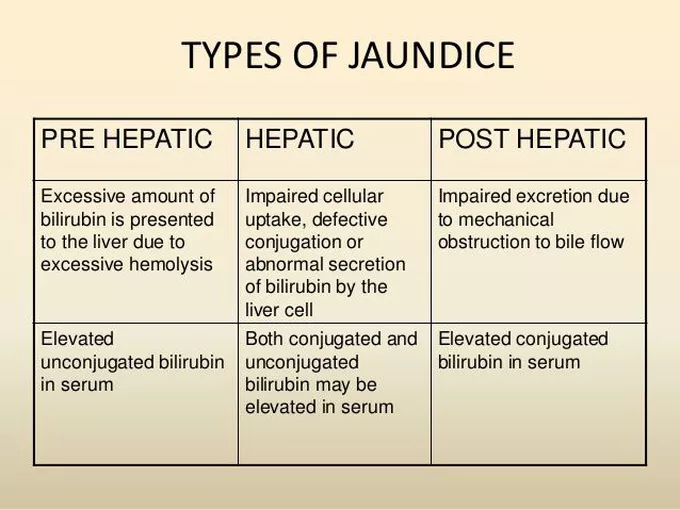
    Gastritis

    Gastritis Lecture Notes

    Nursing Notes - Gastritis

    GASTRITIS

    Gastritis is fundamentally an inflammation of the gastric mucosa, which is the delicate inner lining of the stomach. This inflammatory response can be widespread (diffuse) or confined to specific areas (localized) within the stomach, and it represents the body's reaction to various forms of injury or infection. Gastritis is broadly categorized into two main types based on its duration and onset: acute and chronic.

    Acute Gastritis: Sudden Onset and Short-Term Inflammation

    Acute gastritis is characterized by a rapid onset of inflammatory changes in the stomach lining, typically lasting for a relatively short duration—from several hours to a few days. It is frequently triggered by direct exposure to various local irritants or systemic factors.

    Causes of Acute Gastritis
    • Dietary Indiscretion: Ingestion of foods that are irritating, excessively seasoned, very hot or cold, or contaminated with bacteria or toxins (e.g., in cases of food poisoning).
    • Medications: The most common culprits include the excessive or prolonged use of aspirin and other non-steroidal anti-inflammatory drugs (NSAIDs) like ibuprofen and naproxen. These drugs can disrupt the stomach's protective mucosal barrier.
    • Irritants: Significant and excessive intake of alcohol is a potent irritant that can directly damage the gastric lining.
    • Bile Reflux: The abnormal regurgitation of bile from the duodenum (the first part of the small intestine) back into the stomach can cause chemical irritation of the gastric mucosa.
    • Radiation Therapy: Therapeutic radiation directed at the abdominal area, particularly for certain cancers, can lead to direct damage and inflammation of the gastric mucosa.
    • Severe Physiological Stress: Extreme physical stress, such as that experienced during major surgical procedures, extensive burns, severe trauma, sepsis, multiple organ failure, or significant central nervous system (CNS) injury (e.g., head trauma), can induce stress-related erosive gastritis or stress ulcers. This is often due to reduced blood flow to the gastric lining.
    • Chemicals: Accidental or intentional ingestion of strong corrosive agents like acids or alkalis can lead to severe mucosal injury, potentially causing the lining to become gangrenous (tissue death) or even perforate (form a hole).
    • Systemic Infections: In some cases, acute gastritis can be an early or accompanying symptom of a broader systemic infection, such as viral infections (e.g., norovirus, rotavirus) or bacterial infections elsewhere in the body.
    • Acute Viral or Bacterial Infections of the Stomach: Infections directly affecting the stomach lining, often leading to gastroenteritis (inflammation of both stomach and intestines).
    Clinical Manifestations of Acute Gastritis

    The symptoms of acute gastritis usually appear suddenly and can range in severity:

    • Onset of symptoms is often rapid and can be quite distressing.
    • Abdominal Discomfort or Cramping: A general feeling of unease or colicky pain in the upper abdomen.
    • Epigastric Pain or Tenderness: Localized pain or sensitivity in the upper central part of the abdomen, just below the breastbone.
    • Headache and Lassitude: Generalized fatigue, weakness, and headache can accompany the gastric symptoms, especially in more severe cases or with systemic causes.
    • Nausea and Vomiting: Common symptoms, with vomiting often providing temporary relief. The vomitus may contain food, bile, or even streaks of blood.
    • Anorexia: A significant loss of appetite due to discomfort and nausea.
    • Hiccupping: Persistent hiccups can occur due to irritation of the diaphragm.
    • Diarrhea: May be present, especially if the cause is food poisoning or a systemic infection affecting the intestines as well.
    • Painless GI Bleeding: This is a serious potential complication, particularly in individuals who have consumed large amounts of alcohol or are regular users of aspirin and NSAIDs. Bleeding can manifest as hematemesis (vomiting blood, which may look like "coffee grounds") or melena (black, tarry stools due to digested blood).

    Chronic Gastritis

    Chronic gastritis is characterized by prolonged inflammation of the stomach lining, often leading to structural changes in the mucosa over time, such as glandular atrophy (wasting away of the glands) or metaplasia (change in cell type). Unlike acute gastritis, its onset can be insidious, and symptoms may be less severe but persistent or intermittent. It may be caused by benign or malignant ulcers, but the most prevalent cause is a specific bacterial infection.

    Causes of Chronic Gastritis
    • Bacterial Infection: The single most common cause worldwide is chronic infection with the bacterium Helicobacter pylori (H. pylori). This bacterium colonizes the stomach lining and causes ongoing inflammation, which can progress to atrophy and increase the risk of peptic ulcers and gastric cancer.
    • Autoimmune Diseases: In some cases, the body's immune system mistakenly attacks its own stomach cells. A notable example is autoimmune gastritis, which is strongly associated with pernicious anemia, where the immune system destroys parietal cells responsible for producing intrinsic factor (necessary for Vitamin B12 absorption).
    • Dietary Factors: Chronic and excessive intake of certain irritants, such as large amounts of caffeine or highly processed foods, can contribute to chronic inflammation over time.
    • Chronic Medication Use: Long-term, regular use of NSAIDs is a significant contributor to chronic gastritis, similar to acute forms, but with persistent damage.
    • Lifestyle Factors: Chronic and excessive alcohol consumption and smoking are well-established risk factors that cause persistent irritation and impair the stomach's protective mechanisms.
    • Chronic Reflux: Persistent and significant reflux of bile and pancreatic secretions from the duodenum into the stomach can lead to ongoing chemical irritation and chronic inflammation. This is often seen after certain types of gastric surgery (e.g., gastrectomy).
    • Recurring Episodes of Untreated Acute Gastritis: If acute gastritis episodes are frequent, severe, or inadequately managed, the persistent irritation can eventually lead to chronic changes in the gastric mucosa.
    • Granulomatous Conditions: Rarer causes include inflammatory conditions like Crohn's disease or sarcoidosis that can affect the stomach.
    Clinical Manifestations of Chronic Gastritis

    The symptoms of chronic gastritis can be less dramatic than acute forms and may even be subtle or absent for extended periods:

    • May be Asymptomatic: Many individuals with chronic gastritis, especially those with H. pylori infection, may experience no symptoms for years, or only vague digestive discomfort.
    • Anorexia: A persistent or intermittent loss of appetite.
    • Heartburn: A burning sensation in the chest, particularly after eating, similar to indigestion.
    • Belching or a Sour Taste in the Mouth: Frequent burping and a persistent unpleasant, sour, or metallic taste can be present due to impaired digestion or reflux.
    • Nausea and Vomiting: These symptoms can occur intermittently, usually less severe than in acute gastritis.
    • Malabsorption of Vitamin B12: This is a crucial manifestation of autoimmune gastritis or advanced H. pylori-induced atrophic gastritis. Chronic inflammation, particularly when leading to atrophy of parietal cells, can significantly reduce the production of intrinsic factor. Intrinsic factor is essential for the absorption of dietary vitamin B12 in the small intestine. This malabsorption can lead to pernicious anemia (a type of megaloblastic anemia) and neurological complications if left untreated.
    • Feeling of Fullness: A sensation of feeling full very quickly after starting a meal (early satiety).
    • Epigastric Discomfort: Vague, dull ache or discomfort in the upper abdomen, often worse after meals.
    Investigations for Gastritis

    Accurate diagnosis of gastritis, and more importantly, its underlying cause, is crucial for effective treatment and preventing complications. A combination of clinical assessment and specific diagnostic tests is usually employed.

  • Endoscopy (Esophagogastroduodenoscopy - EGD): This is considered the gold standard for confirming the diagnosis of gastritis.
    • Visualization: A thin, flexible tube with a camera is inserted through the mouth to directly visualize the gastric mucosa, allowing the clinician to observe the extent and characteristics of the inflammation (e.g., redness, erosions, atrophy).
    • Biopsy: During endoscopy, small tissue samples (biopsies) can be taken from the stomach lining. These samples are then sent for histopathological examination.
  • Stomach Biopsy (Histopathological Examination): This is a critical component of the diagnostic process.
    • Confirmation of Gastritis: The biopsy confirms the presence of inflammation and helps to differentiate between acute and chronic forms.
    • Rule out Malignancy: It is essential for ruling out dysplastic changes or gastric malignancy, especially in cases of chronic gastritis or suspicious lesions.
    • Identify Histological Changes: It can identify specific features like glandular atrophy, intestinal metaplasia, and the presence of H. pylori.
  • Tests for Helicobacter pylori (H. pylori): Given its prevalence as a cause of chronic gastritis, testing for H. pylori is standard.
    • Urea Breath Test: A non-invasive test where the patient ingests a urea-containing tablet. If H. pylori is present, it breaks down the urea, releasing carbon dioxide that can be detected in the breath.
    • Stool Antigen Test: A non-invasive test that detects H. pylori antigens in a stool sample.
    • Blood Test (Serology): Detects antibodies to H. pylori. While indicating past exposure, it cannot differentiate between active infection and successfully treated infection.
    • Biopsy-based Tests: Rapid Urease Test (RUT) on a biopsy sample obtained during endoscopy, or histological examination of the biopsy itself.
  • Barium Meal (Upper GI Series / Barium Swallow): This is an X-ray study that can help evaluate the structure and function of the upper gastrointestinal tract.
    • Visualization: After ingesting a barium-containing liquid, X-ray images are taken to outline the esophagus, stomach, and duodenum.
    • Evaluation for Complications: While less sensitive for diagnosing gastritis itself than endoscopy, it can help identify complications such as structural abnormalities (e.g., strictures), severe ulcerations, or signs of perforations. It is generally used when endoscopy is not available or contraindicated.
  • Stool Analysis:
    • Occult Blood Test: To check for hidden (occult) blood in the stool. A positive result indicates gastrointestinal bleeding, which can occur in both acute and chronic gastritis, especially erosive forms or if ulcers are present.
  • Blood Tests:
    • Complete Blood Count (CBC): To check for anemia (especially iron deficiency anemia due to chronic blood loss or pernicious anemia due to B12 malabsorption).
    • Vitamin B12 Levels: Crucial in suspected autoimmune gastritis to assess for pernicious anemia.
    • Electrolyte Levels: Especially if there is significant vomiting.
  • Management of Gastritis

    The effective management of gastritis is multifaceted, encompassing both non-pharmacological and pharmacological strategies. The primary goals are to identify and eliminate the causative agents, alleviate symptoms, promote healing of the gastric mucosa, and prevent recurrence and complications. A patient-centered approach, including education and support, is crucial for successful outcomes.

    Non-Pharmacological Management: Lifestyle and Dietary Modifications

    These interventions are foundational to gastritis management and often provide significant relief, particularly in mild to moderate cases.

    Dietary Changes: Tailoring the diet to minimize irritation and promote healing. Avoidance of Irritants: Strictly avoid foods and beverages known to irritate the stomach lining. This commonly includes:
    • Spicy foods (e.g., chilies, hot sauces)
    • Acidic foods and beverages (e.g., citrus fruits and juices, tomatoes, vinegar)
    • Carbonated drinks
    • Caffeine (coffee, tea, energy drinks)
    • Alcohol (a direct gastric irritant)
    • Fatty and fried foods (can delay gastric emptying and increase acid production)
    • Certain dairy products (for some individuals)
    Eating Habits:
    • Smaller, More Frequent Meals: Instead of three large meals, encourage 5-6 smaller meals throughout the day. This helps to maintain a consistent stomach environment and avoids overfilling the stomach, which can stimulate excessive acid secretion.
    • Regular Meal Times: Eating at consistent times helps regulate digestive processes and acid production.
    • Eat Slowly and Chew Thoroughly: Aids digestion and reduces the amount of air swallowed.
    • Avoid Eating Before Bed: Do not eat for at least 2-3 hours before lying down to prevent reflux and nocturnal acid secretion.
    Recommended Foods: Focus on easily digestible, bland foods.
    • Lean proteins (baked chicken, fish)
    • Non-acidic fruits (apples, bananas, pears)
    • Cooked vegetables (steamed, boiled)
    • Whole grains (oatmeal, brown rice)
    • Low-fat dairy (if tolerated)
    Lifestyle Modification: Addressing habits and external factors that contribute to gastritis.
    • Avoidance of Smoking and Alcohol Intake: Both are direct irritants to the gastric mucosa and impair healing. Smoking also reduces blood flow to the stomach lining.
    • Avoidance of Chronic Use of NSAIDs: Non-Steroidal Anti-Inflammatory Drugs (e.g., ibuprofen, naproxen, aspirin) are a very common cause of gastritis and peptic ulcers. If pain relief is needed, acetaminophen (Paracetamol) is generally preferred. If NSAIDs are unavoidable, they should be taken with food and possibly with a gastroprotective agent (like a PPI).
    • Stress Reduction and Management Techniques: Psychological stress can exacerbate gastritis symptoms by influencing gastric acid secretion and motility. Techniques include:
      • Mindfulness and meditation
      • Deep breathing exercises
      • Yoga or Tai Chi
      • Regular physical activity (non-strenuous)
      • Adequate sleep
      • Seeking support from counseling or therapy if stress is severe.
    • Weight Management: If overweight or obese, losing weight can help reduce pressure on the abdomen and lessen reflux symptoms, which can sometimes contribute to gastritis.

    Pharmacological Treatment: Targeting Acid and Infection

    Medications are often necessary to reduce stomach acid, protect the gastric lining, and eradicate infections.

    Antacids: Provide immediate, temporary relief by neutralizing existing stomach acid.
    • Mechanism: Act as weak bases that directly react with hydrochloric acid in the stomach.
    • Examples: Magnesium Trisilicate (tablets or suspensions), Aluminum Hydroxide/Magnesium Hydroxide combinations (e.g., Relcer gel, Ulgel, Maalox).
    • Dosage: Typically 10-20mL or 1-2 tablets taken 30 minutes to 1 hour after meals and at bedtime.
    • Considerations: Magnesium-containing antacids can cause diarrhea; aluminum-containing antacids can cause constipation. Combinations help balance these effects.
    H2-Receptor Antagonists (H2RAs): Reduce acid production by blocking histamine's action on parietal cells.
    • Mechanism: Block H2 receptors on gastric parietal cells, leading to decreased histamine-stimulated acid secretion.
    • Examples: Ranitidine (150mg), Famotidine (20mg, 40mg), Cimetidine (less commonly used due to drug interactions).
    • Dosage: Usually taken once or twice daily, depending on the severity of symptoms.
    • Considerations: Generally well-tolerated; available over-the-counter and by prescription. Provide longer-lasting acid control than antacids.
    Proton Pump Inhibitors (PPIs): The most potent acid suppressants.
    • Mechanism: Irreversibly block the H+/K+-ATPase pump (proton pump) in gastric parietal cells, effectively shutting down acid production.
    • Examples: Omeprazole (20mg, 40mg), Rabeprazole (20mg), Lansoprazole (15mg, 30mg), Pantoprazole (20mg, 40mg), Esomeprazole (20mg, 40mg).
    • Dosage: Typically taken once daily, 30-60 minutes before the first meal of the day for maximal effect.
    • Considerations: Highly effective for healing and preventing recurrence. Long-term use requires monitoring due to potential side effects (e.g., increased risk of C. difficile infection, bone fractures, nutrient malabsorption).
    Supportive Therapy
    Analgesics: For pain relief, especially during acute flares.
    • Paracetamol (Acetaminophen): Generally preferred over NSAIDs for pain management in gastritis patients due to its lower risk of gastric irritation. Dosage typically 500mg or 1g orally three times daily for 3-5 days, or as prescribed, ensuring daily maximum dose is not exceeded.
    • Avoid NSAIDs: Unless absolutely necessary and with gastroprotective co-medication.
    Prokinetic Agents: (Less commonly used specifically for gastritis, but may be considered if delayed gastric emptying contributes to symptoms).
    • Mechanism: Improve gastric motility and emptying.
    • Examples: Metoclopramide, Domperidone.
    • Considerations: Potential for side effects (e.g., neurological for metoclopramide).
    Mucosal Protective Agents:
    • Sucralfate: Forms a protective barrier over the ulcerated or inflamed mucosa, shielding it from acid and enzymes. Does not alter acid secretion.
    • Bismuth Subsalicylate: Has some mucosal protective properties and also antibacterial effects against H. pylori.

    NOTE: If the cause of gastritis is confirmed to be Helicobacter pylori (H. pylori) bacteria, eradication therapy is essential to prevent recurrence and complications like peptic ulcers and gastric cancer. Treatment typically involves a combination therapy, known as "triple therapy" or "quadruple therapy":

    Triple Therapy: Usually comprises one PPI and two antibiotics for 10-14 days.
    • Common Regimen: PPI (e.g., Omeprazole 20mg twice daily) + Clarithromycin (500mg twice daily) + Amoxicillin (1000mg twice daily).
    • Alternative (if penicillin allergy): PPI + Clarithromycin + Metronidazole (400-500mg twice daily).
    Quadruple Therapy: Increasingly used due to rising clarithromycin resistance, this includes one PPI, bismuth, and two antibiotics.
    • Common Regimen: PPI + Bismuth + Metronidazole + Tetracycline.
    Considerations for H. pylori Eradication:
    • Strict adherence to the medication regimen is crucial for successful eradication and to prevent antibiotic resistance.
    • Side effects (nausea, diarrhea, metallic taste) are common with antibiotic combinations.
    • Follow-up testing (urea breath test, stool antigen test) is recommended 4-6 weeks after completing therapy to confirm eradication.

    Nursing Diagnoses and Interventions for Gastritis

    Nursing care for patients with gastritis focuses on symptom management, patient education, emotional support, and monitoring for complications. Here are common nursing diagnoses and associated interventions:

    1. Acute Pain

    Definition: Unpleasant sensory and emotional experience associated with actual or potential tissue damage, or described in terms of such damage; sudden or slow onset of any intensity from mild to severe with an anticipated or predictable end.
    Related to: Irritated gastric mucosa, increased gastric acid secretion, inflammation.
    Assessment:
    • Monitor pain characteristics (location, intensity, quality, duration) using a pain scale (e.g., 0-10).
    • Observe non-verbal cues of pain (restlessness, grimacing, guarding).
    • Assess factors that aggravate or relieve pain.

    Interventions:
    • Administer prescribed analgesics (e.g., Paracetamol) as ordered, and evaluate effectiveness.
    • Administer antacids, H2RAs, or PPIs as prescribed; educate on proper timing (e.g., PPIs before meals, antacids after meals).
    • Teach and encourage non-pharmacological pain relief methods:
      • Applying warm compresses to the abdomen.
      • Relaxation techniques (deep breathing, guided imagery).
      • Distraction.
    • Encourage small, frequent, bland meals.
    • Avoid known gastric irritants (spicy food, caffeine, alcohol, NSAIDs).
    • Provide a quiet and comfortable environment.

    2. Inadequate protein energy intake

    Definition: Intake of nutrients insufficient to meet metabolic needs.
    Related to: Anorexia, nausea, vomiting, pain experienced with eating, dietary restrictions.
    Assessment:
    • Monitor weight, noting any losses.
    • Assess dietary intake and eating patterns.
    • Observe for signs of nutrient deficiencies.
    • Note presence of nausea, vomiting, or early satiety.

    Interventions:
    • Encourage consumption of small, frequent meals of bland, easily digestible foods.
    • Educate patient on foods to avoid (irritants) and foods to favor.
    • Administer antiemetics as prescribed if nausea/vomiting is significant.
    • Provide oral hygiene before and after meals to enhance appetite.
    • Monitor fluid and electrolyte balance, especially if vomiting.
    • Consider nutritional supplements if oral intake remains poor.
    • Collaborate with a dietitian for comprehensive nutritional planning.

    3. Deficient Knowledge

  • Definition: Absence or deficiency of cognitive information related to specific topic.
  • Related to: Lack of exposure, misinterpretation of information, unfamiliarity with information resources.
  • Assessment:
    • Assess patient's current understanding of gastritis, its causes, management, and prevention.
    • Identify learning style and readiness to learn.
    • Evaluate patient's ability to adhere to treatment regimen.
  • Interventions:
    • Provide clear, concise, and accurate information about gastritis, including:
      • Nature of the disease and its common causes (e.g., H. pylori, NSAIDs, stress).
      • Purpose, dosage, side effects, and proper timing of all prescribed medications (antacids, H2RAs, PPIs, antibiotics).
      • Importance of adhering to the full course of H. pylori eradication therapy if applicable.
      • Detailed dietary modifications (foods to avoid, foods to include, meal timing).
      • Importance of lifestyle changes (smoking cessation, alcohol avoidance, stress management).
      • Signs and symptoms of complications requiring immediate medical attention (e.g., severe abdominal pain, persistent vomiting, black tarry stools, coffee-ground emesis).
    • Use various teaching methods (verbal instruction, written materials, visual aids).
    • Encourage questions and allow time for discussion.
    • Involve family members or caregivers in the education process as appropriate.
    • Provide resources for further information and support.
  • 4. Risk for Fluid Volume Deficit

  • Definition: At risk for experiencing a decrease in intravascular, interstitial, and/or intracellular fluid.
  • Related to: Nausea, vomiting, decreased oral intake due to pain, gastric bleeding (if present).
  • Assessment:
    • Monitor intake and output.
    • Assess skin turgor, mucous membranes, and urine specific gravity.
    • Monitor vital signs (tachycardia, hypotension, weak pulse).
    • Observe for signs of dehydration (thirst, dizziness, decreased urine output).
    • Monitor laboratory values (electrolytes, BUN, creatinine, hemoglobin, hematocrit).
  • Interventions:
    • Encourage frequent sips of clear fluids (water, clear broths, diluted juices) if tolerated.
    • Administer intravenous fluids as prescribed if oral intake is insufficient or if dehydration is present.
    • Administer antiemetics to control nausea and vomiting.
    • Monitor for signs of GI bleeding (hematemesis, melena) and report immediately.
    • Educate patient on importance of hydration.
  • 5. Nausea

  • Definition: A subjective unpleasant sensation of sickness with a feeling in the back of the throat and stomach that may or may not result in vomiting.
  • Related to: Gastric irritation, inflammation, delayed gastric emptying, medication side effects.
  • Assessment:
    • Assess the intensity and frequency of nausea.
    • Note any precipitating or alleviating factors.
    • Observe for associated symptoms like vomiting, excessive salivation, pallor, or sweating.
  • Interventions:
    • Administer antiemetics as prescribed.
    • Offer small, frequent, bland meals.
    • Avoid strong odors (food, perfumes) that might trigger nausea.
    • Encourage patient to rest in a comfortable position.
    • Provide good oral hygiene.
    • Suggest sipping on clear, cold liquids (e.g., ginger ale, clear broth).
    • Educate on dietary modifications to reduce nausea.
  • Gastritis Lecture Notes Read More »

    EMPHYSEMA PULMONARY EMPHYSEMA

    EMPHYSEMA / PULMONARY EMPHYSEMA

    Nursing Notes - Thrombus and Embolus

    EMPHYSEMA / PULMONARY EMPHYSEMA

    Introduction

    Definition: Emphysema is a chronic and progressive lung disease primarily characterized by the destruction and enlargement of the air sacs (alveoli) at the end of the smallest airways (bronchioles) in the lungs. This damage leads to a significant reduction in the surface area available for gas exchange, resulting in chronic and progressively worsening difficulty breathing.

    More specifically, emphysema is a pathological diagnosis that affects the air spaces distal to the terminal bronchiole. It is defined by an abnormal, permanent enlargement of the air spaces, accompanied by the destruction of their walls without obvious fibrosis. This destruction of the lung parenchyma leads to a loss of elastic recoil, increased air trapping, thoracic over-distention (hyperinflation), and often, a compromised function of the diaphragm. While sputum accumulation can be present, it is more characteristic of chronic bronchitis, which often coexists with emphysema.

    Pulmonary emphysema is a major component and a progressive form of Chronic Obstructive Pulmonary Disease (COPD). The Global Initiative for Chronic Obstructive Lung Disease (GOLD) defines COPD as "a common, preventable, and treatable disease that is characterized by persistent respiratory symptoms and airflow limitation that is due to airway and/or alveolar abnormalities usually caused by significant exposure to noxious particles or gases."

    NB: Emphysema, Chronic Bronchitis, and Asthma (when overlapping with persistent airflow limitation) are the primary disease entities that fall under the umbrella term of COPD.

    Pathology (Pathophysiology)

    The core pathological process in emphysema involves the irreversible breakdown of the elastic fibers and walls of the alveoli, which are the tiny air sacs responsible for gas exchange. This destruction leads to the coalescence of smaller air sacs into larger, irregularly shaped, and less efficient air spaces. The process unfolds as follows:

    • Alveolar Destruction and Enlargement: The delicate walls separating individual alveoli are progressively destroyed. This leads to the formation of fewer, but much larger, air-filled spaces. These enlarged spaces, often referred to as bullae if they are greater than 1 cm in diameter, have significantly reduced surface area for the efficient exchange of oxygen into the blood and carbon dioxide out of it.
    • Loss of Elastic Recoil: The lung tissue, particularly the elastic fibers that normally allow the lungs to recoil and expel air during exhalation, are damaged or lost. This loss of elasticity means that air becomes trapped within the enlarged air spaces, leading to hyperinflation of the lungs.
    • Air Trapping: Due to the loss of elastic recoil and the destruction of alveolar walls, air becomes trapped in the lungs, particularly during exhalation. This increases the residual volume and functional residual capacity, leading to a perpetually overinflated chest.
    • Bronchiolar Collapse: The small airways (bronchioles) that lead to the alveoli are also affected. Due to the loss of surrounding parenchymal support and elastic recoil, these airways tend to collapse prematurely during exhalation, further contributing to air trapping.
    • Inflammation and Protease-Antiprotease Imbalance: The primary trigger for this destructive process is chronic exposure to irritants, most notably cigarette smoke. These irritants activate an inflammatory response in the lungs. Inflammatory cells (e.g., neutrophils, macrophages) release proteolytic enzymes, particularly neutrophil elastase, which are capable of breaking down elastic fibers and connective tissue in the lung. Normally, the lungs are protected by anti-proteases, such as alpha-1 antitrypsin (AAT). However, in individuals exposed to smoke, the activity of these protective anti-proteases is overwhelmed or directly inhibited by components of cigarette smoke. This imbalance between proteases and anti-proteases leads to the unchecked destruction of the alveolar walls and the breakdown of elastic tissue and collagen.
    • Impaired Gas Exchange: The loss of alveolar tissue drastically reduces the surface area available for gas exchange. Additionally, the destruction of the capillary beds surrounding the alveoli (which are part of the alveolar wall) leads to reduced blood flow through the pulmonary capillary system. This combined effect severely impairs the transfer of oxygen into the blood and the removal of carbon dioxide.
    • Permanent Damage: The damage to the alveolar structures and elastic tissue is permanent and irreversible. While interventions can manage symptoms and slow progression, the ability to breathe properly cannot be fully restored once this destruction has occurred.

    Causes of Emphysema

    Emphysema is predominantly caused by long-term exposure to inhaled irritants, with genetic factors playing a significant role in susceptibility for some individuals.

  • Cigarette Smoking: This is by far the leading cause of emphysema, accounting for approximately 80-90% of cases. The chemicals and particulate matter in cigarette smoke directly initiate and perpetuate the inflammatory and destructive processes in the lungs. The duration and intensity of smoking are directly correlated with the risk of developing emphysema.
  • Passive Smoking (Secondhand Smoke): Chronic exposure to secondhand smoke can also increase the risk of developing emphysema, particularly in childhood and adolescence.
  • Alpha-1 Antitrypsin (AAT) Deficiency: This is a genetic (hereditary) condition where the body does not produce enough alpha-1 antitrypsin, a protein that protects the lungs from the destructive effects of enzymes (like elastase) released by inflammatory cells. Individuals with severe AAT deficiency can develop panacinar emphysema, often at a younger age and even without a history of smoking.
  • Inhaled Toxins and Air Pollutants: Long-term exposure to various occupational dusts, chemicals, and environmental pollutants can contribute to the development of emphysema. These include:
    • Occupational Dusts: Such as coal dust (in coal miners), grain dust, cotton dust, and silica.
    • Chemical Fumes: Exposure to cadmium, isocyanates, and other industrial chemicals.
    • Indoor Air Pollution: Smoke from biomass fuels (e.g., wood, animal dung) used for cooking and heating in poorly ventilated homes, particularly common in developing countries.
    • Outdoor Air Pollution: Chronic exposure to high levels of urban air pollution, including particulate matter and ozone.
  • Childhood Respiratory Disorders: Severe or recurrent respiratory infections during childhood, especially those that cause significant inflammation and damage to developing airways, may increase the susceptibility to developing emphysema later in life. While asthma itself is a distinct condition, severe, long-standing, or poorly controlled asthma can, in some cases, lead to irreversible airflow limitation similar to that seen in COPD, particularly if accompanied by structural changes in the airways.
  • Genetics (Other than AAT Deficiency): While AAT deficiency is the most well-understood genetic risk factor, other genetic predispositions may influence an individual's susceptibility to the harmful effects of inhaled irritants, explaining why some heavy smokers develop severe emphysema while others do not.
  • Contributory Risk Factors (can exacerbate or increase susceptibility)
    • Bronchial Asthma: While distinct, severe, chronic, or poorly controlled asthma can lead to airway remodeling and contribute to fixed airflow obstruction, sometimes blurring the lines with COPD, especially "asthma-COPD overlap syndrome."
    • Aging: As people age, natural changes occur in the lung structure, including a decrease in elastic recoil, which can make them more susceptible to emphysema.
    • Infections: Frequent respiratory infections can accelerate lung damage in susceptible individuals.

    Signs and Symptoms of Emphysema

    The symptoms of emphysema typically develop gradually over many years and progressively worsen. They reflect the impaired gas exchange and increased work of breathing.

    • Dyspnea (Shortness of Breath): This is the hallmark symptom and is typically progressive. Initially, it may only occur during physical exertion, but as the disease advances, it becomes noticeable even with minimal activity or at rest. Patients often report feeling "air hungry."
    • Chronic Cough: While more characteristic of chronic bronchitis, a persistent cough, which may or may not be productive of sputum, can also be present in emphysema, particularly if bronchitis coexists.
    • Wheezing: A whistling sound during breathing, caused by narrowed airways.
    • Frequent Lung Infections: Due to impaired mucociliary clearance and damaged lung tissue, individuals with emphysema are more susceptible to recurrent respiratory infections (e.g., bronchitis, pneumonia).
    • Weight Loss: Significant weight loss can occur due to the increased energy expenditure associated with the constant work of breathing, reduced appetite, and systemic inflammation.
    • Fatigue: Chronic dyspnea, increased work of breathing, hypoxemia, and sleep disturbances contribute to profound fatigue.
    • Cyanosis: Bluish discoloration of the skin, lips, or nail beds, indicating insufficient oxygen in the blood. This is a sign of advanced disease.
    • Anxiety and Depression: The chronic, debilitating nature of the disease, coupled with the constant struggle for breath and fear of suffocation, often leads to significant psychological distress.
    • Sleep Problems: Dyspnea, coughing, and hypoxemia can disrupt sleep patterns, leading to insomnia or frequent awakenings.
    • Morning Headaches: Can be a sign of hypercapnia (high carbon dioxide levels) during sleep due to hypoventilation.
    • Barrel Chest: Due to chronic air trapping and hyperinflation, the chest wall may expand, giving it a rounded, barrel-like appearance.
    • Pursed-Lip Breathing: A compensatory breathing technique used to create back pressure in the airways, helping to keep them open during exhalation and reduce air trapping.
    • Use of Accessory Muscles of Respiration: As the diaphragm's efficiency decreases, patients may rely on neck and shoulder muscles (e.g., sternocleidomastoid, scalenes) to assist with breathing.

    Management of a Patient with Emphysema

    The management of emphysema is focused on relieving symptoms, slowing disease progression, preventing and treating complications, and improving the patient's quality of life. As emphysema is irreversible, the goal is not a cure but effective disease management.

    Aims of Management
    • To optimize respiratory function and restore the best possible breathing pattern.
    • To prevent or minimize the frequency and severity of acute exacerbations.
    • To alleviate symptoms such as dyspnea and cough.
    • To improve exercise tolerance and overall physical functioning.
    • To prevent and manage complications, including infections and heart problems.
    • To enhance the patient's quality of life and reduce anxiety/depression associated with the disease.
    • To provide education and support for self-management.
    General Management and Nursing Interventions

    A multi-faceted approach involving medical, nursing, and rehabilitative interventions is crucial.

    1. Assessment and Monitoring:

    • Admission of the patient to a medical ward, ideally quiet and well-ventilated, to promote rest and reduce environmental irritants.
    • Thorough initial assessment of respiratory status: rate, rhythm, depth, use of accessory muscles, breath sounds (e.g., diminished, wheezes, rhonchi), and oxygen saturation (SpO2).
    • Regular monitoring of vital observations: temperature, pulse, respiration, and blood pressure. These must be meticulously recorded on the patient's file and trended to identify changes or signs of deterioration (e.g., fever indicating infection, increased respiratory rate, tachycardia).
    • Assess for signs of hypoxemia (cyanosis, confusion) and hypercapnia (morning headaches, somnolence, confusion).
    • Monitor fluid balance, especially if there is increased insensible loss from tachypnea or if diuretics are used for cor pulmonale.
    • Assess nutritional status and provide dietary support if needed.

    2. Positioning and Comfort:

    • Position the patient in a sitting-up position (e.g., High Fowler's, orthopneic position) to maximize lung expansion and aid breathing by reducing pressure on the diaphragm.
    • Provide emotional support and reassurance to allay anxiety, which can worsen dyspnea. Teach relaxation techniques.

    3. Oxygen Therapy:

    • Administration of supplemental oxygen therapy as prescribed, guided by SpO2 levels and arterial blood gases (ABGs). The goal is to maintain adequate oxygenation (e.g., SpO2 > 90%) while carefully monitoring for CO2 retention, especially in advanced stages (start with low flow rates, e.g., 1-2 L/min, and titrate based on patient response and ABGs). Oxygen therapy helps improve oxygen delivery to the lungs and tissues.

    4. Pharmacological Management (Drug Therapy):

    • Bronchodilators: These medications relax the smooth muscles of the airways, helping to open them up and reduce bronchospasm. They are typically given via inhalers (nebulizers or metered-dose inhalers with spacers).
      • Short-acting beta-agonists (SABAs) e.g., Albuterol (Salbutamol): For quick relief of acute dyspnea.
      • Long-acting beta-agonists (LABAs) e.g., Salmeterol, Formoterol: For long-term maintenance.
      • Short-acting anticholinergics e.g., Ipratropium: For quick relief.
      • Long-acting anticholinergics (LAMAs) e.g., Tiotropium: For long-term maintenance.
      • Methylxanthines e.g., Theophylline: Less commonly used due to side effects and narrow therapeutic window, but may be used in some cases.
    • Corticosteroids:
      • Inhaled Corticosteroids (ICS): Often used in combination with LABAs for patients with frequent exacerbations or significant symptoms, particularly if they have an "asthma-like" component. E.g., Fluticasone, Budesonide.
      • Oral Corticosteroids: Used for acute exacerbations to reduce inflammation and improve airflow. E.g., Prednisone. Long-term use is generally avoided due to significant side effects.
    • Antibiotics: Prescribed for acute exacerbations if there is evidence of bacterial infection (e.g., increased sputum purulence, fever).
    • Diuretics: May be used if the patient develops cor pulmonale with peripheral edema.
    • Mucolytics: (e.g., acetylcysteine) May be considered in some patients with very thick, tenacious sputum, although their routine use is debated.
    • Alpha-1 Antitrypsin Augmentation Therapy: For patients with documented severe AAT deficiency, intravenous infusion of pooled human alpha-1 antitrypsin can help slow the progression of emphysema.

    5. Pulmonary Rehabilitation:

    • A comprehensive program that includes exercise training, nutritional counseling, education on lung disease, and psychological support. This significantly improves exercise tolerance, reduces symptoms, and enhances quality of life.
      • Physical exercises: Encouraged within the patient's tolerance, such as walking, cycling (stationary bikes). These help the body use oxygen more efficiently, improve muscle strength, and reduce breathlessness.
      • Breathing Techniques: Teaching pursed-lip breathing and diaphragmatic breathing can help control dyspnea and improve exhalation.

    6. Nutritional Support:

    • Patients with advanced emphysema often have increased caloric needs due to the work of breathing but may experience reduced appetite. Nutritional counseling and calorie-dense, small, frequent meals can help prevent weight loss and maintain muscle mass.

    7. Surgical Interventions (for select cases):

    • Lung Volume Reduction Surgery (LVRS): In highly selected patients with upper lobe emphysema and low exercise capacity, surgical removal of the most diseased parts of the lung can reduce hyperinflation and improve lung function.
    • Bullectomy: Surgical removal of large bullae that are not contributing to gas exchange and are compressing healthy lung tissue.
    • Lung Transplantation: A last-resort option for very severe emphysema in carefully selected candidates.

    Health Education on Emphysema

    Comprehensive health education is fundamental to empowering patients to manage their condition effectively, prevent complications, and maintain the best possible quality of life.

    • Smoking Cessation: This is the single most important intervention. Emphasize that quitting cigarette smoking (and avoiding all other tobacco products) is crucial to slow the progression of the disease and prevent further lung damage. Provide resources for smoking cessation programs, nicotine replacement therapy, or medications.
    • Vaccination: Highly recommended to prevent respiratory infections that can trigger acute exacerbations.
      • Annual influenza (flu) immunization.
      • Pneumococcal vaccination: Typically, a series of two vaccinations (PCV13 and PPSV23) for adults with chronic lung disease, with specific intervals. (Note: "5 yearly one against pneumonia" is a simplified guideline, and current recommendations for pneumococcal vaccines should be followed).
      • COVID-19 vaccination and boosters.
      • Pertussis (whooping cough) vaccine.
    • Nutritional Guidance: A healthful diet with plenty of fresh fruits, vegetables, whole grains, lean proteins, and a low intake of processed foods, unhealthy fats, and added sugars is necessary. Advise on strategies to manage appetite and maintain weight, such as smaller, more frequent meals.
    • Physical Activity and Exercise: Encourage regular, gentle physical exercises within the patient's tolerance (e.g., walking, using stationary bikes, light resistance training). Explain that these help the body use oxygen more efficiently, improve muscle strength, and hence improve breathing and overall well-being. Emphasize the importance of pulmonary rehabilitation.
    • Breathing Techniques: Teach and reinforce effective breathing techniques such as pursed-lip breathing (to control breathlessness and prevent airway collapse) and diaphragmatic (abdominal) breathing (to maximize diaphragm efficiency).
    • Medication Adherence: Educate on the purpose, correct administration (especially for inhalers), dosage, and potential side effects of all prescribed medications. Emphasize the importance of consistent use of maintenance medications.
    • Symptom Recognition and Action Plan: Teach patients to recognize early signs of worsening symptoms or acute exacerbations (e.g., increased dyspnea, increased cough, change in sputum color/volume, fever) and provide a clear action plan on when to contact their healthcare provider or seek emergency care.
    • Avoidance of Irritants: Advise avoiding exposure to environmental lung irritants such as secondhand smoke, air pollution, chemical fumes, and strong odors.
    • Infection Control: Practice good hand hygiene, avoid crowds during flu season, and manage underlying conditions that increase infection risk.
    • Psychological Support: Address anxiety and depression. Encourage open communication, support groups, and professional counseling if needed.
    • Follow-up Care: Emphasize that regular follow-up visits with healthcare providers are crucial for ongoing assessment, adjustment of treatment plans, and early detection of complications.
    • Energy Conservation Techniques: Advise on strategies to conserve energy and manage daily activities, such as pacing oneself, taking breaks, and using assistive devices if necessary.

    Complications of Emphysema

    The complications of emphysema range from direct respiratory issues to systemic effects, often progressing in severity as the disease advances.

    • Acute Exacerbations of COPD (AECOPD): Emphysema patients are highly susceptible to acute worsening of their symptoms, often triggered by respiratory infections (viral or bacterial) or increased exposure to irritants. These exacerbations can be severe, requiring hospitalization and significantly impacting lung function and quality of life.
    • Pneumonia: Due to impaired lung defenses and altered lung architecture, individuals with emphysema are at increased risk of developing bacterial or viral pneumonia, which can be life-threatening.
    • Pneumothorax (Collapsed Lung): The destruction of alveolar walls can lead to the formation of large air-filled sacs (bullae). These bullae can sometimes rupture, allowing air to escape into the space between the lung and the chest wall (pleural space), leading to a collapsed lung (spontaneous pneumothorax). This is a medical emergency.
    • Bullae: While bullae themselves are part of the emphysematous process, very large bullae can compress healthy lung tissue, further impairing function. They also carry the risk of rupture.
    • Pulmonary Hypertension: The chronic hypoxemia (low blood oxygen) in emphysema causes the blood vessels in the lungs to constrict (pulmonary vasoconstriction). This leads to increased pressure in the arteries of the lungs, a condition known as pulmonary hypertension.
    • Cor Pulmonale (Right-Sided Heart Failure): Persistent pulmonary hypertension places increased strain on the right side of the heart, which is responsible for pumping blood to the lungs. Over time, this increased workload can cause the right ventricle to enlarge and weaken, leading to right-sided heart failure (cor pulmonale). Symptoms include swelling in the ankles and legs (peripheral edema), jugular venous distension, and liver enlargement.
    • Respiratory Failure: In advanced stages or during severe exacerbations, the lungs' ability to adequately oxygenate the blood and remove carbon dioxide becomes severely compromised, leading to acute or chronic respiratory failure. This may necessitate mechanical ventilation or long-term oxygen therapy.
    • Polycythemia: Chronic hypoxemia can stimulate the bone marrow to produce more red blood cells (erythrocytosis or polycythemia) as the body attempts to compensate for low oxygen levels. This increases the viscosity (thickness) of the blood, raising the risk of blood clots (e.g., deep vein thrombosis, pulmonary embolism).
    • Weight Loss and Malnutrition: The increased metabolic demands from the work of breathing, reduced appetite, and systemic inflammation often lead to unintentional weight loss and muscle wasting.
    • Osteoporosis: Patients with emphysema are at higher risk of developing osteoporosis due to chronic inflammation, corticosteroid use, and reduced physical activity.
    • Muscle Weakness and Dysfunction: Systemic inflammation and deconditioning contribute to weakness and atrophy of skeletal muscles, further impacting exercise capacity and quality of life.
    • Depression and Anxiety: The chronic and debilitating nature of emphysema significantly impacts mental health, often leading to depression and anxiety.

    EMPHYSEMA / PULMONARY EMPHYSEMA Read More »

    Want notes in PDF? Join our classes!!

    Send us a message on WhatsApp
    0726113908

    Scroll to Top
    Enable Notifications OK No thanks