Nurses Revision

Medical Nursing

Medical Nursing related content

BELL’S PALSY (FACIAL NERVE PALSY)

BELL’S PALSY (FACIAL NERVE PALSY)

BELL’S PALSY (FACIAL NERVE PALSY)

Bell’s Palsy is a disorder characterized by disruption of the motor branch of the facial nerve (CN VII) or paralysis of one side of the face in absence of stroke.

Bell’s palsy is a type of facial paralysis that results in a temporary inability to control the facial muscles on the affected side of the face due to compression of the seventh cranial nerve.

The onset is mostly rapid and unilateral.

Sir Charles Bell, Scottish Surgeon, first described in early 1800’s based on trauma to facial nerves
Causes of Bell’s Palsy

The exact cause is unknown but can be triggered by bacterial or viral infections like :

  • Herpes simplex, Herpes zoster and epstein barr virus.
  • HIV
  • Sarcoidosis, which is the growth of tiny collections of inflammatory cells in different parts of the body
  • Lyme disease (bacterial infection caused by infected ticks)

It is also believed to occur due to localized inflammatory reactions of the facial nerve at the stylomastoid foramen.

  • Demyelination of the nerve can trigger bell’s palsy.
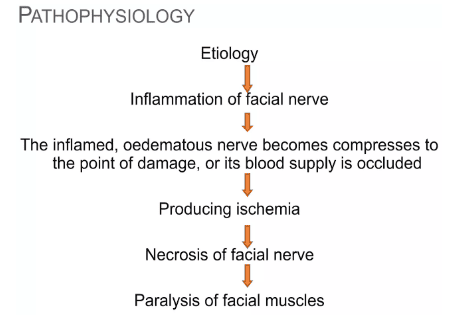
Pathophysiology of Bell’s Palsy

Pathophysiology of Bell’s Palsy

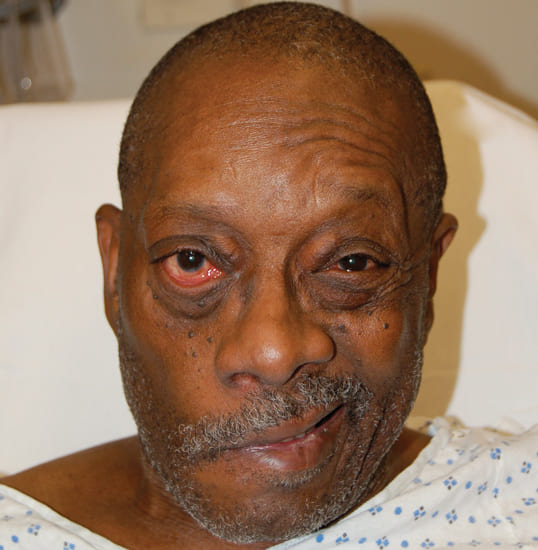
The facial nerve has motor nerves that innervate/supply the muscles of expression on the face and sensory that supplies the tongue. Disruption of the nerve leads to rapid weakening or paralysis of the facial muscles on one side creating a mask-like appearance (angry face). Paralysis develops in 24-36 hours and the eye of the affected side tears constantly.
The condition accompanies an outbreak of herpes vesicles around the ear.

  1. Etiology: The initial cause/factor is an inflammation of the facial nerve.
  2. Compression and Occlusion: The inflamed and swollen nerve gets compressed, potentially leading to damage or blockage of its blood supply.
  3. Ischemia: This compression results in reduced blood flow, causing ischemia (lack of oxygen and nutrients).
  4. Necrosis: The lack of blood supply leads to nerve tissue death (necrosis).
  5. Paralysis: The death of the facial nerve ultimately causes paralysis of the facial muscles.
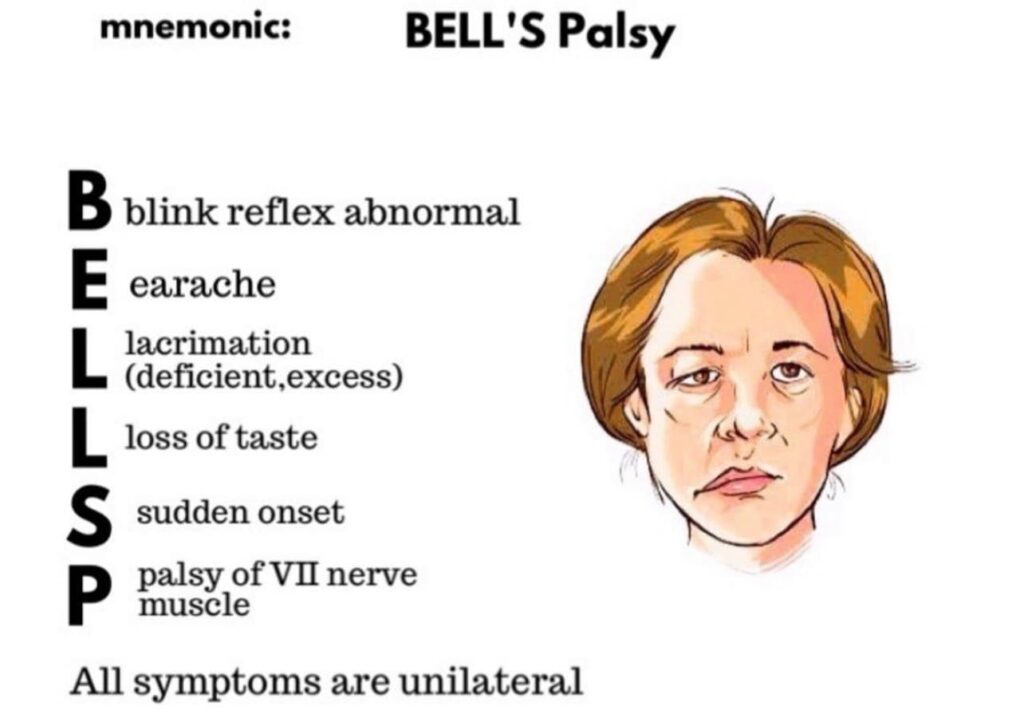
Signs and symptoms of Bells palsy (1)

Signs and symptoms of Bell’s palsy

  1. Facial Weakness: Drooping of the face and difficulty in performing facial expressions like smiling.
  2. Eye-related Issues: Inability to close the affected eye, leading to dry eyes, and the eye may fail to roll upward.
  3. Drooling and Speech Difficulties: Dribbling of saliva from the affected mouth angle, and speech difficulties due to muscle weakness.
  4. Challenges in Eating: Difficulty in closing the affected eye may result in food collecting between teeth and cheeks on the affected side.
  5. Whistling Difficulty: Inability to whistle due to muscle weakness on the affected side.
  6. Bell’s Sign: Failure of the eye to close and roll upward on the affected side.
  7. Mouth Deviation: Deviation of the mouth toward the normal side.
  8. Loss of Taste: Unilateral loss of taste sensation.
  9. Pre-paralysis Symptoms: Pain behind the ear before facial paralysis, accompanied by fever, tinnitus, or hearing difficulty.
  10. Muscle Twitches: Facial muscles may experience involuntary twitches.
  11. Dry Eyes and Mouth: Reduced tear and saliva production leading to dry eyes and mouth.
  12. Headaches: Individuals may experience headaches, possibly related to facial muscle tension.
  13. Sensitivity to Sound: Increased sensitivity to sound may be observed.

Diagnostic Evaluation of Bell’s Palsy

Diagnosis is often based on symptoms, ruling out other causes of paralysis like a stroke.

  1. No Definitive Test: No specific test confirms Bell’s Palsy; diagnosis relies on clinical evaluation.
  2. History of Onset of Symptoms: The patient’s experience, including the timing and progression of symptoms, is a key factor in diagnosing Bell’s palsy.
  3. Observation and Examination: Careful observation of the patient’s facial movements helps confirm the diagnosis. This includes assessing upper and lower facial weakness by observing actions like closing the eyes, lifting eyebrows, smiling, and frowning.
  4. Neurological Examination: A thorough neurological examination is conducted to assess the patient’s facial motor capacity. This involves testing the ability to perform facial movements, such as closing the eyes, lifting the eyebrows, smiling, and frowning.
  5. Blood Tests: Blood tests are needed only to rule out other conditions that might cause similar symptoms. These tests examine for viral infections or other risk factors known to be associated with Bell’s palsy.
  6. Electromyography (EMG): This test measures the electrical activity of the facial muscles when stimulated. EMG helps to confirm the presence and severity of nerve damage. It also aids in differentiating Bell’s palsy from a stroke.
  7. Imaging Studies (CT or MRI): Computed tomography (CT) or magnetic resonance imaging (MRI) are used to visualize the affected area and rule out any abnormalities or causes of pressure on the facial nerve. These studies are particularly helpful in excluding other potential causes, such as a brain tumor or a stroke.

Complications of Bell’s Palsy:

  • Malnutrition: Difficulty in eating and drinking due to facial muscle weakness can lead to malnutrition.
  • Psychological Withdrawal: Changes in facial appearance may cause psychological withdrawal and social challenges.
  • Dehydration: Reduced ability to close the affected eye can lead to excessive tear evaporation, contributing to dehydration.
  • Muscle Stretching and Facial Spasms: Prolonged muscle weakness may result in muscle stretching and facial spasms.
  • Synkinesis: Involuntary contraction of certain muscles while attempting to move others, leading to uncoordinated facial movements.
  • Excessive Dryness in Eyes: Inability to close the eye properly may cause excessive dryness, increasing the risk of eye infections and potential blindness.
  • Mucous Membrane Trauma: Difficulty in maintaining normal oral and nasal moisture can lead to mucous membrane trauma.
  • Corneal Abrasion: Insufficient eye protection may result in corneal abrasion, posing a risk to eye health.
  • Facial Spasms and Contractures: Persistent facial spasms and contractures can impact facial muscle function and appearance.
  • Changes in Appearance: Facial asymmetry and changes in appearance may contribute to psychological distress.
  • Speech Difficulties: Impaired muscle coordination may lead to difficulties in articulation and speech.
  • Chronic Eye Issues: Long-term complications may include chronic eye problems and discomfort.
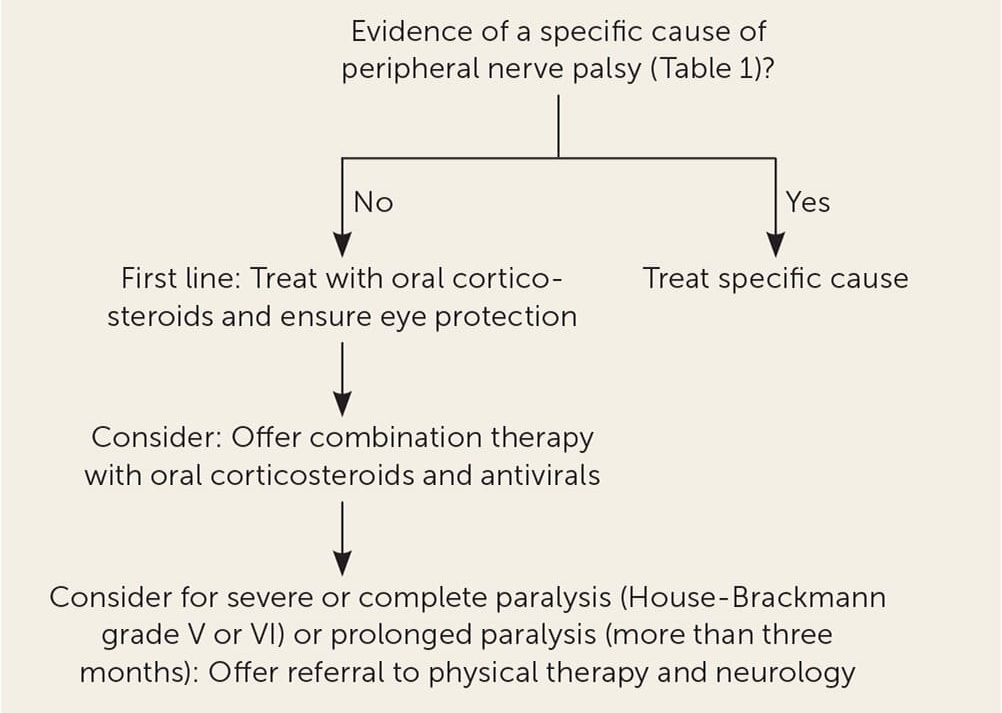
Management of Bell’s Palsy

Management of Bell’s Palsy

There is no specific treatment of the condition and hospitalization is not required;

Aims of management.

  • Reduce Inflammation and Nerve Damage: This involves controlling the inflammation of the facial nerve, preventing further damage, and promoting nerve regeneration.
  • Preserve Facial Function: The goal is to minimize the severity and duration of facial paralysis and to prevent permanent facial muscle weakness.
  • Reduce Pain and Discomfort: Pain, especially in the ear or behind the ear, is common in Bell’s palsy. Pain management is important for the patient’s well-being.

MEDICAL MANAGEMENT

Medications:

1. Corticosteroids: The drugs of choice. Prednisone, a steroid medication, is often prescribed to reduce inflammation and swelling of the facial nerve.

  • Prednisone may be started immediately!
  • Best if initiated before paralysis is complete
  • Taper off over 2 weeks(tapering is the process of stopping all opioids or reducing opioids quickly over a few days or weeks, decreasing the dose by 25% to 50% to 75% to 100%)
  • Analgesics e.g. ibruprofen may be needed for pain

2. Antiviral Medications: Antiviral medications, such as Acyclovir (Zovirax) or famciclovir, because HSV is implicated in 70% of cases. They are sometimes prescribed, particularly if a viral infection is suspected.

3. Analgesics: Over-the-counter or prescription pain medications are used to manage pain and discomfort.

Facial Exercises: Facial exercises are an essential part of Bell’s palsy management, particularly after the initial inflammatory phase. These exercises aim to improve muscle strength and coordination, minimize muscle atrophy, and help regain facial function.

Examples of Conventional Exercises:

  • Eye Exercises: Closing the eye tightly, blinking repeatedly, and gently massaging the eyelids.
  • Brow Exercises: Raising the eyebrows, furrowing the brow, and moving the eyebrows from side to side.
  • Mouth Exercises: Smiling broadly, pursing the lips, puffing out the cheeks, and blowing air out of the mouth.
  • Chin Exercises: Moving the jaw side to side, clenching and unclenching the jaw.
  • Facial Massage: Gently massaging the affected side of the face to improve circulation and muscle tone.

Other Therapies:

  • Physical Therapy: A physical therapist can provide personalized facial exercise programs and teach techniques to improve facial muscle function.
  • Occupational Therapy: Occupational therapists can help with activities of daily living, such as eating, grooming, and communication, and can recommend adaptive strategies for coping with facial weakness.
  • Speech Therapy: Speech therapists can help address speech problems that may arise from facial paralysis, such as slurred speech or difficulty articulating words.

Surgery: Surgical intervention is rarely necessary for Bell’s palsy. In cases of persistent facial paralysis, nerve grafting or muscle transfers might be considered.

Physiotherapy:

  • Facial Massage: Regular facial massage is crucial for maintaining circulation and keeping the skin supple.Massage should be performed in an upward direction, avoiding downward strokes that can stretch the paralyzed muscles and worsen the condition.
  • Taping/Splinting: These methods help to reduce facial asymmetry by supporting the paralyzed side of the face and encouraging muscle balance. They can be customized by a physical therapist or occupational therapist.
  • Muscle Re-education: Faradic Re-education: This technique uses electrical stimulation to re-educate the facial muscles. It is only suitable for patients who can tolerate sensory stimulation.
  • Visual Feedback Exercises: Encouraging patients to perform facial exercises in front of a mirror allows them to observe their progress and improve their technique. This visual feedback can significantly aid in muscle re-education.

Conventional Exercises which include;

  • Elevate eyebrows, after brushing the forehead.
  • Elevate the corner of the lips (like saying “E”), after brushing the affected side of the face.
  • Close eyes slowly and alternately close one eye at a time.
  • Wrinkle and open the wings of the nose.
  • Open the mouth and say “a”, “o”, and alternate between “e”, “a”, “o”.
  • Smile with and without showing teeth.
  • Wind up the cheeks with closed lips.
  • Read and speak aloud.

Eye Care:

  • It is essential to protect the eye on the affected side. The patient should be advised to wash their eyes regularly with saline solution and wear protective goggles or eye patches to prevent dust, debris, or foreign particles from entering the eye.

Alternative Medicine: There is limited scientific evidence to support the effectiveness of alternative medicine for Bell’s palsy, but some individuals may find relief from:

  • Acupuncture: This involves inserting thin needles into specific points on the body, aiming to stimulate nerves and muscles.
SPECIFIC NURSING CARE;
  1. Pain Relief: Apply a warm, moist sponge to alleviate pain.
  2. Eye Care: Pad the dry eye to prevent excessive dryness and potential complications.
  3. Nutrition: Monitor and support the patient’s nutrition, addressing challenges in eating and drinking.
  4. Physiotherapy and Facial Massage: Implement physiotherapy and facial massage to stimulate facial muscles.
  5. Speech Therapy: Provide speech therapy to address potential speech difficulties.
  6. Support Groups: Encourage the patient to join support groups for emotional well-being.
  7. Facial Symmetry: Utilize a face strap to help symmetrize the lips.
  8. Eye Protection: Advise the patient to stay in warm environments, avoid dust and wind, and use eye protection in dangerous exposures.
  9. Swallowing Precautions: Instruct the patient to sit upright while eating, chew on the non-paralyzed side, consume small portions, and maintain a balanced nutrition intake to prevent complications in swallowing.
  10. Privacy during Meals: Respect the patient’s privacy during mealtime to avoid embarrassment.
  11. Mouth Care: Perform careful mouth care, as food may accumulate between the lip and gingiva.
  12. Muscle Tonus Maintenance: Massage the patient’s face with upward strokes for 5-10 minutes to maintain muscle tone, and encourage self-massage.
  13. Active Exercise: If ready, ask the patient to perform active exercises, such as smiling in front of a mirror.
  14. Eye Protection Outside: Suggest using eye protectors, especially when going outdoors. Sterile eyes

NURSING CARE PLAN FOR A PATIENT WITH BELL’S PALSY

Assessment

Nursing Diagnosis

Goals/Expected Outcomes

Interventions

Rationale

Evaluation

Facial asymmetry with drooping on one side, difficulty in closing the eye, and drooling from the mouth.

Post trauma syndrome related to inflammation of the facial nerve as evidenced by inability to close the eye and drooping of the mouth on one side.

Improve facial muscle strength and function, evidenced by the ability to close the eye and reduced drooling within 2 weeks.

– Teach facial exercises to stimulate muscle function.

– Administer prescribed corticosteroids to reduce inflammation and swelling.

– Encourage the use of assistive devices like eye patches to protect the eye.

– Facial exercises can help stimulate the muscles and improve function. 

– Corticosteroids reduce inflammation, which can relieve nerve compression. 

– Eye protection prevents corneal damage due to dryness.

Patient demonstrates improved ability to close the eye and reduced drooping, indicating improved muscle strength and function.

Patient reports difficulty swallowing and frequently chokes on liquids.

Impaired swallowing related to weakness of facial muscles as evidenced by frequent choking and difficulty swallowing.

Prevent aspiration and improve swallowing ability, evidenced by the ability to swallow liquids without choking.

– Instruct the patient on swallowing techniques, such as chin-tuck during swallowing.

– Offer thickened liquids to reduce the risk of aspiration.

– Position the patient upright during meals and for 30 minutes afterward.

Proper swallowing techniques and thickened liquids can reduce the risk of aspiration. 

– Upright positioning helps gravity assist in swallowing and reduces aspiration risk.

Patient swallows liquids without choking, indicating improved swallowing ability.

Patient reports difficulty in articulating words clearly and being understood by others.

Impaired verbal communication related to facial muscle paralysis as evidenced by difficulty articulating words.

Enhance communication ability, evidenced by the patient being understood by others.

– Provide alternative communication methods, such as writing or using communication boards.

– Encourage the patient to speak slowly and clearly.

– Refer to speech therapy if needed.

Alternative communication methods reduce frustration and improve understanding. 

– Speech therapy can help retrain muscles and improve articulation.

Patient is able to communicate effectively using alternative methods or improved speech clarity.

Patient complains of a dry and irritated eye.

Ineffective Dry eye self-management related to incomplete eyelid closure as evidenced by patient complaints of dryness and irritation.

Prevent corneal damage and reduce discomfort, evidenced by the patient reporting no eye irritation and maintaining eye moisture.

– Administer artificial tears or lubricating eye drops as prescribed.

– Apply an eye patch during sleep to protect the eye.

– Teach the patient to manually close the eyelid periodically.

Lubricating eye drops prevent dryness and irritation. An eye patch protects the cornea during sleep, reducing the risk of damage.

Patient reports no eye irritation and maintains eye moisture, indicating effective prevention of corneal damage.

Patient’s affected side of the face is sensitive, and they report discomfort.

Acute pain related to facial nerve inflammation as evidenced by patient complaints of pain on the affected side.

Reduce pain and discomfort, evidenced by the patient reporting a decrease in facial pain.

– Administer prescribed analgesics to manage pain.

– Apply warm compresses to the affected area to alleviate discomfort.

– Educate the patient on gentle facial massage techniques.

Analgesics relieve pain, warm compresses reduce discomfort, and facial massage can help stimulate circulation and reduce pain.

Patient reports reduced pain and discomfort, indicating effective pain management.

Patient expresses anxiety and emotional distress about their appearance and the sudden onset of facial paralysis.

Excessive Anxiety related to the sudden onset of facial paralysis as evidenced by patient verbalizing concerns about appearance, and presenting with emotional distress.

Reduce anxiety and improve emotional well-being, evidenced by the patient reporting reduced distress and improved coping.

– Provide emotional support and reassurance about the potential for recovery.

– Encourage the patient to express feelings and concerns.

– Refer to counseling or support groups if needed.

Emotional support and reassurance can help reduce anxiety. 

– Counseling or support groups provide a space for the patient to process emotions and learn coping strategies.

Patient reports reduced anxiety and improved emotional well-being, indicating effective emotional support.

NANDA 2024-26

Nursing Concerns for Bell’s Palsy

  1. Risk for Aspiration: Facial weakness can affect swallowing, increasing the risk of aspiration.
  2. Risk for Corneal Abrasion: The inability to close the eye completely can lead to corneal dryness and damage.
  3. Impaired Communication: Facial weakness can make it difficult for the patient to speak clearly.
  4. Disrupted Body Image: The facial paralysis can have a significant impact on the patient’s self-esteem.
  5. Risk for Infection: The affected eye is more susceptible to infection due to dryness and decreased blinking.
  6. Risk for Delayed Recovery: The patient may experience anxiety and frustration due to the slow recovery process.
  7. Risk for Social Isolation: The facial paralysis can make the patient feel self-conscious and withdraw from social interactions.

Quick Quiz

Bell\'s Palsy Quiz

Medical Nursing - mobile-friendly and focused practice.

Privacy: Your details are used only for quiz tracking and certificates.

BELL’S PALSY (FACIAL NERVE PALSY) Read More »

Trigeminal Neuralgia

Trigeminal Neuralgia

TRIGEMINAL NEURALGIA

Trigeminal Neuralgia also known as Tic Douloreuv is a disorder that affects the 5th cranial nerve that causes intense periodic pain in one or more trigeminal nerve branches. Normally affects the 2nd and 3rd branches.

Branches of the Trigeminal Nerve

The trigeminal nerve has 3 divisions i.e

  • The ophthalmic division(v1) that supplies the forehead, eyes, nose, meninges, paranasal sinuses and part of the nasal mucosa.
  • The maxillary division(v2) supplies the upper jaw, teeth, lip, cheeks, hard palate, maxillary sinus and part of the nasal mucosa.
  • The mandibular division(v3) supplies the lower jaw, teeth, lip, buccal mucosa, tongue, part of the external ear and the meninges.

Trigeminal neuralgia most commonly affects the second (V2) and third (V3) branches of the trigeminal nerve.

Causes of Trigeminal Neuralgia:

Causes of Trigeminal Neuralgia:

The exact cause of trigeminal neuralgia is not fully understood; however, factors depend on the subtype. The International Classification of Headache Disorders, Third Edition (ICHD-3) categorizes Trigeminal Neuralgia (TN) into three main types:

1. Classic Trigeminal Neuralgia (Classic TN):

  • This is the most common form of TN.
  • It is characterized by intense, sharp, electric-shock-like pain in the face, affecting the second (maxillary) or third (mandibular) branches of the trigeminal nerve.
  • The primary cause is believed to be compression of the trigeminal nerve by a nearby blood vessel, often an artery.

2. Secondary Trigeminal Neuralgia (Secondary TN):

This type of TN arises as a consequence of another underlying condition, such as:

  • Tumors: A tumor located along the trigeminal nerve can compress and irritate it.
  • Multiple Sclerosis (MS): The demyelination process in MS can damage the nerve fibers, leading to pain.
  • Other Neurological Disorders: Conditions like brainstem stroke or brain aneurysm can also contribute to secondary TN.

3. Idiopathic Trigeminal Neuralgia (Idiopathic TN):

  • This category refers to cases of TN where the underlying cause remains unknown.
  • Despite extensive investigations, no identifiable factor like a blood vessel compression or other neurological condition is found to be responsible.
General causative factors include
  1. Nerve Compression:

    • Explanation:: Compression of the trigeminal nerve by nearby structures, often blood vessels, leading to irritation and pain signals.
    • Example: Blood vessels impinging on the trigeminal nerve, causing compression and neuralgia.
  2. Demyelinating Plaques:

    • Explanation: Damage to the myelin sheath surrounding the trigeminal nerve, disrupting normal nerve function.
    • Example: Demyelination seen in conditions like multiple sclerosis.
  3. Herpes Virus Infection:

    • Explanation: Activation or infection of the trigeminal nerve by the herpes virus, contributing to inflammation and pain.
    • Example: Reactivation of the herpes simplex virus affecting the trigeminal nerve.
  4. Infection of the Teeth and Jaw:

    • Explanation: Infections in the teeth or jaw leading to inflammation and irritation of the trigeminal nerve.
    • Example: Dental infections spreading to the trigeminal nerve branches.
  5. Irritation from Flu-Like Illnesses:

    • Explanation: Inflammatory response due to flu-like illnesses affecting the trigeminal nerve.
    • Example: Increased sensitivity and irritation during or after a viral infection.
  6. Trauma of the Teeth or Jaw:

    • Explanation: Physical injury to the teeth or jaw causing irritation of the trigeminal nerve.
    • Example: Dental trauma resulting in nerve irritation and subsequent neuralgia.
  7. Aneurysm Causing Pressure on the Nerve:

    • Explanation: Enlargement of an artery (aneurysm) putting pressure on the trigeminal nerve.
    • Example: Compression of the nerve by an adjacent aneurysm.
  8. Tumor:

    • Explanation: Presence of a tumor near the trigeminal nerve leading to compression and irritation.
    • Example: Tumor growth impacting the trigeminal nerve.
  9. Arteriosclerotic Changes of an Artery Close to the Nerve:

    • Explanation: Changes in artery walls close to the trigeminal nerve, potentially leading to compression.
    • Example: Arteriosclerosis affecting vessels in proximity to the trigeminal nerve.

Precipitating Factors of Pain:

  1. Light Touch:

    • Explanation: Even gentle touch or breeze on the face triggers severe pain due to the hypersensitivity of the trigeminal nerve.
    • Example: Brushing against the face lightly causing intense pain.
  2. Eating:

    • Explanation: Chewing and the mechanical process of eating can trigger neuralgic pain.
    • Example: Pain occurring during or after meals.
  3. Swallowing:

    • Explanation: The act of swallowing, which involves movement and muscle engagement in the face, can trigger pain.
    • Example: Pain associated with swallowing liquids or food.
  4. Talking:

    • Explanation: Articulating words and facial movements during speech may induce pain.
    • Example: Pain occurring while engaging in conversation.
  5. Sneezing:

    • Explanation: The sudden and forceful nature of sneezing can trigger intense facial pain.
    • Example: Pain experienced during or after sneezing.
  6. Shaving:

    • Explanation: The mechanical action of shaving involving contact with the face can lead to pain.
    • Example: Pain triggered by shaving activities.
  7. Chewing Gum:

    • Explanation: Repetitive jaw movements during gum chewing can aggravate trigeminal neuralgia.
    • Example: Pain associated with chewing gum.
  8. Brushing the Teeth or Washing the Face:

    • Explanation: Activities involving contact with the face, such as brushing teeth or washing, may cause pain.
    • Example: Pain occurring during facial hygiene practices.
  9. Exposure to Wind:

    • Explanation: Sensitivity to environmental factors, such as wind, leading to pain.
    •  ExamplePain triggered by exposure to windy conditions.
Clinical Features of Trigeminal Neuralgia

Clinical Features of Trigeminal Neuralgia:

1. Nature of the Condition:

  • Trigeminal neuralgia is a chronic condition affecting the fifth cranial nerve.

2. Characteristics of Pain:

  • Characterized by unilateral paroxysms of shooting and stabbing pain.
  • Pain typically occurs in the area innervated by the trigeminal nerve branches (ophthalmic, maxillary, mandibular).
  • Most commonly affects the second and third branches.

3. Description of Pain:

  • Pain is often described as a burning, knife-like, or lightning-like shock.
  • Occurs in the lips, upper or lower gums, forehead, or side of the nose.


4. Facial Presentation:

  • Presents with severe facial pain.

5. Unilateral Nature:

  • The pain is unilateral, affecting one side of the face.

6. Muscular Involvement:

  • Associated with involuntary contraction of facial muscles.

7. Eye and Mouth Involvement:

  • Can cause sudden closing of the eye or twitching of the mouth.
  • Historically known as tic douloureux, referring to painful facial twitches.

8. Triggers for Pain Episodes:

  • Pain can be spontaneous or initiated by activities such as chewing, talking, or touching the affected side of the face.

9. Impact on Daily Activities:

  • Patients may alter behaviors, such as improper eating, neglect of hygiene, or wearing a cloth over the face.
  • Social withdrawal due to pain-related discomfort.

10 Coping Mechanisms:

  • Excessive sleeping may be adopted as a coping mechanism to deal with pain.

10. Risk of Suicide:

  • There is a risk of suicide due to the disruption of the patient’s lifestyle caused by the intensity of pain.

11. Unpredictable Recurrence:

  • Recurrences are unpredictable, varying in frequency and duration.
  • Episodes can recur for several days, weeks, or months apart.
Pathophysiology of Trigeminal Neuralgia 

Pathophysiology of Trigeminal Neuralgia

Trigeminal neuralgia (TN) is characterized by intense, stabbing, electric shock-like pain in the distribution of one or more branches of the trigeminal nerve (CN V). It is broadly classified into two main forms: classical (idiopathic) and symptomatic (secondary).

Classical (Idiopathic) Trigeminal Neuralgia: In the classical form, a definitive underlying cause is often not identified. However, microvascular compression of the trigeminal nerve near its exit from the brainstem is the most widely accepted etiological factor.

  • Vascular Compression: Aberrant arteries or veins (e.g., superior cerebellar artery) can compress the trigeminal nerve root, leading to demyelination of the nerve fibers. This demyelination disrupts normal nerve function and can cause ectopic impulse generation and aberrant cross-talk between different types of nerve fibers (Aβ, Aδ, and C fibers). The result is the paroxysmal pain characteristic of TN.
  • Gasserian Ganglion Irritation: Some studies suggest that irritation or compression of the Gasserian ganglion, where the three branches of the trigeminal nerve converge, can also contribute to classical TN.
  • Risk Factors: Classical TN is more prevalent in women and individuals over 50 years old.

Symptomatic (Secondary) Trigeminal Neuralgia: This form arises from an identifiable underlying condition that damages or compresses the trigeminal nerve.

  • Space-occupying lesions: Tumors in the cerebellopontine angle (CPA) such as acoustic neuromas, meningiomas, or epidermoid cysts can compress the trigeminal nerve.
  • Demyelination (Multiple Sclerosis): MS plaques in the brainstem can damage the trigeminal nerve, leading to TN. TN is more common in people with MS, and it often presents bilaterally in these individuals.
  • Other Structural Lesions: Aneurysms, arteriovenous malformations, or other vascular abnormalities can compress the nerve.

Differential Diagnosis

When evaluating a patient with suspected trigeminal neuralgia, it’s important to consider other conditions that can cause facial pain. The differential diagnosis includes:

  • Dental Pathology: Toothaches, abscesses, or temporomandibular joint (TMJ) disorders can mimic TN pain.
  • Herpes Zoster: Postherpetic neuralgia following a shingles outbreak can cause persistent facial pain.
  • Nasopharyngeal and Paranasal Pathology: Sinus infections or tumors in the nasal cavity or sinuses can cause facial pain.
  • Cervical Artery Dissection: Although rare, dissection of the internal carotid or vertebral artery can cause facial pain.
  • Giant Cell Arteritis: This inflammatory condition can cause facial pain, particularly in older adults.
  • Cluster Headaches and Migraines: These primary headache disorders can sometimes present with facial pain.
  • Unstable Angina: In rare cases, pain from unstable angina can radiate to the jaw and face, mimicking TN.
  • Trigeminal Neuropathy: Sensory loss or other neurological deficits may indicate a different underlying condition than TN

Investigations and Diagnosis of Trigeminal Neuralgia (TN)

Diagnosing TN primarily relies on a thorough medical history and physical examination, as there is no single definitive test.

1. Detailed Medical History:

  • Pain Description: Ask about the character, intensity, duration, frequency, and triggers of the pain.
  • Onset and Progression: Inquire about when the pain started, how it has changed over time, and whether it’s been getting worse.
  • Previous Medical History: Information on previous illnesses, neurological conditions, or surgeries is relevant. Ask about current medications and supplements.

2. Physical Examination:

  • Neurological Examination: Assess the patient’s reflexes, sensation, and motor function, particularly in the face and trigeminal nerve distribution.
  • Palpation: The doctor may palpate the jaw and face to identify any areas of tenderness or trigger points.

3. Imaging Studies:

  • Magnetic Resonance Imaging (MRI): An MRI scan can help rule out other neurological conditions that can cause facial pain, such as tumors, MS, or vascular malformations.
  • Computed Tomography (CT) Scan: A CT scan can also help visualize the anatomy of the trigeminal nerve and surrounding structures.

Medical Management of Trigeminal Neuralgia:

Aims of Management

  • Control Pain: Reduce the frequency and severity of pain attacks.
  • Improve Quality of Life: Enable individuals to engage in daily activities without significant pain interference.
  • Prevent Complications: Minimize the risk of potential complications such as depression, anxiety, and social isolation.

Pharmacologic Therapy:

1. Anticonvulsants: Carbamazepine (Tegretol) and oxcarbazepine (Trileptal) are the first-line medications for TN.

  • Carbamazepine (Tegretol): Reduces transmission of impulses at nerve terminals, relieving pain. Adult dose at 100mg. Given with meals to minimize side effects.
  • Monitoring and Side Effects: Patients are observed for side effects, including nausea, dizziness, drowsiness, and potential aplastic anemia. Long-term therapy requires monitoring for bone marrow depression.

2. Antidepressants: Tricyclic antidepressants like amitriptyline (Elavil) can also be effective in pain management.

3. Pain Relievers: Over-the-counter pain relievers like acetaminophen (Tylenol) or ibuprofen (Advil) may provide temporary relief.

4. Alternative Medications: Gabapentin and baclofen are utilized for pain management. If pain control remains inadequate, phenytoin (Dilantin) may be added as adjunctive therapy. Baclofen: This muscle relaxant may help reduce muscle spasms and pain.

Surgical Management:

5. Microvascular Decompression: This surgical procedure involves moving the blood vessel that is compressing the trigeminal nerve away from the nerve.

6. Percutaneous Radiofrequency: This procedure uses heat to destroy the trigeminal nerve fibers responsible for pain.

7. Gamma Knife Radiosurgery: Utilizes stereotactic magnetic resonance imaging (MRI) to identify the trigeminal nerve. Followed by gamma knife radiosurgery for precise intervention.

8. Glycerol Injection: A glycerol solution is injected into the trigeminal nerve, interrupting pain signals.

Nursing Management:

9. Identification of Triggers: Assist patients in recognizing triggers for facial pain (e.g., hot or cold stimuli, jarring motions). Teach strategies like using cotton pads and room temperature water for facial care.

10.Oral Hygiene: Instruct patients to rinse their mouths after eating when tooth brushing causes pain. Perform personal hygiene during pain-free intervals.

11. Dietary Guidance: Advise patients to consume food and fluids at room temperature. Suggest chewing on the unaffected side and opting for soft foods.

12. Emotional Well-being: Recognize and address anxiety, depression, and insomnia common in chronic pain conditions. Implement appropriate interventions and referrals.

13. Postoperative Care: Perform neurologic checks to assess facial motor and sensory deficits postoperatively.

14. Eye Care: Instruct patients not to rub the eye if sensory deficits occur post-surgery. Assess for eye irritation or redness and administer artificial tears if prescribed.

15. Physical Therapy: Specific exercises and techniques can help reduce muscle tension and improve facial movement.

16. Eating and Swallowing: Observe patients for any difficulty in eating and swallowing foods of different consistencies.

17. Lifestyle Modifications: Avoiding triggers, maintaining a regular sleep schedule, and reducing stress can help manage TN.

18. Cognitive-Behavioral Therapy (CBT): CBT can teach coping skills for managing pain and stress.

19. Support Groups: Encourage patients to join support groups for emotional and informational support.

Nursing Interventions

Pain Management:

  • Assess the intensity, duration, and triggers of trigeminal neuralgia pain.
  • Administer prescribed medications and monitor their effectiveness.
  • Implement non-pharmacological pain relief strategies, such as cold packs or distraction techniques.
  • Monitor for side effects of pain medications.

Nutritional Support:

  • Assess the patient’s ability to chew and swallow comfortably.
  • Collaborate with a dietitian to develop a nutrition plan that accommodates the patient’s pain and dietary restrictions.
  • Monitor weight changes and signs of malnutrition.

Facial Mobility and Self-Care:

  • Evaluate the impact of pain on facial mobility and self-care activities.
  • Collaborate with occupational therapy to develop strategies for maintaining facial hygiene.
  • Provide assistance as needed for activities affected by pain.

Communication Challenges:

  • Assess the patient’s ability to articulate words during and after painful episodes.
  • Implement communication aids or alternative methods as necessary.
  • Provide emotional support to address potential frustrations related to communication difficulties.

Psychosocial Support:

  • Evaluate the patient’s emotional well-being and coping mechanisms.
  • Offer counseling or refer to support groups to address the psychological impact of chronic pain.
  • Encourage open communication about fears and concerns related to trigeminal neuralgia.

Patient Education:

  • Educate the patient about trigeminal neuralgia, including potential triggers and lifestyle modifications.
  • Provide information on prescribed medications, their purpose, and potential side effects.
  • Discuss strategies for managing pain at home and when to seek medical attention.

Social Interaction:

  • Assess the patient’s social activities and potential limitations due to pain.
  • Encourage social engagement while considering the patient’s comfort level.
  • Provide guidance on how to communicate the condition to friends and family.

Monitoring for Complications:

  • Monitor for signs of complications such as malnutrition, aspiration, or skin breakdown.
  • Collaborate with the healthcare team to address and prevent potential complications.
  • They include Depression, Anxiety, Weight Loss, Social isolation, Sleep disturbances, Decreased facial sensation.

Medication Adherence:

  • Assess the patient’s adherence to prescribed medications.
  • Identify and address any barriers to medication compliance.
  • Educate the patient on the importance of following the prescribed medication regimen.

Regular Follow-up:

  • Schedule regular follow-up appointments to assess the patient’s overall condition and adjust the care plan as needed.
  • Ensure continuity of care and collaboration among healthcare providers.

Nursing care plan for Trigeminal Neuralgia

Assessment

Nursing Diagnosis

Goals/Expected Outcomes

Intervention

Rationale

Evaluation

Patient reports difficulty chewing and swallowing; weight loss of 3 kg in the last month

Risk for imbalanced nutrition: less than body requirements related to difficulty chewing and swallowing

– Maintain adequate nutritional intake within 1 week.

– Patient reports improved ability to eat without pain.

– Assess a patient’s nutritional status (weight, dietary intake).

– Provide soft or pureed foods that are easier to chew and swallow.

– Consult with a dietitian to ensure nutritional needs are met.

– Painful episodes may lead to avoidance of certain foods, potentially resulting in inadequate nutrition.

– Soft foods reduce discomfort during eating.

– A dietitian can help design a nutritionally balanced meal plan.

Patient maintained adequate nutritional intake within 1 week.

Patient reported improved ability to eat without pain.

Difficulty swallowing, reports of choking during meals

Risk for Aspiration related to difficulty in swallowing.

– Prevent aspiration during meals within 24 hours.

– Patient swallows without difficulty or choking.

– Assess swallowing ability before each meal.

– Position the patient upright during meals and 30 minutes after.

– Provide thickened liquids to reduce the risk of aspiration.

– Facial pain may compromise the patient’s ability to swallow effectively, increasing the risk of aspiration.

– Upright positioning reduces the risk of aspiration.

– Thickened liquids are easier to control during swallowing.

Prevent aspiration during meals within 24 hours

Patient swallows without difficulty or choking

Patient remains alone and avoids social interactions

Social Isolation related to fear of pain during social interactions as evidenced by patients remaining alone and indoors.

– Reduce social isolation within 2 weeks.

– Patient participates in at least one social activity.

– Encourage the patient to express feelings about pain and social isolation.

– Refer the patient to a support group for individuals with chronic pain.

– Plan gradual exposure to social situations, starting with a trusted friend or family member.

– Anticipation of painful episodes may lead to withdrawal from social activities, increasing the risk of social isolation.

– Expressing feelings can help reduce the emotional burden of isolation.

– Support groups provide emotional support and understanding.

– Patient reports feeling less isolated.

– Participates in social activities without significant fear of pain.

Patient stutters and struggles to articulate words during conversation

Impaired Communication related to difficulty articulating words as evidenced by patient stuttering while talking.

– Improve communication within 1 week.

– Patient articulates words more clearly.

– Assess the extent of communication difficulties.

– Provide alternative communication methods (e.g., writing, gestures).

– Encourage the patient to speak slowly and take breaks when needed.

– Painful episodes may affect the patient’s ability to articulate words clearly, impacting communication.

– Alternative methods ensure communication needs are met.

– Speaking slowly and taking breaks can reduce frustration and pain.

– Patient articulates words more clearly.

– Uses alternative communication methods effectively.

Patient reports difficulty sleeping, frequent awakenings due to pain

Altered Sleep Pattern related to trigeminal neuralgia pain disrupting normal sleep cycles as evidenced by patient verbalizing difficulty getting sleep.

– Improve sleep quality within 1 week.

– Patient reports sleeping for at least 6 hours uninterrupted.

– Assess the impact of pain on sleep patterns.

– Encourage a bedtime routine with relaxation techniques (e.g., warm bath, deep breathing).

– Administer prescribed pain medication 30 minutes before bedtime.

– Chronic pain may interfere with the patient’s ability to achieve restful sleep, potentially leading to altered sleep patterns.

– Relaxation techniques can promote sleep.

– Pain medication can reduce pain levels and improve sleep quality.

– Patient reports improved sleep quality.

– Sleeps for at least 6 hours without interruption.

Patient appears self-conscious, wears concealing clothes

Disturbed Body Image related to altered facial expressions and communication difficulties as evidenced by patient putting on concealing clothes.

– Improve body image within 2 weeks.

– Patient expresses acceptance of appearance and interacts more confidently.

– Encourage the patient to express feelings about body image.

– Provide positive reinforcement and support during social interactions.

– Refer to a counselor if needed to address self-esteem issues.

– Changes in facial appearance and communication challenges may contribute to feelings of decreased self-esteem.

– Expressing feelings can help process negative emotions.

– Counseling can provide strategies to improve self-esteem.

– Patient expresses acceptance of appearance.

– Interacts more confidently in social settings.

Quick Quiz

Trigeminal Neuralgia Quiz

Medical Nursing - mobile-friendly and focused practice.

Privacy: Your details are used only for quiz tracking and certificates.

Trigeminal Neuralgia Read More »

Applied anatomy and Physiology of the nervous system

Applied anatomy and Physiology of the nervous system

REVIEW OF THE ANATOMY AND PHYSIOLOGY OF NERVOUS SYSTEM

Anatomy of the Nervous System

The nervous system can be separated into parts based on structure and on function:

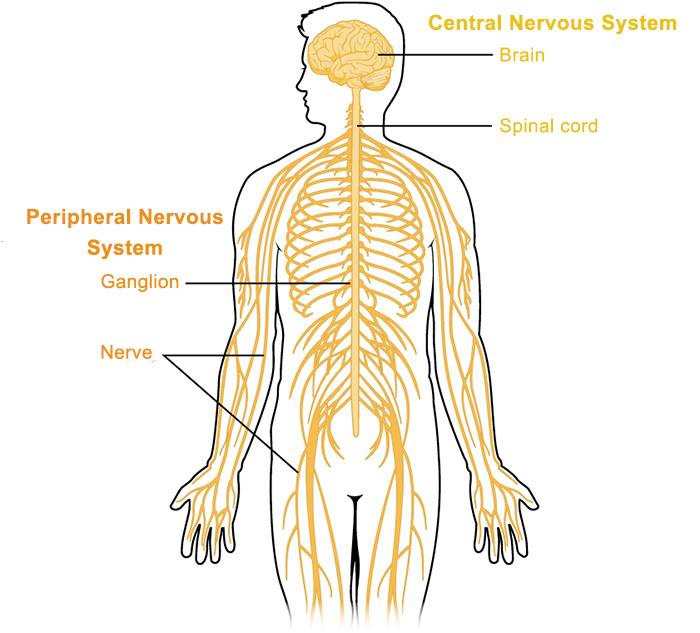
Structurally, it’s organized into the central nervous system (CNS) and the peripheral nervous system (PNS)

The CNS consists of the brain and spinal cord, both of which originate in the embryo. The PNS comprises all neural structures outside the CNS, connecting it to the rest of the body. These structures develop from neural crest cells and as extensions of the CNS itself. The PNS includes spinal and cranial nerves, visceral nerves and plexuses, and the enteric nervous system.

Functionally, the nervous system is divided into somatic and visceral components. The somatic nervous system (from the Greek ‘soma,’ meaning body) innervates structures derived from somites, such as skin and most skeletal muscle. 

It’s primarily responsible for receiving and responding to external environmental information. The visceral nervous system (from the Greek ‘viscera,’ meaning guts) innervates organ systems and other visceral elements like smooth muscle and glands throughout the body. It mainly detects and responds to information about the body’s internal environment. The neuron, with its cell body, axon, and synapse, is the functional unit of the entire nervous system.

Structural Division:
  • Central Nervous System (CNS): Composing the brain and spinal cord.
  • Peripheral Nervous System (PNS): Includes structures outside the CNS connecting it to the body.
Functional Division:
  • Somatic Part: Innervates structures from somites (skin, skeletal muscles). Responds to external environmental stimuli.
  • Visceral Part: Innervates organ systems, smooth muscles, and glands. Detects and responds to internal environmental stimuli.
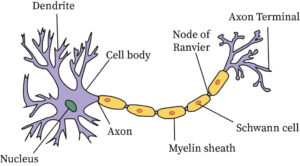
Structure of a neuron

applied neuron structure

FUNCTIONS OF NEURON STRUCTURES
  • Nucleus controls the entire neuron.
  • Dendrite – receives stimulus and carries its impulses toward the cell body.
  • Cell Body (soma) – has a nucleus & cytoplasm. It acts as a factory of the neuron. It produces all protein for the dendrites and neurotransmitters.
  • Axon – fiber which carries impulses away from the cell body i.e it forms a conduction region for the neuron.
  • Schwann Cells/ neurolemmocytecells which produce myelin or fat layer in the Peripheral Nervous System (axon maintenance and regeneration) It’s a glial cell that wraps the nerve fibre in PNS.
  • Myelin sheath – dense lipid layer which insulates the axon ( makes the axon look gray) It speeds-up nerve transmission.
  • Node of Ranvier – gaps or nodes in the myelin sheath. They speed up nerve transmission.
  • Axon terminalsform junctions with other cells.
There are three types of Neurons
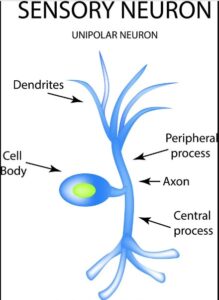
  • Sensory neurons – bring messages to CNS.
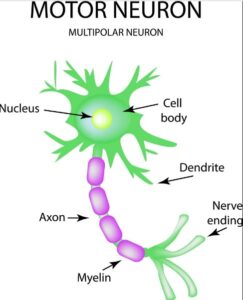
  • Motor neurons – carry messages from CNS.
  • Interneurons – between sensory & motor neurons in the CNS.
applied sensory neuron
applied motor neuron

Neuron – Functional Unit:

  • Composed of nucleus, dendrites, cell body (soma), axon, Schwann cells, myelin sheath, Node of Ranvier, and axon terminals.
  • Three types: sensory neurons (to CNS), motor neurons (from CNS), and interneurons (between sensory and motor neurons in CNS).

Other Nervous System Cells:

  • Satellite Cells: Surround neuron cell bodies in ganglia. Maintain a micro-environment and provide insulation.
  • Ependymal Cells: Line CNS cavities, secrete cerebrospinal fluid, and form choroid plexuses.
  • Oligodendrocytes: Wrap around CNS neurons to produce myelin sheath.
  • Astrocytes: Glial cells in the CNS. Anchor neurons to blood vessels and form the blood-brain barrier.
  • Microglia: Monocytes in the nervous system. Move to damaged tissue for phagocytosis.

CENTRAL NERVOUS SYSTEM

Brain Anatomy & Physiology.

applied anatomy of the brain
Cerebrum:
  • Largest brain structure with frontal, temporal, parietal, and occipital lobes.
  • Divided into hemispheres by the longitudinal cerebral fissure.
  • Cerebral cortex (gray matter) and subcortical white matter.
  • Responsible for memory, sensory perception (pain, temperature, touch, sight, hearing, taste, smell), and control of skeletal muscle contractions.
Cerebellum:
  • Located behind the pons, below the occipital lobe.
  • Oval-shaped with hemispheres separated by vermis.
  • Contains gray and white matter.
  • Coordinates voluntary muscle movement, maintains posture and balance, and contributes to learning and language processing.
Brain Stem (Midbrain and Hindbrain – Pons & Medulla Oblongata):
  • Midbrain surrounds the cerebral aqueduct, connecting cerebrum and pons.
  • Pons, in front of the cerebellum, have nuclei and nerve fibers.
  • Medulla oblongata extends from the pons, continuous with the spinal cord, containing gray and white matter.
  • Midbrain acts as a relay station for ascending and descending nerve fibers, connecting cerebrum with lower brain fibers and spinal cord.
  • Pons collaborates with the medulla to control respiration.
  • Medulla oblongata controls respiration, cardiovascular function, and reflexes (vomiting, coughing, sneezing, swallowing). 
Diencephalon (Thalamus, Hypothalamus):
  • Connects cerebrum and midbrain.
  • Houses thalamus (gray and white matter masses) and hypothalamus (below thalamus, connected to pituitary gland).

Thalamus

  • Relays and distributes impulses from various brain parts to the cerebral cortex.
  • Plays a role in memory processing.

Hypothalamus

  • Controls the autonomic nervous system.
  • Regulates appetite, thirst, body temperature, water balance, emotional reactions, and sexual behavior.
  • Influences sleeping and waking cycles through melatonin from the pineal gland.
  • Secretes ADH (antidiuretic hormone) and oxytocin.

I. Introduction to Cerebrospinal Fluid (CSF)

The Cerebrospinal Fluid (CSF) is a clear, colorless, ultrafiltrate of blood plasma that fills the ventricles of the brain, the central canal of the spinal cord, and the subarachnoid space surrounding the entire Central Nervous System (CNS). It serves as the vital “lifeblood” and shock absorber for the brain and spinal cord.

Volume and Production Rate:

  • Total Volume: The average adult CNS contains about 130 to 150 mL of CSF at any given time.
  • Rate of Production: It is produced at a rate of roughly 20 mL per hour (or about 500 mL per day).
  • Physiological Implication: Because 500 mL is produced daily but the system only holds 150 mL, the entire volume of CSF is completely flushed and turned over 3 to 4 times a day! If absorption is blocked, this rapid production quickly leads to hydrocephalus.

Formation of CSF:

  • The Choroid Plexus: Approximately 70-80% of CSF is actively secreted by the choroid plexuses (networks of blood capillaries lined by highly specialized ependymal cells) located in the roofs of the lateral, third, and fourth ventricles.
  • Blood-CSF Barrier: Unlike normal leaky capillaries, the ependymal cells of the choroid plexus are joined by tight junctions. This forms the Blood-CSF barrier, strictly controlling what substances from the blood are allowed to be actively transported into the CSF.
  • The remaining 20-30% of CSF is produced by the ependymal lining of the ventricles and cerebral capillaries.

II. Functions of the CSF

The CSF is not just “water in the brain.” It has four highly specific, life-sustaining functions:

Mechanical Protection (Buoyancy):

  • The brain is essentially “floating” in a bath of CSF. According to Archimedes’ principle, this buoyancy reduces the effective weight of the human brain from ~1,400 grams to a mere 50 grams.
  • Without CSF, the heavy brain would sink and crush the vital centers in the lower brainstem against the base of the skull, cutting off its own blood supply.

Shock Absorption:

  • It acts as a liquid hydraulic cushion. When the head takes a blow, the CSF dissipates the physical force, preventing the delicate brain tissue from violently smashing against the hard inner skull.

Chemical Protection & Homeostasis:

  • Optimal neuronal signaling (action potentials) requires a highly stable ionic environment. The CSF provides a strictly regulated, optimized chemical bath for the neurons, free from the wild hormonal and chemical fluctuations of normal blood plasma.

Circulation & Waste Removal (The “Glymphatic” System):

  • Because the brain lacks a traditional lymphatic system, the CSF acts as the brain’s waste clearance pathway. It washes away toxic metabolic byproducts (like amyloid-beta plaques) that accumulate during the day. (Interestingly, this flushing mechanism is highly active while we sleep!)

III. The Circulation Pathway of CSF

CSF flows in a strict, one-way path driven by its own continuous production, the pulsating of nearby blood vessels, and the beating of cilia on ependymal cells.

🧠 Mnemonic: The CSF Flow Pathway

“Love In The Air, For Lovers & Maidens, So Sweet”

  • Lateral ventricles
  • Interventricular foramina (of Monro)
  • Third ventricle
  • Aqueduct (Cerebral Aqueduct of Sylvius)
  • Fourth ventricle
  • Luschka (Lateral foramina) & Magendie (Median foramen)
  • Subarachnoid space
  • Superior sagittal sinus (Absorption)

Absorption of CSF:

  • After circulating through the subarachnoid space, the CSF must be returned to the venous blood to prevent pressure buildup.
  • This occurs at the Arachnoid Villi (which clump together to form Arachnoid Granulations).
  • These granulations protrude into the dural venous sinuses (primarily the Superior Sagittal Sinus). They act as one-way pressure valves: when CSF pressure is higher than venous pressure, CSF empties into the blood. If venous pressure rises, the valves snap shut to prevent blood from flowing backward into the brain.

IV. Composition of CSF vs. Blood Plasma

A crucial topic for board exams and clinical practice. Normal CSF is crystal clear and looks like water. Because of the Blood-CSF barrier, its composition is very different from blood plasma.

Component

Normal CSF Values

Comparison to Blood Plasma

Appearance

Clear and Colorless

Plasma is yellowish. (Cloudy CSF indicates infection; Red/Pink indicates bleeding).

White Blood Cells (WBCs)

0 – 5 cells/mm³ (Lymphocytes only)

Drastically lower. (Normal blood has 4,000-11,000 WBCs).

Red Blood Cells (RBCs)

ZERO (0)

There should NEVER be RBCs in normal CSF.

Protein

15 – 45 mg/dL

Massively Lower. Plasma has vast amounts of protein (~7,000 mg/dL). High CSF protein indicates barrier breakdown.

Glucose

50 – 80 mg/dL

About 60-70% (two-thirds) of the patient’s blood glucose.

Chlorides (Cl-) & Magnesium (Mg2+)

Higher than plasma

Actively transported into CSF to maintain electrical neutrality.

Potassium (K+) & Calcium (Ca2+)

Lower than plasma

Kept strictly low to prevent neurons from becoming hyper-excitable.

💡 Points for Attention: Lumbar Puncture (Spinal Tap)

To analyze the composition of CSF, doctors perform a Lumbar Puncture. Because the solid spinal cord ends at the L1/L2 vertebral level in adults, the needle is safely inserted between L3 and L4 (or L4 and L5) into the subarachnoid space (the lumbar cistern). This area contains floating nerve roots (cauda equina) that easily move out of the needle’s way, making it the safest place to draw CSF.

❓ Applied Clinical Question: Meningitis

Case: A 19-year-old student presents with a stiff neck, severe headache, high fever, and photophobia (light sensitivity). A lumbar puncture is performed. The CSF drawn is cloudy and turbid. Laboratory analysis reveals a heavily elevated WBC count (mostly neutrophils), massively elevated protein (250 mg/dL), and drastically reduced glucose (15 mg/dL). What is the diagnosis?


Answer: Acute Bacterial Meningitis.
Why? The bacteria are literally “eating” the glucose for energy (causing low CSF glucose). The immune system sends neutrophils to fight the infection (high WBCs), and the inflammation destroys the Blood-Brain Barrier, allowing large blood proteins to leak into the CSF (high protein), turning the fluid cloudy.

Anatomy of the Spinal Cord

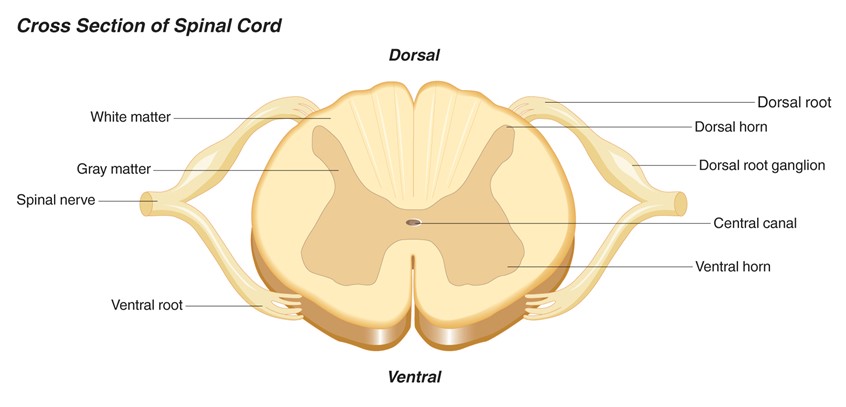
  • Cylindrical shape with circular to oval cross-section and a central canal.
  • Comprises 31 pairs of spinal nerves, each with sensory (dorsal root) and motor (ventral root) fibers.

Physiology of the Spinal Cord:

Spinal cord provides communication between brain and the peripheral nerves. Tracts of white matter of the spinal cord carry sensory impulses to the brain and motor impulses from the brain to the skeletal muscles.

The grey matter of the spinal cord is a site of integration of reflexes which is rapid involuntary action in relation to a particular stimulus.

  • Facilitates communication between the brain and peripheral nerves.
  • White matter tracts carry sensory impulses to the brain and motor impulses from the brain to skeletal muscles.
  • Grey matter serves as the site for reflex integration, rapid involuntary actions in response to stimuli.
cross section of the spinal cord
spinal cord

Meninges:

Three connective tissue coverings surrounding and protecting the brain and spinal cord.

  • Dura Mater: Thickest and outermost layer, continuous with cranial dura mater. The spinal dura mater is continuous with the cranial dura mater at the foramen magnum of the skull and is the outermost meningeal membrane. In the cranial cavity, one layer of the dura mater is fused to the bone and represents the periosteum, but the spinal dura mater is separated from the bones of the vertebral canal by an extradural space. Inferiorly, the Dural sac dramatically narrows at the level of the lower border of vertebra SII and forms an investing sheath for the pial part of the filum terminale of the spinal cord. The dural part of the filum terminale attaches to the posterior surface of the vertebral bodies of the coccyx.
  • Arachnoid Mater: Thin, delicate membrane against the internal surface of the dura mater. This is a thin delicate membrane against, but not adherent to, the deep surface of the dura mater. It is separated from the pia mater by the subarachnoid space. The arachnoid mater ends at the level of vertebra SII. The sub-arachnoid space contain CSF.
  • Pia Mater: Adherent to the brain and spinal cord, extends into the anterior median fissure, and forms the denticulate ligament. It extends into the anterior median fissure and reflects as sleeve-like coating onto posterior and anterior rootlets and roots as they cross the subarachnoid space. As the roots exit the space, the sleeve-like coatings reflect onto the arachnoid mater. On each side of the spinal cord, a longitudinally oriented sheet of pia mater (the denticulate ligament) extends laterally from the cord toward the arachnoid and dura mater. Because the subarachnoid space can be accessed in the lower lumbar region without endangering the spinal cord, it is important to be able to identify the position of the lumbar vertebral spinous processes. The LIV vertebral spinous process is level with a horizontal line between the highest points on the iliac crests. In the lumbar region, the palpable ends of the vertebral spinous processes lie opposite their corresponding vertebral bodies. The subarachnoid space can be accessed between vertebral levels LIII and LIV and between LIV and LV without endangering the spinal cord.
cranial nerves

PERIPHERAL NERVOUS SYSTEM

CRANIAL NERVES and ASSESSMENT

In a clinical practice, it’s very important for the nurse to know the basic cranial nerves, there location and function. Below are the major cranial nerves in the body.

Olfactory Nerve (I):

  • Function: Smell.
  • Assessment: Identify different smells with eyes closed.

Optic Nerve (II):

  • Function: Vision.
  • Assessment: Visual test and examination with a special light.

Oculomotor Nerve (III):

  • Function: Pupil size and certain eye movements.
  • Assessment: Pupil examination with light, eye movement in various directions.

Trochlear Nerve (IV):

  • Function: Eye movement.
  • Assessment: Eye movement evaluation.

Trigeminal Nerve (V):

  • Function: Face sensation, inside mouth sensation, and chewing.
  • Assessment: Touch face, observe biting down.

Abducens Nerve (VI):

  • Function: Eye movement.
  • Assessment: Follow light or finger for eye movement.

Facial Nerve (VII):

  • Function: Face muscle movement and taste.
  • Assessment: Identify tastes, smile, move cheeks, show teeth.

Acoustic Nerve (VIII):

  • Function: Hearing.
  • Assessment: Hearing test.

Glossopharyngeal Nerve (IX):

  • Function: Taste and swallowing.
  • Assessment: Identify tastes on the back of the tongue, test gag reflex.

Vagus Nerve (X):

  • Function: Swallowing, gag reflex, taste, and part of speech.
  • Assessment: Swallowing, elicit gag response with a tongue blade.

Accessory Nerve (XI):

  • Function: Shoulder and neck movement.
  • Assessment: Turn head side to side against resistance, shrug shoulders.

Hypoglossal Nerve (XII):

  • Function: Tongue movement.
  • Assessment: Stick out tongue, speak.

 FIND THE REST OF THE ASSESSMENT BY CLICKING HERE

Spinal Nerves

Spinal nerves, like most nerves, contain both sensory and motor fibers. They are named and numbered according to the region of the vertebral column from which they originate: 

  • 8 cervical nerves (C1-C8), 12 thoracic nerves (T1-T12), 
  • 5 lumbar nerves (L1-L5), 
  • 5 sacral nerves (S1-S5), and 
  • 1 coccygeal nerve. 

Nerve C1 emerges between the cranium and the atlas (first cervical vertebra). All other spinal nerves emerge below the vertebra (or former vertebra, in the case of the sacrum) corresponding to their number.

A plexus is a network of interconnected nerve fibers that recombine to form new, named peripheral nerves.

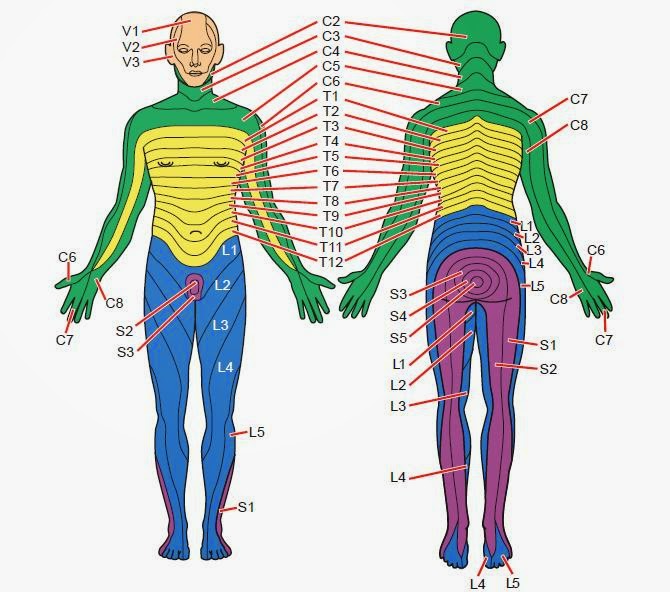
Dermatomes are areas of skin and muscle innervated by specific spinal nerves. A dermatome map (as shown in the figure) is a valuable diagnostic tool. It helps determine the origin of somatic pain, numbness, or tingling, especially when these symptoms result from pressure or inflammation of the spinal cord or nerve roots.

  • Dermatomes are somatic or musculocutaneous areas served by fibers from specific spinal nerves.
  • Dermatome map aids in diagnosing somatic pain, numbness, tingling caused by spinal cord or nerve root pressure or inflammation.

Myotome:

  • Region of skeletal muscle innervated by a single nerve or spinal cord level.
  • Most muscles receive input from multiple spinal cord levels.
Autonomic Nervous System (ANS)

The Autonomic Nervous System (ANS) is the portion of the peripheral nervous system that operates independently of conscious control (involuntarily). It is responsible for regulating visceral functions to maintain homeostasis, such as heart rate, digestion, respiratory rate, pupillary response, urination, and sexual arousal.

I. Divisions of the Autonomic Nervous System

The ANS is classically divided into two primary, often antagonistic, branches. A third branch, the enteric nervous system, governs the gastrointestinal tract.

1. The Sympathetic Nervous System (SNS)
  • Role: Responsible for the "Fight or Flight" response. It mobilizes body resources in response to stress, danger, or physical exertion.
  • Primary Actions: Increases heart rate, dilates bronchioles, shunts blood away from the digestive tract and towards skeletal muscles, mobilizes energy reserves (glycogenolysis), and dilates pupils.
2. The Parasympathetic Nervous System (PNS)
  • Role: Responsible for the "Rest and Digest" or "Feed and Breed" response. It conserves energy and promotes housekeeping functions during rest.
  • Primary Actions: Decreases heart rate, constricts bronchioles, increases gastrointestinal motility and secretions, promotes urination and defecation, and constricts pupils.

The "SLUDD" Mnemonic for Parasympathetic Responses

To remember the primary functions of the Parasympathetic Nervous System, think of the acronym SLUDD:

  • Salivation
  • Lacrimation (tearing)
  • Urination
  • Digestion
  • Defecation

Plus: 3 Decreases (Decreased Heart Rate, Decreased Airway Diameter, Decreased Pupil Diameter).

II. Anatomical Differences: SNS vs. PNS

The two divisions differ significantly in their anatomical origin, the length of their nerve fibers, and the location of their ganglia.

Feature Sympathetic (SNS) Parasympathetic (PNS)
Origin in CNS Thoracolumbar: Spinal cord segments T1 to L2. Craniosacral: Brainstem (Cranial Nerves III, VII, IX, X) and sacral spinal cord (S2-S4).
Ganglia Location Paravertebral (sympathetic chain) or Prevertebral ganglia, close to the spinal cord. Terminal or Intramural ganglia, close to or within the target effector organ.
Preganglionic Fiber Length Short (because ganglia are close to the spinal cord). Long (because ganglia are near the target organ).
Postganglionic Fiber Length Long (from sympathetic chain to the target organ). Short (from near the target organ to the tissue itself).
Branching Extensive branching (allows for mass, systemic activation). Minimal branching (allows for specific, localized control).
III. Neurotransmitters and Receptors

The communication between neurons and effector organs in the ANS relies on specific neurotransmitters binding to specific receptors. The two main neurotransmitters are Acetylcholine (ACh) and Norepinephrine (NE).

1. Cholinergic Neurons and Receptors (Acetylcholine)
  • Location:
    • All preganglionic neurons (both sympathetic and parasympathetic) release ACh.
    • All parasympathetic postganglionic neurons release ACh.
    • Exceptions: Sympathetic postganglionic neurons innervating sweat glands release ACh.
  • Receptor Types:
    • Nicotinic Receptors: Found on postganglionic cell bodies (both SNS and PNS) and the adrenal medulla. Always excitatory when ACh binds.
    • Muscarinic Receptors: Found on all effector organs innervated by the parasympathetic system, and sweat glands. Can be excitatory or inhibitory depending on the subtype.
2. Adrenergic Neurons and Receptors (Norepinephrine/Epinephrine)
  • Location: Almost all sympathetic postganglionic neurons release Norepinephrine (NE). The adrenal medulla releases primarily Epinephrine (adrenaline) into the bloodstream.
  • Receptor Types:
    • Alpha 1 (α1): Found in vascular smooth muscle (causes vasoconstriction), pupils (causes dilation - mydriasis), and sphincters of GI/GU tracts (causes contraction).
    • Alpha 2 (α2): Found on presynaptic nerve terminals (inhibits release of NE) and in the CNS.
    • Beta 1 (β1): Found primarily in the Heart. Increases heart rate (chronotropy), contractility (inotropy), and conduction velocity (dromotropy). Also found in kidneys (stimulates renin release). (Mnemonic: You have 1 heart).
    • Beta 2 (β2): Found primarily in the Lungs (bronchodilation), blood vessels of skeletal muscle (vasodilation), and uterus (relaxation). (Mnemonic: You have 2 lungs).
IV. Physiological Effects on Target Organs

Most organs receive dual innervation, meaning they receive impulses from both sympathetic and parasympathetic neurons, which usually have opposing effects.

Target Organ/System Sympathetic Effect (Fight or Flight) Parasympathetic Effect (Rest & Digest)
Eyes (Pupils) Dilation (Mydriasis) - to see threats better. Constriction (Miosis) - for near vision/rest.
Heart Increased heart rate and force of contraction. Decreased heart rate.
Lungs (Bronchioles) Bronchodilation (relaxes smooth muscle to increase airway). Bronchoconstriction (contracts smooth muscle).
Gastrointestinal Tract Decreased motility, decreased secretions, sphincter contraction. Increased motility, increased secretions, sphincter relaxation.
Liver Glycogenolysis and gluconeogenesis (releases glucose for energy). Glycogenesis (stores glucose).
Urinary Bladder Relaxes detrusor muscle, constricts internal sphincter (prevents voiding). Contracts detrusor muscle, relaxes internal sphincter (promotes voiding).
Blood Vessels Vasoconstriction in skin/viscera; Vasodilation in skeletal muscle. Little to no effect (most blood vessels lack PNS innervation).
Sweat Glands Increases sweating (localized and systemic). No innervation.
CLINICAL APPLICATION & NURSING CARE: AUTONOMIC DYSREFLEXIA

Autonomic Dysreflexia (AD) is a life-threatening, uninhibited, and exaggerated sympathetic nervous system response to a noxious stimulus below the level of a spinal cord injury, typically occurring in patients with injuries at or above T6.

Pathophysiology of AD:
  • A noxious stimulus (e.g., full bladder, impacted bowel, tight clothing) occurs below the level of injury.
  • Sensory nerves send signals up the spinal cord, but they are blocked by the lesion.
  • This triggers a massive sympathetic surge below the lesion, causing widespread vasoconstriction and severe hypertension.
  • Baroreceptors detect the hypertensive crisis and signal the brain.
  • The brain attempts to compensate by slowing the heart rate (parasympathetic bradycardia via the Vagus nerve) and dilating blood vessels above the injury (causing flushing and sweating above the lesion). However, descending inhibitory signals cannot pass the spinal lesion to stop the sympathetic surge below.
Nursing Care Plan & Interventions for Autonomic Dysreflexia
No. Nursing Diagnosis / Priority Interventions & Rationale
Immediate Medical Emergency Management
1 Risk for Ineffective Tissue Perfusion (Cerebral) related to severe, uncontrolled hypertension (often > 200/100 mmHg).
  • Elevate the head of the bed to 90 degrees immediately (or sit the patient upright with legs dangled): Rationale: Promotes orthostatic pooling of blood in the lower extremities, utilizing gravity to quickly lower blood pressure and reduce the risk of a hemorrhagic stroke.
  • Monitor blood pressure every 2-5 minutes: Rationale: Continuous monitoring is essential to evaluate the effectiveness of interventions and detect life-threatening hypertensive crises.
2 Acute Pain / Discomfort related to an unidentified noxious stimulus below the spinal lesion.
  • Identify and eliminate the cause immediately: Rationale: Removing the trigger halts the exaggerated sympathetic response.
    • Bladder: Check for bladder distension, kinked Foley catheter, or need for straight catheterization (most common cause).
    • Bowel: Check for fecal impaction. Apply anesthetic ointment before digital stimulation to avoid worsening the reflex.
    • Skin: Loosen tight clothing, shoes, or restrictive belts. Check for pressure ulcers, ingrown toenails, or insect bites.
3 Decreased Cardiac Output related to compensatory vagal stimulation causing severe bradycardia.
  • Assess heart rate and rhythm via continuous ECG monitoring: Rationale: The vagus nerve lowers the heart rate in response to the hypertension. Monitoring detects dangerous arrhythmias or profound bradycardia.
  • Administer prescribed rapid-onset antihypertensives (e.g., Nitroglycerin paste, Nifedipine, Hydralazine): Rationale: Used if blood pressure remains dangerously high even after removing the noxious stimulus, counteracting the profound sympathetic vasoconstriction.
Patient Education & Prevention
4 Deficient Knowledge regarding triggers and self-management of Autonomic Dysreflexia.
  • Educate the patient and caregivers on the signs and symptoms: (e.g., pounding headache, profuse sweating above the injury level, nasal congestion, goosebumps). Rationale: Early recognition prevents progression to stroke or death.
  • Teach rigorous bowel and bladder regimens: Rationale: Regular emptying prevents the two most common triggers (bladder distension and bowel impaction).
  • Provide a medical alert card: Rationale: Ensures other healthcare providers are aware of the patient's risk in emergency situations.

Quick Quiz

Nervous System Quiz

Anatomy - mobile-friendly and focused practice.

Privacy: Your details are used only for quiz tracking and certificates.

Applied anatomy and Physiology of the nervous system Read More »

Want notes in PDF? Join our classes!!

Send us a message on WhatsApp
0726113908

Scroll to Top
Enable Notifications OK No thanks