Nurses Revision

Pharmacology

Estrogen Receptor Modulators

Estrogen Receptor Modulators

Estrogen Receptor Modulators

Estrogen Receptor Modulators are agents that either stimulate or block specific estrogen receptor sites.

They are used to stimulate specific estrogen receptors to achieve therapeutic effects of increased bone mass without stimulating the endometrium and causing other less desirable effects i.e. these drugs stimulate the estrogen receptors in the body so as to produce estrogen as needed by the body.

Examples of Estrogen Receptor Modulators.

Two available estrogen receptor modulators are raloxifene (Evista) and toremifene (Fareston).

Raloxifene

Dose : 60 mg/day Orally.

Indications : Used therapeutically to stimulate specific estrogen receptor sites, which results in an increase in bone mineral density without stimulating the endometrium in women; reduces risk of invasive breast cancer in  postmenopausal women with osteoporosis who are at
high risk for invasive breast cancer

Toremifene

Dose : 60 mg/day orally until disease progression occurs.

Indications: Used as an antineoplastic agent because of its effects on estrogen receptor sites for treatment of advanced breast cancer in postmenopausal women with estrogen receptor–positive and estrogen
receptor–unknown tumors

Contraindications of Estrogen Receptor Modulators
  • Allergy to estrogen receptor modulators.
  • Contraindicated in pregnancy and lactation because of potential effects on the fetus or neonate. 
  •  History of venous thrombosis or smoking. Increased risk of blood clot formation if smoking and estrogen are combined.
Adverse Effects of Estrogen Receptor Modulators
  • Raloxifene has been associated with GI upset, nausea, and vomiting.
  • Changes in fluid balance may cause headache, dizziness, visual changes, and mental changes.
  • Specific estrogen receptor stimulation may cause hot flashes, skin rash, edema, and vaginal bleeding.
Clinically Important Drug–Drug Interactions
  •  Cholestyramine: reduced raloxifene absorption
  • Highly protein-bound drugs (e.g. diazepam, ibuprofen, indomethacin, naproxen): interference on binding sites
  • Warfarin: decreased prothrombin time if taken with raloxifene

Nursing Considerations

  1.  Assess for the mentioned cautions and contraindications (e.g. drug allergies, cardiovascular diseases, metabolic bone disease, history of thromboembolism, etc.) to prevent any complications.
  2. Perform a thorough physical assessment (e.g. bowel sounds, skin assessment, vital signs, mental status, etc.) to establish baseline data before drug therapy begins, to determine effectiveness of
    therapy, and to evaluate for occurrence of any adverse effects associated with drug therapy.
  3. Assist with pelvic and breast examinations. Ensure specimen collection for Pap smear and obtain a history of patient’s menstrual cycle to provide baseline data and to monitor for any adverse
    effects that could occur.
  4. Arrange for ophthalmic examination especially for patients who are wearing contact lenses because hormonal changes can alter the fluid in the eye and curvature of the cornea, which can
    change the fit of contact lenses and alter visual acuity.
  5. Monitor laboratory test results (e.g. urinalysis, renal and hepatic function tests, etc.) to determine possible need for a reduction in dose and evaluate for toxicity.

Nursing Diagnoses
  •  Ineffective tissue perfusion related to changes in the blood vessels brought about by drug therapy and risk of thromboemboli
  • Excess fluid volume related to fluid retention
  • Acute pain related to systemic side effects of gastrointestinal (GI) pain and headache


Implementation with Rationale
These are vital nursing interventions done in patients who are taking female sex hormones and estrogen receptor modulators:

  •  Administer drug with food to prevent GI upset.
  • Provide analgesic for relief of headache as appropriate.
  • Provide small, frequent meals to assist with nausea and vomiting.
  • Monitor for swelling and changes in vision or fit of contact lenses to monitor for fluid retention and fluid changes.
  • Provide comfort measures to help patient tolerate drug effects.
  • Provide safety measures (e.g. adequate lighting, raised side rails, etc.) to prevent injuries.
  • Educate client on drug therapy to promote understanding and compliance.


Evaluation

Here are aspects of care that should be evaluated to determine effectiveness of drug therapy:

  •  Monitor patient response to therapy (palliation of signs and symptoms of menopause, prevention of pregnancy, decreased risk factors for coronary artery disease, and palliation of certain cancers).
  • Monitor for adverse effects (e.g. GI upset, edema, changes in secondary sex characteristics, headaches, thromboembolic episodes, and breakthrough bleeding).
  • Evaluate patient understanding on drug therapy by asking patient to name the drug, its indication, and adverse effects to watch for.
  • Monitor patient compliance to drug therapy

Estrogen Receptor Modulators Read More »

Fertility Drugs/ Gonadotropin Drugs drugs

Gonadotropin drugs

GONADOTROPINS

Gonadotropins are fertility medications given by injection that contain follicle-stimulating hormone (FSH) alone or combined with luteinizing hormone (LH).

Gonadotropins are hormones that stimulate the gonads, which are the sex organs in the body. 

Gonadotropins are produced by the pituitary gland, which is a small gland located at the base of the brain. The release of gonadotropins is regulated by the hypothalamus.


In females, the gonads are the ovaries, and in males, they are the testes.

Gonadotropins are a class of medications used to treat infertility and disorders associated with reproductive functions.

Types of Gonadotropins

There are two main types of gonadotropins:

1. Follicle-stimulating hormone (FSH): This hormone stimulates the growth and development of follicles in the ovaries of females and sperm production in the testes of males.

Females

Males

– Normal Ovarian Function: FSH is useful for the development and maturation of follicles in the ovaries, which contain the eggs. This ensures regular ovulation and fertility.

– Estrogen Production: FSH stimulates the production of estrogen by the growing follicles. Estrogen is for the development of female secondary sexual characteristics, menstrual cycle regulation, and overall reproductive health.

– Improved Egg Quality: FSH contributes to the development of healthy eggs, increasing the chances of successful fertilization and pregnancy.

– Fertility Treatment: FSH is a key component of fertility treatments like in vitro fertilization (IVF) to stimulate multiple egg production.

– Sperm Production: FSH is essential for the production of sperm in the testes. It stimulates the Sertoli cells, which are responsible for nourishing and supporting sperm development.

– Improved Sperm Quality: FSH contributes to the production of healthy, motile sperm, increasing the chances of fertilization.

2. Luteinizing hormone (LH): This hormone triggers ovulation in females and testosterone production in males.

Females

Males

– Ovulation: LH triggers the release of the mature egg from the follicle (ovulation), which is essential for fertilization.

– Corpus Luteum Formation: After ovulation, LH stimulates the formation of the corpus luteum, which produces progesterone. Progesterone is for maintaining the uterine lining for potential pregnancy.

– Hormonal Balance: LH plays a role in regulating the production of estrogen and progesterone, contributing to hormonal balance in the female body.

– Fertility Treatment: LH is used in fertility treatments to trigger ovulation and support the development of the corpus luteum.

– Testosterone Production: LH stimulates the Leydig cells in the testes to produce testosterone. Testosterone is essential for male sexual development, sperm production, and overall health.

– Secondary Sexual Characteristics: LH-driven testosterone production is responsible for the development of male secondary sexual characteristics like facial hair, muscle mass, and deepening of the voice.

– Libido and Sexual Function: Testosterone, produced under the influence of LH, plays a crucial role in libido and sexual function.

GONADOTROPIN DRUGS (Fertility Drugs)

Gonadotropin Drugs/Fertility drugs are agents that stimulate the female reproductive system.

Fertility drugs are medications used to help women who are having trouble getting pregnant. They work by stimulating the ovaries to produce more eggs, increasing the chances of conception.

Indications for Fertility Drugs:

1. Treatment of infertility in women with functioning ovaries whose partners are fertile: This is a broad category encompassing various causes of infertility, including:

  • Anovulation: When a woman doesn’t ovulate regularly, fertility drugs can stimulate ovulation and increase the chances of pregnancy.
  • Polycystic Ovarian Syndrome (PCOS): PCOS often causes irregular ovulation. Fertility drugs can help regulate ovulation and improve fertility.
  • Endometriosis: This condition can affect ovulation and egg quality. Fertility drugs can help stimulate ovulation and improve chances of conception.
  • Premature Ovarian Failure: In some cases, women experience premature ovarian failure, leading to low egg reserves. Fertility drugs can help stimulate limited egg production.
  • Unexplained Infertility: When the cause of infertility is unknown, fertility drugs can be used to stimulate ovulation and see if it improves chances of pregnancy.

2. Used to stimulate multiple follicle development for harvesting of ova for in vitro fertilization (IVF): This is a crucial aspect of IVF, where multiple eggs are needed for fertilization and embryo transfer.

3. Menotropins are used to stimulate spermatogenesis in men with low sperm counts and otherwise normally functioning testes: While not directly related to female fertility, this highlights the broader application of fertility drugs in both men and women.

Contraindications for Fertility Drugs:
  1. Allergy to fertility drug: Prevent hypersensitivity reactions.
  2. Primary ovarian failure: These drugs only work to stimulate functioning ovaries.
  3. Ovarian cysts: Can be stimulated by the drugs and can become larger.
  4. Pregnancy: Due to the potential for serious fetal effects.
  5. Idiopathic uterine bleeding: Can represent an underlying problem that could be exacerbated by the stimulatory effects of these drugs.
  6. Lactation: Risk of adverse effects on the baby.
  7. Thromboembolic disease: Increased risk of thrombus formation.
  8. Women with respiratory diseases: Alterations in fluid volume and blood flow can overtax the respiratory system.
Adverse Effects:
  • Greatly increased risk of multiple births and birth defects.
  • Ovarian overstimulation: abdominal pain, distention, ascites, pleural effusion.
  • Others: headache, fluid retention, nausea, bloating, uterine bleeding, ovarian enlargement, gynecomastia, and febrile reactions possibly due to stimulation of progesterone release.
  • Fluid retention is a common side effect of fertility medications, because;

    Hormonal Changes: Fertility drugs increase estrogen levels, which can lead to fluid retention. Estrogen promotes sodium retention in the body, and sodium attracts water, causing fluid buildup.

    Increased Blood Flow: Fertility drugs increase blood flow to the ovaries and uterus, which can lead to fluid buildup in the pelvic area.

Drugs used in treatment of infertility

Name

Clinical uses and dosage

Contraindications

Clomifene


  • Available in tablet form of 50mg

  • Brand name Clomid

Infertility due to failure to ovulate.

Given 50 mg daily × 5/7

Starting from the 5th day of the cycle ,

Increase to 100mg ×5/7

From day 5-10 if no response.

Pregnancy.

Bromocriptine


  • Available in tablet form of 2.5mg

Female infertility associated with hyperprolactinemia

Dosage 1.25 – 2.5mg

Bid × 3-7 days with food.

Inhibition of lactation 2.5mg bid with meals × 14 days.


Severe ischemic heart disease

Uncontrolled hypertension

Pregnancy

Breast feeding.

FEMALE REPRODUCTIVE SYSTEM DRUGS

Drugs that affect the female reproductive system typically include hormones and hormonal-like agents.

These drug types include;

  1.  Female Sex Hormones
  2. Estrogen Receptor Modulators
  3. Fertility Drugs/gonadotropins
  4. Drugs used in labor
  5. Abortifacients
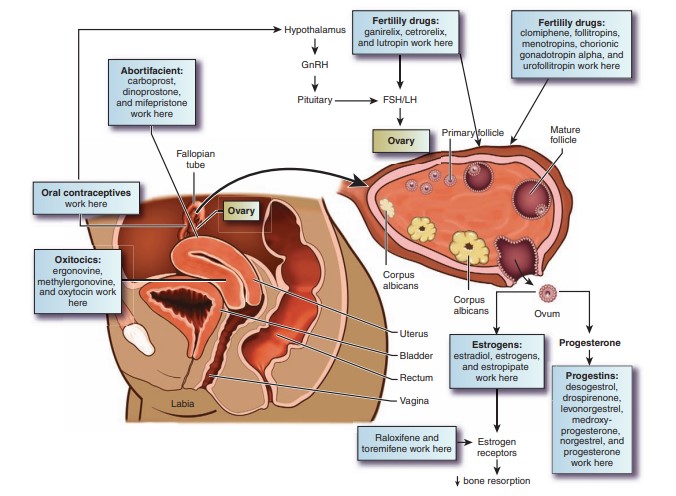
gonadotropin sites

Gonadotropin Sites of Action

Female Sex Hormones

The female sex hormones can be used to replace hormones that are missing or to act on the control mechanisms of the endocrine system to decrease the release of endogenous hormones.
Drugs that act like estrogen, particularly at specific estrogen receptors, are also used to stimulate the effects of estrogen in the body with fewer of the adverse effects.

Female sex hormones include;

  • Estrogens 
  • Progestins

Estrogens.

This hormone is naturally produced by the ovaries, placenta and adrenal glands. It stimulates the development of female sex characteristics, prepares the body for pregnancy, affects the release of FSH and LH, and is responsible for proliferation of the endometrial lining.

Low estrogen in the body is responsible for the signs and symptoms of menopause, in the uterus, vagina, breast and cervix.

Other Functions of estrogen include;

  1. Breast development.
  2. Increase cholesterol in bile, to prevent damaging effects of bile salts.
  3. Increases fat storage, such as in breast tissue.
  4. Maintains bone mineral density.
  5. Maintains muscle strength.
  6. Prevents atherosclerosis, by increasing HDL concentration and lowering LDL.
  7. Estrogen is responsible for maintaining libido, memory, and mental health. 
  8. It stimulates ovulation, maintains the uterine walls and is important in vaginal lubrication.
Indications of Estrogen Therapy.
  • Estrogens are used for hormone replacement therapy (HRT) when ovarian activity is blocked or absent.
  • Is used to control the signs and symptoms of menopause.
  • They can also be used in therapy for prostate cancer and inoperable breast cancer, also as palliative care.
  • Treatment of female hypogonadism(when the body produces little or no hormones).
  • Treat ovarian failure.
  • Oral contraceptives (estrogen and progestin)
  • Morning after pill (emergency pills)
  • Endometriosis
  • Dysmenorrhea, used with progestin.

Progestin/Progesterone.

This promotes maintenance of pregnancy and it is called a pregnancy hormone.

Its functions include;

  1. Transforms proliferative endometrium into secretory endometrium.
  2. Prevents follicle maturation, ovulation and uterine contractions.
  3. Used in contraceptives. It inhibits release of GnRH, FSH and LH, hence follicle development and ovulation are prevented.
Indications of Progestin.
  • Used as a contraceptive.
  • Maintains pregnancy and development of secondary sex characteristics.
  • Use to treat primary and secondary amenorrhea, and functional uterine bleeding.
  • Treatment of acne and premenstrual dysphoric disorder (PMDD).
  • For the relief of signs and symptoms of menopause .
Contraindications of Female Sex hormones.

Estrogen

  • Known allergies
  • Idiopathic vaginal bleeding.
  • Breast Cancer(Estrogen dependant cancer)
  • CVA since it increases clotting factor prodn.
  • Hepatic dysfunction.
  • Pregnancy.
  • Lactation.

Progestin/Progesterone

  • PID
  • STD
  • Endometriosis
  • Renal and hepatic disorders.
  • Epilepsy.
  • Asthma.
  • Migraine headaches
  • Cardiac Dysfunction —potential excerbation.
Adverse Effects.
  • Corneal Changes.
  • Photosensitivity.
  • Peripheral edema.
  • Chloasma ( patches on the face)
  • Hepatic adenoma.
  • Nausea
  • Vomiting.
  • Abdominal cramps.
  • Bloating.
  • Withdraw bleeding.
  • Changes in menstrual flow.

Important aspects/issues to remember.

  1.  Women receiving any of these drugs should receive an annual medical examination, including
    breast examination and Pap smear, to monitor for adverse effects and underlying medical
    conditions.
  2. Women taking estrogen should be advised not to smoke because of the increased risk of
    thrombotic events.
  3. Women who are receiving these drugs for fertility programs should receive a great deal of psychological support and comfort measures to cope with the many adverse effects associated
    with these drugs. The risk of multiple births should be explained.
  4. Drugs are used in treatment of specific cancers in males and they should be advised about the
    possibility of estrogenic effects.
  5. Not indicated during pregnancy or lactation because of potential for adverse effects on the fetus
    or neonate.
Examples of female sex hormones and dosages.

Estrogen

  1. Estradiol, 1–2 mg/day orally or  1–5 mg IM every 3–4 weeks or  2–4 g intravaginal cream daily.
  2. Estrogens, conjugated (C.E.S., Premarin), 0.3–1.25 mg/day orally.
  3. Estropipate (Ortho-Est, Ogen), 0.625–5 mg/day orally.

Progestin/Progesterone.

  1. Etonogestrel (Implanon) 68 mg implanted sub dermally for up to 3 yr, replaced or changed when needed.
  2. Medroxyprogesterone (Provera) 5–10 mg/day PO for 5–10 days for amenorrhea or 400–1000 mg/week IM for cancer therapy or 150 mg of deep IM every 3 months (13 weeks) for contraception.
Clinically important Drug Interactions

Estrogen

  •  Barbiturates, rifampin, tetracyclines, phenytoin: decreased serum estrogen levels
  • Corticosteroids: increased therapeutic and toxic effects of corticosteroids.
  • Nicotine: Increased risk of thrombi and emboli
  • Grapefruit juice: inhibition of metabolism of estradiols
  • St. John’s wort: can affect metabolism of estrogens and can make estrogen-containing
    contraceptives less effective.

Progestins

  •  Barbiturates, carbamazepine, phenytoin, griseofulvin, penicillin, tetracyclines, rifampin: reduced
    effectiveness of progestins
  • St. John’s wort: can affect the metabolism of progestins and can make progestin-containing
    contraceptives less effective..

Gonadotropin drugs Read More »

Immunization

Immunization

Complete Guide to Immunization

Immunization

Immunization is a process of deliberate inoculation of live attenuated or dead vaccines and toxoids to induce immunity against a specific disease. Immunization against a specific disease provides artificially acquired active immunity. The principle of immunization is to increase specific immunity to infection by administration of either immune serum (passive immunization) or by administration of an antigen (active immunization).

Artificially acquired immunity against some diseases may require periodic booster injections to keep an adequate antibody level (or antibody titer) circulating in the blood. A booster injection is the administration of an additional dose of the vaccine to boost the production of antibodies to a level that will maintain the desired immunity. The booster is given months or years after the initial vaccine and may be needed because the life of some antibodies is short.

Types of Immunization Agents

  • Toxoids: is a toxin that is attenuated (or weakened) but still capable of stimulating the formation of antitoxins.
  • Vaccines: Special preparations of antigenic materials that can be used to stimulate the development of antibodies.
  • Immune Globulins: Preparations containing antibodies against infectious micro-organisms, usually prepared from human plasma or serum.
  • Antisera: Sterile preparations containing immunoglobulins obtained from the serum of immunized animals by purification. They have the power of neutralizing venoms or bacterial toxins.

Active vs. Passive Immunization

The principal goal of immunization is to increase specific immunity to infection. This can be achieved through two main strategies: active immunization and passive immunization.

Passive Immunization

Passive immunization is the administration of already active antibodies to prevent or ameliorate infection. It gives immediate protection but immunity lasts for a short period of time. Passive immunisation is used in post-exposure prophylaxis in immunocompetent hosts when immediate protection is required following exposure to the infection e.g. tetanus.

Infections for which passive immunization is useful are:
  • Hepatitis B
  • Rabies
  • Tetanus
  • Diphtheria
Advantages of passive immunisation:
  • Passive immunisation can be lifesaving if toxin is already circulating.
  • Prompt availability of large amount of antibodies.
Disadvantages of passive immunisation:
  • Protection is short-lived (up to 6 months) as the borrowed antibodies are eventually degraded and cleared.
  • Use of human antisera has dangers of transmitting infections like HIV or Hepatitis.
  • Antisera are expensive compared to vaccines.
  • They need to be kept cool and have limited life span.

Active Immunization

Active immunization is a process of increasing resistance to infection whereby micro-organisms or products of their activity act as antigens and stimulate certain body cells to produce antibodies with a specific productive capacity. It may be a natural process following recovery from an infection, or an artificial process induced by the administration of vaccines.

Active immunization is a process where the individual's own immune system is stimulated to produce antibodies and memory cells against a specific pathogen. This is achieved by administering an antigen, usually in the form of a vaccine. It may be a natural process following recovery from an infection, or an artificial process induced by vaccination.

Aims of Active Immunization:
  • To protect susceptible individuals against specific infections.
  • To reduce the incidence of infection in the community, leading to herd immunity.
  • To eliminate an infection in a particular country or worldwide (e.g., the successful eradication of smallpox and the ongoing effort to eradicate polio).
Booster Injections:

Artificially acquired immunity against some diseases may require periodic booster injections to keep the antibody level (titer) adequate for protection. A booster is an additional dose given months or years after the primary vaccination series to "boost" the immunological memory and production of antibodies.

Advantages of Active immunization:
  • Offers long-term, often lifelong, immunity due to the formation of memory cells.
Disadvantages of Active immunization:
  • Has a slow onset of action, as it takes time (days to weeks) for the body to mount a primary immune response and become fully protected.

Vaccines

Vaccines are special preparations of antigenic materials designed to stimulate the development of antibodies and confer active immunity. Vaccination refers to the administration of a vaccine.

Types of Vaccines:
  • Live Attenuated Vaccines:

    These vaccines use live microorganisms that have been weakened (attenuated) so they can still replicate but do not cause disease in healthy individuals. They typically provide long-lasting immunity with a single dose (with some exceptions like OPV).

    Examples: BCG, Measles, Mumps, Rubella, Oral Polio (OPV), Yellow Fever.

    Advantages of Live Attenuated Vaccines

    • Live vaccines give longer protection than killed vaccines.
    • One dose of the vaccine is usually sufficient with exception of oral polio vaccines.

    Disadvantages of Live Attenuated Vaccines

    • Live vaccines are often unstable e.g. measles and polio need to be stored at -20°C.
    • Live vaccines may not work in the presence of circulating antibodies e.g. measles vaccine has to be given around 9 months of age when maternal antibodies have gone.
    • Live vaccines may cause disease if the host is immuno deficient as in HIV infection.
    • Live vaccines occasionally interfere with each other so that the immune response is not so great if given together.
  • Killed or Inactivated Vaccines:

    These vaccines use whole bacteria or viruses that have been killed and can no longer replicate. They are very safe but usually require a series of injections and booster doses to produce an adequate response.

    Examples: Inactivated Polio Vaccine (IPV), Rabies vaccine, Hepatitis A vaccine, whole-cell Pertussis vaccine.

  • Toxoid Vaccines:

    These vaccines use bacterial toxins that have been chemically inactivated to become harmless toxoids. They stimulate the production of antitoxins.

    Examples: Tetanus toxoid, Diphtheria toxoid.

    Disadvantages: Immunity can be short-lived, requiring booster doses.

  • Indications of Vaccines and Toxoids:

    • Routine immunization of infants and children.
    • Immunization of adults against tetanus.
    • Immunization of adults at high risk for certain diseases (e.g., pneumococcal and influenza vaccines).
    • Immunization of children or adults at risk for exposure to a particular disease (e.g., hepatitis A for those going to endemic areas).
    • Immunization of pre-pubertal girls or non-pregnant women of childbearing age against rubella and cervical cancer.

    Adverse Reactions of Vaccines and Toxoids:

    Adverse reactions from the administration of vaccines or toxoids are usually mild.

    • Chills, Fever, muscular aches and pains, rash, and lethargy may be present.
    • Pain and tenderness at the injection site may also occur.
    • Although rare, a hypersensitivity reaction may occur.

    Contraindications and Precautions of Vaccines and Toxoids:

    • Hypersensitivity: Individuals with known severe allergic reactions to vaccine components or previous doses should not receive the vaccine.
    • Vaccines and toxoids are generally contraindicated during acute febrile illnesses, leukemia, lymphoma, immunosuppressive illness or drug therapy, and non-localized cancer.
    • The measles, mumps, rubella, and varicella vaccines are contraindicated in patients who have had an allergic reaction to gelatin, neomycin, or a previous dose of one of the vaccines.
    • The measles, mumps, rubella, and varicella vaccines are generally contraindicated during pregnancy, especially during the first trimester, because of the theoretical danger of birth defects. Women are instructed to avoid becoming pregnant for at least 3 months after receiving these vaccines.

    Antisera and Immunoglobulins

    • Antisera: Sterile preparations containing immunoglobulins obtained from the serum of immunized animals (e.g., horses). They are used to neutralize venoms or bacterial toxins.
    • Immunoglobulins: Preparations containing specific antibodies, usually prepared from pooled human plasma. They are used for passive immunization.

    Properties of an Ideal Vaccine

    • Should be able to induce an adequate and appropriate immune response without causing active infection.
    • The vaccine should be safe with minimal side effects.
    • The vaccine should be stable and remain potent during storage and transportation.
    • The vaccine should be cheap if it is to be used on a large scale.
    • It should be easy to administer.
    • It should be highly purified so that it consists of one or only a few antigens.

    Autoimmune Diseases

    Autoimmune diseases occur when the immune system loses its ability to distinguish "self" from "non-self" and mistakenly begins to attack the body's own cells and tissues. This failure of self-tolerance can be triggered by a combination of genetic susceptibility, environmental factors, and infections.

    It is thought that female hormones like estrogen may enhance the inflammatory response, which could be one reason why autoimmune diseases are often more common or severe in women than in men.

    Autoimmune Diseases and Parts Affected

    Disease Part of the Body Primarily Affected
    Rheumatoid Arthritis Cartilage and linings of the joints.
    Graves' Disease Thyroid gland (causes hyperthyroidism).
    Insulin-Dependent Diabetes Mellitus (Type 1) Insulin-producing beta cells of the pancreas.
    Multiple Sclerosis (MS) Myelin sheath of nerves in the brain and spinal cord.
    Psoriasis Skin cells.
    Ankylosing Spondylitis Joints of the spine.

    Specific Vaccine Details

    This section provides a detailed breakdown of the key vaccines used in immunization programs, including their type, indications, dose, side effects, contraindications, and special precautions.

    BCG (Bacillus Calmette-Guérin) Vaccine

    Type
    • Live attenuated bacterial vaccine.
    Indications
    • Active immunization against severe forms of tuberculosis (TB) in children, such as TB meningitis and miliary TB.
    • Protection against leprosy (in some contexts where leprosy is endemic and BCG is used for this purpose).
    Dose
    • Infants less than 12 months: 0.05ml administered intradermally in the right upper arm.
    • Adults and children over 12 months: 0.1ml administered intradermally in the right upper arm.
    Side Effects
    • A localized papule, sore, and then ulceration at the injection site is a normal, expected reaction that heals to form a permanent scar.
    • Lymphadenitis (swelling of local lymph nodes).
    • Keloid formation at the scar site.
    • Abscess formation at the injection site (rare, more severe).
    • Osteitis/Osteomyelitis (inflammation of bone, very rare systemic complication).
    • Disseminated BCG infection: A rare but severe complication that can occur in severely immunosuppressed patients.
    Contraindications
    • Severely immunocompromised patients (e.g., advanced HIV/AIDS, congenital immunodeficiency, individuals on immunosuppressive therapy).
    • Generalized skin conditions like eczema or scabies at the intended injection site.
    • Patients undergoing antibacterial treatment for tuberculosis.
    • Known allergy to any component of the vaccine.
    • Infants weighing less than 2 kg.
    • Individuals with a positive tuberculin skin test (PPD) or IGRA (Interferon Gamma Release Assay), as this may indicate latent TB infection.
    • Acute severe febrile illness (generally a temporary contraindication).
    Precautions
    • Pregnancy (though it may be given if the risk of TB exposure is high and benefits outweigh risks, especially in high-endemic areas).
    • Infants born to HIV-positive mothers (careful risk-benefit assessment; may be given if the infant is asymptomatic for HIV and the risk of TB exposure is high, but generally avoided if HIV status is confirmed and symptomatic).
    • Concomitant use with other live vaccines (spacing may be recommended by national guidelines, though many routine schedules allow co-administration).

    Diphtheria, Pertussis, Tetanus (DPT) Vaccine (in Pentavalent)

    Type
    • A combination vaccine containing Diphtheria and Tetanus toxoids and an inactivated (killed) whole-cell Pertussis bacteria component.
    • Note: Modern DPT vaccines often use acellular pertussis (aP) components (DTaP) which have fewer side effects, but the provided text specifies whole-cell. Pentavalent typically contains DPT-HepB-Hib.
    Indications
    • Active immunization against Diphtheria, Tetanus, and Pertussis (whooping cough) in infants and young children.
    • Primary vaccination series for infants as part of routine immunization programs.
    Dose
    • Given as part of the Pentavalent vaccine series: 0.5ml intramuscularly at 6, 10, and 14 weeks of age.
    • Specific schedules may vary by national immunization guidelines.
    Side Effects
    • Common: Pain, redness, and swelling at the injection site; fever; irritability; restlessness; loss of appetite; drowsiness.
    • Less common: Persistent, inconsolable crying (lasting 3 hours or more); high fever (>=40.5°C); febrile seizures (very rare).
    • Rare: Anaphylaxis (severe allergic reaction); hypotonic-hyporesponsive episodes (HHE); peripheral neuropathy; severe neurological reactions (especially associated with the whole-cell pertussis component, e.g., encephalopathy).
    • Injection site nodule/lump which can persist for weeks.
    Contraindications
    • Known hypersensitivity to any of the ingredients of the vaccine or a severe allergic reaction to a previous dose.
    • A history of a severe neurological reaction (e.g., encephalopathy not attributable to another identifiable cause) within 7 days of a previous dose of pertussis-containing vaccine.
    • Progressive neurological disorder, including infantile spasms, uncontrolled epilepsy, or progressive encephalopathy (vaccination should be deferred until the condition has stabilized).
    • Acute severe febrile illness (vaccination should be deferred until recovery).
    Precautions
    • Minor illnesses (e.g., mild upper respiratory infection, low-grade fever) are generally NOT contraindications.
    • Family history of seizures or other neurological disorders (not a contraindication but requires observation after vaccination).
    • History of a reaction following a previous dose that is considered a precaution (e.g., temperature ≥40.5°C within 48 hours not due to another cause, collapse/shock-like state within 48 hours, persistent crying lasting ≥3 hours within 48 hours, seizures with or without fever within 3 days). In such cases, benefits versus risks of subsequent doses should be carefully considered, and acellular pertussis vaccines (DTaP) might be preferred if available.

    Tetanus Toxoid (TT) or Tetanus-Diphtheria (Td) Vaccine

    Type
    • Toxoid vaccine.
    • Td contains tetanus toxoid and a reduced dose of diphtheria toxoid.
    Indications
    • Active immunization against tetanus.
    • Prevention of neonatal tetanus through the immunization of pregnant women and women of childbearing age.
    • Boostering immunity against tetanus and diphtheria in adolescents and adults.
    • Post-exposure prophylaxis for tetanus following wounds (often in combination with Tetanus Immunoglobulin if indicated).
    Dose (for Women of Childbearing Age and General Adult Boosters)
    • Primary Series: Varies, but often 2-3 doses given at intervals (e.g., 0 and 4-8 weeks).
    • TT1 (for Pregnant Women/WOCBA): 0.5ml deep IM or SC at first contact/early in pregnancy.
    • TT2: 0.5ml at least 4 weeks after TT1 (preferably before 36 weeks of pregnancy).
    • TT3: 0.5ml at least 6 months after TT2.
    • TT4: 0.5ml at least 1 year after TT3.
    • TT5: 0.5ml at least 1 year after TT4. (5 doses provide long-lasting protection, often considered lifelong for practical purposes if fully completed).
    • Booster Doses: Recommended every 10 years for adolescents and adults.
    Side Effects
    • Common: Local reactions like pain, tenderness, redness, swelling, and a lump at the injection site. These are usually mild and resolve within a few days.
    • Less common: Low-grade fever, headache, body aches, tiredness.
    • Rare: Anaphylaxis (severe allergic reaction); brachial neuritis (inflammation of nerves in the arm, very rare); peripheral neuropathy.
    • Arthus-type reactions (severe local reaction with swelling and pain) can occur, particularly in adults who receive frequent booster doses.
    Contraindications
    • Known hypersensitivity to any component of the vaccine or a severe allergic reaction to a previous dose.
    • A history of a severe Arthus-type hypersensitivity reaction following a previous dose of tetanus or diphtheria toxoid-containing vaccine (usually not given again for at least 10 years).
    • Acute severe febrile illness (defer vaccination until recovery).
    Precautions
    • Minor illnesses (e.g., mild upper respiratory infection, low-grade fever) are generally NOT contraindications.
    • History of Guillain-Barré Syndrome (GBS) within 6 weeks of a previous dose of tetanus toxoid-containing vaccine (decision to vaccinate should weigh benefits against potential risks).

    Measles, Mumps, and Rubella (MMR) Vaccine

    Type
    • Live attenuated virus vaccine.
    Indications
    • Active immunization against Measles, Mumps, and Rubella.
    • Recommended for all children as part of routine immunization schedules.
    • Prevention of congenital rubella syndrome in women of childbearing age (ensure non-pregnant at vaccination and avoid pregnancy for recommended period).
    • Outbreak control measures in susceptible populations.
    Dose
    • 0.5ml administered by deep subcutaneous or intramuscular injection.
    • First dose: Typically at 12-15 months of age (some regions, like Uganda, may give first measles dose earlier at 9 months, and then MMR later).
    • Second dose: Recommended for sustained immunity, often at 4-6 years of age (e.g., prior to school entry) or later, depending on national schedules.
    Side Effects
    • Common (5-12 days after dose 1): Fever (up to 15%), malaise, and a non-infectious, non-contagious maculopapular rash (measles-like) (5%).
    • Common (3-4 weeks after dose 1): Parotid swelling (mild, mumps-like symptoms, <1%).< /li>
    • Common (2-4 weeks after dose 1, particularly in post-pubertal females): Transient arthralgia or arthritis (joint pain/inflammation) related to the rubella component.
    • Rare: Thrombocytopenia (transient low platelets, 1 in 30,000 to 40,000 doses).
    • Very Rare: Febrile seizures (usually benign, related to the fever, not the vaccine itself causing epilepsy); anaphylaxis (severe allergic reaction, approx. 1 in 1,000,000 doses).
    Contraindications
    • Pregnancy (known or suspected). Women should be advised to avoid pregnancy for at least 1 month after vaccination.
    • Severe immunosuppression (e.g., congenital immunodeficiency, HIV with severe immunosuppression, leukemia, lymphoma, generalized malignancy, high-dose corticosteroids, chemotherapy, radiation therapy).
    • Known hypersensitivity to vaccine components (e.g., neomycin, gelatin).
    • A history of a severe allergic reaction (anaphylaxis) to a previous dose of MMR vaccine.
    • Receipt of blood products (e.g., transfusions, immunoglobulin) containing antibodies within a certain period (typically 3-11 months, depending on the product), as these antibodies can interfere with vaccine efficacy.
    • Acute severe febrile illness (defer vaccination until recovery).
    Precautions
    • History of convulsions or epilepsy in the patient or family (parents should be advised on managing fever and monitoring for seizures, but vaccination is generally safe).
    • Individuals with mild illness (e.g., low-grade fever, upper respiratory infection) can generally be vaccinated.
    • The vaccine should be cautiously administered to individuals with a history of thrombocytopenia or thrombocytopenic purpura, as a recurrence is possible (risk vs. benefit should be assessed).
    • Recent receipt of another live injected vaccine within the last 4 weeks (some guidelines prefer spacing by 4 weeks if not co-administered, but often co-administration is acceptable).

    Hepatitis B Vaccine

    Type
    • Recombinant subunit vaccine (contains inactivated Hepatitis B surface antigen, HBsAg), produced in yeast.
    Indications
    • Active immunization against Hepatitis B infection.
    • Universal vaccination of all infants and children as part of routine immunization programs.
    • Crucial for high-risk groups: infants born to HBsAg-positive mothers (should receive birth dose and Hepatitis B Immunoglobulin - HBIG); healthcare personnel; public safety workers; hemodialysis patients; patients with chronic liver disease; individuals with multiple sexual partners; injecting drug users; close contacts and sexual partners of HBsAg carriers; international travelers to endemic areas.
    Dose
    • Infants: First dose given within 24 hours of birth (birth dose), then typically as part of the Pentavalent vaccine at 6, 10, and 14 weeks (some schedules use a 0, 1, 6 month pattern if given as stand-alone).
    • Children and Adolescents: Typically a 2- or 3-dose series depending on the specific vaccine and age.
    • Adults: Typically a 3-dose series (e.g., 0, 1, and 6 months) or a rapid 4-dose series for specific needs.
    • Administered intramuscularly, usually in the anterolateral thigh for infants/young children and deltoid muscle for older children/adults.
    Side Effects
    • Common: Pain, tenderness, redness, and swelling at the injection site (up to 29%).
    • Less common: Low-grade fever, headache, myalgia (muscle aches), arthralgia (joint pain), fatigue, gastrointestinal disturbances (nausea, diarrhea). These are usually mild and transient.
    • Rare: Anaphylaxis (severe allergic reaction, extremely rare).
    Contraindications
    • Known hypersensitivity to yeast or any other component of the vaccine.
    • A history of a severe allergic reaction (anaphylaxis) to a previous dose of Hepatitis B vaccine.
    • Acute severe febrile illness (defer vaccination until recovery).
    Precautions
    • Immunocompromised patients (e.g., those on dialysis, HIV-infected individuals, transplant recipients) may have a diminished immune response and may require higher doses, additional doses, or post-vaccination serologic testing to ensure adequate protection.
    • Mild illness (e.g., low-grade fever, common cold) is generally not a contraindication.
    • Use with caution in pregnancy and lactation (no evidence of harm, but generally recommended if risk of exposure is high). The benefits of vaccinating pregnant women at high risk for HBV infection outweigh potential risks to the fetus.

    Yellow Fever Vaccine

    Type
    • Live attenuated virus vaccine (17D strain).
    Indications
    • Active immunization against yellow fever, especially for residents of and travelers to endemic areas.
    • Required for entry into certain countries where yellow fever is endemic or where there's a risk of transmission.
    • Mass vaccination campaigns in areas with ongoing outbreaks or high risk.
    Dose
    • A single 0.5ml dose administered by subcutaneous injection (preferred) or intramuscular injection.
    • Typically given at 9 months of age in endemic regions.
    • Provides lifelong immunity for most people after a single dose, according to WHO. Some countries may still require revaccination certificates every 10 years for entry, so checking international health regulations is crucial for travelers.
    Side Effects
    • Mild (common, 5-10 days after vaccination): Headache, myalgia, low-grade fever, flu-like symptoms, injection site reactions (pain, redness, swelling). These usually resolve within a few days.
    • Rare but serious: Anaphylaxis (severe allergic reaction, approx. 1 in 130,000 doses).
    • Very Rare but severe: Yellow Fever Vaccine-Associated Neurologic Disease (YEL-AND), typically neurological symptoms like encephalitis or meningitis (occurs in approx. 0.8 in 100,000 doses).
    • Very Rare and most severe: Yellow Fever Vaccine-Associated Viscerotropic Disease (YEL-AVD), a multi-organ failure resembling severe yellow fever (occurs in approx. 0.3 in 100,000 doses, higher risk in older individuals).
    Contraindications
    • Infants under 6 months of age (and used with caution between 6-8 months due to higher risk of YEL-AND).
    • Severe immunosuppression (e.g., congenital immunodeficiency, HIV with CD4 count <200 cells/mm3, leukemia, lymphoma, generalized malignancy, high-dose corticosteroids, chemotherapy, radiation therapy).
    • Known hypersensitivity to eggs, egg proteins, or any other component of the vaccine (e.g., gelatin, chicken protein).
    • Individuals with a history of thymus disorders (e.g., thymoma, thymectomy, myasthenia gravis, DiGeorge syndrome) due to increased risk of YEL-AVD.
    • Acute severe febrile illness (defer vaccination until recovery).
    Precautions
    • Age 60 years or older: Increased risk of YEL-AND and YEL-AVD. Benefits and risks should be carefully weighed, especially for first-time vaccine recipients.
    • Pregnancy: Generally not recommended unless travel to an endemic area with high risk of exposure cannot be avoided. Risk vs. benefit assessment is crucial.
    • Breastfeeding: Generally not recommended if the infant is under 9 months due to theoretical risk of transmission through breast milk, unless the risk of maternal infection is high.
    • Mild illness is generally not a contraindication.
    • As a live vaccine, it should ideally be given simultaneously with other live vaccines or spaced by at least 4 weeks.

    Other Key Vaccines and Immunoglobulins

    Beyond the primary childhood schedule, several other important vaccines and immunoglobulin preparations are used for specific risk groups, travel, or post-exposure protection.

    Pneumococcal Vaccine

    Type
    • There are two main types, which are not interchangeable:
    • Pneumococcal Conjugate Vaccine (PCV): Such as PCV10 (used in Uganda) or PCV13, PCV15, PCV20. The polysaccharide capsule antigens are "conjugated" (joined) to a protein carrier, which creates a strong and lasting immune response, especially in infants and young children, and induces T-cell dependent memory.
    • Pneumococcal Polysaccharide Vaccine (PPSV23): Contains antigens from 23 different serotypes. It provides broader serotype coverage but elicits a T-cell independent immune response, which is weaker and shorter-lived, and not effective in children under 2 years old. It is primarily used for adults and high-risk older children.
    Indications
    • Active immunization against diseases caused by Streptococcus pneumoniae, including pneumonia, meningitis, bacteremia (invasive pneumococcal disease), and otitis media.
    • Crucial for high-risk populations: all infants and young children (PCV); adults over 65 years (PCV and/or PPSV23); and individuals with underlying medical conditions such as sickle cell disease, functional or anatomic asplenia, chronic heart, lung, or kidney disease, diabetes mellitus, and immunosuppression (PCV and/or PPSV23).
    Dose
    • PCV (Routine for infants): 0.5ml IM at 6, 10, and 14 weeks (Uganda schedule). Other common schedules include 2, 4, 6 months with a booster at 12-15 months, or 2, 4 months with a booster.
    • PPSV23 (for adults/high-risk): 0.5ml IM or deep SC as a single dose. Revaccination with PPSV23 may be considered for those at highest risk after 5 years. Sequential vaccination with PCV followed by PPSV23 is often recommended for certain adult risk groups.
    Side Effects
    • Common: Fever, irritability, drowsiness, and local reactions at the injection site (pain, redness, swelling, tenderness). These are generally mild and resolve within 1-2 days.
    • Less common: Decreased appetite, vomiting, diarrhea.
    • Rare: Anaphylaxis (severe allergic reaction).
    Contraindications
    • A severe allergic reaction (anaphylaxis) to a previous dose of the specific pneumococcal vaccine or to any component of the vaccine.
    • Acute severe febrile illness (defer vaccination until recovery).
    Precautions
    • Mild illness or low-grade fever is generally not a contraindication.
    • In individuals with compromised immune systems (e.g., due to HIV infection, immunosuppressive therapy), the immune response to the vaccine may be diminished.
    • For PPSV23, administer with caution to individuals with a history of severe local reactions to previous doses.

    Meningococcal Vaccine

    Type
    • Can be a polysaccharide vaccine (e.g., MPSV4) or, more effectively, a conjugate vaccine (e.g., MCV4 or MenACWY).
    • They are formulated against the most common disease-causing serogroups of Neisseria meningitidis: A, C, Y, and W-135 (quadrivalent vaccines). Monovalent (e.g., Men C) and bivalent (e.g., Men A+C) preparations are also available.
    • Separate vaccines exist for serogroup B (MenB vaccines).
    Indications
    • Active immunization against meningococcal meningitis and septicemia caused by vaccine-preventable serogroups.
    • Essential for individuals residing in or traveling to the "meningitis belt" of sub-Saharan Africa, particularly during epidemic seasons.
    • Recommended for travelers to high-risk areas, military recruits, university students living in dormitories, and individuals with certain medical conditions (e.g., asplenia, persistent complement component deficiencies, those on eculizumab).
    • Outbreak control in specific populations.
    Dose
    • 0.5ml by deep subcutaneous (polysaccharide) or intramuscular (conjugate) injection as a single dose or multi-dose series depending on the vaccine type, age, and schedule.
    • For conjugate vaccines, routine vaccination for adolescents is common, with a booster dose.
    Side Effects
    • Common: Local pain, redness, and swelling at the injection site; headache; fatigue; malaise; muscle aches; low-grade fever. These are usually mild and transient.
    • Rare: Allergic reactions, including anaphylaxis.
    Contraindications
    • Known severe allergy to any ingredient in the vaccine or a severe allergic reaction to a previous dose.
    • Acute severe febrile condition (postpone vaccination until recovery).
    Precautions
    • Use with caution during pregnancy: Generally recommended only if the benefit of vaccination outweighs the potential risk to the fetus, such as in high-risk travel or outbreak situations.
    • The immune response from polysaccharide vaccines in children under 2 years may be short-lived and does not induce herd immunity or memory, making conjugate vaccines preferred for this age group and for broader public health impact.
    • Individuals with mild illness are generally not a contraindication.

    Cholera Vaccine

    Type
    • An oral vaccine. There are two main types:
      • Live attenuated preparation: (e.g., Vaxchora) - single dose.
      • Inactivated whole-cell preparations: (e.g., Dukoral, Shanchol, Euvichol) - usually multi-dose. These contain killed whole cells of Vibrio cholerae, often combined with B subunit of cholera toxin (Dukoral).
    Indications
    • Prophylactic immunization for travelers over 2 years of age (or younger depending on the specific vaccine) going to areas with high risk of cholera infection, particularly those who will be in areas with poor sanitation and hygiene.
    • Used in outbreak control and humanitarian settings to reduce transmission, but is not a substitute for providing safe water, sanitation, and hygiene (WASH) interventions.
    • Not typically part of a routine national immunization schedule in most non-endemic countries.
    Dose
    • Varies significantly by vaccine type and manufacturer:
      • Inactivated (Dukoral): Requires a multi-dose schedule.
        • Children 2-6 years: 3 doses, with 1-6 weeks between doses.
        • Adults and children >6 years: 2 doses, with 1-6 weeks between doses.
        • A booster dose is typically recommended after 2 years for continued protection.
      • Live attenuated (Vaxchora): Single dose for individuals aged 2 to 64 years.
    • Important Instruction: For most oral cholera vaccines, the patient must avoid food and drink for 1 hour before and 1 hour after taking the oral vaccine. Check specific product instructions.
    Side Effects
    • Common: Abdominal discomfort, mild diarrhea, nausea, vomiting, headache, loss of appetite. These are usually mild and transient.
    • Rare: Hypersensitivity reactions.
    Contraindications
    • History of hypersensitivity or severe allergic reaction to any of the ingredients of the specific vaccine or a previous dose.
    • Should be postponed during an acute moderate to severe gastrointestinal illness (e.g., acute diarrhea, vomiting) or acute moderate to severe febrile illness.
    • For live attenuated vaccines: severe immunocompromise (similar to other live vaccines).
    Precautions
    • Efficacy may be reduced if taken concurrently with certain medications (e.g., antacids, antibiotics). Check specific product information.
    • Not a substitute for practicing safe food and water hygiene.
    • Protection is not 100%, and duration of protection varies by vaccine.
    • Pregnancy and breastfeeding: Consult with a healthcare provider; generally, only given if the risk of exposure is high and benefits outweigh potential risks.

    Rabies Vaccine

    Type
    • An inactivated (killed) virus vaccine. Prepared from purified chick embryo cell culture (PCEC), human diploid cell culture (HDCV), or Vero cell culture.
    Indications
    • Post-Exposure Prophylaxis (PEP): To prevent the development of rabies after a person has been bitten, scratched, or had mucous membrane exposure to a potentially rabid animal. This is a medical emergency, as rabies is nearly 100% fatal once symptoms begin. PEP includes immediate wound cleansing, vaccine administration, and in severe cases, Rabies Immunoglobulin (RIG).
    • Pre-Exposure Prophylaxis (PrEP): For persons at high and continuous risk of exposure, such as veterinarians, animal handlers, laboratory workers handling the rabies virus, speleologists, and travelers to rabies-endemic areas who may not have immediate access to medical care.
    Dose
    • Pre-exposure (PrEP):
      • Standard: 1ml (or 0.5ml for intradermal) IM injection on days 0, 7, and 21 or 28.
      • Newer schedules (e.g., 2 doses for some vaccines) are being explored.
    • Post-exposure (PEP):
      • For unvaccinated individuals: 1ml IM injection on days 0, 3, 7, and 14 (4-dose regimen). In some settings, a 5-dose regimen (days 0, 3, 7, 14, 28) or 2-site intradermal regimens are used.
      • For previously vaccinated individuals (PrEP complete): 1ml IM injection on days 0 and 3 (2-dose regimen), no RIG needed.
      • For severe exposures, especially in unvaccinated individuals, Rabies Immunoglobulin (RIG) should also be infiltrated around the wound and into the wound on day 0, as much as anatomically feasible.
    • Route: Intramuscular (IM) injection, usually in the deltoid muscle for adults and anterolateral thigh for young children. Intradermal (ID) routes are also approved for certain schedules in some regions, which can save vaccine.
    Side Effects
    • Common: Pain, redness, swelling, and itching at the injection site (up to 30-70%).
    • Systemic: Fever, headache, dizziness, myalgia (muscle aches), malaise (general discomfort), nausea, abdominal pain. These are usually mild.
    • Rare: Hypersensitivity reactions (e.g., urticaria, rash, anaphylaxis). Neurological complications are extremely rare.
    Contraindications
    • There are generally no contraindications to PEP once exposure to rabies is suspected or confirmed, given the fatal nature of the disease.
    • For PrEP, contraindications are similar to other inactivated vaccines: severe allergic reaction to a previous dose or component of the vaccine, or acute moderate to severe febrile illness (defer until recovery).
    Precautions
    • Administer with caution to individuals with a history of hypersensitivity reactions to previous doses.
    • Pregnancy and breastfeeding: Not a contraindication for PEP; for PrEP, it should be given if the risk of exposure is substantial.
    • Immunocompromised individuals: May require additional doses or serologic testing to confirm adequate immune response after PrEP, and for PEP, the full recommended series with RIG is crucial.

    Hepatitis A Vaccine

    Type
    • An inactivated (killed) virus vaccine. Whole virus particles are grown in cell culture, purified, and inactivated with formalin.
    Indications
    • Active immunization against Hepatitis A infection, a common cause of acute viral hepatitis transmitted via the fecal-oral route.
    • Recommended for:
      • Travelers to high-risk areas (e.g., regions with high endemicity or poor sanitation).
      • Children as part of routine immunization schedules in many developed countries.
      • Laboratory workers handling hepatitis A virus.
      • Patients with chronic liver disease (of any etiology).
      • Individuals who use parenteral or illicit drugs.
      • Homosexual and bisexual men.
      • Individuals who work with nonhuman primates.
      • People with clotting factor disorders.
      • Close contacts of adoptees from endemic countries.
      • Individuals who change partners frequently or have multiple sexual partners (particularly those engaging in anal-oral sex).
    Dose
    • Typically a two-dose series given by intramuscular injection.
    • An initial dose (e.g., 0.5ml or 1.0ml depending on age and specific vaccine) is followed by a booster dose 6-12 months later (or up to 18 months for some vaccines).
    • For combined Hepatitis A and B vaccine (Twinrix), the schedule is typically 3 doses over 6 months (0, 1, 6 months) or a rapid 4-dose schedule.
    Side Effects
    • Common: Pain, tenderness, redness, and swelling at the injection site.
    • Systemic: Headache, fever (low-grade), fatigue, malaise (general discomfort), myalgia (muscle aches).
    • Less common: Nausea, loss of appetite, irritability, skin rash. These are usually mild and resolve within a few days.
    • Rare: Allergic reactions, including anaphylaxis.
    Contraindications
    • Known hypersensitivity or severe allergic reaction to any component of the vaccine or a previous dose.
    • Acute moderate to severe febrile illness (defer vaccination until recovery).
    Precautions
    • Use with caution in patients with altered immunity; while generally safe, the immune response may be diminished.
    • Pregnancy and lactation: Data on safety are limited, but the vaccine is considered safe, and vaccination should be considered if the risk of exposure to HAV is high (e.g., travel to endemic areas). The benefits of vaccination generally outweigh the theoretical risks.
    • Mild illness is generally not a contraindication.

    Anti-D (Rho) Immunoglobulin

    Type
    • This is a form of passive immunization, not a vaccine. It is a preparation of purified human immunoglobulin G (IgG) antibodies directed against the Rhesus D (RhD) antigen found on the surface of red blood cells. It works by destroying any Rh-positive fetal red blood cells that enter the Rh-negative mother's circulation before her immune system can produce its own antibodies.
    Indications
    • To prevent a Rhesus-negative (Rh-negative) mother from forming her own anti-RhD antibodies when exposed to Rhesus-positive (Rh-positive) fetal red blood cells. This prevents Rh isoimmunization, which can cause severe Hemolytic Disease of the Newborn (HDN) or erythroblastosis fetalis in subsequent Rh-positive pregnancies.
    • It is administered in the following situations to Rh-negative, non-sensitized women:
      • Routine Antenatal Prophylaxis (RAP): Typically given as an intramuscular (IM) injection around 28 weeks of gestation to prevent sensitization from asymptomatic feto-maternal hemorrhage. Some guidelines also recommend an earlier dose around 12-20 weeks.
      • Postnatal Prophylaxis: Given within 72 hours of delivering an Rh-positive infant (or an infant whose Rh status is unknown).
      • Following any potential sensitizing event during pregnancy or within 72 hours of the event:
        • Abortion (spontaneous or induced)
        • Miscarriage
        • Ectopic pregnancy
        • Hydatidiform mole
        • Stillbirth
        • Amniocentesis
        • Chorionic villus sampling (CVS)
        • Cordocentesis (percutaneous umbilical blood sampling)
        • External cephalic version
        • Abdominal trauma (e.g., motor vehicle accident, fall)
        • Antepartum hemorrhage (APH)
        • Any invasive obstetric procedure
      • Transfusion of Rh-positive blood products to an Rh-negative individual.
    Dose
    • The dose of Anti-D immunoglobulin varies based on the specific product, the gestational age, and the extent of feto-maternal hemorrhage (if quantifiable). It is usually administered by intramuscular (IM) injection. Intravenous (IV) preparations are available for specific situations, such as massive hemorrhage.
      • Antenatal Prophylaxis: Typically 300 mcg (1500 IU) IM around 28 weeks of gestation.
      • Postnatal Prophylaxis: Typically 300 mcg (1500 IU) IM within 72 hours of delivering an Rh-positive infant.
      • For sensitizing events earlier in pregnancy or with smaller potential bleeds, a lower dose (e.g., 50-120 mcg) may be used (e.g., for events up to 12 weeks, 12-20 weeks gestation).
      • For suspected or quantified large feto-maternal hemorrhage (determined by Kleihauer-Betke test or flow cytometry), additional doses may be required. One 300 mcg dose typically neutralizes 15 mL of Rh-positive red blood cells.
    Side Effects
    • Common: Local tenderness, pain, swelling, and redness/stiffness at the injection site.
    • Less common systemic effects: Low-grade fever, headache, malaise, nausea, vomiting, myalgia.
    • Rare: Allergic reactions, including urticaria, rash, and very rarely, severe anaphylactic reactions.
    • Extremely rare: Hemolysis (in the recipient), although this is usually mild and transient.
    Contraindications
    • Should NEVER be given to an Rh-positive individual.
    • Should NEVER be given to the Rh-positive newborn infant.
    • Contraindicated in individuals with a known severe allergy or hypersensitivity to human immunoglobulins or any component of the preparation.
    • Contraindicated in individuals with isolated IgA deficiency with known anti-IgA antibodies, due to the risk of anaphylaxis.
    • It is NOT indicated for an Rh-negative woman who has already been sensitized and has produced anti-RhD antibodies. In such cases, the immunoglobulin will not be effective and may cause a reaction.
    Drug Interactions
    • As Anti-D immunoglobulin is a preparation of antibodies, it can interfere with the immune response to live virus vaccines (e.g., Measles, Mumps, Rubella [MMR], Varicella, Oral Polio, Yellow Fever). Live attenuated vaccinations should generally be postponed for at least 3 months (and up to 6 months depending on the dose of immunoglobulin) after receiving Anti-D immunoglobulin to ensure optimal vaccine efficacy.
    • Concomitant administration with other passive antibodies (e.g., other immunoglobulins) should be avoided unless specifically indicated.
    Storage
    • Typically stored refrigerated at 2°C to 8°C (36°F to 46°F). Do not freeze. Protect from light.

    Summary

    Vaccine Details
    Measles–Rubella Vaccine

    Available preparations: Injection powder for solution (live attenuated measles-rubella virus).

    Indications: Active immunization against measles and rubella.

    Dose: 0.5ml SC at 9 months and 18 months (left upper arm).

    Side effects: Fever, Headache and Malaise, Rashes and Thrombocytopenia.

    Contraindications: Hypersensitivity to any antibiotic present in the vaccine, Pregnancy, Immunosuppression.

    Measles, Mumps and Rubella Vaccine (MMR vaccine)

    Available brands: Trimovax®, Priovix®.

    Dose: By deep SC or by intramuscular injection 0.5ml (usually at 12-15 months).

    Indications: Active immunization against measles, mumps and rubella.

    Contraindications: Pregnancy, Hypersensitivity to components like neomycin, Immunosuppressed patients, Children who have received another live vaccine by injection within 4 weeks.

    Side effects: Fever and Malaise, Parotid swelling and Rashes.

    Precautions: History of convulsions.

    BCG Vaccine

    Available preparations: Powder for solution of live bacteria of strain derived from the bacillus of calmette and Guerin.

    Indications: Active immunization against tuberculosis.

    Dose: 0.05ml intradermal in the right upper arm to neonates; 0.1ml intradermal on the upper arm (children > 12 months).

    Side effects: Keloid, Lymphadenitis, Localized necrotic ulceration, Disseminated BCG infection in immunosuppressed patients, Anaphylaxis.

    Contraindications: Generalized oedema, Immunosuppressed patients, Antibacterial treatment.

    Precautions: Pregnancy, Eczema, Scabies. Vaccine site must be lesion free.

    Diphtheria, Pertussis and Tetanus (DPT) Vaccine

    Available brand: Tripacel®, Infantrix®.

    Indications: Active immunization against diphtheria, tetanus and pertussis.

    Dose: Infant: 0.5ml by intramuscular or deep SC injection at 6, 10 and 14 weeks.

    Side effects: Irritability and Limb swelling, Peripheral neuropathy, Urticaria, Fever, Restlessness and Malaise, Myalgia, Headache and Loss of appetite.

    Contraindications: Known hypersensitivity to any of the ingredients.

    Tetanus Toxoid Vaccine

    Available brand: Tetavax®.

    Indications: Active immunization against tetanus and neonatal tetanus.

    Dose: Women 15-49 years of age. 0.5ml deep SC or intramuscular injection. 5 doses (TT1-TT5) are required for lifelong protection.

    Side effects: Peripheral neuropathy.

    Anti-tetanus Immunoglobulin

    Available brand: Tetanea®.

    Indications: Passive immunization against tetanus as part of the management of tetanus prone wounds.

    Dose: Adult and Children: 1ml by IM injection.

    Side effects: Local reactions, Fever, Pain and tenderness at site of injection, Headache.

    Yellow Fever Vaccine

    Available brand: Stamaril®.

    Indications: Active immunization against yellow fever.

    Dose: Infant at 9 months: 0.5ml by SC injection.

    Side effects: Headache, Myalgia, Fever, Influenza like symptoms.

    Contraindications: Immunosuppressed patients, Hypersensitivity to any ingredient (including eggs), Infant under 4 months of age.

    Typhoid Vaccine

    Available brands: Typhim VI®, Typherix PFS®.

    Indications: Active immunization against typhoid.

    Dose: Adult and Children > 2 years: By deep SC or intramuscular 0.5ml with booster doses every 3 years for those at continued risk.

    Side effects: Headache, Nausea, Myalgia, Malaise.

    Contraindications: Immunosuppressed patients, Febrile illness, Hypersensitivity.

    Pneumococcal Vaccine

    Available brand: Pneumo 23® (Polysaccharide version).

    Indications: Immunization against pneumococcal infections in Sickle cell disease Children > 2 years of age, and immunocompromised patients > 5 years.

    Dose: Adults and Children > 2 years: 0.5ml deep SC or IM as a single dose.

    Side effects: Fever, Myalgia.

    Contraindication: Severe allergic reaction to any ingredients.

    Meningococcal Vaccine

    Available brand: Meningo A + C®, Mencevax ACWY®.

    Indications: Active immunization against Neisseria meningitidis infections.

    Dose: Adult and Children > 2 years of age. 0.5ml deep SC or IM injection as a single dose.

    Side effects: Allergic reaction, Anaphylaxis, Erythema.

    Contraindications: Known allergy, Febrile conditions.

    Cholera Vaccine

    Available brand: Dukoral® (Oral).

    Indications: Immunization for travellers > 2 years of age at high risk.

    Dose: Multiple oral doses given at intervals of at least 1-6 weeks.

    Side effects: Abdominal discomfort, Diarrhoea, Headache, Fever, Vomiting, Nausea, Loss of appetite.

    Contraindications: Hypersensitivity, Acute GIT or febrile illness.

    Rabies Vaccine

    Available brand: Verorab®.

    Indications: Pre-exposure prophylaxis and post-exposure treatment to prevent rabies.

    Dose: Pre-exposure: 1ml on days 0, 7 and 28. Post-exposure: 1ml on days 0, 3, 7, 14 and 30.

    Side effects: Pain/erythema at injection site, Nausea, Fever, Headache, Myalgia, Malaise.

    Hepatitis B Vaccine

    Available brand: Euvax B®, Engerix B®.

    Indications: Active immunization against Hepatitis B infection for all infants and high-risk persons (healthcare personnel, lab workers, patients with renal failure, close contacts of carriers).

    Dose: Infants: 0.5ml IM at 6, 10, 14 weeks. Adults: 1ml IM, 3 doses.

    Side effects: Abdominal pain, GIT disturbance, Peripheral neuropathy, Myalgia, Lymphadenopathy.

    Precautions: Immunocompromised patients may need further dose, Pregnancy, Lactation.

    Hepatitis A Vaccine

    Available brand: Avaxim®, Havrix®.

    Indications: Active immunization against Hepatitis A for high-risk groups (lab workers, patients with severe liver disease, travelers).

    Dose: By IM injection, 0.5ml single dose with a booster 6-12 months later.

    Side effects: Headache, Fever, Malaise, Fatigue, Myalgia, Loss of appetite, Nausea.

    Contraindications: Severe febrile infections.

    Anti-D (Rho) Immunoglobulin

    Indications: Prevention of antibody formation to Rh-positive blood cells in Rh-negative mothers. Given following any sensitizing episode (birth of Rh+ infant, abortion, miscarriage).

    Dose: Varies by episode, typically 250-500mcg IM within 72 hours.

    Side effects: Fever, Nausea, Myalgia, Abdominal pain, Local tenderness and stiffness.

    Contraindications: Rhesus positive individuals, Isolated IgA deficiency.

    Immunization Read More »

    Immunity for nurses class notes

    Immunity

    Immunity and Antibodies - Complete Study Guide

    Introduction to Immunity

    Pathogens are foreign disease-causing substances, such as bacteria and viruses, and people are exposed to them every day.

    Antigens are attached to the surface of pathogens and stimulate an immune response in the body.

    An immune response is the body’s defense system to fight against antigens and protect the body.

    Immunity is the body's ability to resist infection and disease. It is a state of having sufficient biological defenses to avoid invasion by pathogens and to destroy foreign substances.

    Immunology is the scientific study of this complex system and how it responds to challenges.

    Terminology in Immunology

    • Pathogen: A foreign, disease-causing microorganism, such as a bacterium, virus, fungus, or parasite.
    • Antigen (Ag): Any substance, usually a protein or polysaccharide on the surface of a pathogen, that is recognized as "foreign" by the immune system and provokes an immune response. Think of antigens as the "uniforms" that identify an invader.
    • Antibody (Ab) or Immunoglobulin (Ig): A highly specific protein produced by plasma cells (a type of B-lymphocyte) in response to a specific antigen. Antibodies bind to antigens to neutralize them or mark them for destruction.
    • Immunogen: Any antigen that is capable of inducing a humoral (antibody) and/or cell-mediated immune response. All immunogens are antigens, but not all antigens are immunogens (some are too small or simple to provoke a response on their own).
    • Hapten: A small molecule that can only provoke an immune response when it is attached to a larger carrier protein. On its own, it is an antigen but not an immunogen.
    • Chemotaxis: The chemical attraction of phagocytic cells (like neutrophils and macrophages) to a site of injury or infection. They follow a chemical trail of substances called chemokines.
    • Chemokines: A family of small proteins that act as chemical messengers, stimulating the movement of leukocytes (white blood cells) towards the source of inflammation.
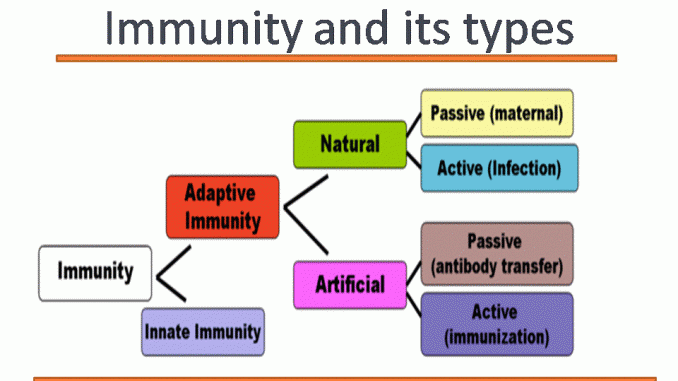
    Types of immunity

    The immune system is broadly divided into two interconnected branches:

    1. Innate (Non-specific) Immunity: The body's general, inborn protection against all invaders. It acts immediately or within hours and does not have immunological memory. It includes physical barriers and general immune cells.
    2. Adaptive (Acquired/Specific) Immunity: A highly specific defense system that is "acquired" during life after exposure to a pathogen or vaccine. It is characterized by specificity for a particular pathogen and immunological memory, allowing for a much stronger response upon re-exposure.

    1. Innate Immunity: The First and Second Lines of Defense

    Innate immunity is our built-in defense system. It is non-specific, meaning it responds in the same way to all pathogens, and it does not "remember" previous encounters.

    Types of innate immunity

    1. First line of defenses These barriers are designed to prevent pathogens from entering the body in the first place.
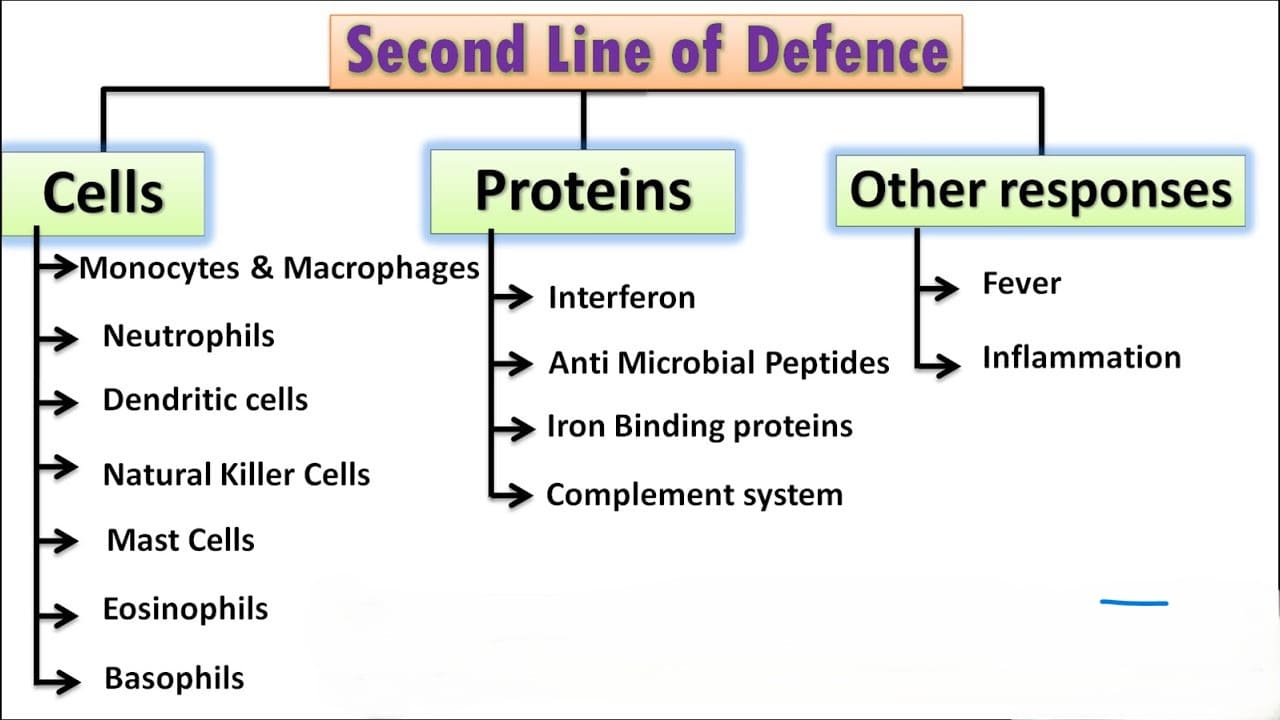
    2. Second line of defenses If pathogens breach the first line of defense, they encounter a range of non-specific internal defenses.
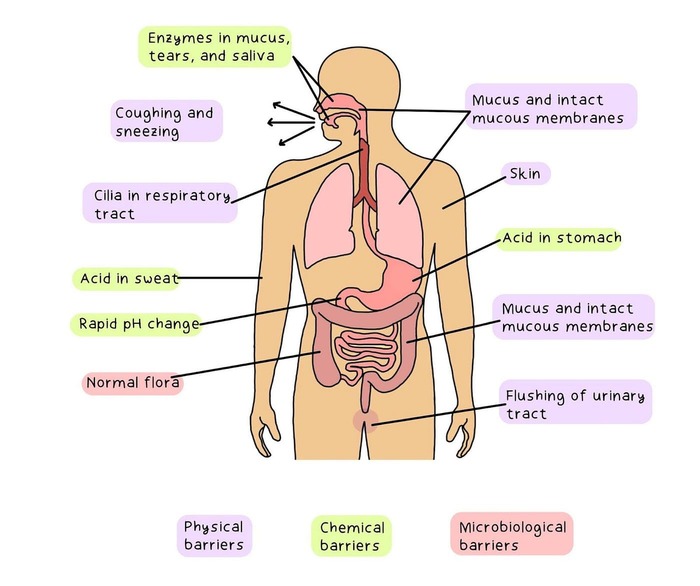
    A diagram illustrating the first line defenses of the body, including the skin barrier, mucous membranes with cilia, and acidic environments of the stomach and vagina.

    First Line of Defense: External or Physical and Chemical Barriers

    These barriers are designed to prevent pathogens from entering the body in the first place.

  • Skin: The unbroken epidermis, with its tough outer layer of keratin (stratum corneum), is a formidable physical barrier. Sebum (skin oil) contains fatty acids that create an acidic environment hostile to many bacteria.
  • Mucous Membranes: These line the respiratory, digestive, urinary, and reproductive tracts. They produce mucus, which traps microbes.
    • Ciliary Escalator: The ciliated epithelium of the upper respiratory tract constantly sweeps mucus (with trapped dust and pathogens) up towards the pharynx, where it is swallowed and destroyed in the stomach.
  • Bodily Fluids and Washing Actions:
    • Tears (Lacrimal Apparatus): Constantly wash the surface of the eye to dilute and remove microbes.
    • Blinking spreads tears over the surface of the eyeball, and the continual washing action of tears helps to dilute microbes and keep them from settling on the surface of the eye. Tears also contain lysozyme, an enzyme capable of breaking down the cell walls of certain bacteria.

    • Saliva: Washes microbes from the teeth and mouth.
    • Urine Flow: The one-way flow of urine through the urethra mechanically flushes out microbes, preventing ascending infections.
    • Vaginal Secretions: Move microbes out of the female reproductive tract.
  • Chemical Barriers:
    • Acidity: The low pH of skin (3-5), gastric juice (1.2-3.0), and vaginal secretions discourages the growth of most microbes.
    • Lysozyme: An enzyme found in tears, saliva, nasal secretions, and perspiration that can break down the peptidoglycan cell walls of bacteria.
  • Expulsion Mechanisms: Defecation and vomiting also expel microbes. For example, in response to some microbial toxins, the smooth muscle of the lower gastrointestinal tract contracts vigorously; the resulting diarrhea rapidly expels many of the microbes.
  • A diagram showing the process of inflammation: vasodilation, increased permeability leading to swelling, and the migration of phagocytes (chemotaxis) to the site of injury.

    Second Line of Defense: Internal Defenses

    When pathogens penetrate the physical and chemical barriers of the skin and mucous membranes, they encounter a second line of defense which include the following:

    1. Internal Antimicrobial Substances

  • Interferons (IFNs): Proteins produced by virus-infected cells. They don't save the infected cell, but they signal to neighboring uninfected cells to produce antiviral proteins, helping to limit the spread of the virus.
  • Complement System: A group of over 20 plasma proteins that circulate in an inactive state. When activated (e.g., by an antigen-antibody complex), they "complement" the immune response by:
    • Causing lysis (bursting) of microbial cells.
    • Stimulating inflammation.
    • Enhancing phagocytosis by coating pathogens (a process called opsonization).
  • Iron-Binding Proteins: Proteins like transferrin (in blood), lactoferrin (in milk, saliva), and ferritin (in liver) bind to iron, making it unavailable for bacteria that need it for growth.
  • Antimicrobial Proteins (AMPs): Short peptides that have broad-spectrum antimicrobial activity, directly damaging microbial membranes. Examples include defensins and dermicidin.
  • 2. Defensive Cells

  • Phagocytes ("Eating Cells"): These cells engulf and digest pathogens and cellular debris.
    • Neutrophils: The most abundant type of white blood cell. They are the "first responders" that rapidly move to sites of infection to perform phagocytosis.
    • Macrophages ("Big Eaters"): Develop from monocytes. Fixed macrophages reside in specific tissues (e.g., in the liver, lungs), while wandering macrophages roam through tissues. They are powerful phagocytes and also act as Antigen-Presenting Cells (APCs).
    • Dendritic Cells: Also phagocytes and potent APCs, found in skin and mucous membranes.
  • Natural Killer (NK) Cells: A type of lymphocyte that performs immunological surveillance. They are unique because they can detect and kill abnormal body cells (like tumor cells and virus-infected cells) without needing to be activated by a specific antigen.
  • Basophils and Mast Cells: Release inflammatory chemicals like histamine and heparin. Basophils circulate in the blood, while mast cells are fixed in tissues. They are key players in inflammation and allergic reactions.
  • Eosinophils: Specialize in fighting parasitic worm infections and are also involved in allergic reactions.
  • 3. Inflammation: The Body's Emergency Response

    Inflammation is the physiological response to tissue damage. Its purpose is protective: to isolate the problem, inactivate and remove the causative agent and damaged tissue, and initiate repair.

    The Cardinal Signs of Inflammation:
    1. Redness (Rubor): Caused by vasodilation (widening) of arterioles and capillaries in the damaged area, which increases blood flow. This is triggered by chemical mediators like histamine.
    2. Heat (Calor): Results from the increased blood flow. The localized increase in temperature can inhibit microbial growth and enhance the activity of immune cells.
    3. Swelling (Tumor): Caused by increased capillary permeability. Fluid (exudate) and plasma proteins leak from the blood into the interstitial spaces, leading to edema.
    4. Pain (Dolor): Results from the compression of sensory nerve endings by the swelling and from irritation by chemical mediators like bradykinin and prostaglandins.
    5. Loss of Function (Functio Laesa): The combination of swelling and pain may temporarily limit movement of the affected area, which helps protect it from further injury.

    4. Immulogical surveillance

    1. Natural killer (NK cells) cells: are leukocytes that attack and destroy tumor cells, or cells that have been infected by viruses
    2. Although they are lymphocytes, they are much less selective about their targets than the other T-cells & B-cells.

    2. Adaptive Immunity: The Specific and Memory-Based Defense

    Adaptive immunity is a highly specific, powerful defense system that develops throughout our lifetime. It is "acquired" after exposure to a pathogen or vaccine. Its two defining characteristics are specificity (it targets one particular antigen) and memory (it "remembers" past encounters, leading to a much faster and stronger response upon re-exposure).

    Lymphocytes

    The Cells of Adaptive Immunity

    B-lymphocytes (B-cells) and T-lymphocytes (T-cells) are the major players. Both originate from stem cells in the bone marrow but mature in different locations.

    T-Cells and Cell-Mediated Immunity

    T-cells are responsible for cell-mediated immunity, which is crucial for fighting intracellular pathogens (like viruses and some bacteria) and eliminating abnormal body cells (like cancer cells). They mature in the Thymus gland.

  • Antigen Recognition: T-cells cannot recognize whole antigens. They can only "see" small fragments of an antigen that have been processed and displayed on the surface of an Antigen-Presenting Cell (APC) like a macrophage or dendritic cell.
  • Clonal Expansion: When a T-cell recognizes its specific antigen presented by an APC, it becomes activated and begins to rapidly divide, creating a large clone of identical cells programmed against that antigen.
  • Types of T-Cells:
    1. Helper T-Cells (TH or CD4+ cells): The "generals" of the immune system. When activated, they produce chemical messengers called cytokines that coordinate the entire immune response. They help activate cytotoxic T-cells, B-cells, and macrophages. HIV specifically targets and destroys these cells, crippling the immune system.
    2. Cytotoxic T-Cells (TC or CD8+ cells): The "soldiers." They directly track down and kill any body cells displaying the specific antigen they recognize (e.g., virus-infected cells, tumor cells) by releasing powerful toxins.
    3. Suppressor (Regulatory) T-Cells (Treg): These cells turn off the immune response after the pathogen has been cleared, preventing excessive and potentially damaging immune activity.
    4. Memory T-Cells: Long-lived cells that persist after the infection is resolved, ready to mount a swift response upon re-exposure to the same antigen.
  • B-Cells and Humoral (Antibody-Mediated) Immunity

    B-cells are responsible for humoral immunity, which involves the production of antibodies that circulate in the body's fluids ("humors" like blood and lymph). This is most effective against extracellular pathogens like bacteria circulating in the blood. B-cells are produced and mature in the Bone marrow.

  • Antigen Recognition: B-cells can recognize and bind to whole, unprocessed antigens.
  • Activation and Clonal Expansion: Once a B-cell binds to its specific antigen, it typically requires a confirmation signal from a helper T-cell to become fully activated. It then enlarges and divides into a clone of two cell types:
    1. Plasma Cells: These are "antibody factories." They dedicate all their energy to producing and secreting thousands of antibody molecules per second into the bloodstream. These antibodies are specific to the antigen that initiated the response.
    2. Memory B-Cells: Long-lived cells that provide immunological memory, enabling a rapid and massive antibody production (the secondary response) if the same antigen is encountered again.
  • Types of Adaptive Immunity

    Acquired (adaptive) immunity develops during an individual's lifetime. It can be classified into two major categories—Active and Passive—each of which can be acquired either naturally or artificially.

    Active Immunity: The Body's Own Production Line

    Active immunity is protection that is induced in the host itself after exposure to an antigen. The individual's own immune system is stimulated to produce memory B-cells and T-cells. This process takes time to develop but results in long-lasting, sometimes lifelong, immunological memory.

    1. Naturally Acquired Active Immunity
    • Mechanism: This is the most natural way to become immune. It occurs when a person is exposed to a live pathogen through an infection (which may be a full-blown illness or a subclinical infection without symptoms).
    • The Process: Upon first exposure, the body mounts a primary immune response. It manufactures specific antibodies and T-cells to fight the invading pathogen. While this initial response takes time (often allowing the person to get sick), it results in the creation of a large pool of memory cells.
    • Outcome: For the rest of that individual's life, any subsequent exposure to the same pathogen will trigger a rapid and powerful secondary immune response. The memory cells will mobilize to produce antibodies and T-cells so quickly that the invading antigen is destroyed before it can cause disease.
    • Clinical Example: A child who gets sick with and recovers from chickenpox develops naturally acquired active immunity. They are protected from getting chickenpox again for the rest of their life.
    2. Artificially Acquired Active Immunity
    • Mechanism: This type of immunity is acquired through the deliberate action of vaccination (immunization). An individual is intentionally given a prepared antigen.
    • The Process: The vaccine contains a safe form of the antigen—it might be a killed pathogen, a live attenuated (weakened) pathogen, a subunit (a piece of the pathogen), or a toxoid (an inactivated toxin). This antigen is enough to stimulate the recipient's immune system to produce its own antibodies and memory cells, but it does not cause the actual disease.
    • Outcome: The individual develops long-term immunity without ever having to suffer through the illness. Sometimes, a person might experience minor symptoms like a low-grade fever or soreness after a vaccine; this is a sign that their immune system is actively learning to fight the antigen.
    • Clinical Example: A baby receiving the Measles, Mumps, and Rubella (MMR) vaccine. The vaccine contains live attenuated viruses, which stimulate the baby's immune system to create memory cells against all three diseases, providing long-term protection.

    Passive Immunity: Borrowed Protection

    Passive immunity is protection that is acquired through the transfer of pre-formed antibodies from an immune individual to a non-immune individual. The recipient's body does not produce the antibodies itself. This provides immediate protection but is always temporary because the "borrowed" antibodies are eventually broken down and eliminated, and no immunological memory is created.

    1. Naturally Acquired Passive Immunity
  • Mechanism: This occurs naturally from mother to child. It is nature's way of protecting a newborn while its own immune system is still immature.
  • The Process:
    • During Pregnancy: IgG antibodies are actively transported across the placenta from the mother's bloodstream to the fetus, especially during the last one to two months of pregnancy. A full-term infant is born with the same set of IgG antibodies as its mother.
    • After Birth: IgA antibodies (secretory IgA) are transferred from the mother to the infant through breast milk (especially the colostrum). This IgA protects the baby's gastrointestinal tract from infections.
  • Outcome: The antibodies protect the infant from specific diseases that the mother is immune to. This protection is crucial but temporary, typically lasting for the first 6-12 months of life, until the maternal antibodies wane and the infant's own immune system begins to produce its own antibodies.
  • Clinical Relevance: This is why the timing of infant vaccinations is so important—they are scheduled to begin as the mother's protective antibodies start to disappear.
  • 2. Artificially Acquired Passive Immunity
  • Mechanism: This involves injecting a person with ready-made antibodies (immunoglobulins or antiserum) that were produced in another human or an animal (like a horse).
  • The Process: This is used when a person needs immediate protection from a fast-acting toxin or pathogen and there is no time to wait for their own active immune response to develop.
    • It can be used prophylactically (to prevent disease) in individuals who have been exposed to an infection they are not immune to.
    • It can be used therapeutically (to treat a disease) after symptoms have already developed, to help neutralize a toxin or pathogen.
  • Outcome: Provides immediate but short-lived protection. There is no memory formation. There is also a potential risk of a hypersensitivity reaction (like serum sickness) if the antibodies come from a non-human source.
  • Clinical Examples:
    • Giving Tetanus Immunoglobulin (TIG) to a person with a deep, contaminated wound who has an uncertain vaccination history.
    • Giving Rabies Immunoglobulin (RIG) infiltrated around a wound from a suspected rabid animal bite.
    • Giving pooled human immunoglobulin (IVIG) to treat immunodeficiency diseases like hypogammaglobulinemia.
  • Summary of Acquired Immunity

    Type of Immunity How It Is Acquired Memory Produced? Duration Example
    Naturally Acquired Active Surviving an infection Yes Long-term / Lifelong Recovering from measles
    Artificially Acquired Active Vaccination Yes Long-term / Lifelong Receiving the polio vaccine
    Naturally Acquired Passive Antibodies from mother to child (placenta/breast milk) No Short-term (months) An infant's temporary immunity to diseases the mother had
    Artificially Acquired Passive Injection of pre-formed antibodies (antiserum) No Short-term (weeks to months) Receiving Rabies Immunoglobulin after a bite

    Antibodies (Immunoglobulins)

    Antibodies are Y-shaped glycoprotein molecules produced by plasma cells in response to a specific antigen. They are found in blood serum and other body fluids. Their primary function is not to kill pathogens directly, but to bind to them and facilitate their destruction.
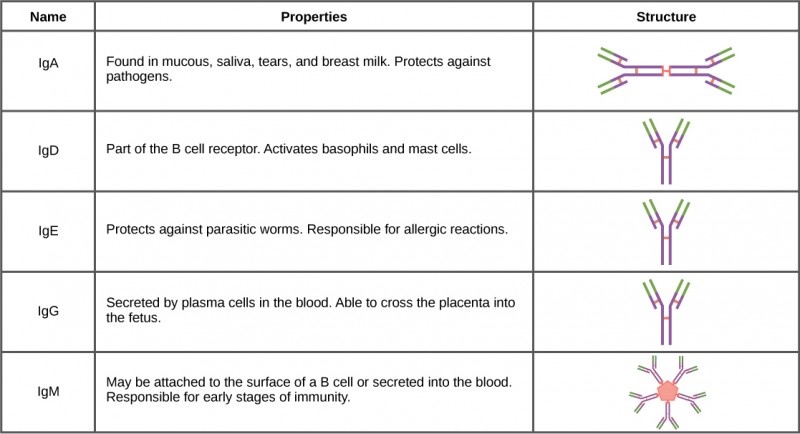
    A diagram showing the basic Y-shaped structure of an antibody molecule, alongside illustrations of the five different classes (IgG, IgA, IgM, IgD, IgE).

    The Five Classes of Antibodies (Isotypes)

    Class Abundance Key Features and Functions
    IgG (Gamma) ~80% (Most abundant in serum) Provides the majority of long-term antibody-based immunity. It is the only antibody class that can cross the placenta, providing passive immunity to the fetus. It is the main antibody in the secondary response.
    IgA (Alpha) ~15% Known as the secretory antibody. Found in mucosal secretions (saliva, tears, mucus), respiratory, GI, and urogenital tracts. It prevents pathogens from colonizing and attaching to mucous membranes. Also found in breast milk, providing passive immunity to the infant's gut.
    IgM (Mu) ~10% It is a very large molecule (a pentamer). It is the first antibody to be produced during a primary immune response, indicating a recent or current infection. It is a potent activator of the complement system.
    IgD (Delta) <1%< /td> Functions mainly as an antigen receptor on the surface of B-cells. Its exact role is still being researched.
    IgE (Epsilon) ~0.002% (Lowest concentration) Binds to mast cells and basophils. When it encounters its specific antigen (an allergen like pollen), it triggers the release of histamine, causing an allergic reaction. It also plays a role in defending against parasitic worm infections.

    Acquired Immunity

    Acquired immunity develops during an individual's lifetime and can be classified based on how it was obtained: naturally or artificially, and actively or passively.

    The Four Types of Acquired Immunity
    1. Naturally Acquired Active Immunity:
      • How it's acquired: By getting an infection. The body is exposed to a live pathogen, mounts a primary immune response, and develops long-lasting memory cells.
      • Memory: Yes (long-term).
      • Example: Recovering from chickenpox gives you lifelong immunity to that specific virus.
    2. Naturally Acquired Passive Immunity:
      • How it's acquired: Through the transfer of antibodies from mother to child. IgG crosses the placenta to the fetus, and IgA is passed through breast milk to the infant.
      • Memory: No. The immunity is temporary (lasts a few months) because the infant did not make the antibodies themselves.
      • Example: Protection of a newborn from infections during the first few months of life.
    3. Artificially Acquired Active Immunity:
      • How it's acquired: Through vaccination (immunization). The body is deliberately exposed to a harmless form of a pathogen (e.g., killed or weakened) or its antigens, which stimulates a primary immune response and creates memory cells without causing the disease.
      • Memory: Yes (long-term).
      • Example: The measles vaccine provides long-term protection against measles.
    4. Artificially Acquired Passive Immunity:
      • How it's acquired: Through the injection of pre-formed antibodies (immunoglobulins) from an immune human or animal. This provides immediate but temporary protection.
      • Memory: No.
      • Example: Giving someone an injection of tetanus antitoxin (antibodies against the tetanus toxin) after a deep, dirty wound for immediate protection while their own active immunity develops. Another example is giving Rabies Immunoglobulin (RIG) after a suspected rabid animal bite.

    Hypersensitivity: When the Immune System Overreacts

    The term hypersensitivity refers to an exaggerated or inappropriate immune response to an antigen that results in significant inflammation and damage to host tissues. While the immune system's job is to protect us, in hypersensitivity reactions, the protective response itself becomes the cause of the illness.

    These reactions are classified into four types based on the primary immune mediators involved and the time it takes for a reaction to occur.

    Type I: Immediate / Anaphylactic Hypersensitivity

  • Key Immune Mediator: IgE antibodies.
  • Onset Time: Immediate (within minutes to a few hours of exposure).
  • Mechanism: This is a two-step process.
    1. Sensitization Phase (First Exposure): An individual is exposed to an allergen (e.g., pollen, bee venom). Their B-cells are stimulated to produce large amounts of IgE antibodies against this allergen. This IgE then binds to the surface of mast cells and basophils, effectively "priming" them.
    2. Activation Phase (Subsequent Exposure): Upon re-exposure, the allergen binds to the IgE already attached to the mast cells. This triggers the immediate and massive release (degranulation) of inflammatory mediators like histamine, leukotrienes, and prostaglandins.
  • Pathological Effects: The released mediators cause:
    • Vasodilation and Increased Capillary Permeability: Leads to swelling (edema), skin rashes (hives/urticaria), and a dangerous drop in blood pressure.
    • Bronchoconstriction: Contraction of smooth muscles in the airways, leading to wheezing and difficulty breathing (as seen in asthma).
    • Increased Mucus Secretion: Causes a runny nose and watery eyes (as in hay fever).
  • Clinical Examples:
    • Systemic Anaphylaxis: A severe, life-threatening reaction to bee stings, food allergies (e.g., peanuts), or drugs (e.g., penicillin), causing circulatory collapse and airway obstruction.
    • Atopic Diseases (Localized Allergies): Allergic asthma, hay fever (allergic rhinitis), eczema (atopic dermatitis), and hives (urticaria).
  • Type II: Antibody-Dependent Cytotoxic Hypersensitivity

  • Key Immune Mediators: IgG or IgM antibodies.
  • Onset Time: Hours to days.
  • Mechanism: In this type, antibodies (IgG or IgM) bind directly to antigens that are located on the surface of host cells. This "tags" the host cell for destruction through three main pathways:
    1. Complement Activation: The antibody-antigen complex on the cell surface activates the complement system, leading to the formation of the Membrane Attack Complex (MAC), which punches holes in the cell membrane, causing it to lyse (burst).
    2. Phagocytosis: The antibody acts as an opsonin, coating the cell and making it a prime target for phagocytes like macrophages.
    3. Antibody-Dependent Cell-Mediated Cytotoxicity (ADCC): Natural Killer (NK) cells bind to the antibodies attached to the host cell and release cytotoxic granules to kill it.
  • Clinical Examples:
    • Incompatible Blood Transfusion: If a person with Type B blood (with anti-A antibodies) receives Type A blood, their antibodies will attack the transfused red blood cells, causing massive hemolysis.
    • Hemolytic Disease of the Newborn (Rh Incompatibility): An Rh-negative mother carrying an Rh-positive fetus can develop anti-Rh antibodies. In a subsequent Rh-positive pregnancy, these antibodies can cross the placenta and destroy the fetal red blood cells.
    • Some Autoimmune Diseases: For example, in Goodpasture's syndrome, antibodies attack proteins in the kidneys and lungs.
  • Type III: Immune Complex-Mediated Hypersensitivity

  • Key Immune Mediator: Soluble Immune Complexes (clumps of antigen and antibody, usually IgG).
  • Onset Time: Hours to days, or can be chronic.
  • Mechanism: The key difference from Type II is that the antigens are soluble (floating freely) in the blood, not fixed on a cell surface. Large quantities of antigen-antibody complexes are formed. If the body cannot clear these complexes efficiently, they get deposited in the walls of small blood vessels, especially in the kidneys, joints, and skin.
    These deposited complexes activate the complement system, which attracts a large number of neutrophils to the site. The frustrated neutrophils release their powerful lytic enzymes, causing inflammation and damage to the underlying tissue ("innocent bystander" damage).
  • Clinical Examples:
    • Serum Sickness: A classic example where a patient reacts to foreign proteins in injected antisera (e.g., from a horse). It causes fever, rash, joint pain, and kidney damage.
    • Post-Streptococcal Glomerulonephritis: Kidney inflammation following a strep throat infection, caused by the deposition of streptococcal antigen-antibody complexes in the glomeruli.
    • Systemic Lupus Erythematosus (SLE): An autoimmune disease where complexes of self-antigens and autoantibodies deposit in multiple organs.
  • Type IV: Delayed-Type / Cell-Mediated Hypersensitivity

  • Key Immune Mediator: T-Cells (specifically Helper T-cells and Cytotoxic T-cells). No antibodies are involved.
  • Onset Time: Delayed (24-72 hours or more).
  • Mechanism: This reaction is mediated by T-cells, and the delay is because it takes time for the T-cells to migrate to the area and orchestrate a response.
    1. Sensitization Phase: On first contact with the antigen (e.g., chemicals from poison ivy, proteins from M. tuberculosis), an Antigen-Presenting Cell (APC) presents it to Helper T-cells, creating a population of sensitized memory T-cells.
    2. Elicitation Phase: On second exposure, these memory T-cells are activated. They migrate to the site and release cytokines, which recruit and activate a large number of macrophages. It is the prolonged activity and cytokine release from these T-cells and macrophages that causes the inflammation and tissue damage.
  • Clinical Examples:
    • The Mantoux (Tuberculin) Skin Test: A classic example. If a person has been exposed to TB, their memory T-cells will cause a localized, hardened red swelling at the injection site 48-72 hours later.
    • Contact Dermatitis: Skin rash caused by contact with substances like poison ivy, nickel in jewelry, or latex.
    • Granuloma Formation: In chronic infections like tuberculosis and leprosy, the body forms granulomas to wall off the pathogen, which is a classic Type IV reaction causing tissue destruction over time.
  • Summary of Hypersensitivity Reactions

    Type Name Key Mediator Onset Time Mechanism Summary Clinical Examples
    Type I Immediate / Anaphylactic IgE Minutes IgE on mast cells binds to allergen, triggering degranulation and histamine release. Anaphylaxis, Asthma, Hay Fever, Hives
    Type II Cytotoxic IgG, IgM, Complement Hours to Days Antibodies bind to antigens on host cells, leading to cell destruction. Blood Transfusion Reactions, Hemolytic Disease of Newborn
    Type III Immune Complex Antigen-Ab Complexes Hours to Days Soluble immune complexes deposit in tissues, causing inflammation and damage. Serum Sickness, Post-Strep Glomerulonephritis, Lupus (SLE)
    Type IV Delayed-Type / Cell-Mediated T-Cells & Macrophages 24-72 Hours Sensitized T-cells are activated, leading to cytokine release and macrophage-mediated inflammation. TB Skin Test, Contact Dermatitis (Poison Ivy), Granuloma Formation

    Immunity Read More »

    pharmacolgy and mental nursing quiz

    Pharmacology & Mental health Quiz

    This quiz is for logged in users only.


    Pharmacology & Mental health Quiz Read More »

    immunological agents

    Immunological Agents

    Immunological Agents

    Immunological agents are a broad class of drugs that modify the immune system’s activity, either by enhancing or suppressing its function. 

    They are like tools that help your immune system work better or differently. For example, vaccines help your body fight off specific diseases(enhancing) or autoimmune drugs treat autoimmune diseases, where the immune system attacks the body’s own tissues (suppressing).

    Types of Immunological Agents:

    1. Immunostimulants: These are drugs that boost the immune system’s function, often used when the immune system is weakened or underperforming.
    2. Immunosuppressants: These drugs reduce or suppress the immune system’s activity, essential in preventing transplant rejection and treating autoimmune diseases.
    Examples include;

    IMMUNE STIMULANTS
    Interferons
    interferon alfa-2b
    interferon alfacon-1
    interferon alfa-n3
    interferon beta-1a
    interferon beta-1b
    interferon gamma-1b
    peginterferon alfa-2a
    peginterferon alfa-2b
    Interleukins
    aldesleukin
    oprelvekin

    IMMUNE SUPPRESSANTS
    T- and B-Cell Suppressors
    abatacept
    alefacept
    azathioprine
    Interleukin-Receptor Antagonist
    anakinra
    Monoclonal Antibodies
    adalimumab
    alemtuzumab
    basiliximab
    bevacizumab
    certolizumab

    Immunostimulants

    1. Interferons

    Interferons are proteins produced naturally by cells in response to viral infections and other stimuli. They work by interfering with virus replication within host cells, activating immune cells like natural killer cells and macrophages, and increasing the antigen presentation to lymphocytes.

    Drug

    Indications

    Therapeutic Action

    Adverse Effects

    Interferon alfa-2b

    Chronic hepatitis C, Kaposi’s sarcoma, malignant melanoma

    Inhibits viral replication, enhances immune response, and increases macrophage activity

    Flu-like symptoms, myelosuppression, depression, suicidal ideation

    Interferon alfacon-1

    Hepatitis C

    Inhibits viral replication and boosts immune system

    Headache, dizziness, bone marrow suppression, photosensitivity

    Interferon alfa-n3

    Genital warts, basal cell carcinoma

    Inhibits viral replication and tumor growth

    Fatigue, anorexia, nausea, vomiting

    Interferon beta-1a

    Multiple sclerosis

    Reduces the frequency of clinical exacerbations and slows the progression of disability in multiple sclerosis

    Injection site reactions, flu-like symptoms, liver dysfunction

    Interferon beta-1b

    Multiple sclerosis

    Similar to Interferon beta-1a; modulates the immune system to reduce inflammation

    Fatigue, depression, flu-like symptoms, liver impairment

    Interferon gamma-1b

    Chronic granulomatous disease, severe osteopetrosis

    Enhances the respiratory burst of macrophages, stimulating greater antimicrobial activity

    Fever, rash, diarrhea, myalgia

    Peginterferon alfa-2a

    Chronic hepatitis C and B

    Increases immune response against hepatitis viruses

    Neutropenia, thrombocytopenia, liver enzyme abnormalities, flu-like symptoms

    Peginterferon alfa-2b

    Chronic hepatitis C

    Longer-lasting effects due to its pegylated form, allowing less frequent dosing

    Similar to Peginterferon alfa-2a, including hematologic toxicity and depression

    Therapeutic Action:

    • Interferons prevent viral particles from replicating inside host cells.
    • They stimulate cells to produce antiviral proteins and enhance the cytotoxicity of T-cells and natural killer cells.
    • They inhibit tumor growth by enhancing the host’s immune response.

    Pharmacokinetics:

    • Interferons are well absorbed via subcutaneous or intramuscular injection, reaching peak plasma levels within 3-8 hours.
    • They are metabolized in the liver and kidneys and excreted primarily through the kidneys.

    Contraindications:

    • Allergies to interferons or their components.
    • Pregnancy and lactation (due to teratogenic effects).
    • Cardiac diseases, particularly arrhythmias and hypertension.
    • Myelosuppression.
    2. Interleukins

    Interleukins are cytokines that play an essential role in the immune response by promoting the proliferation of lymphocytes and other immune cells.

    • Cytokines: The general term for any small protein that helps cells communicate with each other. 

    Imagine your immune system as a big army. Interleukins are like the signals that tell different parts of the army what to do.

    • Activate immune cells: Tell certain cells to start fighting off invaders.
    • Control inflammation: Help regulate how much inflammation happens in response to an infection or injury.
    • Promote cell growth: Help immune cells multiply and become stronger.

    Drug

    Indications

    Therapeutic Action

    Adverse Effects

    Aldesleukin

    Metastatic renal cell carcinoma, metastatic melanoma

    Stimulates the proliferation of T-cells and natural killer cells, enhances the immune response against cancer

    Capillary leak syndrome, hypotension, anemia

    Oprelvekin

    Prevention of severe thrombocytopenia in chemotherapy

    Increases platelet production by stimulating megakaryocyte production

    Fluid retention, edema, dyspnea, arrhythmias

    Therapeutic Action:

    • Interleukins boost immune cell activity, enhancing the body’s ability to fight tumors and increase platelet production.

    Pharmacokinetics:

    • Interleukins are absorbed via subcutaneous injection, with peak levels occurring within hours.
    • They are metabolized in the kidneys and excreted in urine.

    Contraindications:

    • Allergies to interleukins or E. coli-produced products.
    • Pregnancy and lactation due to potential teratogenic effects.
    • Patients with renal, liver, or cardiovascular impairments.
    immunological agents interfero interlukin drug doses
    Immunosuppressants

    Immunosuppressants

    Immunosuppressants are used primarily to prevent transplant rejection and treat autoimmune diseases by inhibiting the immune system.

    These are like the “peacekeepers” of the immune system. They dampen down the immune response, preventing it from overreacting. 

    Used to treat autoimmune diseases where the immune system attacks the body’s own tissues. Cyclosporine is the most commonly used immunosuppressant.

    1. T- and B-Cell Suppressors

    T- and B-cell suppressors inhibit the activity of these lymphocytes, reducing the immune system’s ability to mount an attack against transplanted organs or self-tissues in autoimmune diseases.

    Drug

    Indications

    Therapeutic Action

    Adverse Effects

    Abatacept

    Rheumatoid arthritis, juvenile idiopathic arthritis

    Inhibits T-cell activation by binding to CD80 and CD86 on antigen-presenting cells

    Headache, infections, hypertension, nausea

    Alefacept

    Plaque psoriasis

    Inhibits T-cell activation and reduces T-cell numbers

    Lymphopenia, hepatotoxicity, infections

    Azathioprine

    Prevention of kidney transplant rejection, rheumatoid arthritis

    Inhibits purine synthesis, reducing T and B-cell proliferation

    Bone marrow suppression, hepatotoxicity, nausea

    Therapeutic Action:

    • These drugs inhibit the proliferation and activity of T-cells and B-cells, essential for preventing transplant rejection and treating autoimmune conditions.

    Pharmacokinetics:

    • T- and B-cell suppressors are generally well absorbed when administered orally or intravenously.
    • They are metabolized in the liver and excreted primarily via the kidneys.

    Contraindications:

    • Allergies to the drugs or their components.
    • Pregnancy and lactation (due to potential teratogenic effects).
    • Renal or hepatic impairment.
    • Active infections or known neoplasms.
    2. Interleukin-Receptor Antagonist

    This class of drugs blocks interleukin activity, which is critical in the inflammatory and immune response.

    Drug

    Indications

    Therapeutic Action

    Adverse Effects

    Anakinra

    Rheumatoid arthritis

    Blocks the interleukin-1 receptor, reducing inflammation and halting joint damage

    Headache, sinusitis, nausea, infections, injection-site reactions

    Therapeutic Action:

    • Interleukin-receptor antagonists prevent the binding of interleukins to their receptors, reducing inflammation and tissue damage.

    Pharmacokinetics:

    • Anakinra is administered subcutaneously and reaches peak plasma levels within hours.
    • It is metabolized by the liver and excreted primarily in urine.

    Contraindications:

    • Allergies to E. coli–produced products or anakinra itself.
    • Pregnancy and lactation due to the potential transfer of the drug to the fetus or infant.
    • Renal impairment, immunosuppression, or active infections.
    3. Monoclonal Antibodies

    Monoclonal antibodies are laboratory-produced molecules that can mimic the immune system’s ability to fight off harmful pathogens such as viruses.

    These are like highly specific “guided missiles” of the immune system. 

    They’re designed to target and attack specific cells or molecules. They can be used to treat cancer, autoimmune diseases, and even infections. Think of them as a sniper team that only targets the enemy, leaving the rest of the army alone.

    Drug

    Indications

    Therapeutic Action

    Adverse Effects

    Adalimumab

    Rheumatoid arthritis, psoriatic arthritis, ankylosing spondylitis

    Binds to tumor necrosis factor (TNF) alpha, inhibiting its inflammatory effects

    Infections, malignancies, injection site reactions

    Alemtuzumab

    Chronic lymphocytic leukemia

    Targets CD52 on lymphocytes, leading to cell lysis

    Infusion reactions, infections, cytopenias

    Basiliximab

    Prevention of kidney transplant rejection

    Blocks interleukin-2 receptor on T-cells, preventing their activation

    GI disturbances, infections, hypersensitivity

    Monoclonal antibodies include adalimumab (Humira), alemtuzumab (Campath), basiliximab (Simulect), bevacizumab (Avastin), cetuximab (Erbitux), certolizumab (Cimzia), daclizumab (Zenapax)

    Indications
    • Prevention of renal transplant rejection
    • Treatment of B-cell chronic lymphocytic leukemia
    • Reduction of the signs and symptoms of Crohn disease
    • Treatment of paroxysmal nocturnal hemoglobinuria, to reduce haemolysis.
    • Treatment of B-cell non-Hodgkin lymphoma in conjunction with rituximab.
    • Treatment of asthma with a very strong allergic component and seasonal allergic rhinitis not occasionally controlled by common medicine.
    • Prevention of serious RSV(Respiratory syncytial virus) infection in high-risk children.
    • Treatment of metastatic breast cancer.
    • Treatment of  psoriasis

    Therapeutic Action:

    • Monoclonal antibodies specifically target and neutralize pathogens or inflammatory molecules, providing targeted immune suppression.

    Pharmacokinetics:

    • These drugs are administered via intravenous injection and have variable half-lives depending on the specific antibody.
    • They are metabolized and excreted through the reticuloendothelial system.
    Contraindications
    • Monoclonal antibodies are contraindicated in the presence of any known allergy to the drug or to murine products and in the presence of fluid overload.
    • They should be used cautiously with fever (treat the fever before beginning therapy)
    • They should not be used during pregnancy or lactation unless the benefit clearly outweighs the potential risk to the fetus or neonate. 
    Adverse Effects
    • The most serious adverse effects associated with the use of
      monoclonal antibodies are acute pulmonary edema (dyspnea, chest pain, wheezing), which is associated with severe fluid retention.
    • Fever
    • Chills
    • Malaise
    • Myalgia
    • Nausea
    • Diarrhea
    • Vomiting
    • Increased susceptibility to infection
    • Intravascular hemolysis with resultant fatigue, pain, dark urine, shortness of breath, and blood clots.

    Immunological Agents Read More »

    Want notes in PDF? Join our classes!!

    Send us a message on WhatsApp
    0726113908

    Scroll to Top
    Enable Notifications OK No thanks