Nurses Revision

Applied Research and Teaching Methodology

Study Population & Sampling

Study Population & Sampling

Study Population & Sampling

Study population and sampling are helpful to the researcher in that it helps to classify the population that you expect to study. You are supposed to create a state that take population and provide a brief justification for this population and why you think it is the best population for this study.

DEFINITIONS:

  • A sample: Is a subset (a part) of a population. Ideally, a researcher should use the whole population to collect data but resources may not be enough. Hence one has to resort to using a sample.
  • A study sample: Is a subset of the accessible population that participates in the study.
  • Sampling: is an act of selecting a small number of subjects upon which a study is conducted to represent the population. The result of the sample is assumed to represent the whole population. Sampling is not necessary if the population is small.

In normal circumstances, the bigger the sample size, the higher the level of accuracy.

  • Sample size: these are the number of respondents to get involved in the study, For example, a sample size of 150 people.
  • Population: Is the total of items or subjects in a set; with relevant characteristics that a researcher needs. It is the total number of potential respondents for the study.
  • Target population: The large set of the population to which the results will be generalized – all teenagers with asthma, for example.
  • Accessible population: Is the subset of the target population that is available for study – teenagers with asthma living in the investigator’s town this year, for example.
  • Homogeneous population: consists of subjects with specific characteristics in common.
  • Heterogeneous population: consists of subjects differentiated by specific identifiable features, for example, age, sex, educational background.

Sample study considers a subset of the population while census study considers/examines all members of a population.

Why (Importance of) sampling?

  • To manage effectively large and dispersed populations.
  • To minimize the cost of conducting the study.
  • To save time.
  • To improve on the accuracy of findings.
  • To carry out a less demanding study.
  • To reduce the level of destruction in case where sampling involves destroying items sampled.
  • Common in medical research.

Sampling Methods

A sampling method is a procedure for selecting sample elements from a population.

  1. Random or Probability Sampling Methods
  2. Non-random or Non-probability sampling methods.

The choice of a sampling method depends on a number of factors. Some factors are the following:

  • The type of population one is to sample from.
  • The degree of accuracy one wants.
  • The resources available, especially time and money.
  • The homogeneity of the population.
  • The urgency of the findings.

1. Random Sampling Method

Every element in the population has the same probability (equal chances) of selection.

Advantages of Random methods:

  • Offers equal chances to all members in the set to be selected.
  • Eliminates bias.
  • Improves the validity of the study.
  • Easy to administer.
  • Provides statistical means of manipulating data.

Disadvantages of Random methods:

  • They require a sample frame of all members of a finite population (a list of members).
  • There may be a possibility of un-proportional representation of strata in heterogeneous populations (over-representing or under-representing).

Random sampling methods include:

  • Simple random sampling.
  • Stratified random sampling.
  • Systematic sampling.
  • Multistage sampling.
  • Territorial sampling.
  • Cluster sampling.

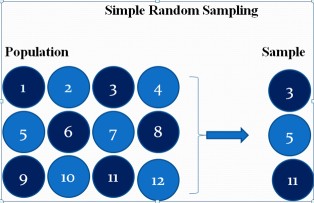
Simple random sampling:

The principle of simple random sampling is that every object has the same probability of being chosen (purely random).

There are many ways to obtain a simple random sample. One way would be the use of a lottery method.

Procedure of the lottery:

  • Each member of the population is assigned a unique number or name. The numbers are written on similar pieces of paper, which are folded, placed in a bowl, and thoroughly mixed.
  • Then, a blindfolded researcher selects one at a time without replacement until he/she has the required number of subjects in the sample.

Summary of Simple random sampling technique:

  • Determine the population of interest by specific characteristics.
  • Decide on the sample size.
  • Create a sample frame (list all subjects).
  • Select subjects randomly from the sample frame (using the lottery or a random number table).

Advantages of simple random sampling: See those for random sampling above.

Disadvantages of simple random sampling: In case of a heterogeneous population, one subgroup may be under or over-represented leading to bias.
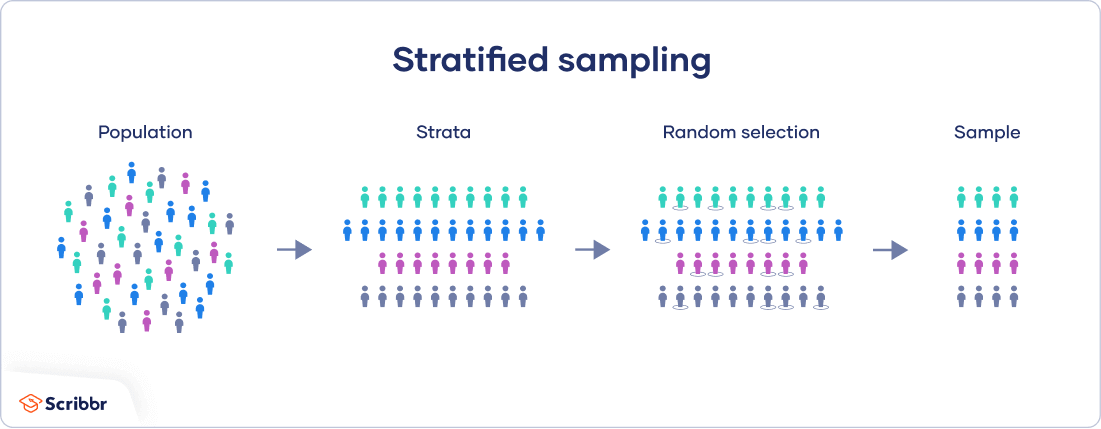
Stratified random sampling:

A population may have subgroups in which a researcher is interested. For example, one may want to ensure that both girls and boys are represented in the sample.

The population is thus divided into subgroups or layers (strata) to represent the subgroups before the sample is drawn.

What is important is that the percentage of the subgroups in the sample must be the same as that in the population. For example, if the percentage of boys and girls in the population are 70% and 30% respectively, then the sample must also have 60% boys and 30% girls.

NB: This method uses stratifying techniques to overcome the weakness of simple random.

Stratified random sampling technique:

  • Decide on a sample size,
  • Create strata based on sound criteria (e.g., tribe),
  • Decide on the number of representatives to pick from each stratum, and
  • Randomly carry out the sampling.

Example: Consider a school with a total of 1000 students, where 600 are boys and 400 are girls, and suppose that a researcher wants to select 100 of them for a research study.

  • The population has 600/1000 x 100 = 60% boys.
  • The population has 400/1000 x 100 = 40% girls.

The sample of 100 must, therefore, have 60% boys = 60/100 x 100 = 60 boys.

Similarly, the subgroup of girls will have 40% girls in the sample = 40 girls.

Randomly carry out 60 boys from the strata of boys and 40 girls from the girls’ strata to make a sample size of 100 needed by the researcher.
Systematic sampling:

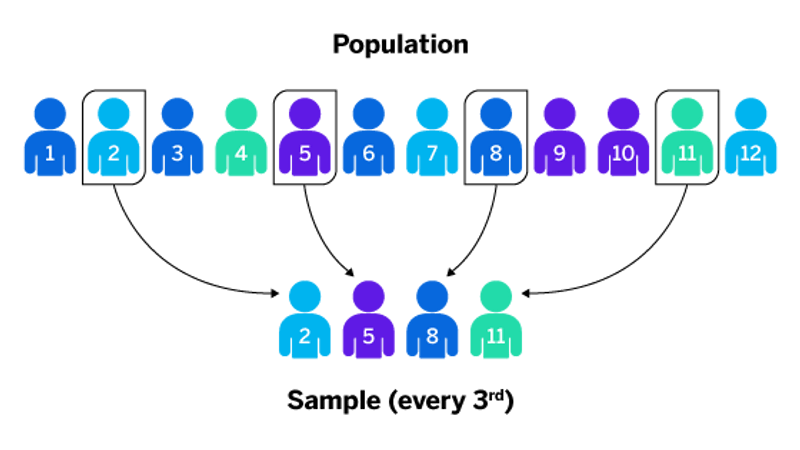
This method relies on arranging the target population according to some ordering scheme and then selecting elements at regular intervals through that ordered list. However, to avoid bias, the starting element has to be randomly chosen.

The number in the population is divided by the required sample to get the interval.

Example: Suppose you want to sample 8 houses (sample size) from a street of 120 houses (population).

120/8 = 15 (interval), so every 15th house is chosen after a random starting point between 1 and 15. If the random starting point is 11, then the houses selected are; 11, 26, 41, 56, 71, 86, 101, and 116.

NB: This method is not purely random because some elements have more chances of being chosen than others. For example, in the above example, houses 1-15 have more chances of being selected than houses 16-120.

Systematic sampling is the best method for a big homogeneous population. It is easy to administer.

Summary of Systematic sampling process:

  • Define the population.
  • List the sample frame of all members in a certain order.
  • Determine the interval (population/sample size).
  • Systematically sample the population using the interval beginning with a random starting element.

Cluster sampling:

Cluster sampling is a type of sampling that involves dividing the population into groups (clusters). Then, one or more clusters are chosen at random (from all clusters, a random sample is made) and everyone within the chosen cluster is sampled.

NB:
1. The clusters are the ones that are randomly chosen.
2. All subjects in the random clusters are used for the study.

This method is useful when it is impossible to make a list of subjects scattered over a large area. Instead of making a list, a map of the area showing political, geographical, or other types of sub-division can be used in what we call cluster or area sampling.

Multi-stage sampling or multi-stage cluster sampling:

Using all the sample elements in all the selected clusters, as seen in cluster sampling above, may be prohibitively expensive or unnecessary. Under these circumstances, multi-stage cluster sampling becomes useful.

Instead of using all the selected clusters, the researcher randomly selects elements from each cluster; however, several levels of cluster selection are applied before the final sample elements are reached.

For example, household surveys begin by dividing metropolitan regions into ‘districts’ (first stage). The selected districts into blocks, and the blocks are chosen from each selected district (second stage).

Next, dwellings are listed within each selected block, and some of these dwellings are selected (third stage). This method makes it unnecessary to create a list of every dwelling in the region and necessary for only selected blocks.

Non-Random Sampling Methods

These are sampling methods where some elements of the population have no chance of selection; or where the probability of selection can’t be accurately determined. They are mainly used in qualitative studies.

Advantages of Non-random sampling methods:

  • They are cheap.
  • They have a less complicated approach to sampling.
  • They offer faster results.
  • They usually do not need to have a list of all members of the population.

Disadvantages of Non-random sampling:

  • These methods are not random, thus prone to human error and bias.
  • They are better applied when research findings are not generalized beyond the sample.
  • Statistical analysis of sample results is not appropriate when non-random sampling methods are used. For example, a researcher cannot use statistical methods to define a confidence interval around the sample mean.

Types of non-sampling methods:

Convenient Sampling:

Sampling depends on the convenience of the researcher. The sample is selected on the basis of how accessible, convenient, and cooperative a subject may be. For example, if there are ten parishes, one can choose two parishes that are nearest to one.

Purposive/Judgmental Sampling:

The sampling depends entirely on the researcher’s interest and judgment. For example, one can choose to select only nurses on duty.

Snowball Sampling Method:

The respondents to be included in the study are recommended by colleagues who know they can offer good data. Each person interviewed suggests the next respondent to interview.

Quota Sampling:

Is a non-probability version of stratified sampling. In quota sampling, a population is first segmented into mutually exclusive sub-groups, just as in stratified sampling. Then judgment is used to select the subjects from each segment based on a specified proportion.

Accidental Sampling:

The respondents included in the study are not deliberately selected, but the sample is incidental to prevailing circumstances. For example, if you stand in front of the university gate and interview every student who passes by.

NB:
i) Sampling errors arise from drawing wrong conclusions or generalizing issues based on findings drawn from a small sample. The errors are normally less when the sample size is big, and sampling is random.
ii) Non-probability sampling does not allow the estimation of sampling error.

Sampling Designs & Sampling Techniques

I. PROBABILITY / QUANTITATIVE / RANDOM SAMPLING DESIGN

Sampling Techniques/ method Description of the method
i) Simple Random Sampling (SRS)

This is a probability sampling method where each element or participant has a known and equal chance of being selected into the sample.

Probability of selection = n / N

where
n is the sample size that was determined under subsection 3.4
N is the study population or accessible population determined under section 3.3

Note that;

  1. SRS procedure includes the use of Lottery method or using Random numbers.
  2. This is the most flexible method and simplest probability sampling technique.
ii) Systematic Sampling

This is a probability sampling method where a researcher obtains the respondents (his sample) by selecting every Kth subject of the study population. The first respondent is selected randomly from the rank 1 to K.

In this case K is the skip interval implying that the researcher will choose every Kth item for example if K is 10 then the researcher will choose all the 10th element

K = N / n

Where
K is the skip interval size
N is the study population or number of units of accessible population
n is the sample size.

Procedure is

  1. You start by numbering the elements in the study population from 1 to N.
  2. Compute the size of the skip interval "k" from K = N/n
  3. Determine the random start, any participant between 1 and K in the population.
  4. Then draw the sample by choosing every Kth element.
iii) Stratified Sampling

This is a form of sampling where the researcher divides the population into groups which are internally homogenous or subsets that share similar characteristics but externally heterogeneous (Heterogeneity between subgroups).

In this case the whole population is referred to as a strata while as the individual groups or mutually exclusive populations are referred to as stratum for example a researcher may choose to divide an organization according to departments, gender of staff, age group of staff or level of education.

Procedure appropriate

After the sub populations are generated, then a simple Random Sample can be taken within each stratum then the results from the investigation or study can be weighted by the researcher, then combined into appropriate population estimates.

Stratified Random sampling is mainly used because;

  1. It increases efficiency (reduces cost, time & efforts)
  2. Increases precision estimates
  3. Enables the researcher to use different research methods and procedures in different stratums.
iv) Cluster Sampling

This is a form sampling where the population is divided into many sub-groups (known as clusters) that are internally heterogeneous but externally homogenous (Researcher ensures homogeneity between sub-groups). The researcher then randomly chooses several subgroups or clusters that he/she then studies or examines in-depth in order to make inferences about the whole population.

Considering Kampala District as a population. While using cluster sampling, this can be divided into Divisions which include; Nakawa, Kawempe, Rubaga, Makindye and Central, those divisions are the clusters.

A researcher may choose to study these divisions or first subject them to further sampling for example Makindye may be divided into two sub-clusters that include; Makindye East and Makindye west then the researcher randomly selects sub-clusters & examines the clusters in details to make inferences about the entire population.

Note that;

Cluster sampling is usually adopted because it's highly economic efficient (can be implemented with minimal costs).

As compared to SRS which states that every participant has a chance of being selected into the sample and the chance is equal for all members, PPS sampling assumes that each member of a survey population has a chance of being selected in the sample but the chance is not the same for all units it rather depends on the size of each unit. Therefore, the bigger the size of the element, the higher the likelihood of being selected into the sample. Therefore the definition and measure of size must be accurate enough.

There are two basic forms of PPS, these include

  1. Probability Proportionate to Size with replacement sampling (PPSWR)
  2. Probability Proportionate to Size without replacement sampling (PPSWOR).
v) Probability Proportional to Size sampling

This is a sampling method where the researcher used more than one sampling method in a single study.

The researcher therefore uses sampling at different stages to progressively select smaller Sampling Units (SU's) until the elements of the sample have been selected through a random procedure

Use of Multi-stage sampling is common when using;

Stratified Sampling where the study area is divided into subgroups known as stratums which are further subjected to SRS while selecting elements or the subgroups or stratums which may be considered as Primary Sampling Units (PSU's) and further sub divided into Secondary Sampling Units (SSU's) which are now studied in detail.

Cluster sampling where the study area may be divided into clusters, which are the Primary Sampling Unit (PSU's) and they may be further divided into small units or sub-clusters which are considered as the Secondary Sampling Units (SSU's) which are now examined or studied in detail.

vi) Multi-Stage Sampling

For Example,

A researcher may be interested in studying the "Prevalence of Domestic violence among of households of Tororo district in Uganda.

In this case Tororo District will be considered as the study area but then subdivided into Counties (This is first stage sampling) then the selected counties are further subdivided into Sub-counties (this is the second stage sampling) then the selected sub-counties are further sub-divided into Parishes/ Wards (this is third stage sampling), then further the selected parishes/ wards are sub-divided into Villages/ Cells (this is forth stage sampling) and finally the researcher may use systematic sampling or simple Random sampling to select households into his sample for an in-depth study or examination.

That is referred to as Multi-stage sampling or Sequential sampling or Multi-phase sampling

II. NON-PROBABILITY / NON-RANDOM SAMPLING DESIGN

Sampling Techniques / method Description of the method
i) Convenience sampling

This is a form of non-probability sampling also known as Accidental sampling or grab sampling or opportunity sampling.

Convenient sampling is therefore a non-probability form of sampling where a researcher selects an element to be part of the study population as long as it is easily accessible to the researcher.

Note that;

  • Under convenience sampling the proximity of a respondent to the researcher is a key determining factor in sample selection.
  • This form of sampling is the easiest to conduct, does not require a lot of expertise and as well the cheapest.
  • Convenience sampling is the least reliable sampling method.

Example of Convenience Sampling;

Journalists or news reporters collecting opinions about a burning issue in Nairobi, they use intercept interviews where they find anyone within Nairobi city either on the Streets, Vendors, Shop keepers, Taxi drivers, Boda-boda riders, Pedestrian or those in their offices and immediately request you to respond to their interview.

This method is unreliable in the sense that most informants don't have authority about the subject area since they are just grabbed or intercepted.

ii) Purposive sampling

This is a non- probability sampling method also known as Selective Sampling or judgmental sampling or subjective sampling.

This is a form of sampling where the researcher selects elements or informants that he/she believes are appropriate or connected to the study.

Note that;

The researcher will base his/her section of elements on;

  • The objectives of the study,
  • Characteristics of the population,
  • Pre-determined selection criterion,
  • Researchers interest &
  • Experience of the researcher.

Example of Purposive or Selective Sampling;

A researcher examining "Conflict and staff performance" may choose to interview the HR manager of an organization because the researcher assumes that the HR is more informed about the subject matter than any other person in the organization.

Therefore, in this case selection is done purposively

iii) Snowball sampling

This is a non-probability sampling technique also known as chain-referral sampling or chain sampling or Referral sampling.

This is a form of sampling where the researcher finds it difficult to identify elements of the study but endeavors to identify the first element and this subject or element recommends or refers the researcher to the next element who subsequently refers to the next respondent/ element and the sequence continues until the researcher gets the required information or reaches the saturation point (where no new ideas are being generated).

Therefore the sample increases in a chain style.

As the ball rolls down, it keeps increasing through picking up relevant elements.

Examples of elements that are difficult to identify may include;

  • A study where key informants are Professors in Botany, Professors Zoology or even in Professors Statistics you may need to first identify one professor and then have him or her lead you to subsequent professors since they tend to know each other.
  • A study where key informants of interest are Thieves, Prostitutes, Homosexuals & Lesbians among others.
iv) Quota sampling

This is almost the same as stratified sampling but the difference is that in this case there is no randomization.

Note that;

The above cases among others are very difficult to identify and you need to win the confidence of one to lead you to another.

Therefore quota sampling is a non-probability sampling technique where the population is divided into subgroups that are internally homogenous. These sub-groups are then studied and inferences then made.

For example;

If the study population is the MBA 15 class, the researcher may choose to have a sub-cohort / group of female and another for male or have marrieds and un married students or working and non-working students, in this case the researcher will not use any statistical method while subdividing the population.

Note that;

The pertinent issue is that, these cohorts must be internally homogenous (With common characteristics) and arrived at using non-randomization technique

These include;

  • Probability or Random or Quantitative sampling design
  • Non-probability or Non-Random or Qualitative sampling design.

These designs can be used differently but in a study where the research approach is mixed methods then the researcher may triangulate both probability and non-probability sampling design.

REASONS WHY YOU SHOULD USE SAMPLING THAN A CENSUS

  1. In academic research it's usually a university policy that binds a student/researcher to use sampling as compared to a census.
  2. Sampling is more economical, using a sample requires little resources than a census. Resources in form of Materials, Technology, Time & Finances among other.
  3. Sampling leads to increased coverage, As compared to a census, sampling enables the researcher to cover a greater scope in terms of content and geographical scope.
  4. Results of sampling are considered to be more reliable and accurate, while conducting a census you may need to employ a lot of research assistants, data entrants & data analysts which compromises quality as some of these may not be experienced in the field while as you need very few but experienced staff for a sample survey.
  5. Sampling yields timely results, as compared to a census which may even take more than a year, a sample survey provides results urgently.
  6. Sampling promotes easy accessibility, since not all elements are always accessible. Remember you always have a target population and the accessible population, therefore this gives sampling an advantage over a census which ignores issues of inaccessibility of some elements of the population.
  7. Sampling data is usually of a better quality than census data
  8. Destructive or contaminative nature of many populations. Among other reasons.
  9. Greater speed of data collection, a researcher can easily collect all the required data in a sample than in a census.
  10. It's easy to analyze data from a sample than that of a census since there is less data in samples than a census; therefore sampling reduces on the likelihood of non-sampling errors.
Sampling Errors

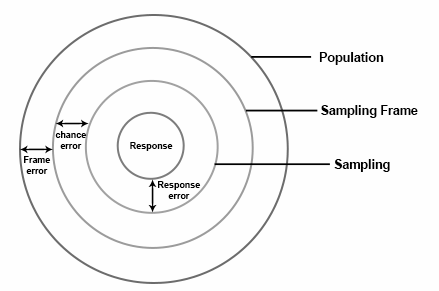
Sampling errors are the unavoidable differences between a sample's calculated statistics (e.g., mean, proportion) and the true, unknown population parameters, occurring simply because a subset rather than the entire population is measured. These, along with non-sampling errors, form total survey error. Increasing sample size reduces this error.

Causes: Primarily due to random variations in selecting samples ("luck of the draw") or, in some cases, biased selection methods.

Types:

  • Population Specification Error: Incorrectly defining the population for the study.
  • Sampling Frame Error: Using an inaccurate or incomplete list of the population (e.g., using a phone book that excludes unlisted numbers).
  • Selection Error (Sample Bias): Instances where the sample is not representative of the population, such as using convenience sampling.
  • Sample Size Error: Samples that are too small to yield accurate, reliable data.
  • Random Error: A wrong result due to chance. This can be overcome by increasing the sample size.
  • Systemic Error: A wrong result due to bias.

Calculation: The margin of error (a common, practical measure of sampling error) is calculated by multiplying the standard error by the z-score (e.g. for a 95% confidence level).

Reduction: To minimize, increase the sample size and ensure the sampling method is truly random or representative.

Study Population & Sampling Read More »
Research Designs/Study Design

Research Designs/Study Design

RESEARCH DESIGNS / STUDY DESIGN

Study or Research design defines the approaches, methods and the rationale of picking that appropriate research design.

  • Eg: descriptive cross sectional design
  • Approaches can be Quantitative/qualitative or both
  • Note: that it is advisable to use one of these at our level.

Research design acts as a blueprint for conducting a research study, outlining how variables will be operationalized for measurement, the selection of the sample of interest, data collection methods, and the intended means of data analysis.

Zikmund (1988) defines research design as a master plan that specifies the methods and procedures for measuring, collecting, and analyzing data.

At the core of a research design are answers to crucial questions:

  • How will the study be conducted?
  • What procedures will be adopted to obtain answers to research questions?
  • What kind of data needs to be collected?
  • How will the tasks required to complete the various research components be carried out?

Importance of Research Design

A robust research design is crucial for the success and validity of any study. Its importance can be summarized as follows:

  • Foundation for Research: A well-defined research design acts as the solid base upon which the entire research stands. It provides a firm foundation, ensuring the study is structured and coherent from its inception.
  • Smooth Research Operations: It ensures all research activities run smoothly and efficiently. By clearly outlining the steps and processes, researchers know what to expect and what comes next, minimizing disruptions.
  • Efficiency Maximization: A good design provides maximum information with minimal effort, time, and cost. It makes research as efficient as possible by giving maximum information with minimum expenditure of effort, time, and energy.
  • Blueprint for Research: Just as an architect needs a blueprint for building a house, research needs a proper design for conducting a study. This blueprint guides the entire process, from data collection to analysis.
  • Simplifies Work: A carefully planned design simplifies work by ensuring that limitations are predetermined and solutions are already at hand, allowing researchers to overcome potential challenges effectively.

A well-planned research design is like a strong foundation for your study, making the research process efficient and effective.

Factors That Influence Choosing a Research Design

Several factors play a significant role in determining the most appropriate research design for a study. These include:

  • Researcher’s Knowledge: The researcher’s familiarity with a particular design.
    • Example: If a researcher is well-versed in qualitative research methods, they may choose to conduct an ethnographic study to gain an in-depth understanding of a specific community.
  • Resource Availability: Availability of time, human resources, and willing respondents.
    • Example: In a time-sensitive study, a researcher might opt for a cross-sectional design due to its efficiency in data collection and analysis.
  • Ethical Considerations: Ethical aspects, including the ethical treatment of respondents.
    • Example: In a study involving vulnerable populations, such as children, ethical considerations may lead the researcher to choose a design that prioritizes the protection of participants, like an experimental design.
  • Feasibility and Relevance: The practicality and relevance of the design to the study.
    • Example: A large-scale public health survey may require a design that is both feasible and relevant, such as a cross-sectional study that provides a snapshot of health trends in a population.
  • Geographical Scope: The extent of the geographical area to be covered.
    • Example: A study investigating regional variations in climate change impacts might choose a design that covers multiple countries and regions to capture a broad geographical scope, such as a comparative case study.
  • Equipment Availability: Access to necessary research equipment and tools.
    • Example: Research requiring advanced scientific equipment, like electron microscopes, would naturally be influenced to adopt experimental research designs.
  • Research Type: The specific type of research, e.g., cross-sectional or longitudinal.
    • Example: If a researcher aims to understand changes over time, they may select a longitudinal design to follow the same group of participants at multiple points in time.
  • Control: The level of control the researcher can maintain over the study.
    • Example: In a medical study testing a new drug’s effectiveness, a randomized controlled trial (RCT) design would provide a high level of control over the research conditions and variables.
  • Population Type: The characteristics of the population under study.
    • Example: Research on consumer preferences might employ a certain design to ensure the population’s characteristics are accurately represented in the study.
  • Types of Research Designs

    There are three main overall methodologies (or designs): Qualitative, Quantitative, and Mixed.

    Qualitative Research Designs:

    • Qualitative research designs are primarily exploratory and descriptive in nature.
    • They aim to understand and interpret the underlying meaning of phenomena.
    • Qualitative studies often involve collecting non-numerical data such as text, images, or observations.
    • Common qualitative research designs include phenomenology, ethnography, grounded theory, and case studies.

    Quantitative Research Designs:

    • Quantitative research designs focus on collecting and analyzing numerical data.
    • They are structured, objective, and use statistics to establish relationships between variables.
    • The primary goal of quantitative research is to measure, describe, and explain phenomena through numerical data.
    • Common quantitative research designs include descriptive, analytical, experimental, and correlational studies.

    Mixed Research Designs:

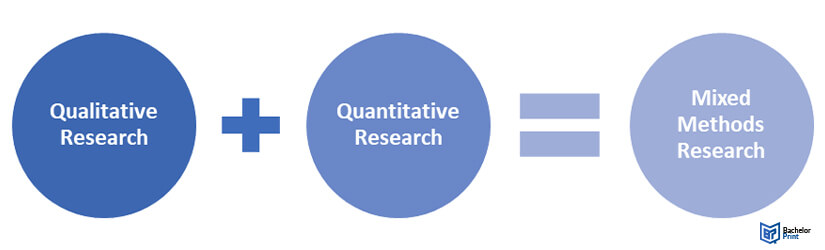
    • Mixed research designs combine elements of both qualitative and quantitative research within a single study.
    • These designs aim to provide a comprehensive understanding of complex research questions.
    • Researchers typically collect and analyze both numerical and non-numerical data, often in two distinct phases, with one method informing the other.
    • The choice of mixed design depends on the research objectives and the need for a holistic approach to the research question.

    Below are some Research designs under each main design. There are many types of research designs, but we are going to explain the most commonly used/examined research designs.

    Methodology Research Design Overview

    Research Design Type Specific Designs
    Quantitative
    • Experimental
    • Analytical
    • Descriptive
    • Correlational
    • Quasi & Comparative
    Qualitative
    • Phenomenology
    • Ethnography
    • Grounded Theory
    • Case Study
    Mixed/Other
    • Cross-Sectional Study
    • Longitudinal Study
    • Retrospective Study
    • Cohort Study
    • Randomized Controlled Trial
    • Comparative Study

    Qualitative vs. Quantitative Research Designs

    Qualitative research deals with phenomena that are difficult or impossible to quantify mathematically, such as beliefs, meanings, attributes, and symbols.

    Quantitative research deals with phenomena that are possible to be quantified mathematically. For example, experimental studies are quantitative in nature.

    Aspect Qualitative Quantitative
    Nature of Data Non-numerical (text, words) Numerical (numbers, measurements)
    Number of Respondents Fewer respondents Larger number of respondents
    Research Aim Formulation of hypotheses Testing formulated hypotheses
    Researcher’s Knowledge Limited knowledge on the topic More knowledgeable about the topic
    Nature of Data Collection Subjective (relies on respondents) Objective (researcher gathers data)
    Conclusiveness of Results Inductive (results inconclusive) Deductive (results are conclusive)
    Questioning Approach General and broad questions Specific and narrow questions
    Bias in Research Highly biased Less biased (researcher in control)

    RESEARCH APPROACHES, RESEARCH DESIGNS AND WHAT THEY MEAN

    Research Approach Research design Meaning of the Research Design
    Quantitative Experimental design

    While using this design the researcher considers two cohorts or groups, one group receives the intervention (X), this is referred to as the treatment group while as the other group does not receive the intervention (X₁) this group is referred to as the control group. In this case the researcher is interested in assessing whether the intervention impacted on the treatment group and assessment of the counterfactual situation.

    1. Remember the interest of the researcher is to examine whether the independent variable (X) affects the dependent variable (Y) or not.
    2. The research will observe the behavior of the treatment group then make comparisons after a given period of time.
    3. In this case the treatment and control group's must be equivalent.
    4. Assignment of elements or subjects into these groups is random.

    Note that: These two groups must be protected against the influence of other external factors or forces.

    Some of the challenges faced in using this method include;

    • Selection bias
    • It requires a lot of expertise
    • Challenge of ensuring internal validity since we assume that the two groups are equivalent.
    • This is the most expensive design to adopt.
    Qualitative & Quantitative Quasi-Experimental Design

    However, this design is the most accurate if well executed and the researcher has the capacity to attribute changes or causes and effects including the assessment of the counterfactual (What would be the situation in the absence of the intervention at the same point in time).

    This research design is similar to the experimental research design with both a control and treatment cohort or group but the main difference is that in this research design the researcher does not assign elements or subjects to the cohort randomly but rather the researcher uses naturally occurring comparison groups. Therefore, as compared to experimental design where groups are assumed to be equivalent, in this case they are assumed to be similar but not equivalent.

    Qualitative Non-Experimental research design

    Most of the research designs used are examples of non-experimental research design. In this research design, the researcher does not compare groups.

    In this case the researcher attempts to find a representative sample and as well looks at identifying the characteristics, frequency, correlations and associations.

    Quantitative Correlation Research design

    This research design is used by a research who is interested in examining whether there is a relationship (positive or negative or no relationship) between 2 variables. These must be quantitative in nature.

    This design should be adopted when;

    • The researcher is interested in determining the relationship between quantitative variables.
    • Having 30 or more respondents increases the validity of the study statistical findings.
    Quantitative Descriptive Research design

    This is a research design that supports the researcher to adopt the unit of analysis in a more accurate way.

    Therefore, adopting this research design will enable the researcher to describe the state of affairs as they actually exist.

    Qualitative Exploratory Research Design

    This form of research design is adopted when the researcher does not have a vivid or clear picture of the problems he/she is likely to encounter during the study. This is usually used when the researcher is trying to explore a new field or a field that has not been well studied usually with little or no information about it.

    Therefore, the researcher aims at getting familiar with a formerly virgin field.

    Note that: this design is used when;

    • The area has not been previously well studied for example previous researchers could have considered it as vague therefore committing little or no time to study it.
    • The researcher could have a topic but failed to generate objectives and needs to generate them from the field.
    • The researcher may conduct an exploratory study for the sake of being sure about what they are doing.
    Qualitative Case study Research Design

    This research design is adopted when a researcher intends to study a given unit of analysis in detail or holistically as compared to a mere sweeping statistical survey which may not be thorough enough.

    Considering a case study design will enable the researcher to develop an in-depth understanding of a particular situation. Since this design supports the researcher to generate responses to the questions of; Who, What, Where, When & How among others.

    Note that:

    • The findings of such a study may generate a lot of knowledge but may not be used for generalization.
    • It's quite expensive and time consuming to conduct an effective study using the design.

    Researchers should now understand that this is a research design and therefore avoid using it in their research titles for example "A Case Study of FEM Consultants and Research Centre Ltd." That is wrong, it should rather be "A Case of FEM Consultants and Research Centre Ltd"

    Quantitative Cross-sectional Research design

    The researcher adopts a cross-sectional research design when he/she intends to collect data from different respondents aimed at making inferences about the entire population at a point in time (at one point in time).

    This research design is adopted when the researcher intends to gather or collect data from respondents repeatedly over a given period of time.

    Quantitative Longitudinal Research Design

    This design could as well be referred to as "Longitudinal Cohort Design", this is where a researcher intends to collect data from the same participants / group of respondents/ cohort over a given period of time.

    This design is usually adopted in clinical psychology, in social personality and in Developmental psychology to examine changes in behaviors, thoughts as well as emotions.

    Note that:

    • The main purpose of such a design is to enable the researcher examine for consistence (Reliability) of results.
    • Examine whether there is a difference within the unit of analysis over time (the specified period of time).
    Qualitative One-short case study research Design

    This form of research design is used when the researcher expects to expose a single cohort test unit to an intervention and there-after that cohort is measured for purposes of making inferences.

    Important to note is that this design as well ignores the control group and only analyses the post-test results.

    Note that: Researchers must always provide a justification for the choice of design they have used or intend to use.

    Experimental Study Design

    Experimental study design involves introducing an intervention assumed to be the ’cause’ of change and waiting until it has produced or has been given sufficient time to create that change. Some essential experimental study designs include the following:

    1. After-only design: In this approach, the researcher knows that the population has been exposed to an intervention. They aim to study its impact on the population. Information about the baseline is usually gathered from respondents’ recall of the situation before the intervention or from existing records. This design is commonly used in impact assessment studies.
    2. Before-and-after design: This design addresses the issue of retrospectively constructing the ‘before’ observation by establishing it before introducing the intervention to the study population. Subsequently, when the program is fully implemented or assumed to have its effect on the population, an ‘after’ observation is conducted to determine the intervention’s impact.
    3. Control group design: In the control group design, the researcher selects two population groups – a control group and an experimental group. These groups are expected to be as comparable as possible in every respect except for the intervention. The experimental group receives or is exposed to the intervention, while the control group is not. Initially, the ‘before’ observation is made on both groups simultaneously. Subsequently, the experimental group is exposed to the intervention. When it is assumed that the intervention has had an impact, an ‘after’ observation is conducted on both groups. Any difference in the ‘before’ observation between the groups concerning the dependent variable(s) is attributed to the intervention.

    General Characteristics of Experimental Designs

    • Direct manipulation of independent variables in a controlled environment.
    • Examination of the effect of independent variable(s) on one or more dependent variables.
    • Focus on testing hypotheses.
    • Total control of extraneous variables.
    • Generation of empirical findings with internal and external validity.
    • Some experimental designs use control and experimental groups (pure experimental design).

    Advantages of Experimental Design

    • It enables the researcher to control the situation, helping answer the question, “What causes something to occur?”
    • It allows identification of cause-and-effect relationships between variables and distinguishes placebo effects from treatment effects.
    • Experimental research designs support the ability to limit alternative explanations and infer direct causal relationships in the study.
    • This approach provides the highest level of evidence for single studies.

    Disadvantages of Experimental Design

    • Experimental design can be artificial, and results may not generalize well to the real world.
    • The artificial settings of experiments may alter participants’ behaviors or responses.
    • Experimental designs can be costly if they require special equipment or facilities.
    • Some research problems cannot be studied using experiments due to ethical or technical reasons.
    • It can be challenging to apply ethnographic and other qualitative methods to experimentally designed studies.

    Cross-Sectional Study Design

    Cross-sectional study design is a research approach that involves different groups of people who vary in the variable of interest but share other characteristics, such as socioeconomic status, educational background, and ethnicity. For instance, researchers may select groups of people who are quite similar in most aspects but differ only in age. This allows any observed differences between groups to be attributed to age rather than other variables.

    Cross-sectional studies are typically observational and are commonly used in descriptive research.

    Characteristics of Cross-Sectional Studies

    • Researchers record existing information within a population without manipulating variables.
    • Data collection occurs at a single point in time.
    • This research design describes characteristics within a population but does not establish cause-and-effect relationships between different variables.
    • It enables researchers to investigate multiple aspects simultaneously, such as age, income, and gender.

    What Cross-Sectional Studies Can Reveal

    1. Cross-sectional studies provide a snapshot of outcomes and associated characteristics at a specific point in time.
    2. Unlike experimental designs that involve active intervention to induce and measure change or create differences, cross-sectional studies focus on studying and drawing inferences from existing differences among people, subjects, or phenomena.
    3. Data is collected at a particular moment in time.
    4. While longitudinal studies require multiple measurements over an extended period, cross-sectional research aims to identify relationships between variables at a single moment.
    5. Groups chosen for study are deliberately selected based on existing differences in the sample rather than random sampling.
    6. This method can estimate the prevalence of an outcome of interest because the sample typically represents the entire population.
    7. Cross-sectional designs often use survey techniques for data collection, making them relatively cost-effective and efficient.

    Disadvantages and Challenges of Cross-Sectional Design

    1. Finding individuals, subjects, or phenomena that are very similar except for a specific variable can be challenging.
    2. Results are static and time-bound, offering no insights into the sequence of events or historical contexts.
    3. Cross-sectional studies cannot establish cause-and-effect relationships.
    4. This design provides only a single snapshot of analysis, which may yield different results if conducted at another time.
    5. There is no follow-up to the findings.

    Characteristics of Cross-Sectional Research Design

    • No time dimension.
    • Focuses on existing differences rather than changes following intervention.
    • Groups are selected based on existing differences rather than random allocation.

    Note: Cross-sectional research design differs from longitudinal research, which involves taking multiple measurements over an extended period of time.

    Longitudinal Research Design

    This is a study design that involves a series of sample measurements taken over a period of time. The study focuses on specific respondents or a sample over a specified period, examining changes in behavior.

    Examples

    1. A study of a specific group of children’s academic performance over time.
    2. A study of the stages of human development by following a child from birth to adulthood.

    Longitudinal studies provide deeper insights into issues. However, they can be expensive in terms of both time and money. Such studies may face setbacks if a respondent dies or transfers.

    Longitudinal studies are further subdivided into Panel and Trend studies.

    Panel Study: Involves using the same group or individual throughout the study period. One sample is studied continuously.

    Trend Study: Involves different homogenous groups or samples in phases over the study. The results obtained from the study are then analyzed and compared to investigate trends of change. For example, one can observe the trend of change in the behavior of 1st-year students admitted in 2001 and 1st-year students admitted in 2002 using a trend longitudinal study.

    What Longitudinal Studies Tell You

    1. Longitudinal data help analyze the duration of a specific phenomenon.
    2. Enables researchers to approach causal explanations usually achievable only through experiments.
    3. Permits the measurement of differences or changes in a variable from one period to another, describing patterns of change over time.
    4. Facilitates predicting future outcomes based on earlier factors.

    What Longitudinal Studies Don’t Tell You

    1. The data collection method may change over time.
    2. Maintaining the integrity of the original sample can be difficult over an extended period.
    3. It can be challenging to show more than one variable at a time.
    4. This design often requires qualitative research data to explain fluctuations in the results.
    5. A longitudinal research design assumes that present trends will continue unchanged.
    6. It can take a long time to gather results.
    7. A large sample size and accurate sampling are needed to reach representativeness.

    Case Study/Case Report Designs

    A case study is an in-depth examination of the behavior of a specific phenomenon, such as a person, a group of people, an object, or a situation within a limited environment. The findings from a case study can be generalized to represent other cases within a population of interest. For instance, one can study the behavior of a child or a group of children from birth to adulthood and then generalize the results to other children.

    What Case Studies Don’t Tell You (Disadvantages)

    1. A single or a small number of cases offer limited grounds for establishing reliability or for generalizing the findings to a broader population of people, places, or things.
    2. Intensive exposure to the study of a case can bias a researcher’s interpretation of the findings.
    3. This design does not facilitate the assessment of cause-and-effect relationships.
    4. Vital information may be missing, making the case challenging to interpret.
    5. The case may not be representative or typical of the larger problem under investigation.
    6. If a case is selected because it represents a very unusual or unique phenomenon or problem for study, then the interpretation of the findings can only apply to that specific case.

    Retrospective and Prospective Study

    A retrospective study is a longitudinal study that examines data from the past. For example, a researcher may review medical records from previous years to identify trends. In essence, retrospective studies “look back” in time. On the other hand, prospective studies “look forward” by collecting data as events unfold.

    Retrospective Study Example in Health: A retrospective study in health might involve examining historical medical records of cancer patients to determine the effectiveness of a particular treatment protocol used in the past. Researchers can analyze the outcomes of these patients based on the treatment they received and other variables to gain insights into the treatment’s success rates.

    Prospective Study Example in Health: A prospective study in health could involve tracking a group of pregnant women from early pregnancy through childbirth and beyond. Researchers would collect data on factors like prenatal care, diet, and lifestyle, and follow the women to monitor pregnancy outcomes, birth complications, and the health of their babies after birth. This type of study helps in understanding the factors that influence maternal and child health during and after pregnancy.

    Cohort Study Design

    A cohort is a group of individuals who share a common characteristic or experience. For instance, a group of people born on the same day or during a specific period, like 1981, can form a birth cohort. The cohort design is a type of observational study in which one or more groups (cohorts) are followed over time, and subsequent assessments are made to determine the association between the initial characteristics or risk factors of the participants and specific outcomes or diseases. As the study progresses, the outcomes of participants in each cohort are measured, and researchers analyze the relationships with particular characteristics.

    Example of a Cohort Study

    To investigate whether tobacco exposure is associated with the development of lung cancer, an investigator forms two groups (cohorts) of adolescents. One group consists of individuals who have never smoked tobacco and continue to refrain from smoking (unexposed), while the other group comprises tobacco smokers (exposed). The investigator then follows both groups for a specified period and observes how many individuals in each cohort develop the disease and how many do not. Below is a table illustrating the outcomes:

    Cohort Develop Disease Do Not Develop Disease Total Incidence of Disease
    Smoke tobacco 84 2916 3000 0.028
    Do not smoke tobacco 87 4913 5000 0.0174

    Advantages of Cohort Studies

    • Subjects in cohorts can be matched to limit the influence of confounding variables.
    • Cohort studies can demonstrate that potential causes precede the outcomes.
    • Original or secondary data can be used in this design.
    • Cohort studies are often less expensive and easier to conduct than randomized controlled trials.

    Disadvantages of Cohort Studies

    • Identifying cohorts can be challenging due to confounding variables.
    • Lack of randomization may lead to imbalances in patient characteristics.
    • Blinding or masking is difficult in cohort studies.
    • Outcomes of interest may take time to occur.
    • Additionally, they might take a long time to complete, potentially impacting the validity of findings. The lack of randomization in cohort studies also reduces their external validity compared to randomized studies.

    Randomized Controlled Trial (RCT)

    The primary difference between a Randomized Controlled Trial (RCT) and a cohort study is the random selection of samples. RCTs involve the random allocation of participants to different clinical interventions, including a control group. These trials seek to measure and compare the outcomes following the interventions. RCTs are purely experimental and quantitative in nature.

    Example: In a study to determine whether painkillers are necessary for males who have just undergone circumcision, 200 eligible men were randomly assigned to two groups. One group received Panadol tablets as pain relief immediately after surgery, while the other group received a placebo. The results showed that a majority (90%) of patients given Panadol reported no pain, whereas over 90% of patients on the placebo reported significant pain.

    Advantages of RCT

    • RCTs are considered the most reliable form of scientific evidence.
    • They reduce spurious causality.
    • RCTs influence healthcare policy and practice.

    Limitations of RCT

    • The external validity of RCT results may be limited.
    • Ethical concerns may arise in some situations.
    • The time required to observe outcomes can be extensive.

    Case Series/Clinical Series

    A case series is a descriptive study that follows a group of patients or subjects with known exposure, such as individuals who have received similar treatments or whose medical records are examined for exposure and outcomes. Case series can generate hypotheses for further studies but cannot establish causal relationships.

    Internal validity in case series studies is generally low because they lack a comparator group exposed to the same intervening variables.

    Correlation Study Design

    A correlation study investigates whether two variables are correlated, meaning an increase or decrease in one variable corresponds to a change in the other. However, correlation does not imply causation. Three types of correlation exist: positive, negative, and no correlation.

    A correlation coefficient, which ranges from +1 to -1, is typically used to quantify the strength and direction of the correlation between variables.

    There are three primary types of correlation

    1. Positive Correlation: This type of correlation occurs when an increase in one variable is associated with an increase in another, and a decrease in one variable is linked to a decrease in the other. For example, an individual’s wealth may exhibit a positive correlation with the number of rental houses they own. This suggests that as wealth increases, so does property ownership.
    2. Negative Correlation: Negative correlation is observed when an increase in one variable is connected to a decrease in another, and vice versa. For instance, there might be a negative correlation between the level of education in a country and its crime rate. If education levels improve in a country, the crime rate tends to decrease. However, it’s essential to note that this does not mean that a lack of education directly causes crime. Both factors might share a common underlying cause, such as poverty.
    3. No Correlation (Uncorrelated): In cases of no correlation, changes in one variable do not correspond to changes in the other, and vice versa. For example, among millionaires, there may be no correlation between their level of wealth and their level of happiness. This indicates that an increase in wealth does not necessarily lead to an increase in happiness.

    Comparative Study Design

    Comparative studies involve examining two or more cases, specimens, or events that share similarities in some aspects but differ in others. The goal is to determine the reasons for these differences and to generalize findings to larger groups from which the cases originated. The plausibility of generalization increases when several cases from the same group are considered.

    Ethnographical Research Design

    Ethnographical research, often referred to as ethnography, involves the in-depth study of naturally occurring behavior within a particular culture or social group. Its primary aim is to understand the relationship between culture and behavior. Culture in this context refers to the beliefs, values, and attitudes of a specific group of people. Ethnographic research methods were developed by anthropologists to study and describe human cultures.

    Characteristics of good ethnography, as described by Spindler & Hammond (2000), include:

    1. Extended Participant Observation: Researchers immerse themselves in the culture or social group they are studying and observe behavior over an extended period.
    2. Long Time at Site: Researchers spend a significant amount of time within the community or culture being studied to gain a deep understanding of their way of life.
    3. Collection of Large Volume of Materials: This includes detailed notes, audio recordings, video tapes, and other data, often without having specific hypotheses or predefined categories at the outset of the study.

    Phenomenological Research Design

    Phenomenological research is the study of phenomena, which can be events, situations, experiences, or concepts as they are perceived by individuals. This approach aims to understand and describe the essence of lived experiences from the perspective of the participants. Phenomenology begins with the acknowledgment that there is a gap in our understanding and that clarification will be beneficial.

    In phenomenological research, researchers seek to explore the essence and meaning of experiences as they are lived. It often involves in-depth interviews and analysis to uncover the common themes and structures that underlie these experiences. This research design is valuable in understanding how individuals make sense of the world and their experiences.

    Grounded Theory Research Design

    Grounded theory is a systematic research methodology that aims to develop theories or concepts that are grounded in data. It was developed by sociologists Barney Glaser and Anselm Strauss in the 1960s. The primary goal of grounded theory is to generate new, abstract theories based on empirical observations, rather than testing existing theories.

    Key features of grounded theory research include

    • Data-Driven Approach: Grounded theory starts with data collection and analysis. Researchers gather and analyze data without preconceived notions or hypotheses.
    • Constant Comparison: Data is constantly compared to previously collected data, allowing researchers to identify patterns and categories.
    • Theory Development: Through iterative data analysis, researchers develop theories or concepts that explain the phenomenon under investigation.
    • Sampling: Researchers use purposeful sampling to select participants and gather data that is relevant to the research question.

    Grounded theory is widely used in the social sciences, particularly in fields like sociology and psychology, to develop new theories and understand complex social phenomena.

    Research Designs/Study Design Read More »
    EDUCATIONAL TECHNOLOGY AND TEACHING AIDS

    EDUCATIONAL TECHNOLOGY AND TEACHING AIDS

    EDUCATIONAL TECHNOLOGY AND TEACHING AIDS

    Educational Technology refers to application of scientific knowledge about learning and conditions of learning in order to improve the effectiveness of teaching, learning and evaluation.

    Examples of educational technology include;
     
    • Radios
    • Televisions
    • Computers
    • Projectors
    • Printers
    • Internet
    • Social Media
    • Software Packages

    Purpose of using technology in education

    1️⃣ To reach more students 🌎: Technology transcends physical boundaries, making education accessible to a global audience.

    2️⃣ To transmit information like e-mails 📧: Digital communication tools streamline information dissemination, enhancing communication between educators and learners.

    3️⃣ Assisting in the practice of specific skills 🎯: Interactive simulations and virtual labs allow students to hone practical skills in a safe and controlled environment.

    4️⃣ Serving as a role model like when watching videos of procedures 📹: Video demonstrations and online tutorials provide real-life examples, fostering better understanding.

    5️⃣ Developing certain models or teaching aids to assist in teaching 🧰: Technology aids in the creation of interactive models and multimedia presentations, enriching teaching materials.

    6️⃣ To offer greater opportunities for independent study 📚: Online resources enable self-paced learning, empowering students to explore topics at their own speed.

    7️⃣ Contributes to the provision of feedback by providing students responses in case of inquiry 📝: Technology facilitates prompt assessment and feedback, enhancing the learning process.

    8️⃣ Personalized learning experiences 🎓: Adaptive learning software tailors content to individual student needs, optimizing comprehension and retention.

    9️⃣ Collaboration and teamwork 🤝: Digital platforms promote collaboration among students and with instructors, fostering teamwork skills.

    🔟 Assessment and analytics 📊: Technology enables data-driven assessment and analytics to monitor student progress and adjust teaching strategies accordingly.

    Others purposes include;

    1️⃣ Accessibility and inclusivity ♿️: Assistive technologies make education more accessible to students with disabilities, promoting inclusivity.

    2️⃣ Innovative teaching methods 📲: Technology allows educators to experiment with innovative teaching approaches, making lessons more engaging and interactive.

    3️⃣ Global learning experiences 🌍: Virtual exchanges and international collaborations expose students to diverse perspectives and cultures.

    4️⃣ Lifelong learning 🌟: Technology encourages continuous learning beyond traditional classroom settings, supporting lifelong education.

    5️⃣ Research and information access 📖: Online databases and research tools facilitate access to a vast array of academic resources.

    6️⃣ Environmental sustainability 🌱: Digital textbooks and online materials reduce the need for physical resources, contributing to a more eco-friendly learning environment.

    ADVANTAGES OF EDUCATIONAL TECHNOLOGY.

    1️⃣ It makes education more productive 📈: Educational technology enhances efficiency by streamlining administrative tasks, automating assessments, and providing tools for data analysis. This productivity boost allows educators to focus more on teaching and students to spend their time learning.

    2️⃣ It can give instructions a more scientific base 🧪: Educational technology facilitates data-driven decision-making. Educators can collect and analyze data on student performance to tailor instructional methods, ensuring that teaching is evidence-based and targeted to specific needs.

    3️⃣ It makes education more individualized 🧑‍💻: Technology enables personalized learning experiences. Students can access a wealth of resources and adaptive learning platforms that adapt to their unique learning styles and pace, making education more tailored to individual needs.

    4️⃣ It makes access to education more equal 🌐: Technology breaks down geographical and socioeconomic barriers to education. Online courses and digital resources provide access to quality education regardless of a student’s location or financial resources.

    5️⃣ It makes access to education more immediate 📲: The internet and digital learning platforms offer on-demand access to educational content. Students can access lectures, materials, and resources instantly, reducing wait times and enhancing the immediacy of learning.

    6️⃣ It fosters interactive and engaging learning 📱: Educational technology includes multimedia elements, gamification, and interactive simulations that make learning more engaging and enjoyable for students. This interactive approach enhances comprehension and retention.

    7️⃣ It encourages self-directed learning 📘: Technology empowers students to take ownership of their education. They can explore topics of interest, conduct research, and set their learning goals, fostering a sense of responsibility and autonomy.

    8️⃣ It facilitates collaboration and communication 🤝: Digital tools enable students and educators to collaborate seamlessly, whether through online discussions, virtual group projects, or communication apps. This promotes teamwork and communication skills.

    9️⃣ It supports lifelong learning 🌟: Educational technology encourages continuous learning beyond formal education. Online courses, webinars, and resources are readily available for individuals to upskill and stay current in their fields.

    1️⃣0️⃣ It prepares students for a digital world 💻: By using technology in education, students gain valuable digital literacy and tech skills, which are essential for success in the modern workforce.

    Teaching Aids and Technology

    TEACHING AIDS

    Teaching aides are materials used in teaching to help the learners grasp a given concept better or easily.
    • Teaching resources/materials are things that facilitate the teaching process. I.e. text books, classrooms, chalk, black board etc.
       
    • The issue of teaching aides is closely linked to information technology because a lot of technology is now being used as teaching aides.

    Types of Teaching Aids

    1. Visual Aids: Visual aids refer to instructional tools that engage the sense of sight. Examples include actual objects, models, pictures, charts, maps, flashcards, flannel boards, bulletin boards, chalkboards, overhead projectors, and slides. Among these, chalkboards are among the most commonly used.

    2. Audio: Aids Audio aids are teaching tools that involve the sense of hearing. Examples include radios, tape recorders, and gramophones.

    3. Audio-Visual Aids: Audio-visual aids combine both visual and auditory elements to enhance the learning experience. Examples include television and film projectors.

    Purpose of Using Teaching Aids

    The utilization of teaching aids serves several important purposes in education:

    1. Engaging Senses: Teaching aids help engage multiple senses, such as hearing, sight, and touch, making the learning process more immersive and effective.

    2. Clarifying Abstract Concepts: They make abstract concepts more tangible and understandable, enhancing students’ comprehension.

    3. Enhancing Learning and Retention: Teaching aids enrich and intensify the learning experience, leading to better retention and understanding of the material.

    4. Practical Skill Reinforcement: They illustrate and reinforce practical skills, making complex procedures easier to grasp.

    5. Motivating Learning: Properly used teaching aids can motivate students by introducing variety and excitement into the learning environment.

    6. Facilitating Conceptual Thinking: Teaching aids provide concrete examples that facilitate students’ conceptual thinking and problem-solving abilities.

    7. Creating Interest: They create an engaging and stimulating learning environment, reducing anxiety and boredom while presenting information in captivating ways.

    8. Expanding Vocabulary: Teaching aids contribute to expanding students’ vocabulary by introducing them to new terms and concepts.

    9. Providing Direct Experience: Teaching aids offer students direct experiences, helping them gain a deeper understanding of the subject matter.

    Factors Considered While Selecting Teaching Aids

    When a teacher is considering the use of audiovisual aids, several factors should be taken into account:

    1. Instructional Objectives: The teacher should assess whether the lesson’s objectives warrant the use of teaching aids and how the selected aid aligns with achieving those objectives.

    2. Individual Needs and Learning Styles: Consideration should be given to materials that present information in various formats. Utilizing videos, images, and diverse media can make learning more engaging and cater to different learning styles.

    3. Class Size: The size of the class affects the choice of teaching aid in terms of material size and visibility, ensuring that all students can adequately view and interact with it.

    4. Cognitive Nature and Age of Learners: The age and cognitive development of the learners are crucial factors. Materials should be chosen that suit the learners’ attention spans, interests, and developmental stages.

    5. Teacher’s Ability to Use the Material: The instructor should possess the necessary knowledge and skills to effectively use the teaching aid in the teaching and learning process.

    6. Availability of the Aid: It’s essential to ensure that the chosen teaching aid is readily accessible to both the teacher and the students.

    7. Amount of Advance Preparation Needed: Considering the time required for preparation is vital to prevent unnecessary delays and disruptions during lessons.

    8. Degree of Disruption During Preparation and Use: Teaching aids should not distract or detract from the main focus of the lesson but should enhance the learning experience without causing undue disruption.

    Characteristics of Good Teaching Aids

    Effective teaching aids share several characteristics:

    1. Alignment with Objectives: They should be directly related to the teaching objectives to support the intended learning outcomes.

    2. Relevance to Learners: Teaching aids should be appropriate for the intellectual maturity and previous experiences of the learners.

    3. Meaningful and Purposeful: They should serve a clear and meaningful purpose in the context of the lesson.

    4. Motivating: Teaching aids should be interesting and relevant to students’ interests, thus motivating them to engage with the material.

    5. Accessibility: Ideally, teaching aids should be improvised or made from locally available materials, ensuring easy access.

    6. Simplicity: They should be simple and straightforward to avoid confusion or complexity.

    7. Cost-Effective: Good teaching aids are cost-effective or affordable to ensure they can be used in a variety of educational settings.

    8. Visibility: They should be large enough in size to be visible to the entire class, promoting engagement for all students.

    9. Current and Up-to-Date: Teaching aids should reflect the most current subject matter, avoiding outdated or obsolete information.

    10. Portability: They should be easily transported and set up, allowing for flexibility in their use across different teaching environments.

    📽️ Advantages of Audiovisual Aids 📚

    Teaching aids play a very important role in the Teaching-Learning process. The importance of teaching aids is as follows:

    1. 🚀 Motivation: Teaching aids motivate the students so that they can learn better.

    2. 🎯 Clarification: Through teaching aids, the teacher clarifies the subject matter more easily.

    3. 🧠 Discouragement of Cramming: Teaching aids can facilitate the proper understanding of the students, discouraging the act of cramming.

    4. 📖 Increase in Vocabulary: Teaching aids help to increase the vocabulary of the students more effectively.

    5. 🏫 Lively and Active Classroom: Teaching aids make the classroom lively and active, avoiding dullness.

    6. 🌟 Direct Experience: Teaching aids provide direct experience to the students.

    7. ⏱️ Time and Energy Savings: They save time and energy for both teachers and students by simplifying complex issues within a short period of time.

    8. 💡 Development of Higher Abilities: Teaching aids stimulate imagination, thinking, and reasoning power of students.

    Antique Schoolhouse Chalkboard Rental - A to Z Event Rentals, LLC.
    Chalkboard 📝

    The chalkboard is one of those aids that is usually present in the classroom. Some are portable and others are fixed. You can write on them during classroom sessions. It is possible to use different colors of chalk for writing a topic, new words, exercises, illustrations, brainstorming ideas, writing drafts, drawing pictures.

    Guidelines for Using Chalkboards

    1. Make sure everything needed for using the chalkboard should be kept ready before class begins.
    2. Clean the board before starting class and leave it cleaned after the class.
    3. Divide the board into two or three parts by drawing vertical lines.
    4. It should bear the date and the main topic of the day.
    5. Diagrams and pictures can be sketched before the class on a flip chart.
    6. Do not speak to the chalkboard. First talk to the class before writing on the board.
    7. Do not crowd the chalkboard with too much matter.
    8. Rub off the board periodically if you do not need the stuff.
    9. Ensure that the handwriting is clear and readable.

    Advantages of Chalkboard

    • 🚀 No advanced preparation required.
    • 💡 The chalkboard is easy to use.
    • 💰 It is almost always available and is cheap.
    • 🧠 It helps to focus the students on the lecture.
    • 📝 It is useful in building up maps, graphs, and diagrams.
    • ✍️ It improves on writing skills of the person.
    • 📊 Information on the board is very useful for recapitulation (summarizing and restating main points).
    • 🔌 Technology is not dependent on electricity.

    Disadvantages of Chalkboard

    • 🖋️ It needs some skill to be able to use the chalkboard effectively.
    • 🕰️ Occasionally, the teacher has to turn his/her back to the students.
    • 🕒 Time-consuming if you have a lot to write.
    • 👀 Handwriting may be difficult to read (legibility, size, glare, etc.).
    • 🧼 Can’t go back to something you’ve erased.
    Flip Charts and Easels | Office Products Depot Gold Coast
    Flip Chart 📄

    The flip chart is made of paper of different quality which you can write on using marker pens of different colors just like the chalkboard. The difference is that the flip chart is portable and can be pre-prepared where you can draw your illustrations prior.

    Advantages of Flip Chart

    • 💰 The flip chart is inexpensive.
    • 🎒 It is easy to carry and the information does not have to be removed from the classroom; it can be referred to later.
    • 🌈 It can be used to capture ideas during brainstorming, a lecture, or during revision.
    • 🖌️ It can have diagrams and whatever else the teacher needs to show.
    • 📆 The teacher can decide and prepare it in advance.

    Disadvantages of Flip Chart

    • 🖍️ It needs skill to use effectively.
    • 📝 Most educators tend to use it as a scribbling surface (write on it carelessly) and fail to demonstrate its effective use.
    • 📊 Flipcharts should be clear and simple with a few points only. They should not be cluttered with too much information. Color contrasts increase their effectiveness.
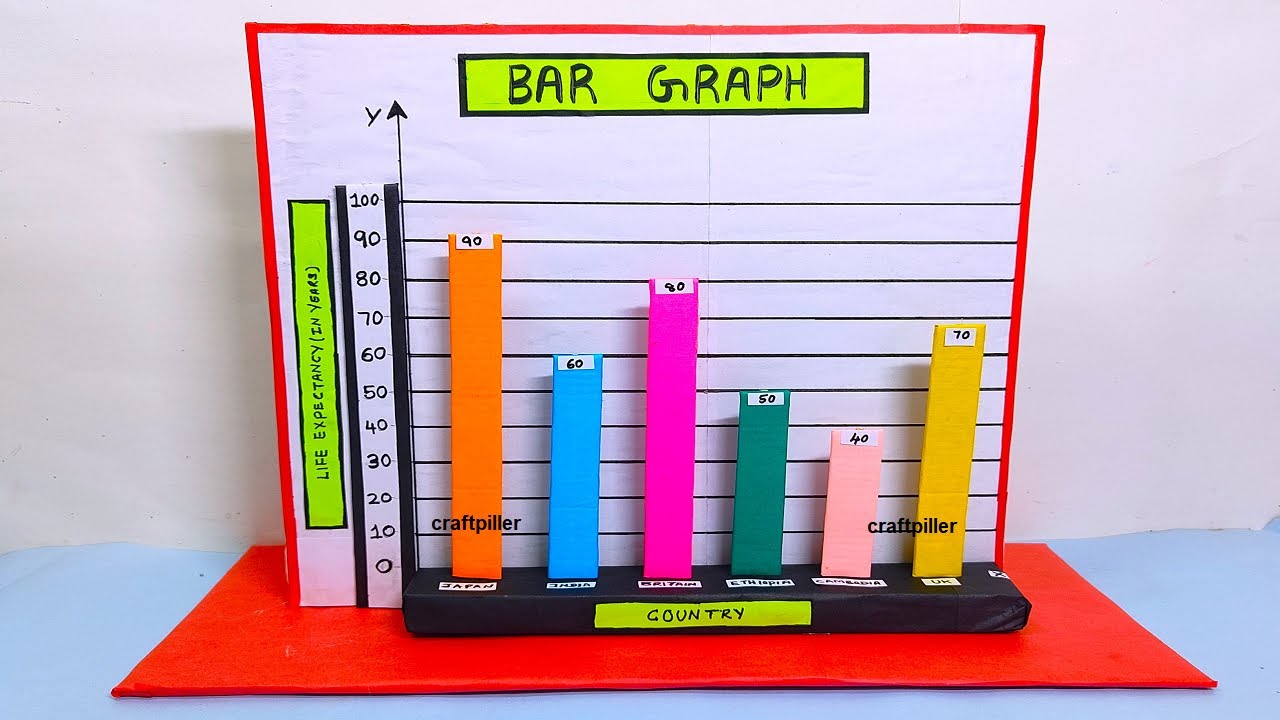
    bar graph model 3d for science exhibition - diy using cardboard | craftpiller | still model - YouTube
    Charts and Models 📊🏭

    These are already made visual aids usually used to display factual data in different forms.

    Advantages

    • 📈 They emphasize the verbal content and can act as operational guides.
    • 🏛️ Models provide three-dimensional visual impressions which might be difficult for the students to imagine.

    Disadvantages

    • 🔄 They need to be revised at intervals to make sure they are up to date.
    Graphics 📊📈🖼️

    These are non-language printed aides, such as flow charts, graphs, line drawings, and illustrations. They are used to show relations and to emphasize specific aspects.

    Advantages

    • 🌟 They present the full scope of the information in a clearly illustrative manner.
    • 🧐 They stimulate interest.
    • 🤔 They help students comprehend and remember complex information.

    Disadvantages

    • 🙈 They are inappropriate for the visually impaired.
    Handouts 📄🖨️

    Handouts are well-planned documents prepared by the teacher for his/her students in order to promote their participation in the teaching-learning process. They ensure every student has access to the same information and can review that information whenever necessary.

    Advantages of Using Handouts

    • 🎯 Keeps you and students focused.
    • 📚 Useful as study aids.
    • 👥 Good for absent students.
    • 🔁 Can cover previous material.
    • 📝 Can include review or supplementary/look-ahead material.
    • 🧾 Ensures consistency.
    • 🔄 Reusable.

    Disadvantages

    • 📖 Don’t facilitate deviation from the lesson plan.
    • 📖 Might be considered a study-aid crutch where the teacher puts emphasis on reading the content instead of explaining.
    • 📆 Some handouts are not up-to-date or may have brief contents.
    Amazon.com: Mini Projector, CLOKOWE 2023 Upgraded Portable Projector with  9000 Lux and Full HD 1080P, Movie Projector Compatible with iOS/Android  Phone/Tablet/Laptop/PC/TV Stick/Box/USB Drive/DVD/Game Console : Electronics
    Projector 📽️

    A projector is an electrical device that enlarges words or diagrams on a screen or clear wall. It’s a very popular and versatile visual aid that has been made available to the modern-day lecturer.

    Advantages

    • 🧳 The machine is portable.
    • 💡 Little technical attention is required if it is looked after well.
    • 💡 It can be used without darkening the room.
    • 🎨 It allows for a lot of creativity because the teacher can create overlays and other varieties of presentations.
    • 📋 The transparency is easy to prepare.
    • 👩‍🏫 During use, the teacher does not turn his/her back to the learners.
    • 📚 The teacher can prepare in advance.
    • 📖 There is no need to rely on printed textbooks.
    • 🕒 Using a projector can save time used to write on a blackboard.

    Disadvantages

    • 🧾 The transparency paper can be expensive.
    • 💡 It can only be used where there is electricity.
    • 👀 You need to pay attention to the focus so that the learners see clearly. Position it so that all students can see.
    • 👉 Use a pointer rather than fingers. Point on the machine, not on the wall (depends on pointer).
    Computers 🖥️

    Computers are being used in teaching because they have the advantages of speed, accuracy in transmitting information; they are convenient and store large amounts of information. Once prepared, the teacher does not need to be there. Students can learn at their own pace.

    Disadvantages

    • 🖱️ Computers do not provide adequate guidance for psychomotor skills. They need to be complemented by other methods.
    • 🔌 Some may have short battery life span, so they are not reliable without electricity.
    • 💾 Data can be lost when the devices get lost or do not function well.
    • 💰 Computers are generally expensive for some schools.

    EDUCATIONAL TECHNOLOGY AND TEACHING AIDS Read More »

    COMMUNICATION IN TEACHING AND LEARNING

    COMMUNICATION IN TEACHING AND LEARNING

    COMMUNICATION IN TEACHING AND LEARNING

     Communication🗨️ is a word derived from the Latin word communis or commūnicāre, which means ‘to make common’ or ‘to share’. 🌐

    📚 Communication is the act of conveying intended meaning to another person through the use of mutually understood signs and language. 

    OR Communication is the art of transmitting information, ideas, and attitudes from one person to another. 🗣️

    📢 Reasons why we communicate in education:

    1. To 🔄 change in behavior: Communication allows us to convey information and guidance that can lead to changes in how people think or act.

    2. To 🌟 influence others: Through effective communication, we can persuade and inspire others to adopt new ideas or viewpoints.

    3. To 🗯️ express our thoughts and emotions through words & actions: It’s a means of sharing our innermost feelings, thoughts, and ideas, fostering understanding and connection.

    4. It is a 🛠️ tool for controlling and motivating people: Communication helps in managing and motivating individuals by providing direction and feedback.

    5. It is a 🤝 social and emotional process: Communication is the cornerstone of building and nurturing relationships, as it allows us to connect emotionally and socially.

    6. Communication for improving 💪 self-confidence: Expressing oneself and receiving positive feedback can boost self-esteem and confidence.

    7. 🎉 Entertain: Communication serves as a medium for entertainment, enabling us to share stories, jokes, and experiences that bring joy and laughter.

    8. 📚 Educate: Through communication, we transfer knowledge and information, facilitating the process of learning and understanding.

    9. Establish 🤝 relationships: Communication is essential for forming and maintaining connections with others, be it friendships or professional relationships.

    10. Solve 🧩 problems: Effective communication helps identify issues, discuss solutions, and reach consensus, making it a valuable problem-solving tool.

    11. Make 📝 orders: Communication allows us to give clear instructions and make requests efficiently.

    12. Give 🗺️ directions: Whether it’s navigating physical spaces or guiding someone through a task, communication helps provide directions effectively.

    Types/forms of Classroom Communication

    Communication within the classroom is important in order for students to learn effectively. Classroom communication exists in four categories: verbal, nonverbal, written, and visual.

    1. Verbal communication refers to sending or receiving a message through sounds and languages. Teachers can address one student or the whole classroom through verbal communication. For example, a teacher may ask a student to stand up, which is verbal communication.

    2. Non-verbal communication refers to communicating without words through body language, gestures, facial expressions, the tone and pitch of the voice, and posture. For example, if a teacher is nodding their head while a student is speaking, this can be encouraging or show that they agree with the student.

    3. Written communication is sending or receiving information through writing. For example, a teacher may arrange a written assignment for students to test their knowledge or present lecture slides or notes for complicated information.

    4. Visual Communication – This form of communication involves the visual display of information, wherein the message is understood or expressed with the help of visual aids. For example, typography, photography, signs, symbols, maps, colors, posters, banners, and designs help the viewer understand the message visually.

    Levels of Communication

    There are five different levels of communication laid out by the classical theory of communication. Each of these different levels of communication has a different purpose and is used in different situations. However, it is vital to recognize and use all five levels of communication in order to have an effective conversation.

    1. Intrapersonal Communication – This is communication that a person does with themselves. This type of communication is known as self-talk and is the internal process that people use to think, reflect, and make sense of their experiences. It can be considered surface-level communication as both the sender and the receiver of the message are the same person. It includes the silent conversations we have with ourselves. This process of communication, when analyzed, can either be conveyed verbally to someone or stay confined as thoughts.

    2. Interpersonal Communication – This form of communication takes place between two individuals and is thus a one-on-one conversation. Here, the two individuals involved will swap their roles of sender and receiver in order to communicate in a clearer manner.

    3. Small Group Communication – This type of communication can take place only when there are more than two people involved. Here, the number of people will be small enough to allow each participant to interact and converse with the rest. Examples of group communication include class discussions, board meetings, and staff meetings.

    4. Public Communication – This type of communication takes place when one individual addresses a large gathering of people. Public speeches are examples of this type of communication. In such cases, there is usually a single sender of information and several receivers who are being addressed.

    5. Mass Communication – This is communication that is directed toward a very large audience who is not always in the same room or are not always receiving the message at the same time. This would be things like the morning announcements, everyone watching a TV show, looking up something on the internet, reading a book/newspaper/magazine.

    Channels/Media of Communication

    Educational media refers to channels of communication that carry messages with an instructional purpose. These channels include:

    1. Face-to-face communication: This is the ability to see the other person or people during a conversation. It allows for the exchange of more than just words because both the speaker and listener(s) can observe and adjust based on body language and expression. Examples include classroom teaching and discussion groups.

    2. Print media: This category includes books, journals, magazines, newspapers, workbooks, and textbooks. These materials are easy to use, portable, and inexpensive.

    3. Electronic media: Electronic media is a form of mass media that requires electronic energy to create and distribute informative or entertaining content in the form of audio, visual, or audio-visual formats. These categories include:

      a) Audio media: These are teaching-learning devices that appeal to the auditory sense. They carry sounds and can be heard independently. Examples include phone calls, audio tapes, conferencing, record players, and radio.

      b) Visual media: These are media that appeal to the sense of sight (eyes) or media that can be seen. Examples include computer work, projected presentations, emails, chats, and messages.

      c) Audio-Visual: This category refers to instructional materials that provide learners with audio and visual experiences by engaging both the hearing and seeing senses simultaneously. Examples include television and video tapes.

    Factors to consider in communication

    1. Language: 🗣️ To communicate effectively, individuals must share a common language so that each can be understood. In case of a failure to understand the language, an interpreter may be necessary to enhance communication.

    2. Nature of Message: 📜 The means of communication depend on the nature of the message. Urgent, confidential, private, and important messages should be distinguished from ordinary, routine, open, and less important messages, and the means of communication should be chosen accordingly.

    3. Cost: 💰 The cost of sending a message should also be considered when selecting a mode of communication. The result obtained should justify the expenditure.

    4. Record: 📝 If the record of the communication is important, it should be written; otherwise, oral communication is sufficient and can be lost easily.

    5. Distance: 🌍 Distance is another factor for consideration. The mode of communication to be chosen depends on whether the message is to be sent to a nearby place or somewhere at a long distance. Letters and face-to-face communication can be favorable for short distances, while electronic means are suitable for long distances.

    6. Scale of Organization: 🏢 Means of communication in large-scale businesses differ from those in small-scale businesses. In small businesses, most communication is oral, while in large businesses, it is written.

    7. Supporting Technology: 📡 Both the sender and the receiver must have supporting technological communication tools to use a particular media. For example, if individual A sends an e-mail to person B, B should have a personal computer.

    8. Urgency: ⏰ Selection of the means of communication should consider the urgency of the communication. Time available is the main factor here, and higher cost may be justified for sending the message in time. Choose a media that will quickly deliver the information to the receiver.

    9. Secrecy: 🤫 If the message to be communicated is secret or confidential, means that can maintain secrecy should be adopted. In such cases, face-to-face talking may solve the problem.

    10. Safety: 📦 The sender must be careful about the safety of the message. Decisions need to be made about whether the message would be sent by ordinary post or by registered post, through a courier or messenger, etc.

    11. Relationship: 🤝 The relationship between the sender and recipient may be a decisive factor in the choice of the means of communication. Private messages may require personal contact, while formal relationships demand official and conventional modes of communication.

    Benefits of Effective Communication

    Effective communication is the process of exchanging ideas, thoughts, opinions, knowledge, and data so that the message is received and understood with clarity and purpose. When we communicate effectively, both the sender and receiver feel satisfied. The following are the benefits that result from effective communication:

    1. Right information is shared 📚
    2. Minimizes conflicts 🤝
    3. Resources such as time and money are saved 💰⏰
    4. Helps in establishing rapport 🤗
    5. Intended results are achieved 🎯
    6. Sender is able to provide intended feedback 📢
    7. Enhances harmonious co-existence, and conflicts are resolved amicably 🤝🕊️

    Important Things to Consider When Effective Communicating

    1. Pre-thinking: Pre-thinking about the message is an important quality of effective communication. Pre-thinking enables the sender to develop a creative message and transmit it efficiently. 🤔✍️

    2. Specific Objective: Communication occurs with specific objectives. Therefore, the communicator must know the objective of communication and arrange the message accordingly. 📝🎯

    3. Command of Subject (Mastery of Subject Matter): One should communicate information they have mastered so that, in case of questions or confusion from the receiver, the sender can clarify the information confidently. 📚🧠🗣️

    4. Timeliness: Usefulness of any message depends on its timely transmission. If the message is not transmitted at the appropriate time, its utility is lost. So, the communicator should consider the timing of communication. 🕒⏰

    5. Conciseness: Another important quality of effective communication is that the message should be concise or brief. A concise message contains only relevant and necessary facts, avoids repetition, and is organized properly. ✂️📄

    6. Completeness: Effective communication transmits a complete message so that the receiver can understand the full meaning of the message. The sender should not sacrifice completeness to attain conciseness. 📦🧩

    7. Correctness: Effective communication contains only correct messages. False, manipulated, and exaggerated information irritates the receiver and makes the communication ineffective. ✅❌🤥

    8. Speed and Sequence of Speech: Speaking too fast can make it difficult for the receiver to understand the message. The sender should speak slowly and sequence their words to ensure clear comprehension. 🗣️🎙️

    9. Persuasiveness: Persuasiveness is an important quality of effective communication. It helps develop a positive attitude in the receiver toward the message. 🗣️💡

    10. Feedback: Effective communication always allows for feedback. Feedback ensures that the message has reached the intended receiver and they have understood it clearly. 📣📬

    11. Mutual Interest: Communication is effective when it considers the interests of both the sender and receiver. Ignoring the receiver’s interests can lead to communication failure. 🤝🤝

    12. Use of Appropriate Language: Effective communication uses appropriate language that avoids ambiguity, complex words, misleading non-verbal cues, and technical jargon. The language should be simple and easy to understand. 🗣️📖🗨️

    13. Considering the Receiver: An effective communicator thinks about the receiver’s knowledge, ability, interest, origin, etc. This increases the utility and acceptability of communication. 🧠👥

    14. Use of Appropriate Media: Selecting suitable media is essential for successful communication. The sender should choose written or oral media based on the nature and importance of the message, availability of time, cost, and the receiver’s ability. 📰📻📹

    15. Emphasizing Informal Relationship: Establishing informal relationships with the receiver, in addition to formal ones, ensures the success of communication. Building rapport with the receiver enhances the acceptability of the message. 🤗🤝

    16. Effective Listening: An effective communicator is also an effective listener. They must listen attentively to the response of the receiver, showing patience and understanding. 👂🤝🗣️

    Barriers to Communicating in Teaching and Learning

    1. Physical barriers 🚧: These are physical factors that can distract or block the communication process. They include background noise and malfunctioning public address systems.

    2. Physiological barriers 🤕👂👁️: These barriers arise when a sender or receiver of communication is physically unable to express or receive the message with clarity due to physiological issues like severe pain, hearing problems, poor eyesight, or speech impediments.

    3. Emotional and Attitude (Psychological) barriers 😢🤬: Psychological barriers play an important role in interpersonal communication. The state of mind of the sender or receiver can make it difficult to understand conveyed information, often leading to misunderstanding. Emotions like anger, fear, and sadness, as well as attitudes such as the need to be right all the time or beliefs of superiority or inferiority, affect objectivity. Stereotypical assumptions based on cultural backgrounds also contribute to these barriers.

    4. Language (Semantic) barriers 🗣️🌍: Improper communication between the sender and receiver leads to these barriers. Examples include speaking different languages, strong accents, and the use of slang or jargon, which can frustrate communication in teaching and learning.

    5. Organizational barriers 🏢📋: These barriers result from the structure, rules, and regulations within an organization. Superior-subordinate relationships can hinder the free flow of communication and distort information, leading to miscommunication. For instance, a student may need to go through class leaders and student leaders before reaching the principal, making communication less straightforward.

    6. Cultural barriers 🌏🤝: Cultural differences create barriers due to variations in beliefs, practices, and interpretations among different cultures worldwide. What may be harmless in one culture can be perceived as slang in another, and beliefs can vary significantly. Gestures like hugging as a greeting may also be misinterpreted differently in various cultures.

    7. Lack of Common Ground 🧑‍🤝‍🧑: When the audience cannot relate to the message because they lack a shared experience with the speaker, communication is hindered. Using examples or stories that students have knowledge or experience of can bridge this gap.

    8. Lack of Eye Contact 👁️🤨: Failure to maintain eye contact with students can raise doubts and make them feel disconnected or suspicious. Maintaining eye contact is crucial for effective communication.

    9. Information Overload and Lack of Focus 📊🧠: Providing excessive information or too many details can overwhelm and distract the audience from the main message, causing a loss of focus.

    10. Lack of Preparation 📊📚: Being unprepared or lacking factual information can erode trust and credibility, affecting the effectiveness of communication.

    11. Talking Too Much 🗣️🤐: Excessive talking without allowing the audience to respond or engage can hinder effective communication. Active listening is vital for balanced communication.

    12. Lack of Enthusiasm 😒🎉: If the communicator lacks interest or enthusiasm for the message, it can affect the audience’s engagement and belief in the message.

    13. Expectations and Prejudices 🤝🙅: Preconceived expectations or biases can lead to false assumptions and stereotyping, causing misinterpretation.

    14. Lack of Trust 🤝❌: Trust is essential for effective communication. When individuals don’t trust their leaders or managers, communication suffers.

    15. Wrong Communication Channels 📡👥: The complexity of communication channels today can make it challenging to select the right ones to deliver relevant information in a timely manner.

    COMMUNICATION IN TEACHING AND LEARNING Read More »

    TEACHING METHODS

    TEACHING METHODS

    TEACHING METHODS

    Teaching methods refer to the regular ways or orderly procedures, employed by the teacher in guiding the learners in order to accomplish the aims of the learning situation.

    Teaching strategies: refers to methods used to help students learn the desired course content and be able to develop achievable goals in future.

    Teaching Learning activities: Learning activities are things students do, or are supposed to do, during the lesson, e.g. reading, taking a test, listening, taking down notes, etc. Any learning activity a teacher incorporates into a lesson is part of the teacher’s strategy.

    Factors to consider when selecting a teaching method to use.

    Efficient teaching methods are essential tools that can help students achieve success in the classroom. There are several factors that a teacher must consider when choosing a teaching method for their students. Some determining factors for selecting a teaching method to be applied include;

    1. Instructional objectives: Attaining instructional objectives depends on the teaching method used. For example, if the instructional objective requires students to administer an injection, the teaching method should be Demonstration.

    2. The cognitive nature of the learners: The teaching method used depends on how quickly learners understand the content—slow learners versus fast learners. If there are more slow learners in the class, the teacher may choose a method that is easier for those students to grasp the lesson or subject matter.

    3. The age of the learners: Every method selected should relate to the learners’ age. Adults may be more comfortable with problem-based learning than lecturing, teenagers might be more interested in experimentation and demonstration, while infants may be influenced by concept cartoons rather than experimentation.

    4. Availability of teaching aids: Teaching aids are materials used to help learners better grasp a given concept. If a teacher lacks proper teaching aids, they may need to adapt their method to align with the available resources.

    5. The size of the class: The number of students in the class guides the choice of the teaching method. Lecture methods are suited to large groups, while other methods like group discussions and demonstrations work well with smaller groups.

    6. Teacher’s ability and preference: The teacher’s ability to handle a method and their experience play a role in method selection.

    7. Student learning style: Students have different learning styles—some learn best by hearing, others by seeing, and some by touching. Therefore, different teaching methods are required to accommodate these styles.

    8. School policies: School policies can influence the choice of teaching method. Some schools emphasize learner-oriented methods like problem-based learning, while others prefer more traditional teaching approaches.

    9. Examination setup: Examination formats can also impact teaching methods. Teachers often align their teaching to help students prepare for the specific exams they will face.

    10. Time constraints: Methods of teaching are bounded by time. Teachers must consider the available time for covering a topic when selecting a teaching method.

    11. Available resources: The availability of resources can determine the final choice of teaching method. For instance, if a teacher wishes to use the demonstration method but lacks the required facilities, they may opt for video demonstrations if electrical gadgets are available.

    CLASSIFICATIONS OF TEACHING METHODS

    There are two major divisions of teaching methods:

    1. Teacher-centered methods – the learner is not directly involved in teaching (passive).

    2. Student-centered methods – the learner is directly involved in teaching (active learner).

    TEACHING

    TYPES OF TEACHING METHODS

    LECTURE METHOD

    A lecture is defined as the method of instruction in which the instructor has full responsibility for presenting the subject content orally. 

    OR

     Lecture is an oral presentation by a teacher to students about a particular subject. 

    Usually, the lecturer will stand in front of the room and recite to the students. It involves no student participation, and the students are usually passive, and teaching aids may be used such as a projector, charts, chalk, and chalkboard, etc.

    When is it applicable:

    • When introducing a new topic.
    • To stimulate the interests of the learners.
    • To clarify some misunderstood points.
    • When there are no appropriate or adequate textbooks for the learners.
    • When students are mature enough, like in tertiary institutions.

    Advantages of lecture method of teaching:

    1. Allows the instructor to precisely determine the aims, content, organization, pace, and direction of a presentation.
    2. It facilitates large class communication, as a single teacher can communicate with the whole class.
    3. It can be used to arouse interest in a subject, like the introduction of subject content.
    4. It also encourages great control of the class by the teacher as he or she is recognized to be an authoritative figure.
    5. Time-saving, as large amounts of new information are delivered at once.
    6. Gives the instructor the chance to expose students to unpublished or not readily available material.
    7. Useful method for auditory learners (those who learn by hearing).
    8. It is cost-effective as it enables a high student/teacher ratio to be achieved.

    Disadvantages of lecture method of teaching:

    1. It places students in a passive rather than an active role, which hinders learning.
    2. It enhances one-way communication, therefore the lecturer must make a conscious effort to become aware of student problems like where to simplify hard content.
    3. It does not provide immediate feedback to the lecturer since there is no verbal communication with students.
    4. It pays little regard to individual differences of students.
    5. It usually provides little time for questions and does not encourage teamwork.
    6. It cannot teach skills to be acquired by students.
    7. Since it doesn’t involve student participation, their rate of learning and attention declines as the lecture proceeds.
    8. It does not enhance the retention of content as it leaves gaps in understanding since there is no demonstration or experimentation.
    9. Requires the instructor to have effective speaking skills and be audible.
    TEACHING
    INTERACTIVE LECTURE

    It is also called modified lecture.

     This is a method of teaching where the instructor uses oral presentation but breaks the lecture at one point to have students actively participate in an activity of teaching and learning.

     Interactive lecture is different from the traditional lecture method in that it involves participants in discussion as much as possible.

    When is it applicable:

    Interactive lecture is applied in similar situations as the traditional lecture method but it enhances:

    • Active engagement of learners and avoids one-way communications.
    • Critical thinking.
    • Assessment of how well students are learning.

    Advantages of modified lecture method:

    1. It allows active engagement of learners.
    2. It brings flexibility in learning like a teacher can switch to previous content in an explanation.
    3. It improves the student attention span.
    4. The lecturers can inspire the audience with enthusiasm.
    TEACHING
    DEMONSTRATION METHOD

    Demonstration is a means of presenting material visually and audibly to a group of learners, emphasizing the important steps of a process or task. 

    Students witness a real or simulated activity in which one uses materials from the real world. Return demonstration is a process by which a learner accurately portrays a procedure, technique, or operation which the teacher demonstrated. The teacher may demonstrate the different processes relevant for students in order to perform a given task effectively, i.e., skills acquisition. Thereafter, the students are also given the opportunity to practice.

    When is it applicable:

    • When teaching a process leading to skills acquisition.
    • When materials and equipment are insufficient.
    • When experimenting with dangerous chemicals or solutions.

    Advantages of the demonstration method:

    1. It trains the students to be good listeners and observers.
    2. It stimulates thinking and the formation of concepts and generalization.
    3. It permits active participation of students in the teaching-learning process as, in turn, they will be required to perform return demonstrations.
    4. It has a high interest value since it often involves the use of gadgets and equipment that may be new to the students.
    5. It is very effective in skills acquisition.
    6. It permits reinforcement, as it allows the actual performance of the task through return demonstration.
    7. Reduces the gap between theory and practice.

    Disadvantages of the demonstration method:

    1. Active participation is likely to be reduced during the demonstration because students are acting as mere observers.
    2. When the class is big, there is likely to be a problem of audibility and visibility.
    3. It is likely to foster class management and control problems.
    4. May foster negative motivation (students thinking, “I can’t do that!”).
    5. It is economical in terms of time and money.
    6. It’s time-consuming in application.
    7. It requires pre-preparation, i.e., requires the instructor to have mastery of the skill or task being demonstrated.
    8. Often difficult to isolate tasks, skills, and behaviors in a step-by-step manner.
    SIMULATION

    A method of instruction whereby an artificial or hypothetical experience is used to engage learners in an activity reflecting real-life conditions but without the risk-taking consequences of an actual situation is created.

     It is defined as activities that mimic the reality of the clinical environment. In healthcare, simulation may refer to a device representing a simulated patient or part of the patient.

    Types of simulation:

    1. Standardized patient or patient simulator – an individual who is trained to act as a real patient in order to simulate a set of symptoms or problems.

    2. Part-task trainer – designed to replicate only a part of the body or a portion of the environment (e.g., teaching injection technique using a banana, pelvic model, plastic IV arm).

    3. Integrated or human patient simulators – combine whole-body mannequins and computerized technology that allows mannequins to respond in real time to specific care interventions and treatment (e.g., chest compressions). These mannequins are capable of realistic physiological responses like respirations, heart rate, breath sounds, etc.

    4. Simulation game – represents real-life situations in which learners follow a set of rules to accomplish a task. It involves computer screen-based clinical case simulators.

    Application of Simulation to teaching situations:

    Simulation is preferred in the following situations:

    • Having few patients. This makes it unable for every patient to perform a skill.
    • Limited faculty teaching time to allow every learner practice.
    • Preceptor/mentor shortages to supervise every learner.
    • Lack of clinical sites to place the students for clinical placement.

    Advantages of simulation:

    1. Allows students to practice reality in a safe setting.
    2. Enjoyable and motivating activity.
    3. Allows students to practice in real situations with the freedom to make mistakes and learn from them.
    4. Allows independent critical thinking, decision-making, and delegation.
    5. Provides immediate feedback.
    6. Boosts self-confidence and reduces anxiety.
    7. Reduces training variability and increases standardization.
    8. Guarantees experiential learning for every student.
    9. Can be customized for individualized learning.
    10. Bridges the gap between theory and practice.
    11. Is student-centered learning; hence the learner is actively involved.

    Disadvantages of simulation:

    1. Models or mannequins are expensive.
    2. They are time-consuming to design and execute.
    3. Not real, and students may not take it seriously.
    4. Limited realistic human interaction.
    5. No/incomplete physiological symptoms.
    6. Assessment is more complex than some traditional teaching methods.
    7. Does not enhance attitude learning.
    8. Lack of transferability of skill.
    9. Requires trained personnel to operate some task trainers.
    DISCUSSION METHOD

    Discussion is a method of teaching where there is effective participation of students in the teaching-learning process. 

    Both the educator and the learner combine ideas and arrive at the same conclusion or a dialogue. Unlike the lecture method where the teacher is the dominant person, in the discussion method, the teacher poses a problem, initiates interaction, and allows students to pursue the discussion towards the attainment of an objective.

    Types of discussion:

    • Spontaneous discussion – this generally starts from students’ questions about some current event that may be related to the topic under study. This helps students understand current events, analyze, and relate facts to real-life situations.
    • Planned discussion – this may be initiated by the teacher presenting a problem and asking students to discuss it in detail. It can involve the whole class, a small group, or a panel.

    When is it applicable:

    • When learners are familiar with the content to be delivered.
    • To actively involve all learners.
    • When there are appropriate or adequate textbooks for the learners to use.
    • To stimulate critical thinking and presentation skills.

    Characteristics of a good discussion:

    • Every group discussion should have educational purposes or be goal-oriented.
    • There is a need for the teacher to create open communication and a supportive atmosphere.
    • All members of the group think for themselves, and all have a chance to express their opinions.
    • The topic for discussion should be related to the common needs and interests of the participants.
    • Students should have sufficient information and knowledge about the discussion topic to effectively participate in the group discussion.

    Advantages of the discussion method:

    1. There is active participation by everyone in the class.
    2. Students learn more readily from each other (peer learning).
    3. It is an effective means of developing academic/study skills, e.g., utilizing facts and information, formulating and applying principles, etc.
    4. Arouses students’ interest in effective learning since it emphasizes students’ experiences to be utilized.
    5. Promotes the development of life skills, e.g., sharing, research, negotiation, conflict resolution, communication skills, critical and creative thinking skills, etc.
    6. There is rapport created between the teacher and students (teamwork).

    Limitations of the discussion method:

    1. It may give opportunities for brighter students to dominate the class.
    2. It is difficult to achieve maximum interaction when the group is large, and class control is always difficult.
    3. When a discussion leader is weak, a discussion can result in a disorganized and unproductive activity.
    4. It can create chances of deviation from the topic during the session.
    5. It cannot be applied in all subjects or topics because it needs students to have some idea of the topic.
    6. It takes time to prepare, implement, as well as evaluate the discussion method.
    ROLE PLAYING
    ROLE PLAYING

    In role-playing, learners adopt and act out the role of characters or parts that may have personalities, motivations, and backgrounds different from their own. 

    Role-playing is like being in an improvisational drama, in which the participants are the actors who are playing parts.

    When is role play applicable:

    The following are the chief purposes of this instructional method:

    • Develop concepts since it stimulates their imagination.
    • To adopt a simulation approach.
    • Illustrate aspects of interpersonal problems.
    • Promote understanding of the viewpoints and feelings of others.
    • Develop insight into personal attitudes, values, and behavior.
    • Heighten the students’ awareness of psychological and social problems.
    • Develop specific interpersonal or communication skills.

    Advantages of role-play:

    1. Raises students’ interest in the topic/subject matter.
    2. Integrates experiential learning into activity.
    3. Degree of retention is high as true learning takes place.
    4. Involves all students at the same time.
    5. Reduces or removes boredom in a classroom.
    6. Students become aware of the feeling of others and try to view situations from others’ points of view.
    7. Verbalizing the actions makes the students get insight into behavior patterns.
    8. It gives an opportunity for students to express their feelings.
    9. Dramatically introduces problem situations.
    10. Allows for exploration of solutions.
    11. Provides an opportunity to practice skills.

    Disadvantages of role-play:

    1. Students who are not alert and fluent will not be suitable to do the role-play.
    2. It is a time-consuming method. Competent leadership is required to prepare, perform, and conduct follow-up discussions.
    3. If students misrepresent the assumed character, the objectives will not be achieved.
    4. If not well managed, students will not take the role play seriously, but as entertainment.
    CLINICAL TEACHING
    CLINICAL TEACHING

    This is teaching and learning focused on and usually directly involving patients and their problems.

     It is applicable in medical education.

    Different clinical teaching methods:

    1. Bedside teaching – teaching and reinforcing skills at the patient’s bedside.
    2. Case study – a scenario is presented to learners followed by discussion.
    3. Nurses rounds – planned patient visits in which two or more nurses frequently check patients for comfort, assess their clinical needs, and perform routine nursing care.
    4. Clinical conference – a scheduled event at which practicing physicians present interesting clinical cases to their colleagues, share experience, and learn the latest practices.

    Advantages of clinical teaching:

    1. Increases students’ knowledge and skills.
    2. Refines practice efficiency and effectiveness.
    3. Promotes increasing clinical independence and the development of clinical reasoning.
    4. Prepares students for optimal health outcomes with patients.
    5. Allows observation of communication skills.
    6. Clinical skills and ethical issues in the process of patient care can be assessed.
    7. Helps students become competent, compassionate, independent, and collaborative clinicians.

    Advantages of clinical teaching:

    • Discomfort to patients when discussing their problems.
    • Lack of privacy.
    • Lack of patient consent.
    • May disrupt hospital routines.

    Limitations of clinical teaching (to learners):

    • Negative attitude towards bedside teaching.
    • Fear by the learners.
    • Many students compared to patients.

    Limitations of clinical teaching (to teachers):

    • Lack of confidence in teaching at the bedside.
    • Large numbers of students making it hard to supervise.
    • Needs a lot of time to select and prepare patients.
    • Patients are hard to locate or may be uncooperative.

    Environment:

    • Disruption by the patient’s condition or activities like ward rounds or other patients.
    SEMINAR
    SEMINAR

    A seminar may be defined as a gathering of people for the purpose of discussing a stated topic.

     Such gatherings are usually interactive sessions where the participants engage in discussions about the selected topic. The sessions are usually headed or led by one or two presenters who guide the discussion.

    When is it applicable:

    • To gain a better insight into the subject.
    • To impart knowledge and skills to learners.
    • To enhance the sharing of knowledge among learners.

    Advantages of a seminar:

    1. Learning is achieved efficiently.
    2. A great way for those who don’t like to read or attend classes to improve their knowledge of a specific subject.
    3. A sense of mutual trust and friendship, where individuals can meet others with the same interest in their chosen field.
    4. Usually, learner-centered.
    5. Encourages students to search for information on their own.

    Disadvantages of a seminar:

    1. It is expensive and not reliable to be setting it up for every topic.
    2. The speaker may give incorrect knowledge.
    3. There is a chance that the attendees will expect too much from the seminars and thus may be disappointed.
    4. Time-consuming.
    5. It requires forming many subjects relevant to the theme.
    TEACHING
    SELF-DIRECTED LEARNING

    This is a method in which individuals take initiative, with or without the help of others, to diagnose learning needs, identify learning resources, implement learning strategies, and evaluate learning outcomes.

     Here the individual assumes full responsibility for a learning experience.

    When is it applicable:

    • In institutions that cannot meet all the training needs of their employees.
    • When there are limited teachers available.
    • When there’s limited availability of learning materials.

    Advantages:

    1. Less costly.
    2. It promotes learners’ self-confidence.
    3. It stimulates critical thinking and research skills.
    4. Learners get up-to-date information.

    Limitations:

    1. If no syllabus is available, learners may not know what to learn.
    2. Lack of time for research.
    3. Lack of enough educational resources.

     Difference between teachers-directed learning and student directed learning

    Teacher-Directed LearningStudent-Directed Learning
    Learner depends on the teacher.Learner is self-directed.
    Teacher has responsibility for what and how learners should be taught.Teacher works as a consultant.
    Subject-centered.Task or problem-centered.
    External motivators like good grades and punishment.Internal motivators like satisfaction, need to know something, curiosity.
    It relies on the teacher’s experience, so the learner’s experiences are less valuable.Learner’s experience becomes an increasingly rich source of learning.


    TEACHING METHODS Read More »
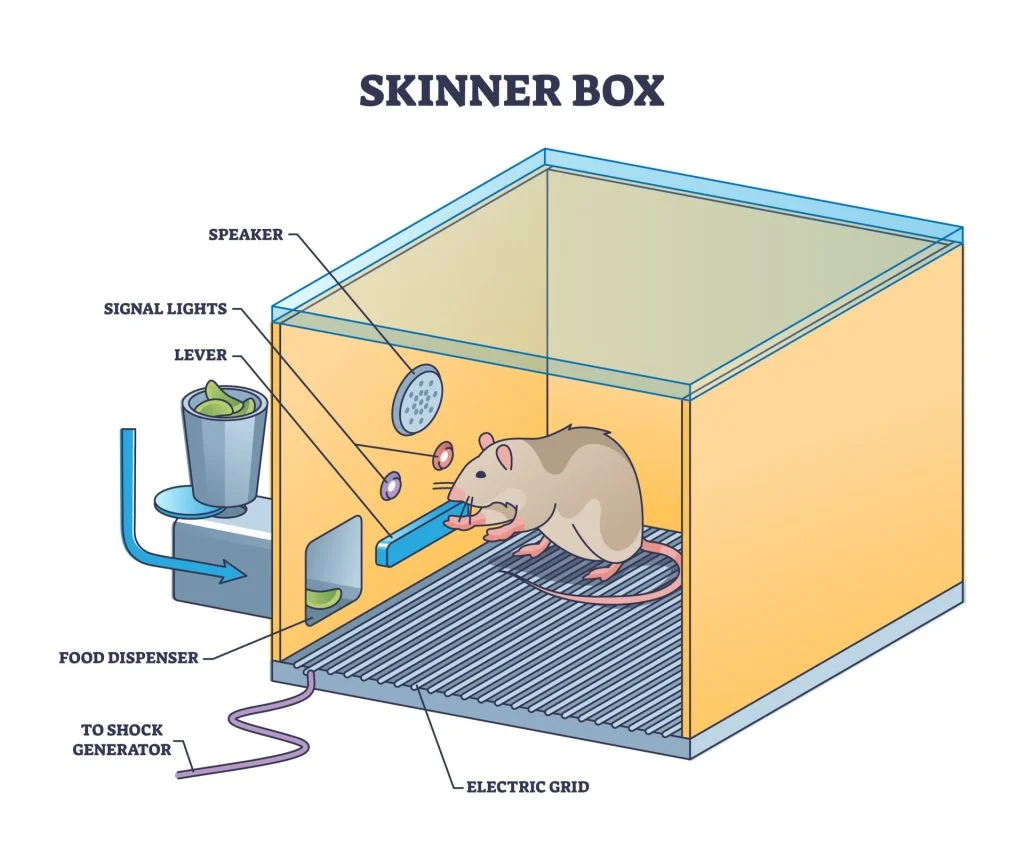
    STEPS IN RESEARCH PROCESS

    STEPS IN RESEARCH PROCESS

    The Research Process
    The Research Process
    Steps in research process consists of a series of systematic procedures that a researcher must go through in order to generate knowledge that will be considered valuable by the project and focus on the relevant topic.
    To conduct research effectively, you have to understand the research process steps and follow them. Here are a the steps in the research process;
    1st Step
    Identifying the
    Research Problem
    ↑ Literature not well reviewed
    2nd Step
    Reviewing
    related
    literature
    ↓ Literature well reviewed
    3rd Step
    Develop Research Objectives,
    Questions & Hypotheses
    4th Step
    Select the appropriate research
    design/ sample design & data
    collection methods.
    5th Step
    Develop data collection
    instruments and plot test them
    for validity & reliability
    6th Step
    Collect data
    ↑ Data not sufficient
    7th Step
    Analyze &
    Interpret data
    ↓ Sufficient & well analyzed
    8th Step
    Generate the research Report
    9th Step
    Present findings to stakeholders.
    10th Step
    Dissemination of findings
    STEP I: IDENTIFYING THE RESEARCH PROBLEM

    This is the first step in any research project, before a researcher proceeds with conducting research, s/he must endeavor that the research problem is clearly identified and has a vivid understanding of the research problem at hand.

    A research problem in this context may refer to:

    • An issue at hand.
    • Any form of imbalances
    • Technological challenges
    • Missing links
    • Any unsatisfactory state of affairs
    • Unanswered questions.
    • An existing gap
    • A problem that needs a solution
    • A crisis
    • An urgent situation / Extremity / Emergency

    Those among others are the common ways you can basically classify a research problem.

    Most researchers find challenges in identifying a researchable problem and as a result most of the researchers, identify problems which are not researchable. Some researchers are frequently heard asking questions as "where can I find a research problem?" Some researchers have been disappointed by their supervisor(s) and others by proposal defence panels where in most cases a researcher's proposal. Some proposal defense panels have failed to identify a researchable problem in the statement of the problem and forced the researcher to go back and identify a researchable problem.

    Common sources of a research problem include:
    1. Existing related literature mostly the unanswered questions.
    2. Observation and logical reasoning. This could be
      • Deductive reasoning - General to Specific reasoning
      • Inductive reasoning - Specific to General reasoning
    3. Practical issues.
    4. Experience. This could be direct experience or indirect experience.
    5. Existing theories such as the Goldratts Theory of Constraints and the Maslow's hierarchy of needs theory.
    6. Authority such as a directive from a superior to undertake a given research.
    7. Current Political, Economic and Social issues such as; High rates of youth unemployment, Inflation rates, Exchange rates, Increase youth migration, Religious issues and Poverty rates to mention but a few
    Features of a good research problem

    These are the characteristics or attributes of any research problem. They include:

    1. It must be researchable, implying that a good research problem is one that can be adequately investigated.
    2. It should be relevant, a good research problem should be significant and connected with the current issues. It should not only be relevant for today but for the future generations as well.
    3. Theoretical or practical significance.
    4. Feasibility, implying that a research problem should be one whose effect can be eradicated as a result of research. Therefore it should be accomplishable.
    5. It should be original in its state, a research problem should be of a new kind or different from other research problems. Therefore it should be novel in nature.
    STEP II: REVIEWING RELATED LITERATURE

    This is the most important step in any research process, reviewing of literature is a continuous process and it helps the researcher to become more grounded about his/her research area. Through reviewing related literature the researcher is able to develop a scholarly language, appreciate the works of other scholars and further conceptualize the research problem at hand. Reviewing of related literature will enable the researcher to identify study variables, theory(ies) to underpin the study and helps the researcher to refine the research problem and topic of the study. However, in a study where the research proposal may contain a section of literature review, then this step becomes very vital since it helps a researcher to compile the literature review section of the research proposal.

    STEP III: DEVELOP THE PROBLEM STATEMENT, RESEARCH OBJECTIVES, QUESTIONS & HYPOTHESIS

    At this level the researcher is assumed to have a deeper understanding of the entire research.

    Therefore this stage involves "state of the problem" where the researcher clearly states the current problematic situation, this section must show the gravity of the problem and reflect why the research should actually be conducted today and not tomorrow. The statement of the problem must show that the problem is researchable, backed with statistical evidence and its as well a practical problem. The statement of the problem must be concise, brief and specific, therefore it should not exceed ¾ (3 quarters or 0.75) of a page or maximumly 1 page.

    This stage further involves the development of the research objectives where the general objective is formulated directly from the research topic and the specific objectives are developed directly from the general objective by relating the independent variable(s) and the dependent variable. However, it's important to note that a researcher will only identify good and researchable variables only and only if s/he has sufficiently reviewed the related literature.

    Research Questions are further developed from the specific objectives implying that the number of specific objectives will always determine the number of research questions in a case where we have 3 objectives, there will be 3 questions if the specific objectives are 5 in number then the questions will equally be 5 in number". In this case research question(s) refer to the question(s) that the researcher intends to answer through specifically undertaking a study.

    Research Hypothesis; these are the tentative answers to the research questions above. At this point the researcher develops research hypotheses, it's important to note that unlike the research questions, research hypothesis may not necessarily be of the same number as the research questions, the hypotheses may even be less or more than the research questions.

    STEP IV: SELECT THE RESEARCH DESIGN, SAMPLE DESIGN AND DATA COLLECTION METHODS.

    At this stage, the researcher is expected to select the overall plan of the research or roadmap. Therefore at this point the researcher will select the most appropriate research design and the selection of the research design will be based research strategy or approach, that is to say whether it's a purely quantitative study, qualitative study or a triangulation (mixed method).

    • The quantitative research designs include; Experimental Design, Survey Design & Correlation Research Design among others.
    • The qualitative research designs include; Ex-Post Facto design, Ethnography design and Historical design among others.
    • Research design for mixed methods includes; The Longitudinal design, Cross-sectional design and Cross-cultural research design among others.

    This stage as well involves the selection of the most appropriate sample design to use in the study. Selection of the sample design depends greatly on the research strategy either qualitative research strategy, quantitative research strategy or mixed research strategy. Therefore the three forms of sample designs include;

    1. Quantitative / Probability / Random-sampling design
    2. Qualitative/ Probability / Non-Random sampling design
    3. Mixed Sample Design.
    Sampling Designs:
    • Quantitative / Probability Sampling Design: This is adopted when the research strategy is quantitative in nature and under this strategy the researcher will adopt sampling techniques such as; Simple Random Sampling (SRS), Stratified Sampling, Cluster Sampling, Systematic Sampling & Probability Proportionate to Size Sampling and Multi-stage Sampling.
    • Qualitative / Non-Probability Sampling Design: This is adopted when the research strategy is qualitative in nature and under this strategy the researcher will adopt sampling techniques such as; Judgmental sampling, Convenience sampling, Quota sampling, Snowball/ Chain Referral Sampling and Accidental Sampling among others.
    • Mixed Sampling Design: this is where the researcher adopts both the quantitative and qualitative sample designs and this is usually adopted where the research strategy is mixed research strategy (a combination of both qualitative and quantitative strategies).

    This step as well involves the selection of the most appropriate data collection methods, these methods will depend on the research strategy or approach, the research design and sample design that was adopted. There are three (3) main classifications of data collection methods these include;

    1. Quantitative data collection methods.
    2. Qualitative data collection methods
    3. Mixed data collection methods.
    Data Collection Methods:
    • Quantitative data collection methods: these are methods that are used to collect data which is numeric, figures or counts in nature. These data collection methods include; Questionnaire survey & experiment among others.
    • Qualitative data collection methods: these are methods that are used to collect data which is in form of words, statements, themes and descriptive in nature. These data collection methods include; Focus Group Discussions, Documentary Review, Observation and as well as Key Informant Interviews.
    • Mixed data collection methods: these include a triangulation of both qualitative and quantitative data collection methods in a given study.
    STEP V: DEVELOP DATA COLLECTION INSTRUMENTS AND PILOT TEST THEM

    This step is guided by the previous step, at this level the researcher starts by developing the data collection instruments, these instruments are classified into 3 broad categories which include;

    1. Quantitative data collection instruments.
    2. Qualitative data collection instruments.
    3. Mixed data collection instruments.

    The choice of the data collection instrument greatly depends on the data collection method(s) that was adopted.

    Types of Instruments:
    • Quantitative data collection instruments: include; Questionnaire/ Survey Guide and Experiment Checklist among others.
    • Qualitative data collection instruments: include Focus Discussion Topics / Focus Group Discussion Guide, Documentary Review Checklist, Observation Checklist and as well as Key Informant Interview Guides.
    • Mixed data collection instruments: this includes the adoption of both qualitative and qualitative data collection instruments. This is adopted in a study whose research design adopts both qualitative and quantitative research designs.

    This step as well involves the pre-testing of the selected instruments for both validity and reliability.

    • Validity in this context refers to the correctness of a research instrument or it can be understood as how well a research instrument measures what it is supposed to actually measure. The common method of measuring of validity is usually the Content Validity Index given by number of items declared valid divided by total number of items. Amin, (2005) recommends that CVI should be above 0.7 for the instrument to be considered. However, I recommend that for the sake of more valid result this value should be at least 0.8 for social research if the instrument is to be rendered valid.
    • Reliability or consistence of an instrument; this measures how consistent a given research instrument is, usually by examining the level of consistence of results produced by the instrument over time. It is usually measured using the cronbanch's alpha coefficient, this value is produced by statistical software. Amin (2005) recommends that the coefficient value should be more than 0.7 for an instrument used in social research. However, for the sake of more reliable results, I recommend that this value should be at least 0.8.
    STEP VI: DATA COLLECTION

    After pre-testing for validity and reliability of the research instruments (quality control). The researcher then embarks on data collection, at this point the researcher collects;

    • (i) Primary data - this is data that is directly collected by the researcher from a respondent. The researcher uses research instruments that have been tested for both validity and reliability.
    • (ii) Secondary data - this is data collected by a researcher from secondary sources of data such as text books, journals, recordings, newspapers & magazines among others.
    Note that:
    • In a single study a researcher can collect both primary and secondary data depending on the objectives of the study and interests of the researcher.
    • The researcher may decide to employ research assistants to help him/her in the process of data collection. Research assistants must be well trained before any research project in order to ensure that the research is ethical and its findings can actually be generalized.
    STEP VII: ANALYZE & INTERPRET DATA

    After collecting data, the researcher then thinks of presenting, analyzing and interpreting the data. It's important to note that quantitative data will be treated differently from qualitative data.

    • Quantitative data analysis techniques include: Uses of Correlations, Regression Analysis, Analysis of variance (ANOVA) and as well as Chi-square tests among others.
    • Qualitative data analysis methods include: Content Analysis & Thematic Analysis among other methods.

    Before data analysis a researcher must do data management which includes; cleaning of data, coding of data & capturing of data usually into statistical software.

    STEP VIII: GENERATE THE RESEARCH REPORT

    After presentation, Analysis and Interpretation of data, the researcher then compiles the research report. The format of a research report varies from Institution to Institution or Organization to Organization, therefore it's imperative that a researcher vividly understands the format of the research report of his or her organization. However, it's important to note that generally a research report will include; the summary of the findings, dissension of findings, conclusion of the study and as well as the recommendations of the study. Therefore ensure that you are conversant with the required format of a research report.

    STEP IX: PRESENT FINDINGS TO STAKEHOLDERS.

    After compiling the report, you should then present your findings to the concerned stakeholders. The researcher should organize a PowerPoint slide preferably with about 8-12 slides depending on the length of the report, purpose of the report and the target audience. Then present the findings to the concerned stakeholders.

    The slides may include:
    1. A slide with the topic of the research, author of the report (Researcher) month/year (Date)
    2. A slide with a summary of the abstract.
    3. A slide with the study objectives.
    4. A slide with the conceptual framework.
    5. A slide with the significance and justification of the study.
    6. A slide with the summary of literature review.
    7. A slide with the methodology.
    8. A slide with the findings of the study.
    9. A slide with the recommendations.
    10. A slide to thank the audience.

    These should range from 8-12 slides and depending the length of the report, purpose, audience and complexity of the subject matter, the report should be presented between 10 and 30 minutes. However, these are not standards all these guidelines may as well vary from Institution to Institution.

    STEP X: DISSEMINATE FINDINGS TO STAKEHOLDERS

    If it's an academic research then once it's approved, endeavor to disseminate the research findings to all the concerned stakeholders. These stakeholders may include;

    • The academic institution (Usually 2 copies),
    • Your research supervisor(s) (Usually 1 copy per supervisor),
    • The case you studied for example "A case of Uganda Revenue Authority" (Usually 1 copy) and
    • All other concerned stakeholders that you could have highlighted in the document as some of the potential beneficiaries of your research, including you the researcher. Don't give out everything and remain with totally nothing.
    Note that:

    You can disseminate your findings in soft copy or hard copy. You can disseminate in form of a standard /report or an article in a peer reviewed Journal or in form of a conference presentation among other forms. Use a form that the target beneficiaries can easily access.

    MONITORING & EVALUATION (M&E)

    After dissemination of findings, any focused researcher should monitor whether his/her findings made a contribution towards solving the existing problem, whether his or her findings influence policy making, decision making and whether they are appreciated by the target beneficiaries.

    The researcher should as well evaluate whether his/her findings were Relevant, whether they were Efficient, Effective, Impactful and whether his/her recommendations provided Sustainable solutions to the existing problems.

    Conducting of M&E is not part of the mainstream research process but it helps in making a researcher better and much better through identification of mistakes and learning hence improvement in any subsequent research project(s).

    Five Research Phases
    Phase Activities
    Phase 1: Conceptual Work
    • Identifying research problem/questions
    • Reviewing relevant literature
    • Developing theoretical framework & conceptual
    • Generating logical hypotheses
    Phase 2: Study Design & Planning
    • Research design & methods
    • Identifying population & accessible sample
    • Selecting measures
    • Establishing study protocol
    Phase 3: Research Implementation
    • Data collection
    • Intervention if applicable
    Phase 4: Analysis
    • Data screening & cleaning
    • Data analysis
    • Interpretation and writing up of findings
    Phase 5: Dissemination
    • Communication of findings

    STEPS IN RESEARCH PROCESS Read More »

    TEACHING-LEARNING (EDUCATIONAL) OBJECTIVES

    TEACHING-LEARNING (EDUCATIONAL) OBJECTIVES

    TEACHING-LEARNING (EDUCATIONAL) OBJECTIVES

    Teaching-learning(Educational) objectives are statements describing desired changes in behavior as a result of specific teaching-learning activity. 

    Behavior is what the student should know or be able to do after teaching-learning activity, i.e. Therefore in education: the objective describes students’ performance, not teacher performance. 

    Or

    Educational objectives refer to what the student should be able to do at the end of a learning activity.

    Difference between goal and objectives

    Goals and objectives are often used interchangeably but they are different in the following ways


    GoalsObjectives
    Long-term aims that you want to accomplishShort-term statements
    They are broad statements (e.g., students should know the human body)Narrow statements (e.g., students should name all bones of the human body)
    They are abstract and IntagibleThey are concrete and tangible

    PURPOSE OF WRITING EDUCATIONAL OBJECTIVES

    • Objectives inform students what is required of them so that they can better prepare their work. 
    • Objectives help the planning team to select and design instructional content, material, or methods. It also allows teachers to organize and put into sequence the subject matter. 
    • Objectives provide means of measuring whether students have succeeded in acquiring knowledge and skills. 
    • Objectives provide a basis for self-evaluating both the student’s learning. 
    • Objectives provide the best means for communicating to colleagues, parents, and others what is to be taught and learnt.

    QUALITIES/CHARACTERISTICS OF A GOOD OBJECTIVE

    An objective should be SMART:

    • Specific: No argument, dispute about the meaning. It should clearly communicate an expected behavior modification. It should be unequivocal (not to bear more than one meaning); hence avoid words like to know, understand since they are not specific.
    • Measurable: There should be provision to evaluate the end result, i.e., quantified in an objective way. The measure should be observable so that one can view the progress.
    • Achievable: Can be attained/performed within the allocated time and with available resources.
    • Realistic: Makes sense in the situation, i.e., should have a direct relationship with the aims of learning and based on the needs of the learners (relevant).
    • Time-bound: It should have a time frame within which the outcome is evaluated.

    MAIN ELEMENTS OF AN OBJECTIVE

    The main elements of an objective are:

    1. Condition of performance: An objective always describes the important conditions (if any) under which the performance is to occur. For example, ‘By the end of this session’ or after attending this demonstration.

    2. AudienceThe learner – who will be doing the behavior, like diploma students.

    3. Behavior:  An objective always says what the teacher expects the learner to be able to do. It is the description of the task to be done expressed by an active verb. The performance indicator is the act whose satisfactory performance implies that the student is able to accomplish the task required. For example, ‘student will be able to perform intramuscular injection’ is the student behavior.

    4. Criterion or standard: It specifies the level of performance that the teacher will accept as successful attainment of the objective or describes how well the learner must perform in comparison with a predetermined standard or criteria. For example, ‘correctly’, 100%, ‘accurately’ indicate the criteria.

    Determinants of educational objectives
    • Needs of the learner– based on development stage, interests of learner.
    •  Subject matter– appropriate to the contents of the subject.
    • Needs of society– one has to considers the contemporary life outside school.

    Classification (Types) of Educational Objectives

    Educational objectives are classified differently:

    According to the Level of Objectives:

    •  Institutional or general
    •  Departmental or intermediate
    •  Specific / Instructional Objectives
    According to the domains of learning:
     
    •  Cognitive domain
    •  Affective domain
    •  Psychomotor domain
    According to the Level of Objectives:

    1. Institutional (General) Objectives: These objectives are usually formulated in consensus with general curriculum objectives of the educational program by the curriculum committee of the institute. They are broad in focus and align with what the institution aims to achieve. For instance, at the end of training at a medical college, the medical graduate should be able to diagnose and perform first-level management of acute emergencies promptly and efficiently.

    2. Departmental or Intermediate Objectives: Derived from institutional objectives, these objectives are related to a specific learning experience or subject matter. For example, at the end of the training in the Department of Medicine, students should be able to perform methods of first-level management of acute emergencies in medicine.

    3. Instructional/Behavioral Objectives: These objectives are specific, precise, attainable, measurable, and correspond to each specific teaching-learning activity. They are formulated by the teacher at the instructional level. For instance, at the end of the training sessions, the students should be able to perform CPR measures outside the hospital also without any access to modern resuscitative equipment.

    TEACHING-LEARNING (EDUCATIONAL) OBJECTIVES

    According to the domains of learning:

    BLOOM’S TAXONOMY OF EDUCATIONAL OBJECTIVES

    Taxonomy means ‘a set of classification principles’, or ‘structure’, and Domain simply means ‘category’.

    The most well-known description of learning domains was developed by Benjamin Bloom, hence it is known as “Bloom’s Taxonomy.” Bloom’s taxonomy (classification) of educational objectives divides the learning objectives into three major domains, namely:

    1. The Cognitive Domain (knowledge or intellectual abilities)
    2. The Affective Domain (attitudes, values, or interests)
    3. The Psychomotor Domain (motor skills)

    These categories are further categorized according to the level of behavior, progressing from the simplest to the highly complex.

    COGNITIVE DOMAIN

    The Cognitive domain is further subdivided into a hierarchy of six intellectual functions from the simplest to the most complex, as follows:

    1. Knowledge: The ability to memorize, recall, or otherwise repeat previously learnt materials. Action verbs used include; define, state, name, list, describe, write (e.g., define hypertension).
    2. Comprehension: Ability to grasp/understand the meaning of material. Ability to translate data from one form to another in the form of translation, interpretation, and extrapolation. Action verbs used include; classify, explain, justify, convert, formulate (e.g., given a set of B.P values, classify hypertension).
    3. Application: Ability to use material learnt such as rules, concepts, and principles in new and real situations. This demonstrates a higher level of understanding than comprehension. Verbs used include; demonstrate, construct, perform, prepare (e.g., formulate a diet plan for a patient with diabetes).
    4. Analysis: Ability to break down information into its component parts so that its organizational structure may be understood. It separates important aspects from less important. Action verbs include; analyse, justify, differentiate, discriminate, distinguish (e.g., differentiate between hypertensive urgency and emergency).
    5. Synthesis: Ability to build up information together to create something new. The learner is expected to combine various parts to form a new whole. Action verbs include: discuss, summarize, compose, plan, derive (e.g., compose a care plan for a patient with heart failure).
    6. Evaluation: The ability to make judgments, qualitatively and quantitatively based on a definite criteria. Typical verbs include, judge, assess, predict, evaluate, determine, appraise, compare, and contrast.
    AFFECTIVE DOMAIN

    This domain is divided into five hierarchical levels from the lowest to the highest, as follows:

    1. Receiving: Refers to the student’s willingness to respond or give attention to particular phenomena or activity (classroom activities, textbook, music, etc.). For example, the learner would be able to show awareness of anxiety of the patient waiting for an invasive procedure.
    2. Responding: Refers to active participation on the part of the student to particular phenomena, reflecting interest but not commitment. For instance, the learner would be able to reassure an anxious patient waiting for an invasive procedure.
    3. Valuing: Refers to perception of worth or value in phenomena. For example, the learner would be able to realize that it’s worth spending time reassuring patients whenever they are anxious.
    4. Organization: Refers to bringing together different values, resolving conflicts between them and beginning the building of an internally consistent value system. For instance, the learner would be able to form judgments as to the responsibility of the health care team for commitment towards the emotional well-being of patients.
    5. Characterization: At this level, a student has a value system to the extent of representing a philosophy of life. The learner would be able to display commitment toward emotional well-being of patients undergoing invasive procedures.
    PSYCHOMOTOR DOMAIN

    These are objectives which emphasize manipulative and motor skills such as handwriting, swimming, typing, operating machinery, and driving, etc. This domain is divided into six ascending levels of manipulative skills as follows:

    1. Readiness: Refers to the willingness to perform an activity. For instance, the learner develops interest in learning how to establish an IV infusion.
    2. Observation: Refers to attending the performance by a more experienced person. For instance, the learner observes the mentor establishing an IV infusion.
    3. Perception/Imitation: Refers to sensation and being able to perform the skill. The basic rudiments/steps of the skills acquired. For example, the learner mentions steps needed in the establishment of an IV infusion as observed.
    4. Practice/Response: Refers to practicing a skill or repetition of the sequence of phenomena as conscious effort decreases. For example, the learner performs the establishment of an IV infusion on the patient as demonstrated by the teacher.
    5. Adapting: Refers perfection of the skill, although further improvement is possible. For example, the learner demonstrates mastery of establishing an IV infusion.
    6. Origination: It involves the origination of new movement patterns to suit a particular circumstance. For example, design a split to restrain the forearm of the child on IV infusion.

    ADVANTAGES OF WRITING BEHAVIORAL OBJECTIVES

    a) Provides an opportunity for the teacher to examine the content to teach.
    b) Motivates the teacher to present the content in a student-friendly manner.
    c) Helps the teacher determine whether he/she has actually taught what was intended to be delivered.
    d) Allows the teacher to evaluate a student’s performance.
    e) Justifies the selection of content, learning experiences, and teaching-learning methods.

    LIMITATIONS OF BEHAVIORAL OBJECTIVES

    a) Most objectives relate to the lowest cognitive level (recall of information), which is the least important. This means that the really important outcomes of education receive little attention.
    b) The procedure employed for specifying objectives applies best to cognitive and psychomotor behaviors. Only rarely can objectives in the affective domain (attitudes) be stated in observable and measurable terms.
    c) They lead to predictability of outcomes rather than open-endedness, discovery, and creativity opportunities for learners.
    d) A teacher cannot specify in advance all potential outcomes of an instructional program. This narrow path of an objective may hinder useful un-anticipated needs and outcomes.

    TEACHING-LEARNING (EDUCATIONAL) OBJECTIVES Read More »

    ANDRAGOGY

    ANDRAGOGY

    ANDRAGOGY.

    Andragogy, often referred to as adult education, encompasses both the art and science of facilitating adult learning.

    Andragogy is the art and science of helping adults learn.
    It also refers to a method and practice of teaching adult learners.

    Reasons Behind Adult Learning

    Adults engage in learning for a variety of reasons, driven by their unique life circumstances and goals. 

    1. Staying Competitive: The dynamic nature of today’s world demands that adults continuously update their knowledge and skills to remain competitive in their professional fields. Learning becomes a means to adapt to changing landscapes and evolving technologies.

    2. Job Training and Advancement: Many adults engage in learning as a part of their job requirements or career advancement. Keeping up with new industry standards, technologies, and practices is essential for job performance and growth.

    3. Financial Growth: Learning can lead to better job opportunities and increased earning potential. Acquiring new skills and qualifications often opens doors to higher-paying positions or entrepreneurship.

    4. Self-Improvement: Adult learners also seek personal growth and self-improvement through learning. Whether it’s acquiring a new hobby, exploring a new field of interest, or enhancing personal skills, learning contributes to their overall well-being.

    5. Acquiring New Skills: Adults recognize the value of acquiring new skills that may not only be relevant to their careers but also enrich their personal lives. Learning a new language, mastering a musical instrument, or becoming proficient in a creative endeavor are examples of skill-based learning.

    andragogy

    Characteristics of Adult Learners

    1. Control over Learning: Adults tend to be self-directed in their lives, although responsibilities with jobs and families can remove a degree of their freedom to act. Adulthood brings an increasing sense of the need to take responsibility for our lives, and adults strongly resent it when others take away their rights to choose. This fact is clearly seen in educational efforts among adults. When not given some control over their learning, most adults will resist learning, and some will even attempt to sabotage education efforts. They require autonomy.

    2. High Motivation to Learn: Adults are particularly motivated to learn information that seems immediately applicable to their situation and needs. They tend to be frustrated with “theory” that needs to be stored away for future use or learning for the sake of learning.

    3. Pragmatic (Practical) Learning: Adults in the workplace prefer practical knowledge and experiences that will make work easier or provide important skills. In other words, adults need personal relevance in learning activities. Many adults prefer to learn by doing rather than listening to lectures.

    4. Learning as a Secondary Role: Adults fulfill multiple roles, and these roles inevitably create conflicting and competing demands on the adult learner. Multiple responsibilities and commitments to family, friends, community, and work cause most adults to have far less time and energy to read, study, or learn.

    5. Resistance to Change: Learning often involves changes in attitudes or actions. Adults tend to be somewhat resistant to such changes because life itself teaches us that change is not always for the better and that many outcomes of change are unpredictable. Youth tend to be more idealistic and are often open to change just for the sake of change.

    6. Diversity among Adult Learners: Adults vary from each other as learners in terms of age and experiences much more than traditional age learners. Such differences can be used as a powerful resource for adult learning. Through collaboration in small groups, adults can benefit from their variety of experiences. Dialogue with other adults enables adult learners to perceive more nuances of application and possible problems with new concepts than could ever be gained from private reflection.

    7. Drawing on Past Experiences in Learning: The adult’s experience is a key resource in any learning effort. Adults have a greater reservoir of life experiences simply because they have lived longer and seen or done more. Consciously or unconsciously, adults tend to link any new learning to their prior learning. Learning through mutual sharing is important.

    8. Goal-Oriented Learning: Learning is aimed at an immediate goal. Many adults have specific goals they are trying to achieve. They prefer to partake in learning activities that help them reach their goals.

    9. Results-Oriented Approach: Adults are results-oriented. They have specific expectations for what they will get out of learning activities and will often drop out of voluntary learning if their expectations aren’t met.

    Adult Learning Theory

    Andragogy, also known as adult learning theory, was proposed by Malcolm Shepard Knowles in 1968. Previously, much research and attention had been given to the concept of pedagogy – teaching children. Knowles recognized that there are many differences in the ways that adults learn as opposed to children.

    Knowles’ Five Assumptions of Adult Learners

    Knowles’ theory of andragogy identified five assumptions that teachers should make about adult learners:

    1. Self-Concept: Because adults are at a mature developmental stage, they have a more secure self-concept than children. This allows them to take part in directing their own learning.

    2. Past Learning Experience: Adults have a vast array of experiences to draw on as they learn, as opposed to children who are in the process of gaining new experiences.

    3. Readiness to Learn: Adults are ready to learn things that relate to their life and responsibilities. Many adults have reached a point at which they see the value of education and are ready to be serious about and focused on learning.

    4. Practical Reasons to Learn: Adults are looking for practical, problem-centered approaches to learning. Many adults return to continuing education for specific practical reasons, such as entering a new field.

    5. Driven by Internal Motivation: While many children are driven by external motivators – such as punishment if they get bad grades or rewards if they get good grades – adults are more internally motivated.

    Principles of Andragogy

    Educating adults involves understanding adult learning principles. Based on Knowles’ assumptions about adult learners, he discussed five principles that educators should consider when teaching adults:

    1. Self-Directed Learning: Since adults are self-directed and increasingly independent, they should have a say in the content and process of their learning.

    2. Building on Experience: Adults bring life and job experience with them. This experience is a resource for learning. Therefore, their learning should focus on adding to what they have already learned in the past.

    3. Readiness to Learn: Since adults are looking for practical learning, content should focus on issues related to their work or personal life. Adults want to learn what they can apply in their real-life situations.

    4. Problem-Oriented Approach: Additionally, learning should be centered on solving problems instead of memorizing content. Learning is organized around life/work situations rather than subject matter units.

    5. Motivation to Learn: Motivators for adults can be both external and internal. External motivators include better jobs and higher salaries. Internal motivators include increased job satisfaction, self-esteem, recognition, better quality of life, self-confidence, and self-actualization.

    6. Respect for Adult Learners: Adult learners like to be respected.

    Application of Andragogy to Teaching

    Applying andragogy to teaching involves tailoring the educational approach to meet the specific needs, backgrounds, and expectations of adult learners. Here are some ways in which andragogy can be applied to teachers:

    1. Understanding Learners: Teachers should start by understanding the needs, experiences, and expectations of their adult learners. This knowledge serves as the foundation for creating effective learning experiences.

    2. Learner-Centered Environment: Establishing a learner-centered educational environment is crucial. This means designing the learning process around the interests and goals of adult learners, allowing them to take an active role in shaping their education.

    3. Active Engagement: Teachers should design courses and activities that actively engage adult learners. This could involve hands-on activities, group discussions, problem-solving tasks, and real-world applications.

    4. Motivation: Recognize that adult learners are motivated when they see the immediate relevance and applicability of what they are learning. Teachers should emphasize the practical benefits and outcomes of the material being taught.

    5. Sharing Experiences: Create opportunities for adult learners to share their own experiences and insights. This promotes a collaborative learning environment where learners can learn from each other.

    Lessons from Adult Learning Theory:

    1. Lesson 1: Make Sure Your Adult Students Understand Why: Clearly communicate the importance and relevance of the material being taught. Adult learners are more engaged when they understand the significance of what they’re learning.

    2. Lesson 2: Respect Different Learning Styles: Recognize that adult learners have diverse learning styles – visual, auditory, and kinesthetic. Accommodate these styles to enhance comprehension and retention.

    3. Lesson 3: Allow Experiential Learning: Encourage experiential learning where learners actively engage with the subject matter. Any activity that involves learners in the learning process enhances their understanding.

    4. Lesson 4: Seize Teaching Moments: Pay attention to opportune teaching moments. If a topic naturally arises in conversation or during activities, take advantage of the opportunity to teach it immediately.

    5. Lesson 5: Encourage and Recognize Contributions: Foster a positive and encouraging atmosphere in the classroom. Give learners time to respond, recognize their contributions, and offer words of encouragement. Clear expectations motivate learners to meet them.

    andragogy

    Differences between Pedagogy and Andragogy.

    PedagogyAndragogy
    Learner is dependent upon the instructor for all learning.Learner is self-directed and responsible for own learning.
    The teacher assumes full responsibility for what is taught.Self-evaluation is characteristic of this approach.
    Teacher/instructor evaluates learning.The learner brings a greater volume and quality of experience.
    The learner comes with little experience as a resource.Adults are a rich resource for one another.
    Experience of the instructor is most influential.Different experiences assure diversity in groups of adults.
    Students are told what they have to learn.The need to know in order to perform more effectively in some aspect of life is important.
    Learning is acquiring prescribed subject matter.Learning must have relevance to real-life tasks.
    Content units are sequenced by subject matter logic.Learning is organized around life/work situations.
    Primarily motivated by external pressures.Internal motivators: self-esteem, recognition, better quality of life, self-confidence, self-actualization.

    1. What is the main difference between pedagogy and andragogy in terms of learner responsibility?
    A) Pedagogy involves self-directed learning.
    B) Andragogy involves instructor-directed learning.
    C) Both pedagogy and andragogy rely on instructor guidance.
    D) Both pedagogy and andragogy involve equal learner responsibility.

    Answer: B) Andragogy involves instructor-directed learning.

    2. Which of the following best describes the role of the instructor in andragogy?
    A) Complete responsibility for learner outcomes.
    B) Providing step-by-step guidance in all activities.
    C) Facilitating learning and encouraging self-evaluation.
    D) Evaluating learners’ achievements without input from learners.

    Answer: C) Facilitating learning and encouraging self-evaluation.

    3. What is a key characteristic of adult learners’ motivation to learn?
    A) Focus on theory for future application.
    B) Reliance on external rewards for learning.
    C) Emphasis on learning for the sake of learning.
    D) Interest in immediate practical applicability.

    Answer: D) Interest in immediate practical applicability.

    4. In the context of andragogy, what does the term “self-directed” mean?
    A) Learning without any guidance from the instructor.
    B) Relying solely on textbooks for learning.
    C) Taking initiative and responsibility for one’s learning.
    D) Following a strict curriculum without flexibility.

    Answer: C) Taking initiative and responsibility for one’s learning.

    5. What distinguishes adult learners from children in terms of their experiences?
    A) Adults have fewer experiences to draw upon.
    B) Children have more varied life experiences.
    C) Adults bring a greater volume and quality of experience.
    D) Children’s experiences are more relevant to education.

    Answer: C) Adults bring a greater volume and quality of experience.

    6. Which motivation factor is more relevant to adult learners than to children?
    A) Grades and competition.
    B) External rewards and punishments.
    C) Desire for recognition and self-esteem.
    D) Idealistic aspirations and curiosity.

    Answer: C) Desire for recognition and self-esteem.

    7. What does andragogy suggest about the relevance of learning content?
    A) Content should be abstract and theoretical.
    B) Content should be unrelated to real-life situations.
    C) Learning content should be irrelevant to learners’ needs.
    D) Learning content should have relevance to real-life tasks.

    Answer: D) Learning content should have relevance to real-life tasks.

    8. How should learning be organized according to andragogy?
    A) Around subject matter units.
    B) Sequentially based on pedagogical logic.
    C) Around life/work situations.
    D) Focused on theoretical concepts.

    Answer: C) Around life/work situations.

    9. What is a primary role of instructors in andragogy-based teaching?
    A) Delivering lectures without interaction.
    B) Following a strict curriculum.
    C) Tailoring content to learners’ needs.
    D) Assessing learners without their input.

    Answer: C) Tailoring content to learners’ needs.

    10. In andragogy, why is recognizing the contributions of adult learners important?
    A) To maintain teacher authority.
    B) To keep learners dependent on the instructor.
    C) To encourage learners to drop out of the course.
    D) To motivate and empower adult learners.

    Answer: D) To motivate and empower adult learners.


    11. Which learning style does andragogy emphasize in teaching adult learners?
    A) Visual learning.
    B) Auditory learning.
    C) Kinesthetic learning.
    D) All learning styles are equally emphasized.


    Answer: D) All learning styles are equally emphasized.


    12. What type of motivation is more intrinsic to adult learners?
    A) External rewards and punishments.
    B) Grades and competition.
    C) Internal motivators like self-esteem and self-actualization.
    D) Recognition and rewards from instructors.

    Answer: C) Internal motivators like self-esteem and self-actualization.


    13. What is the focus of learning in andragogy?
    A) Memorizing content.
    B) Gaining theoretical knowledge.
    C) Problem-solving and practical application.
    D) Achieving high grades.


    Answer: C) Problem-solving and practical application.


    14. Which teaching approach allows adult learners to actively engage, gain and share experiences, and collaborate?
    A) Instructor-centered approach.
    B) Traditional lecture-based approach.
    C) Learner-centered andragogical approach.
    D) Rote memorization approach.


    Answer: C) Learner-centered andragogical approach.

    ANDRAGOGY Read More »

    CONSTRUCTIVISM

    CONSTRUCTIVISM

    CONSTRUCTIVISM

    Constructivism is a type of learning theory that explains human learning as an active attempt to construct meaning in the world around us

    Constructivism divides learning into two types:

    1. Accommodation.
    2. Assimilation. 

    The focus is on the individual’s desire and ability to learn, and the teacher is merely there to help guide self directed learning. 

    Constructivism is a teaching philosophy based on the concept that learning (cognition) is the result of mental construction. Students construct their own understanding by reflecting on their personal experience, and by relating the new knowledge with what they already know.

    Jnassen(1995) defines construction, from the education perspective, as learners producing and constructing their own personal knowledge. He distinguishes this from instructivism whereby the learner is the passive receiver of knowledge, as in the traditional educational model. One of its main principles is that learning is searching for meaning, therefore, to be effective; a teacher must help the student in discovering his or her own meaning.

    Characteristics of constructivist learning and teaching

    1. Teachers serve in the role of guides, monitors, coaches, tutors and facilitators.
    2. Activities, opportunities, tools and environments are provided to encourage metacognition, self-analysis and self- regulation, self-reflection & reflection self-awareness
    3. The student plays a central role in mediating and controlling learning.
    4. Goals and objectives are derived by the student or in negotiation with the teacher or system
    5. Learning situations environments skills, content and tasks are relevant, realistic and authentic and represent the natural complexities of the real world
    6. This construction takes place in individual contexts and through social negotiation, collaboration and experience.
    7. The learne’s previous knowledge  constructions, beliefs and attitudes are considered in the knowledge construction process
    8. Problem Solving, higher order thinking skills and deep understanding are emphasised
    9. Errors provide the opportunity for insight into student’s previous knowledge construction
    10. Exploration is a favoured approach in order to encourage students to seek knowledge independently and to manage the pursuit of their goals.
    11. Learners are provided with the opportunity for apprenticeship learning in which there is an increasing complexity of tasks, skills and knowledge acquisition.
    12. Scaffolding is facilitated to help students perform just beyond the limits of their ability
    Constructivism theorists Jean Piaget
    Constructivism theorists

    Jean Piaget is a Swiss psychologist who began to study human development in the 1920s. His proposed development theory has been widely discussed in both psychology and education fields.

    Piaget work has identified four major stages of cognitive growth that emerge from birth to about the age of 14-16. To learn, Piaget stressed the holistic approach. A child constructs understanding through many channels: reading, listening, exploring and experiencing his or her environment.

    A child will develop through each of these stages until he or she can reason.

    Approximate Age

    Stage

    Major Development

    Birth to 2 years

    sensorimotor

    Infants use sensory and motor capabilities to explore and gain understanding of their environment

    2 to 7 years

    preoperational

    Children begin to use symbols. They respond to objects and events according to how they appear to be

    7 to11 years

    Concrete operational

    Children begin to think logically

    11 years and beyond

    Formal operational 

    Children begin to think about thinking. Thoughts are systematic and abstract.

    The learner is advanced through three mechanisms.

    1.  Assimilation -fitting a new experience into an mental structure (schema)
    2. Accommodation – revising an existing schema because of new experience.
    3. Equilibrium – seeking cognitive stability through assimilation and accommodation.
    Lev Vygotsky,

               2.  Lev Vygotsky, a Russian psychologist and philosopher in the 1930s, is most often associated with the social constructivist theory. He emphasizes the influences of cultural and social contexts in learning and supports a discovery model of learning

              3. Jerome Bruner (1915) is an American psychologist and cultural – interested education. He developed the discovery learning theory, which states some major ideas about learning: Learning is an active social process in which students constructs new ideas or concepts based on current knowledge

    His view is: Good methods for structuring knowledge should result in simplifying, generating new propositions, and increasing the manipulation of information. He believes that instruction must be structured so that it can be easily grasped by the student and the instructions should be designed to facilitate extrapolation and or fill in the gaps

    Advantages of constructivism

    • Students have the opportunity to get directly involved with phenomena and materials. Effective for the learner who does better with hands-on activity. Getting directively involved in the activities helps students relate the information to their own lives.
    • Constructivism calls for the eliminations of a standard  curriculum, allowing the curricula customised to the student’s prior knowledge
    • Allows teachers to focus on what information is truly important. Relieves time constraints to allow teachers spend more time on topics that students show interest in
    • Working in groups, learners support each other’s understanding as they articulate their observations, ideas, questions and hypotheses. Working in groups helps students learn social interaction skills they will need later in life. Students will learn to value each other’s input and opinions.

    Disadvantages 

    • Curricula customized to the student’s prior knowledge. All students are going to have different prior knowledge, teachers cannot customize curriculum to every single student
    • Constructivism calls for the elimination of grades and standardized testing. Makes it impossible to compare student progressive institution to institution or state to state no reward or goal for student to work towards
    • Training that affects student centred teaching cannot come in one day workshops, systematic, long term development that allows practice and reflection on that practice is required

    CONSTRUCTIVISM Read More »

    Behaviorism

    Behaviorism

    Behaviorism

    Behaviorism , also known as behavioral psychology, is a theory of learning based upon the idea that all behavior’s are acquired through conditioning.

    Conditioning occurs through interaction with the environment. According to behaviourism, behaviour can be studied in a systematic and observable manner with no consideration of internal mental states.

    There are two major types of conditioning:

    1. Classical conditioning: is a technique used in behavioural training in which a naturally occurring stimulus is paired with a response.
    2. Operant conditioning: operant conditioning (sometimes referred to as instrumental conditioning) is a method of learning that occurs through rewards and punishments for behavior. Through operant conditioning, an association is made between a behaviour and a consequence for that behaviour.

    Major theorists in Behaviorism

    • Ivan Pavlov
    • B.F.Skinner 
    • Edward Thorndike
    • John B.Watson
    Criticisms of Behaviorism 
    • Many critics argue that behaviorism is a one-dimensional approach and that behavioral theory does not account for free will and internal influences such as moods, thoughts and feelings. 
    • Behaviorism does not account for other types of learning, learning that occurs without the use of reinforcements.
    • People and animals are able to adapt their behavior when new information is introduced, even if a precious behavior pattern has been established through reinforcement.
    Strengths of Behaviorism 
    • Behaviorism is based upon observable behaviors, so it is easier to quantify and collect data and information when  conducting research.
    • Effective therapeutic techniques such as intensive behavioral intervention, token economies, and discrete trial training are all rooted in behaviorism. These approaches are often very useful in changing maladaptive or harmful behaviors in both children and adults.
    behaviorism classical

    Some of the behaviorists 

    1. a) Ivan Pavlov (1849-1936) a Russian physiologist who discovered the theory of classical conditioning. 

    Classical conditioning is a learning process that occurs through associations between an environmental stimulus and a naturally occurring stimulus.

    Pavlov wanted to see if external stimuli could affect the salivation process. He rang the bell at the same time he gave the experimental dogs food. After a while, the dogs-which salivated when they saw and ate their food –would begin to salivate when the bell rang, even if no food were presented.   

    Pavlov called this learning process “Conditioning”. He thought that conditioned reflexes could explain the behavior of people.

    In order to understand how classical conditioning works, it is important to familiarize yourself with the basic principles of the process.

    The Unconditioned Stimulus

    The unconditioned Stimulus is one that unconditionally, naturally, and automatically triggers a response. For example, when you smell one of your favourite foods, you may immediately feel very hungry .In this example, the smell of the food is the unconditioned stimulus.

    The Unconditioned Response

    The unconditioned response is the unlearned response that occurs naturally in response to the unconditioned stimulus.  In our example, the feelings of hunger in response to the smell of food are the unconditioned response.                                                                                                                       

    The conditioned stimulus 

    The conditioned stimulus is previously neutral stimulus that, after becoming associated with the unconditioned stimulus, eventually comes to trigger a conditioned response

    E.g. when you smelled your favourite food, you also heard the sound of the whistle. While the wrestle is unrelated to the smell of the food, if the sound of the whistle was paired multiple times with the smell, the sound will eventually trigger the conditioned response. So in this case the sound of the whistle is the conditioned stimulus.

    The conditioned Response

    Is the learned response to the previously neutral stimulus. In our example, the conditioned response would be feeling hungry when you heard the sound of the whistle.

    1. b) B.F,Skinner’s Operant conditioning

    What is Operant Conditioning?

    Is referred to as instrumental conditioning, is a method of learning that occurs through rewards and punishments for behavior. 

    Though operant conditioning, an association is made between a behavior and a consequence for that behavior.

    Operant conditioning coined by behaviorist B. F Skinner, sometimes it’s referred to as Skinnerian conditioning .As a behaviorist, Skinner believed that internal thoughts and motivations could not be used to explain behavior. Instead, he suggested we should look only at the external, observable cause of human behavior.

    Examples of operant conditioning 

    We can find examples of operant condition work all around us. Consider the case of children completing homework to earn a reward from a parent or a teacher, or employees finishing projects receive praise or promotions

    In these examples, the promise or possibility of the rewards causes an increase in behavior, but operant conditioning can also be used to decrease a behavior. The removal of an undesirable outcome or the use of punishment can be used to decrease or prevent undesirable behaviors. 

    Components of Operant conditioning

    Some key concepts in operant conditioning:

    Reinforcement is any event that strengthens or increases the behavior it follows. There are two kinds of reinforcements:

    1. Positive reinforcers are favourable events or outcomes that are presented after the behaviour. In situations that reflect positive reinforcement, a response or behaviour is strengthened by the addition of something, such as praise or a direct reward.
    2. Negative reinforcers involve the removal of unfavourable events or outcomes after the display of behaviour. In this situation, a response is strengthened by the removal of something considered unpleasant. In both of these cases of reinforcement, the behaviour increases  

    Punishment, on the other hand, is the presentation of an adverse event or outcome that causes a decrease in the behaviour it follows. There are two kinds of punishment

    1. Positive punishment, sometimes referred to as punishment by application, involves the presentation of an unfavourable event or outcome in order to weaken the response it follows.
    2. Negative punishment also known as punishment by removal, occurs when an favourable event or outcome is removed after a behaviour occurs

    Advantages of behaviorism

    • Shapes behaviour quickly
    • The learn adopts to the environment
    • Behaviour can be measured

    Disadvantages

    • Internalised reasoning may not be an outcome e.g, a student may act respectful but not feel respect towards a teacher
    • The learner may adapt to the poor environment
    • The behaviour measured may not be the true picture of understanding

    Behaviorism Read More »

    Want notes in PDF? Join our classes!!

    Send us a message on WhatsApp
    0726113908

    Scroll to Top
    Enable Notifications OK No thanks