Nurses Revision

Pediatrics

Hypoxic Ischemic Encephalopathy

Hypoxic Ischemic Encephalopathy

Hypoxic-Ischemic Encephalopathy (HIE) Lecture Notes
Hypoxic-Ischemic Encephalopathy (HIE)

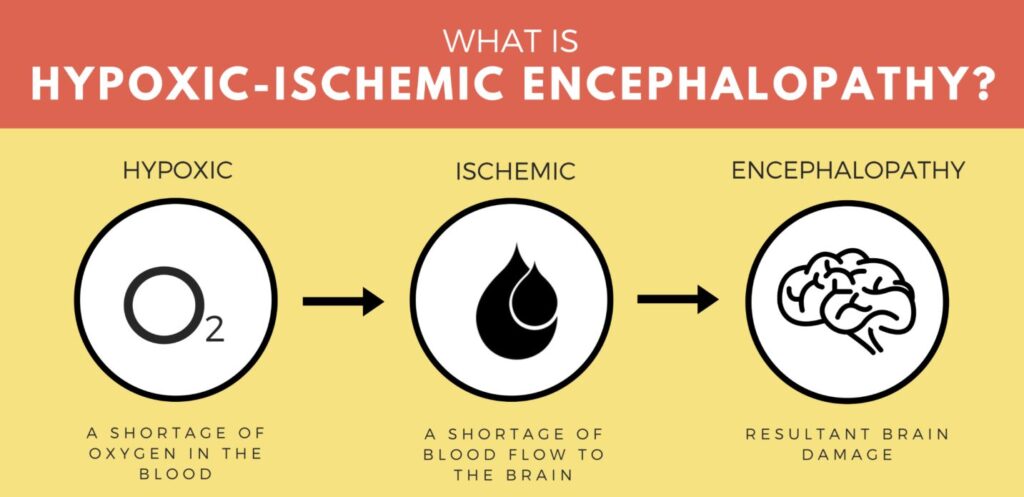
Hypoxic-Ischemic Encephalopathy (HIE) refers to a type of brain injury that occurs when the brain is deprived of adequate oxygen (hypoxia) and blood flow (ischemia) for a period of time. This deprivation leads to damage or destruction of brain cells.

  • Hypoxia: A condition in which the body or a region of the body is deprived of adequate oxygen supply at the tissue level. In the context of HIE, this means the brain cells are not receiving enough oxygen.
  • Ischemia: A restriction in blood supply to tissues, causing a shortage of oxygen and glucose needed for cellular metabolism. In HIE, this is a reduction or cessation of blood flow to the brain.
  • Encephalopathy: Any diffuse disease of the brain that alters brain function or structure. In HIE, this refers to the abnormal neurological function resulting from the hypoxic-ischemic insult.

Therefore, HIE is essentially brain damage caused by a lack of oxygen and blood flow to the brain.

Etiology and Risk Factors contributing to HIE

HIE is rarely caused by a single event but often results from an interplay of factors leading to inadequate oxygenation and perfusion of the fetal or neonatal brain. These factors can occur during the antenatal (before birth), intrapartum (during birth), or postnatal (after birth) periods.

I. Antenatal (Before Birth) Etiology and Risk Factors

These conditions can compromise placental function or fetal oxygenation, setting the stage for HIE.

  • Maternal Conditions:
    • Pre-eclampsia/Eclampsia: High blood pressure during pregnancy, often leading to reduced placental blood flow.
    • Maternal Diabetes: Poorly controlled diabetes can affect placental function and fetal oxygenation.
    • Maternal Hypertension (Chronic or Gestational): Reduced uteroplacental perfusion.
    • Maternal Anemia: Reduced oxygen-carrying capacity in maternal blood.
    • Maternal Cardiac or Pulmonary Disease: Compromised maternal oxygenation.
    • Maternal Infections: Severe infections can lead to fetal inflammation and compromise.
    • Substance Abuse: Maternal use of illicit drugs or severe smoking can reduce placental blood flow and fetal oxygenation.
    • Uterine Rupture (prior to labor): Can cause acute and severe fetal distress.
  • Placental Conditions:
    • Placental Abruption: Premature detachment of the placenta from the uterine wall, leading to acute fetal hypoxia and bleeding.
    • Placenta Previa: Placenta covers the cervix, which can lead to severe bleeding during pregnancy or labor.
    • Placental Insufficiency: Chronic failure of the placenta to deliver adequate nutrients and oxygen to the fetus, often leading to intrauterine growth restriction (IUGR) and increased vulnerability to stress during labor.
    • Cord Accidents (e.g., nuchal cord, cord prolapse): Can cause acute interruption of fetal blood flow, though these are more common intrapartum.
  • Fetal Conditions:
    • Severe Fetal Growth Restriction (FGR/IUGR): Often a sign of chronic placental insufficiency, making the fetus highly susceptible to hypoxic events.
    • Fetal Anemia: Due to conditions like alloimmune hemolytic disease.
    • Fetal Cardiac Anomalies: Structural heart defects that impair fetal circulation.
    • Fetal Infections: Can lead to systemic inflammation and compromise.
    • Multiple Gestation (e.g., twin-to-twin transfusion syndrome): Can lead to significant disparities in blood volume and oxygenation.
  • II. Intrapartum (During Birth) Etiology and Risk Factors

    These are the most commonly identified causes of acute, severe HIE.

    1. Uterine Hyperstimulation/Tachysystole: Excessive uterine contractions, often due to induction agents (e.g., oxytocin), which reduce blood flow to the placenta between contractions.
    2. Cord Compression/Prolapse: Compression of the umbilical cord during contractions or its descent ahead of the fetus, severely reducing or completely interrupting fetal blood flow.
    3. Placental Abruption: While it can occur antenatally, severe abruption during labor is a major cause of acute fetal compromise.
    4. Uterine Rupture: Complete tear in the uterine wall, leading to severe hemorrhage and acute fetal distress.
    5. Prolonged Labor/Difficult Delivery: Extended periods of fetal stress, especially with inadequate oxygen reserves.
    6. Shoulder Dystocia: Difficulty delivering the baby's shoulder after the head, which can prolong delivery and compromise fetal oxygenation.
    7. Maternal Hypotension: Due to epidural anesthesia or other causes, leading to reduced placental perfusion.
    III. Postnatal (After Birth) Etiology and Risk Factors

    These events occur immediately after birth or in the early neonatal period.

  • Severe Cardiopulmonary Compromise:
    • Severe Respiratory Distress Syndrome (RDS): Due to prematurity or lung pathology, leading to profound hypoxemia.
    • Congenital Heart Disease: Critical defects that prevent adequate oxygen delivery to the body and brain.
    • Persistent Pulmonary Hypertension of the Newborn (PPHN): High blood pressure in the lungs, shunting blood away from the lungs and preventing adequate oxygenation.
    • Severe Meconium Aspiration Syndrome (MAS): Obstructs airways and impairs lung function.
    • Sepsis/Shock: Systemic infection leading to circulatory collapse and reduced cerebral perfusion.
  • Severe Anemia: Acute blood loss at or after birth.
  • Central Nervous System (CNS) Hemorrhage: Severe intraventricular hemorrhage (IVH) in premature infants or other intracranial bleeding leading to shock and ischemia.
  • Airway Obstruction: Due to congenital anomalies or trauma.
  • Severe Hypoglycemia: Prolonged low blood sugar, which can lead to brain injury, especially when combined with reduced oxygen.
  • Pathophysiology of Brain Injury in HIE

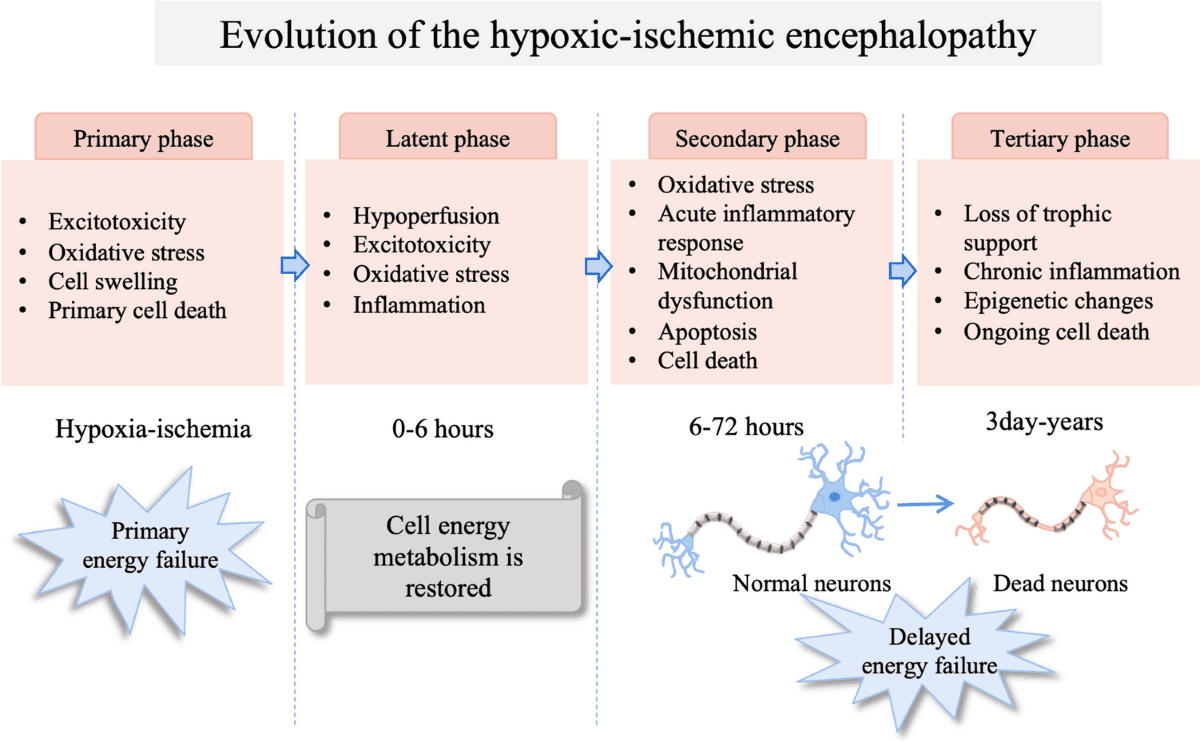
    The brain injury following a hypoxic-ischemic insult is not a single event but rather an evolving process that occurs in phases. This understanding is important to therapeutic interventions.

    I. The Initial Insult (Primary Energy Failure)
    1. Oxygen and Glucose Deprivation: The initial hypoxic-ischemic event (e.g., placental abruption, severe cord compression) leads to a rapid cessation of oxygen and glucose delivery to brain cells.
    2. Failure of Oxidative Phosphorylation: Neurons rely heavily on aerobic metabolism (oxidative phosphorylation) in mitochondria to produce ATP (adenosine triphosphate), the primary energy currency of the cell. Without oxygen, this process fails.
    3. ATP Depletion: The rapid depletion of ATP leads to the failure of energy-dependent cellular processes, most notably the ion pumps (e.g., Na+/K+-ATPase).
    4. Cellular Swelling and Excitotoxicity:
      • Failure of the Na+/K+-ATPase pump leads to an influx of sodium and water into the cells, causing cellular swelling (cytotoxic edema).
      • Depolarization of neurons leads to the release of excitatory neurotransmitters, primarily glutamate, into the synaptic cleft.
      • Excessive glutamate overstimulates NMDA and AMPA receptors, causing a massive influx of calcium into the cells. This calcium overload is highly toxic, activating destructive enzymes (proteases, lipases, endonucleases).
    5. Anaerobic Metabolism and Lactic Acidosis: As aerobic metabolism fails, cells switch to anaerobic glycolysis to produce a small amount of ATP. This process generates lactic acid, leading to intracellular and extracellular acidosis, which further compromises cell function and integrity.
    6. Early Cell Death: If the insult is severe and prolonged, this phase can lead to immediate necrosis (cell death) of vulnerable cells.
    II. The Latent Phase (Partial Recovery)

    Following the initial insult, there may be a brief period of apparent recovery of cellular energy metabolism, lasting for minutes to a few hours. During this phase:

    • Cerebral blood flow may partially normalize.
    • Some metabolic functions might recover slightly.
    • However, the groundwork for secondary energy failure is being laid.
    III. The Reperfusion Injury / Secondary Energy Failure

    This is the most critical phase for therapeutic intervention, occurring 6-24 hours after the initial insult and potentially lasting for days. It's often more damaging than the primary insult itself.

    1. Reperfusion and Oxygen Radical Formation: When blood flow (and thus oxygen) is restored to the injured brain, paradoxically, it can exacerbate the injury. The reintroduction of oxygen to damaged mitochondria leads to the excessive production of highly reactive reactive oxygen species (ROS), also known as free radicals.
    2. Oxidative Stress: These free radicals cause widespread damage to cellular components:
      • Lipid peroxidation: Damage to cell membranes.
      • Protein oxidation: Damage to enzymes and structural proteins.
      • DNA damage: Leading to cell death.
    3. Inflammation: The damaged brain tissue releases inflammatory mediators (cytokines, chemokines), leading to:
      • Leukocyte infiltration: Immune cells enter the brain, contributing to inflammation and further damage.
      • Microglial activation: Resident immune cells of the brain become activated, also releasing inflammatory and cytotoxic substances.
      • Breakdown of the Blood-Brain Barrier (BBB): Inflammation damages the BBB, leading to vasogenic edema (fluid leaking from blood vessels into brain tissue), further increasing intracranial pressure and exacerbating injury.
    4. Apoptosis (Programmed Cell Death): Unlike the rapid necrosis of the primary insult, secondary injury often involves a more delayed, programmed form of cell death called apoptosis. This can occur over hours to days to weeks after the initial event. Neurons and oligodendrocytes (cells that produce myelin) are particularly vulnerable to apoptotic pathways.
    5. Mitochondrial Dysfunction: Mitochondria, already compromised during the primary insult, become irreversibly damaged during reperfusion, further impairing energy production and driving apoptotic pathways.
    IV. Tertiary Phase (Ongoing Remodeling and Repair/Deterioration)

    This phase can last for weeks, months, or even years, involving:

    • Gliosis: Proliferation of glial cells (astrocytes) to form scar tissue.
    • Cyst formation: Cavities in the brain where tissue has been lost.
    • Myelination defects: Damage to oligodendrocytes can lead to impaired myelin formation, affecting nerve conduction.
    • Ongoing neuronal loss: Slow, continuous loss of neurons.
    • Brain Remodeling: The brain attempts to repair and adapt, but often with significant functional deficits.
    Clinical Application: Therapeutic Hypothermia

    Understanding these phases is important for treatment. Therapeutic hypothermia (cooling the infant's core body temperature to 33-34°C for 72 hours) is highly effective because it specifically targets and mitigates the destructive processes of the secondary energy failure phase. Cooling reduces:

    • Metabolic rate and oxygen demand.
    • Excitotoxicity.
    • Free radical production.
    • Inflammation.
    • Apoptosis.

    By slowing down these destructive processes, hypothermia can limit the extent of brain damage and improve neurological outcomes.

    Clinical Manifestations and Grading of HIE in Neonates

    The clinical manifestations of HIE are diverse, reflecting the extent and location of brain damage. They can range from subtle signs to severe neurological depression. The severity is categorized using a grading system, which also helps predict prognosis.

    I. Clinical Manifestations of HIE

    Clinical signs of HIE usually appear within the first hours to days after birth and can involve various neurological and systemic systems.

  • Neurological Signs: These are the most prominent and critical indicators.
    • Level of Consciousness:
      • Lethargy/Hypotonia: Decreased activity, poor muscle tone.
      • Stupor: Unresponsive except to painful stimuli.
      • Coma: Unresponsive to all stimuli.
    • Reflexes:
      • Primitive Reflexes: Weak or absent Moro, suck, grasp reflexes.
      • Pupillary Light Reflex: Sluggish or absent.
      • Oculomotor Responses: Abnormal eye movements (e.g., roving, nystagmus) or fixed pupils.
    • Muscle Tone:
      • Hypotonia (Flaccidity): Decreased muscle tone, "floppy" baby.
      • Hypertonia (Spasticity): Increased muscle tone (may develop later).
    • Seizures: One of the most common and concerning signs. Can be subtle (e.g., bicycling movements, chewing motions, eye deviation) or generalized. Occur in 50-70% of moderate to severe HIE cases.
    • Abnormal Posturing: Decorticate (arms flexed, legs extended) or decerebrate (arms and legs extended) posturing in severe cases.
    • Apnea/Irregular Respirations: Due to central respiratory drive depression.
    • Irritability/Jitteriness: In milder cases or early stages.
  • Systemic Manifestations (Due to involvement of other organs from systemic hypoxia-ischemia):
    • Cardiovascular: Hypotension, bradycardia, poor perfusion (cool extremities, prolonged capillary refill).
    • Respiratory: Apnea, irregular breathing, need for ventilatory support.
    • Renal: Oliguria/anuria, elevated creatinine, acute kidney injury.
    • Gastrointestinal: Poor feeding, abdominal distension, necrotizing enterocolitis (rare but possible).
    • Hematological: Disseminated intravascular coagulation (DIC), thrombocytopenia.
    • Metabolic: Hypoglycemia, metabolic acidosis, hypocalcemia.
  • II. Grading of HIE (Sarnat & Sarnat Staging)

    The most widely used clinical staging system for HIE is the Sarnat & Sarnat Staging, developed in 1976. This system classifies HIE into three grades based on neurological signs, usually assessed within the first 24-72 hours of life. This grading helps predict prognosis and guides treatment decisions, particularly for therapeutic hypothermia.

    Feature Stage 1 (Mild HIE) Stage 2 (Moderate HIE) Stage 3 (Severe HIE)
    Level of Consciousness Hyperalert, irritable Lethargic, stuporous Comatose, unresponsive
    Muscle Tone Normal to increased (mild hypertonia) Mild to moderate hypotonia Flaccid, severe hypotonia
    Posture Normal, mild flexion Strong distal flexion, weak proximal Decerebrate, intermittent flexion
    Pupils Miosis (constricted) Miosis or normal Mydriasis (dilated), fixed
    Moro Reflex Exaggerated, incomplete Weak or absent Absent
    Suck Reflex Weak, strong Weak or absent Absent
    Grasp Reflex Exaggerated Weak or absent Absent
    Seizures Absent Present, frequent Present, intractable (difficult to control)
    Respirations Normal, irregular Periodic breathing, apnea Apnea, requiring ventilation
    Duration of Symptoms Usually < 24 hours Hours to days, can evolve Days to weeks, often fatal
    Prognosis Excellent, good neurological outcome Variable, significant risk of neurological sequelae Poor, high mortality, severe neurological deficits
    Key Points Regarding Sarnat Staging:
    • Dynamic Nature: The clinical picture can evolve, so repeated assessments are necessary. An infant might progress from Stage 1 to Stage 2.
    • Therapeutic Window: Infants with moderate (Stage 2) to severe (Stage 3) HIE are candidates for therapeutic hypothermia. Mild HIE (Stage 1) is generally not treated with hypothermia.
    • Prognostic Value: This staging is a powerful predictor of long-term neurodevelopmental outcomes.
    Diagnostic Approaches for HIE

    Diagnosing HIE involves a combination of clinical assessment, laboratory tests, and neuroimaging studies. The goal is to confirm the diagnosis, assess severity, and rule out other conditions that may mimic HIE.

    I. Clinical Criteria (ACOG/AAP Criteria for Intrapartum HIE)

    The American College of Obstetricians and Gynecologists (ACOG) and the American Academy of Pediatrics (AAP) have established criteria to define an acute intrapartum event sufficient to cause HIE. For a diagnosis of acute intrapartum HIE, all four of the following must be met:

    1. Evidence of a metabolic acidosis in intrapartum fetal blood or umbilical artery blood (pH < 7.0 and base deficit ≥ 12 mmol/L). This indicates severe oxygen deprivation during labor.
    2. Early onset of moderate or severe encephalopathy in infants ≥ 34 weeks of gestation. This is assessed clinically using criteria like the Sarnat staging.
    3. Cerebral Palsy of the spastic quadriplegic or dyskinetic type. (This criterion applies retrospectively for establishing a causal link later in life, but the other three are for initial diagnosis).
    4. Exclusion of other identifiable etiologies (e.g., trauma, coagulopathy, infection, genetic conditions) that could explain the neurological signs.

    While these criteria are strict for defining an acute intrapartum event, HIE can also result from antenatal or postnatal causes, and the full clinical picture is always considered.

    II. Clinical Assessment
    1. Detailed History:
      • Maternal History: Any risk factors during pregnancy (e.g., pre-eclampsia, diabetes, infection, drug use).
      • Labor and Delivery History: Duration of labor, fetal heart rate patterns (e.g., prolonged decelerations, bradycardia), meconium-stained amniotic fluid, difficulties during delivery (e.g., shoulder dystocia, cord prolapse), Apgar scores.
      • Postnatal Course: Onset and progression of neurological symptoms (lethargy, seizures, abnormal tone), respiratory status, feeding difficulties.
    2. Neurological Examination: This is the cornerstone of diagnosis and severity assessment (Sarnat staging, as discussed in Objective 4). Repeated neurological exams are crucial as the infant's condition can evolve.
      • Assess level of consciousness, muscle tone, primitive reflexes, pupillary responses, and presence of seizures.
    III. Laboratory Investigations
    1. Umbilical Cord Blood Gases: Essential for identifying metabolic acidosis (low pH, high base deficit), which is a key indicator of acute intrapartum hypoxic-ischemic insult.
    2. Blood Glucose: To identify and manage hypoglycemia, which can mimic or exacerbate brain injury.
    3. Electrolytes (Na, K, Ca, Mg): To detect imbalances that can affect neurological function or result from HIE.
    4. Complete Blood Count (CBC) and Coagulation Profile: To rule out infection, anemia, or coagulopathy.
    5. Liver and Renal Function Tests: To assess multi-organ involvement, as systemic hypoxia-ischemia can affect these organs.
    6. Lactate Levels: Elevated lactate indicates anaerobic metabolism and tissue hypoxia.
    7. Creatine Kinase BB (CK-BB) Isoenzyme: A marker of brain injury, though not specific to HIE.
    8. Infection Work-up: Blood cultures, CSF analysis, CRP (C-reactive protein) if sepsis is suspected, as infection can present similarly or coexist.
    9. Toxicology Screen: If maternal substance abuse is suspected.
    IV. Neuroimaging Studies

    Neuroimaging provides crucial information about the extent, pattern, and timing of brain injury.

    1. Magnetic Resonance Imaging (MRI) of the Brain (with Diffusion-Weighted Imaging - DWI):
      • Gold Standard: MRI is the most sensitive and specific imaging modality for diagnosing HIE and predicting long-term neurological outcome.
      • Timing: Optimal imaging window for acute injury is typically between 3-7 days of life. DWI can detect early cytotoxic edema (within 24-48 hours).
      • Findings: Patterns of injury on MRI (e.g., basal ganglia/thalamic injury, watershed cortical injury) are highly predictive of the type and severity of neurological deficits.
    2. Cranial Ultrasound (CUS):
      • Initial Screening/Monitoring: A non-invasive, readily available tool, especially useful in the acute phase for detecting severe injury like hemorrhage or hydrocephalus.
      • Limitations: Less sensitive than MRI for detecting subtle parenchymal changes characteristic of HIE. Can show increased echogenicity (whiteness) in periventricular white matter or basal ganglia during the acute phase.
    3. Computed Tomography (CT) Scan of the Brain:
      • Limited Role: Less sensitive than MRI for detecting early HIE changes and involves radiation exposure.
      • Utility: Useful in acute emergencies to rule out intracranial hemorrhage or severe edema when MRI is not immediately available or contraindicated.
    V. Neurophysiological Monitoring
    1. Amplitude-Integrated Electroencephalography (aEEG):
      • Continuous Monitoring: Provides a simplified, continuous recording of brain electrical activity at the bedside.
      • Detects Seizures: Excellent for detecting subclinical (non-convulsive) seizures, which are common in HIE and often go unnoticed clinically.
      • Assesses Brain Function: Helps assess the background brain activity, which correlates with the severity of HIE and predicts outcome. A severely depressed or burst-suppression pattern indicates severe encephalopathy.
      • Guides Treatment: Crucial for monitoring response to anti-seizure medications and during therapeutic hypothermia.
    2. Standard Electroencephalography (EEG):
      • Detailed Analysis: Provides a more detailed assessment of brain electrical activity than aEEG, particularly useful for characterizing seizure types and localization.
      • Intermittent Monitoring: Typically performed intermittently rather than continuously.
    Medical Management and Treatment Strategies for HIE, Including Therapeutic Hypothermia

    This is a pediatrics emergency.

    Aims of Management

    The medical management of HIE is multidisciplinary and aims to provide supportive care, prevent further brain injury, treat complications, and most importantly, implement neuroprotective strategies. The cornerstone of acute management for moderate to severe HIE in term and late preterm infants is therapeutic hypothermia.

    I. General Supportive Care (Stabilization and Optimization)

    These measures are initiated immediately upon suspicion of HIE and continue throughout the acute phase. The goal is to maintain optimal physiological conditions for the injured brain.

    1. Respiratory Support:
      • Secure Airway: Ensure adequate oxygenation and ventilation. Many infants with HIE require endotracheal intubation and mechanical ventilation due to central respiratory depression, poor gag reflex, or apneic episodes.
      • Oxygenation: Maintain appropriate oxygen saturation (typically 90-95%) to avoid both hypoxia and hyperoxia, which can worsen reperfusion injury.
      • CO2 Management: Maintain normocapnia (normal CO2 levels) as both hypocapnia (vasoconstriction, reduced cerebral blood flow) and hypercapnia (vasodilation, increased intracranial pressure) can be detrimental.
    2. Cardiovascular Support:
      • Maintain Blood Pressure: Prevent hypotension (which reduces cerebral perfusion) and severe hypertension. Vasopressors (e.g., dopamine, dobutamine) may be used.
      • Fluid Management: Administer intravenous fluids cautiously to maintain adequate hydration without causing fluid overload, which could worsen cerebral edema.
    3. Metabolic and Electrolyte Homeostasis:
      • Glucose Control: Monitor blood glucose levels closely and manage hypoglycemia (common) or hyperglycemia (which can worsen brain injury).
      • Electrolyte Balance: Correct imbalances in sodium, potassium, calcium, and magnesium.
      • Acid-Base Balance: Correct metabolic acidosis.
    4. Temperature Regulation (Prior to and During Cooling):
      • Avoid Hyperthermia: Even mild hyperthermia (fever) can significantly worsen brain injury. Actively prevent and treat fever.
      • Controlled Cooling: If therapeutic hypothermia is indicated, cooling should be controlled and gradual, not rapid, to avoid complications.
    5. Nutrition:
      • Early Trophic Feeds: If the gut is viable, minimal enteral feeding can support gut integrity.
      • Parenteral Nutrition: If oral/enteral feeding is not possible, provide total parenteral nutrition (TPN) to meet caloric and nutritional needs.
    6. Infection Control:
      • Antibiotics: Initiate empiric antibiotics if infection is suspected, as sepsis can mimic or coexist with HIE and worsen outcomes.
      • Monitor for Sepsis: Closely monitor for signs of infection.
    7. Fluid Management:
      • Administer intravenous fluids cautiously to maintain adequate hydration without causing fluid overload, which could worsen cerebral edema. Initial fluid restriction (e.g., 60-80 ml/kg/day) is common, especially if SIADH is suspected or confirmed, to prevent cerebral edema.
    8. Hematological Management:
      • Avoid Polycythemia: HIE infants are at risk for polycythemia (hematocrit > 65-70%). High hematocrit increases blood viscosity, which can impair cerebral blood flow and oxygen delivery. If the hematocrit remains elevated despite adequate hydration, a partial exchange transfusion may be performed to bring the level down to around 55% to improve cerebral perfusion.
    II. Neuroprotective Strategy: Therapeutic Hypothermia

    Therapeutic hypothermia (also known as targeted temperature management or neuroprotective cooling) is the only treatment proven to improve survival and neurodevelopmental outcomes in infants with moderate to severe HIE.

    1. Mechanism of Action: cooling works by reducing the damaging processes of secondary energy failure. It decreases:
      • Cerebral metabolic rate and oxygen demand.
      • Excitotoxicity (glutamate release).
      • Inflammation.
      • Free radical production.
      • Apoptosis.
      • Blood-brain barrier disruption.
    2. Candidates for Hypothermia:
      • Gestational Age: Term (≥ 36 weeks) and late preterm (34-35 weeks 6 days) infants.
      • Evidence of Perinatal Asphyxia: pH < 7.0 or base deficit ≥ 12 mmol/L on umbilical cord blood or first postnatal blood gas OR an Apgar score ≤ 5 at 10 minutes OR continued need for resuscitation at 10 minutes.
      • Evidence of Moderate to Severe Encephalopathy: Sarnat Stage 2 or 3 (lethargy, stupor, coma, hypotonia, abnormal reflexes, seizures).
      • Onset within Therapeutic Window: Cooling must be initiated within 6 hours of birth or the suspected hypoxic-ischemic event. This narrow window is critical for effectiveness.
    3. Procedure:
      • Target Temperature: Core body temperature is maintained at 33.0-34.0°C.
      • Duration: Typically for 72 hours.
      • Methods:
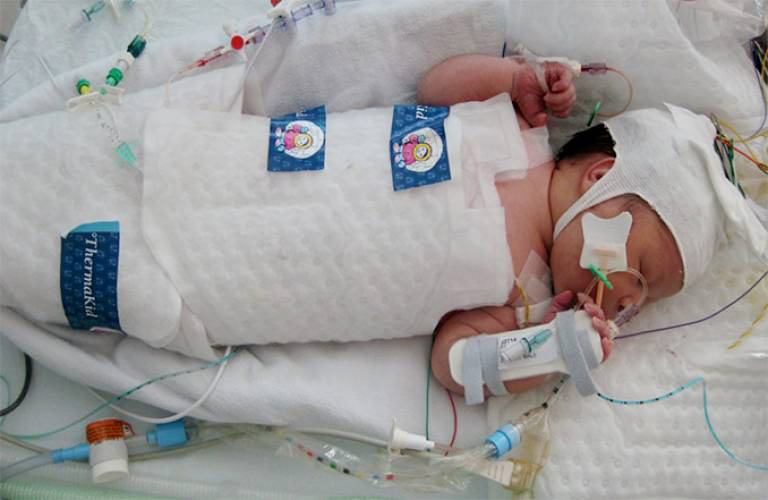
        • Whole-Body Cooling: Using a cooling blanket/mattress that circulates water.
        • Selective Head Cooling: Using a cap that circulates cooled water around the infant's head, while the body is maintained at a slightly higher temperature or ambient.
      • Rewarming: After 72 hours, the infant is slowly rewarmed by increasing temperature by 0.5°C per hour over 6-12 hours. Rapid rewarming can be dangerous.
      • Monitoring: Continuous core temperature monitoring (rectal or esophageal probe), heart rate, blood pressure, oxygen saturation, aEEG, and frequent clinical assessment.
    4. Potential Complications of Hypothermia:
      • Bradycardia: Common but usually well-tolerated.
      • Hypotension: Requires careful monitoring and management.
      • Arrhythmias: Less common but serious.
      • Coagulopathy/Thrombocytopenia: Increased risk of bleeding.
      • Subcutaneous Fat Necrosis: A benign skin condition.
      • Electrolyte Disturbances: Hypoglycemia, hypokalemia.
      • Increased Risk of Infection: Though debated, careful monitoring is needed.
    III. Management of Complications
    1. Seizure Management:
      • Control of seizures: HIE seizures are often difficult to control, reflecting the severity of brain injury. Aggressive and timely management is crucial.
      • Anticonvulsants:
        • Phenobarbital: Often the first-line drug. Typical loading dose 15-20 mg/kg IV, followed by a maintenance dose of 3-5 mg/kg/day IV.
        • Phenytoin: Can be used if phenobarbital is ineffective. Loading dose 15-20 mg/kg IV, followed by a maintenance dose of 5 mg/kg/day IV.
        • Midazolam: A benzodiazepine, often used for status epilepticus or refractory seizures, typically as a continuous infusion after a bolus (e.g., 0.1-0.3 mg/kg IV bolus, then infusion).
        • Newer agents: Like Levetiracetam and Topiramate are increasingly used in neonates, sometimes as first-line or add-on therapies, due to potentially better side effect profiles or efficacy in certain situations.
      • aEEG Monitoring: Essential for identifying and treating both clinical and subclinical seizures.
      • Correction of Metabolic Derangements: Address hypoglycemia, hypocalcemia, or electrolyte imbalances that can trigger seizures.
    2. Cerebral Edema and Intracranial Pressure (ICP) Management:
      • Head Elevation: Mild head elevation (30 degrees).
      • Fluid Restriction: Careful fluid management.
      • Osmotic Diuretics: Mannitol or hypertonic saline may be considered in severe cases of cerebral edema, though their use in neonates with HIE is debated and not routinely recommended.
      • Avoidance of Pain and Stimulation: Minimize noxious stimuli.
    IV. Other Potential Neuroprotective Agents (Under Research)

    While therapeutic hypothermia is the only proven therapy, research continues into other agents that could further enhance neuroprotection or extend the therapeutic window. These include:

    • Xenon gas
    • Erythropoietin (EPO)
    • Melatonin
    • Topiramate
    • Stem cell therapies

    Currently, none of these are standard clinical practice for HIE outside of research protocols.

    Potential Complications and Long-Term Outcomes Associated with HIE

    The long-term outcomes for infants who survive HIE are highly variable and depend primarily on the severity of the initial insult, the effectiveness of neuroprotective interventions (like therapeutic hypothermia), and the presence of any concurrent morbidities. The complications can affect nearly every aspect of neurodevelopmental function and often necessitate multidisciplinary follow-up.

    I. Neurological Complications and Long-Term Sequelae
    1. Cerebral Palsy (CP):
      • Most Common Motor Disability: HIE is a leading cause of cerebral palsy, particularly spastic quadriplegic or dyskinetic types. CP is a group of permanent movement disorders that appear in early childhood.
      • Severity: Can range from mild gait disturbances to severe motor impairment requiring total care.
      • Types: Spastic (stiff muscles), dyskinetic (uncontrolled movements), ataxic (poor balance and coordination), or mixed.
    2. Developmental Delays:
      • Global Developmental Delay: Delays across multiple domains (motor, cognitive, speech, social).
      • Specific Delays: Can affect fine motor skills, gross motor skills, speech and language development, and personal-social development.
    3. Intellectual Disability (Cognitive Impairment):
      • Range: From mild learning difficulties to severe intellectual disability, affecting problem-solving, reasoning, and adaptive functioning.
      • Impact on Education: Many children require special education services.
    4. Epilepsy/Seizure Disorder:
      • Increased Risk: Children with a history of HIE, especially moderate to severe, have a significantly higher risk of developing recurrent unprovoked seizures (epilepsy).
      • Intractability: Seizures can be difficult to control with medication.
    5. Sensory Impairments:
      • Visual Impairment:
        • Cortical Visual Impairment (CVI): Damage to the visual pathways in the brain, leading to impaired visual processing even with healthy eyes. This is very common after HIE.
        • Strabismus (crossed eyes), Nystagmus (involuntary eye movements).
      • Hearing Impairment: Sensorineural hearing loss, though less common than visual impairment.
    6. Behavioral and Psychiatric Disorders:
      • Attention-Deficit/Hyperactivity Disorder (ADHD): Difficulty with attention, hyperactivity, and impulsivity.
      • Autism Spectrum Disorder (ASD) Features: Social communication difficulties and repetitive behaviors.
      • Anxiety and Depression: Can manifest later in childhood or adolescence.
    7. Speech and Language Disorders:
      • Dysarthria: Difficulty with speech articulation due to motor control issues.
      • Aphasia: Difficulties with language comprehension or expression.
    II. Other Systemic Complications (Less Common but Possible)

    While neurological sequelae are primary, some children may experience long-term issues related to initial multi-organ injury.

    1. Gastrointestinal Issues:
      • Feeding Difficulties: Dysphagia (difficulty swallowing), poor oral motor skills, severe gastroesophageal reflux disease (GERD) leading to failure to thrive, aspiration risk.
      • Gastrostomy Tube (G-tube) Dependence: May be required for adequate nutrition and hydration.
    2. Respiratory Issues:
      • Chronic Lung Disease: If severe respiratory distress was part of the initial postnatal HIE presentation.
      • Increased Risk of Aspiration Pneumonia: Due to dysphagia.
    3. Orthopedic Complications:
      • Skeletal Deformities: Due to spasticity (e.g., hip dislocation, scoliosis, contractures) requiring orthopedic intervention.
    III. Prognosis and Predictive Factors

    The prognosis for an infant with HIE is determined by several factors:

    • Severity of Encephalopathy: Sarnat Stage 1 usually has excellent outcomes; Stage 2 has variable outcomes (20-50% risk of neurological disability); Stage 3 has poor outcomes (high mortality, >90% risk of severe disability).
    • Response to Therapeutic Hypothermia: Infants who respond well to cooling tend to have better outcomes.
    • Neuroimaging Findings (MRI): The pattern and extent of brain injury on MRI (especially the presence of basal ganglia/thalamic or extensive watershed injury) are strong predictors of long-term disability.
    • aEEG Findings: Severely depressed or burst-suppression aEEG patterns for prolonged periods indicate a poorer prognosis.
    • Presence of Seizures: Intractable seizures or status epilepticus are associated with worse outcomes.
    • Early Neurological Examination: Abnormalities persisting beyond 7 days of life are concerning.
    IV. Importance of Long-Term Follow-up

    Due to the high risk of multi-system and neurodevelopmental complications, infants with HIE require specialized, multidisciplinary follow-up care that extends into childhood and adolescence. This includes:

    • Regular neurological assessments.
    • Developmental surveillance and screening.
    • Physical therapy, occupational therapy, speech therapy.
    • Vision and hearing screening.
    • Nutritional support.
    • Psychological and educational support.
    • Genetic counseling (to rule out other causes or genetic predispositions if indicated).
    Nursing Diagnoses and Specific Nursing Interventions

    Nursing care for infants with HIE is comprehensive, requiring meticulous attention to detail, continuous assessment, and a deep understanding of the pathophysiology and potential complications. It also crucially involves supporting the family through a highly stressful and often traumatic experience.

    I. Key Nursing Diagnoses for Infants with HIE
    • Impaired Gas Exchange related to central nervous system depression, muscle weakness, and/or pulmonary complications (e.g., meconium aspiration syndrome).
    • Ineffective Airway Clearance related to depressed cough/gag reflex, increased secretions, or aspiration risk.
    • Risk for Ineffective Cerebral Tissue Perfusion related to cerebral edema, altered systemic blood pressure, and/or metabolic derangements.
    • Risk for Injury (Seizures) related to cerebral hypoxia-ischemia and neuronal irritability.
    • Hypothermia (Therapeutic) related to controlled cooling process.
    • Hyperthermia related to ineffective thermoregulation or infection.
    • Inadequate protein energy nutritional intake related to depressed suck/swallow reflex, lethargy, or gastrointestinal dysfunction.
    • Risk for Infection related to invasive procedures, compromised immune status, and/or prolonged hospitalization.
    • Impaired Skin Integrity related to immobility, altered tissue perfusion, or device placement (e.g., cooling blanket, IV lines).
    • Compromised Family Coping related to acute crisis, fear of uncertain outcome, and complex medical regimen.
    • Readiness for Enhanced Knowledge related to condition, treatment, and long-term care needs of the infant.
    II. Specific Nursing Interventions

    Nursing interventions are tailored to address these diagnoses and align with the medical management strategies discussed previously.

    A. Respiratory and Cardiovascular Support:
    Intervention Detail
    Continuous Cardiorespiratory Monitoring HR, RR, SpO2, BP (arterial line preferred).
    Airway Management Maintain patent airway, frequent suctioning as needed, assist with ventilation (bag-mask, mechanical ventilation).
    Oxygenation Titrate oxygen to maintain SpO2 within target range (e.g., 90-95%), avoiding hyperoxia.
    Fluid and Electrolyte Balance Administer IV fluids and electrolytes as ordered, monitor intake/output, urine specific gravity, daily weights, and electrolyte levels.
    Perfusion Assessment Monitor capillary refill time, skin color, and temperature. Administer vasopressors as ordered to maintain adequate perfusion.
    B. Neurological Management:
    Intervention Detail
    Frequent Neurological Assessments Perform Sarnat staging, assess level of consciousness, muscle tone, reflexes, pupil size/reactivity, and movement patterns. Document changes meticulously.
    Seizure Monitoring
    • Observation: Close observation for clinical signs of seizures (subtle, clonic, tonic).
    • aEEG/EEG Monitoring: Understand and interpret aEEG trends; notify physician of seizures or significant changes in background activity.
    • Anticonvulsant Administration: Administer prescribed medications, monitor for effectiveness and side effects.
    Head Position Maintain head in midline position, slightly elevated (15-30 degrees) to promote venous drainage and prevent increased ICP.
    Minimize Stimulation Provide a calm, quiet environment with dimmed lights to reduce cerebral oxygen demand and prevent agitation. Cluster care activities.
    C. Temperature Management (Specific to Therapeutic Hypothermia):
    Intervention Detail
    Initiation Assist with rapid but controlled initiation of cooling within the 6-hour window.
    Continuous Core Temperature Monitoring Use rectal or esophageal probes.
    Target Temperature Maintenance Adjust cooling device as needed to maintain core temperature at 33.0-34.0°C.
    Skin Care Protect skin during cooling (e.g., prevent burns from cooling blanket, ensure skin integrity).
    Rewarming Monitor closely during slow rewarming (0.5°C/hour over 6-12 hours) for signs of instability (hypotension, hyperthermia, seizures).
    Shivering Management Monitor for shivering (rare in neonates but can occur during cooling or rewarming); sedatives may be needed if present.
    D. Metabolic and Nutritional Support:
    Intervention Detail
    Glucose Monitoring Frequent bedside glucose checks, administer dextrose infusions as ordered.
    Nutritional Support Initiate trophic feeds via orogastric tube if appropriate, or administer parenteral nutrition. Monitor gastric residuals, bowel sounds, and abdominal distension.
    Assess Suck/Swallow Evaluate feeding readiness and safety; consult speech/occupational therapy for feeding difficulties.
    E. Infection Prevention:
    Intervention Detail
    Aseptic Technique Strict adherence to hand hygiene and sterile technique for all invasive procedures (IV lines, endotracheal tubes, urinary catheters).
    Monitor for Infection Signs Temperature instability, lethargy, poor feeding, abnormal WBC count, elevated CRP.
    Antibiotic Administration Administer as prescribed.
    F. Skin Care:
    Intervention Detail
    Repositioning Frequent gentle repositioning to prevent pressure injuries, especially during cooling.
    Skin Assessment Regularly assess skin for redness, breakdown, or signs of subcutaneous fat necrosis.
    Moisture Management Keep skin clean and dry.
    G. Family Support and Education:
    Intervention Detail
    Communication Provide regular, honest, and empathetic updates on the infant's condition and prognosis. Use clear, understandable language.
    Emotional Support Acknowledge and validate parents' feelings (fear, grief, guilt, anger). Offer presence and active listening.
    Facilitate Bonding Encourage parents to touch, talk to, and participate in care as appropriate, even during cooling. Explain the purpose of all equipment.
    Education
    • Acute Phase: Explain HIE, the purpose of cooling, reasons for all monitoring devices and treatments.
    • Discharge Planning/Long-Term: Educate on potential long-term outcomes, warning signs to watch for, need for follow-up appointments, and how to access early intervention services.
    Referrals Provide referrals to social work, pastoral care, support groups, and early intervention programs.
    H. Documentation:
    Intervention Detail
    Thorough and Accurate Document all assessments, interventions, medications, infant's responses, and family interactions. This is critical for continuity of care and legal purposes.

    Quick Quiz

    HIE Quiz

    Paediatrics - mobile-friendly and focused practice.

    Privacy: Your details are used only for quiz tracking and certificates.

    Hypoxic Ischemic Encephalopathy Read More »
    Intracranial Hemorrhage

    Intracranial Hemorrhage

    Paediatric Intra-Cranial Hemorrhage (ICH)
    What is Intracranial Hemorrhage?

    Intracranial hemorrhage (ICH) is bleeding that occurs inside the skull (cranium). This bleeding can happen in three main places:

    • Inside the brain tissue itself (brain parenchyma).
    • Inside the ventricles (fluid-filled spaces in the brain).
    • In the subarachnoid space (the space between the brain and the thin tissues that cover the brain).

    Think of it like this: Imagine your brain is like a house. The bleeding can happen inside the rooms (brain tissue), in the plumbing system (ventricles), or in the space between the roof and the ceiling (subarachnoid space).

    Epidemiology (How Common Is It?)
    • Mortality rate: Almost 48% of patients die within 30 days after the bleed occurs. This means nearly half of all children and adults who experience ICH may not survive the first month.
    • Percentage of cerebrovascular disorders: ICH accounts for 15-20% of all cerebrovascular (brain blood vessel) disorders.
    • In paediatric populations, ICH is less common than in adults but carries significant morbidity and mortality, especially in newborns and infants.
    Why Should Nurses in Uganda Care?
    • In Uganda, delayed presentation to healthcare facilities is common due to distance, cost, and cultural beliefs.
    • Many children arrive at hospital when bleeding is already severe.
    • Nurses are often the first healthcare providers to assess these children.
    • Early recognition and rapid intervention can save lives.
    SECTION 2: ETIOLOGY AND RISK FACTORS
    Causes (Etiology) of Intracranial Hemorrhage:
    1. Atherosclerosis Leading to Aneurysms:
      • Atherosclerosis is the hardening and narrowing of arteries due to buildup of fatty deposits (plaque).
      • In children, this is rare but can occur in those with genetic lipid disorders or severe hypertension.
      • The hardened artery walls become weak and may bulge out, forming an aneurysm (a weak, balloon-like swelling in the blood vessel wall).
      • When this aneurysm bursts, it causes bleeding into the brain.
    2. Congenital Defects:
      • Arteriovenous Malformation (AVM): This is a tangle of abnormal blood vessels connecting arteries and veins directly, without the normal capillary network in between.
      • AVMs are present from birth (congenital).
      • They are especially common in young girls for reasons not fully understood.
      • The abnormal vessels are weak and prone to rupture.
    3. Hypertensive Vascular Disease:
      • Hypertension means high blood pressure.
      • In children, hypertension can be caused by:
        • Pheochromocytoma: A rare tumor of the adrenal gland that produces excess adrenaline, causing very high blood pressure.
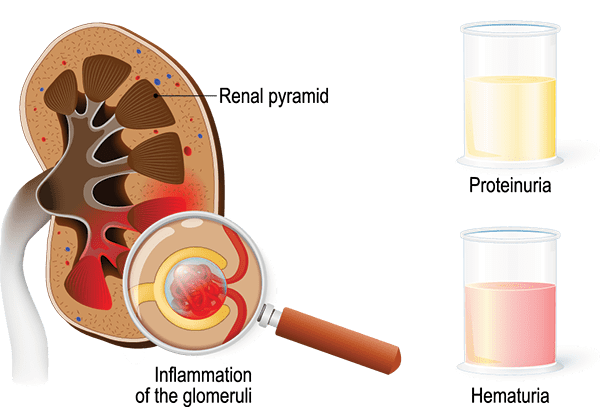
        • Nephritic syndrome: A kidney disease where the kidneys become inflamed and cannot filter properly, leading to fluid retention and high blood pressure.
        • Chronic kidney disease.
        • Coarctation of the aorta (narrowing of the main artery).
      • High blood pressure puts constant pressure on the small blood vessels in the brain, making them weak and likely to burst.
    4. Racial Factors:
      • Black children and adults have a higher incidence of ICH compared to other racial groups.
      • This may be due to higher rates of hypertension, sickle cell disease (which affects blood vessels), and limited access to preventive healthcare.
    5. Increased Age:
      • Although this lecture focuses on paediatrics, remember that premature infants and newborns are at high risk for intraventricular hemorrhage due to fragile blood vessels.
      • In adolescents, risk increases with age-related vascular changes, especially if they have underlying conditions.
    6. Other Important Causes in Children:
      • Trauma: Falls, road traffic accidents, physical abuse (shaken baby syndrome), birth injury.
      • Bleeding disorders: Haemophilia, thrombocytopenia (low platelets), vitamin K deficiency bleeding in newborns.
      • Liver disease: The liver makes clotting factors; if diseased, bleeding risk increases.
      • Brain tumors: Tumors can bleed into themselves.
      • Infections: Meningitis can weaken blood vessel walls.
      • Sickle cell disease: Very common in Uganda; causes blood vessel damage and stroke risk.
    SECTION 3: CLASSIFICATION AND PATHOPHYSIOLOGY
    How Does Bleeding Happen? (Pathophysiology)

    Imagine a water pipe in your house:

    • If the pipe is strong and the water pressure is normal, everything works fine.
    • If the pipe becomes weak (from disease, birth defects, or injury) OR the water pressure becomes too high (hypertension), the pipe can burst.

    When a brain blood vessel bursts, blood spills out where it doesn't belong. This spilled blood:

    • Compresses nearby brain tissue (squashes it).
    • Irritates brain tissue and nerves.
    • Increases pressure inside the skull (Intracranial Pressure - ICP).
    • Cuts off oxygen supply to parts of the brain.
    • Can cause brain cells to die within minutes.
    Classifications of Intracranial Hemorrhage
    A. Traumatic Hemorrhage:
    • Caused by physical injury to the head.
    • Examples: Road traffic accidents, falls from trees (common in Uganda), sports injuries, physical abuse, birth trauma.
    • Types include: Epidural hematoma, Subdural hematoma, Contusions (bruising of brain tissue).
    B. Non-Traumatic Hemorrhage:
    • Occurs without physical injury.
    • Usually due to medical conditions like hypertension, bleeding disorders, or vascular malformations.
    C. Spontaneous Hemorrhage:

    This happens suddenly without warning. There are two main types:

    1. Intracerebral Hemorrhage (ICH): Bleeding directly into the brain tissue. Usually caused by hypertension (high blood pressure). The blood forms a hematoma (a collection of clotted blood) within the brain. This hematoma pushes on and damages surrounding brain tissue.
    2. Subarachnoid Hemorrhage (SAH): Bleeding into the subarachnoid space. Most commonly caused by rupture of an aneurysm (a weak, bulging spot on a blood vessel). Blood mixes with the cerebrospinal fluid (CSF) that bathes the brain.
    Other Causes of Spontaneous ICH:
    • Vascular malformations: These can cause both intracerebral AND subarachnoid bleeding mixed together.
    • Hemorrhagic diathesis: This means the body has a tendency to bleed easily. Causes include:
      • Low platelet count (thrombocytopenia).
      • Haemophilia and other clotting factor deficiencies.
      • Liver disease (liver makes clotting factors).
      • Vitamin K deficiency (especially in newborns who haven't received vitamin K at birth).
      • Disseminated intravascular coagulation (DIC).
    • Hemorrhage into tumors: Some brain tumors have fragile blood vessels that bleed.
    • Anticoagulant medications: Blood-thinning drugs can increase bleeding risk.
    SECTION 4: TYPES OF INTRACRANIAL HEMORRHAGE IN DETAIL
    A. Epidural Hematoma (and Subgaleal Hemorrhage)

    Definition: Epidural hematoma is the accumulation of blood between the Dura mater (the tough outer membrane covering the brain) and the skull, typically following a fracture of the skull.

    Subgaleal Hemorrhage Context: Subgaleal hemorrhage occurs when emissary veins between the skull and intracranial venous sinuses tear, leading to blood collection between the dura/aponeurosis and the periosteum of the skull.

    How Does It Happen? (Pathophysiology)
    • Arterial Rupture: Most commonly from the rupture of the middle meningeal artery.
    • High-Pressure Bleeding: High-pressure bleeding is a prominent feature. The hematoma expands rapidly since the accumulating blood is arterial in origin.
    • Compression: This rapid expansion causes compression of the Dura and flattening of the underlying gyri (brain's surface).
    • The Classic Picture (Lucid Interval): An epidural hematoma may briefly lead to loss of consciousness, and then consciousness is regained later (a "lucid interval"). However, the patient develops progressive loss of consciousness if the hematoma is not drained early.
    Diagnosis & Neonatal Considerations
    • Subgaleal hemorrhage may present as a large, boggy fluid collection palpable on the head’s surface.
    • Characteristic of a subgaleal hemorrhage is that it is not restricted by suture lines and may shift with movement. This is in contrast to the more common cephalohematoma (a superficial collection of blood restricted to the space between the periosteum and skull, which is contained along suture lines).
    • Neonates with subgaleal hemorrhage are at high risk for rapid decompensation; the subgaleal space can expand to collect a newborn’s entire intravascular blood volume if bleeding continues unrecognized.
    Signs and Symptoms:
    • Swelling of the ears
    • Increasing head circumference as bleeding expands into this space (leading to hydrocephalus).
    • Hypovolemic shock
    • Tachycardia and Hypotension
    Additional Clinical Symptoms Why It Happens
    Severe headache Increased pressure in the skull, blood irritating tissues
    Vomiting Increased intracranial pressure (ICP) stimulating the vomiting center
    Changes in Level of Consciousness (LOC) Brain compression, reduced blood flow to brain
    Focal seizures Irritation of brain tissue; especially after brainstem involvement
    Nuchal rigidity (stiff neck) Blood irritating the meninges (coverings of the brain)
    Visual disturbances Pressure on optic nerve or visual pathways; papilledema
    B. Subdural Hematoma (SDH)

    Definition: Presence of blood on the surface of the brain beneath its outer covering. SDH is a collection of blood below the inner layer of the dura mater but external to the arachnoid membrane.

    How Does It Happen?
    • A subdural hemorrhage occurs when bridging veins carrying blood through the dura mater to the arachnoid mater of the meninges are torn.
    • This causes bleeding, with blood collecting below the dura and brain.
    • It develops most often from the rupture of veins which cross the surface convexities of the cerebral hemispheres.
    Types of Subdural Hematoma

    Subdural hematoma may be acute or chronic:

    • Acute subdural hematoma: Develops following trauma and consists of clotted blood, often in the front parietal region. There is no significant compression of gyri initially. Since the accumulated blood is of venous origin, symptoms appear slowly and may become chronic with the passage of time if not fatal.
    • Chronic subdural hematoma: Occurs often with brain atrophy. Chronic subdural hematoma is composed of liquid blood. Separating the hematoma from the underlying brain is a membrane composed of granulation tissue.
    Diagnosis & Neonatal Considerations
    • Because subdural bleeders are located within the skull, there is often no physical sign on the scalp that reflects injury. Instead, the presence of hemorrhage may initially be unrecognized.
    • For most neonates, subdural hemorrhage remains asymptomatic and resolves without consequence.
    • Clinical problems can arise in the case of large volume hemorrhage or if bleeding slowly continues over hours or even days, as in cases of bleeding disorders.
    • Symptomatic neonates often present 24–48 hours after birth with nonspecific signs such as apnea, respiratory distress, altered neurologic state, or seizures.
    C. Subarachnoid Hemorrhage (SAH)

    Definition: There’s bleeding between the brain and the thin tissues that cover the brain. These tissues are called meninges. Subarachnoid hemorrhage occurs when the veins of the subarachnoid villi are torn, leading to a collection of blood in the subarachnoid space.

    Causes and Aneurysms
    • Hemorrhage into the subarachnoid space is most common, caused by the rupture of an aneurysm, and rarely, the rupture of a vascular malformation.
    • Of the three types of aneurysms affecting the larger intracranial arteries—berry, mycotic, and fusiform—berry aneurysms are most important and most common.
    • Berry Aneurysms Details:
      • They are saccular in appearance with a rounded or lobulated bulge arising at the bifurcation of intracranial arteries and varying in size from 2 mm to 2 cm or more.
      • They account for 95% of aneurysms which are liable to rupture.
      • Berry aneurysms are rare in childhood but increase in frequency in young adults and middle life.
      • They are, therefore, not congenital anomalies but develop over the years from a developmental defect of the media of the arterial wall at the bifurcation of arteries, forming thin-walled saccular bulges.
      • Although most berry aneurysms are sporadic in occurrence, there is an increased incidence of their presence in association with congenital polycystic kidney disease and coarctation of the aorta.
    Common Sites (The Circle of Willis)

    In more than 85% of cases of subarachnoid hemorrhage, the cause is massive and sudden bleeding from a berry aneurysm on or near the circle of Willis. The four most common sites are:

    1. In relation to the anterior communicating artery.
    2. At the origin of the posterior communicating artery from the stem of the internal carotid artery.
    3. At the first major bifurcation of the middle cerebral artery.
    4. At the bifurcation of the internal carotid into the middle and anterior cerebral arteries.
    Symptoms
    • A sudden, sharp headache usually comes before a subarachnoid hemorrhage (often described as "the worst headache of my life").
    • Typical symptoms also include loss of consciousness and vomiting.
    D. Intracerebral Hemorrhage (ICH)

    Definition: An intracerebral brain hemorrhage (ICH) is bleeding inside the brain caused by the rupture of a damaged blood vessel in the head. As the amount of blood increases, the build-up of pressure can lead to brain damage, unconsciousness, or even death.

    Pathophysiology and Characteristics
    • This involves bleeding into the brain’s ventricular system, where the cerebrospinal fluid is produced and circulates through towards the subarachnoid space.
    • It can result from physical trauma or from hemorrhaging in a stroke (Hypertension - HTN). This is the most common type of ICH that occurs with a stroke. It’s not usually the result of injury (spontaneous).
    • Spontaneous intracerebral hemorrhage occurs mostly in patients of hypertension.
    • Children with systemic diseases that manifest with HTN are at risk because they develop micro aneurysms in very small cerebral arteries in the brain tissue.
    • Rupture of one of the numerous micro aneurysms is believed to be the cause of intracerebral hemorrhage.
    • Not common to have recurrent intracerebral hemorrhages, unlike the case of subarachnoid hemorrhages.
    • The common sites of hypertensive intracerebral hemorrhage are the region of the basal ganglia (particularly the putamen and the internal capsule), pons, and the cerebellar cortex.
    Diagnosis
    • There are very few clinical symptoms of ICH initially.
    • When present, signs may include an acute drop in hematocrit, new-onset hypotension, and lethargy.
    • However, these symptoms are often present in extremely low birth weight (ELBW) and premature infants.
    Signs and Symptoms

    A prominent warning sign is the sudden onset of neurological deficit. This is a problem with the brain’s functioning. The symptoms progress over minutes to hours and they include:

    • Headache accompanied by neck stiffness
    • Drowsiness
    • Difficulty speaking/crying
    • Nausea and Vomiting
    • Decreased consciousness, Seizure, or Coma
    • Weakness in one part of the body
    • Elevated blood pressure
    • Cognitive dysfunction or memory loss
    • Sudden tingling, weakness, numbness, or paralysis of the face, arm, or leg, particularly on one side of the body
    • Loss of balance or coordination in older children
    • Babies less than 12 months old may develop a swollen fontanel, or soft spot on the head.
    SECTION 5: COMPLICATIONS OF INTRACRANIAL HEMORRHAGE
    1. Hypovolemic Shock:
      • What is it?: The body loses too much blood, leading to insufficient blood volume to maintain blood pressure and organ perfusion.
      • How it happens in ICH: Although the bleeding is inside the skull, massive bleeding can still cause significant blood loss from circulation.
      • Signs to watch for: Rapid, weak pulse (tachycardia), Low blood pressure (hypotension), Cold, clammy skin, Rapid breathing, Decreased urine output, Altered mental status, Delayed capillary refill (more than 2 seconds).
    2. Acute Hydrocephalus:
      • What is it?: Buildup of cerebrospinal fluid (CSF) in the ventricles because blood clots block the normal flow pathways.
      • Signs in children: Rapidly increasing head circumference (in infants whose skull bones haven't fused), Bulging fontanelle (soft spot on baby's head), Sunset eyes (eyes look downward, white showing above iris), Vomiting, Irritability, Lethargy.
      • Management: Emergency insertion of an external ventricular drain (EVD) to remove excess fluid.
    3. Focal Seizures / Seizure Disorders:
      • Blood and its breakdown products irritate brain tissue.
      • This irritation can trigger abnormal electrical activity = seizures.
      • Seizures further increase ICP and oxygen demand.
      • Some children develop epilepsy (recurrent seizures) as a long-term complication.
    4. Other Complications (Crucial exhaustive list):
      • Cerebral vasospasm: Blood vessels narrow 3-14 days after SAH, reducing blood flow and causing stroke.
      • Rebleeding: Especially dangerous in aneurysmal SAH.
      • Hyponatremia: Low sodium levels due to SIADH (Syndrome of Inappropriate Antidiuretic Hormone) or cerebral salt wasting.
      • Neurogenic pulmonary edema: Fluid in lungs due to brain injury.
      • Cardiac arrhythmias: Brain injury affects heart regulation.
      • Deep vein thrombosis (DVT): From prolonged bed rest.
      • Pressure ulcers: From immobility.
      • Aspiration pneumonia: From impaired swallowing and consciousness.
      • Long-term neurological deficits: Paralysis, speech problems, cognitive impairment, behavioral changes.
    SECTION 6: INVESTIGATIONS (DIAGNOSTIC TESTS)
    1. CT Scan (Computed Tomography):
      • What is it?: A special X-ray that takes detailed pictures of the brain in slices.
      • Why it's used: FAST — takes only minutes, Can detect fresh blood easily (blood appears bright white on CT), Shows the size and location of hemorrhage, Can see if blood has entered ventricles, Can see skull fractures.
      • When to do it: IMMEDIATELY for any child with suspected ICH.
      • Limitations: Radiation exposure (but benefits outweigh risks in emergency), May miss very small bleeds or bleeds more than a few days old, Requires child to stay still (may need sedation).
    2. MRI (Magnetic Resonance Imaging):
      • What is it?: Uses magnetic fields and radio waves to create detailed brain images.
      • Why it's used: Better than CT for detecting small bleeds, old bleeds, and vascular malformations. No radiation. Better for looking at brainstem and posterior fossa.
      • When to do it: When CT is inconclusive or for follow-up.
      • Limitations: Takes longer (30-60 minutes), Child must stay very still (often needs sedation or general anesthesia), Cannot use if child has certain metal implants, Less available and more expensive in Uganda.
    3. Cerebral Angiography:
      • What is it?: A special X-ray test where dye is injected into blood vessels to see the arteries and veins of the brain.
      • Why it's used: Gold standard for diagnosing aneurysms, Shows exact location, size, and shape of aneurysms, Identifies vascular malformations, Helps plan surgical or endovascular treatment.
      • How it's done: A catheter (thin tube) is inserted into an artery in the groin. It is threaded up to the brain arteries. Dye is injected. X-ray pictures are taken.
      • Risks: Allergic reaction to dye, Damage to blood vessels, Stroke, Kidney problems from dye.
    4. Lumbar Puncture (Spinal Tap):
      • What is it?: A needle is inserted into the lower back to collect cerebrospinal fluid (CSF).
      • Why it's used: To confirm subarachnoid hemorrhage when CT is negative but suspicion remains high. Blood in CSF indicates SAH.

      🚨 CRITICAL SAFETY RULES — NEVER do lumbar puncture if:

      • There is evidence of increased intracranial pressure (ICP)
      • CT shows mass effect or shift of brain structures
      • Child has papilledema (swollen optic disc)
      • Child is unconscious or has deteriorating consciousness
      • Why it's dangerous with high ICP: Removing fluid from the spinal canal can cause the brain to shift downward (herniation), which can be fatal.
      • When it IS safe: CT scan shows NO evidence of increased ICP, CT is negative for hemorrhage, But clinical suspicion of SAH remains high, Child is awake and cooperative.
    5. Other Important Tests (Crucial exhaustive list):
      • Complete Blood Count (CBC): To check for anemia from blood loss, platelet count.
      • Coagulation profile (PT, PTT, INR): To check blood clotting ability.
      • Blood glucose: Both high and low sugar can worsen brain injury.
      • Electrolytes: Especially sodium (hyponatremia is common after SAH).
      • Liver function tests: If liver disease is suspected as cause.
      • Blood culture: If infection (mycotic aneurysm) is suspected.
      • Echocardiogram: To check heart function (neurogenic cardiac changes).
      • Chest X-ray: If aspiration or neurogenic pulmonary edema suspected.
    SECTION 7: MEDICAL MANAGEMENT

    Goal of Medical Management: Prevent further bleeding, Control intracranial pressure, Maintain adequate blood flow to the brain, Prevent complications, Support vital functions.

    A. Bed Rest with Sedation:
    • Why bed rest? Movement and activity increase blood pressure. Increased blood pressure increases risk of rebleeding. Rest allows the body to start healing.
    • Why sedation? Anxiety and pain increase blood pressure. Agitated children may move excessively. Sedation keeps the child calm and cooperative.
    • Nursing considerations: Explain to family why the child must stay still. Keep the room quiet and dimly lit. Minimize unnecessary procedures and disturbances. Use sedation as prescribed (e.g., midazolam, morphine). Monitor respiratory rate closely with sedation — it can slow breathing.
    B. Fresh Frozen Plasma (FFP) and Vitamin K:
    • When to use: If the child has a bleeding disorder. If the child is on anticoagulant medications (like warfarin). If liver disease prevents normal clotting factor production. If vitamin K deficiency is present (common in newborns who didn't receive vitamin K at birth).
    • Fresh Frozen Plasma (FFP): Contains all clotting factors. Given intravenously. Helps the blood to clot and stop bleeding.
    • Vitamin K: Essential for the liver to make clotting factors II, VII, IX, and X. Given by injection (intramuscular or intravenous). In newborns, vitamin K is given at birth to prevent hemorrhagic disease of the newborn.
    • Nursing considerations: Monitor for allergic reactions to FFP. Check coagulation studies before and after administration. Vitamin K given IV can cause flushing and hypotension — give slowly.
    C. Anti-Seizure Agents (Anticonvulsants):
    • Why give prophylactically (before seizures occur)? Seizures increase brain metabolism and oxygen demand. Seizures increase intracranial pressure. Blood in the brain is irritating and can trigger seizures. Preventing seizures is easier than treating them.
    • Common medications: Phenytoin (Loading dose followed by maintenance), Levetiracetam (Keppra) (Increasingly preferred; fewer side effects), Phenobarbital (Especially in neonates).
    • Nursing considerations: Monitor drug levels (especially phenytoin). Watch for side effects: drowsiness, rash, gum swelling (phenytoin). Ensure airway is protected if seizures occur despite prophylaxis. Have emergency seizure medications available (diazepam, lorazepam).
    D. Analgesia (Pain Relief):
    • Why it's important: Pain increases blood pressure. Pain causes agitation and movement. Children in pain cannot rest and heal.
    • Medications used: Acetaminophen/Paracetamol (First line for mild pain; doesn't affect platelets), Morphine or other opioids (For severe pain; use cautiously as they can depress respiration and affect pupil assessment). Avoid NSAIDs (ibuprofen, aspirin) if bleeding risk or low platelets, as they can worsen bleeding.
    • Nursing considerations: Use pain assessment scales appropriate for age (FLACC for infants, Wong-Baker FACES for older children). Monitor respiratory rate with opioid use. Document pain scores before and after medication.
    E. Sequential Compression Devices (SCDs) or Anti-Embolism Stockings:
    • Why use them? Children with ICH are on bed rest. Immobility increases risk of deep vein thrombosis (DVT) — blood clots in leg veins. DVT can break off and travel to lungs (pulmonary embolism), which can be fatal.
    • How they work: SCDs: Inflatable sleeves wrapped around legs that periodically squeeze and release, mimicking muscle movement and promoting blood flow. Anti-embolism stockings: Tight-fitting stockings that compress leg veins and improve blood return to the heart.
    • Nursing considerations: Ensure proper fit — too tight can restrict blood flow, too loose won't work. Check skin under devices/stockings every shift for pressure areas. Remove and inspect legs for signs of DVT (Swelling, Warmth, Redness, Pain, Tenderness). In very small children, SCDs may not be available; passive range of motion exercises by nurses are important.
    F. Additional Medical Management Strategies (The complete list!):
    1. Blood Pressure Control:
      • Goal: Lower blood pressure to prevent rebleeding, but NOT too low (brain still needs blood flow).
      • Target: Usually systolic BP 120-140 mmHg or mean arterial pressure (MAP) appropriate for age.
      • Medications: Labetalol (IV; reduces BP without affecting cerebral blood flow much), Nicardipine (IV infusion; easy to titrate). Avoid nitroprusside if possible — can increase ICP.
      • Nursing actions: Continuous BP monitoring (arterial line if available). Titrate medications carefully. Watch for hypotension (too low BP) which can cause brain ischemia.
    2. Intracranial Pressure (ICP) Management:
      • Elevate head of bed 15-30 degrees (promotes venous drainage).
      • Osmotic therapy: Mannitol: IV osmotic diuretic; pulls fluid from brain tissue into blood vessels, then kidneys excrete it. Monitor serum osmolality (keep <320 mOsm/kg). Watch for dehydration and electrolyte imbalances. Check urine output. Hypertonic saline (3%): Alternative to mannitol; draws fluid from brain tissue. Monitor sodium levels closely. Risk of central pontine myelinolysis if corrected too fast.
      • CSF drainage: External ventricular drain (EVD) if hydrocephalus present.
      • Hyperventilation: Briefly used in emergency to reduce ICP by causing vasoconstriction. Target PaCO2: 30-35 mmHg. Do NOT maintain for long — causes excessive vasoconstriction and brain ischemia.
      • Temperature control: Fever increases ICP and brain metabolism. Use antipyretics and cooling blankets.
      • Sedation and paralysis: If ICP remains high despite other measures, neuromuscular blockade may be used (e.g., vecuronium) — but this requires ventilator support.
    3. Fluid Management:
      • Goal: Maintain euvolemia (normal fluid status) — not too much, not too little.
      • Avoid hypotonic fluids (like 5% dextrose in water) — they can worsen brain swelling.
      • Use isotonic fluids: Normal saline (0.9%) or lactated Ringer's.
      • Monitor: Intake and output strictly, Daily weights, Serum sodium (hyponatremia worsens brain swelling), Urine specific gravity.
    4. Prevention of Vasospasm (especially after SAH):
      • Nimodipine: Calcium channel blocker given orally or via NG tube. Reduces risk of cerebral vasospasm. Given for 21 days after SAH. Can cause hypotension — monitor BP.
      • "Triple-H therapy" (if vasospasm occurs): Hypertension (Deliberately raise BP to force blood through narrowed vessels), Hypervolemia (Increase blood volume), Hemodilution (Thin the blood slightly to improve flow).
      • Nursing: Very close monitoring in ICU setting required.
    5. Electrolyte Management:
      • Hyponatremia (low sodium) is common after SAH. Can be due to SIADH or cerebral salt wasting. SIADH: Restrict fluids. Cerebral salt wasting: Give salt and fluids. Nursing: Monitor sodium levels, urine sodium, fluid balance.
      • Hypernatremia can occur with mannitol or diabetes insipidus.
      • Hypokalemia (low potassium) from diuretics.
      • Hypomagnesemia can worsen vasospasm.
    6. Nutritional Support:
      • Children with brain injury need adequate nutrition for healing.
      • If unconscious or unable to swallow: nasogastric (NG) tube feeding.
      • Start feeds early (within 24-48 hours if possible).
      • Monitor gastric residuals. Prevent constipation (straining increases ICP).
    7. Infection Prevention:
      • Children with ICH are vulnerable to infections: Pneumonia (From aspiration or prolonged ventilation), Urinary tract infection (From catheterization), Meningitis (From CSF leaks or EVD), Wound infection (After surgery).
      • Nursing actions: Strict hand hygiene. Oral care every 2-4 hours. Elevate head of bed to prevent aspiration. Aseptic technique for all invasive procedures. Monitor for signs of infection: fever, increased white blood cells, purulent secretions.
    8. Gastrointestinal Protection:
      • Brain injury increases risk of stress ulcers.
      • Prophylaxis: Proton pump inhibitors (e.g., omeprazole) or H2 blockers (e.g., ranitidine).
      • Monitor for signs of GI bleeding: coffee-ground vomitus, black tarry stools (melena), dropping hemoglobin.
    9. Glycemic Control:
      • Both high and low blood sugar worsen brain injury.
      • Target: Blood glucose 80-180 mg/dL. Monitor regularly. Use insulin infusion if needed.
    SECTION 8: SURGICAL MANAGEMENT
    A. Craniotomy:
    • What is it? A surgical operation where a piece of the skull bone is removed (bone flap) to access the brain. The hematoma (blood clot) is evacuated (removed). The bone flap may be replaced or stored and replaced later.
    • When is it needed? Large intracerebral hematoma causing significant mass effect. Epidural hematoma causing rapid neurological deterioration. Subdural hematoma. Cerebellar hematoma >3 cm. Any hematoma causing brain herniation signs.
    • Nursing care before surgery: Fast the child (no food or drink) — usually 6 hours for solids, 2 hours for clear fluids. Obtain informed consent from parents/guardians (explain in local language). Ensure blood is available for transfusion. Shave hair as needed. Administer preoperative medications. Insert urinary catheter. Mark surgical site.
    • Nursing care after surgery: Neurological monitoring: GCS (Glasgow Coma Scale), pupil size and reaction, limb movement — every 15 minutes initially, then hourly. ICP monitoring if device in place. Head positioning: Usually flat or slightly elevated as ordered. Wound care: Keep dressing clean and dry; watch for CSF leak (clear fluid), bleeding, infection signs. Pain management. Seizure prophylaxis. Prevent complications: DVT, pneumonia, pressure ulcers. Family support: Explain what to expect, reassure, involve in care when possible.
    B. Endovascular Treatment:

    What is it? A minimally invasive procedure done through blood vessels. A catheter is inserted into an artery (usually in the groin) and guided to the brain. Used to treat aneurysms and vascular malformations without open surgery.

    Types:
    1. Aneurysm Coiling: Tiny platinum coils are inserted into the aneurysm through the catheter. The coils fill the aneurysm and promote blood clotting inside it. This seals off the aneurysm from the main blood vessel. Advantages: No open brain surgery, faster recovery. Disadvantages: May not work for all aneurysm shapes; risk of coil compaction or aneurysm recurrence.
    2. Parent Artery Occlusion: The artery that feeds the aneurysm is deliberately blocked. Used when the aneurysm cannot be coiled or clipped. Requires good collateral blood flow (other pathways to supply that brain area). Risk: Stroke if collateral flow is insufficient.

    Nursing care:

    • Post-procedure bed rest: Usually 4-6 hours with leg straight (groin site must clot).
    • Groin site monitoring: Check for bleeding, hematoma, pulse in the leg.
    • Neurological checks: Watch for stroke signs (weakness, speech problems, vision changes).
    • Hydration: Encourage fluids to flush out contrast dye.
    • Monitor kidney function: Contrast can damage kidneys.
    C. Other Surgical Procedures:
    1. Burr Holes: Small holes drilled in the skull. Used to drain epidural or subdural hematomas in emergency. Less invasive than craniotomy.
    2. External Ventricular Drain (EVD) Placement: A catheter inserted into the ventricle to drain CSF. Relieves hydrocephalus and reduces ICP. Nursing: Keep EVD system at correct height (usually level with tragus of ear or as ordered). Do NOT clamp or raise/lower without doctor's order. Monitor CSF color, amount, and pressure. Strict aseptic technique — risk of meningitis. Do NOT let drainage chamber overfill.
    3. Decompressive Craniectomy: Removal of a large piece of skull to allow swollen brain to expand outward. Used when ICP is life-threatening and other measures fail. Skull bone stored (often in abdomen) or synthetic patch used for later replacement.
    SECTION 9: NURSING INTERVENTIONS — DETAILED AND EXPANDED
    A. Neurological Monitoring

    Why it's the most important nursing duty: Changes in neurological status are often the FIRST sign of deterioration. Early detection allows early intervention, which saves lives and brain function.

    1. Level of Consciousness (LOC): Use Glasgow Coma Scale (GCS) for children >5 years. Use Paediatric GCS modifications for younger children.
      • Components: Eye opening (1-4): Spontaneous, to speech, to pain, none. Verbal response (1-5): Oriented, confused, inappropriate words, incomprehensible sounds, none. Motor response (1-6): Obeys commands, localizes pain, withdraws, flexion, extension, none.
      • Score interpretation: 15 = Fully conscious, 13-14 = Mild brain injury, 9-12 = Moderate brain injury, 3-8 = Severe brain injury (coma).
      • Document GCS every hour initially, then every 2-4 hours as stable. Report ANY decrease in GCS immediately.
    2. Pupillary Assessment: Check size, shape, and reaction to light.
      • Normal: Equal, round, reactive to light and accommodation (PERRLA).
      • Abnormal signs: One pupil larger than the other (anisocoria), Fixed and dilated pupil (bad sign — brain herniation), Pinpoint pupils (brainstem issue, opioid effect), Sluggish reaction.
      • How to check: Shine penlight into each eye; both pupils should constrict equally. Document and report changes immediately.
    3. Vital Signs:
      • Blood Pressure (BP): High BP can cause rebleeding. Low BP reduces brain perfusion. Watch for Cushing's Triad (late sign of increased ICP): Increased systolic BP with widened pulse pressure, Bradycardia (slow heart rate), Irregular respirations.
      • Pulse (PR): Tachycardia early, bradycardia late.
      • Respiratory Rate (RR): Changes in breathing pattern indicate brainstem involvement (Cheyne-Stokes: Alternating deep and shallow breathing, Central neurogenic hyperventilation: Deep, rapid breathing, Ataxic breathing: Completely irregular).
      • Temperature: Fever increases ICP and brain metabolism; hypothermia may be induced therapeutically.
      • Check and document every 15-30 minutes in acute phase.
    4. Motor Function: Check strength in all four limbs. Compare left and right sides. Use grading scale (0-5): 0 = No movement, 1 = Flicker, 2 = Movement without gravity, 3 = Movement against gravity, 4 = Movement against some resistance, 5 = Normal strength. New weakness on one side suggests expanding hematoma or new bleed.
    5. Neurological Flow Record: A special chart to document all neurological observations over time. Shows trends and changes. Nurses must maintain this meticulously.
    B. Aneurysm Precautions

    What are they? Special measures to prevent aneurysm rupture or rebleeding before definitive treatment.

    1. Absolute Bed Rest: Child must stay in bed at all times. Use bedpan or diapers for toileting. No walking to bathroom. Turn gently with log-roll technique.
    2. Quiet, Non-Stressful Environment: Keep room lights dim. Minimize noise — no loud talking, no television, no radio unless very quiet. Limit alarms and beeping when possible. Cluster care activities to allow rest periods.
    3. Restrict Visitors: Only immediate family allowed. Limit to 1-2 people at a time. Visitors must be calm and quiet. No children as visitors (they may be noisy or carry infections). Explain to family WHY these restrictions are necessary.
    4. Avoid Straining (Valsalva Maneuver Prevention): The Valsalva maneuver is straining while holding your breath (like when pushing to defecate). This suddenly increases blood pressure and can burst an aneurysm.
      • How to prevent: For toileting: Instruct child (if old enough) to exhale while voiding or defecating, not hold breath. Stool softeners: Give regularly to prevent constipation. No straining to pass stool. No coughing: Treat cough promptly; if child needs to cough, teach them to do it gently with mouth open. No nose blowing: Teach child to wipe nose gently instead. No heavy lifting: Even lifting a water jug can be too much.
    5. Eliminate Caffeine: Caffeine increases blood pressure and heart rate. No tea, coffee, cola drinks, energy drinks, chocolate. Provide alternatives: water, diluted juice, milk.
    6. Minimize External Stimuli: No sudden surprises or shocks. Gentle touch and voice. Warn child before any procedure ("I'm going to check your temperature now"). Keep room temperature comfortable.
    7. Administer All Personal Care: Nurses should do everything for the child. Bathing in bed. Oral care. Feeding (if not self-feeding). Changing clothes and linens. This minimizes child's exertion.
    C. Positioning
    • Elevate Head of Bed 15-30 Degrees. Why: Promotes venous drainage from the head, which reduces intracranial pressure. How: Use pillows or adjust bed angle.
    • Exceptions: If BP is very low, flat position may be needed to maintain brain perfusion. After certain surgeries, surgeon may order different positioning. Always follow doctor's specific orders.
    • Keep head in midline position (not turned to side) to avoid compressing neck veins.
    • Avoid hip flexion (bending at waist) as it increases abdominal pressure and can raise ICP.
    D. Deep Vein Thrombosis (DVT) Prevention
    1. Anti-Embolism Stockings or Sequential Compression Devices: Apply correctly. Check skin underneath. Remove for skin inspection as per protocol.
    2. Leg Observations: Check both legs every shift for: Swelling: Measure calf circumference; compare left and right. Warmth: Use back of hand to compare temperature. Redness: Look for erythema. Pain or tenderness: Ask child or observe facial expressions in non-verbal children. Homan's sign (pain on dorsiflexion of foot): NOT routinely checked anymore as it can dislodge clots. Document findings.
    3. Passive Range of Motion Exercises: If child is unconscious or unable to move: Move each joint through its full range gently. Do this at least twice daily. Prevents joint stiffness AND promotes circulation. In children with ICH, coordinate with physiotherapist.
    E. Blood Pressure Management

    Activities to Avoid (that suddenly increase BP):

    Activity Why It's Dangerous Nursing Action
    Valsalva maneuver (straining) Sudden BP spike Stool softeners, teach exhaling during toileting
    Straining during defecation BP spike Regular laxatives, monitor bowel movements
    Caffeine intake Increases BP and heart rate Remove all caffeinated items from diet
    Emotional stress Adrenaline release increases BP Calm environment, sedation if needed
    Physical exertion Increases cardiac output and BP Complete bed rest
    Pain Increases BP Regular analgesia
    Full bladder Increases BP Regular toileting, catheter if needed
    F. Medication Administration
    1. Fluid Volume Expanders: Used if child is in shock or has low blood volume. Examples: Normal saline, lactated Ringer's, blood products. Nursing: Check type and expiry. Monitor infusion rate. Watch for fluid overload (crackles in lungs, swelling). Monitor urine output.
    2. Anti-Seizure Medications: Give exactly on time — missed doses can trigger seizures. Monitor therapeutic levels. Watch for side effects. Never stop abruptly — taper as ordered.
    3. Analgesics: Assess pain before and after. Monitor respiratory depression with opioids. Use non-pharmacological methods too (positioning, distraction, calm environment).
    4. Other Medications: Mannitol: Give as bolus over 15-20 minutes; use filter; check serum osmolality. Nimodipine: Give via NG tube if child can't swallow; don't crush enteric-coated tablets. Antihypertensives: Titrate carefully; monitor BP continuously if possible. Proton pump inhibitors: Give before meals if oral.
    G. Reporting Critical Changes

    Report IMMEDIATELY if you observe:

    Sign What It May Mean
    Sudden severe headache Rebleeding, increased ICP
    Repeated vomiting Increased ICP
    Decreased level of consciousness Expanding hematoma, brain herniation
    Unequal pupils Brain herniation (uncal)
    Fixed dilated pupil Severe brainstem compression
    New weakness on one side Expanding hematoma, stroke
    Seizures Blood irritation, increased ICP
    Decreased or absent breathing Brainstem failure
    Cushing's triad Critical increased ICP
    Fever Infection or brain injury response
    CSF leak from nose or ear Basal skull fracture
    H. Family-Centered Care
    1. Communication: Explain the condition in simple, non-medical language. Use interpreters if needed (Uganda has many languages). Be honest but hopeful. Update family regularly, even if no change.
    2. Emotional Support: Allow family to express fears and grief. Provide privacy for crying or prayer. Connect with hospital chaplain or counselor if available. Recognize that in Uganda, extended family may be involved in decision-making.
    3. Education: Teach family about: Why child must stay still. Importance of quiet environment. Signs to watch for and report. Long-term outlook and rehabilitation needs. How to prevent future ICH (blood pressure control, safety).
    4. Involvement in Care: When stable, allow family to help with simple care. This empowers them and builds confidence for home care.
    5. Discharge Planning: Arrange follow-up appointments. Ensure family understands medications. Provide written instructions in local language if possible. Refer to rehabilitation services (physiotherapy, speech therapy, occupational therapy). Connect with community health workers for home follow-up.
    I. Specific Nursing Diagnoses and Interventions
    Nursing Diagnosis Goals Interventions
    Ineffective tissue perfusion (cerebral) related to bleeding or increased ICP Maintain adequate cerebral perfusion Monitor neuro signs, maintain BP in ordered range, position head properly, administer osmotic agents, prepare for surgery if needed
    Risk for increased intracranial pressure ICP remains within normal limits Avoid Valsalva, control pain, prevent seizures, manage fluids, monitor for signs of increased ICP
    Impaired physical mobility related to neurological deficit Prevent complications of immobility Passive ROM, position changes every 2 hours, DVT prevention, pressure injury prevention
    Risk for aspiration related to decreased LOC No aspiration events Elevate head of bed, check swallowing before oral feeding, suction as needed, oral care
    Anxiety (family) related to critical illness Family copes effectively Regular updates, emotional support, involve in care, provide information, connect with support services
    Risk for infection related to invasive procedures No infection Aseptic technique, hand hygiene, monitor for signs of infection, prophylactic antibiotics if ordered
    Impaired skin integrity related to immobility No pressure injuries Turn every 2 hours, pressure-relieving mattress, skin inspection, nutrition support, keep skin dry

    Management

    • Admission in icu or surgical ward
    • Resuscitation (ABC); All patients with GCS < 8 should be intubated for airway protection
    • Surgical management

    ICH is a medical emergency. Survival depends on getting treatment right away. It may be necessary to operate to relieve the pressure on the skull (craniotomy)

    • Craniotomy; to evacuate blood
    • Endovascular treatment; to occlude parent artery
    • Aneurysm coiling; obstruct aneurysm site with coil

    MEDICAL MANAGEMENT

    1. Steroids to Reduce Swelling: Steroids help reduce inflammation and swelling in the brain. Minimizing swelling is important to prevent further damage to delicate brain tissue.
    2. Anticoagulants: Reduces clotting to prevent the formation of blood clots. Clots can exacerbate the existing hemorrhage and lead to complications like stroke.
    3. Anti-Seizure Medications: Controls and prevents seizures. Seizures can further damage the brain and hinder the recovery process.
    4. Medications to Counteract Anticoagulants: Reverses the effects of any blood thinners previously taken. Prevents excessive bleeding and facilitates clotting.
    5. Blood Pressure Management: Maintain mean arterial pressure below 130 mm Hg. Helps control bleeding, but excessive hypotension should be avoided to ensure adequate blood flow to the brain.
    6. Avoiding Hyperthermia: Prevents elevated body temperature. Elevated temperature can worsen brain damage; controlling it is essential for recovery.
    7. Correction of Coagulopathy: Using interventions like fresh frozen plasma, vitamin K, or platelet transfusions. Correcting coagulation issues ensures proper blood clotting and reduces the risk of complications.
    8. Anticonvulsant Initiation: Controls seizures. Seizures can cause additional harm to the brain and hinder recovery.
    9. Transfer to Operating Room or ICU: Facilitates specialized care and monitoring. Swift transfer ensures prompt and appropriate management of the patient’s condition.
    10. Consideration of Nonsurgical Management: For patients with minimal neurological deficits. Nonsurgical approaches may be appropriate in less severe cases, avoiding unnecessary interventions.
    11. Dietary Measures: Initiating enteral feedings, possibly via nasogastric tube or percutaneous device. Ensures proper nutrition and supports the patient’s recovery.
    12. Activity Management: Bed rest initially, followed by a progressive increase in activity. Balancing rest and activity promotes recovery without causing undue stress on the healing brain.

    Nursing Concerns Intracranial Hemorrhage:

    1. Risk for Increased Intracranial Pressure: Bleeding within the brain can lead to increased intracranial pressure, which can damage brain tissue.
    2. Risk for Neurological Deficits: The hemorrhage can cause permanent neurological damage, such as paralysis, speech impairment, or cognitive decline.
    3. Risk for Seizures: The hemorrhage can trigger seizures.
    4. Risk for Complications of Immobility: The patient may be bedridden, increasing the risk of complications such as pneumonia, deep vein thrombosis, and pressure ulcers.
    5. Risk for Anxiety and Fear: The patient and family may experience anxiety and fear about the diagnosis and prognosis.
    6. Risk for Family Dysfunction: The patient’s illness can put a strain on family relationships.
    7. Risk for Post-Traumatic Stress Disorder: The patient may experience PTSD after a traumatic brain injury.
    NURSING Interventions FOR INTRACRANIAL HEMORRHAGE
    I. Nursing Care Plan

    Quick Quiz

    Intracranial Hemorrhage Quiz

    Paediatrics - mobile-friendly and focused practice.

    Privacy: Your details are used only for quiz tracking and certificates.

    Intracranial Hemorrhage Read More »
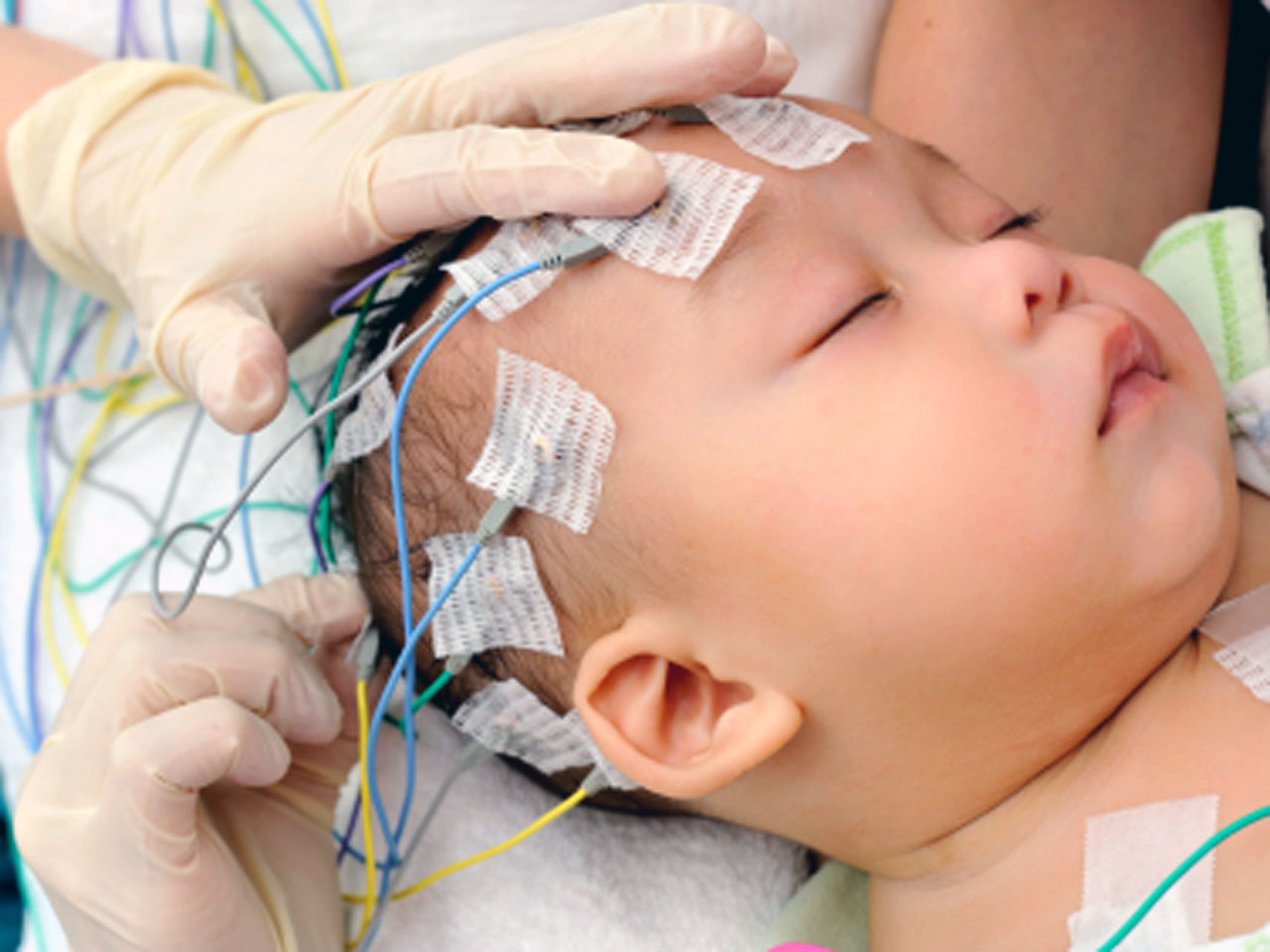
    Congenital toxoplasmosis

    Congenital Toxoplasmosis

    Congenital Toxoplasmosis Lecture Notes
    Congenital Toxoplasmosis

    Congenital toxoplasmosis is a disease that occurs in fetuses or new-borns infected with Toxoplasma gondii, a protozoan parasite, which is transmitted from mother to fetus.

    Congenital Toxoplasmosis is an infection of a fetus or newborn baby with the parasite Toxoplasma gondii, acquired in utero from an infected mother.

    Etiological Agent: Toxoplasma gondii
    • Toxoplasma gondii is an obligate intracellular protozoan parasite. This means it can only reproduce inside the cells of a host.
    • It belongs to the phylum Apicomplexa, a group of parasites that includes other well-known pathogens like Plasmodium (malaria) and Cryptosporidium.
    Infectious Forms of Congenital Toxoplasmosis

    Congenital toxoplasmosis occurs when Toxoplasma gondii is transmitted from a pregnant woman to her fetus through the placenta, resulting from a primary maternal infection during or shortly before pregnancy. While the infection in the mother can be acquired via three different forms, the parasite reaches the fetus primarily as tachyzoites.

    The infectious forms of T. gondii that initiate the maternal infection (leading to the subsequent vertical transmission) are:

    1. Tachyzoites (The Acute/Invasive Form):
    • This is the fast-dividing, crescent-shaped, actively multiplying form.
    • In the context of congenital toxoplasmosis, the parasite multiplies in the mother's placenta and enters the fetal circulation in this stage.
    • Tachyzoites are responsible for direct, acute tissue damage.
    • They are the form typically transmitted across the placenta to the fetus.
    2. Bradyzoites (The Chronic/Cyst Form):
    • These are slow-multiplying organisms found within tissue cysts in the meat of intermediate hosts.
    • Ingestion of undercooked or raw meat (especially pork, lamb, or venison) containing these cysts is a primary way pregnant women become infected.
    • Once ingested, the cyst walls are broken down by stomach acid, releasing the bradyzoites, which then transform into tachyzoites.
    3. Sporozoites (The Environmental Form):
    • These are contained within oocysts that are produced in the intestines of cats (the definitive host) and excreted in their feces.
    • The oocysts require 1–5 days to sporulate and become infectious in the environment.
    • Ingestion of food, water, or soil contaminated with sporulated oocysts (e.g., via unwashed vegetables or handling contaminated cat litter) causes infection in humans.
    Life Cycle
    • Toxoplasma gondii has a complex life cycle involving definitive hosts (domestic and wild cats) and intermediate hosts (virtually all warm-blooded animals, including humans, birds, and other mammals).
    • In cats (definitive host): The parasite undergoes sexual reproduction in the feline intestine, producing oocysts that are shed in the cat's feces. These oocysts sporulate and become infective in the environment within 1-5 days.
    • In intermediate hosts (including humans):
      • When an intermediate host ingests sporulated oocysts (e.g., from contaminated soil, water, unwashed vegetables) or tissue cysts (e.g., from undercooked meat of infected animals), the parasites are released.
      • They rapidly multiply as tachyzoites (the rapidly multiplying, invasive form) which disseminate throughout the body via the bloodstream and lymphatic system.
      • The immune system eventually controls the tachyzoites, which then transform into slower-growing bradyzoites contained within tissue cysts, primarily in muscle, brain, and eye tissues. These tissue cysts can persist for the life of the host and are responsible for chronic, latent infection.
    Modes of Human Infection
  • Ingestion of contaminated food or water:
    • Eating undercooked or raw meat (especially pork, lamb, venison) containing Toxoplasma tissue cysts. This is a very common route.
    • Ingesting sporulated oocysts from contaminated sources (e.g., unwashed fruits/vegetables from contaminated soil, contaminated water).
  • Contact with contaminated cat feces:
    • Changing cat litter boxes without proper hygiene.
    • Gardening or playing in areas contaminated with cat feces.
  • Vertical Transmission (Mother-to-Child): Vertical transmission refers to the passage of an infection from a mother to her unborn child during pregnancy or childbirth. In the congenital toxoplasmosis, it specifically means transplacental transmission.
    • This is the focus of congenital toxoplasmosis. A pregnant woman who acquires a primary infection with Toxoplasma gondii during pregnancy can transmit the parasite transplacentally to her fetus.
  • Horizontal Transmission:
    • Foodborne: Humans can contract toxoplasmosis by eating undercooked meat containing infective tissue forms of the parasite T. gondii. It can also be transferred to food and therefore to humans through contaminated utensils and cutting boards. Also, drinking unpasteurized goat’s milk can cause toxoplasmosis infection.
    • Zoonotic transmission: Zoonotic transmission refers to animal to human transfer of the infection. Cats play a major role in this type of transmission. Cats serve as hosts to T. gondii. They shed their oocysts through their feces, and these oocysts are microscopic and can be transferred to humans through accidental ingestion by not washing hands after cleaning the cat’s litter box, drinking water infected with oocysts, or not using gloves when gardening.
    • Rare means of transmission: In very rare occasions, toxoplasmosis can be transmitted through organ donation and transplant, as well as in blood transfusion.
  • Risk Factors for Maternal Acquisition of Toxoplasma gondii:
  • Dietary Habits:
    • Consumption of raw or undercooked meat (especially pork, lamb, venison) containing tissue cysts is a major risk factor.
    • Eating unwashed fruits or vegetables contaminated with oocysts.
  • Environmental Exposure:
    • Contact with soil contaminated with cat feces (e.g., gardening without gloves, playing in sandboxes where cats defecate).
    • Cleaning cat litter boxes (especially if done frequently, without gloves, and without proper hand hygiene).
  • Occupation: Farmers, veterinarians, butchers, and those who handle raw meat frequently may have higher exposure.
  • Travel: Visiting or living in areas with high prevalence and poor hygiene.
  • Lack of Prior Immunity: Women who are seronegative (have no antibodies) for Toxoplasma at the beginning of pregnancy are susceptible to primary infection and thus at risk for transmitting it to their fetus.
  • Pathophysiology of Fetal Infection and its Impact on Organ Systems

    The pathophysiology of congenital toxoplasmosis is complex, involving direct parasitic invasion, host inflammatory responses, and disruption of fetal development.

    Mechanisms of Damage to Fetal Tissues

    Once in the fetal circulation, tachyzoites disseminate throughout the body and can infect virtually any nucleated cell. The primary mechanisms of damage include:

    1. Direct Cellular Lysis: Tachyzoites rapidly multiply within host cells, forming vacuoles. As they multiply, they eventually cause the host cell to rupture, releasing more tachyzoites to infect neighboring cells. This direct destruction of cells contributes significantly to tissue damage.
    2. Host Inflammatory Response: The presence of the parasite triggers a robust fetal immune and inflammatory response. While intended to clear the infection, this inflammation can also cause significant collateral damage to delicate developing fetal tissues. This immune response involves cytokines and immune cells that can contribute to tissue destruction and fibrosis.
    3. Cyst Formation: As the fetal immune system attempts to control the acute infection, tachyzoites differentiate into bradyzoites, which form dormant tissue cysts within cells. These cysts can persist for the lifetime of the host, primarily in the brain, eyes, and muscles. While dormant, they can reactivate later in life (e.g., due to immunosuppression), leading to recurrent disease, particularly in the eyes.
    4. Disruption of Organogenesis: If infection occurs early in pregnancy (first trimester), when vital organs are undergoing rapid formation and differentiation, the cellular destruction and inflammation can severely disrupt normal organogenesis, leading to severe malformations or even fetal demise.
    Impact on Specific Organ Systems

    The tropism of Toxoplasma gondii for neural and retinal tissue, combined with the vulnerability of the developing fetus, leads to characteristic patterns of damage:

  • Central Nervous System (CNS): This is the most commonly and severely affected organ system.
    • Hydrocephalus: Caused by obstruction of cerebrospinal fluid (CSF) flow, often due to ependymitis (inflammation of the lining of the brain ventricles) or aqueductal stenosis, resulting from inflammation and scarring.
    • Intracranial Calcifications: These are characteristic findings, often scattered throughout the brain parenchyma, particularly periventricularly. They represent areas of necrosis and inflammation that have healed with calcification.
    • Microcephaly: May occur due to extensive brain destruction.
    • Developmental Delay/Intellectual Disability: Resulting from direct neuronal damage, inflammation, and altered brain development.
    • Seizures: Due to brain lesions and scarring.
  • Eyes: Ocular involvement is almost universal in congenital toxoplasmosis, even in cases that appear subclinical at birth.
    • Chorioretinitis: This is the hallmark ocular lesion. It involves inflammation and scarring of the choroid (vascular layer) and retina. Lesions can be active (inflamed) or inactive (scarred) at birth. Active lesions can cause pain and vision loss. Inactive scars can reactivate later in life, leading to recurrent inflammation and progressive vision loss.
    • Microphthalmia: Abnormally small eyes.
    • Strabismus (crossed eyes): Due to visual impairment.
    • Nystagmus (involuntary eye movements): Due to visual impairment.
    • Blindness: Can result from severe, bilateral chorioretinitis or optic nerve involvement.
  • Other Organ Systems: While CNS and ocular involvement are most prominent, other systems can be affected:
    • Liver and Spleen: Hepatosplenomegaly (enlarged liver and spleen) is common due to generalized infection and inflammation.
    • Lymphatic System: Lymphadenopathy (enlarged lymph nodes) can occur.
    • Hematological: Anemia and thrombocytopenia (low platelet count) can be present.
    • Skin: Petechiae, purpura, or rash (generalized macular papular rash) may be seen.
    • Lungs: Pneumonitis (inflammation of the lungs).
    • Heart: Myocarditis (inflammation of the heart muscle) can occur but is less common.
  • Clinical Manifestations
    Manifestations at Birth (Acute Phase)

    Only a minority (10-20%) of congenitally infected infants show overt signs of disease at birth. These infants typically experienced maternal infection earlier in pregnancy.

    1. The "Classic Triad" of Congenital Toxoplasmosis:

    This severe form is characterized by the combination of:

    • Chorioretinitis: Inflammation and scarring of the retina and choroid, often leading to vision impairment. This can be active (inflamed) or inactive (scarred) at birth.
    • Hydrocephalus: Abnormal accumulation of cerebrospinal fluid (CSF) within the brain, leading to an enlarged head circumference (macrocephaly), increased intracranial pressure, and potential brain damage.
    • Intracranial Calcifications: Characteristic deposits of calcium within the brain tissue, often scattered and periventricular, indicative of previous tissue destruction and healing.
    2. Other Common Systemic Signs and Symptoms:
  • General:
    • Prematurity: Higher incidence in infected infants.
    • Intrauterine Growth Restriction (IUGR): Small for gestational age.
    • Hepatosplenomegaly: Enlargement of the liver and spleen, due to generalized infection.
    • Jaundice: Yellow discoloration of the skin and eyes, indicating liver dysfunction or hemolysis.
    • Fever: Although less common at birth, can be present.
  • Neurological:
    • Seizures: Due to brain lesions and inflammation.
    • Microcephaly: Abnormally small head, in contrast to hydrocephalus which causes macrocephaly. This indicates significant brain tissue destruction.
    • Poor feeding, lethargy, hypotonia (poor muscle tone).
  • Ocular:
    • Microphthalmia: Abnormally small eyes.
    • Strabismus, Nystagmus: Often secondary to vision impairment from chorioretinitis.
  • Hematological:
    • Anemia: Low red blood cell count.
    • Thrombocytopenia: Low platelet count, potentially leading to petechiae (small red spots) or purpura (larger purple patches) due to bleeding under the skin.
  • Skin:
    • Rash: Non-specific macular, papular, or petechial rash.
  • Delayed Manifestations (Chronic Phase and Sequelae)

    This is where the majority of issues arise, particularly in infants who were asymptomatic at birth. These sequelae can appear weeks, months, or even years after birth, highlighting the importance of long-term follow-up.

    1. Ocular Sequelae (Most Common Delayed Manifestation):
    • Recurrent Chorioretinitis: The most frequent and significant long-term complication. Dormant tissue cysts in the retina can reactivate, causing new inflammatory lesions or exacerbating existing scars. This leads to progressive vision loss, pain, photophobia (light sensitivity), and floaters. It can occur at any age, often into adolescence and adulthood.
    • Strabismus, Nystagmus, Amblyopia ("lazy eye"): Resulting from long-standing vision impairment.
    • Glaucoma, Cataracts: Less common, but can develop.
    • Blindness: Can be a devastating outcome of severe or recurrent chorioretinitis.
    2. Neurological Sequelae:
    • Developmental Delays: Ranging from mild learning disabilities to severe intellectual disability, motor delays, and speech delays.
    • Seizures: Can emerge or persist despite initial treatment.
    • Hearing Loss: Sensorineural hearing loss can occur.
    • Spasticity: Increased muscle tone and stiffness.
    • Visual Impairment/Cortical Blindness: Even without direct eye damage, brain damage can impair visual processing.
    3. Endocrine/Other:
    • Precocious Puberty: Early onset of puberty in girls, potentially related to hypothalamic damage.
    • Learning Disabilities and Behavioral Problems: Even with subtle brain involvement.
    Diagnostic Approaches for Congenital Toxoplasmosis
    I. Maternal Diagnosis

    The primary method for diagnosing maternal Toxoplasma infection is serological testing. The interpretation of these tests is crucial as it determines whether a woman has a past infection (immune), is currently acutely infected, or is susceptible.

    1. Serological Screening (Antibody Detection):
  • IgG Antibodies:
    • Presence (positive): Indicates past or current infection. A rising IgG titer over several weeks (paired sera) suggests a recent infection.
    • Absence (negative): Indicates susceptibility to infection.
  • IgM Antibodies:
    • Presence (positive): Often indicates a recent or acute infection. However, IgM can persist for months to over a year after acute infection, so a positive IgM alone is not definitive for acute infection during pregnancy. It warrants further investigation.
    • Absence (negative): Rules out recent infection in most cases, especially if accompanied by negative IgG.
  • IgA Antibodies:
    • Similar to IgM, IgA antibodies usually appear shortly after infection and decline within a few months. They can aid in diagnosing recent infection, particularly when IgM results are equivocal.
  • IgG Avidity Testing: This is a critical test for differentiating recent from remote infection.
    • Low IgG Avidity: Suggests a recent infection (typically within the last 3-4 months). This is because in the early stages of infection, IgG antibodies bind weakly to the parasite antigen.
    • High IgG Avidity: Suggests an infection acquired more than 3-4 months ago (i.e., remote infection). In later stages, IgG antibodies bind more strongly.
    • Clinical Utility: A high IgG avidity in the first trimester of pregnancy usually rules out an infection acquired during the current pregnancy, thus reducing anxiety and potentially avoiding unnecessary interventions.
  • 2. Interpretation Algorithm:
    • IgG negative, IgM negative: Susceptible. Counsel on prevention. Re-test if symptoms develop or exposure occurs.
    • IgG positive, IgM negative (High Avidity): Past infection, immune. No risk to fetus.
    • IgG positive, IgM positive (Low Avidity): Recent infection (likely during pregnancy). High risk for fetal transmission. Further fetal diagnostic testing is indicated.
    • IgG positive, IgM positive (High Avidity): Infection likely occurred several months ago (before or early in pregnancy). Lower risk for current pregnancy, but further evaluation may be considered.
    • IgG negative, IgM positive: Possible very early acute infection, or false positive IgM. Repeat testing, consider confirmatory tests.
    II. Fetal Diagnosis (In Utero)

    If maternal serology suggests a primary infection during pregnancy, fetal diagnostic procedures are offered to confirm (or rule out) fetal infection.

  • Amniocentesis:
    • Timing: Typically performed after 18 weeks of gestation and at least 4 weeks after the estimated time of maternal infection to allow for parasite multiplication in fetal fluids.
    • Procedure: Fetal amniotic fluid is collected.
    • Analysis:
      • PCR (Polymerase Chain Reaction): This is the most sensitive and specific method for detecting Toxoplasma gondii DNA in amniotic fluid. A positive PCR confirms fetal infection.
      • Fetal Serology: Less reliable as the fetal immune response might not be robust enough to produce antibodies at this stage.
  • Fetal Ultrasound:
    • Purpose: To look for sonographic signs of fetal infection and damage.
    • Findings: Hydrocephalus, microcephaly, intracranial calcifications, hepatosplenomegaly, ascites (fluid in abdomen), fetal growth restriction, abnormal cardiac findings.
    • Limitations: Ultrasound findings may be absent even in infected fetuses, especially early in infection or with milder forms. Its main role is to assess the severity of damage if infection is present.
  • Fetal Blood Sampling (Cordocentesis):
    • Purpose: To test fetal blood directly.
    • Analysis: Fetal IgM, IgA, or PCR for Toxoplasma.
    • Limitations: Invasive, higher risk than amniocentesis, and often replaced by amniotic fluid PCR due to its accuracy.
  • III. Neonatal Diagnosis (At Birth)

    Diagnosis in the neonate confirms that the baby is infected and guides treatment.

    1. Neonatal Serology:
      • IgM and IgA: A positive specific IgM or IgA in the newborn's blood definitively indicates congenital infection, as maternal IgM/IgA do not cross the placenta.
      • IgG: All infants born to IgG-positive mothers will have maternal IgG antibodies. Therefore, the presence of IgG alone is not diagnostic of congenital infection. Serial IgG titers are used:
        • Persistently positive or rising IgG titers beyond 12 months of age: Indicates active congenital infection.
        • Declining IgG titers that become negative by 12 months: Indicates passive transfer of maternal antibodies, and the infant is not infected.
    2. PCR (Polymerase Chain Reaction): Detection of Toxoplasma gondii DNA in neonatal blood, CSF, or urine. Highly sensitive and specific.
    3. Cerebrospinal Fluid (CSF) Examination: Analysis includes elevated protein, pleocytosis (increased cell count), and sometimes Toxoplasma DNA by PCR. Essential for assessing CNS involvement.
    4. Ophthalmological Examination: Findings are mandatory for all suspected cases. Dilated funduscopic examination can reveal active chorioretinitis or healed scars, even in asymptomatic infants.
    5. Neuroimaging:
      • Cranial Ultrasound (for open fontanelle): Can detect hydrocephalus, ventriculomegaly, and intracranial calcifications.
      • CT Scan or MRI of the Brain: Provides more detailed imaging of brain pathology, including calcifications, hydrocephalus, and other lesions.
    6. Other Investigations:
      • Complete Blood Count (CBC): To check for anemia, thrombocytopenia.
      • Liver Function Tests: To check for jaundice and hepatosplenomegaly.
    Medical Management and Treatment Strategies

    The medical management of congenital toxoplasmosis involves specific drug regimens for pregnant women, neonates, and infants, with the goals of reducing vertical transmission, preventing or minimizing disease severity, and managing complications.

    I. Treatment for Infected Pregnant Women

    The goal is to prevent or reduce the risk of transmission to the fetus and to mitigate fetal damage if transmission has already occurred. The choice of medication depends on whether fetal infection has been confirmed.

    1. If Fetal Infection is NOT Confirmed (i.e., amniocentesis negative or not yet performed):
    • Drug: Spiramycin
    • Mechanism: Spiramycin is a macrolide antibiotic that concentrates in the placenta. It is thought to reduce the rate of vertical transmission from mother to fetus, but it does not treat the fetus once infected.
    • Regimen: Typically given as 1 g orally three times daily throughout the remainder of the pregnancy, or until fetal infection is confirmed.
    • Side Effects: Generally well-tolerated, with mild gastrointestinal upset being most common.
    2. If Fetal Infection IS Confirmed (e.g., by positive amniotic fluid PCR) OR high suspicion of fetal infection:
  • Drug Combination: Pyrimethamine + Sulfadiazine + Leucovorin
  • Mechanism:
    • Pyrimethamine: A dihydrofolate reductase inhibitor, blocking folic acid synthesis in the parasite. It can cross the placenta. Pyrimethamine when given in high doses may cause haemolytic anaemia therefore monitor closely. Dose: 50-75mg OD PO for 2-3weeks then 25-37.5mg OD PO for 4-5 weeks
    • Sulfadiazine: A sulfonamide antibiotic that inhibits dihydropteroate synthase, another enzyme in the parasite's folic acid pathway. It also crosses the placenta. Dose: 1-1.5g QID for 3-4 weeks or 100mg/kg/day in 2DD
    • Leucovorin (Folnic Acid): Given to the mother (and later to the infant) to counteract the bone marrow suppressive effects (myelosuppression) of pyrimethamine, which can lead to thrombocytopenia and neutropenia by interfering with human folate metabolism. It is crucial to give leucovorin whenever pyrimethamine is used.
  • Regimen: initiated after the first trimester (due to potential teratogenicity of pyrimethamine, though risks are debated). The regimen is often cyclical or continuous.
  • Side Effects: Significant, requiring close monitoring. Pyrimethamine can cause myelosuppression, rash, and gastrointestinal upset. Sulfadiazine can cause rash, crystalluria, and bone marrow suppression.
  • II. Treatment for Infected Neonates and Infants (After Birth)

    All infants with confirmed congenital toxoplasmosis (symptomatic or asymptomatic) should receive prolonged anti-parasitic treatment to prevent or minimize the development of long-term sequelae, particularly ocular and neurological damage.

    1. Drug Combination: Pyrimethamine + Sulfadiazine + Leucovorin
  • Regimen: This is the cornerstone of treatment.
    • Pyrimethamine: Given daily or three times a week.
    • Sulfadiazine: Given twice daily.
    • Leucovorin: Given daily to mitigate pyrimethamine's side effects.
  • Duration: Treatment is typically continued for at least 12 months (one year) after birth. In some cases, treatment may be extended, particularly if there is active chorioretinitis.
  • 2. Corticosteroids (e.g., Prednisone 1mg/kg/day) till they resolve
  • Indications: Used to control severe inflammation.
    • Active chorioretinitis: Especially if threatening the macula or optic nerve.
    • Significant inflammation in the CNS: Such as severe hydrocephalus with high protein in CSF.
  • Regimen: Given concurrently with anti-parasitic drugs and tapered as inflammation subsides.
  • III. Monitoring During Treatment

    Due to the potential side effects of the medications, especially pyrimethamine and sulfadiazine, close monitoring is essential.

    • Hematological Monitoring: Regular (e.g., weekly or bi-weekly) complete blood counts (CBC) with differential and platelet counts to detect myelosuppression (anemia, neutropenia, thrombocytopenia). Doses may need adjustment or temporary interruption if severe myelosuppression occurs.
    • Renal Function: Monitoring of BUN and creatinine, especially with sulfadiazine, to prevent crystalluria.
    • Liver Function: Monitoring of liver enzymes.
    • Clinical Monitoring: Regular assessment for drug rashes, gastrointestinal upset, and signs of disease progression.
    IV. Management of Specific Complications
    1. Hydrocephalus: May require neurosurgical intervention, such as placement of a ventriculoperitoneal (VP) shunt to drain excess CSF and relieve intracranial pressure.
    2. Chorioretinitis: In addition to anti-parasitic treatment and corticosteroids, ophthalmological follow-up is critical. Regular eye exams are needed to monitor for active lesions, assess visual acuity, and manage complications.
    3. Developmental Delays: Referrals for early intervention programs including physical therapy, occupational therapy, speech therapy, and special education services are crucial to optimize developmental outcomes.
    V. Long-Term Follow-up

    Even after completing the initial 12 months of treatment, long-term follow-up is essential, often extending into adolescence and adulthood, due to the risk of delayed sequelae (especially recurrent chorioretinitis).

    • Regular ophthalmological examinations.
    • Neurological assessments.
    • Developmental evaluations.
    Prevention Strategies for Congenital Toxoplasmosis

    Prevention is paramount in congenital toxoplasmosis, as timely identification and avoidance of exposure in susceptible pregnant women can entirely avert fetal infection and its associated morbidities.

    I. Public Health Recommendations for Pregnant Women (Primary Prevention)

    These recommendations focus on reducing exposure to Toxoplasma gondii from food and environmental sources. Education of pregnant women (and women of childbearing age) is key.

    1. Food Safety Practices:
    • Cook Meat Thoroughly: Ensure all meat, especially pork, lamb, and venison, is cooked to safe internal temperatures (e.g., 160°F/71°C for ground meat, 145°F/63°C for whole cuts with a 3-minute rest time) until no pink remains and juices run clear. Freezing meat to -4°F (-20°C) for several days can also kill tissue cysts.
    • Wash Fruits and Vegetables: Thoroughly wash all raw fruits and vegetables before consumption, especially those grown in gardens where cats might roam.
    • Avoid Raw/Undercooked Meat: Refrain from eating raw or undercooked meat, including cured meats unless they have been previously frozen.
    • Prevent Cross-Contamination: Use separate cutting boards and utensils for raw meat and produce. Wash hands, cutting boards, and all utensils thoroughly with hot, soapy water after contact with raw meat.
    2. Environmental Hygiene:
  • Cat Litter Box Management:
    • Avoid Cleaning: Ideally, pregnant women should avoid changing cat litter boxes. If unavoidable, wear gloves and wash hands thoroughly afterwards.
    • Daily Cleaning: Have someone else clean the litter box daily, as Toxoplasma oocysts do not become infective until 1-5 days after being shed in feces.
    • Dispose Safely: Dispose of cat feces carefully, ideally by flushing or bagging and placing in sealed waste.
  • Gardening and Soil Contact:
    • Wear Gloves: Wear gloves when gardening or handling soil, sand, or anything that might be contaminated with cat feces.
    • Wash Hands: Wash hands thoroughly with soap and water after outdoor activities.
  • Sandboxes: Cover children's sandboxes when not in use to prevent cats from using them as litter boxes.
  • 3. Cat Care:
    • Keep Cats Indoors: This prevents them from hunting and eating infected rodents or birds, which are sources of Toxoplasma.
    • Avoid Feeding Raw Meat: Do not feed raw or undercooked meat to cats.
    • No New Cats During Pregnancy: Avoid acquiring new cats during pregnancy, especially stray or feral cats, unless they have been tested for Toxoplasma.
    II. Screening Programs
  • Maternal Serological Screening:
    • Universal Screening: Some countries (e.g., France, Austria) implement universal serological screening for Toxoplasma at the beginning of pregnancy (first trimester).
    • Targeted Screening: In other regions (e.g., USA), screening is often targeted only to women who develop symptoms suggestive of infection or have known exposure.
    • Benefits of Screening: Early detection of maternal seroconversion allows for prompt initiation of spiramycin, which can significantly reduce the risk of vertical transmission.
  • Neonatal Screening (Controversial/Not Universal): Some regions implement universal neonatal screening using cord blood or dried blood spots to detect Toxoplasma antibodies (e.g., IgM, IgA, or IgG avidity patterns) or PCR. Benefits include identifying congenitally infected infants (including asymptomatic ones) who can then receive treatment.
  • III. Primary Prevention Measures (Beyond Personal Hygiene)
    • Animal Control: Efforts to control feral cat populations in certain areas.
    • Water Treatment: Ensuring safe drinking water to prevent oocyst ingestion.
    • Public Education Campaigns: Raising awareness about Toxoplasma and its prevention methods among the general population, especially women of childbearing age.
    Key Nursing Diagnoses
    • Risk for Infection, related to compromised immune system and presence of parasitic infection.
    • Inadequate protein energy nutritional intake, related to increased metabolic demands, poor feeding, or gastrointestinal disturbances (e.g., jaundice, hepatosplenomegaly).
    • Risk for Delayed Development, related to neurological damage, visual impairment, or hearing deficits.
    • Impaired Physical Mobility, related to neurological damage (e.g., hydrocephalus, spasticity) and developmental delays.
    • Acute Pain, related to inflammation (e.g., active chorioretinitis, CNS inflammation) or surgical interventions (e.g., shunt placement).
    • Compromised Family Coping, related to chronic illness, uncertain prognosis, and demands of prolonged treatment and care.
    • Inadequate health Knowledge (Parents), related to disease process, treatment regimen, potential complications, and long-term care needs.
    • Risk for Caregiver Role Strain, related to complexity of care, financial burden, emotional stress, and lack of support systems.
    • Excessive Anxiety (Parents), related to diagnosis, prognosis, potential for sequelae, and future care needs.
    SPECIFIC NURSING MANAGEMENT
    No. Nursing Diagnosis Interventions & Rationale
    1 Ineffective Tissue Perfusion (Cerebral) related to bleeding, cerebral edema, and increased Intracranial Pressure (ICP).
    • Monitor Neurological Status continuously: Assess Glasgow Coma Scale (GCS), pupillary size and reaction, motor strength, and cranial nerve function. Rationale: Early detection of subtle neurological changes allows for rapid intervention to prevent irreversible brain damage.
    • Elevate Head of Bed (HOB) 30 degrees and maintain neutral head alignment: Rationale: Promotes optimal jugular venous drainage, which helps decrease intracranial pressure (ICP).
    • Avoid Valsalva Maneuvers: Administer stool softeners and instruct the patient to avoid straining during bowel movements, coughing, or sneezing. Rationale: The Valsalva maneuver significantly spikes ICP and can precipitate rebleeding or herniation.
    • Administer prescribed medications (e.g., Osmotic diuretics like Mannitol, Antihypertensives): Rationale: Diuretics help reduce cerebral edema. Tight blood pressure control is crucial to prevent hematoma expansion while maintaining adequate cerebral perfusion pressure (CPP).
    2 Ineffective Airway Clearance / Risk for Aspiration related to depressed level of consciousness and impaired gag/swallow reflexes.
    • Assess respiratory rate, depth, and oxygen saturation: Rationale: Intracranial hemorrhage can affect the brainstem's respiratory centers, leading to abnormal breathing patterns (e.g., Cheyne-Stokes).
    • Maintain airway patency and position patient laterally (if unconscious): Rationale: Prevents the tongue from obstructing the airway and allows for the natural drainage of oral secretions, reducing aspiration risk.
    • Suction ONLY when necessary (limit to < 10 seconds): Hyperoxygenate before suctioning. Rationale: Suctioning stimulates the cough reflex and can cause dangerous, transient spikes in ICP. It should be performed strictly as needed, not routinely.
    3 Risk for Bleeding (Rebleeding / Hematoma Expansion) related to vascular rupture and coagulopathy.
    • Maintain strict bed rest in a quiet, low-stimulus environment: Dim lights, limit visitors, and cluster nursing care. Rationale: Reduces environmental stressors that can increase sympathetic tone, heart rate, and blood pressure, thereby lowering the risk of rebleeding.
    • Strictly monitor and manage Blood Pressure: Keep systolic BP within the physician-prescribed strict parameters (often < 140 or 160 mmHg depending on the type of hemorrhage). Rationale: Hypertension is the leading cause of hematoma expansion.
    • Review coagulation profile and hold antiplatelets/anticoagulants: Administer reversal agents (e.g., Vitamin K, Fresh Frozen Plasma, Prothrombin Complex Concentrate) immediately if prescribed. Rationale: Rapidly correcting coagulopathy is essential to stop ongoing active bleeding into the brain parenchyma.
    4 Acute Pain (Headache) related to meningeal irritation and increased intracranial pressure.
    • Assess pain using appropriate scales: Note the location, intensity, and characteristics of the headache. Rationale: Determines the severity of pain and monitors the effectiveness of interventions. Sudden worsening of a headache can indicate rebleeding.
    • Administer prescribed analgesics (usually Acetaminophen): Rationale: Acetaminophen provides pain relief without the bleeding risks associated with NSAIDs or the respiratory depression/pupillary masking associated with high-dose opioids.
    • Provide comfort measures: Apply a cool compress to the forehead or back of the neck and ensure a quiet, darkened room. Rationale: Non-pharmacological interventions alleviate photophobia and promote relaxation, which helps stabilize blood pressure.
    5 Impaired Physical Mobility / Self-Care Deficit related to hemiparesis, hemiplegia, or depressed level of consciousness.
    • Perform passive Range of Motion (ROM) exercises every 4 hours: Rationale: Maintains joint flexibility and prevents the development of contractures in paralyzed or paretic limbs.
    • Implement mechanical DVT prophylaxis (e.g., Sequential Compression Devices - SCDs): Rationale: Patients with ICH are at high risk for Deep Vein Thrombosis due to immobility, but pharmacological prophylaxis (heparin/enoxaparin) is strictly contraindicated in the acute bleeding phase.
    • Turn and reposition the patient every 2 hours: Use proper body alignment and support limbs with pillows.
    Intervention Category Action & Rationale
    1. Infection Control & Medication Management
    • Administer Anti-parasitic Medications: Ensure timely and accurate administration of pyrimethamine, sulfadiazine, and leucovorin as prescribed. Educate parents on adherence.
    • Monitor Side Effects:
      • Hematological: Monitor CBC results (anemia, neutropenia, thrombocytopenia). Educate parents on signs of bleeding/infection.
      • Renal/Hepatic: Monitor renal/liver function tests. Educate on signs of jaundice, dark urine.
      • Skin: Assess for rash (sulfadiazine side effect).
    • Leucovorin Administration: Critical for preventing myelosuppression from pyrimethamine.
    • Infection Prevention: Implement standard precautions. Teach hand hygiene to protect infant from environmental infections (especially if neutropenic).
    2. Nutritional Support
    • Assess Feeding Patterns: Observe for difficulties with sucking/swallowing or aspiration.
    • Optimize Feeding: Small, frequent feedings. Specialized nipples if needed. Gavage/gastrostomy if oral intake insufficient.
    • Monitor Growth: Weigh regularly, plot growth, monitor intake/output.
    • Manage Jaundice: Monitor bilirubin, assist with phototherapy if prescribed.
    3. Developmental and Sensory Support
    • Early Intervention Referrals: Physical, occupational, speech therapy.
    • Sensory Stimulation: Age-appropriate stimulation (visual tracking, tactile).
    • Promote Mobility: Position to prevent contractures, promote normal development.
    • Ophthalmological Care: Ensure regular dilated eye exams. Educate parents on signs of active chorioretinitis (redness, photophobia).
    • Hearing Screening: Advocate for regular screenings.
    4. Pain Management
    • Assess Pain: Use age-appropriate scales.
    • Administer Meds: Analgesics/Corticosteroids as prescribed.
    • Comfort Measures: Swaddling, gentle handling, reduced environmental stimuli.
    5. Psychosocial & Educational Support
    • Educate Comprehensively: Clear info on disease, prognosis, treatment, complications. Use written materials.
    • Emotional Support: Allow expression of fears/grief. Provide empathetic listening.
    • Connect to Resources: Support groups, social workers, financial aid.
    • Promote Self-Care: Encourage parents to maintain their own well-being.
    • Advocacy: Ensure access to specialists/services.
    • Empowerment: Involve parents in care planning.
    • Prevention Education: For future pregnancies.
    6. Long-Term Follow-up Coordination
    • Schedule Appointments: Help organize appointments with multiple specialists (infectious disease, ophthalmology, neurology).
    • Maintain Records: Encourage parents to keep comprehensive records.

    Quick Quiz

    Congenital Toxoplasmosis Quiz

    Paediatrics - mobile-friendly and focused practice.

    Privacy: Your details are used only for quiz tracking and certificates.

    Congenital Toxoplasmosis Read More »
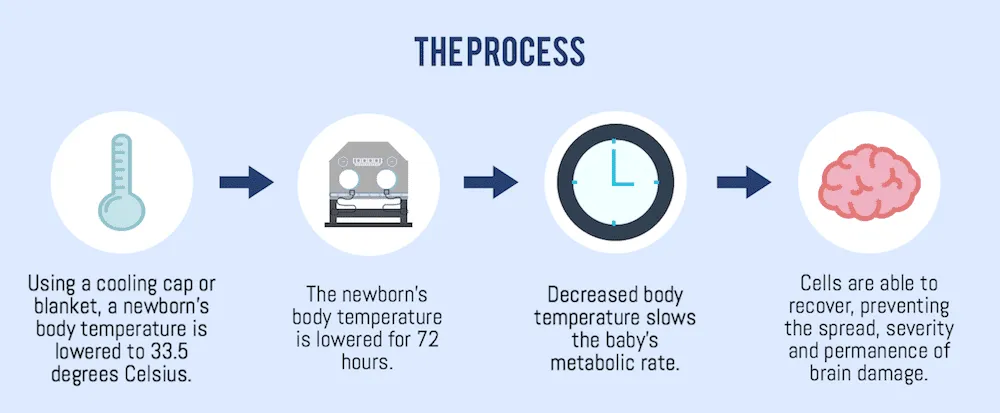
    pneumonia in children

    Pneumonia in Children

    Pediatric Pneumonia Lecture Notes
    Pediatric Pneumonia

    Pneumonia remains a leading cause of morbidity and mortality in children worldwide, especially in developing countries. Its epidemiology and etiology differ significantly from adults, largely due to variations in immune system maturity, exposure patterns, and anatomical differences.

    Pneumonia is an acute inflammatory condition of the lung parenchyma caused by an infection.

    • lung parenchyma is the the functional tissue of the lungs, specifically the alveoli and bronchioles.

    This inflammation leads to the filling of the alveolar spaces with exudate, cells, and fluid, a process known as consolidation. This consolidation impairs gas exchange, leading to symptoms such as cough, fever, chills, and difficulty breathing.

    In simpler terms, pneumonia is an infection that inflames the air sacs in one or both lungs. The air sacs may fill with fluid or pus (purulent material), causing cough with phlegm or pus, fever, chills, and trouble breathing.

    Classifications of Pneumonia

    Pneumonia can be classified in various ways, each providing a different lens through which to understand its cause, presentation, and management.

    A. By Etiology (Cause of Infection):

    This classification focuses on the specific microorganism responsible for the infection.

    1. Bacterial Pneumonia: The most common type, often more severe than viral pneumonia.
      • Common Pathogens:
        • Streptococcus pneumoniae (Pneumococcus): The most frequent cause of community-acquired bacterial pneumonia.
        • Haemophilus influenzae.
        • Staphylococcus aureus (including MRSA).
        • Klebsiella pneumoniae.
        • Mycoplasma pneumoniae (often called "walking pneumonia" due to milder symptoms).
        • Chlamydophila pneumoniae.
        • Legionella pneumophila (Legionnaires' disease).
    2. Viral Pneumonia: Often milder than bacterial pneumonia but can be severe, especially in infants, elderly, and immunocompromised individuals.
      • Common Pathogens:
        • Influenza viruses (Types A and B).
        • Respiratory Syncytial Virus (RSV).
        • Adenoviruses.
        • Parainfluenza viruses.
        • Human Metapneumovirus.
        • Coronaviruses (e.g., SARS-CoV, MERS-CoV, SARS-CoV-2).
    3. Fungal Pneumonia: Less common, usually affecting individuals with weakened immune systems or those exposed to large amounts of fungi in the environment.
      • Common Pathogens:
        • Pneumocystis jirovecii (PCP pneumonia, common in HIV/AIDS patients).
        • Histoplasma capsulatum (Histoplasmosis).
        • Coccidioides immitis (Coccidioidomycosis or Valley Fever).
        • Blastomyces dermatitidis (Blastomycosis).
        • Aspergillus species.
    4. Parasitic Pneumonia: Rare, caused by parasites, usually seen in immunocompromised individuals or those who have traveled to endemic areas.
      • Common Pathogens:
        • Toxoplasma gondii.
        • Strongyloides stercoralis.
    5. Aspiration Pneumonia: Occurs when foreign material (e.g., food, liquid, vomit, stomach contents) is inhaled into the lungs, leading to inflammation and often secondary bacterial infection.
      • Causes: Impaired swallowing mechanisms, altered consciousness, gastroesophageal reflux.
    6. Chemical Pneumonia (Pneumonitis): Lung inflammation caused by inhaling irritating chemicals or toxic gases, rather than an infectious agent. This is not an infection but can predispose to one.
      • Causes: Inhalation of smoke, noxious fumes, or gastric acid.
    B. By Anatomical Location (Area of Lung Affected):

    This classification describes the pattern of lung involvement as seen on chest imaging.

    1. Lobar Pneumonia: Affects a large, continuous area of an entire lobe of a lung. Often caused by Streptococcus pneumoniae.
      • Appearance: Typically seen as a dense, homogeneous consolidation on chest X-ray.
    2. Bronchopneumonia (or Lobular Pneumonia): Characterized by patchy consolidation centered around the bronchi and bronchioles, often affecting multiple lobes. More common in infants, young children, and the elderly.
      • Appearance: Patchy infiltrates on chest X-ray, often bilateral and basal.
    3. Interstitial Pneumonia: Involves the interstitial spaces of the lung (the tissue between the alveoli and capillaries), rather than primarily the air sacs. More commonly associated with viral or atypical bacterial infections.
      • Appearance: Reticular or reticulonodular patterns on chest X-ray.
    4. Miliary Pneumonia: A form of pneumonia characterized by the wide dissemination of an infectious agent (Mycobacterium tuberculosis) throughout the lung tissue in small, discrete lesions resembling millet seeds.
      • Appearance: Fine, diffuse nodular infiltrates throughout both lungs on chest X-ray.
    C. By Duration:

    This classification refers to the time course of the illness.

    1. Acute Pneumonia: Rapid onset and progression of symptoms, typically resolving within days to a few weeks with appropriate treatment. Most common form.
    2. Chronic Pneumonia: Persistent symptoms and radiological findings lasting for weeks to months, or even longer. Often associated with specific pathogens (e.g., Mycobacterium tuberculosis, fungi) or underlying conditions.
    D. By Clinical Grounds / Acquisition Setting:

    This is one of the most clinically relevant classifications, as it guides initial empiric treatment decisions.

    1. Community-Acquired Pneumonia (CAP): Pneumonia acquired outside of hospitals or long-term care facilities.
      • Common Pathogens: Streptococcus pneumoniae, Mycoplasma pneumoniae, Chlamydophila pneumoniae, Haemophilus influenzae, influenza virus.
    2. Hospital-Acquired Pneumonia (HAP) / Nosocomial Pneumonia: Pneumonia that develops 48 hours or more after hospital admission and was not incubating at the time of admission.
      • Common Pathogens: Often more virulent and antibiotic-resistant bacteria, such as Pseudomonas aeruginosa, Staphylococcus aureus (MRSA), Klebsiella species, Escherichia coli.
    3. Ventilator-Associated Pneumonia (VAP): A subtype of HAP that develops in patients who have been mechanically ventilated for more than 48 hours.
      • Common Pathogens: Similar to HAP, often highly resistant organisms.
    Etiology of Pneumonia

    The etiology refers to the specific agents or organisms responsible for causing pneumonia. As discussed in Objective 1, these can be broadly categorized.

    A. Common Bacterial Pathogens:

    These are the most frequent causes of pneumonia, especially bacterial pneumonia.

    1. Streptococcus pneumoniae (Pneumococcus):
      • Description: The leading cause of community-acquired bacterial pneumonia (CAP) in all age groups, particularly in adults.
      • Characteristics: Gram-positive coccus, typically arranged in pairs (diplococci). Has a polysaccharide capsule that protects it from phagocytosis.
      • Risk Factors: Old age, chronic lung disease, recent viral infection, immunocompromised status.
    2. Haemophilus influenzae:
      • Description: A common cause of both CAP and HAP, especially in individuals with chronic obstructive pulmonary disease (COPD) or other underlying lung conditions.
      • Characteristics: Gram-negative coccobacillus.
      • Risk Factors: COPD, cystic fibrosis, alcoholism.
    3. Staphylococcus aureus:
      • Description: Can cause severe pneumonia, often seen as HAP or as a complication of viral infections (e.g., influenza). Methicillin-resistant S. aureus (MRSA) is a significant concern, especially in VAP and HCAP.
      • Characteristics: Gram-positive coccus, often arranged in clusters. Produces various toxins.
      • Risk Factors: Recent influenza, injection drug use, skin/soft tissue infection, hospitalization, surgical procedures.
    4. Klebsiella pneumoniae:
      • Description: A common cause of HAP and, less frequently, severe CAP, particularly in individuals with alcoholism or diabetes. Known for causing "currant jelly" sputum.
      • Characteristics: Gram-negative rod, often encapsulated.
      • Risk Factors: Alcoholism, diabetes, chronic lung disease, hospitalization.
    5. Pseudomonas aeruginosa:
      • Description: A significant cause of HAP and VAP, particularly in immunocompromised patients, those with cystic fibrosis, or prolonged hospital stays. Difficult to treat due to antibiotic resistance.
      • Characteristics: Gram-negative rod.
      • Risk Factors: Cystic fibrosis, bronchiectasis, mechanical ventilation, broad-spectrum antibiotic use, immunocompromised state.
    6. Mycoplasma pneumoniae:
      • Description: A common cause of "atypical pneumonia" or "walking pneumonia" in young adults and school-aged children. Causes milder, but prolonged, symptoms.
      • Characteristics: Lacks a cell wall, making it resistant to many common antibiotics (e.g., penicillin).
    7. Chlamydophila pneumoniae:
      • Description: Another cause of atypical pneumonia, often with milder symptoms.
      • Characteristics: Obligate intracellular bacterium.
    8. Legionella pneumophila:
      • Description: Causes Legionnaires' disease, a severe form of pneumonia often associated with contaminated water sources (e.g., air conditioning systems, hot tubs).
      • Characteristics: Gram-negative rod, fastidious growth requirements.
    B. Common Viral Pathogens:

    Viruses are a very common cause of pneumonia, especially in children. They can also predispose to secondary bacterial infections.

    1. Influenza Viruses (A and B): Seasonal epidemics cause widespread respiratory illness, including primary viral pneumonia and often secondary bacterial pneumonia.
    2. Respiratory Syncytial Virus (RSV): The most common cause of lower respiratory tract infections in infants and young children, often leading to bronchiolitis and pneumonia.
    3. Adenoviruses: Can cause a range of respiratory illnesses, including pneumonia, particularly in children and immunocompromised individuals.
    4. Parainfluenza Viruses: Common cause of croup, but can also cause bronchiolitis and pneumonia, especially in children.
    5. Coronaviruses (e.g., SARS-CoV-2): Various coronaviruses can cause respiratory infections, with SARS-CoV-2 (COVID-19) being a notable cause of severe viral pneumonia and acute respiratory distress syndrome (ARDS).
    C. Common Fungal Pathogens:

    More prevalent in immunocompromised individuals or specific geographic regions.

    1. Pneumocystis jirovecii: Causes Pneumocystis pneumonia (PCP), a common and severe opportunistic infection in individuals with HIV/AIDS.
    2. Endemic Fungi (e.g., Histoplasma capsulatum, Coccidioides immitis, Blastomyces dermatitidis): Found in specific geographic areas. Exposure to spores can lead to pneumonia, especially in immunocompromised individuals.
    3. Aspergillus species: Can cause invasive aspergillosis, a severe pneumonia, primarily in severely immunocompromised patients (e.g., transplant recipients, leukemia patients).
    D. Aspiration of Gastric Contents/Foreign Material:

    Not an infectious agent itself, but the aspiration of acidic gastric contents or other foreign material can cause a severe chemical pneumonitis, which then often becomes secondarily infected by oral flora (anaerobic bacteria).

    Pathogenesis of Pneumonia

    Pathogenesis describes the sequence of events that leads to the development of pneumonia, from initial exposure to clinical symptoms.

    A. Normal Host Defenses:

    The respiratory tract has several protective mechanisms to prevent infection:

    1. Upper Airway Filtration: Nasal hairs, turbinates, and mucous membranes filter out large particles.
    2. Epiglottis and Cough Reflex: Protect the lower airways from aspiration.
    3. Mucociliary Escalator: Ciliated epithelial cells line the trachea and bronchi, moving mucus (which traps pathogens) upwards for expectoration or swallowing.
    4. Alveolar Macrophages: Phagocytic cells in the alveoli that engulf and destroy pathogens and debris.
    5. Humoral and Cellular Immunity: Antibodies (IgA, IgG) and T lymphocytes provide specific immunity.
    Mechanisms of Pathogen Entry:

    Pneumonia develops when pathogens overcome or bypass these host defenses.

    1. Aspiration (Most Common): Microaspiration of oropharyngeal secretions containing pathogens is the most frequent route. This happens constantly in small amounts, but typically the host defenses clear them. Impaired consciousness, dysphagia, or presence of a nasogastric tube increases the risk of significant aspiration.
    2. Inhalation: Airborne pathogens (e.g., viruses, Mycoplasma, Legionella, fungi) can be inhaled directly into the lower respiratory tract.
    3. Hematogenous Spread: Pathogens from a distant site of infection (e.g., endocarditis, IV drug use, abdominal sepsis) can travel through the bloodstream to the lungs.
    4. Direct Spread: Less common, but can occur from contiguous infected sites (e.g., empyema spreading to lung, trauma).
    Pathophysiology:

    Once pathogens reach the lower respiratory tract and evade local defenses, a series of events leads to inflammation and consolidation:

    1. Colonization and Multiplication: Pathogens colonize the alveoli and/or terminal bronchioles and begin to multiply.
    2. Immune Response and Inflammation:
      • Alveolar Macrophages: Are typically the first line of defense. If overwhelmed, they release cytokines (e.g., TNF-alpha, IL-1, IL-6, IL-8).
      • Neutrophil Recruitment: These cytokines attract neutrophils from the bloodstream into the alveolar spaces.
      • Increased Vascular Permeability: The inflammatory response causes vasodilation and increased permeability of the alveolar-capillary membrane.
    3. Fluid Exudation and Consolidation:
      • Plasma fluid, red blood cells, and fibrin leak into the alveolar spaces.
      • Neutrophils and bacteria fill the alveoli.
      • This mixture of fluid, cells, and debris leads to the characteristic consolidation seen in pneumonia, where the lung tissue becomes dense and airless.
    4. Impaired Gas Exchange:
      • The consolidated alveoli can no longer participate in gas exchange.
      • This leads to ventilation-perfusion mismatch (areas are perfused but not ventilated), resulting in hypoxemia (low blood oxygen).
      • The increased work of breathing due to decreased lung compliance and airway obstruction can also lead to hypercapnia (high blood carbon dioxide) in severe cases.
    5. Tissue Damage: The inflammatory process and release of bacterial toxins can cause damage to the alveolar and bronchial epithelial cells, impairing mucociliary function and further propagating inflammation.
    6. Resolution: With effective immune response and/or antibiotic treatment, the inflammation subsides, macrophages clear cellular debris, and the exudate is reabsorbed, allowing the lung to return to normal function.
    Etiology of Pediatric Pneumonia (Causative Agents)

    The pathogens responsible for pneumonia vary significantly by age group.

    A. Neonates (Birth to 1 Month):
  • Pneumonia in neonates is often acquired perinatally (from the mother during birth) or nosocomially (in the hospital).
  • Bacterial:
    • Group B Streptococcus (GBS): Common cause of early-onset neonatal sepsis and pneumonia.
    • Gram-negative enteric bacilli: Escherichia coli, Klebsiella pneumoniae.
    • Listeria monocytogenes.
  • Viral: Less common primary cause, but can be involved (e.g., Herpes Simplex Virus - HSV).
  • B. Infants (1 Month to 6 Months):
  • Transition period, with a mix of perinatal pathogens and increasing community-acquired pathogens.
  • Bacterial:
    • Streptococcus pneumoniae (pneumococcus): Increasingly common.
    • Haemophilus influenzae (non-typeable or type b if unvaccinated).
    • Staphylococcus aureus: Can cause severe disease.
  • Atypical Bacteria:
    • Chlamydia trachomatis: Can cause afebrile pneumonia, often associated with conjunctivitis, transmitted from mother during birth. Presents at 2-12 weeks of age.
    • Bordetella pertussis (whooping cough): Can cause severe pneumonia, especially in unvaccinated infants.
  • Viral (Most Common Overall):
    • Respiratory Syncytial Virus (RSV): The leading cause of bronchiolitis and pneumonia in infants.
    • Parainfluenza viruses: (Types 1, 2, 3).
    • Adenovirus: Can cause severe and prolonged disease.
    • Influenza viruses: (A and B).
    • Human Metapneumovirus.
  • C. Preschool Children (6 Months to 5 Years):
  • Viral (Still Most Common):
    • RSV, Influenza, Parainfluenza, Adenovirus, Human Metapneumovirus, Rhinovirus.
  • Bacterial:
    • Streptococcus pneumoniae (Pneumococcus): Remains the most frequent bacterial cause.
    • Haemophilus influenzae (non-typeable).
    • Staphylococcus aureus (including MRSA).
    • Streptococcus pyogenes (Group A Strep): Less common but can cause severe pneumonia.
  • Atypical Bacteria:
    • Mycoplasma pneumoniae: Becomes more common in this age group, though classically associated with school-aged children.
  • D. School-Aged Children and Adolescents (> 5 Years):
  • The spectrum of pathogens begins to resemble that of adults.
  • Atypical Bacteria (Increasingly Common):
    • Mycoplasma pneumoniae: The most common cause of "atypical pneumonia" or "walking pneumonia."
    • Chlamydophila pneumoniae.
  • Bacterial:
    • Streptococcus pneumoniae.
    • Staphylococcus aureus (including MRSA).
    • Haemophilus influenzae.
    • Streptococcus pyogenes.
  • Viral:
    • Influenza A and B.
    • Adenovirus.
  • E. Less Common but Important Causes (Across Age Groups):
  • Tuberculosis (Mycobacterium tuberculosis): Consider in endemic areas or with risk factors.
  • Fungal Pneumonia: (e.g., Pneumocystis jirovecii pneumonia - PCP) primarily in immunocompromised children.
  • Aspiration Pneumonia: In children with feeding difficulties, GERD, or neurological impairment.
  • Clinical Presentation of Pneumonia in Children

    Recognize age-specific manifestations and indicators of severity to ensure timely intervention.

    I. General Signs and Symptoms of Pneumonia in Children
  • Cough: May be dry, moist, or productive (though young children rarely expectorate sputum). Can sometimes be the only prominent symptom.
  • Tachypnea (Increased Respiratory Rate): Often the most sensitive and specific sign of pneumonia in children, especially in infants. Defined as:
    • < 2 months: ≥ 60 breaths/min
    • 2-11 months: ≥ 50 breaths/min
    • 1-5 years: ≥ 40 breaths/min
    • 5 years: ≥ 20 breaths/min
  • Fever: Present in many cases, but can be absent, especially in neonates, young infants, or immunocompromised children.
  • Dyspnea (Difficulty Breathing): Manifested as increased work of breathing.
  • Lethargy / Irritability: Non-specific signs of illness in children.
  • Poor Feeding / Decreased Oral Intake: Common in infants and young children.
  • Chest Pain: More common in older children, often pleuritic (sharp, worse with breathing).
  • Abdominal Pain: Can be referred pain from diaphragmatic irritation, especially in lower lobe pneumonia.
  • II. Age-Specific Clinical Manifestations
    A. Neonates (Birth to 1 Month):
  • Pneumonia in neonates is often subtle and non-specific, making diagnosis challenging.
  • Non-specific Signs:
    • Respiratory Distress: Tachypnea (often the earliest sign), grunting, nasal flaring, retractions (subcostal, intercostal, suprasternal).
    • Apnea: Pauses in breathing, especially in premature infants.
    • Cyanosis (bluish discoloration) or pallor.
    • Lethargy, irritability, hypotonia.
    • Poor feeding, vomiting.
    • Temperature instability (hypothermia is common, fever less so).
    • Jaundice.
  • Physical Exam: May reveal decreased breath sounds, crackles (rales), or wheezing.
  • B. Infants (1 Month to 1 Year):
  • More overt signs of respiratory illness are typically present.
  • Key Signs:
    • Tachypnea: Always a critical sign.
    • Retractions: Subcostal, intercostal, suprasternal, supraclavicular.
    • Nasal Flaring.
    • Grunting: Short, low-pitched sounds during expiration, attempting to increase end-expiratory pressure.
    • Cough: Can be prominent, may be paroxysmal, especially with Pertussis or viral causes like RSV.
    • Fever.
    • Poor feeding, decreased activity.
    • Wheezing (more common with viral pneumonia/bronchiolitis).
  • Physical Exam: Crackles, decreased breath sounds, dullness to percussion (if consolidation is significant).
  • C. Toddlers and Preschoolers (1 Year to 5 Years):
  • Similar to infants, but with more verbal communication of symptoms.
  • Key Signs:
    • Tachypnea.
    • Cough: Often harsh and persistent.
    • Fever.
    • Dyspnea, increased work of breathing.
    • Lethargy, irritability, decreased playfulness.
    • Decreased appetite.
    • Abdominal pain: Can be a presenting complaint, particularly with lower lobe pneumonia irritating the diaphragm.
  • Physical Exam: Crackles, rhonchi, decreased breath sounds, dullness to percussion.
  • D. School-Aged Children and Adolescents (> 5 Years):
  • Clinical presentation begins to resemble adult pneumonia.
  • Key Signs:
    • Cough: Can be productive with sputum, especially in bacterial pneumonia.
    • Fever and Chills.
    • Dyspnea / Shortness of Breath.
    • Pleuritic Chest Pain: Sharp pain worsened by breathing or coughing.
    • Headache, malaise, myalgia.
    • Abdominal pain.
    • "Atypical" Pneumonia (e.g., Mycoplasma pneumoniae): Often presents with more insidious onset, low-grade fever, persistent dry cough, headache, and malaise, sometimes called "walking pneumonia."
  • Physical Exam: Crackles, egophony, decreased breath sounds, dullness to percussion.
  • III. Indicators of Severe Pneumonia / Respiratory Distress in Children

    Rapid recognition of these signs is critical for determining the need for hospitalization and intensive care.

  • Inability to Feed/Drink: Especially in infants and young children.
  • Severe Respiratory Distress:
    • Severe Tachypnea (respiratory rate significantly above age-appropriate limits).
    • Severe Retractions (all types, especially supraclavicular, tracheal tug).
    • Grunting.
    • Nasal Flaring.
    • Central Cyanosis: Bluish discoloration of the tongue, lips, and nail beds, indicating hypoxemia.
    • Head Bobbing: Especially in infants.
  • Altered Mental Status: Lethargy, extreme irritability, difficult to arouse, confusion.
  • Hypoxemia: SpO2 < 90% (or lower, depending on altitude and clinical context) on room air.
  • Signs of Dehydration.
  • Signs of Shock: Tachycardia, poor perfusion, hypotension (a late sign in children).
  • Diagnostic Approaches for Pneumonia in Children
    Clinical Assessment (The Most Important Step):
  • History:
    • Onset and duration of symptoms (fever, cough, respiratory distress, feeding difficulties).
    • Exposure history (sick contacts, daycare, travel).
    • Vaccination status.
    • Risk factors (prematurity, underlying medical conditions).
    • Medication history.
  • Physical Examination:
    • General Appearance: Alertness, activity level, signs of distress.
    • Vital Signs: Respiratory rate (most sensitive sign of pneumonia), heart rate, temperature, blood pressure.
    • Respiratory Examination:
      • Inspection: Work of breathing (retractions, nasal flaring, grunting), cyanosis, symmetry of chest movement.
      • Palpation: Tactile fremitus (may be increased over consolidation, but difficult in young children).
      • Percussion: Dullness over consolidated areas or pleural effusion.
      • Auscultation:
        • Crackles (rales): Suggestive of alveolar inflammation/fluid.
        • Bronchial breath sounds: Over consolidated lung tissue.
        • Wheezing: More common in viral causes or with underlying reactive airway disease.
        • Decreased or absent breath sounds: May indicate consolidation or pleural effusion.
    • Other Systems: Assess for dehydration, cardiac involvement, neurological status.
  • Pulse Oximetry:
    • Essential non-invasive test in all children suspected of having pneumonia.
    • Measures oxygen saturation (SpO2). Hypoxemia (SpO2 < 90-92% on room air) is a strong indicator of severity and often guides hospitalization and oxygen therapy.
    Chest Radiography (CXR):
  • Indications:
    • Typically not recommended for routine diagnosis of uncomplicated community-acquired pneumonia in children who can be managed as outpatients and whose diagnosis is clear clinically.
    • Recommended for:
      • Children with severe pneumonia.
      • Uncertain diagnosis, or if differential diagnoses like foreign body aspiration are considered.
      • Failure to respond to initial empiric therapy.
      • Suspicion of complications (e.g., pleural effusion, empyema, abscess).
      • Recurrent pneumonia.
  • Findings:
    • Lobar Consolidation: Suggests bacterial pneumonia.
    • Interstitial Infiltrates: More characteristic of viral or atypical pneumonia.
    • Bronchial Wall Thickening/Peribronchial Cuffing: Common in viral infections.
    • Pleural Effusion, Empyema, Pneumothorax: Indicate complications.
    • Hyperinflation: Common in viral bronchiolitis.
  • Limitations:
    • Cannot reliably distinguish between bacterial and viral pneumonia.
    • Poor correlation between radiological findings and clinical severity.
    • Radiation exposure.
  • Laboratory Tests:
  • Blood Cultures:
    • Generally NOT recommended for routine CAP in outpatient settings.
    • Consider for: Hospitalized children with severe pneumonia, immunocompromised children, suspicion of bacteremia. Low yield (typically < 1-2%).
  • Complete Blood Count (CBC) with Differential:
    • Not routinely recommended for uncomplicated CAP.
    • May show leukocytosis with neutrophilia in bacterial infection, or lymphocytosis in viral infection, but findings can overlap and are not definitive.
  • Inflammatory Markers (e.g., C-reactive protein (CRP), Procalcitonin):
    • May be elevated in bacterial infections, but also in severe viral infections.
    • Not routinely used for initial diagnosis but can sometimes aid in differentiating bacterial from viral, or monitoring response to treatment.
  • Viral Diagnostics (e.g., Nasopharyngeal Swabs for PCR):
    • Recommended for: All hospitalized infants and young children with suspected viral pneumonia/bronchiolitis (e.g., RSV, influenza, adenovirus, parainfluenza).
    • Important for infection control, cohorting patients, and avoiding unnecessary antibiotic use.
    • Does not rule out bacterial co-infection.
  • Sputum Culture:
    • Difficult to obtain in young children, often contaminated by upper airway flora. Not routinely recommended.
  • Pleural Fluid Analysis:
    • If pleural effusion is present, diagnostic thoracentesis may be performed to identify the pathogen and guide treatment for empyema.
  • Tuberculin Skin Test (TST) / Interferon-Gamma Release Assay (IGRA):
    • Consider in children with persistent or recurrent pneumonia, or risk factors for tuberculosis.
  • Serology for Atypical Pathogens (e.g., Mycoplasma pneumoniae, Chlamydia pneumoniae):
    • Can be useful for retrospective diagnosis, but acute and convalescent titers are needed, so not helpful for acute management.
  • Differential Diagnoses

    Many conditions can mimic pneumonia in children due to similar respiratory symptoms.

    1. Upper Respiratory Tract Infection (URI) / Common Cold: Often presents with cough, rhinorrhea, low-grade fever. Absence of tachypnea and significant work of breathing usually differentiates it from pneumonia.
    2. Bronchiolitis: Common in infants < 2 years, primarily caused by RSV. Presents with cough, rhinorrhea, tachypnea, prominent wheezing, and crackles. Often difficult to distinguish clinically from viral pneumonia, and they can coexist.
    3. Asthma Exacerbation / Reactive Airway Disease: Wheezing, cough, dyspnea. History of recurrent episodes or triggers may point to asthma.
    4. Foreign Body Aspiration: Sudden onset of choking, coughing, dyspnea, particularly in toddlers. Can lead to unilateral wheezing or recurrent localized pneumonia. A high index of suspicion is needed. CXR may show unilateral hyperinflation or atelectasis.
    5. Croup (Laryngotracheobronchitis): "Barking" cough, inspiratory stridor, hoarseness, typically worse at night. Primarily affects the upper airway.
    6. Pertussis (Whooping Cough): Prolonged paroxysmal cough, often followed by a "whooping" sound and post-tussive emesis. Can cause severe pneumonia in infants.
    7. Heart Failure: Tachypnea, cough, poor feeding, hepatomegaly, often in infants with congenital heart disease. CXR may show cardiomegaly and pulmonary edema.
    8. Pulmonary Edema: Can result from fluid overload, acute kidney injury, or cardiac dysfunction.
    9. Pleural Effusion (without underlying pneumonia): Can cause dyspnea and decreased breath sounds, but usually related to other causes (e.g., malignancy, autoimmune disease).
    10. Tuberculosis: Consider in endemic areas or with risk factors, especially for persistent cough, failure to thrive, or abnormal CXR.
    Medical Management for Pediatric Pneumonia

    Aims: The medical management of pediatric pneumonia aims to eradicate the causative pathogen, alleviate symptoms, prevent complications, and provide supportive care tailored to the child's age and severity of illness.

    I. General Principles of Management
    1. Assessment of Severity: The initial step is to assess the severity of pneumonia to determine the appropriate level of care (outpatient vs. inpatient, general ward vs. ICU). Key indicators include respiratory distress (tachypnea, retractions, grunting, nasal flaring), hypoxemia (SpO2 < 90-92%), inability to feed, lethargy, and signs of dehydration.
    2. Empiric Antibiotic Therapy:
      • Rationale: While viral etiologies are common, bacterial pneumonia can be severe and life-threatening. Clinical signs often overlap, and rapid viral testing may not be immediately available. Therefore, empiric antibiotic treatment is crucial, especially in moderate to severe cases, to cover likely bacterial pathogens.
      • De-escalation: Once a pathogen is identified (e.g., strong evidence of viral infection) or if the child rapidly improves, antibiotics may be discontinued or narrowed.
    3. Supportive Care: This is the cornerstone of management for all types of pneumonia (viral and bacterial) and focuses on maintaining oxygenation, hydration, nutrition, and comfort.
    II. Specific Management Strategies
    A. Antimicrobial Therapy (Based on your provided text and general guidelines):

    The choice of antibiotic depends on the child's age, severity of illness, local resistance patterns, and immunization status.

    1. For Infants under 2 months with Severe Pneumonia (Hospitalized):
      • First-line combination: Ampicillin (150-200 mg/kg/day in divided doses IV) plus Gentamycin (5-6 mg/kg/day IV).
        • Rationale: Covers common neonatal pathogens like Group B Streptococcus and Gram-negative enteric bacilli.
      • Alternative if Penicillin Not Available/Suitable: Cefotaxime (IV).
      • If Condition Does Not Improve/Suspicion of S. aureus: Add Cloxacillin (IV) to cover Staphylococcus aureus.
      • Duration: Typically 10 days, but can be individualized based on clinical response and pathogen.
    2. For Older Children 2 months to 5 years (Hospitalized with Severe Pneumonia):
      • First-line: Ceftriaxone (IV, 50-100 mg/kg/day once daily) or Ampicillin plus Gentamycin.
        • Rationale: Ceftriaxone provides broad-spectrum coverage against Streptococcus pneumoniae and Haemophilus influenzae. Ampicillin + Gentamycin is an alternative.
      • Consideration for Atypical Pathogens (e.g., Mycoplasma): If atypical pneumonia is suspected (e.g., persistent cough, gradual onset, older child), a macrolide (e.g., Azithromycin) may be added or used alone depending on clinical suspicion and local guidelines.
      • Duration: Typically 7-10 days.
    3. For Children with Non-Serious Pneumonia (Outpatient Management):
      • First-line: Amoxicillin (oral, 80-90 mg/kg/day divided twice daily).
        • Rationale: Effective against Streptococcus pneumoniae, the most common bacterial cause in this age group, and has a good safety profile.
      • Alternative if Amoxicillin Allergy or Suspected Atypical Pathogen: Macrolide (e.g., Azithromycin, Erythromycin) may be considered.
      • Duration: Typically 5-7 days for uncomplicated cases.
    B. Symptomatic Management and Supportive Care:
    1. Fever Management:
      • Paracetamol (Acetaminophen): Administer for fever (and pain) as per weight-based dosing.
      • Tepid Sponging: Can be used as an adjunctive measure if the child is uncomfortable or has very high fever, but should not be the sole method of fever reduction and can cause discomfort.
      • Goal: Improve comfort and reduce metabolic demands, not necessarily to normalize temperature.
    2. Respiratory Support:
      • Positioning: Nurse patient in a semi-sitting up position or with the head elevated to aid breathing and improve lung expansion.
      • Airway Clearance:
        • Nasal Irrigation: With 0.9% sodium chloride to clear nasal passages, especially important in neonates and infants who are obligate nasal breathers.
        • Assisted Coughing/Suctioning: If the child is unable to clear secretions effectively. Suctioning should be performed gently and only when necessary to avoid trauma or laryngospasm.
        • Chest Physiotherapy (CPT) / Chest Exercises: Can be helpful, especially in cases with significant secretions or atelectasis, but evidence for routine use in uncomplicated pneumonia is mixed.
      • Monitoring for Increased Respiratory Distress: Continuous assessment of respiratory rate, work of breathing, and oxygen saturation is paramount.
      • Bronchodilators: Administer bronchodilators (e.g., inhaled salbutamol) if there is evidence of bronchospasm or significant wheezing, especially in children with a history of asthma or bronchiolitis.
      • Oxygen Therapy:
        • Indication: Administer oxygen where hypoxemia (SpO2 < 90-92% on room air) or cyanosis has occurred.
        • Delivery Methods: Nasal cannula, oxygen mask, high-flow nasal cannula (HFNC) for more severe cases.
        • Goal: Maintain SpO2 > 90-92% (or higher, depending on clinical scenario).
    3. Fluid and Nutritional Support:
      • Hydration: Promote adequate rehydration.
        • Oral Fluids: Encourage frequent sips of oral fluids (water, breast milk, rehydration solutions) as tolerated.
        • Intravenous (IV) Fluids: In children with severe respiratory difficulty, vomiting, or inability to take oral fluids, place an IV line and give fluids cautiously. Typically, start with 70-80% of normal maintenance fluids to avoid fluid overload, which can worsen pulmonary edema. Resume oral fluids as soon as possible.
      • Nutrition:
        • Breastfeeding on Demand: For infants, if they are able to suck effectively and without severe respiratory distress. Breast milk provides vital antibodies and nutrients.
        • Well-Balanced Nutrition: For older children. If oral intake is poor due to dyspnea or fatigue, nasogastric tube (NGT) feeding may be necessary to ensure adequate caloric and fluid intake.
    C. General Care and Monitoring:
    1. Observations: Regular and frequent monitoring of respiratory rate, temperature, heart rate, and oxygen saturation is essential to assess response to treatment and detect deterioration.
    2. Hygiene: Maintain good personal and environmental hygiene to prevent further infections and transmission.
    3. Keep Patient Warm and Dry: Ensure comfortable body temperature and clean, dry clothing/bedding.
    4. Change Position: Regularly change the patient's position to prevent skin breakdown, promote lung expansion, and facilitate secretion drainage.
    5. Rest: Provide adequate rest periods to conserve the child's energy.
    6. Pain Management: Treat any associated pain (e.g., pleuritic chest pain) with analgesics like paracetamol or ibuprofen.
    Nursing Diagnoses for Pediatric Pneumonia

    These diagnoses guide the nurse in identifying patient needs and planning individualized care.

    1. Ineffective Airway Clearance related to increased tracheobronchial secretions, ineffective cough (especially in young children), and inflammation, as evidenced by adventitious breath sounds (crackles, rhonchi), ineffective or absent cough, nasal flaring, tachypnea, dyspnea, pallor/cyanosis, poor feeding.
    2. Impaired Gas Exchange related to alveolar-capillary membrane changes (inflammation, exudate), ventilation-perfusion mismatch, as evidenced by tachypnea, dyspnea, hypoxemia (SpO2 < 90-92%), cyanosis, restlessness/irritability/lethargy, abnormal blood gases.
    3. Ineffective Breathing Pattern related to inflammation, pain (pleuritic), and fatigue, as evidenced by tachypnea, dyspnea, use of accessory muscles, shallow respirations, retractions, grunting.
    4. Risk for inadequate Fluid Volume related to fever, increased insensible fluid loss (tachypnea), decreased oral intake, and vomiting, as evidenced by dry mucous membranes, decreased urine output, poor skin turgor, sunken fontanelles (infants), absent tears.
    5. Inadequate protein energy intake related to anorexia, dyspnea, fatigue, increased metabolic needs, and difficult feeding, as evidenced by reported inadequate intake, weight loss/poor weight gain, refusal to eat/drink, fatigue during feeding.
    6. Hyperthermia related to infectious process and increased metabolic rate, as evidenced by elevated body temperature, flushed skin, tachycardia, tachypnea, irritability.
    7. Acute Pain related to inflammation of lung parenchyma/pleura or generalized body aches, as evidenced by verbal reports of pain (older child), grimacing, guarding, restlessness, crying, irritability, withdrawal.
    8. Activity Intolerance related to imbalance between oxygen supply and demand, generalized weakness, and fatigue, as evidenced by verbal reports of fatigue (older child), decreased play/activity, exertional dyspnea, abnormal heart rate/blood pressure response to activity.
    9. Excessive Anxiety (Child/Parent) related to dyspnea, threat to health status, hospitalization, unfamiliar environment, and fear of unknown outcomes, as evidenced by restlessness, crying, apprehension, irritability, verbalization of concerns.
    10. Inadequate Health Knowledge (Parents) related to disease process, treatment regimen, home care, and prevention, as evidenced by questions, inaccurate follow-through of instructions, verbalization of concerns.
    Specific Nursing Interventions for Pediatric Pneumonia

    These interventions are tailored to the child's age and developmental stage, focusing on gentle, non-threatening approaches.

    A. For Ineffective Airway Clearance / Impaired Gas Exchange / Ineffective Breathing Pattern:
    Intervention Detail/Rationale
    1. Continuous Respiratory Assessment Monitor respiratory rate, depth, rhythm, effort (retractions, nasal flaring, grunting), breath sounds, SpO2 (continuous pulse oximetry is often used), skin color (for cyanosis) every 1-4 hours or more frequently as needed.
    2. Positioning Place the child in a semi-Fowler's position (head of bed elevated 30-45 degrees) or position of comfort to promote lung expansion. Avoid positions that might impede breathing.
    3. Airway Management
    • Nasal Care: Perform nasal saline irrigation and gentle suctioning, especially before feeds and sleep, for infants and young children to clear nasal passages.
    • Encourage Coughing: For older children, encourage deep breathing and effective coughing. For younger children, provide chest physiotherapy (percussion, vibration) as prescribed, followed by suctioning or assisted coughing if appropriate, to mobilize secretions.
    • Suctioning: Perform gentle nasopharyngeal or oropharyngeal suctioning only when necessary to remove visible secretions that the child cannot clear. Use appropriate catheter size and technique to avoid trauma.
    4. Oxygen Therapy
    • Administer warmed, humidified oxygen via nasal cannula, mask, hood, or tent as prescribed, to maintain SpO2 > 90-92%.
    • Monitor oxygen flow rate and ensure patency of delivery device.
    • Minimize crying and agitation to conserve oxygen.
    5. Administer Medications Give bronchodilators, antibiotics, and other prescribed respiratory medications (e.g., corticosteroids) on time and monitor for effectiveness and side effects.
    6. Maintain Hydration Ensure adequate hydration to thin secretions. (See Fluid and Nutrition section).
    B. For Risk for Inadequate Fluid Volume / Inadequate protein energy intake:
    Intervention Detail/Rationale
    1. Monitor Fluid Balance Strictly monitor intake (oral, IV, NGT) and output (urine, stools, emesis). Assess for signs of dehydration (e.g., dry mucous membranes, sunken fontanelles, poor skin turgor, decreased urine output).
    2. Promote Hydration
    • Oral: Offer small, frequent amounts of preferred clear fluids (e.g., Pedialyte, water, diluted juice). For infants, encourage frequent, shorter breastfeeds or formula feeds if tolerated.
    • IV Fluids: Administer IV fluids as prescribed, monitoring for signs of overhydration (e.g., crackles, edema).
    3. Optimize Nutrition
    • Small, Frequent Meals: Offer small, frequent, nutrient-dense meals or snacks.
    • Rest Before Feeds: Allow rest periods before feeding to conserve energy.
    • NGT/OGT Feeding: If the child has significant respiratory distress, is unable to feed orally, or is losing weight, administer feeds via nasogastric or orogastric tube as prescribed.
    • Consult Dietitian: For specialized nutritional assessment and planning.
    C. For Hyperthermia / Acute Pain:
    Intervention Detail/Rationale
    1. Monitor Temperature Assess temperature regularly.
    2. Fever Management
    • Administer antipyretics (e.g., Paracetamol, Ibuprofen) as prescribed, ensuring correct dose based on weight.
    • Remove excessive clothing, use lightweight blankets.
    • Tepid sponging may be used if the child is uncomfortable, but avoid chilling.
    3. Pain Assessment Use age-appropriate pain scales (e.g., FLACC scale for non-verbal children, Faces Pain Scale for older children).
    4. Pain Management
    • Administer analgesics (e.g., Paracetamol, Ibuprofen) as prescribed.
    • Utilize non-pharmacological methods: comfort positioning, distraction (toys, stories, music), parental presence, gentle touch.
    D. For Activity Intolerance:
    Intervention Detail/Rationale
    1. Balance Rest and Activity Organize care to allow for uninterrupted rest periods.
    2. Encourage Age-Appropriate Activity Gradually increase activity as tolerated, monitoring for signs of fatigue or respiratory distress.
    3. Assist with ADLs Provide assistance with activities of daily living as needed to conserve energy.
    E. For Excessive Anxiety (Child/Parent):
    Intervention Detail/Rationale
    1. Child
    • Provide a calm, reassuring presence.
    • Use age-appropriate language to explain procedures.
    • Allow comfort items (e.g., blanket, toy) and parental presence.
    • Use distraction techniques during procedures.
    2. Parents
    • Provide clear, consistent information about the child's condition, treatment plan, and prognosis.
    • Answer questions honestly and empathetically.
    • Encourage participation in care, as appropriate.
    • Address their fears and concerns, and provide emotional support.
    • Refer to social work or spiritual care if needed.
    F. For Inadequate Health Knowledge (Parents):
    Intervention Detail/Rationale
    1. Assess Learning Needs Determine what parents already know and what information they need.
    2. Educate on
    • Disease Process: What pneumonia is, what to expect during recovery.
    • Medications: Name, purpose, dose, frequency, side effects, importance of completing full antibiotic course.
    • Home Care: How to manage fever, cough, recognize worsening symptoms, return precautions (when to seek medical attention).
    • Nutrition and Hydration: Importance of maintaining intake, encouraging small, frequent feeds.
    • Prevention: Hand hygiene, avoiding sick contacts, importance of immunizations (influenza, PCV, Hib).
    • Follow-up: Importance of follow-up appointments.
    3. Teach-Back Method Have parents demonstrate or verbalize understanding of key information.
    4. Provide Written Materials For reinforcement.
    Prevention Strategies for Pediatric Pneumonia

    Effective prevention can significantly reduce the global burden of this disease.

    I. Vaccination

    Vaccines are one of the most effective tools in preventing severe pneumonia and its complications in children.

    1. Pneumococcal Conjugate Vaccine (PCV):
      • Targets: Streptococcus pneumoniae, the leading bacterial cause of pneumonia, meningitis, and sepsis in children.
      • Impact: Dramatically reduced the incidence of invasive pneumococcal disease and pneumonia in vaccinated children and, through herd immunity, in unvaccinated individuals.
      • Recommendation: Universal vaccination for infants, typically administered in a series of doses (e.g., PCV13, PCV15, PCV20 depending on national guidelines).
    2. Haemophilus influenzae type b (Hib) Vaccine:
      • Targets: Haemophilus influenzae type b, another significant bacterial cause of pneumonia, meningitis, and epiglottitis.
      • Impact: Led to a near elimination of invasive Hib disease in vaccinated populations.
      • Recommendation: Universal vaccination for infants, typically administered in a series of doses.
    3. Influenza (Flu) Vaccine:
      • Targets: Seasonal influenza viruses (Type A and B), which can directly cause viral pneumonia or predispose to secondary bacterial pneumonia.
      • Impact: Reduces the risk of influenza illness, hospitalizations, and deaths.
      • Recommendation: Annual vaccination for all children 6 months of age and older, especially those with underlying chronic conditions.
    4. Measles, Mumps, Rubella (MMR) Vaccine:
      • Targets: Measles virus, which can cause severe pneumonia directly and also predispose to secondary bacterial pneumonia due to its immunosuppressive effects.
      • Impact: Significantly reduced measles-associated pneumonia and mortality.
      • Recommendation: Universal vaccination for children.
    5. Pertussis (Whooping Cough) Vaccine (DTaP/Tdap):
      • Targets: Bordetella pertussis, which can cause severe pneumonia, especially in unvaccinated infants.
      • Impact: Reduces the incidence and severity of pertussis.
      • Recommendation: Universal vaccination for infants and booster doses for older children/adolescents. Tdap is also recommended for pregnant women to provide passive immunity to newborns.
    6. Respiratory Syncytial Virus (RSV) Immunization (Passive):
      • Targets: RSV, the leading cause of bronchiolitis and pneumonia in infants.
      • Palivizumab (Synagis): A monoclonal antibody given monthly during RSV season to high-risk infants (e.g., premature infants, those with chronic lung disease, significant congenital heart disease).
      • Newer options: Maternal RSV vaccine and longer-acting monoclonal antibodies are emerging.
      • Impact: Reduces the severity and hospitalization rates due to RSV in vulnerable infants.
    II. Improved Nutrition

    Malnutrition significantly impairs the immune system, making children more susceptible to infections, including pneumonia, and increasing the severity of illness.

    1. Exclusive Breastfeeding: For the first 6 months of life, breast milk provides essential antibodies and immune factors that protect infants from respiratory infections.
    2. Appropriate Complementary Feeding: After 6 months, introduce nutritious, age-appropriate complementary foods alongside continued breastfeeding up to 2 years and beyond.
    3. Adequate Overall Nutrition: Ensure children receive a balanced diet rich in vitamins and minerals to support a robust immune system. Addressing micronutrient deficiencies (e.g., Vitamin A, Zinc) can also be important.
    III. Environmental and Hygiene Measures

    Reducing exposure to pathogens and irritants is critical for preventing pneumonia.

    1. Improved Indoor Air Quality:
      • Reduce Exposure to Indoor Air Pollution: Promote the use of clean cooking fuels and improved cooking stoves to reduce exposure to biomass fuel smoke.
      • Avoid Tobacco Smoke Exposure: Strict avoidance of passive (secondhand) smoke exposure from parents/caregivers, as it irritates airways, impairs ciliary function, and increases susceptibility to respiratory infections.
    2. Good Hand Hygiene:
      • Frequent Handwashing: Educate children and caregivers on the importance of frequent and thorough handwashing with soap and water, especially after coughing/sneezing, before eating, and after using the toilet.
    3. Reduce Crowding: Minimizing overcrowding, especially in daycare settings or households, can reduce the transmission of respiratory pathogens.
    4. Clean Water and Sanitation: Access to clean water and adequate sanitation can indirectly prevent infections that weaken the immune system.
    IV. Health Promotion and Access to Care
    1. Early Recognition and Treatment of Illnesses: Promptly seek medical attention for respiratory symptoms to prevent progression to severe pneumonia.
    2. Management of Underlying Conditions: Effectively manage chronic conditions like asthma, cystic fibrosis, and congenital heart disease, which predispose children to pneumonia.
    3. HIV Prevention and Treatment: In regions with high HIV prevalence, preventing mother-to-child transmission and ensuring access to antiretroviral therapy for children with HIV are crucial, as HIV-positive children are at much higher risk of severe and recurrent pneumonia.
    4. Community Health Programs: Implement and support community-based health programs that promote child health, provide education, and improve access to primary healthcare services, especially in underserved areas.
    5. Antibiotic Stewardship: While a treatment strategy, responsible antibiotic use also plays a role in prevention by limiting the development of antibiotic-resistant bacteria, which could make future pneumonia harder to treat.

    Quick Quiz

    Pneumonia Quiz

    Paediatrics - mobile-friendly and focused practice.

    Privacy: Your details are used only for quiz tracking and certificates.

    Pneumonia in Children Read More »

    Asthma in children

    Asthma in Children

    Paediatric Asthma Lecture Notes
    Paediatric Asthma

    Asthma is a chronic reversible inflammatory disease of the airways characterized by an obstruction of airflow.

    Asthma can be defined as:

    • A chronic inflammatory disorder of the airways.
    • Characterized by airway hyperresponsiveness (AHR), leading to recurrent episodes of wheezing, breathlessness, chest tightness, and coughing.
    • These episodes are associated with widespread, but variable, airflow obstruction within the lung that is often reversible spontaneously or with treatment.

    In simpler terms, a child with asthma has airways that are always a bit "twitchy" or sensitive (inflammatory), making them overreact to various triggers. When they react, the airways narrow, causing the typical asthma symptoms. This narrowing is usually temporary and can be relieved.

    • Inflammation causes recurrent typical characteristics of recurrent episodes of wheezing(occurs during expiration), breathlessness, chest tightness, and coughing, which respond to treatment with bronchodilators.
    • Many inflammatory mediators play a role; mast cells, eosinophils, T-lymphocytes, macrophages, neutrophils, and epithelial cells.
    • No precise cause but genetic and triggers are associations
    Pathophysiology in Children

    The pathophysiology of asthma involves a complex interplay of genetic predisposition, environmental exposures, and immunological responses that lead to characteristic changes in the airways.

  • Airway Inflammation: This is the central and most important feature of asthma. The airways of children with asthma are chronically inflamed, even when they are asymptomatic.
    • Immune Cells Involved:
      • Eosinophils: Key inflammatory cells, recruited to the airways, releasing mediators that damage epithelial cells and contribute to bronchoconstriction.
      • Mast Cells: Reside in the airway mucosa; when activated by allergens or other stimuli, they release potent bronchoconstrictive and inflammatory mediators (e.g., histamine, leukotrienes, prostaglandins).
      • T-lymphocytes (Th2 cells): Predominantly involved in allergic asthma, producing cytokines (e.g., IL-4, IL-5, IL-13) that promote B-cell production of IgE, eosinophil differentiation and survival, and mucus production.
      • Macrophages & Neutrophils: Also contribute to the inflammatory process, especially in severe asthma or in asthma triggered by viral infections.
    • Structural Changes: Chronic inflammation can lead to remodeling of the airway wall over time, including:
      • Epithelial damage/shedding: Increases airway sensitivity.
      • Subepithelial fibrosis: Thickening of the basement membrane.
      • Smooth muscle hypertrophy and hyperplasia: Increase in the size and number of smooth muscle cells, contributing to greater airway narrowing.
      • Mucus gland hyperplasia and hypersecretion: Leads to excessive, tenacious mucus production that can plug airways.
      • Angiogenesis: Formation of new blood vessels, contributing to airway edema.
  • Airway Hyperresponsiveness (AHR):
    • This refers to the exaggerated bronchoconstrictor response of the airways to various stimuli that would cause little or no effect in healthy individuals.
    • It's a consequence of the underlying inflammation and structural changes. The smooth muscle cells contract more easily and forcefully.
    • Common stimuli include allergens, irritants (smoke, fumes), cold air, exercise, viral infections, and certain chemicals.
  • Reversible Airflow Obstruction: During an asthma exacerbation, several factors lead to narrowing of the airways:
    • Bronchoconstriction: Contraction of the airway smooth muscle, rapidly reducing the airway lumen.
    • Airway Edema: Swelling of the airway walls due to inflammation and increased vascular permeability.
    • Increased Mucus Production and Plugging: Thick, tenacious mucus can further block smaller airways.
    • This obstruction causes characteristic symptoms like wheezing (due to air trying to pass through narrowed airways), shortness of breath, and cough.
    • The reversibility (either spontaneously or with bronchodilator medication) is a hallmark feature distinguishing asthma from other obstructive lung diseases.
  • Summary

    The pathophysiology in asthma is reversible and airway inflammation leads to airway narrowing.

    • Trigger Factor. When a person is exposed to a trigger, it causes airway inflammation and mast cells are activated.
    • Activation. When the mast cells are activated, it releases several chemicals called mediators. These chemicals perpetuate the inflammatory response, causing increased blood flow, vasoconstriction, hypersecretion of mucus, the attraction of white blood cells to the area, airway muscle constriction and bronchoconstriction.
    • Narrow Breathing Passages. Acute bronchoconstriction due to allergens results from a release of mediators from mast cells that directly contract the airway.
    • Asthma features: As asthma becomes more persistent, the inflammation progresses and other factors may be involved in the airflow limitation, Signs include wheezing, cough, dyspnea, chest tightness. etc.
    Asthma Phenotypes in Children

    It's important to recognize that asthma isn't a single disease but rather a syndrome with different presentations, especially in children:

    1. Early-Onset (Viral-Induced) Wheezing/Asthma:
      • Often triggered by viral respiratory infections (e.g., RSV, rhinovirus) in infancy and early childhood.
      • May not involve significant allergic sensitization.
      • Many children with viral-induced wheezing "grow out of it" by school age, but a subset will go on to develop persistent asthma.
      • This phenotype is often characterized by neutrophilic inflammation.
    2. Allergic (Atopic) Asthma:
      • The most common phenotype in older children and adults.
      • Strong association with atopy (a genetic predisposition to develop allergic reactions), often coexisting with eczema and allergic rhinitis.
      • Triggered by exposure to common allergens (e.g., dust mites, pollen, pet dander).
      • Characterized by eosinophilic inflammation and IgE-mediated responses.
      • Often persists into adulthood.
    3. Other Phenotypes: Less common but include exercise-induced bronchoconstriction, occupational asthma, and severe asthma that is difficult to control.
    Asthma Severity Classification (Levels of Asthma)

    The Global Initiative for Asthma (GINA) guidelines, widely used internationally, classify asthma into categories based on symptom frequency, nocturnal awakenings, reliever use, and interference with normal activity. Lung function measurements (FEV1 and FEV1/FVC ratio) are also considered for older children capable of performing spirometry.

    1. Intermittent Asthma: Asthma is considered intermittent if without treatment any of the following are true:
      • Daytime symptoms: ≤ 2 days per week.
      • Nighttime awakenings: ≤ 2 times per month.
      • Reliever (SABA) use: ≤ 2 days per week.
      • Interference with normal activity: None.
      • Exacerbations: Infrequent, usually mild.
      • Lung Function (for children > 5 years capable of spirometry):
        • FEV1 > 80% predicted.
        • FEV1/FVC: Normal.
      • Recommendation: No daily controller medication is typically needed, but a short-acting beta-agonist (SABA) is used for quick relief of symptoms.
    2. Mild Persistent Asthma: Asthma is considered mild persistent if without treatment any of the following are true:
      • Daytime symptoms: > 2 days per week but not daily.
      • Nighttime awakenings: 3-4 times per month.
      • Reliever (SABA) use: > 2 days per week but not daily.
      • Interference with normal activity: Minor limitation.
      • Exacerbations: May affect activity.
      • Lung Function (for children > 5 years):
        • FEV1 > 80% predicted.
        • FEV1/FVC: Normal.
      • Recommendation: Requires daily low-dose inhaled corticosteroid (ICS) or a leukotriene receptor antagonist (LTRA) as a controller medication, in addition to SABA for quick relief.
    3. Moderate Persistent Asthma: Asthma is considered moderate persistent if without treatment any of the following are true:
      • Daytime symptoms: Daily.
      • Nighttime awakenings: > 1 time per week but not nightly.
      • Reliever (SABA) use: Daily.
      • Interference with normal activity: Some limitation.
      • Exacerbations: May require oral corticosteroids.
      • Lung Function (for children > 5 years):
        • FEV1 60-80% predicted.
        • FEV1/FVC: Reduced by 5%.
      • Recommendation: Requires daily low-to-medium dose ICS plus a long-acting beta-agonist (LABA), or medium-dose ICS, in addition to SABA for quick relief.
    4. Severe Persistent Asthma: Asthma is considered severe persistent if without treatment any of the following are true:
      • Daytime symptoms: Continual.
      • Nighttime awakenings: Often nightly.
      • Reliever (SABA) use: Several times per day.
      • Interference with normal activity: Extreme limitation.
      • Exacerbations: Frequent, may require oral corticosteroids, hospitalizations.
      • Lung Function (for children > 5 years):
        • FEV1 < 60% predicted.
        • FEV1/FVC: Reduced by > 5%.
      • Recommendation: Requires daily high-dose ICS plus LABA and, potentially, oral corticosteroids, or other advanced therapies (e.g., biologics), in addition to SABA for quick relief.
    Risk Factors for Developing Asthma

    These are factors that increase a child's susceptibility to developing asthma. They often represent a combination of genetic predisposition and early-life environmental exposures.

    1. Genetic Predisposition/Family History:
      • Atopy: The strongest identifiable risk factor. Atopy is a genetic tendency to develop allergic diseases (asthma, allergic rhinitis, eczema). Children with a personal history of atopic dermatitis (eczema) or allergic rhinitis are at significantly higher risk for asthma.
      • Parental Asthma: Children with one asthmatic parent have a 2-3 fold increased risk of developing asthma; if both parents have asthma, the risk is even higher (up to 6-fold). This highlights the strong hereditary component.
    2. Environmental Exposures in Early Life:
      • Exposure to Tobacco Smoke:
        • Maternal Smoking during Pregnancy: Increases the risk of wheezing and asthma in offspring, potentially due to altered lung development.
        • Secondhand Smoke Exposure (Passive Smoking): A well-established risk factor for developing asthma and a major trigger for exacerbations. It irritates airways, impairs lung growth, and increases susceptibility to respiratory infections.
      • Early Life Viral Respiratory Infections:
        • Respiratory Syncytial Virus (RSV) and Rhinovirus: Severe infections, especially in infancy, are strongly associated with recurrent wheezing and an increased risk of developing persistent asthma, particularly in genetically susceptible individuals.
        • The link is complex; these infections might unmask underlying airway hyperresponsiveness or contribute to airway remodeling.
      • Allergen Exposure:
        • Early sensitization to perennial indoor allergens: (e.g., house dust mites, pet dander from cats/dogs, cockroaches) can contribute to the development of allergic asthma, especially in genetically predisposed children.
        • The "hygiene hypothesis" suggests that reduced exposure to certain microbes in early life might shift the immune system towards an allergic (Th2) response.
      • Air Pollution: Exposure to outdoor air pollutants (e.g., particulate matter, ozone, nitrogen dioxide from traffic) can increase the risk of asthma development and exacerbations.
    3. Other Factors:
      • Low Birth Weight/Prematurity: Premature infants, especially those with bronchopulmonary dysplasia (BPD), have a higher risk of developing recurrent wheezing and asthma-like symptoms.
      • Obesity: Growing evidence suggests a link between childhood obesity and an increased risk of developing asthma, particularly non-allergic phenotypes.
      • Gastroesophageal Reflux Disease (GERD): While GERD can be a trigger for existing asthma, severe or chronic GERD in infancy may also be a risk factor for developing respiratory symptoms.
      • Sex: Before puberty, boys are more likely to have asthma than girls. This trend often reverses after puberty.
    Triggers for Asthma Exacerbations

    Triggers are specific stimuli that can cause airways to narrow and provoke asthma symptoms in a child who already has asthma. Identifying and avoiding these triggers is a cornerstone of asthma management.

  • Allergens:
    • Indoor Allergens:
      • House Dust Mites: Found in bedding, carpets, upholstered furniture.
      • Pet Dander: From cats, dogs, birds, rodents.
      • Cockroach Allergens: Found in droppings and body parts, especially in urban environments.
      • Molds: Indoors (damp areas like bathrooms) and outdoors.
    • Outdoor Allergens:
      • Pollen: From trees, grasses, weeds (seasonal).
  • Irritants:
    • Tobacco Smoke: Both secondhand and thirdhand smoke (residue on surfaces).
    • Air Pollution: Outdoor pollutants (ozone, particulate matter, sulfur dioxide, nitrogen dioxide).
    • Strong Odors/Fumes: Perfumes, cleaning products, paint fumes, deodorizers, cooking odors.
    • Chemical Sprays: Hair spray, aerosols.
    • Wood Smoke/Fireplace Smoke.
    • Dust: General household dust (distinct from dust mite allergen).
  • Respiratory Infections:
    • Viral Infections: The most common trigger for asthma exacerbations in children, especially in infants and preschoolers. Viruses like rhinovirus (common cold), RSV, influenza, and parainfluenza can cause significant airway inflammation and trigger wheezing episodes.
    • Bacterial Infections: Less common as direct triggers, but can sometimes lead to exacerbations.
  • Exercise:
    • Exercise-Induced Bronchoconstriction (EIB): Occurs when airways narrow during or after physical activity, often exacerbated by cold, dry air. It is a common manifestation of asthma, not a separate condition, but can also occur in non-asthmatic individuals.
  • Weather Changes / Meteorological Factors:
    • Cold Air: Can directly irritate and narrow airways.
    • Changes in Temperature or Humidity.
    • Thunderstorms: Can worsen asthma, possibly by increasing airborne allergen levels (e.g., pollen fragments).
  • Emotional Factors / Stress:
    • Strong Emotions: Crying, laughing, anger, anxiety, stress can sometimes trigger or worsen asthma symptoms, likely through vagal nerve stimulation or changes in breathing patterns.
  • Gastroesophageal Reflux Disease (GERD):
    • Acid reflux into the esophagus can indirectly trigger bronchoconstriction through vagal reflexes or microaspiration into the airways.
  • Certain Medications:
    • Nonsteroidal Anti-Inflammatory Drugs (NSAIDs): (e.g., ibuprofen, aspirin) can trigger asthma in a small subset of sensitive individuals (aspirin-exacerbated respiratory disease, AERD).
    • Beta-blockers: (even eye drops) can worsen asthma by causing bronchoconstriction.
  • Clinical Presentation of Asthma in Children

    The clinical presentation of asthma in children is highly variable, influenced by the child's age, the severity of the asthma, and the specific triggers involved. It's often referred to as "the great masquerader" because its symptoms can overlap with other common childhood respiratory illnesses.

    I. Cardinal Symptoms of Asthma

    Regardless of age, asthma is primarily characterized by a constellation of recurrent respiratory symptoms, often worse at night or in the early morning, or in response to exercise or other triggers.

    1. Wheezing:
      • A high-pitched, whistling sound produced by air passing through narrowed airways, usually heard on exhalation but can be heard on inhalation in severe cases.
      • It's the most recognized symptom, but its absence does not rule out asthma, especially in young children or during a severe attack (where airflow might be too limited to produce a sound – "silent chest").
    2. Cough:
      • Can be dry, persistent, hacking, or can produce sputum (though less common in young children).
      • Often worse at night, with exercise, or after exposure to triggers.
      • Sometimes, cough is the only symptom, leading to a diagnosis of "cough-variant asthma."
    3. Shortness of Breath (Dyspnea):
      • Difficulty breathing, often described by older children as feeling "winded" or "out of breath."
      • In younger children, this may manifest as rapid breathing (tachypnea) or increased work of breathing.
    4. Chest Tightness:
      • A constricting sensation in the chest, often described by older children as feeling like "an elephant sitting on my chest" or "a band squeezing my chest."
      • Younger children may rub their chest or be irritable.
    Age-Specific Presentations

    The way these cardinal symptoms manifest and are described can differ significantly between infants/toddlers and older children/adolescents.

    A. Infants and Young Children (typically < 5-6 years old):

    Diagnosing asthma in this age group is challenging because:

    • Their airways are smaller and more prone to obstruction.
    • They often have frequent viral infections that cause wheezing, and many "outgrow" this viral-induced wheezing.
    • They cannot verbally describe symptoms.
    • Objective lung function tests are difficult to perform.

    Common Manifestations:

    • Recurrent episodes of wheezing and coughing, often following a viral infection (e.g., "always getting colds that go to their chest").
    • Persistent cough, especially at night or with activity.
    • Increased work of breathing:
      • Tachypnea (rapid breathing).
      • Nasal flaring.
      • Retractions: Sucking in of skin between ribs (intercostal), below ribs (subcostal), or above clavicles (supraclavicular/substernal).
      • Grunting: A short, low sound heard at the end of exhalation, indicating partial closure of the glottis to maintain lung volume.
      • Head bobbing (in severe cases).
    • Feeding difficulties: Interruptions in feeding due to breathlessness.
    • Irritability and restlessness: Due to hypoxemia and respiratory distress.
    • Fatigue or lethargy: In severe cases.
    • Prolonged expiratory phase.
    B. Older Children and Adolescents (typically > 5-6 years old):

    In this age group, symptoms become more similar to adult asthma and they are better able to communicate their symptoms.

    • Classic Symptoms: Recurrent wheezing, coughing, shortness of breath, chest tightness.
    • Exercise-Induced Symptoms: Cough, wheezing, or shortness of breath that starts during or shortly after physical activity. This is a very common presentation in this age group.
    • Nocturnal Symptoms: Symptoms that wake them from sleep (cough, wheezing, dyspnea).
    • Seasonal Patterns: Symptoms worsening during specific seasons (e.g., pollen season).
    • Symptoms after exposure to specific triggers: (e.g., pets, dust, smoke).
    • Decreased activity or avoidance of sports due to breathlessness.
    • Poor performance in school (due to nocturnal symptoms or exacerbations).
    Asthma Exacerbations (Asthma Attacks)

    An asthma exacerbation is an acute or subacute episode of progressively worsening shortness of breath, cough, wheezing, or chest tightness, or a combination of these symptoms.

  • Signs of a Mild-to-Moderate Exacerbation:
    • Increased respiratory rate.
    • Use of accessory muscles (mild).
    • Audible wheezing.
    • Cough.
    • Children may be anxious.
    • Able to speak in full sentences.
    • Oxygen saturation (SpO2) often > 92-94%.
    • Peak Expiratory Flow (PEF) or FEV1: 50-80% of personal best or predicted.
  • Signs of a Severe Exacerbation (Requires urgent medical attention):
    • Severe dyspnea, child struggles to breathe.
    • Speech limited to single words or phrases.
    • Use of accessory muscles (prominent retractions, sternocleidomastoid use).
    • Loud wheezing, or absent wheezing ("silent chest" - very ominous sign indicating severe airflow obstruction).
    • Cyanosis (bluish discoloration of lips, nail beds) - a late sign of hypoxemia.
    • Confusion, drowsiness, altered consciousness (ominous signs).
    • Tachycardia and possibly bradycardia (in very severe cases).
    • SpO2 < 92%.
    • PEF or FEV1: < 50% of personal best or predicted.
  • Status Asthmaticus: A severe, life-threatening asthma exacerbation that is refractory to standard bronchodilator and corticosteroid therapy. This is a medical emergency requiring aggressive management.
  • Diagnostic Approaches

    The diagnosis of asthma is largely clinical, based on a recurring pattern of respiratory symptoms and response to asthma medications.

    A. Clinical History (The most important component):

    A detailed history should be obtained from the child (if old enough) and caregivers, focusing on:

    1. Symptom Characteristics:
      • Recurrent episodes of wheezing, coughing, shortness of breath, chest tightness.
      • Timing: Worse at night, in the early morning, or seasonally.
      • Triggers: What provokes symptoms (e.g., exercise, cold air, allergens, viral infections, strong odors, emotional stress).
      • Response to Medications: Improvement with bronchodilators (e.g., albuterol/salbutamol).
    2. Family History:
      • Parental history of asthma, allergies, eczema.
      • Siblings with asthma.
    3. Personal History:
      • History of atopic dermatitis (eczema), allergic rhinitis (hay fever).
      • History of viral-induced wheezing in infancy.
      • Recurrent pneumonia or bronchitis.
      • Hospitalizations or emergency department visits for respiratory symptoms.
      • Environmental exposures (tobacco smoke, pets, mold).
    4. Impact on Daily Life:
      • School absences.
      • Limitations on physical activity or sports.
      • Sleep disturbances.
    B. Physical Examination:

    Often normal between exacerbations, but during an exacerbation, findings may include:

    1. Audible Wheezing: On auscultation (inspiration, expiration, or both). Absence of wheezing (silent chest) can be an ominous sign of severe obstruction.
    2. Increased Work of Breathing: Tachypnea, retractions (intercostal, subcostal, supraclavicular), nasal flaring, prolonged expiratory phase.
    3. Cyanosis: Bluish discoloration of lips/nail beds (a late sign of severe hypoxemia).
    4. Tachycardia: Increased heart rate.
    5. Hyperinflation: Barrel chest, especially in chronic, poorly controlled asthma.
    6. Allergic Stigmata: Nasal crease, allergic shiners (dark circles under eyes), pale/boggy nasal mucosa (suggesting allergic rhinitis).
    C. Objective Tests (When feasible):
    1. Spirometry with Bronchodilator Reversibility (for children typically ≥ 5-6 years old):
      • Gold standard for diagnosis and monitoring in cooperative children.
      • Procedure: Measures forced expiratory volume in 1 second (FEV1) and forced vital capacity (FVC).
      • Asthma Findings: Obstructive pattern (reduced FEV1, reduced FEV1/FVC ratio).
      • Reversibility: A significant improvement in FEV1 (usually ≥ 12% increase) after administration of a short-acting bronchodilator (e.g., albuterol) confirms reversible airflow obstruction, a hallmark of asthma.
    2. Peak Expiratory Flow (PEF) Monitoring:
      • Measures the maximum speed of exhalation.
      • Can be used at home for daily monitoring of lung function in older children (>5-6 years) to detect worsening asthma and guide management.
      • Less sensitive than spirometry and effort-dependent, but useful for identifying personal best and variability.
    3. Bronchial Provocation Tests (e.g., Methacholine Challenge):
      • Used when asthma is suspected but spirometry is normal and reversibility is absent.
      • Patient inhales increasing doses of a bronchoconstricting agent (e.g., methacholine). A significant drop in FEV1 indicates airway hyperresponsiveness.
      • Usually performed in specialized centers.
    4. Allergy Testing (Skin Prick Test or Specific IgE Blood Test):
      • Identifies specific allergens that trigger symptoms, helping with avoidance strategies.
      • Positive tests support a diagnosis of allergic asthma but do not, by themselves, diagnose asthma.
    5. Fractional Exhaled Nitric Oxide (FeNO):
      • Measures the level of nitric oxide in exhaled breath, which is often elevated in eosinophilic airway inflammation (a type of asthma inflammation).
      • Can be useful as an adjunctive tool in diagnosis and for monitoring response to inhaled corticosteroids.
    6. Therapeutic Trial:
      • In young children (< 5 years) where objective tests are difficult, a diagnosis can sometimes be made based on a significant improvement in symptoms (e.g., reduction in wheezing episodes, cough, improved activity) with a trial of asthma controller medication (e.g., low-dose inhaled corticosteroid).
    Challenges in Diagnosing Asthma in Young Children (<5 years)
    • Non-specific Symptoms: Cough and wheezing are common with viral infections.
    • Difficulty with Objective Tests: Cannot perform spirometry or PEF.
    • "Transient Early Wheezers": Many infants wheeze with viral infections but do not develop chronic asthma.
    • Predictive Indices: The Asthma Predictive Index (API) uses a combination of major (parental asthma, eczema, allergic sensitization) and minor (other allergic conditions, wheezing unrelated to colds) criteria to predict which wheezing infants are more likely to develop persistent asthma.
    Differential Diagnoses for Pediatric Asthma

    It's crucial to rule out other conditions that can cause similar respiratory symptoms.

    1. Infections:
      • Bronchiolitis: (Especially in infants, usually RSV-related).
      • Viral Tracheobronchitis (Croup): Inspiratory stridor, barking cough.
      • Pneumonia: Fever, localized crackles/rhonchi, infiltrates on chest X-ray.
      • Pertussis (Whooping Cough): Paroxysms of coughing followed by inspiratory "whoop."
    2. Upper Airway Obstruction:
      • Foreign Body Aspiration: Sudden onset of coughing, choking, unilateral wheezing. Always consider in any child with new onset or unexplained unilateral wheezing.
      • Laryngomalacia/Tracheomalacia: Stridor, often worse when crying or feeding.
      • Vocal Cord Dysfunction: Paradoxical vocal cord movement leading to inspiratory obstruction.
      • Enlarged Adenoids/Tonsils: Can cause noisy breathing and obstructive sleep apnea.
    3. Congenital/Structural Abnormalities:
      • Cystic Fibrosis (CF): Chronic cough, recurrent infections, failure to thrive, steatorrhea.
      • Congenital Heart Disease: Symptoms of heart failure (tachypnea, poor feeding, sweating with feeds).
      • Tracheoesophageal Fistula/H-type fistula: Recurrent aspiration, coughing with feeds.
      • Bronchopulmonary Dysplasia (BPD): History of prematurity and chronic lung disease.
      • Airway Malformations: Tracheal stenosis, vascular rings.
    4. Gastrointestinal Issues:
      • Gastroesophageal Reflux Disease (GERD): Reflux leading to chronic cough or aspiration.
    5. Immunodeficiency:
      • Recurrent infections, failure to thrive.
    6. Other:
      • Alpha-1 Antitrypsin Deficiency: Rare, but can cause early-onset emphysema.
      • Primary Ciliary Dyskinesia: Chronic sinusitis, bronchiectasis, situs inversus.
    Medical Management Strategies for Pediatric Asthma

    The goal of asthma management in children is to achieve and maintain good asthma control, which means:

    • Minimizing chronic symptoms: Day and night.
    • Preventing severe exacerbations: Reducing emergency room visits and hospitalizations.
    • Maintaining normal (or near-normal) lung function.
    • Maintaining normal activity levels: Including participation in sports and play.
    • Avoiding adverse effects from asthma medications.

    Asthma management is guided by a stepwise approach, where treatment is "stepped up" if control is not achieved and "stepped down" when control is maintained for a period. This approach is personalized and outlined in the child's Asthma Action Plan.

    Key Components of Asthma Management
    1. Patient and Family Education: This is paramount.
      • Understanding asthma (what it is, triggers, goals of treatment).
      • Proper use of inhalers and devices (spacers are critical for children).
      • Recognizing worsening symptoms and knowing when to seek help.
      • Adherence to medication regimens.
      • Development of a personalized Asthma Action Plan.
    2. Environmental Control and Trigger Avoidance:
      • Identifying and reducing exposure to known allergens (dust mites, pet dander, mold, pollen).
      • Eliminating exposure to tobacco smoke (e.g., parental smoking cessation).
      • Avoiding irritants (strong odors, air pollution).
      • Managing co-morbid conditions (e.g., allergic rhinitis, GERD).
    3. Pharmacological Therapy: Medications are generally divided into two main categories:
      • Controller Medications (Preventive): Taken daily, long-term, to reduce airway inflammation and prevent symptoms.
      • Reliever Medications (Quick-Relief): Taken as needed to rapidly open airways and relieve acute symptoms during an exacerbation.
    Pharmacological Therapy: Controller Medications

    These medications are the cornerstone of long-term asthma control, addressing the underlying inflammation.

    1. Inhaled Corticosteroids (ICS):
      • Mechanism: Anti-inflammatory agents that reduce airway inflammation, mucus production, and airway hyperresponsiveness. They are the most effective long-term controller medication for persistent asthma.
      • Examples: Fluticasone, Budesonide, Mometasone, Beclomethasone, Ciclesonide.
      • Delivery: Via metered-dose inhaler (MDI) with a spacer/valved holding chamber (VHC) or nebulizer.
      • Dosing: Taken daily. Doses are categorized as low, medium, or high, based on age and specific product.
      • Side Effects: Generally well-tolerated. Local side effects (oral candidiasis/thrush, dysphonia) can be minimized by using a spacer and rinsing the mouth after use. Systemic effects (e.g., growth suppression) are minimal at recommended doses and outweighed by the benefits of asthma control.
    2. Long-Acting Beta2-Agonists (LABA):
      • Mechanism: Bronchodilators that provide long-lasting (up to 12 hours) relaxation of airway smooth muscle.
      • Examples: Salmeterol, Formoterol.
      • Important Note: LABAs should NEVER be used alone in asthma. They must always be used in combination with an ICS, typically in a single inhaler device (e.g., Fluticasone/Salmeterol, Budesonide/Formoterol). This is because while they relax muscles, they do not treat the underlying inflammation, and monotherapy can lead to worsened outcomes.
      • Role: Added to ICS therapy when asthma is not well-controlled on ICS alone (e.g., moderate persistent asthma).
    3. Leukotriene Receptor Antagonists (LTRAs):
      • Mechanism: Block the action of leukotrienes, inflammatory mediators that contribute to bronchoconstriction, mucus secretion, and airway inflammation.
      • Example: Montelukast (oral tablet/granules).
      • Role: Can be used as an alternative or add-on therapy for mild persistent asthma, especially if there's an allergic component or exercise-induced bronchoconstriction. Also helpful for co-morbid allergic rhinitis. Generally less potent than ICS.
    4. Other Controller Medications (for severe/uncontrolled asthma, used by specialists):
      • Systemic Corticosteroids: Oral prednisone/prednisolone are used for short bursts during severe exacerbations but are not for long-term daily control due to significant systemic side effects. Long-term oral corticosteroids are reserved for the most severe, refractory cases.
      • Immunomodulators/Biologics: (e.g., Omalizumab, Mepolizumab, Reslizumab, Benralizumab) are monoclonal antibodies targeting specific inflammatory pathways (e.g., IgE, IL-5) for children with severe, persistent allergic or eosinophilic asthma not controlled by standard therapy.
      • Cromolyn Sodium/Nedocromil: Mast cell stabilizers, rarely used now due to less efficacy compared to ICS.
    Pharmacological Therapy: Reliever Medications (Quick-Relief)

    These medications provide rapid relief of acute symptoms and are used on an as-needed basis.

    1. Short-Acting Beta2-Agonists (SABAs):
      • Mechanism: Rapidly relax airway smooth muscle, leading to bronchodilation within minutes.
      • Examples: Albuterol (Salbutamol outside the US), Levalbuterol.
      • Delivery: Via MDI with a spacer/VHC or nebulizer.
      • Role: Used for acute symptom relief (wheezing, cough, shortness of breath) during an asthma attack or before exercise (for EIB).
      • Important Note: Frequent SABA use (>2 days/week, not including pre-exercise use) indicates poorly controlled asthma and signals a need to step up controller therapy.
    2. Systemic Corticosteroids (Oral/IV):
      • Mechanism: Powerful anti-inflammatory agents.
      • Role: Used for short courses (e.g., 3-5 days) during moderate to severe asthma exacerbations to reduce airway inflammation and prevent progression to severe lung damage. They are not quick-relief in the same way as SABAs but are critical for resolving inflammation during attacks.
    Stepwise Approach to Management (Simplified)

    This is a general guide, with specific dosages and choices tailored to the individual child.

    • Step 1: Intermittent Asthma: SABA as needed.
    • Step 2: Mild Persistent Asthma: Low-dose ICS daily OR LTRA daily. SABA as needed.
    • Step 3: Moderate Persistent Asthma: Medium-dose ICS daily OR Low-dose ICS + LABA daily. SABA as needed.
    • Step 4: Moderate-Severe Persistent Asthma: Medium-dose ICS + LABA daily OR High-dose ICS daily. SABA as needed.
    • Step 5-6: Severe Persistent Asthma: High-dose ICS + LABA daily, possibly with additional therapies (e.g., LTRA, biologics, oral corticosteroids). SABA as needed.
    Practically,

    General Principles: Stepwise approach based on symptom control. Inhaled route preferred. Use spacers for children/poor technique.

    Reliever Therapy (For symptom relief): Short-Acting Beta2-Agonists (SABA) - e.g., Salbutamol inhaler 100-200mcg (1-2 puffs) PRN.

    Controller Therapy (Regular prevention - based on severity step):

    • Step 1 (Intermittent): SABA PRN only.
    • Step 2 (Mild Persistent): Low-dose Inhaled Corticosteroid (ICS) - e.g., Beclomethasone 100-200mcg BID. Plus SABA PRN.
    • Step 3 (Moderate Persistent): Low-dose ICS + Long-Acting Beta2-Agonist (LABA) - e.g., Salmeterol/Fluticasone or Budesonide/Formoterol combination inhaler OR Medium/High-dose ICS. Plus SABA PRN. (UCG suggests high-dose ICS first). Consider adding Aminophylline 200mg BID (adults - less preferred now).
    • Step 4 (Severe Persistent): High-dose ICS + LABA +/- other controllers (e.g., LTRA, Theophylline, Tiotropium). Consider regular low-dose oral Prednisolone (specialist). Plus SABA PRN.
    Acute Asthma Attack Management:
    • Mild/Moderate (Outpatient/HC3): Salbutamol inhaler (via spacer) 2-10 puffs OR Nebulized Salbutamol 2.5-5mg. Repeat Q20-30min PRN for 1 hour. Oral Prednisolone 1mg/kg (max 50mg) daily for 3-5 days.
    • Severe (Referral/HC4/Hospital): Oxygen (aim SpO2 >94%). High-dose Salbutamol (nebulized or MDI+spacer, repeated frequently). Add Ipratropium Bromide nebulized (250-500mcg) Q20-30min initially. Systemic Corticosteroids (Oral Prednisolone or IV Hydrocortisone 100mg Q6H). Consider IV Aminophylline (loading + infusion - use with caution, specialist input).
    • Life-Threatening (Hospital/ICU): As for Severe, plus consider IV Magnesium Sulphate, potential need for intubation/ventilation.

    Rescue Course Oral Steroids: Short course (3-5 days) of Prednisolone can be used at any step for exacerbations.

    Nursing Diagnoses for Pediatric Asthma

    Nursing diagnoses provide a framework for individualized care based on the child's response to their health condition. Here are some key nursing diagnoses relevant to pediatric asthma:

    1. Ineffective Airway Clearance related to bronchoconstriction, increased mucus production, and airway inflammation, as evidenced by wheezing, cough, dyspnea, abnormal breath sounds, and use of accessory muscles.
      Rationale: Directly addresses the primary physiological impairment in asthma.
    2. Impaired Gas Exchange related to altered oxygen supply (bronchoconstriction, mucous plugging) and alveolar-capillary membrane changes (inflammation) as evidenced by hypoxemia, tachypnea, restlessness, and abnormal blood gas values.
      Rationale: Focuses on the consequence of compromised airway clearance on oxygenation and ventilation.
    3. Ineffective Breathing Pattern related to bronchoconstriction, anxiety, and fear, as evidenced by tachypnea, dyspnea, nasal flaring, retractions, and prolonged expiratory phase.
      Rationale: Addresses the altered mechanics of breathing often seen during an exacerbation.
    4. Activity Intolerance related to imbalance between oxygen supply and demand, and fatigue secondary to increased work of breathing, as evidenced by verbal reports of fatigue, shortness of breath on exertion, and reluctance to participate in age-appropriate activities.
      Rationale: Highlights the impact of asthma on the child's ability to engage in normal life.
    5. Excessive Anxiety (Child and/or Parent) related to acute illness, fear of suffocation, potential for serious complications, and insufficient knowledge of disease process/management, as evidenced by restlessness, irritability, crying, verbalization of concerns, and difficulty sleeping.
      Rationale: Recognizes the emotional toll of a chronic illness and acute exacerbations.
    6. Inadequate Health Knowledge (Child and/or Parent) regarding disease process, triggers, medication regimen, and emergency management, as evidenced by verbalized questions, inaccurate follow-through of instructions, and recurrent exacerbations.
      Rationale: Addresses the critical need for education in managing a chronic condition effectively.
    7. Risk for Ineffective Therapeutic Regimen Management related to complexity of medication schedule, lack of resources, cultural beliefs, or insufficient support systems.
      Rationale: Proactive diagnosis to identify potential barriers to adherence.
    8. Risk for Infection related to compromised respiratory system and altered immune response (especially if on oral steroids).
      Rationale: Children with asthma are often more susceptible to respiratory infections, which are also common triggers.
    Specific Nursing Interventions for Pediatric Asthma
    A. During an Acute Exacerbation:
    Intervention Detail/Rationale
    1. Assess Respiratory Status Frequently
    • Monitor respiratory rate, effort, depth, and rhythm.
    • Auscultate lung sounds for wheezing, diminished breath sounds.
    • Assess for use of accessory muscles, nasal flaring, retractions.
    • Monitor oxygen saturation (SpO2) via pulse oximetry.
    • Assess level of consciousness, restlessness, and anxiety.
    • Evaluate skin color and capillary refill.
    2. Administer Medications as Ordered
    • Bronchodilators (SABAs): Administer via MDI with spacer/VHC or nebulizer. Ensure proper technique and assess response (decreased wheezing, improved SpO2, reduced work of breathing). Monitor for side effects (tachycardia, tremors).
    • Corticosteroids (Oral/IV): Administer as prescribed to reduce inflammation.
    3. Maintain Patent Airway and Optimize Breathing
    • Position child upright or in a position of comfort (e.g., tripod position) to facilitate breathing.
    • Provide supplemental oxygen as ordered to maintain SpO2 > 92-95%.
    • Encourage slow, deep breathing (if age-appropriate).
    • Encourage effective coughing to clear secretions.
    4. Reduce Anxiety (Child and Parents)
    • Maintain a calm environment.
    • Stay with the child, providing reassurance.
    • Explain procedures and what to expect in simple, age-appropriate language.
    • Involve parents in care as much as possible, providing clear updates.
    5. Monitor for Worsening Status
    • Be vigilant for signs of respiratory failure (decreased level of consciousness, cyanosis, bradycardia, absent breath sounds/wheezing, exhaustion).
    • Prepare for potential intubation and mechanical ventilation in severe cases.
    B. For Long-Term Management and Education (Critical Role):
    Intervention Detail/Rationale
    1. Educate on Asthma Pathophysiology and Triggers
    • Explain what asthma is in simple terms (inflammation, bronchoconstriction, mucus).
    • Help identify specific triggers for the child and discuss avoidance strategies (e.g., dust mite control, pet dander reduction, smoking cessation for parents).
    • Emphasize the importance of flu and pneumonia vaccines.
    2. Medication Education
    • Purpose: Differentiate between controller (preventive, daily) and reliever (rescue, as needed) medications.
    • Administration Technique: Demonstrate and have child/parent return-demonstrate proper use of MDIs with spacers, nebulizers, and dry powder inhalers. Emphasize rinsing mouth after ICS.
    • Adherence: Discuss the importance of daily controller medication use even when feeling well.
    • Side Effects: Explain potential side effects and how to manage them.
    3. Asthma Action Plan (AAP) Teaching
    • Review the individualized AAP with child and parents.
    • Ensure understanding of "Green," "Yellow," and "Red" zones, and the corresponding actions.
    • Teach how to recognize early warning signs of an exacerbation.
    • Instruct on when to use reliever medications and when to seek emergency care.
    • If applicable, teach how to use a peak flow meter and interpret readings.
    4. Promote Self-Management Skills
    • Encourage older children to participate in their own care and decision-making.
    • Develop problem-solving skills for managing symptoms at school, during activities, etc.
    5. Support and Resources
    • Provide emotional support and validate fears/concerns.
    • Refer to support groups, asthma camps, and community resources.
    • Advocate for the child's needs at school (e.g., medication administration, reduced physical activity during exacerbations).
    6. Nutritional Support and Hydration
    • Encourage adequate fluid intake to thin secretions (during exacerbations and generally).
    • Address any concerns related to appetite or feeding difficulties.
    7. Monitor Growth and Development
    • Regularly assess growth parameters, especially in children on long-term ICS, although significant growth suppression is rare at therapeutic doses.
    • Monitor for psychosocial impacts of chronic illness.

    Quick Quiz

    Asthma Quiz

    Paediatrics - mobile-friendly and focused practice.

    Privacy: Your details are used only for quiz tracking and certificates.

    Asthma in Children Read More »
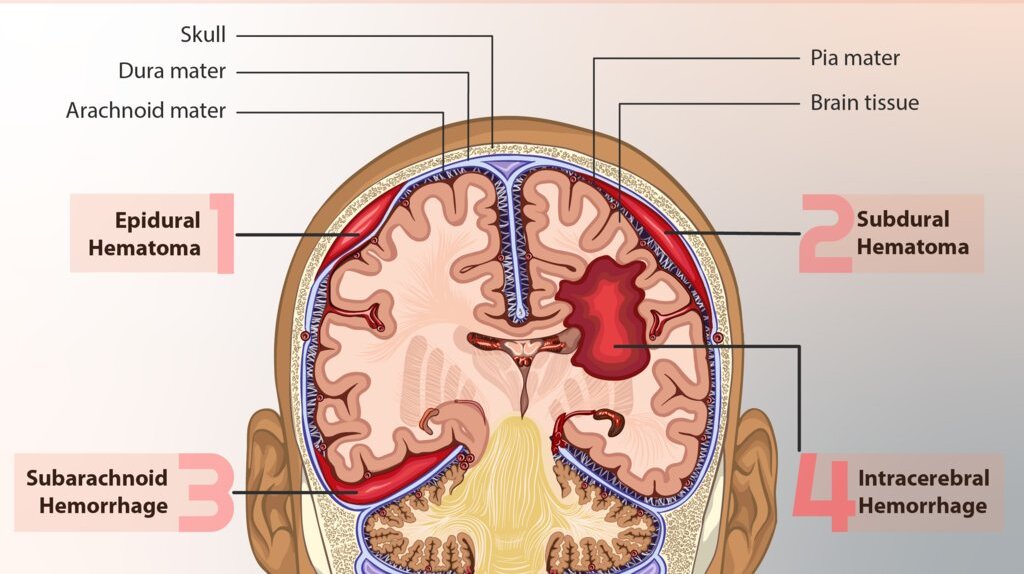
    Pericarditis

    Pericarditis

    Pericarditis Lecture Notes
    PERICARDITIS
    Introduction

    Pericarditis is the inflammation of the pericardium, a double-layered sac that encloses the heart and the roots of the great vessels (aorta, pulmonary artery, vena cavae). This sac provides protection, lubrication, and helps to anchor the heart within the chest cavity. When inflamed, the layers of the pericardium can rub against each other, causing characteristic pain and other symptoms.


    The Pericardium

    The pericardium is a thin, two-layered, fluid-filled sac that covers the outer surface of the heart.(normal volume of the fluid is around 50ml)

    • It also prevents the heart from over-expanding when blood volume increases, which keeps the heart functioning efficiently.
    • It shields the heart from infection or malignancy and contains the heart in the chest wall.
    Etiology (Causes) of Pericarditis

    Pericarditis can be caused by various factors, with idiopathic (unknown cause) being the most common, often suspected to be viral in origin.

    Infections:
    • Viral: Most common cause of acute pericarditis (e.g., coxsackievirus, echovirus, influenza, HIV).
    • Bacterial: Less common but more severe (e.g., tuberculosis, staphylococcal, streptococcal).
    • Fungal and Parasitic: Rare, typically in immunocompromised individuals.
    Other Causes:
    • Autoimmune Diseases: Systemic inflammatory conditions like Systemic Lupus Erythematosus (SLE), rheumatoid arthritis, scleroderma, and inflammatory bowel disease.
    • Myocardial Infarction (Heart Attack):
      • Early Post-MI Pericarditis: Occurs within a few days of a heart attack due to inflammation from myocardial necrosis.
      • Dressler's Syndrome (Post-cardiac Injury Syndrome): An autoimmune reaction occurring weeks to months after a heart attack, cardiac surgery, or trauma.
    • Uremia: Occurs in patients with kidney failure due to the buildup of toxins (uremic pericarditis).
    • Malignancy: Cancer spreading to the pericardium (e.g., lung cancer, breast cancer, lymphoma).
    • Trauma: Injury to the chest or heart, including iatrogenic (due to medical procedures).
    • Radiation Therapy: Can lead to acute or chronic pericarditis.
    • Drugs: Certain medications (e.g., procainamide, hydralazine, isoniazid) can induce drug-induced lupus-like syndromes with pericardial involvement.
    • Metabolic Disorders: Hypothyroidism (myxedema).
    According to Culprit
    Infectious Pericarditis

    Infections are a common cause, particularly viral, leading to acute pericarditis. Other pathogens are less frequent but can cause more severe disease.

  • Viral: This is the most common cause of acute pericarditis. Viruses directly infect and inflame the pericardium.
    • Common culprits: Coxsackievirus B (most frequent), Adenovirus, Echovirus, Influenza virus (A and B), Parvovirus B19, Herpesviruses (CMV, EBV, VZV), HIV.
    • Mechanism: Direct viral invasion and replication within pericardial cells, triggering an inflammatory response.
  • Bacterial: Less common in developed countries due to widespread antibiotic use, but can be severe, often leading to purulent (pus-filled) pericarditis.
    • Pyogenic (Pus-forming) Bacteria: Staphylococcus aureus, Streptococcus pneumoniae (Pneumococci), other Streptococci.
    • Routes of Infection: Hematogenous spread (from bloodstream, e.g., septicemia), direct extension from adjacent infections (e.g., pneumonia, empyema), or direct inoculation (e.g., cardiac surgery, trauma).
    • Tuberculosis (TB): A significant cause in endemic areas. Tuberculous pericarditis can lead to chronic, constrictive pericarditis.
  • Fungal: Rare, typically seen in immunocompromised individuals.
    • Examples: Histoplasma capsulatum, Candida species, Aspergillus.
  • Parasitic: Extremely rare in most regions, but important in specific geographic areas.
    • Example: Toxoplasma gondii, Entamoeba histolytica (amoebic pericarditis), Echinococcus (hydatid cyst).
  • Non-Infectious Pericarditis

    A significant proportion of pericarditis cases are not caused by direct infection but rather by systemic conditions, injury, or other inflammatory processes.

  • Autoimmune/Inflammatory Diseases: Conditions where the immune system mistakenly attacks the body's own tissues.
    • Systemic Lupus Erythematosus (SLE): Pericarditis is a common manifestation of lupus.
    • Rheumatoid Arthritis (RA): Less common, but can cause pericardial involvement.
    • Scleroderma (Systemic Sclerosis): Can lead to pericardial effusion and thickening.
    • Ankylosing Spondylitis: A chronic inflammatory disease primarily affecting the spine, but can have cardiac manifestations.
    • Inflammatory Bowel Disease (IBD): (Crohn's disease, Ulcerative colitis) can have extra-intestinal manifestations, including pericarditis.
    • Rheumatic Fever: An inflammatory disease that can develop as a complication of untreated streptococcal infection, affecting the heart (rheumatic carditis), joints, brain, and skin. Pericarditis is one component of carditis.
  • Post-Cardiac Injury Syndromes: Inflammatory reactions following damage to the heart or pericardium.
    • Dressler's Syndrome (Post-Myocardial Infarction Syndrome): An immune-mediated inflammation of the pericardium that occurs weeks to months after a myocardial infarction (heart attack).
    • Post-Pericardiotomy Syndrome (PPS): Occurs after cardiac surgery (e.g., bypass surgery, valve replacement, pacemaker insertion) due to inflammation from surgical trauma.
  • Trauma: Direct chest trauma (e.g., blunt force, penetrating injuries) can cause pericardial injury and inflammation.
  • Metabolic Disorders:
    • Uremia: Occurs in patients with severe kidney failure (end-stage renal disease) due to the accumulation of metabolic toxins that irritate the pericardium. It typically does not respond to anti-inflammatory drugs and requires dialysis.
    • Myxedema (Severe Hypothyroidism): Can lead to pericardial effusion due to increased capillary permeability and fluid retention.
  • Malignancy (Cancer):
    • Metastatic Cancer: Cancer cells can spread to the pericardium from primary tumors (e.g., lung cancer, breast cancer, lymphoma, leukemia, melanoma). This often leads to malignant pericardial effusion.
    • Primary Pericardial Tumors: Very rare (e.g., mesothelioma).
  • Radiation-Induced Pericarditis: Can occur as a complication of radiation therapy to the chest for cancer treatment (e.g., breast cancer, Hodgkin's lymphoma). Can manifest acutely or years after treatment.
  • Acute Myocardial Infarction (MI): Early pericarditis can occur in the first few days after a transmural (ST-elevation) MI due to inflammation over the necrotic myocardial tissue.
  • Aortic Dissection: If an aortic dissection extends into the pericardial sac, it can cause hemopericardium (blood in the pericardial sac) and acute pericarditis-like pain. This is a medical emergency.
  • Drug-Induced Pericarditis: Certain medications can trigger a lupus-like syndrome or direct pericardial inflammation.
    • Examples: Isoniazid, Procainamide, Hydralazine, Phenytoin, Minoxidil, Cyclosporine, Anthracyclines (some chemotherapy drugs).
  • Idiopathic Pericarditis: When no specific cause can be identified despite thorough investigation, it is termed idiopathic. This is the most common diagnosis for acute pericarditis, often presumed to be viral.
  • Pathophysiology of Pericarditis

    The acute inflammatory response in pericardium can produce either serous or purulent fluid, or a dense fibrinous material. In viral pericarditis, the pericardial fluid is most commonly serous, is of low volume, and resolves spontaneously.

    Neoplastic, tuberculous, and purulent pericarditis may be associated with large effusions that are exudative, hemorrhagic, and leukocyte filled.

    Gradual accumulation of large fluid volumes in the pericardium, even up to 250 mL, may not result in significant clinical signs.

    Clinical Manifestations of Pericarditis

    Beck's triad is a collection of three medical signs associated with acute cardiac tamponade. The signs are:

    • Low arterial blood pressure
    • Distended neck veins
    • Distant, muffled heart sounds.

    Chest pain symptoms associated with pericarditis can be described as:

    • Sharp and stabbing chest pain (caused by the heart rubbing against the pericardium). May increase with coughing, deep breathing or lying flat.
    • Can be relieved by sitting up and leaning forward.
    • You may also feel the need to bend over or hold your chest to breathe more comfortably.
    Other clinical features include;

    The symptoms of pericarditis can range from mild to severe and may mimic other cardiac conditions. The classic symptoms include:

  • Chest Pain:
    • Character: Typically sharp, stabbing, or pleuritic (worsens with deep breath, cough, or swallowing). Can also be dull, aching, or pressure-like.
    • Location: Usually substernal (behind the breastbone) or precordial (over the heart), often radiating to the left shoulder, neck, trapezius ridge (shoulder blade area), or back.
    • Aggravating Factors: Worsens with lying flat (supine position), deep inspiration, coughing, swallowing, and sometimes with movement.
    • Relieving Factors: Often eased by sitting up and leaning forward. This position reduces pressure on the inflamed pericardium.
  • Pericardial Friction Rub: A characteristic scratching, grating, or squeaking sound heard during auscultation of the heart, caused by the inflamed pericardial layers rubbing against each other. It is best heard with the diaphragm of the stethoscope over the left sternal border, with the patient leaning forward and exhaling. This is a highly specific sign.
  • Dyspnoea (Shortness of Breath): May be due to pleuritic chest pain limiting deep breaths, or in severe cases, due to pericardial effusion leading to cardiac tamponade.
  • Low-Grade Fever: Common, especially in infectious causes.
  • Fatigue and Malaise: Generalized symptoms due to the inflammatory process.
  • Palpitations: Can occur if the inflammation irritates the heart muscle or conductive system.
  • Cough: May be present due to irritation of the airways or associated pleural inflammation.
  • Anxiety: Often results from the frightening nature of chest pain and other symptoms.
  • Cardinal Signs and Symptoms of Pericarditis (Mnemonics)

    Remember “Friction” (as previously noted) and also consider the more comprehensive "PERICARDITIS" mnemonic for key features:

    • Friction rub pericardial (sounds like a grating, scratching sound), Fever
    • Radiating substernal pain to left shoulder, neck or back
    • Increased pain when in supine position (leaning forward relieves pain)
    • Chest pain that is stabbing (will feel like a heart attack)
    • Trouble breathing when lying down (supine position)
    • Inspiration or coughing makes pain worse
    • Overall feels very sick and weak
    • Noticeable ST segment elevation on ECG (often widespread concave up)
    P.E.R.I.C.A.R.D.I.T.I.S. Mnemonic:
    • Pleuritic chest pain (worsens with breathing)
    • ECG changes (widespread ST elevation, PR depression)
    • Rub (pericardial friction rub)
    • Increased pain with supine position
    • Cough, fever, malaise (flu-like symptoms)
    • Autoimmune disease history
    • Radiation to trapezius ridge (classic finding)
    • Difficulty breathing (dyspnoea)
    • Increased pain with inspiration
    • Treatment with NSAIDs (often effective)
    • Idiopathic or Infectious cause (viral most common)
    • Sitting up and leaning forward relieves pain
    Types of Pericarditis

    Pericarditis is classified based on its temporal course and characteristics:

  • Acute Pericarditis:
    • Onset: Sudden and rapid.
    • Duration: Typically resolves within 3 weeks.
    • Characteristics: Often associated with severe chest pain and a pericardial friction rub. Usually self-limiting, but can recur.
    • Common Causes: Viral infections, idiopathic.
  • Incessant Pericarditis:
    • Duration: Lasts for more than 4-6 weeks but less than 3 months, with continuous presence of symptoms and signs without remission.
    • Characteristics: Symptoms persist despite initial treatment, indicating ongoing inflammation.
  • Recurrent Pericarditis:
    • Onset: Occurs after a symptom-free interval of at least 4-6 weeks following an acute episode.
    • Characteristics: Can be very distressing for patients, with repeated episodes of chest pain and inflammation. Often requires long-term management.
    • Causes: Often idiopathic, but can be associated with autoimmune conditions.
  • Chronic Pericarditis:
    • Duration: Develops slowly and lasts for more than 3 months.
    • Characteristics: Can lead to pericardial thickening and fibrosis, potentially progressing to more serious conditions like constrictive pericarditis. Symptoms may be less acute but persistent.
  • Constrictive Pericarditis:
    • Nature: A serious complication of chronic pericarditis where the pericardium becomes thick, rigid, and fibrotic.
    • Mechanism: This hardened sac restricts the heart's ability to expand and fill with blood properly during diastole.
    • Consequences: Leads to impaired cardiac filling, elevated venous pressures, and symptoms of right-sided heart failure (e.g., severe edema, ascites, jugular venous distension).
  • Investigations for Pericarditis

    Diagnosing pericarditis involves a combination of clinical assessment, specific tests to confirm inflammation, identify the cause, and assess for complications.

    Medical History and Physical Exam:
  • History: Detailed inquiry about chest pain characteristics (onset, location, radiation, aggravating/relieving factors), fever, recent infections, autoimmune conditions, trauma, medications, and travel history.
  • Physical Exam:
    • Pericardial Friction Rub: The hallmark sign, a scratching or squeaking sound best heard with the diaphragm of the stethoscope over the left sternal border, with the patient leaning forward and holding their breath in expiration.
    • Signs of Pericardial Effusion/Tamponade: Muffled heart sounds, pulsus paradoxus, jugular venous distension, hypotension (late signs).
    • Signs of Systemic Disease: Rash, joint swelling (suggesting autoimmune disease).
  • Diagnostic Tests
  • Electrocardiography (ECG):
    • Classic Findings: Widespread ST-segment elevation (concave upwards) in most leads (unlike MI, which is localized and convex), and PR-segment depression (especially in leads II, aVF, V5, V6). These changes reflect inflammation of the epicardium.
    • Evolution: ECG changes typically evolve over days to weeks, from ST elevation to T-wave inversion, then normalization.
  • Echocardiography (Echo):
    • Purpose: The most important imaging test. It is essential for assessing for pericardial effusion (fluid around the heart) and its hemodynamic significance (e.g., signs of cardiac tamponade).
    • Information Provided: Can visualize the pericardium, quantify effusion size, assess cardiac chamber size and function, and identify signs of cardiac tamponade (e.g., right ventricular diastolic collapse, paradoxical septal motion).
  • Cardiac CT scan/MRI:
    • Cardiac Computed Tomography (CT): Useful for visualizing pericardial thickening, calcification (in constrictive pericarditis), and large effusions. Can help differentiate pericardial disease from myocardial disease.
    • Cardiovascular Magnetic Resonance Imaging (MRI): Provides excellent soft tissue characterization. It is the gold standard for detecting pericardial inflammation, edema, and fibrosis. Can also differentiate constrictive pericarditis from restrictive cardiomyopathy.
  • Blood Tests:
    • Inflammatory Markers: C-reactive protein (CRP) and Erythcyte Sedimentation Rate (ESR) are usually elevated.
    • Cardiac Biomarkers: Troponin (I or T) may be mildly elevated in myopericarditis. CK-MB and Myoglobin may be checked.
    • Infectious Workup: Viral Serology, Bacterial Cultures (blood/fluid), TB Tests (PPD, IGRAs, AFB stains).
    • Autoimmune Markers: ANA, RF, Anti-dsDNA if autoimmune disease is suspected.
    • Renal Function Tests: BUN and Creatinine to assess for uremia.
  • Radionuclide Scanning (e.g., PET scan): May be used in complex cases to detect areas of active inflammation or malignancy, particularly if other tests are inconclusive.
  • Pericardiocentesis and Pericardial Biopsy:
    • Pericardiocentesis: A procedure to drain fluid from the pericardial sac. Indicated for large effusions, signs of cardiac tamponade, or for diagnostic purposes.
    • Pericardial Biopsy: Rarely performed, but may be considered in cases of chronic or recurrent pericarditis with an unknown etiology.
  • Nursing Interventions and Management of Pericarditis

    Nursing care for patients with pericarditis focuses on pain management, monitoring for complications, providing emotional support, and patient education.

    General Principles of Management
  • Goal: Relieve pain, reduce inflammation, prevent complications (e.g., cardiac tamponade, constrictive pericarditis), and treat the underlying cause.
  • Setting: Mild cases may be managed outpatient, while moderate to severe cases, or those with complications, require hospitalization.
  • Management for Mild Pericarditis

    Patients with mild, uncomplicated pericarditis often respond well to conservative measures and oral medications.

  • Pain Assessment and Management:
    • Assess Patient’s Pain: Characterize the pain (sharp, stabbing, dull), location, radiation, and aggravating/relieving factors. Use a pain scale (e.g., 0-10) to quantify severity. Pericarditis pain can be excruciatingly painful.
    • Positioning for Pain Relief: Keep patient in a high Fowler’s position (sitting upright) or encourage leaning forward. Avoid a supine (lying flat) position, as it exacerbates pericardial pain by increasing pressure on the inflamed pericardium.
  • Monitoring for Complications (e.g., Cardiac Tamponade):
    • Constant Vigilance: Cardiac tamponade is a life-threatening complication that requires immediate recognition and intervention.
    • Key Signs to Monitor (Beck's Triad): Muffled or Distant Heart Sounds, Jugular Venous Distension (JVD) with Clear Lungs, Hypotension.
    • Other Signs: Pulsus Paradoxus, Tachycardia, narrowed pulse pressure, decreased urine output, cool extremities, altered mental status.
  • Administer Medications as Prescribed by Physician:
    • High-dose Aspirin: Often used, especially for post-MI pericarditis.
    • NSAIDs (e.g., Ibuprofen, Indomethacin): The cornerstone of treatment for acute pericarditis. Administer with food/milk. Monitor for GI bleeding.
    • Colchicine: An anti-inflammatory agent increasingly used as first-line therapy or in combination with NSAIDs. Do not take with grapefruit juice.
    • Corticosteroids (e.g., Prednisone): Reserved for patients who do not respond to NSAIDs/Colchicine or have specific etiologies. Taper slowly.
    • IV Antibiotics: Administered if bacterial pericarditis is diagnosed or strongly suspected.
  • Management for Moderate to Severe Pericarditis / Hospitalized Patients

    These patients require more intensive monitoring and often invasive procedures.

    • Comprehensive Assessment: Establish good rapport, take detailed history, and perform continuous observations of vital signs.
    • Pain Management Intensified: Continue positioning for relief, monitor pain levels continuously, and administer stronger analgesics (e.g., morphine) if needed.
    • Intensive Cardiac Monitoring: Hourly assessment for cardiac tamponade signs and continuous ECG monitoring.
    • Fluid Balance and Hemodynamic Support: Careful maintenance of I&O, daily weight checks, oxygen administration to maintain SpO2 >90%, and IV antihypertensives if needed.
    • Medication Administration and Monitoring: Administer meds with food to reduce GI side effects and ensure timely antibiotics if bacterial.
    • Patient Education and Psychological Support: Discuss disease process, reduce anxiety, prepare for procedures, educate on post-surgical care and activity progression, and teach warning signs for home.
    • Bowel and Bladder Care: Provide bedside commode and assist with bathing to conserve energy.
    • Monitoring for Specific Complications: Closely monitor for persistent cough, vomiting, or systolic BP >180 mmHg.
    Specific Nursing Interventions (Procedure Table)
    Intervention Category Action & Rationale/Detail
    Pain Management and Comfort Assess pain level regularly using a standardized scale. Evaluate effectiveness of analgesics within 30-60 mins. Administer meds promptly. Position patient in high Fowler's or leaning forward (avoid supine). Provide non-pharmacological relief (guided imagery, distraction).
    Vital Signs and Hemodynamic Monitoring Monitor vitals frequently. Continuously monitor ECG for ST-T changes. Assess for signs of cardiac tamponade (muffled sounds, JVD, hypotension, pulsus paradoxus) every 4-8 hours or PRN. Monitor for signs of decreased cardiac output. Administer O2 to maintain SpO2 > 90%.
    Medication Administration and Monitoring Administer NSAIDs/Corticosteroids with food/milk to minimize GI irritation. Educate on side effects. Monitor for adverse effects (GI bleeding, hyperglycemia, diarrhea). Ensure timely antibiotic administration if prescribed.
    Fluid Balance and Nutritional Support Maintain accurate I&O records. Monitor daily weights. Encourage oral fluids unless contraindicated. Provide easily digestible diet. Assist with feeding if fatigued.
    Activity and Rest Ensure bed rest during acute phase (until fever/pain/rub resolve). Assist with ADLs. Provide bedside commode to reduce straining. Educate on gradual return to activity.
    Patient Education and Psychological Support Explain disease process and treatment. Reassure that pain is likely not an MI. Build rapport. Provide psychological support. Explain procedures (e.g., pericardiocentesis). Educate on warning signs of recurrence or complications. Discuss medication adherence.
    Monitoring for Other Complications Monitor for persistent cough, vomiting, or systolic BP >180 mmHg. Assess for signs of chronic/constrictive pericarditis (persistent JVD, ascites, edema).
    Nursing Diagnoses for Pericarditis
    Acute Pain
    • Related to: Inflammatory process of the pericardium.
    • As evidenced by: Verbalization of severe chest pain ("10 out of 10", sharp, stabbing), facial grimacing, guarding, restlessness, increased HR/BP, pain exacerbated by breathing/coughing/lying supine, pain relieved by leaning forward.
    Rationale: The hallmark of acute pericarditis is severe, often pleuritic, chest pain caused by the inflammation and irritation of the pericardial layers. This pain significantly impacts comfort and can trigger sympathetic responses.
    Hyperthermia
    • Related to: Inflammatory process (e.g., infection, autoimmune response).
    • As evidenced by: Body temp > 38.0°C, flushed skin, warm to touch, increased HR/RR, sweating/chills, malaise.
    Rationale: Inflammation, particularly if infectious, often leads to a systemic febrile response as the body attempts to combat the underlying cause and inflammatory mediators are released.
    Decreased Cardiac Output
    • Related to: Impaired ventricular filling due to pericardial inflammation and/or effusion.
    • As evidenced by: Fatigue, weakness, inability to perform ADLs, shortness of breath, tachycardia, hypotension, weak pulses, cool skin, delayed capillary refill, decreased urine output, altered mental status, abnormal hemodynamics.
    Rationale: Inflammation of the pericardium can lead to fluid accumulation (effusion) or thickening/constriction, both of which can impede the heart's ability to fill adequately, thereby reducing the amount of blood pumped out to the body.
    Activity Intolerance
    • Related to: Acute chest pain, decreased cardiac output, and systemic inflammation.
    • As evidenced by: Verbalization of fatigue/weakness after exertion, dyspnea on exertion, disinterest in ADLs, need for increased rest, changes in vitals with activity.
    Rationale: The pain associated with pericarditis makes movement difficult, and the systemic inflammatory response, coupled with potentially decreased cardiac output, reduces the patient's physiological reserve for physical activity.
    Excessive Anxiety
    • Related to: Chest pain of unknown etiology, fear of serious cardiac event (e.g., heart attack), threat to health status.
    • As evidenced by: Verbalization of fear/worry, increased HR/RR, restlessness, crying, sleep disturbances, questioning prognosis.
    Rationale: Chest pain is often associated with myocardial infarction, leading to significant anxiety for patients. The uncertainty of the diagnosis, the severity of symptoms, and the potential for complications can further exacerbate anxiety.
    Risk for Ineffective Health Management
    • Related to: Insufficient knowledge of the disease process, treatment regimen, and potential for recurrence.
    Rationale: Patients need comprehensive education on their condition, medications, symptom recognition, and activity modifications to prevent recurrence and manage the disease effectively post-discharge.
    Risk for Fluid Volume Deficit
    • Related to: Fever-induced diaphoresis, nausea/vomiting impacting oral intake, aggressive diuretic therapy.
    Rationale: While fluid overload is a concern with effusions, certain interventions or symptoms can lead to dehydration, necessitating careful fluid balance monitoring.
    Risk for Impaired Gas Exchange
    • Related to: Decreased lung expansion due to large pericardial effusion, reduced cardiac output impacting pulmonary perfusion.
    Rationale: A very large effusion can restrict lung expansion, and severe cardiac compromise can lead to ventilation-perfusion mismatch.
    Risk for Infection (post-procedural)
    • Related to: Invasive procedures (e.g., pericardiocentesis, pericardiectomy).
    • As evidenced by: Surgical incision/puncture site, disruption of skin integrity, invasive lines.
    Rationale: Any break in skin integrity or invasive procedure introduces a risk of localized or systemic infection.
    Complications of Pericarditis

    While most cases of acute pericarditis are benign and self-limiting, complications can occur, ranging from mild to life-threatening.

    • Pericardial Effusion: Accumulation of excess fluid within the pericardial sac. Can range from small to large and rapidly accumulating.
    • Cardiac Tamponade: A medical emergency where a large or rapidly accumulating effusion compresses the heart, restricting filling. Leads to decreased cardiac output, hypotension, and shock. Requires urgent drainage.
    • Recurrent Pericarditis: Episodes recur after a symptom-free interval. Often requires long-term anti-inflammatory therapy.
    • Chronic Pericarditis: Persists > 3 months. Can lead to thickening/fibrosis.
    • Constrictive Pericarditis: Severe, long-term complication where the pericardium becomes thick, rigid, and fibrotic, preventing proper filling. Causes right-sided heart failure symptoms. Treatment often requires pericardiectomy.
    • Myocarditis (Myopericarditis): Inflammation of the heart muscle occurring concurrently. Can lead to myocardial dysfunction and arrhythmias.
    • Fatal Hemorrhage: Rare but catastrophic, associated with trauma, iatrogenic injury, or vessel rupture.
    • Stroke/Paraplegia/Abdominal Ischemia: Severe complications specifically associated with Aortic Dissection if it involves great vessels or spinal/abdominal blood supply. If dissection causes hemopericardium, it mimics pericarditis but requires different emergency management.

    Quick Quiz

    Pericarditis Quiz

    Paediatrics - mobile-friendly and focused practice.

    Privacy: Your details are used only for quiz tracking and certificates.

    Pericarditis Read More »
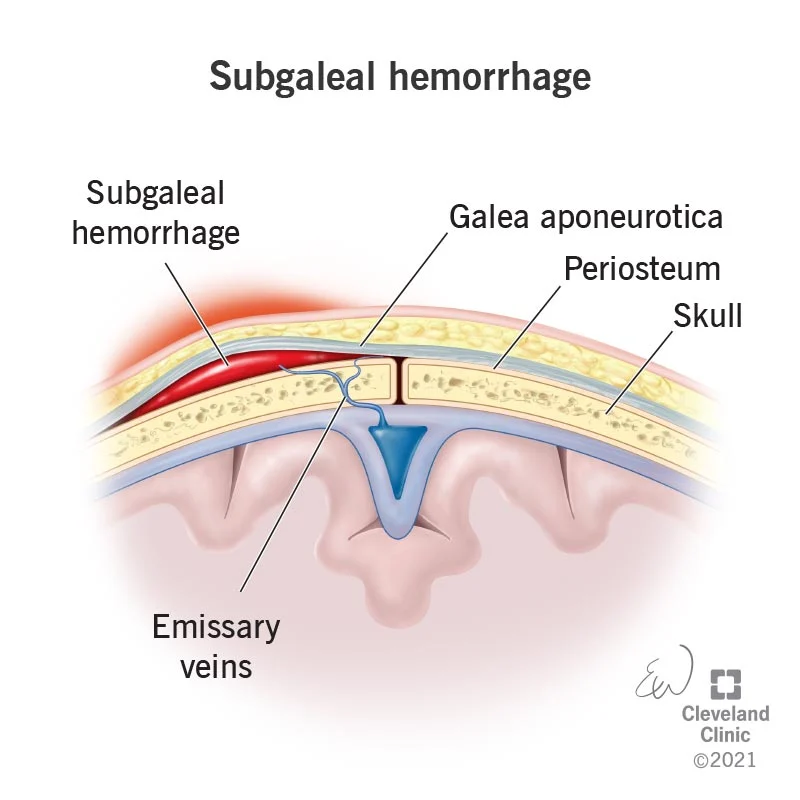
    Rheumatic Heart Disease

    Rheumatic Heart Disease

    Rheumatic Fever and Rheumatic Heart Disease
    Rheumatic Fever and Rheumatic Heart Disease

    To understand Rheumatic Heart Disease (RHD), we must first understand its precursor: Acute Rheumatic Fever (ARF). These two conditions are intimately linked in a cause-and-effect relationship.

    Acute Rheumatic Fever (ARF)

    Acute Rheumatic Fever is a post-streptococcal, systemic inflammatory disease that can affect the heart, joints, brain, and skin.

    • It is an autoimmune reaction that occurs as a delayed, non-suppurative (non-pus-forming) sequela of an untreated or inadequately treated Group A Streptococcus (GAS) pharyngeal infection (strep throat).
    • It typically manifests 2 to 4 weeks after the initial strep throat infection.
    • ARF is considered a reversible condition in its acute phase, meaning the inflammatory manifestations can resolve. However, the cardiac involvement can lead to permanent damage.
    Key Characteristics:
    • Inflammatory: Involves inflammation of various connective tissues throughout the body.
    • Systemic: Can affect multiple organ systems.
    • Autoimmune: The body's immune system mistakenly attacks its own tissues.
    • Delayed: Occurs after the initial infection has resolved.
    • Preventable: Proper treatment of strep throat can prevent ARF.
    Rheumatic Heart Disease (RHD)

    Rheumatic Heart Disease is the chronic, permanent cardiac damage that results from one or more episodes of Acute Rheumatic Fever.

    • It is the most serious complication of ARF, leading to progressive fibrosis, scarring, and deformation of the heart valves, particularly the mitral and aortic valves.
    • RHD is the leading cause of acquired heart disease in children and young adults in many parts of the world, especially in low and middle-income countries.
    Key Characteristics:
    • Chronic: Long-lasting and progressive.
    • Permanent Damage: Involves irreversible changes to heart structures.
    • Valvular Heart Disease: Primarily affects the heart valves, leading to stenosis (narrowing), regurgitation (leakage), or both.
    • Cumulative: Each episode of ARF can add further damage to the heart.
    III. The Relationship Between ARF and RHD
    • Think of ARF as the "acute attack" caused by the immune system's reaction to strep.
    • RHD is the "scar" left on the heart by that attack.
    • Not everyone who gets ARF will develop RHD, but everyone who has RHD first had ARF.
    • The severity and recurrence of ARF episodes determine the extent of cardiac damage, leading to RHD.
    In summary:
    • Acute Rheumatic Fever (ARF) is the acute inflammatory immune response following a strep throat infection.
    • Rheumatic Heart Disease (RHD) is the long-term, permanent heart damage (especially to the valves) that can result from one or more episodes of ARF.

    ‘rheumatism licks the joint, but bites the whole heart’.

    Etiology (The Cause) of Acute Rheumatic Fever
    • The Sole Trigger: Acute Rheumatic Fever is exclusively caused by a preceding infection with Group A Streptococcus (GAS), specifically Streptococcus pyogenes.
    • Location of Infection: The GAS infection must be a pharyngeal (throat) infection (i.e., strep throat). Skin infections with GAS (e.g., impetigo) generally do not lead to ARF, though they can cause acute glomerulonephritis.
    • Untreated or Inadequately Treated: ARF develops when a GAS pharyngitis is either not treated with antibiotics or not treated sufficiently to eradicate the bacteria. Prompt and appropriate antibiotic treatment of strep throat can effectively prevent ARF.
    • Specific Strains: While all GAS strains can cause strep throat, only certain "rheumatogenic" strains are associated with ARF. These strains often have specific M-protein types that are particularly potent in eliciting the autoimmune response.
    Pathophysiology of Acute Rheumatic Fever

    The development of ARF is a classic example of an autoimmune disease triggered by an infection, primarily through a process called molecular mimicry.

    1. Initial GAS Infection and Immune Response:
      • When Streptococcus pyogenes infects the pharynx, the body's immune system mounts a response to fight the bacteria.
      • Key bacterial components, particularly the M protein (a virulence factor on the surface of GAS), are recognized as foreign antigens.
      • The immune system produces antibodies against these GAS antigens.
    2. Molecular Mimicry:
      • The crucial step in ARF pathogenesis is that some of the bacterial antigens, especially specific epitopes (molecular parts) of the M protein, share structural similarities with proteins found in human tissues. This phenomenon is called molecular mimicry.
      • These human proteins are often found in the heart (myosin, tropomyosin, valvular glycoproteins), joints (collagen), brain (neuronal antigens in basal ganglia), and skin.
    3. Cross-Reactivity and Autoimmune Attack:
      • Due to molecular mimicry, the antibodies and T-lymphocytes (a type of white blood cell) produced by the immune system to fight the GAS infection cross-react with these structurally similar human tissues.
      • The immune system mistakenly identifies these healthy human tissues as foreign invaders and launches an autoimmune attack against them.
    4. Inflammation and Tissue Damage:
      • This autoimmune attack leads to widespread inflammation in various parts of the body.
      • The specific manifestations depend on which tissues are targeted by the cross-reactive immune response:
        • Heart (Carditis): Inflammation of the heart muscle (myocarditis), pericardium (pericarditis), and endocardium (endocarditis), particularly the heart valves. This is the most serious manifestation and can lead to permanent damage (RHD).
        • Joints (Arthritis): Inflammation of the large joints (e.g., knees, ankles, elbows, wrists). Typically migratory polyarthritis.
        • Brain (Sydenham Chorea): Inflammation in the basal ganglia, leading to involuntary movements.
        • Skin (Erythema Marginatum, Subcutaneous Nodules): Inflammatory skin lesions and subcutaneous nodules.
    5. Aschoff Bodies:
      • A characteristic pathological finding in the heart in ARF is the Aschoff body. These are granulomatous lesions consisting of swollen collagen fibers, inflammatory cells (lymphocytes, plasma cells), and characteristic multinucleated giant cells called Anitschkow cells (or "caterpillar cells").
      • Aschoff bodies are considered pathognomonic for ARF and contribute to the inflammation and damage within the myocardium and valves.
    Clinical Manifestations of Acute Rheumatic Fever

    The symptoms of ARF appear 2-4 weeks after an untreated or inadequately treated GAS pharyngeal infection. The manifestations can be widespread and affect various organ systems.

    A. Major Manifestations (The "JONES" Criteria Mnemonic):

    These are the most common and significant clinical signs of ARF.

    1. J - Joints (Polyarthritis):
      • Migratory Polyarthritis: The most common major manifestation, affecting about 75% of patients.
      • Typically affects large joints (knees, ankles, elbows, wrists).
      • The inflammation moves from one joint to another over hours to days (migratory).
      • Extremely painful but responds dramatically and quickly to NSAIDs.
      • Self-limiting and non-deforming; does not cause permanent joint damage.
    2. O - Myocarditis (Carditis):
      • Pancarditis: Inflammation of all three layers of the heart (pericardium, myocardium, endocardium).
      • Occurs in about 50-60% of cases and is the only manifestation that can lead to permanent heart damage (RHD).
      • Signs/Symptoms:
        • New or changing heart murmur: Especially mitral regurgitation (most common) or aortic regurgitation.
        • Pericarditis: Pericardial friction rub, chest pain, distant heart sounds.
        • Cardiomegaly: Enlarged heart on chest X-ray.
        • Congestive Heart Failure: Tachycardia, dyspnea, orthopnea, crackles, peripheral edema (in severe cases), gallop rhythm.
        • Tachycardia out of proportion to fever.
    3. N - Nodules (Subcutaneous Nodules):
      • Rare: Occurs in <5% of cases, usually in severe ARF.
      • Description: Small, firm, painless, mobile nodules (0.5-2 cm) over bony prominences (e.g., elbows, knees, knuckles, scalp, vertebrae).
      • Appear late in the course of ARF.
    4. E - Erythema Marginatum:
      • Rare: Occurs in <5% of cases.
      • Description: A distinctive, non-pruritic (non-itchy) rash.
      • Characterized by pink or red macular lesions with clear centers and serpiginous (snake-like) or wavy borders.
      • Typically found on the trunk and proximal extremities, but never on the face.
      • Often evanescent (fades quickly) and exacerbated by heat.
    5. S - Sydenham Chorea (St. Vitus' Dance):
      • Late Manifestation: Can appear months after the initial strep infection, sometimes as the only major manifestation.
      • Description: A neurological disorder characterized by abrupt, involuntary, purposeless movements (chorea), muscular weakness, and emotional lability.
      • Typically affects the face, hands, and feet.
      • Self-limiting (usually resolves within weeks to months) but can be very distressing.
      • Worsens with stress and disappears during sleep.
    B. Minor Manifestations:

    These are less specific but contribute to the diagnostic picture.

    1. Clinical Findings:
      • Fever: Usually >38.0°C (100.4°F).
      • Arthralgia: Joint pain without objective signs of inflammation (i.e., no redness, swelling). If polyarthritis is present, arthralgia cannot be used as a minor criterion.
    2. Laboratory Findings (Inflammatory Markers):
      • Elevated Erythrocyte Sedimentation Rate (ESR): A non-specific marker of inflammation. (>60mm/hr)
      • Elevated C-Reactive Protein (CRP): Another non-specific marker of inflammation. (above 3mg/dl)
      • Leukocytosis
    3. Electrocardiographic (ECG) Findings:
      • Prolonged PR interval: Indicates delayed conduction through the AV node, suggestive of carditis, but not specific for ARF. (Must be absent of other causes like first-degree AV block).
    Minor criteria mnemonic:
    • C – CRP Increased
    • A – Arthralgia (Joint pain)
    • F – Fever (> 38.5 degrees Celicius)
    • E – Elevated ESR (>60mm/hr)
    • P – Prolonged PR Interval
    • A – Anamnesis (suggestive of rheumatism)
    • L – Leukocytosis
    II. Diagnostic Criteria: Modified Jones Criteria (2015)

    The diagnosis is primarily clinical, relying on a set of criteria known as the Jones Criteria, which combine major and minor clinical manifestations with evidence of a preceding Group A Streptococcus (GAS) infection.

    The diagnosis of initial ARF requires:

    1. Evidence of a Preceding Group A Streptococcus (GAS) Infection
      • PLUS
    2. Specific Combination of Major and Minor Manifestations
    A. Evidence of Preceding GAS Infection:
    • Must be present for diagnosis!
    • Positive throat culture for GAS.
    • Positive rapid streptococcal antigen test.
    • Elevated or rising streptococcal antibody titers (e.g., Antistreptolysin O [ASO] titer, Anti-DNase B titer) – most reliable evidence, especially if symptoms are delayed.
    B. Combination of Manifestations:
    • For Populations with Low Risk of ARF (e.g., most developed countries):
      • 2 Major Criteria
      • OR
      • 1 Major and 2 Minor Criteria
    • For Populations with Moderate-to-High Risk of ARF (e.g., many developing countries):
      • 2 Major Criteria
      • OR
      • 1 Major and 2 Minor Criteria
      • Note: In these populations, a lower threshold for minor criteria is often accepted. For example, specific ranges for ESR/CRP might be used, and monoarthralgia (pain in one joint) might be considered a minor criterion if polyarthralgia is not present.
    Important Exclusions:
    • A prolonged PR interval on ECG can be considered a minor criterion unless carditis is already a major criterion.
    • Arthralgia cannot be used as a minor criterion if arthritis is a major criterion.
    Cardiac Manifestations and Progression to Rheumatic Heart Disease (RHD)

    Cardiac involvement, or rheumatic carditis, is the most serious manifestation of Acute Rheumatic Fever (ARF) because it is the only one that can lead to permanent disability and death. When the inflammation from ARF leaves lasting structural damage to the heart, particularly the valves, it is then diagnosed as Rheumatic Heart Disease (RHD).

    I. Cardiac Manifestations During Acute Rheumatic Fever (Rheumatic Carditis)

    Rheumatic carditis is an inflammatory process that can affect any of the three layers of the heart (pancarditis).

    1. Endocarditis (Valvulitis):
      • This is the most common and clinically significant form of carditis in ARF.
      • Affected Valves: The mitral valve is most frequently involved (70-80% of cases), often leading to mitral regurgitation. The aortic valve is the second most common (30-50% of cases), leading to aortic regurgitation. The tricuspid and pulmonary valves are rarely affected in isolation.
      • Pathology: Inflammation of the valvular endothelium leads to swelling, loss of continuity, and the formation of small, sterile vegetations (verrucae) along the lines of closure. These verrucae are composed of fibrin and platelets and contribute to valve dysfunction.
      • Clinical Signs: New or changing heart murmurs are the hallmark.
        • Mitral Regurgitation: A high-pitched, blowing holosystolic murmur heard best at the apex, radiating to the axilla.
        • Aortic Regurgitation: A high-pitched, decrescendo diastolic murmur heard best at the left sternal border.
    2. Myocarditis:
      • Inflammation of the heart muscle itself.
      • Pathology: Characterized by the presence of Aschoff bodies (histopathological hallmark of ARF) in the interstitial tissue, along with diffuse inflammatory infiltrates. This inflammation can weaken the heart muscle.
      • Clinical Signs:
        • Tachycardia: Especially tachycardia out of proportion to fever.
        • Cardiomegaly: Enlarged heart on chest X-ray.
        • Symptoms of Heart Failure: Dyspnea, fatigue, orthopnea, peripheral edema (in severe cases), gallop rhythm.
        • ECG changes: Prolonged PR interval (first-degree AV block) is common but not specific.
    3. Pericarditis:
      • Inflammation of the pericardial sac surrounding the heart.
      • Pathology: Accumulation of fluid (pericardial effusion) or fibrin deposits.
      • Clinical Signs:
        • Pericardial friction rub: A characteristic grating sound heard on auscultation.
        • Chest pain: Often sharp, pleuritic, and worse with inspiration or lying flat.
        • Distant heart sounds: If a significant effusion is present.
        • Signs of tamponade: (rare in ARF but possible with large effusions).
    II. Progression to Rheumatic Heart Disease (RHD)

    Rheumatic Heart Disease develops as a chronic sequel of rheumatic carditis. The acute inflammation of ARF resolves, but the damage inflicted on the heart valves becomes permanent and often progressive.

    1. Healing and Scarring:
      • After the acute inflammatory phase of ARF subsides, the damaged heart valves undergo a process of healing that involves fibrosis, calcification, and retraction.
      • The sterile verrucae on the valve leaflets become fibrosed.
    2. Valvular Deformities and Dysfunction:
      • This scarring and architectural distortion lead to two main types of valvular dysfunction:
        • Stenosis: Narrowing of the valve opening, impeding forward blood flow. This often develops years after the initial ARF episode.
        • Regurgitation (Insufficiency): Incomplete closure of the valve, allowing backward blood flow (leakage). This can be present acutely during ARF or develop chronically.
      • Over time, these dysfunctions place increased workload on the heart chambers, leading to hypertrophy, dilation, and eventually heart failure.
    3. Most Commonly Affected Valves in RHD:
      • Mitral Stenosis: The most common form of RHD, occurring due to fusion of the commissures, thickening and shortening of chordae tendineae, and calcification. This typically manifests 5-10 years or more after the initial ARF.
        • Auscultation: Diastolic rumble at the apex, opening snap.
      • Mitral Regurgitation: Can be present acutely with carditis or persist chronically due to leaflet damage and annular dilation.
      • Aortic Stenosis: Less common than mitral stenosis, often coexisting with aortic regurgitation.
      • Aortic Regurgitation: Can persist from the acute phase or develop chronically.
      • Mixed Valvular Disease: It is common to have a combination of stenosis and regurgitation affecting multiple valves (e.g., mitral stenosis and regurgitation, often with aortic involvement).
    4. Factors Influencing Progression:
      • Severity of initial carditis: More severe acute carditis increases the risk of RHD.
      • Recurrent episodes of ARF: Each subsequent ARF episode further damages the valves, accelerating the progression to severe RHD. This is why secondary prophylaxis is so critical.
      • Age at first attack: Younger age at first ARF episode is associated with a higher risk of developing RHD and more severe RHD.
      • Genetic predisposition.
    5. Clinical Consequences of RHD:
      • Heart Failure: Due to chronic valvular overload and myocardial dysfunction.
      • Arrhythmias: Atrial fibrillation is common with mitral valve disease.
      • Embolic Events: Due to clot formation in dilated atria (especially with atrial fibrillation) or on damaged valves.
      • Infective Endocarditis: Damaged valves are more susceptible to bacterial colonization.
      • Pulmonary Hypertension: Particularly with severe mitral stenosis.
    Diagnostic Approaches for Rheumatic Heart Disease (RHD)

    The key is to identify the characteristic valvular changes caused by previous ARF.

    Clinical Assessment
  • History:
    • Previous history of ARF: This is a crucial indicator, though many patients with RHD may not recall a documented ARF episode.
    • History of recurrent sore throats: Especially in childhood, indicative of potential past GAS infections.
    • Symptoms of valvular heart disease:
      • Dyspnea (shortness of breath): Especially on exertion, a primary symptom of heart failure due to valvular dysfunction.
      • Fatigue, weakness.
      • Palpitations: Due to arrhythmias (e.g., atrial fibrillation in mitral valve disease).
      • Chest pain.
      • Syncope (fainting).
      • Edema: Peripheral or pulmonary edema (signs of heart failure).
      • Symptoms of stroke or transient ischemic attack: Due to embolic events from damaged valves or atrial fibrillation.
  • Physical Examination:
    • Cardiac Auscultation: This is paramount. The presence of characteristic heart murmurs is often the first clue.
      • Mitral Stenosis: Low-pitched diastolic rumble at the apex, often with an opening snap. Loud S1.
      • Mitral Regurgitation: Holosystolic murmur at the apex, radiating to the axilla.
      • Aortic Stenosis: Systolic ejection murmur at the right upper sternal border, radiating to the carotids.
      • Aortic Regurgitation: High-pitched, decrescendo diastolic murmur at the left sternal border.
    • Signs of Heart Failure: Tachycardia, tachypnea, crackles in lungs, elevated jugular venous pressure (JVP), hepatomegaly, peripheral edema.
    • Peripheral Signs of Valvular Disease: (e.g., water-hammer pulse in severe aortic regurgitation).
  • Imaging Studies (Primary Diagnostic Tools)
  • Echocardiography (Echo):
    • The gold standard for diagnosing and assessing the severity of RHD.
    • Transthoracic Echocardiography (TTE): A non-invasive ultrasound of the heart that provides detailed images of heart chambers, valves, and blood flow.
    • What it reveals:
      • Valvular Morphology: Leaflet thickening, calcification, commissural fusion (especially in mitral stenosis), chordal thickening and fusion, subvalvular apparatus abnormalities.
      • Valvular Function: Presence and severity of stenosis (measured by pressure gradients, valve area) and regurgitation (measured by jet size, regurgitant volume).
      • Chamber Dimensions and Function: Left atrial and ventricular enlargement, ventricular hypertrophy, systolic and diastolic dysfunction.
      • Pulmonary Artery Pressure: Indication of pulmonary hypertension.
    • Doppler Echocardiography: Crucial for assessing blood flow dynamics across the valves and quantifying the severity of stenosis and regurgitation.
    • Importance: Can detect subclinical RHD (valvular changes without overt symptoms), allowing for early intervention and secondary prophylaxis.
  • Chest X-ray (CXR):
    • Can show cardiomegaly (enlarged heart silhouette), which may suggest significant valvular disease or heart failure.
    • May show signs of pulmonary congestion or pulmonary edema in cases of left-sided heart failure (e.g., mitral stenosis, mitral regurgitation).
    • Calcification of heart valves may occasionally be visible.
    • Limited utility for definitive diagnosis of specific valvular lesions but provides useful contextual information.
  • Electrocardiography (ECG):
  • Not diagnostic for RHD itself, but can show changes associated with valvular heart disease and its complications.
  • Findings may include:
    • Left atrial enlargement: Often seen in mitral stenosis or regurgitation.
    • Left ventricular hypertrophy: In response to pressure or volume overload (e.g., aortic stenosis, aortic regurgitation).
    • Right ventricular hypertrophy: With significant pulmonary hypertension.
    • Arrhythmias: Atrial fibrillation is common, particularly with mitral stenosis and left atrial enlargement.
    • Conduction abnormalities.
  • Medical and Surgical Management Strategies

    Aims of Management:

    1. Treat the acute inflammatory process of ARF.
    2. Prevent recurrences of ARF, which cause further cardiac damage.
    3. Manage the complications of established RHD (heart failure, arrhythmias).
    4. Correct the structural damage to the heart valves through surgical intervention when necessary.
    I. MANAGEMENT OF ACUTE RHEUMATIC FEVER (ARF)

    The focus during ARF is on eradicating the GAS infection, suppressing the inflammatory response, and providing supportive care.

    1. Eradication of Group A Streptococcus (GAS) Infection (Primary Prophylaxis):
      • Goal: To eliminate any remaining GAS bacteria from the throat to prevent further antigenic stimulation.
      • Antibiotic of choice: Penicillin.
        • Benzathine Penicillin G: Single intramuscular injection (1.2 million units for adults/children >27kg, 600,000 units for children <27kg). This is preferred due to excellent compliance.
        • Oral Penicillin V: 250 mg 2-3 times daily for 10 days. Requires strict adherence.
      • Allergy to Penicillin: Erythromycin or a first-generation cephalosporin can be used.
    2. Anti-inflammatory Therapy:
      • Goal: To suppress the acute inflammatory manifestations and alleviate symptoms.
      • Aspirin:
        • Primary treatment for arthritis and fever. High doses (e.g., 50-75 mg/kg/day in divided doses) are used.
        • Rapidly relieves joint pain within 24-48 hours.
        • Continued for 2-6 weeks, with gradual tapering as inflammatory markers (ESR, CRP) normalize.
      • Corticosteroids (Prednisone):
        • Indicated for moderate-to-severe carditis (e.g., with cardiomegaly, heart failure, or significant pericardial effusion).
        • High doses (e.g., 1-2 mg/kg/day) for 2-4 weeks, followed by a gradual taper over several weeks.
        • Provides more potent anti-inflammatory effect and can prevent progression of severe carditis.
      • NSAIDs (non-steroidal anti-inflammatory drugs): Can be used for mild arthritis if aspirin is contraindicated or not tolerated.
    3. Supportive Care:
      • Bed Rest: Recommended for patients with carditis, ranging from strict bed rest for severe carditis and heart failure to reduced activity for mild carditis or arthritis only. Activity is gradually increased as symptoms resolve.
      • Management of Heart Failure: Diuretics (to reduce fluid overload), ACE inhibitors (to reduce afterload), and rarely digoxin for severe systolic dysfunction.
      • Management of Sydenham Chorea: Sedatives (e.g., benzodiazepines) or anticonvulsants (e.g., valproic acid, carbamazepine) may be needed for severe chorea.
    4. Secondary Prophylaxis (Prevention of Recurrent ARF):
      • Crucial for preventing progression to RHD or worsening existing RHD.
      • Continuous antibiotic administration to prevent any future GAS infections.
      • Drug of choice: Benzathine Penicillin G (1.2 million units IM every 3-4 weeks). This is the most effective due to guaranteed compliance.
      • Oral Penicillin V: Twice daily if IM injections are refused or not feasible, but compliance is a major issue.
      • Duration of Secondary Prophylaxis:
        • ARF without carditis: 5 years or until age 21 (whichever is longer).
        • ARF with carditis but no residual heart disease: 10 years or until age 21 (whichever is longer).
        • ARF with residual heart disease (RHD): At least 10 years or until age 40 (whichever is longer); often lifelong.
    II. MANAGEMENT OF RHEUMATIC HEART DISEASE (RHD)

    Once RHD is established, management focuses on secondary prophylaxis (as above), managing complications, and surgical correction of severe valvular lesions.

    1. Medical Management:
      • Secondary Prophylaxis: Continues to be the cornerstone to prevent further damage.
      • Heart Failure Management:
        • Diuretics: To manage fluid retention and congestion.
        • ACE Inhibitors/ARBs: To reduce afterload and improve cardiac function.
        • Beta-blockers: For heart rate control and symptom management in select cases.
        • Digoxin: For rate control in atrial fibrillation or in severe systolic heart failure.
      • Arrhythmia Management:
        • Atrial Fibrillation: Common with mitral valve disease. Requires rate control (beta-blockers, calcium channel blockers, digoxin) and anticoagulation (warfarin or DOACs) to prevent embolic stroke.
      • Infective Endocarditis Prophylaxis: Generally no longer recommended for most RHD patients, unless they have prosthetic valves or a history of infective endocarditis. Consult current guidelines.
      • Regular Follow-up: With a cardiologist, including serial echocardiograms to monitor the progression of valvular disease and cardiac function.
    2. Surgical Management (Valve Repair or Replacement):
      • Indication: Reserved for severe RHD when valvular dysfunction leads to significant symptoms, hemodynamic compromise, or progressive heart enlargement despite optimal medical therapy.
      • Types of Procedures:
        • Valve Repair: Preferred option if feasible, especially for mitral regurgitation or less severe mitral stenosis. Techniques include commissurotomy (surgical or balloon), annuloplasty (repair of the valve ring), or chordal repair.
          • Percutaneous Balloon Valvuloplasty: A less invasive option for suitable cases of mitral stenosis.
        • Valve Replacement: If repair is not possible or inadequate.
          • Mechanical Valves: Durable, but require lifelong anticoagulation (warfarin).
          • Bioprosthetic Valves (Tissue Valves): Do not require lifelong anticoagulation, but are less durable and may require re-replacement in 10-15 years, especially in younger patients.
      • Timing of Surgery: Crucial to balance the risks of surgery against the benefits of preventing irreversible myocardial damage. Guidelines consider symptoms, severity of regurgitation/stenosis, and left ventricular function.
    III. Patient Education and Lifestyle Modifications:
    • Understanding the Disease: Educate patients and families about ARF and RHD, the importance of prophylaxis, and signs/symptoms of complications.
    • Adherence to Medications: Emphasize the critical importance of continuous secondary prophylaxis and other prescribed medications.
    • Healthy Lifestyle: Balanced diet, regular exercise (as tolerated), smoking cessation.
    • Family Planning: Women with RHD need counseling regarding pregnancy, as it can worsen their cardiac condition.
    Nursing Diagnoses for Acute Rheumatic Fever (ARF)
    • Acute Pain related to inflammatory process in joints (arthritis) and/or pericardium (pericarditis).
    • Activity Intolerance related to cardiac inflammation (carditis), joint pain, and/or fatigue.
    • Risk for Decreased Cardiac Output related to myocardial inflammation (myocarditis) and valvular dysfunction.
    • Impaired Physical Mobility related to painful joints (arthritis) and prescribed bed rest.
    • Excessive Anxiety related to illness, hospitalization, painful procedures, and uncertain prognosis.
    • Inadequate health Knowledge regarding disease process, treatment regimen, and importance of secondary prophylaxis.
    • Risk for Injury related to involuntary movements (Sydenham chorea).
    • Disrupted Body Image related to skin rash (Erythema marginatum) or prolonged illness.
    • Inadequate protein energy intake related to fever, decreased appetite, and increased metabolic demands.
    NURSING INTERVENTIONS FOR ACUTE RHEUMATIC FEVER (ARF)
    1. For Acute Pain
    Intervention Detail
    Assess pain regularly Use age-appropriate pain scales.
    Administer analgesics as ordered Aspirin or NSAIDs for arthritis; corticosteroids for severe carditis.
    Non-pharmacological comfort measures Positioning, warm/cold compresses (as tolerated), distraction, gentle handling of affected joints.
    Provide environment Provide a quiet, restful environment.
    2. For Activity Intolerance & Impaired Physical Mobility
    Intervention Detail
    Implement prescribed bed rest or activity restrictions Explain the rationale to the child/family.
    Assist with ADLs Provide help with hygiene, feeding, and toileting as needed.
    Reposition frequently To prevent skin breakdown and promote comfort.
    Monitor Monitor vital signs and signs of fatigue during activity.
    Gradual Increase Gradually increase activity as tolerated and as ordered by the physician, once acute phase subsides.
    3. For Risk for Decreased Cardiac Output
    Intervention Detail
    Monitor vital signs frequently Especially heart rate, rhythm, and blood pressure.
    Assess for signs of heart failure Tachycardia, tachypnea, crackles, peripheral edema, weight gain, gallop rhythm, decreased urine output.
    Administer cardiac medications Diuretics, ACE inhibitors, or other cardiac medications as ordered.
    Monitor fluid balance Monitor I&O and daily weights.
    Positioning Elevate head of bed: To ease breathing. Maintain strict bed rest as indicated for severe carditis.
    Diagnostics Prepare for and assist with diagnostic tests: ECG, echocardiogram.
    4. For Excessive Anxiety
    Intervention Detail
    Explain procedures Provide age-appropriate explanations of procedures and treatments.
    Emotional support Encourage expression of feelings.
    Family involvement Facilitate family presence and involvement in care.
    Play therapy Provide opportunities for play and diversion. Refer to child life specialists if available.
    5. For Inadequate Health Knowledge
    Intervention Detail
    Educate child and family about ARF Cause, manifestations, and prognosis.
    Emphasize secondary antibiotic prophylaxis Explain the medication, dosage, schedule, and duration. Reinforce that prophylaxis prevents recurrence and further heart damage.
    Teach signs/symptoms Teach signs/symptoms of recurrent strep throat or ARF exacerbation.
    Resources Provide written instructions and resources. Ensure understanding of medication administration.
    6. For Risk for Injury (Sydenham Chorea)
    Intervention Detail
    Provide a safe environment Pad side rails, remove sharp objects, ensure clear pathways.
    Assist with ADLs Assist with feeding and dressing as needed.
    Administer medications Administer medications (e.g., sedatives) as prescribed.
    Environment Maintain calm, quiet environment to minimize exacerbation of movements.
    Nursing Diagnoses for Rheumatic Heart Disease (RHD)

    Once RHD is established, nursing diagnoses shift to chronic management.

    • Decreased Cardiac Output related to valvular stenosis and/or regurgitation, and impaired ventricular function.
    • Activity Intolerance related to decreased cardiac reserve, dyspnea, and fatigue.
    • Risk for Infection (Infective Endocarditis) related to damaged heart valves.
    • Risk for Impaired Gas Exchange related to pulmonary congestion (e.g., in mitral stenosis).
    • Risk for Ineffective Cerebral Tissue Perfusion related to potential embolic events (e.g., with atrial fibrillation).
    • Inadequate health Knowledge regarding chronic disease management, medication adherence, and signs of worsening condition.
    • Ineffective Health Management related to complexity of treatment regimen and financial constraints.
    NURSING INTERVENTIONS FOR RHEUMATIC HEART DISEASE (RHD)
    1. For Decreased Cardiac Output & Activity Intolerance
    Intervention Detail
    Monitor cardiac status Vital signs, heart sounds (murmurs), signs of heart failure (edema, crackles, dyspnea).
    Administer cardiac medications Diuretics, ACE inhibitors, beta-blockers, digoxin as ordered.
    Monitor fluid balance I&O, daily weights, assess for edema. Assess nutritional status with consideration for fluid restrictions.
    Education Educate on energy conservation techniques.
    Assist with activity progression Encourage balance between rest and activity.
    2. For Risk for Infection (Infective Endocarditis)
    Intervention Detail
    Oral hygiene Educate patient/family on meticulous oral hygiene.
    Teach signs and symptoms Teach signs and symptoms of infective endocarditis: Persistent fever, chills, new or changing murmur.
    Antibiotic prophylaxis Reinforce need for antibiotic prophylaxis for certain dental/medical procedures IF indicated by current guidelines (e.g., prosthetic valves, history of IE).
    3. For Risk for Ineffective Cerebral Tissue Perfusion (and other embolic events)
    Intervention Detail
    Anticoagulation therapy Educate about the importance of anticoagulation therapy (e.g., warfarin) if prescribed: Emphasize strict adherence, regular monitoring (INR), and dietary considerations.
    Teach signs/symptoms Teach signs/symptoms of bleeding and clotting. Assess for signs of stroke or transient ischemic attack.
    4. For Inadequate Health Knowledge & Ineffective Health Management
    Intervention Detail
    Reinforce understanding Reinforce understanding of RHD, its progression, and management. Reiterate the lifelong importance of secondary prophylaxis and other medications.
    Lifestyle Education Educate on diet (e.g., low sodium for heart failure) and appropriate exercise.
    Follow-ups Stress the need for regular cardiology follow-ups and echocardiograms.
    Surgical options Discuss surgical options if indicated: Prepare patient/family for procedures, recovery, and post-operative care.
    Social Support Address potential financial barriers and refer to social services if needed. Provide emotional support and counseling: Chronic illness can be overwhelming.

    Quick Quiz

    RHD Quiz

    Paediatrics - mobile-friendly and focused practice.

    Privacy: Your details are used only for quiz tracking and certificates.

    Rheumatic Heart Disease Read More »
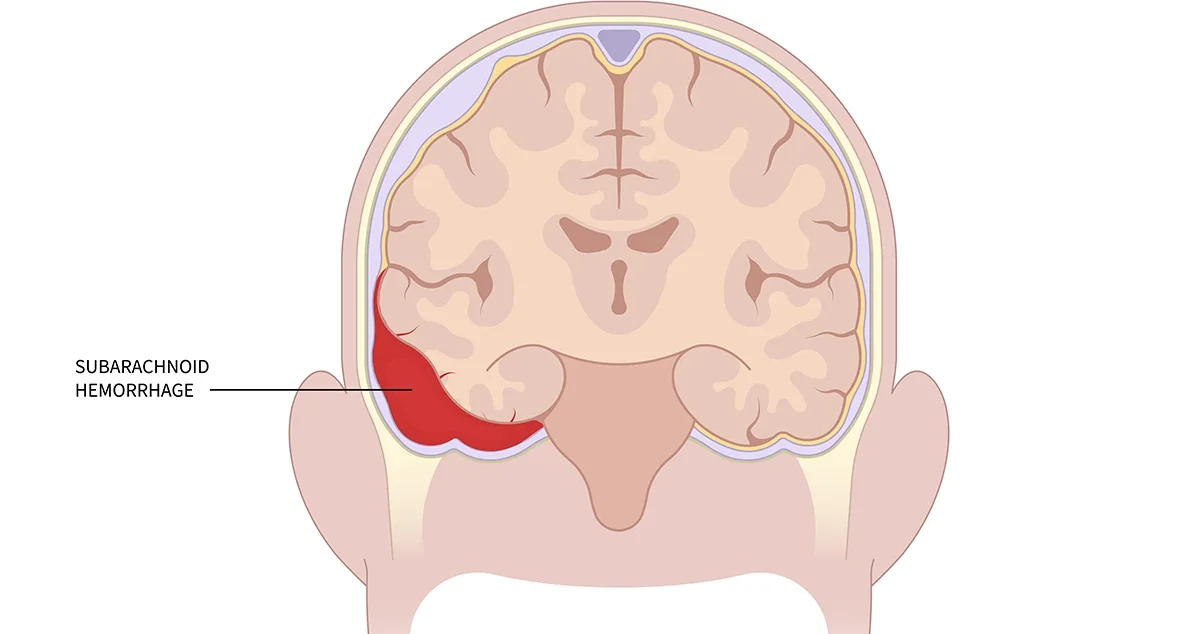
    Sickle Cell Disease

    Sickle Cell Disease

    Sickle Cell Disease/Sickle Cell Anaemia

    Sickle cell disease is an inherited red-blood cell disorder which causes the body to produce abnormally shaped red blood cells.

    Sickle cell disease is inherited as an autosomal recessive trait. Normal Hb A gets replaced with Abnormal Hb S.

    Children with this disorder have atypical haemoglobin  molecules called haemoglobin S which can distort red blood cells into a sickle or crescent shape.

    sickle cell normal and abnormal

    Red blood cells with normal hemoglobin are smooth, disk-shaped, and flexible, like doughnuts without holes. They can move through the blood vessels easily.

    Cells with sickle cell hemoglobin are stiff and sticky. When they lose their oxygen, they form into the shape of a sickle or crescent, like the letter C.

    These cells stick together and can’t easily move through the blood vessels. This can block small blood vessels and the movement of healthy, normal oxygen-carrying blood. The blockage can cause pain

    Classification of sickle cell disease

    Disease is broadly classified into;

    1.  Sickle Cell Anaemia (Homozygous): Are patients whose Red blood cells only contain abnormal beta chains leading to HbSS (SS). These patients are said to have sickle-cell anaemia and they have S+S of Sickle cell disease. Individuals with sickle cell anaemia inherit two copies of the faulty haemoglobin gene, one from each parent. This is denoted as HbSS or SS. Other names: HbSS, SS disease, Haemoglobin S.

    2. Sickle Cell Trait (Heterozygous): Patients whose Red blood cells contain a mixture of normal beta chains of HbA and abnormal beta chains of HbS. Thus patients have both HbA and HbS (HbAS). Individuals with sickle cell trait inherit one copy of the normal haemoglobin gene and one copy of the faulty haemoglobin gene. This is denoted as HbAS. People with sickle cell trait are usually asymptomatic, meaning they don’t experience the typical symptoms of SCD. They are carriers of the faulty gene and can pass it on to their children.

    To understand Homozygous and Heterozygous,

    SCD (Sickle Cell Disease): Think of this as a house built with a faulty instruction manual. The manual has instructions for building strong, healthy red blood cells (the “bricks” of your blood), but the instructions are messed up. This leads to problems with the shape and function of red blood cells, causing sickle cell disease.

    Autosomal: This refers to the chromosomes that determine most of your traits, except for sex (male or female). Imagine these chromosomes like the foundation of your house.

    Heterozygous: You have two copies of each autosomal chromosome, one from each parent. Imagine you received an instruction manual with good instructions from your mom and a manual with a faulty set from your dad. This means you have a good copy and a faulty copy of the gene that causes sickle cell disease. You are a “carrier” of the faulty gene, but you don’t have SCD.

    Homozygous: You received the same instruction manual from both parents. There are two possibilities:

    • Homozygous dominant: You received two good instruction manuals (from both parents). Your house is built strong and healthy, you don’t have SCD.
    • Homozygous recessive: You received two faulty instruction manuals (from both parents). Your house has serious problems, you have SCD.

    Recessive: A recessive gene only causes a disease when you have two faulty copies (like in the homozygous recessive case). Think of it as needing two faulty instruction manuals to build a house with problems.

    Dominant: A dominant gene always causes a disease, even if you only have one faulty copy (like in the heterozygous case). Imagine the faulty instruction manual overrides the good one.

    Summary:

    • SCD: A faulty instruction manual leads to problems with red blood cells.
    • Autosomal: The chromosomes that determine most traits (the house’s foundation).
    • Heterozygous: You have one good and one faulty copy of a gene (one good and one faulty instruction manual).
    • Homozygous: You have two identical copies of a gene (two good or two faulty instruction manuals).
    • Recessive: You need two faulty copies to express the disease (two faulty instruction manuals to build a bad house).
    • Dominant: You only need one faulty copy to express the disease (one faulty instruction manual is enough to build a bad house).
    • Red Blood Cells: These cells carry oxygen throughout the body.
    • Haemoglobin: A protein within red blood cells that binds to oxygen.
    • Haemoglobin Gene: A gene located on chromosome 11 that provides instructions for making haemoglobin.

    Possibility of Sickle cell Disease

    Problems in sickle cell disease begin around 5 to 6 months of age. Sickle-cell disease occurs when a person inherits two abnormal copies of the haemoglobin gene, one from each parent. This gene occurs in chromosome 11.

    Type of GeneNormalTraitDisease
    One Parent with Trait50%50%0%
    Both Parents with Trait25%50%25%
    One Parent with Disease50%50%50%
    Both Parents have Disease0%0%100%

    Cause of Sickle Cell Disease

    • It is caused by a defect in beta chains where a given amino acid is replaced by another (Substitution of valine for glutamic acid) at position 6 of the chain.
    • This change creates abnormal hemoglobin called HbS.

    Sickle cell disease is caused by a genetic mutation in the gene that produces haemoglobin, a protein in red blood cells that carries oxygen.

    • Normal Haemoglobin: Normal haemoglobin is made up of two alpha chains and two beta chains, denoted as HbA.
    • Sickle Cell Haemoglobin: In sickle cell disease, there’s a single point mutation in the beta chain of haemoglobin, replacing a glutamic acid with valine, at position 6 of the chain.This mutated haemoglobin is called HbS.

    Pathophysiology of Sickle Cell Disease.

    Normally each haemoglobin molecule consists of four molecules of haem folate into one molecule of globin.

    But in sickle cell disease this is altered and cells become sickle shaped, glutamine is replaced by valine. The sickle cells elongate under conditions of lower oxygen concentration, Acidosis takes place and dehydration.

    When red blood cells (RBCs) containing homozygous HbS are exposed to deoxygenated conditions, the sickling process begins. This distorts the membranes of red blood cells. The cell becomes easily entangled leading to blood viscosity, vessel occlusion and tissue necrosis.

    These cells fail to return to normal shape when normal oxygen tension is restored. As a result, these rigid blood cells are unable to deform as they pass through narrow capillaries, leading to vessel occlusion and ischemia. The actual anaemia of the illness is caused by haemolysis, the destruction of the red cells, because of their shape.

    Although the bone marrow attempts to compensate by creating new red cells, it does not match the rate of destruction. Healthy red blood cells usually function for 90–120 days, but sickled cells only last 10–20 days. Increased sequestration of Red blood cells in the spleen also cause anaemia

    Clinical Presentation of SCD 

    Children are rarely symptomatic until late in the first years of life related to increased amounts of fetal haemoglobin being cleared from blood. The severity of symptoms can vary from person to person. Sickle-cell disease may lead to various acute and chronic complications, several of which have a high mortality rate.

    • Painful swelling of hands and feet (Hand-foot syndrome): This is a common presentation in children, caused by vaso-occlusive crisis in the small blood vessels of the hands and feet.
    • Pain crisis (sickle crisis): This is a major complication characterized by intense pain due to blocked blood flow to a specific area of the body and can last for days or weeks. Pain in the chest, abdomen, limbs, and joints.
    • Anaemia: A consistent feature, as the lifespan of sickle red blood cells is shortened. This leads to fatigue, weakness, and paleness.
    • Jaundice: Caused by the breakdown of red blood cells, leading to a yellowish discoloration of the skin and eyes.
    • Haemoglobin levels: Usually low, ranging from 6 g/dL to 9 g/dL, indicating the severity of anaemia.
    • Shortness of breath: Caused by complications like pneumonia, acute chest syndrome, and pulmonary hypertension.
    • Fatigue and weakness: A common symptom due to the low oxygen levels caused by anaemia.
    • Priapism: A painful erection lasting for hours or days, caused by blocked blood flow in the penis. If not promptly treated, it can lead to impotence.
    • Abdominal swelling and pain: Often associated with spleen enlargement (splenomegaly) or blockages in the blood vessels supplying the intestines.
    • Unusual headache: May be a sign of stroke, as sickled cells can block blood flow to the brain.
    • Loss of appetite: A common symptom associated with anaemia and pain.
    • Irritability: Can be a response to pain, fatigue, or other symptoms.
    • Bossing of the bones of the skull: Indicates active erythropoiesis (red blood cell production) to compensate for the loss of sickle cells.
    • Intercurrent infections: Patients with sickle cell disease are more susceptible to infections like pneumonia, acute respiratory infections, and malaria, often complicated by severe anaemia.
    • Splenomegaly: Enlarged spleen, common in younger children, but often shrinks in older children due to splenic infarction.
    • Growth retardation: Can occur due to chronic illness, pain, and infections.
    • Stroke: A serious complication resulting from blocked blood flow to the brain, leading to brain damage.

    Newborns: May present with jaundice, delayed cord clamping, and possible failure to thrive.

    Children:

    • Dactylitis (Hand-foot Syndrome): Painful swelling of hands and feet due to vaso-occlusive crisis.
    • Splenomegaly: Often present in young children, but can be absent in older children due to splenic infarction (damage).
    • Delayed growth and development are common due to recurrent infections and pain crises.
    • Delayed puberty: Can be a feature, especially in males.

    Adults:

    • Chronic pain is a defining feature, often with unpredictable patterns.
    • Pulmonary complications: Pulmonary hypertension, acute chest syndrome, and pneumonia are frequent issues.
    • Osteonecrosis: Damage to bone due to lack of blood flow.
    • Avascular necrosis: Can affect bones, especially hips and shoulders.
    • Chronic kidney disease: Can develop over time due to repeated damage to the kidneys.
    Chronic Symptoms:
    • Jaundice: Yellowing of the skin and whites of the eyes due to the breakdown of red blood cells.
    • Gallstones: Formation of stones in the gallbladder, often caused by a build-up of bilirubin from red blood cell breakdown.
    • Progressive kidney impairment: Damaged blood vessels in the kidneys can lead to reduced kidney function over time.
    • Growth retardation: Slower growth of long bones and skeletal deformities, particularly in the spine, can occur.
    • Delayed puberty: The chronic illness can delay the onset of puberty.
    • Chronic painful leg ulcers: Related to chronic anaemia and poor blood flow to the extremities.
    • Decreased lifespan: While advancements in medical care have improved life expectancy, individuals with sickle cell disease still have a shortened lifespan compared to the general population.
    • Altered body structures: These include “bossing” of the skull (abnormal thickening of the skull bones), as well as septic necrosis (bone death due to infection) in the femur (thigh bone) and head of the humerus (upper arm bone).

    Sickle-cell crisis

    Sickle cell crisis is pain that can begin suddenly and lasts several hours to several days.

    The terms “sickle-cell crisis” or “sickling crisis” may be used to describe several independent acute conditions occurring in patients with Sickle Cell Disease. It happens when sickled red blood cells block small blood vessels that carry blood to bones. Children may present with pain in the back, knees, legs, arms, chest or stomach. The pain can be throbbing, sharp, dull or stabbing.

    Types of Sickle Cell Crisis.

    (i)  Vaso-occlusive Crisis: This is the most common form of crisis. Small blood vessels are occluded by the sickle cells causing distal ischemia and infarction, leading to pain, swelling, and inflammation.

    • Symptoms: Intense pain in the bones, joints, abdomen, chest, or head. Other symptoms may include fever, fatigue, and shortness of breath.
    • Extremities.  Bone destruction leading to osteoporosis or ischaemic necrosis.
    • Foot and hand syndrome due to aseptic infarction of metacarpals and metatarsals causing swelling and pains often this is seen in infants and toddlers.
    • Triggers: Dehydration, infection, cold weather, high altitude, and strenuous physical activity.
    • Treatment: Pain management with analgesics, intravenous fluids, and blood transfusions in severe cases.

    (ii)  Splenic sequestration Crisis:  Large amounts of blood become pooled to the spleen, leading to a decrease in blood volume and blood pressure. The spleen becomes massively enlarged.

    • Symptoms: Abdominal pain, swelling, fever, and shock. Great decrease in Red blood cells mass occurs within hours. Signs of circulatory collapse develop rapidly.
    • This is the most frequent cause of death in infants with sickle cell disease.
    • Treatment: Immediate medical attention with intravenous fluids, blood transfusions, and sometimes splenectomy.

    (iii) Aplastic Crisis:  The bone marrow ceases to produce RBCs. A sudden drop in red blood cell production, leading to severe anaemia and worsening of symptoms. There will be low blood cell circulation in blood hence anaemia.

    • Cause: Usually triggered by viral infections like parvovirus B19. Folic acid deficiency and Ingestion of bone marrow toxins (eg, phenylbutazone).
    • Symptoms: Fatigue, weakness, pallor, and shortness of breath.
    • Treatment: Blood transfusions to increase red blood cell count.

    (iv) Haemolytic CrisisHemolytic crisis occurs when large numbers of red blood cells are destroyed over a short time. The loss of red blood cells occurs much faster than the body can produce new red blood cells.

    • Cause: Often triggered by infections.
    • Symptoms: Fatigue, pallor, jaundice, and dark urine.
    • Treatment: Blood transfusions and treatment of underlying infections.

    Causes of hemolysis include:

    • A lack of certain proteins inside red blood cells
    • Autoimmune diseases
    • Certain infections
    • Defects in the haemoglobin molecules inside red blood cells
    • Defects of the proteins that make up the internal framework of red blood cells
    • Side effects of certain medicines
    • Reactions to blood transfusions.

    (v)  Acute chest syndrome. This occurs in the chest, when sickled red blood cells block blood flow to the lungs, leading to inflammation and damage. This can be life-threatening. It often occurs suddenly, when the body is under stress from infection, fever, or dehydration. 

    • Symptoms: Chest pain, fever, shortness of breath, cough, and rapid breathing.
    • Treatment: Oxygen therapy, antibiotics, pain management, and sometimes mechanical ventilation.

    Precipitating Factors of Sickle Cell Crisis

    Sickle cell crises are painful episodes that occur when sickle red blood cells block blood flow in the body. These crises can be triggered by various factors, including:

    Environmental and Physiological Factors:

    • Dehydration: Lack of fluids can thicken the blood, making it harder for sickle cells to flow through small blood vessels.
    • Infection: Infections can increase the body’s demand for oxygen, putting stress on already compromised red blood cells.
    • Trauma: Injury, including even minor cuts or bruises, can lead to localized blood clotting and trigger a crisis.
    • Extreme Temperature Fluctuations: Both extreme heat and cold can constrict blood vessels and lead to blockage.
    • High Altitude: The thinner air at high altitudes can lead to oxygen deprivation, increasing the likelihood of sickling.
    • Hypoxia: Low oxygen levels in the blood, from any cause, can trigger sickling.
    • Acidosis: Increased acidity in the blood can also contribute to sickling.

    Lifestyle and Emotional Factors:

    • Strenuous Physical Exercise: Intense physical activity can increase the body’s demand for oxygen and contribute to sickling.
    • Extreme Fatigue: Prolonged exhaustion weakens the body’s ability to fight off crises.
    • Extreme Exertion: Similar to intense exercise, any extreme physical effort can trigger a crisis.
    • Emotional Stress: Stress hormones can constrict blood vessels and increase the likelihood of sickling.

    Other Contributing Factors:

    • Pregnancy: The increased blood volume and hormonal changes during pregnancy can make women more susceptible to crises.
    • Asthma: The inflammatory response in asthma can trigger sickle cell crises.
    • Anxiety: Similar to stress, anxiety can constrict blood vessels and increase the risk of a crisis.
    • Dehydration.
    • Infection.
    • Trauma.
    • Strainous Physical exercises.
    • Extreme fatigue.
    • Extreme exertion
    • Severe cold that constricts peripheral vessels
    • Fever Excessive exercise
    • Hypoxia.
    • Acidosis.
    • Extreme temperature
    • High attitude
    • Emotional stress
    • Pregnancy
    • Asthma
    • Anxiety
    • Abrupt changes in temperature
    Diagnosis and Investigations sickle (2) (1)

    Diagnosis and Investigations:

    • Family history: A strong family history of sickle cell disease is a big indicator.
    • Full blood count and peripheral film: The blood test may show leukocytosis (increased white blood cell count) due to bacterial infection and reveal the presence of sickle cells.
    • Haemoglobin estimation: Will reveals a low haemoglobin level (6-8 g/dL) with a high reticulocyte count (10-20%), indicating the body’s attempt to compensate for the loss of red blood cells.
    • Sickling test: This simple test, done by finger or heel prick, observes a drop of blood under a microscope after removing oxygen. Sickle-shaped cells are indicative of the disease. However, it doesn’t distinguish between the trait and the disease or other sickle haemoglobin opathies.
    • Haemoglobin electrophoresis: This more definitive test involves separating different types of haemoglobin through an electric current. It identifies the presence and amount of HbS (sickle haemoglobin), providing a definitive diagnosis for both the trait and the disease.
    • Sickledex test: A rapid screening test for detecting the presence of HbS in the blood.
    • Peripheral blood smear: Examines a blood sample under a microscope to identify sickle cells and reticulocytes.
    • Urinalysis: Analyzes urine for signs of kidney damage.
    • Liver and renal function tests: Assess the function of the liver and kidneys.
    • Chest radiography: Used to diagnose Acute Chest Syndrome.
    • Abdominal ultrasound: Can help detect problems in the abdomen, such as a mesenteric crisis (blockage of blood vessels in the intestines).
    • Sickling test (emergency screening): Can be performed before surgery to identify individuals with sickle cell disease.
    Differential Diagnosis
    • Acute anaemia
    • Carotid-Cavernous Fistula (CCF)
    • haemoglobin  C Disease
    • Hemolytic Anaemia
    • Osteomyelitis in Emergency Medicine
    • Pulmonary Embolism (PE)
    • Rheumatoid Arthritis Hand Imaging
    • Septic Arthritis

    Management of Sickle Cell Disease.

    Management is according to the type of crisis .

    Aims of Management

    • Avoiding pain episodes.
    • Relieving symptoms.
    • Preventing complications.
    1. Acute painful attacks require supportive therapy with intravenous fluids, oxygen, antibiotics and adequate analgesia.
    2. Crises can be extremely painful and usually require narcotic analgesia. Morphine is the drug of choice. Milder pain can sometimes be relieved by codeine, paracetamol and NSAIDs.
    3. Oxygen Therapy: Supplementary oxygen is provided to address hypoxia and alleviate symptoms.
    4. Prophylaxis is with penicillin twice daily, up to 5 years of age due to the immature immune system that makes them more prone to early childhood illnesses is recommended and vaccination with polyvalent pneumococcal and Haemophilus influenzae type B vaccine .
    5. Hydration: Drinking plenty of fluids is essential to prevent dehydration and improve blood flow.
    6. Blood Transfusions: Regular transfusions are used to increase haemoglobin levels and reduce the frequency of crises. Transfusions should be given for heart failure, strokes, acute chest syndrome, acute splenic sequestration and aplastic crises.
    7. Anaemia Transfusions should only be given for clear indications.
    8. Patients with steady state anaemia, those having minor surgery or having painful episodes without complications should not be transfused.
    9. Transfusion and splenectomy may be life-saving for young children with splenic sequestration. A full compatibility screen should always be performed.
    10. Folic acid 5 mg daily for life is recommended.
    11. Hydroxycarbamide (hydroxyurea)starting dose 20 mg/kg is the first drug which has been widely used as therapy for sickle cell anaemia. It acts by increasing Hb F concentrations but the reduction in neutrophils may also help. Hydroxycarbamide has been shown in trials to reduce the episodes of pain, the acute chest syndrome and the need for blood transfusions.
    12. Malaria prevention: Since they are more vulnerable to malaria, because the most common cause of painful crises in malaria countries is infection with malaria. It has therefore been recommended that people with sickle-cell disease living in malarial countries should receive anti-malarial chemoprophylaxis monthly for life i.e sulfadoxine pyrimethamine.
    13. Pain management
    14. Home management
    • Paracetamol 1 g every 8 hours
    • Child: 10-15 mg/kg 6-8 hourly
    • And/or ibuprofen Child: 5-10 mg/kg 8 hourly.
    • Adults 400-600 mg 6-8 hourly.
    • And/or diclofenac 50 mg 8 hourly
    • Children only >9 years and >35 kg: 2 mg/kg in 3 divided doses.
    • If pain not controlled, add:
    • Codeine 30-60 mg every 6 hours (only in patients >12 years).
    • Or tramadol 50-100 mg every 6-8 hours (only in  patients >12 years)
    • Or Oral morphine at 0.2-0.4 mg/kg every 4 hours and re-assess pain level.
    • If pain still not controlled, refer to hospital

    • At the hospital; 

    • Morphine oral: Child and Adult: 0.3-0.6 mg/kg per dose and re-assess

    • Morphine Intravenously.

    • Child: 0.1-0.2 mg/kg per dose

    • Adult: 5-10 mg dose and re-assess

    • Use of laxative: bisacodyl 2.5 mg to 5 mg orally to prevent constipation due to morphine intake.

    Cure

    • The only therapy approved by the FDA that may be able to cure SCD is a bone marrow or stem cell transplant.
    • Bone marrow or stem cell transplants are very risky and can have serious side effects, including death. For the transplant to work, the bone marrow must be a close match. Usually, the best donor is a brother or sister.

     Lifestyle Modifications:

    • Regular Exercise: Moderate exercise, when tolerated, can improve cardiovascular health and reduce the risk of complications.
    • Stress Management: Techniques like relaxation, meditation, and yoga can help manage stress levels and reduce the risk of crises.
    • Healthy Diet: A nutritious diet rich in fruits, vegetables, and whole grains can support overall health.
    • Avoidance of Extreme Temperatures: Extreme heat and cold can trigger crises.
    • Altitude Management: Individuals should avoid high altitudes to minimize the risk of hypoxia.

    Surgery:

    • Bone Marrow Transplant: This is a potential cure, but it is a high-risk procedure with limited availability.
    • Other Surgical Interventions: Surgical procedures may be necessary to correct bone deformities or treat complications like leg ulcers.

    Support and Counseling:

    • Genetic Counselling: Provides information about the inheritance of sickle cell disease and family planning options.
    • Psychosocial Support: Provides emotional and practical support to help individuals cope with the challenges of living with sickle cell disease.
    • Patient Education: Empowers individuals to manage their condition effectively by providing information on symptoms, triggers, and treatment options.

    Prevention of Sickle cell crisis.

    1. Hydration:

    • Drink plenty of water: Staying well-hydrated is crucial for maintaining adequate blood flow and preventing sickling.
    • Carry a water bottle and sip water regularly throughout the day.
    • Avoid dehydration, especially during exercise, hot weather, or travel.

    2. Temperature Management:

    • Avoid extreme temperatures: Both excessive heat and cold can trigger sickle cell crises.
    • Stay in air-conditioned environments during hot weather.
    • Dress in layers to adjust to temperature changes.
    • Be aware of the risk of hypothermia during cold weather.

    3. Altitude Management:

    • Avoid high altitudes: Low oxygen levels at high altitudes can worsen sickle cell symptoms.

    4. Oxygen Management:

    • Avoid situations with low oxygen levels: Avoid intense physical exertion, especially in hot, humid, or high-altitude environments.
    • Use proper breathing techniques during exercise.

    5. Infection Prevention:

    • Vaccination: Receive all recommended vaccinations, including the pneumococcal vaccine, to protect against infections.
    • Wash your hands frequently with soap and water.
    • Use hand sanitizer when soap and water are unavailable.
    • Avoid close contact with sick individuals.
    • Practice safe food handling and preparation to prevent foodborne illness.

    6. Routine Medical Care:

    • Yearly visits to an eye doctor: Regular eye exams are crucial to monitor for signs of retinopathy, a serious complication of sickle cell disease.
    • Regular checkups with a haematologist: Follow your doctor’s recommendations for regular blood tests and monitoring.
    • Early intervention: Seek medical attention promptly for any unusual symptoms or signs of a sickle cell crisis.

    7. Stress Management:

    • Practice stress-reducing techniques: Stress can trigger sickle cell crises.
    • Engage in activities you enjoy, like meditation, yoga, or spending time in nature.
    • Seek counselling or therapy if you’re struggling to manage stress.

    8. Lifestyle Modifications:

    • Maintain a healthy weight: Obesity can worsen sickle cell symptoms.
    • Eat a balanced diet rich in fruits, vegetables, and whole grains.
    • Avoid smoking and excessive alcohol consumption.
    • Get regular exercise, but consult your doctor about safe levels.

    9. Advocacy and Support:

    • Join a sickle cell support group: Connect with other individuals living with sickle cell disease and share experiences and resources.
    Nursing Diagnosis
    1. Acute pain related to tissue hypoxia due to agglutination of sickled cells within blood vessels evidenced by patient verbalization.
    2. Risk for infection related to lowered immunity.
    3. Impaired Gas Exchange related to decreased oxygen-carrying capacity of the blood, reduced RBC life span/premature destruction, abnormal RBC structure; sensitivity to low oxygen tension (strenuous exercise, increase in altitude) as evidenced by difficulty in breathing.
    4. Ineffective Tissue Perfusion related to vaso-occlusive nature of sickling as evidenced by changes in vital signs: diminished peripheral pulses/capillary refill, general pallor or decreased mentation, restlessness.
    5. Risk for Deficient Fluid Volume related to increased fluid needs, e.g., hypermetabolic state/fever, inflammatory processes.
    6. Acute Pain related to Intravascular sickling with localized stasis, occlusion, and infarction/necrosis as evidenced by  generalized pain, described as throbbing,  or severe ; affecting peripheral extremities, bones, joints, back, abdomen, or head (headaches)
    7. Risk for Impaired Skin Integrity related to impaired circulation (venous stasis and vaso-occlusion)

    Prevention Of Sickle Cell Disease

    • Genetic counselling is important to prevent passing on the trait or disease to children for those wanting to have them.
    • Premarital counselling is encouraged. Early recognition/screening of children with low Hb.

    Complications of Sickle Cell anaemia

    1. Stroke. Issues in circulation will result to blockages, therefore predisposing the patient to develop thrombolytic strokes
    2. Acute chest syndrome. This is characterized by chest pain, fever and difficulty breathing requiring emergency medical treatment
    3. Pulmonary hypertension. This type of anaemia can cause build-up of unnecessary lung pressure due to problems with circulation as a result of erythrocyte clumping
    4. Organ damage. Due to the chronic inability of the red blood cells to provide essential oxygen for normal organ function, patients with sickle cell anaemia may develop organ failure, which can be fatal.
    5. Blindness. One of the potential complications of having abnormal red blood cells circulating in the body is damage to smaller blood vessels, particularly the eye. This in turn will cause eye damage and eventually blindness.
    6. Leg ulcers. Poor wound healing and rampant skin breakdown can be observed for patients suffering from sickle cell anaemia.
    7. Gallstones. The build of bilirubin caused by the metabolism of the abnormal erythrocytes will result to gall stones that will block the flow of bile.
    8. Priapism. This is a condition wherein men with Sickle cell anaemia will present with painful and long-lasting erections due to the blockages of the tiny blood vessels of the penis.
    9. Pregnancy complications. Sickle cell anaemia increases the risk of high blood pressure and the presence of clots that will interfere with the normal development of the fetus.

    NURSING CARE PLAN FOR A PATIENT WITH SICKLE CELL CRISIS

    Assessment

    Diagnosis

    Goals/Expected Outcomes

    Intervention

    Rationale

    Evaluation

    Cyanosis, breathlessness at a rate of 28 breaths/min, restlessness, and SpO2 of 80%.

    Impaired gaseous exchange related to increased viscosity of blood evidenced by cyanosis, breathlessness, restlessness, and SpO2 of 80%.

    – Establish adequate gaseous exchange within 2 hours.

    – Improve SpO2 by 10% within the first 30 minutes.

    – Establish a normal breathing pattern without assisted respiration within 1 hour.

    – Restore normal skin color in 30 minutes.

    – Establish an intravenous line and administer fluids (normal saline 500 mL every 6 hours for 24 hours).

    – Encourage fluid intake by mouth.

    – Start a fluid input and output chart.

    – Assess the need for more fluids after 24 hours.

    – Take vital signs every 30 minutes for 2 hours, paying attention to breathing and SpO2, then adjust according to findings.

    – Administer oxygen 3 L/min for 1 hour using a face mask.

    – Establishing IV access and administering fluids help to reduce blood viscosity and improve circulation.

    – Encouraging oral fluid intake promotes hydration.

    – Fluid balance chart helps to monitor fluid status.

    – Regular assessment ensures timely adjustments in fluid therapy.

    – Oxygen therapy increases oxygen saturation in the blood.

    – Patient is resting.

    – Normal breathing pattern restored, rate 20 breaths/min.

    – SpO2 improved to 98% on room air.

    – Normal skin colour restored, lips look pink.

    Patient verbalizing throbbing pain in the legs and joints, rating score of 8 on the pain scale.

    Acute pain related to intravascular sickling with localized stasis evidenced by patient verbalizing throbbing pain in the legs and joints.

    – Relieve pain within 4 hours.

    – Improve venous patency

    –  Improve circulatory flow.

    – Administer analgesia (pethidine 50 mg single dose, then tramadol 50 mg every 8 hours for 3 days as prescribed and document).

    – Continue intravenous fluids as above and monitor pain hourly.

    – Analgesics provide comfort and relieve restlessness.

    – IV fluids maintain normal circulatory flow.

    – Patient reports pain relief after 4 hours, score 2 on the pain scale.

    Reduced haemoglobin  levels of 5 g/L according to laboratory results, swelling of the lower limbs and joints.

    Altered tissue perfusion related to decreased red blood cells as evidenced by reduced haemoglobin levels of 5 g/L, swelling of the lower limbs and joints.

    – Restore normal tissue perfusion within 24 hours.

    – Establish normal tissue perfusion.

    – Transfuse with units of packed cells 5 mL/kg/h as prescribed.

    – Continue with fluid balance chart.

    – Apply a warm compress to the affected areas.

    – Elevate the affected limbs.

    – Blood transfusion increases haemoglobin levels.

    – Fluid balance chart monitors fluid status.

    – Warm compresses promote vasodilation and circulation to hypoxic areas.

    – Elevation reduces swelling and promotes venous return.

    – Increased haemoglobin  levels of 7 g/dL as seen in post-transfusion lab report.

    – Swelling has subsided, and the patient is able to move the limb.

    Fever, hypermetabolic state, dehydration symptoms (dry mucous membranes, poor skin turgor).

    Risk for fluid volume deficit related to increased fluid needs due to hypermetabolic state or fever.

    – Maintain adequate hydration.

    – Prevent fluid volume deficit.

    – Monitor vital signs and fluid status regularly.

    – Encourage oral fluid intake and administer IV fluids as needed.

    – Educate the patient on the importance of fluid intake.

    – Regular monitoring detects early signs of fluid deficit.

    – Ensuring adequate hydration prevents complications.

    – Fluid balance is maintained, and signs of dehydration are absent.

    Presence of venous stasis, vaso-occlusion, decreased mobility, and risk of skin breakdown.

    Risk for impaired skin integrity related to impaired circulation due to venous stasis and vaso-occlusion, and decreased mobility.

    – Prevent skin breakdown.

    – Maintain skin integrity.

    – Assess skin regularly for signs of breakdown.

    – Reposition the patient every 2 hours.

    – Provide skin care and keep the skin clean and dry.

    – Use pressure-relieving devices as needed.

    – Regular assessment and repositioning prevent pressure ulcers.

    – Good skin care promotes skin integrity.

    – Skin remains intact without signs of breakdown.


    Quick Quiz

    Sicklecell Disease Quiz

    Paediatrics - mobile-friendly and focused practice.

    Privacy: Your details are used only for quiz tracking and certificates.

    Sickle Cell Disease Read More »
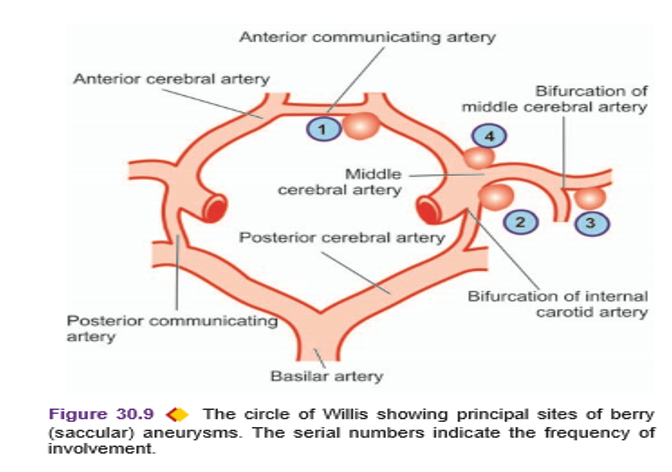
    Self study questions for nurses and midwives

    Self Study Question For Nurses and Midwives

    PREPARATORY QUESTIONS FOR END OF SEMESTER EXAMINATIONS

    SURGERY

    1a) define the term epistaxis

    b) What are the causes of epistaxis?

    c) Write down the management of a patient presenting with epistaxis

    2a) define a sty

    b) What are the causes of a sty?

    c) Outline the signs and symptoms of a sty

    3 An adult has been admitted to a surgical ward with difficulty in breathing, he requires urgent tracheostomy.

    a) List the indications of tracheostomy

    b) Describe the post-operative management of this patient till discharge

    c) Outline the complications that are likely to occur

    d) Formulate five actual nursing diagnoses and four potential diagnoses from this patient with tracheostomy

    4. Mrs Akello 38years old has presented with nasal polyps and she is to undergo polypectomy

    a) List the causes of nasal polyps

    b) Outline the signs and symptoms of nasal polyps

    c) Give the specific pre and post-operative management of this patient

    d) List four complications of nasal polyps

    5. a) Define tonsillitis

    b) List 6 symptoms and signs of a patient with tonsillitis

    c) Give the specific post-operative management for a patient who has undergone tonsillectomy

    6. Mrs Nabukeera was admitted on a surgical with a diagnosis of adenitis .She is to undergo adenoidectomy

    a) Define adenitis

    b) List the signs and symptoms of adenitis

    c) Describe the specific post-operative management you would give to her till discharge

    7. a) Define burns

    b) What are the causes of burns?

    c) How can burns be classified

    d )Mr. KK has sustained burns on the neck and chest

    >calculate the percentage of the area burnt

    >what specific management do you give to Mr. KK in the first 72hrs of admission

    >give five actual nursing diagnoses Mr KK will have due to the burns

    8a) Define the term electrolyte imbalance

    b) Give the causes of electrolyte imbalance

    c) List the signs and symptoms of electrolyte imbalance

    d) Mention the types of electrolyte imbalance in the body

    e) How can you manage patient with electrolyte imbalance

    9a) Define the term gangrene

    b) What are the causes of gangrene?

    c) Write down the types of gangrene

    d) Mention the signs and symptoms of different types of gangrene

    e) Describe the specific management which is given to this patient with gas gangrene

    10a) Define the term shock

    b) Write down the types/classification of shock

    c) State the clinical features of shock

    d) Write down all possible complications of shock

    e) How can a health worker prevent surgical shock?

    11a) Outline the classifications of wounds

    b) Give the factors that delay wound healing

    c) State five complications of wounds

    d) What advice do you give to a patient about wound care at home who is due for discharge?

    e) Explain the process of wound healing

    12a) Define the term a fracture

    b) Mention the different types of fracture

    c) Describe the management of a closed fracture of a femur

    d) List any 6 complications of a fracture

    13a) Define the term inflammation

    b) List the signs and symptoms of inflammation

    c) Describe the process of inflammation

    d) Explain the specific management of a 12yr old patient with inflammation on the lower limb

    13A 28year old male was admitted on a surgical ward with a diagnosis of tetanus

    a) List five cardinal signs and symptoms this patient would present with

    b) Explain the specific nursing management you would give to this from admission to discharge

    c) Formulate four actual and two potential nursing diagnoses from this patient’s condition

    14a) Define the term immunity

    b)Classify immunity

    c) Explain the factors that affect an individual’s immune system

    15a) Define hemorrhage

    b) Explain the different types of hemorrhage

    c) Explain the mechanism of hemostasis

    d) Outline the specific management of a patient with severe bleeding on the left lower leg

    16a)What is blood transfusion?

    b) Describe five complications that may occur due to blood transfusion

    c) What would cause failure of of a blood drip to run during blood transfusion

    d) Explain the nurse’s responsibility before , during, and after blood transfusion

    17a) Define a cataract

    b) outline the cardinal signs of a cataract

    c)Describe the management of Mr Moses a 40yr old presented to your OPD department with a cataract using a nursing process

    d)list the likely complications of a cataract

    MENTAL HEALTH

    18. Define the following terms

    a)suicide

    b) Suicidal ideation

    c) Attempted suicide

    d) par suicide

    e) paradoxical suicide

    19a) outline the common psychiatric conditions associated with suicidal ideation

    b) Explain the common factors contributing to suicide in the community

    c) Mention the impact of suicide to the family and the community

    d) Describe the management of a patient who intends to commit suicide

    e) Explain the assessment you would carry out on a patient with suicidal ideation

    20a) Define PTSD

    b) Outline four signs and symptoms of a patient with PTSD

    c) Manage an 11yr old girl who presented with PTSD after rape

    21a) Define the term delirium tremens

    b) Identify the causes of delirium tremens

    C) How can you manage the patient with delirium tremens?

    d) Formulate 5 potential nursing diagnoses for a patient with delirium tremens

    22. Madam EKEB a 26yr old is very aggressive on the ward that she cares away fellow patients

    a) Differentiate between aggression and violence

    b) What management do you give to madam EKEB who presents with severe aggression on the ward?

    23a) what is a psychiatric emergency?

    b) List 10 common psychiatric emergencies

    c) Which admission procedure would you follow when admitting a patient presenting with any of the psychiatric emergencies

    23a) Explain standards of care in psychiatry

    b) Who is a class B criminal lunatic?

    c) Mention all the orders used to admit mentally ill patient

    d) Write down and explain all the sections used in discharging a mentally ill patient

    e) Outline the rights of a mentally ill patient

    24. A 30yr old patient has presented in a psychiatric ward with status epilepticus

    a) Define status epilepticus

    b) Manage the patient who presents with status epilepticus on a ward

    c) Formulate four potential and 2actual nursing diagnoses for a patient with status epilepticus

    25aDefine mental retardation

    b) Classify mental retardation

    c) Explain 8 causes of mental retardation

    d) What advice do you give to a family with a mentally retarded child?

    26. ADHD is one of the common psychiatric conditions in children

    a) Outline 6 signs and symptoms of ADHD

    b) Manage an 11yr old boy with ADHD

    c) What specific advice do you give to a family with a child having ADHD?

    27a) Define autism

    b) Explain the common features of autism

    c) Describe the management of the above condition

    28. Depression is one of the common psychiatric conditions

    a) Define depression

    b) Outline the specific management of a patient with severe depression on a psychiatric ward

    c) Make 4 priority nursing diagnoses for a patient with severe depression

    COMMUNITY HEALTH

    29. a) Define PHC

    b) Mention the principles of PHC

    c) Outline components /elements of PHC

    d) What strategies are used to achieve PHC activities in a given community?

    30a) What is community assessment?

    b) Explain how you would identify any health problems in a given community

    c) Outline 9 important information you would find out in a given home during assessment

    31a) Define a home visit

    b) Explain how you apply a nursing process during a home visit

    c) Outline the merits and demerits of a home visit

    32a) Define vital statistics in health

    b) Explain the importance of vital statistics in health

    c) Outline 6 key vital statistics used to determine the health status of a community or country

    33a) Explain the relationship between PHC and CBHC

    b) Explain the role of a community nurse/midwife in implementation and achievement of any 4 of the PHC principles

    c) Outline the advantages of PHC over other specialized medical services

    34a) Define community mobilization

    b) Describe how you would mobilize a community towards implementation of a health education program

    35a) Define school health

    b) Explain the importance of a school health program

    c) Explain the role of a nurse in the provision of a school health program

    d) Outline the components of school health services

    36a) Explain the role of a community in PHC services

    b) Give 8 advantages of community participation in PHC services

    c) Explain the obstacles to effective community participation in PHC programs

    37a) Define community diagnosis

    b) Discuss why community diagnosis is important

    c) Explain the steps in conducting community diagnosis

    38Health promotion are actions related to lifestyles and choices that maintain/enhance population health

    a) Outline any 5 health promotion interventions you would implement in a given a community

    b) Explain 5major steps in community mobilization

    39. Describe the different levels of disease prevention

    40. Appropriate technology is one of the elements of PHC

    a) How is appropriate technology expressed in implementation of PHC services?

    b) Explain the advantages and disadvantages of appropriate technology as an element

    41. a) Define the term epidemics

    b) Explain the factors that contribute to the causes of epidemics

    c) What is the role of a nurse in the management of an epidemic in the community?

    42a) Define community health and community based health care

    b) State the characteristics of CBHC

    c) Describe how you would enter a village in Mityana to implement a community health activity

    TROPICAL MEDICINE

    43a) Define schistomiasis

    b) Explain the different types of schistosomiasis

    c )Give the clinical manifestations of schistosoma mansoni

    d) Describe the lifecycle of schistosomiasis haematobium using a well labelled diagram

    e) Outline the preventive measures of all types of schistosomiasis

    44The current disease burden in Uganda is attributed to communicable diseases

    a) Describe the modes of transmission of communicable diseases in general

    b) Describe the methods/approaches used to prevent and control communicable diseases in the community

    c) Explain the types of water diseases and their examples

    45a) Define diarrhoea

    b) Outline the causes of diarrhoea in Uganda

    c) Discuss the drugs used in the management of diarrhoea in children

    d) Formulate 5 priority nursing diagnoses of this patient

    46a) Define measles

    b) Outline the signs and symptoms of measles basing on the stages

    c) Describe the management of a12yr old child presenting with measles from admission to discharge

    d) List the likely complications of measles

    47. Malaria is one of the communicable diseases affecting most communities of Uganda

    a) Classify malaria

    b) Outline the cardinal signs of complicated malaria

    c) Describe the lifecycle of malaria in both man and the mosquito with the aid of diagrams

    d) How can different communities prevent the spread of malaria?

    e) Make 5 actual and 3 potential diagnoses of malaria

    48a) Describe the life cycle of ackylostomiasis with the aid of diagrams

    b) Explain the preventive measures of hook worm infestation

    c) List the likely complications of neglected worms

    49a) Ebola is one of the hemorrhagic fevers devastating some communities and countries due to known and unknown reasons

    a) Define hemorrhagic fevers

    b) List the different hemorrhagic fevers

    c) Outline the different causes and predisposing factors to hemorrhagic fevers

    d) Describe the management of Mr. X presented to your hospital suspected to be an Ebola patient

    50a) Define rabies

    b) Describe the management of rabbis both at home and in the hospital

    c) Explain the complications of rabies

    51a) Define bacilliary dysentery

    b) State the differences between bacilliary dysentery and amoebic dysentery

    c) Describe the specific management of a 3yr old child with bacilliary dysentery from admission to discharge

    52a) Define typhoid fever

    b) Explain the cardinal signs and symptoms of typhoid fever

    c) Describe the important information you would give to the community concerning prevention of typhoid fever

    53a) Define trachoma

    b) Outline the signs and symptoms of trachoma

    c) Explain the management of 23yr female presenting with trachoma

    d) List the complication

    54. Samuel a 30yr old peasant has been presented to the OPD with all the features of tetanus

    a) Outline the clinical features of tetanus

    b) Describe the management from admission to discharge

    c) List the complications of tetanus

    MIDWIFERY 1 AND 2 AND OBSTETRIC ANATOMY

    55. List the 5 medications used in antenatal and discuss them under

    a) Dose

    b) Indication

    c) Side effects

    56a) Outline the obstetrical causes of anemia in pregnancy

    b) List the five causes of hemolytic anemia

    c) Describe the management of Mrs. mucosal who presents at 36weeks with severe anemia

    57a) Define a cervix

    b) With the aid of a diagram, describe the structure of the cervix

    c) Outline the 6 functions of the cervix

    58a) Define the term good antenatal care

    b) Give the indications of referring a mother to a doctor during this period

    c) How would you manage a mother who comes with lower back pain in antenatal at 32weeks?

    59a) Define normal puerperium

    b) Describe the management of a mother who has had normal delivery up to discharge

    c) List the complication that may occur during this period

    60a) Outline the symptoms of pregnancy

    61a) Explain the characteristics of normal uterine action during first stage of Labour

    b) What is the management of a gravid 3 para 2 mother at term who presents to hospital with history of precipitate Labour on the previous pregnancies?

    62a) Describe a vagina

    b) What information is got on vaginal examination during labor?

    c) Mention four contractions of vaginal examination giving reasons for each

    d) List the complications of vaginal examination

    63a) Define intrauterine fetal death

    b) Outline the causes of IUFD

    c) How is the diagnosis of IUFD made?

    d) What is the management of IUFD in the hospital?

    64a) Describe the pelvic floor

    b) Outline injuries that can occur to the pelvic floor during Labour

    c) Explain how the knowledge of fetal skull can help you as a midwife prevent perineal tears

    65a) Describe the fetal skull

    b) How is fetal wellbeing monitored during pregnancy?

    C) List the indications of ultrasound scan in late pregnancy

    66a) Describe a non-pregnant uterus

    b) Describe the changes that take place in this organ during pueperium

    c) List the likely complication in the first stage of labor

    67a) what is the effect of DM on pregnancy?

    68a) how does pregnancy affect DM?

    b) How would you care for a diabetic mother who has had a caesarean section in the first 48hours of the operation

    69a) Describe the umbilical cord

    b) Describe the different abnormalities of the cord

    70. Malaria is of the conditions contributing affecting pregnancy and contributing factor to increased maternal mortality and morbidity

    a) Explain why pregnant women are more susceptible to malaria

    b)Describe the a primigravida who presents to your maternity center at 34 weeks with severe malaria

    c) Outline the likely complications of malaria on pregnancy

    71. Essential hypertension is one of the hypertensive disorders experienced by pregnant women

    a) Define essential hypertension

    b) Classify hypertensive disorders in pregnancy

    c) Describe the management of Mrs Nangobi a G4P2+1 presenting in antenatal clinic at 32weeks with a diagnosis of essential hypertension

    d) How does hypertension affect pregnancy?

    72a) outline the signs and symptoms of first stage of Labour

    b) Describe the management of a young primigravida in first stage of Labour

    c) List the complications likely to occur during this stage of Labour

    73a) Define hyperemesis gravidarum

    b) Outline the causes of hyperemesis gravidarum

    c) Describe the management of G2P1+0 presenting to your maternity center with hyperemesis gravidarum at 28 weeks of gestation

    d) Explain the likely complications of this condition

    74a) what is preeclampsia

    b) Outline the signs and symptoms of preeclampsia

    c) What are the predisposing factors of this condition?

    d) Outline the nursing of a mother with severe preeclampsia

    e) List the complication of severe preeclampsia

    75a) Describe the placenta at term

    b)Explain the functions of the placenta

    c) Outline the abnormalities that may be found on the placenta

    76a) With the aid of a diagram, describe the structure of the female breast

    b) Explain the physiology of lactation

    c) Explain the factors that promote successful lactation

    77a) Define labor

    b) Explain the physiology of the first stage of Labour

    c) Describe the management of a mother in the second stage of Labour admitted in the hospital

    78a) Outline the changes in the cervix during the first stage of labor

    b) What information is found on the partograph?

    c) A G2P1+0 mother came to a health center in normal labor , what may make you refer?

    79. Most women find it helpful to get further information and support in their own homes.

    a) Give 5 advantages of following up post-partum mothers

    b) Explain postpartum maternal assessment you would carry out during domiciliary care

    c) List the problems that you would identify during domiciliary care

    80a) Describe 6 factors that influence the length of second stage of labor

    b) Explain 3 phases used in conducting 2nd stage of labor

    c) Give immediate assessment of the baby after 2nd stage of labor

    81a) Mention factors that aid in involution of the uterus

    b) Explain how you assess and document uterine involution immediately after delivery to 10days postpartum

    c) Give five complications of sub involution of the uterus

    82a) Explain the antenatal appointment schedules

    b) Give 6 barriers to adherence to goal oriented antenatal visits

    c) Identify 5 complications a pregnant woman is likely to get if no antenatal is attended

    83a) Describe the structure of the ovary

    b) List the functions of the ovary

    c) Describe the menstrual cycle

    MEDICINE I AND 111

    84. Mr. KIBULA known hypertensive has been brought to hospital with suggestive features of hypertensive crisis.

    a) Mention 8 clinical features of hypertension

    b) List 4 causes of HTN and predisposing factors

    c) Explain the specific Nursing Care you will give to Mr. KIBULA from the time of admission to discharge.

    85. Write short notes on the following (definition, causes, signs and symptoms and complications).

    a) Hydrocele

    b) Hodgkin’s disease

    c) Ankylosing spondylitis

    86 a) Define Paget’s disease/Osteitus, deformans?

    b) Explain the pathophysiology and etiology of Paget’s disease

    c) Describe the specific nursing care you would give to Mr. Muwonge with Paget’s disease

    87. Hepatitis B morbidity and mortality is much higher today than before.

    a) What are the factors, contributing to the high prevalence of hepatitis B in the communities

    b) How does a patient with hep.B present?

    c) Give five priority nursing diagnoses for a patient with Hep B infection.

    d) Describe the specific nursing management you would give to a patient with hep B.

    e) Mention the complications of hep B.

    f) Suggest ways how we can prevent hep B infection in the community

    88. Define myocardial infarction. List the clinical features of myocardial infarction.

    Explain the specific Nursing care given to a patient with myocardial infarction within the first 24Hrs of admission.

    89. An adult male patient has presented to OPD with features of pulmonary tuberculosis

    a) Outline five cardinal signs and symptoms of pulmonary tuberculosis.

    b) List five specific investigations that can be done to confirm pulmonary tuberculosis.

    c) Explain the specific nursing care given to this patient from the time of admission until discharge.

    90. Mrs. A, a female patient has been admitted on a medical ward with suspected bronchial pneumonia,

    a) Outline the clinical features of bronchial pneumonia

    b) Describe the specific nursing management you would give to Mrs. X with in the first 72HRS of admission.

    c) Explain five likely complications Mrs. X is likely to get following this condition.

    91. Mr. Lusoke, a 62 yrs. old male is presented at the OPD with features of congestive cardiac failure

    a) Outline the signs and symptoms of congestive cardiac failure.

    b) Mention the causes of congestive cardiac failure.

    c) Describe the specific nursing care / management you will give to Mr. Lusoke from time of admission to discharge.

    92. Outline the signs and symptoms of Parkinson’s disease.

    b) Mention the causes and predisposing factors to Parkinson’s disease.

    c) Describe the specific Nursing management given to a patient with Parkinson’s disease.

    93. Mr. Okello a 28yrs old male presents at OPD with clinical features of urinary tract infection and was admitted.

    a) List 5 causes and 6 signs and symptoms of urinary tract infection.

    b) Describe the specific nursing care you would give to Mr.Okello within the first 48 hours of admission.

    c) Give the measures that can be taken to prevent urinary tract infections.

    94 Define Addison’s disease?

    b) Outline the causes and risk factions that leads to Addison’s disease.

    c) Using the Nursing process, describe the management of a patient with Addison’s disease.

    PEDIATRICS 1 AND 11

    95. Define the term Apgar score

    a) Outline 10 characteristics of a normal new born baby

    b) Describe the care given to the normal new born baby within 72 hours after delivery of the head.

    96. Differentiate between SAM and MAM

    b) Explain the causes of malnutrition in children under 5 years.

    c) Explain the importance of breastfeeding in babies’ up to 2years of age.

    97. Define the term congenital abnormalities

    a) Classify the congenital abnormalities of the heart

    b) Explain ways of preventing congenital abnormalities.

    98. Mention the factors that predispose to neonatal infections in new born babies.

    b) List 8 clinical features of a child with neonatal tetanus.

    c) Describe the specific management of a 3 month old child with tetanus.

    99. Outline the factors that predispose to birth injuries

    Differentiate between a caput succedaneum and a cephalo hematoma.

    c) Describe the specific management you would give to a new born baby who presents with a caput succedaneum.

    100. Brandon a five weeks old neonate is admitted on ward with a history of fast breathing, chest in drawing and stridor.

    b) Explain the specific nursing care you would offer to Brandon in a hospital within the first eight hours of admission.

    101. A five year old child has been bought to OPD in a painful sickle cell crisis.

    a) Outline 5 possible causes of sick cell crisis.

    b. List 4 diagnostic signs and symptoms of sick cell disease in children.

    c) Explain the specific management of this child from admission to discharge.

    102. A 4 months old baby has been admitted on a pediatric ward and diagnosed with pneumonia.

    a) Outline the clinical presentation of this child.

    b) Explain the specific management given to the child with in the first 72 hours.

    103. Define the following terms.

    1) Fracture

    ii)Osteopenia of prematurity

    osteogenesis imperfecta

    Osteomyelitis

    b) Mention 5 signs and symptom of osteomyelitis in children.

    c) Describe the nursing management of 3 years old child with osteomyelitis.

    104. A 8 month old child has been diagnosed with nephrotic syndrome.

    a) List 6 signs and symptoms of nephrotic syndrome in children.

    b) Describe the specific nursing management you world give to this child within the first 72 hours of admission on a pediatric ward.

    c) Outline five complications of nephrotic syndrome.

    105. What are the advantages of breast feeding?

    Compare human milk and cow’s milk

    Outline problems that are faced by mothers during breastfeeding.

    106. List five congenital abnormalities of the G’T and 5 musculoskeletal system

    Outline the causes of congenital abnormalities.

    How do you cause a mother who has delivered a baby with spinal bifida?

    107. List the factors that promote good nutrition in the under-five.

    List five pieces of advice you would give to a prime para with a two year old baby suffering from protein calorie malnutrition.

    List five problems of birth injuries in Uganda.

    Outline the roles of a nurse in prevention of birth injuries in Uganda.

    PHARMACOLOGY 1 AND 111

    108. Define rational drug use

    Outline the medical classification of drugs giving examples of each

    Mention the legal classes of drugs with examples of each.

    109. Define infertility.

    State the common cause of infertility in women

    c) State the indications, side effects and contraindications of clomiphene and Bromocriptine.

    110. Describe the mechanism of action of non-opioid analgesics.

    b) Write briefly about the handling of the class of drugs in a hospital

    c) Define the following:-

    Chemotherapy

    Anti tussive

    111. Mention 4 Four sources of drugs

    b) Write down all routes which can be used for drug administration giving advantages and disadvantages of each.

    c) Write down the factors that affects drugs absorption.

    d) What factors affect drug dosage and action?

    112. State the clinical uses of oxytocin and mention 6 adverse side effects of the drug.

    b) Outline 5(five) contraindications of oxytocin

    c) Describe 10 (ten) Nursing considerations while administering oxytocin.

    113. Define Narcotic drugs and state the types of narcotics.

    b) List down 7 nursing considerations before during and after administrating narcotics on ward.

    c) What are the legal implications of Narcotics according to the Uganda narcotic drugs and psychotropic substance control ACT?

    114. Define immunity and explain the two major types of immunity.

    State the specific side effects, indication and the dosage following drugs:-

    1. Anti D (RHO) Immunoglobulin
    2. B) Rabies vaccine
    3. Pneumococcal Vaccine.

    115. Describe the physiology of erection in males

    b) State the causes of erectile dysfunction

    b) Mention the class, indication, Dosage and side effects of the following drugs.

    i) Sildenafil.

    ii) Tadalafil

    iii) Finesteride.

    GYNAECOLOGY

    1. a) Outline signs of breast cancer.

    b) Explain post operative care after mastectomy.

    c) List possible complications of mastectomy.

    1. . a) Draw a diagram showing possible sites of vaginal fistula.

    b) Outline the 5 major causes of vaginal fistula.

    c) Explain specific nursing care of a woman after VVF repair.

    118. a) Define the different types of Abortion.

    b) Outline causes of missed Abortion.

    c) Explain different methods used in the management of missed abortion.

    d) Outline the 5 elements of PAC.

    1. a) Define ectopic pregnancy.

    b) Outline signs and symptoms of tubal pregnancy.

    c) A mother presents to the medical facility with a tubal pregnancy, describe her management till discharge.

    119. a) List the disorders of menstruation.

    b) Explain the advice and treatment given to a 17 year old girl with dysmenorrhea.

    120 a) Define Hydatidiform mole.

    b) Outline signs and symptoms of hydatidiform mole.

    c) Describe the methods of managing the above condition and list complications that may follow.

    121. Describe pelvic inflammatory disease.

    b) What are the predisposing factors of this condition?

    c) Describe management of PID in the hospital.

    1. a) What is infertility?

    b) Outline causes of infertility.

    c) Explain the different methods that can be used to manage infertility.

    1. a) Draw a diagram of a uterus indicating sites of fibroids.

    b) Differentiate between benign and malignant tumor.

    c) Give the management of the mother after myomectomy within the first 48 hours.

    d) What specific advice would you give this mother on discharge.

    REPRODUCTIVE HEALTH

    1. a) Define STDs?

    b) Explain ten preventive measures against sexually transmitted infections.

    c) Describe the syndromic management of STDs.

    1. a) List 7 components of reproductive health.

    b) Outline the advantages and disadvantages of intergrating reproductive health.

    c) Outline 10 factors that affect women’s reproductive health.

    1. a) Define sexual abuse?

    b) Explain factors that expose adolescent girls to sexual abuse or vulnerability.

    c) Outline 5 clinical features of sexual abuse in an adolescent.

    1. a) Define i) Post Abortion Care

    ii) Comprehensive abortion care.

    b) Explain the Rational for PAC.

    1. a) Who is an adolescent?

    b) Describe Tanner’s stage of development in an adolescent.

    c) List common health problems faced by adolescents.

    1. a) What is safe motherhood?

    b) Outline the 3 delays that can increase maternal mortality.

    c) What is your role as a midwife in reduction of maternal mortality in your community?

    1. Describe syndromic approach of managing STIs.
    2. a) Define domestic violence.

    b) What are the factors that make you suspect that one is a victim of domestic violence?

    c) How would you prevent domestic violence?

    1. Describe manual vacuum aspiration.

    FOUNDATIONS OF NURSING.

    1. a) Define wounds.

    b) Give 5 types of wounds.

    c) Outline the factors that delay wound healing.

    d) Give the specific management for a patient with specific wound.

    e) What specific advice do you give to a patient with a wound prior to discharge.

    f) Describe the process of wound healing.

    1. a) Outline the indications for oxygen administration.

    b) Give the rules to follow before, during and after administration of oxygen.

    c) Define blood transfusion.

    d) Outline the indications of blood transfusion.

    e) Outline the appropriate care of the patient before, during and after blood transfusion.

    f) Give the complications of blood transfusion.

    1. a) Define drug administration.

    b) Outline the different routes of drug administration.

    c) Mention the principles of drug administration including the dos and don’ts in drug administration.

    1. a) Define infection prevention and control.

    b) Define nosocomial infection.

    c) Outline the steps taken to prevent infections of the wound.

    d) What are the advantages of oral route drug administration over the parental route.

    1. a) Outline the indications of Tracheostomy.

    b) Give the specific pre and post operative nursing care for the patient with tracheostomy.

    c) Mention the complications of tracheostomy.

    d) Formulate 4 actual nursing diagnoses for a patient with colostomy.

    1. a) Define lumber puncture.

    b) Outline the indications of lumber puncture.

    c) Explain the specific nursing care given to the patient prior to after the procedure of lumber puncture.

    d) List the complications of lumber puncture.

    1. a) Define abdominal paracentesis.

    b) Outline the indications of paracentesis.

    c) Give the specific care given to the patient before and after abdominal paracentesis.

    d) Mention the complications of abdominal paracentesis.

    1. a) Define tractions.

    b) Explain the different types of tractions.

    c) Outline the specific nursing care given to a patient with tractions.

    d) Formulate 5 actual nursing diagnoses for a patient with tractions.

    e) Outline the likely complications of the patient on traction.

    1. a) Outline the indications of underwater seal drainage.

    b) Give the specific nursing care for a patient on underwater seal drainage.

    c) Formulate four nursing diagnoses for a patient on underwater seal drainage.

    d) List the complications of underwater seal drainage.

    1. a) Outline 6 indications of gastric lavage.

    b) Define colostomy.

    c) Formulate 4 actual nursing diagnoses and 4 potential nursing diagnoses for a patient with colostomy.

    d) Give the specific nursing care to the patient with colostomy.

    1. a) List the indications of Glasgow coma scale.

    b) Describe the Glasgow coma scale.

    ANATOMY AND PHYSIOLOGY II

    1. a) With illustration, describe the formation of flow of CSF.

    b) List the functions of CSF.

    c) Describe the meninges covering the brain and spinal cord.

    1. a) Describe the position and gross structure of the parathyroid glands. Outline the functions of parathyroid hormone and calcitonin.

    b) Explain the disorders of the thyroid gland.

    1. a) Describe the structure of a nephron.

    b) Explain the processes involved in the formation of urine.

    c) Describe how body water and electrolyte balance is maintained.

    1. a) Describe the structure of the ear.

    b) Explain the physiology of hearing.

    c) Explain the functions of the accessory organs of the eye.

    1. a) Explain the role of lymphatic vessels in the spread of infections and malignant disease.
    2. a) Describe the location of the pharynx and relate it’s structure to it’s function.

    b) List the functions of the trachea in respiration.

    c) Explain the main mechanisms by which respiration is controlled.

    d) Describe the common inflammatory and infectious disorders of the upper respiratory tract.

    1. a) Define a neuron.

    b) Outline the 12 cranial nerves of the nervous system.

    c) Describe the transmission of an impulse across a synapse.

    PALLIATIVE CARE NURSING

    150 a) Define palliative care

    b) Explain the principles of palliative care

    c) Give the challenges faced in implementing in palliative care services in Uganda

    151.a) Define pain according to WHO

    b) Explain different types of pain in palliative care

    c) Describe the principles of pain management in palliative care

    d) Describe the steps of breaking bad news

    152.a) Explain 6 roles of palliative care in Uganda

    b) Outline 6 symptoms commonly experienced by terminary ill patients

    153.a) What is grief?

    b) Explain 5 stages of grief experienced by palliative care patients

    c) Explain the HOPE approach to spiritual pain management

    d) Outline the spiritual problems experienced by palliative care patients

    Self Study Question For Nurses and Midwives Read More »

    apnea in new borns

    Apnea

    Paediatric Apnea
    3.1 Definitions
    What is Apnea?

    Apnea means "without breathing." It is a pause in breathing that lasts longer than the normal brief pauses that occur during sleep.

    Types of Apnea by Duration:
    Type Definition Significance
    Brief pause Less than 10 seconds Normal, especially in sleep
    Apnea 20 seconds or more (preterm) OR 15 seconds or more (full-term) Abnormal; requires evaluation
    Any pause with color change Any duration with cyanosis, pallor, or bradycardia Always abnormal
    Infant Apnea (Apnea of Infancy):

    An unexplained episode of cessation of breathing for:

    • 20 seconds or more in a premature infant
    • 15 seconds or more in a full-term infant
    • ANY duration if associated with:
      • Bradycardia (slow heart rate less than 100 bpm)
      • Cyanosis (blue color)
      • Pallor (pale color)
      • Marked hypotonia (floppy, limp baby)
    Points for Attention

    Apnea is a SYMPTOM, not a disease. It always has an underlying cause that must be identified and treated. Do not just treat the apnea; hunt for the etiology!

    3.2 Types of Apnea
    A. Central Apnea

    Definition: Apnea caused by failure of the brain to send signals to the breathing muscles.

    Mechanism:
    BRAIN (respiratory center) ➔ NO SIGNAL SENT ➔ Breathing muscles don't contract ➔ NO BREATHING

    Characteristics:
    • No respiratory effort (chest doesn't move)
    • No airflow through nose/mouth
    • May see brief body movements
    • Often associated with bradycardia
    Common Cause Explanation Common in
    Immature CNS Brainstem respiratory centers not fully developed Premature infants
    Head trauma Brain injury affecting respiratory centers Accidents, non-accidental injury
    Seizures Seizure activity suppresses breathing Epilepsy, febrile seizures
    Sepsis Infection affects brain function Any age; especially neonates
    Toxins/Drugs Medications suppress respiratory drive Opioids, sedatives, anesthesia
    Hypoglycemia Low blood sugar affects brain Diabetic mothers' babies, sepsis
    Intracranial hemorrhage Bleeding in brain Premature infants, trauma
    Congenital CNS malformations Brain structure abnormalities Present from birth
    B. Obstructive Apnea

    Definition: Apnea caused by blockage of the airway, despite the brain sending signals to breathe.

    Mechanism:
    BRAIN sends signal ➔ Breathing muscles contract ➔ AIRWAY IS BLOCKED ➔ NO AIRFLOW despite effort

    Characteristics:
    • Respiratory effort present (chest moves, but no air passes)
    • May see paradoxical breathing (chest in, belly out)
    • Often associated with snoring or noisy breathing
    • Common during sleep
    Common Cause Explanation Common in
    Adenotonsillar hypertrophy Enlarged tonsils and adenoids block airway 2-8 years old
    Obstructive Sleep Apnea (OSA) Repeated airway collapse during sleep Overweight children; enlarged tonsils
    Laryngomalacia Floppy larynx collapses during inspiration Infants; improves with age
    Foreign body Object lodged in airway Toddlers (exploring age)
    Nasal congestion Blocked nose prevents breathing Infants (obligate nose breathers)
    Micrognathia/Pierre Robin Small jaw pushes tongue backward Newborns
    Choanal atresia Back of nose is blocked Newborns (cannot breathe when feeding)
    Secretions Mucus or blood blocks airway Post-surgery; infections
    Vocal cord paralysis Vocal cords don't open properly Birth trauma; surgery
    C. Mixed Apnea

    Definition: Combination of both central and obstructive components.

    Characteristics:
    • Starts as central apnea (no effort), followed by obstructive apnea (effort but no airflow)
    • OR starts as obstructive, then becomes central
    • Most common type in premature infants
    Common Causes:
    • Premature infants with nasal congestion
    • Infants with gastroesophageal reflux (GERD)
    • Sedated patients with adenotonsillar hypertrophy
    • Infants with upper respiratory infections
    3.3 Epidemiology (Who Gets Apnea?)
    A. Apnea of Prematurity (AOP)

    Incidence: Very common in premature infants

    • Less than 28 weeks gestation: Approx 80-90%
    • 28-32 weeks: Approx 50%
    • 32-35 weeks: Approx 20%
    • More than 35 weeks: Rare

    Usually resolves by 36-40 weeks corrected gestational age.
    Before 28 weeks: May persist longer; associated with prolonged hospitalization.

    B. Apnea in Full-Term Infants

    Very rare.
    If present, ALWAYS indicates underlying disease. Requires thorough investigation.

    C. Obstructive Sleep Apnea (OSA)
    • Prevalence: 1-5% of children.
    • Gender: Boys greater than Girls (ratio 3:1 to 5:1).
    • Peak age: 2-8 years (when tonsils are largest relative to airway).
    • Risk factors: Obesity, Down syndrome, craniofacial abnormalities, neuromuscular disorders.
    D. Apnea in Hospitalized Infants

    Respiratory viral bronchiolitis: 1.2-23.8% develop apnea.
    Higher risk: Younger infants (less than 3 months), premature history, RSV infection.

    E. Apnea in Neuromuscular Disorders

    Higher incidence in children with: Cerebral palsy, Muscular dystrophy, Spinal muscular atrophy, Congenital myopathies.

    3.4 Etiology & Risk Factors
    A. Central Apnea Causes
    1. Immature Central Nervous System:
      • Why preemies are at risk: Respiratory center in brainstem not fully developed. Chemoreceptors (sensors for O2 and CO2) immature.
      • Response to hypoxia is paradoxical: preemies may STOP breathing instead of breathing faster.
      • Risk decreases as baby matures; usually resolves by term equivalent age.
    2. Central Nervous System Injury:
      • Birth asphyxia: Lack of oxygen during delivery damages brain.
      • Intraventricular hemorrhage (IVH): Bleeding in brain ventricles (common in preemies).
      • Hypoxic-ischemic encephalopathy (HIE): Brain injury from oxygen deprivation.
      • Head trauma: Accidental or non-accidental (child abuse).
      • Meningitis/Encephalitis: Infection of brain or its coverings.
    3. Metabolic Disturbances:
      • Hypoglycemia (low blood sugar), Hypocalcemia (low calcium), Hyponatremia (low sodium), Severe acidosis (too much acid in blood), Hyperbilirubinemia (very high bilirubin leading to kernicterus).
    4. Seizures:
      • Post-ictal apnea (after seizure). Seizure activity itself can suppress breathing. Subtle seizures in neonates may present only as apnea.
    5. Toxins and Medications:
      • Opioids (Morphine, pethidine, codeine), Sedatives (Diazepam, phenobarbital), Anesthetics (General anesthesia), Prostaglandin E1 (Used for congenital heart disease), Magnesium sulfate (If levels too high).
    6. Infections:
      • Sepsis (Overwhelming infection), Meningitis (Infection of brain coverings), Necrotizing enterocolitis / NEC (Gut infection in preemies).
    B. Obstructive Apnea Causes
    1. Adenotonsillar Hypertrophy: Most common cause of OSA in children. Tonsils and adenoids grow rapidly between 2-8 years. Can completely block airway during sleep when muscles relax. Treatment: Tonsillectomy and adenoidectomy (T&A).
    2. Obesity: Fat deposits around neck and airway. Increased risk of airway collapse during sleep. Growing problem globally.
    3. Craniofacial Abnormalities:
      • Down syndrome: Midface hypoplasia, macroglossia, hypotonia.
      • Pierre Robin sequence: Micrognathia (small jaw), glossoptosis (tongue falls back), cleft palate.
      • Craniosynostosis: Premature fusion of skull bones.
    4. Neuromuscular Disorders: Weak airway muscles cannot keep airway open (e.g., Cerebral palsy, muscular dystrophy).
    5. Laryngomalacia: Floppy tissues above vocal cords collapse inward during inspiration. Most common cause of stridor in infants. Usually improves by 12-18 months.
    6. Gastroesophageal Reflux (GERD): Stomach contents reflux into esophagus. Can trigger laryngeal reflex causing apnea. May cause micro-aspiration.
    7. Allergies and Infections: Allergic rhinitis causes nasal congestion. Upper respiratory infections cause swelling. Both worsen obstructive apnea.
    ❓ Clinical Application Question

    A mother brings her 4-year-old son to the clinic. She reports he snores very loudly at night, sometimes seemingly pausing his breath before gasping for air. He is also struggling with daytime sleepiness and bedwetting. Given his age, what is the most likely structural cause of his symptoms, and what type of apnea is this?

    Answer: He is presenting with classic symptoms of Obstructive Sleep Apnea (OSA). Given his age (4 years old), the most likely structural cause is Adenotonsillar Hypertrophy (enlarged tonsils and adenoids).

    3.5 Clinical Manifestations (Signs & Symptoms)
    During Apnea Episode:
    Sign Description Significance
    Cessation of breathing No chest movement for more than 15-20 seconds Primary sign
    Cyanosis Blue color of lips, tongue, skin Severe hypoxia
    Pallor Pale, ashen color Poor perfusion
    Bradycardia Heart rate less than 100 bpm (infants) Hypoxia affecting heart
    Hypotonia Limp, floppy baby Severe hypoxia affecting brain
    Changes in respiratory depth Shallow breathing before pause Warning sign
    Between Episodes (Especially in OSA):
    Sign Description Significance
    Snoring Loud, habitual snoring Suggests airway obstruction
    Restless sleep Frequent position changes Trying to find position to breathe
    Sweating Excessive sweating during sleep Working hard to breathe
    Mouth breathing Always breathing through mouth Nasal obstruction
    Enuresis (bedwetting) Especially if previously dry Sleep disruption affects bladder
    Morning headaches Waking with headache CO2 retention during night
    Daytime sleepiness Difficulty waking, napping Poor quality sleep
    Behavioral problems Irritability, poor concentration Sleep deprivation
    Failure to thrive Poor weight gain Energy spent on breathing; poor feeding
    In Infants with Apnea of Prematurity:
    • Episodes occur during sleep (especially active/REM sleep).
    • May be triggered by: Handling (nursing procedures), Feeding, Temperature changes, Position changes.
    • Usually self-resolves with tactile stimulation. May require bag-mask ventilation if severe.
    3.6 Complications of Apnea
    Acute Complications:
    • Hypoxic brain injury: Prolonged low oxygen leads to developmental delay, cerebral palsy.
    • Seizures: Hypoxia triggers seizure activity leading to further brain injury.
    • Death: Severe, prolonged apnea. Association with SIDS is controversial.
    Chronic Complications (Especially OSA):
    • Failure to thrive: Energy expenditure; poor feeding leading to growth delay.
    • Cor pulmonale & Pulmonary hypertension: Chronic hypoxia causes blood vessel constriction placing a massive strain on the right heart, leading to right heart failure.
    • Intellectual & Behavioral difficulties: Chronic sleep disruption and hypoxia leads to learning difficulties and ADHD-like symptoms.
    • Systemic hypertension & Metabolic syndrome: Sympathetic activation from frequent arousals increases cardiovascular, obesity, and diabetes risks.
    3.7 Differential Diagnosis

    When evaluating a child with apnea, consider these conditions:

    Condition Key Distinguishing Features
    Bacteremia/Sepsis Fever or hypothermia, lethargy, poor feeding, hypotension, poor perfusion
    Congenital Heart Disease Cyanosis from birth, murmur, poor feeding
    Brief Resolved Unexplained Events (BRUE) Brief event in infant less than 1 year; now well; no explanation found
    Bronchiolitis Upper respiratory symptoms first; wheezing; RSV season
    Bronchopulmonary Dysplasia History of prematurity; chronic oxygen need
    Childhood Sleep Apnea (OSA) Snoring; daytime sleepiness; enlarged tonsils
    Influenza Seasonal; fever, cough, myalgia; severe cases have apnea
    Laryngomalacia Inspiratory stridor since birth; worse when supine
    Opioid Toxicity History of opioid exposure; pinpoint pupils; respiratory depression
    Pediatric Asthma Wheezing; triggers; reversible with bronchodilators
    Pediatric Status Epilepticus Rhythmic movements; eye deviation; post-ictal state
    Gastroesophageal Reflux Spitting up; irritability after feeds; Sandifer syndrome
    Apparent Life-Threatening Event (ALTE) Combination of apnea, color change, choking, gagging
    3.8 Investigations (Diagnostic Tests)
    A. For All Infants with Apnea:
    1. Continuous Monitoring: Cardiorespiratory monitor (detects apnea/bradycardia) and Pulse oximeter. Nursing role: Ensure proper lead placement, respond to alarms, document episodes.
    2. Blood Tests: Complete Blood Count (infection/anemia), Blood glucose, Blood culture, Electrolytes, Calcium, Bilirubin.
    3. Infection Screen: Blood culture, Urine culture, Lumbar puncture (if suspect meningitis), Chest X-ray.
    B. For Suspected Obstructive Sleep Apnea:
    1. Polysomnography (Sleep Study): The Gold standard. Measures EEG, EOG, EMG, ECG, breathing patterns, oxygen, snoring, position.
    2. Overnight Oximetry: Simpler test; measures oxygen saturation during sleep.
    3. Audio/Video Recording: Parents record child's sleep.
    4. Lateral Neck X-ray: Shows size of adenoids and airway narrowing.
    5. Flexible Nasopharyngoscopy: Direct visualization of airway done in clinic.
    C. For Suspected Central Apnea:
    1. Brain Imaging: Cranial ultrasound (through fontanelle for preemies) or CT/MRI. Looks for hemorrhage, malformations, injury.
    2. EEG (Electroencephalogram): Detects seizure activity.
    3. Echocardiogram: Rules out congenital heart disease and assesses for pulmonary hypertension.
    3.9 Medical Management
    A. General Principles
    1. Identify and Treat Underlying Cause: This is the most important step! Apnea is a symptom, not a disease.
    2. Supportive Care: Maintain airway, ensure adequate oxygenation, monitor continuously.
    3. Prevent Further Episodes: Treat underlying condition, consider medications to stimulate breathing.
    B. Specific Management: 1. Apnea of Prematurity (AOP)
    Non-Pharmacological Management:
    Intervention Rationale Nursing Implementation
    Tactile stimulation Triggers breathing reflex Gentle rub on soles of feet or chest wall
    Positioning Prone position reduces apnea Place in prone (on tummy) with head turned; monitor closely
    Temperature control Cold triggers apnea; overheating also bad Maintain neutral thermal environment
    Minimize handling Handling triggers apnea in preemies Cluster care activities; gentle touch
    Avoid vagal stimulation Vagal response causes bradycardia No rectal temperatures; no deep suctioning; no NG tube manipulation
    Pharmacological Management:
    • Methylxanthines (Caffeine Citrate - FIRST LINE):
      • Mechanism: Stimulates respiratory center in brainstem; increases sensitivity to CO2; improves diaphragm contractility.
      • Dose: Loading dose: 20 mg/kg orally or IV. Maintenance: 5-10 mg/kg once daily.
      • Advantages: Wide therapeutic window (safe), once daily dosing, oral bioavailability, fewer side effects than theophylline, improves neurodevelopmental outcomes.
      • Side effects: Jitteriness, irritability, tachycardia, gastric reflux, diuresis.
    • Theophylline (Alternative):
      • Mechanism: Similar to caffeine but less selective.
      • Disadvantages: Narrow therapeutic window (toxicity risk), more side effects, multiple daily doses, requires blood level monitoring.
    Respiratory Support & Discharge criteria:
    • CPAP: Prevents airway collapse. Mechanical ventilation: For severe episodes, last resort.
    • When to Stop Caffeine: Infant apnea-free for 5-7 days OR reaches 34-36 weeks corrected gestational age. Monitor for 5-7 days before discharge.
    C. Specific Management: 2. Obstructive Sleep Apnea (OSA)
    • Conservative: Weight loss, Positional therapy, Nasal steroids, Montelukast, Avoidance of allergens.
    • Surgical Management (Tonsillectomy and Adenoidectomy / T&A): FIRST LINE for children. 80-90% success rate. Nursing care post-op: Monitor for bleeding (first 24 hours and days 5-10), pain management, hydration, monitor airway.
    • Positive Airway Pressure (CPAP/BiPAP): Used if T&A is contraindicated/failed, or for neuromuscular disorders.
    D. Specific Management: 3. Central Apnea from Other Causes
    • Sepsis: Antibiotics; supportive care.
    • Seizures: Anticonvulsants; EEG monitoring.
    • Head trauma: Neurosurgical consultation; ICP monitoring.
    • Metabolic: Correct electrolytes, glucose.
    • Medication-induced: Reverse agent (e.g., naloxone for opioids).
    3.10 NURSING MANAGEMENT & CARE PLAN
    Nursing Assessment:
    • A. Respiratory: Frequency, depth, pattern, duration of episodes, associated signs, triggers, response to stimulation.
    • B. Cardiovascular: Heart rate, blood pressure, perfusion.
    • C. Neurological: Level of consciousness, muscle tone, seizures, reflexes.
    • D. General: Temperature, feeding tolerance, growth, hydration.
    • E. Psychosocial: Parental anxiety, family understanding, home environment.
    Nursing Care Plan for Infant with Apnea
    DIAGNOSIS 1: Ineffective Breathing Pattern (Related to: Immature respiratory center OR airway obstruction)
    Nursing Intervention Rationale
    Place infant on cardiorespiratory monitor with apnea alarm Detects apnea and bradycardia immediately
    Apply pulse oximeter Monitors oxygen saturation continuously
    Position infant prone (for AOP) or side-lying Reduces apnea frequency; maintains airway
    Maintain neutral thermal environment Cold stress triggers apnea
    Minimize handling and cluster care activities Handling triggers apnea in preemies
    Provide tactile stimulation during apnea episodes Triggers breathing reflex
    Have bag-valve-mask and suction ready at bedside For emergency resuscitation
    Avoid vagal stimulation (no rectal temps) Vagal response causes bradycardia
    DIAGNOSIS 2: Risk for Aspiration (Related to: GERD, impaired swallowing, or altered level of consciousness)
    Nursing Intervention Rationale
    Position infant with head elevated 30 degrees during/after feeds Reduces reflux
    Feed slowly with frequent burping Reduces stomach distension
    Consider thickened feeds if GERD present Reduces reflux episodes
    Monitor for signs of aspiration (coughing, choking, color change) Early detection
    Hold infant upright for 20-30 minutes after feeding Allows stomach emptying
    DIAGNOSIS 3: Risk for Injury (Hypoxic Brain Injury) (Related to: Prolonged apnea episodes causing hypoxia)
    Nursing Intervention Rationale
    Respond immediately to monitor alarms Delays increase hypoxia duration
    Stimulate infant at first sign of apnea May abort episode
    Provide bag-mask ventilation if no response to stimulation Ensures oxygenation
    Document all episodes (time, duration, associated signs, response) Tracks pattern and severity
    Ensure caffeine administered on time Maintains therapeutic level
    DIAGNOSIS 4: Anxiety (Parents) (Related to: Fear of infant dying, uncertainty, guilt)
    • Explain apnea condition, causes, and prognosis in simple terms.
    • Demonstrate and teach home monitoring equipment.
    • Encourage parents to verbalize fears and concerns.
    • Teach CPR and emergency procedures.
    DIAGNOSIS 5: Deficient Knowledge (Parents)
    • Teach medication administration (caffeine).
    • Teach use of home apnea monitor and recognition of emergency signs.
    • Teach safe sleep practices (Reduces SIDS risk).
    • Schedule and emphasize follow-up appointments.
    Home Apnea Monitoring
    • When is it needed? Apnea of prematurity not fully resolved at discharge, Infants with ALTE, Certain high-risk conditions.
    • Equipment: Cardiorespiratory monitor with event recording, Pulse oximeter.
    • Parent Education: How to place leads, respond to alarms, stimulate infant, call for help, CPR, battery backups, keeping a log.
    • Duration: Usually until infant is apnea-free for several weeks (typically until 43-44 weeks post-menstrual age for preemies).
    3.11 Prognosis
    • Apnea of Prematurity: Usually resolves by 36-40 weeks corrected gestational age. Generally excellent prognosis if properly managed. Caffeine use is associated with better neurodevelopmental outcomes.
    • Obstructive Sleep Apnea: Excellent with appropriate treatment. 80-90% cured after tonsillectomy and adenoidectomy. Untreated OSA leads to significant morbidity.
    • Central Apnea from Other Causes: Depends entirely on underlying cause (e.g., Sepsis is good if treated promptly; Brain injury is variable).
    3.12 Mnemonics

    🧠 "APNEA" - Assessment Priorities

    • Alarm response (monitor alarms)
    • Position (prone for preemies)
    • No vagal stimulation
    • Equipment ready (bag-mask)
    • Assess and document episodes

    🧠 "CAFFEINE" - Benefits in AOP

    • Central respiratory stimulation
    • Apnea frequency reduced
    • Few side effects
    • Flexible dosing (once daily)
    • Easy to administer
    • Improved neurodevelopment
    • Neuroprotective effects
    • Excellent safety profile

    Nursing care plan for a pediatric patient with Apnea

    Assessment

    Nursing Diagnosis

    Goals/Expected Outcomes

    Interventions

    Rationale

    Evaluation

    1. Child presents with episodes of apnea lasting more than 20 seconds, cyanosis, and bradycardia (heart rate < 100 bpm).

    Ineffective Breathing Pattern related to immature respiratory control as evidenced by episodes of apnea, cyanosis, and bradycardia.

    The child will maintain effective breathing patterns with no episodes of apnea, and oxygen saturation will remain above 95%.

    – Continuously monitor the child’s respiratory rate, effort, and oxygen saturation using a cardiorespiratory monitor.

    – Position the child in a supine or side-lying position with the head slightly elevated to facilitate airway patency.

    – Administer oxygen as prescribed to maintain adequate oxygenation during and after apneic episodes.

    – Stimulate the child gently (e.g., rub the back or flick the soles) during apneic episodes to prompt breathing.

    – Prepare for possible resuscitation if apnea persists despite stimulation.

    Continuous monitoring helps detect apneic episodes and guide interventions.

    Proper positioning promotes airway patency and reduces the risk of obstructive apnea.

    Administering oxygen improves oxygenation during apneic episodes.

    Gentle stimulation often restarts breathing in infants with apnea.

    Resuscitation may be necessary in severe cases to restore breathing.

    The child maintains a normal breathing pattern, with no further episodes of apnea, and oxygen saturation remains within the target range.

    2. Child exhibits signs of fatigue and decreased responsiveness between apneic episodes.

    Activity Intolerance related to recurrent apneic episodes as evidenced by fatigue and decreased responsiveness.

    The child will exhibit improved activity tolerance with increased periods of alertness and responsiveness.

    – Allow for rest periods between feedings and activities to reduce fatigue.

    – Monitor the child’s energy levels and responsiveness closely, adjusting activity levels as needed.

    – Educate parents on the importance of providing a calm, low-stimulation environment to promote rest.

    – Provide small, frequent feedings to minimize energy expenditure during feeding.

    Rest periods help conserve the child’s energy and prevent excessive fatigue.

    Close monitoring allows for timely adjustments to activity levels based on the child’s energy reserves.

    A calm environment reduces stress and supports the child’s recovery.

    Small, frequent feedings reduce the effort required during feeding, conserving energy.

    The child demonstrates improved activity tolerance, with increased alertness and responsiveness between rest periods.

    3. Parents express anxiety about the child’s condition and fear of apneic episodes occurring at home.

    Anxiety related to fear of apneic episodes and uncertainty about the child’s condition as evidenced by parental verbalization of concern.

    The parents will verbalize understanding of the child’s condition and demonstrate confidence in managing apneic episodes at home.

    – Provide clear, concise information to the parents about apnea, including causes, signs, and interventions.

    – Teach parents how to monitor the child’s breathing and how to respond to apneic episodes at home, including the use of home monitoring equipment if prescribed.

    – Offer emotional support and reassurance, acknowledging the parents’ feelings and concerns.

    – Encourage parents to ask questions and participate in the child’s care to increase their confidence.

    Educating parents helps reduce anxiety by providing them with the knowledge and skills needed to manage the child’s condition.

    Hands-on teaching and use of monitoring equipment empower parents to respond effectively to apneic episodes.

    Emotional support reassures parents and validates their concerns.

    Involving parents in care increases their confidence and sense of control.

    The parents verbalize understanding of the child’s condition, demonstrate correct management of apneic episodes, and express increased confidence in caring for their child at home.

    4. Child is at risk for impaired gas exchange due to recurrent apneic episodes.

    Risk for Impaired Gas Exchange related to apneic episodes and immature respiratory control.

    The child will maintain adequate gas exchange as evidenced by normal oxygen saturation levels and absence of cyanosis.

    – Monitor oxygen saturation and signs of respiratory distress continuously, intervening promptly during apneic episodes.

    – Administer supplemental oxygen as needed to maintain target oxygen saturation levels.

    – Provide continuous positive airway pressure (CPAP) or mechanical ventilation if prescribed to support the child’s respiratory efforts.

    – Monitor arterial blood gases (ABGs) or transcutaneous CO2 levels if indicated to assess gas exchange.

    Continuous monitoring allows for prompt intervention during episodes of impaired gas exchange.

    Supplemental oxygen supports adequate oxygenation during apneic episodes.

    CPAP or mechanical ventilation provides respiratory support in cases of severe or persistent apnea.

    Monitoring ABGs or CO2 levels provides information on the child’s gas exchange status, guiding treatment.


    5. Child is at risk for infection due to immature immune system and potential for aspiration during apneic episodes.

    Risk for Infection related to immature immune system and potential aspiration.

    The child will remain free from infection as evidenced by normal temperature, white blood cell count, and absence of signs of infection.

    – Practice strict hand hygiene and aseptic technique during all care and procedures.

    – Monitor for signs of infection, including fever, increased WBC count, and changes in respiratory status.

    – Provide prophylactic antibiotics if prescribed, especially in cases of suspected aspiration.

    – Educate parents on infection prevention measures, including proper feeding techniques to minimize the risk of aspiration.

    Strict hand hygiene and aseptic technique reduce the risk of introducing pathogens.

    Early detection and treatment of infection are crucial to prevent complications.

    Prophylactic antibiotics may reduce the risk of infection following aspiration events.

    Parental education ensures adherence to infection prevention practices at home.


    Quick Quiz

    Apnea Quiz

    Paediatrics - mobile-friendly and focused practice.

    Privacy: Your details are used only for quiz tracking and certificates.

    Apnea Read More »
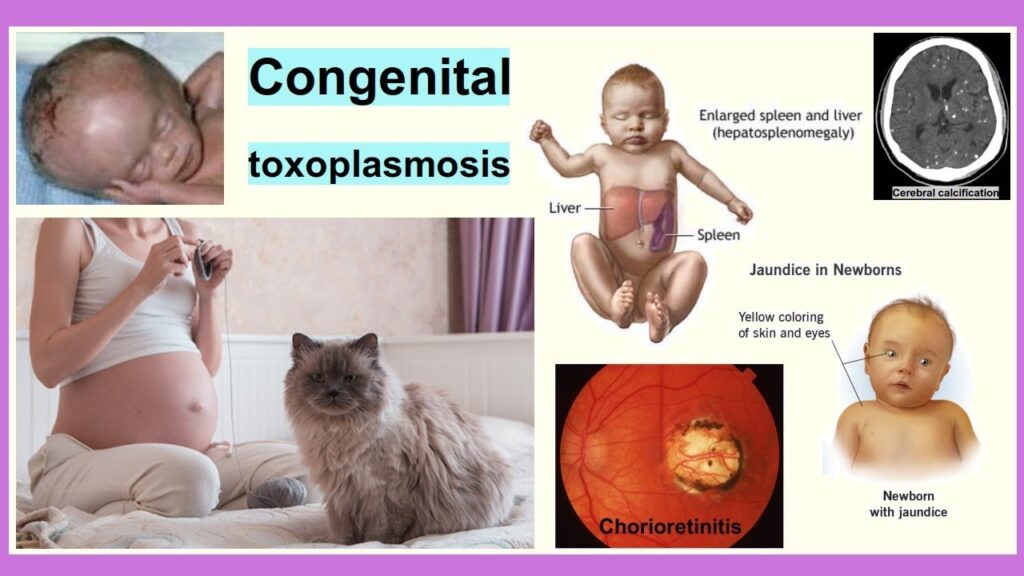
    Want notes in PDF? Join our classes!!

    Send us a message on WhatsApp
    0726113908

    Scroll to Top
    Enable Notifications OK No thanks