Surgical Nursing

Corneal Ulcers

Corneal Ulcers

CORNEAL ULCERS

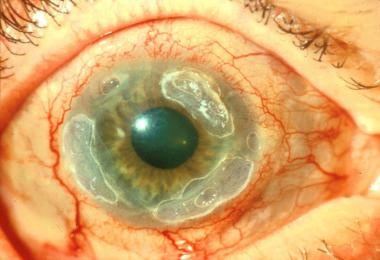
Corneal ulcers are open sores or epithelial defects with underlying inflammation on the cornea, the transparent front part of the eye that covers the iris and pupil. 

These ulcers are often visible as grey to white opaque or translucent areas on the normally clear cornea. In some cases, they may be too small to detect without adequate magnification.


The cornea is useful in focusing light on the retina and protecting the inner eye structures. Corneal ulcers can be a serious condition leading to vision loss if not treated.

A Cornea ulcer will often appear as a grey to white opaque or translucent area on the normally clear and transparent cornea. Some corneal ulcers may be too small to see without adequate magnification.

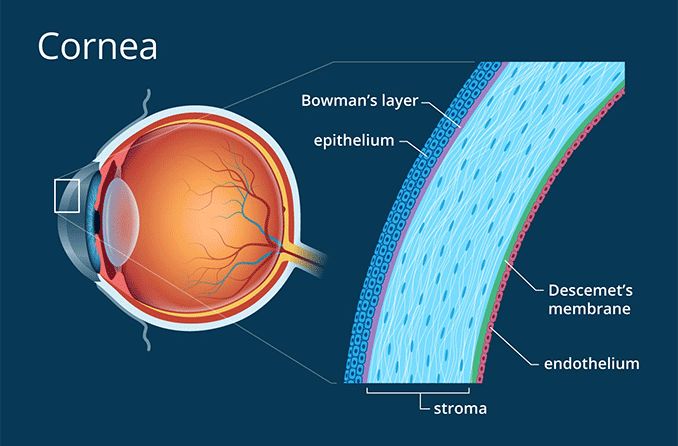
Cornea - Definition and Detailed Illustration


Cornea is the structure in front of the eye. The cornea overlies the iris which is the coloured part of the eye and is separated from the iris by the aqueous fluid in the anterior chamber of the eye.

Causes of Corneal Ulcers

Infections:

  • Bacterial Infections: Commonly caused by bacteria like Staphylococcus and Pseudomonas. These bacteria can invade the cornea, especially if the surface is disrupted. Contact lens wearers are particularly at risk, especially with improper hygiene or prolonged wear.
  • Viral Infections: Herpes simplex virus (responsible for cold sores) and varicella-zoster virus (causing chickenpox and shingles) can lead to corneal ulcers. These viruses can cause recurrent infections, leading to chronic corneal ulceration.
  • Fungal Infections: These occur mainly due to improper contact lens care or prolonged use of corticosteroid eye drops. Fusarium and Candida species are common culprits.

Trauma:

  • Mechanical Injuries: Tiny cuts or scratches from metal, wood, glass, or any particle can damage the cornea, creating an entry point for infection. Even minor injuries can lead to significant complications if not treated properly.
  • Chemical Burns: Exposure to caustic chemicals or irritants can cause corneal burns, leading to ulceration. Alkali burns (from substances like ammonia or lye) are particularly dangerous because they penetrate deeper into the cornea.

Pre-existing Eye Conditions:

  • Dry Eye Syndromes: Conditions like keratoconjunctivitis sicca reduce the protective tear film, making the cornea more susceptible to injury and infection.
  • Eyelid Disorders: Conditions that prevent the eyelid from closing completely, such as Bell’s palsy, can leave the cornea exposed and prone to ulceration. Entropion (inward-turning eyelid) and trichiasis (ingrown eyelashes) can cause constant irritation and lead to ulcer formation.

Immunological Disorders:

  • Autoimmune Diseases: Conditions like rheumatoid arthritis and lupus can predispose individuals to corneal ulcers, either through direct inflammation or secondary infection. Immune-mediated conditions like scleritis can also contribute to ulcer formation.

Signs and Symptoms of Corneal Ulcers

  • Redness: The conjunctiva (the white part of the eye) and the anterior chamber may appear red due to dilated blood vessels.
  • Eye Pain: Ranges from mild to severe, often worsening with bright light exposure (photophobia).
  • Visual Disturbance: Blurred vision, especially if the ulcer is centrally located.
  • Tearing and Discharge: Excessive tearing, pus, or thick discharge from the affected eye.
  • Foreign Body Sensation: A constant feeling that something is in the eye.
  • Swelling: The eyelids may be swollen, and there may be noticeable edema around the ulcer.
  • Visible Ulcer: In some cases, a white or grey round spot on the cornea may be visible.

Frontiers | Comprehensive Compositional Analysis of the Slit Lamp Bacteriota

Investigations

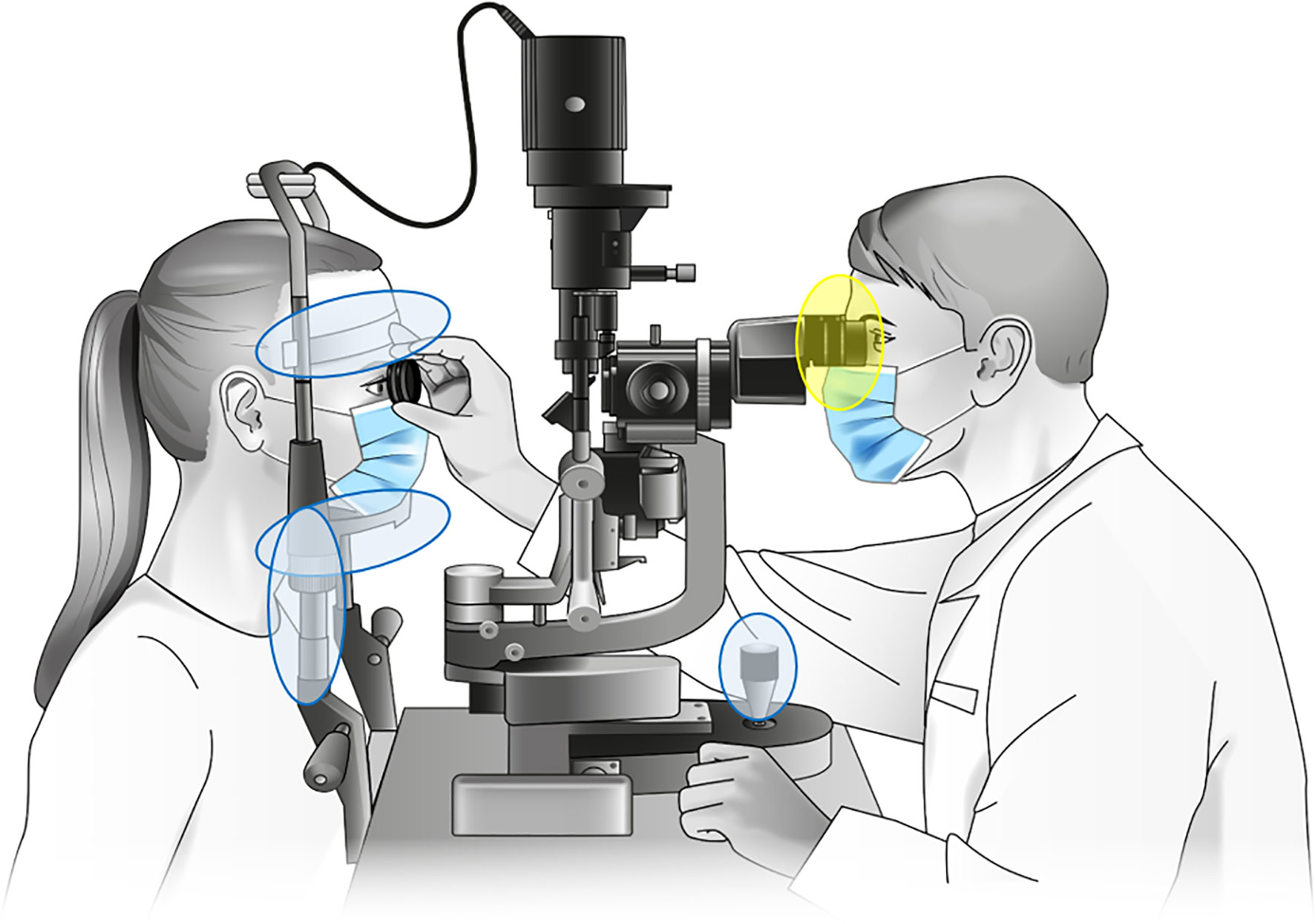
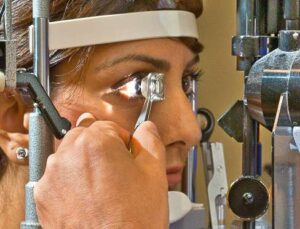
  • Slit Lamp Examination: A slit lamp microscope is used to examine the eye in detail. A fluorescein dye is often applied to highlight the ulcer, making it more visible under blue light.
  • Microbial Cultures: Swabs or scrapings from the ulcer are sent for microscopy, culture, and sensitivity testing to identify the causative organism and guide treatment.
  • Corneal Sensitivity Test: This assesses the sensitivity of the cornea, which may be reduced in cases of viral ulcers or chronic conditions.

Management of Corneal Ulcers

Medical Treatment:

  • Anti-Infective Agents: Antibiotic, antiviral, or antifungal eye drops/ointments are used depending on the cause. For viral ulcers, oral antiviral medications may also be prescribed.
  • Cycloplegics: These are eye drops like cyclopentolate or atropine, used to dilate the pupil and relieve pain from ciliary muscle spasms.
  • Steroids: These may be used cautiously to reduce inflammation but only after the infectious cause is under control. They are usually prescribed by an ophthalmologist to avoid worsening the infection.

Surgical Management:

  • Eyelash Removal: If an ingrown eyelash is causing the ulcer, it may be removed along with its root. Recurrent cases may require electrolysis to destroy the hair follicle.
  • Eyelid Surgery: In cases where an inward-turning eyelid (entropion) is causing the ulcer, corrective surgery may be necessary.
  • Corneal Transplant (Keratoplasty): If the ulcer causes significant thinning of the cornea, a corneal transplant may be required to restore the integrity of the eye.

Preventive Measures

  • Eye Protection: Always wear protective eyewear when working with tools, chemicals, or in environments with flying debris.
  • Proper Contact Lens Care: Wash hands before handling lenses, avoid using saliva to wet lenses, never use tap water for cleaning, and do not wear lenses overnight unless they are specifically designed for extended wear.
  • Lubrication: Individuals with dry eyes or incomplete eyelid closure should use artificial tears to keep the cornea moist.
  • Early Treatment: Seek prompt medical attention for red or irritated eyes that do not improve with over-the-counter drops within 24 hours.

Complications

  • Corneal Scarring: A healed ulcer may leave a scar, leading to permanent visual impairment if the scar is centrally located.
  • Secondary Infections: An untreated ulcer can lead to secondary infections, worsening the prognosis.
  • Corneal Perforation: In severe cases, the ulcer may perforate the cornea, potentially leading to loss of the eye.
  • Endophthalmitis: This is a severe infection of the interior of the eye, which can result from untreated corneal ulcers.
  • Blindness: If not treated adequately, corneal ulcers can lead to significant vision loss or complete blindness.
Preventive Measures
  • Individuals should wear eye protective gears when using power tools or when they may be exposed to small particles that can enter the eye ( like particles from grinding wheel or a weed whacker)
  • Individuals who have dry eyes or whose lids do not close properly should use artificial teardrops to lubricate the eyes and keep them lubricated.
  • If an eye is red and irritated and worsens or does not respond to OTC ( Over the counter) eyedrops within a day contact an Ophthalmologist promptly.
  • People wearing contact lenses should be very careful about the way they clean and wear those lenses.
  • Always wash hands before handling those lenses.
  • Never use saliva to lubricate contact lenses because the mouth contains bacteria that can harm the cornea.
  • Remove lenses from the eyes every evening and clean them.
  • Never use tap water to clean the lenses
  • Never sleep with contact lenses not designed for overnight wear in the eyes.
  • Store lenses in disinfecting solutions overnight.
  • Remove lenses whenever the eyes are irritated and leave them out until there is no longer any irritation or redness.
  • Regularly clean the contact lens case, carefully read the instructions about contact lens care supplied by the lens maker, consider using daily disposable lenses.

Nursing Care Plan for Corneal Ulcer

Assessment

Nursing Diagnosis

Goals/Expected Outcomes

Interventions

Rationale

Evaluation

Observation of severe eye pain, redness, tearing, and photophobia

Acute pain related to inflammation and ulceration of the cornea as evidenced by patient verbalizing severe eye pain and sensitivity to light

To reduce eye pain and discomfort within 3 days

– Assess pain level using a pain scale and monitor changes

– Administer prescribed analgesics and/or topical anesthetics as ordered

– Apply cool compresses to the affected eye to alleviate discomfort

– Encourage the patient to rest in a dimly lit room and avoid bright lights

– Pain assessment helps in evaluating the effectiveness of interventions

– Analgesics and topical anesthetics help in reducing pain and providing relief

– Cool compresses reduce inflammation and soothe the eye

– Resting in a dimly lit room minimizes light exposure, reducing photophobia

– Patient reports a decrease in eye pain and discomfort, with less sensitivity to light

Presence of a white or grayish spot on the cornea and purulent discharge

Risk for infection related to bacterial or fungal invasion of the corneal ulcer.

To prevent the spread of infection and promote healing within 1 week

– Administer prescribed antibiotic or antifungal eye drops as ordered

– Educate the patient on the importance of completing the full course of medication

– Instruct the patient on proper hand hygiene before and after applying eye drops

– Avoid the use of contact lenses until the ulcer has healed

– Antibiotics or antifungals are essential for treating the underlying infection and promoting healing

– Completing the full course of medication ensures that the infection is fully eradicated

– Proper hand hygiene reduces the risk of further contamination and spread of infection

– Contact lenses can aggravate the ulcer and hinder healing


Assessment of visual acuity and patient’s ability to perform daily activities

Impaired vision related to corneal ulceration as evidenced by blurred vision and difficulty performing daily activities

To maintain or improve vision and functional ability within 2 weeks

– Perform visual acuity tests to monitor changes in vision

– Educate the patient on the need to avoid activities that strain the eyes (e.g., reading, using screens)

– Encourage the use of protective eyewear to shield the eye from dust and foreign particles

– Arrange for assistance with daily activities as needed

– Visual acuity tests help in tracking the progression of the ulcer and its impact on vision

– Avoiding eye strain supports the healing process and reduces discomfort

– Protective eyewear prevents further injury and contamination of the affected eye

– Assistance with daily activities ensures the patient’s safety and well-being during recovery

– Patient’s vision remains stable or improves, with no significant impairment in performing daily activities

Patient expresses concern about potential vision loss and the appearance of the eye

Anxiety related to fear of vision loss and changes in eye appearance as evidenced by the patient expressing concern about the condition

To reduce anxiety and improve the patient’s understanding of the condition within 1 week

– Provide information about corneal ulcers, their causes, treatment, and prognosis

– Reassure the patient that early and appropriate treatment can prevent permanent vision loss

– Offer emotional support and encourage the patient to express their fears and concerns

– Refer the patient to a support group or counselor if anxiety persists

– Education empowers the patient with knowledge and reduces fear of the unknown

– Reassurance helps the patient feel more confident in the treatment process

– Emotional support fosters a therapeutic relationship and addresses the patient’s psychological needs

– Support groups or counseling can provide additional emotional and psychological support

– Patient reports feeling less anxious and demonstrates understanding of the condition and treatment plan

Assessment of the patient’s adherence to treatment and follow-up care

Knowledge deficit related to unfamiliarity with the treatment regimen and follow-up care as evidenced by the patient asking questions about the medication and care plan

To ensure the patient understands and adheres to the treatment plan within 1 week

– Provide clear, step-by-step instructions on how to administer eye drops and medications

– Educate the patient on the importance of attending follow-up appointments

– Provide written materials or visual aids to reinforce teaching

– Encourage the patient to ask questions and seek clarification about the treatment

– Clear instructions ensure proper medication administration and adherence to the treatment plan

– Follow-up appointments are essential for monitoring healing and making necessary adjustments

– Written materials or visual aids enhance understanding and retention of information

– Encouraging questions ensures that the patient fully understands the treatment and care plan

– Patient demonstrates proper administration of eye drops and expresses confidence in managing the treatment plan

Corneal Ulcers Read More »

Glaucoma

Glaucoma

GLAUCOMA

Glaucoma is a group of disorder characterized by an abnormally high intraocular pressure , optic nerve dystrophy, and peripheral filed loss. (BRUNNER)

Glaucoma is a group of eye diseases which result in damage to the optic nerve and vision loss due to IOP. 

It’s among the common causes of blindness.

Glaucoma occurs as a result of increased intraocular pressure (IOP) caused by a malformation or malfunction of the eyes drainage system.

The main cause of damage to the optic nerve is intraocular pressure (IOP), excessive fluid pressure within the eye, which can be due to various reasons including blockage of drainage ducts, and narrowing or closure of the angle between the iris and cornea.

Normal intraocular pressures average from 12-21 mm Hg. The increased pressure causes compression of the retina and the optic nerve, and causes progressive , permanent loss of eyesight if left untreated.

INCIDENCE

  • Globally 6 to 67 million.
  • More common in peoples older than 40 years.

 Glaucoma has been called the “silent thief of sight” because the loss of vision usually occurs slowly over a long period of time. Worldwide, glaucoma is the second-leading cause of blindness after cataracts.

EYE ANATOMY ( Click here for eye anatomy)

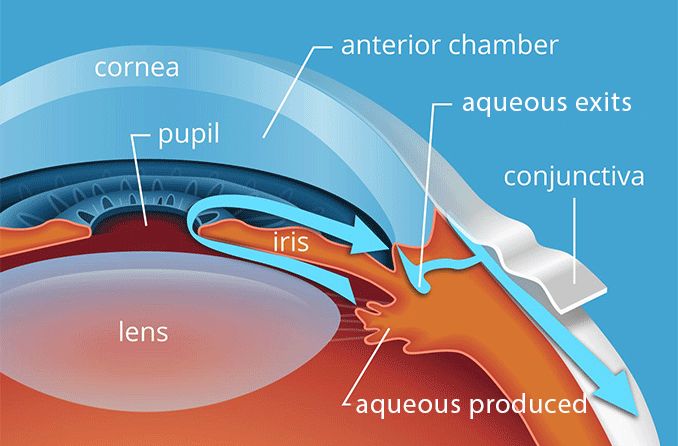
Normal Pathway of Aqueous Humor

Aqueous Humor production pathway

Aqueous fluid Circulation: 

  • The aqueous fluid is a clear fluid produced in the Cilliary body then it will flow out through the Iris, lens, Pupil, Cornea, Anterior Chamber Trabecular Meshwork then to the Schlemm Canal.
  • The aqueous fluid flows nourishing the cornea and lens.
  • The eye has an internal fluid circulation system
  • Fluid is produced at the base of the iris
  • The fluid flows through the pupil to the front of the iris
  • The fluid exits the eye at the angle between the iris and the cornea where it drains through a spongy meshwork

The IOP is determined by:

  • Rate of aqueous production in the ciliary body
  • Resistance encountered by the aqueous as it flows out of the passages.
Causes/ Aetiology of Glaucoma

Causes/ Aetiology of Glaucoma

Glaucoma is a chronic eye disease that can lead to vision loss and blindness. We have primary causes of glaucoma which refers to the underlying mechanism or condition that directly leads to the development of glaucoma or secondary causes of glaucoma which refer to an underlying condition or factor that contributes to the development of glaucoma.

Primary Causes of Glaucoma:

  • Increased Eye Pressure: One of the major risk factors for glaucoma is elevated eye pressure. An abnormality in the eye’s drainage system can cause fluid to build up, leading to excessive pressure that damages the optic nerve.
  • Optic Nerve Damage: Glaucoma develops when the optic nerve becomes damaged. The exact reason for this nerve damage is not fully understood, but it is often related to increased eye pressure.
  • Fluid Buildup: The fluid inside the eye, known as aqueous humor, may not drain properly due to a malfunction in the drainage system. This can result in a gradual increase in eye pressure, leading to glaucoma.

Secondary Causes of Glaucoma:

  • Angle-Closure Glaucoma: This form of glaucoma occurs when the iris bulges and partially or completely blocks the drainage angle, preventing fluid circulation and increasing eye pressure.
  • Normal-Tension Glaucoma: In some cases, optic nerve damage occurs even when eye pressure is within the normal range. The exact cause of this type of glaucoma is unknown, but it may be related to reduced blood flow to the optic nerve.
  • Glaucoma in Children: Children can be born with glaucoma or develop it in the first few years of life. Blocked drainage, injury, or underlying medical conditions can cause optic nerve damage in children.
  • Pigmentary Glaucoma: In pigmentary glaucoma, pigment granules from the iris can block or slow fluid drainage from the eye, leading to increased eye pressure.
  • Inflammation of the Middle Layer of the Eye: Uveitis, which is inflammation of the middle layer of the pigmented vascular eye structure, can lead to uveitic glaucoma

Risk Factors for Glaucoma:

  • High Internal Eye Pressure: Elevated intraocular pressure is a significant risk factor for glaucoma.
  • Age: Glaucoma is more common in older adults, especially those over the age of 60.
  • Ethnicity: Individuals of Black, Asian, or Hispanic heritage have a higher risk of developing glaucoma.
  • Family History: Glaucoma tends to run in families, so having a close relative with glaucoma increases the risk.
  • Medical Conditions: Certain medical conditions, such as diabetes, migraines, high blood pressure, and sickle cell anemia, can increase the risk of glaucoma.
  • Thin Corneas: Having thin corneas is associated with a higher risk of glaucoma.
  • Extreme Nearsightedness or Farsightedness: Individuals with severe nearsightedness or farsightedness are at an increased risk of developing glaucoma.
  • Eye Injury or Surgery: Previous eye injuries or certain types of eye surgery can increase the risk of glaucoma.
  • Long-term Use of Corticosteroid Medications: Taking corticosteroid medicines, especially eye drops, for an extended period can increase the risk of glaucoma.
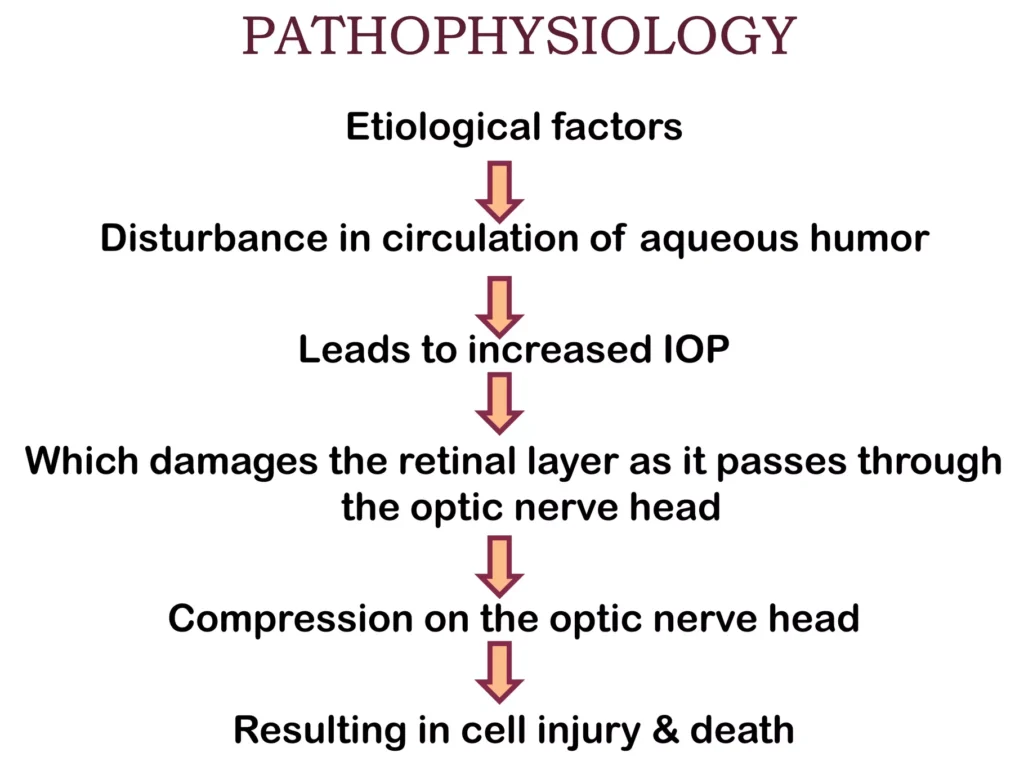
Pathophysiology of Glaucoma

Pathophysiology of Glaucoma

The underlying cause of open-angle glaucoma remains unclear. 

Excess production of aqueous humor, and decreased outflow of aqueous humor, are the key factors in the pathophysiology of glaucoma. 

Excess production of aqueous humor can occur, leading to an increase in intraocular pressure. Additionally, there may be a decrease in the outflow of aqueous humor due to blockage or narrowing of the drainage pathways.

The increased intraocular pressure puts pressure on the optic nerve, compromising its blood supply and leading to ischemia. The optic nerve is responsible for transmitting visual information from the eye to the brain. When the optic nerve is damaged, it can result in the loss of vision.

Pathophysiology of Glaucoma

Diagnosis of Glaucoma

Screening for glaucoma is usually performed as part of a standard eye examination performed by optometrists and ophthalmologists. 

  • History taking: Examination for glaucoma also could be assessed with more attention given to sex, race, history of drug use, refraction, inheritance and family history.

Glaucoma tests; 

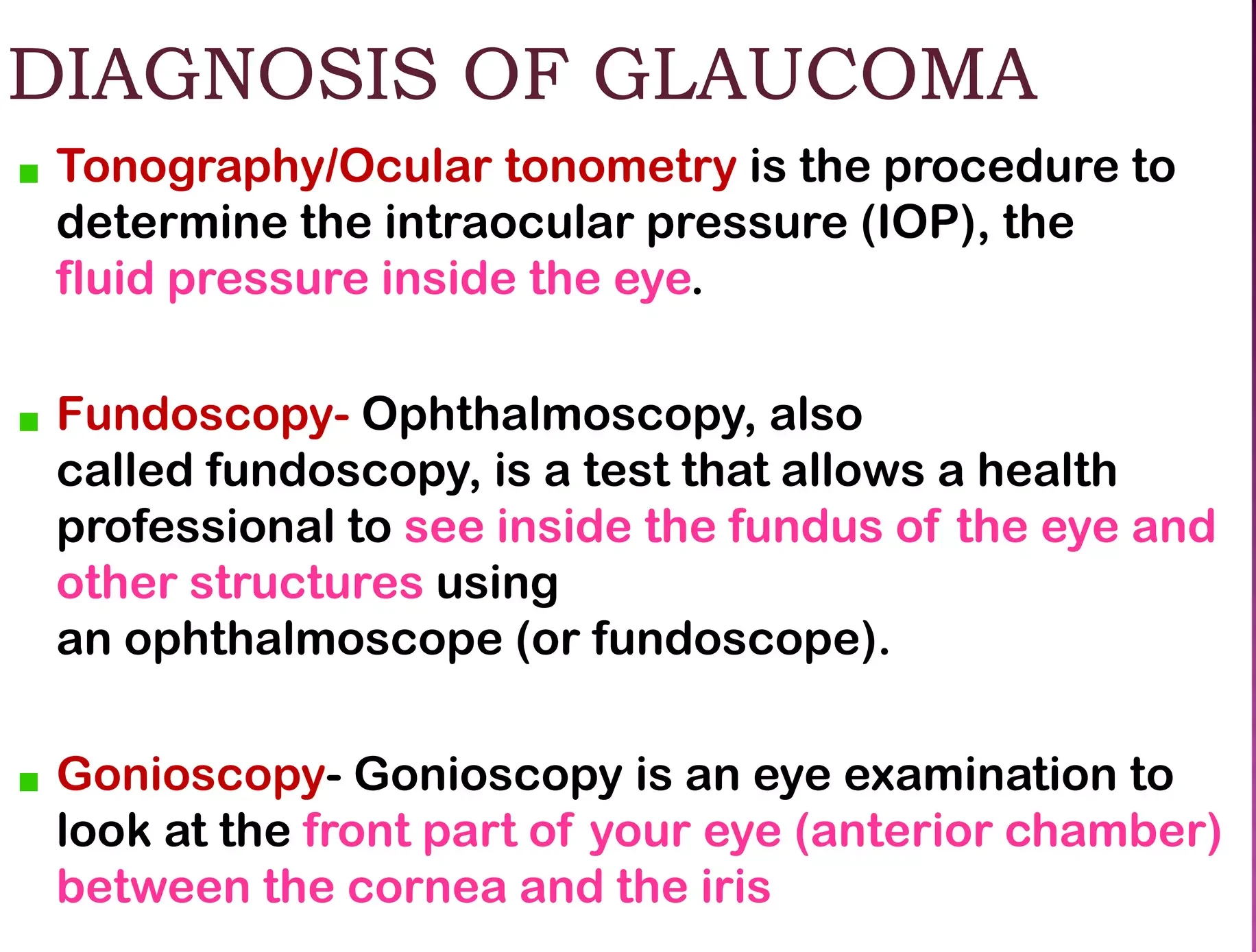
  • Tonometry: This test measures the intraocular pressure (IOP) within the eye. The examiner will numb the eye with eye drops and then use a tonometer to measure the pressure. This can be done by applying a puff of warm air or using a tiny tool.
  • Gonioscopy: This test examines the angle where the iris meets the cornea. Eye drops are used to numb the eye, and a hand-held contact lens with a mirror is gently placed on the eye to visualize the angle between the cornea and iris.
  • Ophthalmoscopy (Dilated Eye Examination): This test examines the shape and color of the optic nerve. Eye drops are used to dilate the pupil, allowing the examiner to use a magnification device with a light to examine the optic nerve
  • Perimetry (Visual Field Test): This test assesses the complete field of vision. Patient is asked to look straight ahead while a light spot is presented in different areas of the peripheral vision. This helps create a map of the vision.
  • Pachymetry: This test measures the thickness of the cornea. A pachymeter is gently placed on the front of the eye to measure the corneal thickness. This measurement can help in understanding eye pressure readings.
  • Nerve Fiber Analysis: Imaging techniques such as optical coherence tomography, scanning laser polarimetry, and scanning laser ophthalmoscopy can be used to assess the thickness of the retinal nerve fiber layer.

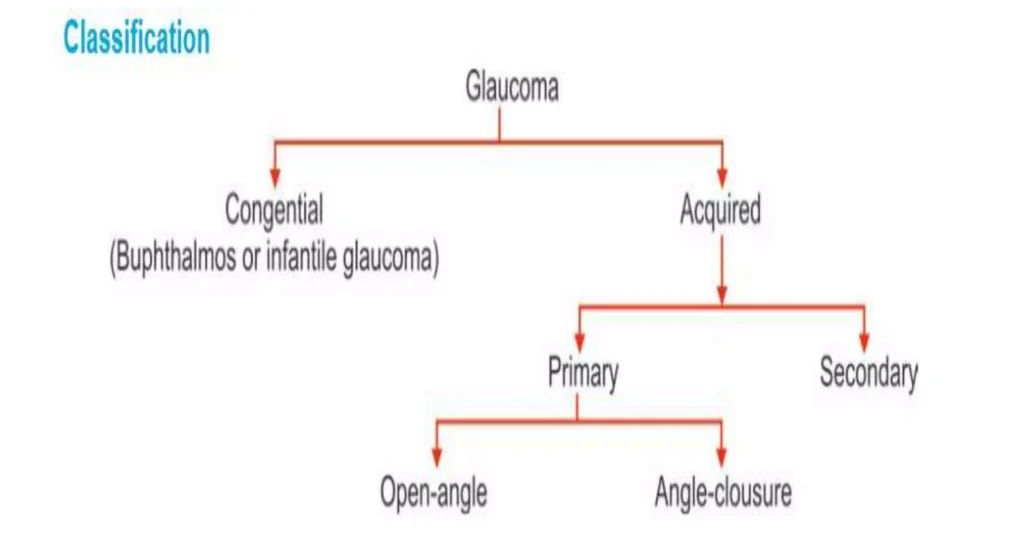
Classification of Glaucoma.

Glaucoma has been classified into specific types:

congenital

Congenital Glaucoma

Congenital glaucoma is a rare form of glaucoma that is present at birth or develops shortly after birth

  • It is characterized by abnormalities in the angle of anterior chamber obstructing the outflow of aqueous humour, leading to increased intraocular pressure and potential damage to the optic nerve. 
  • Congenital glaucoma can manifest at birth ( True Congenital) before 3 years ( Infantile) or between 3-16 years Juvenile).

Clinical Feature of Congenital Glaucoma.

  • Age of onset: Congenital glaucoma presents in infants and young children, usually before the age of 3 years.
  • Triad of symptoms: The classic triad of symptoms associated with congenital glaucoma includes :
  1. Watering (epiphora): Excessive tearing or watery eyes.
  2. Photophobia: Sensitivity to light.
  3. Blepharospasm: Involuntary contraction or twitching of the eyelids.
  • Buphthalmos: Congenital glaucoma can cause enlargement of the eyeball, known as buphthalmos or “ox eye or bull’s eye” . This occurs due to increased intraocular pressure (IOP) and rapid expansion of the eye.
  • Corneal changes: The elevated IOP in congenital glaucoma can lead to corneal enlargement and clouding. This can result in corneal edema and opacification, which may cause visual impairment.
  • Haab striae: Horizontal or oblique breaks in Descemet membrane, known as Haab striae, can be seen in congenital glaucoma. These striae are a result of the stretching of the cornea due to increased IOP.
  • Optic nerve damage: If left untreated or uncontrolled, congenital glaucoma can lead to optic nerve damage. This can result in vision loss.
  • Variable presentation: The severity and presentation of congenital glaucoma can vary. Some cases may be unilateral (affecting one eye) while others may be bilateral (affecting both eyes).
  • Blepharospasm (involuntary forceful closure of eyes): In congenital glaucoma, blepharospasm is a common clinical feature that refers to the involuntary and forceful closure of the eyelids.
  • Excessive lacrimation: Excessive tearing or lacrimation is another common symptom of congenital glaucoma since the increased pressure in the eye can cause the tear ducts to produce more tears than usual.
  • Enlarged and edematous cornea: The cornea, the clear front part of the eye, can become enlarged and edematous in congenital glaucoma. The increased pressure in the eye can lead to fluid accumulation in the cornea, causing it to swell which can result in cloudiness and opacification of the cornea.
  • Thin and blue sclera: The sclera, the white outer layer of the eye, may appear thin and blue in congenital glaucoma, due to increased pressure in the eye. The blue color is due to the visibility of the underlying choroid layer through the thin sclera.
  • Deep anterior chamber: Congenital glaucoma can cause a deepening of the anterior chamber, which is the space between the cornea and the iris. The increased pressure in the eye can push the iris backward, resulting in a deeper anterior chamber.
  • Flat lens: In congenital glaucoma, the lens of the eye may appear flat. The increased pressure in the eye can affect the shape and position of the lens. This can lead to changes in the focusing ability of the eye.
  • Optic disc atrophy: Optic disc atrophy, which refers to the degeneration and loss of nerve fibers in the optic disc, can occur in congenital glaucoma. The increased pressure in the eye can cause damage to the optic nerve.

Management of Congenital Glaucoma

The management of congenital glaucoma involves a combination of medical therapy and surgical interventions. 

The main Aims of management is to lower intraocular pressure (IOP) and prevent further damage to the optic nerve. 

Medical Therapy:

  • Medical therapy is often used as a temporary measure to control IOP and clear the cornea before surgery.
  • Medications such as topical beta-blockers like timolol, betaxolol, or prostaglandin analogs, and carbonic anhydrase inhibitors may be prescribed to reduce IOP.

Surgical Interventions:

1. Angle Surgery: The mainstay of treatment for congenital glaucoma is angle surgery, which aims to improve aqueous outflow and lower IOP.

  • Goniotomy: In this procedure, an incision is made across the trabecular meshwork to improve drainage of aqueous humor.
  • Trabeculotomy: This surgery involves incising the trabecular meshwork to create a new drainage pathway for aqueous humor.

2. Trabeculectomy: If angle surgery is not successful in controlling IOP, trabeculectomy may be performed. This procedure involves creating a new drainage channel to bypass the trabecular meshwork.

3. Glaucoma Implant Surgery: In cases where other surgical options fail, glaucoma implant surgery may be considered. This involves the placement of a drainage device, such as a Molteno, Baerveldt, or Ahmed implant, to regulate the flow of aqueous humor and lower IOP.

Follow-up and Monitoring:

  • Regular follow-up visits with an ophthalmologist are essential to monitor IOP, assess the effectiveness of treatment, and detect any potential complications or disease progression.
  • Ongoing management may involve adjustments to medication dosages, additional surgical interventions if necessary, and monitoring for potential long-term complications such as refractive errors or amblyopia.


ACQUIRED GLAUCOMA 

Acquired glaucoma refers to glaucoma that develops later in life due to various factors such as age, genetics, underlying medical conditions, or trauma.

 It is a chronic and progressive condition that requires ongoing management to control IOP and preserve vision. 

It is further divided into; 

PRIMARY GLUCOMA.

  1. Primary Open angle glaucoma.
  2. Primary angle closure Glaucoma
  3. Chronic angle closure glaucoma.

SECONDARY GLAUCOMA

  1. Lens induced glaucoma
  2. Glaucoma due to uveitis
  3. Neurovascular Glaucoma
  4. Glaucoma associated with intraocular tumor
  5. Steroid induced glaucoma.

open angle GLAUCOMA

PRIMARY OPEN-ANGLE GLAUCOMA (POAG)

Primary Open-Angle Glaucoma (POAG) also called as open angle glaucoma or chronic simple glaucoma or simple complex glaucoma results from the overproduction of aqueous humour through trabecular mesh work resulting into increased IOP and damage to optic nerve, resulting into loss of vision.

In this type there in no narrowing of the anterior chamber BUT there is resistance in the trabecular meshwork to aqueous flow resulting in gradual increase in IOP along with cupping of the optic disc and visual fields defects.

Predisposing factors for primary glaucoma include:

  • Cigarette smoking.
  • Diabetes Mellitus and Hypertension diseases.
  • Myopia (nearsightedness).
  • Old age.

Clinical features of primary glaucoma may include:

  • Asymptomatic in the early stages.
  • Mild headache and pain in the eye.
  • Difficulty in reading.
  • Delayed dark adaptation.
  • Alteration in vision sites.
  • Mild ache in the eyes
  • Increased IOP ( more than24 mmhg)
  • Loss of Peripheral vision
  • Reduced visual acquity at night.
  • Corneal edema
  • Visual field deficit.

Investigations for primary glaucoma include:

  • Tonometry: To measure intraocular pressure (IOP). In glaucoma, IOP may remain permanently high in the late stages and fluctuating in the early stages.
  • Gonioscopy: To assess the angle of the anterior chamber. Narrowing of the angle may be observed in glaucoma.
  • Fundus examination: Done with the use of ophthalmoscopy and a slit lamp biomicroscope to look for disc changes.
  • Perimetry: To assess changes in the visual field.

Treatment options for primary glaucoma include:

Medical treatment: This is the first choice for open-angle glaucoma.

  • Topical beta blockers: These drugs lower the production of aqueous fluid, thereby reducing IOP. Examples include Timolol mealate: (2.5-5 mg B.D), Betaxolol 25mg B.D, Levabunolol 2.5-5% B.D it has a longer effect
  • Dorzolamide(2%): It lowers IOP by decreasing the production of aqueous fluid.
  • Latanoprost(0.5): It decreases the flow of aqueous fluid.
  • Pilocarpine: It contracts the ciliary muscle and opens the trabecular meshwork, allowing increased outflow of aqueous humor.
  • Adrenergic group: Drugs like epinephrine hydrochloride decrease aqueous production through vasoconstriction.

Surgical treatment: Surgery is considered when there is a failure to respond to maximal medical therapy.

  • Laser therapy: Laser trabeculoplasty (ALT) may be performed if the patient does not respond to medical treatment
  • Filtering surgery: Trabeculectomy is a surgical procedure that creates an opening in the white of the eye to allow fluid to leave the eye.
  • Drainage tubes: Small tubes may be inserted in the eye to drain excess fluid and lower IOP.
  • Minimally invasive glaucoma surgery (MIGS): These procedures have less risk and require less postoperative care compared to traditional surgeries
PRIMARY ANGLE CLOSURE GLAUCOMA 

Primary angle closure glaucoma, also known as primary closed angle glaucoma, narrow angle glaucoma, pupil block glaucoma, or acute congestive glaucoma, is a type of glaucoma characterized by a rapid onset and is considered an ophthalmic emergency. If not treated promptly, it can lead to blindness within a few days.

It is the type of glaucoma where the IOP is raised due to narrowing of the angle of anterior chamber it is more common in female with nervous personality.

Causes and Risk Factors:

  • Abnormality of the structures in front of the eyes, resulting in obstruction to the outflow of aqueous humor.
  • Narrow angle glaucoma due to factors such as a large-sized lens, bigger-sized ciliary body, smaller diameter of the cornea, or a small eyeball.
  • Anteriorly placed iris.
  • Hypermetropic eyes (related to far-sightedness).
  • Precipitating factors: Dim light, Emotional stress/anxiety and Mydriatic drugs like ( atropine, tropicamide, cyclopentolate)

Clinical Features:

The course of the disease can be divided into two types: subacute glaucoma and acute congestive glaucoma.

Subacute Glaucoma:

Gradual onset with transient attacks of blurring vision and mild headache.

  • Temporary increase in intraocular pressure (IOP) during the attacks, which last for a few seconds to minutes or hours.
  • Dilated pupils, shallow anterior chamber, and mild corneal edema during the attacks.
  • Symptoms resolve on their own.

Acute Congestive Glaucoma:

Abrupt increase in IOP due to sudden closure of the anterior chamber.

  • Symptoms include severe eye pain, defective vision, redness of the eye, photophobia, lacrimation, nausea, and vomiting.
  • Dilated pupils that are non-reactive to light and edematous optic disc.

Treatment Options:

The main goals of treatment for primary angle closure glaucoma are to prevent progression of angle closure and to control IOP.

Laser Iridotomy:

  • The conventional treatment for primary angle closure glaucoma is laser iridotomy (LI).
  • Laser iridotomy eliminates pupillary block and widens the angles by reducing the pressure differential between the anterior and posterior chambers.
  • Stepped-up standard glaucoma medications may be added if IOP remains high despite laser iridotomy .

“Stepped-up standard glaucoma medications” refers to the progression of treatment options for glaucoma patients that  involves starting with the most commonly prescribed and effective medications and then adjusting or adding additional medications if necessary to achieve the desired reduction in intraocular pressure (IOP) and prevent further progression of the disease.

The following are some of the commonly used stepped-up standard glaucoma medications:

  • Prostaglandin analogs: Prostaglandin analogs, such as latanoprost (Xalatan), are often the first-line treatment choice for glaucoma. They are prescribed as eye drops and work by increasing the outflow of fluid from the eye, thereby reducing IOP.
  • Beta blockers: Beta blockers, such as timolol (Timoptic) and levobunolol (Betagan), are another class of medications used to treat glaucoma. They reduce IOP by decreasing the production of fluid in the eye. Beta blockers can be nonselective or selective, and they may have side effects such as burning/stinging, blurred vision, and systemic effects like decreased heart rate and bronchospasm.
  • Miotics: Miotics, such as pilocarpine (Isopto Carpine), work by constricting the pupil and increasing the outflow of fluid from the eye. They can be used as eye drops and may cause side effects such as blurred vision, sweating, and gastrointestinal symptoms.
  • Carbonic anhydrase inhibitors: Carbonic anhydrase inhibitors, such as dorzolamide (Trusopt) and brinzolamide (Azopt), reduce IOP by decreasing the production of fluid in the eye. They are available as eye drops and may cause side effects such as burning, bitter taste, and ocular allergies.
  • Sympathomimetics: Sympathomimetics, such as dipivefrin (Propine), work by reducing IOP through various mechanisms, including increasing the outflow of fluid and decreasing its production. They are available as eye drops and may cause side effects such as burning, increased blood pressure, and tremor.
  • Alpha-2 adrenergic agonists: Alpha-2 adrenergic agonists, such as brimonidine (Alphagan) and apraclonidine (Iopidine), reduce IOP by decreasing the production of fluid and increasing its outflow. They are available as eye drops and may cause side effects such as conjunctival blanching, headache, and drowsiness.

Surgical Options:

  • Trabeculectomy: Effective for primary angle closure glaucoma, but associated with a higher risk of complications such as filtration failure, shallow anterior chamber, and malignant glaucoma/aqueous misdirection.
  • Lens Extraction: Lens extraction, either alone or in combination with trabeculectomy, has been shown to significantly increase anterior chamber depth and widen the drainage angle, leading to IOP reduction.
  • Clear lens extraction (CLE) has been found to be highly effective in reducing IOP and improving quality of life in angle-closure glaucoma patients.
  • Phacoemulsification alone or combined with trabeculectomy may be considered depending on the patient’s condition.
CHRONIC CLOSED-ANGLE GLAUCOMA

Chronic closed-angle glaucoma is a condition characterized by elevated intraocular pressure (IOP) and damage to the optic nerve. 

When this angle is narrowed or closed, pressure increases over time, causing damage to the optic nerve and leading to blindness. This will lead to Absolute Glaucoma.

Treatment Options for Chronic Closed-Angle Glaucoma:

Medical Therapy; This is used to lower the IOP in emergency cases as a temporary measure before surgery

This includes:

  • Parenteral analgesic to relieve pain
  • IV Mannitol and Acetazolamide 250mg TDS to lower IOP
  • Pilocarpine eye drops (2%) instilled every 30 minutes for 2 hours later hourly
  • Eye drops may include Beta blockers like Timolol mealate (5%) BD, prostaglandin analogs, alpha agonists, carbonic anhydrase inhibitors, or a combination of these medications.
  • Corticosteroid eye drops to reduce inflammation

Surgery:

  • Laser Iridotomy: In chronic closed-angle glaucoma, laser iridotomy is often performed to reopen the blocked drainage angle. This procedure involves creating a small hole in the iris to allow the fluid to flow freely and reduce IOP.
  • Trabeculectomy: Trabeculectomy is a surgical procedure that creates a new drainage channel to lower IOP. It involves creating a small flap in the sclera (white part of the eye) to allow the fluid to drain out.
  • Glaucoma Drainage Device: In some cases, a glaucoma drainage device, also known as a tube shunt, may be implanted to help drain the excess fluid and reduce IOP.
  • Cyclophotocoagulation: Cyclophotocoagulation is a laser procedure that targets the ciliary body, which produces the fluid in the eye. By reducing the production of fluid, it helps lower IO.

Absolute glaucoma

Absolute glaucoma is the final stage or end stage of all types of glaucoma, characterized by permanent vision loss or blindness due to increased intraocular pressure. 

The eye has no vision, absence of pupillary light reflex and pupillary response, and has a stony appearance. Severe pain is present in the eye. The primary focus of treatment for absolute glaucoma is to reduce pain and keep the eye comfortable.

The treatment of absolute glaucoma is a destructive procedure like 

Risk factors:

Include elevated intraocular pressure, IOP fluctuation, male gender, pseudoexfoliation syndrome, worsening visual fields, optic disc hemorrhage, migraine, systemic diseases (hypertension, diabetes, myopia), and low socioeconomic status.

Causes:

Absolute glaucoma can occur due to various reasons, including uncontrolled raised ocular pressure, non-compliance with glaucoma medication, trauma, intraocular surgery (especially cataract extraction), and association with certain syndromes like aniridia, Lowe syndrome, or Sturge-Weber syndrome.

Symptoms:

In the final stage of glaucoma, patients may experience severe eye pain, a stone-like appearance of the eye, tearing, photophobia, lost pupillary reflex, and no pupillary response.

In absolute glaucoma :

  • The pain can be relieved by retrobulbular injection of alcohol.
  • The IOP may be reduced by destroying the ciliary epithelium by cryphotocoagulation.
  • If the pain is not relieved by the conservative approaches then the painful blind eye is enucleated.
SECONDARY GLAUCOMA

SECONDARY GLAUCOMA

Secondary glaucoma is a type of glaucoma that occurs as a result of underlying diseases or conditions within the eyes. 

It can be caused by various factors such as uveitis (inflammation), trauma, intraocular hemorrhage, previous surgeries, diabetes, and the use of steroid medications. 

Types of Secondary Glaucoma

  • Lens-induced glaucoma: This type of glaucoma occurs due to trabecular blockage caused by the lens. It can happen when the lens material clogs the trabeculae, leading to increased intraocular pressure (IOP).
  • Glaucoma due to uveitis: Inflammation associated with uveitis can lead to increased IOP. The inflammatory material can clog the trabecular meshwork and cause trabeculitis, resulting in elevated pressure within the eye.
  • Neurovascular glaucoma: This is a less common type of glaucoma that is difficult to treat. It is caused by proliferative diabetic retinopathy, which affects the blood flow to the eyes. Individuals with poor blood flow to the eyes are at a higher risk of developing this condition.
  • Glaucoma associated with intraocular tumors: Intraocular tumors, such as retinoblastoma and malignant melanoma, can cause an increase in IOP.
  • Steroid-induced glaucoma: Some individuals may develop glaucoma as a result of sensitivity to steroid medications. Sudden rises in IOP can occur, but appropriate use of steroids can help prevent this.
  • Pigmentary glaucoma: This is a rare condition where pigment cells slough off from the back of the iris and float around in the aqueous humor. It can lead to increased IOP.

Treatment of secondary glaucoma depends on the underlying cause and may involve a combination of medical management, laser therapy, or surgical intervention. 

Nursing care for patients with glaucoma

  • Recognize and assess signs and symptoms of glaucoma.
  • Monitor intraocular pressure (IOP) and optic nerve function.
  • Administer prescribed medications, such as eye drops, to manage intraocular pressure.
  • Educate patients about glaucoma, including risk factors, treatment options, and the importance of regular eye exams.
  • Provide support and guidance on strategies to optimize eye health and prevent disease progression.
  • Coordinate referrals to ophthalmologists or glaucoma specialists for further evaluation and management.
  • Offer emotional support and counseling to patients adjusting to the diagnosis of glaucoma.
  • Assess for gradual loss of peripheral vision.
  • Monitor for increased intraocular pressure.
  • Assess for blurred or hazy vision, halos around lights, vision loss, headaches, or eye strain.
  • Implement measures to assist patients in managing visual limitations, such as reducing clutter, arranging furniture out of the travel path, and correcting for dim light and problems of night vision.
  • Demonstrate administration of eye drops, including counting drops, adhering to the schedule, and not missing doses.
  • Assist with the administration of medications as indicated, such as topical myotic drugs or other prescribed medications.
  • Provide sedation and analgesics as necessary, especially during acute glaucoma attacks associated with sudden pain.
Nursing Diagnosis for Glaucoma.

Impaired Visual Sensory Perception related to increased intraocular pressure and optic nerve damage.

  • Assess the patient’s visual acuity and field.
  • Monitor for changes in visual perception.
  • Provide education on strategies to optimize visual function.

Risk for Injury related to visual impairment and decreased peripheral vision.

  • Assess the patient’s mobility and safety awareness.
  • Implement measures to reduce environmental hazards.
  • Educate the patient on fall prevention strategies.

Anxiety related to the fear of vision loss and the chronic nature of the disease as evidenced by patient asking alot of questions about the diagnosis.

  • Assess the patient’s anxiety level and coping mechanisms.
  • Provide emotional support and counseling.
  • Teach relaxation techniques to help manage anxiety.

Deficient Knowledge related to glaucoma diagnosis and treatment as evidenced by the patient asking alot of questions.

  • Assess the patient’s understanding of glaucoma.
  • Provide education on the disease process, treatment options, and the importance of regular eye exams.
  • Encourage the patient to ask questions and clarify any misconceptions.

Noncompliance related to difficulty adhering to medication regimen as evidenced by the patient verbalizing problems in eye drop self administration.

  • Assess the patient’s understanding of the prescribed medications.
  • Identify barriers to medication adherence.
  • Provide education on the importance of medication compliance and strategies to improve adherence.

Disturbed Body Image related to changes in visual appearance and functional limitations as evidenced by the patient wearing black glasses.

  • Assess the patient’s perception of body image and self-esteem.
  • Provide emotional support and counseling.
  • Encourage the patient to express feelings and concerns about body image changes.
Preventive measures for glaucoma

Preventive measures for glaucoma

  1. Regular Eye Exams: Schedule regular comprehensive eye exams, especially if you are at a higher risk for glaucoma. Early detection and treatment can help prevent vision loss.
  2. Medication Adherence: If you have been diagnosed with glaucoma or are at risk, it is important to take prescribed medications as directed by your healthcare provider. These medications help in reducing intraocular pressure and preventing further damage to the optic nerve.
  3. Know Your Risk Factors: Be aware of the risk factors associated with glaucoma, such as age, family history, race (African Americans are at higher risk), and certain medical conditions like diabetes. If you fall into any high-risk category, it is important to be vigilant and take appropriate preventive measures.
  4. Lifestyle Modifications:
  • Healthy Diet: Include a diet rich in leafy green vegetables, colored fruits, berries, and vegetables. These foods contain vitamins and minerals that are beneficial for eye health.
  • Regular Exercise: Engage in regular exercise at a moderate pace, as it can help lower eye pressure and improve overall health. However, avoid intense exercises that significantly raise your heart rate, as they may increase eye pressure.
  • Eye Protection: Wear protective eyewear during sports or activities that may pose a risk of eye injury.
  • Avoid Head-down Positions: If you have glaucoma or are at high risk, avoid prolonged head-down positions, as they can significantly raise eye pressure.
  • Sleep Position: Avoid sleeping with your eye against the pillow or on your arm, especially if you have obstructive sleep apnea (OSA), as it may increase the risk or severity of glaucoma.
  • Sun Protection: Wear quality polarized sunglasses and a hat to protect your eyes from harmful UV rays.
  • Oral Hygiene: Maintain good oral hygiene by brushing and flossing your teeth regularly, as there may be a link between gum disease and optic nerve damage in glaucoma.
  • Blood Pressure Management: Inform your ophthalmologist about your blood pressure medication, as low blood pressure during sleep can worsen glaucoma damage.

Complications of glaucoma

  1. Vision Loss: Glaucoma can cause gradual and irreversible vision loss, starting with peripheral vision and eventually affecting central vision.
  2. Blindness: If left untreated or poorly managed, glaucoma can lead to permanent blindness. It is one of the leading causes of irreversible blindness worldwide.
  3. Optic Nerve Damage: Glaucoma causes damage to the optic nerve, which is responsible for transmitting visual information from the eye to the brain. This damage can result in permanent vision impairment.
  4. Increased Intraocular Pressure: Elevated intraocular pressure can cause discomfort, pain, and headaches. It can also lead to corneal damage and changes in the shape of the eye.
  5. Secondary Cataracts: Some types of glaucoma, such as angle-closure glaucoma, can lead to the development of secondary cataracts. 
  6. Macular Edema: In some cases, glaucoma can lead to macular edema, which is the accumulation of fluid in the macula, the central part of the retina. This can cause blurred or distorted central vision.
  7. Visual Field Defects: Glaucoma can result in the loss of peripheral vision, leading to blind spots and difficulty with activities such as driving or navigating crowded spaces.
  8. Corneal Damage: Increased intraocular pressure can cause corneal thinning and damage, leading to vision disturbances and discomfort.
  9. Emotional and Psychological Impact: Glaucoma can have a significant emotional and psychological impact on individuals, causing anxiety, depression, and a decreased quality of life.

Glaucoma Read More »

Eye Trauma

Eye Trauma

Eye Trauma (Ocular Trauma)

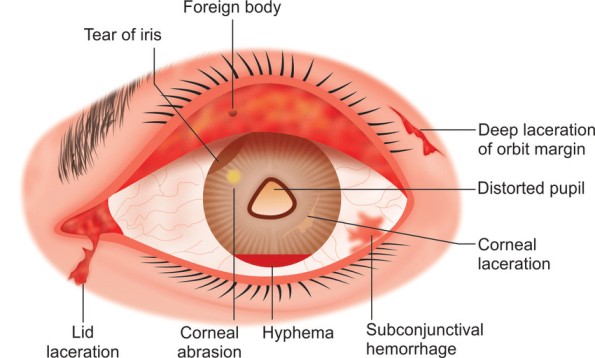
Eye trauma is an injury to the eye that may result in visual impairment.

Ocular trauma refers to any injury to the eye or its surrounding structures caused by physical, chemical, thermal, or radiation agents

It can range from minor irritations to severe injuries affecting vision or structural integrity. Commonly injured structures include the cornea, sclera, lens, retina, vitreous, optic nerve, and orbital tissues.

Types of eye injuries

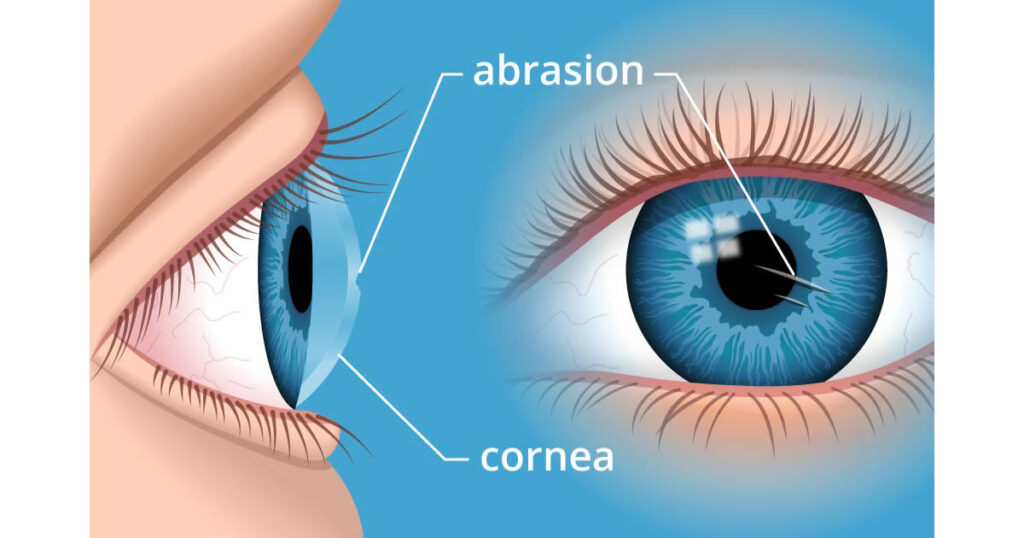
  1. Corneal Abrasions: A corneal abrasion is a scratch or injury to the cornea, the clear, dome-shaped surface that covers the front of the eye.
  2. Chemical burns: Chemical burns occur when the child gets any type of chemical in his or her eye. Chemical burns are a medical emergency, and your child should receive immediate medical care. Chemical burns can result in a loss of vision and even a loss of the eye itself, if not treated promptly and accurately. Household cleaning agents are a common cause of this type of injury.
  3. Hyphemia: This refers to blood in the anterior chamber of the eye. The anterior chamber is the front section of the eye’s interior where fluid flows in and out, providing nourishment to the eye and surrounding tissues. A hyphema is usually caused by an injury to the eye, and blood is seen in the eyeball. This is a medical emergency, and immediate medical care is necessary.
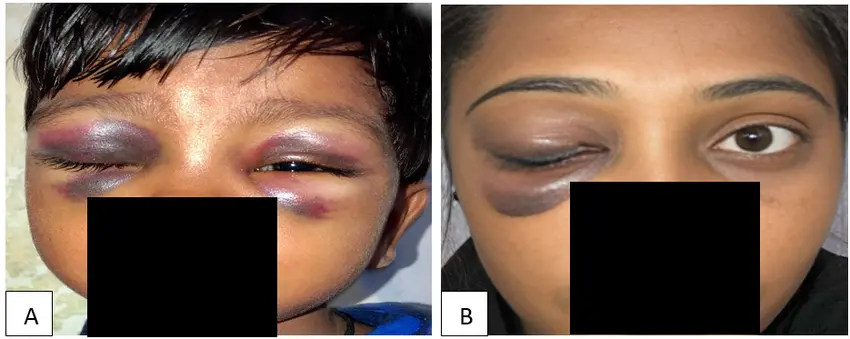
  4. Bruising or Black Eye (Ecchymosis): Ecchymosis, more commonly known as a “black eye,” usually occurs from some type of injury to the eye, causing the tissue around the eye to become bruised. 
  5. Fractures of the orbit: The orbit is the bony structure around the eye. When one or more bones surrounding the eye are broken, the condition is called orbital fracture. An orbital fracture usually occurs after some type of injury or a strike to the face. Depending on where the fracture is located, it can be associated with severe eye injury and damage.
  6. Eyelid lacerations: Eyelid lacerations are cuts to the eyelid caused by injury. The physician will examine the eye closely to make sure there is no damage to the eye itself. 
  7. Foreign bodies. Click here for more on foreign bodies of the eyes
Corneal Abrasion

Corneal Abrasion

Corneal abrasion is defined as a superficial injury that disrupts the integrity of the corneal epithelium, typically caused by trauma, physical irritation, or external mechanical forces.

Corneal abrasion is one of the most frequent types of eye injuries and can result from various causes. Although most cases heal rapidly without long-term effects, deeper injuries can lead to complications such as facet formation or stromal scarring, which may impair vision.


Causes of Corneal Abrasion

Corneal abrasions occur when the corneal surface is physically scraped or disrupted. The following are common causes:

  1. Contact Lenses: Prolonged use, improper fit, or poor hygiene can irritate the cornea, causing abrasions.
  2. Eyelashes: Misaligned (trichiasis) or ingrown eyelashes can repeatedly rub against the cornea.
  3. Foreign Bodies: Small objects such as dust, dirt, sand, or metal fragments can scratch the cornea when lodged under the eyelid.
  4. Eye Surface Dryness: Dehydration of the corneal surface due to poor tear production or exposure to wind can predispose to abrasion.
  5. Chemical Irritants: Exposure to chemicals like cleaning agents or fumes may lead to epithelial disruption, increasing the risk of abrasion.

Signs and Symptoms

Corneal abrasion presents with noticeable symptoms that may significantly affect a patient’s comfort and ability to keep the eye open. These include:

  1. Photophobia: Sensitivity to light, causing reluctance to open the affected eye.
  2. Excessive Tearing: Reflex tearing occurs due to irritation and stimulation of the lacrimal glands.
  3. Severe Eye Pain: The cornea is highly innervated, so even small abrasions cause significant discomfort.
  4. Redness (Conjunctival Injection): Inflammation of the conjunctiva due to irritation or injury.
  5. Blurred Vision: If the abrasion affects the visual axis, it may temporarily interfere with clarity of vision.

Clinical Diagnosis

History Taking: A detailed history is essential to identify the cause and assess risk factors, such as:

  • Use of contact lenses.
  • Exposure to environmental irritants (e.g., debris, chemicals).
  • Past history of similar episodes or underlying eye conditions.
  • Any known drug allergies.

Examination:

  1. Record Visual Acuity: Test both eyes separately to assess the extent of visual impairment.
  2. Use of Slit Lamp: Employ a slit lamp for high magnification to examine the corneal surface for epithelial defects. Fluorescein staining may be applied to highlight the abrasion under cobalt blue light.
  3. Check for Discharge: Evaluate the eye for signs of infection, such as purulent discharge.
  4. Rule Out Foreign Bodies: Carefully evert the eyelids and inspect for retained debris or lashes causing irritation.

Management of Corneal Abrasion

Treatment aims to promote healing, reduce pain, and prevent infection.

Antibiotic Prophylaxis:

  • Apply Chloramphenicol Eye Ointment:
  1. Dosage: Twice daily for 5 days.
  2. Purpose: Prevent bacterial infection during the healing process.
  • Alternatives: Fusidic acid or fluoroquinolone eye drops for contact lens-related abrasions.

Cycloplegic Eye Drops:

  • Administer Cyclopentolate (1%):
  1. Use one drop if the patient experiences photophobia.
  2. Purpose: Relieves pain by paralyzing the ciliary muscle and reducing spasm.

Pain Management:

  • Prescribe oral or topical analgesics for severe discomfort.
  • Avoid over-the-counter anesthetic eye drops, as they delay healing and mask symptoms.

Foreign Body Removal:

  • If a foreign object is present, gently remove it using sterile instruments or irrigation.

Follow-Up:

  • Patients should return for reassessment if symptoms persist beyond 48 hours or worsen, as deeper corneal injuries or infections may require additional interventions.
Chemical Burns eye ocular injury

Chemical Burns

Chemical burns are serious ocular injuries caused by the exposure of the eye to harmful chemicals, which can damage the cornea, conjunctiva, and deeper ocular structures

They are often considered ophthalmic emergencies requiring immediate attention to minimize vision loss. Depending on the type and extent of exposure, chemical burns can range from minor irritation to extensive tissue damage, including permanent scarring and blindness.


Types of Chemical Burns

Chemical burns can be broadly classified based on the nature of the chemical agent involved:

1. Alkali Burns:

  • Alkalis (e.g., ammonia, lime, lye, bleach) cause more severe injuries as they penetrate tissues rapidly, leading to extensive damage.
  • They saponify cell membranes and dissolve the stroma, resulting in deeper penetration.
  • Common sources: Cleaning agents, fertilizers, cement, and industrial chemicals.

2. Acid Burns:

  • Acids (e.g., sulfuric acid, hydrochloric acid, nitric acid) tend to cause coagulative necrosis, forming a barrier that limits further penetration.
  • The damage is usually less severe than alkali burns but still can result in significant ocular injury.
  • Common sources: Car batteries, glass polishing solutions, and chemical labs.

3. Irritants:

  • Substances such as detergents or pepper spray may cause irritation without penetrating tissues deeply.
  • The damage is commonly superficial but can be painful and temporarily debilitating.

Causes of Chemical Burns

Chemical burns are typically caused by exposure to industrial, household, or agricultural chemicals. Common sources include:

  1. Household Cleaners: Ammonia-based cleaners, drain cleaners, and bleach are common culprits.
  2. Industrial Chemicals: Cement, fertilizers, solvents, and laboratory chemicals pose occupational hazards.
  3. Accidents: Splashes from car batteries or exposure to acid-based solutions during industrial processes.
  4. Self-Harm or Assault: Intentional chemical exposure, often involving strong acids or alkalis.
  5. Chemical Weapons: Tear gas, pepper spray, and other irritants used in law enforcement or conflicts.

Signs and Symptoms

Chemical burns to the eye present with symptoms that depend on the type, concentration, and duration of exposure to the chemical. Common signs and symptoms include:

  1. Immediate Pain: Severe burning sensation and discomfort.
  2. Photophobia: Sensitivity to light due to corneal irritation.
  3. Tearing (Epiphora): Reflex tearing to flush out the chemical irritant.
  4. Redness (Conjunctival Injection): Intense redness due to inflammation and vascular dilation.
  5. Blurred Vision: Corneal edema or damage can interfere with vision clarity.
  6. Swelling: Swelling of the eyelids (chemosis) and conjunctiva.
  7. Corneal Haze or Opacity: Indicative of stromal damage, which is more common in alkali burns.
  8. Severe Cases: Ischemia (whitening of the conjunctiva), perforation, or loss of corneal integrity.

Management of Chemical Burns

Chemical burns require immediate intervention to prevent irreversible damage. Treatment includes the following steps:

1. Immediate Irrigation:

  • Goal: Dilute and remove the chemical as quickly as possible.
  • Flush the eye thoroughly with copious amounts of water, saline, or Ringer’s lactate for at least 15-30 minutes.
  • Use an irrigation device (e.g., Morgan lens) if available.
  • Ensure eyelids are fully everted to remove any trapped chemical or debris.
  • Alkali Burns: Continue irrigation longer as they penetrate more deeply.

2. History Taking:

  • Identify the chemical agent if possible (e.g., safety data sheets, packaging).
  • Ask about the time of exposure and initial management attempts.

3. Assessment of pH:

  • Use pH paper to assess the tear film after irrigation.
  • Normal pH is 7.0-7.4; continue irrigation until pH normalizes.

4. Comprehensive Examination:

  • Visual Acuity: Test both eyes separately to document baseline vision.
  • Slit Lamp Examination: Assess corneal integrity, conjunctival damage, and anterior chamber involvement. Apply fluorescein dye to detect epithelial defects.
  • Eyelid and Conjunctiva: Check for burns, ischemia, or necrosis.

5. Medical Management:

  • Topical Antibiotics: Apply Chloramphenicol or Ciprofloxacin eye drops to prevent secondary infection.
  • Cycloplegic Drops: Administer Cyclopentolate (1%) or Atropine (1%) to relieve ciliary spasm and reduce pain.
  • Topical Steroids: Use cautiously to minimize inflammation but avoid long-term use as it may delay epithelial healing.
  • Artificial Tears: Provide lubrication to promote epithelial regeneration and comfort.
  • Ascorbic Acid and Citric Acid: Administered to promote collagen synthesis and minimize corneal ulceration.
  • Tetracycline or Doxycycline: May be prescribed to inhibit collagenase activity and prevent corneal melting.

6. Surgical Management: For severe cases, surgical intervention may be required:

  • Debridement: Removal of necrotic tissue to facilitate healing.
  • Amniotic Membrane Grafts: Promote epithelial recovery in severe damage.
  • Limbal Stem Cell Transplantation: Necessary for extensive limbal ischemia.

7. Follow-Up: Monitor the patient regularly for complications such as:

  • Persistent epithelial defects.
  • Corneal ulcers or thinning.
  • Secondary infections or glaucoma.

Penetrating Eye Trauma

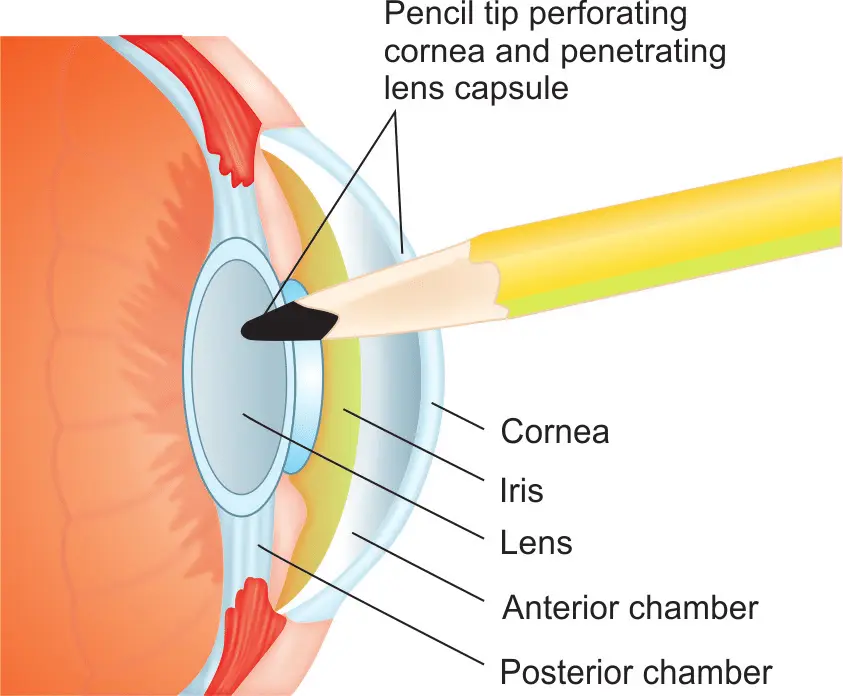
Penetrating eye trauma is a severe ocular injury where an object pierces the eye, resulting in a full-thickness wound to the cornea, sclera, or both. This type of trauma often involves a high risk of vision loss, infection, and other complications if not treated promptly. It is a true ophthalmic emergency requiring immediate assessment and intervention.

Definition and Key Features
  • Penetrating Eye Trauma: A full-thickness injury caused by a sharp or high-velocity object that creates a single-entry wound.
  • Distinguished from perforating trauma, where there are both entry and exit wounds.
  • Commonly associated with other ocular injuries such as lens damage, vitreous hemorrhage, or retinal detachment.

Common Causes of Penetrating Eye Trauma

Penetrating eye injuries often result from accidents, occupational hazards, or violent incidents. Typical causes include:

  1. Sharp Objects: Knives, scissors, needles, or glass shards.
  2. High-Velocity Projectiles: Metal fragments, nails, or bullets.
  3. Industrial or Construction Accidents: Tools like drills or saws, especially in environments without protective eyewear.
  4. Agricultural Work: Injuries from sharp plant material or equipment in farming.
  5. Assault or Violence: Stabbing or intentional harm.
  6. Household Incidents: Injuries caused by mishandling tools or broken objects.
Signs and Symptoms

Penetrating eye trauma presents with distinctive signs and symptoms that require urgent medical attention:

  1. Pain: Severe, acute pain in the affected eye.
  2. Vision Loss: Blurred vision, reduced visual acuity, or complete loss of vision, depending on the injury’s severity.
  3. Visible Wound: Laceration or puncture site visible on the cornea or sclera.
  4. Protrusion of Internal Structures: Uveal prolapse (iris or ciliary body visible outside the wound).
  5. Hyphema: Blood pooling in the anterior chamber.
  6. Vitreous Hemorrhage: Blood in the vitreous humor, often causing visual obscuration.
  7. Decreased Intraocular Pressure (IOP): Often due to globe rupture or leakage of intraocular contents.
  8. Signs of Foreign Body: Visible or detected foreign object within the eye or orbit.
  9. Eye Misalignment: Strabismus or restricted movement due to injury to extraocular muscles.
  10. Seidel’s Test Positive: Fluorescein dye leak indicating aqueous humor leakage.
Management of Penetrating Eye Trauma

Penetrating eye trauma is a medical emergency, requiring immediate and meticulous management to prevent complications.

1. First Aid at the Scene:

  • Avoid Eye Manipulation: Do not attempt to remove the foreign object or apply pressure to the injured eye.
  • Protect the Eye: Shield the eye with a rigid eye shield (e.g., a plastic cup) to prevent further injury.
  • Do Not Instill Drops: Avoid placing any medications or liquids until assessed by a specialist.
  • Prompt Transport: Arrange for immediate transfer to a healthcare facility specializing in eye trauma.

2. History and Examination:

History Taking:

  • Mechanism of injury, time of occurrence, and presence of a foreign body.
  • Assess tetanus vaccination status.

Examination:

  • Record visual acuity in both eyes before intervention.
  • Use a slit lamp to assess the anterior segment, if possible.
  • Perform a Seidel’s test to check for aqueous leakage.

Avoid Pressure on the Eye:

  • Do not press the globe while examining.

3. Imaging:

X-ray or CT Scan:

  • To detect and localize intraocular or orbital foreign bodies.
  • Preferred imaging modality: CT scan (without contrast) to visualize metallic or radiopaque objects.

Ultrasound (B-scan):

  • For posterior segment evaluation, only if globe rupture is ruled out.

4. Medical Management:

  • Antibiotics: Administer systemic antibiotics (e.g., cefazolin + ciprofloxacin) to prevent endophthalmitis.
  • Tetanus Prophylaxis: Provide tetanus immunoglobulin or booster based on the patient’s vaccination history.
  • Pain Relief: Systemic analgesics for pain management.
  • Cycloplegics: Cyclopentolate or atropine drops to reduce ciliary spasm and pain.
  • Avoid Topical Steroids: Steroids are contraindicated until epithelial healing begins.

5. Surgical Intervention: Surgical repair is essential for restoring ocular integrity and function:

  • Wound Closure: Repair corneal or scleral lacerations using sutures.
  • Removal of Foreign Body: Extract intraocular foreign bodies via pars plana vitrectomy or other techniques.
  • Addressing Secondary Injuries: Treat associated injuries like lens damage, retinal detachment, or hemorrhage.
  • Vitrectomy: Indicated in cases of vitreous hemorrhage or retinal injury.
  • Enucleation (if necessary): In severe, irreparable cases, to prevent sympathetic ophthalmia or infection.

6. Postoperative Care: Close monitoring for complications:

  • Endophthalmitis: Intraocular infection requiring aggressive treatment.
  • Glaucoma: Secondary increase in intraocular pressure.
  • Retinal Detachment: Delayed complication requiring surgical repair.

7. Follow-up: Regular follow-up to assess visual recovery and detect late sequelae.


Complications of Penetrating Eye Trauma
  1. Endophthalmitis: Severe, sight-threatening intraocular infection.
  2. Retinal Detachment: Due to posterior segment injury.
  3. Sympathetic Ophthalmia: Autoimmune reaction affecting the uninjured eye.
  4. Corneal or Scleral Scarring: Permanent scarring leading to visual impairment.
  5. Globe Rupture: Extensive damage causing loss of globe integrity.
  6. Blindness: Permanent vision loss if damage is extensive or complications arise.

Prevention
  1. Protective Eyewear: Essential in high-risk environments such as construction, manufacturing, or sports.
  2. Safety Protocols: Adherence to workplace safety guidelines to minimize risks.
  3. Public Awareness: Education on the importance of eye safety and early medical intervention.
Blunt Trauma to the Eye

Blunt Trauma to the Eye

Blunt trauma to the eye refers to injuries caused by a non-penetrating force that impacts the eye and surrounding structures

It is a common type of ocular trauma resulting from direct blows, sudden acceleration or deceleration forces, or high-energy impacts. These injuries can range from mild to severe, potentially leading to vision-threatening complications if not promptly addressed.


Definition and Mechanism of Injury

Blunt Trauma: Non-penetrating injuries caused by a forceful impact to the eye, leading to compression and sudden deformation of the globe.

The trauma can result in:

  • Anterior Segment Injuries: Corneal abrasions, hyphema, and lens dislocation.
  • Posterior Segment Injuries: Retinal detachment, choroidal rupture, and optic nerve damage.
  • Orbital Injuries: Fractures or damage to adjacent structures like the eyelids or lacrimal apparatus.


Common Causes of Blunt Eye Trauma
  1. Sports Injuries: Injuries from balls (e.g., basketball, baseball), racquets, or physical contact in contact sports.
  2. Assaults: Fists, punches, or other blunt objects during physical altercations.
  3. Motor Vehicle Accidents: Airbag deployment, dashboard impact, or windshield collision.
  4. Falls: Impact with hard surfaces during slips or falls.
  5. Industrial Accidents: Blows from heavy machinery or tools without proper eye protection.
  6. Explosive Blasts: Resulting from the shockwave of an explosion.

Signs and Symptoms

Blunt trauma presents a wide variety of symptoms depending on the severity of the injury and the structures involved:

General Symptoms:

  1. Pain: Ranges from mild to severe, depending on the depth and location of the injury.
  2. Blurred Vision: Visual impairment due to corneal, lens, or retinal involvement.
  3. Photophobia: Sensitivity to light, especially in anterior segment injuries.
  4. Periorbital Swelling or Bruising: “Black eye” or ecchymosis around the orbit.
  5. Visible Deformity: In cases of orbital fractures or severe swelling.

Specific Clinical Signs:

  1. Hyphema: Accumulation of blood in the anterior chamber.
  2. Subconjunctival Hemorrhage: Blood pooling under the conjunctiva, giving a red appearance to the eye.
  3. Corneal Abrasions or Edema: Scraping or swelling of the corneal epithelium.
  4. Iris or Pupil Abnormalities: Traumatic mydriasis or irregularly shaped pupil due to sphincter damage.
  5. Retinal Detachment: Flashes, floaters, or loss of peripheral vision due to retinal separation.
  6. Globe Rupture: Severe globe deformity, decreased intraocular pressure (IOP), and prolapse of intraocular contents.
  7. Orbital Fractures: Diplopia (double vision) and enophthalmos (sunken eye) due to damage to the orbital bones.

Management of Blunt Eye Trauma

Blunt trauma to the eye can lead to complex injuries requiring prompt, systematic management.

1. Initial Assessment:

History Taking:

  • Mechanism of injury, time of occurrence, use of protective eyewear, and associated symptoms.
  • Tetanus vaccination history if there are lacerations.

Visual Acuity Testing:

  • Assess vision in both eyes using a Snellen chart or pinhole test.

Comprehensive Examination:

  • Inspect for swelling, bruising, lacerations, and deformities.
  • Perform slit-lamp examination to evaluate corneal, anterior chamber, and lens injuries.
  • Measure intraocular pressure (if no globe rupture is suspected).

2. Imaging:

  • CT Scan (Preferred): Essential for detecting orbital fractures, intraocular foreign bodies, and posterior segment injuries.
  • Ultrasound (B-scan): To assess vitreous hemorrhage or retinal detachment, only if globe integrity is intact.
  • X-ray: May identify fractures but is less sensitive than CT.

3. Acute Medical Management:

  • Pain Management: Administer systemic analgesics for pain relief.
  • Cycloplegics: Cyclopentolate drops to reduce ciliary spasm and photophobia.
  • Topical Antibiotics: Prophylactic antibiotic eye drops or ointments to prevent infection.
  • Steroids: Considered in non-perforating injuries to reduce inflammation and swelling (under specialist guidance).
  • Elevate Head: Helps reduce intraocular pressure and manage hyphema.

4. Specialized Interventions:

  • Hyphema Management: Treat with bed rest, head elevation, and monitoring of intraocular pressure. Avoid NSAIDs (e.g., aspirin) as they may worsen bleeding.
  • Surgical Repair: Required for globe rupture, retinal detachment, or severe orbital fractures.
  • Orbital Decompression: Necessary for severe orbital fractures causing nerve or muscle entrapment.
  • Secondary Procedures: Removal of vitreous hemorrhage or scar tissue in delayed presentations
Complications of Blunt Trauma to the Eye

Blunt eye trauma can lead to acute and long-term complications, including:

  1. Vision Loss: Temporary or permanent, depending on the severity of injury.
  2. Glaucoma: Traumatic glaucoma due to elevated intraocular pressure.
  3. Retinal Detachment: A sight-threatening complication requiring surgical repair.
  4. Post-Traumatic Cataract: Opacification of the lens following trauma.
  5. Sympathetic Ophthalmia: A rare autoimmune reaction affecting the uninjured eye.
  6. Scarring or Deformities: Visible scars or orbital deformities impacting function and appearance.
Prevention
  1. Protective Eyewear: Use safety goggles in high-risk environments such as sports, construction, or industrial work.
  2. Public Awareness: Educate on the importance of eye safety and early medical evaluation.
  3. Occupational Safety Measures: Follow workplace safety protocols to minimize the risk of injury.

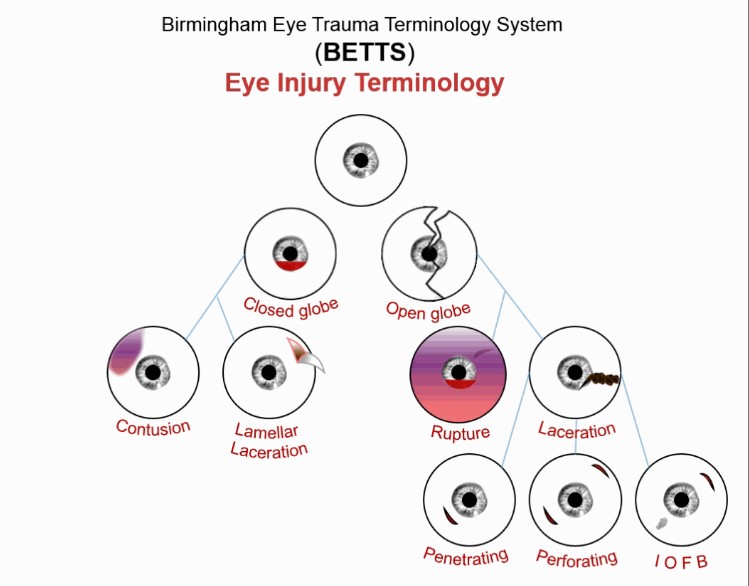
Classification of Eye Injuries Based on BETTS

The Birmingham Eye Trauma Terminology System (BETTS) provides a systematic approach for classifying ocular trauma. It categorizes injuries based on whether the globe remains intact (closed globe) or is compromised (open globe).

Closed Globe Injuries

In closed globe injuries, the outer layers of the eye (cornea and sclera) remain intact, and the injury is confined within the eye.

A. Contusion: Caused by blunt trauma that compresses and damages ocular tissues without causing an open wound.

Features:

  • Hyphema: Blood in the anterior chamber.
  • Vitreous Hemorrhage: Bleeding into the vitreous humor.
  • Choroidal Rupture: Break in the choroid, visible on fundus examination.
  • Retinal Edema or Detachment: May result from force transmitted through the eye.

Examples: Punch to the eye, sports injuries (e.g., impact from a ball).

B. Lamellar Laceration: A partial-thickness wound where the outer layers of the cornea or sclera are disrupted but do not penetrate fully.

Features:

  • No communication between the external environment and the interior of the eye.
  • Symptoms include pain, tearing, and light sensitivity.

Causes: Sharp objects that lightly scrape the eye without full penetration.


Open Globe Injuries

Open globe injuries involve a full-thickness wound of the cornea or sclera, leading to exposure of intraocular structures.

A. Rupture: Caused by a blunt force that increases intraocular pressure, resulting in a burst injury at the weakest point of the globe.

Features:

  • Irregular globe shape due to prolapse of internal tissues.
  • Severe vision loss or no light perception.

Causes: Direct blows to the eye or accidents causing sudden, severe impact.

B. Laceration: A full-thickness wound caused by a sharp object cutting through the eye wall.

Subcategories:

1. Penetrating Injury:

  • A single-entry wound caused by a sharp object.
  • Example: Injury from a nail, knife, or pencil.

2. Perforating Injury:

  • Two wounds: an entry and an exit wound.
  • Example: Gunshot or sharp object passing entirely through the globe.

3. IOFB (Intraocular Foreign Body):

  • A foreign object enters the eye and remains lodged inside.
  • Examples: Metal shards, glass, or wood splinters.
  • Complications include infection (endophthalmitis) or chronic inflammation.

Key Differences in BETTS Terminology

Type

Key Characteristics

Examples

Closed Globe

Intact outer layers (no full-thickness wound).

Contusion, lamellar laceration.

Open Globe

Full-thickness wound of cornea or sclera.

Rupture, laceration, IOFB.

Contusion

Non-penetrating injury causing internal damage.

Hyphema, retinal detachment.

Lamellar Laceration

Partial-thickness wound.

Sharp objects causing abrasion.

Rupture

Burst injury due to increased intraocular pressure.

Blunt trauma from fist or object.

Laceration

Full-thickness cut with intraocular involvement.

Penetrating, perforating injuries.

IOFB

Retained foreign body inside the eye.

Metallic or glass fragments.


Injury by Ocular Structures

Structure

Injuries

Cornea

– Simple abrasions or epithelial damage.

– Recurrent erosions.

– Corneal opacity from trauma or edema.

Sclera

– Partial or full-thickness lacerations.

– Associated with globe rupture in severe cases.

Anterior Chamber

– Hyphema (blood in the chamber).

– Exudates from traumatic uveitis.

Iris and Pupil

– Traumatic miosis (pupil constriction).

– Traumatic mydriasis (dilated, non-responsive pupil).

– Iridodialysis (detachment of the iris root).

– Aniridia (complete loss of the iris).

Lens

– Vossius ring: Pigment deposit on the lens capsule.

– Concussion cataracts.

– Lens dislocation.

Retina and Vitreous

– Commotio retinae (retinal whitening).

– Retinal tears or detachment.

– Vitreous hemorrhage.

Choroid

– Rupture seen as crescent-shaped whitish areas on fundus examination.

– Choroidal hemorrhage or detachment.

General Nursing Interventions for Patients with Eye Trauma

1. Assess Visual Acuity

  • Intervention: Perform baseline and ongoing visual acuity testing using a Snellen chart or equivalent.
  • Rationale: Establishes the degree of visual impairment and helps monitor progression or recovery of vision.

2. Inspect the Eye for Injuries

  • Intervention: Examine the eye for lacerations, swelling, foreign bodies, or other visible abnormalities.
  • Rationale: Identifies the type and extent of injury, guiding appropriate care and treatment.

3. Apply Sterile Eye Dressing

  • Intervention: Cover the affected eye with a sterile eye patch or dressing if indicated.
  • Rationale: Protects the injured eye from further trauma, infection, or environmental irritants.

4. Maintain Head Elevation

  • Intervention: Position the patient with the head elevated at 30–45 degrees.
  • Rationale: Reduces intraocular pressure, minimizes edema, and assists in the management of hyphema or swelling.

5. Administer Prescribed Medications

  • Intervention: Administer antibiotics, cycloplegics, or anti-inflammatory eye drops as prescribed.
  • Rationale: Prevents infection, reduces pain, and controls inflammation to promote healing.

6. Avoid Eye Rubbing

  • Intervention: Educate the patient to avoid touching or rubbing the injured eye.
  • Rationale: Prevents further damage, infection, or aggravation of the injury.

7. Assess for Pain

  • Intervention: Monitor the patient’s pain level and administer analgesics as prescribed.
  • Rationale: Pain relief enhances comfort and compliance with treatment, facilitating recovery.

8. Use Cold Compresses for Swelling

  • Intervention: Apply a cold compress to the affected area if there is swelling (avoid direct pressure on the globe).
  • Rationale: Reduces inflammation and bruising in cases of blunt trauma.

9. Monitor for Signs of Infection

  • Intervention: Observe for redness, warmth, purulent discharge, or worsening pain.
  • Rationale: Early detection of infection allows for timely intervention to prevent complications.

10. Provide Emotional Support

  • Intervention: Reassure the patient and provide emotional support throughout treatment.
  • Rationale: Helps reduce anxiety and promotes trust, improving the patient’s cooperation and recovery.

11. Educate on Proper Medication Use

  • Intervention: Teach the patient how to administer eye drops or ointments correctly.
  • Rationale: Ensures effective use of medications and reduces the risk of further injury or contamination

12. Monitor for Vision Changes

  • Intervention: Frequently assess the patient for any new or worsening visual symptoms.
  • Rationale: Detects complications such as retinal detachment, glaucoma, or optic nerve damage early.

13. Protect the Unaffected Eye

  • Intervention: Advise the patient to limit activities that may strain the uninjured eye.
  • Rationale: Prevents sympathetic ophthalmia, a rare condition where the unaffected eye becomes inflamed.

14. Facilitate Diagnostic Testing

  • Intervention: Prepare the patient for imaging (e.g., CT scan, ultrasound) as ordered.
  • Rationale: Provides detailed information about the injury, aiding in accurate diagnosis and treatment planning.

15. Prepare for Surgical Intervention

  • Intervention: If surgery is required, educate and prepare the patient for the procedure.
  • Rationale: Ensures the patient is informed and reduces preoperative anxiety, improving surgical outcomes.

Eye Trauma Read More »

Foreign body in the Eye

Foreign body in the Eye

FOREIGN BODY IN THE EYE

Foreign object in the eye is something that enters the eye from outside the body.

A foreign body in the eye refers to any external object or substance that enters and remains within the ocular structures, causing discomfort, irritation, or injury.

It can be anything that does not naturally belong there, and may include a speck of dust, wood chip, metal shaving, grass clipping, insect or a piece of glass. 

Most foreign bodies are found under the eyelid or on the surface of the eye. When a foreign object enters the eye it will most likely affect the cornea or the conjunctiva.

  • It can be EXTRA OCCULAR: Lid, sclera conjunctiva cornea or
  • It can be INTRAOCCULAR: Angle of the anterior chamber, iris lens, Vitreous, Retina.
eye anatomy

Find the anatomy of the eye by clicking here

MORBID ANATOMY:

The cornea is a clear doom that covers the front surface of the eye. It serves as a protective covering from the front of the eye. Light enters the eye through the cornea. It also helps to focus light on the retina at the back of the eye.

The conjunctiva is the thin mucous membrane that covers the sclera, or the white of the eye. The conjunctiva runs to the edge of the cornea. It also covers the moist area under the eyelids.

A foreign object that lands on the front part of the eye can not get lost behind the eye ball, but they can cause scratches on the cornea. These injuries usually are minor. However some types of foreign objects can cause  infection or damage the vision.

Causes of Foreign Bodies in the eye.

Causes of Foreign Bodies in the eye.

Foreign bodies commonly enter the eye as a result of everyday activities, environmental factors, or accidents. While most are superficial and easily removable, high-velocity objects present the greatest danger due to their potential to penetrate deeper structures.

  • Foreign Objects at High Speed: Objects like metal or glass particles are often propelled into the eye during explosions, drilling, or hammering. These pose a high risk of injury due to their velocity and sharp edges.
  • Natural Causes:

  1. Eyelashes: Often fall into the eye and cause irritation.
  2. Dried Mucus: Flakes of dried mucus can lodge on the eye’s surface.
  • Environmental Debris:

  1. Dirt and Sand: Typically blown into the eyes by wind or falling debris, these materials are common in outdoor settings.
  2. Sawdust: Often occurs during woodworking or construction activities.
  • Sharp Particles:

  1. Metal Fragments: A common occupational hazard in welding, machining, or using power tools.
  2. Glass Fragments: May result from car accidents, breaking glass, or explosions.
  • Cosmetics: Mascara, eyeliner, or powder-based cosmetics can accidentally enter the eye, especially during application.

  • Chemicals: Cleaning agents, industrial chemicals, or sprays can irritate or damage the cornea when they come into contact with the eye.

  • Contact Lenses: Damaged lenses or improper handling may leave particles in the eye, causing discomfort or injury.

Signs and Symptoms of foreign bodies in the eye.

Foreign bodies in the eyes can present with various symptoms and signs, depending on their location, size, and nature.

A. Corneal Foreign Body

  • Pain: The cornea is highly innervated, making even small foreign bodies excruciatingly painful.
  • Foreign Body Sensation: The patient often describes feeling like something is in the eye, even when the object is not visible.
  • Photophobia (Light Sensitivity): Corneal irritation triggers light sensitivity, as the inflammation affects the pupillary reflex.
  • Tearing: Excessive tearing is a protective mechanism to wash away the irritant.
  • Blurred Vision: May occur if the cornea’s central area is involved, interfering with light transmission.
  • Ciliary Injection: Redness concentrated around the limbus (the junction of the cornea and sclera) indicates corneal irritation or inflammation.
  • Hypopyon: Accumulation of pus in the anterior chamber suggests severe infection or inflammation.

B. Conjunctival Foreign Body

  • Mild Discomfort: Less painful compared to corneal foreign bodies because the conjunctiva has fewer nerve endings.
  • Gritty Sensation: Described as feeling like sand in the eye.
  • Visible Foreign Body: The object is often seen on the conjunctiva upon inspection.
  • Redness and Swelling: Conjunctival injection and mild edema may accompany irritation.
  • Localized Irritation: Irritation is often limited to the area in contact with the foreign body.

C. Intraocular Foreign Body (Penetrating)

  • Severe Pain and Vision Loss: Indicate deeper damage to the eye’s structures.
  • Photophobia and Tearing: Reflex responses to protect the eye.
  • Hyphema: Blood in the anterior chamber is a sign of significant trauma to the iris or ciliary body.
  • Retinal Damage or Detachment: May present as flashes of light, floaters, or sudden loss of peripheral vision.
  • Nausea and Vomiting: These symptoms may accompany severe trauma, possibly due to vagus nerve stimulation.

D. Chemical Foreign Bodies

  • Burning Pain: Often severe, depending on the chemical’s nature (alkali burns cause deeper damage than acidic burns).
  • Tearing and Redness: Immediate attempts by the eye to flush out the irritant.
  • Corneal Opacification: The cornea may become cloudy in severe cases, affecting vision.
  • Conjunctival Injection: Intense redness from irritation or damage.

Additional Clinical Signs

  • Lid Edema: Swelling of the eyelids may occur with significant irritation or trauma.
  • Subconjunctival Hemorrhage: Blood under the conjunctiva may indicate minor trauma or chemical irritation.
  • Anterior Chamber Reaction: Inflammatory cells or blood in the anterior chamber suggest deeper penetration or severe irritation.
  • A Feeling of Pressure or Discomfort: The object’s presence creates a constant sense of heaviness or pressure in the eye.
  • Sensation of a Foreign Body: Patients often feel like something is stuck in their eye, even when the object is not visible.
  • Rubbing of Eyes: Patients instinctively rub their eyes in an attempt to dislodge the object, which can worsen abrasions or push the object deeper.
  • Eye Pain: Pain intensity varies depending on the location and type of foreign body. Corneal foreign bodies are particularly painful due to the cornea’s dense innervation.
  • Extreme Tearing: Reflexive tearing occurs as the eye tries to flush out the irritant naturally.
  • Photophobia (Pain When Looking at Light): Inflammation and irritation make the eye sensitive to light, causing additional discomfort.
  • Excessive Blinking: The eye blinks frequently as a natural protective mechanism.
  • Redness or Bloodshot Appearance: Dilation of conjunctival blood vessels causes visible redness.
  • Discharge of Fluid or Blood: Seen in penetrating injuries, this is a sign of structural damage or rupture.
foreign body classification (1)

Classification of Foreign Bodies in the Eye

Classification Based on Toxicity

Type

Description

Examples

Clinical Relevance

Toxic Foreign Bodies

Substances that can cause chemical burns, systemic toxicity, or significant tissue damage.

– Metallic: Iron, nickel, copper, mercury.

– Non-Metallic: Organic (plant, wood) or inorganic (plastic, glass).

– May cause severe inflammation or infection (e.g., plant matter harboring bacteria).

– Metals like copper and mercury can lead to systemic toxicity.

Inert Foreign Bodies

Generally non-toxic materials causing irritation or mechanical injury rather than chemical damage.

– Metallic: Gold, silver, platinum.

– Non-Metallic: Glass, carbon, rubber.

– Often well-tolerated (e.g., gold) but may cause irritation or abrasion if embedded.


Classification Based on Material Properties

Type

Examples

Clinical Relevance

Metallic

  • Magnetic

Iron, steel, nickel.

– Easily removed using magnets.

– Can rust, causing toxic corneal rust rings requiring removal (Alger brush).

  • Non-Magnetic

Copper, aluminum, mercury, zinc.

– Copper: Can cause chalcosis (severe inflammation).

– Mercury: Highly toxic, potential for systemic absorption.

– Zinc: Tissue irritation and inflammation.

Non-Metallic

  • Organic

Wood, thorns, plant material, insect parts.

– High risk of infection (bacteria or fungi).

  • Inorganic

Glass, plastic, stone, porcelain, rubber.

– Less reactive but can cause significant mechanical damage depending on size and sharpness.


Classification Based on Location

Location

Description

Examples

Clinical Relevance

Superficial

Foreign body located on the surface of the cornea or conjunctiva.

Dust, sand, small metal shavings.

Easily accessible and removed, but may cause corneal abrasions if not treated promptly.

Embedded

Partially or fully lodged in the cornea, sclera, or conjunctiva.

Plant thorns, glass shards, metallic particles.

Can lead to scarring, infection, or tissue damage if not removed properly.

Intraocular

Foreign body penetrating the globe, possibly reaching deeper structures.

High-velocity metal fragments, sharp objects.

Medical emergency; may cause hyphema, retinal detachment, or loss of vision if untreated.


Classification Based on Mechanism of Entry

Type

Description

Examples

Clinical Relevance

Blunt Trauma

Impact without penetration; foreign body may remain on the surface or cause abrasions.

Dirt, dust, small particles.

Can cause significant irritation, tearing, and superficial corneal injuries.

Sharp Trauma

Penetrating injuries caused by sharp objects that may embed foreign bodies deeply in ocular tissues.

Needles, plant thorns, glass shards.

Increased risk of intraocular infection, retinal damage, or structural complications like perforation.

High Velocity

Objects propelled at high speeds, often during industrial accidents.

Metal fragments during welding, explosions.

High risk of intraocular penetration, hyphema, and globe rupture. Requires urgent specialist intervention.


Management of Foreign

Management of foreign bodies in the eyes includes emergency care, hospital care, and preventive measures


A. Emergency Management (Pre-Hospital)

  1. Wash Hands: Ensure hands are clean to prevent infection when managing the affected eye.
  2. Inspect the Eye in Bright Light: Use a flashlight or other bright light for better visualization.
  3. Avoid Eye Pressure: Do not press or rub the eye to prevent further injury.
  4. Do Not Use Tools: Avoid using tweezers or swabs on the eye’s surface, as this can push the object deeper.
  5. Restrict Eye Movement: Minimize eye movement by instructing the patient to keep both eyes still.
  6. Do Not Remove Contact Lenses: Unless there is swelling or a chemical injury, leave lenses in place to avoid additional trauma.
  7. Bandage the Eye: Use a clean cloth or sterile gauze to cover the injured eye gently.
  8. Cover the Uninjured Eye: This helps reduce sympathetic movement of the injured eye.
  9. Refer to Hospital: Ensure the patient gets professional medical care promptly.

B. Hospital Management

10. Topical Anesthesia:

  • Proparacaine or Tetracaine: To numb the eye for painless examination and removal.

11. Fluorescein Staining:

  • A fluorescent dye highlights corneal abrasions or objects under a cobalt blue light.

12. Inspection and Removal:

  • Use a magnifier or slit lamp to locate and remove foreign objects.
  • Moistened Cotton Swab: For superficial conjunctival foreign bodies.
  • Irrigation: Sterile saline may flush out loose debris.
  • Special Instruments: Tools like an Alger brush or fine forceps may be required for embedded objects.

13. Management of Corneal Abrasions:

  • Antibiotic Ointments: Prevent infection (e.g., Ciprofloxacin, Moxifloxacin).
  • Cycloplegics: Eye drops like cyclopentolate or homatropine keep pupils dilated, reducing painful spasms.

14. Pain Management:

  • Acetaminophen or NSAIDs: For larger abrasions or persistent discomfort.

15. Advanced Imaging:

  • CT Scan: Used to detect intraocular foreign bodies or fractures in orbital bones.

16. Treatment of Complications:

  • Corneal Rust Rings: Removed using an Alger brush under magnification.
  • Hyphema Management: Elevate the head, apply cold compresses, and refer for specialized care.

C. Prevention

  • Protective Eyewear: Wear goggles or safety glasses when:
  1. Working with tools like saws, grinders, or hammers.
  2. Handling chemicals or engaging in welding activities.
  • Hygiene and Awareness:
  1. Avoid touching the eyes with dirty hands.
  2. Be cautious in environments prone to airborne debris.

gonioscope

Complications of Foreign Bodies in the Eye

Foreign bodies in the eye, if untreated or improperly managed, can lead to a range of complications. These complications depend on factors such as the type, size, and location of the foreign body, as well as the speed and manner in which it entered the eye.

1. Rust Ring: Iron or steel foreign bodies can oxidize upon contact with eye fluids, leaving a rust ring on the cornea.

  • This can lead to persistent irritation, delayed healing, and requires removal using specialized tools like an Alger brush.

2. Corneal Abrasions and Erosions: Superficial scratches caused by the foreign body or attempts to remove it.

  • May result in recurrent corneal erosions, chronic pain, or blurred vision if not treated properly.

3. Infectious Keratitis: Infection of the cornea, commonly seen with organic foreign bodies like wood or plant material.

  • Can progress to corneal ulcers or abscesses, potentially leading to vision loss if untreated.

4. Endophthalmitis: A severe intraocular infection caused by penetrating injuries introducing pathogens into the globe.

  • Requires urgent treatment to prevent blindness or loss of the eye.

5. Hyphema: Bleeding into the anterior chamber caused by trauma from a penetrating or high-velocity foreign body.

  • Can lead to increased intraocular pressure, corneal staining, or secondary glaucoma.

6. Iritis or Anterior Uveitis: Inflammation of the iris or anterior uveal tract due to trauma or irritation.

  • Causes pain, photophobia, redness, and may lead to long-term complications such as synechiae (adhesions between the iris and lens).

7. Scleral or Corneal Scarring: Permanent scarring due to embedded foreign bodies or complications from abrasions and infections.

  • Can cause significant visual impairment if the scar obstructs the central visual axis.

8. Globe Rupture: Penetrating foreign bodies or severe blunt trauma can lead to rupture of the eye’s outer layers.

  • Medical emergency requiring surgical intervention, often resulting in partial or total vision loss.

9. Retinal Detachment: High-velocity foreign bodies can damage the retina, leading to its separation from the underlying tissue.

  • Presents as flashes of light, floaters, or curtain-like vision loss and requires urgent surgical repair to prevent permanent blindness.

10. Sympathetic Ophthalmia: A rare immune-mediated inflammatory response affecting both eyes, triggered by trauma to one eye.

  • Can cause bilateral vision loss if not identified and treated early.

11. Increased Risk of Glaucoma: Secondary glaucoma may develop due to chronic inflammation, hyphema, or scarring in the anterior chamber.

  • Can result in gradual vision loss due to elevated intraocular pressure.

12. Subconjunctival Hemorrhage: Bleeding under the conjunctiva, often seen in blunt trauma.

  • Usually resolves without treatment but may mask more severe injuries.

13. Persistent Foreign Body Sensation: Residual irritation after removal due to incomplete removal of debris or secondary abrasions.

  • May lead to chronic discomfort, requiring further evaluation and management.

14. Anterior Chamber Foreign Bodies: Small foreign bodies can settle in the anterior chamber, causing inflammation or secondary infection.

  • May require advanced surgical techniques for removal.

15. Cataract Formation: Penetrating injuries that disrupt the lens capsule may lead to traumatic cataracts.

  • Requires surgical intervention to restore vision.

Nursing Interventions for a Child with a Foreign Body in the Eye

The interventions aim to minimize the child’s pain and anxiety, prevent complications, and ensure timely and effective treatment while educating caregivers on prevention.

1. Assess the Child’s Condition.

  • Intervention: Conduct a thorough assessment of the child’s eye, documenting signs such as redness, tearing, swelling, or visible foreign body.
  • Rationale: Early assessment helps determine the severity of the injury and guides immediate care.

2. Ensure Safety and Comfort.

  • Intervention: Calm and reassure the child, keeping them still to prevent further eye movement.
  • Rationale: Reducing anxiety minimizes reflexive rubbing or blinking, preventing further injury.

3. Educate the Caregiver.

  • Intervention: Instruct the caregiver to avoid touching or attempting to remove the foreign body themselves.
  • Rationale: Improper handling can worsen the condition or cause secondary trauma.

4. Position the Child Properly.

  • Intervention: Position the child upright and instruct them to avoid lying flat, especially in cases of suspected penetration.
  • Rationale: Upright positioning reduces intraocular pressure and minimizes the risk of fluid leakage.

5. Restrict Eye Movement.

  • Intervention: Cover both eyes with a sterile dressing or eye shield to restrict ocular movement.
  • Rationale: Moving one eye causes the other to move reflexively, which can exacerbate the injury.

6. Perform Gentle Irrigation (If Appropriate).

  • Intervention: Irrigate the affected eye with sterile saline solution if the foreign body is superficial and safe to remove.
  • Rationale: Irrigation helps flush out loose debris without causing further trauma.

7. Administer Prescribed Topical Anesthesia.

  • Intervention: Apply prescribed topical anesthetics (e.g., proparacaine) to numb the eye for examination or treatment.
  • Rationale: Reduces pain and allows easier inspection and removal of the foreign body.

8. Monitor for Signs of Complications.

  • Intervention: Observe for signs of infection, vision changes, or increased swelling and redness.
  • Rationale: Prompt detection of complications like infection or hyphema ensures timely intervention.

9. Provide Pain Management.

  • Intervention: Administer prescribed pain relievers, such as acetaminophen, to manage discomfort.
  • Rationale: Relieving pain helps keep the child calm and cooperative during treatment.

10. Facilitate Ophthalmology Referral.

  • Intervention: Arrange for immediate referral to an ophthalmologist for advanced care, especially for penetrating or embedded foreign bodies.
  • Rationale: Specialized care is necessary to prevent complications such as corneal scarring or vision loss.

11. Support Emotional Well-being.

  • Intervention: Use age-appropriate communication to explain procedures to the child and involve caregivers in comforting them.
  • Rationale: Addressing fear and anxiety improves cooperation and builds trust.

12. Educate on Prevention.

  • Intervention: Teach the child and caregivers about using protective eyewear during activities such as playing with sharp objects, using tools, or engaging in outdoor activities.
  • Rationale: Preventive measures reduce the risk of future injuries.


Foreign body in the Eye Read More »

Stye (Hordeolum)

Stye (Hordeolum).

Stye Lecture Notes for Nurses

Stye or Hordeolum

A stye is a painful, red lump that forms on the edge of the eyelid. It is an acute infection of a small gland in the eyelid, most commonly caused by the bacterium Staphylococcus aureus. The medical term is Hordeolum.

A stye is a localized infection of the hair follicles or sebaceous glands of the eyelids.

A stye is a staphylococcal abscess that may occur on either the external or internal margin of the eyelids.

Types of Stye

External Stye (Hordeolum Externum)

This is the most common type, appearing on the outer edge of the eyelid. It is an infection of an eyelash follicle or a gland of Zeis or Moll. External styes are generally more painful than internal styes because they form on the surface of the eyelid, often along the lash line, involving many nerve endings, making them tender and noticeable.

  • Location: Outer edge of the eyelid, at the lash line.
  • Cause: Acute bacterial infection of an eyelash follicle or a sebaceous gland (Gland of Zeis or Moll).
  • Pain Level: Typically more acutely painful, sharp, and localized tenderness.
  • Appearance: Often resembles a small, red, tender pimple or boil, sometimes with a visible head.
Internal Stye (Hordeolum Internum)

This forms on the inner surface of the eyelid and is an infection of a Meibomian gland (an oil-producing gland within the eyelid). Unlike external styes, the pain from an internal stye is often described as a more generalized ache or pressure rather than sharp, localized pain, and they tend to be less acutely painful. However, they can cause more significant and diffuse swelling of the entire eyelid. Internal styes may sometimes require medical intervention for drainage as they are less likely to rupture on their own and tend to recur.

  • Location: Inner surface of the eyelid, often causing swelling across the entire eyelid.
  • Cause: Acute bacterial infection of a Meibomian gland.
  • Pain Level: Less acutely painful than external styes, often a generalized ache or pressure.
  • Appearance: Can cause significant, diffuse swelling of the eyelid; the lump may be felt or seen when the eyelid is everted.
Chalazion

A chalazion is not a type of stye, but rather a chronic, non-infectious lump in the eyelid. It often develops when an internal stye doesn't fully resolve, or when a Meibomian gland becomes blocked and its contents (oil) are released into the surrounding tissue, causing sterile inflammation. Unlike styes, chalazia are typically painless once the initial inflammation subsides, although they can cause cosmetic concerns or, if large enough, temporary blurred vision by pressing on the cornea.

  • Location: Usually forms deeper in the eyelid, away from the lid margin.
  • Cause: Blocked Meibomian gland, leading to sterile inflammation; often a sequela of an untreated internal stye.
  • Pain Level: Generally painless and non-tender after the initial inflammatory phase subsides.
  • Appearance: A firm, round, non-tender lump in the eyelid; typically no acute redness unless secondarily infected.

Clinical Features (Signs and Symptoms)

The signs and symptoms of a stye are very distinct. You will see and hear the following from your patient:

  • A visible lump: A noticeable red lump appears on the top or bottom eyelid.
  • Swelling and Redness: The area is red and swollen. Sometimes a small area is affected, but sometimes the entire eyelid swells up.
  • Pain and Tenderness: The lump is painful, and it is tender when touched.
  • Itching and Burning: Patients often complain of itching in the early stages, as well as a burning sensation in the eye.
  • Pus Formation: A tiny, yellowish spot (pus point) develops at the center of the swollen area after 2-3 days, right before it may burst spontaneously.
  • Eye Discomfort: Patients feel a gritty sensation, as if a foreign body is in the eye. There is also discomfort during blinking.
  • Watering and Discharge: The eye may water excessively (tearing) and can have mucous discharge. This can lead to crusting of the eyelid margins, especially upon waking.
  • Sensitivity to Light (Photophobia): The eye becomes very sensitive to bright light.
  • Blurred Vision: In some cases, vision may be temporarily blurred due to the swelling or discharge.

In summary,

  • Redness on the affected area
  • Pain
  • Tenderness
  • Itching
  • Photophobia
  • Pus formation
  • Yellowish swelling 3 days b4 opening spontaneously
  • May burst spontaneously
  • Itching in the early stages
  • A lump on the top or bottom eyelid
  • Swelling, pain & tenderness
  • Pus formation
  • Watering of the eye
  • Eye is sensitive to light
  • Small area of the eyelid is swollen but sometimes the entire eyelid swells up
  • Tiny, yellowish spot develops at the center of the swollen area
  • Discomfort during blinking
  • Sensation of a foreign body in the eye
  • Mucous discharge in the eye
  • Blurred vision
  • Crusting of the eyelid margins
  • Burning in the eye
  • Management of a Stye

    The goals are to

  • relieve pain, promote drainage, and prevent the spread of infection. Most styes will heal spontaneously with simple care.
    • Usually the stye will heal spontaneously
    • Avoid rubbing the eye as this might spread the infection
    • Apply a warm/ hot compress to the eye for 10 minutes
    • Apply tetracycline eye ointment 1% 2-4 times daily until 2 days after symptoms have disappeared
    • Remove the eye lash when it’s loose
    • When the forms in one of the deeper glands of the eyelid a condition is called internal hordeolum
    • The pain and other symptoms are usually more severe.
    • Because this type of the stye rarely ruptures by it self, a doctor may have to open it to drain the pus
    Immediate and Home Care (Conservative Management)
    • Warm Compresses: This is the most important treatment. Apply a clean cloth soaked in warm water to the closed eye for 10-15 minutes, 3-4 times a day. This helps drainage.
    • Lid Hygiene: Gently clean the eyelid margins to remove crusts and bacteria.
    • Important Advice: Tell the patient to NEVER squeeze or rub the stye, as this can spread the infection deeper.
    • Eyelash Removal: You can gently remove an eyelash if it is loose and coming directly from the center of the stye, as this can help it drain.
    Medical Management
    • Topical Antibiotics: A clinician may prescribe Tetracycline 1% eye ointment or Chloramphenicol eye ointment, applied 2-4 times daily until 2 days after symptoms have disappeared.
    • Pain Relief: Simple analgesics like Paracetamol can be used for pain.
    • Oral Antibiotics: These are reserved for severe infections or if the infection spreads to the surrounding skin (preseptal cellulitis).
    Surgical Management
    • Incision and Drainage (I&D): This procedure is performed if resolution does not begin in the next 48 hours after warm compresses are started, especially for a painful internal hordeolum.
    • Procedure: The procedure consists of the doctor numbing the area, making a very small incision on the inner or outer surface of the eyelid, and draining the pus. Very small sutures may be used to close the lesion.

    Nursing Interventions

    Your role as a nurse is central to effective management and prevention.

  • Assess and Differentiate: Conduct a thorough assessment of the patient’s eye, taking a good history to differentiate between a stye and other conditions like a chalazion or cellulitis. Assess pain using a pain scale.
  • Educate on Warm Compresses: Demonstrate the correct technique for warm compresses—using a clean cloth, ensuring the water is warm (not hot), and applying for the right duration and frequency.
  • Reinforce the "No Squeeze" Rule: Emphatically explain why squeezing or rubbing is dangerous and can lead to a much worse infection like cellulitis.
  • Promote Eyelid Hygiene: Teach the patient and their family how to gently clean the eyelids with warm water and a clean cotton ball to remove crusts and reduce bacterial load.
  • Administer Medications Safely: If prescribed, teach the patient the correct way to apply eye ointment or drops without contaminating the tube/bottle tip and without touching the eye itself.
  • Implement Infection Control Measures: Stress the importance of rigorous hand washing before and after touching the eye. Advise against sharing towels, pillowcases, and facecloths.
  • Monitor for Complications: Continuously assess for signs of worsening infection, such as increased swelling, severe pain, changes in vision, or fever. Know the red flags for referring to a doctor immediately.
  • Provide Pain and Comfort Management: Administer prescribed analgesics and reassure the patient that styes are common and usually resolve with proper care. This reduces anxiety.
  • Offer Nutritional Advice: Suggest a healthy diet rich in vitamins A and C to support immune function and promote healing.
  • Provide Clear Discharge and Prevention Advice: Give clear, simple instructions on how to prevent recurrence, focusing on makeup hygiene, not rubbing eyes, and managing underlying conditions like blepharitis.
  • Document Everything: Accurately document all assessments, interventions, patient education provided, and the patient's response to treatment in the nursing notes.
  • Nursing Care Plan

    Assessment Nursing Diagnosis Planning (Goals) Implementation: Interventions Implementation: Rationale Evaluation
    Subjective: Patient states, "My eyelid is very sore."
    Objective: Localised, red, swollen, tender lump on the upper eyelid margin.
    Acute Pain related to the inflammatory process and pressure from abscess as evidenced by patient's verbal report and tenderness on palpation. Patient will report a reduction in pain within 24 hours. Patient will demonstrate correct application of warm compress. 1. Teach and demonstrate application of warm compresses for 10-15 mins, 4x daily.
    2. Administer prescribed analgesics.
    3. Advise patient to avoid touching the stye.
    1. Heat promotes drainage, which relieves pressure and pain.
    2. Analgesics provide systemic pain relief.
    3. Pressure worsens pain and risks spreading infection.
    Goal Met. Patient reports pain has decreased and correctly shows how to apply a warm compress.
    Objective: Patient wears contact lenses and heavy eye makeup. Asks, "Why do I keep getting these?" Deficient Knowledge related to disease process, self-care, and prevention strategies as evidenced by patient's question and identified risk factors. By end of session, patient will verbalize 3 key preventive measures. 1. Educate on strict hand hygiene.
    2. Instruct on not sharing cosmetics/towels.
    3. Advise to remove makeup nightly and discard old products.
    4. Instruct to avoid wearing contact lenses until healed.
    1. Reduces bacterial transfer to the eye.
    2. Prevents cross-contamination.
    3. Empowers patient to modify risk factors and prevent recurrence.
    4. Prevents trapping bacteria and irritating the eye.
    Goal Met. Patient correctly lists hand washing, not sharing makeup, and removing makeup as preventive measures.
    Objective: Pus point is visible on the stye. Patient lives in close quarters with siblings. Risk for Infection related to the presence of an active bacterial lesion and potential for poor hygiene. Patient and family will remain free from signs of spreading infection throughout the illness. 1. Emphasize that personal items (towels) must not be shared.
    2. Instruct to wash hands after touching the eye or applying medication.
    3. Teach correct application of antibiotic ointment if prescribed.
    1. Staph bacteria are easily transmitted via contaminated items.
    2. Prevents auto-inoculation and spreading to others.
    3. Topical antibiotics treat the local infection and reduce bacterial load.
    Goal Met. The stye resolved without spreading. No other family members developed styes.

    Complications

    • Chalazion: An internal stye may heal and leave a painless lump.
    • Preseptal Cellulitis: The infection spreads to the whole eyelid. This needs urgent antibiotic treatment.
    • Orbital Cellulitis: A medical emergency where the infection goes behind the eye. Refer immediately.
    • Recurrence: Styes can come back, especially with poor hygiene.

    Prevention

    • Good Personal Hygiene: Proper and regular hand washing is the most important preventive measure.
    • Face Washing: Keep the face, especially the eye area, clean.
    • Makeup Hygiene: Never share cosmetics or eye makeup tools. Remove all makeup every night. Discard old or contaminated eye makeup (every 3-6 months).
    • Do Not Share Personal Items: Avoid sharing towels, flannels, or pillowcases.
    • Good personal hygiene,Proper hand washing
    • Regular washing of the face
    • Remove any loose eyelashes
    • it is recommended to never share cosmetics or cosmetic eye tools with other people
    • It is also recommended to remove makeup every night before going to sleep and discard old or contaminated eye makeup.

    Stye (Hordeolum). Read More »

    Trachoma

    Trachoma

    Trachoma

    Trachoma is  contagious infection of the conjunctiva and cornea characterized by formation of granulation and scarring
    • Trachoma is a contagious bacterial infection which affects the conjunctival lining covering of the eye, the cornea and the eyelids.
    • Is a Greek word meaning “ Roughness”

    Etiology

    • Trachoma is caused by the Chlamydia trachomatis bacteria and is essentially preventable and curable.
    • It is the leading infectious cause of blindness in the world and it spreads very easily.

    Predisposing Factors to Trachoma

    • Poor sanitation (lack of latrines, rubbish pit)
    • Unclean water supply/ even lack of water.
    • Living in dry and dusty environment.
    • Overcrowding with unhygienic conditions.
    • Reduced personal and community hygiene allow the bacteria to infect and reinfect the eyes of the individuals living in endemic areas.

    Risk Factors of Trachoma

    • Dirty face
    • Improper hand hygiene
    • Ignorance about personal hygiene and environmental sanitation.
    • Inadequate housing and lack of functional housing
    • Crowded living conditions e.g. children sharing beds.
    • Poor water supply.
    • Swimming in water
    • Poor nutrition
    • Age
    • Occupation

    Risks for Mode of Spread: 6D’s

    • Dry
    • Dusty
    • Dirty
    • Density
    • Dung
    • Discharge

    Mode of Transmission: 5F’s

    • Fingers
    • Flies
    • Feaces
    • Face
    • Fomites

    Incubation period

    • 5- 21 days

    Mode of infection 

    • Direct spread (e.g. direct personal contact)
    • Vector transmission (e.g. bush fly, house fly)
    • Material transfer (e.g. shared towels clothes)

    Clinical Features of Trachoma.

    • The signs and symptoms will depend on the presence/ absence of secondary infection, incase of a bacterial infection the signs resemble bacterial conjunctivitis.
    • Conjunctiva appears congested.
    • Irregular scarring of the conjunctiva
    • The cornea shows superficial keratitis
    • Later corneal opacity and corneal ulcer may occur.
    • Eye irritation
    • Redness and itching
    • Mucoid Discharge
    • Swelling of the eyelids
    • Inflammation inside the upper eyelid
    • Scarring of the upper lid
    • Distortion of the upper eyelid
    • Development of eyelashes that turns into the eye lid then rub on the cornea causing entropion
    • Abnormal growth of corneal blood vessels
    • Foreign body sensations
    • Stickiness of the lids
    • Keratitis
    • Conjunctival congestion
    • Herbert follicles and Herbert pits develop
    • Conjunctival scarring
    • Corneal ulcer
    • Corneal opacity

    WHO classification of Trachoma (FISTO)

    Trachomatis Follicular inflammation (TF)

    • This is an active phase of the disease at least with 5 or more follicles already forming in the upper margin and there size is larger than 0.5mm in diameter.

    Trachomatis inflammation (TI)

    • The inflammation is very active with thickening of the upper conjunctiva.

    Trachomatis Scarring: (TS)

      • Trachomatis scarring in the tarsal conjunctiva seen as a white bands or threads of fibrosis.

    Trachomatis trichiasis(TT)

    • When at least 1 eyelash rubs on the ocular surface. (atleast one trichiasis lash)

    Trachomatis corneal opacity (C.O)

    • Corneal opacity: when there is visible corneal opacity in the eye pupillary area and a visual acuity less than 6/18

    DIAGNOSIS :

    • History
    • Physical examination
    • Investigation: Pus swab

    Management of Trachoma

    Aims

    • To prevent spread
    • To Relieve symptoms
    • To prevent complications
    1. Admission
    2. Isolation
    3. History taking
    4. Reassurance
    5. Observation : physical examination and specific examination
    6. Inform the ophthalmologist
    7. Investigations are done
    8. Medical history is taken
    9. Medical Treatment.

    T= tetracycline

    E = Erythromycin

    S=Sulfacetamide

    T= Topical

    Medical management.

    • Topical application of antibiotics like 1% Tetracycline ointment 3 times daily for six weeks.
    • Erythromycin, azromycin eyedrops is instilled 4 times daily for six weeks.
    • Systemic steroids can be given to reduce the inflammation/congestion like predisolone or dexamethasone.
    • Alternatively doxycycline may be given for 2-3 weeks ( dose is given according to age of the patient).

    Surgical management

    1. Surgery is performed for in turned eyelids (entropion)
    2. Electrolysis: insertion of a probe into the follicle to pull it out.
    3. Cyrotherapy : Using cold freeze thaw to squeeze the follicle
    4. Argon laser treatment: The follicle will be destroyed.

    Nursing Care

    • Regular cleaning of the eyes
    • Disinfect equipments used
    • Ironing and cleaning linens
    • Encourage hand washing
    • Barrier nursing measures
    • Nutrients e.g. proteins and vitamins
    • Rest and sleep
    • Reassurance

    Advice on discharge

    • Health education on environmental change
    • Drug compliance
    • Increase access to clean water and sanitation.

    Nursing Diagnosis for Trachoma

    1. Acute pain: eye related to swelling of the lymph nodes, photophobia and inflammation.
    2. Disturbed Sensory Perception: Visual related to damage to the cornea.
    3. Risk for infection, the spread related to lack of knowledge.
    4. Body image disorders related to loss of vision.

    Complications.

    • Trichiasis (inward growth of eyelashes that rub on the cornea, conjunctiva)
    • Entropion (eyelid rolled inward against eyeball by muscle spasm by scarring of the conjunctiva)
    • Keratitis(inflammation of the cornea)
    • Ptosis(abnormal low lying or drooping of the upper eyelid)
    • Secondary glaucoma
    • Corneal opacity, blindness.

    Preventive Measures

    • Avoid physical contact with a person suffering from trachoma
    • Personal cleanliness especially the face and hands
    • Washing hands and face frequently with soap and water
    • Keep separate towels, handkerchiefs, linens for each member of the family
    • Use latrines to dispose off faeces covered with lid
    • Avoid crowded places
    • Wash , hang , dry and iron all linens
    • Good hygiene during deliveries
    • Avoid eye makeup
    • Spray flies
    • clean compounds to keep away flies
    • Early diagnosis and treatment
    Prevention ( SAFE) Strategy by WHO.
    • S= Surgery (Surgery for trchiasis/entropion/corneal opacity)
    • A=Antibiotics (Azithromycin 500mg single dose)
    • F= Facial cleanliness
    • E= Environmental Improvement.

    Trachoma Read More »

    conjunctivitis

    Conjunctivitis

    Conjunctivitis

    Conjunctivitis is an inflammation of the lining of the eye and eyelid caused by bacteria, viruses, chemicals or allergies, fungal, parasites.

    • It is characterized by dilatation of the conjunctival vessels, resulting in hyperemia and edema of the conjunctiva, typically with associated discharge.
    • It’s the most common cause of red eye usually painless and characterized by pussy or watery discharge.

    Types of Conjunctivitis

    1. Bacterial conjunctivitis :- caused by bacterium e.g. staphylococcus or streptococcus
    2. Acute viral conjunctivitis:- e.g. herpes simplex
    3. Allergic conjunctivitis:- caused by allergy e.g. smoke, cosmetic and medicines
    Bacterial Conjunctivitis

    Predisposing factors for bacterial conjunctivitis

    • Flies
    • Poor hygienic conditions
    • Hot dry climate
    • Poor sanitation
    • Dirty habits

    Causes of Bacterial Conjunctivitis

    • Staphylococcus aureus is the most common cause of bacterial conjunctivitis
    • Pneumococcus.
    • Streptococcus pyogenes (haemolyticus) is virulent and usually produces pseudomembranous conjunctivitis.
    • Pseudomonas pyocyanea is a virulent organism, which readily invades the cornea.
    • Neisseria gonorrhoeae typically produces acute purulent conjunctivitis in adults and ophthalmic neonatorum in newborn
    • Neisseria meningitidis may produce muco-purulent conjunctivitis.
    • Corynebacterium diphtheriae causes acute membranous conjunctivitis

    Mode of Infection

    Conjunctiva may get infected from three sources:-

    1.Exogenous infections may spread:

    • Directly through close contact
    • Vector transmission e.g., flies
    • Material transfer e.g. infected fingers of health workers, common towels,handkerchiefs & tonometers
    1. Local spread may occur from neighbouring structures such as infected lacrimal sac, lids, and nasopharynx.
    2. Endogenous infections may occur very rarely through blood, e.g., gonococcal and meningococcal infections.
    Pathology
    • Pathological changes of bacterial conjunctivitis consist of:
    1. Vascular response. It is characterized by congestion and increased permeability of the conjunctival vessels associated with proliferation of capillaries.
    2. Cellular response. It is in the form of exudation of polymorphonuclear cells and other inflammatory cells into the substantia propria of conjunctiva as well as in the conjunctival sac.
    3. Conjunctival tissue response. Conjunctiva becomes edematous. The superficial epithelial cells degenerate, become loose and even desquamate. There occurs proliferation of basal layers of conjunctival epithelium and increase in the number of mucin-secreting goblet cells.
    4. Conjunctival discharge. It consists of tears, mucus, inflammatory cells, desquamated epithelial cells, fibrin and bacteria. If the inflammation is very severe, diapedesis of red blood cells may occur and discharge may become blood stained.
    Acute Bacterial Conjunctivitis
    • Acute bacterial conjunctivitis is characterized by marked conjunctival hyperemia and mucopurulent discharge from the eye.
    • It is the most common type of bacterial conjunctivitis.
    • Common causative bacteria are: Staphylococcus aureus, Pneumococcus and Streptococcus.

    Infectious period

    The time during which an infected person can infect others thus while the eye discharge is present.

    Clinical Presentation

    • Typically there is conjunctival infection, especially in the fornices where the blood supply is rich.
    • Discharge is variable, but typically is present in the mornings, and on waking the eye is difficult to open because the eyelids are stuck together.
    • The eyelids may be red and inflamed.
    • The condition may be unilateral or bilateral.
    • The vision is always unaffected and there is usually no pain.
    • The patient may complain of a gritty or foreign body sensation, some discomfort and very occasionally very mild photophobia.
    • Slight blurring of vision due to mucous flakes in front of cornea.
    • Flakes of mucopus seen in the fornices, canthi and lid margins is a critical sign

    Clinical course and diagnosis

    • Mucopurulent conjunctivitis is usually bilateral, although one eye may become affected 1–2 days before the other.
    • The disease usually reaches its height in three to four days. If untreated, in mild cases the infection may be overcome and the condition is cured in 10–15 days

    Diagnosis

    • It is by clinical and/or microscopic examination and culture of discharge from the eye.
    • It is usually not possible to tell whether the conjunctivitis is caused by bacteria or viruses without laboratory tests.

    Management of bacterial Conjunctivitis

    • Clean the eyes and apply topical antibiotics
    • Bacterial conjunctivitis usually resolves without treatment
    • Topical antibiotics may be needed only if no improvement is observed after 3 days
    • Dark goggles should be used to prevent photophobia.
    • No bandage should be applied in patients with mucopurulent conjunctivitis. Exposure to air keeps the temperature of conjunctival cul-de-sac low which inhibits the bacterial growth
    • No steroids should be applied, otherwise infection will flare up and bacterial corneal ulcer may develop.
    • Topical Antibiotics:
    • Therefore, treatment may be started with chloramphenicol (1%), or gentamicin (0.3%), or tobramycin 0.3% or framycetin 0.3% eye drops 3–4 hourly in day and ointment used at night will not only provide antibiotic cover but also help to reduce the early morning stickiness.
    • Quinolone antibiotic drops such as ciprofloxacin (0.3%), ofloxacin (0.3%), gatifloxacin (0.3%) or moxifloxacin (0.5%) may be used as alternative in severe cases
    Chronic Bacterial Conjunctivitis
    • Chronic bacterial conjunctivitis also known as ‘Chronic catarrhal conjunctivitis’ or ‘simple chronic conjunctivitis’ is characterized by mild catarrhal inflammation of the conjunctiva.
    Viral Conjunctivitis

    Viral causes include:

    • Adenovirus
    • Herpes simplex virus
    • Poxvirus
    • Mycovirus and Paramyxovirus

    Signs of Viral conjunctivitis

    • Red/pink eye.
    • Chemosis, if severe.
    • Follicles may be present on the palpebral conjunctiva.
    • Bleeding from conjunctival vessels in severe adenoviral conjunctivitis.

    Management/Treatment

    1. Supportive treatment for amelioration of symptoms is the only treatment required and includes:
    • Apply cold compresses
    • If photophobia is present, advise patient to wear dark glasses
    • Artificial lubricant can be prescribed for patient comfort.
    1. Topical antibiotics help to prevent superadded bacterial infections.
    2. Topical antiviral drugs are not beneficial in adenoviral conjunctivitis.
    3. Topical steroids should not be used during active inflammation as these may enhance viral replication and extend the period of infectivity.
    • Weak steroids such as fluorometholone or loteprednol (0.5%) are indicated in patients with subepithelial infiltrates, and in those with membrane formation.
    1. Full explanation of the condition to increase patient awareness and reduce discomfort.


    Preventive measures include:

    • Frequent hand washing
    • Relative isolation of infected individual
    • Avoiding eye rubbing and common use of towel or handkerchief sharing
    • Disinfection of ophthalmic instruments and clinical surfaces after examination of a patient is essential.
    Allergic Conjunctivitis
    • It is the inflammation of conjunctiva due to allergic or hypersensitivity reactions which may be immediate (humoral) or delayed (cellular).

    Types

    1. Simple allergic conjunctivitis
    • Seasonal allergic conjunctivitis (SAC)
    • Perennial allergic conjunctivitis (PAC)
    1. Vernal keratoconjunctivitis (VKC)
    2. Atopic keratoconjunctivitis (AKC)

    Simple Allergic Conjunctivitis

    • It is a mild, nonspecific allergic conjunctivitis characterized by itching, hyperaemia and mild papillary response.

    Etiology

    • Simple allergic conjunctivitis, is a type-I immediate hypersensitivity reaction mediated by IgE.

    Types

    1. Seasonal allergic conjunctivitis (SAC). SAC is a response to seasonal allergens such as tree and grass pollens. It is of very common occurrence and may be associated with allergic rhinitis.
    2. Perennial allergic conjunctivitis (PAC) is a response to perennial allergens such as house dust, animal dander and mite. The onset is subacute, the condition is chronic in nature and occurring all through the year.

    Clinical Features

    Symptoms

    • Intense itching and burning sensation in the eyes associated with watery mucus and mild photophobia.

    Signs

    • Hyperaemia and chemosis which give a swollen juicy appearance to the conjunctiva.
    • Oedema of lids is often present.

    Diagnosis

    Diagnosis is made from:

    • Typical symptoms and signs,
    • Normal conjunctival flora, and
    • Presence of abundant eosinophils in the discharge.

    Treatment

    1. Elimination of allergens if possible.
    2. Topical vasoconstrictors like naphazoline, antizoline and tetrahydrozoline provide immediate decongestion.
    3. Artificial tears like carboxymethyl cellulose provide soothing effect. As they sometimes relieve discomfort in mild cases
    4. Mast cell stabilizers such as sodium cromoglycate and nedocromil sodium are very effective in preventing recurrences in atopic cases.
    5. Steroids, if condition is severe
    6. Cool water poured over the face with the head inclined downward constricts capillaries.

    Other forms of Conjunctivitis

      Fungal conjunctivitis

      it is caused by Candida albicans. Babies can be affected during birth through an infected birth canal.

    • Fine white plaques are apparent on the conjunctiva.
    • The treatment is with nystatin drops and ointment.
      Parasitic conjunctivitis
    • In hot climates, parasites causing onchocerciasis (river blindness) and schistosomiasis (bilharzia) can induce conjunctivitis.

    Prevention

    • Exclude people with conjunctivitis from public places until discharge from the eyes has ceased.
    • Good personal hygiene must be followed. Careful hand washing, using soap and warm water.
    • Do not share towels and wash clothes

    Conjunctivitis Read More »

    eye anatomy and physiology

    Eye Anatomy and Physiology

    Eye Anatomy.

     Eye  is the organ for sight. The globe-shaped eyeball occupies the anterior part of the orbit/eye socket. The eyeball is embedded in the orbital cavity.  

    The eye contains the receptors for vision and a refracting system that focuses light rays on the receptors in the retina.

    Diagram Showing the structure of the Eye.


    The Structure of the Eye

    • The eye is spherical in shape and the diameter of an adult eye is approximately 2.5cm.   
    • Internally, the eye is divided into 2 chambers.  
    • The lens, suspensory ligaments and ciliary body separate the 2 chambers; 

    Anterior and posterior chamber 

    Anterior chamber. It is filled with a clear watery fluid called aqueous humour.  

    • This chamber is in front of the lens.  
    • It is further divided into 2 cavities ie anterior and posterior cavities. 

    Posterior chamber. It is filled with a jelly like substance called vitreous humour (vitreous body).  This chamber is behind the lens. 

    There are three main layers of tissue in the walls of the eye: 

    • The outer fibrous layer consisting of sclera and cornea 
    • The middle vascular layer or uveal tract consisting of the choroid, ciliary body and iris 
    • The inner nervous tissue layer consisting of the retina. 

    The outer fibrous layer

    • This consists of sclera and cornea.  

    The sclera or white of the eye forms the outermost layer of the posterior and lateral aspects of the eyeball.  

    • It is continuous anteriorly with a clear transparent epithelial membrane, the cornea.  

    The cornea is transparent due to its vascularity and the regular arrangement of its fibres.  

    • Its surface is lined by the conjunctiva.  
    • It is well supplied with nerve endings from the trigeminal nerve. 
    • It consists of a firm fibrous membrane that maintains the shape of the eye.  
    • This membrane gives attachment to the extrinsic muscles of the eye. 
    • Light rays pass through the cornea to reach the retina.  
    • The cornea is convex anteriorly. 
    • It is involved in refracting (bending) light rays to focus them on the retina. 

    The middle vascular layer

    • The middle vascular layer is also known as the uveal tract
    • This layer consists of the choroid, ciliary body and iris. 

    The choroid lines sclera in the posterior compartment of the eye.  

    • The choroid is rich in blood supply and is chocolate brown in colour.  

    The ciliary body is an anterior continuation of the choroid which is inserted into suspensory ligaments.  

    • These ligaments extend to the lens and hold it in position.   
    • The ciliary body is supplied by the 3rd cranial nerve (Oculomotor).  
    • The ciliary body also consists of;  
    • Ciliary muscles. Contraction and relaxation of these smooth muscles determine the size and thickness of the lens. 
    • Secretory epithelial cells (Ciliary glands). These secrete aqueous humour which nourishes structures in the anterior chamber. 

    The iris is the visible coloured ring at the front of the eye. 

    • The iris extends anteriorly from the ciliary body lying behind the cornea and in front of the lens.  
    • It divides the anterior chamber of the eye into anterior and posterior cavities.  
    • It contains both circular and radiating muscle fibres which control the size of the pupil.  
    • The colour of iris is genetically determined and depends on the number of pigment cells present. 
    • NB: The Oculomotor nerve supplies the muscles of the iris and ciliary body (intrinsic eye muscles).  

    The inner nervous tissue layer

    • The inner layer of the eye ball is the retina.  
    • It is the light sensitive (photosensitive) part of the eye.  
    • It contains several millions of sensory photo receptor cells. 
    • These cells are responsible for converting light into nerve impulses.  

    The retina consists of two layers;  

    • The pigmented outer layer which lines choroid. 
    • The inner most neural layer which is in contact with the vitreous humour.  
    • The light sensitive layer consists of sensory receptor cells ie rods and cones. 
    • These contain photosensitive pigments that convert light rays into nerve impulses. 
    • Rod cells pre-dominate in the periphery and function best in dim light.  These cells are much more numerous. 
    • Cone cells pre-dominate near the centre of the retina. These are adapted for bright light and colour vision. 
    • Near the posterior of the retina is a part called macula lutea or yellow spot.  
    • The greatest concentration of cone cells is at a small area in the yellow spot called the fovea centralis.  
    • It is the most vital part of retina for high definition or vision.  
    • The optic disc or blind spot is a small area where the optic nerve leaves the eye.  
    • The blind spot does not have light sensitive cells. 
    eye anatomy
    Parts of the Eye and functions.

    Eyebrows-protect eyeball from sweat, dust and other foreign bodies.

    Eyelids –movable folds acting as curtains, preventing injuries. Meet at palpebral fissure(both eyelids meet). It contains sebaceous glands, sweat glands and accessory lacrimal glands all aligned with conjuctival material.

    Conjunctiva-clear, delicate mucous membrane. it lines the eyelids and is highly vascularised. It protects the eye against infections. It also acts as a physical barrier, and produces mucin (goblet cells)which lubricates the eye ball.

    Sclera-is a fibrous tissue of the eye(white),is tough and contains collagen fibres, and covers 5/6 of the eyeball. It protects inner structures maintains the shape of the eyeball. It also acts as a passage of blood vessels and nerves

    Cornea-covers 1/6 of the eyeball. Its clear, transparent and has 5 layers.

    Its functions include;

    • protection of the eye as it’s very
    • Refractive media of the and
    • Prevents aqueous from coming out of the eye Anterior chamber

    Is just behind the cornea and its functions include;

    • Refractive media
    • Maintains shape and structure of the eyeball
    • Bathes/nourishes the

    Production and flow of aqueous humor.

    Aqueous Humor is secreted by the epithelial cells of the ciliary body. it passes through suspensory ligaments into the posterior chamber, then flow through the pupil into the anterior chamber. From anterior chamber it drains through trabecular meshwork into the canal of schlemm (scleral venous sinus) then goes to the general circulation

    Iris-is the thin visible, contractile, and coloured part of the eye, with a central aperture known as the pupil. It divides the anterior segment of the eye into anterior and posterior chambers. It controls amount of light entering the eye and plays a role in accommodation.

    Ciliary body-Is continuous with choroid(middle layer of eyeball). It suspends the lens which is important during accommodation, and produces aqueous.

    Choroid-Is the soft brown part behind the eye. Is most vascularized, and nourishes the retina.

    Lens-is the transparent, highly elastic biconvex body, that lies immediately behind the pupil/front of the vitreous body. Its thickness is controlled by ciliary muscle through the suspensory ligaments.

    Its functions include:

    • Refractive media
    • Absorbs ultra violet rays

    Retina-Innermost layer of eyeball where images are formed. It has macula, optic disk, rods and cones. It consists of 2 layers.

    • Epithelial
    • Nervous layer
    • It absorbs
    • Stores and releases vitamin

    Vitreous body-is transparent, jelly like media.

    • It maintains the shape of eyeball and acts as refractive
    blood and nerve supply of the eye

    Blood and Nerve supply to the eye

    • The blood supply of the eye is from the ciliary and central retinal arteries. 
    • These are branches of ophthalmic artery which is also a branch of the internal carotid artery.  
    • Venous drainage is by the central retinal vein.  
    • These vessels run alongside the optic nerve. 
    • Nerve supply is by the optic nerve which is the 2nd cranial nerve.  
    • The retinal nerve fibres originate in the retina. 
    • These fibres converge to form the optic nerve at the optic disc. 

    Physiology of Sight 

    • Light rays from objects are bent (refracted) as they pass through varying densities of the clear media of the eye to focus onto the retina.  
    • In the eye, the biconvex shape of the lens refracts and focuses light rays on the retina.  
    • Before reaching the retina, the light rays pass through the cornea. 

    Physiology of vision - Online Biology Notes

    • The cornea also plays a role in the refractive power of the eyes. 
    • The lens is elastic thus has ability to change shape. Change in shape varies the amount of refraction for clarity of focus.  This is known as accommodation.  
    • Accommodation is necessary in order for objects at different distances to be visualized with equal clarity. 
    • The normal eye in its relaxed state brings rays of light from distant objects into sharp focus.  
    • However for clear focusing on near objects, an autonomic reflex comes into play.  
    • The reflex involves accommodation, miosis and convergence as follows; 

    Accommodation. This refers to the increase in the refractive power of the lens in order to focus light rays from near objects on the retina.  The ciliary muscle contracts and changes shape of the lens to bulge increasing its convexity and refractive power. 

    Miosis. This is also known as constriction of pupils. 

    • It accompanies accommodation.  
    • It ensures that light rays are concentrated to pass through the centre of the lens and focus on the retina. 

    Convergence (movement of the eyeballs). This refers to bilateral movement of the eyes at the same time in order to focus on a nearby object eg focusing the tip of one’s nose.   

    • The light sensitive layer in the retina containing sensory photo receptor cells (rods and cones) convert light rays into nerve impulses.  
    • These are transmitted through the visual pathways to the visual area in occipital lobe of cerebrum. 
    • Here, they are interpreted as sensation of light form. 
    • They are processed into images of objects which are given meaning by other cerebral areas. 
    • This process involves interaction with information stored as memory in the association areas of the brain. 

    NB: The images refracted on the retina are upside down. 

    • The brain adapts to this early in life so that objects are perceived as upside/upright. 

    Anatomy and Physiology of Human Eye - GeeksforGeeks

    Accessory Organs of the Eye

    • The eye is a delicate organ on the body and it is protected by several structures.  

    These include; 

    (1).  The eye brows:

    • These are numerous hairs that project from the skin at the supra orbital margins of the frontal bone. 
    • These protect the eye from sweat, dust and other foreign bodies. 

    (2). Eyelids and eyelashes: 

    • These are two movable folds of tissue above and below the front of each eye.  
    • There are sebaceous glands, some open into the hair follicles of the eye lids. 

    The eyelids contain two muscles. 

    • These include;  
    •  Levator palpebrae superioris which raises the upper eyelid
    •  Orbicularis oculi which closes the eyelids. 
    • The hair on the eye lid is called eye lashes. 
    • The eyelids have a lining (mucous membrane) of the conjunctiva. 
    • This lining is a fine transparent membrane that is on the inner surface of the eyelid.  
    • This layer also covers the eyeball.  Where it lines the eyelids, there is a highly vascularized columnar epithelium  The corneal conjunctiva has avascular stratified epithelium.  
    • This means that the conjunctiva has epithelium without blood vessels at the cornea.  
    • The medial and lateral angles where the eyelids come together are called medial and lateral canthus respectively. 
    • At the edges of the eyelids, are eyelid margins that have numerous sebaceous glands.  
    • These are modified and secrete an oily material (meibum) spread over the conjunctiva by blinking.  
    • The material delays evaporation of the tears. 
      • Protect the eye from injury  
      • Blinking at about 3 to 7 seconds interval spreads tears and oily secretions over the cornea.  This prevents drying of the eyeball. 
        • Function of the eyelids and eyelashes 

    (3). Lacrimal apparatus: 

    • The lacrimal apparatus consists of the structures that secrete tears and drain them from the front of the eyeball.  
    • These include;  
    • 1 lacrimal gland and its ducts 
    • 2 lacrimal canaliculi ie superior and inferior to the caruncle of the eye. 
    • 1 lacrimal sac 
    • 1 nasolacrimal duct 
    • Each eye has a lacrimal gland behind the supra orbital margin.  
    • Lacrimal glands are exocrine glands.  
    • They secrete tears which are composed of water, mineral salts, antibodies and bactericidal enzymes. 
    • The tears leave the lacrimal glands by several small ducts. 
    • They then pass over to the front of the eye under the eyelids towards the medial canthus where they drain into two lacrimal canaliculi.  
    • The opening of canaliculi on each side is called punctum.  
    • The canaliculi lie above one another separated by a red body called caruncle. 
    • The tears then drain into the lacrimal sac which is the upper expanded part of the nasolacrimal duct
    • When foreign bodies or other irritants enter the eye, secretion of tears is greatly increased and the conjunctival blood vessels dilate.  
    • Secretion of tears is also increased in emotional states like crying and laughing. 
    • Excess tears are drained from the eye via the lacrimal apparatus into the lacrimal sac and then into the nasolacrimal duct. 
    • Functions of the lacrimal apparatus.
    • It has a fluid which is filled into the conjunctival sac. 
    • This fluid consists of tears and oily (meibum) secretions of meibomian/tarsal glands. 
    • The fluid is spread over the cornea by blinking. 
    • This mixture washes away irritants eg dust. 
    • It provides oxygen and nutrients to the avascular corneal conjunctiva and drains off wastes. 
    • Bactericidal enzyme lysozyme protects the eye by preventing microbial infection. 
    • The oiliness nature of the fluid delays its evaporation and prevents drying/friction of the conjunctiva. 
    • The fluid also prevents the eyelids from sticking together while sleeping. 
    • Main function of tears / tear fluid
    • To lubricate the eye to facilitate oxygen and carbon dioxide exchange. 
    • To produce an optically smooth cornea surface. 
    • To cleanse the eye with a bactericidal enzyme lysozyme.
    • To prevent the conjunctiva from drying. 


    (4). Extrinsic muscles :

    • These are also called extrinsic muscles.  
    • They are 6 in number and include the following; 
    • Medial rectus which rotates the eyeball inwards. 
    • Lateral rectus which rotates the eyeball outwards 
    • Superior rectus which rotates the eyeball upwards 
    • Inferior rectus which rotates the eyeball downwards 

    Function of the muscles 

    • They protect the eye through the flexible movement of the types of muscles.  
    • These movements help us to see in all directions of the eyeball movement.  
    • Hence they also play a protective function ie protecting the eye and the whole body. 

    Eye Anatomy and Physiology Read More »

    Self study questions for nurses and midwives

    Self Study Question For Nurses and Midwives

    PREPARATORY QUESTIONS FOR END OF SEMESTER EXAMINATIONS

    SURGERY

    1a) define the term epistaxis

    b) What are the causes of epistaxis?

    c) Write down the management of a patient presenting with epistaxis

    2a) define a sty

    b) What are the causes of a sty?

    c) Outline the signs and symptoms of a sty

    3 An adult has been admitted to a surgical ward with difficulty in breathing, he requires urgent tracheostomy.

    a) List the indications of tracheostomy

    b) Describe the post-operative management of this patient till discharge

    c) Outline the complications that are likely to occur

    d) Formulate five actual nursing diagnoses and four potential diagnoses from this patient with tracheostomy

    4. Mrs Akello 38years old has presented with nasal polyps and she is to undergo polypectomy

    a) List the causes of nasal polyps

    b) Outline the signs and symptoms of nasal polyps

    c) Give the specific pre and post-operative management of this patient

    d) List four complications of nasal polyps

    5. a) Define tonsillitis

    b) List 6 symptoms and signs of a patient with tonsillitis

    c) Give the specific post-operative management for a patient who has undergone tonsillectomy

    6. Mrs Nabukeera was admitted on a surgical with a diagnosis of adenitis .She is to undergo adenoidectomy

    a) Define adenitis

    b) List the signs and symptoms of adenitis

    c) Describe the specific post-operative management you would give to her till discharge

    7. a) Define burns

    b) What are the causes of burns?

    c) How can burns be classified

    d )Mr. KK has sustained burns on the neck and chest

    >calculate the percentage of the area burnt

    >what specific management do you give to Mr. KK in the first 72hrs of admission

    >give five actual nursing diagnoses Mr KK will have due to the burns

    8a) Define the term electrolyte imbalance

    b) Give the causes of electrolyte imbalance

    c) List the signs and symptoms of electrolyte imbalance

    d) Mention the types of electrolyte imbalance in the body

    e) How can you manage patient with electrolyte imbalance

    9a) Define the term gangrene

    b) What are the causes of gangrene?

    c) Write down the types of gangrene

    d) Mention the signs and symptoms of different types of gangrene

    e) Describe the specific management which is given to this patient with gas gangrene

    10a) Define the term shock

    b) Write down the types/classification of shock

    c) State the clinical features of shock

    d) Write down all possible complications of shock

    e) How can a health worker prevent surgical shock?

    11a) Outline the classifications of wounds

    b) Give the factors that delay wound healing

    c) State five complications of wounds

    d) What advice do you give to a patient about wound care at home who is due for discharge?

    e) Explain the process of wound healing

    12a) Define the term a fracture

    b) Mention the different types of fracture

    c) Describe the management of a closed fracture of a femur

    d) List any 6 complications of a fracture

    13a) Define the term inflammation

    b) List the signs and symptoms of inflammation

    c) Describe the process of inflammation

    d) Explain the specific management of a 12yr old patient with inflammation on the lower limb

    13A 28year old male was admitted on a surgical ward with a diagnosis of tetanus

    a) List five cardinal signs and symptoms this patient would present with

    b) Explain the specific nursing management you would give to this from admission to discharge

    c) Formulate four actual and two potential nursing diagnoses from this patient’s condition

    14a) Define the term immunity

    b)Classify immunity

    c) Explain the factors that affect an individual’s immune system

    15a) Define hemorrhage

    b) Explain the different types of hemorrhage

    c) Explain the mechanism of hemostasis

    d) Outline the specific management of a patient with severe bleeding on the left lower leg

    16a)What is blood transfusion?

    b) Describe five complications that may occur due to blood transfusion

    c) What would cause failure of of a blood drip to run during blood transfusion

    d) Explain the nurse’s responsibility before , during, and after blood transfusion

    17a) Define a cataract

    b) outline the cardinal signs of a cataract

    c)Describe the management of Mr Moses a 40yr old presented to your OPD department with a cataract using a nursing process

    d)list the likely complications of a cataract

    MENTAL HEALTH

    18. Define the following terms

    a)suicide

    b) Suicidal ideation

    c) Attempted suicide

    d) par suicide

    e) paradoxical suicide

    19a) outline the common psychiatric conditions associated with suicidal ideation

    b) Explain the common factors contributing to suicide in the community

    c) Mention the impact of suicide to the family and the community

    d) Describe the management of a patient who intends to commit suicide

    e) Explain the assessment you would carry out on a patient with suicidal ideation

    20a) Define PTSD

    b) Outline four signs and symptoms of a patient with PTSD

    c) Manage an 11yr old girl who presented with PTSD after rape

    21a) Define the term delirium tremens

    b) Identify the causes of delirium tremens

    C) How can you manage the patient with delirium tremens?

    d) Formulate 5 potential nursing diagnoses for a patient with delirium tremens

    22. Madam EKEB a 26yr old is very aggressive on the ward that she cares away fellow patients

    a) Differentiate between aggression and violence

    b) What management do you give to madam EKEB who presents with severe aggression on the ward?

    23a) what is a psychiatric emergency?

    b) List 10 common psychiatric emergencies

    c) Which admission procedure would you follow when admitting a patient presenting with any of the psychiatric emergencies

    23a) Explain standards of care in psychiatry

    b) Who is a class B criminal lunatic?

    c) Mention all the orders used to admit mentally ill patient

    d) Write down and explain all the sections used in discharging a mentally ill patient

    e) Outline the rights of a mentally ill patient

    24. A 30yr old patient has presented in a psychiatric ward with status epilepticus

    a) Define status epilepticus

    b) Manage the patient who presents with status epilepticus on a ward

    c) Formulate four potential and 2actual nursing diagnoses for a patient with status epilepticus

    25aDefine mental retardation

    b) Classify mental retardation

    c) Explain 8 causes of mental retardation

    d) What advice do you give to a family with a mentally retarded child?

    26. ADHD is one of the common psychiatric conditions in children

    a) Outline 6 signs and symptoms of ADHD

    b) Manage an 11yr old boy with ADHD

    c) What specific advice do you give to a family with a child having ADHD?

    27a) Define autism

    b) Explain the common features of autism

    c) Describe the management of the above condition

    28. Depression is one of the common psychiatric conditions

    a) Define depression

    b) Outline the specific management of a patient with severe depression on a psychiatric ward

    c) Make 4 priority nursing diagnoses for a patient with severe depression

    COMMUNITY HEALTH

    29. a) Define PHC

    b) Mention the principles of PHC

    c) Outline components /elements of PHC

    d) What strategies are used to achieve PHC activities in a given community?

    30a) What is community assessment?

    b) Explain how you would identify any health problems in a given community

    c) Outline 9 important information you would find out in a given home during assessment

    31a) Define a home visit

    b) Explain how you apply a nursing process during a home visit

    c) Outline the merits and demerits of a home visit

    32a) Define vital statistics in health

    b) Explain the importance of vital statistics in health

    c) Outline 6 key vital statistics used to determine the health status of a community or country

    33a) Explain the relationship between PHC and CBHC

    b) Explain the role of a community nurse/midwife in implementation and achievement of any 4 of the PHC principles

    c) Outline the advantages of PHC over other specialized medical services

    34a) Define community mobilization

    b) Describe how you would mobilize a community towards implementation of a health education program

    35a) Define school health

    b) Explain the importance of a school health program

    c) Explain the role of a nurse in the provision of a school health program

    d) Outline the components of school health services

    36a) Explain the role of a community in PHC services

    b) Give 8 advantages of community participation in PHC services

    c) Explain the obstacles to effective community participation in PHC programs

    37a) Define community diagnosis

    b) Discuss why community diagnosis is important

    c) Explain the steps in conducting community diagnosis

    38Health promotion are actions related to lifestyles and choices that maintain/enhance population health

    a) Outline any 5 health promotion interventions you would implement in a given a community

    b) Explain 5major steps in community mobilization

    39. Describe the different levels of disease prevention

    40. Appropriate technology is one of the elements of PHC

    a) How is appropriate technology expressed in implementation of PHC services?

    b) Explain the advantages and disadvantages of appropriate technology as an element

    41. a) Define the term epidemics

    b) Explain the factors that contribute to the causes of epidemics

    c) What is the role of a nurse in the management of an epidemic in the community?

    42a) Define community health and community based health care

    b) State the characteristics of CBHC

    c) Describe how you would enter a village in Mityana to implement a community health activity

    TROPICAL MEDICINE

    43a) Define schistomiasis

    b) Explain the different types of schistosomiasis

    c )Give the clinical manifestations of schistosoma mansoni

    d) Describe the lifecycle of schistosomiasis haematobium using a well labelled diagram

    e) Outline the preventive measures of all types of schistosomiasis

    44The current disease burden in Uganda is attributed to communicable diseases

    a) Describe the modes of transmission of communicable diseases in general

    b) Describe the methods/approaches used to prevent and control communicable diseases in the community

    c) Explain the types of water diseases and their examples

    45a) Define diarrhoea

    b) Outline the causes of diarrhoea in Uganda

    c) Discuss the drugs used in the management of diarrhoea in children

    d) Formulate 5 priority nursing diagnoses of this patient

    46a) Define measles

    b) Outline the signs and symptoms of measles basing on the stages

    c) Describe the management of a12yr old child presenting with measles from admission to discharge

    d) List the likely complications of measles

    47. Malaria is one of the communicable diseases affecting most communities of Uganda

    a) Classify malaria

    b) Outline the cardinal signs of complicated malaria

    c) Describe the lifecycle of malaria in both man and the mosquito with the aid of diagrams

    d) How can different communities prevent the spread of malaria?

    e) Make 5 actual and 3 potential diagnoses of malaria

    48a) Describe the life cycle of ackylostomiasis with the aid of diagrams

    b) Explain the preventive measures of hook worm infestation

    c) List the likely complications of neglected worms

    49a) Ebola is one of the hemorrhagic fevers devastating some communities and countries due to known and unknown reasons

    a) Define hemorrhagic fevers

    b) List the different hemorrhagic fevers

    c) Outline the different causes and predisposing factors to hemorrhagic fevers

    d) Describe the management of Mr. X presented to your hospital suspected to be an Ebola patient

    50a) Define rabies

    b) Describe the management of rabbis both at home and in the hospital

    c) Explain the complications of rabies

    51a) Define bacilliary dysentery

    b) State the differences between bacilliary dysentery and amoebic dysentery

    c) Describe the specific management of a 3yr old child with bacilliary dysentery from admission to discharge

    52a) Define typhoid fever

    b) Explain the cardinal signs and symptoms of typhoid fever

    c) Describe the important information you would give to the community concerning prevention of typhoid fever

    53a) Define trachoma

    b) Outline the signs and symptoms of trachoma

    c) Explain the management of 23yr female presenting with trachoma

    d) List the complication

    54. Samuel a 30yr old peasant has been presented to the OPD with all the features of tetanus

    a) Outline the clinical features of tetanus

    b) Describe the management from admission to discharge

    c) List the complications of tetanus

    MIDWIFERY 1 AND 2 AND OBSTETRIC ANATOMY

    55. List the 5 medications used in antenatal and discuss them under

    a) Dose

    b) Indication

    c) Side effects

    56a) Outline the obstetrical causes of anemia in pregnancy

    b) List the five causes of hemolytic anemia

    c) Describe the management of Mrs. mucosal who presents at 36weeks with severe anemia

    57a) Define a cervix

    b) With the aid of a diagram, describe the structure of the cervix

    c) Outline the 6 functions of the cervix

    58a) Define the term good antenatal care

    b) Give the indications of referring a mother to a doctor during this period

    c) How would you manage a mother who comes with lower back pain in antenatal at 32weeks?

    59a) Define normal puerperium

    b) Describe the management of a mother who has had normal delivery up to discharge

    c) List the complication that may occur during this period

    60a) Outline the symptoms of pregnancy

    61a) Explain the characteristics of normal uterine action during first stage of Labour

    b) What is the management of a gravid 3 para 2 mother at term who presents to hospital with history of precipitate Labour on the previous pregnancies?

    62a) Describe a vagina

    b) What information is got on vaginal examination during labor?

    c) Mention four contractions of vaginal examination giving reasons for each

    d) List the complications of vaginal examination

    63a) Define intrauterine fetal death

    b) Outline the causes of IUFD

    c) How is the diagnosis of IUFD made?

    d) What is the management of IUFD in the hospital?

    64a) Describe the pelvic floor

    b) Outline injuries that can occur to the pelvic floor during Labour

    c) Explain how the knowledge of fetal skull can help you as a midwife prevent perineal tears

    65a) Describe the fetal skull

    b) How is fetal wellbeing monitored during pregnancy?

    C) List the indications of ultrasound scan in late pregnancy

    66a) Describe a non-pregnant uterus

    b) Describe the changes that take place in this organ during pueperium

    c) List the likely complication in the first stage of labor

    67a) what is the effect of DM on pregnancy?

    68a) how does pregnancy affect DM?

    b) How would you care for a diabetic mother who has had a caesarean section in the first 48hours of the operation

    69a) Describe the umbilical cord

    b) Describe the different abnormalities of the cord

    70. Malaria is of the conditions contributing affecting pregnancy and contributing factor to increased maternal mortality and morbidity

    a) Explain why pregnant women are more susceptible to malaria

    b)Describe the a primigravida who presents to your maternity center at 34 weeks with severe malaria

    c) Outline the likely complications of malaria on pregnancy

    71. Essential hypertension is one of the hypertensive disorders experienced by pregnant women

    a) Define essential hypertension

    b) Classify hypertensive disorders in pregnancy

    c) Describe the management of Mrs Nangobi a G4P2+1 presenting in antenatal clinic at 32weeks with a diagnosis of essential hypertension

    d) How does hypertension affect pregnancy?

    72a) outline the signs and symptoms of first stage of Labour

    b) Describe the management of a young primigravida in first stage of Labour

    c) List the complications likely to occur during this stage of Labour

    73a) Define hyperemesis gravidarum

    b) Outline the causes of hyperemesis gravidarum

    c) Describe the management of G2P1+0 presenting to your maternity center with hyperemesis gravidarum at 28 weeks of gestation

    d) Explain the likely complications of this condition

    74a) what is preeclampsia

    b) Outline the signs and symptoms of preeclampsia

    c) What are the predisposing factors of this condition?

    d) Outline the nursing of a mother with severe preeclampsia

    e) List the complication of severe preeclampsia

    75a) Describe the placenta at term

    b)Explain the functions of the placenta

    c) Outline the abnormalities that may be found on the placenta

    76a) With the aid of a diagram, describe the structure of the female breast

    b) Explain the physiology of lactation

    c) Explain the factors that promote successful lactation

    77a) Define labor

    b) Explain the physiology of the first stage of Labour

    c) Describe the management of a mother in the second stage of Labour admitted in the hospital

    78a) Outline the changes in the cervix during the first stage of labor

    b) What information is found on the partograph?

    c) A G2P1+0 mother came to a health center in normal labor , what may make you refer?

    79. Most women find it helpful to get further information and support in their own homes.

    a) Give 5 advantages of following up post-partum mothers

    b) Explain postpartum maternal assessment you would carry out during domiciliary care

    c) List the problems that you would identify during domiciliary care

    80a) Describe 6 factors that influence the length of second stage of labor

    b) Explain 3 phases used in conducting 2nd stage of labor

    c) Give immediate assessment of the baby after 2nd stage of labor

    81a) Mention factors that aid in involution of the uterus

    b) Explain how you assess and document uterine involution immediately after delivery to 10days postpartum

    c) Give five complications of sub involution of the uterus

    82a) Explain the antenatal appointment schedules

    b) Give 6 barriers to adherence to goal oriented antenatal visits

    c) Identify 5 complications a pregnant woman is likely to get if no antenatal is attended

    83a) Describe the structure of the ovary

    b) List the functions of the ovary

    c) Describe the menstrual cycle

    MEDICINE I AND 111

    84. Mr. KIBULA known hypertensive has been brought to hospital with suggestive features of hypertensive crisis.

    a) Mention 8 clinical features of hypertension

    b) List 4 causes of HTN and predisposing factors

    c) Explain the specific Nursing Care you will give to Mr. KIBULA from the time of admission to discharge.

    85. Write short notes on the following (definition, causes, signs and symptoms and complications).

    a) Hydrocele

    b) Hodgkin’s disease

    c) Ankylosing spondylitis

    86 a) Define Paget’s disease/Osteitus, deformans?

    b) Explain the pathophysiology and etiology of Paget’s disease

    c) Describe the specific nursing care you would give to Mr. Muwonge with Paget’s disease

    87. Hepatitis B morbidity and mortality is much higher today than before.

    a) What are the factors, contributing to the high prevalence of hepatitis B in the communities

    b) How does a patient with hep.B present?

    c) Give five priority nursing diagnoses for a patient with Hep B infection.

    d) Describe the specific nursing management you would give to a patient with hep B.

    e) Mention the complications of hep B.

    f) Suggest ways how we can prevent hep B infection in the community

    88. Define myocardial infarction. List the clinical features of myocardial infarction.

    Explain the specific Nursing care given to a patient with myocardial infarction within the first 24Hrs of admission.

    89. An adult male patient has presented to OPD with features of pulmonary tuberculosis

    a) Outline five cardinal signs and symptoms of pulmonary tuberculosis.

    b) List five specific investigations that can be done to confirm pulmonary tuberculosis.

    c) Explain the specific nursing care given to this patient from the time of admission until discharge.

    90. Mrs. A, a female patient has been admitted on a medical ward with suspected bronchial pneumonia,

    a) Outline the clinical features of bronchial pneumonia

    b) Describe the specific nursing management you would give to Mrs. X with in the first 72HRS of admission.

    c) Explain five likely complications Mrs. X is likely to get following this condition.

    91. Mr. Lusoke, a 62 yrs. old male is presented at the OPD with features of congestive cardiac failure

    a) Outline the signs and symptoms of congestive cardiac failure.

    b) Mention the causes of congestive cardiac failure.

    c) Describe the specific nursing care / management you will give to Mr. Lusoke from time of admission to discharge.

    92. Outline the signs and symptoms of Parkinson’s disease.

    b) Mention the causes and predisposing factors to Parkinson’s disease.

    c) Describe the specific Nursing management given to a patient with Parkinson’s disease.

    93. Mr. Okello a 28yrs old male presents at OPD with clinical features of urinary tract infection and was admitted.

    a) List 5 causes and 6 signs and symptoms of urinary tract infection.

    b) Describe the specific nursing care you would give to Mr.Okello within the first 48 hours of admission.

    c) Give the measures that can be taken to prevent urinary tract infections.

    94 Define Addison’s disease?

    b) Outline the causes and risk factions that leads to Addison’s disease.

    c) Using the Nursing process, describe the management of a patient with Addison’s disease.

    PEDIATRICS 1 AND 11

    95. Define the term Apgar score

    a) Outline 10 characteristics of a normal new born baby

    b) Describe the care given to the normal new born baby within 72 hours after delivery of the head.

    96. Differentiate between SAM and MAM

    b) Explain the causes of malnutrition in children under 5 years.

    c) Explain the importance of breastfeeding in babies’ up to 2years of age.

    97. Define the term congenital abnormalities

    a) Classify the congenital abnormalities of the heart

    b) Explain ways of preventing congenital abnormalities.

    98. Mention the factors that predispose to neonatal infections in new born babies.

    b) List 8 clinical features of a child with neonatal tetanus.

    c) Describe the specific management of a 3 month old child with tetanus.

    99. Outline the factors that predispose to birth injuries

    Differentiate between a caput succedaneum and a cephalo hematoma.

    c) Describe the specific management you would give to a new born baby who presents with a caput succedaneum.

    100. Brandon a five weeks old neonate is admitted on ward with a history of fast breathing, chest in drawing and stridor.

    b) Explain the specific nursing care you would offer to Brandon in a hospital within the first eight hours of admission.

    101. A five year old child has been bought to OPD in a painful sickle cell crisis.

    a) Outline 5 possible causes of sick cell crisis.

    b. List 4 diagnostic signs and symptoms of sick cell disease in children.

    c) Explain the specific management of this child from admission to discharge.

    102. A 4 months old baby has been admitted on a pediatric ward and diagnosed with pneumonia.

    a) Outline the clinical presentation of this child.

    b) Explain the specific management given to the child with in the first 72 hours.

    103. Define the following terms.

    1) Fracture

    ii)Osteopenia of prematurity

    osteogenesis imperfecta

    Osteomyelitis

    b) Mention 5 signs and symptom of osteomyelitis in children.

    c) Describe the nursing management of 3 years old child with osteomyelitis.

    104. A 8 month old child has been diagnosed with nephrotic syndrome.

    a) List 6 signs and symptoms of nephrotic syndrome in children.

    b) Describe the specific nursing management you world give to this child within the first 72 hours of admission on a pediatric ward.

    c) Outline five complications of nephrotic syndrome.

    105. What are the advantages of breast feeding?

    Compare human milk and cow’s milk

    Outline problems that are faced by mothers during breastfeeding.

    106. List five congenital abnormalities of the G’T and 5 musculoskeletal system

    Outline the causes of congenital abnormalities.

    How do you cause a mother who has delivered a baby with spinal bifida?

    107. List the factors that promote good nutrition in the under-five.

    List five pieces of advice you would give to a prime para with a two year old baby suffering from protein calorie malnutrition.

    List five problems of birth injuries in Uganda.

    Outline the roles of a nurse in prevention of birth injuries in Uganda.

    PHARMACOLOGY 1 AND 111

    108. Define rational drug use

    Outline the medical classification of drugs giving examples of each

    Mention the legal classes of drugs with examples of each.

    109. Define infertility.

    State the common cause of infertility in women

    c) State the indications, side effects and contraindications of clomiphene and Bromocriptine.

    110. Describe the mechanism of action of non-opioid analgesics.

    b) Write briefly about the handling of the class of drugs in a hospital

    c) Define the following:-

    Chemotherapy

    Anti tussive

    111. Mention 4 Four sources of drugs

    b) Write down all routes which can be used for drug administration giving advantages and disadvantages of each.

    c) Write down the factors that affects drugs absorption.

    d) What factors affect drug dosage and action?

    112. State the clinical uses of oxytocin and mention 6 adverse side effects of the drug.

    b) Outline 5(five) contraindications of oxytocin

    c) Describe 10 (ten) Nursing considerations while administering oxytocin.

    113. Define Narcotic drugs and state the types of narcotics.

    b) List down 7 nursing considerations before during and after administrating narcotics on ward.

    c) What are the legal implications of Narcotics according to the Uganda narcotic drugs and psychotropic substance control ACT?

    114. Define immunity and explain the two major types of immunity.

    State the specific side effects, indication and the dosage following drugs:-

    1. Anti D (RHO) Immunoglobulin
    2. B) Rabies vaccine
    3. Pneumococcal Vaccine.

    115. Describe the physiology of erection in males

    b) State the causes of erectile dysfunction

    b) Mention the class, indication, Dosage and side effects of the following drugs.

    i) Sildenafil.

    ii) Tadalafil

    iii) Finesteride.

    GYNAECOLOGY

    1. a) Outline signs of breast cancer.

    b) Explain post operative care after mastectomy.

    c) List possible complications of mastectomy.

    1. . a) Draw a diagram showing possible sites of vaginal fistula.

    b) Outline the 5 major causes of vaginal fistula.

    c) Explain specific nursing care of a woman after VVF repair.

    118. a) Define the different types of Abortion.

    b) Outline causes of missed Abortion.

    c) Explain different methods used in the management of missed abortion.

    d) Outline the 5 elements of PAC.

    1. a) Define ectopic pregnancy.

    b) Outline signs and symptoms of tubal pregnancy.

    c) A mother presents to the medical facility with a tubal pregnancy, describe her management till discharge.

    119. a) List the disorders of menstruation.

    b) Explain the advice and treatment given to a 17 year old girl with dysmenorrhea.

    120 a) Define Hydatidiform mole.

    b) Outline signs and symptoms of hydatidiform mole.

    c) Describe the methods of managing the above condition and list complications that may follow.

    121. Describe pelvic inflammatory disease.

    b) What are the predisposing factors of this condition?

    c) Describe management of PID in the hospital.

    1. a) What is infertility?

    b) Outline causes of infertility.

    c) Explain the different methods that can be used to manage infertility.

    1. a) Draw a diagram of a uterus indicating sites of fibroids.

    b) Differentiate between benign and malignant tumor.

    c) Give the management of the mother after myomectomy within the first 48 hours.

    d) What specific advice would you give this mother on discharge.

    REPRODUCTIVE HEALTH

    1. a) Define STDs?

    b) Explain ten preventive measures against sexually transmitted infections.

    c) Describe the syndromic management of STDs.

    1. a) List 7 components of reproductive health.

    b) Outline the advantages and disadvantages of intergrating reproductive health.

    c) Outline 10 factors that affect women’s reproductive health.

    1. a) Define sexual abuse?

    b) Explain factors that expose adolescent girls to sexual abuse or vulnerability.

    c) Outline 5 clinical features of sexual abuse in an adolescent.

    1. a) Define i) Post Abortion Care

    ii) Comprehensive abortion care.

    b) Explain the Rational for PAC.

    1. a) Who is an adolescent?

    b) Describe Tanner’s stage of development in an adolescent.

    c) List common health problems faced by adolescents.

    1. a) What is safe motherhood?

    b) Outline the 3 delays that can increase maternal mortality.

    c) What is your role as a midwife in reduction of maternal mortality in your community?

    1. Describe syndromic approach of managing STIs.
    2. a) Define domestic violence.

    b) What are the factors that make you suspect that one is a victim of domestic violence?

    c) How would you prevent domestic violence?

    1. Describe manual vacuum aspiration.

    FOUNDATIONS OF NURSING.

    1. a) Define wounds.

    b) Give 5 types of wounds.

    c) Outline the factors that delay wound healing.

    d) Give the specific management for a patient with specific wound.

    e) What specific advice do you give to a patient with a wound prior to discharge.

    f) Describe the process of wound healing.

    1. a) Outline the indications for oxygen administration.

    b) Give the rules to follow before, during and after administration of oxygen.

    c) Define blood transfusion.

    d) Outline the indications of blood transfusion.

    e) Outline the appropriate care of the patient before, during and after blood transfusion.

    f) Give the complications of blood transfusion.

    1. a) Define drug administration.

    b) Outline the different routes of drug administration.

    c) Mention the principles of drug administration including the dos and don’ts in drug administration.

    1. a) Define infection prevention and control.

    b) Define nosocomial infection.

    c) Outline the steps taken to prevent infections of the wound.

    d) What are the advantages of oral route drug administration over the parental route.

    1. a) Outline the indications of Tracheostomy.

    b) Give the specific pre and post operative nursing care for the patient with tracheostomy.

    c) Mention the complications of tracheostomy.

    d) Formulate 4 actual nursing diagnoses for a patient with colostomy.

    1. a) Define lumber puncture.

    b) Outline the indications of lumber puncture.

    c) Explain the specific nursing care given to the patient prior to after the procedure of lumber puncture.

    d) List the complications of lumber puncture.

    1. a) Define abdominal paracentesis.

    b) Outline the indications of paracentesis.

    c) Give the specific care given to the patient before and after abdominal paracentesis.

    d) Mention the complications of abdominal paracentesis.

    1. a) Define tractions.

    b) Explain the different types of tractions.

    c) Outline the specific nursing care given to a patient with tractions.

    d) Formulate 5 actual nursing diagnoses for a patient with tractions.

    e) Outline the likely complications of the patient on traction.

    1. a) Outline the indications of underwater seal drainage.

    b) Give the specific nursing care for a patient on underwater seal drainage.

    c) Formulate four nursing diagnoses for a patient on underwater seal drainage.

    d) List the complications of underwater seal drainage.

    1. a) Outline 6 indications of gastric lavage.

    b) Define colostomy.

    c) Formulate 4 actual nursing diagnoses and 4 potential nursing diagnoses for a patient with colostomy.

    d) Give the specific nursing care to the patient with colostomy.

    1. a) List the indications of Glasgow coma scale.

    b) Describe the Glasgow coma scale.

    ANATOMY AND PHYSIOLOGY II

    1. a) With illustration, describe the formation of flow of CSF.

    b) List the functions of CSF.

    c) Describe the meninges covering the brain and spinal cord.

    1. a) Describe the position and gross structure of the parathyroid glands. Outline the functions of parathyroid hormone and calcitonin.

    b) Explain the disorders of the thyroid gland.

    1. a) Describe the structure of a nephron.

    b) Explain the processes involved in the formation of urine.

    c) Describe how body water and electrolyte balance is maintained.

    1. a) Describe the structure of the ear.

    b) Explain the physiology of hearing.

    c) Explain the functions of the accessory organs of the eye.

    1. a) Explain the role of lymphatic vessels in the spread of infections and malignant disease.
    2. a) Describe the location of the pharynx and relate it’s structure to it’s function.

    b) List the functions of the trachea in respiration.

    c) Explain the main mechanisms by which respiration is controlled.

    d) Describe the common inflammatory and infectious disorders of the upper respiratory tract.

    1. a) Define a neuron.

    b) Outline the 12 cranial nerves of the nervous system.

    c) Describe the transmission of an impulse across a synapse.

    PALLIATIVE CARE NURSING

    150 a) Define palliative care

    b) Explain the principles of palliative care

    c) Give the challenges faced in implementing in palliative care services in Uganda

    151.a) Define pain according to WHO

    b) Explain different types of pain in palliative care

    c) Describe the principles of pain management in palliative care

    d) Describe the steps of breaking bad news

    152.a) Explain 6 roles of palliative care in Uganda

    b) Outline 6 symptoms commonly experienced by terminary ill patients

    153.a) What is grief?

    b) Explain 5 stages of grief experienced by palliative care patients

    c) Explain the HOPE approach to spiritual pain management

    d) Outline the spiritual problems experienced by palliative care patients

    Self Study Question For Nurses and Midwives Read More »

    introduction to surgical Nursing

    Introduction to Surgical Nursing

    Nursing Notes - Surgical Nursing Introduction

    Module Unit: CN-2103 - Surgical Nursing (I)

    Contact Hours: 75

    Credit Units: 5

    Module Unit Description:

    This module unit is intended to provide students with the opportunity to learn techniques and approaches of providing nursing care for conditions related to surgical attention. The content in this unit includes, introduction to surgical nursing, common surgical conditions, pre- and post-operative management, natural body defense mechanisms and specific surgical conditions.

    Learning Outcomes:

    • Identify the common surgical conditions
    • Manage common surgical infections among pre-and post-operative patients
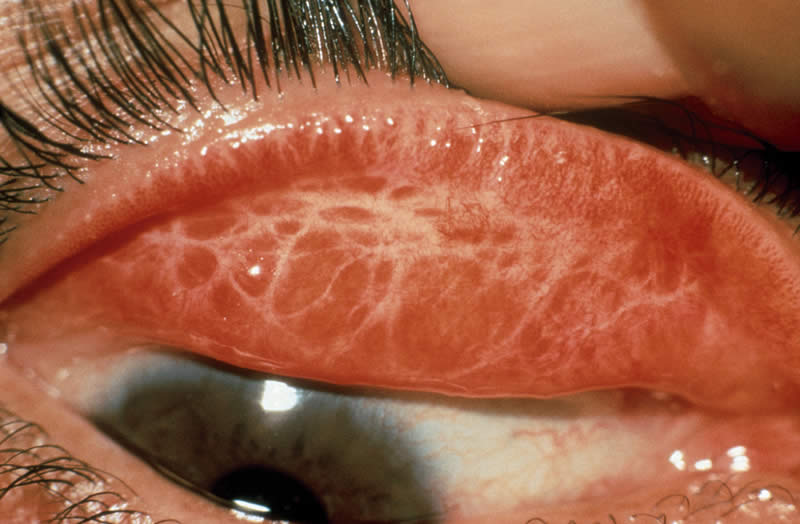
    • Identify surgical cases for referral
    • Apply infection prevention and control measures in the management of surgical conditions

    INTRODUCTION TO SURGICAL NURSING

    Definition of Surgery:

    • Surgery is a specialized branch of medicine that involves the diagnosis, treatment, and management of diseases, injuries, or deformities through physical intervention, typically by cutting, manipulating, or repairing tissues and organs. It is performed using a combination of manual and instrumental techniques.

    HISTORICAL BACKGROUND OF SURGERY:

    The history of surgery is a testament to humanity's continuous efforts to heal and improve health, evolving from rudimentary practices to highly sophisticated procedures.

    Ancient Surgery: Early surgical practices were often rudimentary, driven by necessity, and based on empirical observations. Operations, though often crude, included trepanation (drilling holes in the skull), setting fractures, and wound care. Without understanding anatomy, physiology, or microbiology, these procedures were associated with immense pain and high mortality rates. Anesthesia was non-existent or relied on natural sedatives like opium or alcohol. Aseptic techniques were unknown, leading to rampant infections and septicemia. Practitioners were often individuals with practical skills, rather than formally trained medical professionals.
  • Transition and Early Modern Surgery: Significant advancements began in the 19th century with the revolutionary discoveries of anesthesia and antiseptic/aseptic techniques.
    • Anesthesia: The introduction of ether (by William Morton in 1846) and chloroform dramatically changed surgery by allowing patients to undergo painful procedures without consciousness or pain. This extended the duration and complexity of operations possible.
    • Antiseptic and Aseptic Techniques: Joseph Lister's work in the mid-19th century, applying Louis Pasteur's germ theory, led to the use of carbolic acid as an antiseptic. This drastically reduced post-operative infections and mortality. Aseptic techniques, emphasizing sterile environments, instruments, and surgical attire, further minimized contamination.
  • Modern Surgery: The 20th and 21st centuries have witnessed exponential growth in surgical capabilities, driven by:
    • Specialization: Emergence of distinct surgical specialties (e.g., cardiothoracic, neurosurgery, orthopedics).
    • Technological Advancements: Development of advanced imaging (X-rays, CT, MRI), minimally invasive techniques (laparoscopy, endoscopy), robotics, laser surgery, and microsurgery.
    • Improved Diagnostics and Pre-operative Care: Better understanding of patient physiology, improved diagnostic tools, and meticulous pre-operative preparation have significantly enhanced patient outcomes.
    • Post-operative Care: Advances in critical care, pain management, infection control, and rehabilitation have revolutionized recovery.
    • Formal Training and Research: Establishment of rigorous surgical training programs and continuous research contribute to evidence-based practices and innovation.
  • Implication of Surgery to Patients: From the patient's perspective, surgery has evolved from a terrifying last resort to a precise and often life-saving or quality-of-life-improving intervention. However, it still carries significant physical and psychological implications:
    • Physical Implications: Pain, risk of infection, bleeding, scarring, potential for complications related to anesthesia, and recovery time.
    • Psychological Implications: Anxiety, fear (of the unknown, pain, death, disfigurement), body image changes, loss of independence, and emotional distress.
    Healthcare providers, especially nurses, must demonstrate empathy, provide comprehensive information, manage expectations, and offer psychological support to help patients navigate these implications.
  • TERMS USED IN SURGERY

    1. Abscess: A localized collection of pus.
    2. Adenoma: A benign epithelial tumour of glandular origin.
    3. Aneurysm: Dilation of an artery/vein.
    4. Colitis: Inflammation of the colon.
    5. Dysplasia: Abnormal development or growth of tissue organs or cells.
    6. Empyema: A collection of pus in a body cavity.
    7. Cutaneous: Relating to or existing on or affecting the skin.
    8. Gangrenous: Localized death and decomposition of body tissue, resulting from either obstructed circulation or bacterial infection.
    9. Haematoma: A solid swelling of clotted blood within the tissues.
    10. Haemorrhage: A heavy bleeding from a ruptured blood vessel.
    11. Necrosis: Death of most or all of the cells in an organ or tissue due to disease, injury or failure of the blood supply and hence tissue death (ischemia).
    12. Sepsis: The presence of pus-forming bacteria or their toxins in the blood or tissues.
    13. Slough: A piece of dead soft tissue. Or a necrotic tissue separated from the living structure.
    14. Stoma: Surgical opening/artificial opening made in an organ, especially an opening in the colon (colostomy) or ileum (ileostomy) made via the abdomen.
    15. Suture: The fine thread or other material used surgically to close a wound or join tissues, an immovable joint (especially between the bones of the skull).
    16. Thrombus: A blood clot that forms in a blood vessel and remains at the site of formation.
    17. Infection: Is the invasion of the body tissue by pathogenic microorganisms.
    18. Disinfectant: Is a chemical substance that is used for rendering only inanimate objects free from disease causing microorganisms with the exception of their spores. They include, phenol, chlorine.
    19. Anti-septic solution: Is a substance that is used on a person’s skin to inhibit the growth and activity of micro-organisms, but not necessarily destroying them.
    20. Contamination: Is the process by which something is rendered unclear or unsterile.
    21. Carriers: Are people or animals that show no symptoms of illness but have pathogens on or in their bodies that can be transferred to others.
    22. Disinfection: Is the elimination of virtually all pathogenic microorganism on inanimate objects with the exception of their spores, i.e., reducing the level of microbial contamination to an acceptably safe level.

    COMMON SUFFIXES USED IN SURGERY

    • Angio: relating to blood vessels e.g. angiograms, contrast imaging of an artery
    • Antegrade: going in the direction of flow e.g. antegrade pyelogram; injection of contrast medium under imaging control into the renal pelvis percutaneously
    • Chole: related to the ability tree or bill e.g. cholelithiasis; gall stones
    • Cele: a cavity containing gas or fluid e.g. hydrocele, lymphocele, galactocele
    • Ectasia: related to dilation of the ducts e.g. sialectasia; dilation of salivary gland ducts
    • Ectomy: cutting something out e.g. gastrectomy
    • Gram: an imaging technique using radio-opaque contrast medium e.g. cholangiogram; to visualize the bile ducts
    • Lith: stone e.g. pyelolithotomy; removal of a stone from the renal pelvis by opening the renal pelvis
    • Oscopy: the inspection of a cavity, tube or organ with an instrument e.g. cystoscopy inspection of the bladder
    • Ostomy: opening something into another cavity or to the outside e.g colostomy; an opening of the colon on to the skin
    • Oma: denotes tumour/ neoplasm
    • Pyelo: relating to the pelvis of the kidney e.g. pyelogram; contrast imaging showing the renal pelvis
    • Otomy: making an opening in something e.g. laparotomy; exploring the abdomen
    • Per: going through a structure e.g. percutaneous; going through the skin
    • Plasty: refashioning something to alter functioning e.g. angio-plasty; to widen an obstruction in an artery
    • Retrograde: going in a reverse direction against the flow e.g. endoscopic retrograde, cholangiopancreatogram (ERC)
    • itis: denotes inflammation
    • rrhage: excessive flow
    • pnea: relates to breathing
    • rrhoea: means discharge
    • plegia: means paralysis
    • scopy: means examining
    • galy: relates to enlargement of an organ/structure
    • logy: study of
    • ase: related to enzyme
    • trans: going across a structure e.g percutaneous transluminal angioplasty

    GENERAL CAUSES OF DISEASES

    The study of causes of diseases is referred to as etiology.

    THE GENERAL CAUSES INCLUDE:

    1. Congenital: It’s when an individual is born with a disease in any of the organs due to damage in early weeks of development while in the uterus.
    2. Hereditary: This is whereby an individual inherits (is passed on) the disease from the ancestors via genes e.g. sickle cell disease.
    3. Traumatic: These include gunshots, surgical operations, excessive heat, or cold, corrosive chemicals, poisonous gases and electricity.
    4. Mechanical: Those are any agencies that cause obstruction to the normal passages e.g. GIT, RT and blood vessels.
    5. Deficiency: These are due to the absence of diet substances necessary for normal health, growth and replacement e.g. Kwashiorkor, Marasmus, Rickets, etc.
    6. Metabolic disorders: Is the inability to deal with certain results of food. It may result in accumulation of unwanted chemical in the blood which may lead to trouble e.g. excess sugar in the blood which leads to diabetes mellitus.
    7. Tumours: These are over growth of cells which have undergone changes that makes them multiply themselves. This can be benign or malignant.
    8. Hypersensitivity: Some people are hypersensitive to small amounts of certain proteins and if exposed to them, they react. Hypersensitivity can be;
      1. An allergy
      2. Anaphylaxis.
    9. Degenerative diseases: The ageing process usually results in various conditions e.g. osteo-arthritis, stroke etc.
    10. Psychological factors: This can be an important cause of disease e.g. stress, anxiety, disappointments etc.

    Aims of Surgery:

    Surgery is performed with various objectives, often categorized by the primary goal of the intervention:

    1. Diagnostic Purpose: To obtain tissue samples (e.g., biopsy) or to explore the body to confirm or determine the cause of a disease or condition.
    2. Curative Purpose: To remove diseased tissue or an organ, repair damaged structures, or correct a deformity to cure a disease (e.g., appendectomy for appendicitis, tumor excision).
    3. Palliative Purpose: To relieve symptoms or improve quality of life when a cure is not possible (e.g., tumor debulking to reduce pressure, colostomy for bowel obstruction).
    4. Preventive Purpose (Prophylactic): To prevent the occurrence of a disease or complication in an at-risk individual (e.g., prophylactic mastectomy for high-risk breast cancer, removal of a precancerous polyp).
    5. Reconstructive/Restorative Purpose: To repair or restore damaged tissue or organs, often after injury or disease (e.g., skin graft for burns, joint replacement).
    6. Cosmetic Purpose: To improve physical appearance (e.g., rhinoplasty, facelift), though this often overlaps with reconstructive surgery.

    Types and Classification of Surgery:

    Surgery can be classified based on urgency, invasiveness, and purpose.

    Classification by Urgency:
    • Emergency Surgery: Performed immediately to save a life, preserve function, or restore a vital body part (e.g., severe bleeding, ruptured appendix).
    • Urgent Surgery: Performed within 24-48 hours to address a condition that requires prompt intervention but is not immediately life-threatening (e.g., acute cholecystitis, kidney stones with obstruction).
    • Planned or Elective Surgery: Scheduled in advance, often to correct a non-life-threatening condition, improve quality of life, or for cosmetic reasons (e.g., cataract removal, hernia repair). This allows for thorough pre-operative assessment and patient preparation.
    Classification by Extent/Magnitude:
    • Major Surgery: Involves significant risk, often requires general anesthesia, extensive tissue manipulation, and typically involves a longer hospital stay (e.g., open-heart surgery, organ transplantation).
    • Minor Surgery: Involves minimal risk, often performed under local or regional anesthesia, limited tissue manipulation, and may be done in an outpatient setting (e.g., removal of a skin lesion, carpal tunnel release).
    Other Classifications:
    • Multistage Surgery: Procedures performed in several separate operations to achieve a complete outcome, often due to the complexity of the condition or the patient's recovery needs (e.g., reconstructive surgery after severe trauma).
    • Invasiveness:
      • Open Surgery: Involves a large incision to access the surgical site.
      • Minimally Invasive Surgery: Performed through small incisions using specialized instruments and cameras (e.g., laparoscopic surgery, robotic surgery, endoscopic surgery).

    Principles of Surgery:

    Fundamental principles guide surgical practice to ensure patient safety and optimal outcomes.

    1. Safe Administration of Anesthesia: Ensuring the patient's physiological stability and comfort throughout the procedure, minimizing risks associated with anesthetic agents.
    2. Asepsis and Infection Control: Strict adherence to sterile techniques to prevent surgical site infections, including meticulous hand hygiene, sterile draping, and instrument sterilization.
    3. Hemostasis (Control of Bleeding): Meticulous control of bleeding to maintain patient's circulatory volume and provide a clear surgical field.
    4. Gentle Tissue Handling: Minimizing trauma to tissues to promote healing and reduce post-operative pain and complications.
    5. Accurate Anatomical Dissection: Precise identification and manipulation of anatomical structures to avoid damage to vital organs and achieve the surgical objective.
    6. Prevention/Treatment of Circulatory Failure: Maintaining adequate fluid balance, blood pressure, and tissue perfusion throughout the perioperative period.
    7. Quick and Effective Wound Healing: Employing proper surgical closure techniques, providing optimal wound care, and managing factors that can impair healing.
    8. Prevention/Treatment of Complications: Proactive identification and management of potential complications such as DVT, pulmonary embolism, respiratory compromise, and organ dysfunction.
    9. Restoration of Function: The ultimate goal of many surgeries, aiming to return the affected body part or system to its normal or near-normal function.
    10. Patient Safety and Advocacy: Prioritizing patient well-being, verifying correct patient and site, and advocating for the patient throughout the surgical journey.

    Patient's Concept of Disease:

    A patient's concept of their disease significantly influences their acceptance of surgical intervention, adherence to pre- and post-operative instructions, and overall recovery. This concept is shaped by a multitude of factors, including:

    • Personal Beliefs and Experiences: Prior experiences with illness, surgery, or healthcare, as well as personal beliefs about health and illness, can heavily influence a patient's understanding and emotional response to a new diagnosis.
    • Cultural Background: Cultural beliefs about the causation of disease (e.g., spiritual, supernatural, environmental), traditional healing practices, and societal roles can affect how a patient perceives their illness and the proposed surgical treatment.
    • Socioeconomic Status: Access to information, educational background, and financial stability can impact a patient's ability to understand complex medical information and comply with treatment plans.
    • Emotional State: Feelings of fear, anxiety, depression, or denial can distort a patient's perception of their illness and their capacity to process information about their condition.
    • Information Received: The clarity, completeness, and manner in which information about the disease and surgery is conveyed by healthcare professionals plays a crucial role. Misinformation or lack of understanding can lead to mistrust or non-adherence.
    • Support Systems: The presence or absence of family and social support can influence a patient's emotional well-being and ability to cope with their illness and recovery.
    • Perceived Severity and Impact: How serious the patient perceives their condition to be, and its anticipated impact on their life, livelihood, and family, will shape their perspective.

    Nurses play a critical role in assessing and understanding the patient's concept of disease, clarifying misconceptions, providing culturally sensitive care, and offering appropriate emotional and educational support.

    Factors Affecting the Success of Surgical Care:

    The success of surgical care is multifaceted, extending beyond the technical proficiency of the surgeon. It encompasses a complex interplay of patient-related, disease-related, surgical team-related, and systemic factors.

    Patient-Related Factors:
    • Overall Health Status and Comorbidities: Pre-existing conditions (e.g., cardiovascular disease, diabetes, renal impairment, malnutrition, obesity) can significantly impact surgical risk, recovery, and susceptibility to complications.
    • Age: Extremes of age (very young or very old) often present unique physiological challenges and increased risks.
    • Nutritional Status: Poor nutrition can impair wound healing, immune function, and overall recovery.
    • Psychological State: High levels of anxiety, stress, or depression can negatively affect pain perception, immune response, and patient cooperation.
    • Compliance with Pre/Post-operative Instructions: Adherence to dietary restrictions, medication regimens, and post-operative rehabilitation is crucial for optimal outcomes.
    • Lifestyle Factors: Smoking, alcohol consumption, and substance abuse can increase surgical risks and hinder recovery.
    Disease-Related Factors:
    • Severity and Stage of Disease: Advanced disease or critical conditions generally carry higher surgical risks and potentially less favorable outcomes.
    • Type and Location of Pathology: The nature of the condition and its anatomical location can influence surgical complexity and potential for complications.
    • Presence of Infection: Active infection at the surgical site or systemically can increase the risk of complications and delay healing.
    Surgical Team and Process Factors:
    • Surgeon's Expertise and Experience: The skill, experience, and specialization of the surgical team directly influence the technical success of the procedure.
    • Anesthesia Management: Safe and effective administration of anesthesia, tailored to the patient's needs and the procedure, is vital.
    • Aseptic Technique and Infection Control: Strict adherence to sterilization and aseptic practices minimizes the risk of surgical site infections.
    • Pre-operative Assessment and Optimization: Thorough evaluation of the patient before surgery to identify and mitigate risks.
    • Intra-operative Management: Meticulous surgical technique, proper hemostasis, and efficient management of the surgical environment.
    • Post-operative Care: Comprehensive nursing care, pain management, early mobilization, and monitoring for complications.
    • Team Communication and Coordination: Effective communication among all members of the multidisciplinary surgical team (surgeon, anesthesiologist, nurses, technicians) is paramount for seamless and safe care.
    Systemic and Environmental Factors:
    • Availability of Resources: Access to appropriate equipment, technology, blood products, and medical supplies.
    • Hospital Infrastructure and Policies: Quality of facilities, staffing levels, and adherence to evidence-based protocols.
    • Access to Follow-up Care: Availability of timely and appropriate post-discharge care, including rehabilitation and specialist consultations.
    • Socioeconomic Support Systems: Patient's access to social support, transportation, and home care resources after discharge.

    ANESTHESIA

    Introduction

    Anesthesia is a critical component of modern surgical practice, derived from the Greek word "anaisthesia," meaning "without sensation." It is a pharmacologically induced and reversible state characterized by controlled and temporary loss of sensation, consciousness, or both, enabling painful medical procedures or surgical operations to be performed without the patient experiencing pain, touch, pressure, or temperature. The primary aim is to ensure patient comfort, safety, and cooperation during invasive procedures.

    Medications that cause anesthesia are called anesthetics. These agents work by interfering with the transmission of nerve signals to the brain, thereby preventing the processing of painful stimuli. When the anesthetic effect wears off, nerve signals resume normal function, and sensation returns.

    How Anesthetics Work

    Anesthetics exert their effects by interacting with various components of the nervous system, primarily by altering the flow of ions across nerve cell membranes, which in turn inhibits the generation and propagation of electrical signals (nerve impulses). Specifically:

    • They can block voltage-gated sodium channels in nerve axons, preventing the initiation and conduction of action potentials (nerve signals).
    • They can enhance the activity of inhibitory neurotransmitters (like GABA) or suppress excitatory neurotransmitters, leading to a general depression of central nervous system activity.
    • The precise mechanisms vary depending on the class of anesthetic (e.g., local anesthetics directly block nerve conduction, while general anesthetics primarily affect the brain and spinal cord).

    By stopping these nerve signals from reaching the brain, anesthetics allow medical procedures to be carried out without the patient experiencing pain or awareness. As the anesthetic is metabolized and eliminated from the body, its effects dissipate, allowing nerve signals to function normally and sensation to return.

    Types of Anesthesia

    Anesthesia is categorized based on the extent of the body affected and the level of consciousness maintained:

    • Local Anesthesia: This involves numbing a small, specific area of the body by injecting an anesthetic agent directly into the tissues around the nerves supplying that area. The patient remains fully conscious but does not feel pain in the numbed region. It is typically used for minor procedures (e.g., dental procedures, suturing a small cut, skin biopsies).
    • Regional Anesthesia: This type of anesthesia blocks sensation in a larger region of the body, such as an entire limb or the lower half of the body, by injecting anesthetic near a cluster of nerves (nerve block) or into the spinal canal. The patient typically remains conscious but may be sedated.
      • Spinal Anesthesia: Anesthetic is injected into the cerebrospinal fluid (CSF) in the subarachnoid space surrounding the spinal cord. This rapidly produces profound numbness and muscle relaxation in the lower body, used for lower abdominal, pelvic, or lower limb surgeries.
      • Epidural Anesthesia: Anesthetic is injected into the epidural space (outside the dura mater, the outermost membrane covering the spinal cord). A catheter can be left in place to allow for continuous or repeated administration of medication, providing prolonged pain relief. Commonly used for childbirth (labor analgesia) and surgeries of the lower body.
      • Peripheral Nerve Blocks: Anesthetic is injected near specific nerves or nerve plexuses (networks of nerves) to numb a particular limb or area (e.g., brachial plexus block for arm surgery, femoral nerve block for leg surgery).
    • General Anesthesia: This induces a state of controlled, reversible unconsciousness, where the patient is completely unaware and experiences no pain or memory of the procedure. It involves a combination of medications administered intravenously and/or by inhalation. The patient's vital functions (breathing, heart rate) are carefully monitored and supported, often requiring mechanical ventilation. It is used for major surgeries or procedures that require the patient to be completely still and unaware.
    • Sedation: This involves administering medications to depress the central nervous system, producing a state of reduced awareness, relaxation, and sometimes amnesia, but the patient remains able to respond to verbal commands or light tactile stimulation. It is used for uncomfortable or anxiety-provoking procedures that do not require full general anesthesia (e.g., colonoscopy, some dental procedures, minor orthopaedic reductions). Levels can range from minimal (anxiolysis) to deep sedation.
    Route of Administration of Anesthetics

    The method of delivery depends on the type of anesthesia and the specific agent used:

    • Inhalation: Volatile liquid anesthetics (e.g., Sevoflurane, Isoflurane) are vaporized and delivered as gases through a mask or endotracheal tube into the patient's respiratory system for general anesthesia. Nitrous oxide is also given via inhalation.
    • Intravenous (IV): Many anesthetic agents (e.g., Propofol, Ketamine, Midazolam, Fentanyl) are administered directly into the bloodstream through a vein, used for induction of general anesthesia, maintenance of anesthesia, or for sedation.
    • Local Infiltration: Anesthetic is injected directly into the tissue surrounding the surgical site (e.g., Lidocaine for suturing a wound).
    • Regional Injection: Anesthetic is injected near specific nerves or into the epidural or subarachnoid space (e.g., Bupivacaine for spinal or epidural blocks).
    • Topical/Transdermal: Applied to the skin or mucous membranes (e.g., lidocaine cream for numbing skin before an injection, sprays for throat numbing).
    Side Effects of Anesthetics

    While generally safe, anesthetics can cause various side effects, most of which are temporary and manageable:

    • Gastrointestinal: Feeling sick (nausea) or vomiting, which can be managed with antiemetics.
    • Neurological: Dizziness and feeling faint, headache (especially after spinal or epidural anesthesia), confusion or disorientation (particularly in older adults).
    • Temperature Regulation: Feeling cold and shivering (post-anesthesia shivering is common).
    • Local Reactions: Bruising and soreness at the injection site (for local or regional blocks).
    • Skin Reactions: Itchiness (especially with opioid use).
    • Throat Irritation: Sore throat or hoarseness (after endotracheal intubation for general anesthesia).
    • Muscle Aches: Generalized muscle pain from muscle relaxants used during general anesthesia.
    Complications and Risks of Anesthesia

    Serious complications are rare but can occur and are usually discussed during the pre-operative consent process:

    • Allergic Reactions: Severe allergic reactions (anaphylaxis) to anesthetic agents, though rare, can be life-threatening.
    • Cardiovascular Complications: Hypotension (low blood pressure), arrhythmias (irregular heartbeats), myocardial infarction (heart attack), or stroke, particularly in patients with pre-existing cardiac conditions.
    • Respiratory Complications: Respiratory depression, aspiration of gastric contents into the lungs (pneumonitis), bronchospasm, or laryngospasm.
    • Nerve Damage: Temporary or, rarely, permanent nerve damage (causing prolonged numbness, weakness, or paralysis) due to direct trauma from injection or compression.
    • Malignant Hyperthermia: A rare, life-threatening genetic condition triggered by certain general anesthetics, leading to a rapid rise in body temperature and muscle rigidity.
    • Awareness During Anesthesia: A rare occurrence where a patient gains some level of consciousness during general anesthesia.
    • Death: Extremely rare, but possible, particularly in patients with severe underlying health conditions.
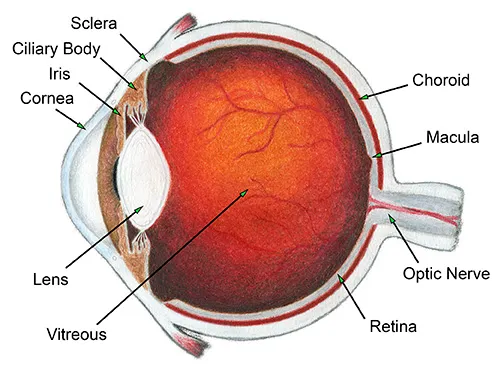
    Nurse’s Role in Surgical Diagnosis

    The nurse plays a pivotal and continuous role in the diagnostic phase of surgical care. While the surgeon makes the definitive diagnosis, the nurse's observations, assessments, and data collection are crucial for accurate, timely, and holistic diagnosis, contributing significantly to the patient's care plan.

    • Taking a Comprehensive Patient History: The nurse often conducts the initial and ongoing patient assessments, collecting subjective data through detailed history taking. This includes the chief complaint, history of present illness, past medical and surgical history, family history, social history (e.g., smoking, alcohol, substance use), medication history, allergies, and review of systems. Proper documentation of this history is essential for the medical team.
    • Performing Physical Assessments and Documenting Observations: The nurse regularly performs physical assessments (e.g., vital signs, head-to-toe assessment, focused assessment on the affected area). Accurately recording and monitoring these objective observations (e.g., temperature, pulse, respiration, blood pressure, pain level, wound characteristics, changes in patient condition) provides critical data points for diagnostic reasoning.
    • Assisting with Diagnostic Procedures and Examinations: The nurse prepares the patient and the environment for physical examinations and various diagnostic tests. This includes setting up equipment (e.g., for physical exam, wound assessment), ensuring patient comfort and privacy, providing explanations of procedures, and assisting the physician as needed during examinations or specimen collection.
    • Carrying Out Ordered Investigations and Other Orders: The nurse is responsible for ensuring that prescribed diagnostic tests (e.g., blood tests, imaging studies like X-rays, CT scans, MRI, ECG) are performed correctly and that specimens are collected and transported appropriately. This includes preparing the patient for the test (e.g., NPO status, contrast dye administration), verifying orders, and ensuring patient safety during the process.
    • Patient Education and Preparation: Explaining the purpose of diagnostic tests and procedures to the patient, ensuring understanding and compliance.
    • Recognizing and Reporting Changes: Constantly observing the patient for changes in symptoms, physical signs, or responses to interventions, and promptly reporting significant findings to the medical team.
    • Advocacy: Advocating for the patient's needs and ensuring that all necessary diagnostic steps are taken to arrive at an accurate diagnosis.

    Identification of a Patient (Patient Safety and Verification)

    Correct patient identification is a fundamental and non-negotiable principle in healthcare, especially in the surgical setting, to prevent errors and ensure patient safety. Errors in patient identification can lead to wrong-patient, wrong-site, or wrong-procedure surgeries, medication errors, and incorrect test results.

    • Using Multiple Identifiers: Patients should be identified by at least two unique identifiers, never by room or bed number alone. Acceptable identifiers include:
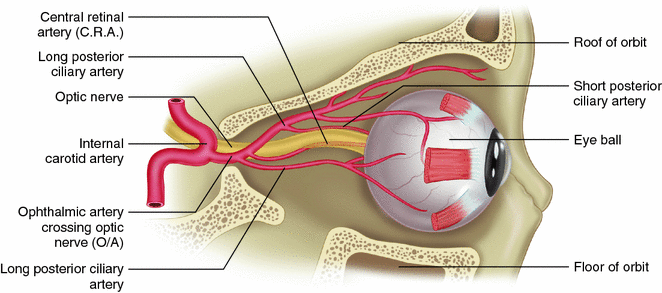
      • Patient's full name (first and last).
      • Date of birth.
      • Medical record number.
    • Active Patient Participation: Whenever possible, the patient should be actively involved in the identification process by stating their name and date of birth. Nurses should be aware that some patients may respond "yes" when another patient's name is called due to confusion, hearing impairment, or a desire to be cooperative; therefore, asking open-ended questions like "Can you please state your full name and date of birth?" is crucial.
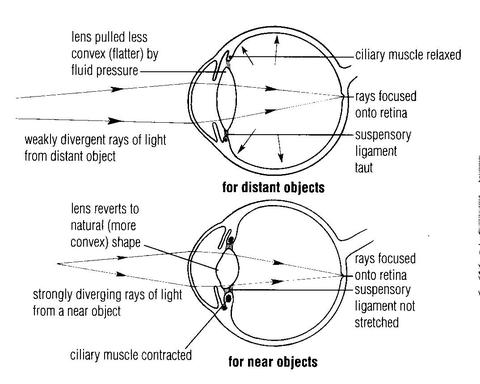
    • Addressing Bed Swaps: Nurses must be vigilant about potential bed or room changes without their knowledge. Re-identification of the patient should occur at every significant interaction, including medication administration, before procedures, and before transport.
    • Site Marking for Surgical Procedures: For procedures involving laterality (e.g., right vs. left limb), multiple structures (e.g., specific finger), or levels (e.g., spinal surgery), the surgical site should be clearly and unambiguously marked by the surgeon with indelible ink while the patient is awake and involved in the process. This is a critical component of the "Universal Protocol" for preventing wrong-site, wrong-procedure, wrong-person surgery.
    • "Time Out" Procedure: Immediately before the start of any invasive procedure, a "time out" (or pause for cause) is performed by the entire surgical team. During this time-out, the team collectively confirms:
      • The correct patient.
      • The correct site.
      • The correct procedure.
      • Availability of correct implants/equipment.
      This final verification step is a crucial safety barrier.
    • Wristbands/Identification Bands: Patients should wear identification wristbands with their unique identifiers throughout their hospital stay. These should be checked against medical records before any intervention.
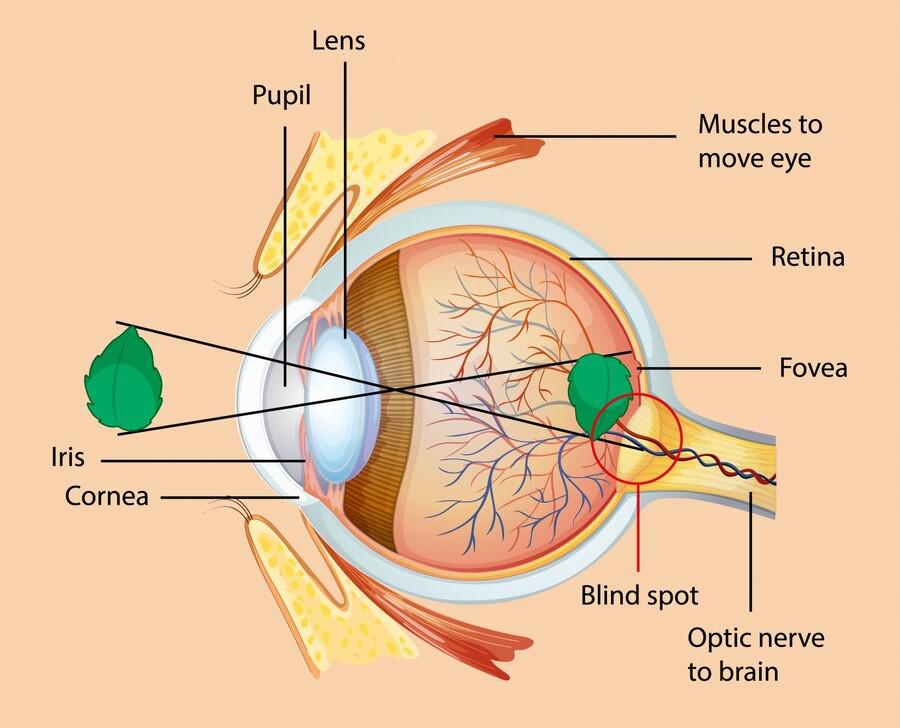
    DECONTAMINATION

    Decontamination is a crucial initial step in the reprocessing of reusable medical instruments and equipment. It refers to the process of physically or chemically removing or neutralizing harmful substances, particularly pathogenic microorganisms, from objects or surfaces to render them safe for subsequent handling, cleaning, and sterilization. The goal of decontamination is to protect healthcare workers from exposure to potentially infectious materials and to prevent cross-contamination.

    Principles of Decontamination:

    • Risk Reduction: Reduces the bioburden (number of microorganisms) on instruments, making them safer to handle for staff involved in cleaning and sterilization.
    • Immediate Action: Should occur as soon as possible after use to prevent drying of organic matter (blood, tissue), which makes cleaning more difficult.
    • Personal Protective Equipment (PPE): Healthcare workers involved in decontamination must wear appropriate PPE, including gloves, gowns, masks, and eye protection, to prevent exposure to contaminants.

    Methods of Decontamination:

    • Manual Cleaning (Pre-cleaning):
      • Initial step often done at the point of use or in a designated decontamination area.
      • Involves rinsing instruments with cool water to remove gross contamination, followed by scrubbing with brushes using enzymatic detergents or neutral pH detergents.
      • This step is critical as sterilization cannot compensate for inadequate cleaning.
    • Automated Cleaning:
      • Ultrasonic Cleaners: Use high-frequency sound waves to create cavitation bubbles that dislodge debris from instruments, especially in hard-to-reach areas.
      • Washer-Disinfectors: Automated machines that clean and thermally disinfect instruments, rendering them safe for handling before sterilization. They often include pre-rinse, wash, rinse, and thermal disinfection cycles.
    • Chemical Decontamination:
      • Use of chemical solutions to kill or inactivate microorganisms. Often used for heat-sensitive instruments or for surface disinfection.
      • Examples include glutaraldehyde or hydrogen peroxide solutions, but these are typically for high-level disinfection rather than full sterilization.

    Importance in Surgical Nursing:

    • Nurses are often responsible for the initial decontamination at the point of use (e.g., wiping instruments during surgery) and ensuring proper transport of soiled instruments to the central sterile supply department.
    • Understanding decontamination processes is vital for preventing surgical site infections and maintaining a safe environment for both patients and staff.

    STERILIZATION

    Sterilization is the process by which all forms of microbial life, including bacteria, viruses, fungi, and highly resistant bacterial spores, are completely destroyed or removed from an object or surface. It represents the highest level of microbial killing and is essential for any medical device or instrument that will come into contact with sterile body tissues or the bloodstream during surgical procedures. The aim is to prevent healthcare-associated infections (HAIs).

    Key Principles of Sterilization:

    • "All or Nothing": An item is either sterile or not sterile; there are no degrees of sterility.
    • Packaging Integrity: Sterile items must remain in intact, undamaged packaging until the point of use to maintain sterility.
    • Time-Related or Event-Related Sterility: Sterility is maintained until the package is opened, damaged, or expires, depending on the storage conditions and packaging.
    • Cleaning First: Sterilization cannot effectively occur if instruments are not thoroughly cleaned and decontaminated beforehand.

    Common Methods of Sterilization:

    • Steam Sterilization (Autoclaving):
      • The most common, reliable, and cost-effective method for heat- and moisture-stable items.
      • Uses saturated steam under pressure at high temperatures (e.g., 121°C or 132°C) for a specific duration.
      • Works by denaturing and coagulating proteins within microorganisms.
    • Dry Heat Sterilization:
      • Used for materials that can be damaged by moisture (e.g., powders, oils, heat-stable glassware).
      • Involves exposure to high temperatures (e.g., 160°C to 170°C) for longer periods than steam sterilization.
      • Works by oxidation of cell components.
    • Ethylene Oxide (EtO) Sterilization:
      • Used for heat- and moisture-sensitive medical devices.
      • A colorless, flammable gas that kills microorganisms by alkylation of proteins and nucleic acids.
      • Requires a lengthy aeration time to dissipate residual EtO, which is toxic and carcinogenic.
    • Hydrogen Peroxide Gas Plasma Sterilization (e.g., Sterrad):
      • A low-temperature sterilization method suitable for heat- and moisture-sensitive instruments.
      • Uses hydrogen peroxide vapor in a plasma state, which generates reactive free radicals that destroy microorganisms.
      • Faster cycle times and safer than EtO as it produces non-toxic byproducts (water and oxygen).
    • Peracetic Acid Sterilization (e.g., Steris System):
      • A liquid chemical sterilant used for immersible, heat-sensitive instruments, often used for flexible endoscopes.
      • Rapidly destroys microorganisms by oxidation.

    Monitoring Sterilization:

    Sterilization processes are monitored using various indicators to ensure effectiveness:

    • Mechanical Indicators: Gauges and displays on the sterilizer that show temperature, pressure, and exposure time.
    • Chemical Indicators: Tapes, strips, or packages that change color when exposed to specific sterilization conditions (e.g., heat, steam, EtO). They indicate that the item has been processed, but not necessarily that it is sterile.
    • Biological Indicators: Vials containing highly resistant bacterial spores (e.g., Geobacillus stearothermophilus for steam, Bacillus atrophaeus for EtO/dry heat). These are the only indicators that directly monitor the lethality of the sterilization process by demonstrating whether the most resistant organisms have been killed.

    Role of the Nurse in Sterilization:

    • Understanding the principles of sterility and aseptic technique.
    • Checking the integrity of sterile packaging before opening.
    • Maintaining a sterile field during surgical procedures.
    • Properly handling and storing sterile supplies.
    • Advocating for correct sterilization practices within the healthcare setting.

    CONSENT IN SURGICAL NURSING (INFORMED CONSENT)

    Informed consent is a cornerstone of ethical and legal medical practice, particularly in surgical nursing. It is a process by which a patient, or their legally authorized representative, grants voluntary permission for a medical procedure or treatment only after receiving and comprehending all relevant information about it. This ensures patient autonomy and protects their right to self-determination regarding their healthcare decisions.

    Key Elements of Valid Informed Consent:

    • Disclosure of Information: The healthcare provider (typically the physician or surgeon performing the procedure) must provide the patient with comprehensive information, including:
      • The nature of the proposed procedure or treatment.
      • The purpose of the procedure (what it aims to achieve).
      • The expected benefits of the procedure.
      • The potential risks, common side effects, and serious complications associated with the procedure (including those related to anesthesia).
      • Available alternative treatments, including their risks and benefits.
      • The consequences of not undergoing the proposed procedure.
    • Patient Understanding: The patient must be able to comprehend the information provided. The information should be presented in a language and manner understandable to the patient, avoiding medical jargon. The provider should assess the patient's understanding by asking open-ended questions.
    • Voluntariness: The patient's decision to consent or refuse treatment must be made freely, without any form of coercion, manipulation, or undue pressure from healthcare providers, family, or others.
    • Competence/Capacity: The patient must have the mental capacity to make healthcare decisions. This means they must be able to understand the information, appreciate the consequences of their decision, and communicate their choice. If a patient is deemed incompetent (e.g., due to severe cognitive impairment, unconsciousness), a legally appointed surrogate decision-maker (e.g., power of attorney for healthcare, legal guardian, next of kin in a hierarchical order defined by law) will provide consent on their behalf.

    Role of the Nurse in Informed Consent:

    While the responsibility for obtaining informed consent rests with the physician performing the procedure, nurses play a crucial and multifaceted role in the informed consent process:

    • Reinforcing Information and Clarifying: Nurses often reinforce the information provided by the physician, clarify any misunderstandings the patient may have, and answer questions within their scope of practice. They should not provide new information that changes the scope of the consent.
    • Assessing Patient Understanding: Nurses are frequently present during the consent discussion or review the consent form with the patient. They can assess the patient's comprehension and identify if the patient has further questions or appears to be unduly influenced.
    • Witnessing the Signature: Nurses often witness the patient's signature on the consent form. By witnessing, the nurse is verifying that the patient signed the form and that, to their knowledge, the patient appeared to be competent and voluntarily signed. It does not imply that the nurse provided all the information or explained the procedure.
    • Advocating for the Patient: If a nurse believes the patient does not understand the information, is being coerced, or is not competent, they have an ethical responsibility to advocate for the patient. This may involve notifying the physician, nursing supervisor, or ethics committee.
    • Documentation: Accurately documenting the informed consent process, including who provided information, when it was discussed, and any patient questions or concerns, is essential.
    • Ensuring Valid Consent Before Procedures: Before any surgical procedure, the nurse is responsible for verifying that a valid informed consent form is present in the patient's chart and that it is complete and signed.

    Informed consent is an ongoing process, not a one-time event, and applies to changes in treatment plans or additional procedures that may arise during the course of care.

    Introduction to Surgical Nursing Read More »

    Want notes in PDF? Join our classes!!

    Send us a message on WhatsApp
    0726113908

    Scroll to Top
    Enable Notifications OK No thanks