Nurses Revision

Foundations

Foundations of Nursing related content

Administer drugs appropriately

Administer drugs appropriately

Administer drugs appropriately
Administer Prescribed Medicines Appropriately

A medicine is any chemical substance in a regulated dose intended for use in the medical diagnosis, cure, treatment, or prevention of disease or any substance that is prescribed and administered to patients to produce therapeutic effects in the body.

Rights Related to Medicine Administration

The rights that should be observed:

  1. Right patient.
  2. Right medicine.
  3. Right dosage.
  4. Right route.
  5. Right time.
  6. Right storage.
  7. Right formulation.
  8. Right disposal.
  9. Right site.
  10. Right equipment.
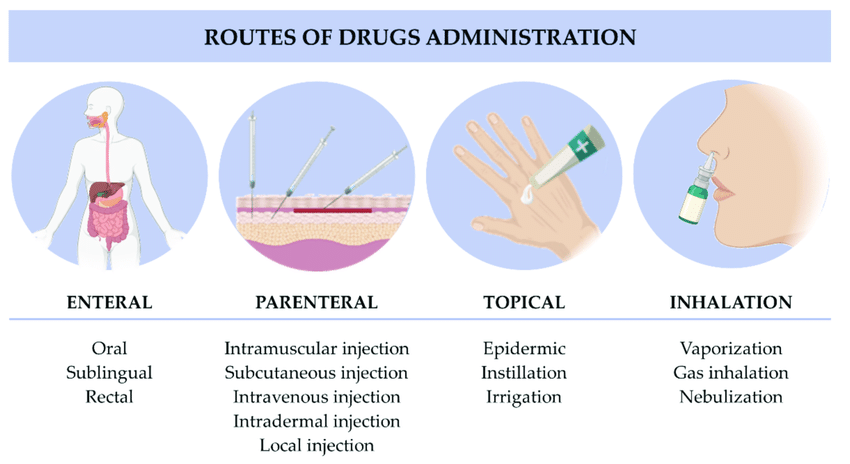
Routes Used in Administering Medicines
SYSTEMIC ROUTE
ENTERAL ROUTE
  • Oral: Drugs taken by mouth, including tablets, capsules, liquids, and suspensions, that are absorbed through the stomach or intestinal lining.
  • Sublingual: Drugs placed under the tongue that dissolve and are absorbed into the bloodstream via the tissues under the tongue, providing rapid onset of action.
  • Buccal: Drugs placed between the gums and cheek, where they dissolve and are absorbed into the bloodstream through the buccal mucosa.
  • Rectal: Suppositories or enemas administered into the rectum, where they are absorbed through the rectal mucosa.
PARENTERAL ROUTE

Injections:

  • Intravenous (IV): Direct injection into a vein for immediate systemic effect.
  • Intramuscular (IM): Injection into a muscle, where the drug is absorbed into the bloodstream.
  • Subcutaneous (SC): Injection into the fatty tissue under the skin.
  • Intra-arterial: Injection directly into an artery, typically used in specialized medical procedures.
  • Intra-articular: Injection into a joint space for local effect.
  • Intrathecal: Injection into the cerebrospinal fluid in the spinal canal.
  • Intradermal: Injection into the dermis layer just beneath the epidermis, often used for allergy testing and tuberculosis screening.
  • Epidural: Injection into the epidural space surrounding the spinal cord, commonly used for pain relief during labor and surgery.
  • Intraperitoneal: Injection into the peritoneal cavity in the abdomen, used in some chemotherapy treatments.
  • Intracardiac: Injection directly into the heart muscle, often used in emergencies.
LOCAL ROUTE
  • Skin topical: Application of creams, ointments, gels, or lotions to the skin for local treatment of skin conditions.
  • Intranasal: Sprays or drops administered through the nasal passages for local or systemic effect.
  • Ocular drops: Solutions or suspensions administered into the eyes to treat local conditions like infections or glaucoma.
  • Otic drops: Solutions administered into the ear canal to treat local ear conditions such as infections.
  • Intraosseous: Injection directly into the bone marrow, used in emergency situations when IV access is not available.
  • Intralymphatic: Injection into the lymphatic system, used in certain cancer treatments and vaccinations.
  • Intrapleural: Injection into the pleural space surrounding the lungs, used for treating pleural effusions and certain cancers.
  • Inhalation: Drugs administered through the respiratory tract, typically using inhalers or nebulizers, for rapid absorption into the bloodstream via the lungs.
  • Transdermal: Patches or gels applied to the skin that release the drug slowly for absorption over time.
  • Mucosal:
    • Throat: Lozenges, sprays, or gargles for local treatment of throat conditions.
    • Vaginal: Creams, tablets, or rings inserted into the vagina for local treatment of infections or hormonal therapy.
    • Rectal: Suppositories or enemas for local treatment of rectal or lower gastrointestinal conditions.
INHALATION

Inhalation is the breathing of air vapor or volatile medicine into the lungs.

Types
  • Dry inhalation: Oxygen Administration: this is given when the respiratory capacity is diminished as in chest injuries, pneumonia and cardiac failure.
  • Moist/steam inhalation: It is used in case of inflammation of air passages and the nasal sinuses. These are given to:
    • Warm and moisten the air breathed in and relieve irritation e.g. in bronchitis, after tracheotomy and other chest conditions.
    • To relieve inflammation and coughing e.g. in colds.
    • To relieve congestion and oedema e.g. in sinusitis and acute laryngitis.
  • Nebuliser: this produces vapors which is inhaled by the patient for example in asthma to relieve spasms of the bronchial tubes or for the relief of chest pain in angina pectoris. Other indications include Respiratory diseases eg asthma, pneumonia, Airway obstruction, Nasal congestion, Nasal bleeding, Chest injuries and Cardiac failure.
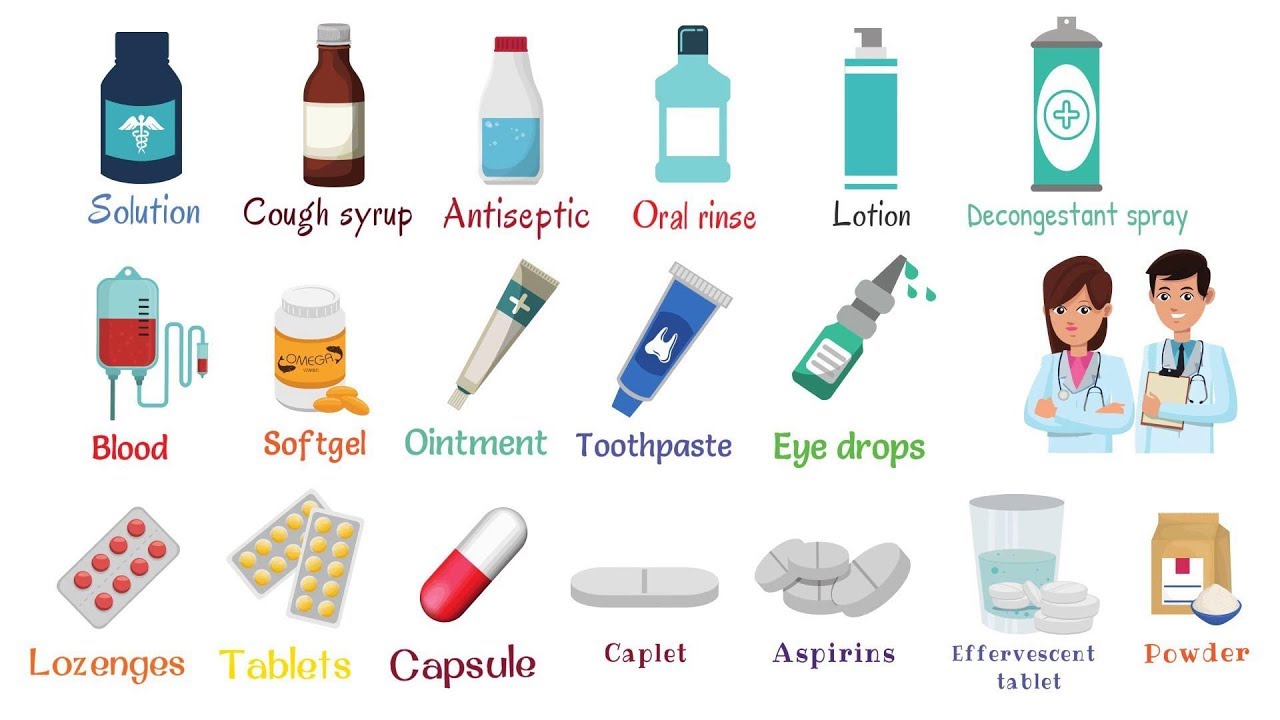
Forms of Medicines
Liquids:
  • Solutions: Medicine dissolved in water.
  • Syrups: Medicine dissolved in sugar and water.
  • Mixtures: Medicine mixed with liquid but not dissolved in it.
  • Milks: White medicine substances mixed with water.
  • Emulsions: Medicine mixed with oil and water.
  • Elixirs: Medicine dissolved in a sweetened flavored solution containing alcohol.
  • Tinctures: Medicine dissolved in alcohol or alcohol and water.
  • Fluidextracts: Medicine that has been boiled and evaporated to concentrate their strength and dissolve them in alcohol.
  • Liniments: Medicine mixed in oil, soap, or alcohol (for external use only).
  • Lotion: Mixed with water for external application.
Solids and Semisolids:
  • Capsules: Medicine enclosed in gelatine containers used for liquids, powders, and oils.
  • Powders: Medicine in powder form.
  • Pills: Medicines molded in a round shape coated with sugar.
  • Tablets: A solid dosage form of varying weight, size, and shape.
  • Enteric Coated Tablets: A tablet coated with a substance that blocks absorption of the medicine until it reaches the small intestines.
  • Lozenges: To be dissolved in the mouth for throat or oral treatment.
  • Ointment: Medicines mixed with oil or fat.
  • Pastes: Ointments with various powders added.
  • Suppositories: Medicines mixed with a firm base, which can be molded for insertion into a body cavity.
  • Ampoules: Sealed glass containers that contain a dose of powdered or liquid medicine.
  • Vials: Rubber-stoppered glass containers that may contain a single or several doses of medicines.
Time for Administering Medication
  • Four hourly: (eight times in 24 hours) 2 am., 6 a.m., 10 a.m., 2 p.m., 6pm, and 10 p.m.
  • Six hourly: (four times a day) 6 a.m., 12 p.m., 6pm, and 12 midnight.
  • Eight hourly: (three times a day) 6 a.m., 2 p.m., and 10 p.m.
  • Twelve hourly: (twice daily) 6 a.m. and 6 p.m.
Abbreviations Used in Prescriptions
  • Aa.: of each
  • Ad lib.: as much as desired
  • B.i.d. or b.d.: twice a day
  • t.d.s. or t.i.d.: three times a day
  • a.c.: before
  • P.c.: after
  • g.: gram
  • Gr.: grain
  • Gutt.: a drop
  • Mane: in the morning
  • Mist.: a mixture
  • Nocte: at night
  • q.h.: every hour
  • o.m.: every morning
  • o.n.: every night
  • p.r.n.: whenever necessary
  • q.4h: every 4 hours
  • s.o.s.: if necessary in an emergency
  • Stat: immediately
  • q.i.d.: 4 times a day/every 6 hours
  • o.d.: once a day
GENERAL RULES OF DRUG ADMINISTRATION
  1. Read the instructions carefully and incase of any doubt ask the Doctor or ward in charge.
  2. Never give a drug from a container or a bottle which is not clearly labeled.
  3. Check the label against the instructions 3 times .The 1 st time before having the container, 2nd time before the drug is drawn, 3rd time before the drug is administered to the patient.
  4. Give the drug following 10Rs i.e -right patient, right time, right dose, right route, right drug/medication, right formulation, right disposal, right storage, right equipment and right site.
  5. Once a drug is drawn from its container it shouldn’t be returned.
  6. Always identify the drug by reading its label on the container not by its color, smell, shape and size.
  7. Do not transfer drugs to another container when the old label is still on.
  8. Ask for clarification if any order regarding the dose is not readable.
  9. Watch all patients for drug reactions, especially parental drugs.
  10. If any drug changes its color, it should not be administered.
  11. Liquid preparations should always be shaken before drawing from the bottles.
  12. Never use a drug which has been left in an unlabeled container.
  13. Always measure the dose of the drug in good light.
  14. Observe strictly the time of administration of medication.
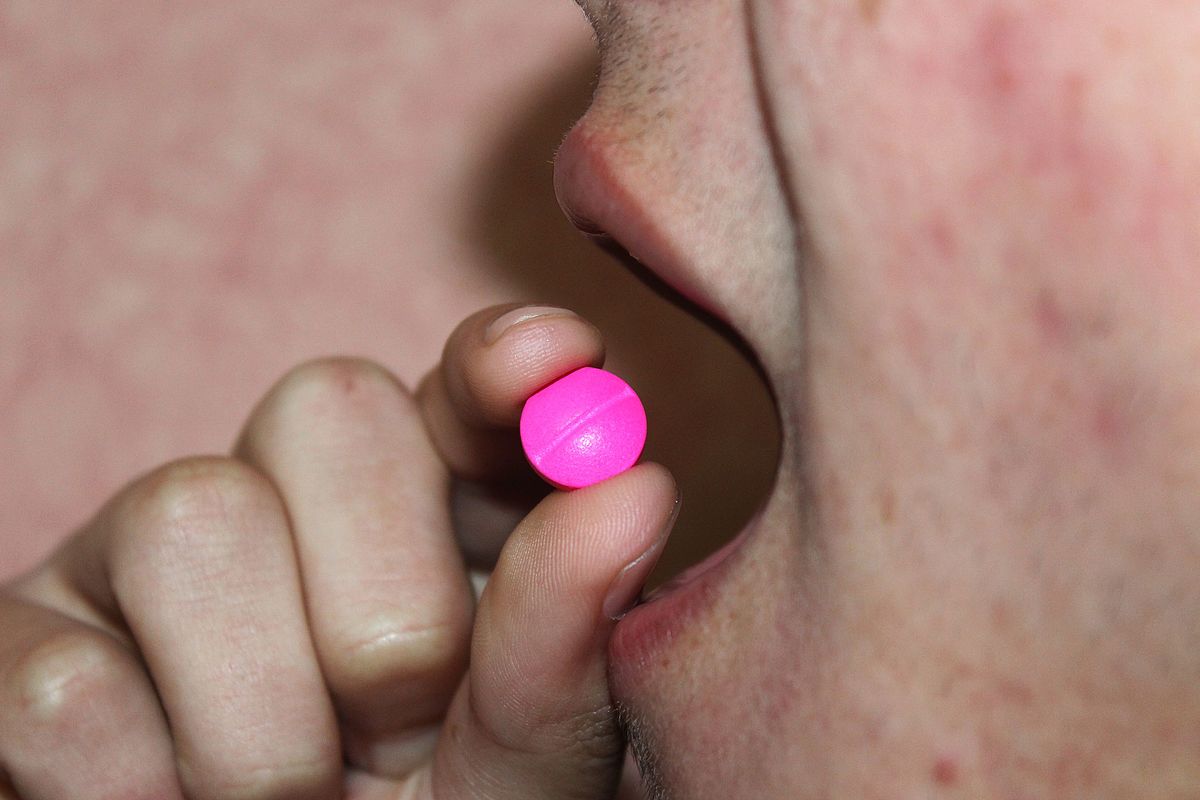
ORAL ADMINISTRATION
Requirements
Trolley

Top Shelf:

  • Bottles of mixtures
  • Bottle or boxes of tablets, capsules
  • Medicine cups
  • Teaspoons, mortar and pestle
  • Jug of drinking water, milk/fruit juice
  • Glasses
  • Medicine charts
  • Small medication tray
  • Scissors
  • Kidney dish

Bottom Shelf:

  • 1 bowl of soapy water
Bedside:
  • Hand washing equipment
Procedure for Oral Administration
Steps Action Rationale
1. Follow general rules of nursing procedures. Ensures accuracy and prevents errors
2. Observe the rules of medicine administration. Ensures accuracy and prevents errors
3. Arrange medication trolley in nurse’s station. To save time and reduce error in medication administration
4. Prepare medicine of one patient at a time, keeping medicine lists/charts together. Ensures accuracy and prevents errors
5. Verify the order for medication from the patient’s chart comparing with the medicine list and the label on the bottle. Ensures accuracy
6. Check the label on the medicine container three times (i.e. when taking it from the shelf, before pouring it into the medicine cup and before returning it to the shelf). Ensures accuracy
7. For tablets/capsules, pour required number from bottle into bottle cap and transfer to medication cup, for packaged tablet/capsule pour directly over the cup retain the strip. Reduces errors in medication administration
8. For liquid, hold medication cup to eye level and pour the prescribed amount. Ensures accuracy
9. For volume of less than 5ml, use a 5ml syringe without a needle to measure the amount prescribed. Ensures accuracy
10. Keep the label on the bottle uppermost against the palm of hand when pouring. To avoid spilling liquid in place.
11. Wipe the rim of the bottle before replacing the cork. Prevents cap from sticking.
12. Use only the dropper-supplied with liquids measured in drops. Ensures accuracy
13. Read the label again before replacing the container on the trolley. Third check reduces errors.
14. Place the measuring cup on the tray together with the drinking cup with water and then take it to the patient at the correct time. Ensures timely administration
15. Call the patient’s name, check the room or bed number against the medicine list before giving the medicine. Confirms the patient’s identity
16. Assess the patient’s condition including the level of consciousness and vital signs. For instance patients having digitalis the pulse rate should be checked before administering the medicine. To rule out likely contraindications or side effects.
17. Explain to the patient the medications to be given to the patient and clarify any questions or doubts. Promotes the patient’s rights and compliance.
18. Assist patient in sitting or side lying position. Prevents aspiration
19. Administer medicine properly, only one medicine at a time and offer a glass of water or milk. Aids swallowing.
20. If a patient has difficulty swallowing, grind the tablets in a mortar with pestle, crush it to fine powder and mix it with a small amount of water. To ease swallowing.
21. Prepare powdered medication at the bedside and give it to the patient. Increases compliance.
22. Give effervescent tablets immediately after dissolving. It helps to improve the taste of medicine.
23. If the patient is unable to hold medication in hand; assist to place the cup to the lip and slowly transfer medicine into the mouth using a spoon. To support the patient.
24. If medicines fall on the floor, discard and replace them. To avoid contaminated medicine
25. Stay with the patient until the medicine has been swallowed; if the patient is confused or disoriented his/her mouth should be checked to confirm that the patient has swallowed the medicine. If the medicine is vomited within 5 minutes report to the In-charge or Doctor. Medicines must never be left on the bedside table. Ensures that patient receives prescribed medication at the correct time
26. Assist the patient to a comfortable position. Maintains patient’s comfort
27. Dispose of soiled supplies, clean work area and wash hands. Reduces transmission of infection
28. Document the administration of the medication with date, time and signature immediately after administration. To avoid errors and promote proper accountability.
29. Reassess the patient’s response to the medicine within one hour after giving it and any ill effects reported. To detect therapeutic/ side effects or adverse effects.
30. The medicine cups are washed and returned to their proper place. Promote hygiene.

Quick Quiz

Administer Drugs Quiz

FON - mobile-friendly and focused practice.

Privacy: Your details are used only for quiz tracking and certificates.

Administer drugs appropriately Read More »
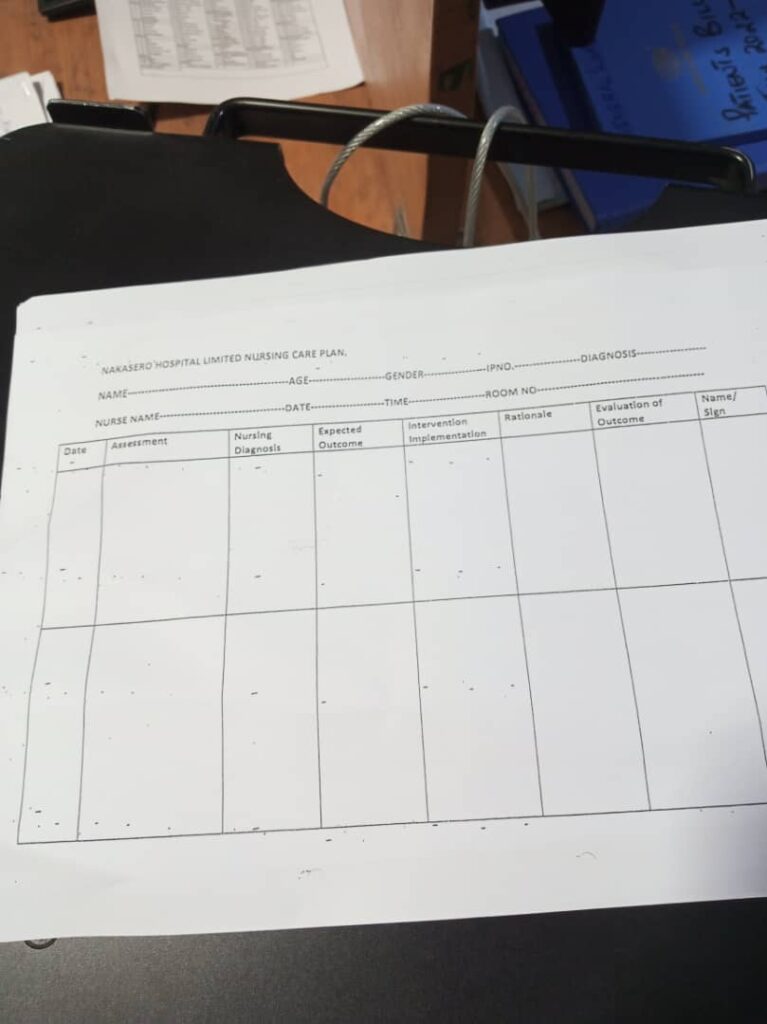
nursing process

Nursing Process

NURSING PROCESS

The Nursing process is an organized, systematic, dynamic method of giving individualized nursing care that focuses on identifying and treating unique responses of individuals or groups, to actual or potential alterations in health. (Nursing procedure Manual, 2015)

OR:

The nursing process is defined as a systematic, rational method of planning that guides all nursing actions in delivering holistic and patient-focused care.

Outline the CHARACTERISTICS of the nursing process

  1. Cyclic and Dynamic: It is an ongoing continuous process throughout the stages of illness and treatment and ends with the cease of the illness.
  2. Goal directed and Client oriented: The nursing process is intended to treat the patient and is in the best interest of the patient.
  3. Interpersonal and Collaborative: This goes to explain the amount of interaction that might be necessary between nurses, patients of similar illnesses and the medical team.
  4. Universally applicable: This process is universally standard and no matter what the institution it may be, the process remains the same.
  5. Scientific and Systematic: Every symptom or sign is a result of a scientific fact which leads to scientific methods of treatment and follow-ups. It is systematic and goes from step to step as in the phases mentioned below.
  6. Requires critical thinking: The use of the nursing process requires critical thinking which is a vital skill required for nurses in identifying client problems and implementing interventions to promote effective care outcomes.

Explain the components of the nursing process

  1. Assessment
  2. Diagnosis
  3. Planning
  4. Implementation
  5. Evaluation

ASSESSMENT PHASE

The first phase of the nursing process is assessment. It involves collecting, organizing, validating, and documenting the clients’ health status. Assessment involves data collection which is the process of gathering information regarding a client’s health status. The main methods used to collect data are health interviews and physical examination.

Types of data collected

  • Subjective data or symptoms: This is information obtained from the patient through an interview. It also includes symptoms felt by the patient only. It is only the patient who can tell you information e.g. present complaints, past medical history, past surgical history etc.
  • Objective data or signs: This is the information that is measurable, tangible data collected via the senses, such as sight, touch, smell, or hearing e.g. vomiting, distended abdomen, presence of edema, lung sounds, crying, skin color, and presence of diaphoresis.

NURSING DIAGNOSIS PHASE

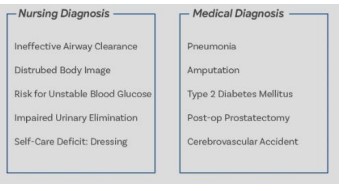
A nursing diagnosis is a clinical judgment concerning a human response to health conditions/life processes, or a vulnerability to that response, by an individual, family, group, or community.

NB: Medical diagnosis is different from a nursing diagnosis because nursing diagnosis refers to human response to health conditions whereas the medical diagnosis focuses on health conditions.

Differences between Nursing Diagnosis and Medical Diagnosis

  • Focus: Nursing diagnosis centers on the patient's holistic response to actual or potential health problems, encompassing physical, emotional, social, and spiritual aspects. Medical diagnosis, conversely, identifies and labels diseases, injuries, or conditions based on their etiology and pathology.
  • Scope: Nursing diagnoses provide a framework for nursing care and interventions, guiding nurses in developing individualized care plans. Medical diagnoses, on the other hand, guide medical treatment and interventions, often involving pharmacological or surgical approaches.
  • Orientation: Nursing diagnoses are patient-oriented and dynamic, changing as the patient's responses evolve. Medical diagnoses are disease-oriented and tend to be more static, remaining the same as long as the disease is present.
  • Nomenclature: Nursing diagnoses use standardized terminology developed by organizations like NANDA International (e.g., "Acute Pain," "Impaired Skin Integrity"). Medical diagnoses use standard medical classifications such as ICD-10 (e.g., "Appendicitis," "Type 2 Diabetes Mellitus").

Types of the nursing diagnosis:

1. Actual nursing diagnosis

  • These are presenting response to current health condition.
  • The actual nursing diagnosis has three parts i.e. Diagnosis, relation to (pathophysiology) and evidence.

Scenario A: A patient complaining of fevers, on thermometer reading it indicates 38°C.
From NANDA 2024 – 2026 fevers have hyperthermia i.e.
Hyperthermia related to increased leukocyte activity evidenced by the thermometer reading of 38°C.

Scenario B: A patient complained of headache of the forehead since the last 2 days after a minor head injury following a fight. On examination the pain was at 3 on a 0 – 5 pain scale.
From NANDA 2024 – 2026 headache is described as Acute pain since it has been present less than 3 months.
- Acute pain related to trauma to the head evidenced by the patient’s verbalization of feeling headache of 3 on a 0 – 5 pain scale.

2. Potential Nursing diagnosis:

  • This is an issue that could occur incase the current symptoms is not properly managed.
  • The potential nursing diagnosis has two parts that is the nursing diagnosis and the relation (pathophysiology) only.

Scenario: A patient reported vomiting for 1 day after ingesting chips and chicken. On examination the patient had no signs of dehydration.
From NANDA 2024 – 2026 vomiting does not have an actual nursing diagnosis it only has a potential nursing diagnosis which is risk for inadequate fluid volume.
– Risk for inadequate fluid volume related to vomiting.

PLANNING PHASE

The planning stage is where goals and outcomes are formulated that directly impact patient care. Planning phase is divided into:

  1. Goals
  2. Expected outcomes

Goals

  • These are the aims of the nursing interventions to be provided.
  • Therefore they should be smart.

Goals should be:

  1. Specific or on point
  2. Measurable or Meaningful
  3. Attainable or Action-Oriented
  4. Realistic: it should represent things in a way that is accurate and true to life
  5. Timely or Time-Oriented

Goals are divided into 3 categories i.e.

  1. Short term goals: these are goals having time limit ranging from minutes to 5 days.
  2. Intermediate goals: these are goals having time limit ranging from 5 days to 30 days.
  3. Long term goals: these are goals having time limit ranging from 30 days to years.

Expected Outcome

This what a nurse expects the patient to present after provision of the nursing interventions. Its divided into 2 i.e. short term and long term outcomes.

No. Short term goal Expected outcome
1. To reduce the patient's temperature to between 36.0° C to 37.4°C within 30 minutes. The patient will verbalize that he nologer feels feverish.
Thermometer reading will be between 36.0° C to 37.4°C.
No. Intermediate term goal Expected outcome
1. To relieve patient from fevers within the 72 hours. The patient will verbalize that he feels no fevers after the discontinuation of anti-pyretics.
Thermometer reading will be between 36.0° C to 37.4°C.

IMPLEMENTATION PHASE

The implementation phase of the nursing process is when the nurse puts the treatment plan into effect. It involves action or doing and the actual carrying out of nursing interventions outlined in the plan of care.

The implementation phase is divided into two parts:

  1. Nursing Interventions
  2. Rationale

Nursing Interventions

Nursing interventions are specific actions or treatments that nurses perform to help patients achieve the outcomes identified in the care plan. These interventions are based on scientific knowledge, clinical judgment, and the nurse's skills. They are designed to:

  • Promote health and prevent illness.
  • Restore health and facilitate recovery.
  • Alleviate suffering and provide comfort.
  • Assist with coping and adaptation to health problems.

Nursing interventions can be categorized in various ways, such as:

  • Direct Care Interventions: These are actions performed directly with the patient, such as administering medications, performing wound care, assisting with activities of daily living, or providing emotional support.
  • Indirect Care Interventions: These are actions performed away from the patient but on their behalf, such as documenting care, collaborating with other healthcare professionals, managing the patient's environment, or advocating for the patient's needs.
  • Independent Nursing Interventions: These are actions that nurses can initiate and perform on their own, based on their scope of practice and clinical judgment, without a physician's order (e.g., providing health education, repositioning a patient to prevent pressure ulcers).
  • Dependent Nursing Interventions: These are actions that require a physician's order or supervision (e.g., administering prescription medications, initiating intravenous fluids).
  • Collaborative Interventions: These are actions that nurses carry out in collaboration with other healthcare team members, such as physical therapists, dietitians, or social workers.

Rationale

The rationale in the implementation phase refers to the scientific reason or justification behind each nursing intervention. It explains *why* a particular intervention is chosen and *how* it is expected to achieve the desired patient outcomes. Providing a clear rationale for interventions is crucial for several reasons:

  • Evidence-Based Practice: It ensures that nursing care is based on current best evidence and research, rather than tradition or guesswork.
  • Critical Thinking: It promotes critical thinking by requiring nurses to understand the underlying principles and expected effects of their actions.
  • Accountability: It provides a basis for accountability, as nurses can explain and justify their interventions to patients, families, and other healthcare professionals.
  • Learning and Education: It serves as an educational tool for nursing students and less experienced nurses, helping them understand the principles of effective nursing care.
  • Patient Safety: Understanding the rationale helps nurses to identify potential risks and complications associated with interventions and to take appropriate precautions.

When documenting nursing interventions, it is often best practice to include a concise rationale, either explicitly or implicitly through the choice of evidence-based actions, to demonstrate the thoughtful and purposeful nature of nursing care.

Interventions Rationale
Provision of tepid sponging to allow evaporative cooling
Loosen or remove excess clothing and covers. Exposing skin to room air decreases heat and increases evaporative cooling.
Provide a tepid bath or sponge bath. A tepid sponge bath is a non-pharmacological measure to allow evaporative cooling. Do not use alcohol as it can cool the skin rapidly and may cause shivering.
Apply ice packs to the patient covered in the towels i.e. by placing ice packs in the groin area, axillae, neck, and torso however when the patient’s core temperature is lowered to 39°C, it is necessary to remove the ice packs from the patient to avoid overcooling which can result in hypothermia. To effectively cool the core temperature.
Monitor the skin during the cooling process. To prevent damage to the skin which might occur due to prolonged exposure.
Raise the side rails and lower the bed at all times. To ensure the patient’s safety even without the presence of seizure activity.
Administration of prescribed drugs
1. Antipyretics
2. Anti-seizure drugs
3. Antibiotics or anti-malarial
To eliminate the cause of fevers
Keep clothing and bed linens dry. To promote comfort and helps prevent chilling since diaphoresis occurs during defervescence.

EVALUATION

Evaluating is the fifth step of the nursing process. This final phase of the nursing process is vital to a positive patient outcome. Once all nursing intervention actions have taken place, the team now learns what works and what doesn’t by evaluating what was done beforehand. This is the past tense of the outcome if they have been achieved.

Outcome
Short term outcome
Patient verbalized that he no longer feels fevers of anti pyretics the end of 30minutes
Thermometer reading was 36.7 C after 30 minutes
Inter-mediate outcome
Patient verbalized that his fevers were relieved after 72 hours following discontinuation of anti-pyretics
Thermometer reading was 36.7 C after 72 hours following discontinuation of anti-pyretics

Explain the importance of using a nursing process

  1. The nursing process allows the nurse to provide effective care by prioritizing meaningful interventions based on their assessments and clinical diagnosis of the patient.
  2. At the end of the nursing process, the nurse evaluates the success of their care to ensure that effective care is being prioritized.
  3. It creates a standard of care where the nurse develops a nursing diagnosis and care plan based on their assessment of the patient.
  4. The nursing process provides care that is centered around the individual patient which reduces the time the client spends in the health care facility, and optimizes their health by minimizing complications in care.
  5. By setting defined goals with a clear timeline in the nursing process, the nurse can evaluate the effectiveness of the care they are providing and make changes to the care plan as needed.

SO IN BRIEF

Assessment:

  • Subjective Data (Symptoms): Patient complaining of fevers.
  • Objective Data (Signs): Thermometer reading indicates 38°C.

Diagnosis:

  • Actual Nursing Diagnosis: Hyperthermia related to increased leukocyte activity evidenced by the thermometer reading of 38°C.
  • Potential Nursing Diagnosis: Risk for fluid volume deficit related to vomiting.

Planning (Goals/Expected Outcomes):
Goals:

  • Short Term: Reduce temperature to between 36.0°C to 37.4°C within 30 minutes.
  • Intermediate Term: [Specify a goal if needed]
  • Long Term: [Specify a goal if needed]

Expected Outcomes:
The patient will verbalize that he no longer feels feverish. Thermometer reading will be between 36.0°C to 37.4°C.

Implementation:

  • [Specify nursing interventions here, e.g., tepid sponging.]

Rationale:

  • [Explain why you did the intervention, e.g., To allow evaporative cooling.]

Evaluation:

  • Patient verbalized that he no longer feels feverish, and the thermometer reading was 36.7 degrees Celsius after 30 minutes

Sample Nursing Care Plan for a patient with Malaria

Assessment Diagnosis Planning (Goals or Expected Outcomes) Implementation/ Interventions Rationale Evaluation
Fever Hyperthermia related to leucocyte activity as evidenced by an elevated temperature of 39° C. Reduce fever to 37° C within 30 minutes.
  • Administer antipyretic medication as prescribed.
  • Encourage adequate fluid intake.
  • Apply cooling measures (e.g., tepid sponging).
  • Antipyretic medication helps lower the fever.
  • Adequate fluid intake prevents dehydration.
  • Cooling measures aid in reducing body temperature.
Fever reduced to 37° C
Headache Acute Pain related to malarial infection evidenced by patient verbalizing headache. Alleviate headache within 40 minutes.
  • Administer analgesic medication as prescribed.
  • Provide a quiet and dimly lit environment.
  • Encourage relaxation techniques (e.g., deep breathing).
  • Analgesic medication helps relieve pain.
  • A quiet environment reduces stimuli that may exacerbate the headache.
  • Relaxation techniques promote comfort.
Headache Alleviated within 40 minutes. With a pain scale reading of 1/10.
Myalgias Impaired Physical Mobility related to muscle pain and weakness as evidenced by difficulty in movement. Improve mobility and reduce muscle pain within 5 days.
  • Encourage gentle stretching exercises.
  • Administer analgesic medication as prescribed.
  • Provide warm compresses to affected areas.
  • Gentle stretching improves flexibility and reduces muscle pain
  • Analgesic medication helps relieve pain.
  • Warm compresses promote muscle relaxation.
Improved mobility and reduced muscle pain After 5 days.
Nausea Nausea related to changes in eating habits as evidenced by patient complaints and increased salivation Alleviate nausea within 1 hour.
  • Administer antiemetic medication as prescribed.
  • Encourage small, frequent meals.
  • Provide oral hygiene measures after vomiting episodes.
  • Antiemetic medication helps alleviate nausea.
  • Small, frequent meals are easier to tolerate.
  • Oral hygiene measures prevent discomfort and promote a sense of well-being.
Patient verbalised That no nausea After 1 hour.
Vomiting Risk for inadequate fluid volume related to unpleasant sensory stimuli The client will report decreased severity or elimination of nausea and vomiting.
  • Administer antiemetic medication as prescribed.
  • Monitor and record intake and output.
  • Provide oral rehydration solutions as needed.
  • Antiemetic medication helps control vomiting.
  • Monitoring intake and output prevents dehydration.
  • Oral rehydration solutions restore fluid balance.
The client reported elimination of nausea and vomiting.
Diarrhea Risk for inadequate Nutritional intake related to less food intake as evidenced by watery stool. Achieve optimal nutritional intake.
  • Administer antidiarrheal medication as prescribed.
  • Encourage a bland and easily digestible diet.
  • Monitor and record bowel movements.
  • Antidiarrheal medication helps control diarrhea.
  • A bland diet is easier on the digestive system.
  • Monitoring bowel movements informs about the effectiveness of interventions.
Achieved optimal nutritional intake
Dehydration Risk for impaired fluid volume balance related to diarrhea, nausea and vomiting. Patient will maintain hydration as evidenced by adequate intake and output, vital signs, and skin turgor
  • Administer fluids intravenously as indicated.
  • Offer high-water content foods like soups
  • Administer antiemetics as indicated.
  • Fluids for fluid replacement
  • To encourage rehydration and motility of the bowel.
  • To reduce vomiting episodes
Patient maintained hydration.

Expected outcomes while managing a patient with glomerulonephritis: Came as a Question in 2023

Defining Expected Outcomes

Expected outcomes, also known as patient outcomes or desired outcomes, are measurable, observable, and achievable goals that a patient is expected to attain as a result of nursing care. They represent the desired changes in a patient's health status, behaviors, or perceptions. Expected outcomes are crucial components of the planning phase of the nursing process, as they provide a benchmark against which the effectiveness of nursing interventions can be evaluated.

Tense Used in Expected Outcomes

Expected outcomes are always written in the future tense. This is because they describe what the patient will do or will achieve after the nursing interventions have been implemented. The future tense emphasizes that these are goals to be reached, rather than current states. Examples include phrases like "patient will demonstrate," "patient will exhibit," "patient will regain," or "patient will verbalize."

  1. Patients will demonstrate bowel sounds within normal limits.
  2. Patients will exhibit normal eating habits without experiencing nausea, vomiting, abdominal discomfort, dyspepsia, bloating, and early satiety.
  3. Patient will exhibit balanced nutrition as evidenced by the absence of malnutrition
  4. Patient will regain and maintain adequate body weight for age and gender
  5. Patient will verbalize two strategies to reduce nausea and improve comfort.
  6. Patient will express improved comfort as evidenced by improved sleep and mood.
  7. Patient will verbalize relief from nausea
  8. Patient will be able to demonstrate strategies that prevent nausea
  9. Patient will maintain hydration as evidenced by adequate intake and output, vital signs, and skin turgor

Quick Quiz

Nursing Process Quiz

FON - mobile-friendly and focused practice.

Privacy: Your details are used only for quiz tracking and certificates.

Sample Care Plan

Summary NANDA

Nursing Process Read More »

Want notes in PDF? Join our classes!!

Send us a message on WhatsApp
0726113908

Scroll to Top
Enable Notifications OK No thanks