Nurses Revision

Pediatrics

Treatment of HIV/AIDS in Children (ARV therapy)

Treatment of HIV/AIDS in Children (ARV therapy)

Management of HIV/AIDS in Children

Managing HIV/AIDS in children is a complex, long-term endeavor that involves a combination of medical, nutritional, psychosocial, and developmental interventions. The primary goal is to suppress viral replication, restore immune function, prevent opportunistic infections, promote normal growth and development, and improve the child's quality of life and longevity.

I. Diagnosis of HIV/AIDS in Children

Accurate and timely diagnosis is the critical first step before initiating Antiretroviral Therapy (ART). The diagnostic approach differs significantly for infants and children due to the presence of maternal antibodies in younger infants.

A. Criteria for Diagnosing HIV Infection:

Diagnosis of HIV/AIDS in children relies on a combination of laboratory tests and clinical evaluation.

  • Positive HIV Test Result: This is paramount. The type of test varies by age:
    • For infants and children below 18 months of age: Virological tests (e.g., DNA PCR) are required to detect the virus itself, as maternal HIV antibodies can persist in the child's blood, making antibody tests unreliable for diagnosing infection in this age group.
    • For children 18 months of age and above: Antibody tests can reliably confirm HIV infection, similar to adults.
  • Clinical Stage Criteria: The presence of HIV-related clinical signs and symptoms (as per WHO Clinical Staging) supports the diagnosis and indicates disease progression.
  • Clinical Status, History, and Risk Factors: These should always be considered in conjunction with test results. A thorough history of exposure (e.g., maternal HIV status, breastfeeding history) and assessment of the child's health status are vital.
B. Types of HIV Diagnostic Tests:
  1. Nucleic Acid Amplification Tests (NATs) / PCR Tests:
    • Purpose: Detect the genetic material of HIV (DNA or RNA) directly, rather than antibodies or antigens.
    • Application: Essential for diagnosing HIV infection in infants and children below 18 months of age. The most common type is the DNA PCR test, often performed on Dried Blood Spot (DBS) specimens.
    • Note: ELISA Ag/Ab tests (which detect HIV antigens and/or antibodies) are commonly used for screening in blood donations or in older individuals, but are NOT suitable for diagnosing infection in infants <18 months due to maternal antibodies.
  2. HIV Antibody Tests:
    • Purpose: Detect antibodies produced by the body in response to HIV infection.
    • Application:
      • To determine HIV exposure: In infants born to mothers of unknown HIV status.
      • To exclude infection: In an infant at 18 months of age if the child has ceased breastfeeding for at least 6 weeks and all previous virological tests were negative.
      • To confirm HIV infection: In children 18 months of age and above.
II. HIV Testing Services (HTS) Provision Protocol

The process of providing HIV testing should follow a standardized protocol to ensure ethical considerations, accurate results, and appropriate follow-up. This protocol typically involves four key steps:

Step 1: Pre-Test Information and Counseling
  • Content: Educate the client/patient (or caregiver) about HIV transmission, basic prevention methods, the benefits of testing, possible test results, available support services, and the principles of consent and confidentiality.
  • Risk Assessment: Conduct an individual risk assessment.
  • Documentation: Fill out the HTS card.
  • Engagement: Allow ample opportunity for questions.
Step 2: HIV Testing
  • Sample Collection: Blood samples are used.
    • For children below 18 months: A DNA PCR test is performed.
    • For children 18 months and above: An antibody test is performed.
  • Algorithm Adherence: Always refer to and follow the national HIV testing algorithms specific to different age groups.
Step 3: Post-Test Counseling (Individual/Couple)
  • Readiness Assessment: Ensure the client/patient (or caregiver) is ready to receive the results.
  • Result Delivery: Communicate results clearly and simply.
  • Support: Address concerns, discuss disclosure, partner testing, and risk reduction strategies.
  • Information Provision: Provide essential information about basic HIV care and ART services.
  • Documentation: Complete the HTS card and HTS register.
Step 4: Linkage to Other Services
  • Referral: Provide information and facilitate referral to appropriate HIV prevention, treatment, care, and support services.
  • Documentation: Complete referral forms and update registers (e.g., pre-ART and ART registers upon enrollment and initiation of ART).
III. Principles of HIV Testing Services (HTS)

HTS delivery must be non-discriminatory and uphold a human rights approach, observing the "5 Cs":

  1. Confidentiality: All client information must be kept private and not disclosed without consent.
  2. Consent:
    • Individuals 12 years and above can consent to HTS themselves.
    • For children, consent is obtained from a parent, guardian, next of kin, or legally authorized person.
  3. Counseling: Quality pre- and post-test counseling is mandatory as per approved HTS protocols.
  4. Correct Test Result: HTS providers must strictly adhere to national testing algorithms and Standard Operating Procedures (SOPs) to ensure accurate results.
  5. Connection to Appropriate Services: Clients must be linked to necessary HIV prevention, treatment, care, and support services.
IV. Specific Procedures for Pediatric HIV Testing
A. Sites for Blood Prick in Children:
  • Infants 1-4 months (<6 kg): Heels are generally best.
  • Infants 5-10 months (<10 kg): Toes are often suitable.
  • Larger infants and older children: Ring or middle finger.
B. HIV Testing Algorithm for Infants and Children Below 18 Months of Age:
  • Virological testing (DNA/PCR) is recommended for determining HIV status.
  • Sample Type: Usually Dried Blood Spot (DBS) specimens.
  • First DNA/PCR Test: Should be performed at six weeks of age or at the earliest opportunity thereafter.
    • POSITIVE DNA/PCR Result: The child is HIV-infected.
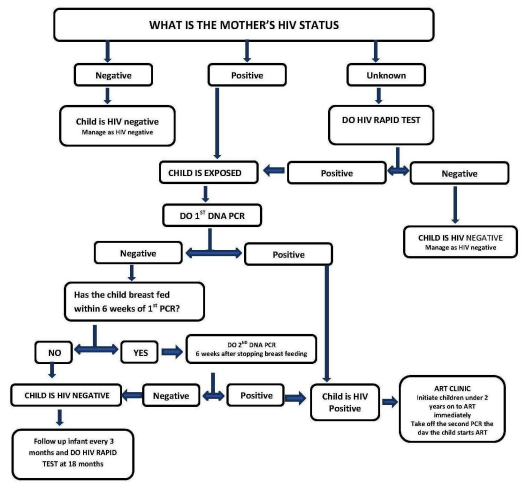
      • Action: Initiate ART immediately.
      • Confirmation: Collect another blood sample on the day of ART initiation to confirm the positive result.
    • NEGATIVE 1st DNA/PCR Result: The child is currently not infected but could become infected if still breastfeeding.
      • Action: Retest using DNA/PCR six weeks after cessation of breastfeeding.
      • Final Confirmation: If the 2nd DNA/PCR is also negative, a final rapid antibody test should be performed at 18 months of age (after breastfeeding cessation).
C. Procedure for Dried Blood Spot (DBS) Collection:
  1. Warm the area (e.g., heel or finger) to increase blood flow.
  2. Position the baby with the foot down for gravity assistance (if heel prick).
  3. Sterilize the area thoroughly with alcohol and allow it to air dry completely.
  4. Press the lancet into the foot/finger and prick the skin with a quick, firm motion.
  5. Wipe away the first drop of blood with a clean gauze.
  6. Allow a large drop of blood to collect.
  7. Add approximately 50µl (about 2 drops) into one circle on the DBS card, filling it completely.
  8. Fill at least 3 circles on the DBS card.
  9. Clean the foot/finger but do not bandage the prick site.
  10. Dispose of all contaminated materials appropriately.
D. Cautions During HIV Testing:
  • Never use expired HIV test kits.
  • Avoid any modification of established procedures.
  • Do not use clotted blood.
  • Avoid "dirty" blood (e.g., contaminated with skin flakes, powder, sweat).
  • Avoid introducing air bubbles into devices when adding samples.
  • Strictly adhere to manufacturer instructions regarding:
    • Amount of blood.
    • Amount of buffer.
    • Not exchanging buffers between different kits.
    • Avoiding buffer contamination.
    • Incubation times.
II. Antiretroviral Therapy (ART)

Antiretroviral therapy (ART) is the mainstay of HIV treatment. It involves the use of a combination of drugs that target different stages of the HIV life cycle, thereby suppressing viral replication. For children with HIV, ART is not just treatment; it is a life-saving intervention that has transformed HIV from a rapidly fatal illness into a manageable chronic condition.

A. Goals of ART in Children:
  1. Viral Suppression: To reduce the HIV viral load to undetectable levels, thereby preventing further immune damage and reducing the risk of HIV transmission (though primarily a concern for adults, it has implications for future reproductive health of adolescents).
  2. Immune Reconstitution: To increase CD4+ T-lymphocyte counts and restore immune function, making the child less susceptible to opportunistic infections (OIs).
  3. Prevention of OIs: By restoring immune function, ART significantly reduces the incidence and severity of OIs.
  4. Promotion of Normal Growth and Development: By controlling the virus and preventing OIs, ART allows children to grow, gain weight, and achieve developmental milestones.
  5. Improved Quality of Life and Survival: Ultimately, ART aims to enable children with HIV to live long, healthy, and productive lives, comparable to their HIV-negative peers.
  6. Prevention of HIV-associated Morbidities: Such as HIV encephalopathy, cardiomyopathy, and nephropathy.
B. When to Start ART (Indications for ART Initiation):

The current guidelines from the World Health Organization (WHO) and national bodies universally recommend "Treat All" – meaning all individuals diagnosed with HIV, regardless of clinical stage or CD4 count, should be offered ART. This is especially critical for children due to their rapidly progressing disease and immature immune systems.

Specifically for children, this translates to:

  • All HIV-infected infants and children (0-19 years) should initiate ART regardless of clinical stage or CD4 count.
  • Early initiation is crucial, especially in infants: Due to the rapid progression of HIV disease in young infants and higher rates of morbidity and mortality, ART should be started as soon as HIV infection is confirmed.

Rationale for "Treat All" in Children:

  • Rapid Disease Progression: HIV progresses much faster in infants and young children than in adults.
  • Higher Viral Loads: Infants often have higher viral loads, leading to more rapid immune destruction.
  • Developmental Vulnerability: Their developing brains and bodies are particularly vulnerable to the damaging effects of uncontrolled HIV.
  • Improved Outcomes: Numerous studies have shown that early ART initiation significantly reduces mortality and morbidity, improves neurodevelopmental outcomes, and normalizes growth in children.
C. Components of an ART Regimen:

An ART regimen typically consists of a combination of three antiretroviral drugs from at least two different classes. This combination approach is vital to achieve maximal viral suppression and prevent the development of drug resistance.

The main classes of antiretroviral drugs used in pediatric ART include:

  1. Nucleoside Reverse Transcriptase Inhibitors (NRTIs): These drugs block reverse transcriptase, an enzyme HIV uses to convert its RNA into DNA.
    • Examples: Abacavir (ABC), Lamivudine (3TC), Zidovudine (AZT or ZDV), Tenofovir disoproxil fumarate (TDF), Emtricitabine (FTC).
  2. Non-Nucleoside Reverse Transcriptase Inhibitors (NNRTIs): These also block reverse transcriptase but in a different way than NRTIs.
    • Examples: Efavirenz (EFV), Nevirapine (NVP), Rilpivirine (RPV).
  3. Protease Inhibitors (PIs): These drugs block protease, an enzyme HIV uses to cut long protein chains into smaller pieces needed for new virus particles.
    • Examples: Lopinavir/ritonavir (LPV/r), Darunavir (DRV), Atazanavir/ritonavir (ATV/r). PIs are often "boosted" with low-dose ritonavir to increase their levels in the blood.
  4. Integrase Strand Transfer Inhibitors (INSTIs): These drugs block integrase, an enzyme HIV uses to insert its viral DNA into the host cell's DNA.
    • Examples: Dolutegravir (DTG), Raltegravir (RAL), Bictegravir (BIC). INSTIs are increasingly becoming preferred first-line agents due to their potency, good tolerability, and high barrier to resistance.
D. First-Line Regimens (Current WHO Recommendations for Children):

WHO guidelines are regularly updated, but broadly, current recommendations for first-line ART in children emphasize potent, well-tolerated, and affordable regimens.

  • For most children (especially school-aged and adolescents): A regimen including an INSTI, such as Dolutegravir (DTG), combined with two NRTIs is preferred. A common combination is DTG + 2 NRTIs (e.g., ABC + 3TC or TDF + 3TC/FTC).
    • DTG is highly effective, generally well-tolerated, and has a high barrier to resistance, making it an excellent choice.
  • For infants and young children (under 3 years or specific weight bands): PI-based regimens (e.g., LPV/r + 2 NRTIs) were previously preferred due to concerns about DTG dosing and safety data in this very young age group, but DTG is increasingly being recommended across all age groups including very young infants based on newer data and formulations.
    • Weight-band dosing is critical for pediatric ART.
  • Fixed-Dose Combinations (FDCs): Wherever possible, ART should be administered as fixed-dose combinations (FDCs), where multiple drugs are combined into a single pill. This simplifies dosing, improves adherence, and reduces the pill burden. Pediatric-friendly formulations (e.g., palatable granules, dispersible tablets) are crucial.
E. Adherence to ART:
  • Crucial for Success: Strict adherence to the prescribed ART regimen is paramount for its effectiveness. Missing doses allows the virus to replicate, potentially leading to increased viral load, immune deterioration, and the development of drug resistance.
  • Challenges in Children: Adherence can be particularly challenging in children due to:
    • Unpalatable medicines.
    • Multiple pills and complex dosing schedules.
    • Caregiver burden and understanding.
    • Stigma and disclosure issues (especially in older children/adolescents).
  • Strategies to Improve Adherence:
    • Caregiver education and support: Ensuring caregivers understand the importance of ART, correct dosing, and potential side effects.
    • Patient education: Age-appropriate education for the child/adolescent as they grow.
    • Simplified regimens and FDCs: Using once-daily, single-pill regimens when possible.
    • Palatable formulations: Using child-friendly forms of medication.
    • Adherence counseling: Regular and ongoing counseling.
    • Peer support groups: For older children and adolescents.
    • Disclosure of HIV status: Thoughtful and age-appropriate disclosure can empower the child to take ownership of their treatment.
III. Monitoring of HIV-infected Children on ART

Monitoring is a continuous and crucial component of HIV management in children on ART. It involves regular assessments to evaluate the effectiveness of the treatment, detect potential side effects, identify new opportunistic infections, and ensure overall well-being and adherence. Effective monitoring allows for timely adjustments to treatment plans, optimizing long-term outcomes.

A. Key Areas of Monitoring:

Monitoring an HIV-infected child on ART typically involves assessing several key parameters:

1. Clinical Monitoring:
  • Growth and Development: Regular assessment of weight, height, head circumference (in infants), and plotting on growth charts. This is a crucial indicator of treatment success and overall health. Monitor developmental milestones.
  • General Physical Examination: Look for new or persistent signs/symptoms, such as fever, rash, lymphadenopathy, organomegaly, and signs of OIs.
  • Nutritional Status: Assess for malnutrition or wasting and provide appropriate nutritional support and counseling.
  • ART Adherence: Regularly assess and reinforce adherence to medication. This involves direct questioning, pill counts (if feasible), and discussing any challenges.
  • Side Effects of ART: Monitor for both acute and chronic drug-related toxicities (e.g., skin rashes, gastrointestinal upset, neurological symptoms, lipodystrophy).
  • Tuberculosis (TB) Screening: Regular screening for TB disease is vital given its high co-infection rate with HIV.
  • Immunization Status: Ensure the child is up-to-date on all routine childhood immunizations.
2. Immunological Monitoring (CD4 Count):
  • Purpose: CD4+ T-lymphocyte count (or percentage) measures the strength of the immune system. An increase in CD4 count indicates immune recovery.
  • Frequency: Typically measured at baseline (before starting ART) and then every 3-6 months, or as clinically indicated.
  • Interpretation: A rising CD4 count/percentage signifies a good response to ART. A falling CD4 count may indicate treatment failure or non-adherence.
3. Virological Monitoring (HIV Viral Load):
  • Purpose: Measures the amount of HIV RNA in the blood. It is the most sensitive indicator of ART effectiveness.
  • Frequency: Baseline, and then typically 3-6 months after ART initiation, and every 6-12 months thereafter. More frequent monitoring may be needed if there are concerns about adherence or treatment failure.
  • Interpretation:
    • Viral Suppression: A viral load below the detectable limit (e.g., <20, <50, or <1000 copies/mL depending on the assay) indicates successful ART and good adherence. This is the primary goal of ART.
    • Virological Failure: A persistently high or increasing viral load despite being on ART, or a confirmed viral load >1000 copies/mL (WHO definition), suggests treatment failure, often due to non-adherence or drug resistance.
4. Laboratory Monitoring for ART Toxicity:
  • Purpose: To detect and manage potential side effects of antiretroviral drugs on various organ systems.
  • Common Tests:
    • Full Blood Count (FBC): To check for anemia (e.g., with AZT), neutropenia, or thrombocytopenia.
    • Kidney Function Tests (Creatinine, eGFR): To monitor for nephrotoxicity, especially with tenofovir (TDF).
    • Liver Function Tests (ALT, AST): To monitor for hepatotoxicity, which can occur with many ART drugs.
    • Lipid Profile (Cholesterol, Triglycerides): To monitor for dyslipidemia, particularly with some PIs.
    • Blood Glucose: To monitor for hyperglycemia.
  • Frequency: Typically at baseline, 1-3 months after ART initiation, and then every 6-12 months, or as clinically indicated based on the specific ART regimen and child's health status.
B. Management of Treatment Failure:

Treatment failure can be clinical, immunological, or virological. Virological failure is the most sensitive and earliest indicator.

  • Suspected Treatment Failure:
    1. Assess Adherence: The first step is always to thoroughly re-assess and address adherence issues. Most cases of virological failure are due to suboptimal adherence. Provide intensive adherence counseling.
    2. Confirm Virological Failure: Repeat viral load testing after a period of intensive adherence counseling (e.g., 3-6 months).
    3. Investigate Drug Resistance: If confirmed virological failure despite good adherence, consider performing a drug resistance test (genotyping). This guides the selection of a new regimen.
    4. Switch to Second-Line Regimen: Based on resistance test results (if available) or empirical guidelines, switch the child to a different ART regimen, often involving different drug classes or more potent drugs (e.g., a PI-based regimen if not already on one, or a new INSTI combination).
C. Disclosure of HIV Status to Children:
  • Importance: Timely and age-appropriate disclosure is a critical part of monitoring and management. It empowers the child to understand their health, take ownership of their treatment, and better adhere to ART as they mature. It also helps them navigate social challenges.
  • Process: It should be a planned, gradual, and ongoing process, not a single event.
    • Early Childhood (0-6 years): Simple explanations and reassuring messages about taking medicine to stay healthy.
    • Middle Childhood (7-12 years): More concrete explanations, answering questions honestly, introducing the term "HIV" if appropriate.
    • Adolescence (13+ years): Full disclosure, detailed discussions about living with HIV, adherence, prevention, and future planning.
  • Support: Involve caregivers, healthcare providers, and psychosocial support staff in the disclosure process.
IV. Linkage from HIV Testing to HIV Prevention, Care, and Treatment

Linkage refers to the critical process of connecting individuals newly diagnosed with HIV from the point of testing to subsequent prevention, care, and treatment services. Successful linkage means the patient actually receives the services they were referred to. This is especially crucial for children, where timely intervention is paramount for survival and well-being.

A. Importance and Timelines for Linkage:
  • Prompt Action: For all clients testing HIV-positive, linkage should ideally occur within seven days for referrals within the same facility and within 30 days for inter-facility or community-to-facility referrals.
  • Facilitators: The use of trained lay providers (e.g., community health workers, peer leaders, expert clients) as linkage facilitators is highly recommended to bridge gaps and support patients through the process.
B. Types of Linkages:
  1. Internal Facility Linkage:
    • Definition: Connecting a newly diagnosed patient from one department (e.g., HIV testing center, pediatric ward) to another department within the same health facility (e.g., the ART clinic or pediatric HIV clinic) for comprehensive HIV treatment, care, and support services.
  2. Inter-Facility Linkage:
    • Definition: Connecting a newly diagnosed patient from one health facility to another different health facility for ongoing HIV treatment, care, and support services.
    • Tracking: The referring facility has a responsibility to track all referred HIV-positive patients to ensure they are enrolled in care and initiated on ART within 30 days.
  3. Community-to-Facility Linkage:
    • Definition: Connecting a client who tests HIV-positive in a community setting (e.g., mobile testing clinic, home-based testing) to a health facility for HIV treatment, care, and support services.
    • Community Health Systems: HTS programs should establish robust community health systems (involving peer leaders, expert clients, community health volunteers) to mobilize individuals for testing and facilitate prompt linkage (within 30 days) for all who test positive.
C. Steps of Internal Linkage Facilitation (A Detailed Example):

This outlines a best-practice pathway for ensuring a smooth transition within a single facility:

  1. Post-Test Counseling:
    • Provide accurate test results clearly and empathetically.
    • Inform about available care services both within the facility and in the broader catchment area.
    • Explain the immediate next steps for care and treatment.
    • Emphasize the significant benefits of early ART initiation and the risks of delaying treatment.
    • Identify and collaboratively address any potential barriers to linkage (e.g., transport, stigma, fear).
    • Involve the parent/caregiver and child (age-appropriately) in decision-making regarding their care plan.
    • Complete client cards and all necessary referral notes and forms (e.g., triplicate referral form).
    • Introduce and hand over the patient to a dedicated linkage facilitator.
    • If same-day linkage is not feasible, schedule an appointment for the client at the clinic and diligently follow up to ensure attendance.
  2. Escort to the HIV Clinic:
    • The linkage facilitator physically escorts the client to the ART clinic, carrying all relevant linkage forms.
    • The client is formally handed over to the responsible staff at the receiving clinic.
  3. Enrollment at the HIV Clinic:
    • Register the patient in the pre-ART register.
    • Create an individual HIV/ART card/file for the patient.
    • Provide comprehensive ART preparatory counseling, covering adherence, side effects, and expectations.
    • Conduct necessary baseline investigations (as outlined in the monitoring section).
    • If the patient is ready (and all criteria met, especially the "Treat All" for children), initiate ART immediately.
    • Continue with ongoing counseling support (e.g., disclosure, psychosocial support).
    • Coordinate integrated care as needed (e.g., for TB/HIV co-infection, PMTCT follow-up for the mother).
    • Schedule an appropriate follow-up appointment with the patient/caregiver.
IV. 10-Point Care Package for Comprehensive Pediatric AIDS Care

This comprehensive framework outlines the essential components for holistic care of children living with HIV:

  1. Confirm HIV Status as Early as Possible: Early diagnosis is critical for prompt intervention.
  2. Monitor the Child’s Growth and Development: Regular assessment of physical growth and achievement of developmental milestones.
  3. Ensure Immunizations are Started & Completed as per Schedule: Protect against vaccine-preventable diseases.
  4. Provide Prophylaxis for Opportunistic Infections (OIs): Prevent common and severe infections.
  5. Actively Look for and Treat Infections Early: Prompt recognition and management of any infections.
  6. Counsel Mother & Family on:
    • Optimal infant feeding practices.
    • Good personal & food hygiene.
    • Follow-up recommendations for the child.
  7. Conduct Disease Staging for the Infected Child: To assess disease progression and guide management.
  8. Offer ARV Treatment for the Infected Child: Initiate ART as per "Treat All" guidelines.
  9. Provide Psychosocial Support for the Infected Child and Mother/Family: Address emotional, mental, and social well-being.
  10. Refer the Infected Child to Higher Levels of Specialized Care if Necessary: For complex cases or specific complications.

Treatment of HIV/AIDS in Children (ARV therapy) Read More »

Clinical HIV & AIDS in Children

Clinical Manifestation of HIV / AIDS in Children

Clinical Manifestations of HIV / AIDS in Children

The clinical manifestations of HIV/AIDS in children are many, more aggressive, and progress more rapidly than in adults, particularly if infection occurs early in life (e.g., via MTCT) and without timely treatment. The presentation can range from non-specific symptoms to severe opportunistic infections and organ damage.

  1. Rapid Progression: Infants infected perinatally often experience rapid disease progression, with symptoms appearing within the first year of life. About 20-30% of perinatally infected infants develop severe disease and AIDS within the first year if untreated.
  2. Age-Dependent Presentation:
    • Infants (0-1 year): Often present with failure to thrive, recurrent bacterial infections, persistent oral candidiasis, hepatosplenomegaly, and lymphadenopathy.
    • Young Children (1-5 years): May show developmental delay, recurrent severe infections, chronic diarrhea, and increasing frequency of opportunistic infections.
    • Older Children/Adolescents (>5 years): Clinical presentation begins to resemble adult HIV, with opportunistic infections, malignancies, and constitutional symptoms.
  3. Impact of ART: With the widespread availability and early initiation of Antiretroviral Therapy (ART), many of the classic severe manifestations are now less common, and children on ART can lead healthier, near-normal lives. However, untreated or poorly managed cases still present with severe disease.
Clinical Manifestations
A. On History Taking (Symptoms reported by caregivers or older children):
  1. Infections:
    • Bacterial: Unusually frequent and severe occurrences of common childhood bacterial infections, such as otitis media, sinusitis, and pneumonia. These often recur despite appropriate treatment.
    • Fungal: Recurrent fungal infections, such as candidiasis (thrush), that do not respond well to standard antifungal agents, suggesting lymphocytic dysfunction.
    • Viral: Recurrent or unusually severe viral infections, such as recurrent or disseminated herpes simplex or zoster infection, or cytomegalovirus (CMV) retinitis. These are seen with moderate to severe cellular immune deficiency.
  2. Growth and Development:
    • Growth failure.
    • Failure to thrive.
    • Wasting.
    • Failure to attain typical milestones: Such developmental delays, particularly impairment in the development of expressive language, may indicate HIV encephalopathy.
  3. Neurocognitive/Behavioral:
    • Behavioral abnormalities (in older children), such as loss of concentration and memory, may also indicate HIV encephalopathy.
B. During Physical Examination (Signs observed by clinician) inclusive of investigations:
  1. Oral and Mucocutaneous Manifestations:
    • Candidiasis: Most common oral and mucocutaneous presentation of HIV infection. Thrush in the oral cavity and posterior pharynx is observed in approximately 30% of HIV-infected children.
    • Linear gingival erythema and median rhomboid glossitis.
    • Parotid enlargement (often bilateral and painless) and recurrent aphthous ulcers.
    • Herpes Simplex Virus (HSV) Manifestations: May manifest as herpes labialis, gingivostomatitis, esophagitis, or chronic erosive, vesicular, and vegetating skin lesions; the involved areas of the lips, mouth, tongue, and esophagus are ulcerated.
  2. Dermatological Manifestations:
    • HIV dermatitis: An erythematous, papular rash; observed in about 25% of children with HIV infection.
    • Dermatophytosis: Manifesting as an aggressive tinea capitis, corporis, versicolor, or onychomycosis.
    • Generalized persistent dermatitis (unresponsive to treatment).
    • Herpes zoster (shingles), which can be multi-dermatomal or single-dermatome.
  3. Respiratory System:
    • Pneumocystis jiroveci (formerly P. carinii) pneumonia (PCP): Most commonly manifests as cough, dyspnea, tachypnea, and fever.
    • Digital clubbing: As a result of chronic lung disease.
    • Lymphoid Interstitial Pneumonitis (LIP).
    • Severe pneumonia.
    • Bronchiectasis.
  4. Lymphatic and Organ Enlargement:
    • Generalized cervical, axillary, or inguinal lymphadenopathy (often persistent and non-inguinal).
    • Hepatosplenomegaly (especially in non-malaria endemic areas).
  5. Gastrointestinal:
    • Persistent or recurrent diarrhea.
  6. Other Physical Signs:
    • Lipodystrophy: Presentations include peripheral lipoatrophy, truncal lip hypertrophy, and combined versions of these presentations; a more severe presentation occurs at puberty.
    • Pitting or non-pitting edema in the extremities.
    • Persistent and recurrent fever.
    • Neurologic dysfunction.
Conditions Grouped by Specificity to HIV Infection
  1. Signs/conditions very specific to HIV infection (AIDS-defining illnesses in children):
    • Pneumocystis pneumonia (PCP)
    • Esophageal candidiasis
    • Extrapulmonary cryptococcosis
    • Invasive salmonella infection (recurrent non-typhoidal)
    • Lymphoid interstitial pneumonitis (LIP)
    • Herpes zoster (shingles) with multi-dermatomal involvement
    • Kaposi’s sarcoma
    • Lymphoma (e.g., non-Hodgkin lymphoma)
    • Progressive multifocal encephalopathy
  2. Signs/conditions common in HIV-infected children and uncommon in uninfected children:
    • Severe bacterial infections, particularly if recurrent.
    • Persistent or recurrent oral thrush.
    • Bilateral painless parotid enlargement.
    • Generalized persistent non-inguinal lymphadenopathy.
    • Hepatosplenomegaly (in non-malaria endemic areas).
    • Persistent and recurrent fever.
    • Neurologic dysfunction.
    • Herpes zoster, single dermatome.
    • Persistent generalized dermatitis (unresponsive to treatment).
  3. Conditions common in HIV-infected children but also common in ill uninfected children (less specific but still important):
    • Chronic recurrent otitis with ear discharge.
    • Persistent or recurrent diarrhea.
    • Severe pneumonia.
    • Tuberculosis.
    • Bronchiectasis.
    • Failure to thrive.
Opportunistic Infections in Children

Opportunistic infections are infections caused by pathogens (bacteria, viruses, fungi, parasites) that usually do not cause disease in a healthy host with an intact immune system but seize the "opportunity" to infect and cause severe disease in individuals whose immune systems are compromised, such as those with HIV.

In children with HIV, OIs are a major cause of morbidity and mortality, especially in those who are undiagnosed, untreated, or have advanced immune suppression.

I. Common Opportunistic Infections in Children
  1. Bacterial Infections:
    • Recurrent Bacterial Pneumonia: Caused by common bacteria like Streptococcus pneumoniae, Haemophilus influenzae, and Staphylococcus aureus. These are often more severe, recurrent, and respond poorly to standard treatment in HIV-infected children.
    • Bacteremia/Sepsis: Systemic bacterial infections are a significant concern.
    • Non-typhoidal Salmonellosis: Can cause recurrent and severe infections, including bacteremia.
    • Tuberculosis (TB): Mycobacterium tuberculosis is a major co-infection and opportunistic pathogen, particularly in endemic areas. It can present in various forms, including pulmonary TB, lymph node TB, and disseminated TB.
  2. Fungal Infections:
    • Oral Candidiasis (Thrush) / Esophageal Candidiasis: Candida albicans is one of the most common OIs. Oral thrush is often an early sign in infants. If it extends to the esophagus (esophageal candidiasis), it's an AIDS-defining illness.
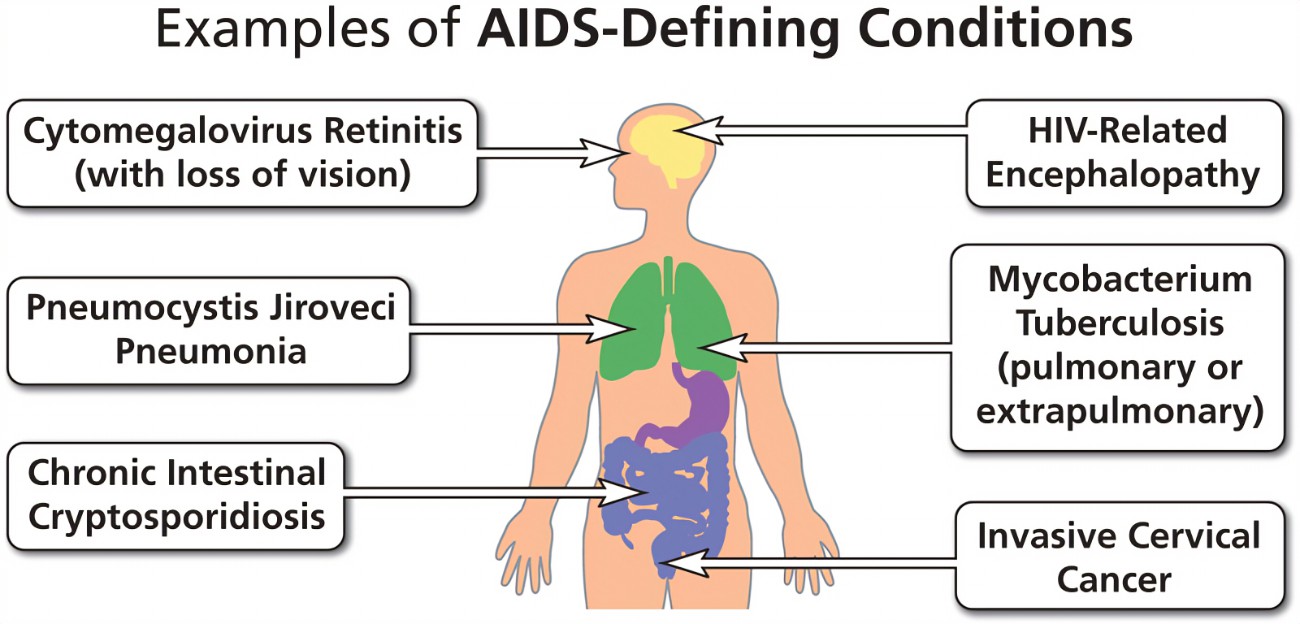
    • Pneumocystis Pneumonia (PCP): Caused by Pneumocystis jirovecii. This is a particularly severe and common OI in young, HIV-infected infants (often presenting between 3-6 months of age) and is a leading cause of death in untreated infants. It's an AIDS-defining illness.
    • Cryptococcosis: Caused by Cryptococcus neoformans, often manifesting as meningitis or disseminated disease, though less common in children than adults.
  3. Viral Infections:
    • Cytomegalovirus (CMV) Disease: Can cause retinitis (leading to blindness), pneumonitis, colitis, and neurological disease.
    • Herpes Simplex Virus (HSV) Infections: Can cause severe, persistent, or disseminated mucocutaneous lesions (e.g., severe oral ulcers, esophagitis, perianal ulcers).
    • Varicella-Zoster Virus (VZV) Infections: Reactivation causes Herpes Zoster (shingles), which can be severe, recurrent, or multi-dermatomal. Primary chickenpox can also be unusually severe.
    • Progressive Multifocal Leukoencephalopathy (PML): Caused by the JC virus, a rare but devastating neurological condition, typically seen in older children with profound immune suppression.
  4. Parasitic Infections:
    • Cryptosporidiosis: Causes chronic, severe, watery diarrhea, leading to malabsorption and wasting.
    • Isosporiasis: Similar to cryptosporidiosis, causing chronic diarrhea.
    • Toxoplasmosis: Toxoplasma gondii can cause encephalitis (brain infection) or disseminated disease.
Causes of Opportunistic Infections in HIV/AIDS Children

The fundamental cause of opportunistic infections in HIV/AIDS children (and adults) is the progressive immune suppression resulting from HIV's attack on the immune system, primarily the CD4+ T-lymphocytes. When the CD4+ T-cell count falls below critical levels, the body's ability to mount an effective defense against various pathogens is severely compromised.

  1. CD4+ T-lymphocyte Depletion and Dysfunction:
    • Loss of Helper T-cells: CD4+ T-cells are central to coordinating both humoral (antibody-mediated) and cellular (cell-mediated) immune responses. Their destruction by HIV directly weakens the immune system's command center.
    • Impaired Cell-Mediated Immunity (CMI): Many opportunistic pathogens (e.g., Pneumocystis jirovecii, Mycobacterium tuberculosis, Toxoplasma gondii, viruses like CMV and HSV) are typically controlled by CMI. With dwindling CD4+ cells, the immune system cannot effectively contain or eradicate these intracellular pathogens, leading to their uncontrolled replication and disease.
    • Impaired B-cell Function (despite normal or elevated numbers): While B-cell numbers may be normal or even high, their ability to produce specific, high-affinity antibodies in response to new infections or vaccinations can be impaired due to a lack of proper T-cell help. This contributes to the susceptibility to recurrent bacterial infections.
  2. Chronic Immune Activation and Exhaustion: The persistent presence of HIV and other co-infections leads to chronic immune activation. While initially an attempt to fight the virus, this prolonged activation can eventually lead to immune exhaustion, where immune cells become dysfunctional and unable to respond effectively to new threats. Chronic inflammation also contributes to tissue damage and systemic decline.
  3. Compromised Mucosal Barriers: HIV infection can directly or indirectly damage the integrity of mucosal barriers (e.g., in the gut). This can lead to bacterial translocation from the gut lumen into the bloodstream, increasing the risk of systemic bacterial infections and sepsis. Chronic diarrhea and malabsorption further weaken the child, making them more susceptible.
  4. Co-infections and Microbial Translocation: The presence of other infections (e.g., other viruses, bacteria) can further tax the already weakened immune system. Changes in the gut microbiome can also play a role, promoting the growth of opportunistic bacteria.
  5. Age-Related Immune Development (in infants): Infants naturally have an immature immune system, especially in the first few months of life. If infected with HIV at birth, they face a double burden: an underdeveloped immune system trying to fight a devastating virus that actively destroys its key components. This is why OIs like PCP are particularly devastating in very young HIV-infected infants.
  6. Malnutrition: HIV infection itself can cause malnutrition through increased metabolic demands, malabsorption, and reduced appetite. Malnutrition, in turn, further compromises immune function, creating a vicious cycle that enhances susceptibility to OIs.
  7. Environmental and Exposure Factors: While the underlying cause is immune suppression, exposure to opportunistic pathogens (e.g., TB in an endemic area, contaminated water causing Cryptosporidiosis) is necessary for infection to occur. Poor hygiene, crowded living conditions, and lack of access to clean water can increase exposure risks.
Prevention of Opportunistic Infections in HIV/AIDS Children

Preventing opportunistic infections (OIs) is a cornerstone of managing HIV in children, improving their quality of life and survival.

  1. Antiretroviral Therapy (ART): The Most Crucial Intervention:
    • Immune Reconstitution: The primary and most effective way to prevent OIs is by initiating and maintaining effective ART. ART suppresses HIV replication, leading to an increase in CD4+ T-cell counts and a restoration of immune function. As the immune system recovers, the risk of OIs dramatically decreases.
    • Early Initiation: Starting ART as early as possible, ideally shortly after birth for HIV-exposed infants with confirmed infection, is critical. This helps preserve immune function before significant damage occurs and before OIs can take hold.
  2. Prophylaxis (Preventive Medications):
    • Cotrimoxazole (Trimethoprim-Sulfamethoxazole, TMP-SMX) Prophylaxis: This is one of the most important and widely used prophylactic medications in HIV-infected children.
      • Purpose: Primarily prevents Pneumocystis Pneumonia (PCP), but also provides protection against bacterial infections (e.g., Streptococcus pneumoniae, Haemophilus influenzae, Salmonella species) and some parasitic infections (e.g., toxoplasmosis, isosporiasis).
      • Who receives it: All HIV-infected infants starting from 4-6 weeks of age, regardless of CD4 count, and continued until appropriate age and sustained immune recovery (as indicated by age-specific CD4 counts) on ART. In older children, it's typically indicated if CD4 counts fall below certain thresholds.
    • Isoniazid Preventive Therapy (IPT):
      • Purpose: Prevents active Tuberculosis (TB) disease.
      • Who receives it: HIV-infected children who are unlikely to have active TB disease but have been exposed to TB or live in a high TB burden setting.
    • Other Prophylaxis (Less common with effective ART, but used for specific OIs or severe immunosuppression):
      • Azithromycin or Clarithromycin: For Mycobacterium Avium Complex (MAC) prophylaxis in children with very low CD4 counts, though less commonly needed with effective ART.
      • Fluconazole: For recurrent or severe fungal infections like cryptococcosis or candidiasis, particularly if primary prophylaxis with cotrimoxazole is not fully effective.
      • Ganciclovir (or Valganciclovir): For CMV prevention in specific high-risk situations (e.g., CMV seropositive infants with severe immunodeficiency, although this is rare now with early ART).
  3. Immunizations (Vaccinations):
    • Standard Childhood Immunizations: HIV-infected children should receive all routine childhood vaccinations according to national guidelines, but with some modifications.
    • Live Vaccines: Live attenuated vaccines (e.g., Measles, Mumps, Rubella [MMR], Varicella) are generally avoided in severely immunosuppressed children but can be given if the child is not severely immunosuppressed (e.g., no evidence of severe immunodeficiency based on age-specific CD4 counts or clinical staging).
    • Inactivated Vaccines: Inactivated vaccines (e.g., Diphtheria, Tetanus, Pertussis [DTP], Haemophilus influenzae type b [Hib], Polio [IPV, not OPV], Hepatitis B, Pneumococcal conjugate vaccine [PCV], Rotavirus) are safe and highly recommended. Higher doses or extra doses of some vaccines (e.g., pneumococcal, influenza) may be recommended due to suboptimal immune response.
    • Influenza Vaccine: Annual influenza vaccination is strongly recommended.
  4. Nutritional Support:
    • Adequate Nutrition: Addressing malnutrition through appropriate feeding, micronutrient supplementation, and management of chronic diarrhea is crucial. Good nutritional status strengthens the immune system and improves overall health, making the child less susceptible to OIs.
    • Breastfeeding: For HIV-exposed infants, WHO guidelines recommend breastfeeding with maternal ART for the first year of life to improve survival and reduce OIs, as the risk of HIV transmission with ART is low, and the benefits of breastfeeding are significant.
  5. Environmental and Hygienic Measures:
    • Safe Water and Food: Education on safe water practices, food preparation, and personal hygiene to reduce exposure to pathogens causing diarrheal diseases (e.g., Cryptosporidium, Salmonella).
    • Avoidance of Exposure: Minimizing exposure to known sources of infection (e.g., sick contacts, contaminated environments), though this can be challenging.
    • Vector Control: In endemic areas, measures to prevent vector-borne diseases.
General Management of Opportunistic Infections (OIs)

The management of opportunistic infections in HIV-infected children requires a multi-pronged approach that includes specific antimicrobial therapy, aggressive supportive care, and optimization of antiretroviral therapy (ART). The ultimate goal is to treat the acute infection, prevent recurrence, and improve the child's overall immune status.

  1. Specific Antimicrobial Therapy for the OI:
    • Prompt Diagnosis and Treatment: Rapid identification of the causative pathogen and initiation of appropriate antimicrobial (antibacterial, antifungal, antiviral, antiparasitic) therapy is paramount. Delays can lead to rapid deterioration and increased mortality.
    • Agent Selection: Based on the suspected or confirmed pathogen, local resistance patterns, and guidelines. Dosing often needs careful consideration in children based on weight and age.
    • Duration: Treatment courses for OIs in HIV-infected children are often longer and more intensive than in immunocompetent children.
    • Examples:
      • PCP: High-dose cotrimoxazole (TMP-SMX) is the first-line treatment. Adjunctive corticosteroids may be used in moderate to severe cases.
      • Tuberculosis: Multi-drug anti-TB regimen, often for 6-12 months or longer, depending on the site and severity.
      • Oral/Esophageal Candidiasis: Oral or intravenous fluconazole or other antifungals.
      • Cryptosporidiosis: Nitazoxanide can be used, but efficacy is limited without immune reconstitution.
      • CMV Retinitis: Ganciclovir or valganciclovir.
  2. Optimization/Initiation of Antiretroviral Therapy (ART):
    • Immune Reconstitution is Key: While treating the acute OI, it's crucial to address the underlying immunodeficiency. If the child is not on ART, it should be initiated as soon as clinically stable. If already on ART, adherence should be reinforced, and the regimen reviewed to ensure it is effective and achieving viral suppression.
    • Timing of ART Initiation Relative to OI Treatment:
      • For most OIs, ART should be started as soon as feasible and safe, often within 2-4 weeks of starting OI treatment, once the child is clinically stable.
      • TB/HIV Co-infection: This is a special case. ART should ideally be started within 8 weeks of starting TB treatment, but often earlier (e.g., within 2 weeks for children with severe immunodeficiency or very young infants) to prevent OIs and improve survival. However, careful consideration of Immune Reconstitution Inflammatory Syndrome (IRIS) is required.
      • Cryptococcal Meningitis: ART initiation is typically delayed for 4-6 weeks after starting antifungal treatment to reduce the risk of severe IRIS.
  3. Supportive Care:
    • Nutritional Support: Aggressive management of malnutrition, including high-calorie, high-protein diets, micronutrient supplementation (vitamins A, B, C, D, E, zinc, selenium), and sometimes nasogastric feeding if oral intake is poor. Malnutrition exacerbates immunodeficiency.
    • Fluid and Electrolyte Management: Especially important for OIs causing severe diarrhea (e.g., cryptosporidiosis) or vomiting.
    • Pain Management: For painful lesions (e.g., oral thrush, HSV ulcers) or conditions (e.g., cryptococcal meningitis).
    • Respiratory Support: Oxygen therapy, and sometimes ventilatory support, for severe respiratory OIs like PCP.
    • Blood Transfusions: For severe anemia, which is common in HIV-infected children and often worsened by OIs or their treatments.
  4. Prevention of Recurrence (Secondary Prophylaxis):
    • Once an OI has been successfully treated, children often require long-term secondary prophylaxis to prevent recurrence, especially if immune recovery is not yet complete.
    • Examples:
      • PCP: Continuing cotrimoxazole prophylaxis after treatment.
      • Tuberculosis: Continued anti-TB treatment as per guidelines.
      • Cryptococcosis: Fluconazole for long-term maintenance.
      • Toxoplasmosis: Cotrimoxazole (if used for PCP prophylaxis, it also covers toxoplasmosis).
      • Secondary prophylaxis can often be discontinued once the child is on effective ART with sustained immune recovery (e.g., CD4 percentage above age-specific thresholds for a certain period).
  5. Monitoring for Immune Reconstitution Inflammatory Syndrome (IRIS):
    • IRIS can occur when ART is initiated or intensified, leading to a paradoxical worsening of symptoms or presentation of a previously subclinical infection, as the recovering immune system mounts an exaggerated inflammatory response to existing pathogens.
    • Management involves continuing ART (if possible), treating the underlying OI, and sometimes short courses of corticosteroids for severe inflammatory reactions.
WHO CLINICAL STAGING OF HIV

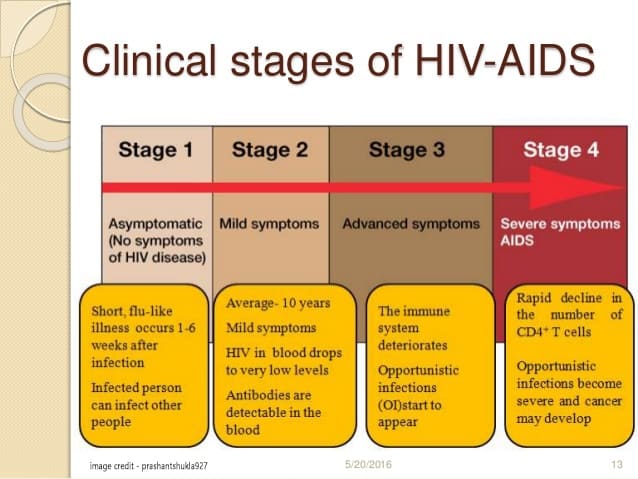
The World Health Organization (WHO) clinical staging system for HIV infection and disease is a practical and widely used tool, especially in resource-limited settings, to classify the severity and progression of HIV disease. It categorizes HIV-infected individuals based on the presence of clinical signs and symptoms, ranging from asymptomatic infection to severe manifestations.

This staging helps in:

  • Guiding clinical management: Deciding when to initiate ART, prophylaxis for OIs, and specific treatments.
  • Monitoring disease progression: Tracking the patient's condition over time.
  • Epidemiological surveillance: Providing a standardized system for data collection.

Crucially, the WHO staging criteria differ slightly between infants/children (under 10 years of age) and older children/adolescents/adults due to the unique ways HIV manifests in younger populations.

The WHO staging system for children is designed to be clinically based, allowing for assessment even in settings where laboratory tests like CD4 counts are not readily available. It progresses from Stage 1 (asymptomatic or mild signs) to Stage 4 (severe manifestations, often defining AIDS)

WHO staging for HIV infection and disease in children above 10 years

For children aged 10 years and older, the clinical staging criteria largely align with those used for adolescents and adults.

Clinical Stage I:
  • Asymptomatic: The child shows no signs or symptoms related to HIV infection.
  • Persistent Generalized Lymphadenopathy (PGL): Enlargement of lymph nodes in two or more non-contiguous sites (excluding inguinal nodes), lasting for more than 3 to 6 months, and not due to any other obvious cause.
Clinical Stage II:

This stage includes mild symptoms that are not typically life-threatening but indicate some level of immune compromise.

  • Unexplained moderate weight loss: (unintentional weight loss <10% of body weight).
  • Recurrent respiratory tract infections: (e.g., sinusitis, tonsillitis, otitis media, pharyngitis, bronchitis).
  • Herpes zoster (shingles): A painful rash caused by reactivation of the chickenpox virus.
  • Angular cheilitis: Inflammation and cracking at the corners of the mouth.
  • Recurrent oral ulcerations: Mouth sores that keep coming back.
  • Papular pruritic eruption: A persistent, itchy skin rash.
  • Seborrhoeic dermatitis: A skin condition causing red, flaky, and itchy skin.
  • Fungal nail infections: (Onychomycosis).
Clinical Stage III:

This stage indicates more advanced immune deficiency, with moderate to severe symptoms, including some OIs and severe weight loss.

  • Unexplained severe weight loss: (unintentional weight loss >10% of body weight).
  • Unexplained chronic diarrhea: (lasting for more than 1 month).
  • Unexplained persistent fever: (intermittent or constant, for more than 1 month).
  • Oral hairy leukoplakia: White, corrugated lesions on the sides of the tongue.
  • Oral candidiasis: Persistent oral thrush that extends beyond the acute stage or responds poorly to treatment.
  • Pulmonary tuberculosis (current): TB affecting the lungs.
  • Severe presumed bacterial infections: (e.g., pneumonia, empyema, pyomyositis, bone or joint infection, meningitis, bacteremia) recurrent within the last 6 months.
  • Acute necrotizing ulcerative stomatitis, gingivitis or periodontitis.
  • Unexplained anemia (<8 g/dL), neutropenia (<0.5 × 10^9/L) or chronic thrombocytopenia (<50 × 10^9/L) for more than 1 month.
Clinical Stage IV:

This is the most severe stage, often termed AIDS, characterized by severe OIs, HIV-associated malignancies, or profound wasting syndrome. These conditions are typically life-threatening.

  • HIV wasting syndrome: Unexplained weight loss >10% of body weight, plus either unexplained chronic diarrhea (>1 month) or unexplained chronic weakness and documented fever (>1 month).
  • Pneumocystis pneumonia (PCP).
  • Recurrent severe bacterial pneumonia.
  • Chronic Herpes Simplex infection: (orolabial, genital or anorectal for more than 1 month or visceral HSV).
  • Esophageal candidiasis (or candidiasis of trachea, bronchi or lungs).
  • Extrapulmonary tuberculosis.
  • Kaposi’s sarcoma.
  • Cytomegalovirus (CMV) disease: (retinitis or other organ system disease, excluding liver, spleen, lymph nodes).
  • Central nervous system toxoplasmosis.
  • HIV encephalopathy: Progressive cognitive and motor dysfunction.
  • Cryptococcosis, extrapulmonary: Including meningitis.
  • Cryptosporidiosis with diarrhea >1 month.
  • Isosporiasis with diarrhea >1 month.
  • Disseminated mycosis: (e.g., histoplasmosis, coccidioidomycosis, penicilliosis).
  • Recurrent non-typhoidal salmonella septicaemia.
  • Lymphoma: (cerebral or B-cell non-Hodgkin).
  • Progressive multifocal leukoencephalopathy (PML).
  • Any disseminated endemic mycosis.
  • Chronic kidney disease attributable to HIV-associated nephropathy.
III. WHO Staging for HIV Infection and Disease in Infants and Younger Children (0 to 9 years)

The WHO staging system for children aged 0 to 9 years incorporates symptoms and signs that are particularly relevant to this age group, considering their developing immune systems and unique disease patterns.

Clinical Stage I:
  • Asymptomatic: No HIV-related symptoms.
  • Persistent Generalized Lymphadenopathy (PGL): Enlargement of lymph nodes in two or more non-contiguous sites (excluding inguinal nodes), lasting for more than 3 to 6 months, and not due to any other obvious cause.
Clinical Stage II:

This stage includes mild symptoms, often indicating early immune compromise.

  • Unexplained persistent hepatomegaly: Enlarged liver that cannot be explained by other causes.
  • Extensive wart virus infection: Warts that are widespread or unusually severe.
  • Extensive molluscum contagiosum: Widespread or severe skin lesions caused by this viral infection.
  • Recurrent oral ulcerations: Mouth sores that keep coming back.
  • Papular pruritic eruption: A persistent, itchy skin rash.
  • Seborrhoeic dermatitis: A skin condition causing red, flaky, and itchy skin.
  • Extensive fungal nail infections: (Onychomycosis).
  • Linear gingival erythema: Redness along the gum line.
  • Parotid enlargement: Enlargement of the salivary glands in front of the ears, often bilateral and painless.
  • Herpes zoster (shingles): A painful rash caused by reactivation of the chickenpox virus.
  • Recurrent upper respiratory tract infections: (e.g., otitis media, tonsillitis, pharyngitis).
  • Unexplained moderate malnutrition: Not adequately responding to standard therapy.
  • Persistent diarrhoea: Unexplained, for more than 14 days.
Clinical Stage III:

This stage signifies more serious symptoms, often including moderate OIs, significant growth failure, and recurrent severe bacterial infections.

  • Unexplained severe malnutrition (Wasting) or Marasmus: Not adequately responding to standard therapy.
  • Unexplained persistent diarrhoea: For more than 1 month.
  • Unexplained persistent fever: Intermittent or constant, for more than 1 month.
  • Oral candidiasis: (Thrush) extending beyond 6-8 weeks of age.
  • Oral hairy leukoplakia: White, corrugated lesions on the sides of the tongue.
  • Acute necrotizing ulcerative gingivitis or periodontitis.
  • Pulmonary tuberculosis (current): TB affecting the lungs.
  • Severe presumed bacterial infections: (e.g., pneumonia, empyema, pyomyositis, bone or joint infection, meningitis, bacteremia) recurrent within the last 6 months.
  • Unexplained anemia (<8 g/dL), neutropenia (<0.5 × 10^9/L) or chronic thrombocytopenia (<50 × 10^9/L) for more than 1 month.
  • Lymphoid Interstitial Pneumonitis (LIP): Chronic inflammation of the lung tissue.
Clinical Stage IV:

This is the most severe stage, often indicating AIDS-defining illnesses or severe organ dysfunction.

  • Pneumocystis Pneumonia (PCP): Particularly common and severe in young infants.
  • Toxoplasmosis of the brain: (after 1 month of age).
  • Cryptosporidiosis with diarrhoea >1 month.
  • Isosporiasis with diarrhoea >1 month.
  • Cryptococcosis: Extrapulmonary, including meningitis.
  • Cytomegalovirus (CMV) disease: (retinitis or other organ system disease, excluding liver, spleen, lymph nodes), starting after 1 month of age.
  • Any disseminated endemic mycosis: (e.g., histoplasmosis, coccidioidomycosis).
  • Candidiasis of the oesophagus, trachea, bronchi or lungs.
  • Extrapulmonary tuberculosis.
  • Kaposi’s sarcoma.
  • HIV encephalopathy: Progressive neurological deterioration.
  • Recurrent severe bacterial pneumonia.
  • Recurrent non-typhoidal salmonella septicaemia.
  • Lymphoma: (cerebral or B-cell non-Hodgkin).
  • Progressive multifocal leukoencephalopathy (PML).
  • Chronic Herpes Simplex infection: (orolabial, genital or anorectal for more than 1 month or visceral HSV).
  • HIV-associated cardiomyopathy or nephropathy.
  • HIV-associated haematological malignancies.
  • Chronic kidney disease attributable to HIV-associated nephropathy.

Clinical Manifestation of HIV / AIDS in Children Read More »
Clinical HIV & AIDS in Children

HIV & AIDS in Children

Introduction to HIV & AIDS in Children

Human Immunodeficiency Virus (HIV) infection in children is primarily a consequence of mother-to-child transmission (MTCT), also known as vertical transmission. This means the virus is passed from an HIV-infected mother to her child during pregnancy, childbirth, or breastfeeding. While less common in developed nations due to effective prevention programs, pediatric HIV remains a significant public health challenge in many parts of the world, particularly in sub-Saharan Africa.

  • HIV (Human Immunodeficiency Virus): A retrovirus that primarily targets and destroys CD4+ T-lymphocytes (helper T-cells), which are crucial components of the immune system. The progressive loss of these cells leads to immunosuppression.
  • AIDS (Acquired Immunodeficiency Syndrome): The final, most severe stage of HIV infection, characterized by profound immunosuppression and the appearance of opportunistic infections, certain cancers, and other severe clinical manifestations. In children, the definition of AIDS has specific criteria related to age, CD4 counts, and the presence of certain severe clinical conditions.
Historical Context and Evolution:
  • Initially recognized in the early 1980s, pediatric HIV was devastating, often leading to rapid progression to AIDS and early death.
  • The development of antiretroviral therapy (ART) in the mid-1990s revolutionized the prognosis for both adults and children with HIV. ART has transformed HIV from a rapidly fatal disease into a manageable chronic condition.
  • A major focus globally has been on Prevention of Mother-to-Child Transmission (PMTCT) programs, which have dramatically reduced the rates of new pediatric HIV infections.
Epidemiology of HIV & AIDS in Children

The epidemiology of HIV and AIDS in children has seen dramatic shifts over the past few decades, primarily due to the widespread implementation of Prevention of Mother-to-Child Transmission (PMTCT) programs and the availability of Antiretroviral Therapy (ART). However, significant disparities still exist globally.

  1. Declining New Infections: There has been a remarkable global decline in new HIV infections among children (0-14 years old). From a peak of over 500,000 new infections annually in 2000, this number has fallen dramatically.
    • UNAIDS Data (e.g., 2022 estimates): Approximately 89,000 new HIV infections among children (0-14 years) were reported globally in 2022. This represents an 82% decline since 2010. While significant progress, it still means thousands of children are being infected each year.
  2. Number of Children Living with HIV: Despite the decline in new infections, a substantial number of children continue to live with HIV.
    • UNAIDS Data (e.g., 2022 estimates): Around 1.5 million children (0-14 years) were estimated to be living with HIV globally in 2022.
  3. AIDS-Related Deaths: AIDS-related deaths among children have also fallen considerably due to increased access to ART.
    • UNAIDS Data (e.g., 2022 estimates): Approximately 47,000 AIDS-related deaths among children (0-14 years) occurred in 2022.

Geographical Distribution: Sub-Saharan Africa continues to bear the overwhelming majority of the global burden of pediatric HIV. Over 85% of children living with HIV worldwide reside in this region. High prevalence of HIV among women of reproductive age, limited access to comprehensive PMTCT services in some areas, and challenges in diagnosis and treatment for infected children.

Modes of Transmission of HIV in Children
I. Mother-to-Child Transmission (MTCT) / Vertical Transmission:

This is the primary route by which children become infected with HIV, accounting for over 90% of all pediatric HIV cases globally. MTCT can occur at three distinct phases:

  1. During Pregnancy (In Utero / Antenatal Transmission): HIV can cross the placenta from the mother's blood into the fetal circulation. This can happen early in pregnancy, but the risk tends to increase as pregnancy progresses, especially in the third trimester.
    • Factors: The risk is higher with high maternal viral load, advanced maternal disease, placental inflammation, or coinfections that compromise placental integrity.
    • Proportion: Accounts for approximately 5-10% of transmissions without intervention.
  2. During Labor and Delivery (Intrapartum / Perinatal Transmission): This is the most common period for MTCT without effective interventions. The infant is exposed to the mother's blood and vaginal secretions during passage through the birth canal.
    • Factors: High maternal viral load (especially at delivery), prolonged rupture of membranes, invasive delivery procedures (e.g., episiotomy, vacuum extraction, forceps delivery), chorioamnionitis, and bleeding during delivery increase the risk.
    • Proportion: Accounts for the majority of MTCT, approximately 10-20% of transmissions without intervention. Elective Cesarean section can significantly reduce this risk if performed before labor and rupture of membranes.
  3. During Breastfeeding (Postpartum Transmission): HIV can be transmitted from the mother to the infant through breast milk. The virus particles are present in the breast milk.
    • Factors: High maternal viral load, mastitis (breast inflammation), breast abscesses, nipple lesions, and mixed feeding (introducing other foods/liquids in addition to breast milk) can increase the risk. The risk is cumulative with the duration of breastfeeding.
    • Proportion: Can account for an additional 5-20% of transmissions, depending on the duration of breastfeeding and lack of maternal ART.
II. Other Modes of Transmission (Rare in Children):

These routes are exceedingly rare in the pediatric population in most settings due to stringent public health measures.

  1. Transfusion of Contaminated Blood or Blood Products: Direct introduction of HIV-infected blood into the recipient's bloodstream.
    • Current Status: Extremely rare in most developed countries and increasingly rare globally due to routine screening of all donated blood for HIV and other blood-borne pathogens. In emergency situations or regions with less developed infrastructure, the risk, though small, still exists.
  2. Contaminated Needles or Syringes: Sharing of needles, accidental needle stick injuries, or reuse of unsterilized needles can transmit HIV.
    • Current Status: Very rare in children, primarily seen in specific contexts:
      • Accidental exposure: Extremely rare in healthcare settings with proper universal precautions.
      • Injection drug use: Almost exclusively seen in adolescents/adults, not typically in young children.
      • Unsterile medical practices: Historically, reuse of unsterilized needles/syringes in some medical settings contributed to transmission, but this is largely rectified with single-use equipment.
  3. Sexual Abuse: Unprotected sexual contact between an HIV-positive individual and a child.
    • Current Status: A tragic and rare mode of transmission. In cases of child sexual abuse, assessment for HIV (and other sexually transmitted infections) is a crucial part of medical evaluation.
Risk Factors for Mother-to-Child HIV Transmission (MTCT)

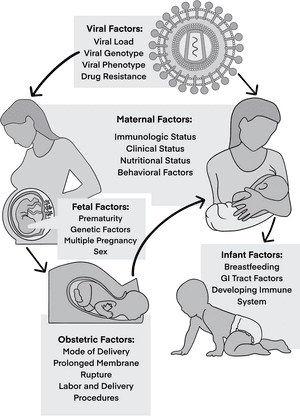
The risk of Mother-to-Child Transmission (MTCT) of HIV is not uniform across all HIV-positive pregnancies. Several factors, both maternal and obstetric, can influence the likelihood of transmission.

I. Maternal Viral Load (Most Important Factor):
  1. High Maternal Plasma Viral Load: This is the single most important determinant of MTCT risk.
    • Mechanism: A higher viral load means more virus particles are circulating in the mother's blood, increasing the chance of viral transfer across the placenta, to the infant during labor and delivery, and into breast milk.
    • Intervention: Effective Antiretroviral Therapy (ART) during pregnancy, labor, and breastfeeding is designed to suppress maternal viral load to undetectable levels, thereby dramatically reducing the risk of transmission.
  2. Lack of ART or Poor Adherence:
    • Mechanism: If a mother is not on ART, or is not adherent, her viral load remains high, significantly elevating MTCT risk.
    • Intervention: Early diagnosis of maternal HIV, prompt initiation of ART, and sustained adherence are critical.
II. Maternal Immune Status (CD4+ Count):
  1. Low Maternal CD4+ Count (Advanced Maternal Disease):
    • Mechanism: A low CD4+ count indicates a weakened immune system, which is often associated with a higher viral load and a greater likelihood of opportunistic infections that can increase placental inflammation.
    • Impact: While viral load is more directly correlated, a low CD4+ count is an indicator of more advanced disease and often correlates with higher viral load, thus increasing MTCT risk.
III. Obstetric Factors (During Pregnancy and Delivery):
  1. Prolonged Rupture of Membranes (PROM):
    • Mechanism: If the amniotic sac ruptures for an extended period (e.g., >4 hours) before delivery, the infant has prolonged exposure to HIV-infected maternal blood and cervical secretions.
    • Intervention: Timely delivery (often by Cesarean section) if PROM occurs and the mother has a detectable viral load.
  2. Invasive Delivery Procedures:
    • Mechanism: Procedures such as artificial rupture of membranes, fetal scalp electrodes, fetal blood sampling, or instrumental delivery (forceps or vacuum extraction) can create micro-traumas or open wounds, increasing the infant's exposure to maternal blood.
  3. Vaginal Delivery with High Viral Load:
    • Mechanism: During vaginal birth, the infant is exposed to maternal blood, amniotic fluid, and cervicovaginal secretions. If the maternal viral load is high, this exposure is more likely to result in transmission.
    • Intervention: Elective Cesarean section is recommended for mothers with detectable viral loads near term to minimize intrapartum exposure.
  4. Preterm Delivery: Premature infants may have more immature immune systems, less developed skin and mucous membrane barriers, and are more vulnerable to infection.
  5. Chorioamnionitis (Infection/Inflammation of Placenta and Membranes): Inflammation of the placental membranes can compromise the placental barrier, allowing easier passage of the virus to the fetus. It can also be associated with early rupture of membranes and preterm labor.
  6. Maternal Genital Tract Infections (e.g., STIs, Bacterial Vaginosis): These infections can cause inflammation and ulceration of the maternal genital tract, increasing shedding of HIV virus and enhancing the risk of exposure for the infant during delivery.
IV. Infant Feeding Practices:
  1. Breastfeeding:
    • Mechanism: HIV can be transmitted through breast milk. The risk is cumulative with the duration of breastfeeding.
    • Factors Increasing Risk: High maternal viral load during breastfeeding (if not on ART), mixed feeding (introducing other foods/liquids while breastfeeding, which can damage the infant's gut lining), mastitis (breast inflammation), breast abscesses, and nipple lesions in the mother.
    • Intervention: In settings where replacement feeding is safe, feasible, affordable, sustainable, and culturally acceptable (AFASS criteria), avoidance of breastfeeding is recommended. In settings where AFASS is not met, exclusive breastfeeding while the mother is on ART with an undetectable viral load is the recommended approach to minimize transmission risk while providing the benefits of breastfeeding.
V. Other Maternal Factors:
  1. Coinfections: Maternal infections (e.g., malaria, tuberculosis, other STIs) can lead to a transient increase in HIV viral load and/or inflammation, potentially increasing MTCT risk.
  2. Nutritional Status: Severe maternal malnutrition can compromise immune function and overall health, potentially impacting viral load control and increasing susceptibility to complications.
  3. Illicit Drug Use: Associated with a higher risk of other infections, poor adherence to ART, and compromised health.
Pathogenesis of HIV (How HIV Causes Disease)

The pathogenesis of HIV infection, particularly in children, hinges on its ability to systematically dismantle the immune system by targeting immune cells, primarily the CD4+ T-lymphocytes.

The human body is made out of millions of different cells. Each body cell often makes new cell parts in order to stay alive and to reproduce. Viruses hide their own material inside the cells of the body, and then, when the body cells try to make new parts, they accidentally make new viruses as well.

HIV mostly enters cells of the immune system. Although HIV infects a variety of cells, its main target is the T4-lymphocyte (CD4): a kind of white blood cell that is responsible for warning the immune system that there are invaders (diseases) in the body. Once HIV binds to a cell structure, it hides its material inside the cell. This turns the cell into a sort of HIV factory.

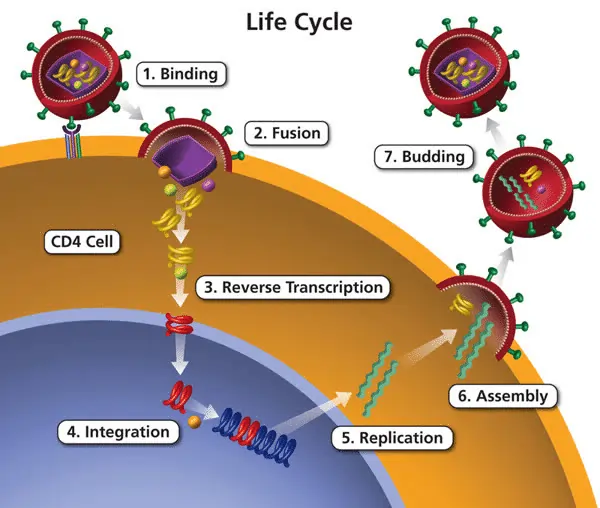
Steps / Phases in HIV Entry and Replication Cycle

The process by which HIV enters a host cell and then hijacks its machinery to replicate is a complex, multi-step process. CD4 receptors and co-receptors (chemokine receptors like CCR5 or CXCR4) are essential for HIV entry.

Here are the key phases:

  1. Viral Entry: Binding and Fusion
    • The process begins when the HIV GP120 glycoprotein on the surface of the virus specifically binds to the CD4 receptor on the host cell (primarily CD4+ T-cells, but also macrophages, dendritic cells).
    • This binding induces a conformational change in GP120, allowing it to then bind to a chemokine co-receptor (either CCR5 or CXCR4).
    • The binding to the co-receptor triggers further changes, exposing the GP41 glycoprotein, which mediates the fusion of the viral envelope with the host cell membrane.
    • Once fusion occurs, the viral capsid (containing the viral RNA, enzymes, and other proteins) is released into the cell cytoplasm. Strands of viral RNA are released into the cell cytoplasm.
  2. Reverse Transcription:
    • Inside the cytoplasm, the enzyme reverse transcriptase (carried by the virus) converts the single-stranded viral RNA into a double-stranded DNA copy. This is a unique step for retroviruses, as in nature, DNA typically produces RNA, not the other way around. Now, HIV enters the center of the cell. To do this, it needs to make some important changes in the way it looks so that it will not be ‘recognized’ by the cell. HIV has a special substance to make these changes in its structure.
  3. Integration:
    • The newly synthesized viral DNA, now referred to as a provirus, is transported into the host cell's nucleus.
    • The viral enzyme integrase (also carried by the virus) then inserts this proviral DNA into the host cell's chromosomal DNA. HIV is present in the center of the cell, but in a different shape. Once integrated, the viral DNA can remain dormant for periods or become actively expressed.
  4. Transcription:
    • When the infected CD4 cell becomes activated, its cellular machinery is tricked into transcribing the integrated proviral DNA back into multiple copies of viral RNA. These RNA copies serve two main purposes:
      • They act as messenger RNA (mRNA) for the production of viral proteins.
      • They serve as the genomic RNA for new viral particles.
    • HIV RNA has 9 genes which code for the production of structural proteins like the viral envelope and core, in addition to essential enzymes like reverse transcriptase, integrase, and protease. The center of the cell starts to make new parts of HIV instead of making new parts for the body’s defense.
  5. Translation:
    • The viral mRNA is then transported out of the nucleus to the cell's ribosomes, where it is translated into long chains of viral proteins (polypeptide chains).
  6. Cleavage and Assembly:
    • The long polypeptide chains are not functional until they are cut into individual, functional proteins. This crucial step is performed by the viral enzyme protease. Viral protease cleaves the polypeptide chain into enzyme components like integrase and reverse transcriptase, as well as structural proteins. Before leaving the cell, the new parts of HIV need to be put together, just like parts of a car need to be put together in the factory before they can leave the factory to be sold. HIV has a special substance that helps to put the different parts together to form a new HIV before it leaves the cell.
    • These newly synthesized viral proteins and genomic RNA molecules then assemble near the inner surface of the host cell membrane.
  7. Budding and Maturation:
    • New viral particles (virions) are formed as the assembled components bud off from the host cell's membrane, acquiring a new lipid envelope in the process. This is the final step in the formation of new infectious HIV particles.
    • HIV attacks many CD4 cells. The infected CD4 cells will first produce many new copies of the virus, and then die. The new copies of HIV will then attack other CD4 cells, which will also produce new copies of HIV and then die. This goes on and on: more and more CD4 cells are destroyed, more and more new copies of HIV are made, and new CD4 cells get infected.
How HIV Attacks the Body

HIV's primary mode of attack is the progressive destruction and dysfunction of the immune system, particularly the CD4+ T-lymphocytes (helper T-cells). These cells are central orchestrators of the immune response, coordinating the activities of other immune cells (like B-cells and cytotoxic T-cells) to fight off infections and diseases.

  1. Direct Infection and Destruction of CD4+ T-cells:
    • As we've discussed, HIV preferentially binds to and infects CD4+ T-cells.
    • Once inside, the virus replicates, producing thousands of new virions. This process often leads to the lysis (bursting) and death of the infected CD4+ T-cell.
    • The newly released virions then go on to infect other healthy CD4+ T-cells, perpetuating a cycle of infection and destruction.
  2. Indirect Killing of CD4+ T-cells:
    • Apoptosis (Programmed Cell Death): Uninfected CD4+ T-cells can also be driven to commit suicide (apoptosis) due to chronic immune activation, bystander effects from infected cells, or exposure to viral proteins.
    • Cytotoxic T-Lymphocyte (CTL) Activity: The body's own CTLs, designed to kill infected cells, will destroy HIV-infected CD4+ T-cells. While initially beneficial, this contributes to the overall decline in CD4+ cell count over time.
  3. Depletion of CD4+ T-cells:
    • The continuous cycle of infection, replication, and cell death leads to a progressive decline in the total number of circulating CD4+ T-cells.
    • A healthy adult typically has a CD4+ count ranging from 500 to 1,500 cells/mm³. As HIV infection progresses, this count steadily drops.
  4. Impairment of CD4+ T-cell Function:
    • Even before significant CD4+ cell depletion occurs, the function of these cells can be impaired. Infected CD4+ cells may not be able to effectively signal to other immune cells, produce cytokines, or mount a robust immune response.
    • This functional impairment, coupled with numerical decline, renders the immune system increasingly ineffective.
  5. Immune Activation and Exhaustion:
    • HIV infection causes chronic immune activation. The body constantly tries to fight the virus, leading to a state of persistent inflammation and immune cell proliferation.
    • Over time, this chronic activation can lead to immune exhaustion, where immune cells (including uninfected CD4+ cells) become less responsive and less effective at fighting off pathogens.
  6. Destruction of Lymphoid Tissues:
    • HIV also infects and destroys cells in lymphoid tissues, such as lymph nodes, spleen, and gut-associated lymphoid tissue (GALT). These tissues are crucial sites for immune cell maturation, interaction, and pathogen clearance. Their destruction further compromises immune function.
  7. Impact on Other Immune Cells:
    • While CD4+ T-cells are the primary target, HIV can also infect other immune cells to a lesser extent, such as macrophages, dendritic cells, and microglia (in the brain).
    • Infection of these cells can lead to viral reservoirs, facilitate viral dissemination, and contribute to specific HIV-associated complications (e.g., neurocognitive disorders).
  8. Development of Immunodeficiency (AIDS):
    • The cumulative effect of CD4+ T-cell depletion, functional impairment, and immune exhaustion is the development of profound immunodeficiency.
    • When the CD4+ count drops below a critical threshold (e.g., 200 cells/mm³ in adults, age-specific thresholds in children), or when certain opportunistic infections or cancers occur, the individual is diagnosed with AIDS (Acquired Immunodeficiency Syndrome).
    • At this stage, the body can no longer effectively fight off common infections that a healthy immune system would easily handle.
Consequences of the Immune Attack (Clinical Manifestations):

The breakdown of the immune system leads to a range of clinical consequences, which are severe and rapid in children without treatment:

  • Opportunistic Infections: Infections caused by pathogens that typically do not cause disease in individuals with healthy immune systems (e.g., Pneumocystis jirovecii pneumonia, candidiasis, cryptosporidiosis, toxoplasmosis, cytomegalovirus).
  • Recurrent Bacterial Infections: Children with HIV often suffer from frequent and severe bacterial infections (e.g., pneumonia, sepsis, otitis media).
  • HIV-Associated Malignancies: Certain cancers are more common in individuals with HIV (e.g., Kaposi's sarcoma, non-Hodgkin's lymphoma).
  • Wasting Syndrome/Failure to Thrive: Significant unintended weight loss, chronic fever, and diarrhea.
  • HIV Encephalopathy (Neurocognitive Disorders): The virus can directly infect brain cells, leading to developmental delays, cognitive impairment, and neurological symptoms, especially in children.
  • Other Organ System Damage: HIV can directly or indirectly affect almost every organ system, leading to cardiomyopathy, nephropathy, dermatological conditions, etc.

HIV & AIDS in Children Read More »
Resuscitation of a newborn

Resuscitation

Neonatal Resuscitation Lecture Notes
  • Neonatal Resuscitation refers to a series of interventions initiated immediately after birth to support the establishment of breathing and circulation in a newborn who is not breathing effectively or has inadequate circulation.
  • Resuscitation is a means of restoring life to a baby from the state of asphyxia (Devi, Upendra, and Bard, 2017).

Asphyxia in a newborn refers to a condition where there is impaired blood gas exchange, leading to a progressive decrease in oxygen (hypoxemia) and an increase in carbon dioxide (hypercarbia), often resulting in acidosis.

  • More simply, it is about "helping a baby to breathe," which is the most critical physiological adjustment required at birth.
The Importance of Neonatal Resuscitation:
  1. High Vulnerability of the Neonatal Period: The first 28 days of life is called neonatal period and incontrovertibly, it is the most vulnerable and high risk time in life because of the highest mortality and morbidity that occur in this period. The day of birth is the riskiest time to a baby" (Sajjad, 2012; and WHO, 2015). A significant proportion of neonatal deaths occur on the first day of life, many of which are attributable to birth asphyxia.
  2. Prevention of Mortality: Effective and timely resuscitation can directly prevent death in newborns who fail to transition successfully from intrauterine to extrauterine life.
  3. Prevention of Morbidity and Long-Term Disability: Prevent brain injury and other organ damage resulting from prolonged oxygen deprivation. Timely resuscitation minimizes the duration of hypoxemia and acidosis, thereby reducing the risk of such devastating outcomes.
  4. Enabling Physiological Transition: Birth involves a physiological transition from relying on the placenta for gas exchange to establishing independent pulmonary respiration and circulatory changes. Approximately 85% of newborns transition successfully without intervention. However, about 10-15% require some assistance, and about 1% require extensive resuscitative measures. Resuscitation provides the necessary support for these babies to make this critical transition.
  5. Global Health Impact: Improving access to and quality of neonatal resuscitation services is a key strategy for achieving global maternal and child health targets, particularly in low-resource settings where the burden of birth asphyxia is highest.
Goals of Neonatal Resuscitation (Aims of Management):
  1. Initiate and/or Restore Respiration/Breathing: This is the most immediate and primary goal, as establishing effective breathing is fundamental to oxygenation.
  2. Establish Adequate Circulation: While not explicitly listed as a separate aim in your text, it's intrinsically linked to respiration. Effective breathing improves oxygenation, which then supports heart function and systemic circulation.
  3. Prevent Infection: Although not a direct resuscitation step, ensuring aseptic technique during resuscitation and appropriate post-resuscitation care are vital to prevent secondary complications in a vulnerable neonate.
  4. Prevent Other Complications: This is a broad goal encompassing the prevention of brain injury (HIE), organ dysfunction, and ensuring overall physiological stability.
  5. Prevent Hypothermia: Maintaining the newborn's temperature is critical from birth, throughout resuscitation, and into post-resuscitation care, as hypothermia can worsen acidosis and impair resuscitation efforts.
Risk Factors for Resuscitation
I. Common Maternal Risk Factors:

These factors are related to the mother's health, pregnancy complications, or circumstances surrounding the birth.

  • Advanced Maternal Age: (e.g., usually >35 years)
  • Maternal Illnesses/Conditions:
    • Diabetes (gestational or pre-existing)
    • Hypertension (e.g., pre-eclampsia, eclampsia, chronic hypertension)
    • Cardiac or renal disease
    • Thyroid disease
    • Anemia
    • Infections (e.g., Group B Streptococcus, herpes simplex virus, HIV)
  • Substance Abuse:
    • Opioid use (can cause neonatal abstinence syndrome)
    • Alcohol abuse
    • Smoking
  • Medications:
    • Maternal sedatives/analgesics administered close to delivery (can cause neonatal respiratory depression).
    • Magnesium sulfate administration (for pre-eclampsia, can cause neonatal respiratory and neuromuscular depression).
  • Lack of Antenatal Care: Poor or no antenatal care prevents the identification and management of potential risks.
  • II. Common Fetal/Intrapartum Risk Factors:

    These factors are directly related to the fetus or events occurring during labor and delivery.

  • Prematurity: The most significant risk factor. Premature infants have immature lungs, poor temperature control, and vulnerable brains.
    • Extremely preterm (<28 weeks)
    • Very preterm (28-32 weeks)
    • Moderate to late preterm (32-37 weeks)
  • Post-term Pregnancy: (>42 weeks gestation), associated with placental insufficiency.
  • Multiple Gestation: (Twins, triplets, etc.) increases the risk of prematurity, growth restriction, and delivery complications.
  • Abnormal Fetal Heart Rate (FHR) Pattern:
    • Persistent bradycardia
    • Repetitive late decelerations
    • Prolonged decelerations
    • Loss of variability, indicating fetal distress.
  • Meconium-Stained Amniotic Fluid: (especially thick meconium), indicates fetal stress and risk of meconium aspiration syndrome.
  • Prolonged Rupture of Membranes (PROM): Increases risk of infection.
  • Chorioamnionitis: (Infection of the amniotic fluid and membranes), leads to neonatal sepsis and respiratory distress.
  • Abnormal Presentation: (e.g., breech, transverse lie), often requires C-section and can be associated with birth trauma.
  • Placental Abnormalities:
    • Placenta previa
    • Abruptio placentae (premature separation of the placenta)
    • Vasa previa, leading to fetal hemorrhage and hypoxia.
  • Cord Complications:
    • Nuchal cord (cord around the neck)
    • Cord prolapse (cord falling through the cervix before the baby)
    • True knot in the cord.
  • Fetal Anomalies: Congenital malformations affecting respiratory, cardiac, or neurological systems.
  • Intrapartum Complications:
    • Prolonged labor
    • Precipitous labor (very rapid labor)
    • Forceps or vacuum extraction delivery
    • Cesarean section (especially elective C-section without labor, as it can be associated with transient tachypnea of the newborn).
    • Shoulder dystocia.
  • Fetal Growth Restriction (FGR) / Small for Gestational Age (SGA): Indicates placental insufficiency and compromised fetal reserves.
  • Lack of Fetal Movement: Reported by mother.
  • Initial Steps of Newborn Care and Assessment at Birth

    This objective focuses on the immediate actions taken when a baby is born, particularly during the critical first minute of life—often referred to as the "Golden Minute." This period is crucial for assessing the newborn's transition and initiating any necessary interventions quickly to prevent adverse outcomes.

    Principles of Management.
    • Temperature regulation. Ensure adequate warmth for the baby to prevent hypothermia which leads to decreased metabolic which cause additional stress to the baby.
    • Ensure adequate oxygenation to the baby to prevent hypoxia by administration of oxygen and monitoring oxygen perfusion. An endotracheal tube should be inserted and oxygen administered
    • Prevention of hypoglycemia by regular monitoring blood glucose and if risk for hypoglycemia is identified administer dextrose as per prescription.
    I. Preparation for Birth: Ensuring Readiness

    Before any birth, and especially when risk factors (as discussed previously) are present, it is paramount to ensure the resuscitation area is prepared and all necessary equipment is immediately available and functional.

    A. Essential Equipment and Supplies :
  • Personal Protective Equipment:
    • Surgical gloves (minimum for resuscitator).
    • Other PPE (gowns, masks, eye protection) as per institutional policy.
  • Warmth Management:
    • Radiant warmer or heat lamp (integrated into the resuscitation table).
    • Pre-warmed towels or blankets.
    • Temperature probe/sensor (to monitor infant's temperature).
    • Plastic wrap/bag (for extremely preterm infants).
  • Airway and Suction:
    • Bulb syringe.
    • Suction catheters (e.g., 6F, 8F, 10F) with mechanical suction apparatus (set to 80-100 mmHg).
    • Meconium aspirator (if meconium is present and baby is non-vigorous, though routine use has decreased).
  • Ventilation Equipment:
    • Self-inflating bag, flow-inflating bag, or T-piece resuscitator.
    • Face masks (various sizes: preterm, term, full-term/neonate).
    • Oxygen source (blender if available to provide specific FiO2, flowmeter).
    • Nasal prongs/cannula (for oxygen administration post-resuscitation).
  • Intubation Equipment:
    • Laryngoscope with straight blades (e.g., Miller 0, 1 for term/preterm).
    • Spare laryngoscope handle and bulbs.
    • Endotracheal tubes (ETTs): range of sizes (e.g., 2.5, 3.0, 3.5, 4.0 mm internal diameter).
    • Stylet (for ETT insertion).
    • CO2 detector (colorimetric or capnography) for confirming ETT placement.
    • Scissors, tape/ETT holder for securing ETT.
    • Naso-gastric/oro-gastric tube (e.g., 8F) for gastric decompression after prolonged PPV.
  • Circulation and Medication Equipment:
    • Syringes (various sizes: 1mL, 3mL, 5mL, 10mL, 20mL).
    • Needles/blunt fill devices.
    • Umbilical venous catheterization tray (for rapid vascular access if medications are needed).
    • Sterile water and normal saline (for flushing).
    • Pediatric stethoscope.
  • Medications (Prepared and Labeled):
    • Adrenaline (Epinephrine) 1:10,000 solution:
    • Volume Expanders: 0.9% Normal Saline or Ringer's Lactate.
    • Dextrose 10%: For hypoglycemia management post-resuscitation.
    • Sodium Bicarbonate 4.2%: For prolonged resuscitation with documented metabolic acidosis.
  • Monitoring and Documentation:
    • Timer (clock watch).
    • Pulse oximeter with neonatal probe (pre-ductal placement, right hand/wrist).
    • Displayed charts for resuscitation steps (e.g., NRP algorithm).
    • Mothers' chart/patient notes.
  • B. Resuscitation Environment:
    • Resuscitation table: Stable, readily accessible, with radiant warmer.
    • Light source: Adequate, adjustable lighting.
    • Proximity: Situated near the delivery area for immediate access.
    II. Immediate Assessment at Birth: The "Golden Minute"

    Upon delivery, a rapid assessment is made to determine if the newborn requires routine care or resuscitation. This assessment should take no longer than 30 seconds to allow for timely intervention within the first minute of life.

    A. Three Key Questions for Rapid Assessment:

    The decision to proceed with routine care or to initiate resuscitation is based on answering these three questions quickly:

    1. Is the baby term gestation? (i.e., ≥ 37 weeks)
    2. Does the baby have good tone? (i.e., flexed limbs, active movement)
    3. Is the baby breathing or crying? (i.e., strong, regular respiration, not gasping or apneic)
    B. Decision Pathway:
    • YES to all three questions: Proceed with Routine Care (provide warmth, dry, skin-to-skin, observe).
    • NO to any of these questions: Proceed immediately to the Initial Steps of Stabilization.
    III. Steps for Resuscitation: The T-A-B-C's of Resuscitation

    If the newborn does not meet the criteria for routine care, the following initial steps of stabilization must be performed quickly and effectively, ideally within the first 30-60 seconds after birth (the "Golden Minute").

    A. Step 1: Temperature (T)
  • Provide Warmth and Dry:
    • Place the naked newborn under a pre-heated radiant warmer.
    • Dry the baby thoroughly with pre-warmed towels/blankets. This removes amniotic fluid, which prevents evaporative heat loss, and provides tactile stimulation.
    • Remove any wet cloth after drying.
  • B. Step 2: Airway (A)
  • Position and Clear Airway:
    • Position baby’s head in a neutral or slightly extended “sniffing position”.
    • Place a small towel roll under the baby’s shoulders to help maintain this position, ensuring the airway is open.
    • Clear the airway (if necessary): Suction blood or mucus from the mouth and then the nose using a bulb syringe or suction catheter ONLY if secretions are obstructing breathing or the baby is gasping.
  • C. Step 3: Breathing (B)
  • Assess Breathing and Heart Rate: After completing the initial steps of warmth, drying, positioning, and suctioning (if needed), reassess the newborn.
    • Look for effective breathing (regular, sustained respiratory effort, no gasping).
    • Assess Heart Rate (HR): Auscultate the chest with a stethoscope or palpate the umbilical cord stump for 6 seconds and multiply by 10.
  • Intervention for Breathing Issues:

    If the baby is apneic (not breathing) or gasping, OR if the Heart Rate is less than 100 bpm despite initial steps: Begin Positive-Pressure Ventilation (PPV).

    • Stand at the baby's head.
    • Apply an appropriately sized mask to the baby’s face, ensuring it covers the mouth and nose to form a good seal.
    • Give five initial inflation breaths (each 2-3 seconds duration). This aims to establish functional residual capacity in the lungs.
    • Observe response by looking for chest movements (chest rising) and listen for increasing heart rate.
    • Troubleshooting: If the chest does not rise, reapply the mask, reposition the baby’s head, and consider suctioning again (MR. SOPA mnemonic: Mask adjustment, Reposition airway, Suction mouth and nose, Open mouth, Pressure increase, Alternate airway).
    • Continue ventilating at a rate of 30-40 breaths per minute.
    • Intubation consideration: If PPV with a mask is ineffective, prolonged, or if specific conditions require it, intubation should be considered earlier than 20 minutes. Intubation provides a more secure airway for ventilation and allows for direct tracheal suction if needed.
  • D. Step 4: Circulation (C) / External Cardiac Massage (Chest Compressions)
  • Indication for Chest Compressions:
    • Chest compressions should be initiated if the heart rate is less than 60 beats per minute (bpm) AFTER at least 30 seconds of effective positive-pressure ventilation (PPV).
  • Technique:
    • The preferred method is the Two-Thumb Encircling Technique: Wrap your hands around the baby’s torso, placing both thumbs over the lower third of the sternum (just below an imaginary line between the nipples).
    • Alternatively, the two-finger technique can be used if one resuscitator is present or if the encircling method is not feasible.
  • Rate and Ratio:
    • Chest compressions are performed at a rate of 90 compressions per minute, coordinated with 30 ventilations per minute.
    • This provides a ratio of 3 compressions to 1 ventilation, aiming for 120 "events" (compressions + breaths) per minute.
  • Depth:
    • Compress the chest approximately one-third of the anterior-posterior diameter of the chest. Allow for complete recoil after each compression.
  • E. Step 5: Drugs (D)
  • Indication for Medications:
    • Medications are generally reserved for when the heart rate remains below 60 bpm despite effective ventilation and chest compressions.
    • Establish vascular access ( umbilical venous catheter - UVC) prior to medication administration.
  • Adrenaline (Epinephrine):
    • Indication: Heart rate remains < 60 bpm despite at least 30 seconds of effective PPV and at least 60 seconds of effective chest compressions coordinated with PPV.
    • Dose: 0.01 to 0.03 mg/kg IV (intravenous) or IO (intraosseous) of a 1:10,000 solution.
    • Repeat: May be repeated every 3-5 minutes if needed.
  • Volume Expanders (e.g., Normal Saline 0.9%):
    • Indication: Suspected hypovolemia (e.g., pallor, poor perfusion, weak pulse, lack of response to resuscitation efforts) and heart rate remains < 60 bpm despite ventilation, compressions, and epinephrine.
    • Dose: 10 mL/kg IV over 5-10 minutes.
  • Dextrose 10%:
    • Indication: Not typically given during acute resuscitation unless documented hypoglycemia. Administered after stabilization if blood glucose is low (<2.5 mmol/L).
    • Dose: 2 mL/kg of 10% dextrose solution IV.
  • Sodium Bicarbonate 4.2%:
    • Indication: For prolonged resuscitation or documented metabolic acidosis. Not a first-line drug.
    • Dose: 2 mEq/kg (equivalent to 4 mL/kg of 4.2% solution) IV slowly.
  • F. Post-Resuscitation Monitoring and Ongoing Care:
  • Continue to monitor response to resuscitation closely. (This includes heart rate, breathing, oxygen saturation, and clinical appearance).
  • APGAR Score: The Apgar score is assessed at 1 and 5 minutes after birth, and every 5 minutes thereafter if the score is less than 7, until 20 minutes of age. It's a snapshot of the baby's condition and response to resuscitation.
  • If the baby responds to resuscitation and stabilizes, keep the baby warm and transfer to a special care unit (e.g., NICU, SCN) for ongoing monitoring and supportive care.
  • If the baby is breathing well and stable:
    • Encourage skin-to-skin contact with the mother.
    • Encourage breastfeeding.
    • Provide reassurance to the mother and family.
  • Discontinuation of Resuscitation:
    • If there is no detectable heart rate after 10-20 minutes of complete and adequate resuscitation efforts, discontinuation of resuscitation should be considered in consultation with the medical team and family.
  • Principles and Techniques of Positive-Pressure Ventilation (PPV)

    Positive-Pressure Ventilation (PPV) is the most critical and frequently performed intervention in neonatal resuscitation. Its primary goal is to establish functional residual capacity (FRC) in the lungs and provide oxygenation and ventilation to newborns who are apneic (not breathing), gasping, or have a heart rate below 100 beats per minute (bpm) despite initial steps. Effective PPV can rapidly improve heart rate, oxygen saturation, and clinical condition, often preventing the need for more advanced interventions like chest compressions or medications.

    I. Principles of Effective PPV

    The success of PPV hinges on three key principles:

    1. Effective Mask Seal: The mask must form a tight, leak-free seal around the baby's mouth and nose to ensure that the delivered positive pressure enters the lungs and does not escape.
    2. Open Airway: The baby's airway must be properly positioned (sniffing position) to allow air to flow freely into the trachea and lungs. Obstructions (e.g., secretions, incorrect head position) will render PPV ineffective.
    3. Adequate Pressure and Rate: Sufficient pressure is needed to inflate the lungs, but excessive pressure must be avoided to prevent lung injury. The rate of ventilation must be appropriate to ensure both oxygenation and CO2 removal.
    II. Indications for PPV

    PPV is indicated when a newborn is:

    • Apneic: Not breathing at all.
    • Gasping: Irregular, ineffective breaths.
    • Heart Rate < 100 bpm: Despite the initial steps of warmth, drying, positioning, and clearing the airway (if necessary).
    III. Equipment for PPV

    The primary equipment used for PPV includes:

    1. Ventilation Device:
      • Self-inflating Bag: The most common device. It refills automatically after each squeeze and requires an oxygen source for supplemental oxygen. It will deliver room air if no oxygen is attached.
      • Flow-inflating Bag (Anesthesia Bag): Requires a compressed gas source and a tight mask seal to inflate. Allows for precise control of pressure and oxygen concentration but requires more skill.
      • T-piece Resuscitator (e.g., Neopuff): A gas-powered, flow-controlled device that delivers consistent peak inspiratory pressure (PIP) and positive end-expiratory pressure (PEEP). Often preferred for its precision and consistency.
    2. Face Mask:
      • Proper size is crucial. Masks are available in various sizes (preterm, term/neonate). The mask should cover the bridge of the nose, the mouth, and the chin without extending over the eyes or compressing the neck.
      • Transparent masks allow for visualization of the baby's mouth and color.
    3. Oxygen Source:
      • Oxygen blender (if available) allows for delivery of specific oxygen concentrations (FiO2).
      • Flowmeter (usually set to 5-10 L/min for resuscitation).
    4. Pulse Oximeter:
      • Essential for monitoring oxygen saturation (SpO2) and heart rate during PPV. The probe should be placed on the right wrist or hand (pre-ductal site).
    IV. Techniques for Administering PPV
    A. Positioning the Baby and Mask Application:
    1. Position the baby: Place the baby on their back under the radiant warmer, with the head in a neutral or slightly extended "sniffing position" (as detailed in Objective 3). A rolled towel under the shoulders can help.
    2. Select the correct mask size: Ensure it covers the nose and mouth without touching the eyes or overhanging the chin.
    3. Apply the mask:
      • Position yourself at the baby's head.
      • Place the mask gently but firmly on the baby's face.
      • Use the "C-E grip" (or similar): The "C" is formed by the thumb and index finger pressing the mask edges to the face, while the "E" is formed by the remaining fingers lifting the jaw forward to maintain an open airway. Avoid pressing on the baby's soft tissues under the chin, which can obstruct the airway.
    B. Initial Breaths (Inflation Breaths / Ventilating Breaths):
    1. Initial Breaths: Begin with 5 breaths, each lasting 2-3 seconds. These are sometimes called "inflation breaths" or "ventilating breaths" as they are crucial for clearing fluid from the lungs and establishing functional residual capacity.
    2. Pressure: The initial pressure required can vary.
      • For a term baby, initial pressures of 20-25 cm H2O may be sufficient.
      • For preterm babies or those with very stiff lungs, higher pressures (e.g., 25-30 cm H2O) may be needed to achieve initial chest rise.
      • Many devices have pressure gauges; familiarize yourself with how to achieve the target pressure.
    3. Observe for Chest Rise: The most important indicator of effective ventilation is a gentle, symmetrical rise and fall of the chest with each breath.
      • If no chest rise: Immediately re-evaluate the mask seal, reposition the airway, and consider clearing secretions (MR. SOPA mnemonic - discussed below).
    C. Ongoing PPV:
    1. Rate: After the initial 5 breaths, continue PPV at a rate of 30-40 breaths per minute (approximately one breath every 1.5-2 seconds).
    2. Pressure: Adjust pressure as needed to achieve gentle chest rise. Once the lungs are open, less pressure is often required.
    3. Oxygen Concentration (FiO2):
      • For term infants: Start with 21% (room air).
      • For preterm infants (<35 weeks): Start with 21-30% oxygen.
      • Adjust oxygen based on pulse oximetry readings. Target SpO2 values increase over the first 10 minutes of life (e.g., 60-65% at 1 min, 80-85% at 5 min, 85-95% at 10 min).
    D. Assessing Response to PPV:

    Reassess the baby approximately every 30 seconds during PPV.

    1. Heart Rate (HR): The most important indicator. PPV is effective if the HR is increasing, especially if it rises above 100 bpm.
    2. Breathing: Look for spontaneous breathing efforts.
    3. Oxygen Saturation (SpO2): Monitor with a pulse oximeter.
    4. Color: Observe the baby's color (pinker is good).
    5. Tone: Increased activity and muscle tone.
    V. Troubleshooting Ineffective PPV (MR. SOPA)

    If PPV is not resulting in a rising heart rate or visible chest movement, quickly go through the following troubleshooting steps:

    • M - Mask adjustment: Reapply the mask to achieve a better seal.
    • R - Reposition airway: Adjust the head position to ensure an open airway.
    • S - Suction mouth and nose: Clear any secretions that may be blocking the airway.
    • O - Open mouth: Gently open the baby's mouth, sometimes just a finger's width, to facilitate airflow.
    • P - Pressure increase: Gradually increase the inspiratory pressure (e.g., by 5-10 cm H2O increments) until chest rise is observed.
    • A - Alternate airway: If PPV remains ineffective despite all the above, consider advanced airway interventions such as endotracheal intubation.
    VI. Discontinuing PPV

    PPV can be gradually discontinued when the baby meets the following criteria:

    • Heart rate is consistently > 100 bpm.
    • The baby is breathing spontaneously and effectively.
    • Oxygen saturation is within the target range for age on minimal or no supplemental oxygen.

    Discontinuation can be done by gradually decreasing the rate of PPV while observing the baby's spontaneous breathing, or by stopping completely if the baby is breathing strongly and effectively.

    Principles and Techniques of Chest Compressions in Neonatal Resuscitation

    Chest compressions are an intervention in neonatal resuscitation, indicated when a newborn's heart rate remains dangerously low despite effective positive-pressure ventilation (PPV). The primary goal of chest compressions is to maintain blood flow to the vital organs, particularly the heart and brain, until the baby's own heart can resume an effective rhythm. This intervention is always performed in conjunction with PPV.

    I. Principles of Effective Chest Compressions

    For chest compressions to be effective, several principles must be adhered to:

    1. Correct Indication: Compressions are only started after a defined period of effective PPV has failed to raise the heart rate.
    2. Proper Location: Compressions must be delivered over the correct anatomical landmark (sternum) to be effective and minimize injury.
    3. Adequate Depth: Compressions must be deep enough to create adequate blood flow but not so deep as to cause trauma.
    4. Appropriate Rate: The rate must be fast enough to maintain perfusion, but allow for proper coordination with ventilations.
    5. Complete Recoil: Allowing the chest to fully recoil between compressions is essential for adequate cardiac filling and coronary perfusion.
    6. Coordination with Ventilation: Chest compressions must be perfectly coordinated with PPV to ensure both circulation and oxygenation.
    II. Indications for Chest Compressions

    Chest compressions are indicated when:

    • The newborn's heart rate is below 60 beats per minute (bpm).
    • This low heart rate persists despite at least 30 seconds of effective positive-pressure ventilation (PPV), confirmed by visible chest rise.
    III. Techniques for Administering Chest Compressions

    There are two main techniques for performing chest compressions in newborns:

    1. Two-Thumb Encircling Technique (Preferred):
      • Position: The resuscitator stands at the foot end of the baby (or to the side if more convenient for the team). Both hands encircle the baby's torso.
      • Hand Placement: Place both thumbs side-by-side or one over the other (depending on baby size and hand size) on the lower third of the sternum, just below an imaginary line connecting the nipples.
      • Compression: Use the pads of the thumbs to compress the sternum. The fingers support the baby's back, providing counter-pressure and stability.
      • Advantages: This technique generally produces higher peak systolic blood pressure, better coronary artery perfusion pressure, and less fatigue for the resuscitator compared to the two-finger technique. It also allows for continuous ventilation.
    2. Two-Finger Technique (Alternative):
      • Position: The resuscitator is positioned to the side of the baby.
      • Hand Placement: Place the tips of the index and middle fingers (or middle and ring fingers) of one hand on the lower third of the sternum, just below an imaginary line connecting the nipples.
      • Compression: Use the tips of these two fingers to compress the sternum. The other hand can be placed under the baby's back for support.
      • Advantages: This technique is often used if there is only one resuscitator or if vascular access is being obtained via the umbilical cord while compressions are ongoing.
      • Disadvantages: Can be more tiring, may produce less effective blood flow, and may interfere with effective ventilation if not coordinated properly.
    IV. Location, Depth, Rate, and Coordination
    A. Location of Compressions:
    • On the lower third of the sternum, just below an imaginary line connecting the nipples. Avoid compressing over the xiphoid process (bottom tip of the sternum) as this can cause liver injury.
    B. Depth of Compressions:
    • Compress the sternum to a depth of approximately one-third of the anterior-posterior (AP) diameter of the chest.
    • This depth ensures adequate cardiac output while minimizing the risk of injury. Allow for complete release and recoil of the chest wall after each compression to allow for cardiac refilling.
    C. Rate of Compressions:
    • Compressions should be delivered at a rate of 90 compressions per minute.
    • This requires a rapid, rhythmic pace: "One-and-two-and-three-and-breathe..."
    D. Coordination with Ventilation (3:1 Ratio):
    • Chest compressions are always coordinated with PPV. The established ratio is 3 compressions to 1 ventilation.
    • This means 90 compressions and 30 ventilations per minute, totaling 120 "events" (compressions + breaths) per minute.
    • Technique: "One-and-two-and-three-and-BREATH..." The "BREATH" should coincide with the release phase of the third compression. The resuscitator performing compressions should pause briefly (for approximately 0.5-1 second) to allow the ventilation to be delivered effectively.
    V. Assessing Response to Chest Compressions
    • Heart Rate: Reassess the heart rate after 60 seconds of coordinated chest compressions and PPV.
      • If the heart rate is ≥ 60 bpm, chest compressions can be discontinued, and PPV can be continued until the heart rate is ≥ 100 bpm and the baby has effective spontaneous breathing.
      • If the heart rate remains < 60 bpm despite 60 seconds of coordinated compressions and PPV (which have been deemed effective), then medications (epinephrine) should be considered and administered as per Objective 3.
    VI. Discontinuing Chest Compressions
    • Chest compressions should be discontinued once the newborn's heart rate is consistently 60 bpm or greater.
    • Continue PPV until the heart rate is consistently ≥ 100 bpm and the baby has effective spontaneous breathing.
    Role and Administration of Medications in Neonatal Resuscitation

    Medications are the final step in the neonatal resuscitation algorithm and are rarely needed when ventilation and chest compressions are performed effectively. The primary goal of medication administration in this context is to support cardiovascular function and improve heart rate when other resuscitative efforts have failed. Access for medication administration is established via the umbilical vein.

    I. General Principles of Medication Administration
    1. Last Resort: Medications are indicated only after adequate ventilation and effective chest compressions have been performed for a sufficient duration (usually at least 60-90 seconds after starting compressions) and the heart rate remains below 60 bpm.
    2. Vascular Access: Rapid and reliable vascular access is crucial. The preferred route is the umbilical venous catheter (UVC). Intraosseous (IO) access can be an alternative if UVC placement is delayed or unsuccessful. Intratracheal (IT) administration of epinephrine is less effective and not the preferred route, but may be used as a temporizing measure if vascular access is not immediately available.
    3. Dilution and Administration: Medications should be prepared in appropriate concentrations and administered swiftly but carefully. Always flush the line after administration.
    4. Team Communication: Clear communication among the resuscitation team regarding medication preparation, dosage, route, and time of administration is essential to avoid errors.
    II. Key Medications in Neonatal Resuscitation
    A. Epinephrine (Adrenaline)
  • Role: A catecholamine that increases heart rate, myocardial contractility, and peripheral vasoconstriction. It is the primary drug used to improve heart rate during neonatal resuscitation.
  • Indication:
    • Heart rate remains < 60 bpm despite at least 30 seconds of effective positive-pressure ventilation (PPV).
    • AND at least 60 seconds of effective chest compressions coordinated with PPV.
  • Preparation:
    • Concentration for IV/IO use: 1:10,000 solution (0.1 mg/mL).
  • Dosage:
    • Intravenous (IV) / Intraosseous (IO): 0.01 to 0.03 mg/kg.
      • This corresponds to 0.1 to 0.3 mL/kg of the 1:10,000 solution.
    • Intratracheal (IT) (if no IV/IO access): 0.05 to 0.1 mg/kg.
      • This corresponds to 0.5 to 1.0 mL/kg of the 1:10,000 solution. Note: The IT route is less reliable, and higher doses are needed due to poor absorption. It should be considered a temporizing measure while obtaining IV/IO access.
  • Administration: Administer rapidly (over 1-3 seconds) via IV/IO route, followed by a flush (e.g., 0.5-1 mL normal saline).
  • Repeat Dosing: May be repeated every 3-5 minutes if the heart rate remains < 60 bpm.
  • B. Volume Expanders (e.g., Normal Saline 0.9% or Ringer's Lactate)
  • Role: Used to treat hypovolemic shock (low blood volume) and improve blood pressure and perfusion.
  • Indication:
    • Suspected acute blood loss (e.g., placental abruption, fetomaternal hemorrhage).
    • Signs of shock (pallor, poor perfusion, weak pulses, persistent bradycardia) that do not respond to other resuscitative measures, especially if accompanied by evidence of hypovolemia.
  • Preparation: Normal Saline 0.9% or Ringer's Lactate.
  • Dosage:
    • IV/IO: 10 mL/kg.
  • Administration: Administer slowly over 5-10 minutes. Rapid administration can lead to complications.
  • Repeat Dosing: May be repeated once or twice if signs of hypovolemia persist and the heart rate remains low.
  • C. Sodium Bicarbonate (4.2%)
  • Role: Used to correct severe metabolic acidosis, which can develop during prolonged resuscitation and impair cardiac function.
  • Indication:
    • Prolonged resuscitation with documented metabolic acidosis.
  • Preparation: 4.2% Sodium Bicarbonate (0.5 mEq/mL).
  • Dosage:
    • IV/IO: 2 mEq/kg (which is 4 mL/kg of the 4.2% solution).
  • Administration: Administer very slowly, over at least 5-10 minutes, to avoid rapid shifts in pH and hyperosmolality. Administer only after adequate ventilation has been established.
  • D. Dextrose (10%)
  • Role: To correct hypoglycemia (low blood sugar).
  • Indication:
    • Hypoglycemia is not typically an acute issue during the immediate resuscitation phase.
    • Indicated if hypoglycemia is suspected or confirmed after resuscitation, or if the baby has risk factors for hypoglycemia (e.g., prematurity, small for gestational age, maternal diabetes).
  • Preparation: 10% Dextrose solution.
  • Dosage:
    • IV/IO: 2 mL/kg.
  • Administration: Administer over 5-10 minutes.
  • III. Medications Generally Not Recommended for Acute Neonatal Resuscitation
  • Naloxone:
    • Role: An opioid antagonist.
    • Why not recommended in acute resuscitation: While it reverses opioid-induced respiratory depression, its onset of action is delayed compared to PPV. PPV is the primary treatment for respiratory depression regardless of cause. Administering naloxone too early or to an opioid-dependent infant can precipitate acute withdrawal and seizures. It should only be considered after successful resuscitation for suspected opioid depression if the baby has a good heart rate but poor respiratory effort.
  • Calcium Gluconate:
    • Role: Used to treat hypocalcemia.
    • Why not recommended: Rarely indicated in acute neonatal resuscitation. Its use is reserved for specific conditions like documented hypocalcemia, hyperkalemia, or magnesium toxicity, which are typically not acute issues in the delivery room.
  • Atropine:
    • Role: Anticholinergic, can increase heart rate.
    • Why not recommended: Not used in neonatal resuscitation. Bradycardia in newborns is almost always due to hypoxia, and correcting hypoxia with PPV is the treatment.
  • IV. Securing Vascular Access: Umbilical Venous Catheter (UVC)
  • Procedure: A sterile procedure performed when medications or volume expanders are indicated.
    1. Cleanse the umbilical cord stump.
    2. Cut the cord cleanly about 1-2 cm from the skin.
    3. Identify the umbilical vein (larger, thin-walled, usually at the 12 o'clock position) and the two smaller, thick-walled umbilical arteries.
    4. Insert a catheter (e.g., 3.5F or 5F) into the umbilical vein for a short distance (2-4 cm) until blood can be aspirated easily. Advance no further than necessary to get a free flow of blood, to avoid advancing into the portal circulation.
    5. Secure the catheter.
  • Importance: Provides a rapid and reliable route for medication administration and volume expansion during ongoing resuscitation.
  • Post-Resuscitation Care and Monitoring of the Newborn

    Post-resuscitation care is a phase aimed at stabilizing the newborn, preventing secondary complications, and optimizing long-term outcomes. Even after successful resuscitation and stabilization of vital signs, newborns remain at risk for various issues related to the initial hypoxic-ischemic event and the interventions performed. Therefore, meticulous monitoring and supportive care are essential.

    I. Immediate Post-Resuscitation Stabilization (First Hours)

    Once resuscitation efforts lead to stable vital signs (heart rate >100 bpm, effective spontaneous breathing, SpO2 within target range), the focus shifts to maintaining this stability.

    A. Thermal Regulation:
    • Maintain normothermia: Continue to monitor temperature closely and use appropriate warming devices (radiant warmer, incubator). Avoid both hypothermia (which increases oxygen consumption and metabolic acidosis) and hyperthermia.
    • Target Temperature: Maintain core body temperature between 36.5°C and 37.5°C.
    B. Respiratory Support:
    • Weaning from PPV/Oxygen: If the baby is breathing effectively, gradually wean from supplemental oxygen as tolerated, guided by pulse oximetry.
      • Goal SpO2: Aim for age-appropriate target oxygen saturations (e.g., 90-95% by 10 minutes, then >92% once stable).
    • Monitor for Respiratory Distress: Observe for signs of tachypnea, grunting, retractions, nasal flaring, and cyanosis. Provide continuous positive airway pressure (CPAP) or mechanical ventilation if needed.
    • Chest X-ray: Consider a chest X-ray to assess lung expansion, rule out pneumothorax, or confirm endotracheal tube (ETT) position if intubated.
    C. Cardiovascular Support:
    • Continuous Cardiac Monitoring: Monitor heart rate and rhythm continuously.
    • Blood Pressure: Monitor blood pressure. Hypotension may require volume expansion or inotropic support.
    • Perfusion: Assess capillary refill time, skin color, and peripheral pulses as indicators of systemic perfusion.
    D. Fluid and Electrolyte Management:
    • Intravenous Fluids: Begin IV fluids (e.g., Dextrose 10% at 60-80 mL/kg/day) to prevent hypoglycemia and dehydration, especially if oral feeding is delayed.
    • Electrolytes: Monitor electrolytes and correct any imbalances.
    E. Glucose Management:
    • Blood Glucose Monitoring: Perform frequent blood glucose checks (e.g., every 1-2 hours initially) to detect and manage hypoglycemia or hyperglycemia.
    • Treatment of Hypoglycemia: Administer IV dextrose bolus (2 mL/kg of 10% dextrose) followed by a continuous infusion if needed.
    F. Acid-Base Balance:
    • Arterial Blood Gas (ABG): Obtain ABG to assess acid-base status, oxygenation, and ventilation. Correct significant acidosis as needed, although resolution often occurs with adequate ventilation and perfusion.
    II. Ongoing Monitoring and Assessment (First 24-72 Hours)

    Newborns who have undergone resuscitation require close observation and specialized care in a Neonatal Intensive Care Unit (NICU) or Special Care Nursery (SCN).

    A. Neurological Assessment:
    • Hypoxic-Ischemic Encephalopathy (HIE): This is a major concern. Assess for signs of neurological injury:
      • Level of consciousness: Lethargy, irritability, seizures.
      • Muscle tone and reflexes: Hypotonia, hypertonia, abnormal reflexes.
      • Feeding difficulties.
    • Therapeutic Hypothermia: If criteria for moderate to severe HIE are met in term or near-term infants, therapeutic hypothermia (cooling) should be initiated within 6 hours of birth. This neuroprotective intervention aims to reduce brain injury.
    B. Organ System Monitoring:
    • Renal: Monitor urine output, creatinine, and electrolytes for signs of acute kidney injury.
    • Gastrointestinal: Monitor for feeding intolerance, abdominal distension, and signs of necrotizing enterocolitis (NEC), especially in preterm infants or those with severe hypoxia-ischemia.
    • Hematologic: Monitor for coagulation abnormalities (DIC) and anemia.
    C. Infection Control:
    • Newborns who undergo resuscitation may be at higher risk for infection, particularly if invasive procedures (e.g., UVC placement) were performed.
    • Monitor for signs of sepsis and consider antibiotic therapy if clinically indicated.
    III. Documentation and Communication
    • Detailed Documentation: Maintain meticulous records of the resuscitation event, including:
      • Time of birth and start/end of resuscitation.
      • Initial assessment.
      • All interventions (PPV, compressions, medications: dose, route, time).
      • Baby's response to interventions (HR, SpO2, breathing, tone).
      • Personnel involved.
    • Communication with Parents: Provide timely, empathetic, and clear communication with the parents about the events, the baby's condition, ongoing care plan, and prognosis. Answer their questions honestly.
    APGAR Score Reference
    SCORE 0 points 1 point 2 points
    Appearance (Skin color) Cyanotic / Pale all over Peripheral cyanosis only Pink
    Pulse (Heart rate) 0 <100 100-140
    Grimace (Reflex irritability) No response to stimulation Grimace or weak cry when stimulated Cry when stimulated
    Activity (Tone) Floppy Some flexion Well flexed and resisting extension
    Respiration Apneic Slow, irregular breathing Strong cry
    IV. Apgar Scoring
  • Purpose: The Apgar score is a rapid method to summarize the newborn's condition at 1 and 5 minutes after birth. It is a guide to the baby's response to the birth process and resuscitation, not an indicator of long-term neurological outcome.
  • Scoring:
    • Appearance (color)
    • Pulse (heart rate)
    • Grimace (reflex irritability)
    • Activity (muscle tone)
    • Respiration (breathing effort)
  • Interpretation:
    • Scores of 7-10 are generally reassuring.
    • Scores of 4-6 indicate moderate depression.
    • Scores of 0-3 indicate severe depression.
  • Repeat Scoring: If the 5-minute Apgar score is < 7, the score should be repeated every 5 minutes until 20 minutes of age, or until the score is consistently > 7.
  • V. Transfer and Referral
    • If comprehensive NICU care or specific therapies (like therapeutic hypothermia) are not available at the birth facility, prompt and safe transfer to an appropriate higher-level facility is crucial.

    Resuscitation Read More »
    Hydrocele

    Hydrocele

    HYDROCELE

    A hydrocele is a fluid collection within the tunica vaginalis of the scrotum or along the spermatic cord.

    A hydrocele is accumulation of serous fluid within the tunica vaginalis that produces swelling in the inguinal region or scrotum.

    It often presents as painless swelling in the scrotum. Provided there is no hernia present, hydrocoeles below the age of 1 year usually resolve spontaneously.


    In infants it is usually as a  result of incomplete closure of the processus vaginalis. It may or may not be associated with inguinal hernia. In older boys and men it may be idiopathic.


    Anatomy of the Scrotum.

    Anatomy of the Scrotum.

    Scrotum, is a thin external sac of skin that is divided into two compartments; each compartment contains one of the two testes, the glands that produce sperm, and one of the epididymis, where the sperm is stored.

    • The function of the scrotum is to protect the testes and to keep them at a temperature below the normal body temperature. The scrotum thus protrudes from the body wall. When contracted, it conserves heat; while relaxed it is smooth and elongated, permitting the circulation of air that effects cooling. The relatively cool temperature of the scrotum is thought to be important for the production of viable sperm.
    • A vertical septum of subcutaneous tissue in the center divides it into two parts, each containing one testis.
    • Smooth muscle fibers, called the dartos muscle, in the subcutaneous tissue contract to give the scrotum its wrinkled appearance. When these fibers are relaxed, the scrotum is smooth.
    • The cremaster muscle consists of skeletal muscle fibers and controls the position of the scrotum and testes. When it is cold or a man is sexually aroused, this muscle contracts to pull the testes closer to the body for warmth.
    Etiology/Causes of a Hydrocele

    Etiology/Causes of a Hydrocele

    The causes of hydrocele can be categorized into four main factors:

    • Excessive production of fluid within the sac: This occurs when there is an overproduction of fluid within the sac surrounding the testicle e.g. in acute/chronic epididymo-orchitis.
    • Defective absorption of fluid: This refers to a situation where the normal absorption of fluid within the sac is impaired, leading to the accumulation of fluid e.g. in testicular tumors, Hematocele.
    • Interference with lymphatic drainage of scrotal structures: Certain conditions, such in case of elephantiasis, torsion of testis, can disrupt the normal drainage of lymphatic fluid from the scrotal area, resulting in the development of a hydrocele.
    • Connection with a hernia of the peritoneal cavity: In the congenital variety, a hydrocele may be associated with a hernia of the peritoneal cavity, leading to the presentation of a hydrocele of the cord e.g. in patent tunica vaginalis.
    Risk Factors
    • Direct Injury or inflammation of the testes
    • Prematurity
    • Testicular tumors
    • Infections in the testicle or the epididymitis

    Pathophysiology

    • During the seventh month of fetal development, the testicles move from the abdomen into the scrotum.
    • When the testicle travels downward, a remnant piece of peritoneum wrapped around the testicle, called the  tunica vaginalis and this allows fluid present in the abdominal cavity to surround the testicle.
    • This sac usually closes before birth, preventing additional fluid from going from the abdomen into the scrotum, and the fluid is gradually absorbed within the first year of life.
    • When the sac remains open tunica vaginalis is patent and connects with the general peritoneal cavity leading to development of a communicating Hydrocele.
    • The communication is usually too small to allow herniation of intra-abdominal contents. Digital pressure on the Hydrocele does not usually empty it, but the Hydrocele fluid may drain into the peritoneal cavity when the child is lying down.
    types of hydrocele

    Types of hydrocele

    Non-communicating Hydrocele

    • Here there is no connection between the abdominal cavity and the sac around the testicle in the scrotum.
    • This type of Hydrocele is often found in newborns and these often resolve or go away over time.
    • It may take up to one year for this to happen, but as long as the swelling is decreasing, it can be safely observed.

    Communicating Hydrocele

    • Here the sac does not close and this means that the fluid around the testicle can flow back up into the abdomen.
    • It is noticeable that the Hydrocele looks smaller early in the day and larger in the evening; the pressure changes cause the fluid to flow back into the abdomen.
    CLASSIFICATIONS OF HYDROCELES

    CLASSIFICATIONS OF HYDROCELES

     Primary hydrocele: A primary hydrocele is characterized by a soft, painless swelling that is usually large in size and makes it difficult to feel the testis. Transillumination can demonstrate the presence of fluid. Although these hydroceles are often asymptomatic, their large size can cause inconvenience and, if left untreated, may lead to atrophy of the testis due to compression or obstruction of blood supply. Early diagnosis during a complete physical examination may reveal small hydroceles in which the testis can be easily palpated within a lax hydrocele. However, in cases where the hydrocele sac is dense, ultrasound imaging is necessary to visualize the testis and reveal any underlying abnormalities. Primary hydroceles are usually painless, similar to testicular tumors.

    A common method of diagnosing a primary  hydrocele is through transillumination, where shining a strong light through the enlarged scrotum will pass light in the case of a primary hydrocele, while a tumor will not, except in the case of a malignancy with reactive hydrocele.

    Congenital Hydrocele:

    Its subdivided into four types.

    Congenital Hydrocele:

    • Occurs when the processus vaginalis, a tube-like structure connecting the abdomen to the scrotum, remains open and communicates with the peritoneal cavity.
    • This allows peritoneal fluid to move, but the opening is usually too small to allow intra-abdominal contents to herniate through.
    • When pressure is applied to the hydrocele, it usually does not empty, but the fluid may drain into the peritoneal cavity when the individual is lying down.
    • The swelling cannot be felt above the inguinal ring, resembling a hernia.

    Infantile Hydrocele:

    • Occurs when the processus vaginalis becomes closed at the level of the deep inguinal ring, but the portion beyond it remains open, allowing fluid to accumulate.
    • This condition is not exclusive to infants and can also occur in adults.
    • The swelling cannot be felt above the inguinal ring.

    Encysted Hydrocele of the Cord:

    • In this type, both the proximal and distal portions of the processus vaginalis become closed off, while the central portion remains open, leading to the accumulation of fluid within it.
    • This results in a smooth oval swelling near the spermatic cord, which can be mistaken for an inguinal hernia.
    • When the testis is gently pulled downwards, the swelling moves downwards and becomes less mobile.

    Vaginal Hydrocele (in females):

    • In females, a related condition known as a “hydrocele of the canal of Nuck” can occur.
    • This occurs when the canal of Nuck, the equivalent structure to the processus vaginalis in males, fails to close properly, leading to the development of a hydrocele.
    • This condition may present as a swelling in the groin or labia majora.

    Secondary hydrocele: A secondary hydrocele arises from an underlying condition, such as infections (e.g., filariasis, tuberculosis of the epididymis, syphilis), trauma or injury (e.g., post herniorrhaphy hydrocele or malignancy).

    •  Secondary hydroceles are generally smaller, with the exception of those caused by filariasis, which can lead to very large hydroceles. 
    • Testicular infarction, microlithiasis of the testicle, and lithiasis of tunica vaginalis can also contribute to the development of secondary hydroceles.
    • Testicular diseases, including cancer, trauma (e.g., hernia), and orchitis (inflammation of the testis), can result in secondary hydroceles. They may also occur in infants undergoing peritoneal dialysis. It is important to note that a hydrocele is not a cancerous condition, but clinical evaluation is needed if a testicular tumor is suspected, as there are no documented cases associating hydroceles with testicular cancer in the world literature.

    Secondary hydroceles are most commonly linked with acute or chronic epididymo-orchitis and are also observed with testicular torsion and certain testicular tumors. Commonly, a secondary hydrocele is soft and moderately sized, and the underlying testis can be felt. The secondary hydrocele usually resolves when the primary condition is treated.

    Other predisposing factors for secondary hydroceles include acute/chronic epididymo-orchitis, testicular torsion, testicular tumors, hematocele, filarial hydrocele, post herniorrhaphy, and hydrocele of a herniated sac.

    Diagnosis and Investigations

    Through Clinical Presentation: A primary hydrocele is described as having the following characteristics/presentations.

    Clinical Presentation.
    1. Fluctuating Size: The swollen area may vary in size, being smaller in the morning and larger later in the day. This fluctuation is known as a positive fluctuation test.
    2. Discomfort: Patients may experience discomfort due to the heaviness of the swollen scrotum.
    3. Scrotal Swelling: Hydroceles can present as painless unilateral or bilateral scrotal swelling.
    4. Transillumination: When examined with a focused beam of light, the scrotum transilluminates, displaying a uniform glow without any internal shadows. Transillumination positive.
    5. Impulse on Coughing: In most cases, the impulse on coughing is negative, although it may be positive in congenital hydroceles.
    6. Reducibility: Hydroceles are usually non-reducible, meaning they cannot be easily pushed back into the abdomen. Reducibility absent.
    7. Palpable Fullness: Upon examination, hydroceles present as a soft, non-tender fullness within the scrotum, which can be felt. Testis cannot be palpated separately. (exception – funicular hydrocele, encysted hydrocele)
    Investigations and Diagnostic Findings
    • Laboratory studies. laboratory studies may be indicated to exclude other surgical or medical conditions that may be in the differential diagnosis.
    • Ultrasonography. Ultrasonography provides excellent detail of the testicular parenchyma; spermatoceles can be clearly distinguished from hydroceles on sonograms, a testicular tumor can also be identified.
    • Duplex ultrasonography. Duplex studies  provide  information regarding testicular blood flow when a hydrocele may be associated with chronic torsion.
    • Plain abdominal radiography. Plain radiography may be useful for distinguishing an acute hydrocele from a hernia.

    Management and Treatment of Hydroceles

    1. Observation for Infants: Most hydroceles appearing in the first year of life often resolve without treatment and therefore require only observation.
    2. Surgical Removal: Hydroceles that persist after the first year or occur later in life may require surgical removal through a procedure known as hydrocelectomy, as they have little tendency towards regression. The method of choice for surgical removal is an open operation under general or spinal anesthesia for adults, and general anesthesia for children. Local infiltration anesthesia is not recommended due to its inability to relieve abdominal pain caused by traction on the spermatic cord.
    3. Aspiration Precautions: If a testicular tumor is suspected, a hydrocele should not be aspirated, as this can lead to the dissemination of malignant cells. Ultrasonography should be used to clinically exclude the presence of a tumor. If no tumor is present, the hydrocele fluid can be aspirated with a needle and syringe.
    4. Post-operative Care: After surgery, the scrotum should be supported, and ice bags can be used to alleviate pain. Regular changes of surgical dressings, observation of drainage, and monitoring for complications are necessary to prevent re-operation.
    5. Complications Management: In cases with the presence of complications, open operation with or without orchiectomy may be preferred, depending on the severity of the complications.
    6. Jaboulay’s Procedure: After aspiration of a primary hydrocele, fluid reaccumulates over the following months, necessitating periodic aspiration or operation. For younger patients, operation is usually preferred, while the elderly or unfit can have aspirations repeated whenever the hydrocele becomes uncomfortably large. Sclerotherapy is an alternative method, involving the injection of 6% aqueous phenol with 1% lidocaine for analgesia, which can inhibit reaccumulation. Multiple treatments may be necessary.
    7. Aspiration and Sclerosing Agents: Aspiration of the hydrocele contents and injection with sclerosing agents, sometimes with tetracyclines, can be effective but is often very painful. However, these alternative treatments are generally regarded as unsatisfactory due to the high incidence of recurrences and the frequent necessity for repetition of the procedure.

    Surgical Management.

    The surgical management of hydroceles can be approached in several ways, including inguinal, scrotal, and sclerotherapy methods.

    • Inguinal Approach: This method involves ligation of the processus vaginalis high within the internal inguinal ring and is mostly the preferred procedure for pediatric hydroceles. In cases where a testicular tumor is detected on testicular ultrasonography, an inguinal approach with high control/ligation of the cord structures is necessary.
    • Scrotal Approach: The scrotal approach includes excision or eversion and suturing of the tunica vaginalis and is recommended for chronic noncommunicating hydroceles. However, this approach should be avoided if there is any suspicion of underlying malignancy.
    • Sclerotherapy: An additional adjunctive, if not definitive procedure is scrotal aspiration and sclerotherapy of the scrotum using tetracycline or doxycycline solutions. It’s important to note that recurrence after sclerotherapy is common, as is significant pain and epididymal obstruction, making this treatment a last resort in poor surgical candidates with symptomatic hydroceles and in men in whom fertility is no longer an issue.
    • Hydrocelectomy: This surgical procedure aims to excise the hydrocele sac or reconfigure the remnant of the tunica vaginalis to allow lymphatic drainage via scrotal lymphatics. This method may be considered in cases where other surgical approaches have not been successful.
    Nursing Interventions

    The nursing interventions appropriate for the child are:

    1. Health education. Provide preoperative education, including a visit with OR personnel before surgery when possible. Discuss anticipated things that may concern the patient, such as masks, lights, IVs, BP cuff, electrodes, the feel of oxygen cannula or mask on nose or face, autoclave and suction noises, and the possibility of the child crying. Additionally, involve the child in age-appropriate discussions about the surgical procedure and encourage the expression of feelings and concerns.
    2. Pre, Intra and Post operative care:

    Pre-Operative Care:

    • Patient Assessment: Conduct a thorough assessment of the patient’s medical history, current health status, and any allergies. This includes obtaining baseline vital signs, laboratory tests, and diagnostic imaging as required.
    • Education: Provide the patient with information about the upcoming surgery, including preoperative instructions, potential risks, and what to expect during the recovery period.
    • Medication Management: Review the patient’s current medications and ensure appropriate management, including any required adjustments or discontinuations prior to surgery.
    • Psychological Support: Offer emotional support and address any anxiety or concerns the patient may have about the surgery.
    • Preparing the Surgical Site: Ensure the surgical site is properly prepared and sterile, including hair removal if necessary.

    Intra-Operative Care:

    • Patient Positioning: Assist with positioning the patient on the operating table to ensure optimal access for the surgical team.
    • Monitoring: Continuously monitor the patient’s vital signs, including heart rate, blood pressure, oxygen saturation, and ECG, and respond to any changes promptly.
    • Sterile Technique: Assist the surgical team in maintaining a sterile environment and provide the necessary equipment and supplies as required.
    • Anesthesia Management: Collaborate with the anesthesiologist to ensure the patient’s comfort and safety during the administration of anesthesia.
    • Communication: Facilitate effective communication between the surgical team and other healthcare professionals, and provide support and reassurance to the patient throughout the procedure.

    Post-Operative Care:

    • Recovery Monitoring: Monitor the patient’s vital signs, pain levels, and consciousness as they recover from anesthesia.
    • Pain Management: Administer prescribed pain medications and assess the patient’s pain levels regularly, providing comfort measures as needed.
    • Wound Care: Monitor the surgical site for any signs of infection or complications, and provide appropriate wound care as directed by the surgical team.
    • Mobilization: Encourage early mobilization and assist the patient with repositioning to prevent complications such as deep vein thrombosis and pressure ulcers.
    • Patient Education: Provide the patient and their family with postoperative instructions, including information on medication management, activity restrictions, and signs of potential complications.
    • Emotional Support: Offer emotional support to the patient and their family, addressing any concerns and providing reassurance during the recovery process.

    3. Reduce risk for infection. Verify that preoperative skin, scrotal, and bowel cleansing procedures have been completed as needed depending on the specific surgical procedure. Apply a sterile dressing to prevent environmental contamination of the fresh wound. Administer antibiotics as indicated and ensure proper hand hygiene and aseptic techniques during care.

    4. Monitor fluid volume. Measure and record intake and output, including tubes and drains. Monitor vital signs, noting changes in blood pressure, heart rate and rhythm, and respirations. Gradually resume oral intake as indicated, ensuring the child remains well-hydrated.

    5. Relief from pain. Regularly evaluate the child’s pain, noting its characteristics, location, and intensity on a 0–10 scale. Assess and address any anxiety or fear related to the procedure. Identify and address any causes of discomfort other than the operative procedure. Provide additional comfort measures, such as backrubs, heat or cold applications, and age-appropriate distraction techniques. Administer pain medication as prescribed and assess the effectiveness of pain relief measures. Encourage the child to communicate their pain and comfort needs.

    6. Promote mobility. Encourage early mobilization and ambulation as tolerated postoperatively to prevent complications such as deep vein thrombosis and promote circulation and respiratory function.

    7. Monitor for complications. Assess for signs of postoperative complications such as infection, bleeding, or adverse reactions to anesthesia or medications. Monitor surgical incision sites for signs of inflammation, drainage, or other abnormalities.

    8. Encourage adequate nutrition. Provide the child with a balanced and nutritious diet to support the healing process. Offer small, frequent meals if the child’s appetite is reduced and encourage fluid intake to prevent dehydration.

    9. Collaborate with the interdisciplinary team. Work closely with the surgical team, child life specialists, and other healthcare professionals to ensure comprehensive care for the child. Communicate any concerns or changes in the child’s condition promptly.

    10. Provide age-appropriate activities. Offer age-appropriate activities and play opportunities to promote the child’s emotional well-being and assist with their recovery. Arrange for appropriate entertainment and distraction to alleviate anxiety and boredom during hospitalization.

    Complications of Hydroceles

    Complications of Hydroceles

    1. Hematocele Formation: Hematocele, a collection of blood within the sac, can occur due to spontaneous bleeding into the sac or as a result of trauma. If not drained, it may lead to the formation of a clotted hematocele.
    2. Calcification of the Sac: The sac may calcify, leading to the formation of a clotted hydrocele, often resulting from a slow, painless ooze of blood into the tunica vaginalis. This can make it difficult to differentiate from a testicular tumor.
    3. Postherniorrhaphy Hydrocele: A relatively rare complication of inguinal hernia repair, possibly due to disruption of the lymphatics draining the scrotal contents.
    4. Infection and Pyocele: Infection may lead to the formation of pyocele, a collection of pus within the sac.
    5. Testicular Atrophy: Long-standing cases of hydrocele may lead to atrophy of the testis.
    6. Rupture: Rupture of the sac may occur due to trauma or spontaneously. In some cases, absorption of the fluid may lead to a cure.
    7. Herniation: In long-standing cases, the hydrocele sac may herniate through the dartos muscle.

    Test Questions

    1. Which of the following applies to the defect emerging from residual peritoneal fluid confined within the lower segment of the processus vaginalis?

    A. Inguinal hernia
    B. Incarcerated hernia
    C. Communicating hydrocele
    D. Noncommunicating hydrocele

    1. Answer: D. Noncommunicating hydrocele

    • Option D: With a noncommunicating hydrocele, most commonly seen at birth, residual peritoneal fluid is trapped within lower segment of the processus vaginalis (the tunica vaginalis). There is no communication with the peritoneal cavity and the fluid usually is absorbed during the first months after birth.
    • Option A: An inguinal hernia arises from the incomplete closure of the processus vaginalis leading to the descent of an intestinal portion.
    • Option B: Incarceration occurs when the hernia becomes tightly caught in the hernia sac.
    • Option C: A communicating hydrocele usually is associated with an inguinal hernia because the processus vaginalis remains open from the scrotum to the abdominal cavity.

    2. An infant with hydrocele is seen in the clinic for a follow-up visit at 1 month of age. The scrotum is smaller than it was at birth, but fluid is still visible on illumination. Which of the following actions is the physician likely to recommend?

    A. Massaging the groin area twice a day until the fluid is gone.
    B. Referral to a surgeon for repair.
    C. No treatment is necessary; the fluid is reabsorbing normally.
    D. Keeping the infant in a flat, supine position until the fluid is gone.


    2. Answer: C. No treatment is necessary; the fluid is reabsorbing normally.

    • Option C: A hydrocele is a collection of fluid in the scrotum that results from a patent tunica vaginalis; illumination of the scrotum with a pocket light demonstrates the clear fluid; in most cases, the fluid reabsorbs within the first few months of life and no treatment is necessary.
    • Options A and D: Massaging the area or placing the infant in a supine position would have no effect.
    • Option B: Surgery is not indicated.

    3. Nurse Jeremy is evaluating a client’s fluid intake and output record. Fluid intake and urine output should relate in which way?

    A. Fluid intake should be double the urine output.
    B. Fluid intake should be approximately equal to the urine output.
    C. Fluid intake should be half the urine output.
    D. Fluid intake should be inversely proportional to the urine output.


    3. Answer: B. Fluid intake should be approximately equal to the urine output.

    • Option B: Normally, fluid intake is approximately equal to the urine output. Any other relationship signals an abnormality.
    • Option A: Fluid intake that is double the urine output indicates fluid retention
    • Option C: Fluid intake that is half the urine output indicates dehydration.
    • Option D: Normally, fluid intake isn’t inversely proportional to the urine output.

    4. When explaining to the parents of a child with hydrocele about the possible cause of the condition, the nurse bases this explanation on the interpretation that hydrocele is most likely the result of which of the following:

    A. Blockage in the inguinal canal.
    B. Failure of the upper part of the processus vaginalis to atrophy.
    C. A patent processus vaginalis that results in the collection of fluid along the spermatic cord.
    D. An obliterated processus vaginalis that allows fluid to accumulate in the scrotal sac.


    4. Answer:  C. A patent processus vaginalis that results in the collection of fluid along the spermatic cord.

    • Option C: A hydrocele is a fluid collection within the tunica vaginalis of the scrotum or along the spermatic cord.
    • Options A, B, C: These processes does not occur in hydrocele.

    5. Shortly after an infant is returned to his room following hydrocele repair, the infant’s mother tells the nurse that the child’s scrotum looks swollen and bruised. Which of the following responses by type nurse is the most appropriate?

    A. “Let me see if the doctor has ordered aspirin for him. If he did, I’ll get it right away.”
    B. “Why don’t you wait in his room? Then you can ask me any questions when I get there.”
    C. “What you are describing is unusual after this type of surgery. I’ll let the doctor know.”
    D. “This is normal after this type of surgery. Let’s look at it together just to be sure.”


    5. Answer: D. “This is normal after this type of surgery. Let’s look at it together just to be sure.”

    • Option D: Swelling and bruising of the surgical site is a usual occurrence right after the surgery. Elevation of the scrotal area and anti-inflammatory agents can be administered as ordered by the physician.
    • Option A: Aspirin is not the drug of choice given for pediatric patients.
    • Option B: Answering questions could relieve the anxiety felt by the family and the patient.
    • Option C: Swelling and bruising are normal occurrences for the patient after the surgery.

    Hydrocele Read More »

    Acute Glomerulonephritis

    Acute Glomerulonephritis

    Acute Glomerulonephritis (AGN) Lecture Notes
    Acute Glomerulonephritis (AGN)

    Acute Glomerulonephritis (AGN) is an inflammatory condition affecting the glomeruli of the kidneys. The glomeruli are tiny filtering units within the kidneys responsible for removing waste products and excess fluid from the blood, while retaining important substances like proteins and blood cells.

    In AGN, these glomeruli become inflamed, as a result of an immune reaction. This inflammation damages the filtering membranes, leading to:

  • Decreased Glomerular Filtration Rate (GFR): The kidneys' ability to filter blood is impaired, leading to the accumulation of waste products.
  • Increased Permeability of the Glomerular Capillaries: This allows substances that should normally be retained (like red blood cells and protein) to leak into the urine.
  • The term "acute" indicates that the onset is often sudden and the condition develops rapidly, usually over days to weeks. While various forms of glomerulonephritis exist, AGN specifically refers to this sudden onset inflammatory process.

    Common Etiologies (Causes) of Acute Glomerulonephritis

    AGN is most frequently triggered by an immune response to an infection elsewhere in the body. The body produces antibodies to fight the infection, but in some cases, these antibodies or immune complexes (antigen-antibody complexes) mistakenly attack or get deposited in the glomeruli, causing inflammation.

    1. Post-Streptococcal Glomerulonephritis (PSGN):
  • Most Common Cause: This is by far the most common cause of AGN, especially in children aged 2-12 years.
  • Preceding Infection: It occurs following an infection with specific nephritogenic (kidney-damaging) strains of Group A Beta-Hemolytic Streptococcus (GABHS).
    • Pharyngitis (Strep Throat): Usually precedes PSGN by about 1-2 weeks (average 10 days).
    • Skin Infection (Impetigo or Pyoderma): Can also precede PSGN by about 3-6 weeks (average 3 weeks).
  • Mechanism: It is thought to be caused by the deposition of immune complexes containing streptococcal antigens (like SpeB, formerly known as nephritis-associated plasmin receptor or NAPlr) in the glomeruli, activating the complement system and initiating an inflammatory cascade.
  • 2. Other Bacterial Infections:

    Less common than PSGN, but other bacterial infections can also trigger AGN, including:

  • Staphylococcal infections (e.g., endocarditis, shunt infections).
  • Pneumococcal infections.
  • Gram-negative septicemia.
  • 3. Viral Infections:

    Certain viral infections have been implicated, though less frequently:

  • Hepatitis B and C.
  • HIV.
  • Epstein-Barr virus (EBV).
  • Cytomegalovirus (CMV).
  • Varicella (chickenpox).
  • 4. Parasitic Infections:

    Malaria and toxoplasmosis can occasionally lead to AGN.

    5. Systemic Autoimmune Diseases:

    (Less common for "acute" onset but can present as glomerulonephritis): While these usually cause chronic glomerulonephritis, their initial presentation can sometimes mimic AGN:

  • Systemic Lupus Erythematosus (SLE): Lupus nephritis.
  • IgA Nephropathy (Berger's Disease): Can present with recurrent episodes of gross hematuria, often triggered by upper respiratory tract infections. While it can be acute, it's distinct from PSGN in its immune mechanism and recurrence.
  • Henoch-Schönlein Purpura (HSP): A vasculitis that can involve the kidneys (HSP nephritis).
  • Anti-glomerular Basement Membrane (Anti-GBM) Disease (Goodpasture's Syndrome): A severe, rapidly progressive form.
  • ANCA-associated vasculitis (e.g., Granulomatosis with Polyangiitis, Microscopic Polyangiitis).
  • Pathophysiology of Acute Glomerulonephritis

    The core of AGN pathophysiology, particularly in the most common form (PSGN), involves a interplay of the immune system and the delicate structure of the glomeruli

    I. The Initiating Event: Infection
  • Preceding Infection: The process begins with an infection, most commonly by nephritogenic strains of Group A Beta-Hemolytic Streptococcus (GABHS) in the throat (pharyngitis) or skin (impetigo/pyoderma).
  • Latency Period: There's a characteristic latency period between the initial infection and the onset of AGN symptoms:
    • 1-2 weeks after strep pharyngitis.
    • 3-6 weeks after strep impetigo.
  • Why the delay? This delay is crucial because it allows time for the immune response to develop, antibodies to be produced, and immune complexes to form.
  • II. Immune Response and Antigen-Antibody Complex Formation
  • Antigen Release: During the streptococcal infection, bacterial antigens (e.g., streptococcal pyrogenic exotoxin B - SpeB/NAPlr) are released into the bloodstream.
  • Antibody Production: The host's immune system recognizes these antigens as foreign and produces specific antibodies (e.g., anti-SpeB).
  • Immune Complex Formation: These antibodies bind to the streptococcal antigens, forming antigen-antibody complexes (immune complexes) in the circulation.
  • III. Glomerular Deposition and Immune Activation

    This is the critical step where the kidney damage occurs. There are two main theories for how these immune complexes or antigens cause glomerular injury:

  • Circulating Immune Complex Deposition (Traditional Theory):
    • Immune complexes formed in the bloodstream circulate and become trapped in the glomerular basement membrane (GBM) or between the endothelial cells and the GBM.
    • The size and charge of the complexes, as well as the unique structure of the glomerulus, determine their deposition.
  • In Situ Immune Complex Formation / Antigen Planting (Newer Understanding):
    • It's now believed that streptococcal antigens (like SpeB) have a strong affinity for glomerular components (e.g., plasmin).
    • These antigens "plant" themselves directly onto the GBM or other glomerular structures.
    • Subsequently, circulating antibodies (e.g., anti-SpeB) then bind to these planted antigens in situ within the glomerulus, forming immune complexes directly at the site of injury. This is thought to be a more significant mechanism.
  • IV. Complement Activation and Inflammation

    Once the immune complexes are deposited (or formed in situ), they activate the complement system – a cascade of proteins that are part of the innate immune response.

  • Complement Activation: Activation of the complement system (specifically the alternative pathway) leads to a reduction in serum complement component C3 levels, which is a hallmark finding in PSGN.
  • Inflammatory Cascade: Complement activation, along with the direct presence of immune complexes, triggers a robust inflammatory response within the glomerulus:
    • Recruitment of Inflammatory Cells: Neutrophils, monocytes, and macrophages are attracted to the glomeruli.
    • Release of Inflammatory Mediators: These cells release cytokines, chemokines, proteases, and reactive oxygen species.
    • Cell Proliferation: Glomerular endothelial and mesangial cells proliferate.
  • V. Glomerular Damage and Clinical Manifestations

    The inflammation and cellular proliferation lead to structural and functional changes in the glomeruli:

  • Glomerular Swelling and Hypercellularity: The glomeruli become enlarged and congested with inflammatory cells and proliferating intrinsic glomerular cells. This effectively narrows the lumen of the glomerular capillaries.
  • Decreased Glomerular Filtration Rate (GFR):
    • The swelling and cellular proliferation reduce the surface area available for filtration and impede blood flow through the glomeruli.
    • This leads to a reduced GFR, causing:
      • Oliguria: Decreased urine output.
      • Azotemia: Accumulation of nitrogenous waste products (urea, creatinine) in the blood.
      • Fluid Retention: Leading to edema (periorbital, peripheral) and hypertension.
  • Increased Capillary Permeability:
    • The inflamed and damaged glomerular basement membrane becomes "leaky."
    • This allows red blood cells to pass into the urine, causing hematuria (microscopic or macroscopic, resulting in "cola-colored" or "smoky" urine).
    • Protein also leaks into the urine, causing proteinuria, though typically not in the nephrotic range (usually <3.5 g/day).
  • In summary:
    • Following an occurrence of a streptococcal infection which can either be sore throat or a skin infection, there follows an immune response which is mounted against the streptococcal infection (a specific antibody is produced against streptococci)
    • These antibodies destroy the glomerulus because it resembles the antigens of the streptococci.
    • This usually occurs 2-3 weeks after the streptococcal infection has taken place. This is characterized by diffused inflammation of the renal cortex (glomeruli) of both kidneys.
    • The destruction of the glomerulus permits the red blood cells which is passed in urine as haematuria and pus-cells, RBC casts.
    • The destruction further causes reduction in the filtration process
    • Reduced ultra filtration stimulates angiotensin I release which in turn is changed to angiotensin II which causes constriction of arterioles, hence increasing total arteriolar resistance, leading to elevation of blood pressure.
    • Angiotensin ii release further causes production of aldosterone which causes reabsorption of sodium and water, leading to increase in cardiac output and elevation of blood pressure.
    Clinical Manifestations (Signs and Symptoms) of AGN

    Symptoms typically appear 1-2 weeks after a streptococcal throat infection or 3-6 weeks after a streptococcal skin infection.

    1. Edema (Swelling):
      • Periorbital Edema: Often the first and most noticeable sign, particularly in the morning. Puffiness around the eyes.
      • Peripheral Edema: Swelling of the face, hands, and feet (pitting edema may be present).
      • Generalized Edema (Anasarca): In severe cases.
      • Cause: Fluid retention due to decreased GFR and impaired sodium and water excretion by the damaged kidneys.
    2. Hypertension (High Blood Pressure):
      • Common and Potentially Severe: Occurs in 60-80% of patients.
      • Cause: Fluid overload (due to sodium and water retention) and activation of the renin-angiotensin-aldosterone system.
      • Risk: Can lead to serious complications like hypertensive encephalopathy, seizures, and cardiac failure.
    3. Hematuria (Blood in Urine):
      • Gross Hematuria: Visible "cola-colored," "smoky," "rusty," or reddish-brown urine due to the presence of red blood cells (RBCs) and RBC casts. This is a hallmark sign and occurs in about 30-50% of cases.
      • Microscopic Hematuria: Always present, even if urine appears normal. Detected on urinalysis.
      • Cause: Increased permeability of the damaged glomerular capillaries, allowing RBCs to leak into the renal tubules.
    4. Oliguria (Decreased Urine Output):
      • Variable: Present in about 50% of patients.
      • Severity: Can range from mild reduction to severe oliguria.
      • Cause: Markedly reduced GFR.
    5. Non-Specific Symptoms:
      • Fatigue, Lethargy, Malaise: Due to fluid retention and accumulation of waste products.
      • Anorexia, Nausea, Vomiting: May occur due to azotemia.
      • Abdominal Pain or Flank Pain: Less common, but can occur due to kidney swelling.
      • Headache: Often associated with hypertension.
      • Shortness of Breath/Dyspnea: If significant fluid overload leads to pulmonary edema or cardiac congestion.
    Diagnostic Criteria

    Diagnosis of AGN, especially PSGN, relies on a combination of clinical presentation, laboratory findings, and often evidence of a preceding streptococcal infection.

    1. Urinalysis:
  • Hematuria: Presence of red blood cells (>5 RBCs/HPF) is constant. Red blood cell casts are highly characteristic and confirm a glomerular origin of hematuria.
  • Proteinuria: Mild to moderate proteinuria (usually <3.5 g/day). May see 1+ to 3+ protein on dipstick.
  • Specific Gravity: Often elevated due to oliguria.
  • 2. Blood Tests:
  • Elevated Blood Urea Nitrogen (BUN) and Creatinine: Indicate reduced GFR and kidney dysfunction.
  • Serum Electrolytes: May show normal or slight derangements, including hyperkalemia in severe oliguria. Sodium levels are typically normal or slightly low due to dilution from fluid retention.
  • Complement Levels:
    • C3 (Complement Component 3): Crucial diagnostic marker. Serum C3 levels are typically depressed (low) in 90% of PSGN cases, usually for 6-8 weeks, returning to normal thereafter. This indicates activation and consumption of the complement system.
    • C4 levels are usually normal or only slightly reduced, which helps differentiate PSGN from other forms of glomerulonephritis where both C3 and C4 might be low (e.g., lupus nephritis).
  • Evidence of Preceding Streptococcal Infection:
    • Antistreptolysin O (ASO) Titer: Elevated in 80% of patients following streptococcal pharyngitis. Titer peaks at 3-5 weeks after infection.
    • Anti-DNase B Titer (ADB): More sensitive than ASO for skin infections (impetigo) and elevated in both pharyngitis and skin infections.
    • Streptozyme Test: Detects multiple streptococcal antibodies.
    • Note: Throat cultures may be negative by the time AGN symptoms appear as the infection might have resolved.
  • 3. Other Tests (If Indicated):
  • Renal Ultrasound: Usually normal in AGN, but can help rule out other causes of kidney disease or obstruction. May show enlarged kidneys due to edema.
  • Chest X-ray: May show signs of pulmonary edema or cardiomegaly if there is significant fluid overload and cardiac compromise.
  • Kidney Biopsy: Rarely needed for typical PSGN. It is reserved for atypical presentations, rapidly worsening renal function, absence of evidence of strep infection, or persistently low C3 levels beyond 8 weeks (suggesting other forms of glomerulonephritis).
  • Differential Diagnoses for AGN

    When a patient presents with symptoms suggestive of acute glomerulonephritis (edema, hypertension, hematuria, oliguria), clinicians must consider a range of other conditions that can cause similar signs. Differentiating between these conditions is essential, as their etiologies, prognoses, and treatments can vary significantly.

    I. Other Forms of Glomerulonephritis
    1. IgA Nephropathy (Berger's Disease): Often presents with recurrent episodes of gross hematuria, typically occurring concurrently with or within 1-2 days of an upper respiratory tract or gastrointestinal infection (synpharyngitic hematuria).
      • Distinguishing Features from PSGN:
        • Timing: Hematuria is simultaneous or very soon after infection, not weeks later.
        • Complement: Normal C3 levels.
        • Pathology: IgA deposits in the mesangium on kidney biopsy (though biopsy usually not done for initial differentiation).
    2. Membranoproliferative Glomerulonephritis (MPGN) / C3 Glomerulopathy: Can present with acute nephritic syndrome, often with persistent hypocomplementemia.
      • Distinguishing Features from PSGN:
        • Complement: C3 levels are persistently low (beyond 8-12 weeks), often accompanied by other complement abnormalities.
        • Etiology: Can be primary or secondary to autoimmune diseases, chronic infections (e.g., Hepatitis C), or inherited complement disorders. Often requires kidney biopsy for definitive diagnosis.
    3. Lupus Nephritis (Systemic Lupus Erythematosus - SLE): Patients with SLE can develop various forms of glomerulonephritis, including acute nephritic syndrome.
      • Distinguishing Features from PSGN:
        • Systemic Symptoms: Presence of other systemic manifestations of SLE (arthralgia, rash, serositis, neurological symptoms).
        • Serology: Positive ANA, anti-dsDNA antibodies.
        • Complement: Both C3 and C4 levels are typically low.
    4. ANCA-Associated Glomerulonephritis (e.g., Granulomatosis with Polyangiitis, Microscopic Polyangiitis):
      • Presentation: Can cause rapidly progressive glomerulonephritis (RPGN), which includes acute nephritic features. Often presents with severe kidney failure.
      • Distinguishing Features from PSGN:
        • Systemic Symptoms: May have pulmonary (hemoptysis), sinus, or skin involvement.
        • Serology: Positive ANCA (anti-neutrophil cytoplasmic antibodies).
        • Complement: Normal C3 and C4 levels.
    5. Anti-Glomerular Basement Membrane (Anti-GBM) Disease (Goodpasture's Syndrome): Rapidly progressive glomerulonephritis, often with pulmonary hemorrhage.
      • Distinguishing Features from PSGN:
        • Serology: Positive anti-GBM antibodies.
        • Complement: Normal C3 and C4 levels.
    Medical Management and Treatment Strategies for AGN

    The management of Acute Glomerulonephritis (AGN), particularly PSGN, is primarily supportive, as there is no specific cure for the glomerular inflammation itself. The goals of treatment are to:

    1. Manage symptoms (edema, hypertension).
    2. Prevent complications (hypertensive encephalopathy, fluid overload, acute kidney injury).
    3. Eradicate any residual streptococcal infection (though this does not alter the course of AGN).
    4. Monitor for recovery.
    I. General Supportive Measures and Monitoring
  • Hospitalization: Most children with AGN, especially with significant hypertension, oliguria, or fluid overload, require initial hospitalization for close monitoring and management. Criteria for hospitalization: significant edema, hypertension, oliguria, or evidence of cardiac involvement.
  • Rest: Bed rest is typically recommended during the acute phase to reduce metabolic demands and promote recovery, especially if there is significant edema or hypertension. Activity can be gradually increased as symptoms improve.
  • Strict Monitoring:
    • Vital Signs: Frequent monitoring of blood pressure (crucial!), heart rate, respiratory rate, and temperature.
    • Fluid Balance: Strict intake and output (I&O) measurements are essential. Daily weights are the most sensitive indicator of fluid balance.
    • Physical Assessment: Daily assessment for edema, signs of fluid overload (e.g., crackles in lungs, increased work of breathing, jugular venous distension), and neurological status (for hypertensive encephalopathy).
    • Laboratory Monitoring:
      • Daily or every-other-day BUN, creatinine, and electrolytes (especially potassium, sodium).
      • Urinalysis for specific gravity, protein, and hematuria.
      • C3 levels (to monitor recovery – should normalize within 6-8 weeks).
  • II. Fluid and Electrolyte Management
  • Fluid Restriction: Crucial for managing edema and hypertension. Fluid intake is typically restricted to insensible losses (e.g., 400 ml/m2/day or 300 ml/day for young children) plus urine output from the previous day. Avoidance of excessive IV fluids. Oral fluids are preferred if tolerated.
  • Sodium Restriction: Dietary sodium restriction (e.g., 2-4 g/day or 1-2 mEq/kg/day) is essential to reduce fluid retention and help control hypertension and edema.
  • Potassium Restriction: May be necessary if oliguria is severe, as hyperkalemia can be a life-threatening complication. Foods high in potassium should be avoided.
  • III. Pharmacological Management
  • Antihypertensive Medications:
    • Goal: Prompt and effective control of hypertension is paramount to prevent complications like hypertensive encephalopathy, seizures, and cardiac failure.
    • First-line agents:
      • Calcium Channel Blockers: (e.g., Nifedipine, Amlodipine) are often preferred for their rapid onset and effectiveness.
      • ACE Inhibitors: (e.g., Enalapril) or Angiotensin Receptor Blockers (ARBs) may also be used, but with caution in patients with significant renal impairment or hyperkalemia, as they can further reduce GFR or increase potassium.
    • Diuretics:
      • Loop Diuretics: (e.g., Furosemide) are effective in reducing fluid overload, which in turn helps lower blood pressure and edema. Often used in conjunction with antihypertensives, especially if signs of volume overload are present.
    • Severe Hypertension/Hypertensive Crisis: IV agents like Labetalol or Sodium Nitroprusside may be used in an ICU setting for rapid blood pressure control.
  • Diuretics:
    • Furosemide: Widely used to manage fluid overload, edema, and hypertension. It enhances sodium and water excretion.
  • Antibiotics (for residual infection):
    • Although AGN is an immune-mediated disease and antibiotics do not alter the course of established glomerulonephritis, a 10-day course of Penicillin (or Erythromycin if penicillin allergic) is recommended if there is still evidence of a streptococcal infection (e.g., positive throat culture, recent uncompleted treatment for pharyngitis).
    • Eradicate streptococcal causes by oral antibiotic therapy; Penicillin is indicated in nonallergic patients e.g. Phenoxy methyl penicillin 500mg qid. Child: 10 – 20mg per dose Or Amoxicillin 500mg tds. Child: 15mg/kg per dose. If allergic to penicillin give erythromycin every 6hours. Child: 15mg/kg per dose
    • This is important to prevent further spread of the nephritogenic strain and to treat any ongoing infection, potentially reducing the risk of recurrence in vulnerable individuals (though recurrence of PSGN is rare).
  • Other Medications:
    • Anticonvulsants: If seizures occur secondary to hypertensive encephalopathy, anticonvulsants (e.g., benzodiazepines, phenytoin) may be necessary to control them.
  • IV. Dialysis (for Severe Acute Kidney Injury)

    Indications: Dialysis (peritoneal dialysis or hemodialysis) may be required in a small percentage of patients with severe AGN who develop:

    • Severe, refractory fluid overload.
    • Life-threatening hyperkalemia.
    • Severe metabolic acidosis.
    • Uremic encephalopathy.
    • This is a temporary measure until kidney function recovers.
    V. Long-Term Follow-up
    1. Monitoring for Recovery:
      • Regular follow-up is essential to ensure complete resolution of AGN and to monitor for any long-term complications.
      • Blood Pressure: Should be monitored for at least 6-12 months.
      • Urinalysis: Hematuria may persist for several months (up to 1-2 years), and microscopic hematuria can be common. Proteinuria should resolve.
      • Renal Function: BUN and creatinine should normalize.
      • C3 Levels: Should normalize within 6-8 weeks. Failure to normalize C3 may suggest an alternative diagnosis (e.g., MPGN, lupus nephritis) and might warrant further investigation, including renal biopsy.
    2. Education: Parents and older children need to understand the importance of ongoing monitoring and to recognize signs of recurrence (though rare for PSGN) or complications.
    Potential Complications of Acute Glomerulonephritis (AGN)

    While the prognosis for typical PSGN is generally excellent, especially in children, the acute phase of AGN can be associated with significant and potentially life-threatening complications. These complications primarily arise from the severely impaired kidney function, fluid overload, and uncontrolled hypertension.

    I. Cardiovascular Complications (Due to Fluid Overload and Hypertension)
    1. Hypertensive Encephalopathy: This is a serious and potentially life-threatening complication of severe, uncontrolled hypertension. The rapid rise in blood pressure overwhelms the brain's autoregulatory mechanisms, leading to cerebral edema.
      • Clinical Manifestations: Severe Headache, Vomiting, Lethargy, Confusion, Disorientation, Visual Disturbances (e.g., blurred vision, diplopia), Seizures (Focal or Generalized), Coma.
      • Intervention: Requires immediate and aggressive control of blood pressure, often with intravenous antihypertensive medications in an intensive care setting.
    2. Congestive Heart Failure (CHF) / Pulmonary Edema: Severe fluid overload resulting from the kidneys' inability to excrete sodium and water can lead to increased intravascular volume, taxing the heart and causing fluid to accumulate in the lungs.
      • Clinical Manifestations: Dyspnea (shortness of breath), Tachypnea (rapid breathing), Orthopnea (difficulty breathing except in an upright position), Cough (often with frothy sputum), Crackles (rales) on lung auscultation, Tachycardia, Gallop rhythm, Peripheral edema, Jugular venous distention.
      • Intervention: Diuretics (e.g., IV Furosemide), oxygen therapy, and sometimes positive pressure ventilation.
    II. Renal Complications
    1. Acute Kidney Injury (AKI) / Acute Renal Failure: While reduced GFR is inherent in AGN, severe, prolonged impairment can lead to full-blown AKI.
      • Clinical Manifestations: Severe Oliguria or Anuria (absence of urine production), Rapidly rising BUN and Creatinine, Significant Electrolyte Disturbances, Metabolic Acidosis.
      • Intervention: Strict fluid and electrolyte management, aggressive diuretic therapy, and if conservative measures fail, dialysis (peritoneal or hemodialysis) may be necessary as a temporary measure until renal function recovers.
    2. Electrolyte Imbalances:
      • Hyperkalemia: A particularly dangerous complication, especially with severe oliguria. The kidneys cannot excrete potassium, leading to dangerously high levels, which can cause life-threatening cardiac arrhythmias.
      • Hyponatremia: Can occur due to dilution from excessive fluid retention relative to sodium.
      • Hyperphosphatemia and Hypocalcemia: Less common acutely but can develop with more prolonged or severe renal failure.
      • Metabolic Acidosis: Due to impaired acid excretion by the kidneys.
      • Intervention: Dietary restrictions, fluid management, specific medications (e.g., potassium binders, insulin/glucose for hyperkalemia), and dialysis if severe.
    III. Infectious Complications
    • Secondary Infections: Patients with significant fluid overload, edema, and compromised immunity can be more susceptible to secondary infections (e.g., cellulitis in edematous areas, pneumonia).
    IV. Neurological Complications (Beyond Hypertensive Encephalopathy)
    • Seizures: Primarily due to hypertensive encephalopathy but can also be exacerbated by severe electrolyte disturbances (e.g., hyponatremia) or uremia.
    V. Long-Term Complications (Rare for typical PSGN, but important to monitor)
    1. Persistent Hypertension: While most children's blood pressure normalizes, a small percentage may develop persistent hypertension that requires ongoing management.
    2. Persistent Proteinuria/Hematuria: Microscopic hematuria can persist for up to 1-2 years. Persistent nephrotic-range proteinuria or significant persistent hematuria beyond typical resolution times should raise suspicion for other forms of glomerular disease or indicate incomplete recovery.
    3. Chronic Kidney Disease (CKD) / End-Stage Renal Disease (ESRD):
      • Extremely rare in children with typical PSGN. The vast majority (over 95%) recover completely.
      • However, in adults or in atypical/severe cases, or if the underlying glomerulonephritis is not PSGN (e.g., MPGN, rapidly progressive glomerulonephritis), there is a risk of progression to CKD or ESRD.
      • Persistent low C3 levels beyond 8-12 weeks are a red flag for a different underlying diagnosis or a less favorable prognosis.
    Prognosis
    Prognosis in Children with PSGN
    1. Excellent Short-Term Prognosis:
      • Complete Recovery: The vast majority of children (95-98%) with typical PSGN experience a complete and sustained recovery of renal function.
      • Resolution of Symptoms: Clinical symptoms such as edema, hypertension, and gross hematuria typically resolve within a few days to weeks.
      • Laboratory Normalization:
        • C3 levels usually normalize within 6-8 weeks. Failure to normalize within this timeframe should prompt re-evaluation and consideration of alternative diagnoses or persistent glomerular disease.
        • BUN and creatinine normalize as GFR improves.
        • Proteinuria resolves within 6 months.
        • Microscopic hematuria can be the most persistent finding, sometimes lasting up to 1-2 years, but typically without long-term consequence if other parameters are normal.
    2. Low Risk of Long-Term Complications:
      • Chronic Kidney Disease (CKD) / End-Stage Renal Disease (ESRD): Progression to CKD or ESRD is extremely rare (less than 1-2%) in children with classic PSGN.
      • Recurrence: Recurrence of PSGN is also very rare, as the initial infection typically confers type-specific immunity.
    Prognosis in Adults with PSGN

    The prognosis for PSGN in adults is generally considered less favorable than in children.

    • Higher Risk of Chronic Kidney Disease: Adults have a higher incidence of persistent renal abnormalities (e.g., persistent proteinuria, hypertension) and a greater risk (up to 10-20%) of progressing to chronic kidney disease. The reasons for this difference are not fully understood but may relate to pre-existing renal damage, co-morbidities, or a less robust recovery capacity.
    Prognosis for Other Forms of AGN (Not PSGN)

    When AGN is caused by conditions other than PSGN, the prognosis varies widely and can be more guarded.

    1. Rapidly Progressive Glomerulonephritis (RPGN): Conditions like Anti-GBM disease, severe ANCA-associated vasculitis, or severe lupus nephritis can present as RPGN.
      • Prognosis: Without prompt and aggressive immunosuppressive therapy (and sometimes plasma exchange), these conditions can rapidly lead to ESRD within weeks to months. The long-term outcome depends on the severity, response to treatment, and early diagnosis.
    2. IgA Nephropathy: While it can cause acute nephritic episodes, it is typically a chronic, slowly progressive disease.
      • Prognosis: Approximately 20-40% of patients with IgA nephropathy will progress to ESRD over 10-20 years. Factors like persistent hypertension, severe proteinuria, and specific pathological findings influence prognosis.
    3. Membranoproliferative Glomerulonephritis (MPGN) / C3 Glomerulopathy: These are often chronic conditions that can lead to significant renal impairment and progression to ESRD in a substantial proportion of patients, especially if associated with persistent hypocomplementemia.
    Factors Influencing Prognosis

    Several factors can influence the long-term outcome of AGN:

    1. Age: Children generally have a better prognosis than adults for PSGN.
    2. Etiology: PSGN has a better prognosis than many other forms of acute glomerulonephritis.
    3. Severity of Initial Presentation:
      • Severe oliguria, anuria, or the need for dialysis during the acute phase can indicate more extensive renal damage and may be associated with a slightly higher risk of long-term sequelae.
      • The presence of crescentic changes on kidney biopsy (indicating severe glomerular injury) is a poor prognostic indicator.
    4. Persistent Abnormalities:
      • Persistent hypertension: A significant risk factor for progressive renal damage.
      • Persistent proteinuria: Especially in the nephrotic range, indicates ongoing glomerular damage.
      • Failure of C3 levels to normalize: Suggests alternative or chronic glomerular disease.
    5. Comorbidities: Underlying chronic diseases can worsen the prognosis.
    Nursing Diagnoses and Nursing Interventions
    I. Excess Fluid Volume
    • Related to: Compromised regulatory mechanisms (renal impairment leading to decreased glomerular filtration rate), sodium and water retention.
    • As evidenced by: Edema (periorbital, peripheral, sacral), elevated blood pressure, dyspnea, orthopnea, weight gain, oliguria, jugular venous distention, crackles on lung auscultation.
    Intervention Detail/Rationale
    Assess and Monitor Fluid Balance
    • Strict Intake and Output (I&O): Meticulously measure all oral and intravenous fluid intake and urine output.
    • Daily Weights: Weigh the patient at the same time each day, using the same scale and clothing. Daily weight is the most accurate indicator of fluid status.
    • Assess Edema: Regularly assess for edema (location, pitting, severity) and measure abdominal girth or extremity circumference.
    • Auscultate Lungs: Listen for crackles or diminished breath sounds, indicating pulmonary congestion.
    • Monitor Vital Signs: Pay close attention to blood pressure and heart rate.
    Fluid Restriction
    • Collaborate with the healthcare provider to establish appropriate fluid restrictions (e.g., insensible losses plus previous day's urine output).
    • Educate the patient/family on the importance of fluid restriction and creative ways to manage thirst (e.g., ice chips, sour candies).
    Sodium Restriction
    • Provide a low-sodium diet; educate the patient/family on food choices to avoid high-sodium items.
    • Avoid adding salt to food.
    Administer Diuretics
    • Administer prescribed loop diuretics (e.g., Furosemide) as ordered.
    • Monitor effectiveness (increased urine output, decreased edema, weight loss).
    • Monitor for adverse effects: electrolyte imbalances (hypokalemia), dehydration, ototoxicity (if given rapidly IV).
    Positioning
    • Elevate the head of the bed for dyspnea/orthopnea.
    • Position edematous extremities to promote venous return.
    Skin Care
    • Inspect skin regularly, especially over bony prominences and edematous areas, for breakdown.
    • Provide meticulous skin care to prevent pressure ulcers.
    II. Risk for Injury (Hypertensive Encephalopathy/Seizures)
    • Related to: Severe, uncontrolled hypertension, cerebral edema.
    • As evidenced by: (Potential for) severe headache, visual disturbances, altered mental status, seizures.
    Intervention Detail/Rationale
    Blood Pressure Monitoring
    • Monitor blood pressure frequently (e.g., every 1-4 hours during the acute phase, or more often if unstable).
    • Use appropriate cuff size.
    • Report significant elevations immediately to the healthcare provider.
    Administer Antihypertensives
    • Administer prescribed antihypertensive medications (e.g., nifedipine, labetalol, enalapril) promptly as ordered.
    • Monitor for effectiveness and adverse effects (e.g., hypotension).
    Neurological Assessment
    • Perform regular neurological assessments (level of consciousness, orientation, pupil reaction, motor function) to detect early signs of cerebral edema or impending seizure.
    • Report changes in mental status, severe headache, or visual disturbances.
    Seizure Precautions
    • Implement seizure precautions (pad side rails, ensure suction and oxygen are readily available).
    • If a seizure occurs, maintain airway, protect from injury, and document event (time, duration, type of movements).
    Quiet Environment
    • Provide a calm, quiet, and dimly lit environment to reduce stimulation and promote rest, especially if the patient has a headache or photophobia.
    III. Inadequate protein energy nutritional intake
    • Related to: Anorexia, nausea, vomiting, dietary restrictions (sodium, potassium, protein if severe AKI).
    • As evidenced by: Weight loss (though masked by edema), verbalization of poor appetite, aversion to food.
    Intervention Detail/Rationale
    Assess Dietary Intake Monitor food preferences and intake. Note any nausea or vomiting.
    Dietary Restrictions Collaborate with a dietitian to plan meals that adhere to prescribed restrictions (low sodium, possibly low potassium, low protein if severe azotemia). Educate patient/family on dietary modifications.
    Small, Frequent Meals Offer small, frequent, appealing meals to improve intake. Provide food when the patient is least nauseated.
    Oral Hygiene Provide good oral hygiene before meals to enhance appetite.
    Monitor Lab Values Monitor BUN, creatinine, albumin, and electrolyte levels.
    IV. Risk for Infection
    • Related to: Compromised immune response (due to underlying disease process), tissue edema, potential for invasive procedures.
    • As evidenced by: (Potential for) fever, localized pain, redness, swelling, abnormal white blood cell count.
    Intervention Detail/Rationale
    Monitor for Signs of Infection Regularly assess temperature, observe for chills, localized pain, redness, or swelling. Monitor white blood cell count.
    Antibiotic Administration Administer prescribed antibiotics (if there is evidence of ongoing streptococcal infection) as ordered. Educate on the importance of completing the full course.
    Strict Asepsis Maintain strict aseptic technique for all invasive procedures (IV insertion, catheter care).
    Hand Hygiene Promote frequent and meticulous hand hygiene for patients, staff, and visitors.
    Skin Integrity Maintain skin integrity, especially in edematous areas, to prevent breakdown and entry points for bacteria.
    V. Activity Intolerance
    • Related to: Generalized weakness, fatigue, effects of disease process (edema, hypertension).
    • As evidenced by: Verbal reports of fatigue, weakness, dyspnea on exertion, increased heart rate/blood pressure with activity.
    Intervention Detail/Rationale
    Assess Activity Level Monitor patient's tolerance to activity.
    Promote Rest Encourage bed rest during the acute phase, gradually increasing activity as tolerated and symptoms improve. Provide periods of uninterrupted rest.
    Assist with ADLs Assist with activities of daily living (ADLs) as needed to conserve energy.
    Gradual Mobilization Gradually increase activity as vital signs stabilize and symptoms resolve.
    VI. Inadequate health Knowledge (Patient/Family)
    • Related to: Unfamiliarity with the disease process, treatment regimen, dietary restrictions, and potential complications.
    • As evidenced by: Questions about the disease, incorrect understanding of instructions, non-adherence to regimen.
    Intervention Detail/Rationale
    Educate on AGN Explain AGN in simple terms, including its cause (e.g., strep infection), why it happened, and what to expect during recovery. Emphasize that for PSGN, full recovery is expected.
    Treatment Plan Education Explain all medications (purpose, dose, side effects). Reinforce dietary and fluid restrictions. Discuss the importance of daily weights and I&O if monitoring at home.
    Signs of Complications Teach signs and symptoms of worsening condition or complications (e.g., severe headache, visual changes, decreased urine output, increased edema, difficulty breathing) and when to seek medical attention.
    Long-Term Follow-up Explain the importance of regular follow-up appointments and laboratory tests (blood pressure checks, urinalysis, blood tests) to monitor recovery and detect any potential long-term issues.
    Written Materials Provide written educational materials to reinforce verbal teaching.

    Acute Glomerulonephritis Read More »
    Hypoxic Ischemic Encephalopathy

    Hypoxic Ischemic Encephalopathy

    Hypoxic-Ischemic Encephalopathy (HIE) Lecture Notes
    Hypoxic-Ischemic Encephalopathy (HIE)

    Hypoxic-Ischemic Encephalopathy (HIE) refers to a type of brain injury that occurs when the brain is deprived of adequate oxygen (hypoxia) and blood flow (ischemia) for a period of time. This deprivation leads to damage or destruction of brain cells.

    • Hypoxia: A condition in which the body or a region of the body is deprived of adequate oxygen supply at the tissue level. In the context of HIE, this means the brain cells are not receiving enough oxygen.
    • Ischemia: A restriction in blood supply to tissues, causing a shortage of oxygen and glucose needed for cellular metabolism. In HIE, this is a reduction or cessation of blood flow to the brain.
    • Encephalopathy: Any diffuse disease of the brain that alters brain function or structure. In HIE, this refers to the abnormal neurological function resulting from the hypoxic-ischemic insult.

    Therefore, HIE is essentially brain damage caused by a lack of oxygen and blood flow to the brain.

    Etiology and Risk Factors contributing to HIE

    HIE is rarely caused by a single event but often results from an interplay of factors leading to inadequate oxygenation and perfusion of the fetal or neonatal brain. These factors can occur during the antenatal (before birth), intrapartum (during birth), or postnatal (after birth) periods.

    I. Antenatal (Before Birth) Etiology and Risk Factors

    These conditions can compromise placental function or fetal oxygenation, setting the stage for HIE.

  • Maternal Conditions:
    • Pre-eclampsia/Eclampsia: High blood pressure during pregnancy, often leading to reduced placental blood flow.
    • Maternal Diabetes: Poorly controlled diabetes can affect placental function and fetal oxygenation.
    • Maternal Hypertension (Chronic or Gestational): Reduced uteroplacental perfusion.
    • Maternal Anemia: Reduced oxygen-carrying capacity in maternal blood.
    • Maternal Cardiac or Pulmonary Disease: Compromised maternal oxygenation.
    • Maternal Infections: Severe infections can lead to fetal inflammation and compromise.
    • Substance Abuse: Maternal use of illicit drugs or severe smoking can reduce placental blood flow and fetal oxygenation.
    • Uterine Rupture (prior to labor): Can cause acute and severe fetal distress.
  • Placental Conditions:
    • Placental Abruption: Premature detachment of the placenta from the uterine wall, leading to acute fetal hypoxia and bleeding.
    • Placenta Previa: Placenta covers the cervix, which can lead to severe bleeding during pregnancy or labor.
    • Placental Insufficiency: Chronic failure of the placenta to deliver adequate nutrients and oxygen to the fetus, often leading to intrauterine growth restriction (IUGR) and increased vulnerability to stress during labor.
    • Cord Accidents (e.g., nuchal cord, cord prolapse): Can cause acute interruption of fetal blood flow, though these are more common intrapartum.
  • Fetal Conditions:
    • Severe Fetal Growth Restriction (FGR/IUGR): Often a sign of chronic placental insufficiency, making the fetus highly susceptible to hypoxic events.
    • Fetal Anemia: Due to conditions like alloimmune hemolytic disease.
    • Fetal Cardiac Anomalies: Structural heart defects that impair fetal circulation.
    • Fetal Infections: Can lead to systemic inflammation and compromise.
    • Multiple Gestation (e.g., twin-to-twin transfusion syndrome): Can lead to significant disparities in blood volume and oxygenation.
  • II. Intrapartum (During Birth) Etiology and Risk Factors

    These are the most commonly identified causes of acute, severe HIE.

    1. Uterine Hyperstimulation/Tachysystole: Excessive uterine contractions, often due to induction agents (e.g., oxytocin), which reduce blood flow to the placenta between contractions.
    2. Cord Compression/Prolapse: Compression of the umbilical cord during contractions or its descent ahead of the fetus, severely reducing or completely interrupting fetal blood flow.
    3. Placental Abruption: While it can occur antenatally, severe abruption during labor is a major cause of acute fetal compromise.
    4. Uterine Rupture: Complete tear in the uterine wall, leading to severe hemorrhage and acute fetal distress.
    5. Prolonged Labor/Difficult Delivery: Extended periods of fetal stress, especially with inadequate oxygen reserves.
    6. Shoulder Dystocia: Difficulty delivering the baby's shoulder after the head, which can prolong delivery and compromise fetal oxygenation.
    7. Maternal Hypotension: Due to epidural anesthesia or other causes, leading to reduced placental perfusion.
    III. Postnatal (After Birth) Etiology and Risk Factors

    These events occur immediately after birth or in the early neonatal period.

  • Severe Cardiopulmonary Compromise:
    • Severe Respiratory Distress Syndrome (RDS): Due to prematurity or lung pathology, leading to profound hypoxemia.
    • Congenital Heart Disease: Critical defects that prevent adequate oxygen delivery to the body and brain.
    • Persistent Pulmonary Hypertension of the Newborn (PPHN): High blood pressure in the lungs, shunting blood away from the lungs and preventing adequate oxygenation.
    • Severe Meconium Aspiration Syndrome (MAS): Obstructs airways and impairs lung function.
    • Sepsis/Shock: Systemic infection leading to circulatory collapse and reduced cerebral perfusion.
  • Severe Anemia: Acute blood loss at or after birth.
  • Central Nervous System (CNS) Hemorrhage: Severe intraventricular hemorrhage (IVH) in premature infants or other intracranial bleeding leading to shock and ischemia.
  • Airway Obstruction: Due to congenital anomalies or trauma.
  • Severe Hypoglycemia: Prolonged low blood sugar, which can lead to brain injury, especially when combined with reduced oxygen.
  • Pathophysiology of Brain Injury in HIE

    The brain injury following a hypoxic-ischemic insult is not a single event but rather an evolving process that occurs in phases. This understanding is important to therapeutic interventions.

    I. The Initial Insult (Primary Energy Failure)
    1. Oxygen and Glucose Deprivation: The initial hypoxic-ischemic event (e.g., placental abruption, severe cord compression) leads to a rapid cessation of oxygen and glucose delivery to brain cells.
    2. Failure of Oxidative Phosphorylation: Neurons rely heavily on aerobic metabolism (oxidative phosphorylation) in mitochondria to produce ATP (adenosine triphosphate), the primary energy currency of the cell. Without oxygen, this process fails.
    3. ATP Depletion: The rapid depletion of ATP leads to the failure of energy-dependent cellular processes, most notably the ion pumps (e.g., Na+/K+-ATPase).
    4. Cellular Swelling and Excitotoxicity:
      • Failure of the Na+/K+-ATPase pump leads to an influx of sodium and water into the cells, causing cellular swelling (cytotoxic edema).
      • Depolarization of neurons leads to the release of excitatory neurotransmitters, primarily glutamate, into the synaptic cleft.
      • Excessive glutamate overstimulates NMDA and AMPA receptors, causing a massive influx of calcium into the cells. This calcium overload is highly toxic, activating destructive enzymes (proteases, lipases, endonucleases).
    5. Anaerobic Metabolism and Lactic Acidosis: As aerobic metabolism fails, cells switch to anaerobic glycolysis to produce a small amount of ATP. This process generates lactic acid, leading to intracellular and extracellular acidosis, which further compromises cell function and integrity.
    6. Early Cell Death: If the insult is severe and prolonged, this phase can lead to immediate necrosis (cell death) of vulnerable cells.
    II. The Latent Phase (Partial Recovery)

    Following the initial insult, there may be a brief period of apparent recovery of cellular energy metabolism, lasting for minutes to a few hours. During this phase:

    • Cerebral blood flow may partially normalize.
    • Some metabolic functions might recover slightly.
    • However, the groundwork for secondary energy failure is being laid.
    III. The Reperfusion Injury / Secondary Energy Failure

    This is the most critical phase for therapeutic intervention, occurring 6-24 hours after the initial insult and potentially lasting for days. It's often more damaging than the primary insult itself.

    1. Reperfusion and Oxygen Radical Formation: When blood flow (and thus oxygen) is restored to the injured brain, paradoxically, it can exacerbate the injury. The reintroduction of oxygen to damaged mitochondria leads to the excessive production of highly reactive reactive oxygen species (ROS), also known as free radicals.
    2. Oxidative Stress: These free radicals cause widespread damage to cellular components:
      • Lipid peroxidation: Damage to cell membranes.
      • Protein oxidation: Damage to enzymes and structural proteins.
      • DNA damage: Leading to cell death.
    3. Inflammation: The damaged brain tissue releases inflammatory mediators (cytokines, chemokines), leading to:
      • Leukocyte infiltration: Immune cells enter the brain, contributing to inflammation and further damage.
      • Microglial activation: Resident immune cells of the brain become activated, also releasing inflammatory and cytotoxic substances.
      • Breakdown of the Blood-Brain Barrier (BBB): Inflammation damages the BBB, leading to vasogenic edema (fluid leaking from blood vessels into brain tissue), further increasing intracranial pressure and exacerbating injury.
    4. Apoptosis (Programmed Cell Death): Unlike the rapid necrosis of the primary insult, secondary injury often involves a more delayed, programmed form of cell death called apoptosis. This can occur over hours to days to weeks after the initial event. Neurons and oligodendrocytes (cells that produce myelin) are particularly vulnerable to apoptotic pathways.
    5. Mitochondrial Dysfunction: Mitochondria, already compromised during the primary insult, become irreversibly damaged during reperfusion, further impairing energy production and driving apoptotic pathways.
    IV. Tertiary Phase (Ongoing Remodeling and Repair/Deterioration)

    This phase can last for weeks, months, or even years, involving:

    • Gliosis: Proliferation of glial cells (astrocytes) to form scar tissue.
    • Cyst formation: Cavities in the brain where tissue has been lost.
    • Myelination defects: Damage to oligodendrocytes can lead to impaired myelin formation, affecting nerve conduction.
    • Ongoing neuronal loss: Slow, continuous loss of neurons.
    • Brain Remodeling: The brain attempts to repair and adapt, but often with significant functional deficits.
    Clinical Application: Therapeutic Hypothermia

    Understanding these phases is important for treatment. Therapeutic hypothermia (cooling the infant's core body temperature to 33-34°C for 72 hours) is highly effective because it specifically targets and mitigates the destructive processes of the secondary energy failure phase. Cooling reduces:

    • Metabolic rate and oxygen demand.
    • Excitotoxicity.
    • Free radical production.
    • Inflammation.
    • Apoptosis.

    By slowing down these destructive processes, hypothermia can limit the extent of brain damage and improve neurological outcomes.

    Clinical Manifestations and Grading of HIE in Neonates

    The clinical manifestations of HIE are diverse, reflecting the extent and location of brain damage. They can range from subtle signs to severe neurological depression. The severity is categorized using a grading system, which also helps predict prognosis.

    I. Clinical Manifestations of HIE

    Clinical signs of HIE usually appear within the first hours to days after birth and can involve various neurological and systemic systems.

  • Neurological Signs: These are the most prominent and critical indicators.
    • Level of Consciousness:
      • Lethargy/Hypotonia: Decreased activity, poor muscle tone.
      • Stupor: Unresponsive except to painful stimuli.
      • Coma: Unresponsive to all stimuli.
    • Reflexes:
      • Primitive Reflexes: Weak or absent Moro, suck, grasp reflexes.
      • Pupillary Light Reflex: Sluggish or absent.
      • Oculomotor Responses: Abnormal eye movements (e.g., roving, nystagmus) or fixed pupils.
    • Muscle Tone:
      • Hypotonia (Flaccidity): Decreased muscle tone, "floppy" baby.
      • Hypertonia (Spasticity): Increased muscle tone (may develop later).
    • Seizures: One of the most common and concerning signs. Can be subtle (e.g., bicycling movements, chewing motions, eye deviation) or generalized. Occur in 50-70% of moderate to severe HIE cases.
    • Abnormal Posturing: Decorticate (arms flexed, legs extended) or decerebrate (arms and legs extended) posturing in severe cases.
    • Apnea/Irregular Respirations: Due to central respiratory drive depression.
    • Irritability/Jitteriness: In milder cases or early stages.
  • Systemic Manifestations (Due to involvement of other organs from systemic hypoxia-ischemia):
    • Cardiovascular: Hypotension, bradycardia, poor perfusion (cool extremities, prolonged capillary refill).
    • Respiratory: Apnea, irregular breathing, need for ventilatory support.
    • Renal: Oliguria/anuria, elevated creatinine, acute kidney injury.
    • Gastrointestinal: Poor feeding, abdominal distension, necrotizing enterocolitis (rare but possible).
    • Hematological: Disseminated intravascular coagulation (DIC), thrombocytopenia.
    • Metabolic: Hypoglycemia, metabolic acidosis, hypocalcemia.
  • II. Grading of HIE (Sarnat & Sarnat Staging)

    The most widely used clinical staging system for HIE is the Sarnat & Sarnat Staging, developed in 1976. This system classifies HIE into three grades based on neurological signs, usually assessed within the first 24-72 hours of life. This grading helps predict prognosis and guides treatment decisions, particularly for therapeutic hypothermia.

    Feature Stage 1 (Mild HIE) Stage 2 (Moderate HIE) Stage 3 (Severe HIE)
    Level of Consciousness Hyperalert, irritable Lethargic, stuporous Comatose, unresponsive
    Muscle Tone Normal to increased (mild hypertonia) Mild to moderate hypotonia Flaccid, severe hypotonia
    Posture Normal, mild flexion Strong distal flexion, weak proximal Decerebrate, intermittent flexion
    Pupils Miosis (constricted) Miosis or normal Mydriasis (dilated), fixed
    Moro Reflex Exaggerated, incomplete Weak or absent Absent
    Suck Reflex Weak, strong Weak or absent Absent
    Grasp Reflex Exaggerated Weak or absent Absent
    Seizures Absent Present, frequent Present, intractable (difficult to control)
    Respirations Normal, irregular Periodic breathing, apnea Apnea, requiring ventilation
    Duration of Symptoms Usually < 24 hours Hours to days, can evolve Days to weeks, often fatal
    Prognosis Excellent, good neurological outcome Variable, significant risk of neurological sequelae Poor, high mortality, severe neurological deficits
    Key Points Regarding Sarnat Staging:
    • Dynamic Nature: The clinical picture can evolve, so repeated assessments are necessary. An infant might progress from Stage 1 to Stage 2.
    • Therapeutic Window: Infants with moderate (Stage 2) to severe (Stage 3) HIE are candidates for therapeutic hypothermia. Mild HIE (Stage 1) is generally not treated with hypothermia.
    • Prognostic Value: This staging is a powerful predictor of long-term neurodevelopmental outcomes.
    Diagnostic Approaches for HIE

    Diagnosing HIE involves a combination of clinical assessment, laboratory tests, and neuroimaging studies. The goal is to confirm the diagnosis, assess severity, and rule out other conditions that may mimic HIE.

    I. Clinical Criteria (ACOG/AAP Criteria for Intrapartum HIE)

    The American College of Obstetricians and Gynecologists (ACOG) and the American Academy of Pediatrics (AAP) have established criteria to define an acute intrapartum event sufficient to cause HIE. For a diagnosis of acute intrapartum HIE, all four of the following must be met:

    1. Evidence of a metabolic acidosis in intrapartum fetal blood or umbilical artery blood (pH < 7.0 and base deficit ≥ 12 mmol/L). This indicates severe oxygen deprivation during labor.
    2. Early onset of moderate or severe encephalopathy in infants ≥ 34 weeks of gestation. This is assessed clinically using criteria like the Sarnat staging.
    3. Cerebral Palsy of the spastic quadriplegic or dyskinetic type. (This criterion applies retrospectively for establishing a causal link later in life, but the other three are for initial diagnosis).
    4. Exclusion of other identifiable etiologies (e.g., trauma, coagulopathy, infection, genetic conditions) that could explain the neurological signs.

    While these criteria are strict for defining an acute intrapartum event, HIE can also result from antenatal or postnatal causes, and the full clinical picture is always considered.

    II. Clinical Assessment
    1. Detailed History:
      • Maternal History: Any risk factors during pregnancy (e.g., pre-eclampsia, diabetes, infection, drug use).
      • Labor and Delivery History: Duration of labor, fetal heart rate patterns (e.g., prolonged decelerations, bradycardia), meconium-stained amniotic fluid, difficulties during delivery (e.g., shoulder dystocia, cord prolapse), Apgar scores.
      • Postnatal Course: Onset and progression of neurological symptoms (lethargy, seizures, abnormal tone), respiratory status, feeding difficulties.
    2. Neurological Examination: This is the cornerstone of diagnosis and severity assessment (Sarnat staging, as discussed in Objective 4). Repeated neurological exams are crucial as the infant's condition can evolve.
      • Assess level of consciousness, muscle tone, primitive reflexes, pupillary responses, and presence of seizures.
    III. Laboratory Investigations
    1. Umbilical Cord Blood Gases: Essential for identifying metabolic acidosis (low pH, high base deficit), which is a key indicator of acute intrapartum hypoxic-ischemic insult.
    2. Blood Glucose: To identify and manage hypoglycemia, which can mimic or exacerbate brain injury.
    3. Electrolytes (Na, K, Ca, Mg): To detect imbalances that can affect neurological function or result from HIE.
    4. Complete Blood Count (CBC) and Coagulation Profile: To rule out infection, anemia, or coagulopathy.
    5. Liver and Renal Function Tests: To assess multi-organ involvement, as systemic hypoxia-ischemia can affect these organs.
    6. Lactate Levels: Elevated lactate indicates anaerobic metabolism and tissue hypoxia.
    7. Creatine Kinase BB (CK-BB) Isoenzyme: A marker of brain injury, though not specific to HIE.
    8. Infection Work-up: Blood cultures, CSF analysis, CRP (C-reactive protein) if sepsis is suspected, as infection can present similarly or coexist.
    9. Toxicology Screen: If maternal substance abuse is suspected.
    IV. Neuroimaging Studies

    Neuroimaging provides crucial information about the extent, pattern, and timing of brain injury.

    1. Magnetic Resonance Imaging (MRI) of the Brain (with Diffusion-Weighted Imaging - DWI):
      • Gold Standard: MRI is the most sensitive and specific imaging modality for diagnosing HIE and predicting long-term neurological outcome.
      • Timing: Optimal imaging window for acute injury is typically between 3-7 days of life. DWI can detect early cytotoxic edema (within 24-48 hours).
      • Findings: Patterns of injury on MRI (e.g., basal ganglia/thalamic injury, watershed cortical injury) are highly predictive of the type and severity of neurological deficits.
    2. Cranial Ultrasound (CUS):
      • Initial Screening/Monitoring: A non-invasive, readily available tool, especially useful in the acute phase for detecting severe injury like hemorrhage or hydrocephalus.
      • Limitations: Less sensitive than MRI for detecting subtle parenchymal changes characteristic of HIE. Can show increased echogenicity (whiteness) in periventricular white matter or basal ganglia during the acute phase.
    3. Computed Tomography (CT) Scan of the Brain:
      • Limited Role: Less sensitive than MRI for detecting early HIE changes and involves radiation exposure.
      • Utility: Useful in acute emergencies to rule out intracranial hemorrhage or severe edema when MRI is not immediately available or contraindicated.
    V. Neurophysiological Monitoring
    1. Amplitude-Integrated Electroencephalography (aEEG):
      • Continuous Monitoring: Provides a simplified, continuous recording of brain electrical activity at the bedside.
      • Detects Seizures: Excellent for detecting subclinical (non-convulsive) seizures, which are common in HIE and often go unnoticed clinically.
      • Assesses Brain Function: Helps assess the background brain activity, which correlates with the severity of HIE and predicts outcome. A severely depressed or burst-suppression pattern indicates severe encephalopathy.
      • Guides Treatment: Crucial for monitoring response to anti-seizure medications and during therapeutic hypothermia.
    2. Standard Electroencephalography (EEG):
      • Detailed Analysis: Provides a more detailed assessment of brain electrical activity than aEEG, particularly useful for characterizing seizure types and localization.
      • Intermittent Monitoring: Typically performed intermittently rather than continuously.
    Medical Management and Treatment Strategies for HIE, Including Therapeutic Hypothermia

    This is a pediatrics emergency.

    Aims of Management

    The medical management of HIE is multidisciplinary and aims to provide supportive care, prevent further brain injury, treat complications, and most importantly, implement neuroprotective strategies. The cornerstone of acute management for moderate to severe HIE in term and late preterm infants is therapeutic hypothermia.

    I. General Supportive Care (Stabilization and Optimization)

    These measures are initiated immediately upon suspicion of HIE and continue throughout the acute phase. The goal is to maintain optimal physiological conditions for the injured brain.

    1. Respiratory Support:
      • Secure Airway: Ensure adequate oxygenation and ventilation. Many infants with HIE require endotracheal intubation and mechanical ventilation due to central respiratory depression, poor gag reflex, or apneic episodes.
      • Oxygenation: Maintain appropriate oxygen saturation (typically 90-95%) to avoid both hypoxia and hyperoxia, which can worsen reperfusion injury.
      • CO2 Management: Maintain normocapnia (normal CO2 levels) as both hypocapnia (vasoconstriction, reduced cerebral blood flow) and hypercapnia (vasodilation, increased intracranial pressure) can be detrimental.
    2. Cardiovascular Support:
      • Maintain Blood Pressure: Prevent hypotension (which reduces cerebral perfusion) and severe hypertension. Vasopressors (e.g., dopamine, dobutamine) may be used.
      • Fluid Management: Administer intravenous fluids cautiously to maintain adequate hydration without causing fluid overload, which could worsen cerebral edema.
    3. Metabolic and Electrolyte Homeostasis:
      • Glucose Control: Monitor blood glucose levels closely and manage hypoglycemia (common) or hyperglycemia (which can worsen brain injury).
      • Electrolyte Balance: Correct imbalances in sodium, potassium, calcium, and magnesium.
      • Acid-Base Balance: Correct metabolic acidosis.
    4. Temperature Regulation (Prior to and During Cooling):
      • Avoid Hyperthermia: Even mild hyperthermia (fever) can significantly worsen brain injury. Actively prevent and treat fever.
      • Controlled Cooling: If therapeutic hypothermia is indicated, cooling should be controlled and gradual, not rapid, to avoid complications.
    5. Nutrition:
      • Early Trophic Feeds: If the gut is viable, minimal enteral feeding can support gut integrity.
      • Parenteral Nutrition: If oral/enteral feeding is not possible, provide total parenteral nutrition (TPN) to meet caloric and nutritional needs.
    6. Infection Control:
      • Antibiotics: Initiate empiric antibiotics if infection is suspected, as sepsis can mimic or coexist with HIE and worsen outcomes.
      • Monitor for Sepsis: Closely monitor for signs of infection.
    7. Fluid Management:
      • Administer intravenous fluids cautiously to maintain adequate hydration without causing fluid overload, which could worsen cerebral edema. Initial fluid restriction (e.g., 60-80 ml/kg/day) is common, especially if SIADH is suspected or confirmed, to prevent cerebral edema.
    8. Hematological Management:
      • Avoid Polycythemia: HIE infants are at risk for polycythemia (hematocrit > 65-70%). High hematocrit increases blood viscosity, which can impair cerebral blood flow and oxygen delivery. If the hematocrit remains elevated despite adequate hydration, a partial exchange transfusion may be performed to bring the level down to around 55% to improve cerebral perfusion.
    II. Neuroprotective Strategy: Therapeutic Hypothermia

    Therapeutic hypothermia (also known as targeted temperature management or neuroprotective cooling) is the only treatment proven to improve survival and neurodevelopmental outcomes in infants with moderate to severe HIE.

    1. Mechanism of Action: cooling works by reducing the damaging processes of secondary energy failure. It decreases:
      • Cerebral metabolic rate and oxygen demand.
      • Excitotoxicity (glutamate release).
      • Inflammation.
      • Free radical production.
      • Apoptosis.
      • Blood-brain barrier disruption.
    2. Candidates for Hypothermia:
      • Gestational Age: Term (≥ 36 weeks) and late preterm (34-35 weeks 6 days) infants.
      • Evidence of Perinatal Asphyxia: pH < 7.0 or base deficit ≥ 12 mmol/L on umbilical cord blood or first postnatal blood gas OR an Apgar score ≤ 5 at 10 minutes OR continued need for resuscitation at 10 minutes.
      • Evidence of Moderate to Severe Encephalopathy: Sarnat Stage 2 or 3 (lethargy, stupor, coma, hypotonia, abnormal reflexes, seizures).
      • Onset within Therapeutic Window: Cooling must be initiated within 6 hours of birth or the suspected hypoxic-ischemic event. This narrow window is critical for effectiveness.
    3. Procedure:
      • Target Temperature: Core body temperature is maintained at 33.0-34.0°C.
      • Duration: Typically for 72 hours.
      • Methods:
        • Whole-Body Cooling: Using a cooling blanket/mattress that circulates water.
        • Selective Head Cooling: Using a cap that circulates cooled water around the infant's head, while the body is maintained at a slightly higher temperature or ambient.
      • Rewarming: After 72 hours, the infant is slowly rewarmed by increasing temperature by 0.5°C per hour over 6-12 hours. Rapid rewarming can be dangerous.
      • Monitoring: Continuous core temperature monitoring (rectal or esophageal probe), heart rate, blood pressure, oxygen saturation, aEEG, and frequent clinical assessment.
    4. Potential Complications of Hypothermia:
      • Bradycardia: Common but usually well-tolerated.
      • Hypotension: Requires careful monitoring and management.
      • Arrhythmias: Less common but serious.
      • Coagulopathy/Thrombocytopenia: Increased risk of bleeding.
      • Subcutaneous Fat Necrosis: A benign skin condition.
      • Electrolyte Disturbances: Hypoglycemia, hypokalemia.
      • Increased Risk of Infection: Though debated, careful monitoring is needed.
    III. Management of Complications
    1. Seizure Management:
      • Control of seizures: HIE seizures are often difficult to control, reflecting the severity of brain injury. Aggressive and timely management is crucial.
      • Anticonvulsants:
        • Phenobarbital: Often the first-line drug. Typical loading dose 15-20 mg/kg IV, followed by a maintenance dose of 3-5 mg/kg/day IV.
        • Phenytoin: Can be used if phenobarbital is ineffective. Loading dose 15-20 mg/kg IV, followed by a maintenance dose of 5 mg/kg/day IV.
        • Midazolam: A benzodiazepine, often used for status epilepticus or refractory seizures, typically as a continuous infusion after a bolus (e.g., 0.1-0.3 mg/kg IV bolus, then infusion).
        • Newer agents: Like Levetiracetam and Topiramate are increasingly used in neonates, sometimes as first-line or add-on therapies, due to potentially better side effect profiles or efficacy in certain situations.
      • aEEG Monitoring: Essential for identifying and treating both clinical and subclinical seizures.
      • Correction of Metabolic Derangements: Address hypoglycemia, hypocalcemia, or electrolyte imbalances that can trigger seizures.
    2. Cerebral Edema and Intracranial Pressure (ICP) Management:
      • Head Elevation: Mild head elevation (30 degrees).
      • Fluid Restriction: Careful fluid management.
      • Osmotic Diuretics: Mannitol or hypertonic saline may be considered in severe cases of cerebral edema, though their use in neonates with HIE is debated and not routinely recommended.
      • Avoidance of Pain and Stimulation: Minimize noxious stimuli.
    IV. Other Potential Neuroprotective Agents (Under Research)

    While therapeutic hypothermia is the only proven therapy, research continues into other agents that could further enhance neuroprotection or extend the therapeutic window. These include:

    • Xenon gas
    • Erythropoietin (EPO)
    • Melatonin
    • Topiramate
    • Stem cell therapies

    Currently, none of these are standard clinical practice for HIE outside of research protocols.

    Potential Complications and Long-Term Outcomes Associated with HIE

    The long-term outcomes for infants who survive HIE are highly variable and depend primarily on the severity of the initial insult, the effectiveness of neuroprotective interventions (like therapeutic hypothermia), and the presence of any concurrent morbidities. The complications can affect nearly every aspect of neurodevelopmental function and often necessitate multidisciplinary follow-up.

    I. Neurological Complications and Long-Term Sequelae
    1. Cerebral Palsy (CP):
      • Most Common Motor Disability: HIE is a leading cause of cerebral palsy, particularly spastic quadriplegic or dyskinetic types. CP is a group of permanent movement disorders that appear in early childhood.
      • Severity: Can range from mild gait disturbances to severe motor impairment requiring total care.
      • Types: Spastic (stiff muscles), dyskinetic (uncontrolled movements), ataxic (poor balance and coordination), or mixed.
    2. Developmental Delays:
      • Global Developmental Delay: Delays across multiple domains (motor, cognitive, speech, social).
      • Specific Delays: Can affect fine motor skills, gross motor skills, speech and language development, and personal-social development.
    3. Intellectual Disability (Cognitive Impairment):
      • Range: From mild learning difficulties to severe intellectual disability, affecting problem-solving, reasoning, and adaptive functioning.
      • Impact on Education: Many children require special education services.
    4. Epilepsy/Seizure Disorder:
      • Increased Risk: Children with a history of HIE, especially moderate to severe, have a significantly higher risk of developing recurrent unprovoked seizures (epilepsy).
      • Intractability: Seizures can be difficult to control with medication.
    5. Sensory Impairments:
      • Visual Impairment:
        • Cortical Visual Impairment (CVI): Damage to the visual pathways in the brain, leading to impaired visual processing even with healthy eyes. This is very common after HIE.
        • Strabismus (crossed eyes), Nystagmus (involuntary eye movements).
      • Hearing Impairment: Sensorineural hearing loss, though less common than visual impairment.
    6. Behavioral and Psychiatric Disorders:
      • Attention-Deficit/Hyperactivity Disorder (ADHD): Difficulty with attention, hyperactivity, and impulsivity.
      • Autism Spectrum Disorder (ASD) Features: Social communication difficulties and repetitive behaviors.
      • Anxiety and Depression: Can manifest later in childhood or adolescence.
    7. Speech and Language Disorders:
      • Dysarthria: Difficulty with speech articulation due to motor control issues.
      • Aphasia: Difficulties with language comprehension or expression.
    II. Other Systemic Complications (Less Common but Possible)

    While neurological sequelae are primary, some children may experience long-term issues related to initial multi-organ injury.

    1. Gastrointestinal Issues:
      • Feeding Difficulties: Dysphagia (difficulty swallowing), poor oral motor skills, severe gastroesophageal reflux disease (GERD) leading to failure to thrive, aspiration risk.
      • Gastrostomy Tube (G-tube) Dependence: May be required for adequate nutrition and hydration.
    2. Respiratory Issues:
      • Chronic Lung Disease: If severe respiratory distress was part of the initial postnatal HIE presentation.
      • Increased Risk of Aspiration Pneumonia: Due to dysphagia.
    3. Orthopedic Complications:
      • Skeletal Deformities: Due to spasticity (e.g., hip dislocation, scoliosis, contractures) requiring orthopedic intervention.
    III. Prognosis and Predictive Factors

    The prognosis for an infant with HIE is determined by several factors:

    • Severity of Encephalopathy: Sarnat Stage 1 usually has excellent outcomes; Stage 2 has variable outcomes (20-50% risk of neurological disability); Stage 3 has poor outcomes (high mortality, >90% risk of severe disability).
    • Response to Therapeutic Hypothermia: Infants who respond well to cooling tend to have better outcomes.
    • Neuroimaging Findings (MRI): The pattern and extent of brain injury on MRI (especially the presence of basal ganglia/thalamic or extensive watershed injury) are strong predictors of long-term disability.
    • aEEG Findings: Severely depressed or burst-suppression aEEG patterns for prolonged periods indicate a poorer prognosis.
    • Presence of Seizures: Intractable seizures or status epilepticus are associated with worse outcomes.
    • Early Neurological Examination: Abnormalities persisting beyond 7 days of life are concerning.
    IV. Importance of Long-Term Follow-up

    Due to the high risk of multi-system and neurodevelopmental complications, infants with HIE require specialized, multidisciplinary follow-up care that extends into childhood and adolescence. This includes:

    • Regular neurological assessments.
    • Developmental surveillance and screening.
    • Physical therapy, occupational therapy, speech therapy.
    • Vision and hearing screening.
    • Nutritional support.
    • Psychological and educational support.
    • Genetic counseling (to rule out other causes or genetic predispositions if indicated).
    Nursing Diagnoses and Specific Nursing Interventions

    Nursing care for infants with HIE is comprehensive, requiring meticulous attention to detail, continuous assessment, and a deep understanding of the pathophysiology and potential complications. It also crucially involves supporting the family through a highly stressful and often traumatic experience.

    I. Key Nursing Diagnoses for Infants with HIE
    • Impaired Gas Exchange related to central nervous system depression, muscle weakness, and/or pulmonary complications (e.g., meconium aspiration syndrome).
    • Ineffective Airway Clearance related to depressed cough/gag reflex, increased secretions, or aspiration risk.
    • Risk for Ineffective Cerebral Tissue Perfusion related to cerebral edema, altered systemic blood pressure, and/or metabolic derangements.
    • Risk for Injury (Seizures) related to cerebral hypoxia-ischemia and neuronal irritability.
    • Hypothermia (Therapeutic) related to controlled cooling process.
    • Hyperthermia related to ineffective thermoregulation or infection.
    • Inadequate protein energy nutritional intake related to depressed suck/swallow reflex, lethargy, or gastrointestinal dysfunction.
    • Risk for Infection related to invasive procedures, compromised immune status, and/or prolonged hospitalization.
    • Impaired Skin Integrity related to immobility, altered tissue perfusion, or device placement (e.g., cooling blanket, IV lines).
    • Compromised Family Coping related to acute crisis, fear of uncertain outcome, and complex medical regimen.
    • Readiness for Enhanced Knowledge related to condition, treatment, and long-term care needs of the infant.
    II. Specific Nursing Interventions

    Nursing interventions are tailored to address these diagnoses and align with the medical management strategies discussed previously.

    A. Respiratory and Cardiovascular Support:
    Intervention Detail
    Continuous Cardiorespiratory Monitoring HR, RR, SpO2, BP (arterial line preferred).
    Airway Management Maintain patent airway, frequent suctioning as needed, assist with ventilation (bag-mask, mechanical ventilation).
    Oxygenation Titrate oxygen to maintain SpO2 within target range (e.g., 90-95%), avoiding hyperoxia.
    Fluid and Electrolyte Balance Administer IV fluids and electrolytes as ordered, monitor intake/output, urine specific gravity, daily weights, and electrolyte levels.
    Perfusion Assessment Monitor capillary refill time, skin color, and temperature. Administer vasopressors as ordered to maintain adequate perfusion.
    B. Neurological Management:
    Intervention Detail
    Frequent Neurological Assessments Perform Sarnat staging, assess level of consciousness, muscle tone, reflexes, pupil size/reactivity, and movement patterns. Document changes meticulously.
    Seizure Monitoring
    • Observation: Close observation for clinical signs of seizures (subtle, clonic, tonic).
    • aEEG/EEG Monitoring: Understand and interpret aEEG trends; notify physician of seizures or significant changes in background activity.
    • Anticonvulsant Administration: Administer prescribed medications, monitor for effectiveness and side effects.
    Head Position Maintain head in midline position, slightly elevated (15-30 degrees) to promote venous drainage and prevent increased ICP.
    Minimize Stimulation Provide a calm, quiet environment with dimmed lights to reduce cerebral oxygen demand and prevent agitation. Cluster care activities.
    C. Temperature Management (Specific to Therapeutic Hypothermia):
    Intervention Detail
    Initiation Assist with rapid but controlled initiation of cooling within the 6-hour window.
    Continuous Core Temperature Monitoring Use rectal or esophageal probes.
    Target Temperature Maintenance Adjust cooling device as needed to maintain core temperature at 33.0-34.0°C.
    Skin Care Protect skin during cooling (e.g., prevent burns from cooling blanket, ensure skin integrity).
    Rewarming Monitor closely during slow rewarming (0.5°C/hour over 6-12 hours) for signs of instability (hypotension, hyperthermia, seizures).
    Shivering Management Monitor for shivering (rare in neonates but can occur during cooling or rewarming); sedatives may be needed if present.
    D. Metabolic and Nutritional Support:
    Intervention Detail
    Glucose Monitoring Frequent bedside glucose checks, administer dextrose infusions as ordered.
    Nutritional Support Initiate trophic feeds via orogastric tube if appropriate, or administer parenteral nutrition. Monitor gastric residuals, bowel sounds, and abdominal distension.
    Assess Suck/Swallow Evaluate feeding readiness and safety; consult speech/occupational therapy for feeding difficulties.
    E. Infection Prevention:
    Intervention Detail
    Aseptic Technique Strict adherence to hand hygiene and sterile technique for all invasive procedures (IV lines, endotracheal tubes, urinary catheters).
    Monitor for Infection Signs Temperature instability, lethargy, poor feeding, abnormal WBC count, elevated CRP.
    Antibiotic Administration Administer as prescribed.
    F. Skin Care:
    Intervention Detail
    Repositioning Frequent gentle repositioning to prevent pressure injuries, especially during cooling.
    Skin Assessment Regularly assess skin for redness, breakdown, or signs of subcutaneous fat necrosis.
    Moisture Management Keep skin clean and dry.
    G. Family Support and Education:
    Intervention Detail
    Communication Provide regular, honest, and empathetic updates on the infant's condition and prognosis. Use clear, understandable language.
    Emotional Support Acknowledge and validate parents' feelings (fear, grief, guilt, anger). Offer presence and active listening.
    Facilitate Bonding Encourage parents to touch, talk to, and participate in care as appropriate, even during cooling. Explain the purpose of all equipment.
    Education
    • Acute Phase: Explain HIE, the purpose of cooling, reasons for all monitoring devices and treatments.
    • Discharge Planning/Long-Term: Educate on potential long-term outcomes, warning signs to watch for, need for follow-up appointments, and how to access early intervention services.
    Referrals Provide referrals to social work, pastoral care, support groups, and early intervention programs.
    H. Documentation:
    Intervention Detail
    Thorough and Accurate Document all assessments, interventions, medications, infant's responses, and family interactions. This is critical for continuity of care and legal purposes.

    Hypoxic Ischemic Encephalopathy Read More »
    Intracranial Hemorrhage

    Intracranial Hemorrhage

    INTRACRANIAL HEMORRHAGE

    An intracranial hemorrhage is a type of bleeding that occurs inside the skull (cranium).

    Bleeding around or within the brain itself is known as a cerebral hemorrhage (or intracerebral hemorrhage).

    Bleeding caused by a blood vessel in the brain that has leaked or ruptured is called a hemorrhagic stroke.

    All bleeding within the skull is referred to as intracranial hemorrhage.

    Causes of Intracranial Hemorrhage.

    1. Head Trauma: Injury to the head from falls, car accidents, sports incidents, or seizures.
    2. Hypertension: High blood pressure leading to damage in blood vessel walls, causing leakage or rupture.
    3. Blood Clot: Blockage of a brain artery by a clot formed in the brain or traveling from another body part.
    4. Cerebral Aneurysm: Rupture of a weak spot in a blood vessel wall, forming a balloon-like bulge that bursts.
    5. Malformed Arteries or Veins: Leaking of improperly formed arteries or veins.
    6. Bleeding Tumors: Hemorrhage from tumors causing bleeding.
    7. Pregnancy-Related Conditions: Conditions linked to pregnancy or childbirth, including eclampsia, difficult delivery, and assisted delivery.
    8. Coagulopathy or Anticoagulation Medicine: Blood clotting disorders, use of anticoagulants like warfarin or heparin, or bleeding disorders like hemophilia and thrombocytopenia.
    9. Child Abuse Syndrome: Shaken baby syndrome as a result of child abuse.
    10. Postsurgical Causes: Hemorrhage occurring after surgeries like craniotomy or shunting.

    Pathophysiology:

    The brain relies on a network of blood vessels to supply oxygen and nutrients. Intracranial hemorrhage disrupts this supply, preventing oxygen from reaching brain tissue. The pooled blood from the hemorrhage increases pressure on the brain, further limiting oxygen delivery.

    During a hemorrhage or stroke, if oxygen deprivation persists for more than three or four minutes, brain cells begin to die. This results in damage to affected nerve cells and the related functions they control. The interruption of blood flow around or inside the brain is a critical factor leading to cellular damage and dysfunction.

    Types of Intracranial Hemorrhage

    • Epidural hematoma
    • Subdural hematoma
    • Subarachnoid hemorrhage
    • Intra cerebral hemorrhage
    Types of intracranial hemorrhage

    Epidural Hematoma (Subgalea hemorrhage.

    Subgaleal hemorrhage occurs when emissary veins between the skull and intracranial venous sinuses tear, leading to blood collection between the dura/apo-neurosis and periosteum of the skull.

    High-pressure bleeding is a prominent feature. An epidural hematoma, may briefly lead to lose consciousness and then consciousness is regained latter.

    Epidural hematoma is accumulation of blood between the Dura and the skull following fracture of the skull

    • Most commonly from rupture of middle meningeal artery.
    • The hematoma expands rapidly since accumulating blood is arterial in origin and causes compression of the Dura and flattening of underlying gyri
    •  The patient develops progressive loss of consciousness if hematoma is not drained early.

    Signs and symptoms

    • Swelling of the ears
    • Increasing head circumference as bleeding expands into this space. (hydrocephalus)
    • Hypovolemic shock,
    • Tachycardia,
    • Hypotension

    Diagnosis

    • Subgaleal hemorrhage may present as a large, boggy fluid collection palpable on the head’s surface. Characteristic of a subgaleal hemorrhage is that it is not restricted by suture lines and may shift with movement. This is in contrast to the more common cephalohematoma, a superficial collection of blood restricted to the space between the periosteum and skull, which is contained along suture lines.
    • Neonates with subgaleal hemorrhage are at high risk for rapid decompensation; the subgaleal space can expand to collect a newborn’s entire intravascular blood volume if bleeding continues unrecognized.

    Subdural hematoma (SDH)

    Subdural hematoma (SDH)

    A subdural hemorrhage occurs when bridging veins carrying blood through the dura mater to the arachnoid mater of the meninges are torn.

     This causes bleeding, with blood collecting below the dura and brain.

    Presence of blood on the surface of the brain beneath its outer covering.

    SDH is a collection of blood below the inner layer of the dura mater but external to the arachnoid membrane.

    • Subdural hematoma is accumulation of blood between the Dura and subarachnoid.
    • Develops most often from rupture of veins which cross the surface convexities of the cerebral hemispheres.

    Subdural hematoma may be acute or chronic.

    • Acute subdural hematoma; develops following trauma and consists of clotted blood, often in the front parietal region. There is no significant compression of gyri. Since the accumulated blood is of venous origin, symptoms appear slowly and may become chronic with passage of time if not fatal.
    • Chronic subdural hematoma; occurs often with brain atrophy. Chronic subdural hematoma is composed of liquid blood. Separating the hematoma from underlying brain is a membrane composed of granulation tissue.

    Diagnosis

    • Because subdural bleeders are located within the skull, there is often no physical sign on the scalp that reflects injury. Instead, the presence of hemorrhage may initially be unrecognized. For most neonates, subdural hemorrhage remains asymptomatic and resolves without consequence.
    • Clinical problems can arise in case of large volume hemorrhage or if bleeding slowly continues over hours or even days, as in cases of bleeding disorders.
    • Symptomatic neonates often present 24–48 hours after birth with nonspecific signs such as apnea, respiratory distress, altered neurologic state, or seizures.

    Subarachnoid hemorrhage

    Subarachnoid hemorrhage occurs when the veins of the subarachnoid villi are torn, leading to a collection of blood in the subarachnoid space

    There’s bleeding between the brain and the thin tissues that cover the brain. These tissues are called meninges.

    A sudden, sharp headache usually comes before a subarachnoid hemorrhage. Typical symptoms also include loss of consciousness and vomiting.

    • Hemorrhage into the subarachnoid space is most common, caused by;
    •  rupture of an aneurysm,  and rarely, rupture of a vascular malformation.
    • Of the three types of aneurysms affecting the larger intracranial arteries—berry, mycotic and fusiform, berry aneurysms are most important and most common.
    • Berry aneurysms are saccular in appearance with rounded or lobulated bulge arising at the bifurcation of intracranial arteries and varying in size from 2 mm to 2 cm or more.
    • They account for 95% of aneurysms which are liable to rupture.
    •  Berry aneurysms are rare in childhood but increase in frequency in young adults and middle life.
    • They are, therefore, not congenital anomalies but develop over the years from developmental defect of the media of the arterial wall at the bifurcation of arteries forming thin-walled saccular bulges.
    •  Although most berry aneurysms are sporadic in occurrence, there is an increased incidence of their presence in association with congenital polycystic kidney disease and coarctation of the aorta.
    • In more than 85% cases of subarachnoid hemorrhage, the cause is massive and sudden bleeding from a berry aneurysm on or near the circle of Willis.

    The four most common sites are;

    1. In relation to anterior communicating artery.
    2. At the origin of the posterior communicating artery from the stem of the internal carotid artery.
    3. At the first major bifurcation of the middle cerebral artery.
    4. At the bifurcation of the internal carotid into the middle and anterior cerebral arteries

    Intracerebral hemorrhage

    An intracerebral brain hemorrhage (ICH) is bleeding in the brain caused by the rupture of a damaged blood vessel in the head.

    As the amount of blood increases, the build-up of pressure can lead to brain damage, unconsciousness or even death.

    Intra cerebral hemorrhage is when there’s bleeding inside the brain.

    This is bleeding into the brain’s ventricular system, where the cerebrospinal fluid is produced and circulates through towards the subarachnoid space. It can result from physical trauma or from hemorrhaging in stroke ( HTN). This is the most common type of ICH that occurs with a stroke. It’s not usually the result of injury.

    • Spontaneous intracerebral hemorrhage occurs mostly in patients of hypertension. Children with systemic diseases that manifest with HTN are at risk because they have micro aneurysms in very small cerebral arteries in the brain tissue.
    • Rupture of one of the numerous micro aneurysms is believed to be the cause of intracerebral hemorrhage
    • Not common to have recurrent intracerebral hemorrhages like is the case of subarachnoid hemorrhages
    •  The common sites of hypertensive intracerebral hemorrhage are the region of the basal ganglia (particularly the putamen and the internal capsule), pons and the cerebellar cortex

    Diagnosis

    • There are very few clinical symptoms of IcH. When present, signs may include an acute drop in hematocrit, new-onset hypotension, and lethargy.
    • However, these symptoms are often present in extremely low birth weight and prematures

    Signs and Symptoms

    A prominent warning sign is the sudden onset of neurological deficit. This is a problem with the brain’s functioning. The symptoms progress over minutes to hours and they include:

    • Headache accompanied by neck stiffness
    • Drowsiness
    • Difficulty speaking/crying
    • Nausea
    • Vomiting
    • Decreased consciousness
    • Seizure
    • Coma
    • Weakness in one part of the body
    • Elevated blood pressure
    • Cognitive dysfunction or memory loss
    • Sudden tingling, weakness, numbness, or paralysis of the face, arm or leg, particularly on one side of the body
    • Loss of balance or coordination in older children
    • Babies less than 12 months old may develop a swollen fontanel, or soft spot

    Diagnosis

    • History taking
    • Computed temography (CT- scan) of head
    • MRI of head
    • CBC
    • Coagulation profile e.g. INR, PT
    • Physical examination e.g. glasgow coma scale (GCS):

      • Eye Opening
      • Verbal response
      • Best motor response

    GLASGOW COMA SCALE

    Management

    • Admission in icu or surgical ward
    • Resuscitation (ABC); All patients with GCS < 8 should be intubated for airway protection
    • Surgical management

    ICH is a medical emergency. Survival depends on getting treatment right away. It may be necessary to operate to relieve the pressure on the skull (craniotomy)

    • Craniotomy; to evacuate blood
    • Endovascular treatment; to occlude parent artery
    • Aneurysm coiling; obstruct aneurysm site with coil

    MEDICAL MANAGEMENT

    1. Steroids to Reduce Swelling: Steroids help reduce inflammation and swelling in the brain. Minimizing swelling is important to prevent further damage to delicate brain tissue.
    2. Anticoagulants: Reduces clotting to prevent the formation of blood clots. Clots can exacerbate the existing hemorrhage and lead to complications like stroke.
    3. Anti-Seizure Medications: Controls and prevents seizures. Seizures can further damage the brain and hinder the recovery process.
    4. Medications to Counteract Anticoagulants: Reverses the effects of any blood thinners previously taken. Prevents excessive bleeding and facilitates clotting.
    5. Blood Pressure Management: Maintain mean arterial pressure below 130 mm Hg. Helps control bleeding, but excessive hypotension should be avoided to ensure adequate blood flow to the brain.
    6. Avoiding Hyperthermia: Prevents elevated body temperature. Elevated temperature can worsen brain damage; controlling it is essential for recovery.
    7. Correction of Coagulopathy: Using interventions like fresh frozen plasma, vitamin K, or platelet transfusions. Correcting coagulation issues ensures proper blood clotting and reduces the risk of complications.
    8. Anticonvulsant Initiation: Controls seizures. Seizures can cause additional harm to the brain and hinder recovery.
    9. Transfer to Operating Room or ICU: Facilitates specialized care and monitoring. Swift transfer ensures prompt and appropriate management of the patient’s condition.
    10. Consideration of Nonsurgical Management: For patients with minimal neurological deficits. Nonsurgical approaches may be appropriate in less severe cases, avoiding unnecessary interventions.
    11. Dietary Measures: Initiating enteral feedings, possibly via nasogastric tube or percutaneous device. Ensures proper nutrition and supports the patient’s recovery.
    12. Activity Management: Bed rest initially, followed by a progressive increase in activity. Balancing rest and activity promotes recovery without causing undue stress on the healing brain.

    Nursing Concerns Intracranial Hemorrhage:

    1. Risk for Increased Intracranial Pressure: Bleeding within the brain can lead to increased intracranial pressure, which can damage brain tissue.
    2. Risk for Neurological Deficits: The hemorrhage can cause permanent neurological damage, such as paralysis, speech impairment, or cognitive decline.
    3. Risk for Seizures: The hemorrhage can trigger seizures.
    4. Risk for Complications of Immobility: The patient may be bedridden, increasing the risk of complications such as pneumonia, deep vein thrombosis, and pressure ulcers.
    5. Risk for Anxiety and Fear: The patient and family may experience anxiety and fear about the diagnosis and prognosis.
    6. Risk for Family Dysfunction: The patient’s illness can put a strain on family relationships.
    7. Risk for Post-Traumatic Stress Disorder: The patient may experience PTSD after a traumatic brain injury.

    Complications to Monitor:

    • Seizures: Can occur and require prompt management.
    • Paralysis: Possible impairment of motor functions.
    • Memory Loss: Cognitive deficits may arise.
    • Stroke: Hemorrhage can lead to a secondary stroke.
    • Permanent Brain Damage: A risk, especially if complications are not managed effectively.
    • Cerebral Coning: Herniation of brain tissue, a serious complication.
    • Depression: Emotional and psychological impact.
    • Bedsore: Potential complication due to immobility, requiring preventive measures.

    Intracranial Hemorrhage Read More »
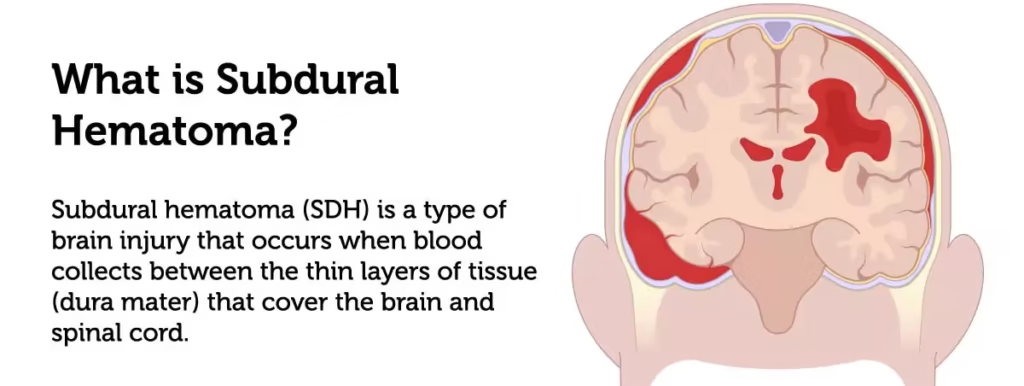
    Congenital toxoplasmosis

    Congenital Toxoplasmosis

    Congenital Toxoplasmosis Lecture Notes
    Congenital Toxoplasmosis

    Congenital toxoplasmosis is a disease that occurs in fetuses or new-borns infected with Toxoplasma gondii, a protozoan parasite, which is transmitted from mother to fetus.

    Congenital Toxoplasmosis is an infection of a fetus or newborn baby with the parasite Toxoplasma gondii, acquired in utero from an infected mother.

    Etiological Agent: Toxoplasma gondii
    • Toxoplasma gondii is an obligate intracellular protozoan parasite. This means it can only reproduce inside the cells of a host.
    • It belongs to the phylum Apicomplexa, a group of parasites that includes other well-known pathogens like Plasmodium (malaria) and Cryptosporidium.
    Infectious Forms of Congenital Toxoplasmosis

    Congenital toxoplasmosis occurs when Toxoplasma gondii is transmitted from a pregnant woman to her fetus through the placenta, resulting from a primary maternal infection during or shortly before pregnancy. While the infection in the mother can be acquired via three different forms, the parasite reaches the fetus primarily as tachyzoites.

    The infectious forms of T. gondii that initiate the maternal infection (leading to the subsequent vertical transmission) are:

    1. Tachyzoites (The Acute/Invasive Form):
    • This is the fast-dividing, crescent-shaped, actively multiplying form.
    • In the context of congenital toxoplasmosis, the parasite multiplies in the mother's placenta and enters the fetal circulation in this stage.
    • Tachyzoites are responsible for direct, acute tissue damage.
    • They are the form typically transmitted across the placenta to the fetus.
    2. Bradyzoites (The Chronic/Cyst Form):
    • These are slow-multiplying organisms found within tissue cysts in the meat of intermediate hosts.
    • Ingestion of undercooked or raw meat (especially pork, lamb, or venison) containing these cysts is a primary way pregnant women become infected.
    • Once ingested, the cyst walls are broken down by stomach acid, releasing the bradyzoites, which then transform into tachyzoites.
    3. Sporozoites (The Environmental Form):
    • These are contained within oocysts that are produced in the intestines of cats (the definitive host) and excreted in their feces.
    • The oocysts require 1–5 days to sporulate and become infectious in the environment.
    • Ingestion of food, water, or soil contaminated with sporulated oocysts (e.g., via unwashed vegetables or handling contaminated cat litter) causes infection in humans.
    Life Cycle
    • Toxoplasma gondii has a complex life cycle involving definitive hosts (domestic and wild cats) and intermediate hosts (virtually all warm-blooded animals, including humans, birds, and other mammals).
    • In cats (definitive host): The parasite undergoes sexual reproduction in the feline intestine, producing oocysts that are shed in the cat's feces. These oocysts sporulate and become infective in the environment within 1-5 days.
    • In intermediate hosts (including humans):
      • When an intermediate host ingests sporulated oocysts (e.g., from contaminated soil, water, unwashed vegetables) or tissue cysts (e.g., from undercooked meat of infected animals), the parasites are released.
      • They rapidly multiply as tachyzoites (the rapidly multiplying, invasive form) which disseminate throughout the body via the bloodstream and lymphatic system.
      • The immune system eventually controls the tachyzoites, which then transform into slower-growing bradyzoites contained within tissue cysts, primarily in muscle, brain, and eye tissues. These tissue cysts can persist for the life of the host and are responsible for chronic, latent infection.
    Modes of Human Infection
  • Ingestion of contaminated food or water:
    • Eating undercooked or raw meat (especially pork, lamb, venison) containing Toxoplasma tissue cysts. This is a very common route.
    • Ingesting sporulated oocysts from contaminated sources (e.g., unwashed fruits/vegetables from contaminated soil, contaminated water).
  • Contact with contaminated cat feces:
    • Changing cat litter boxes without proper hygiene.
    • Gardening or playing in areas contaminated with cat feces.
  • Vertical Transmission (Mother-to-Child): Vertical transmission refers to the passage of an infection from a mother to her unborn child during pregnancy or childbirth. In the congenital toxoplasmosis, it specifically means transplacental transmission.
    • This is the focus of congenital toxoplasmosis. A pregnant woman who acquires a primary infection with Toxoplasma gondii during pregnancy can transmit the parasite transplacentally to her fetus.
  • Horizontal Transmission:
    • Foodborne: Humans can contract toxoplasmosis by eating undercooked meat containing infective tissue forms of the parasite T. gondii. It can also be transferred to food and therefore to humans through contaminated utensils and cutting boards. Also, drinking unpasteurized goat’s milk can cause toxoplasmosis infection.
    • Zoonotic transmission: Zoonotic transmission refers to animal to human transfer of the infection. Cats play a major role in this type of transmission. Cats serve as hosts to T. gondii. They shed their oocysts through their feces, and these oocysts are microscopic and can be transferred to humans through accidental ingestion by not washing hands after cleaning the cat’s litter box, drinking water infected with oocysts, or not using gloves when gardening.
    • Rare means of transmission: In very rare occasions, toxoplasmosis can be transmitted through organ donation and transplant, as well as in blood transfusion.
  • Risk Factors for Maternal Acquisition of Toxoplasma gondii:
  • Dietary Habits:
    • Consumption of raw or undercooked meat (especially pork, lamb, venison) containing tissue cysts is a major risk factor.
    • Eating unwashed fruits or vegetables contaminated with oocysts.
  • Environmental Exposure:
    • Contact with soil contaminated with cat feces (e.g., gardening without gloves, playing in sandboxes where cats defecate).
    • Cleaning cat litter boxes (especially if done frequently, without gloves, and without proper hand hygiene).
  • Occupation: Farmers, veterinarians, butchers, and those who handle raw meat frequently may have higher exposure.
  • Travel: Visiting or living in areas with high prevalence and poor hygiene.
  • Lack of Prior Immunity: Women who are seronegative (have no antibodies) for Toxoplasma at the beginning of pregnancy are susceptible to primary infection and thus at risk for transmitting it to their fetus.
  • Pathophysiology of Fetal Infection and its Impact on Organ Systems

    The pathophysiology of congenital toxoplasmosis is complex, involving direct parasitic invasion, host inflammatory responses, and disruption of fetal development.

    Mechanisms of Damage to Fetal Tissues

    Once in the fetal circulation, tachyzoites disseminate throughout the body and can infect virtually any nucleated cell. The primary mechanisms of damage include:

    1. Direct Cellular Lysis: Tachyzoites rapidly multiply within host cells, forming vacuoles. As they multiply, they eventually cause the host cell to rupture, releasing more tachyzoites to infect neighboring cells. This direct destruction of cells contributes significantly to tissue damage.
    2. Host Inflammatory Response: The presence of the parasite triggers a robust fetal immune and inflammatory response. While intended to clear the infection, this inflammation can also cause significant collateral damage to delicate developing fetal tissues. This immune response involves cytokines and immune cells that can contribute to tissue destruction and fibrosis.
    3. Cyst Formation: As the fetal immune system attempts to control the acute infection, tachyzoites differentiate into bradyzoites, which form dormant tissue cysts within cells. These cysts can persist for the lifetime of the host, primarily in the brain, eyes, and muscles. While dormant, they can reactivate later in life (e.g., due to immunosuppression), leading to recurrent disease, particularly in the eyes.
    4. Disruption of Organogenesis: If infection occurs early in pregnancy (first trimester), when vital organs are undergoing rapid formation and differentiation, the cellular destruction and inflammation can severely disrupt normal organogenesis, leading to severe malformations or even fetal demise.
    Impact on Specific Organ Systems

    The tropism of Toxoplasma gondii for neural and retinal tissue, combined with the vulnerability of the developing fetus, leads to characteristic patterns of damage:

  • Central Nervous System (CNS): This is the most commonly and severely affected organ system.
    • Hydrocephalus: Caused by obstruction of cerebrospinal fluid (CSF) flow, often due to ependymitis (inflammation of the lining of the brain ventricles) or aqueductal stenosis, resulting from inflammation and scarring.
    • Intracranial Calcifications: These are characteristic findings, often scattered throughout the brain parenchyma, particularly periventricularly. They represent areas of necrosis and inflammation that have healed with calcification.
    • Microcephaly: May occur due to extensive brain destruction.
    • Developmental Delay/Intellectual Disability: Resulting from direct neuronal damage, inflammation, and altered brain development.
    • Seizures: Due to brain lesions and scarring.
  • Eyes: Ocular involvement is almost universal in congenital toxoplasmosis, even in cases that appear subclinical at birth.
    • Chorioretinitis: This is the hallmark ocular lesion. It involves inflammation and scarring of the choroid (vascular layer) and retina. Lesions can be active (inflamed) or inactive (scarred) at birth. Active lesions can cause pain and vision loss. Inactive scars can reactivate later in life, leading to recurrent inflammation and progressive vision loss.
    • Microphthalmia: Abnormally small eyes.
    • Strabismus (crossed eyes): Due to visual impairment.
    • Nystagmus (involuntary eye movements): Due to visual impairment.
    • Blindness: Can result from severe, bilateral chorioretinitis or optic nerve involvement.
  • Other Organ Systems: While CNS and ocular involvement are most prominent, other systems can be affected:
    • Liver and Spleen: Hepatosplenomegaly (enlarged liver and spleen) is common due to generalized infection and inflammation.
    • Lymphatic System: Lymphadenopathy (enlarged lymph nodes) can occur.
    • Hematological: Anemia and thrombocytopenia (low platelet count) can be present.
    • Skin: Petechiae, purpura, or rash (generalized macular papular rash) may be seen.
    • Lungs: Pneumonitis (inflammation of the lungs).
    • Heart: Myocarditis (inflammation of the heart muscle) can occur but is less common.
  • Clinical Manifestations
    Manifestations at Birth (Acute Phase)

    Only a minority (10-20%) of congenitally infected infants show overt signs of disease at birth. These infants typically experienced maternal infection earlier in pregnancy.

    1. The "Classic Triad" of Congenital Toxoplasmosis:

    This severe form is characterized by the combination of:

    • Chorioretinitis: Inflammation and scarring of the retina and choroid, often leading to vision impairment. This can be active (inflamed) or inactive (scarred) at birth.
    • Hydrocephalus: Abnormal accumulation of cerebrospinal fluid (CSF) within the brain, leading to an enlarged head circumference (macrocephaly), increased intracranial pressure, and potential brain damage.
    • Intracranial Calcifications: Characteristic deposits of calcium within the brain tissue, often scattered and periventricular, indicative of previous tissue destruction and healing.
    2. Other Common Systemic Signs and Symptoms:
  • General:
    • Prematurity: Higher incidence in infected infants.
    • Intrauterine Growth Restriction (IUGR): Small for gestational age.
    • Hepatosplenomegaly: Enlargement of the liver and spleen, due to generalized infection.
    • Jaundice: Yellow discoloration of the skin and eyes, indicating liver dysfunction or hemolysis.
    • Fever: Although less common at birth, can be present.
  • Neurological:
    • Seizures: Due to brain lesions and inflammation.
    • Microcephaly: Abnormally small head, in contrast to hydrocephalus which causes macrocephaly. This indicates significant brain tissue destruction.
    • Poor feeding, lethargy, hypotonia (poor muscle tone).
  • Ocular:
    • Microphthalmia: Abnormally small eyes.
    • Strabismus, Nystagmus: Often secondary to vision impairment from chorioretinitis.
  • Hematological:
    • Anemia: Low red blood cell count.
    • Thrombocytopenia: Low platelet count, potentially leading to petechiae (small red spots) or purpura (larger purple patches) due to bleeding under the skin.
  • Skin:
    • Rash: Non-specific macular, papular, or petechial rash.
  • Delayed Manifestations (Chronic Phase and Sequelae)

    This is where the majority of issues arise, particularly in infants who were asymptomatic at birth. These sequelae can appear weeks, months, or even years after birth, highlighting the importance of long-term follow-up.

    1. Ocular Sequelae (Most Common Delayed Manifestation):
    • Recurrent Chorioretinitis: The most frequent and significant long-term complication. Dormant tissue cysts in the retina can reactivate, causing new inflammatory lesions or exacerbating existing scars. This leads to progressive vision loss, pain, photophobia (light sensitivity), and floaters. It can occur at any age, often into adolescence and adulthood.
    • Strabismus, Nystagmus, Amblyopia ("lazy eye"): Resulting from long-standing vision impairment.
    • Glaucoma, Cataracts: Less common, but can develop.
    • Blindness: Can be a devastating outcome of severe or recurrent chorioretinitis.
    2. Neurological Sequelae:
    • Developmental Delays: Ranging from mild learning disabilities to severe intellectual disability, motor delays, and speech delays.
    • Seizures: Can emerge or persist despite initial treatment.
    • Hearing Loss: Sensorineural hearing loss can occur.
    • Spasticity: Increased muscle tone and stiffness.
    • Visual Impairment/Cortical Blindness: Even without direct eye damage, brain damage can impair visual processing.
    3. Endocrine/Other:
    • Precocious Puberty: Early onset of puberty in girls, potentially related to hypothalamic damage.
    • Learning Disabilities and Behavioral Problems: Even with subtle brain involvement.
    Diagnostic Approaches for Congenital Toxoplasmosis
    I. Maternal Diagnosis

    The primary method for diagnosing maternal Toxoplasma infection is serological testing. The interpretation of these tests is crucial as it determines whether a woman has a past infection (immune), is currently acutely infected, or is susceptible.

    1. Serological Screening (Antibody Detection):
  • IgG Antibodies:
    • Presence (positive): Indicates past or current infection. A rising IgG titer over several weeks (paired sera) suggests a recent infection.
    • Absence (negative): Indicates susceptibility to infection.
  • IgM Antibodies:
    • Presence (positive): Often indicates a recent or acute infection. However, IgM can persist for months to over a year after acute infection, so a positive IgM alone is not definitive for acute infection during pregnancy. It warrants further investigation.
    • Absence (negative): Rules out recent infection in most cases, especially if accompanied by negative IgG.
  • IgA Antibodies:
    • Similar to IgM, IgA antibodies usually appear shortly after infection and decline within a few months. They can aid in diagnosing recent infection, particularly when IgM results are equivocal.
  • IgG Avidity Testing: This is a critical test for differentiating recent from remote infection.
    • Low IgG Avidity: Suggests a recent infection (typically within the last 3-4 months). This is because in the early stages of infection, IgG antibodies bind weakly to the parasite antigen.
    • High IgG Avidity: Suggests an infection acquired more than 3-4 months ago (i.e., remote infection). In later stages, IgG antibodies bind more strongly.
    • Clinical Utility: A high IgG avidity in the first trimester of pregnancy usually rules out an infection acquired during the current pregnancy, thus reducing anxiety and potentially avoiding unnecessary interventions.
  • 2. Interpretation Algorithm:
    • IgG negative, IgM negative: Susceptible. Counsel on prevention. Re-test if symptoms develop or exposure occurs.
    • IgG positive, IgM negative (High Avidity): Past infection, immune. No risk to fetus.
    • IgG positive, IgM positive (Low Avidity): Recent infection (likely during pregnancy). High risk for fetal transmission. Further fetal diagnostic testing is indicated.
    • IgG positive, IgM positive (High Avidity): Infection likely occurred several months ago (before or early in pregnancy). Lower risk for current pregnancy, but further evaluation may be considered.
    • IgG negative, IgM positive: Possible very early acute infection, or false positive IgM. Repeat testing, consider confirmatory tests.
    II. Fetal Diagnosis (In Utero)

    If maternal serology suggests a primary infection during pregnancy, fetal diagnostic procedures are offered to confirm (or rule out) fetal infection.

  • Amniocentesis:
    • Timing: Typically performed after 18 weeks of gestation and at least 4 weeks after the estimated time of maternal infection to allow for parasite multiplication in fetal fluids.
    • Procedure: Fetal amniotic fluid is collected.
    • Analysis:
      • PCR (Polymerase Chain Reaction): This is the most sensitive and specific method for detecting Toxoplasma gondii DNA in amniotic fluid. A positive PCR confirms fetal infection.
      • Fetal Serology: Less reliable as the fetal immune response might not be robust enough to produce antibodies at this stage.
  • Fetal Ultrasound:
    • Purpose: To look for sonographic signs of fetal infection and damage.
    • Findings: Hydrocephalus, microcephaly, intracranial calcifications, hepatosplenomegaly, ascites (fluid in abdomen), fetal growth restriction, abnormal cardiac findings.
    • Limitations: Ultrasound findings may be absent even in infected fetuses, especially early in infection or with milder forms. Its main role is to assess the severity of damage if infection is present.
  • Fetal Blood Sampling (Cordocentesis):
    • Purpose: To test fetal blood directly.
    • Analysis: Fetal IgM, IgA, or PCR for Toxoplasma.
    • Limitations: Invasive, higher risk than amniocentesis, and often replaced by amniotic fluid PCR due to its accuracy.
  • III. Neonatal Diagnosis (At Birth)

    Diagnosis in the neonate confirms that the baby is infected and guides treatment.

    1. Neonatal Serology:
      • IgM and IgA: A positive specific IgM or IgA in the newborn's blood definitively indicates congenital infection, as maternal IgM/IgA do not cross the placenta.
      • IgG: All infants born to IgG-positive mothers will have maternal IgG antibodies. Therefore, the presence of IgG alone is not diagnostic of congenital infection. Serial IgG titers are used:
        • Persistently positive or rising IgG titers beyond 12 months of age: Indicates active congenital infection.
        • Declining IgG titers that become negative by 12 months: Indicates passive transfer of maternal antibodies, and the infant is not infected.
    2. PCR (Polymerase Chain Reaction): Detection of Toxoplasma gondii DNA in neonatal blood, CSF, or urine. Highly sensitive and specific.
    3. Cerebrospinal Fluid (CSF) Examination: Analysis includes elevated protein, pleocytosis (increased cell count), and sometimes Toxoplasma DNA by PCR. Essential for assessing CNS involvement.
    4. Ophthalmological Examination: Findings are mandatory for all suspected cases. Dilated funduscopic examination can reveal active chorioretinitis or healed scars, even in asymptomatic infants.
    5. Neuroimaging:
      • Cranial Ultrasound (for open fontanelle): Can detect hydrocephalus, ventriculomegaly, and intracranial calcifications.
      • CT Scan or MRI of the Brain: Provides more detailed imaging of brain pathology, including calcifications, hydrocephalus, and other lesions.
    6. Other Investigations:
      • Complete Blood Count (CBC): To check for anemia, thrombocytopenia.
      • Liver Function Tests: To check for jaundice and hepatosplenomegaly.
    Medical Management and Treatment Strategies

    The medical management of congenital toxoplasmosis involves specific drug regimens for pregnant women, neonates, and infants, with the goals of reducing vertical transmission, preventing or minimizing disease severity, and managing complications.

    I. Treatment for Infected Pregnant Women

    The goal is to prevent or reduce the risk of transmission to the fetus and to mitigate fetal damage if transmission has already occurred. The choice of medication depends on whether fetal infection has been confirmed.

    1. If Fetal Infection is NOT Confirmed (i.e., amniocentesis negative or not yet performed):
    • Drug: Spiramycin
    • Mechanism: Spiramycin is a macrolide antibiotic that concentrates in the placenta. It is thought to reduce the rate of vertical transmission from mother to fetus, but it does not treat the fetus once infected.
    • Regimen: Typically given as 1 g orally three times daily throughout the remainder of the pregnancy, or until fetal infection is confirmed.
    • Side Effects: Generally well-tolerated, with mild gastrointestinal upset being most common.
    2. If Fetal Infection IS Confirmed (e.g., by positive amniotic fluid PCR) OR high suspicion of fetal infection:
  • Drug Combination: Pyrimethamine + Sulfadiazine + Leucovorin
  • Mechanism:
    • Pyrimethamine: A dihydrofolate reductase inhibitor, blocking folic acid synthesis in the parasite. It can cross the placenta. Pyrimethamine when given in high doses may cause haemolytic anaemia therefore monitor closely. Dose: 50-75mg OD PO for 2-3weeks then 25-37.5mg OD PO for 4-5 weeks
    • Sulfadiazine: A sulfonamide antibiotic that inhibits dihydropteroate synthase, another enzyme in the parasite's folic acid pathway. It also crosses the placenta. Dose: 1-1.5g QID for 3-4 weeks or 100mg/kg/day in 2DD
    • Leucovorin (Folnic Acid): Given to the mother (and later to the infant) to counteract the bone marrow suppressive effects (myelosuppression) of pyrimethamine, which can lead to thrombocytopenia and neutropenia by interfering with human folate metabolism. It is crucial to give leucovorin whenever pyrimethamine is used.
  • Regimen: initiated after the first trimester (due to potential teratogenicity of pyrimethamine, though risks are debated). The regimen is often cyclical or continuous.
  • Side Effects: Significant, requiring close monitoring. Pyrimethamine can cause myelosuppression, rash, and gastrointestinal upset. Sulfadiazine can cause rash, crystalluria, and bone marrow suppression.
  • II. Treatment for Infected Neonates and Infants (After Birth)

    All infants with confirmed congenital toxoplasmosis (symptomatic or asymptomatic) should receive prolonged anti-parasitic treatment to prevent or minimize the development of long-term sequelae, particularly ocular and neurological damage.

    1. Drug Combination: Pyrimethamine + Sulfadiazine + Leucovorin
  • Regimen: This is the cornerstone of treatment.
    • Pyrimethamine: Given daily or three times a week.
    • Sulfadiazine: Given twice daily.
    • Leucovorin: Given daily to mitigate pyrimethamine's side effects.
  • Duration: Treatment is typically continued for at least 12 months (one year) after birth. In some cases, treatment may be extended, particularly if there is active chorioretinitis.
  • 2. Corticosteroids (e.g., Prednisone 1mg/kg/day) till they resolve
  • Indications: Used to control severe inflammation.
    • Active chorioretinitis: Especially if threatening the macula or optic nerve.
    • Significant inflammation in the CNS: Such as severe hydrocephalus with high protein in CSF.
  • Regimen: Given concurrently with anti-parasitic drugs and tapered as inflammation subsides.
  • III. Monitoring During Treatment

    Due to the potential side effects of the medications, especially pyrimethamine and sulfadiazine, close monitoring is essential.

    • Hematological Monitoring: Regular (e.g., weekly or bi-weekly) complete blood counts (CBC) with differential and platelet counts to detect myelosuppression (anemia, neutropenia, thrombocytopenia). Doses may need adjustment or temporary interruption if severe myelosuppression occurs.
    • Renal Function: Monitoring of BUN and creatinine, especially with sulfadiazine, to prevent crystalluria.
    • Liver Function: Monitoring of liver enzymes.
    • Clinical Monitoring: Regular assessment for drug rashes, gastrointestinal upset, and signs of disease progression.
    IV. Management of Specific Complications
    1. Hydrocephalus: May require neurosurgical intervention, such as placement of a ventriculoperitoneal (VP) shunt to drain excess CSF and relieve intracranial pressure.
    2. Chorioretinitis: In addition to anti-parasitic treatment and corticosteroids, ophthalmological follow-up is critical. Regular eye exams are needed to monitor for active lesions, assess visual acuity, and manage complications.
    3. Developmental Delays: Referrals for early intervention programs including physical therapy, occupational therapy, speech therapy, and special education services are crucial to optimize developmental outcomes.
    V. Long-Term Follow-up

    Even after completing the initial 12 months of treatment, long-term follow-up is essential, often extending into adolescence and adulthood, due to the risk of delayed sequelae (especially recurrent chorioretinitis).

    • Regular ophthalmological examinations.
    • Neurological assessments.
    • Developmental evaluations.
    Prevention Strategies for Congenital Toxoplasmosis

    Prevention is paramount in congenital toxoplasmosis, as timely identification and avoidance of exposure in susceptible pregnant women can entirely avert fetal infection and its associated morbidities.

    I. Public Health Recommendations for Pregnant Women (Primary Prevention)

    These recommendations focus on reducing exposure to Toxoplasma gondii from food and environmental sources. Education of pregnant women (and women of childbearing age) is key.

    1. Food Safety Practices:
    • Cook Meat Thoroughly: Ensure all meat, especially pork, lamb, and venison, is cooked to safe internal temperatures (e.g., 160°F/71°C for ground meat, 145°F/63°C for whole cuts with a 3-minute rest time) until no pink remains and juices run clear. Freezing meat to -4°F (-20°C) for several days can also kill tissue cysts.
    • Wash Fruits and Vegetables: Thoroughly wash all raw fruits and vegetables before consumption, especially those grown in gardens where cats might roam.
    • Avoid Raw/Undercooked Meat: Refrain from eating raw or undercooked meat, including cured meats unless they have been previously frozen.
    • Prevent Cross-Contamination: Use separate cutting boards and utensils for raw meat and produce. Wash hands, cutting boards, and all utensils thoroughly with hot, soapy water after contact with raw meat.
    2. Environmental Hygiene:
  • Cat Litter Box Management:
    • Avoid Cleaning: Ideally, pregnant women should avoid changing cat litter boxes. If unavoidable, wear gloves and wash hands thoroughly afterwards.
    • Daily Cleaning: Have someone else clean the litter box daily, as Toxoplasma oocysts do not become infective until 1-5 days after being shed in feces.
    • Dispose Safely: Dispose of cat feces carefully, ideally by flushing or bagging and placing in sealed waste.
  • Gardening and Soil Contact:
    • Wear Gloves: Wear gloves when gardening or handling soil, sand, or anything that might be contaminated with cat feces.
    • Wash Hands: Wash hands thoroughly with soap and water after outdoor activities.
  • Sandboxes: Cover children's sandboxes when not in use to prevent cats from using them as litter boxes.
  • 3. Cat Care:
    • Keep Cats Indoors: This prevents them from hunting and eating infected rodents or birds, which are sources of Toxoplasma.
    • Avoid Feeding Raw Meat: Do not feed raw or undercooked meat to cats.
    • No New Cats During Pregnancy: Avoid acquiring new cats during pregnancy, especially stray or feral cats, unless they have been tested for Toxoplasma.
    II. Screening Programs
  • Maternal Serological Screening:
    • Universal Screening: Some countries (e.g., France, Austria) implement universal serological screening for Toxoplasma at the beginning of pregnancy (first trimester).
    • Targeted Screening: In other regions (e.g., USA), screening is often targeted only to women who develop symptoms suggestive of infection or have known exposure.
    • Benefits of Screening: Early detection of maternal seroconversion allows for prompt initiation of spiramycin, which can significantly reduce the risk of vertical transmission.
  • Neonatal Screening (Controversial/Not Universal): Some regions implement universal neonatal screening using cord blood or dried blood spots to detect Toxoplasma antibodies (e.g., IgM, IgA, or IgG avidity patterns) or PCR. Benefits include identifying congenitally infected infants (including asymptomatic ones) who can then receive treatment.
  • III. Primary Prevention Measures (Beyond Personal Hygiene)
    • Animal Control: Efforts to control feral cat populations in certain areas.
    • Water Treatment: Ensuring safe drinking water to prevent oocyst ingestion.
    • Public Education Campaigns: Raising awareness about Toxoplasma and its prevention methods among the general population, especially women of childbearing age.
    Key Nursing Diagnoses
    • Risk for Infection, related to compromised immune system and presence of parasitic infection.
    • Inadequate protein energy nutritional intake, related to increased metabolic demands, poor feeding, or gastrointestinal disturbances (e.g., jaundice, hepatosplenomegaly).
    • Risk for Delayed Development, related to neurological damage, visual impairment, or hearing deficits.
    • Impaired Physical Mobility, related to neurological damage (e.g., hydrocephalus, spasticity) and developmental delays.
    • Acute Pain, related to inflammation (e.g., active chorioretinitis, CNS inflammation) or surgical interventions (e.g., shunt placement).
    • Compromised Family Coping, related to chronic illness, uncertain prognosis, and demands of prolonged treatment and care.
    • Inadequate health Knowledge (Parents), related to disease process, treatment regimen, potential complications, and long-term care needs.
    • Risk for Caregiver Role Strain, related to complexity of care, financial burden, emotional stress, and lack of support systems.
    • Excessive Anxiety (Parents), related to diagnosis, prognosis, potential for sequelae, and future care needs.
    SPECIFIC NURSING MANAGEMENT
    Intervention Category Action & Rationale
    1. Infection Control & Medication Management
    • Administer Anti-parasitic Medications: Ensure timely and accurate administration of pyrimethamine, sulfadiazine, and leucovorin as prescribed. Educate parents on adherence.
    • Monitor Side Effects:
      • Hematological: Monitor CBC results (anemia, neutropenia, thrombocytopenia). Educate parents on signs of bleeding/infection.
      • Renal/Hepatic: Monitor renal/liver function tests. Educate on signs of jaundice, dark urine.
      • Skin: Assess for rash (sulfadiazine side effect).
    • Leucovorin Administration: Critical for preventing myelosuppression from pyrimethamine.
    • Infection Prevention: Implement standard precautions. Teach hand hygiene to protect infant from environmental infections (especially if neutropenic).
    2. Nutritional Support
    • Assess Feeding Patterns: Observe for difficulties with sucking/swallowing or aspiration.
    • Optimize Feeding: Small, frequent feedings. Specialized nipples if needed. Gavage/gastrostomy if oral intake insufficient.
    • Monitor Growth: Weigh regularly, plot growth, monitor intake/output.
    • Manage Jaundice: Monitor bilirubin, assist with phototherapy if prescribed.
    3. Developmental and Sensory Support
    • Early Intervention Referrals: Physical, occupational, speech therapy.
    • Sensory Stimulation: Age-appropriate stimulation (visual tracking, tactile).
    • Promote Mobility: Position to prevent contractures, promote normal development.
    • Ophthalmological Care: Ensure regular dilated eye exams. Educate parents on signs of active chorioretinitis (redness, photophobia).
    • Hearing Screening: Advocate for regular screenings.
    4. Pain Management
    • Assess Pain: Use age-appropriate scales.
    • Administer Meds: Analgesics/Corticosteroids as prescribed.
    • Comfort Measures: Swaddling, gentle handling, reduced environmental stimuli.
    5. Psychosocial & Educational Support
    • Educate Comprehensively: Clear info on disease, prognosis, treatment, complications. Use written materials.
    • Emotional Support: Allow expression of fears/grief. Provide empathetic listening.
    • Connect to Resources: Support groups, social workers, financial aid.
    • Promote Self-Care: Encourage parents to maintain their own well-being.
    • Advocacy: Ensure access to specialists/services.
    • Empowerment: Involve parents in care planning.
    • Prevention Education: For future pregnancies.
    6. Long-Term Follow-up Coordination
    • Schedule Appointments: Help organize appointments with multiple specialists (infectious disease, ophthalmology, neurology).
    • Maintain Records: Encourage parents to keep comprehensive records.

    Congenital Toxoplasmosis Read More »

    pneumonia in children

    Pneumonia in Children

    Pediatric Pneumonia Lecture Notes
    Pediatric Pneumonia

    Pneumonia remains a leading cause of morbidity and mortality in children worldwide, especially in developing countries. Its epidemiology and etiology differ significantly from adults, largely due to variations in immune system maturity, exposure patterns, and anatomical differences.

    Pneumonia is an acute inflammatory condition of the lung parenchyma caused by an infection.

    • lung parenchyma is the the functional tissue of the lungs, specifically the alveoli and bronchioles.

    This inflammation leads to the filling of the alveolar spaces with exudate, cells, and fluid, a process known as consolidation. This consolidation impairs gas exchange, leading to symptoms such as cough, fever, chills, and difficulty breathing.

    In simpler terms, pneumonia is an infection that inflames the air sacs in one or both lungs. The air sacs may fill with fluid or pus (purulent material), causing cough with phlegm or pus, fever, chills, and trouble breathing.

    Classifications of Pneumonia

    Pneumonia can be classified in various ways, each providing a different lens through which to understand its cause, presentation, and management.

    A. By Etiology (Cause of Infection):

    This classification focuses on the specific microorganism responsible for the infection.

    1. Bacterial Pneumonia: The most common type, often more severe than viral pneumonia.
      • Common Pathogens:
        • Streptococcus pneumoniae (Pneumococcus): The most frequent cause of community-acquired bacterial pneumonia.
        • Haemophilus influenzae.
        • Staphylococcus aureus (including MRSA).
        • Klebsiella pneumoniae.
        • Mycoplasma pneumoniae (often called "walking pneumonia" due to milder symptoms).
        • Chlamydophila pneumoniae.
        • Legionella pneumophila (Legionnaires' disease).
    2. Viral Pneumonia: Often milder than bacterial pneumonia but can be severe, especially in infants, elderly, and immunocompromised individuals.
      • Common Pathogens:
        • Influenza viruses (Types A and B).
        • Respiratory Syncytial Virus (RSV).
        • Adenoviruses.
        • Parainfluenza viruses.
        • Human Metapneumovirus.
        • Coronaviruses (e.g., SARS-CoV, MERS-CoV, SARS-CoV-2).
    3. Fungal Pneumonia: Less common, usually affecting individuals with weakened immune systems or those exposed to large amounts of fungi in the environment.
      • Common Pathogens:
        • Pneumocystis jirovecii (PCP pneumonia, common in HIV/AIDS patients).
        • Histoplasma capsulatum (Histoplasmosis).
        • Coccidioides immitis (Coccidioidomycosis or Valley Fever).
        • Blastomyces dermatitidis (Blastomycosis).
        • Aspergillus species.
    4. Parasitic Pneumonia: Rare, caused by parasites, usually seen in immunocompromised individuals or those who have traveled to endemic areas.
      • Common Pathogens:
        • Toxoplasma gondii.
        • Strongyloides stercoralis.
    5. Aspiration Pneumonia: Occurs when foreign material (e.g., food, liquid, vomit, stomach contents) is inhaled into the lungs, leading to inflammation and often secondary bacterial infection.
      • Causes: Impaired swallowing mechanisms, altered consciousness, gastroesophageal reflux.
    6. Chemical Pneumonia (Pneumonitis): Lung inflammation caused by inhaling irritating chemicals or toxic gases, rather than an infectious agent. This is not an infection but can predispose to one.
      • Causes: Inhalation of smoke, noxious fumes, or gastric acid.
    B. By Anatomical Location (Area of Lung Affected):

    This classification describes the pattern of lung involvement as seen on chest imaging.

    1. Lobar Pneumonia: Affects a large, continuous area of an entire lobe of a lung. Often caused by Streptococcus pneumoniae.
      • Appearance: Typically seen as a dense, homogeneous consolidation on chest X-ray.
    2. Bronchopneumonia (or Lobular Pneumonia): Characterized by patchy consolidation centered around the bronchi and bronchioles, often affecting multiple lobes. More common in infants, young children, and the elderly.
      • Appearance: Patchy infiltrates on chest X-ray, often bilateral and basal.
    3. Interstitial Pneumonia: Involves the interstitial spaces of the lung (the tissue between the alveoli and capillaries), rather than primarily the air sacs. More commonly associated with viral or atypical bacterial infections.
      • Appearance: Reticular or reticulonodular patterns on chest X-ray.
    4. Miliary Pneumonia: A form of pneumonia characterized by the wide dissemination of an infectious agent (Mycobacterium tuberculosis) throughout the lung tissue in small, discrete lesions resembling millet seeds.
      • Appearance: Fine, diffuse nodular infiltrates throughout both lungs on chest X-ray.
    C. By Duration:

    This classification refers to the time course of the illness.

    1. Acute Pneumonia: Rapid onset and progression of symptoms, typically resolving within days to a few weeks with appropriate treatment. Most common form.
    2. Chronic Pneumonia: Persistent symptoms and radiological findings lasting for weeks to months, or even longer. Often associated with specific pathogens (e.g., Mycobacterium tuberculosis, fungi) or underlying conditions.
    D. By Clinical Grounds / Acquisition Setting:

    This is one of the most clinically relevant classifications, as it guides initial empiric treatment decisions.

    1. Community-Acquired Pneumonia (CAP): Pneumonia acquired outside of hospitals or long-term care facilities.
      • Common Pathogens: Streptococcus pneumoniae, Mycoplasma pneumoniae, Chlamydophila pneumoniae, Haemophilus influenzae, influenza virus.
    2. Hospital-Acquired Pneumonia (HAP) / Nosocomial Pneumonia: Pneumonia that develops 48 hours or more after hospital admission and was not incubating at the time of admission.
      • Common Pathogens: Often more virulent and antibiotic-resistant bacteria, such as Pseudomonas aeruginosa, Staphylococcus aureus (MRSA), Klebsiella species, Escherichia coli.
    3. Ventilator-Associated Pneumonia (VAP): A subtype of HAP that develops in patients who have been mechanically ventilated for more than 48 hours.
      • Common Pathogens: Similar to HAP, often highly resistant organisms.
    Etiology of Pneumonia

    The etiology refers to the specific agents or organisms responsible for causing pneumonia. As discussed in Objective 1, these can be broadly categorized.

    A. Common Bacterial Pathogens:

    These are the most frequent causes of pneumonia, especially bacterial pneumonia.

    1. Streptococcus pneumoniae (Pneumococcus):
      • Description: The leading cause of community-acquired bacterial pneumonia (CAP) in all age groups, particularly in adults.
      • Characteristics: Gram-positive coccus, typically arranged in pairs (diplococci). Has a polysaccharide capsule that protects it from phagocytosis.
      • Risk Factors: Old age, chronic lung disease, recent viral infection, immunocompromised status.
    2. Haemophilus influenzae:
      • Description: A common cause of both CAP and HAP, especially in individuals with chronic obstructive pulmonary disease (COPD) or other underlying lung conditions.
      • Characteristics: Gram-negative coccobacillus.
      • Risk Factors: COPD, cystic fibrosis, alcoholism.
    3. Staphylococcus aureus:
      • Description: Can cause severe pneumonia, often seen as HAP or as a complication of viral infections (e.g., influenza). Methicillin-resistant S. aureus (MRSA) is a significant concern, especially in VAP and HCAP.
      • Characteristics: Gram-positive coccus, often arranged in clusters. Produces various toxins.
      • Risk Factors: Recent influenza, injection drug use, skin/soft tissue infection, hospitalization, surgical procedures.
    4. Klebsiella pneumoniae:
      • Description: A common cause of HAP and, less frequently, severe CAP, particularly in individuals with alcoholism or diabetes. Known for causing "currant jelly" sputum.
      • Characteristics: Gram-negative rod, often encapsulated.
      • Risk Factors: Alcoholism, diabetes, chronic lung disease, hospitalization.
    5. Pseudomonas aeruginosa:
      • Description: A significant cause of HAP and VAP, particularly in immunocompromised patients, those with cystic fibrosis, or prolonged hospital stays. Difficult to treat due to antibiotic resistance.
      • Characteristics: Gram-negative rod.
      • Risk Factors: Cystic fibrosis, bronchiectasis, mechanical ventilation, broad-spectrum antibiotic use, immunocompromised state.
    6. Mycoplasma pneumoniae:
      • Description: A common cause of "atypical pneumonia" or "walking pneumonia" in young adults and school-aged children. Causes milder, but prolonged, symptoms.
      • Characteristics: Lacks a cell wall, making it resistant to many common antibiotics (e.g., penicillin).
    7. Chlamydophila pneumoniae:
      • Description: Another cause of atypical pneumonia, often with milder symptoms.
      • Characteristics: Obligate intracellular bacterium.
    8. Legionella pneumophila:
      • Description: Causes Legionnaires' disease, a severe form of pneumonia often associated with contaminated water sources (e.g., air conditioning systems, hot tubs).
      • Characteristics: Gram-negative rod, fastidious growth requirements.
    B. Common Viral Pathogens:

    Viruses are a very common cause of pneumonia, especially in children. They can also predispose to secondary bacterial infections.

    1. Influenza Viruses (A and B): Seasonal epidemics cause widespread respiratory illness, including primary viral pneumonia and often secondary bacterial pneumonia.
    2. Respiratory Syncytial Virus (RSV): The most common cause of lower respiratory tract infections in infants and young children, often leading to bronchiolitis and pneumonia.
    3. Adenoviruses: Can cause a range of respiratory illnesses, including pneumonia, particularly in children and immunocompromised individuals.
    4. Parainfluenza Viruses: Common cause of croup, but can also cause bronchiolitis and pneumonia, especially in children.
    5. Coronaviruses (e.g., SARS-CoV-2): Various coronaviruses can cause respiratory infections, with SARS-CoV-2 (COVID-19) being a notable cause of severe viral pneumonia and acute respiratory distress syndrome (ARDS).
    C. Common Fungal Pathogens:

    More prevalent in immunocompromised individuals or specific geographic regions.

    1. Pneumocystis jirovecii: Causes Pneumocystis pneumonia (PCP), a common and severe opportunistic infection in individuals with HIV/AIDS.
    2. Endemic Fungi (e.g., Histoplasma capsulatum, Coccidioides immitis, Blastomyces dermatitidis): Found in specific geographic areas. Exposure to spores can lead to pneumonia, especially in immunocompromised individuals.
    3. Aspergillus species: Can cause invasive aspergillosis, a severe pneumonia, primarily in severely immunocompromised patients (e.g., transplant recipients, leukemia patients).
    D. Aspiration of Gastric Contents/Foreign Material:

    Not an infectious agent itself, but the aspiration of acidic gastric contents or other foreign material can cause a severe chemical pneumonitis, which then often becomes secondarily infected by oral flora (anaerobic bacteria).

    Pathogenesis of Pneumonia

    Pathogenesis describes the sequence of events that leads to the development of pneumonia, from initial exposure to clinical symptoms.

    A. Normal Host Defenses:

    The respiratory tract has several protective mechanisms to prevent infection:

    1. Upper Airway Filtration: Nasal hairs, turbinates, and mucous membranes filter out large particles.
    2. Epiglottis and Cough Reflex: Protect the lower airways from aspiration.
    3. Mucociliary Escalator: Ciliated epithelial cells line the trachea and bronchi, moving mucus (which traps pathogens) upwards for expectoration or swallowing.
    4. Alveolar Macrophages: Phagocytic cells in the alveoli that engulf and destroy pathogens and debris.
    5. Humoral and Cellular Immunity: Antibodies (IgA, IgG) and T lymphocytes provide specific immunity.
    Mechanisms of Pathogen Entry:

    Pneumonia develops when pathogens overcome or bypass these host defenses.

    1. Aspiration (Most Common): Microaspiration of oropharyngeal secretions containing pathogens is the most frequent route. This happens constantly in small amounts, but typically the host defenses clear them. Impaired consciousness, dysphagia, or presence of a nasogastric tube increases the risk of significant aspiration.
    2. Inhalation: Airborne pathogens (e.g., viruses, Mycoplasma, Legionella, fungi) can be inhaled directly into the lower respiratory tract.
    3. Hematogenous Spread: Pathogens from a distant site of infection (e.g., endocarditis, IV drug use, abdominal sepsis) can travel through the bloodstream to the lungs.
    4. Direct Spread: Less common, but can occur from contiguous infected sites (e.g., empyema spreading to lung, trauma).
    Pathophysiology:

    Once pathogens reach the lower respiratory tract and evade local defenses, a series of events leads to inflammation and consolidation:

    1. Colonization and Multiplication: Pathogens colonize the alveoli and/or terminal bronchioles and begin to multiply.
    2. Immune Response and Inflammation:
      • Alveolar Macrophages: Are typically the first line of defense. If overwhelmed, they release cytokines (e.g., TNF-alpha, IL-1, IL-6, IL-8).
      • Neutrophil Recruitment: These cytokines attract neutrophils from the bloodstream into the alveolar spaces.
      • Increased Vascular Permeability: The inflammatory response causes vasodilation and increased permeability of the alveolar-capillary membrane.
    3. Fluid Exudation and Consolidation:
      • Plasma fluid, red blood cells, and fibrin leak into the alveolar spaces.
      • Neutrophils and bacteria fill the alveoli.
      • This mixture of fluid, cells, and debris leads to the characteristic consolidation seen in pneumonia, where the lung tissue becomes dense and airless.
    4. Impaired Gas Exchange:
      • The consolidated alveoli can no longer participate in gas exchange.
      • This leads to ventilation-perfusion mismatch (areas are perfused but not ventilated), resulting in hypoxemia (low blood oxygen).
      • The increased work of breathing due to decreased lung compliance and airway obstruction can also lead to hypercapnia (high blood carbon dioxide) in severe cases.
    5. Tissue Damage: The inflammatory process and release of bacterial toxins can cause damage to the alveolar and bronchial epithelial cells, impairing mucociliary function and further propagating inflammation.
    6. Resolution: With effective immune response and/or antibiotic treatment, the inflammation subsides, macrophages clear cellular debris, and the exudate is reabsorbed, allowing the lung to return to normal function.
    Etiology of Pediatric Pneumonia (Causative Agents)

    The pathogens responsible for pneumonia vary significantly by age group.

    A. Neonates (Birth to 1 Month):
  • Pneumonia in neonates is often acquired perinatally (from the mother during birth) or nosocomially (in the hospital).
  • Bacterial:
    • Group B Streptococcus (GBS): Common cause of early-onset neonatal sepsis and pneumonia.
    • Gram-negative enteric bacilli: Escherichia coli, Klebsiella pneumoniae.
    • Listeria monocytogenes.
  • Viral: Less common primary cause, but can be involved (e.g., Herpes Simplex Virus - HSV).
  • B. Infants (1 Month to 6 Months):
  • Transition period, with a mix of perinatal pathogens and increasing community-acquired pathogens.
  • Bacterial:
    • Streptococcus pneumoniae (pneumococcus): Increasingly common.
    • Haemophilus influenzae (non-typeable or type b if unvaccinated).
    • Staphylococcus aureus: Can cause severe disease.
  • Atypical Bacteria:
    • Chlamydia trachomatis: Can cause afebrile pneumonia, often associated with conjunctivitis, transmitted from mother during birth. Presents at 2-12 weeks of age.
    • Bordetella pertussis (whooping cough): Can cause severe pneumonia, especially in unvaccinated infants.
  • Viral (Most Common Overall):
    • Respiratory Syncytial Virus (RSV): The leading cause of bronchiolitis and pneumonia in infants.
    • Parainfluenza viruses: (Types 1, 2, 3).
    • Adenovirus: Can cause severe and prolonged disease.
    • Influenza viruses: (A and B).
    • Human Metapneumovirus.
  • C. Preschool Children (6 Months to 5 Years):
  • Viral (Still Most Common):
    • RSV, Influenza, Parainfluenza, Adenovirus, Human Metapneumovirus, Rhinovirus.
  • Bacterial:
    • Streptococcus pneumoniae (Pneumococcus): Remains the most frequent bacterial cause.
    • Haemophilus influenzae (non-typeable).
    • Staphylococcus aureus (including MRSA).
    • Streptococcus pyogenes (Group A Strep): Less common but can cause severe pneumonia.
  • Atypical Bacteria:
    • Mycoplasma pneumoniae: Becomes more common in this age group, though classically associated with school-aged children.
  • D. School-Aged Children and Adolescents (> 5 Years):
  • The spectrum of pathogens begins to resemble that of adults.
  • Atypical Bacteria (Increasingly Common):
    • Mycoplasma pneumoniae: The most common cause of "atypical pneumonia" or "walking pneumonia."
    • Chlamydophila pneumoniae.
  • Bacterial:
    • Streptococcus pneumoniae.
    • Staphylococcus aureus (including MRSA).
    • Haemophilus influenzae.
    • Streptococcus pyogenes.
  • Viral:
    • Influenza A and B.
    • Adenovirus.
  • E. Less Common but Important Causes (Across Age Groups):
  • Tuberculosis (Mycobacterium tuberculosis): Consider in endemic areas or with risk factors.
  • Fungal Pneumonia: (e.g., Pneumocystis jirovecii pneumonia - PCP) primarily in immunocompromised children.
  • Aspiration Pneumonia: In children with feeding difficulties, GERD, or neurological impairment.
  • Clinical Presentation of Pneumonia in Children

    Recognize age-specific manifestations and indicators of severity to ensure timely intervention.

    I. General Signs and Symptoms of Pneumonia in Children
  • Cough: May be dry, moist, or productive (though young children rarely expectorate sputum). Can sometimes be the only prominent symptom.
  • Tachypnea (Increased Respiratory Rate): Often the most sensitive and specific sign of pneumonia in children, especially in infants. Defined as:
    • < 2 months: ≥ 60 breaths/min
    • 2-11 months: ≥ 50 breaths/min
    • 1-5 years: ≥ 40 breaths/min
    • 5 years: ≥ 20 breaths/min
  • Fever: Present in many cases, but can be absent, especially in neonates, young infants, or immunocompromised children.
  • Dyspnea (Difficulty Breathing): Manifested as increased work of breathing.
  • Lethargy / Irritability: Non-specific signs of illness in children.
  • Poor Feeding / Decreased Oral Intake: Common in infants and young children.
  • Chest Pain: More common in older children, often pleuritic (sharp, worse with breathing).
  • Abdominal Pain: Can be referred pain from diaphragmatic irritation, especially in lower lobe pneumonia.
  • II. Age-Specific Clinical Manifestations
    A. Neonates (Birth to 1 Month):
  • Pneumonia in neonates is often subtle and non-specific, making diagnosis challenging.
  • Non-specific Signs:
    • Respiratory Distress: Tachypnea (often the earliest sign), grunting, nasal flaring, retractions (subcostal, intercostal, suprasternal).
    • Apnea: Pauses in breathing, especially in premature infants.
    • Cyanosis (bluish discoloration) or pallor.
    • Lethargy, irritability, hypotonia.
    • Poor feeding, vomiting.
    • Temperature instability (hypothermia is common, fever less so).
    • Jaundice.
  • Physical Exam: May reveal decreased breath sounds, crackles (rales), or wheezing.
  • B. Infants (1 Month to 1 Year):
  • More overt signs of respiratory illness are typically present.
  • Key Signs:
    • Tachypnea: Always a critical sign.
    • Retractions: Subcostal, intercostal, suprasternal, supraclavicular.
    • Nasal Flaring.
    • Grunting: Short, low-pitched sounds during expiration, attempting to increase end-expiratory pressure.
    • Cough: Can be prominent, may be paroxysmal, especially with Pertussis or viral causes like RSV.
    • Fever.
    • Poor feeding, decreased activity.
    • Wheezing (more common with viral pneumonia/bronchiolitis).
  • Physical Exam: Crackles, decreased breath sounds, dullness to percussion (if consolidation is significant).
  • C. Toddlers and Preschoolers (1 Year to 5 Years):
  • Similar to infants, but with more verbal communication of symptoms.
  • Key Signs:
    • Tachypnea.
    • Cough: Often harsh and persistent.
    • Fever.
    • Dyspnea, increased work of breathing.
    • Lethargy, irritability, decreased playfulness.
    • Decreased appetite.
    • Abdominal pain: Can be a presenting complaint, particularly with lower lobe pneumonia irritating the diaphragm.
  • Physical Exam: Crackles, rhonchi, decreased breath sounds, dullness to percussion.
  • D. School-Aged Children and Adolescents (> 5 Years):
  • Clinical presentation begins to resemble adult pneumonia.
  • Key Signs:
    • Cough: Can be productive with sputum, especially in bacterial pneumonia.
    • Fever and Chills.
    • Dyspnea / Shortness of Breath.
    • Pleuritic Chest Pain: Sharp pain worsened by breathing or coughing.
    • Headache, malaise, myalgia.
    • Abdominal pain.
    • "Atypical" Pneumonia (e.g., Mycoplasma pneumoniae): Often presents with more insidious onset, low-grade fever, persistent dry cough, headache, and malaise, sometimes called "walking pneumonia."
  • Physical Exam: Crackles, egophony, decreased breath sounds, dullness to percussion.
  • III. Indicators of Severe Pneumonia / Respiratory Distress in Children

    Rapid recognition of these signs is critical for determining the need for hospitalization and intensive care.

  • Inability to Feed/Drink: Especially in infants and young children.
  • Severe Respiratory Distress:
    • Severe Tachypnea (respiratory rate significantly above age-appropriate limits).
    • Severe Retractions (all types, especially supraclavicular, tracheal tug).
    • Grunting.
    • Nasal Flaring.
    • Central Cyanosis: Bluish discoloration of the tongue, lips, and nail beds, indicating hypoxemia.
    • Head Bobbing: Especially in infants.
  • Altered Mental Status: Lethargy, extreme irritability, difficult to arouse, confusion.
  • Hypoxemia: SpO2 < 90% (or lower, depending on altitude and clinical context) on room air.
  • Signs of Dehydration.
  • Signs of Shock: Tachycardia, poor perfusion, hypotension (a late sign in children).
  • Diagnostic Approaches for Pneumonia in Children
    Clinical Assessment (The Most Important Step):
  • History:
    • Onset and duration of symptoms (fever, cough, respiratory distress, feeding difficulties).
    • Exposure history (sick contacts, daycare, travel).
    • Vaccination status.
    • Risk factors (prematurity, underlying medical conditions).
    • Medication history.
  • Physical Examination:
    • General Appearance: Alertness, activity level, signs of distress.
    • Vital Signs: Respiratory rate (most sensitive sign of pneumonia), heart rate, temperature, blood pressure.
    • Respiratory Examination:
      • Inspection: Work of breathing (retractions, nasal flaring, grunting), cyanosis, symmetry of chest movement.
      • Palpation: Tactile fremitus (may be increased over consolidation, but difficult in young children).
      • Percussion: Dullness over consolidated areas or pleural effusion.
      • Auscultation:
        • Crackles (rales): Suggestive of alveolar inflammation/fluid.
        • Bronchial breath sounds: Over consolidated lung tissue.
        • Wheezing: More common in viral causes or with underlying reactive airway disease.
        • Decreased or absent breath sounds: May indicate consolidation or pleural effusion.
    • Other Systems: Assess for dehydration, cardiac involvement, neurological status.
  • Pulse Oximetry:
    • Essential non-invasive test in all children suspected of having pneumonia.
    • Measures oxygen saturation (SpO2). Hypoxemia (SpO2 < 90-92% on room air) is a strong indicator of severity and often guides hospitalization and oxygen therapy.
    Chest Radiography (CXR):
  • Indications:
    • Typically not recommended for routine diagnosis of uncomplicated community-acquired pneumonia in children who can be managed as outpatients and whose diagnosis is clear clinically.
    • Recommended for:
      • Children with severe pneumonia.
      • Uncertain diagnosis, or if differential diagnoses like foreign body aspiration are considered.
      • Failure to respond to initial empiric therapy.
      • Suspicion of complications (e.g., pleural effusion, empyema, abscess).
      • Recurrent pneumonia.
  • Findings:
    • Lobar Consolidation: Suggests bacterial pneumonia.
    • Interstitial Infiltrates: More characteristic of viral or atypical pneumonia.
    • Bronchial Wall Thickening/Peribronchial Cuffing: Common in viral infections.
    • Pleural Effusion, Empyema, Pneumothorax: Indicate complications.
    • Hyperinflation: Common in viral bronchiolitis.
  • Limitations:
    • Cannot reliably distinguish between bacterial and viral pneumonia.
    • Poor correlation between radiological findings and clinical severity.
    • Radiation exposure.
  • Laboratory Tests:
  • Blood Cultures:
    • Generally NOT recommended for routine CAP in outpatient settings.
    • Consider for: Hospitalized children with severe pneumonia, immunocompromised children, suspicion of bacteremia. Low yield (typically < 1-2%).
  • Complete Blood Count (CBC) with Differential:
    • Not routinely recommended for uncomplicated CAP.
    • May show leukocytosis with neutrophilia in bacterial infection, or lymphocytosis in viral infection, but findings can overlap and are not definitive.
  • Inflammatory Markers (e.g., C-reactive protein (CRP), Procalcitonin):
    • May be elevated in bacterial infections, but also in severe viral infections.
    • Not routinely used for initial diagnosis but can sometimes aid in differentiating bacterial from viral, or monitoring response to treatment.
  • Viral Diagnostics (e.g., Nasopharyngeal Swabs for PCR):
    • Recommended for: All hospitalized infants and young children with suspected viral pneumonia/bronchiolitis (e.g., RSV, influenza, adenovirus, parainfluenza).
    • Important for infection control, cohorting patients, and avoiding unnecessary antibiotic use.
    • Does not rule out bacterial co-infection.
  • Sputum Culture:
    • Difficult to obtain in young children, often contaminated by upper airway flora. Not routinely recommended.
  • Pleural Fluid Analysis:
    • If pleural effusion is present, diagnostic thoracentesis may be performed to identify the pathogen and guide treatment for empyema.
  • Tuberculin Skin Test (TST) / Interferon-Gamma Release Assay (IGRA):
    • Consider in children with persistent or recurrent pneumonia, or risk factors for tuberculosis.
  • Serology for Atypical Pathogens (e.g., Mycoplasma pneumoniae, Chlamydia pneumoniae):
    • Can be useful for retrospective diagnosis, but acute and convalescent titers are needed, so not helpful for acute management.
  • Differential Diagnoses

    Many conditions can mimic pneumonia in children due to similar respiratory symptoms.

    1. Upper Respiratory Tract Infection (URI) / Common Cold: Often presents with cough, rhinorrhea, low-grade fever. Absence of tachypnea and significant work of breathing usually differentiates it from pneumonia.
    2. Bronchiolitis: Common in infants < 2 years, primarily caused by RSV. Presents with cough, rhinorrhea, tachypnea, prominent wheezing, and crackles. Often difficult to distinguish clinically from viral pneumonia, and they can coexist.
    3. Asthma Exacerbation / Reactive Airway Disease: Wheezing, cough, dyspnea. History of recurrent episodes or triggers may point to asthma.
    4. Foreign Body Aspiration: Sudden onset of choking, coughing, dyspnea, particularly in toddlers. Can lead to unilateral wheezing or recurrent localized pneumonia. A high index of suspicion is needed. CXR may show unilateral hyperinflation or atelectasis.
    5. Croup (Laryngotracheobronchitis): "Barking" cough, inspiratory stridor, hoarseness, typically worse at night. Primarily affects the upper airway.
    6. Pertussis (Whooping Cough): Prolonged paroxysmal cough, often followed by a "whooping" sound and post-tussive emesis. Can cause severe pneumonia in infants.
    7. Heart Failure: Tachypnea, cough, poor feeding, hepatomegaly, often in infants with congenital heart disease. CXR may show cardiomegaly and pulmonary edema.
    8. Pulmonary Edema: Can result from fluid overload, acute kidney injury, or cardiac dysfunction.
    9. Pleural Effusion (without underlying pneumonia): Can cause dyspnea and decreased breath sounds, but usually related to other causes (e.g., malignancy, autoimmune disease).
    10. Tuberculosis: Consider in endemic areas or with risk factors, especially for persistent cough, failure to thrive, or abnormal CXR.
    Medical Management for Pediatric Pneumonia

    Aims: The medical management of pediatric pneumonia aims to eradicate the causative pathogen, alleviate symptoms, prevent complications, and provide supportive care tailored to the child's age and severity of illness.

    I. General Principles of Management
    1. Assessment of Severity: The initial step is to assess the severity of pneumonia to determine the appropriate level of care (outpatient vs. inpatient, general ward vs. ICU). Key indicators include respiratory distress (tachypnea, retractions, grunting, nasal flaring), hypoxemia (SpO2 < 90-92%), inability to feed, lethargy, and signs of dehydration.
    2. Empiric Antibiotic Therapy:
      • Rationale: While viral etiologies are common, bacterial pneumonia can be severe and life-threatening. Clinical signs often overlap, and rapid viral testing may not be immediately available. Therefore, empiric antibiotic treatment is crucial, especially in moderate to severe cases, to cover likely bacterial pathogens.
      • De-escalation: Once a pathogen is identified (e.g., strong evidence of viral infection) or if the child rapidly improves, antibiotics may be discontinued or narrowed.
    3. Supportive Care: This is the cornerstone of management for all types of pneumonia (viral and bacterial) and focuses on maintaining oxygenation, hydration, nutrition, and comfort.
    II. Specific Management Strategies
    A. Antimicrobial Therapy (Based on your provided text and general guidelines):

    The choice of antibiotic depends on the child's age, severity of illness, local resistance patterns, and immunization status.

    1. For Infants under 2 months with Severe Pneumonia (Hospitalized):
      • First-line combination: Ampicillin (150-200 mg/kg/day in divided doses IV) plus Gentamycin (5-6 mg/kg/day IV).
        • Rationale: Covers common neonatal pathogens like Group B Streptococcus and Gram-negative enteric bacilli.
      • Alternative if Penicillin Not Available/Suitable: Cefotaxime (IV).
      • If Condition Does Not Improve/Suspicion of S. aureus: Add Cloxacillin (IV) to cover Staphylococcus aureus.
      • Duration: Typically 10 days, but can be individualized based on clinical response and pathogen.
    2. For Older Children 2 months to 5 years (Hospitalized with Severe Pneumonia):
      • First-line: Ceftriaxone (IV, 50-100 mg/kg/day once daily) or Ampicillin plus Gentamycin.
        • Rationale: Ceftriaxone provides broad-spectrum coverage against Streptococcus pneumoniae and Haemophilus influenzae. Ampicillin + Gentamycin is an alternative.
      • Consideration for Atypical Pathogens (e.g., Mycoplasma): If atypical pneumonia is suspected (e.g., persistent cough, gradual onset, older child), a macrolide (e.g., Azithromycin) may be added or used alone depending on clinical suspicion and local guidelines.
      • Duration: Typically 7-10 days.
    3. For Children with Non-Serious Pneumonia (Outpatient Management):
      • First-line: Amoxicillin (oral, 80-90 mg/kg/day divided twice daily).
        • Rationale: Effective against Streptococcus pneumoniae, the most common bacterial cause in this age group, and has a good safety profile.
      • Alternative if Amoxicillin Allergy or Suspected Atypical Pathogen: Macrolide (e.g., Azithromycin, Erythromycin) may be considered.
      • Duration: Typically 5-7 days for uncomplicated cases.
    B. Symptomatic Management and Supportive Care:
    1. Fever Management:
      • Paracetamol (Acetaminophen): Administer for fever (and pain) as per weight-based dosing.
      • Tepid Sponging: Can be used as an adjunctive measure if the child is uncomfortable or has very high fever, but should not be the sole method of fever reduction and can cause discomfort.
      • Goal: Improve comfort and reduce metabolic demands, not necessarily to normalize temperature.
    2. Respiratory Support:
      • Positioning: Nurse patient in a semi-sitting up position or with the head elevated to aid breathing and improve lung expansion.
      • Airway Clearance:
        • Nasal Irrigation: With 0.9% sodium chloride to clear nasal passages, especially important in neonates and infants who are obligate nasal breathers.
        • Assisted Coughing/Suctioning: If the child is unable to clear secretions effectively. Suctioning should be performed gently and only when necessary to avoid trauma or laryngospasm.
        • Chest Physiotherapy (CPT) / Chest Exercises: Can be helpful, especially in cases with significant secretions or atelectasis, but evidence for routine use in uncomplicated pneumonia is mixed.
      • Monitoring for Increased Respiratory Distress: Continuous assessment of respiratory rate, work of breathing, and oxygen saturation is paramount.
      • Bronchodilators: Administer bronchodilators (e.g., inhaled salbutamol) if there is evidence of bronchospasm or significant wheezing, especially in children with a history of asthma or bronchiolitis.
      • Oxygen Therapy:
        • Indication: Administer oxygen where hypoxemia (SpO2 < 90-92% on room air) or cyanosis has occurred.
        • Delivery Methods: Nasal cannula, oxygen mask, high-flow nasal cannula (HFNC) for more severe cases.
        • Goal: Maintain SpO2 > 90-92% (or higher, depending on clinical scenario).
    3. Fluid and Nutritional Support:
      • Hydration: Promote adequate rehydration.
        • Oral Fluids: Encourage frequent sips of oral fluids (water, breast milk, rehydration solutions) as tolerated.
        • Intravenous (IV) Fluids: In children with severe respiratory difficulty, vomiting, or inability to take oral fluids, place an IV line and give fluids cautiously. Typically, start with 70-80% of normal maintenance fluids to avoid fluid overload, which can worsen pulmonary edema. Resume oral fluids as soon as possible.
      • Nutrition:
        • Breastfeeding on Demand: For infants, if they are able to suck effectively and without severe respiratory distress. Breast milk provides vital antibodies and nutrients.
        • Well-Balanced Nutrition: For older children. If oral intake is poor due to dyspnea or fatigue, nasogastric tube (NGT) feeding may be necessary to ensure adequate caloric and fluid intake.
    C. General Care and Monitoring:
    1. Observations: Regular and frequent monitoring of respiratory rate, temperature, heart rate, and oxygen saturation is essential to assess response to treatment and detect deterioration.
    2. Hygiene: Maintain good personal and environmental hygiene to prevent further infections and transmission.
    3. Keep Patient Warm and Dry: Ensure comfortable body temperature and clean, dry clothing/bedding.
    4. Change Position: Regularly change the patient's position to prevent skin breakdown, promote lung expansion, and facilitate secretion drainage.
    5. Rest: Provide adequate rest periods to conserve the child's energy.
    6. Pain Management: Treat any associated pain (e.g., pleuritic chest pain) with analgesics like paracetamol or ibuprofen.
    Nursing Diagnoses for Pediatric Pneumonia

    These diagnoses guide the nurse in identifying patient needs and planning individualized care.

    1. Ineffective Airway Clearance related to increased tracheobronchial secretions, ineffective cough (especially in young children), and inflammation, as evidenced by adventitious breath sounds (crackles, rhonchi), ineffective or absent cough, nasal flaring, tachypnea, dyspnea, pallor/cyanosis, poor feeding.
    2. Impaired Gas Exchange related to alveolar-capillary membrane changes (inflammation, exudate), ventilation-perfusion mismatch, as evidenced by tachypnea, dyspnea, hypoxemia (SpO2 < 90-92%), cyanosis, restlessness/irritability/lethargy, abnormal blood gases.
    3. Ineffective Breathing Pattern related to inflammation, pain (pleuritic), and fatigue, as evidenced by tachypnea, dyspnea, use of accessory muscles, shallow respirations, retractions, grunting.
    4. Risk for inadequate Fluid Volume related to fever, increased insensible fluid loss (tachypnea), decreased oral intake, and vomiting, as evidenced by dry mucous membranes, decreased urine output, poor skin turgor, sunken fontanelles (infants), absent tears.
    5. Inadequate protein energy intake related to anorexia, dyspnea, fatigue, increased metabolic needs, and difficult feeding, as evidenced by reported inadequate intake, weight loss/poor weight gain, refusal to eat/drink, fatigue during feeding.
    6. Hyperthermia related to infectious process and increased metabolic rate, as evidenced by elevated body temperature, flushed skin, tachycardia, tachypnea, irritability.
    7. Acute Pain related to inflammation of lung parenchyma/pleura or generalized body aches, as evidenced by verbal reports of pain (older child), grimacing, guarding, restlessness, crying, irritability, withdrawal.
    8. Activity Intolerance related to imbalance between oxygen supply and demand, generalized weakness, and fatigue, as evidenced by verbal reports of fatigue (older child), decreased play/activity, exertional dyspnea, abnormal heart rate/blood pressure response to activity.
    9. Excessive Anxiety (Child/Parent) related to dyspnea, threat to health status, hospitalization, unfamiliar environment, and fear of unknown outcomes, as evidenced by restlessness, crying, apprehension, irritability, verbalization of concerns.
    10. Inadequate Health Knowledge (Parents) related to disease process, treatment regimen, home care, and prevention, as evidenced by questions, inaccurate follow-through of instructions, verbalization of concerns.
    Specific Nursing Interventions for Pediatric Pneumonia

    These interventions are tailored to the child's age and developmental stage, focusing on gentle, non-threatening approaches.

    A. For Ineffective Airway Clearance / Impaired Gas Exchange / Ineffective Breathing Pattern:
    Intervention Detail/Rationale
    1. Continuous Respiratory Assessment Monitor respiratory rate, depth, rhythm, effort (retractions, nasal flaring, grunting), breath sounds, SpO2 (continuous pulse oximetry is often used), skin color (for cyanosis) every 1-4 hours or more frequently as needed.
    2. Positioning Place the child in a semi-Fowler's position (head of bed elevated 30-45 degrees) or position of comfort to promote lung expansion. Avoid positions that might impede breathing.
    3. Airway Management
    • Nasal Care: Perform nasal saline irrigation and gentle suctioning, especially before feeds and sleep, for infants and young children to clear nasal passages.
    • Encourage Coughing: For older children, encourage deep breathing and effective coughing. For younger children, provide chest physiotherapy (percussion, vibration) as prescribed, followed by suctioning or assisted coughing if appropriate, to mobilize secretions.
    • Suctioning: Perform gentle nasopharyngeal or oropharyngeal suctioning only when necessary to remove visible secretions that the child cannot clear. Use appropriate catheter size and technique to avoid trauma.
    4. Oxygen Therapy
    • Administer warmed, humidified oxygen via nasal cannula, mask, hood, or tent as prescribed, to maintain SpO2 > 90-92%.
    • Monitor oxygen flow rate and ensure patency of delivery device.
    • Minimize crying and agitation to conserve oxygen.
    5. Administer Medications Give bronchodilators, antibiotics, and other prescribed respiratory medications (e.g., corticosteroids) on time and monitor for effectiveness and side effects.
    6. Maintain Hydration Ensure adequate hydration to thin secretions. (See Fluid and Nutrition section).
    B. For Risk for Inadequate Fluid Volume / Inadequate protein energy intake:
    Intervention Detail/Rationale
    1. Monitor Fluid Balance Strictly monitor intake (oral, IV, NGT) and output (urine, stools, emesis). Assess for signs of dehydration (e.g., dry mucous membranes, sunken fontanelles, poor skin turgor, decreased urine output).
    2. Promote Hydration
    • Oral: Offer small, frequent amounts of preferred clear fluids (e.g., Pedialyte, water, diluted juice). For infants, encourage frequent, shorter breastfeeds or formula feeds if tolerated.
    • IV Fluids: Administer IV fluids as prescribed, monitoring for signs of overhydration (e.g., crackles, edema).
    3. Optimize Nutrition
    • Small, Frequent Meals: Offer small, frequent, nutrient-dense meals or snacks.
    • Rest Before Feeds: Allow rest periods before feeding to conserve energy.
    • NGT/OGT Feeding: If the child has significant respiratory distress, is unable to feed orally, or is losing weight, administer feeds via nasogastric or orogastric tube as prescribed.
    • Consult Dietitian: For specialized nutritional assessment and planning.
    C. For Hyperthermia / Acute Pain:
    Intervention Detail/Rationale
    1. Monitor Temperature Assess temperature regularly.
    2. Fever Management
    • Administer antipyretics (e.g., Paracetamol, Ibuprofen) as prescribed, ensuring correct dose based on weight.
    • Remove excessive clothing, use lightweight blankets.
    • Tepid sponging may be used if the child is uncomfortable, but avoid chilling.
    3. Pain Assessment Use age-appropriate pain scales (e.g., FLACC scale for non-verbal children, Faces Pain Scale for older children).
    4. Pain Management
    • Administer analgesics (e.g., Paracetamol, Ibuprofen) as prescribed.
    • Utilize non-pharmacological methods: comfort positioning, distraction (toys, stories, music), parental presence, gentle touch.
    D. For Activity Intolerance:
    Intervention Detail/Rationale
    1. Balance Rest and Activity Organize care to allow for uninterrupted rest periods.
    2. Encourage Age-Appropriate Activity Gradually increase activity as tolerated, monitoring for signs of fatigue or respiratory distress.
    3. Assist with ADLs Provide assistance with activities of daily living as needed to conserve energy.
    E. For Excessive Anxiety (Child/Parent):
    Intervention Detail/Rationale
    1. Child
    • Provide a calm, reassuring presence.
    • Use age-appropriate language to explain procedures.
    • Allow comfort items (e.g., blanket, toy) and parental presence.
    • Use distraction techniques during procedures.
    2. Parents
    • Provide clear, consistent information about the child's condition, treatment plan, and prognosis.
    • Answer questions honestly and empathetically.
    • Encourage participation in care, as appropriate.
    • Address their fears and concerns, and provide emotional support.
    • Refer to social work or spiritual care if needed.
    F. For Inadequate Health Knowledge (Parents):
    Intervention Detail/Rationale
    1. Assess Learning Needs Determine what parents already know and what information they need.
    2. Educate on
    • Disease Process: What pneumonia is, what to expect during recovery.
    • Medications: Name, purpose, dose, frequency, side effects, importance of completing full antibiotic course.
    • Home Care: How to manage fever, cough, recognize worsening symptoms, return precautions (when to seek medical attention).
    • Nutrition and Hydration: Importance of maintaining intake, encouraging small, frequent feeds.
    • Prevention: Hand hygiene, avoiding sick contacts, importance of immunizations (influenza, PCV, Hib).
    • Follow-up: Importance of follow-up appointments.
    3. Teach-Back Method Have parents demonstrate or verbalize understanding of key information.
    4. Provide Written Materials For reinforcement.
    Prevention Strategies for Pediatric Pneumonia

    Effective prevention can significantly reduce the global burden of this disease.

    I. Vaccination

    Vaccines are one of the most effective tools in preventing severe pneumonia and its complications in children.

    1. Pneumococcal Conjugate Vaccine (PCV):
      • Targets: Streptococcus pneumoniae, the leading bacterial cause of pneumonia, meningitis, and sepsis in children.
      • Impact: Dramatically reduced the incidence of invasive pneumococcal disease and pneumonia in vaccinated children and, through herd immunity, in unvaccinated individuals.
      • Recommendation: Universal vaccination for infants, typically administered in a series of doses (e.g., PCV13, PCV15, PCV20 depending on national guidelines).
    2. Haemophilus influenzae type b (Hib) Vaccine:
      • Targets: Haemophilus influenzae type b, another significant bacterial cause of pneumonia, meningitis, and epiglottitis.
      • Impact: Led to a near elimination of invasive Hib disease in vaccinated populations.
      • Recommendation: Universal vaccination for infants, typically administered in a series of doses.
    3. Influenza (Flu) Vaccine:
      • Targets: Seasonal influenza viruses (Type A and B), which can directly cause viral pneumonia or predispose to secondary bacterial pneumonia.
      • Impact: Reduces the risk of influenza illness, hospitalizations, and deaths.
      • Recommendation: Annual vaccination for all children 6 months of age and older, especially those with underlying chronic conditions.
    4. Measles, Mumps, Rubella (MMR) Vaccine:
      • Targets: Measles virus, which can cause severe pneumonia directly and also predispose to secondary bacterial pneumonia due to its immunosuppressive effects.
      • Impact: Significantly reduced measles-associated pneumonia and mortality.
      • Recommendation: Universal vaccination for children.
    5. Pertussis (Whooping Cough) Vaccine (DTaP/Tdap):
      • Targets: Bordetella pertussis, which can cause severe pneumonia, especially in unvaccinated infants.
      • Impact: Reduces the incidence and severity of pertussis.
      • Recommendation: Universal vaccination for infants and booster doses for older children/adolescents. Tdap is also recommended for pregnant women to provide passive immunity to newborns.
    6. Respiratory Syncytial Virus (RSV) Immunization (Passive):
      • Targets: RSV, the leading cause of bronchiolitis and pneumonia in infants.
      • Palivizumab (Synagis): A monoclonal antibody given monthly during RSV season to high-risk infants (e.g., premature infants, those with chronic lung disease, significant congenital heart disease).
      • Newer options: Maternal RSV vaccine and longer-acting monoclonal antibodies are emerging.
      • Impact: Reduces the severity and hospitalization rates due to RSV in vulnerable infants.
    II. Improved Nutrition

    Malnutrition significantly impairs the immune system, making children more susceptible to infections, including pneumonia, and increasing the severity of illness.

    1. Exclusive Breastfeeding: For the first 6 months of life, breast milk provides essential antibodies and immune factors that protect infants from respiratory infections.
    2. Appropriate Complementary Feeding: After 6 months, introduce nutritious, age-appropriate complementary foods alongside continued breastfeeding up to 2 years and beyond.
    3. Adequate Overall Nutrition: Ensure children receive a balanced diet rich in vitamins and minerals to support a robust immune system. Addressing micronutrient deficiencies (e.g., Vitamin A, Zinc) can also be important.
    III. Environmental and Hygiene Measures

    Reducing exposure to pathogens and irritants is critical for preventing pneumonia.

    1. Improved Indoor Air Quality:
      • Reduce Exposure to Indoor Air Pollution: Promote the use of clean cooking fuels and improved cooking stoves to reduce exposure to biomass fuel smoke.
      • Avoid Tobacco Smoke Exposure: Strict avoidance of passive (secondhand) smoke exposure from parents/caregivers, as it irritates airways, impairs ciliary function, and increases susceptibility to respiratory infections.
    2. Good Hand Hygiene:
      • Frequent Handwashing: Educate children and caregivers on the importance of frequent and thorough handwashing with soap and water, especially after coughing/sneezing, before eating, and after using the toilet.
    3. Reduce Crowding: Minimizing overcrowding, especially in daycare settings or households, can reduce the transmission of respiratory pathogens.
    4. Clean Water and Sanitation: Access to clean water and adequate sanitation can indirectly prevent infections that weaken the immune system.
    IV. Health Promotion and Access to Care
    1. Early Recognition and Treatment of Illnesses: Promptly seek medical attention for respiratory symptoms to prevent progression to severe pneumonia.
    2. Management of Underlying Conditions: Effectively manage chronic conditions like asthma, cystic fibrosis, and congenital heart disease, which predispose children to pneumonia.
    3. HIV Prevention and Treatment: In regions with high HIV prevalence, preventing mother-to-child transmission and ensuring access to antiretroviral therapy for children with HIV are crucial, as HIV-positive children are at much higher risk of severe and recurrent pneumonia.
    4. Community Health Programs: Implement and support community-based health programs that promote child health, provide education, and improve access to primary healthcare services, especially in underserved areas.
    5. Antibiotic Stewardship: While a treatment strategy, responsible antibiotic use also plays a role in prevention by limiting the development of antibiotic-resistant bacteria, which could make future pneumonia harder to treat.

    Pneumonia in Children Read More »
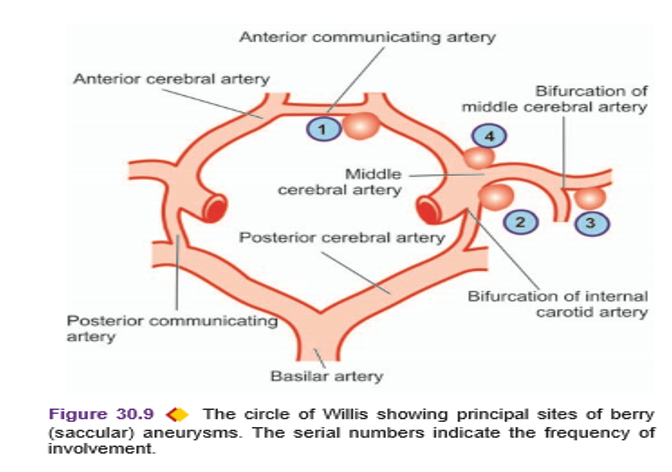
    Want notes in PDF? Join our classes!!

    Send us a message on WhatsApp
    0726113908

    Scroll to Top
    Enable Notifications OK No thanks