Nurses Revision

Pediatrics

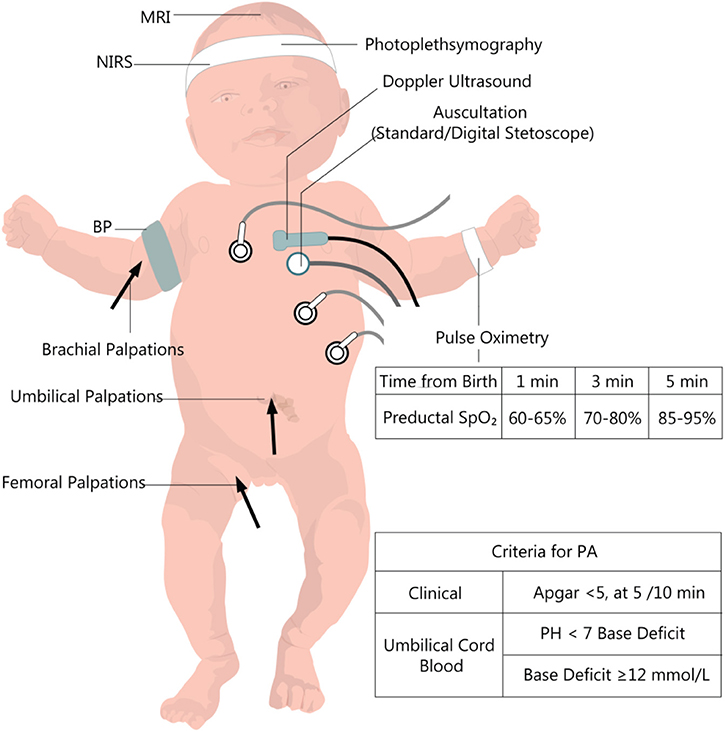
Asphyxia neonatorum

Asphyxia neonatorum

Asphyxia neonatorum

Asphyxia neonatorum is one of the pediatric emergencies and is the leading cause of neonatal mortality and morbidity. It is also an important cause of developmental delay and neurological problems in both term and preterm infants. It is crucial for midwives and nurses to have the knowledge and skills to care for babies with this condition.

Definition of asphyxia neonatorum

This is a failure of the baby to initiate and sustain normal respiration at birth. 

A normal baby has good muscle tone at birth and moves their arms and legs actively, while asphyxia neonatorum infants are completely limp and unable to move their limbs. 

This condition is a neonatal emergency as it may lead to hypoxia (lowering of oxygen supply to the brain and tissues), and possible brain damage or death if not correctly managed.

Types of Asphyxia

  1. Asphyxia livida (Blue asphyxia) or stage of cyanosis:

    • Primarily due to respiratory failure with Apgar score 4-6.
    • The most common cause is the blockage of the airway.
  2. Asphyxia pallida or stage of shock:

    • This is due to combined respiratory and vasomotor failure with Apgar score 0-3.
    • Depending on the Apgar scoring system, a score of 0-3 indicates severe depression, 4-6 indicates moderate depression, and 7-10 indicates no depression.

Pathophysiology of asphyxia

Birth asphyxia is related to a reduction in arterial oxygen tension, accumulation of carbon dioxide, and a fall in pH. Acidosis occurs due to the anaerobic utilization of glucose, production of lactic acid, and accumulation of carbon dioxide. 

These biochemical changes result in constriction of muscular pulmonary arterioles and raised pulmonary arterial pressure, leading to reduced filling of the left heart. 

Hypoglycemia occurs due to glucose utilization and depletion of glycogen stores. Petechial hemorrhage occurs due to anorexic capillary changes. Cerebral edema develops due to the intracellular collection of sodium and inappropriate release of ADH.

 In prolonged asphyxia, myocardial function and cardiac output deteriorate. Blood flow to all organs is reduced, and progressive organ damage results.

Initial deprivation of oxygen results in rapid breathing. If asphyxia continues, respiratory movements stop, and the heart rate begins to fall with the gradual diminution of neuromuscular tone. Then, the baby enters a period of apnea known as primary apnea. In this stage, stimulation and exposure to oxygen may induce respiration. 

But if asphyxia continues, the neonate develops deep gasping respiration, blood pressure falls, the baby becomes flaccid, respiration becomes weaker, and weaker until the neonate takes a last gasp and enters a period of secondary apnea. 

The baby becomes unresponsive to stimulation and will not spontaneously resume respiratory efforts unless resuscitation with assisted ventilation and oxygenation is initiated promptly.

 Primary and secondary apnea are difficult to distinguish, and all apnea at birth should be considered as secondary apnea, requiring immediate resuscitation to prevent brain damage and multi-organ system dysfunction.

Signs & Symptoms

  • The baby does not breathe but may make an attempt to breathe or gasp.
  • The period of apnea is usually short (less than 30 seconds) but cries vigorously.
  • The color is blue.
  • Muscle tone is good.
  • The cord is pulsating strongly and feels firm.
  • The heartbeat is strong but rather slow.
  • Apgar score is 4 – 6.

Aetiology

Approximately 90% of asphyxia events occur as a result of placental insufficiency due to ante partum and intra partum factors. Postnatal factors account for the remaining.

Ante partum factors include:

  • Placental insufficiency due to conditions like pre-eclampsia, hypertension, anemia, diabetes mellitus, and post-maturity.

Other factors like; 

  • Antepartum hemorrhage, 
  • Malpresentation, 
  • Multiple pregnancies, 
  • Poor fetal growth, 
  • Rhesus immunization, bad obstetrical history, maternal systemic diseases (e.g., asthma, heart disease), 
  • Polyhydramnios or oligohydramnios, 
  • Maternal drug therapy (e.g., lithium) or maternal drug abuse, 
  • Vascular anomalies of the cord, and congenital anomalies of the fetus.

Intrapartum factors include:

  • Fetal distress, 
  • Preterm labor, 
  • Antepartum hemorrhage (placenta previa, abruptio placentae), 
  • Cord prolapse, tight umbilical cord around the fetal neck, 
  • Prolonged labor exceeding 24 hours, prolonged second stage lasting more than 2 hours, maternal distress (dehydration, hypotension, and acidosis), 
  • The use of anesthesia and narcotics during labor, 
  • Birth trauma resulting in increased intracranial pressure due to hemorrhage, and difficult deliveries in malpresentation.

Postnatal factors include;

  • They are mainly related to pulmonary, cardiovascular, and neurological abnormalities of the neonate, 
  • Including aspiration causing airway obstruction, 
  • Circulatory collapse due to blood loss and shock, preterm birth resulting in weak respiratory muscles, 
  • Poor pulmonary expansion, low alveolar surfactant, and an inefficient respiratory center.

Management

Maternity center:
  • A baby of this type of Asphyxia responds to treatment promptly.
  • As soon as the baby’s head is delivered, clear the airway and suck out the mucus from the nose with a mucus extractor.
  • When a baby is completely delivered, put it over the mother’s abdomen and continue sucking out mucus.
  • Clamp and cut the cord and separate the baby from the mother. Apgar score is assessed within one minute.
  • In the absence of any respiratory effort, resuscitation measures are commenced.
  • Put the baby on the resuscitation table, position the baby with the head slightly extended and the baby lying flat (NEUTRAL position), continue to clear the airway.
  • Maintain warmth throughout the procedure.
  • Give 0₂, 1 liter per minute (PRN).
In hospital management:
  • The management is the same as that in a maternity center, except in the hospital, the doctor has to be informed, and oxygen must be administered.
  • If necessary, place the baby in a cot with the head turned to one side.
  • In summary:
    • Put the baby in a neutral position.
    • Clear the airway.
    • Give oxygen.

Severe Asphyxia

This is one of the neonatal emergencies, and it’s a serious condition in a newborn. The baby is lacking oxygen and is deeply shocked at birth.

Signs of severe asphyxia:

  • Slow, feeble heart rate.
  • Baby not breathing, later shallow breathing with occasional gasps occurs.
  • Poor muscle tone.
  • Pale, grey.
  • Cord pulsates feebly and slowly.
  • Feels flabby if the cord pulsates below 100 and is weak. Immediate resuscitation is necessary.
  • Apgar score less than 4.

Management of severe asphyxia

Management in a maternity center:

Aims:

  • To establish and maintain respiration as soon as possible.
  • To clear the airway.
  • Provision of 0₂.
  • Prevention of the condition from getting worse.

This is one of the neonatal emergencies, and no time should be wasted as it’s a matter of life and death. This condition should never be allowed to be treated in a maternity center unless the mother comes in the second stage.

In summary, we consider the following:

  • Position: Baby’s shoulders may be elevated on a small towel, causing slight extension of the head and straightening the trachea.
  • Ventilation: Clear the airway, insert a neonatal airway.
  • External cardiac massage: Chest compression should be performed if the heart rate is less than 60-100 b/m and falling despite adequate ventilation. Chest is compressed at a rate of 100-120 times per minute at a ratio of 3 compressions to one ventilation
  • Resuscitation: The components of neonatal resuscitation procedure are described as the acronym TABCD’s of resuscitation..

Aims of resuscitation:

  • Establish and maintain a clear airway by oxygenation.
  • Ensure effective circulation.
  • Correct acidosis.
  • Prevent hypothermia.
  • Hypoglycemia and hemorrhage.

T – Maintenance of temperature:

  • Provision of a radiant heat source.
  • Dry the baby.
  • Remove wet linen.

A – Establishment of open airway:

  • Position the infant.
  • Suction the mouth, nose, and, in some instances, the trachea (in meconium-stained liquor).
  • If necessary, insert an ET tube to ensure an open airway.

B – Initiation of breathing:

  • Tactile stimulation to initiate respirations.
  • Positive pressure ventilation (PPU) using either a bag and mask or a bag and ET tube.

C – Maintenance of circulation:

  • Stimulate and maintain blood circulation by chest compressions.

D – Drugs:

  • Dexamethasone (dose will depend on the general condition of the baby).
  • 25% dextrose.

Prevention of asphyxia:

Prevention includes;

  • Good antenatal care and early detection of predisposing factors, 
  • Screening mothers early and referring them to the hospital, 
  • Health education to mothers about nutrition and prevention of infections, 
  • Early treatment of infections that could lead to placental insufficiency (e.g., syphilis), 
  • Examination of blood to rule out conditions like rhesus incompatibility, 
  • Good intranatal care, prevention of prolonged labor, and proper observation during labor for maternal and fetal conditions.

Complications:

Complications of asphyxia neonatorum may include;

  •  Brain damage due to a lack of oxygen, 
  • Intracranial hemorrhage, 
  • Mental retardation, 
  • Hypothermia due to damage to the heat-regulating center, and 
  • Respiratory complications such as pneumonia.

Asphyxia neonatorum Read More »

Theories of Growth and Development

Theories of Growth and Development

Nursing Notes - Child Growth and Development

Theories of Growth and Development

Growth involves physical changes in height and weight and appearance of the body, while development refers to a change in functional ability, such as cognitive, motor, and psychological aspects of the client.

Growth and development start from the time of conception and progress until a person dies. Growth and development theories provide a framework to understand this wide array of changes, and they help healthcare providers plan individualized care for clients based on their stage of development, and to provide anticipatory guidance for parents and caregivers.

Major growth and development theories include biophysical developmental theory by Gesell, psychosocial development theory by Erikson; cognitive development theory by Piaget; moral development theory by Kohlberg; and finally, the psychoanalytic development theory by Freud.
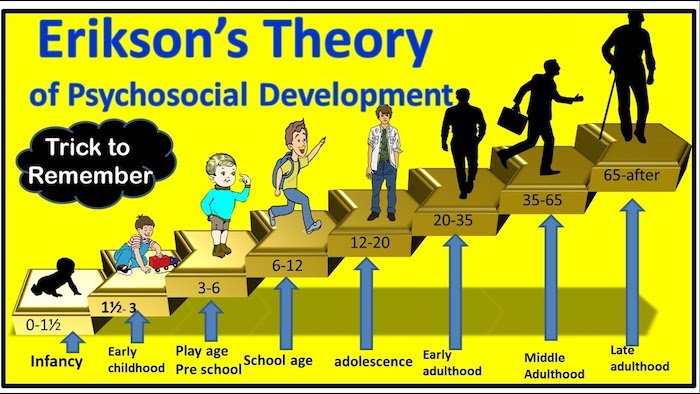
Erikson's Theory of Psychosocial Development

Erikson described development as a series of psychosocial crises that must be resolved at each stage for healthy personality development. The theory describes the major developmental issues or problems Erikson identified for each of the stages of development.

Infancy (Birth-1 year): Basic Trust vs. Mistrust

The central task is to establish a sense of basic trust in predominance to mistrust. Infants who find that their needs for food and comfort are constantly and effectively met, learn that the world is a safe and predictable place and that they can trust others. In contrast, a sense of mistrust may predominate in infants who do not receive constant care and those who experience long spells of discomfort. Mistrust creates formation barriers to interpersonal bond and interferes with the development of confidence, security, and assertiveness.

Example: A baby who is consistently fed when hungry and comforted when crying learns to trust their caregivers and the world around them. Conversely, a baby whose needs are inconsistently met may develop a sense of mistrust, becoming anxious or withdrawn, and hesitant to form secure attachments.

Toddlerhood (1-3 years): Autonomy vs. Shame and Doubt

A child must establish a sense of autonomy in this phase rather than shame & doubt. Autonomy is a kind of self-trust, a growing awareness that their behavior is under their control. This is the desired outcome, usually resulting in feelings like “I can do it”. Shame manifests as "I can do it but that is not nice," while doubt signifies "I cannot do it." It is hazardous when self-mistrust is carried on from infancy onwards, hindering their willingness to try new things.

Example: A toddler who is encouraged to choose their own clothes and pour their own juice (even if some spills) develops a sense of autonomy and pride in their growing independence. If caregivers are overly critical or controlling, the toddler might feel shame and doubt about their abilities, becoming hesitant to try new things or asserting their will.

Preschool (3-6 years): Initiative vs. Guilt

The central task is to develop a sense of initiative in predominance to the sense of guilt. Children explore what they can create and do with their developing motor, language, interpersonal, and social skills. Behavior is characterized by intrusiveness manifested in endless questions, noise, physical and intellectual exploration. Guilt is a major developmental hazard because what they try to do is difficult or unacceptable to people they wish to please, leading to feelings of unworthiness or inhibition.

Example: A preschooler who enthusiastically proposes a game of "hide-and-seek" and organizes their friends to play is demonstrating initiative and a growing sense of purpose. If their attempts to initiate play or ask questions are constantly dismissed, criticized, or punished, they might develop guilt over their desires and become less proactive or curious.

School Age (6-12 years): Industry vs. Inferiority

The central task is a sense of industry in predominance to a sense of inferiority. Industry means the child uses physical, cognitive (intellectual), and social skills and turns his attention to learning what he must know in preparation for success in the adult world. They learn self-worth as workers and producers. Inferiority is a negative self-concept that comes when children have difficulty in school, interpersonal relationships, or other expectations. They get discouraged and consider themselves inadequate, leading to a lack of motivation and self-esteem.

Example: A school-aged child who diligently works on a science project and feels proud of their completed work is developing industry and a sense of competence. If they consistently struggle in school despite effort, face constant criticism from peers or adults, or are told they are "not good enough," they may develop feelings of inferiority, leading to withdrawal or a reluctance to engage in new challenges.

Adolescence (12-19 years): Identity vs. Role Confusion

The central task is developing a sense of identity with the undesirable alternative being role confusion. Attachment of identity is a process of young people coming to feel that they are consistent with others, in terms of views (own views in relation to other people’s views). The major hazard is role confusion, which arises from rapid changes in the experience of self and from sometimes overwhelming numbers of possible ways to behave and roles to select, leading to an unstable self-concept.

Example: An adolescent who tries out for various sports teams, joins different clubs, and explores different academic subjects to discover their interests and values is forming their identity. Conversely, an adolescent who struggles to find their place, drifts between different social groups without a strong sense of belonging, or adopts an identity without personal reflection (e.g., simply conforming to peer pressure) may experience role confusion, feeling uncertain about who they are or where they are headed.
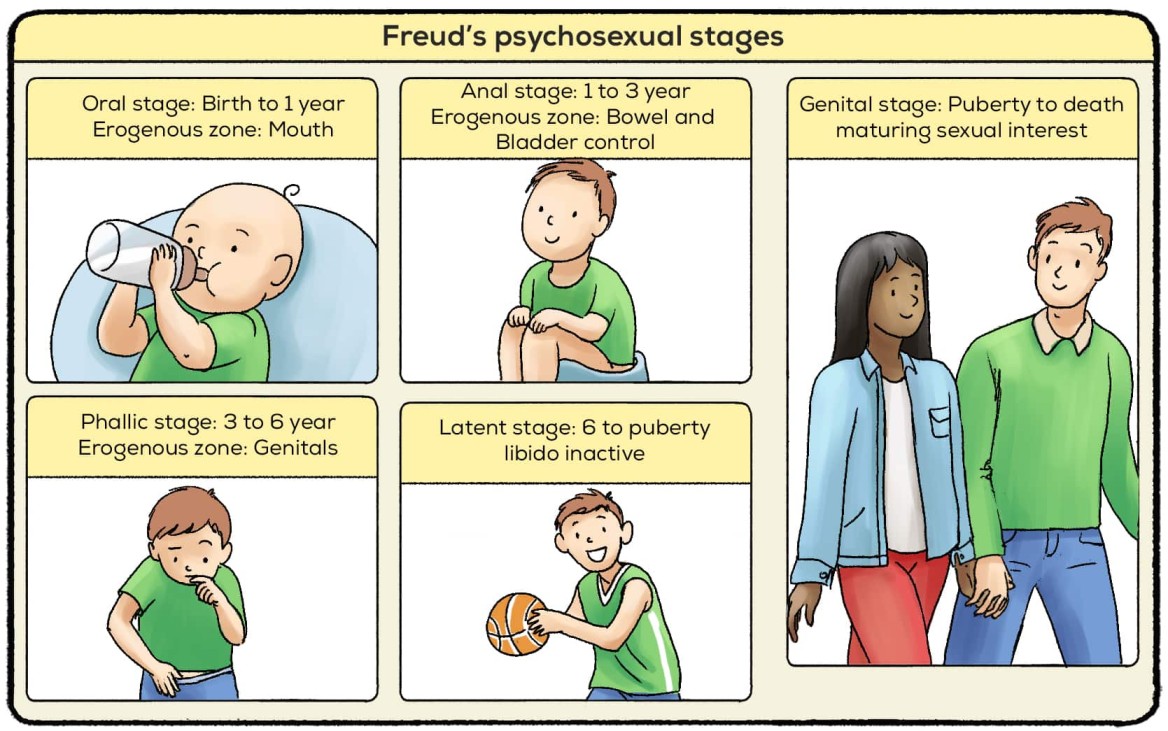
Freud's Theory of Psychosexual Development

Freud's theory revolves around sexual pleasure and has five stages: oral, anal, phallic, latency, and genital. It centers on the idea that personality develops through a series of stages where pleasure-seeking energies (libido) are focused on different erogenous zones.

Oral Stage (Birth-1 year)

This starts from birth until 1 year. During this stage, the primary source of pleasure and gratification is through the mouth, such as sucking and feeding. Freud believed that unresolved conflicts during this stage, such as weaning issues or oral fixation, could lead to oral-related behaviors in adulthood, such as overeating, smoking, excessive talking, or nail-biting, as an unconscious attempt to seek oral gratification.

Example: A baby putting everything in their mouth to explore their environment and soothe themselves is typical of the oral stage. An adult who constantly chews on pens, struggles with overeating when stressed, or smokes excessively might be experiencing an oral fixation due to unresolved issues from this stage.

Anal Stage (1-3 years)

The anal stage occurs between the ages of 1 and 3 years. This stage focuses on the child's pleasure and control over their bowel movements. It's associated with toilet training, where the child learns control. Freud believed that conflicts related to toilet training during this stage (e.g., overly strict or lenient approaches) could lead to fixation, resulting in anal-retentive behaviors (being overly neat, organized, punctual, and controlling) or anal-expulsive behaviors (being messy, disorganized, rebellious, and defiant).

Example: A toddler who insists on using the potty themselves and is very proud of their ability to control their bladder and bowels is demonstrating control related to the anal stage. An adult with an anal-retentive personality might be excessively neat, punctual, and controlling in their daily life, while an anal-expulsive person might be notoriously messy and disorganized, reflecting unresolved control issues.

Phallic Stage (3-6 years)

The phallic stage takes place between the ages of 3 and 6. During this stage, children develop a strong attachment to their opposite-sex parent (Oedipus complex for boys and Electra complex for girls) and become aware of gender differences. Freud believed that unresolved conflicts during this stage could lead to sexual and gender identity issues, difficulties with intimate relationships in adulthood, or issues like vanity and exhibitionism.

Example: A young boy expressing a strong attachment to his mother and showing some jealousy towards his father, characteristic of the Oedipus complex. Fixation from this stage could manifest in adulthood as vanity, exhibitionism, or difficulty forming stable, intimate relationships due to unresolved conflicts around gender roles and sexuality.

Latency Stage (6 years-Puberty)

The latent stage occurs from around 6 years old until the onset of puberty. During this stage, sexual desires and impulses are repressed, and the focus of the child's energy is channeled into developing social and intellectual pursuits like school, sports, and friendships with same-sex peers. Freud believed that this stage is relatively calm and that there are no significant conflicts or fixations, allowing for crucial skill development.

Example: A child focusing on developing friendships, excelling in school, and participating in extracurricular activities, with little overt interest in romantic relationships. This period allows for the development of social skills, learning, and the strengthening of non-sexual bonds.

Genital Stage (Puberty Onward)

The genital stage begins at the onset of puberty and continues into adulthood. This stage marks the reawakening of sexual desires and the development of mature sexual relationships. The focus of pleasure is on sexual intercourse and forming intimate relationships. Freud believed that successful resolution of previous stages' conflicts leads to healthy sexual development and the ability to form intimate, loving, and productive relationships.

Example: An adolescent beginning to explore romantic relationships and developing a sense of attraction towards others, leading to the formation of mature, loving relationships based on mutual respect and intimacy, rather than solely on self-gratification.
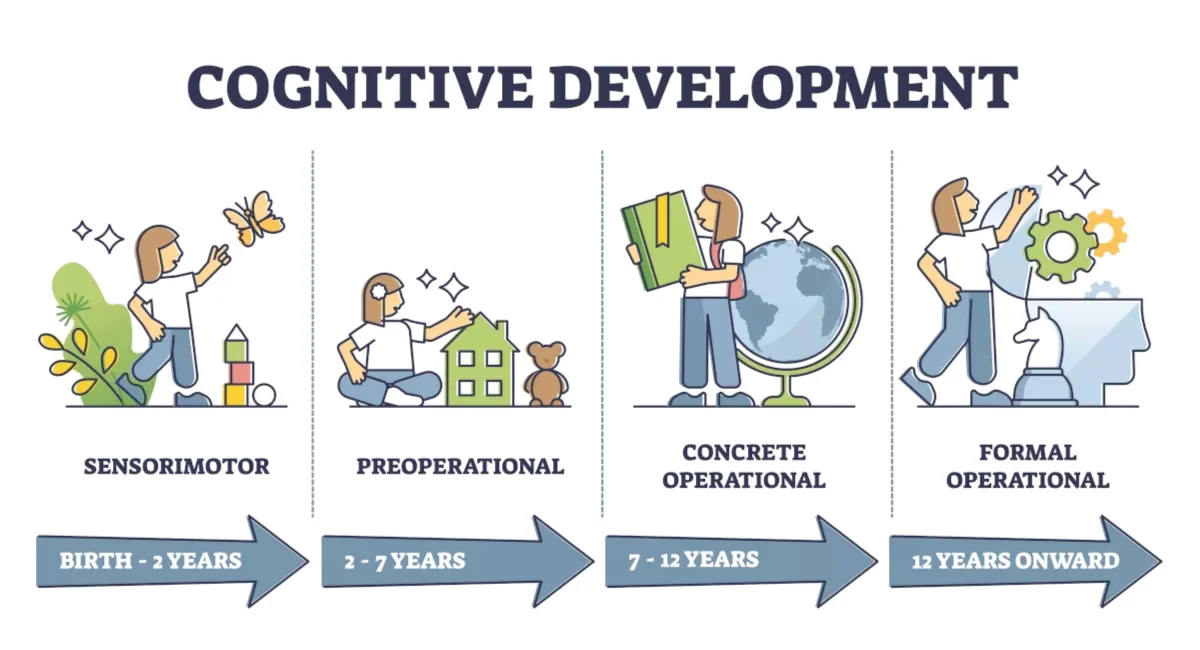
Piaget's Theory of Cognitive Development

Piaget's theory focuses on cognitive development and stages, including sensorimotor, preoperational thought, concrete operational, and formal operational. It explains how a child's thinking and intelligence progress through distinct stages, building on previous learning.

Sensorimotor Period (Birth-2 years)

The sensorimotor stage occurs from birth to around 2 years of age. During this stage, infants primarily learn about the world through their senses and motor actions. They develop object permanence, the understanding that objects continue to exist even when they are out of sight. Infants also engage in trial-and-error experimentation and begin to demonstrate intentional actions, moving from reflexive behaviors to goal-directed activities. Thinking is initially egocentric, focused on their own immediate perceptions.

Example: A baby crying when a toy is hidden under a blanket, then pulling the blanket away to find it, demonstrates developing object permanence. Prior to this, if the toy is out of sight, it's out of mind. They might also repeatedly drop a toy to see where it lands (trial-and-error experimentation).

Preoperational Period (2-7 years)

The preoperational stage typically occurs between the ages of 2 and 7. During this stage, children become more adept at using symbols, such as words and images, to represent objects and events. They engage in pretend play and develop language skills. However, children in this stage often struggle with logical reasoning, exhibiting egocentrism (difficulty understanding other people's perspectives), magical thinking (believing their thoughts can cause events), and animism (attributing life to inanimate objects). They also cannot yet grasp the concept of conservation (e.g., that a quantity of liquid remains the same in a differently shaped glass).

Example: A child believing their doll feels sad when it falls (animism), or insisting that a tall, narrow glass has more juice than a short, wide one, even if both contain the same amount (lack of conservation). They might also cover their eyes and think if they can't see you, you can't see them (egocentrism), demonstrating their inability to decenter their thinking.

Concrete Operational Period (7-11 years)

The concrete operational stage takes place between the ages of 7 and 11. During this stage, children become capable of concrete, logical thinking. They can understand conservation, the idea that certain properties of objects remain the same despite changes in appearance. Children also develop the ability to classify objects into different categories, understand reversibility (actions can be undone), and engage in more systematic problem-solving, but their reasoning is still tied to concrete, tangible objects and events. They struggle with abstract concepts.

Example: A child understanding that if you pour water from a tall, thin glass into a short, wide glass, the amount of water remains the same (conservation). They can also sort objects by multiple features (e.g., color and size) and solve simple math problems mentally, but might struggle with hypothetical questions like "What if humans had wings and could fly?"

Formal Operational Period (11 years Onward)

The formal operational stage begins around the age of 11 and extends into adulthood. During this stage, individuals develop abstract thinking and can reason hypothetically. They can engage in deductive reasoning (drawing specific conclusions from general principles), logical thinking, and hypothetical-deductive reasoning (forming hypotheses and testing them systematically). They can also think about multiple possibilities, engage in more complex problem-solving, and consider moral, philosophical, and social issues in depth.

Example: A teenager debating complex social issues like climate change or justice, considering different perspectives and hypothetical scenarios, or planning a multi-step science experiment by thinking through all possible variables and outcomes. They can also understand metaphors and abstract mathematical concepts.

Piaget believed that individuals progress through these stages in a fixed sequence, with each stage building upon the previous one. He proposed that cognitive development occurs through a process of assimilation (integrating new information into existing mental structures or schemas) and accommodation (modifying existing schemas to fit new information or creating new ones).
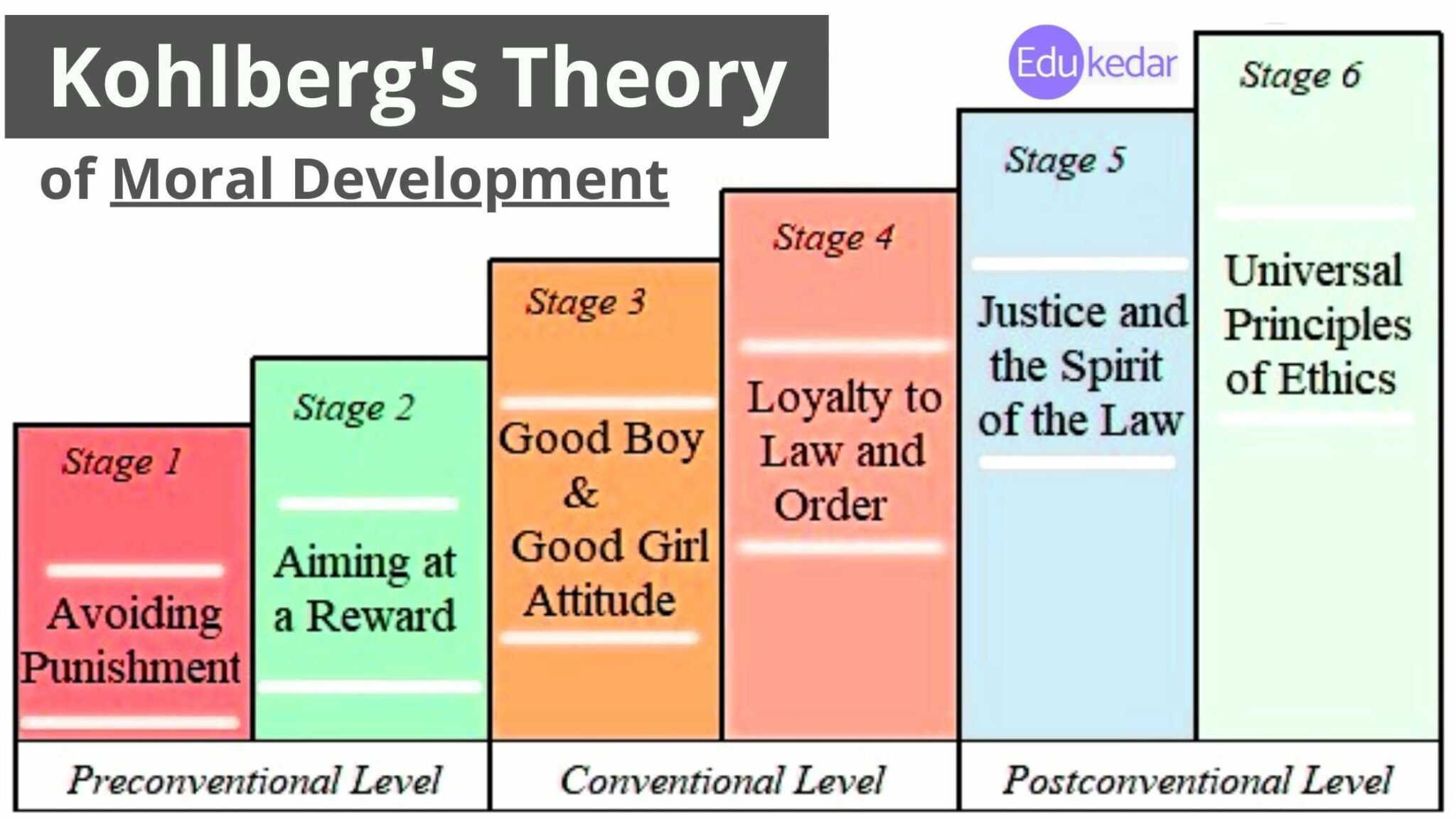
Kohlberg's Theory of Moral Development

Kohlberg's theory explores moral development through stages of moral reasoning, focusing on how people think about right and wrong and the justifications they use for their moral decisions.

Level 1: Preconventional Morality (Toddler to School Age)

Morality is externally controlled. Rules are obeyed to avoid punishment or receive rewards. This level is characteristic of young children, but adults can also exhibit this type of reasoning.

  • Stage 1: Obedience and Punishment Orientation: At this stage, individuals focus on avoiding punishment and obeying authority figures. They make moral decisions based on the direct consequences of their actions and the fear of being punished. Morality is about "might makes right."
  • Example: A child not stealing a cookie because they know they will get a time-out if caught, or a child refraining from hitting another child solely to avoid being punished by a parent, regardless of whether hitting is inherently wrong.

  • Stage 2: Individualism and Exchange: In this stage, individuals start to consider their own interests and begin to understand that others have their own needs and desires. Moral decisions are driven by self-interest and the expectation of receiving something in return, often characterized as "you scratch my back, I'll scratch yours."
  • Example: A child sharing their toy with another child because they expect the other child to share their toy in return, or a child offering to help with chores only if they get paid, viewing morality as a transaction.

Level 2: Conventional Morality (School Age to Adolescence)

Conformity to social rules is important, but not for self-interest. The focus is on maintaining social order, fulfilling duties, and fostering positive relationships within a group or society. Most adolescents and adults reason at this level.

  • Stage 3: Good Interpersonal Relationships: The "good boy/good girl" orientation. At this stage, individuals value social harmony and seek approval from others. They make moral decisions based on the desire to be seen as a good person by their family, friends, or community, and to maintain positive relationships.
  • Example: A student following classroom rules because they want to be seen as a "good student" by their teacher and peers, or a teenager refraining from cheating because they want their friends to see them as honest and trustworthy, valuing social approval.

  • Stage 4: Maintaining the Social Order: In this stage, individuals focus on following rules and maintaining social order. They make moral decisions based on a sense of duty, respect for authority, and the need to uphold societal norms and laws for the greater good of society. Laws are seen as fixed and necessary for stability.
  • Example: A citizen paying their taxes because they understand it is their duty to uphold the laws of their country and maintain societal order, or a driver obeying traffic laws because it is the rule and necessary for public safety, even if no one is watching.

Level 3: Postconventional Morality (Adolescence and Adulthood)

Morality is defined in terms of abstract principles and values that apply to all situations and societies. Individuals at this level think beyond societal conventions and consider universal ethical principles. Not everyone reaches this level of moral reasoning.

  • Stage 5: Social Contract and Individual Rights: At this stage, individuals recognize that different societies may have different moral standards, and they begin to question and evaluate these standards based on democratic principles. Moral decisions are based on principles of fairness, justice, and the protection of individual rights, understanding that laws are social contracts that can be changed if they no longer serve the common good.
  • Example: An individual advocating for changes to a law they believe is unfair, even if it is currently legal, because it violates fundamental human rights and the societal contract for justice, such as participating in peaceful protests against discriminatory policies or advocating for legal reform.

  • Stage 6: Universal Principles: In this final stage, individuals develop their own set of moral principles that are based on universal ethical principles, such as justice, equality, and respect for human dignity. Moral decisions are guided by these principles, which are considered valid for all humanity, even if they conflict with societal norms or laws, and even if it means personal risk.
  • Example: An activist dedicating their life to fighting for human rights globally, even in the face of personal risk or legal consequences, because they believe in the universal principle of justice for all, like a civil rights leader who non-violently resists unjust laws based on deep moral convictions and a commitment to equality.

Theories of Growth and Development Read More »

Growth and Development of a Child

Growth and Development of a Child

Nursing Notes - Child Growth and Development

Child Growth and Development

Growth is the process of physical increase in size, such as height and weight. It is a quantitative measure that also includes the maturation of body systems.

Development is the progressive increase in skill and capacity to function. It is a qualitative measure that results from the maturation and myelination of the nervous system, allowing for more complex body structures and functions.

Patterns of Growth and Development

Growth and development are orderly, predictable, and follow directional patterns.

  • Cephalo-caudal Pattern: This means development proceeds from head to tail (or feet). Structures and functions originating in the head region develop before those in the lower parts of the body.
    • In fetal development, the head grows fastest initially, followed by the trunk, and then the legs.
    • At birth, the head is proportionately larger than the rest of the body. As the child matures, the legs grow significantly, increasing from about 38% to 50% of total body length by adulthood.
    • An infant gains control of their head before they can sit, and can sit before they can walk.
  • Proximo-distal Pattern: This means development proceeds from the center of the body outwards to the extremities.
    • In the respiratory system, the trachea develops first, followed by the branching of bronchi, bronchioles, and finally the alveoli.
    • Motor control of the arms develops before control of the hands, and hand control is established before fine finger control (pincer grasp).
  • Critical or Sensitive Periods

    These are specific times during development when a child is most receptive to learning a particular skill or behavior, such as walking or language acquisition. Environmental influences, whether positive or negative, have the greatest impact during these periods. Factors like injury, illness, or malnutrition can interfere with development during these critical times.

    Factors Influencing Growth and Development

  • Genetics (Heredity): Genetic makeup determines physical traits, intellectual potential, and the presence of certain inherited conditions that can facilitate or hinder development.
  • Environment (Prenatal and Postnatal):
    • Prenatal: The mother's health during pregnancy is crucial. Factors like maternal nutrition, smoking, alcohol use, drug exposure, and infections (e.g., rubella) can lead to congenital abnormalities and developmental delays.
    • Postnatal: After birth, factors like socioeconomic status, family relationships, housing, access to healthcare, and exposure to environmental hazards influence the child's development.
  • Culture: Cultural beliefs, values, and child-rearing practices can shape a child's social and emotional development.
  • Nutrition: Adequate nutrition is essential for physical growth, especially for brain development both prenatally and during the first year of life. Malnutrition can cause irreversible delays.
  • Health Status: Chronic or acute illnesses can impede growth by affecting the delivery of nutrients, hormones, and oxygen to tissues and organs.
  • Play: Play is the "work" of childhood. It is essential for motor, cognitive, language, and social development, allowing children to explore, learn, and practice new skills.
  • Factors Contributing to Effective vs. Poor Growth

    Factors for Effective Growth (Thriving)
    1. Exclusive breastfeeding for the first 6 months, continuing for up to 2 years or more: Breast milk provides optimal nutrition, antibodies for immunity, and promotes healthy bonding. Continued breastfeeding alongside solids extends these benefits.
    2. Timely introduction of appropriate complementary foods (quality and quantity) at 6 months: Around 6 months, breast milk alone isn't sufficient. Introducing nutrient-dense, varied complementary foods in adequate amounts supports increasing energy and nutrient needs.
    3. A regular, balanced diet containing all essential nutrients: Ensuring consistent access to a diverse diet rich in carbohydrates, proteins, fats, vitamins, and minerals is fundamental for sustained physical and cognitive development.
    4. Prevention of childhood illnesses through full immunization and proper sanitation: Vaccinations protect against debilitating diseases, while good hygiene and sanitation reduce exposure to infections that can hinder growth by increasing nutrient demands or reducing appetite.
    5. Early diagnosis and effective treatment of common illnesses like malaria, diarrhea, and respiratory infections: Prompt and correct medical intervention prevents illnesses from becoming chronic or severe, which can significantly deplete a child's nutritional reserves and impair growth.
    6. Adequate birth spacing through family planning services: Longer intervals between births allow the mother's body to recover nutritionally and emotionally, enabling her to dedicate more resources and attention to each child's care and development.
    7. Parental involvement in growth monitoring and health education: Active participation in regular growth monitoring helps identify deviations early, and parental education on nutrition, hygiene, and developmental milestones empowers them to make informed decisions for their child's well-being.
    8. Responsive feeding practices: Parents or caregivers respond to a child's hunger and fullness cues, offering food in an encouraging and supportive manner without force-feeding or restricting. This builds a healthy relationship with food.
    9. Secure attachment and stimulating environment: Emotional security from consistent, loving care fosters psychological well-being, which indirectly supports physical health. A stimulating environment (play, interaction, learning) supports cognitive development that is intertwined with physical growth.
    10. Access to clean water: Essential for hydration and preventing waterborne diseases, which can significantly impact a child's health and ability to absorb nutrients.
    Factors for Poor Growth (Failure to Thrive)
    1. Low birth weight or prematurity: Infants born too small or too early often start life at a disadvantage, with underdeveloped organs and lower nutrient reserves, making them more susceptible to growth faltering.
    2. Unsuccessful breastfeeding (e.g., poor positioning or attachment): Ineffective breastfeeding leads to inadequate milk intake, poor weight gain, and can discourage mothers, leading to early cessation.
    3. Early introduction of complementary feeds (before 6 months) or early cessation of breastfeeding: Introducing solids too early can displace nutrient-dense breast milk, increase infection risk, and overwhelm an immature digestive system. Stopping breastfeeding too soon removes a vital source of nutrition and immunity.
    4. Frequent or chronic illness (e.g., diarrhea, worm infestations, malaria, URTI): Repeated infections increase metabolic demands, reduce appetite, impair nutrient absorption, and lead to nutrient loss, creating a vicious cycle of illness and malnutrition.
    5. Late introduction of solid foods: Delaying the introduction of complementary foods beyond 6 months means a child's increasing nutritional needs are not met, leading to energy and nutrient deficiencies.
    6. Poor socioeconomic status leading to food insecurity: Limited financial resources often translate to insufficient access to diverse, nutritious foods, safe water, and adequate healthcare, directly impacting a child's growth.
    7. Parental ignorance or lack of education about proper nutrition and feeding practices: Lack of knowledge regarding appropriate food choices, preparation, and feeding techniques can lead to inadequate dietary intake and malnourishment, even if food is available.
    8. Poor maternal health or death of a parent: A mother's ill health (physical or mental) or the absence of a primary caregiver can severely compromise the quality of care, feeding, and emotional support a child receives, impacting their growth.
    9. Unresponsive feeding practices: Caregivers who ignore a child's hunger cues, force-feed, or provide limited food choices can create negative associations with eating, leading to reduced intake and poor growth.
    10. Unsanitary living conditions and lack of access to clean water: Exposure to pathogens due to poor hygiene and contaminated water sources increases the risk of recurrent infections, particularly diarrheal diseases, which are major contributors to growth faltering.
    11. Child neglect or abuse: In severe cases, a lack of adequate physical care, nutritional provision, and emotional support due to neglect or abuse can directly result in severe growth failure and developmental delays.

    Stages of Growth and Development

    1. Neonatal Period (Birth to 1 Month)
    • Weight: Average birth weight is 2.5 to 4.3 kg. A newborn typically loses 5-10% of their birth weight in the first 3-4 days, which should be regained by 10-14 days of age.
    • Head: The anterior fontanelle is diamond-shaped, and the posterior is triangular; both are palpable. The head is large, and neck muscles are weak, requiring head support.
    • Reflexes: Primitive reflexes like sucking, rooting, grasping, and the startle (Moro) reflex are present and are key indicators of neurological function.
    • Physical Characteristics: Skin color varies with ethnicity; blood vessels may be visible. Mongolian spots (bluish discolorations on the lower back/buttocks) are common in dark-skinned infants and fade over time. Breast engorgement or vaginal discharge/bleeding can occur in both sexes due to maternal hormones. Testes should be descended into the scrotum in males.
    • Behavior: Sleeps 18-20 hours a day. Can lift head briefly when in a prone position.
    • Vital Signs:
      • Pulse: 120-160 bpm
      • Respirations: 30-50 breaths/min
      • Blood Pressure: 50-100 / 20-60 mmHg
      • Temperature: 36.5 - 37.5°C
    2. Infancy (1 Month to 1 Year)
    • Growth: Rapid growth period. Weight doubles by 5-6 months and triples by 1 year.
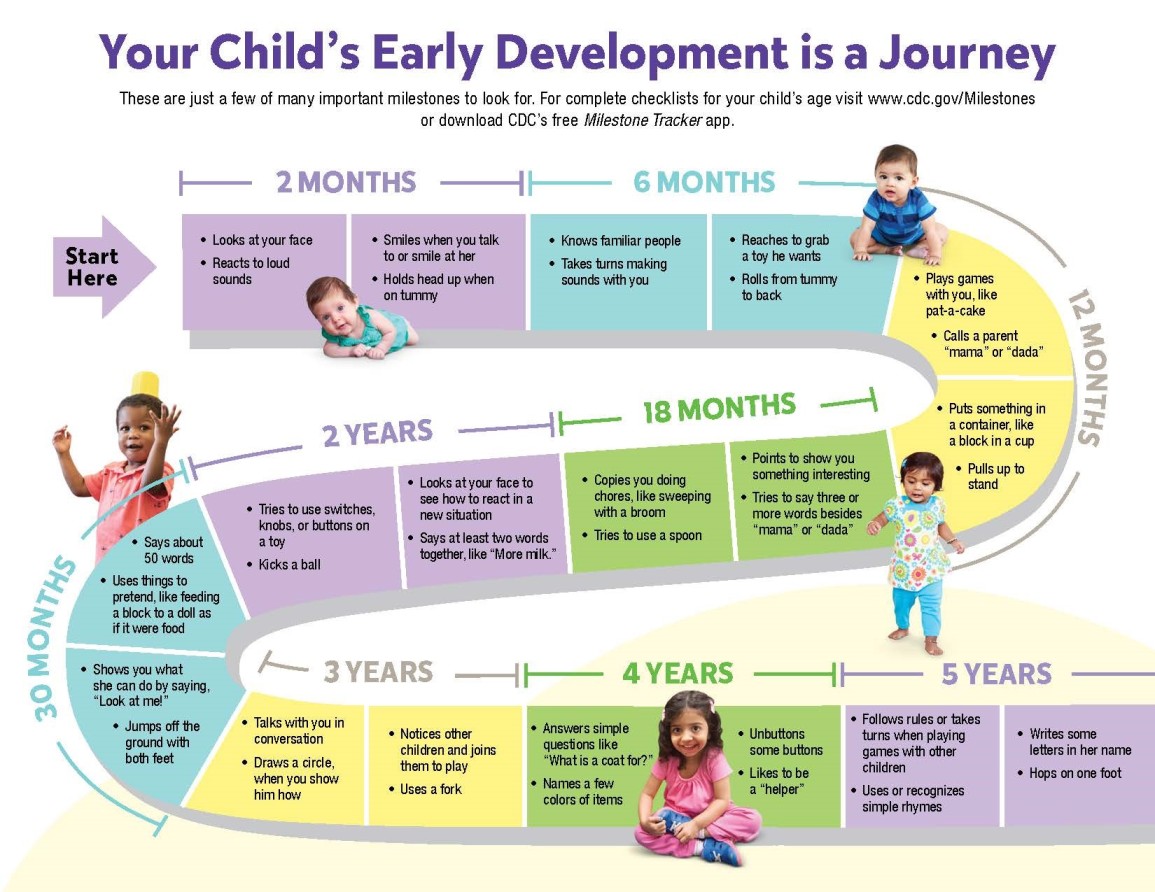
    • Social Development: Exhibits a real social smile by 2 months. Begins to interact and gurgle by 3 months. Stranger anxiety often develops around 8 months.
    • Motor Skills: Persistence of neonatal reflexes beyond 4 months may indicate an abnormality. Rolls from back to side by 4 months. Bears weight on legs by 6-7 months. Sits alone by 7 months. Pulls to a stand by 9-10 months. Walks with assistance or alone by 12 months. Grasp reflex is replaced by voluntary pincer grasp by 9-11 months.
    • Dentition & Diet: First teeth typically erupt around 6 months; should have 6-8 teeth by 1 year. Solid foods are introduced around 6 months.
    • Vital Signs:
      • Pulse: 80-180 bpm
      • Respirations: 30 breaths/min
      • Blood Pressure: 74-100 / 50-70 mmHg
      • Temperature: 36.5 - 37.2°C
    3. Toddlerhood (1 to 3 Years)
    • Behavior: Characterized by exploration, autonomy, and negativism ("no"). Has the strength and will to resist. Suspect hearing impairment if speech is not clear by age 2.
    • Growth: Growth rate slows. Gains a "pot-bellied" appearance. Head circumference increases about 1 inch between ages 1 and 2. Brain growth reaches about 80% of adult size by age 3.
    • Dentition: Primary dentition (20 teeth) is complete by 30 months.
    • Motor Skills: Improved coordination and equilibrium. Develops sphincter control, making toilet training possible (usually between 18-24 months).
    • Cognitive: Rapid increase in language skills.
    • Vital Signs:
      • Pulse: 80-140 bpm
      • Respirations: 25 breaths/min
      • Blood Pressure: 80-112 / 50-80 mmHg
      • Temperature: 36.0 - 37.2°C
    4. Preschool (3 to 6 Years)
    • Behavior: Generally cooperative and likes to please; responds well to praise. Engages in interactive and imaginative play.
    • Growth: Physical growth continues to slow. The pot-bellied appearance diminishes by age 5.
    • Motor Skills: Skills become more refined; can ride a tricycle, hop, and draw simple shapes.
    • Health: Prone to skin infections and lice due to close interactive play. Dental visits should begin.
    • Vital Signs:
      • Pulse: 80-120 bpm
      • Respirations: 23-30 breaths/min
      • Blood Pressure: 80-110 / 50-70 mmHg
      • Temperature: 36.3 - 37.0°C
    5. Middle Childhood / School Age (6 to 12 Years)
    • Behavior: Capable of following instructions and using age-appropriate language. Privacy becomes important.
    • Growth & Physical Changes: First permanent teeth (molars) appear at age 6. Respirations become thoracic by age 7. In girls, breast budding may begin around 9 years.
    • Cognitive: Thinking becomes more logical. Articulation should be correct by age 7.
    • Vital Signs:
      • Pulse: 70-115 bpm
      • Respirations: 17-20 breaths/min
      • Blood Pressure: 84-120 / 54-80 mmHg
      • Temperature: 36.5 - 36.8°C
    6. Adolescence (13 to 19 Years)
    • Behavior: Seeks independence; may not want caregivers present during examinations. Direct questions to the adolescent. Peer group is highly influential.
    • Physical Changes (Puberty): Development of secondary sexual characteristics. In girls, breasts enlarge and menstruation begins. In boys, testes enlarge and voice deepens. Pubic and axillary hair develops in both sexes.
    • Vital Signs:
      • Pulse: 50-100 bpm
      • Respirations: 16-18 breaths/min
      • Blood Pressure: 94-140 / 62-88 mmHg
      • Temperature: 36.6°C

    Theories of Growth and Development

    Theories provide frameworks for understanding human behavior. Key theorists in child development include Erikson (psychosocial), Freud (psychosexual), Piaget (cognitive), and Kohlberg (moral).

    Erikson's Theory of Psychosocial Development

    Erikson described development as a series of psychosocial crises that must be resolved at each stage for healthy personality development.

    Infancy (Birth-1 year): Basic Trust vs. Mistrust

    The central task is to establish trust. When caregivers consistently meet the infant's needs for food, comfort, and affection, the infant learns to trust the world as a safe place. Failure to do so leads to mistrust, which can hinder future relationships.

    Example: A baby who is consistently fed when hungry and comforted when crying learns to trust their caregivers and the world around them. Conversely, a baby whose needs are inconsistently met may develop a sense of mistrust, becoming anxious or withdrawn.

    Toddlerhood (1-3 years): Autonomy vs. Shame and Doubt

    The child must establish a sense of autonomy (self-governance). As they learn to walk, talk, and do things for themselves, they develop self-confidence. If they are overly criticized or controlled, they may develop a sense of shame and doubt in their own abilities.

    Example: A toddler who is encouraged to choose their own clothes and pour their own juice (even if some spills) develops a sense of autonomy. If caregivers are overly critical or controlling, the toddler might feel shame and doubt about their abilities, becoming hesitant to try new things.

    Preschool (3-6 years): Initiative vs. Guilt

    The central task is to develop a sense of initiative. Children begin to plan activities, make up games, and initiate activities with others. If this initiative is encouraged, they develop a sense of purpose. If it is discouraged or seen as a nuisance, they may develop a sense of guilt.

    Example: A preschooler who enthusiastically proposes a game of "hide-and-seek" and organizes their friends to play is demonstrating initiative. If their attempts to initiate play are constantly dismissed or criticized, they might develop guilt over their desires and become less proactive.

    School Age (6-12 years): Industry vs. Inferiority

    The focus is on developing a sense of industry. Children learn to be productive and master new skills in school and social settings. Success leads to a sense of competence, while repeated failure can lead to feelings of inferiority and inadequacy.

    Example: A school-aged child who diligently works on a science project and feels proud of their completed work is developing industry. If they consistently struggle in school despite effort or are told they are "not good enough," they may develop feelings of inferiority.

    Adolescence (12-19 years): Identity vs. Role Confusion

    The central task is to develop a stable sense of identity (who they are and where they are going). Adolescents explore different roles, values, and beliefs. Success leads to a consistent sense of self. Failure results in role confusion and a weak sense of self.

    Example: An adolescent who tries out for various sports teams, joins different clubs, and explores different academic subjects to discover their interests is forming their identity. Conversely, an adolescent who struggles to find their place, drifts between different social groups without a strong sense of belonging, or adopts an identity without personal reflection, may experience role confusion.

    Freud's Theory of Psychosexual Development

    Freud's theory centers on the idea that personality develops through a series of stages where pleasure-seeking energies (libido) are focused on different erogenous zones.

    Oral Stage (Birth-18 months)

    The focus of pleasure is the mouth (sucking, biting, chewing). This provides not only nourishment but also psychological comfort. Fixation at this stage could lead to behaviors like nail-biting, smoking, or overeating in adulthood.

    Example: A baby putting everything in their mouth to explore their environment and soothe themselves is typical of the oral stage. An adult who constantly chews on pens or overeats when stressed might be experiencing an oral fixation.

    Anal Stage (18 months-3 years)

    The focus of pleasure shifts to the anus and the processes of elimination. This stage is associated with toilet training, where the child learns control. Fixation can lead to personalities that are overly orderly (anal-retentive) or messy (anal-expulsive).

    Example: A toddler who insists on using the potty themselves and is very proud of their ability to control their bladder and bowels is demonstrating control related to the anal stage. An adult with an anal-retentive personality might be excessively neat, punctual, and controlling, while an anal-expulsive person might be messy and disorganized.

    Phallic Stage (3-6 years)

    The focus of pleasure is the genitalia. During this stage, children become aware of gender differences and may develop complexes (Oedipus/Electra). Fixation can lead to issues with sexuality and gender identity.

    Example: A young boy expressing a strong attachment to his mother and showing some jealousy towards his father, characteristic of the Oedipus complex. Fixation could manifest in adulthood as vanity, exhibitionism, or difficulty with intimate relationships.

    Latency Stage (6 years-Puberty)

    Sexual urges are repressed, and energy is channeled into social and intellectual pursuits like school, sports, and friendships with same-sex peers.

    Example: A child focusing on developing friendships, excelling in school, and participating in extracurricular activities, with little overt interest in romantic relationships. This period allows for the development of social skills and learning.

    Genital Stage (Puberty Onward)

    Sexual energy reawakens and is directed towards mature, heterosexual relationships. The focus of pleasure is on sexual intercourse and forming intimate relationships.

    Example: An adolescent beginning to explore romantic relationships and developing a sense of attraction towards others, leading to the formation of mature, loving relationships.

    Piaget's Theory of Cognitive Development

    Piaget's theory explains how a child's thinking and intelligence progress through distinct stages.

    Sensorimotor Period (Birth-2 years)

    Infants learn about the world through their senses and motor actions. A key achievement is object permanence—the understanding that objects continue to exist even when they cannot be seen. Thinking is egocentric.

    Example: A baby crying when a toy is hidden under a blanket, then pulling the blanket away to find it, demonstrates developing object permanence. Prior to this, if the toy is out of sight, it's out of mind.

    Preoperational Period (2-7 years)

    Children use language and symbols, but thinking is illogical and still egocentric. They engage in magical thinking (believing their thoughts can cause events) and animism (attributing life to inanimate objects). They cannot yet grasp the concept of conservation (e.g., that a quantity of liquid remains the same in a differently shaped glass).

    Example: A child believing their doll feels sad when it falls (animism), or insisting that a tall, narrow glass has more juice than a short, wide one, even if both contain the same amount (lack of conservation). They might also cover their eyes and think if they can't see you, you can't see them (egocentrism).

    Concrete Operational Period (7-11 years)

    Thinking becomes more logical and organized, but it is still concrete (tied to physical reality). They can understand conservation, reversibility, and can see things from another's point of view. They can reason about concrete events but struggle with abstract concepts.

    Example: A child understanding that if you pour water from a tall, thin glass into a short, wide glass, the amount of water remains the same (conservation). They can also sort objects by multiple features, but might struggle with hypothetical questions like "What if humans had wings?"

    Formal Operational Period (11 years Onward)

    Adolescents develop the ability to think abstractly, reason hypothetically, and use deductive logic. They can consider multiple possibilities and think about moral, philosophical, and social issues.

    Example: A teenager debating complex social issues like climate change or justice, considering different perspectives and hypothetical scenarios, or planning a multi-step project by thinking through all possible outcomes.

    Kohlberg's Theory of Moral Development

    Kohlberg's theory focuses on the development of moral reasoning, or how people think about right and wrong.

    Level 1: Preconventional Morality (Toddler to School Age)

    Morality is externally controlled. Rules are obeyed to avoid punishment or receive rewards.

    • Stage 1: Obedience and Punishment Orientation. Behavior is judged as wrong if it is punished.
    • Example: A child not stealing a cookie because they know they will get a time-out if caught, or a child refraining from hitting another child solely to avoid being punished by a parent.

    • Stage 2: Individualism and Exchange. "What's in it for me?" orientation. Right behavior is what is in one's own best interest.
    • Example: A child sharing their toy with another child because they expect the other child to share their toy in return, or a child offering to help with chores only if they get paid.

    Level 2: Conventional Morality (School Age to Adolescence)

    Conformity to social rules is important, but not for self-interest. The focus is on maintaining social order and positive relationships.

    • Stage 3: Good Interpersonal Relationships. The "good boy/good girl" orientation. Right behavior is what pleases or is approved of by others.
    • Example: A student following classroom rules because they want to be seen as a "good student" by their teacher and peers, or a teenager refraining from cheating because they want their friends to see them as honest.

    • Stage 4: Maintaining the Social Order. Right behavior consists of doing one's duty, showing respect for authority, and maintaining the given social order.
    • Example: A citizen paying their taxes because they understand it is their duty to uphold the laws of their country and maintain societal order, or a driver obeying traffic laws because it is the rule and necessary for public safety.

    Level 3: Postconventional Morality (Adolescence and Adulthood)

    Morality is defined in terms of abstract principles and values that apply to all situations and societies.

    • Stage 5: Social Contract and Individual Rights. Right is determined by socially agreed-upon standards of individual rights.
    • Example: An individual advocating for changes to a law they believe is unfair, even if it is currently legal, because it violates fundamental human rights and the societal contract for justice, such as protesting against discriminatory policies.

    • Stage 6: Universal Principles. Right is determined by self-chosen ethical principles of conscience, which are abstract and universal (e.g., justice, equality).
    • Example: An activist dedicating their life to fighting for human rights globally, even in the face of personal risk or legal consequences, because they believe in the universal principle of justice for all, like a civil rights leader who non-violently resists unjust laws based on deep moral convictions.

    Growth and Development of a Child Read More »

    Immediate Care of the Newborn

    Immediate Care of the Newborn

    Paediatric Nursing I - Page 3: Care of the Newborn

    Learning Outcomes

    By the end of this section, the learner shall be able to:

    • Describe the step-by-step procedure for immediate care of the newborn at birth.
    • Accurately assess a newborn using the Apgar scoring system.
    • Detail the essential components of daily care for a healthy newborn.
    • Explain the principles of thermoregulation, feeding, hygiene, and infection prevention in neonates.
    • Outline the key observations and assessments required to monitor a newborn's progress.
    • Summarize the essential health education points for the new mother before discharge.

    Introduction

    The care a baby receives immediately after birth and during the first few days of life is critical for their survival, growth, and long-term health. As midwives and nurses, providing expert, timely, and compassionate care can prevent life-threatening complications and support the crucial bonding process between the mother and her new baby.

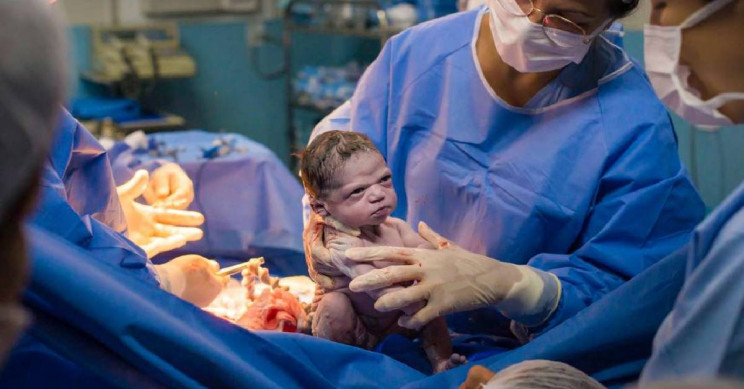
    Immediate Care of the Newborn (The First Hour)

    This period requires prompt, skilled, and sequential actions focused on establishing breathing, maintaining warmth, and preventing infection.

    Care of the Baby at Birth

    Ensure Infection Prevention and Control.

    As soon as the head is born:

    • Clean the eyes.
    • Wipe the face.
    • Clear the airway – clear mucus from the nose and mouth.
    • Feel for the cord around the neck.
    • Safely deliver the rest of the baby.
    • Note the time of delivery.
    • Dry and keep the baby warm.
    • Establish respirations and maintain it.
    • Apgar score and record.
    • Clean the eyes.
    • Instill tetracycline eye ointment.
    • Cut the cord and tie it securely.
    • Show the baby to the mother to identify sex and key features.
    • Maintain warmth (use kangaroo method if the mother and baby are in good condition).
    • Promote bonding.
    • Initiate breastfeeding.
    • Assess the baby’s condition at 1 and 5 minutes using APGAR.

    Procedure at Birth

    1. Prepare the Environment: Ensure a clean, warm, and draft-free delivery area with all necessary equipment ready. Practice strict hand hygiene.
    2. Clear the Airway: As soon as the baby's head is born, gently wipe the face and eyes with a soft cloth. Use a bulb syringe or suction catheter to clear mucus from the mouth first, then the nose. Check if the umbilical cord is around the neck and manage it appropriately.
    3. Deliver and Note the Time: Safely deliver the rest of the baby's body and note the exact time of birth.
    4. DRY AND STIMULATE: This is the most critical step. Immediately place the baby on the mother's abdomen and dry them thoroughly with a warm, clean towel. The act of drying also provides stimulation that encourages the baby to breathe. Remove the wet towel and cover the baby with a dry one.
    5. Assess Respirations: Observe the baby's chest for respiratory effort. A healthy baby should be crying vigorously.
    6. Perform Apgar Score: Assess the baby's condition at 1 minute and again at 5 minutes after birth.

    The Apgar Score

    The Apgar score is a rapid method to assess the physical condition of a newborn and determine the need for resuscitation. It evaluates five signs, each scored from 0 to 2.

    Feature Score 0 Score 1 Score 2
    Appearance (Skin Color) Blue or Pale All Over Body Pink, Extremities Blue (Acrocyanosis) Completely Pink
    Pulse (Heart Rate) Absent Below 100 bpm Above 100 bpm
    Grimace (Reflex Irritability) No Response Grimace or Weak Cry Cries or Pulls Away
    Activity (Muscle Tone) Limp Some Flexion of Extremities Active Motion
    Respiration (Breathing Effort) Absent Slow, Irregular, Weak Cry Good, Strong Cry
    Interpretation of Apgar Scores
    • Score 7-10: Good condition. Routine care is needed.
    • Score 4-6: Moderately depressed. Some assistance, such as stimulation and oxygen, may be required.
    • Score 0-3: Severely depressed. This indicates a need for immediate and active resuscitation.

    Further Care within the First Hour

    • Warmth: Maintain warmth by placing the baby skin-to-skin with the mother (Kangaroo Mother Care) and covering both with a warm blanket. A hat should be placed on the baby's head.
    • Cord Care: Securely clamp and cut the umbilical cord using sterile technique. Check for any bleeding from the cord stump.
    • Eye Care: Administer prophylactic eye ointment (e.g., 1% Tetracycline) to prevent ophthalmia neonatorum (gonococcal infection).
    • Identification: Show the baby to the mother, confirming the sex and noting any identifying features. Apply identification bands as per facility protocol.
    • Bonding and Breastfeeding: Encourage early initiation of breastfeeding, ideally within the first hour of life. This promotes bonding, provides vital nutrients (colostrum), and helps maintain the baby's temperature and blood sugar.
    • Physical Assessment: Perform a quick head-to-toe examination to identify any obvious congenital abnormalities.

    Care After 1 Hour

    • Examine the baby’s head to toe for maturity, abnormalities, etc.
    • Re-ligature and shorten the cord.
    • Ascertain the passage of meconium and urine.
    • Weigh the baby.
    • Ensure warmth.
    • Ensure no bleeding from the cord.
    • Ensure bonding.
    • Ensure the comfort of the mother and the baby.
    • Communicate to the mother all the findings.
    • Report to the ward in-charge and document.

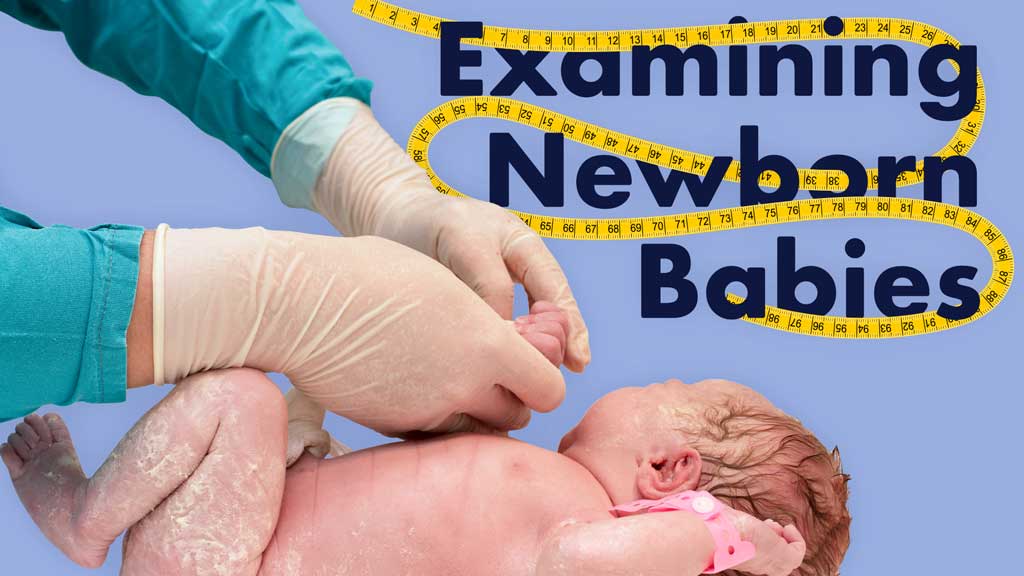
    Examination of a Newborn

    Aims/Reasons of Examination

    • To detect certain malformations or abnormalities that may be a threat to the life of the baby and may need urgent intervention.
    • To detect illness or injury that has arisen before or during delivery.
    • To take body measurements and record them.

    Important Points to Observe:

    • Room should be warm and draught-free.
    • Adequate light.
    • Equipment prepared.
    • Parent or caretaker should be around.
    • Explain the procedure to the parent or caretaker.
    • Baby should be in good condition.

    Equipment

    • Overhead warmer if required.
    • Stethoscope.
    • Ophthalmoscope.
    • Tape measure.
    • Infant scales.
    • Documentation – infant personal health record and hospital medical record.

    Procedure

    • Use a systematic approach to examine the baby – ‘head to toe’ and ‘front to back.’
    • Observe infection prevention measures, i.e., wash hands, put on gloves.
    • Ensure hands are warm.
    • Undress the baby and wrap in a warm towel. Expose the part you are to examine.

    General Appearance

    • The newborn assumes a flexion posture.
    • While the baby is settled, observe skin color. It should be pink.
    • Observe the state of alertness and activity.
    • Observe the range of spontaneous movement, posture, and muscle tone.

    Head

    • Assess size, shape, and symmetry; rule out excessive molding which may suggest the possibility of intracranial injury.
    • Scalp (vault) for swelling e.g. cephalohematoma, caput succedaneum, meningocele, etc.
    • Fontanelles: anterior and posterior fontanels should be flat, soft, and firm, but abnormalities may be a bulge or swelling.
    • Sutures; if separate or wide, it is suggestive of prematurity.
    • Head circumference 33-35cm (use a tape measure). Encircle occipital protuberance and frontal eminences.

    Face

    • Assess the symmetry of structures, features, and movement.
    • Inspect the eyes: setting, rule out Down’s syndrome – upward slanting of the eyes and the upper lip is shorter.
    • Check for cataracts, subconjunctival, nystagmus, strabismus hemorrhage, discharge.
    • Position in relation to the nasal bridge.
    • Palpate the eye to confirm the presence of normal eyeballs. Do this gently.
    • Hold the baby upright – eyes will open spontaneously.
    • Note the space between the eyes (should be 3cm apart).

    Nose

    • Located in the middle of the eye.
    • Check position, patency, and symmetry of the nares and septum. Nares should be equal in size and shape. Lack of patency may indicate choanal atresia (a congenital disorder where the back of the nasal passage (choana) is blocked, usually by abnormal bony or soft tissue).

    Mouth

    • Located in the midline.
    • Size, shape, symmetry, and movement.
    • Press the angle of the jaw to open the baby’s mouth.
    • Check the tongue for tongue tie (ankyloglossia). The tongue should be pink.
    • Lips and gums should be intact, pink, and moist.
    • Inspect tongue, gum, and palate: Pass a little finger in the baby’s mouth and feel for the palate for abnormalities like cleft palate or cleft lip.
    • Note the protrusion reflex of the tongue. The baby will suckle the finger.
    • Excessive salivation may be indicative of tracheoesophageal fistula (TEF).
    • Macroglossia, a protruding tongue that appears too large for the mouth, is indicative of a congenital disorder, e.g., Down’s syndrome or endocrine disorder like hypothyroidism.

    Ears

    • Assess for shape and cartilage development.
    • Observe the tympanic membrane.
    • Assess hearing acuity by evaluating the blink or startle reflex.

    Neck

    • The newborn’s neck is short.
    • Note symmetry.
    • The neck should be soft and free from masses.
    • The thyroid is non-palpable, palpable in hyperthyroidism.
    • Observe a web neck (extra and redundant skin).
    • Flex the neck gently. A web neck is associated with genetic disorders, e.g., Down’s syndrome or Turner’s syndrome.

    Clavicles, Arms, and Hands

    • Assess length, proportions, structure.
    • Count fingers and separate them.
    • Check for extra digits.
    • Rotate the wrists.

    Chest

    • Assess chest size, shape, and symmetry. Chest circumference is 30-36cm, approximately 2cm lower than the head circumference.
    • Observe respiratory movement.
    • Take respiration rate.
    • Observe the location of the nipples. Note size and shape. Nipples should be equally spaced from the middle.
    • Breast engorgement may be due to maternal hormones in both sexes.

    Abnormalities (Chest)

    • If the sternum is protruding, it indicates pectus carinatum, or pigeon chest, or sunken-pectus excavatum or funnel chest.
    • Widely spaced nipples are commonly seen in genetic disorders like Turner’s syndrome.
    • Supernumerary nipples 5-6cm below true nipples are often associated with congenital abnormalities.

    Lungs

    • Newborns are diaphragmatic breathers.
    • They may have paradoxical breathing: the thorax pulls inwards and the abdomen bulges.
    • Periods of apnea may exist lasting less than 15 minutes.
    • On auscultation, breath sounds should be equally distributed and clear.
    • Abnormal sounds may be; crackles, stridor, and wheeze. These should be reported.

    Heart

    • Assessment of the cardiovascular system begins with the assessment of color. Skin should be pink, including the mucous membrane.
    • Palpate chest point of maximum intensity.
    • Auscultate for heart rate, rhythm, and quality of heart sounds.
    • Assess peripheral pulses for rate, character, and quality. Pulses should be strong in the limbs.
    Abnormalities (Heart)

    • Bounding pulses are associated with patent ductus arteriosus.
    • Weakened or absent femoral pulses are associated with aortic lesions, e.g., coarctation of the aorta or low cardiac output.

    Abdomen

    • The abdomen should be round and soft.
    • Assess for visible peristalsis.
    • Check for major organs.
    • The umbilical cord should be located in the midline.
    • Two arteries and one vein should be visible on the umbilical cord. Absence of one of the arteries is associated with cardiovascular or renal anomalies.
    • Type of the cord.
    • Auscultate bowel sounds before palpation. They are audible within 15 minutes after birth.
    • Note the position of the liver, 1-2 cm below the right costal margin.
    • The spleen is felt 1-2 cm below the left costal margin.
    • The lower portion of the kidney is found 1-2 cm above the umbilicus on deep palpation.

    Genitalia

    Female Baby
    • At birth, the female genitalia are edematous, especially in breech deliveries. Labia majora is enlarged in full-term babies.
    • Inspect vulva for normal formation of: presence of labia, vaginal orifice, urethral orifice, and clitoris.
    • White mucoid discharge is common in the first week. Blood-tinged discharge may be noted as a result of withdrawn hormones.
    Male Baby
    • The foreskin completely covers the glans penis.
    • Abnormalities may include:
      • Hypospadias, epispadias.
      • Foreskin, check for phimosis.
    • Testes are present in the scrotum.
    • Scrotum: examine for undescended testes. The scrotum may be edematous at birth.
    • If testes have not descended by age 18 months, surgical intervention is required.

    Anus

    • Inspect for patency and masses.
    • Take the temperature, normal – 36.5-37°C.
    • Abnormalities: Anorectal malformations (imperforate anus).

    Musculoskeletal System

    • Examine the back when a child is in a prone position.
    • The back is gently rounded. Skin along the spine should be intact.
    • Any depression or openings along the spine may indicate a neural tube defect e.g. spina bifida.
    • Full range of motion should be easy in the newborn. When legs or arms are extended, they should return to the flexion position.
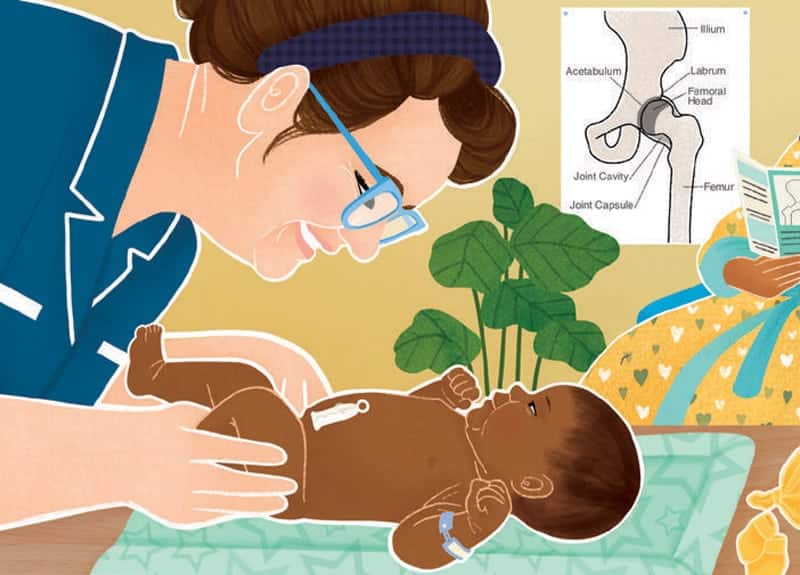
    Hips, legs, and feet:
    • Assess hips for stability.
    • Assess legs and feet for length, proportions, and symmetry.
    • Assess the structure and number of digits. Toes and fingers should be straight.
    Abnormalities Hands and Feet
    • Extra digits (polydactyly).
    • Absence of a digit (syndactyly).
    • Webbing of fingers or presence of a simian crease – a single long crease that crosses the entire palm is indicative of Down’s syndrome.
    • Macrodactyly (enlarged fingers or toes): indicative of neurofibromatosis, and overlapping 2nd and 3rd fingers, seen in infants with trisomy 18.
    • Clubfoot.

    Neurologic

    • Assess behavior.
    • Posture: position the baby adopts. In normal full-term, a baby lies with limbs flexed while in a supine position. In preterm babies, limbs are stretched out along the side of the trunk.
    • Muscle tone.
    • Cry: it should be lusty and full cry.
    • Reflexes: Moro, suck, rooting, grasp.

    Gastrointestinal Tract

    • Examine for rooting and swallowing reflexes.
    • An immature cardiac sphincter often leads to regurgitation.
    • Meconium is passed in the first 2 days after birth.

    Renal System

    • Expected urine output of a newborn is 250ml in 24hrs. The bladder capacity is 15mls full.
    • Because the urinary system is immature, urine is not concentrated. Urine is colorless or clear yellow; odorless with a specific gravity of approximately 1.020.

    Immune System

    • Infants are born with passive immunity from the mother, IgG through the placenta, IgA through breast milk. The immunity lasts 3-6 months.

    Thermoregulation

    • Newborns have a limited capacity to regulate heat loss and pain. The child’s ability to produce heat is immature and ineffective, thus prone to hypothermia. Infants lose heat because:
      • The metabolic rate is higher.
      • The surface area for heat loss is large.
      • Infants cannot shiver to generate heat.
      • Infants metabolize brown fat to generate heat.
      • Subcutaneous tissue is small.
    • Newborns lose heat by or through conduction, evaporation, convection, and radiation.

    Hemopoietic System

    • The blood volume of a newborn is 80-110ml/kg.
    • The lifespan of RBCs is 50-90 days.

    Hepatic System

    • There is unconjugated bilirubin in the 1st week of birth, and this is due to:
      • Increased bilirubin load on hepatocytes.
      • The lifespan of fetal RBCs is short.
      • Increased enterohepatic bilirubin circulation.
      • Defective bilirubin conjugation and excretion.
    • Physiological jaundice occurs after 1st day. This is due to the increased number and short lifespan of RBCs, and an immature liver to conjugate bilirubin.

    When the examination is completed, make the baby comfortable and warm.

    Record findings

    Report abnormalities detected to the in-charge of the ward pediatrician for appropriate action.

    Danger Signs in a Newborn

    • Breathing Difficulty: This includes rapid, labored, or irregular breathing patterns. If a newborn is struggling to breathe, it’s a serious concern.
    • Convulsions, Spasms, Loss of Consciousness, or Arching of the Back: These signs may indicate neurological issues or seizures.
    • Cyanosis (Blueness): Bluish discoloration of the skin or lips can be a sign of inadequate oxygenation and requires immediate attention.
    • Hot to Touch (Fever) or Cold to Touch: Abnormal body temperature, whether too high (fever) or too low, is a concern.
    • Bleeding: Any unexplained bleeding, especially from the umbilicus, eyes, or skin, is a danger sign.
    • Jaundice: While some level of jaundice is common in newborns, excessive or rapidly progressing jaundice may indicate a problem.
    • Pallor: An unusually pale complexion can signal anemia or other issues.
    • Diarrhea: Persistent diarrhea in a newborn is a cause for concern and can lead to dehydration.
    • Persistent Vomiting or Abdominal Distention: Frequent or forceful vomiting and abdominal swelling can indicate various medical conditions.
    • Poor Sucking or Not Feeding: If the baby is not feeding properly or is experiencing difficulty in sucking, it may not be getting adequate nutrition.
    • Pus or Redness of Umbilicus, Eyes, or Skin: Any sign of infection, such as pus or redness in these areas, should be addressed.
    • Swollen Limb: Unexplained swelling of a limb is a sign that requires immediate attention.
    • Lethargy: If the newborn is unusually tired, unresponsive, or lacks energy, it can indicate a medical issue.

    Daily Care of the Baby

    After one hour in the labor ward, the baby should be transferred with its mother in her arms to avoid heat loss and promote mother-baby attachment. The following are the main points considered during the care of the baby to prevent neonatal complications:

    1. Maintenance of Respiration

    • A baby with mucus should be observed and the airway cleared frequently using a suction catheter or bulb syringe.

    2. Provision of Warmth

    • The baby should be kept at a comfortable temperature between 21 – 25 degrees Celsius.
    • Overdressing and overheating should be avoided.
    • Baby’s temperature is maintained by proper monitoring of the incubator for those admitted in the nursery or skin-to-skin contact with the mother for babies who are sick.

    3. Provision of Food

    • A normal baby should be put onto the breast immediately after delivery or within the first 30 minutes.
    • Exclusive breastfeeding is up to 6 months. Mother should breastfeed the baby on demand.

    4. Protection from Injury and Infection

    • Midwives as well as mothers should not keep long nails, and even those for babies should be cut short to avoid injuring themselves.
    • Prevention of infection is important to minimize the risk of cross-infection to both midwives and mothers.
    • Infected babies should be isolated.
    • Installation of tetracycline eye drops as prophylaxis against gonococcal infection.

    5. Hygiene

    • The baby should be bathed daily and twice if the weather is not cold.
    • Special care is paid where two skin folds meet, and this is important.
    • The first and other non-urgent procedures may be deferred in order to minimize heat loss.

    6. Umbilical Cord

    • The cord is a source of infection in the neonatal period.
    • The midwives should aim at preventing hemorrhage and getting the cord dried up and separate cord cleaned with normal saline 0.9% at least 3 times in 24 hours.

    7. Prevention of Hemorrhage

    • Prophylactic vitamin K (1 mg) is given intramuscularly or orally to promote prothrombin formation.

    8. Observations

    • Temperature, respiration, and heart rate are checked every four hours.
    • The child is weighed twice weekly.
    • The condition of the cord is observed.
    • The color of the skin is monitored.
    • Urine and stool color and amount passed are noted.

    9. Assessment of Baby’s Progress

    • A thriving baby is a baby who is growing well. A baby who is growing well has bright eyes.
    • It is active and kicks rigorously.
    • It is free from infection.
    • Feeds well and is always eager to eat.
    • Fontanelles are not depressed.
    • Has a pink color with firm muscles.
    • Baby sleeps well, and when it wakes up, it stretches and yawns.
    • Passes normal quality of urine, stools are semi-solid and yellow.
    • In order to assess the above, it is necessary to examine the baby thoroughly at least once daily.

    10. Education of the Mother

    • Education of the mother should start from the antenatal period.
    • After delivery, the mother should be educated about the care of the baby and herself.
    • As the baby and mother’s condition is good, discharge is considered.
    • Every procedure that is carried out on the baby should be done when the mother is observing so that after discharge, she is able to carry it out, for example, dressing the baby, baby bathing, and care of the cord.

    11. Immunization

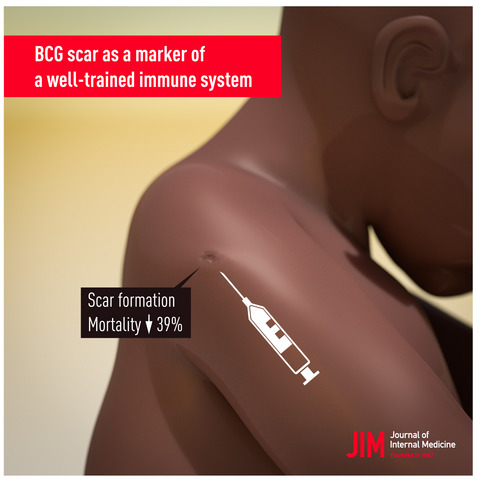
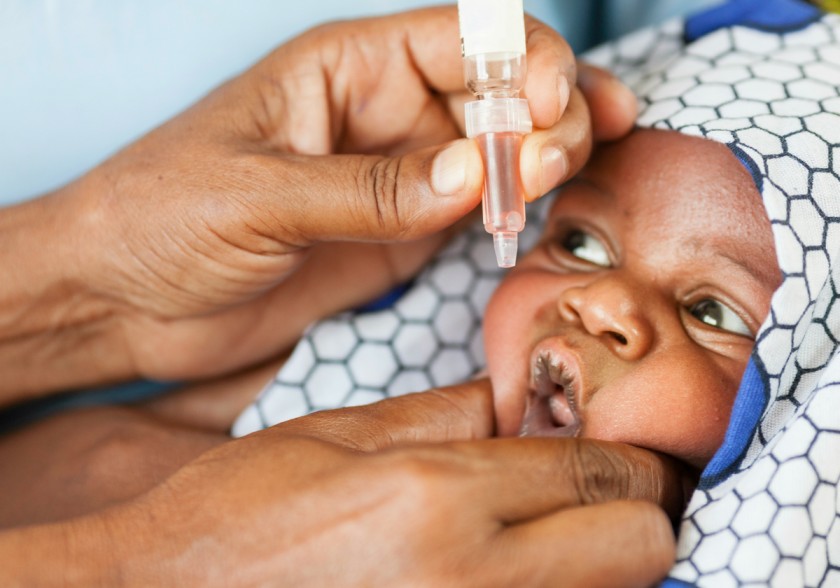
    • All neonates should be immunized with BCG vaccine and ‘OPV’ at birth.
    • Mother should be given vitamin A so that the baby can get it through breast milk.
    • The mother should be informed about the recommended national immunization schedules and the importance of completing immunization.

    Follow-up

    • Each infant should be followed up at least once every month for the first 3 months and subsequently at 3-month intervals until one year of age.
    • Follow-up is necessary for assessment of growth and development, early detection and management of health problems, and health education for prevention of childhood illnesses.

    Essential Elements of Daily Care

    1. Maintenance of Respiration: Continue to observe for signs of respiratory distress (grunting, nasal flaring, retractions). Keep the baby's nose and mouth clear of mucus.
    2. Provision of Warmth: Keep the room temperature comfortable (21-25°C). Avoid overdressing. Skin-to-skin contact remains an excellent method for temperature regulation.
    3. Provision of Food (Nutrition): Encourage exclusive breastfeeding on demand (typically every 2-3 hours). A breastfed baby is getting enough milk if they are passing urine 6-8 times a day and are gaining weight.
    4. Protection from Injury and Infection: Strict handwashing is the most important measure. Isolate any infected babies. Keep the baby's fingernails short.
    5. Hygiene:
      • Bathing: Daily bathing is not always necessary and can cause heat loss. "Top and tail" washing (cleaning the face, neck, hands, and bottom) with warm water is sufficient. The first full bath should be delayed until the baby's temperature is stable.
      • Skin Folds: Pay special attention to cleaning and drying skin folds (neck, armpits, groin) to prevent irritation.
    6. Umbilical Cord Care: The goal is to keep the cord clean and dry to prevent infection and promote separation. Clean the base of the cord with normal saline or sterile water if it becomes soiled with urine or stool. Fold the diaper down to expose the cord to air. Do not apply any traditional substances.
    7. Prevention of Haemorrhage: Administer Vitamin K (1mg) intramuscularly at birth to promote prothrombin formation and prevent bleeding.
    8. Observation and Assessment:
      • Vital Signs: Monitor temperature, respiration, and heart rate regularly as per facility protocol.
      • Weight: Weigh the baby at birth and then daily or twice weekly to monitor for appropriate weight gain (after the initial physiological weight loss).
      • Elimination: Record the passage of urine and stool, noting frequency, color, and consistency.
      • Overall Condition: Assess for skin color (jaundice), activity level, muscle tone, and feeding behaviour. A thriving baby is active, feeds eagerly, has a strong cry, and appears content after feeds.
    9. Education of the Mother: This is a continuous process. Teach the mother about feeding, bathing, cord care, signs of illness (e.g., fever, poor feeding, lethargy), and the importance of immunization. Ensure she is confident in caring for her baby before discharge.
    10. Immunization: Before discharge, ensure the baby receives the birth doses of vaccines according to the national schedule (BCG and Oral Polio Vaccine - OPV 0).
    11. Follow-up: Advise the mother on the schedule for postnatal and child welfare clinic visits for continued assessment of growth, development, and immunizations.

    Revision Questions

    1. What is the very first and most important action a nurse should take immediately after a baby is born to stimulate breathing and prevent heat loss?
    2. A newborn at 1 minute of life has a pink body and blue extremities, a heart rate of 90 bpm, makes a weak grimace when suctioned, has some flexion in the arms, and a slow, irregular cry. Calculate the Apgar score.
    3. Why is breastfeeding within the first hour of life so important for both the mother and the newborn? List three reasons.
    4. Describe the correct procedure for daily umbilical cord care. What should you advise the mother NOT to do?
    5. List five signs that indicate a newborn baby is "thriving."
    6. A mother asks why her healthy baby needs an injection (Vitamin K) right after birth. How would you explain the reason to her in simple terms?

    Immediate Care of the Newborn Read More »

    Changes in the newborn at birth

    Changes in the newborn at birth

    Paediatric Nursing I - Page 2: Physiology of the Newborn

    Learning Outcomes

    By the end of this section, the learner shall be able to:

    • Explain the major physiological changes a newborn undergoes at birth.
    • Describe the transition from fetal to pulmonary respiration.
    • Detail the changes in the cardiovascular system, including the closure of fetal shunts.
    • Discuss the immaturities of the newborn's digestive, hepatic, and renal systems.
    • Explain the mechanism of temperature regulation in a neonate.
    • Describe the status of the newborn's immune and haematopoietic systems at birth.

    Introduction to Newborn Physiology

    The moment of birth marks the most dramatic physiological transition in a person's life. The newborn must rapidly adapt from a dependent, fluid-filled intrauterine environment, where the placenta performed all vital functions, to an independent, air-breathing existence. This transition involves profound and immediate changes in nearly every organ system, most critically the respiratory and cardiovascular systems.

    Changes in the Newborn at Birth

    Changes in the newborn at birth are a number of changes that an infant’s body undergoes to allow it to survive outside the womb and adapt to life in a new environment.

    During intrauterine life, the fetus receives oxygen and nutrients by absorption through the placenta. It does not use its lungs or the digestive organs. Similarly, it excretes carbon dioxide and other waste products through placental structures into the mother’s blood.

    It is protected from many harmful factors/organisms by the placenta, and it is kept in a warm environment.

    Size and Growth:

    • The term infant weighs about 3000g. Boys weigh approximately 250g more than girls.
    • Infants of less than 2500g are classified as ‘low birth.’
    • During the first 3–5 days, up to 10% of birth weight is lost. This is regained by 7–10 days.
    • In the first month, average weight gain per week is 200g.

    Skin:

    • The newborn skin is immature, with a thin epithelial layer and incompletely developed sweat and sebaceous glands.
    • Combined with the high surface area to body mass ratio, this renders the baby prone to heat and water losses.
    • Numerous benign skin lesions occur, e.g. a greasy protective layer, the vernix caseosa.

    Temperature Regulation:

    • The neonate has a low metabolic activity resulting in a poor ability to produce heat.
    • The infant enters a much cooler environment than to which it is used. Its body is wet and thus liable to lose heat through evaporation.
    • Receptors on the baby’s skin send messages to the brain that the baby’s body is cold.
    • The baby’s body then creates heat by shivering and by burning stores of brown fat, a type of fat found only in fetuses and newborns.

    Head:

    • The average occipito-frontal head circumference is 35 cm.
    • Two soft spots or fontanels are present.
    • The anterior fontanel closes at 18 months of age, and the posterior closes by 6–8 weeks.

    Respiratory System:

    The initiation of respiration is the most crucial event in the newborn's adaptation. In the womb, the lungs are filled with fluid and are not used for gas exchange.

    • Changes that occur at birth allow the newborn to convert from dependence on the placenta to breathing air for the exchange of respiratory gases.
    • In utero, the airways and lungs are filled with fluid that contains surfactant.
    • The lung fluid is removed by the squeezing of the thorax during vaginal delivery and by reduced secretion and increased absorption mediated by fetal catecholamine during labor and after birth.
    • Surfactant lines the air–fluid interface of the alveoli and reduces the surface tension, thereby facilitating lung expansion. This is associated with a fall in pulmonary vascular resistance.
    • The rate is variable and normally ranges between 30 and 60 breaths/min. Brief self-limiting apnoeic spells might occur during sleep.

    Factors That Stimulate the First Breath

    The first breath is not a single event but a response to a combination of powerful stimuli:

    • Chemical Stimuli: During labor, placental blood flow is temporarily reduced, causing a slight decrease in oxygen (hypoxia) and an increase in carbon dioxide (hypercapnia) in the baby's blood. This change in blood chemistry directly stimulates the respiratory center in the brain.
    • Mechanical Stimuli: The passage through the birth canal squeezes the baby's chest (thoracic squeeze), forcing approximately one-third of the fluid out of the lungs. As the chest recoils after birth, air is drawn in for the first time. Crying also helps to expand the lungs.
    • Thermal Stimuli: The sudden change from the warm intrauterine environment (approx. 37°C) to the cooler delivery room stimulates sensory receptors in the skin, which in turn stimulate the respiratory center.
    • Sensory Stimuli: The new experiences of being touched, dried, and exposed to light and sound all provide stimulation that encourages breathing.
    Normal Breathing Patterns

    A newborn's respiratory rate is 30-60 breaths per minute. Their breathing is often irregular, with short pauses of 5-15 seconds (periodic breathing), which is normal. They are also obligatory nose breathers and use their abdominal muscles to breathe.

    Cardiovascular System

    With the first breath and the clamping of the umbilical cord, the entire circulatory system must reroute itself. Fetal circulation, which bypasses the lungs, must switch to newborn circulation, where blood is sent to the lungs for oxygenation.

    • Major changes in the lungs and circulation allow adaptation to extra-uterine life.
    • In the fetal circulation, the right-sided (pulmonary) pressure exceeds the left-sided (systemic) pressure. Blood flows from right to left through the foramen ovale and ductus arteriosus.
    • At birth, these relationships reverse: Left-sided (systemic) pressure rises with clamping of umbilical vessels. Right-sided (pulmonary) pressure falls as the lungs expand, and the rising pressure triggers a prostaglandin-mediated vasodilatation.
    • The foramen ovale and ductus arteriosus close functionally shortly after birth. The ductus closes due to muscular contraction in response to rising oxygen tension.

    Closure of Fetal Shunts

    This rerouting is accomplished by the closure of three fetal shunts:

    1. Foramen Ovale: A flap-like opening between the right and left atria. Increased blood flow from the newly functioning lungs raises the pressure in the left atrium, pushing this flap closed.
    2. Ductus Arteriosus: A blood vessel connecting the pulmonary artery to the aorta, which shunted blood away from the fetal lungs. It constricts and closes in response to higher oxygen levels in the blood and other hormonal changes.
    3. Ductus Venosus: A vessel that shunted oxygenated blood from the placenta away from the liver and directly to the heart. When the umbilical cord is clamped, blood flow ceases, and this shunt closes.

    A newborn's heart rate is typically 110-160 beats per minute and can fluctuate with activity and sleep.

    Thermoregulation

    Newborns are at a high risk for heat loss (hypothermia) due to several factors: a large body surface area to mass ratio, thin skin with less subcutaneous fat, and an inability to shiver effectively.

    How Newborns Lose Heat

    • Evaporation: Loss of heat as amniotic fluid dries from the skin after birth. (Action: Dry the baby thoroughly).
    • Conduction: Loss of heat through direct contact with a cooler surface, like a cold scale or stethoscope. (Action: Place the baby on warm surfaces; use skin-to-skin contact).
    • Convection: Loss of heat to cooler air currents, like drafts from windows or air conditioners. (Action: Keep the baby wrapped and away from drafts).
    • Radiation: Loss of heat to a nearby cooler object without direct contact, like a cold windowpane. (Action: Keep cribs away from cold outer walls).

    How Newborns Produce Heat

    The primary method of heat production in newborns is non-shivering thermogenesis. This is the metabolism of a special type of fat called brown adipose tissue (BAT), or "brown fat," which is uniquely located around the newborn's neck, back, and major organs. Burning this fat produces heat and warms the blood passing through it.

    Haematopoietic and Immune Systems

    Haematopoietic System (Blood)

    • Hemoglobin: Newborns have a high concentration of red blood cells and hemoglobin, specifically fetal hemoglobin (HbF), which is very efficient at carrying oxygen.
    • Physiological Jaundice: After birth, the excess red blood cells are broken down. This process releases bilirubin. The newborn's immature liver cannot process this bilirubin quickly, causing it to build up in the blood and lead to a temporary yellowing of the skin and eyes (physiological jaundice), typically appearing on the 2nd or 3rd day of life.
    • Vitamin K: The newborn's gut is sterile and cannot yet produce Vitamin K, which is essential for blood clotting. To prevent hemorrhagic disease of the newborn, all babies are given a prophylactic injection of Vitamin K at birth.

    Immune System

    The newborn's immune system is immature and inexperienced, making them vulnerable to infections. They receive temporary protection through passive immunity:

    • IgG: These antibodies cross the placenta from the mother during the third trimester, providing protection against diseases to which the mother is immune.
    • IgA: These antibodies are found in high concentrations in colostrum and breast milk, providing protection to the gastrointestinal and respiratory tracts.
    • The neonatal immune system is incomplete compared to older children and adults:
      • Impaired neutrophil reserves.
      • Diminished phagocytosis and intracellular killing capacity.
      • Decreased complement components.
      • Low IgG2, leading to infections with organisms.
    • The presence of maternal antibody in babies born greater than 30 weeks’ gestational age provides some protection against infection.

    Gastrointestinal and Renal Systems

    • At term, the secretory and absorbing surfaces are well developed, as are digestive enzymes, with the exception of pancreatic amylase.
    • Meconium is usually passed within 6 hrs, and delay beyond 24 hrs is considered abnormal.
    • Normally, meconium is replaced by yellow stool by day 3-4.

    Gastrointestinal (Digestive) System

  • Stomach: The stomach capacity is very small at birth (about 15-30 ml) and empties rapidly, which is why newborns need to feed frequently.
  • Gut: The gut is sterile at birth but is quickly colonized by bacteria from the environment and feeding. These bacteria are essential for digestion and Vitamin K production.
  • Stools: The stools change in a predictable pattern:
    1. Meconium: The first stool, passed within 24-48 hours. It is sticky, thick, dark green/black, and odorless.
    2. Transitional Stool: Appears by day 3-4. It is thin, slimy, and greenish-brown to yellowish-brown.
    3. Milk Stool: By day 4-5. If breastfed, the stool is loose, seedy, and mustard-yellow. If formula-fed, it is paler, firmer, and has a more noticeable odor.
  • Liver:

    • In the fetus, the liver acts as a storage site for sugar (glycogen) and iron.
    • When the baby is born, the liver has various functions: It produces substances that help the blood to clot. It begins breaking down waste products such as excess red blood cells. It produces a protein that helps break down bilirubin.
    • Immaturity of the liver enzymes responsible for conjugation of bilirubin is responsible for the ‘physiological jaundice’ which can occur from the second day of life.

    Genitourinary System:

    • The infant should void within the first 24 hours of life.

    The kidneys are able to produce urine, but their ability to concentrate it is limited. This makes newborns susceptible to dehydration if fluid intake is insufficient. A newborn should pass their first urine within 24 hours of birth, though it can take up to 48 hours.

    Central Nervous System:

    • The central nervous system (CNS) is relatively immature at birth.
    • Newborn infants sleep for a total of 16–20 hours each day.
    • The touch of a nipple on the baby’s face initiates the sequence of rooting and the complex coordination of lip, tongue, palate, and pharynx required for sucking and swallowing.
    • Crying (without tears) is the main means of communication.

    Revision Questions

    1. What are the four main stimuli that trigger the first breath in a newborn?
    2. Explain the function of the ductus arteriosus in the fetus and describe what causes it to close after birth.
    3. A newborn is placed on a cold weighing scale. Which mechanism of heat loss is this, and what is one nursing action to prevent it?
    4. What is physiological jaundice, and what two factors in the newborn's liver and blood system contribute to its development?
    5. Describe the normal progression of a newborn's stools, from meconium to milk stool. Why do these changes occur?
    6. Why is Vitamin K administered to all newborns at birth?

    Changes in the newborn at birth Read More »

    Paediatrics Introduction

    Paediatrics Introduction

    Paediatric Nursing I - Page 1: Introduction, Terms & Characteristics

    Learning Outcomes for this Section

    By the end of this section, the learner shall be able to:

    • Define Paediatrics and related terminologies.
    • Explain the core principles and scope of paediatric nursing.
    • Describe the various roles of a paediatric nurse.
    • State the fundamental rights of a child in a healthcare setting.
    • Describe the physical and behavioural characteristics of a normal newborn.

    Introduction to Paediatric Nursing

    Paediatrics is a specialized branch of medicine that focuses on the prevention, diagnosis, treatment, and management of health problems affecting young patients—from infants and children to adolescents. The term originates from the Greek words "paed" meaning "child" and "iatrikē" meaning "treatment." It encompasses not only the clinical aspects but also the psychological and social well-being of the child.

    Paediatric nursing requires a deep understanding of genetics, obstetrics, physiological development, management of disabilities, and the effects of social conditions on a child's health. Since a child is entirely dependent on their caregivers, it is essential that the care provided is family-centered. Providing quality care for sick children depends on the nurse's ability to understand the developmental variations anticipated in different age groups.

    Paediatrics is a branch of medicine that focuses on the prevention, diagnosis, treatment and management of all types of health problems that affect young patients – from infants and children to adolescents.

    It includes the clinical and psychological aspect of medical care. It requires detailed knowledge of genetics, obstetrics, physiological development, management of disabilities at home and school and the effects of social condition on the child’s health.

    As the child is totally dependent on the care-givers, it is important that the care provided is family centered. Providing quality care for sick children depends on you, understanding developmental variations as anticipated in different age groups.

    Core Concepts in Paediatric Nursing

    Principles of Paediatric Nursing

    • Family-Centered Care: This approach recognizes the family as the primary source of strength and support for the child. The nurse collaborates with the family in all aspects of planning, delivering, and evaluating healthcare.
    • Atraumatic Care: This principle focuses on minimizing the psychological and physical distress experienced by children and their families. It involves using procedures and communication that reduce pain, fear, and anxiety.
    • Health Promotion and Disease Prevention: A key focus is on educating families about healthy habits (e.g., nutrition, safety) and preventive measures (e.g., immunizations) to ensure optimal health and well-being.
    • Advocacy: The paediatric nurse acts as a voice for the child, ensuring their needs are met and their rights are protected within the healthcare system and the community.

    Scope of Paediatric Nursing

    Paediatric nurses practice in a wide variety of settings, including:

    • Hospitals: General paediatric wards, Paediatric Intensive Care Units (PICU), Neonatal Intensive Care Units (NICU), and outpatient clinics.
    • Community Health Centres: Providing primary care, health screenings, and immunizations.
    • Schools: Managing the health needs of students during school hours.
    • Home Care: Providing care for children with chronic conditions or those recovering from illness in their own homes.

    Roles of the Paediatric Nurse

    • Direct Care Provider: Assessing health, administering medications and treatments, and providing hands-on care.
    • Educator: Teaching children and families about health conditions, treatments, and self-care.
    • Advocate: Protecting the child's rights and ensuring their best interests are served.
    • Counselor: Providing emotional support and guidance to children and their families during stressful times.
    • Collaborator: Working with doctors, therapists, and other healthcare professionals to create a comprehensive care plan.

    Rights of the Child in Healthcare

    Every child has fundamental rights that must be respected in any healthcare setting. These include:

    • The right to the best possible health.
    • The right to be cared for by parents or guardians.
    • The right to be protected from pain and to receive pain relief.
    • The right to be informed in a way they can understand.
    • The right to participate in decisions about their care.
    • The right to privacy and confidentiality.
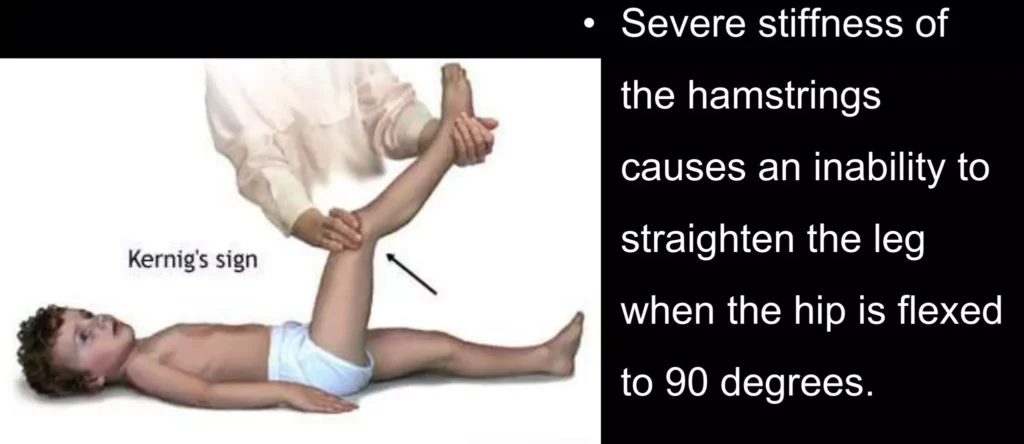
    Antenatal Care

    Good antenatal care is important to the future development of the child. Attendance by the mother at maternity clinic at regular intervals during pregnancy will ensure that any problems which may influence fetal development are recognized promptly, as well as providing an opportunity for the mother and father to attend parentcraft sessions, e.g. in breastfeeding, in order to help the parents rear their baby happily and successfully.

    Fetal Development

    Development of the fetus during pregnancy is a time of rapid growth. After fertilization, when the spermatozoon meets an ovum usually in the outer third of the fallopian tube, the cells multiply rapidly into a morula which passes into the uterine cavity and embeds in the endometrium.

    After four weeks the fetal shape resembles a mammal and is about 1cm long. By about 8 weeks limbs have developed.

    At 12 weeks the fetus is obviously human. The length is now about 9 cm. All essential organs have formed before the twelfth week.

    After this the fetus continues to grow, peaking at about the 34th week of pregnancy.

    About the 27/28th week the fetus is said to be viable i.e. if born the fetus attempts to breath.

    After 28 weeks the fetal muscles develop and fat is laid down. The fetus is coated with a greasy substance known as vernix. The fetus is now able to move quite freely within the amniotic cavity.

    End of pregnancy occurs after a gestation period of about 40 weeks.

    Nursing Goals

    • Normalize the life of the child during hospitalization in preparation for the family home, school and community.

      Example: For a hospitalized child with asthma, the nurse ensures the child's daily routine includes opportunities for play and learning (e.g., child life activities, scheduled playtime), within the limits of their condition, to minimize disruption to their normal life and facilitate easier transition back home and to school upon discharge.

    • Minimize the impact of the child’s unique condition.

      Example: For a child with newly diagnosed Type 1 Diabetes, the nurse provides comprehensive education to the child and family on insulin administration, blood glucose monitoring, and dietary management, empowering them to manage the condition effectively and reduce its interference with daily activities and future development.

    • Foster maximal growth and development.

      Example: For an infant admitted for failure to thrive, the nurse collaborates with dietitians to establish an appropriate feeding plan and implements interventions like structured feeding times and positive reinforcement to ensure adequate nutritional intake, thereby supporting healthy physical growth and cognitive development.

    • Develop realistic, functional and coordinated home care plans for the children and families.

      Example: For a child discharged with a new tracheostomy, the nurse coordinates with social work, home health agencies, and equipment providers to ensure the family has necessary supplies, training, and support (e.g., skilled nursing visits, emergency contact numbers) to safely manage the tracheostomy at home.

    • Respect the roles of the families in the care of their children.

      Example: When caring for a child who requires complex wound care, the nurse actively involves the parents in the dressing changes, teaching them the technique, allowing them to ask questions, and incorporating their preferences (e.g., timing of dressing changes around the child's nap schedule) to foster their sense of control and competence in their child's care.

    • Prevention of disease and promotion of health of the child.

      Example: The nurse administers age-appropriate immunizations as scheduled during well-child visits and provides anticipatory guidance to parents on healthy eating habits, regular physical activity, and injury prevention (e.g., car seat safety, poison control) to protect the child from illness and promote overall well-being.

    Definition of Terms

    Pediatrics: The term pediatrics is derived from Greek words. ‘Paed’ means child, ‘icitrike’ means treatment, ‘..ics’ means the science of child care and scientific treatment of childhood diseases.

    Neonatal Period: Neonatal period is the period from birth to 28 days of life or the first month of life.

    Normal Baby: A normal baby should have the following characteristics. A normal term baby weighs approximately 3.5 kg, when fully extended measures 50 cm from the crown of the head to the heels, and has an average occipitofrontal head circumference of 34-35 cm. Most babies are plump and have a prominent abdomen. They lie in an attitude of flexion, with arms flexed; their fingers reach upper thigh level.

    Infant: An infant is a child from birth up to one year of life.

    Toddler: A toddler is a child from one year to three years of life.

    Preschool: A child of three to five years is considered as a preschooler.

    Middle Childhood: Is defined as ages six to twelve years.

    Adolescent: WHO defines adolescence as the period in human growth and development that occurs after childhood, from ages twelve to nineteen years.

    Preterm Baby: A preterm baby is a baby born with a gestational age of less than 37 completed weeks (or less than 259 days) but greater than 28 weeks. These babies are also termed as immature, born early, or premature.

    Term Baby: A baby born with a gestational age between 37 to 41 weeks (259-293 days).

    Low Birth Weight Baby: Any baby weighing 2500 g or less at birth.

    Post-Term Baby: A baby born with a gestational age of 42 weeks or more (294 days or more).

    Live Birth: Any signs of life at delivery.

    Stillbirth: A baby born after 24 weeks of gestation with no sign of life at birth.

    Perinatal Mortality: Stillbirths and first-week deaths per 1000 total births.

    Neonatal Mortality: Deaths of live births in the first month of life per 1000 live births.

    Infant Mortality: Deaths of all live births in the first year of life per 1000 live births.

    Post-Neonatal Mortality: Post-neonatal mortality is referred to as the deaths of all babies from 1 month to 1 year per 1000 babies alive at 1 month.

    Characteristics of a Normal Newborn

    A normal newborn (0-28 days) exhibits a unique set of physical and behavioural characteristics as they adapt to life outside the womb.

    The Newborn

    A newborn is a just or recently born child (0-28 days).

    Physical Characteristics

    Weight: The normal full-term infant weighs approximately 3.5 kgs. In Uganda, the weight may range from 2.5 kg-3.5 kg. Babies in the tropics tend to be smaller than European babies. Newborn infants usually are considered to be tiny and powerless, completely dependent on others for life.

    Length: Measurement is taken from the highest point of vertex of the head to the heel. It ranges from 45-50 cm (average 50cm).

    Lie: He lies in an attitude of flexion – in the supine position with his head turned to one side and one shoulder elevated off the mattress or in the prone position with his buttocks elevated, his knees drawn up under his abdomen and his head turned to one side with his arms extended; his fingers reach to mid-thigh level.

    Temperature: Ranges between 36°C to 37.5°C

    Blood Pressure: Systolic 50 to 75mmHg and Diastolic 30 to 45mmHg

    Nails: The nails are fully formed and adhered to the tips of the fingers, sometimes extending beyond the fingertips.

    Head and Hair: The head circumference is approximately 33-35 cm (13-14 in) with a cranium that is disproportionately large compared with the face. This is from molding of the skull bones during labor and birth or due to swelling of the scalp or slight bleeding under the scalp. The anterior and posterior fontanels or “soft spots” are open and the sutures can be felt. The anterior fontanel is diamond-shaped and closes by 18 months. The fontanel on the back (posterior) is shaped like a triangle and closes by 6 weeks of age. The baby may be born with a full head of hair or none at all.

    Arms and Legs: After birth, the baby’s arms and legs may look bowed and are held close to the body. Hands are in tight fists, the arms and legs may appear too short for the body because of their bent appearance. This is temporary; by 3 to 4 months, the arms and legs stretch out.

    Sensory Development

    Vision: The baby’s eye color depends on skin tone, blue-gray if fair-skinned or brown if dark-skinned. By 6 months to 1 year of age, the baby’s eye color will be permanent. Eyes: When the newborn cries, tears may be absent. Tear ducts may not function for the first few weeks after birth. Cross-eyed: A newborn’s eye muscles are weak at birth. Over the next few weeks, eye muscle strength will improve, and the baby can better focus on objects.

    Hearing: Babies can hear loud and soft noises at birth. Loud noises may cause the baby to startle, while soft noises may help to calm your baby. The baby quickly learns the difference in voice sounds. The baby will turn its head to a familiar voice, especially mom’s and dad’s voice.

    Taste and Smell: Newborns can taste and smell at birth. The baby will be able to taste breast milk.

    Skin and Body Systems

    Skin: At birth, the baby may have a thick cheese-like covering. This is called vernix caseosa. Vernix helps to protect the baby’s skin while in the uterus. Over the baby’s forehead, nose, and cheeks, you may see “whiteheads” or milia. These are immature oil glands that will go away in several weeks. The baby may have soft downy hair that may cover its face and body. This is called lanugo, and it will go away within a few weeks after birth. The baby may have pale pink marks on the face and neck. They are called stork bites and will fade during childhood. The baby may have bluish-black marks on the lower back or bottom. These are called Mongolian spots and are more common on dark-skinned children. The subcutaneous fat is small and the skin looks red and elastic.

    Chest and Breathing: Babies take little breaths and use abdominal muscles to help breathe. You may even notice short pauses between some breaths. The rate of breathing is 30 to 60 times a minute. This is because their heart rate is rapid at 120 to 160 times a minute. The breasts of boy and girl babies may look enlarged after birth. The hormones that cross the placenta during the last two weeks before birth cause the breasts to fill with milk. Do not squeeze the breasts. The enlarged breasts will go away in about 2 weeks.

    Abdomen: The abdomen may be round or stick out slightly (big compared to the thorax). The umbilical cord is clamped, cut, and tied. It will dry and fall off in 1 to 2 weeks. If there is redness around the umbilical cord or pus-like drainage, give the necessary care.

    Genitalia: In boys, the testicles are descended into the scrotum which has plentiful rugae. The urethral meatus opens at the tip of the penis, and the prepuce is adhered to the glans. In girls born at term, the labia majora normally cover the labia minora. The hymen and clitoris may appear disproportionately large. The hormones in a girl may cause the baby to have white vaginal discharge or vaginal spotting (false period).

    Behavior

    Behavior: The newborn baby will probably spend a lot of time sleeping. The baby may be very alert and gaze at the mother or people or be very quiet and drowsy right after birth. During the next month, the baby will spend less time sleeping and more time awake.

    Summary

    Physical Characteristics

    • Weight: A normal full-term infant weighs approximately 3.5 kg. In Uganda, the range is typically 2.5-3.5 kg.
    • Length: Measured from crown to heel, the average length is 50 cm (range 45-50 cm).
    • Lie/Posture: The newborn typically lies in a flexed position, with arms and legs bent and held close to the body.
    • Head: The head circumference is 33-35 cm and appears large in proportion to the body. The anterior fontanelle (diamond-shaped) and posterior fontanelle (triangular) are soft spots on the skull that are open at birth.
    • Temperature: Normal range is 36.5°C to 37.5°C.

    Skin

    • Vernix Caseosa: A thick, white, cheese-like substance that covers and protects the fetal skin in utero. It is gradually absorbed after birth.
    • Lanugo: Fine, soft, downy hair that may cover the body, especially on the shoulders and back. It disappears within a few weeks.
    • Milia: Tiny white bumps (plugged oil glands) often seen on the nose and cheeks, which disappear on their own.
    • Mongolian Spots: Bluish-black marks, resembling bruises, commonly found on the lower back or buttocks of dark-skinned babies. They are harmless and fade over time.

    Chest and Abdomen

    • Breathing: Newborn breathing is primarily abdominal, with a rate of 30-60 breaths per minute. Short pauses (periodic breathing) are normal.
    • Heart Rate: The heart rate is rapid, ranging from 120-160 beats per minute.
    • Umbilical Cord: The stump is clamped at birth. It will dry, harden, and typically fall off within 1-2 weeks. It should be kept clean and dry to prevent infection.

    Genitalia

    • Due to maternal hormones, the genitalia of both boys and girls may appear swollen.
    • Girls: May have a white vaginal discharge or a small amount of bloody mucoid discharge (pseudomenstruation), which is normal.
    • Boys: In a full-term male, the testes have descended into the scrotum, which has folds (rugae).

    The Common Reflexes Observed in the Newborn

    A reflex is an automatic or voluntary response to a stimulus, which is brought about by relatively simple nervous circuits without consciousness being necessarily involved. They include:

    • Pupil Reflexes: The newborn infant will turn his head towards the source of light, providing it is not too bright.
    • Moro Reflex (Startle): Response to sudden stimulus or sound causing the infant’s body to stiffen, the arms to go up and out, then forward and towards each other. This reflex usually disappears at about the age of 3-4 months and may be difficult to elicit in a preterm baby.
    • The Grasp Reflex: This may be obtained in the hand or foot by either introducing a finger into the palm of the hand, which the infant grasps quite strongly, or by gently stroking the sole of the foot behind the toes.
    • Rooting Reflex: When the corner of the mouth is touched with a finger which moves towards the cheek, the infant will turn his head towards the object and open his mouth.
    • Withdrawal Reflex: Pricking the sole of the foot will result in the infant’s leg being flexed at the hip, knee, and ankle.
    • Babinski Reflex: This occurs when the sole of the baby’s foot is stimulated. This has an effect of causing an unusual extension of the big toe as well as fanning the other toes. The simulation may be started from the heel all the way to the base of the baby’s toes. This reflex is normally used to ascertain the adequateness of the central nervous system.
    • Sucking and Swallowing Reflexes: This is essential for safe feeding and adequate nutrition. Place a nipple or finger in the mouth of the baby, the infant should suck vigorously and swallow.
    • Traction Response: When the baby is pulled upright by the wrists to a sitting position, the head will lag initially, then right itself momentarily before falling forward onto the chest.
    • Blinking and Corneal Reflex: This protects the eyes from trauma.
    • Walking and Stepping Reflexes: When the baby is supported upright with his feet touching a flat surface, the baby simulates walking. If held with the tibia in contact with the edge of a table, the baby will step up onto the table.

    Revision Questions

    1. In your own words, what is family-centered care and why is it a core principle of paediatric nursing?
    2. Differentiate between a 'preterm baby,' a 'term baby,' and a 'low birth weight baby.'
    3. A mother is worried about the fine, soft hair (lanugo) and the tiny white spots (milia) on her newborn's face. As a nurse, how would you explain these findings to her?
    4. Describe the Moro reflex. What is its significance, and when does it typically disappear?
    5. List three distinct roles of a paediatric nurse and provide a practical example for each role.
    6. What is pseudomenstruation in a female newborn, and what causes it?

    Paediatrics Introduction Read More »

    INTEGRATED MANAGEMENT OF CHILDHOOD ILLNESSES (IMCI)

    INTEGRATED MANAGEMENT OF CHILDHOOD ILLNESSES (IMCI)

    INTEGRATED MANAGEMENT OF CHILDHOOD ILLNESSES (IMCI)

    Integrated Management of Childhood Illnesses is a child management process where care/treatment of a sick child is done in totality. 
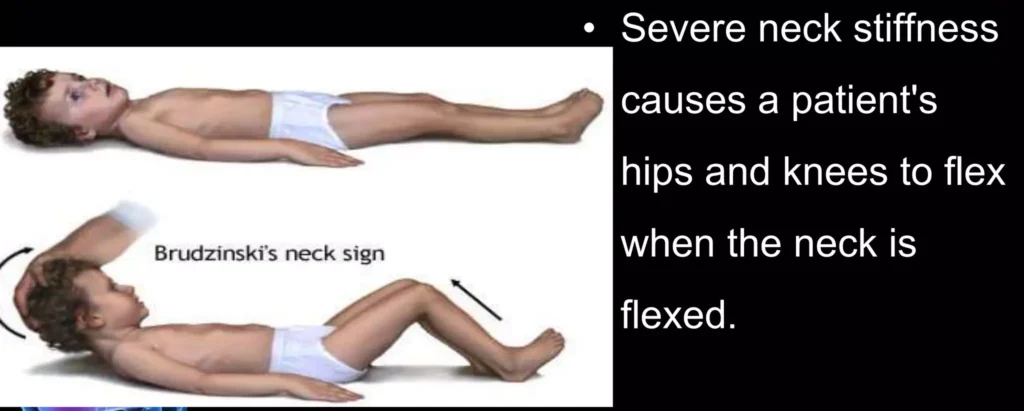
    IMCI stands for Integrated Management of Childhood Illness is an approach developed by the United Nations Children’s Fund (UNICEF) and the World Health Organization (WHO) to improve the health and well-being of children under the age of five. 

    IMCI is an integrated approach to child health that focuses on the well-being of the whole child.

    IMCI aims to reduce death, illness, disability, and to promote improved growth and development among children under five years of age.

    IMCI aims to reduce preventable mortality, minimize illness and disability, and promote healthy growth and development in young children.

    IMCI guidelines help to interview caretakers accurately and recognize clinical signs, choose appropriate treatments, provide counseling and preventive care of children aged unto 5 years.

    Goals of IMCI

    • Identify key causes of childhood mortality.
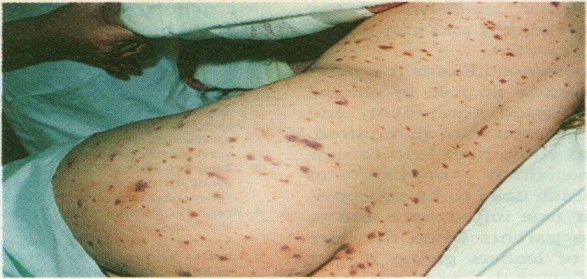
    • Explain the meaning and purpose of integrated case management.
    • Describe the major steps in the IMCI strategy.
    • Introduce use of IMCI tools including chart booklet, wall posters and case management sheets.

    Components of IMCI

    Key Components of IMCI

    IMCI aims at three (3) main components of health care.

    • Improving case management skills of healthcare providers.
    • Improving health systems to provide quality care.
    • Improving family and community health practices for health, growth, and development.

    CHILD HEALTH AND MORTALITY

    In 2015, approximately 5.9 million children under the age of five died worldwide, which translates to nearly 16,000 deaths every day. The leading causes of death in this age group are infections, neonatal conditions, and nutritional issues. Alarmingly, the majority of these deaths are preventable.

    Uganda has been reported to have a high child mortality rate. According to the World Health Organization (WHO), Uganda ranks 168th out of 188 countries in terms of infant mortality rates.

    The under-five mortality rate in Uganda was reported at 53 deaths per 1,000 live births in 2016, according to the World Bank.

    Seventy five percent (75%) of the common causes of child mortality in developing countries include:

    • Infectious Diseases: Acute respiratory infections, diarrhea diseases, malaria, and measles are leading causes of death among children under five years old. These diseases can be severe and life-threatening, especially in resource-constrained settings where access to healthcare and preventive measures may be limited.
    • Malnutrition: Malnutrition is a significant contributor to child mortality in developing countries. Children who are malnourished have weakened immune systems, making them more susceptible to infectious diseases and less able to recover from illness.

    It is important to note that these causes often overlap, and children may suffer from a combination of these conditions. The clinical presentations of these diseases can be similar, which may lead to challenges in diagnosing and treating children effectively.

    WHY IMNCI? (Need for IMCI)

    Multiple Conditions:

    • Children often present with multiple potentially deadly conditions at the same time. IMCI takes a holistic approach, considering all the conditions that may affect a child and put them at risk of preventable mortality or impaired growth and development. By facilitating an integrated assessment and combined treatment of these conditions, IMCI focuses on effective case management and prevention of diseases, contributing to healthy growth and development.

    Lack of Diagnostic Tools:

    • In many healthcare settings, there is a lack of diagnostic tools such as laboratory tests or radiology. IMCI recognizes this challenge and provides clinical algorithms that rely on patient history, signs, and symptoms for diagnosis. By training healthcare providers in IMCI, they can effectively assess and manage childhood illnesses even in resource-limited settings.

    Reliance on Patient History:

    • IMCI acknowledges the importance of patient history in diagnosing and managing childhood illnesses. Healthcare providers are trained to gather comprehensive information about the child’s symptoms, medical history, and other relevant factors. This information, combined with the IMCI clinical algorithms, helps providers make accurate diagnoses and provide appropriate treatment.

    Need for Referrals:

    • In cases where a child has a serious illness that requires specialized care, IMCI emphasizes the need for timely referrals to a higher level of care . By identifying severe illnesses and facilitating prompt referrals, IMCI ensures that children receive the necessary treatment and support from specialized healthcare providers.


    IMCI PROCESS

    The IMCI (Integrated Management of Childhood Illness) process is a comprehensive approach to the identification and management of childhood illnesses in outpatient settings

    It aims to improve the quality of care for children under the age of five by providing standardized guidelines and interventions. 

    Here is an overview of the IMCI process and the interventions included in the IMCI guidelines:

    IMCI Process:

    • List of Conditions: The IMCI process involves checking for a list of conditions in children and infants to ensure comprehensive assessment and treatment.
    • Assessment and Treatment: Children are assessed and treated for all conditions that are present, following standardized algorithms that guide management decisions.
    • Decision to Transfer: If necessary, the IMCI guidelines provide guidance on when to transfer a child to higher levels of care for further management.

    Interventions Included in the IMCI Guidelines:

    The IMCI guidelines include both curative and preventive interventions for various childhood conditions.

    Curative Interventions:

    • Acute Respiratory Infections (ARI) including pneumonia
    • Anaemia
    • Diarrhoea (dehydration, persistent, dysentery)
    • Ear infections
    • HIV/AIDS
    • Local bacterial infections
    • Meningitis and sepsis
    • Malnutrition
    • Wheeze
    • Malaria
    • Measles
    • Neonatal jaundice

    Preventive Interventions:

    • Breastfeeding support
    • Immunization
    • Nutrition counseling
    • Periodic deworming
    • Vitamin A supplementation
    • Zinc supplementation

    Who Can Use IMCI:

    The IMCI process can be used by all doctors, nurses, and other health professionals who provide care for young infants and children under the age of five. It is primarily designed for first-level facilities such as clinics, health centers, or outpatient departments of hospitals.

    The Case Management Process

    The Case Management Process

    IMCI classifies children into two categories:

    • Sick young infants who range from 1 week to 2 months. Less than 1 week infants are not managed under IMCI, mainly because their illnesses are usually related to antenatal, labour and delivery.
    • Sick child who range from 2 months to 5 years.

    IMCI is designed for health workers (doctors, nurses etc) who treat sick children and infants in a first level health facility e.g. clinic, health center or OPD in a hospital.

    In the management process the following steps are taken:

    1. Assessing the child/young infant.
    2. Classify the illness.
    3. Identify treatment.
    4. Treating the child/ young infant.
    5. Give counseling to the mother.
    6. Give follow up care.
    • Assessing the child means taking the history and performing a physical examination.
    • Classifying the illness implies making a decision on the severity of illness i.e. you select a category of classification which corresponds with the severity of the disease.

    Note that, classifications are not specific diagnoses but can be used to determine treatment e.g. severe febrile disease is a classification for a child who could be having cerebral malaria, meningitis, septicemia etc, but treatment for this classification covers for all the possible causes of the problem.

    Steps in Integrated Case Management according to IMCI guidelines:
    STEP 1: ASSESS

    The assess column in the chart booklet describes how to take history and do a physical exam.

    • Establish good communication with the mother of the child.
    • Screen for general danger signs, which would indicate any life-threatening condition.
    • Specific questions about the most common conditions affecting a child’s health (diarrhea, pneumonia, fever, etc).
    • If the answers are positive, focus on a physical exam to identify life-threatening illness.
    • Evaluation of the child’s nutrition and immunization status.
    • The assessment includes checking the child for other health problems.
    STEP 2: CLASSIFY

    The classify (signs and classify) column of the chart lists clinical signs of illnesses and their classification. “Classify” in the chart means the health worker has to make a decision on the severity of the illness.

    • Classify the child’s illnesses based on the assessment using a specially developed color-coded triage system.
    • Because many children have more than one condition, each condition is classified according to whether it requires:

    COLOUR

    CLASSIFICATION

    PINK

    Severe classification needing admission or pre-referral treatment and referral.

    YELLOW

    Classification needing specific medical treatment and advice.

    GREEN

    Not serious, and in most cases, no drugs are needed. Simple advice on home management given.

    STEP 3: IDENTIFY TREATMENT

    The identify treatment column helps the healthcare workers to quickly and accurately identify treatments for the classifications selected. If a child or young infant has more than one classification, the healthcare worker must look at more than one table to find the appropriate treatments.

    COLOUR

    CLASSIFICATION

    PINK

    If a child requires urgent referral, determine essential treatment to be given before referral.

    YELLOW

    If a child needs specific treatment, develop a treatment plan and identify the drugs to be administered at the clinic. Also, decide on the content of the advice to be given to the mother.

    GREEN

    If no serious conditions have been found, provide appropriate advice to the mother on the actions to be taken for the child’s care at home. 

    STEP 4: TREAT

    The treat column shows how to administer the treatment identified for the classifications. Treat means giving the treatment in the facility, prescribing drugs or other treatments to be given at home and also teaching the mother/caregiver how to administer treatment at home.

    The following rules should be adhered to.

    COLOUR

    CLASSIFICATION

    PINK

    If a child or young infant requires admission or referral, it is important the essential treatment is offered to the child or young infant before admission or referral.

    YELLOW

    If the child or young infant requires specific treatment, develop a treatment plan, administer drugs to be given at the facility and advise on treatment at home and counsel the mother/caregiver accordingly.

    GREEN

    If no serious conditions have been found (green classification), advise the mother/caregiver on care of the child at home.

    STEP 5: COUNSEL
    • If follow up care is indicated, teach the mother/caregiver when to return to the clinic. Also teach the mother/ caregiver how to recognize signs indicating that the child or young infant should be brought back to the facility immediately.
    • Assess feeding, including breastfeeding practice, and provide counseling to solve any feeding problems found. This also includes counseling the mother about her own health. 
    STEP 6: FOLLOW-UP

    Some children or young infants need to be seen more than once for a current episode of illness. Identify such children or young infants and when they are brought back, offer appropriate follow up care as indicated in the IMNCI guidelines and also reassess the child or young infant for any new problems.

    The guidelines also aim to empower healthcare workers to:

    • Identify children who require additional follow-up visits.
    • Provide appropriate follow-up care as indicated in IMCI guidelines.
    • Correctly counsel the mother about her own health.
    • Provide counseling for appropriate preventative and treatment measures.
    • If necessary, reassess the child for any new problems.

    INTEGRATED MANAGEMENT OF CHILDHOOD ILLNESSES (IMCI) Read More »

    nursing exam Nursing Management nursing exam

    Nursing Exam Question Approach

    Nursing Exam Question Approach

    A comprehensive guide on how to interpret and answer UNMEB question types: EXPLAIN, OUTLINE, DESCRIBE, MENTION, IDENTIFY, STATE, LIST, WHAT, and GIVE.

    This guide explores specific nursing interventions, considerations, concerns, and issues frequently tested in professional medical exams.
    EX

    The EXPLAIN Approach

    In Simple Terms: "Explain" means to give details and reasons. You need to show *how* or *why* something happens, not just what it is.
    1
    Understand the question: Carefully read and identify the main concept. Pay attention to specific instructions.
    2
    Organize your response: Create a mental map. Start with a concise introduction, context, and clear thesis.
    3
    Provide thorough explanation: Elaborate using clear language. Use nursing terminology and case studies.

    Simulated Examination Sheet

    Qn: Explain the pathophysiology of diabetes mellitus and its effects on the body.

    Diabetes mellitus is a chronic metabolic disorder characterized by high blood glucose levels due to impaired insulin secretion, insulin action, or both. The pathophysiology of diabetes involves multiple factors that contribute to the development and progression of the disease. Firstly, in type 1 diabetes, an autoimmune process leads to the destruction of insulin-producing beta cells in the pancreas. This results in a deficiency of insulin and requires external insulin administration. On the other hand, type 2 diabetes is primarily characterized by insulin resistance, where the body’s cells become less responsive to insulin. Insulin is a hormone produced by the beta cells of the pancreas, and its main function is to regulate glucose metabolism. In diabetes, the lack of insulin or the body’s inability to use it effectively leads to hyperglycemia. Persistently high blood glucose levels can have detrimental effects on various organs and systems in the body. The effects of diabetes on the body are many. It can lead to macrovascular complications, such as cardiovascular disease, stroke, and peripheral vascular disease. Also, microvascular complications may arise, affecting small blood vessels in the eyes, kidneys, and nerves. Diabetes can also increase the risk of infections, slow wound healing, and cause diabetic neuropathy and nephropathy
    OU

    The OUTLINE Approach

    In Simple Terms: "Outline" means to create a structured summary. Use main headings and sub-points to show parts in an organized way.
    1
    Analyze the question: Identify main components that need to be outlined.
    2
    Organize your response: Identify main headings and arrange them in a coherent order.
    3
    Provide detailed information: Use concise and informative language under each heading. JUMP A LINE, UHPAB HAS VERY MANY BOOKLETS

    Simulated Examination Sheet

    Qn: Outline the steps involved in the nursing process.

    1. Assessment: Gather relevant patient data, including physical, psychological, social, and cultural aspects. Perform a comprehensive health history and physical examination. Utilize assessment tools and techniques to collect objective and subjective data. Document and organize the collected data systematically.

    2. Diagnosis: Analyze the assessment data to identify health problems, risks, or potential complications. Formulate nursing diagnoses based on the identified issues. Ensure that the diagnoses are accurate, concise, and specific.

    Collaborate with other healthcare professionals when necessary. 3. Planning: Establish patient-centered goals and outcomes in collaboration with the patient.

    Develop a nursing care plan that includes evidence-based interventions and strategies. Prioritize nursing actions based on the urgency and importance of each goal. Ensure that the care plan is feasible, realistic, and adaptable. 4. Implementation: Execute the planned nursing interventions effectively and efficiently.

    Provide safe and compassionate care while considering the patient's preferences. Document the implementation process and any modifications made. Collaborate with the interdisciplinary healthcare team to deliver comprehensive care.

    5. Evaluation: Assess the patient's response to the nursing interventions and the achievement of goals. Compare the actual outcomes with the expected outcomes. Modify the care plan if needed based on the evaluation findings. Document the evaluation results and communicate them to the healthcare team.
    DE

    The DESCRIBE Approach

    In Simple Terms: "Describe" means to paint a picture with words. Give a detailed account of characteristics or features. Describe usually likes STEPS in order, even using IMAGES where applicable!
    1
    Understand the question: Identify the main topic that needs characterization.
    2
    Provide comprehensive description: Offer thorough details, features, or components.
    3
    Use terminology: Accurately describe concepts to demonstrate knowledge.

    Simulated Examination Sheet

    Qn: Describe the stages of wound healing.

    1. Hemostasis: This initial stage begins immediately after the injury occurs. Blood vessels constrict to reduce blood flow and prevent excessive bleeding. Platelets aggregate to form a temporary clot. The clotting process releases various growth factors and cytokines, initiating the subsequent stages of healing.

    2. Inflammatory phase: This phase typically lasts for 2-3 days. Inflammation occurs as a response to tissue injury. Vasodilation and increased vascular permeability allow immune cells to migrate to the wound site. Neutrophils arrive first to eliminate debris and prevent infection. Macrophages then remove dead tissue and release additional growth factors to stimulate healing.

    3. Proliferative phase: This phase generally occurs between days 3 and 20. New blood vessels form to supply oxygen and nutrients to the wound. Fibroblasts produce collagen, which provides structural support for wound healing. Epithelial cells migrate from the wound edges to resurface the wound. Granulation tissue forms, consisting of new blood vessels, fibroblasts, and extracellular matrix.

    4. Maturation phase: This final phase can last for several months to years. Collagen fibers reorganize and remodel, increasing the wound's tensile strength. Scar tissue forms, but it may not possess the same strength and flexibility as the original tissue. The scar gradually becomes more refined and fades over time.
    ST

    MENTION / IDENTIFY / STATE

    In Simple Terms: These words mean "give a short, direct answer." Just name the facts without extra explanation.
    1
    Identify facts: Read and identify the specific information required.
    2
    Direct response: Offer a concise response. Avoid unnecessary elaboration.

    Simulated Examination Sheet

    Qn: State the types of delusions.

  • Grandiose delusions; the patient believes s/he is somebody great /important ,knowledgeable or powerful contrary to the social cultural ,religious background and experiences.

  • Delusion of guilty and worthlessness; the patient believes s/he is not worth to live even though there’s nothing to justify this belief.

  • Delusions of jealousy; the patient believes that spouse/partner is being unfaithful even when there is no evidence to suggest so.

  • Delusion of persecution: the patient believes they’re being deliberately wronged, conspired or harmed by another person or agency even when there’s no evidence to suggest so.

  • Religious delusions; the individual believes he or she has a special link with God that is out keeping with people of the same religious belief.

  • Delusions of control, influence or phenomenon; these are three types; belief that the person performs activities as a result of an extreme force.
  • LI

    The LIST Approach

    In Simple Terms: "List" means to present points one after another, usually with a short description for each.
    1
    Identify factors: Carefully identify the elements that need to be listed.
    2
    Organize: Present items in a logical order using bullet points.

    Simulated Examination Sheet

    Qn: List the risk factors for cardiovascular disease.

    - Hypertension: increases strain on heart.
    - Smoking: damages blood vessels.
    - Obesity: increases risk of diabetes.
    - Sedentary lifestyle: contributes to obesity.
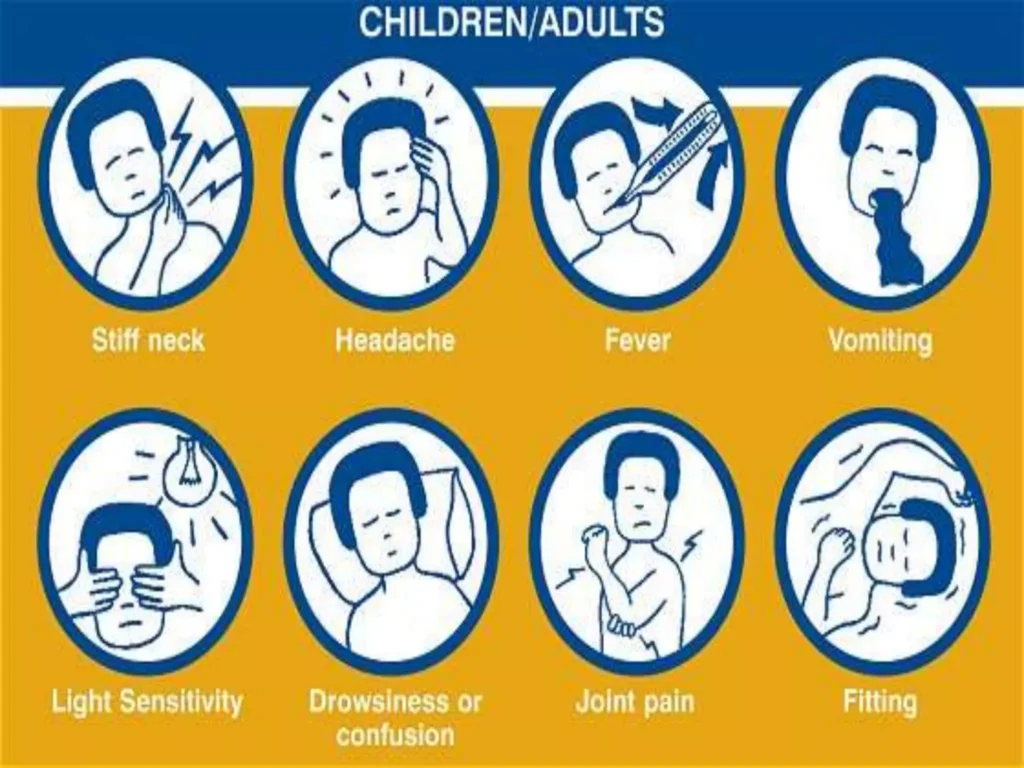
    WH

    The WHAT Approach

    In Simple Terms: "What" asks for a definition. Give a clear, simple explanation of the term or concept.
    1
    Identify term: Pinpoint the specific procedure or concept to define.
    2
    Clear explanation: Offer a concise definition using simple language.

    Simulated Examination Sheet

    Qn: What is sepsis?

    Sepsis is a potentially life-threatening condition that occurs when the body’s response to an infection becomes unregulated, leading to widespread inflammation and organ dysfunction.

    Nursing Exam Question Approach Read More »

    Osteogenesis Imperfecta

    Osteogenesis Imperfecta

    Osteogenesis Imperfecta (OI) Lecture Notes
    Osteogenesis Imperfecta (OI)

    Osteogenesis Imperfecta (OI), often colloquially known as "brittle bone disease," is a rare, inherited genetic disorder primarily characterized by bone fragility that leads to recurrent fractures, often with minimal or no trauma. It is a lifelong condition that can range in severity from very mild, with only a few fractures over a lifetime, to extremely severe, leading to hundreds of fractures, severe deformity, and even perinatal lethality.
    Osteogenesis imperfecta (OI) also known as brittle bone disease, is a genetic disorder characterized by fragile bones that break easily.
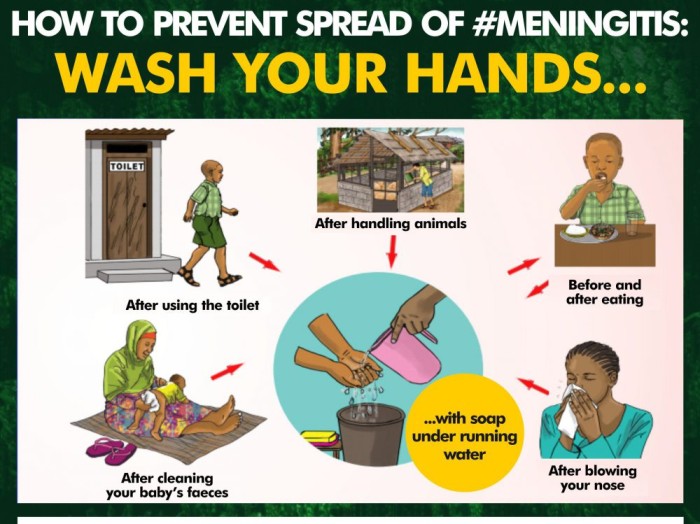
    OR

    Osteogenesis imperfecta is a disorder of bone fragility chiefly caused by mutations is the COL1A1 and COL1A2 that encode type I procollagen.

    Key Defining Characteristics:
    1. Genetic Basis: OI is caused by defects in the genes responsible for producing Type I collagen. Type I collagen is the most abundant protein in the human body and is the primary structural protein found in bone, skin, tendons, ligaments, and sclerae.
    2. Primary Defect: The fundamental problem in OI is either a deficiency in the quantity of Type I collagen or, more commonly, a defect in the quality/structure of the Type I collagen produced.
    3. Impact on Bone: Because Type I collagen is crucial for the strength and flexibility of bone, these defects result in bones that are thin, poorly formed, and abnormally fragile, making them prone to fracture. OI affects both bone quality and bone mass.
    4. Systemic Disorder: While bone fragility is the hallmark, OI is a systemic connective tissue disorder. This means that other tissues rich in Type I collagen can also be affected, leading to a variety of extra-skeletal manifestations such as blue sclerae, hearing loss, dentinogenesis imperfecta (brittle teeth), joint hypermobility, and sometimes cardiovascular or respiratory issues.
    5. Inheritance Pattern: Most forms of OI are inherited in an autosomal dominant manner, meaning only one copy of the defective gene is needed to cause the condition. However, some rarer forms can be autosomal recessive or sporadic (new mutation).
    Types of Osteogenesis Imperfecta

    Osteogenesis Imperfecta is a heterogeneous disorder, meaning it encompasses several types, each with different clinical presentations, genetic mutations, and prognoses. The most widely recognized classification system is the Sillence Classification, which initially described four main types (Type I-IV) and has since expanded to include more (Type V and beyond) as our understanding of the genetic basis has grown.

    I. Classic Sillence Classification (Types I-IV):
    1. Osteogenesis imperfecta Type I (Mildest Form):

    OI type 1 is sufficiently mild that is often found in large pedigrees. Many type 1 families have blue sclerae, recurrent fractures in childhood and presenile hearing loss (30%-60%). Other possible connective tissue abnormalities include hyperextensible joints, easy bruising, thin skin, scoliosis, hernia and mild short stature compared with family members.

    • Genetic Basis: Usually autosomal dominant, often due to a quantitative defect in Type I collagen (reduced amount of structurally normal collagen). Often involves mutations in COL1A1 or COL1A2.
    • Clinical Features:
      • Mild bone fragility: Few fractures, primarily before puberty.
      • Normal or near-normal stature.
      • Blue sclerae (the white part of the eye appears blue due to thinness, allowing choroidal veins to show through) are very common.
      • No bone deformity or very mild deformity.
      • Dentinogenesis imperfecta (DI - brittle, discolored teeth) is rare but can occur.
      • Early adult hearing loss (conductive or sensorineural) is common.
      • Joint hypermobility.
    • Prognosis: Good, with near-normal life expectancy.
    2. Osteogenesis imperfecta Type II (Most Severe/Perinatal Lethal Form):

    Infants with OI type II maybe stillborn or die in the first year of life. Birth weight and length are small for gestational age. There is extreme fragility of the skeleton and other connective tissues. There are multiple intrauterine fractures of long bones which have a crumpled appearance on radiographs. There are striking micromyelia and bowing of extremities; the legs are held abducted at right angles to the body in the frog leg position. The skull is large for body size, with enlarged anterior and posterior fontanels. Sclerae are dark blue-grey.

    • Genetic Basis: Usually autosomal dominant, typically a de novo (new) mutation in COL1A1 or COL1A2, resulting in a severe structural defect in Type I collagen.
    • Clinical Features:
      • Extremely severe bone fragility: Multiple fractures in utero and at birth.
      • Severe bone deformity: Short, bowed limbs, broad long bones, beaded ribs.
      • Small, underdeveloped lungs (pulmonary hypoplasia) due to thoracic deformity.
      • Blue sclerae.
      • Often born prematurely.
    • Prognosis: Usually lethal in the perinatal period (before or shortly after birth) due to respiratory failure.
    3. Osteogenesis imperfecta Type III (Progressively Deforming Form):

    OI type III is the most severe non-lethal form of OI and results in significant physical disability. Birth weight and length are often low normal. Fractures usually occur in utero. There is a relative macrocephaly and triangular faces. Disorganization of the bone matrix results in a “popcorn” appearance at the metaphysis. All type III patients have extreme short stature. Dentinogenetic imperfecta, hearing loss and kyphoscoliosis may be present or develop over time.

    • Genetic Basis: Most commonly autosomal dominant (de novo mutations in COL1A1 or COL1A2), but can also be autosomal recessive. Characterized by a severe qualitative defect in Type I collagen.
    • Clinical Features:
      • Severe bone fragility: Multiple fractures, often present at birth, and continuing throughout life.
      • Progressive bone deformity: Severe limb bowing, kyphoscoliosis (spinal curvature), short stature.
      • Very short stature.
      • Blue, grey, or purple sclerae.
      • Dentinogenesis imperfecta is very common.
      • Hearing loss is common.
      • Large head relative to body size.
    • Prognosis: Significant physical disability; often wheelchair-dependent. Life expectancy is variable, often reduced due to respiratory and cardiac complications.
    4. Osteogenesis imperfecta Type IV (Moderately Severe Form):

    Patients with OI type IV can present with utero fractures or bowing of lower long bones. They can also present with recurrent fractures after ambulation and have normal to moderate short stature. Most children have moderate bowing even with infrequent fractures. Children with OI type IV requires orthopaedic and rehabilitation intervention. Fracture rates decrease after puberty. Radiographically they are osteoporotic and have metaphyseal flaring and vertebral compressions. Patients with type IV have moderate short stature. Scleral hue maybe blue or white.

    • Genetic Basis: Usually autosomal dominant, often due to a qualitative defect in Type I collagen (abnormal collagen structure), commonly involving COL1A1 or COL1A2 mutations.
    • Clinical Features:
      • Moderate bone fragility: Variable number of fractures, often improving after puberty.
      • Variable stature: From near-normal to moderately short.
      • Normal or faintly blue sclerae.
      • Dentinogenesis imperfecta is common.
      • Hearing loss is common.
      • Mild to moderate bone deformity.
    • Prognosis: Variable, generally good with appropriate management, allowing for ambulation and independent living in many cases.
    II. Beyond Sillence: Other Types (e.g., Type V, VI, VII, VIII, etc.):

    As genetic research has advanced, many other types of OI have been identified, often involving mutations in genes other than COL1A1 or COL1A2, which affect collagen processing or bone mineralization. These are generally rarer and include:

    • OI Type V: Characterized by calcification of the interosseous membrane (between forearm bones), radial head dislocation, and a mesh-like appearance on bone biopsy. Normal sclerae, no DI. Often moderate severity.
    • OI Type VI: Moderate severity, distinct bone histology (fish-scale appearance on bone biopsy), normal sclerae, no DI.
    • OI Types VII & VIII: Often recessively inherited, due to defects in genes encoding proteins involved in collagen post-translational modification. Can range from severe to perinatal lethal.
    Etiology of OI

    The etiology (cause) of Osteogenesis Imperfecta is almost exclusively genetic, stemming from mutations in genes that are critical for the production or processing of Type I collagen.

    1. Genetic Mutations:
    • Primary Genes (COL1A1 and COL1A2): The vast majority (around 85-90%) of OI cases are caused by mutations in one of the two genes responsible for coding for Type I collagen:
      • COL1A1: Encodes the alpha-1 chain of Type I collagen.
      • COL1A2: Encodes the alpha-2 chain of Type I collagen.
    • Other Genes: More recently, mutations in over 20 other genes have been identified that cause various types of OI (e.g., Type V and beyond). These genes are involved in the post-translational modification (e.g., hydroxylation, glycosylation), folding, or processing of Type I collagen, or in bone mineralization. Examples include CRTAP, LEPRE1, P3H1, PPIB, SERPINH1, BMP1, FKBP10, PLOD2, WNT1, IFITM5, etc.
      • Significance: These "non-collagen" gene mutations highlight that even if the collagen chains themselves are correctly coded, problems in their assembly or maturation can still lead to OI.
    2. Inheritance Patterns:
    • Autosomal Dominant (Most Common):
      • A single mutated copy of COL1A1 or COL1A2 is sufficient to cause the disease. This is the pattern for OI Types I, II, III, and IV.
      • Often, one parent has the condition, and there's a 50% chance for each child to inherit it.
      • De Novo Mutations: In severe forms (e.g., Type II) or sometimes in Type III/IV, the mutation occurs spontaneously in the affected individual and is not inherited from either parent. In such cases, the parents are unaffected.
    • Autosomal Recessive (Rarer):
      • Both copies of a specific gene (often one of the "non-collagen" genes) must be mutated for the disease to manifest. Parents are typically carriers and unaffected.
      • Examples include some cases of Type III and Type VII/VIII.
    Pathophysiology of Osteogenesis Imperfecta

    The pathophysiology describes how these genetic defects lead to the characteristic fragility of bones and other systemic manifestations.

    1. Normal Type I Collagen Structure and Function:
    • Type I collagen is a triple helix composed of three protein chains: two alpha-1 chains (encoded by COL1A1) and one alpha-2 chain (encoded by COL1A2).
    • These triple helices are secreted from cells (like osteoblasts in bone), where they assemble into larger fibrils.
    • These fibrils then combine with minerals (primarily hydroxyapatite) to form the rigid yet flexible matrix of bone, providing its strength and resistance to fracture.
    2. Defective Type I Collagen in OI:

    A. Quantitative Defect (OI Type I):

    • Mechanism: Typically due to a COL1A1 mutation that leads to the degradation of one of the alpha-1 chains before it can be incorporated into the triple helix.
    • Result: The cells produce half the normal amount of Type I collagen, but the collagen that is produced is structurally normal.
    • Impact: Bones are still strong, but there's simply less of the structural protein. This leads to reduced bone mass and increased fragility, but usually milder symptoms.

    B. Qualitative Defect (OI Types II, III, IV, and others):

    • Mechanism: Mutations (often point mutations, insertions, or deletions) within COL1A1 or COL1A2 lead to the production of abnormal alpha chains. These abnormal chains interfere with the assembly, stability, or post-translational modification of the entire triple helix. A common mutation involves the substitution of a glycine residue (which is crucial for the tight coiling of the helix) with a bulkier amino acid.
    • Result:
      • Defective Triple Helix: The abnormal chains disrupt the tight triple helical structure, making the collagen unstable and prone to degradation.
      • "Procollagen Suicide": Even a single abnormal chain can lead to the destruction of the entire triple helix (known as a dominant-negative effect), resulting in significantly reduced amounts of functional collagen. The collagen that does form is structurally abnormal.
      • Increased Apoptosis: Cells (osteoblasts) trying to produce and process this defective collagen become stressed, leading to increased programmed cell death (apoptosis).
    • Impact: Bones are not only deficient in collagen but also contain poorly organized, weak, and brittle collagen fibers. This severely compromises bone integrity, leading to profound bone fragility and deformity. The severity correlates with the degree of structural disruption.

    C. Defects in Collagen Processing/Bone Mineralization (OI Types V+):

    • Mechanism: Mutations in non-collagen genes affect enzymes or proteins involved in critical steps after the collagen chains are synthesized (e.g., hydroxylation, glycosylation, folding, cross-linking) or influence osteoblast function and bone mineralization directly.
    • Result: These defects indirectly lead to poorly formed or poorly mineralized bone, resulting in increased fragility, even though the primary Type I collagen chains might be initially normal.
    Clinical Manifestations of OI

    These symptoms vary significantly depending on the type and severity of OI, but they all stem from the defective Type I collagen present throughout the body's connective tissues.

    I. Skeletal Manifestations (Primary and Most Recognized):
    1. Bone Fragility and Fractures:
      • Hallmark symptom. Patients experience recurrent fractures, often with minimal or no trauma (pathological fractures).
      • Severity: Can range from a few fractures in a lifetime (Type I) to hundreds, even in utero or during delivery (Type II, III).
      • Fracture types: Long bone fractures (femur, tibia, humerus, radius/ulna) are common, but vertebral compression fractures, rib fractures, and skull fractures also occur.
      • Pseudarthrosis: Non-union of a fracture, forming a "false joint." This is a particularly challenging complication.
      • Wormian Bones: Multiple small, irregular bones within the cranial sutures, visible on skull X-rays. Not unique to OI but common.
    2. Bone Deformities:
      • Bowing of long bones: Especially in the lower extremities (e.g., tibia, femur), due to repeated microfractures and abnormal healing.
      • Vertebral compression fractures: Can lead to kyphosis (hunchback), scoliosis (lateral curvature), or kyphoscoliosis, impacting height and respiratory function.
      • Pectus excavatum/carinatum: Deformities of the sternum.
      • Pelvic deformities: Can affect gait and ambulation.
      • Skull deformities: Platybasia (flattening of the skull base) or basilar invagination (upward displacement of the odontoid process), which can cause neurological symptoms.
    3. Short Stature: Common in most types, especially Type III. It is a direct result of multiple fractures, vertebral compression, and bone growth abnormalities.
    4. Osteoporosis: Reduced bone mineral density is a constant feature across all types, contributing to fragility.
    II. Extra-Skeletal Manifestations (Affecting other connective tissues):
    1. Blue Sclerae:
      • Classic sign. The white part of the eyes appears blue, purplish, or greyish.
      • Cause: Thinness of the sclera allows the underlying choroidal blood vessels to show through.
      • Prevalence: Very common in Type I and II, variable in Type III and IV. Normal sclerae are present in some types (e.g., Type V).
    2. Dentinogenesis Imperfecta (DI):
      • Description: A dental abnormality affecting the dentin (the tissue beneath the enamel). Teeth appear opalescent, translucent, or discolored (yellow, brown, grey-blue). They are often brittle, easily fractured, and prone to rapid wear.
      • Prevalence: Common in Type III and IV, rare in Type I, not present in Type V.
    3. Hearing Loss:
      • Type: Can be conductive, sensorineural, or mixed.
      • Onset: Typically begins in early adulthood, but can occur in childhood, and is progressive.
      • Cause: Thought to be due to abnormal collagen in the ossicles (leading to otosclerosis-like changes) and/or in the inner ear structures.
      • Prevalence: Common in Type I, III, and IV.
    4. Joint Hypermobility and Ligamentous Laxity:
      • Description: Joints have an unusually wide range of motion.
      • Cause: Defective collagen in ligaments and tendons.
      • Complications: Increased risk of dislocations and subluxations, joint pain.
    5. Skin Manifestations:
      • Thin, translucent skin: Due to defective collagen.
      • Easy bruising: Capillary fragility.
      • Hernias: Inguinal or umbilical hernias are more common due to weaker connective tissue.
    6. Cardiovascular Manifestations:
      • Rare but serious.
      • Aortic root dilation: Weakness of collagen in the aortic wall, increasing the risk of aortic dissection.
      • Mitral valve prolapse: Affecting valve integrity.
    7. Respiratory Compromise:
      • Cause: Primarily due to severe thoracic deformities (kyphoscoliosis, pectus deformities) that restrict lung expansion.
      • Complications: Recurrent respiratory infections, restrictive lung disease, and in severe cases, respiratory failure. This is often the cause of mortality in severe types.
    8. Neurological Manifestations:
      • Basilar invagination: Upward protrusion of the top of the cervical spine into the skull, which can compress the brainstem or cerebellum, leading to hydrocephalus, headaches, balance issues, or neurological deficits.
      • Hydrocephalus: Occasionally seen, often related to basilar invagination.
    9. Constitutional Symptoms:
      • Excessive sweating
      • Heat intolerance: Due to altered thermoregulation.
    Diagnostic Methods for OI

    The process aims to confirm the presence of the disorder, characterize its type and severity, and rule out other conditions that might mimic OI.

    I. Clinical Evaluation:

    This is often the first step and relies on recognizing the characteristic signs and symptoms.

    1. Medical History:
      • Recurrent fractures: Especially with minimal or no trauma. In children, it's crucial to differentiate OI from child abuse (though they can co-exist).
      • Family history: Presence of OI or features suggestive of OI (e.g., unexplained fractures, blue sclerae, early hearing loss) in relatives.
      • Other symptoms: History of blue sclerae, dental issues (Dentinogenesis Imperfecta), hearing loss, joint laxity, short stature, scoliosis, or respiratory problems.
      • Prenatal history: For severe forms, history of short long bones, fractures, or bowing on prenatal ultrasound.
    2. Physical Examination:
      • Skeletal features: Assessment for short stature, limb deformities (bowing), kyphoscoliosis, presence of old fracture sites, joint hypermobility.
      • Extra-skeletal features:
        • Ocular: Inspect sclerae for blue, grey, or purple discoloration.
        • Dental: Examine teeth for discoloration, brittleness, and wear patterns consistent with Dentinogenesis Imperfecta.
        • Auditory: Assess for hearing loss.
        • Skin: Check for unusual thinness or easy bruising.
    II. Imaging Studies (Radiography):

    X-rays are invaluable for confirming bone fragility and identifying characteristic features of OI.

    1. Skeletal Survey:
      • Purpose: A series of X-rays of the entire skeleton (skull, spine, long bones, hands, feet).
      • Findings in OI:
        • Osteopenia: Generalized decrease in bone density (bones appear translucent).
        • Fractures: Presence of new or healed fractures in various stages, often showing poor callus formation.
        • Bone deformities: Bowing of long bones, kyphoscoliosis, vertebral compression fractures (codfish vertebrae).
        • Wormian bones: Small, irregular bones within the cranial sutures (especially in Type I and III).
        • "Popcorn" appearance of metaphyses: Irregular calcification at the ends of long bones in some types.
        • Broadening of long bones: Particularly in severe forms.
        • Beaded ribs: In severe perinatal forms (Type II).
    2. Dual-energy X-ray Absorptiometry (DXA/DEXA) Scan:
      • Purpose: Measures bone mineral density (BMD).
      • Findings: Typically shows low BMD (osteoporosis), which supports the diagnosis of OI and helps monitor treatment effectiveness, although low BMD alone is not diagnostic of OI.
    III. Genetic Testing (Molecular Confirmation):

    This is becoming the gold standard for definitive diagnosis and subtyping, especially when clinical features are ambiguous or for genetic counseling.

    1. Candidate Gene Sequencing:
      • Purpose: Analysis of the COL1A1 and COL1A2 genes first, as they are responsible for the majority of OI cases.
      • Method: DNA sequencing to identify mutations (e.g., missense, nonsense, frameshift mutations).
      • Yield: Identifies mutations in about 85-90% of individuals with classic OI.
    2. Next-Generation Sequencing (NGS) Panels:
      • Purpose: For cases where COL1A1 and COL1A2 mutations are not found, or when a broader genetic investigation is warranted.
      • Method: Multi-gene panels that simultaneously sequence other known OI-causing genes (e.g., CRTAP, LEPRE1, P3H1, IFITM5, etc.).
      • Yield: Can identify mutations in an additional 10-15% of cases.
    3. Whole Exome Sequencing (WES)/Whole Genome Sequencing (WGS):
      • Purpose: Used in complex or atypical cases where gene panels do not yield a diagnosis.
      • Method: Sequences all protein-coding regions (exome) or the entire genome.
    IV. Biochemical Testing (Less Common for Diagnosis, More for Research):
    1. Skin Biopsy (Fibroblast Culture):
      • Purpose: Historically used to analyze the quantity and quality of Type I collagen produced by cultured skin fibroblasts.
      • Method: A small skin sample is taken, and fibroblasts are cultured. The collagen they produce is then analyzed biochemically (e.g., SDS-PAGE, electrophoresis) for abnormalities in structure or amount.
      • Current Use: Largely superseded by genetic testing, but can still be useful in cases where genetic testing is negative but clinical suspicion remains high, or for identifying novel collagen defects.
    V. Differential Diagnosis (Conditions to Rule Out):

    It's important to differentiate OI from conditions with similar presentations, especially recurrent fractures:

    • Child abuse: Especially in infants and young children, distinguishing OI from non-accidental trauma is critical. OI fractures often have characteristic patterns (e.g., metaphyseal corner fractures are rare in OI unless trauma was severe), and the presence of other OI features (blue sclerae, DI) helps.
    • Rickets: Vitamin D deficiency causing bone softening.
    • Hypophosphatasia: Metabolic bone disorder affecting bone mineralization.
    • Other skeletal dysplasias: A group of genetic disorders affecting bone and cartilage growth.
    • Nutritional deficiencies: (e.g., severe calcium deficiency).
    • Menkes syndrome: Copper deficiency leading to fragile bones and neurological issues.
    Medical Management and Treatment Approaches for OI
    Aims of Management
    • Minimize fracture incidence.
    • Manage pain.
    • Optimize bone health and muscle strength.
    • Prevent and correct deformities.
    • Maximize functional independence and mobility.
    • Address extra-skeletal manifestations.
    • Improve overall quality of life.
    I. Pharmacological Management:

    The cornerstone of medical treatment for OI, aimed at increasing bone density and reducing fracture rates.

    1. Bisphosphonates:
      • Mechanism: These drugs inhibit osteoclast activity (cells that break down bone), thereby slowing bone resorption and increasing bone mineral density.
      • Commonly used: Pamidronate (IV), zoledronic acid (IV), alendronate (oral), risedronate (oral). IV formulations are often preferred in children and severe cases due to better absorption and efficacy. Pamidronate is administered IV in cycles of 3 consecutive days at 2–4-month intervals with doses ranging from 0.5–1 mg/kg/day, depending on age, with a corresponding annual dose of 9 mg/kg.
      • Benefits: Demonstrated to increase bone mineral density, reduce fracture rates (especially vertebral fractures), decrease bone pain, and improve mobility in many patients.
      • Administration: Typically given cyclically (e.g., IV pamidronate every 1-3 months).
      • Side Effects: Acute phase reaction (fever, flu-like symptoms) with first IV dose, hypocalcemia (rare, but monitored), osteonecrosis of the jaw (extremely rare in children, more associated with high doses in cancer treatment), atypical femoral fractures (also rare).
    2. Other Potential Therapies (Under Research or Limited Use):
      • Denosumab: A monoclonal antibody that inhibits osteoclast formation and function, a potential alternative for bisphosphonate non-responders or those with renal impairment.
      • Teriparatide (PTH analog): An anabolic agent that stimulates bone formation, approved for osteoporosis in adults, but its role in OI is still being investigated, mainly in adult patients.
      • Romosozumab: Another anabolic agent that promotes bone formation and inhibits bone resorption, still under investigation for OI.
      • Gene therapy/Cell-based therapies: These are promising areas of research but are currently experimental and not standard treatment.
      • Calcium and vitamin D intake are based on recommended dietary allowance for child’s age (700–1300 mg/day calcium and 400–600 IU vitamin D) should be supplemented before treatment is initiated if dietary intake is inadequate. Indices of calcium homeostasis (e.g., calcium, phosphorous, and parathyroid hormone) and renal function test should be assessed before initiation of treatment and followed every 6–12 months. – Calcium levels are to be assessed before each IV bisphosphonate infusion to assure that child is not hypercalcaemic.
    II. Orthopedic Management (Surgical Interventions):

    Crucial for managing fractures and correcting deformities.

    1. Intramedullary Rodding:
      • Procedure: Surgical insertion of metal rods (telescoping or non-telescoping) into the hollow medullary cavity of long bones (especially femur and tibia).
      • Purpose: To provide internal support, stabilize bones, prevent fractures, and correct existing deformities. Telescoping rods are particularly useful in growing children as they lengthen with the bone.
      • Benefits: Reduces fracture frequency, prevents severe bowing, and facilitates ambulation.
    2. Fracture Management:
      • Acute fractures: Managed with gentle handling, appropriate immobilization (casts, splints), and pain control. Surgical fixation may be required for complex fractures.
      • Delayed union/Non-union: May require surgical intervention (e.g., bone grafting, repeat rodding).
    3. Correction of Deformities:
      • Osteotomy: Surgical cutting and realignment of bone segments to correct severe bowing or angulation, often followed by rodding.
      • Spinal surgery: For severe kyphoscoliosis that compromises lung function or neurological integrity, involving spinal fusion and instrumentation.
    III. Rehabilitation and Physical Therapy:

    Essential for maximizing mobility, strength, and function.

    1. Physical Therapy (PT):
      • Focus: Gentle, low-impact exercises to maintain muscle strength, improve balance, and enhance mobility without risking fractures.
      • Techniques: Hydrotherapy (swimming) is often excellent, strengthening exercises for core and limb muscles, gait training, stretching.
      • Goals: Prevent muscle atrophy, improve posture, teach safe movement and transfers.
    2. Occupational Therapy (OT):
      • Focus: Adapting activities of daily living (ADLs) and environments to promote independence.
      • Techniques: Training in adaptive equipment (e.g., wheelchairs, walkers, crutches), home modifications, energy conservation techniques.
    IV. Assistive Devices and Mobility Aids:
    • Wheelchairs: Manual or power wheelchairs for individuals with severe mobility limitations.
    • Walkers, crutches, braces: To provide support and aid in ambulation for those who can walk.
    • Splints/Orthoses: To support fragile limbs and prevent deformities.
    V. Management of Extra-Skeletal Manifestations:
    1. Dental Care:
      • Dentinogenesis Imperfecta (DI): Regular dental check-ups, fluoride treatments, good oral hygiene. Crowns or veneers can protect brittle teeth.
      • Orthodontics: May be needed to correct malocclusion.
    2. Audiology:
      • Hearing loss: Regular hearing assessments. Hearing aids or cochlear implants may be necessary.
    3. Ophthalmology:
      • Blue sclerae: No specific treatment, but ophthalmological evaluation for any visual concerns.
    4. Pulmonary Management:
      • Respiratory insufficiency: Aggressive management of respiratory infections, respiratory support (e.g., BiPAP) if needed, physical therapy to improve lung function. Spinal surgery for severe scoliosis can improve lung capacity.
    5. Neurological Management:
      • Basilar Invagination: Regular neurological assessments. Surgical decompression may be required in severe cases with neurological compromise.
    VI. Pain Management:
    • Acute pain: Due to fractures, managed with analgesics (opioid and non-opioid), muscle relaxants, and immobilization.
    • Chronic pain: Often present due to multiple fractures, deformities, or joint issues. May require a chronic pain management approach, including medication, physical therapy, and psychological support.
    VII. Nutritional Support:
    • Balanced diet: Essential for bone health and overall well-being.
    • Calcium and Vitamin D: Supplementation as needed, but generally not a primary cause of OI.
    • Weight management: Preventing obesity is important to reduce stress on fragile bones.
    VIII. Psychosocial Support:
    • Counseling: For patients and families to cope with the challenges of a chronic condition, body image issues, pain, and disability.
    • Support groups: Connecting with others who have OI can be invaluable.
    • Educational support: Ensuring children with OI receive appropriate educational accommodations.
    Potential Complications of OI
    I. Skeletal Complications:
    1. Recurrent Fractures: The most defining complication. Even with treatment, individuals may experience multiple fractures, leading to pain, immobilization, and repeated hospitalizations.
    2. Progressive Bone Deformities: Despite rodding and other surgical interventions, bones can continue to bow, leading to significant limb deformities, short stature, and gait abnormalities.
    3. Kyphoscoliosis: Progressive curvature of the spine (forward hunching and lateral curve), particularly common in Type III.
    4. Basilar Invagination: Upward protrusion of the base of the skull into the foramen magnum, potentially compressing the brainstem or cerebellum.
    5. Pseudarthrosis / Non-union: A fracture fails to heal properly, creating a "false joint" or remaining ununited.
    6. Bone Pain: Chronic bone pain is common, even in the absence of acute fractures, and can significantly impact quality of life.
    7. Osteopenia/Osteoporosis: Persistently low bone mineral density, increasing the risk of fractures throughout life.
    II. Extra-Skeletal Complications:
    1. Respiratory Complications: A major cause of morbidity and mortality, especially in severe OI. Caused by:
      • Severe kyphoscoliosis and rib cage deformities restricting lung expansion.
      • Reduced chest wall compliance.
      • Muscle weakness.
    2. Hearing Loss: Progressive hearing loss (conductive, sensorineural, or mixed) commonly affects adults with OI, starting in childhood or young adulthood.
    3. Dental Complications (Dentinogenesis Imperfecta): Brittle, discolored teeth prone to rapid wear, decay, and fracture.
    4. Cardiovascular Complications: Less common but potentially serious. Can include:
      • Aortic Root Dilatation/Aortic Dissection: Weakening of the aortic wall due to defective collagen.
      • Mitral Valve Prolapse: Also due to connective tissue weakness.
    5. Ophthalmological Complications: While blue sclerae are a sign, rarely, extreme scleral thinness can lead to globe rupture from minor trauma. Other issues like corneal abnormalities can occur.
    6. Neurological Complications: Beyond basilar invagination, hydrocephalus can occur (often secondary to basilar invagination or skull deformities).
    7. Gastrointestinal Complications: Constipation is common due to reduced mobility, medications, and sometimes hypotonia.
    8. Psychosocial Complications: Dealing with chronic pain, physical limitations, frequent medical appointments, body image issues, and social stigma can lead to:
      • Anxiety, depression.
      • Low self-esteem.
      • Reduced participation in social and educational activities.
    Prognosis and Quality of Life for Individuals with OI

    The prognosis and quality of life for individuals with Osteogenesis Imperfecta vary tremendously, largely dependent on the specific type of OI, the severity of the condition, and the quality of medical and supportive care received. While there is no cure, significant advancements in treatment and management have dramatically improved outcomes for many.

    I. Prognosis:
    1. OI Type II (Perinatal Lethal):
      • Prognosis: The most severe form, almost universally lethal in the perinatal period (before or shortly after birth). Death usually results from extreme bone fragility leading to severe pulmonary hypoplasia (underdeveloped lungs) and respiratory failure.
      • Life Expectancy: Hours to days.
    2. OI Type III (Progressively Deforming):
      • Prognosis: Historically, life expectancy was significantly reduced, with many not surviving past childhood. However, with modern multidisciplinary care (especially bisphosphonate therapy, spinal surgery, and respiratory support), survival into adulthood is now common.
      • Life Expectancy: Variable, often reduced compared to the general population, but many live well into adulthood. Respiratory complications and basilar invagination are major concerns.
    3. OI Type I & IV (Mild to Moderately Severe):
      • Prognosis: Individuals with Type I (the mildest form) generally have a near-normal life expectancy.
      • Type IV individuals also have a generally good prognosis, with many living into old age.
      • Life Expectancy: Often normal or near-normal, especially with appropriate management. Complications like cardiovascular issues (rarely), severe hearing loss, or uncontrolled pain can impact longevity and well-being.
    Factors Influencing Prognosis:
    • OI Type and Severity: The most dominant factor.
    • Access to Care: Early diagnosis and access to multidisciplinary care (including bisphosphonates, orthopedic surgery, physical therapy) are critical for improving outcomes.
    • Management of Complications: Proactive monitoring and timely intervention for respiratory issues, spinal deformities, and basilar invagination are vital.
    • Genetic Mutation: The specific genetic variant can sometimes predict severity and hence prognosis.
    II. Quality of Life (QoL):

    Quality of life in OI is multifaceted and can be significantly impacted by physical limitations, pain, and psychosocial challenges, but many individuals lead fulfilling lives.

    1. Physical Function and Mobility:
      • Impact: Varies from full independent ambulation (Type I) to reliance on wheelchairs (severe Type III). Frequent fractures and surgeries can lead to periods of immobilization and rehabilitation.
      • Improvements: Intramedullary rodding, physical therapy, and assistive devices significantly enhance mobility and independence.
    2. Pain Management:
      • Impact: Chronic pain (from old fractures, deformities, or simply living with fragile bones) is a major concern that can severely diminish QoL.
      • Improvements: Effective pain management strategies (pharmacological, physical therapy, psychological support) are essential.
    3. Independence and Daily Living:
      • Impact: Depending on severity, individuals may require assistance with activities of daily living (ADLs), impacting personal independence.
      • Improvements: Occupational therapy, home modifications, and adaptive equipment can greatly increase independence.
    4. Education and Employment:
      • Impact: Physical limitations and frequent medical appointments can pose challenges to regular school attendance and employment.
      • Improvements: Inclusive educational environments, vocational training, and supportive workplaces are crucial. Many individuals with OI successfully pursue higher education and careers.
    5. Social and Emotional Well-being:
      • Impact: Living with a visible physical disability, facing social stigma, and dealing with chronic health issues can lead to emotional distress, anxiety, and depression.
      • Improvements: Strong social support networks (family, friends, patient advocacy groups), counseling, and positive coping strategies are vital for mental health.
    6. Family Impact:
      • Impact: OI can place significant emotional, financial, and logistical burdens on families. Parents of children with severe OI often face intense stress and challenges.
      • Improvements: Genetic counseling, psychosocial support, and connecting with other families can be immensely helpful.
    7. Advancements and Advocacy:
      • Ongoing research into new treatments (e.g., gene therapy, anabolic agents) offers hope for future improvements in QoL.
      • Patient advocacy groups play a crucial role in raising awareness, funding research, and providing support and resources to individuals and families affected by OI.
    Nursing Diagnoses and Specific Nursing Interventions for OI

    Nursing care for individuals with Osteogenesis Imperfecta is highly focused on safety, pain management, promoting mobility, supporting development, and providing education and psychosocial support.

    I. Risk for Injury: Fracture
    • Related to: Bone fragility secondary to defective collagen synthesis.
    • Defining Characteristics (Examples): Recurrent fractures with minimal trauma, osteopenia/osteoporosis, positive family history, genetic diagnosis of OI.
    Specific Nursing Interventions Details
    Safe Handling and Positioning
    • Newborns/Infants: Lift by supporting the entire body, especially head, neck, and buttocks. Avoid pulling on extremities. Use soft blankets for transfer. Avoid lifting by ankles or armpits.
    • Children/Adults: Teach safe transfer techniques, log-rolling for bed mobility. Use soft padding on surfaces, side rails.
    • Positioning: Ensure proper body alignment, use pillows/cushions to support limbs and prevent pressure injuries, and minimize stress on bones.
    Environmental Modifications
    • Home/School: Remove clutter, ensure adequate lighting, secure rugs, install grab bars, provide assistive devices (ramps, stairlifts) as needed.
    • Hospital: Call bell within reach, bed in lowest position, side rails up.
    Activity Modification
    • Education: Educate patient and family on safe activity levels, avoiding high-impact sports or activities with high fall risk. Encourage low-impact exercises (swimming, cycling) to maintain muscle strength and bone health.
    • Supervision: Closely supervise children during play.
    Nutritional Support Ensure adequate intake of calcium and Vitamin D, as part of overall bone health, though not a primary treatment for OI.
    Medication Administration & Monitoring Administer bisphosphonates as prescribed, monitoring for side effects (e.g., acute phase reaction with IV doses, hypocalcemia) and ensuring proper hydration.
    Education
    • Teach family/caregivers signs of a new fracture (sudden pain, swelling, deformity, inability to move a limb).
    • Emphasize the importance of wearing protective gear (helmets for head protection) for specific activities.
    II. Acute/Chronic Pain
    • Related to: Fractures, bone deformities, surgical interventions, physical therapy, muscle spasms.
    • Defining Characteristics (Examples): Verbal reports of pain, grimacing, guarding behavior, restlessness, changes in vital signs (acute), withdrawal, altered activity level (chronic).
    Specific Nursing Interventions Details
    Pain Assessment
    • Regularly assess pain using an age-appropriate pain scale (e.g., FLACC for infants, Wong-Baker FACES for children, numeric scale for adults).
    • Assess location, intensity, quality, and aggravating/alleviating factors.
    Pharmacological Interventions
    • Administer analgesics (NSAIDs, acetaminophen, opioids for severe acute pain) as prescribed, on a scheduled basis for acute pain, or PRN for breakthrough pain.
    • Consider adjuvant therapies (muscle relaxants, neuropathic pain medications) for chronic pain.
    Non-Pharmacological Interventions
    • Comfort Measures: Repositioning, cold/heat packs, gentle massage (away from fracture sites), distraction (music, stories, games).
    • Physical Therapy: Collaborate with PT for pain-reducing exercises, stretching, and safe movement techniques.
    • Psychological Support: Teach relaxation techniques (deep breathing, guided imagery), provide diversional activities. Refer to child life specialists or pain psychologists as needed.
    Immobilization Ensure proper immobilization of fractured limbs (casts, splints) to reduce pain and promote healing. Monitor for complications (neurovascular compromise).
    III. Impaired Physical Mobility
    • Related to: Bone fragility, pain, frequent fractures, deformities, muscle weakness, fear of re-injury.
    • Defining Characteristics (Examples): Inability to ambulate independently, limited range of motion, reluctance to move, decreased muscle strength, reliance on assistive devices.
    Specific Nursing Interventions Details
    Encourage Safe Mobilization
    • Collaborate with Physical and Occupational Therapy to implement a tailored exercise program focusing on strengthening, balance, and safe transfers.
    • Encourage hydrotherapy (swimming) as a safe and effective exercise.
    • Use assistive devices (walkers, crutches, wheelchairs) as appropriate, ensuring they are properly fitted and used.
    Maintain Joint Mobility
    • Perform passive or active range of motion exercises gently, ensuring no force against resistance.
    • Prevent contractures through proper positioning and stretching.
    Promote Independence in ADLs
    • Collaborate with OT to adapt the environment and provide adaptive equipment for dressing, bathing, feeding, etc.
    • Encourage participation in self-care activities to the extent possible.
    Prevent Deconditioning Minimize periods of prolonged bed rest. Encourage out-of-bed activities as soon as medically stable.
    Address Fear of Movement Provide positive reinforcement for effort, reassure patient that safe movement is encouraged, and educate on how to minimize risks.
    IV. Impaired Verbal Communication / Impaired Social Interaction (Related to Hearing Loss)
    • Related to: Progressive hearing loss (conductive, sensorineural, or mixed)
    • Defining Characteristics (Examples): Difficulty hearing conversations, asking for repetition, withdrawal from social situations, use of hearing aids.
    Specific Nursing Interventions Details
    Hearing Assessment Ensure regular audiologic assessments as recommended.
    Facilitate Communication
    • Speak clearly and distinctly, face the patient, and ensure good lighting.
    • Reduce background noise.
    • Use visual aids (gestures, writing) as needed.
    • Ensure hearing aids/cochlear implants are worn, charged, and functioning correctly.
    Referrals
    • Refer to audiology for hearing aids or other interventions.
    • Consider referral for communication strategies or sign language if appropriate.
    Social Support Encourage participation in social activities, providing strategies to manage communication challenges.
    V. Inadequate protein energy nutritional intake (Related to Dental Issues / Pain)
    • Related to: Dentinogenesis Imperfecta, pain with chewing, difficulty with oral hygiene.
    • Defining Characteristics (Examples): Weight loss, poor appetite, reports of difficulty chewing, brittle teeth, dental pain.
    Specific Nursing Interventions Details
    Dental Care
    • Encourage regular dental check-ups and good oral hygiene.
    • Collaborate with dentists for restorative care (crowns, veneers) or dentures if necessary.
    Dietary Modifications
    • Offer soft, nutrient-dense foods that are easy to chew.
    • Encourage small, frequent meals.
    • Provide high-calorie, high-protein supplements if indicated.
    Pain Management Ensure adequate pain control, especially before meals.
    VI. Inadequate health Knowledge
    • Related to: Lack of exposure or recall of information about OI, its management, and potential complications.
    • Defining Characteristics (Examples): Verbalization of misconceptions, inaccurate follow-through on instructions, asking questions about the disease.
    Specific Nursing Interventions Details
    Assess Learning Needs Determine the patient's and family's current knowledge, readiness to learn, and preferred learning style.
    Provide Comprehensive Education
    • Explain the disease process in age-appropriate and understandable terms.
    • Educate on medication regimens (bisphosphonates: purpose, administration, side effects).
    • Teach safe handling, positioning, and transfer techniques.
    • Provide information on exercise, nutrition, and environmental safety.
    • Discuss potential complications and signs/symptoms to report (e.g., increased pain, new deformities, respiratory distress, neurological changes).
    • Provide written materials, reputable websites, and support group information.
    Reinforce and Evaluate Regularly reinforce teaching and assess understanding through teach-back methods or return demonstrations.
    VII. Risk for Ineffective Breathing Pattern
    • Related to: Kyphoscoliosis, chest wall deformities, muscle weakness.
    • Defining Characteristics (Examples): Observed spinal curvature, pectus deformities, reports of shortness of breath, frequent respiratory infections.
    Specific Nursing Interventions Details
    Respiratory Assessment
    • Monitor respiratory rate, effort, depth, breath sounds, and oxygen saturation.
    • Assess for signs of respiratory distress (tachypnea, retractions, nasal flaring).
    Pulmonary Hygiene
    • Encourage deep breathing and coughing exercises.
    • Assist with position changes to promote lung expansion.
    • Ensure adequate hydration to thin secretions.
    • Collaborate with respiratory therapy for chest physiotherapy as indicated.
    Infection Prevention
    • Emphasize hand hygiene and influenza/pneumococcal vaccinations.
    • Promptly address signs of respiratory infection.
    Monitor for Progression of Deformity
    • Regularly assess spinal curvature and chest wall mechanics.
    • Prepare patient for surgical interventions if recommended.
    VIII. Compromised Family Coping / Caregiver Role Strain
    • Related to: Chronic illness, complex care needs, financial burden, emotional stress, potential for child abuse accusations.
    • Defining Characteristics (Examples): Expressed feelings of inadequacy, fatigue, anxiety, depression, difficulty managing care demands, social isolation.
    Specific Nursing Interventions Details
    Emotional Support
    • Provide empathetic listening and validate feelings.
    • Normalize their experience and assure them they are not alone.
    Education and Resources
    • Ensure comprehensive education on OI and management to empower them.
    • Connect families with support groups (e.g., Osteogenesis Imperfecta Foundation).
    • Provide information on financial assistance programs, respite care, and counseling services.
    Facilitate Communication
    • Encourage open communication between family members and with the healthcare team.
    • Address concerns about potential child abuse accusations head-on, providing documentation and support.

    Quick Quiz

    Osteogenesis Imperfecta Quiz

    Paediatrics - mobile-friendly and focused practice.

    Privacy: Your details are used only for quiz tracking and certificates.

    Osteogenesis Imperfecta Read More »

    Osteomyelitis

    Osteomyelitis 

    Osteomyelitis Lecture Notes
    Osteomyelitis

    Osteomyelitis is a serious infection of the bone and bone marrow.

    The term itself literally means "inflammation of the bone marrow" (osteo = bone, myel = marrow, itis = inflammation).

    This infection can affect any bone in the body, but it most commonly occurs in the long bones of the arms and legs (such as the femur, tibia, and humerus) in children, and in the vertebrae or feet in adults.

    Key Characteristics:
    1. Infectious Origin: Osteomyelitis is primarily caused by microorganisms, most commonly bacteria. Staphylococcus aureus is by far the most frequent causative agent across all age groups, but other bacteria, fungi, and in rare cases, viruses, can also be responsible.
    2. Location: The infection can involve any part of the bone, including the:
      • Periosteum: The outer membrane covering the bone.
      • Cortex: The dense outer layer of the bone.
      • Medullary cavity: The inner cavity containing bone marrow.
      • Cancellous (spongy) bone: Found at the ends of long bones and in flat bones.
    3. Pathophysiology (How it develops):
      • Invasion: Microorganisms reach the bone through various routes (see below).
      • Inflammation and Edema: The infection triggers an inflammatory response, leading to edema (swelling) within the rigid confines of the bone.
      • Compromised Blood Supply: As inflammation and pressure increase, blood vessels become compressed, leading to decreased blood flow (ischemia) to the affected area of the bone.
      • Bone Necrosis: Without adequate blood supply, bone cells die, leading to the formation of necrotic bone.
      • Pus Formation: The body's immune response attempts to wall off the infection, leading to the formation of pus (abscess).
      • Sequestrum and Involucrum: The dead bone (sequestrum) can become separated from the living bone. The body may then try to form new bone (involucrum) around the infected and necrotic area. This combination makes treatment challenging as antibiotics may not effectively penetrate the dead bone.
      • Spread: The infection can spread to adjacent soft tissues, joints (septic arthritis), or even rupture through the skin, forming draining sinuses.
    Routes of Infection:
    1. Hematogenous (Bloodstream) Spread: This is the most common route, especially in children. Bacteria from a distant infection (e.g., skin infection, respiratory tract infection, urinary tract infection, or even a minor cut) travel through the bloodstream and seed in the bone, often in the highly vascular metaphysis of long bones.
    2. Direct Inoculation/Contiguous Spread:
      • Trauma: Open fractures, penetrating wounds, animal bites, or surgery (e.g., orthopedic hardware placement).
      • Spread from Adjacent Soft Tissue Infection: For example, a deep diabetic foot ulcer can extend into the underlying bone.
      • Medical Procedures: IV catheter insertions, heel sticks in neonates.
    3. Vascular Insufficiency: Often seen in adults with diabetes or peripheral vascular disease, where poor blood supply to an area (e.g., the foot) makes it susceptible to infection that then spreads to the bone.
    Wald Vogel Classification of Osteomyelitis

    Osteomyelitis can be classified in several ways, each providing useful information about the infection's characteristics and implications for management. The most common classification systems consider the duration of the infection, the etiology (cause and route of infection).

    I. Classification by Duration:

    This is one of the most clinically relevant classifications as it often dictates the urgency and approach to treatment.

    1. Acute Osteomyelitis:
      • Onset: Rapid, typically within days to a few weeks (usually less than 2 weeks) after the initial infection.
      • Symptoms: Often presents with systemic signs such as fever, chills, malaise, and localized signs like intense pain, swelling, warmth, and redness over the affected bone.
      • Prognosis: If promptly diagnosed and treated with appropriate antibiotics, acute osteomyelitis usually resolves without long-term complications.
      • Common in: Children (often hematogenous spread).
    2. Subacute Osteomyelitis:
      • Onset: Slower than acute, symptoms present over weeks to months (typically 2 weeks to a few months).
      • Symptoms: Less severe systemic signs (or none at all), often with localized pain and swelling. May be overlooked or misdiagnosed initially.
      • Special Type: Brodie's abscess is a classic form of subacute osteomyelitis, often found in the metaphysis of long bones, presenting as a walled-off abscess.
      • Prognosis: Can be challenging to diagnose due to its insidious nature. Good prognosis with appropriate treatment.
    3. Chronic Osteomyelitis:
      • Onset: Persistent infection lasting for months to years, or a recurrence of a previously treated infection. It can follow inadequately treated acute osteomyelitis or result from a persistent source of infection.
      • Symptoms: May present with recurrent pain, draining sinuses (tracts through the skin from the infected bone), local swelling, and sometimes low-grade fever. Systemic signs are often absent.
      • Pathological Features: Characterized by necrotic bone (sequestrum), new bone formation (involucrum), and often draining sinus tracts.
      • Prognosis: Much more difficult to treat than acute forms, often requiring surgical debridement in addition to prolonged antibiotic therapy. High risk of recurrence.
      • Common in: Adults, especially following trauma, surgery, or in patients with vascular insufficiency (e.g., diabetic foot infections).
    II. Classification by Etiology/Route of Infection (Cierny-Mader Classification):
    1. Hematogenous Osteomyelitis:
      • Route: Bacteria spread to the bone via the bloodstream from a distant primary site of infection (e.g., skin infection, UTI, pneumonia).
      • Common in: Infants and children (especially in the metaphysis of long bones).
      • Causative Organism: Staphylococcus aureus is the most common.
    2. Contiguous-Focus Osteomyelitis:
      • Route: Infection spreads directly to the bone from an adjacent soft tissue infection, or as a result of direct inoculation from trauma or surgery.
      • Examples: Post-operative infections, infections from pressure ulcers, infections following open fractures, animal bites.
      • Common in: All ages, particularly adults.
    3. Osteomyelitis Associated with Vascular Insufficiency:
      • Route: Occurs in patients with compromised blood flow, typically in the extremities (e.g., feet in diabetic patients, peripheral vascular disease). The poor blood supply makes the tissue susceptible to infection, which then spreads to the bone.
      • Common in: Adults, especially with underlying conditions like diabetes.
      • Causative Organism: Often polymicrobial (multiple types of bacteria).
    Risk Factors for Osteomyelitis

    Osteomyelitis, while it can affect anyone, is more common in certain populations or under specific circumstances. These predisposing factors increase an individual's vulnerability to bone infection.

    I. Factors Related to Host Immune Status & Underlying Health Conditions:
    1. Impaired Immune System:
      • Immunosuppression: Conditions or medications that suppress the immune system significantly increase the risk. This includes:
        • Chemotherapy or radiation therapy: For cancer treatment.
        • Immunosuppressive drugs: Used in organ transplant recipients or for autoimmune diseases.
        • Corticosteroid use: Prolonged or high-dose steroid therapy.
        • Human Immunodeficiency Virus (HIV)/AIDS: Compromises cellular immunity.
      • Malnutrition: Poor nutritional status can weaken the immune response.
    2. Chronic Diseases:
      • Diabetes Mellitus: A major risk factor, especially for osteomyelitis of the foot. Poor glycemic control leads to:
        • Neuropathy: Loss of sensation, leading to unnoticed injuries and ulcers.
        • Vascular insufficiency: Reduced blood flow to extremities, impairing tissue healing and antibiotic delivery.
        • Impaired immune function: Reduced ability to fight off infections.
      • Sickle Cell Disease: Patients are prone to bone infarctions (tissue death due to lack of blood supply), which can provide a nidus for infection. Also, their functional asplenia makes them more susceptible to certain bacterial infections (e.g., Salmonella species, Staphylococcus aureus).
      • Peripheral Vascular Disease: Any condition causing reduced blood flow to the limbs (e.g., atherosclerosis) increases the risk of infection and hinders healing.
      • Chronic Kidney Disease: Can impair immune function and lead to metabolic bone disease, potentially making bones more susceptible.
      • Autoimmune Diseases: While some treatments (corticosteroids) are risk factors, the underlying inflammation might also play a role.
    II. Factors Related to Direct Introduction of Pathogens or Trauma:
    1. Trauma:
      • Open Fractures: Bone exposed to the environment is highly susceptible to bacterial contamination.
      • Puncture Wounds: Especially if deep or caused by contaminated objects (e.g., stepping on a nail, animal bites).
      • Pressure Ulcers (Bedsores): Deep ulcers can extend to the bone, particularly in patients with limited mobility.
    2. Surgery and Invasive Procedures:
      • Orthopedic Surgery: Procedures involving bone (e.g., internal fixation of fractures, joint replacements, spinal surgery) can introduce bacteria directly.
      • Prosthetic Devices: Implantation of foreign bodies (e.g., artificial joints, metal plates, screws) provides a surface for bacteria to adhere and form biofilms, making eradication difficult.
      • Intravenous Catheters (IVs), Central Lines: Can be a source of bloodstream infections that can spread hematogenously to bone.
      • Hemodialysis: Patients on dialysis often have multiple access sites and are more prone to bloodstream infections.
    3. Local Infections:
      • Deep Soft Tissue Infections: Cellulitis, abscesses, or infected wounds adjacent to bone can spread contiguously.
      • Dental Infections: Can lead to osteomyelitis of the jaw (mandibular osteomyelitis).
    III. Factors Specific to Infants and Children (Hematogenous Osteomyelitis):
    1. Prematurity and Low Birth Weight: Immature immune systems.
    2. Neonatal Sepsis: Bloodstream infections in newborns can easily seed in bones due to rich vascularity.
    3. Minor Trauma: Even seemingly minor bumps or bruises can create microscopic hematomas in bones, providing a good medium for circulating bacteria to settle.
    4. Invasive Neonatal Procedures: Heel sticks, umbilical catheterization, scalp electrodes can be entry points for bacteria.
    5. Lack of Immunizations: While not a direct cause, some vaccines protect against bacteria that can cause osteomyelitis.
    IV. Lifestyle and Environmental Factors:
    1. Intravenous Drug Use (IVDU): Sharing needles can introduce bacteria directly into the bloodstream, leading to hematogenous spread, often affecting atypical sites like the vertebrae or sternum.
    2. Poor Hygiene: Can increase the risk of skin infections that can then spread.
    Clinical Manifestations of Osteomyelitis
    I. Acute Osteomyelitis (Especially in Children - often Hematogenous):
    1. Systemic Manifestations (Due to infection spreading through the body):
      • Fever: Often high-grade (e.g., >38.5°C or 101.3°F). This is a hallmark sign.
      • Chills and Rigors: Shaking chills.
      • Malaise: General feeling of discomfort, illness, or uneasiness.
      • Irritability: Especially in infants and young children, who may not be able to verbalize pain.
      • Loss of Appetite/Poor Feeding: Common with any systemic illness.
      • Nausea and Vomiting: Less common but can occur.
    2. Local Manifestations (At the site of infection):
      • Severe Localized Pain: This is often the most prominent symptom. The pain is typically constant, deep, throbbing, and worse with movement or weight-bearing.
      • Tenderness: Exquisite tenderness to palpation over the affected bone.
      • Swelling: Over the affected area, which may appear warm and erythematous (red).
      • Limited Range of Motion: The child may refuse to move the affected limb (pseudoparalysis) or bear weight on it. In infants, this might manifest as guarding the limb.
      • Warmth: Increased temperature of the skin over the inflamed bone.
      • Erythema: Redness of the overlying skin.
    II. Neonatal Osteomyelitis (Birth to 1 Month):
    • Pseudoparalysis: The infant does not move the affected limb. This is often the most common and earliest sign.
    • Irritability: Increased fussiness or crying.
    • Poor Feeding: Refusal to feed or decreased intake.
    • Fever: May or may not be present; can sometimes present with hypothermia instead.
    • Local Swelling and Tenderness: May be present but can be subtle.
    • No specific signs of inflammation: Redness and warmth might be absent or minimal.
    • Systemic signs of sepsis: Jaundice, lethargy, respiratory distress.
    III. Subacute Osteomyelitis:
    • Insidious Onset: Symptoms develop slowly over weeks to months.
    • Less Severe Symptoms: Often localized pain that is milder than acute osteomyelitis.
    • Fever: May be low-grade or absent.
    • Swelling: Localized swelling may be present.
    • Limited Range of Motion: May or may not be present.
    • Often Misdiagnosed: Can be mistaken for growing pains, sprains, or other musculoskeletal conditions due to the lack of dramatic symptoms.
    IV. Chronic Osteomyelitis (Often in Adults or with Inadequately Treated Acute Cases):
    • Persistent or Recurrent Pain: Often dull, aching, or throbbing.
    • Draining Sinus Tracts: A hallmark sign. Pus may periodically drain from an opening in the skin, often leaving a scar.
    • Local Swelling and Tenderness: Can be intermittent.
    • Bone Deformity: May develop over time due to persistent infection and bone remodeling.
    • Pathological Fractures: The weakened bone may be prone to fracturing with minimal trauma.
    • Fever: May be absent or low-grade during flare-ups.
    • Systemic Symptoms: Generally less prominent than in acute osteomyelitis, unless there's an acute exacerbation.
    Diagnostic Methods for Osteomyelitis
    I. Clinical Assessment:
    • History: Onset and duration of symptoms, presence of fever, pain characteristics (location, severity, aggravating/alleviating factors), recent trauma or surgery, underlying medical conditions (e.g., diabetes, sickle cell), recent infections, and immunosuppression.
    • Physical Examination: Assessment for localized signs of inflammation (tenderness, warmth, swelling, erythema), limited range of motion, pseudoparalysis (in infants), and presence of draining sinuses.
    II. Laboratory Tests:
    1. Complete Blood Count (CBC) with Differential:
      • White Blood Cell (WBC) Count: Often elevated with a left shift (increased neutrophils) in acute bacterial infections. However, it can be normal, especially in chronic, subacute, or neonatal osteomyelitis.
    2. Erythrocyte Sedimentation Rate (ESR):
      • Elevated: A non-specific marker of inflammation. It is usually elevated in acute osteomyelitis and often remains elevated longer than CRP. Useful for monitoring treatment response.
    3. C-Reactive Protein (CRP):
      • Elevated: Another non-specific acute-phase reactant. CRP often rises more rapidly and falls more quickly than ESR, making it a good marker for initial diagnosis and monitoring early treatment response.
    4. Blood Cultures:
      • Positive in 30-50% of acute hematogenous osteomyelitis cases: Essential for identifying the causative organism and guiding antibiotic therapy. Should be drawn before antibiotics are started.
    5. Procalcitonin:
      • Elevated in bacterial infections: Helpful marker for differentiating bacterial from viral infections and monitoring response.
    III. Imaging Studies:
    1. Plain Radiographs (X-rays):
      • Early Stages: May be normal in the first 7-10 days of acute osteomyelitis as bone changes take time to develop.
      • Later Findings: Soft tissue swelling, periosteal elevation/reaction, cortical destruction/lysis, Sequestrum (dead bone fragments), and Involucrum (new bone formation).
    2. Magnetic Resonance Imaging (MRI):
      • Most sensitive and specific imaging modality: Detects bone marrow edema, cortical disruption, and abscess formation.
      • Advantages: Excellent visualization of structures.
      • Disadvantages: High cost, long scan time, requires sedation for young children.
    3. Bone Scintigraphy (Technetium-99m bone scan):
      • Highly sensitive: Detects increased turnover within 24-72 hours.
      • Triple-Phase Bone Scan: Distinguishes osteomyelitis from cellulitis.
    4. Gallium Scan (Gallium-67 citrate scan):
      • Specificity: More specific for infection than a bone scan.
    5. Computed Tomography (CT Scan):
      • Useful for: Assessing cortical bone destruction and defining extent of chronic cases.
    IV. Microbiological Confirmation (The Gold Standard):
    1. Bone Biopsy (Percutaneous or Open Surgical Biopsy):
      • Definitive diagnostic method: Samples sent for Gram stain, culture (aerobic, anaerobic, fungal, mycobacterial), and histopathology.
      • Advantages: Provides direct evidence of organism.
    2. Aspiration of Subperiosteal Abscess or Joint Fluid: If an abscess is identified, aspiration provides fluid for culture. Arthrocentesis if joints are involved.
    3. Wound Swabs/Draining Sinus Cultures: Least reliable: Surface cultures often grow contaminants and do not reflect the organism within the bone.
    Diagnostic Algorithm:
    • Clinical Suspicion + Lab Tests (ESR, CRP, CBC, Blood Cultures).
    • Imaging (X-ray initially, then MRI for definitive diagnosis if X-rays are normal or inconclusive).
    • Microbiological Confirmation (Bone Biopsy/Aspiration) for targeted therapy.
    Medical Management and Treatment Approaches

    Management can be medical or surgical or both.

    Aims of management:
    • To preserve limb and joint function
    • To prevent further complications
    • To eliminate the infection, relieve pain, preserve bone integrity and function, and prevent recurrence
    Admission & Assessment:
    • Child is admitted to pediatric ward.
    • History includes name, sex, address, nationality. Past medical and surgical history taken.
    • Vital observation: T, P, R, and BP recorded.
    • Assessment of limb for redness, hotness, edema; general head-to-toe examination.
    I. Antimicrobial Therapy (Antibiotics):
    1. Empiric Therapy:
      • Start promptly: Without waiting for culture results.
      • Broad-spectrum: Covers S. aureus (including MRSA) and Gram-negative bacilli. Neonates require broader coverage (Group B Strep). Sickle cell patients require Salmonella coverage.
      • Administration: Typically high doses intravenously.
    2. Definitive Therapy:
      • Culture-directed: Once results are available, narrow the regimen.
      • Duration: Prolonged, typically 4 to 6 weeks (up to 3 months for chronic cases).
      • Route: Initial IV (1-2 weeks), then transition to oral if criteria are met.
      • Administration details: IV Cloxacillin: Child below 12yrs: 50 mg/kg every 6 hours; Above 12yrs: 500 mg IV every 6 hours for 2 weeks. Continue orally for at least 4 weeks.
      • Ceftriaxone: 50mg-100mg/kg for about 10 days. Vancomycin, penicillin, or ciprofloxacin also used.
    II. Surgical Intervention:
    1. Debridement: Excising dead bone (sequestrum), pus, and infected soft tissue until healthy, bleeding bone is reached.
    2. Removal of Foreign Bodies: Removal of infected orthopedic implants or hardware.
    3. Bone Reconstruction: Bone grafting (autograft or allograft), vascularized bone flaps, or external fixators.
    4. Amputation: Last resort for severe, intractable cases with extensive tissue destruction.
    III. Adjunctive Therapies:
    1. Pain Management: Analgesics (NSAIDs to opioids) and immobilization (splinting/casting).
    2. Wound Care: Dressing changes, wound VAC therapy.
    3. Nutritional Support: High-protein, high-calorie diet with Vitamin C and Zinc.
    4. Hyperbaric Oxygen Therapy (HBOT): For chronic refractory cases to enhance antibiotic activity.
    5. Underlying Conditions: Strict glycemic control for DM; vascular revascularization if PVD is present.
    Potential Complications of Osteomyelitis
    I. Localized Complications:
    1. Chronic Osteomyelitis: The most common persistent complication when necrotic bone (sequestrum) remains.
    2. Bone Deformity and Growth Disturbances: Physeal (Growth Plate) Arrest: Can result in limb length discrepancies or angular deformities.
    3. Pathological Fractures: Bone weakening due to destruction.
    4. Abscess Formation: Subperiosteal, intraosseous (Brodie's), or soft tissue.
    5. Septic Arthritis: Rupture of infection into nearby joint spaces.
    6. Skin and Soft Tissue: Draining sinus tracts; Cellulitis; Malignant Transformation (Marjolin's ulcer - squamous cell carcinoma).
    7. Loss of Limb Function: Due to atrophy, nerve damage, or amputation.
    II. Systemic Complications:
    1. Sepsis and Septic Shock: Can lead to multi-organ failure and death.
    2. Bacteremia Spread: Leading to Endocarditis, Meningitis, or Pneumonia.
    3. Anemia of Chronic Disease: Inflammation suppresses RBC production.
    Nursing Care and Considerations
    I. Assessment and Monitoring:
    • Pain: Regularly assess using scales (Wong-Baker FACES/Numeric). Note location and quality (throbbing/aching).
    • Vital Signs: Monitor for fever, tachycardia, or hypotension (sepsis).
    • Local Site: Inspect for redness, warmth, swelling. Assess drainage (amount/odor).
    • Neurovascular: Check color, temperature, sensation, capillary refill distal to the site (the 6 Ps).
    • Neurosensory: (For vertebral cases) Monitor bowel/bladder function and reflexes for cord compression.
    • Lab Monitoring: Review WBC, CRP, ESR, and renal/liver function tests.
    II. Medication and Wound Care:
    • Antibiotics: Strict adherence to around-the-clock schedule. Manage IV access (PICC lines). Monitor for rash, diarrhea, or C. diff.
    • Wound Care: Strict aseptic technique. Document drainage. Maintain draining sinuses to protect surrounding skin.
    III. Mobility and Education:
    • Positioning: Reposition every 2 hours to prevent pressure ulcers. Ensure proper body alignment.
    • Activity Restriction: Educate on non-weight bearing status. Assist with crutches/walkers.
    • Patient Education: Explain disease process, medication compliance (completing the full course), and signs of complications (new drainage, fever).
    • Psychosocial: Acknowledge the burden of chronic pain. Refer to social work or PT as needed.
    Nursing Diagnoses and Specific Interventions
    I. Nursing Diagnosis: Acute/Chronic Pain

    Related to inflammatory process within the bone, bone destruction, and nerve compression.

    Intervention Rationale
    Regularly assess pain level using a validated scale (0-10 or FACES). Note location, quality, duration, and aggravating factors. Provides baseline data and monitors effectiveness; pain is subjective and requires patient self-report.
    Administer prescribed opioid or non-opioid analgesics around the clock initially, or before pain becomes severe. Consider PCA for severe post-op pain. Maintains consistent therapeutic drug levels, preventing pain escalation and promoting rest.
    Provide non-pharmacological relief: proper positioning, pillow support, hot/cold therapy, massage, and distraction techniques (music/imagery). Adjunctive therapies can reduce pain, anxiety, and the need for higher doses of medication.
    Assist with proper application and maintenance of splints, casts, or traction as ordered. Reduces movement of the infected bone, thereby decreasing pain and preventing further tissue damage.
    Educate patient/family on the regimen, side effects, and reporting uncontrolled pain promptly. Empowers patient/family to actively participate in management, leading to better control and adherence.
    II. Nursing Diagnosis: Risk for Infection (Spread or Exacerbation)

    Related to inadequate primary defenses (broken skin, draining sinuses) and presence of necrotic tissue.

    Intervention Rationale
    Maintain strict aseptic technique: meticulous hand hygiene and sterile technique for wound care, dressings, and IV site maintenance. Prevents introduction of new pathogens and cross-contamination.
    Monitor for signs: regularly assess wound sites and sinuses for redness, warmth, purulent drainage, and monitor vital signs for fever/tachycardia. Early detection allows for prompt intervention to prevent spread or worsening of infection.
    Administer antibiotics exactly as prescribed (IV or oral) at correct dose and frequency. Monitor for therapeutic effects and reactions. Eradicates the causative organisms and prevents bacterial proliferation.
    Provide meticulous wound care: cleanse as ordered, apply sterile dressings, and use skin barriers for draining sinuses. Promotes a clean wound environment, absorbs exudate, and prevents skin breakdown.
    Optimize nutritional status: encourage high-protein, high-calorie diet with adequate Vitamin C and Zinc. Adequate nutrition is essential for immune function, tissue repair, and wound healing.
    III. Nursing Diagnosis: Impaired Physical Mobility

    Related to pain, bone destruction, and activity restrictions (e.g., non-weight bearing).

    Intervention Rationale
    Assess functional mobility: evaluate current level of mobility, strength, and ability to perform ADLs. Establishes a baseline for care planning and identifies specific areas of limitation.
    Assist with position changes: reposition patient every 2 hours, ensuring body alignment and supporting the affected limb. Prevents complications of immobility (pressure ulcers, contractures) and protects the affected bone.
    Encourage ROM exercises: passive ROM on unaffected joints; perform active ROM on unaffected limbs. Perform ROM on affected limb only if prescribed. Maintains joint flexibility, prevents stiffness, and preserves muscle strength.
    Provide assistive devices: instruct on safe use of crutches, walkers, or wheelchairs with proper fitting. Promotes independence within safe limits and reduces the risk of injury.
    Collaborate with PT/OT for prescribed exercises, strength training, and functional retraining. Specialized therapists develop individualized programs to maximize recovery of strength and mobility.
    IV. Nursing Diagnosis: Inadequate health Knowledge

    Related to lack of exposure and misinterpretation of information regarding prolonged treatment.

    Intervention Rationale
    Assess current knowledge: ask what they know about osteomyelitis, treatment, and home care. Identify specific gaps or misconceptions. Tailors education to the individual's needs and current understanding.
    Provide comprehensive information: explain disease process, cause, importance of prolonged treatment, and signs/symptoms to report. Increases understanding, promoting adherence and empowering self-management.
    Educate on medication: provide detailed written/verbal instructions on antibiotics (name, dose, frequency, importance of completion). Ensures safe and effective administration and adherence, crucial for eradicating infection.
    Teach wound care: demonstrate hand hygiene, sterile dressing changes, and signs of wound infection. Allow for return demonstration. Equips patient/family with practical skills for home care and early recognition of complications.
    Explain activity restrictions: clearly communicate weight-bearing restrictions and follow-up schedules. Prevents re-injury, supports rehabilitation, and ensures continuity of care.
    Discharge Planning:
    1. Start Early: Anticipate discharge needs from admission.
    2. Home Care Coordination: Arrange home health services for IV antibiotics, wound care, or PT.
    3. Equipment Needs: Order crutches, walker, or hospital bed.
    4. Follow-up Appointments: Ensure all physician and lab appointments are scheduled and confirmed.

    Quick Quiz

    Osteomyelitis Quiz

    Paediatrics - mobile-friendly and focused practice.

    Privacy: Your details are used only for quiz tracking and certificates.

    Osteomyelitis  Read More »

    Want notes in PDF? Join our classes!!

    Send us a message on WhatsApp
    0726113908

    Scroll to Top
    Enable Notifications OK No thanks